
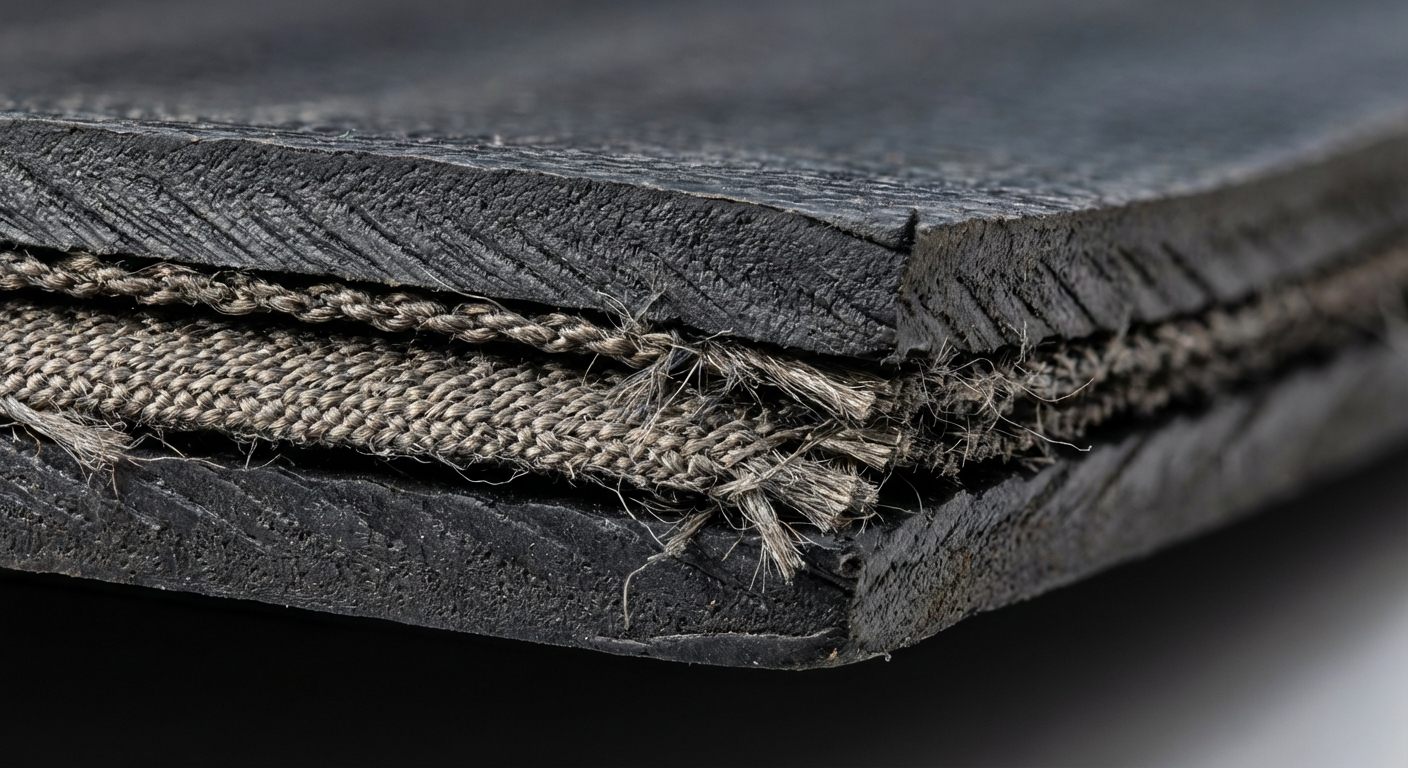
A 2 ply rubber conveyor belt ensures smooth, vibration-free transport in plaster casting, reducing mold damage, preventing slurry spillage, and improving production efficiency.
What is plaster casting for a 2 ply rubber conveyor belt?
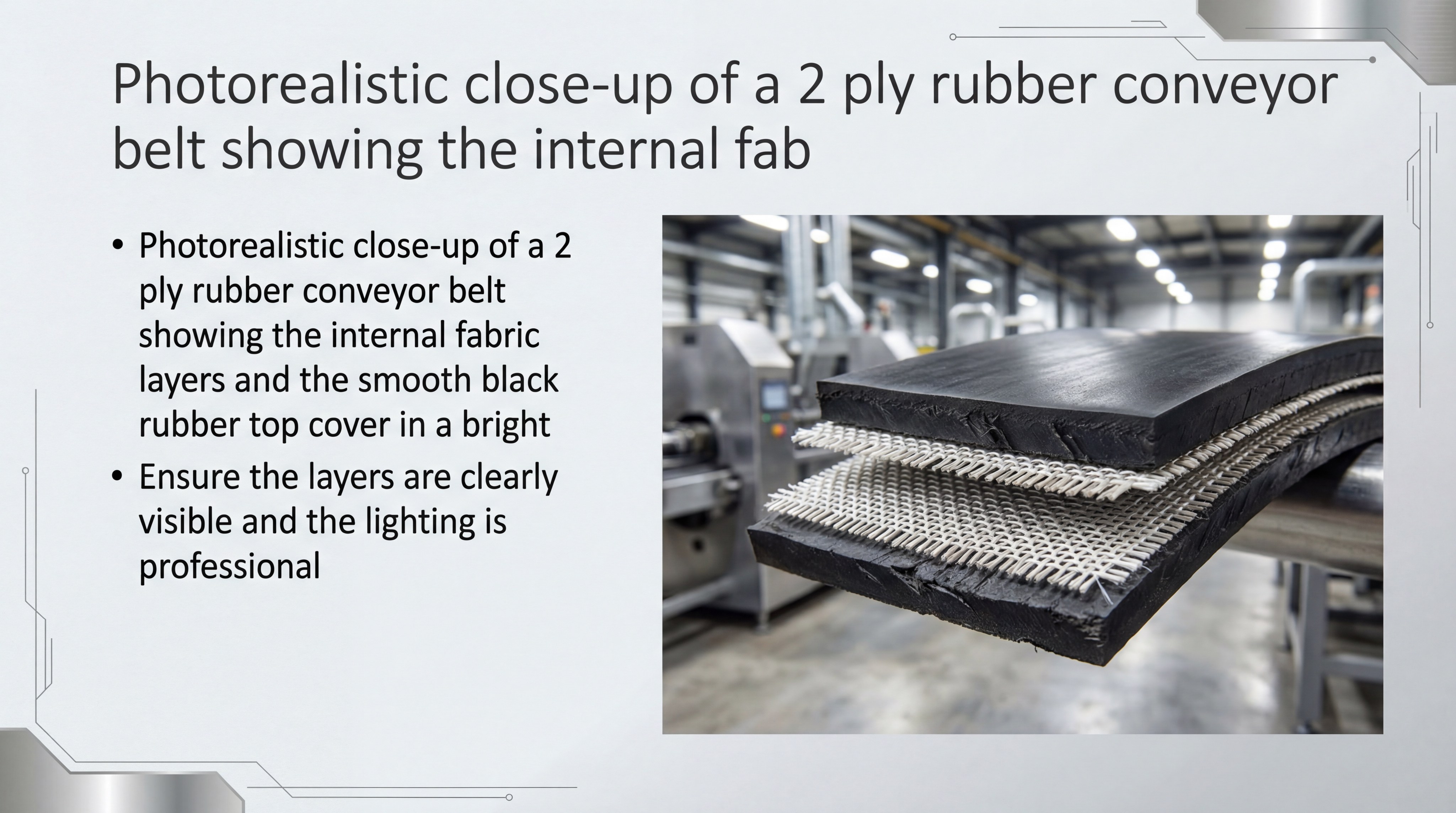
Plaster casting is a precision-driven material handling operation that requires a 2 ply rubber conveyor belt to maintain perfect flatness during the setting phase. These systems are designed to handle the weight of heavy molds while resisting the moisture inherent in gypsum mixtures.
How does material stability help?
Stable transport is essential because any micro-vibration can ruin the surface finish of a curing plaster mold. Think about it: a single bump can result in a rejected batch.
- Zero-vibration rollers
- High-friction surface layers
- Moisture-resistant rubber compounds
Is the core structure important?
You better believe it. The internal fabric provides the tensile strength needed to prevent sagging between idlers.
Key Takeaway: A high-quality 2-ply construction provides the necessary dampening for delicate casting.
| Feature | Casting Benefit | |
|---|---|---|
| 2-Ply Fabric | Prevents belt sag under heavy molds | |
| Smooth Surface | Ensures mold bottoms stay perfectly flat | |
| Rubber Cover | Resists abrasion from gypsum dust |
Stability is the foundation of every successful casting project.
How does a 2 ply rubber conveyor belt work in casting?
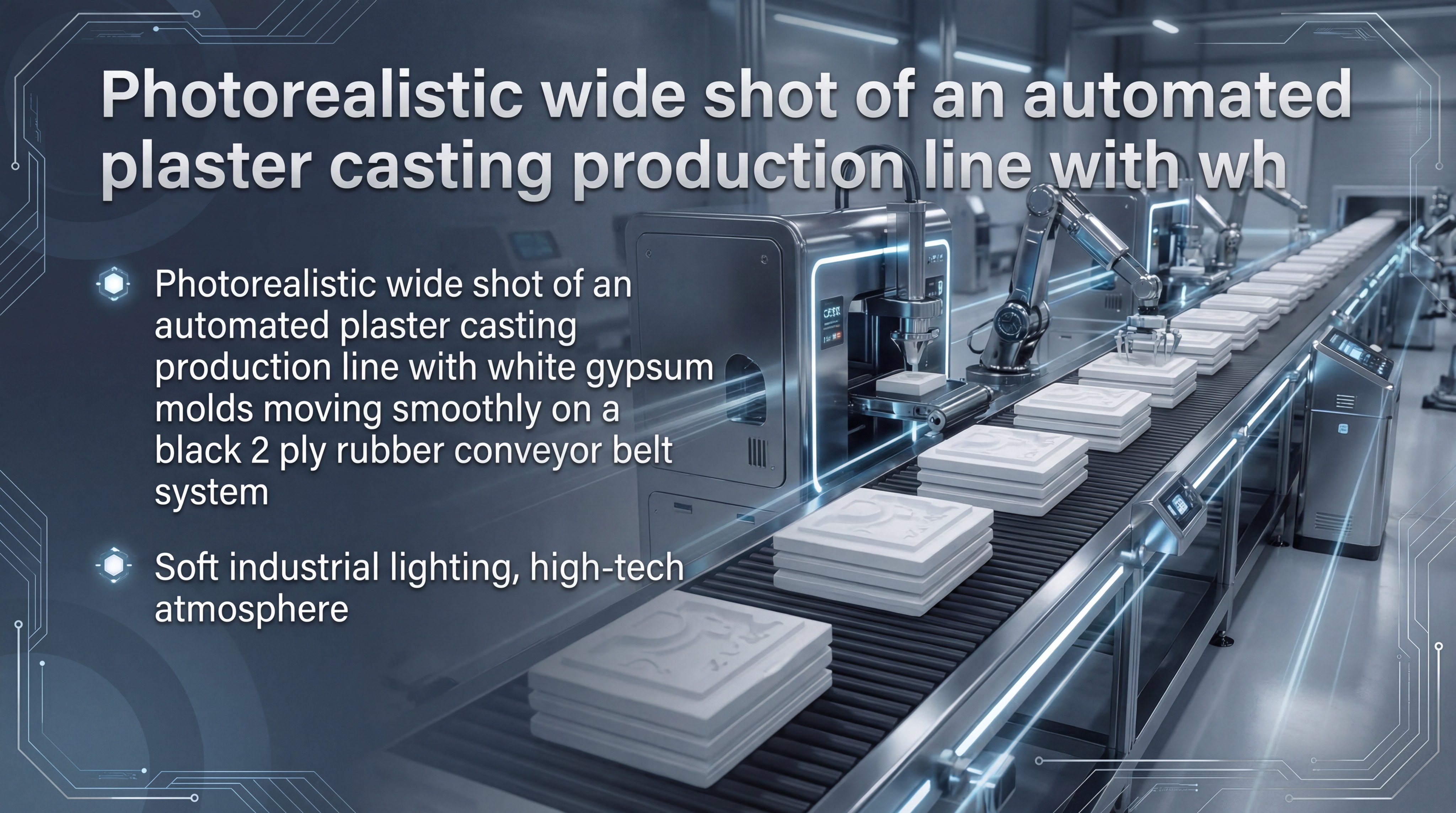
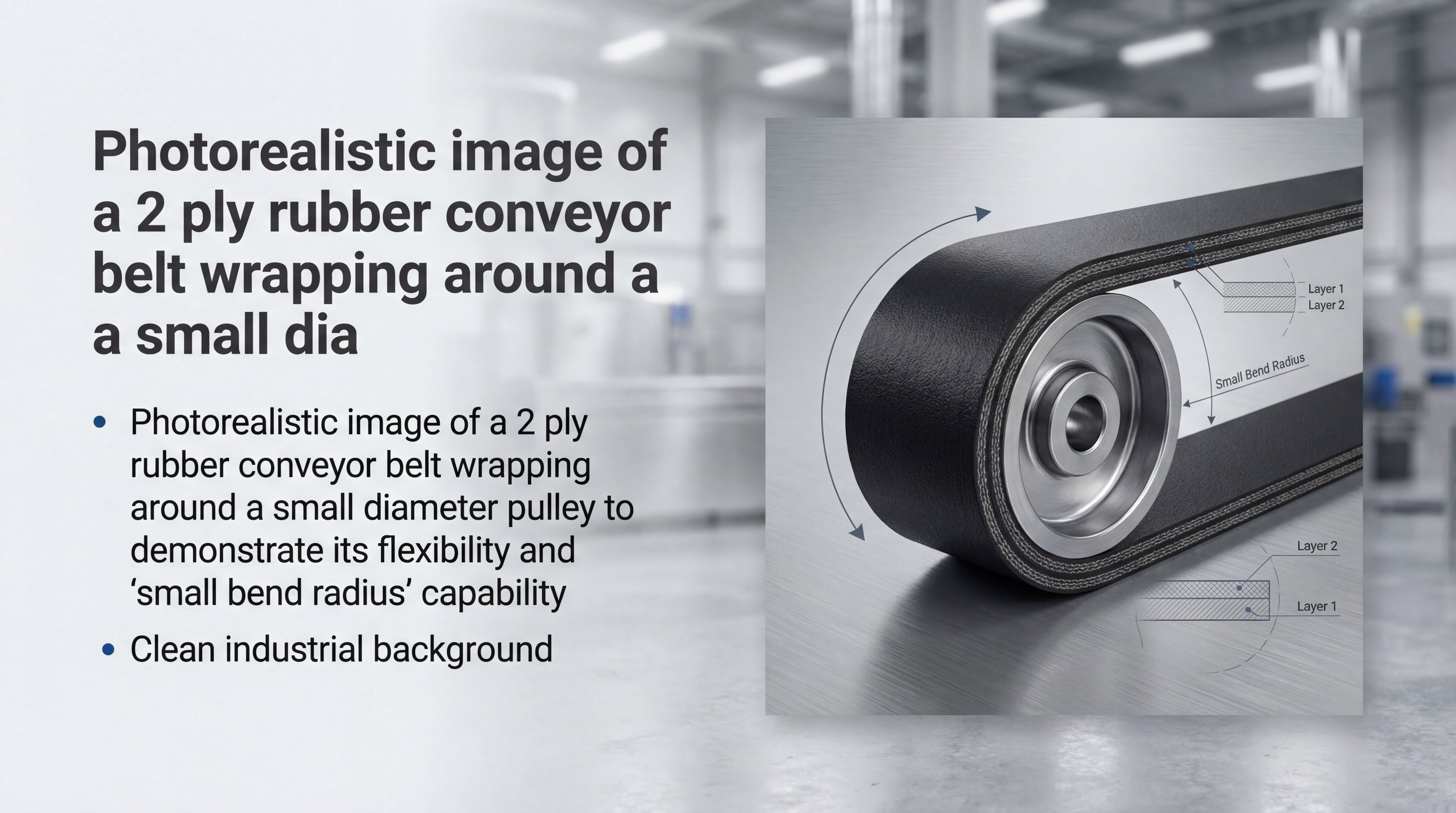
A 2 ply rubber conveyor belt works by providing a consistent, low-stretch surface that carries liquid-filled molds through curing tunnels without shifting. The belt’s flexibility allows it to wrap around small pulleys while maintaining enough tension to support heavy loads.
Can it handle variable speeds?
Variable speed control allows you to synchronize the pour rate with the drying time of the plaster. This prevents bottlenecking in the production line.
But wait, there is more.
- Synchronized motor drives
- Precision tracking sensors
- Impact-resistant loading zones
Does the belt resist slipping?
The specialized rubber compound ensures that molds stay in place even during slight inclines. This is vital for complex factory layouts.
Key Takeaway: Reliable movement ensures that your drying schedule remains consistent and predictable.
| Component | Function in Casting | |
|---|---|---|
| EP Fabric | Limits elongation during long shifts | |
| Skim Rubber | Absorbs vibration from the motor | |
| Edge Guard | Prevents dust from entering the core |
Understanding the mechanics leads to better hardware selection for your facility.
Why use a customized 2 ply rubber conveyor belt for work?
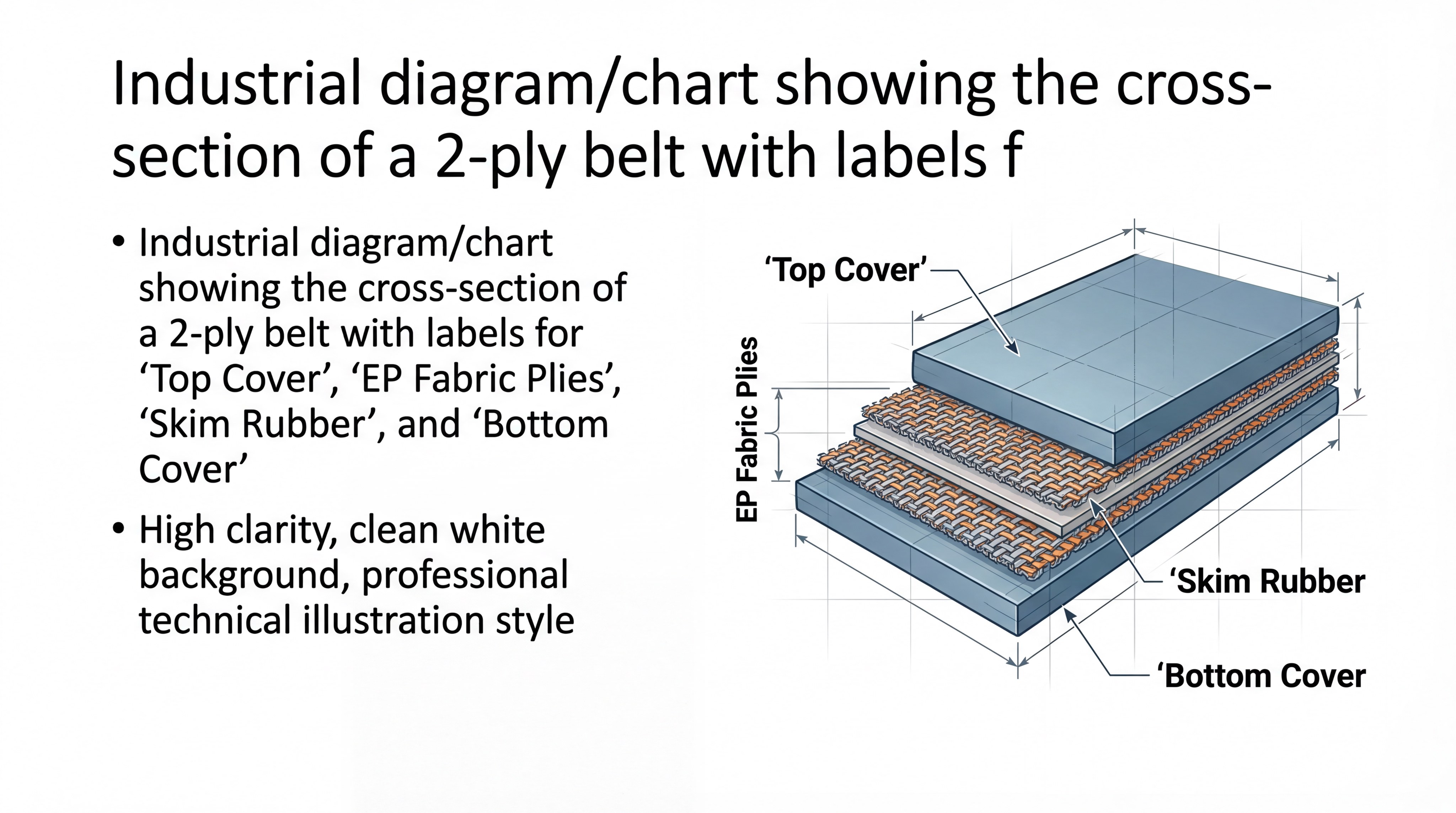
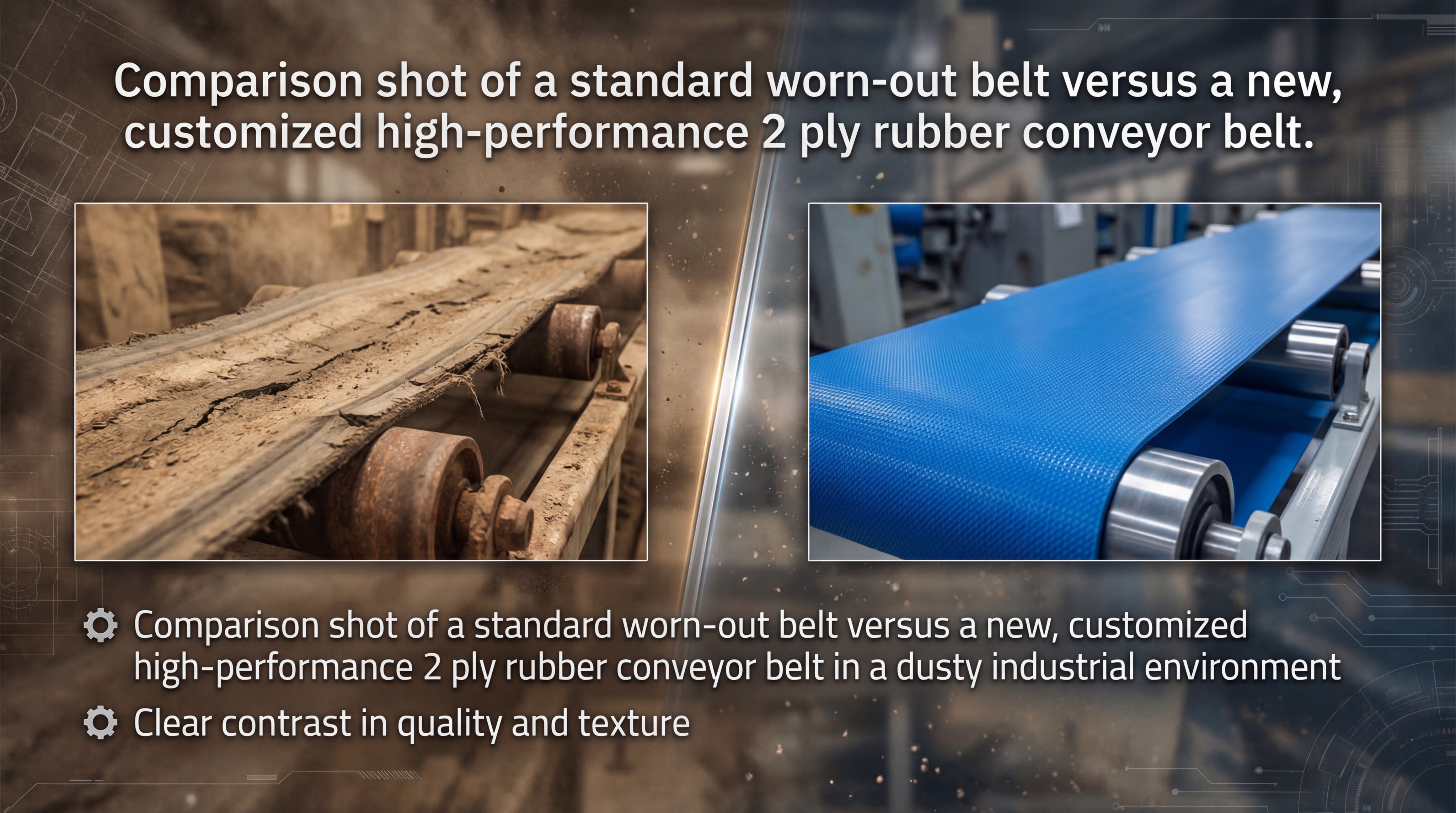
Using a customized 2 ply rubber conveyor belt for your work is necessary to match the chemical reactivity and weight profile of your specific casting slurry. Generic belts often degrade when exposed to the alkaline environment of wet gypsum or lime.
Why match the chemical profile?
Customized covers prevent the rubber from swelling or becoming brittle over time. This extends the lifespan of your investment significantly.
The results are impressive:
- 30% longer belt life
- Reduced mold contamination
- Lower maintenance frequency
Is load distribution a factor?
Properly engineered plies ensure that the weight of large architectural casts is distributed evenly across the belt width. This prevents localized stretching.
Key Takeaway: Tailored specifications eliminate the common failures associated with off-the-shelf industrial belts.
| Customization | User Value | |
|---|---|---|
| Grade M Rubber | Superior abrasion resistance | |
| Anti-static Ply | Reduces dust accumulation | |
| Custom Width | Fits existing machinery perfectly |
Precision engineering transforms a simple belt into a strategic production asset.
What process creates a quality 2 ply rubber conveyor belt?
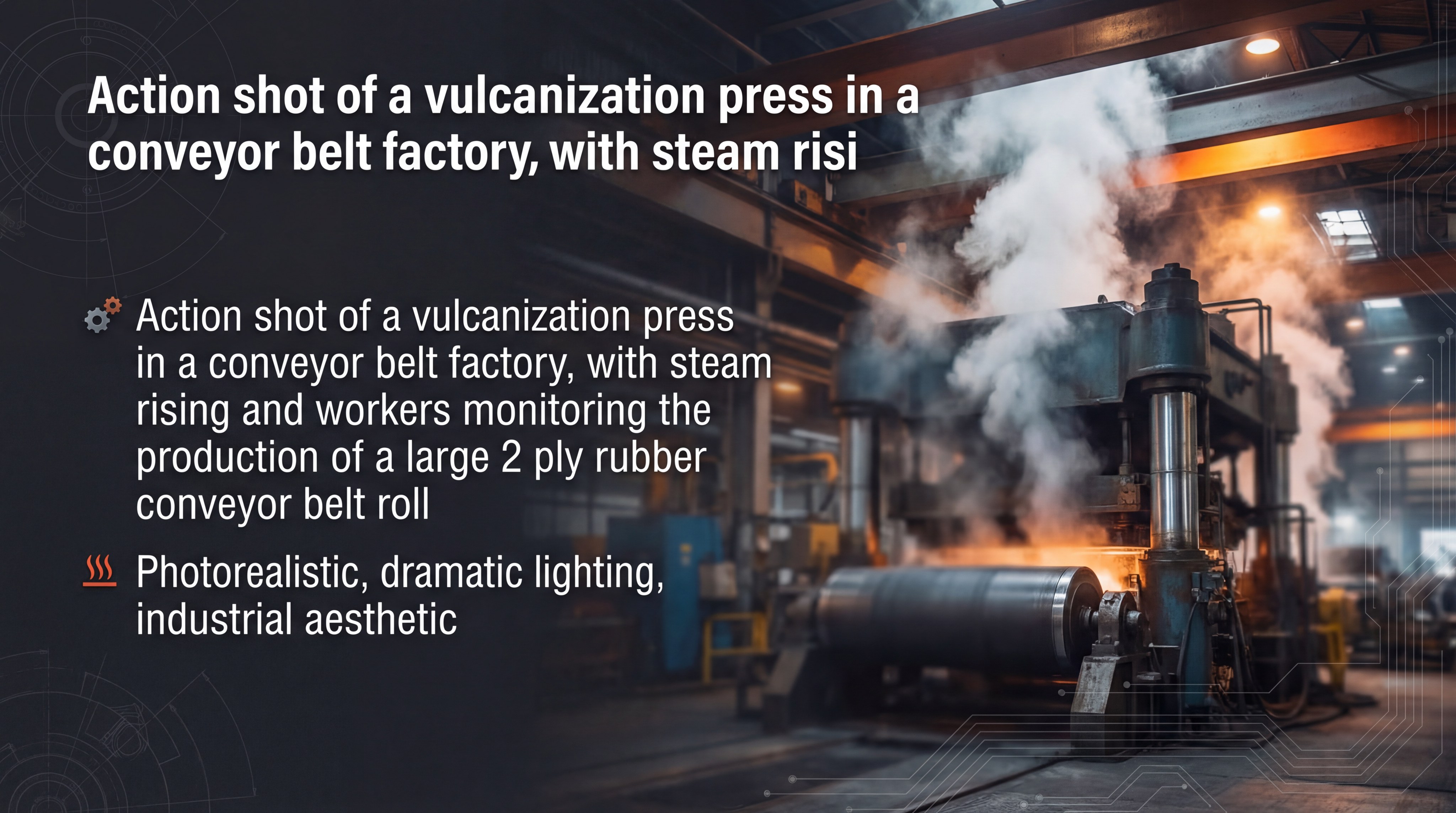
The process that creates a quality 2 ply rubber conveyor belt involves high-pressure vulcanization where fabric plies are fused with premium rubber compounds. Every stage of manufacturing is monitored to ensure the final product meets international safety and performance standards.
How is the core bonded?
Layers of EP fabric are coated with skim rubber to ensure maximum adhesion between the plies. This prevents the belt from delaminating under heavy use.
Here is the kicker.
- Computer-controlled curing
- Multi-point tension testing
- Raw material inspection
What happens during vulcanization?
The belt is heated in a press to chemically bond the components into a single, durable structure. This creates the smooth top cover required for casting.
Key Takeaway: Rigorous manufacturing standards ensure the belt remains reliable under continuous 24/7 operation.
| Process Step | Quality Impact | |
|---|---|---|
| Calendaring | Ensures uniform belt thickness | |
| Vulcanization | Creates permanent rubber bonds | |
| Edge Trimming | Prevents fraying and snagging |
Quality manufacturing is the only way to guarantee long-term operational success.
What are the 2 ply rubber conveyor belt main advantages?
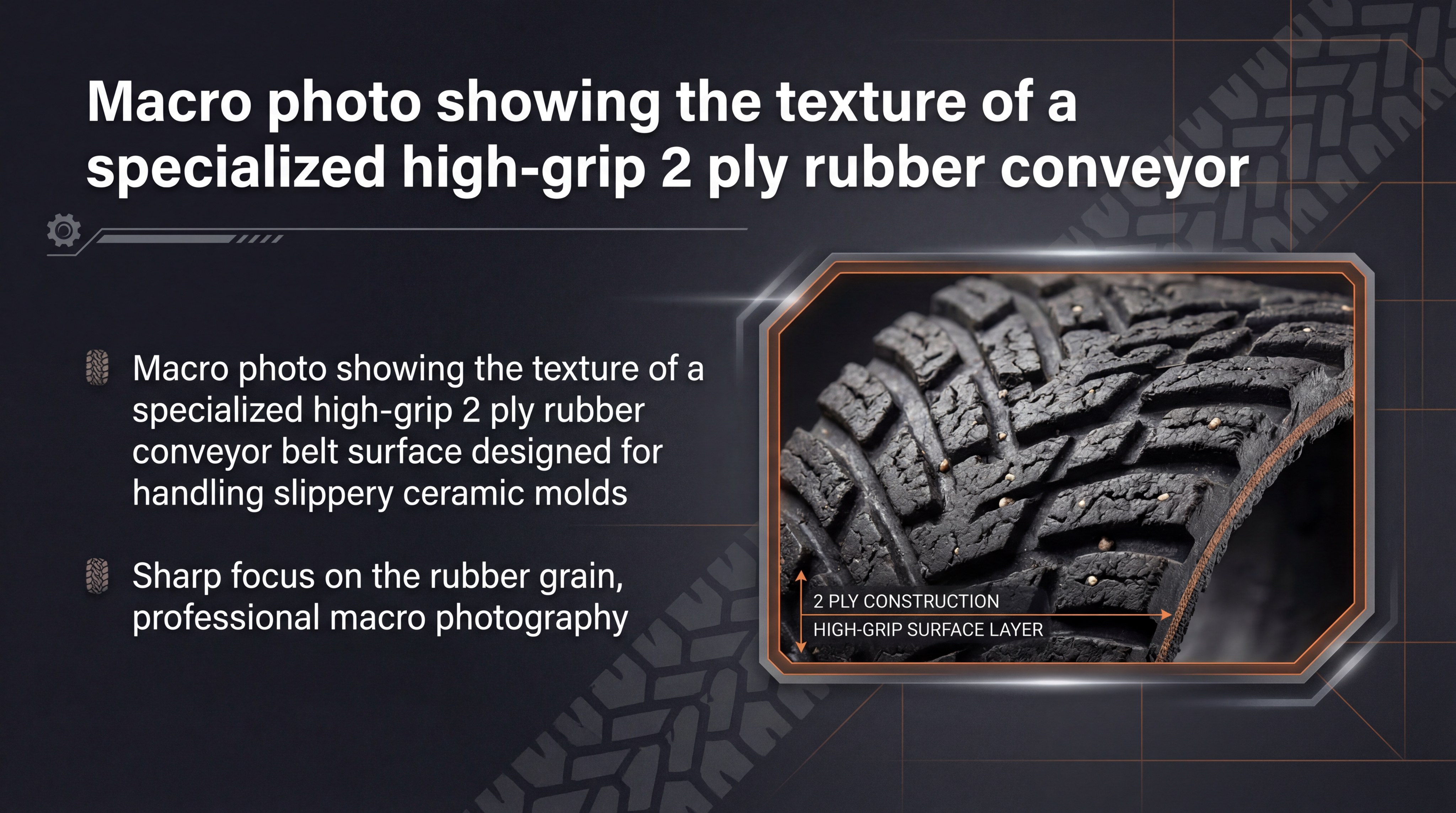
The main advantages of a 2 ply rubber conveyor belt include its exceptional balance of flexibility, cost-efficiency, and tensile strength. It provides the durability needed for industrial casting without the excessive weight of high-ply belts.
Why is flexibility important?
The 2-ply design allows the belt to handle smaller pulley diameters effortlessly. This makes it perfect for compact casting machinery designs.
It gets better:
- Reduced power consumption
- Faster installation times
- Excellent troughing ability
Is it cost-effective?
Lower manufacturing costs translate to a better price point for your business. You get professional-grade performance without overpaying for unnecessary plies.
Key Takeaway: You achieve high-performance material handling while optimizing your procurement budget.
| Advantage | Business Impact | |
|---|---|---|
| Light Weight | Lower energy costs for motors | |
| High Strength | Supports heavy gypsum molds | |
| Long Life | Reduces frequent replacement costs |
Strategic advantages help your business maintain a competitive edge in the market.
Where to apply a 2 ply rubber conveyor belt in industry?
You apply a 2 ply rubber conveyor belt in industries ranging from dental mold production to large-scale architectural cement casting. These belts are the standard for any environment where moisture and abrasive powders are present simultaneously.
Are there medical applications?
Dental laboratories use specialized mini-conveyors to transport plaster impressions. These systems require the hygiene and precision of high-grade rubber.
You may be wondering…
- Dental stone transport
- Orthopedic mold lines
- Pharmaceutical block casting
What about heavy construction?
Cement plant solutions often utilize 2-ply belts for moving additives and finished cast blocks. These heavy-duty environments test the limits of rubber durability.
Key Takeaway: Versatility across sectors makes the 2-ply belt a universal tool for casting professionals.
| Industry | Specific Application | |
|---|---|---|
| Construction | Pre-cast concrete panels | |
| Medical | Surgical plaster molds | |
| Pottery | Ceramic slurry transport |
Selecting the right application site ensures the maximum return on your equipment.
How to select the right 2 ply rubber conveyor belt?
To select the right 2 ply rubber conveyor belt , you must calculate your maximum mold weight and the chemical properties of your casting slurry. An incorrect choice leads to premature belt failure and production delays.
Why check tensile strength?
The N/mm rating determines how much load the belt can carry without stretching. You need to ensure the belt supports your heaviest production peak.
Keep this in mind.
- Measure total load weight
- Identify chemical exposure
- Determine operating temperature
Does the cover grade matter?
High-grade rubber resists the abrasive “sandpaper” effect of dried plaster dust. Choosing a wear-resistant cover extends the time between maintenance cycles.
Key Takeaway: Careful selection based on technical data prevents expensive operational mistakes.
| Selection Factor | Technical Metric | |
|---|---|---|
| Tensile Strength | Newton per millimeter (N/mm) | |
| Cover Thickness | Millimeters (mm) | |
| Abrasion Loss | Cubic millimeters (mm³) |
Informed decisions are the hallmark of an expert production manager.
Can a 2 ply rubber conveyor belt resist high heat?
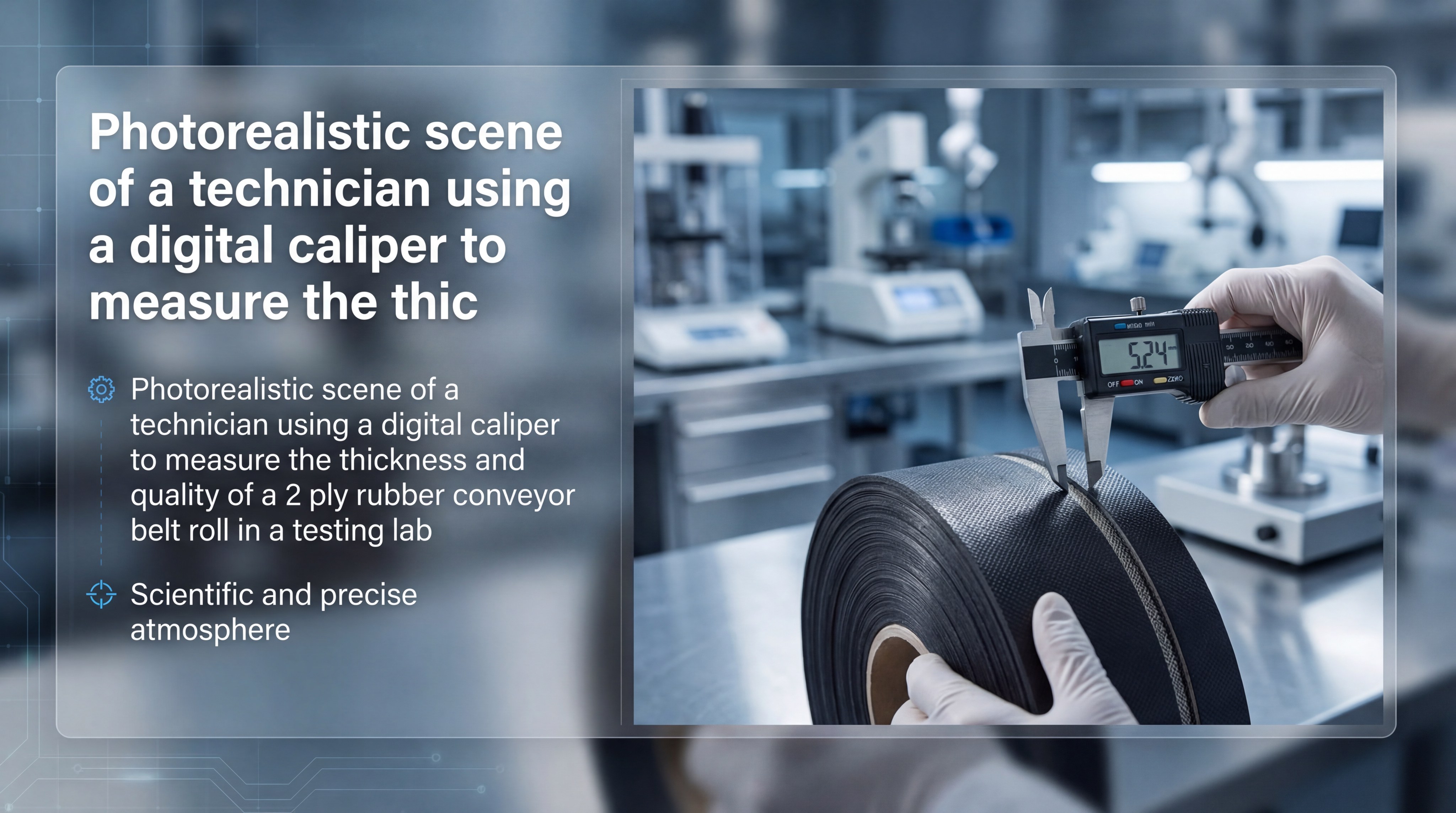
A 2 ply rubber conveyor belt can resist high heat if it is manufactured with EPDM or specialized heat-tolerant rubber compounds. This is critical for casting lines that pass through drying ovens or steam-curing chambers.
How does EPDM help?
EPDM rubber remains flexible and crack-resistant even when exposed to temperatures reaching 200°C. This allows for continuous drying operations without belt degradation.
The best part is:
- Excellent ozone resistance
- Minimal thermal shrinkage
- High heat dissipation
Is steam a problem?
Moisture and heat combined can destroy standard belts. Heat-resistant 2-ply belts are designed to repel water while maintaining structural integrity.
Key Takeaway: Thermal protection allows you to speed up the curing process using high-temperature environments.
| Temperature Range | Recommended Compound | |
|---|---|---|
| Up to 100°C | SBR Heat Resistant Grade | |
| Up to 150°C | High-Temp EP Blend | |
| Up to 200°C | Pure EPDM Compound |
Managing heat effectively is vital for maintaining a fast production cadence.
Why buy a factory-direct 2 ply rubber conveyor belt?
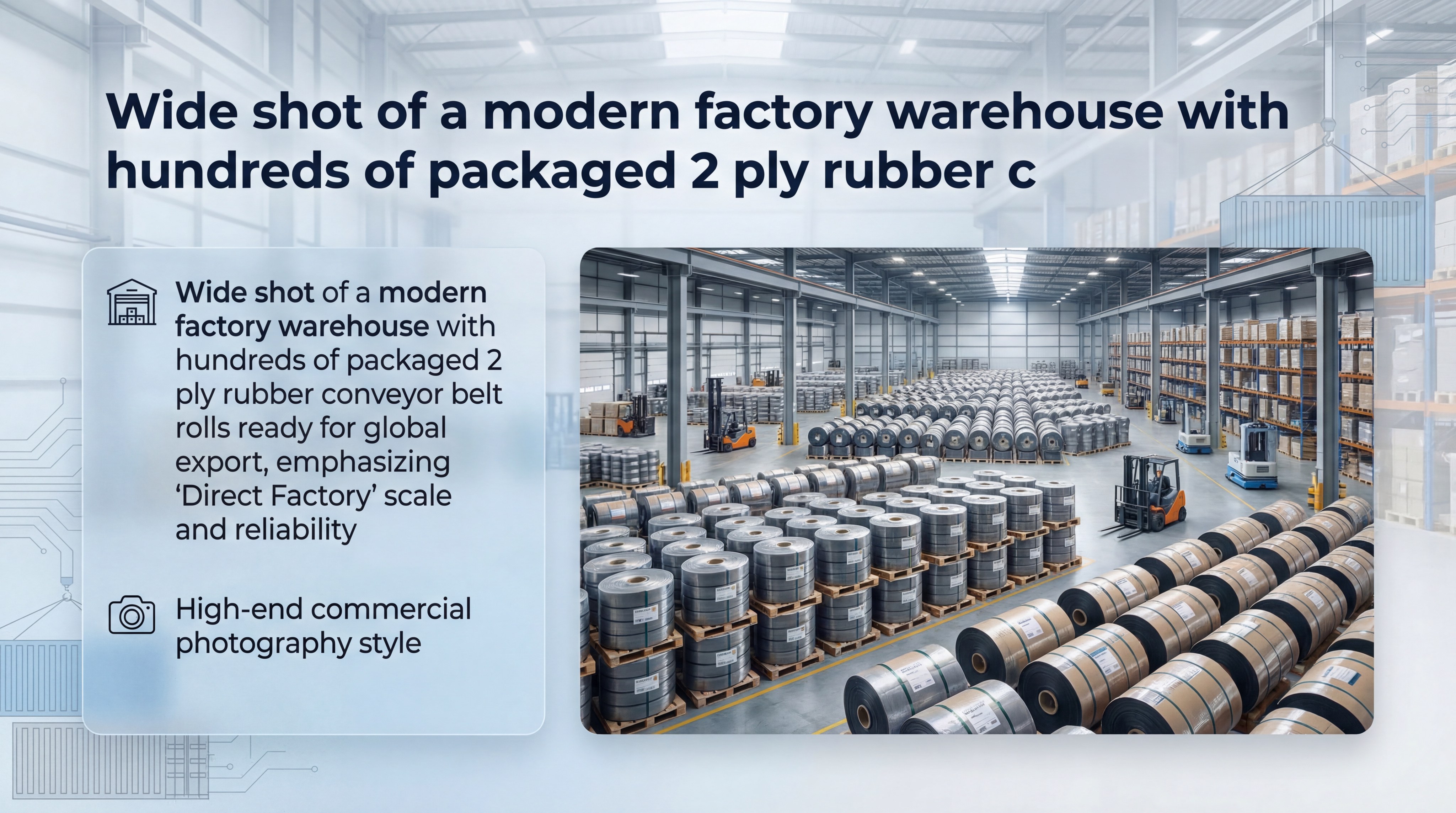
Buying a 2 ply rubber conveyor belt factory-direct allows you to save 15-30% on costs while receiving technical support directly from the engineers who built it. Direct communication ensures your customization requirements are met without the errors of a middleman.
What about technical support?
You get access to experienced engineering teams who provide fast quotations and belt selection guidance. This eliminates the guesswork from your procurement process.
Wait, there is more.
- Accurate drawing support
- Stable production lead times
- Verifiable testing reports
Are samples available?
Most factories provide material samples so you can verify the quality before committing to a large order. This reduces the risk of project failure.
Key Takeaway: Direct sourcing provides the best balance of cost, quality control, and technical expertise.
| Sourcing Type | Price Advantage | Support Level | |
|---|---|---|---|
| Trading Company | 15-30% Markup | Basic / General | |
| Direct Factory | Manufacturer Pricing | Expert / Engineering |
Direct partnerships build the trust necessary for long-term industrial success.
How to maintain a 2 ply rubber conveyor belt for life?
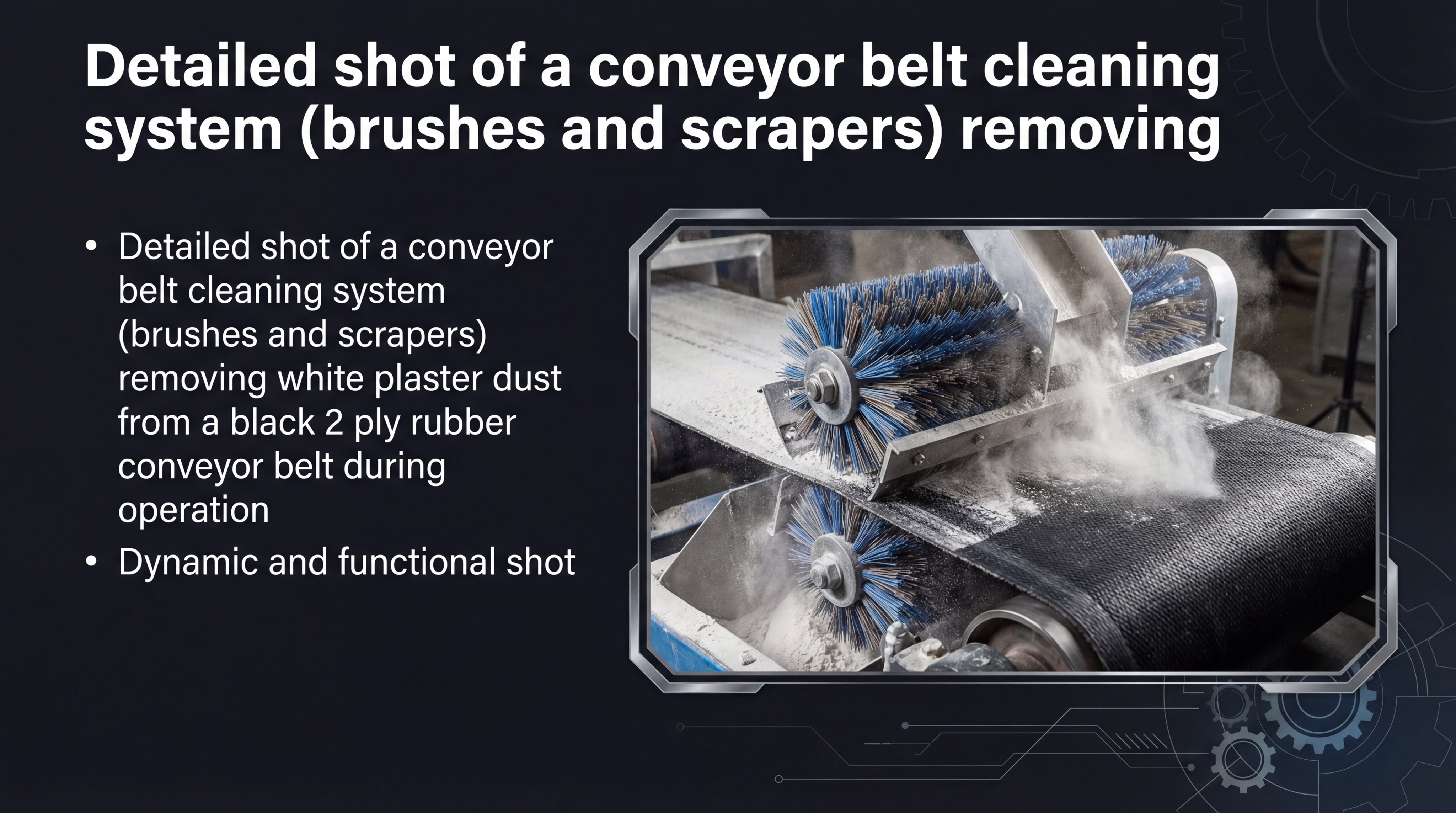
Maintaining a 2 ply rubber conveyor belt involves daily cleaning of gypsum dust and regular inspection of the belt edges and splices. Preventing material buildup is the most effective way to stop belt mistracking and surface wear.
Why is dust a threat?
Dried plaster acts like an abrasive that grinds down the rubber cover. Effective scrapers and brushes are essential for a clean casting environment.
- Install primary scrapers
- Use water-wash systems
- Regularly grease idlers
When should you check splices?
The belt joint is the most common point of failure. Monthly visual checks ensure the vulcanized bond remains strong under load.
Key Takeaway: Proactive maintenance routines prevent sudden downtime and extend your equipment’s ROI.
| Task | Frequency | Purpose | |
|---|---|---|---|
| Surface Cleaning | Daily | Prevents abrasion from dust | |
| Tracking Check | Weekly | Stops edge damage from fraying | |
| Splice Inspection | Monthly | Ensures structural continuity |
A well-maintained belt is a silent partner in your factory’s profitability.
By selecting customized 2-ply solutions, you have solved the critical challenges of material instability and chemical degradation in your casting line. Our direct factory expertise ensures you receive a belt engineered for the exact stresses of your production environment. Whether you need heat resistance for drying tunnels or high-friction covers for mold stability, we provide the technical solutions to keep your business moving. Contact us today to receive a tailored quotation and technical consultation that will optimize your material handling efficiency for years to come. We believe in a future where precision casting is supported by the world’s most reliable and cost-effective rubber technology. Contact us today to start your partnership with a leader in industrial rubber manufacturing.
FAQ
- Can I use a 2 ply rubber conveyor belt for wet cement casting?Yes, provided the belt is manufactured with a moisture-resistant compound that prevents the fabric plies from absorbing water and delaminating.
- What is the best way to clean plaster dust from the belt?The best method is using a combination of rotary brushes and mechanical scrapers, often accompanied by a low-pressure water spray for sticky slurries.
- How do I know if I need a 2-ply or a 3-ply belt?You should consult an engineer who will calculate the tension (N/mm) based on your mold weight, conveyor length, and motor torque to determine the necessary ply count.
- Can I get a custom logo printed on my belt?Yes, direct factories offer OEM branding and custom logo embossing during the vulcanization process to help you maintain a professional brand image.
- How long does a typical 2-ply belt last in a heavy casting plant?With proper maintenance and correct compound selection, you can expect a service life of 3 to 5 years even under continuous industrial use.