
A 3 ply rubber conveyor belt offers enhanced strength and durability for industrial material handling, reducing slippage, minimizing downtime, and ensuring stable performance under heavy loads.
What is a 3 ply rubber conveyor belt?
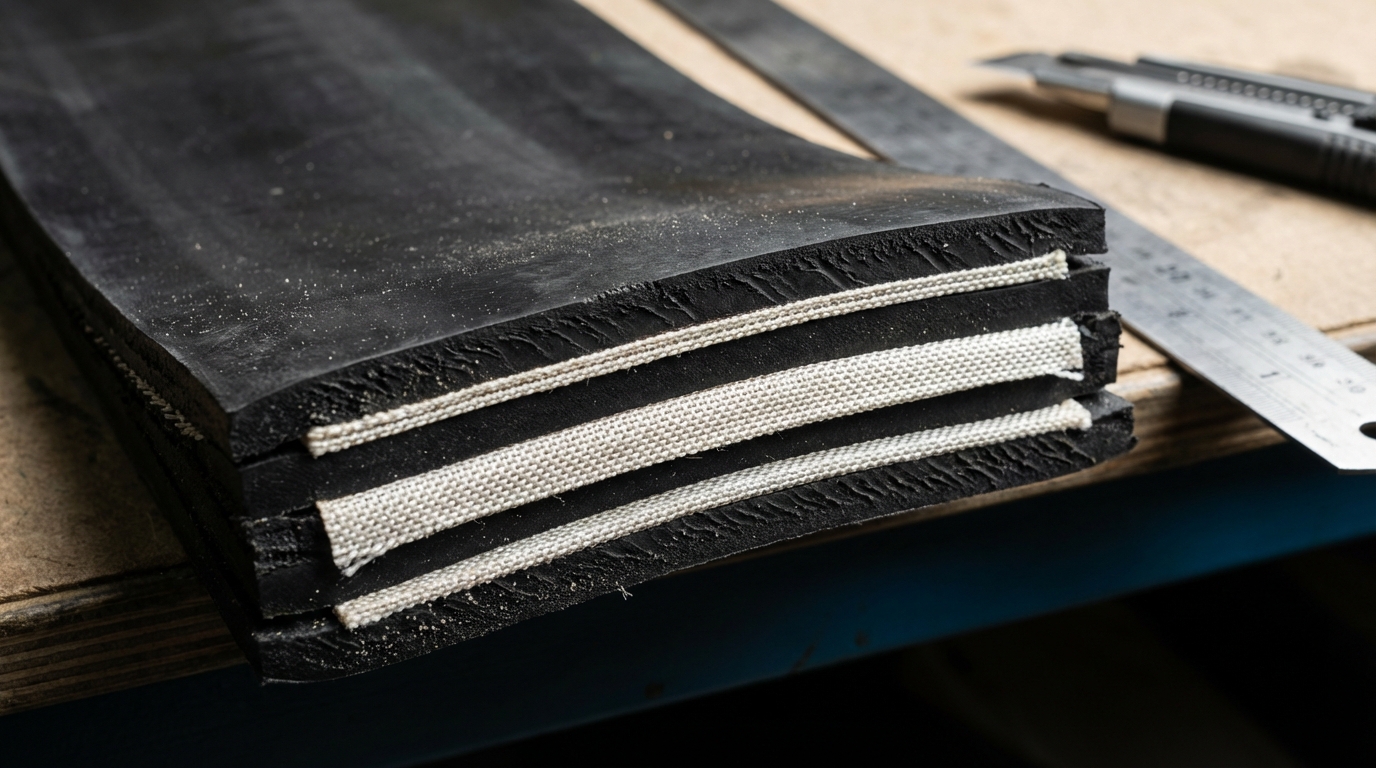
A 3 ply rubber conveyor belt is a heavy-duty industrial belt featuring three distinct layers of fabric reinforcement sandwiched between protective rubber covers. This specific 3 ply rubber conveyor belt design is engineered to provide a balance of flexibility and high load-bearing capacity. By utilizing multiple plies, the belt distributes tension more evenly across the carcass.
Defining the multi-layer fabric core
The core of this belt consists of high-quality synthetic fabrics that dictate its mechanical properties. These layers are bonded together through a vulcanization process to prevent separation during operation.
- Polyester-Nylon (EP) fabrics for low stretch.
- Interlayer rubber skim for superior adhesion.
- Consistent ply thickness for tracking stability.
Think about it: without a robust core, your belt would stretch beyond the limits of your take-up unit.
Role of top and bottom rubber covers
The outer rubber layers act as a shield for the internal fabric plies against environmental damage and impact. You can specify the thickness of these covers based on how abrasive your materials are.
Key Takeaway: The triple-layer reinforcement ensures that the belt maintains its structural integrity even under high-tension cycles.
| Feature | Description | Analysis | |
|---|---|---|---|
| Carcass | 3-Ply Fabric | Provides the primary tensile strength for heavy loads. | |
| Covers | Grade Rubber | Protects the core from moisture and abrasive wear. |
The combination of multi-ply fabric and thick rubber covers creates a resilient tool for various bulk handling tasks.
Why choose a 3 ply structure for your system?
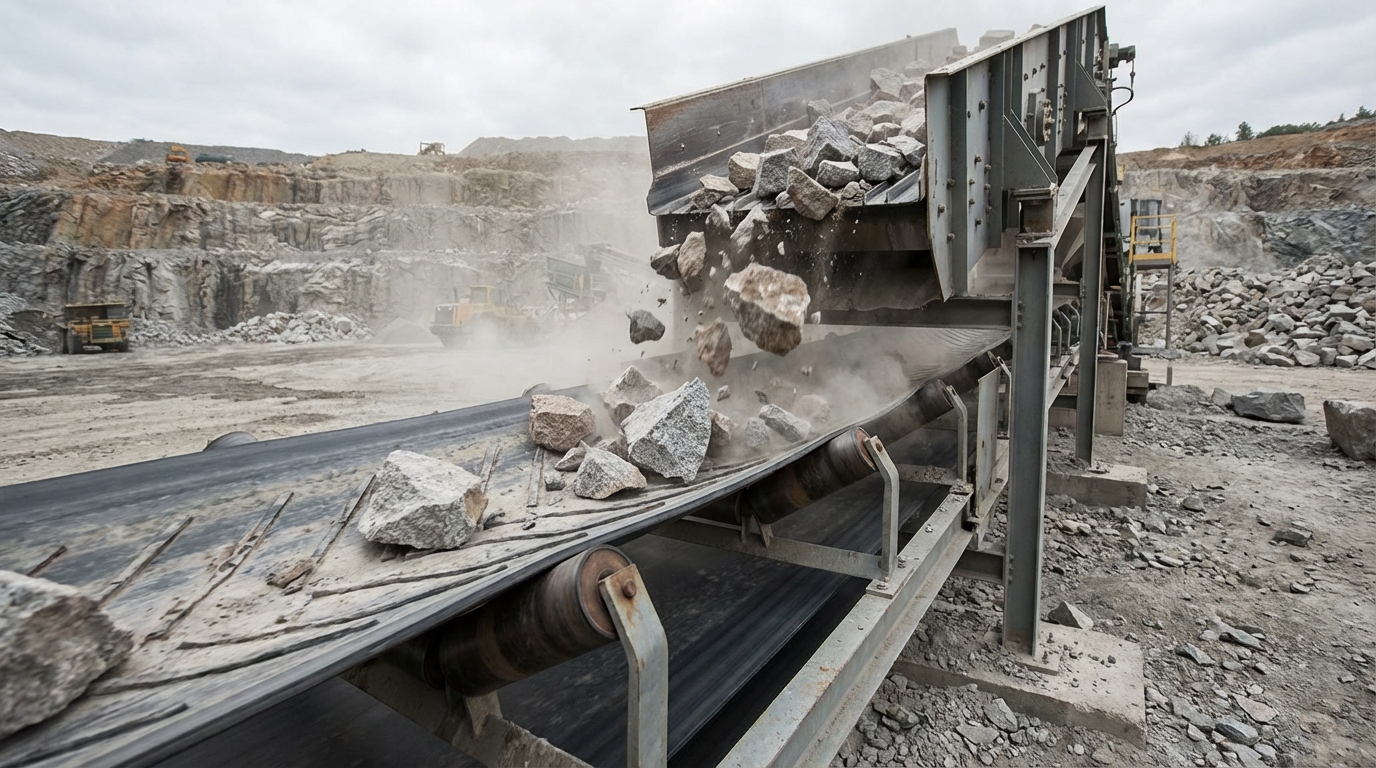
Choosing a 3 ply structure allows you to maximize the load capacity of your system while maintaining enough flexibility to navigate smaller pulley diameters. This specific 3 ply rubber conveyor belt configuration is often the “sweet spot” for medium to heavy industrial applications. It offers significantly more durability than single or double-ply alternatives without the excessive weight of 4-ply belts.
Balancing flexibility and tensile strength
Flexibility is crucial when your conveyor layout includes tight turns or small head pulleys. A 3-ply belt can wrap around these components without the risk of the rubber cracking or the plies delaminating.
- Higher troughing capability for increased volume.
- Reduced power consumption due to lower belt weight.
- Enhanced resistance to longitudinal tearing.
The best part? You get the strength of a heavy belt with the agility of a lighter one.
Impact resistance in heavy loading
When large aggregates or sharp materials drop onto your belt, the triple layers act as a shock absorber. This prevents the “poking through” effect that often destroys lesser belts during the loading phase.
Key Takeaway: Opting for a 3-ply design minimizes the risk of sudden mechanical failure caused by impact or excessive tension.
| Benefit | Impact on Operation | Analysis | |
|---|---|---|---|
| Flexibility | Pulley Compatibility | Allows for more compact system designs without failure. | |
| Strength | Higher Load Rating | Supports heavier material throughput per hour. |
This structural balance makes the belt an ideal choice for facilities looking to optimize their material flow efficiency.
Which materials are used in 3 ply rubber belts?
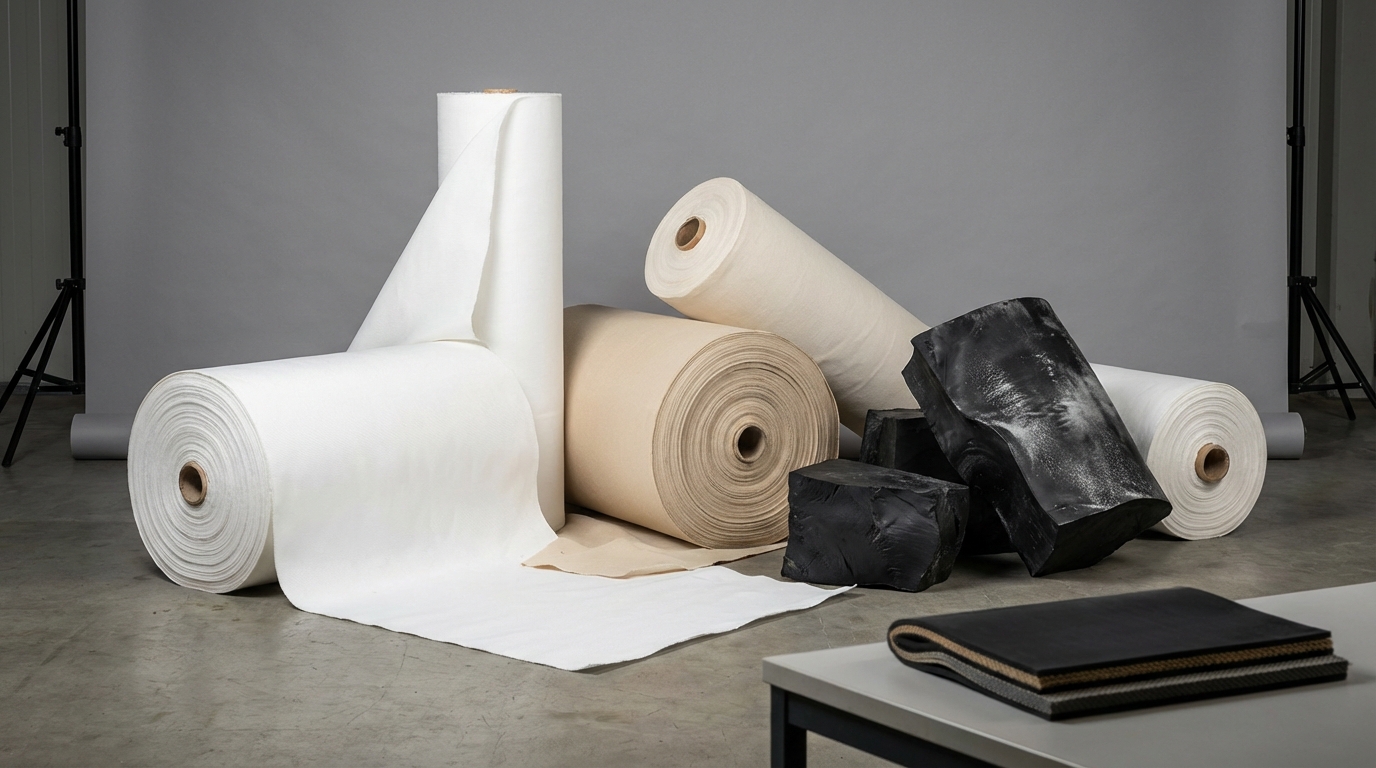
The primary materials used in a 3 ply rubber conveyor belt include high-strength synthetic fibers like Polyester and Nylon combined with specialized rubber compounds. The choice of materials determines how the 3 ply rubber conveyor belt will react to moisture, chemicals, and physical stress. Modern manufacturing ensures these components work in harmony to extend the service life of your equipment.
Polyester (EP) versus Nylon (NN) fabrics
Polyester (EP) is the most common choice because it offers low elongation, meaning the belt won’t stretch excessively over time. Nylon (NN) is preferred when you need maximum impact resistance and high flexibility for short-center conveyors.
- EP fabrics offer excellent dimensional stability.
- NN fabrics provide superior troughing and impact absorption.
- Both materials are resistant to rot and mildew.
Here is the deal: picking the right fabric saves you from constant tension adjustments.
Natural versus synthetic rubber compounds
The rubber covers are formulated using a blend of natural and synthetic polymers to achieve specific hardness levels. You can select compounds that focus on abrasion resistance, flame retardancy, or chemical stability depending on your environment.
Key Takeaway: The synergy between the synthetic fabric plies and the engineered rubber covers dictates the belt’s overall performance profile.
| Material | Primary Advantage | Analysis | |
|---|---|---|---|
| Polyester | Low Elongation | Keeps the belt at the correct tension for longer. | |
| Synthetic Rubber | Environmental Resistance | Protects against UV, ozone, and chemical degradation. |
Selecting the right material blend ensures your belt can withstand the specific rigors of your unique industrial environment.
How does heat resistance affect 3 ply belts?
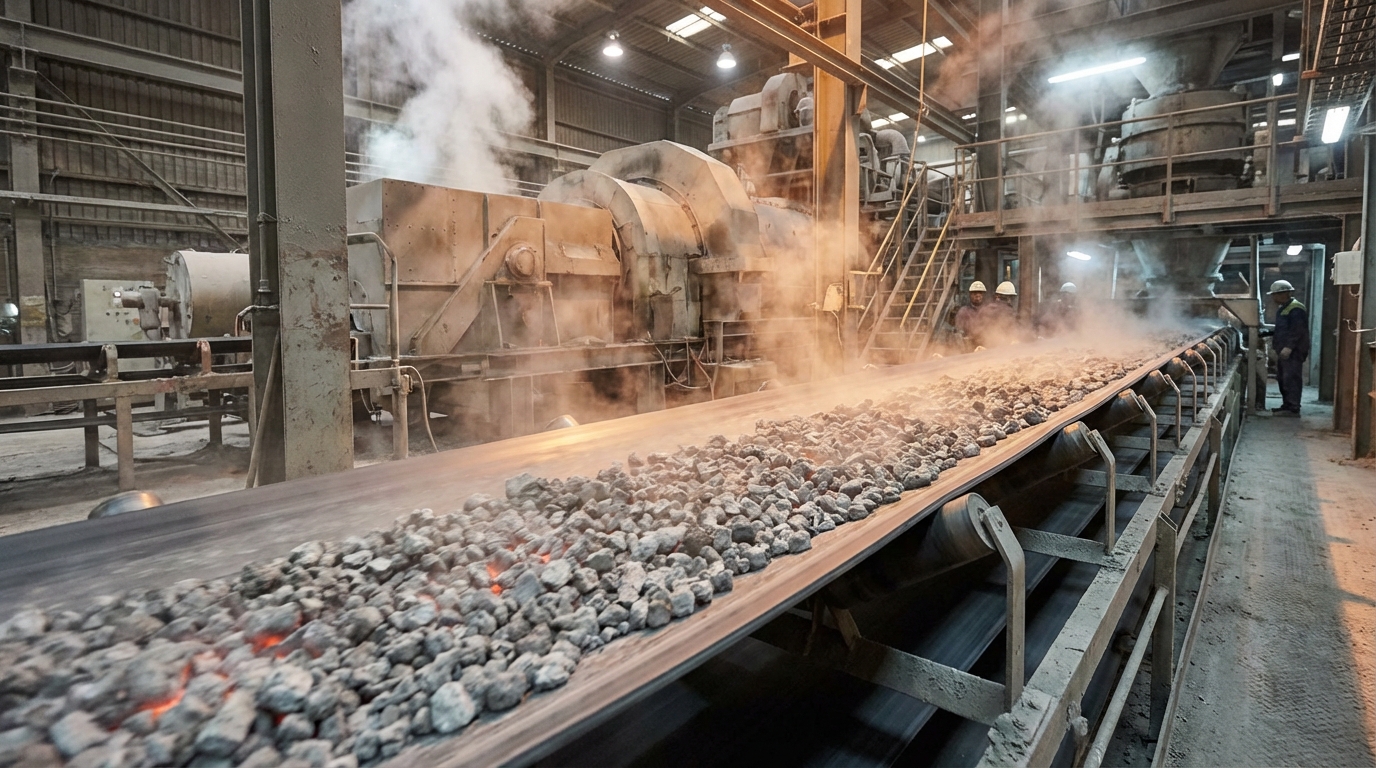
Heat resistance determines the maximum temperature of the materials you can safely transport using a 3 ply rubber conveyor belt without causing catastrophic failure. If your 3 ply rubber conveyor belt is exposed to temperatures exceeding its rating, the rubber can harden and crack. This leads to the exposure of the fabric plies, which quickly leads to a total belt break.
Operating limits for high-temperature loads
Standard belts are usually rated for temperatures up to 80°C, but specialized heat-resistant versions can handle much more. These belts use EPDM or other heat-stable polymers to prevent the covers from becoming brittle.
- T1 rating for materials up to 125°C.
- T2 rating for materials up to 150°C.
- T3 rating for extreme heat up to 200°C.
Believe it or not, even a slight temperature spike can significantly shorten a standard belt’s life.
Preventing core delamination from heat
The biggest danger of heat is not just surface cracking but the weakening of the bond between the plies. If the internal adhesive fails, the layers will slide against each other, causing the belt to lose its shape and strength.
Key Takeaway: Using a heat-resistant 3-ply belt is essential for applications like cement clinker or foundry sand to prevent premature replacement.
| Temperature Grade | Max Material Temp | Analysis | |
|---|---|---|---|
| HR Grade | 120°C | Suitable for most general warm material handling. | |
| SHR Grade | 180°C | Required for hot industrial processes like smelting. |
Properly matching the heat grade to your material ensures that the belt remains supple and strong during hot cycles.
What makes a 3 ply belt oil resistant?
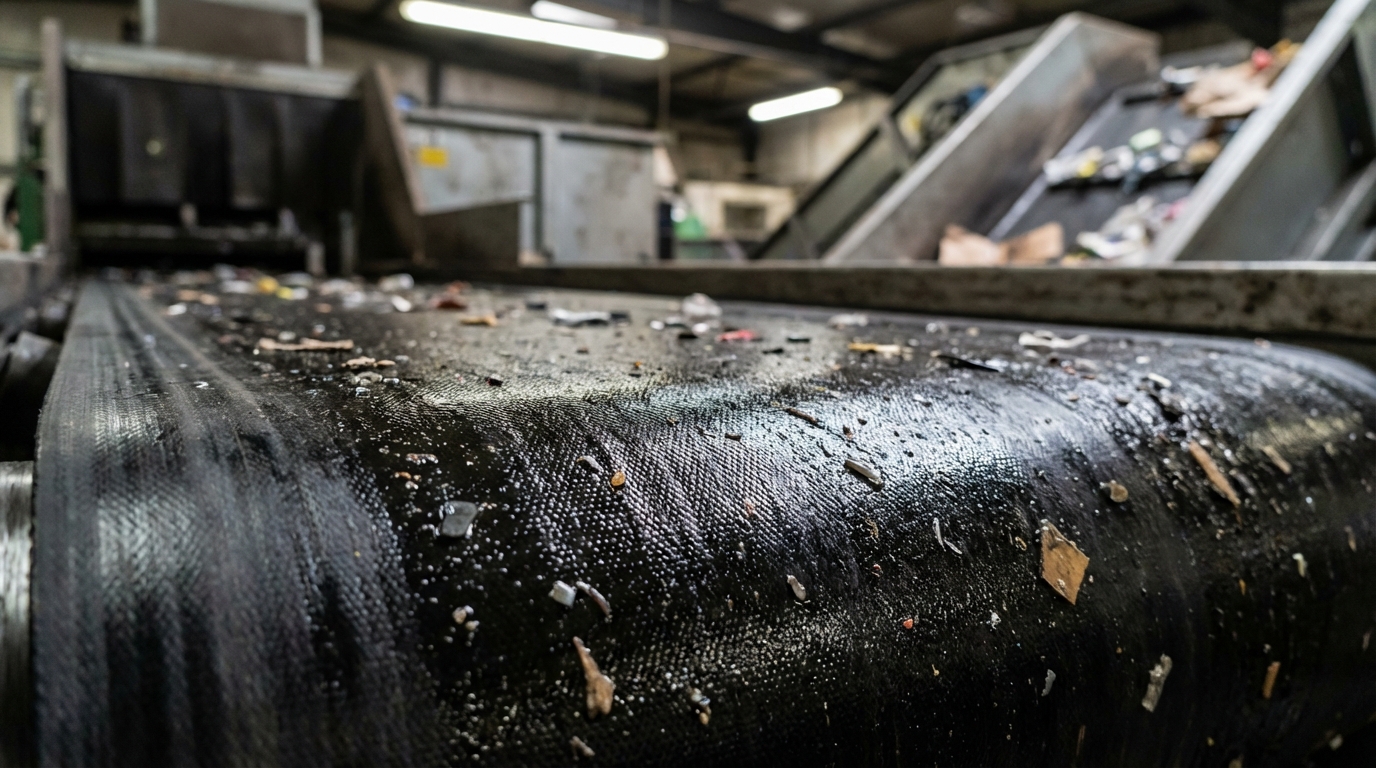
Oil resistance is achieved by incorporating high-nitrile rubber (NBR) into the covers of the 3 ply rubber conveyor belt to prevent chemical absorption. Without this protection, a standard 3 ply rubber conveyor belt would swell and warp when exposed to petroleum or vegetable oils. This swelling causes the belt to mistrack, leading to edge damage and spilled material.
Chemical properties of nitrile rubber covers
Nitrile rubber is chemically engineered to repel hydrocarbons and other fatty acids found in recycled materials or treated grains. This keeps the rubber covers tight and flat, maintaining the necessary friction against the drive pulleys.
- Resistant to swelling and softening.
- Maintains physical properties in oily environments.
- Reduces the risk of belt-to-pulley slippage.
You see, oil resistance is a necessity, not an option, for recycling and agricultural sectors.
Preventing cover swelling and degradation
When oil penetrates the rubber, it weakens the molecular bonds, making the belt more susceptible to cuts and gouges. An oil-resistant belt remains tough, ensuring that sharp-edged oily scrap doesn’t slice through the protective layers.
Key Takeaway: Investing in an OR-grade 3-ply belt prevents the costly “wavy edge” syndrome caused by oil-induced rubber expansion.
| Oil Resistance Level | Typical Application | Analysis | |
|---|---|---|---|
| MOR (Moderate) | Grain, Wood Chips | Protects against light animal fats and wood resins. | |
| SOR (Superior) | Oily Scrap, Fertilizer | Full protection against concentrated mineral oils. |
Selecting the correct nitrile content ensures your conveyor remains functional even in the harshest chemical conditions.
Where are 3 ply rubber belts most effective?
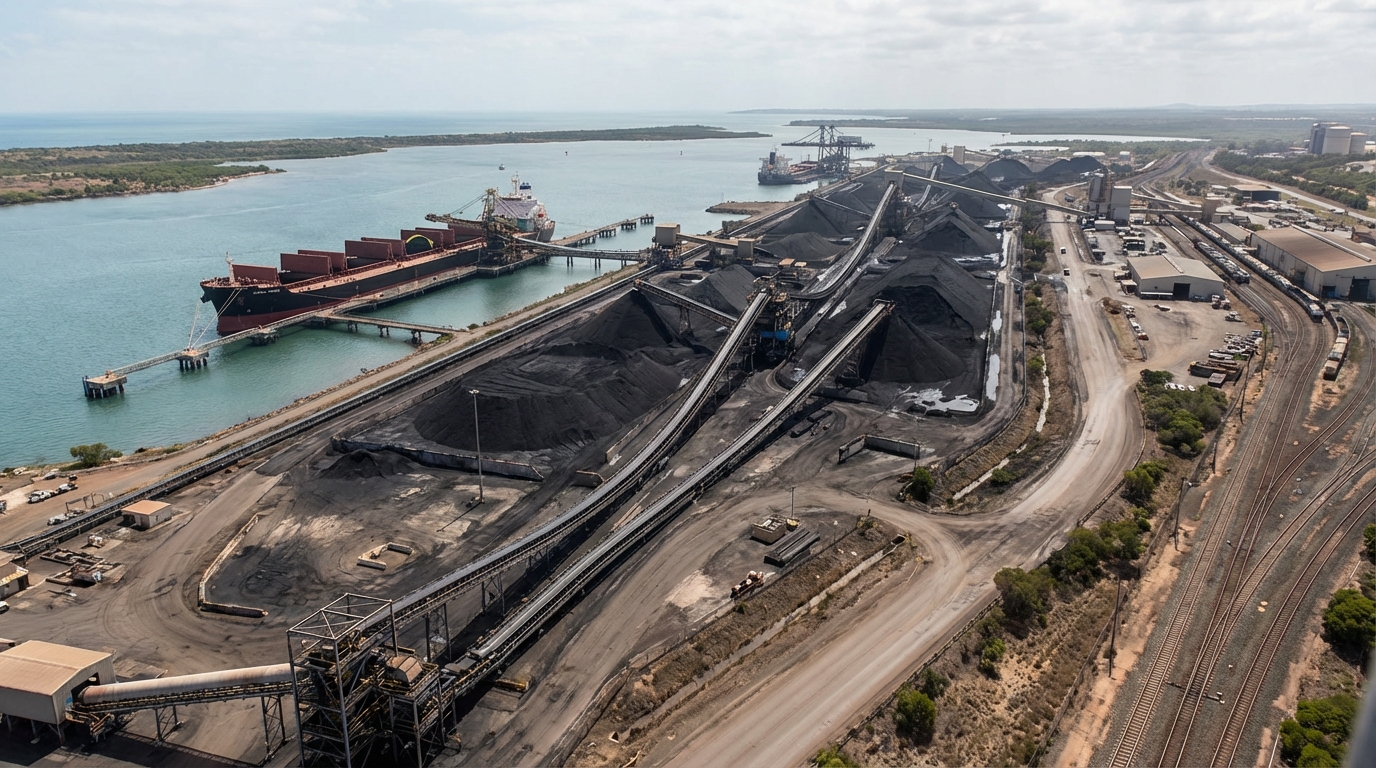
These belts are most effective in high-volume environments like mining, power plants, and ports where a 3 ply rubber conveyor belt must run continuously. The 3 ply rubber conveyor belt excels in these scenarios because it offers the perfect balance of tensile strength and weight. You can move thousands of tons of material daily without worrying about the belt snapping under the tension of long-distance hauls.
Mining and aggregate transportation
In quarries and mines, the belt is subjected to heavy, jagged rocks and abrasive dust. The 3-ply construction provides enough carcass thickness to resist puncture while being flexible enough to trough deeply for maximum volume.
- Ideal for primary and secondary crushers.
- Excellent for sand and gravel washing plants.
- High resistance to the abrasive nature of minerals.
Can you imagine the cost of a belt snapping in the middle of a deep-pit mine?
Bulk handling in ports and power plants
Coal and grain terminals use these belts to load ships quickly and efficiently. The low-stretch properties of the EP plies mean that the belt stays aligned even during the extreme tension of ship-loading conveyors.
Key Takeaway: The 3-ply belt is the industry standard for bulk handling because it combines high durability with cost-effective maintenance.
| Industry | Primary Use Case | Analysis | |
|---|---|---|---|
| Mining | Ore Transport | Built to handle heavy impact and abrasive minerals. | |
| Logistics | Port Loading | Ensures fast, reliable movement for large-scale shipping. |
Whether you are moving coal or crushed stone, this belt configuration provides the reliability your heavy industry demands.
How do you calculate 3 ply belt strength?
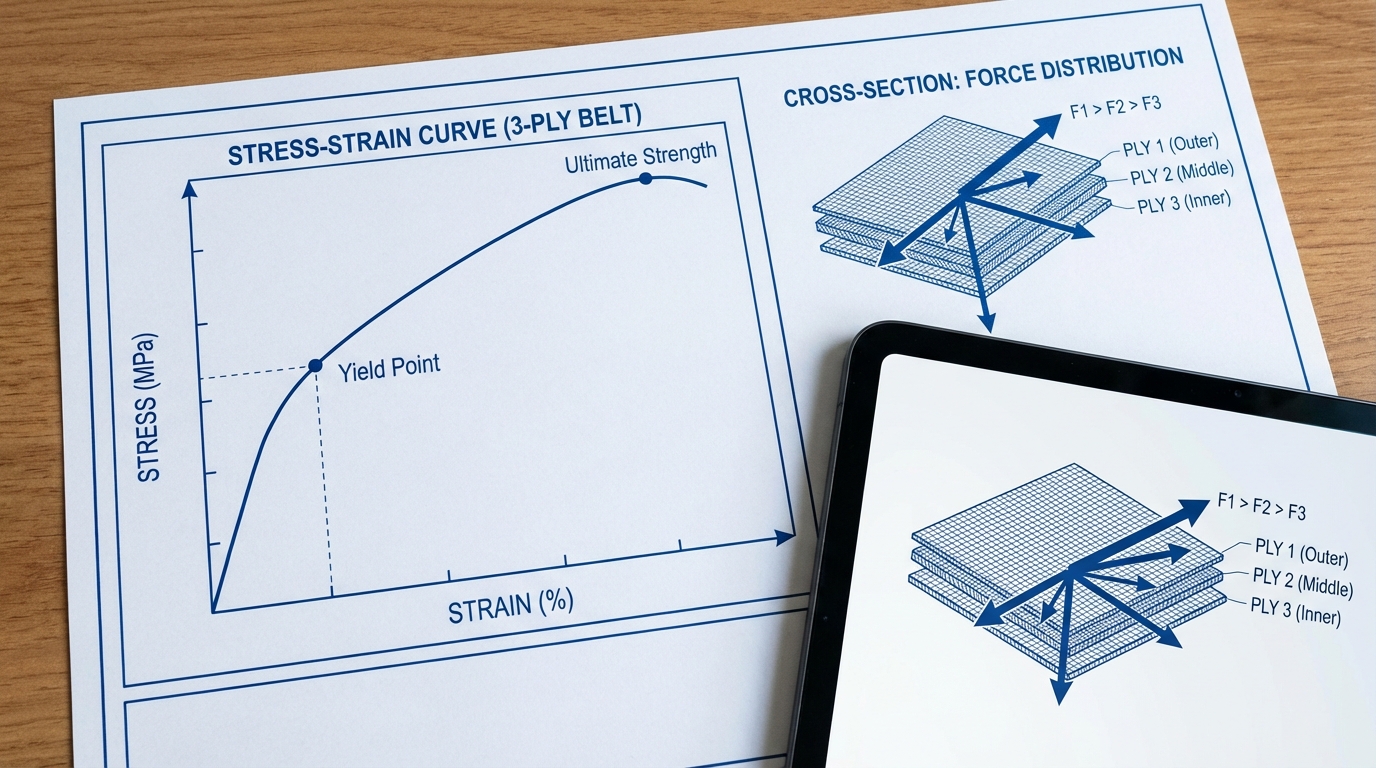
You calculate the strength of a 3 ply rubber conveyor belt by multiplying the number of plies by the tensile strength of each individual fabric layer. This 3 ply rubber conveyor belt rating, often expressed in N/mm or PIW, tells you exactly how much tension the belt can handle safely. Understanding these technical specifications is vital for ensuring your drive motor doesn’t overstress the belt carcass during start-up.
Understanding EP ratings and tensile limits
An EP630/3 belt, for example, has a total longitudinal breaking strength of 630 N/mm across its three plies. Each ply contributes roughly 210 N/mm to the overall capacity of the system.
- EP ratings define the fabric type and strength.
- Safety factors (usually 10:1) are applied for longevity.
- Working tension should never exceed the rated limit.
The reality is that underestimating tension requirements leads to immediate splice failure.
Safety factors for high-tension applications
Engineers apply safety factors to account for the dynamic loads during startup and the inevitable wear of the fabric over time. You must ensure your system’s peak tension remains well within the “elastic” zone of the belt’s performance curve.
Key Takeaway: Always verify that the combined strength of the three plies exceeds your system’s maximum calculated operating tension by a safe margin.
| Rating Example | Total Strength | Analysis | |
|---|---|---|---|
| EP315/3 | 315 N/mm | Best for light to medium bulk materials. | |
| EP800/3 | 800 N/mm | Designed for high-tension, heavy industrial hauls. |
Accurate strength calculations prevent the belt from stretching permanently or snapping under the strain of a full load.
What are the signs of 3 ply belt wear?
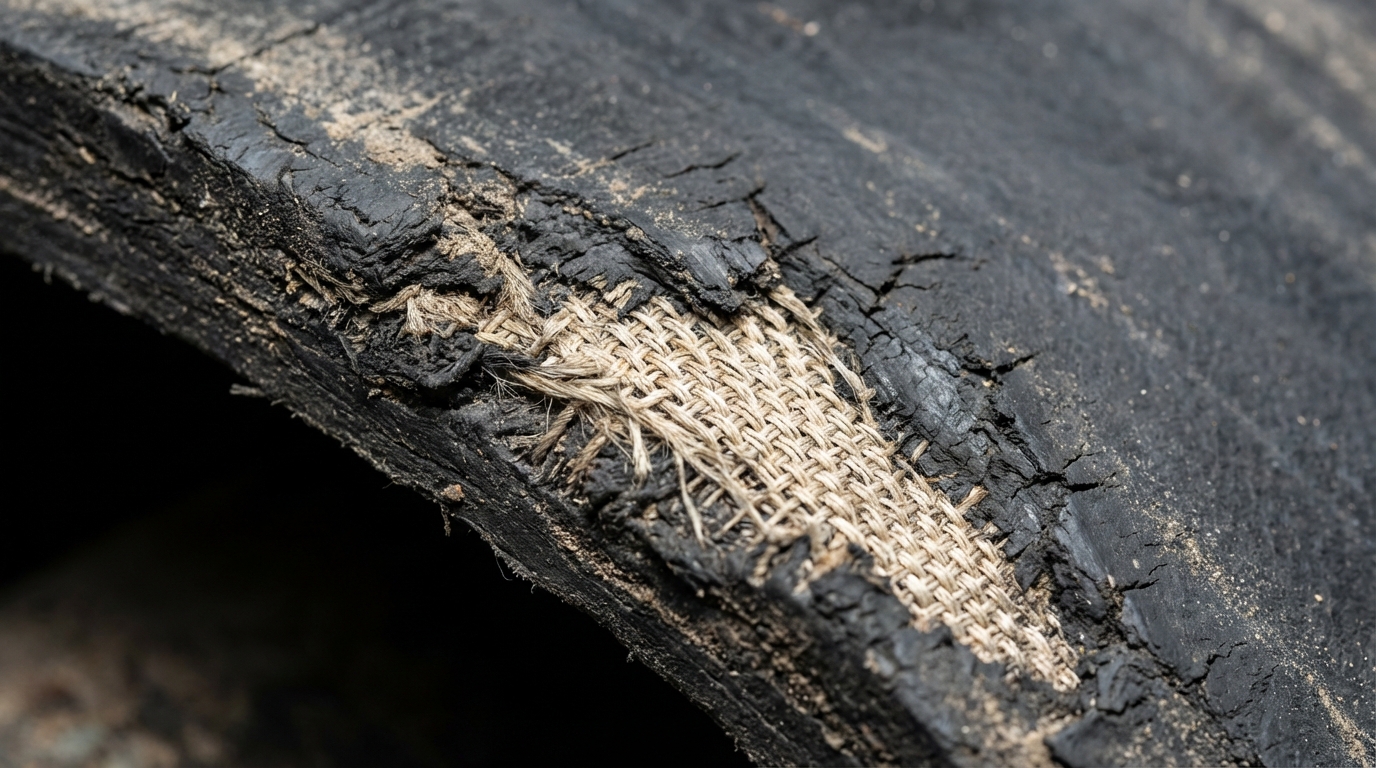
The most common signs of wear on a 3 ply rubber conveyor belt include thinning of the top cover and fraying along the belt edges. When your 3 ply rubber conveyor belt begins to show these symptoms, it indicates that the protective rubber is no longer shielding the internal plies. Catching these signs early can save you from an expensive emergency shutdown and potential damage to your rollers.
Identifying edge fraying and cover cracks
Edge fraying usually happens due to mistracking, where the belt rubs against the conveyor frame. Cracks in the top cover often signify that the belt has reached its fatigue limit or has been exposed to extreme weather.
- Exposed fabric plies absorb moisture and rot.
- Deep cracks allow debris to lodge in the carcass.
- Thinning rubber reduces the friction needed for drive.
Does it look like your belt is losing its “grip” on the material?
Measuring rubber thickness loss over time
Regularly using a gauge to measure the remaining cover thickness allows you to predict the belt’s remaining lifespan. Once the rubber wears down to the first fabric ply, the structural integrity of the belt begins to decline rapidly.
Key Takeaway: Visible fabric at the edges or surface is a critical warning that your 3-ply belt requires immediate replacement or repair.
| Wear Symptom | Potential Cause | Analysis | |
|---|---|---|---|
| Edge Fraying | Mistracking | Indicates a need for idler or pulley alignment. | |
| Cover Pitting | Impact Damage | Suggests that the loading height or impact bed needs adjustment. |
Monitoring these wear patterns helps you transition from reactive repairs to a much more efficient proactive maintenance schedule.
Can 3 ply rubber belts be customized?
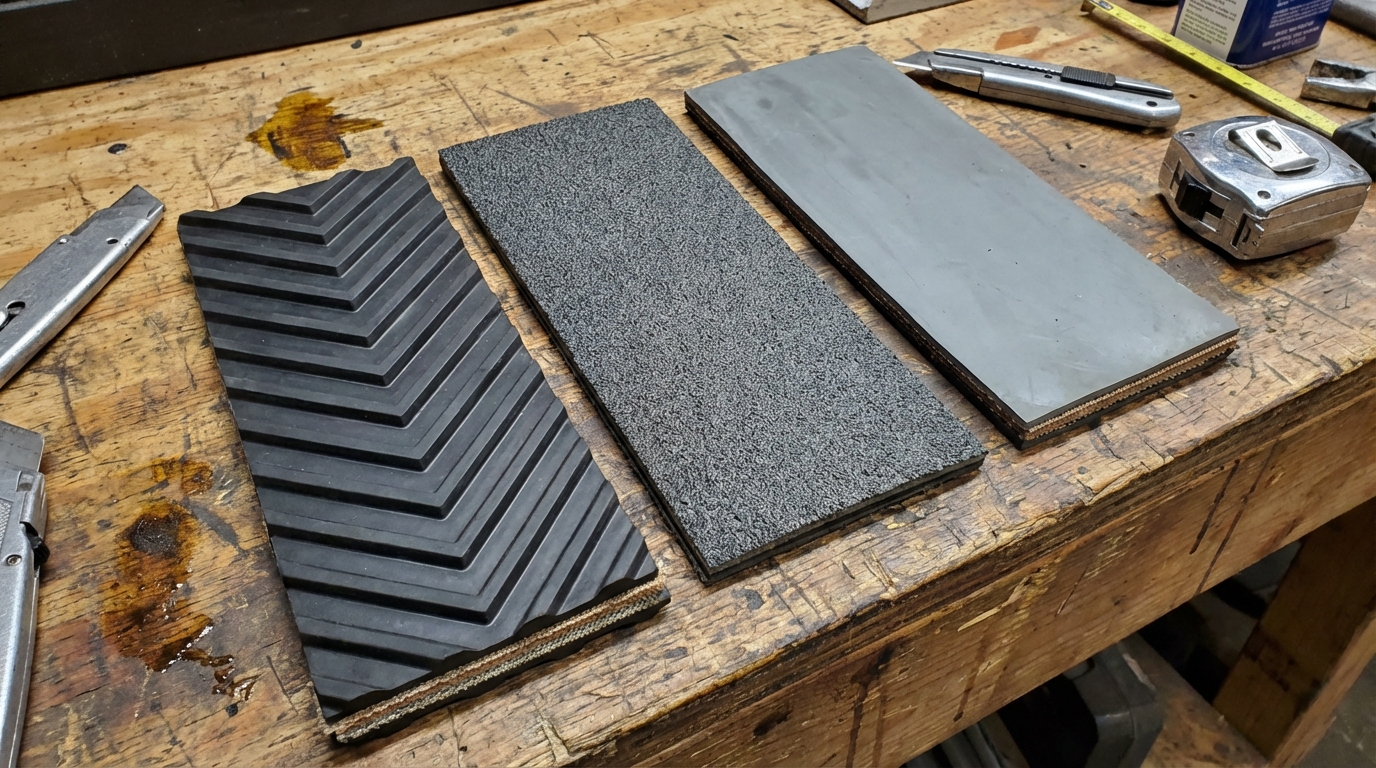
Yes, you can fully customize a 3 ply rubber conveyor belt by choosing specific cover thicknesses, rubber grades, and surface textures. Customizing your 3 ply rubber conveyor belt ensures it is perfectly tuned to the specific abrasive nature or moisture content of your cargo. Manufacturers can also add specialized edges or molded profiles to help with material containment on steep inclines.
Choosing specialized surface patterns
If you are moving materials up an incline, a smooth belt might allow for back-sliding. You can opt for chevron patterns or rough-top textures to increase the friction between the belt and the material.
- Chevron patterns for inclines up to 40 degrees.
- Rough top for packaging and slippery items.
- Crescent patterns for wet or muddy materials.
The bottom line? The right texture prevents material loss and increases throughput.
Adjusting cover thickness for abrasive loads
For handling sharp glass or heavy minerals, you can specify a thicker top cover, such as 6mm or 8mm. This “sacrificial” layer ensures the fabric plies remain protected even after years of high-abrasion contact.
Key Takeaway: Customization allows you to extend belt life by matching the rubber properties to the specific physical demands of your product.
| Custom Option | Purpose | Analysis | |
|---|---|---|---|
| Cleats/Sidewalls | Vertical Lift | Enables steep angle conveying without material spill. | |
| Heat/Oil Grade | Chemical Resistance | Tailors the belt carcass for specific industrial environments. |
A customized belt is a long-term investment that reduces the frequency of replacements and improves overall system reliability.
How do you maintain 3 ply rubber belts?
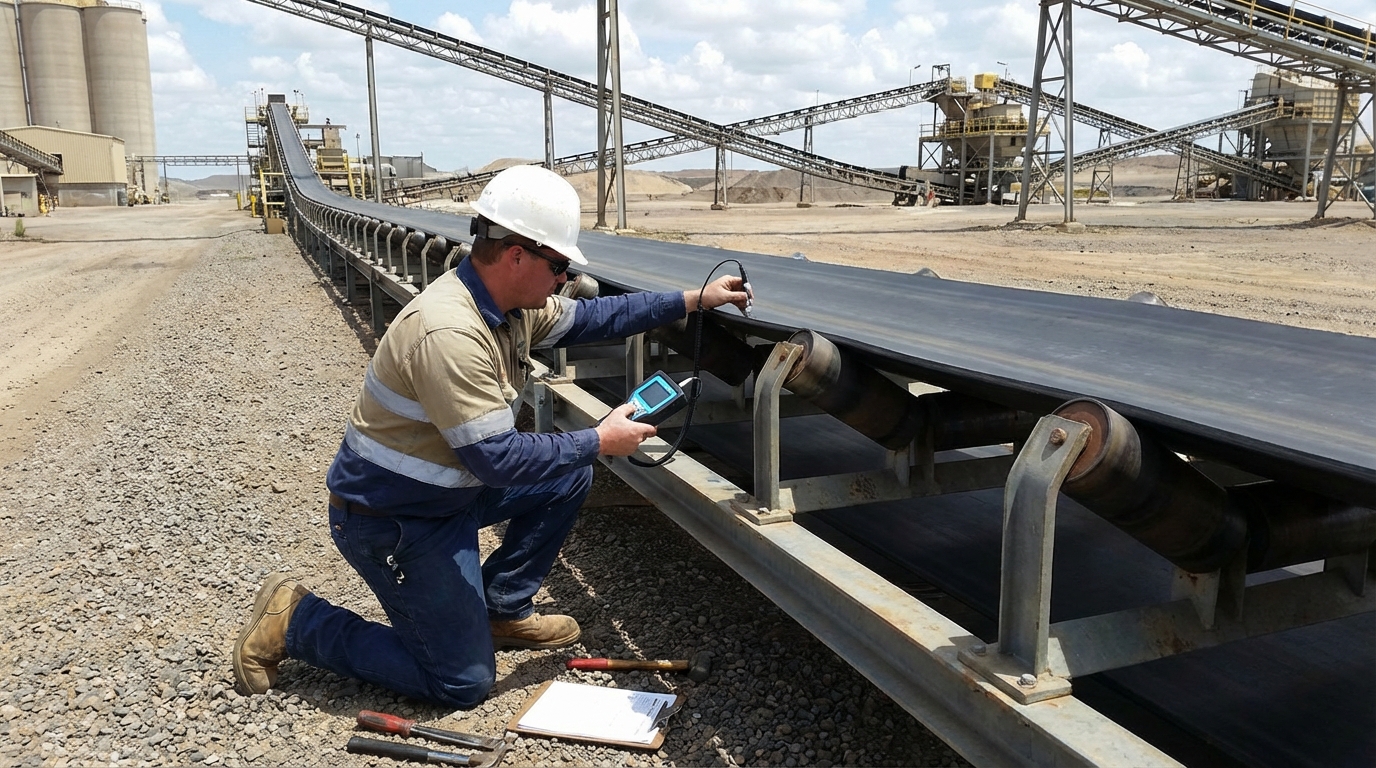
Proper maintenance involves regular tension checks and utilizing high-quality splicing techniques for your 3 ply rubber conveyor belt . Because a 3 ply rubber conveyor belt is a multi-layered structure, ensuring the splice is as strong as the rest of the belt is critical. You must also keep the rollers and idlers clean to prevent the belt from wandering and damaging its edges against the structure.
Proper splicing techniques for 3 ply cores
For 3-ply belts, step splicing is the most reliable method, where each layer is cut at an angle to create a large bonding surface. This ensures that the tension is transferred smoothly across the joint without creating a “bump” in the belt.
- Hot vulcanization for the strongest possible bond.
- Cold bonding for quick, on-site emergency repairs.
- Mechanical fasteners for temporary heavy-duty fixes.
Don’t settle for a weak joint; it’s the most common point of failure.
Regular inspection of rollers and idlers
Seized rollers can act like a brake, causing extreme heat and friction on the bottom cover of the belt. Checking for smooth rotation and proper alignment keeps the belt running centered and reduces the strain on your drive motor.
Key Takeaway: Consistent inspection and professional splicing are the two most important factors in maximizing the ROI of your 3-ply belt.
| Maintenance Task | Frequency | Analysis | |
|---|---|---|---|
| Tension Check | Weekly | Prevents slippage and excessive stretch of the fabric. | |
| Splice Inspection | Monthly | Identifies early signs of joint separation before a break occurs. |
By following a disciplined maintenance routine, you ensure that your conveyor system remains a productive asset rather than a source of downtime.
FAQ
Can I use a 3 ply belt on a system designed for 2 ply?Yes, but check your pulley diameters. A 3-ply belt is thicker and requires a larger minimum pulley diameter to avoid bending stress and potential cracking.
What’s the best way to clean a 3 ply rubber belt?Use a specialized belt scraper or brush system. These tools remove carry-back material effectively without gouging the rubber covers or damaging the fabric edges.
How do I know if my belt needs more plies?If your current belt is stretching excessively or showing carcass breaks under impact, you need more plies. Moving to a 3-ply construction adds the necessary tensile strength and impact resistance.
Can I repair a gouge in the top cover?Absolutely, you can use cold repair compounds or patches. Fixing surface damage early prevents moisture from reaching the fabric core and causing delamination.
How long should a 3 ply belt typically last?Life expectancy varies by material, but a well-maintained belt should last 3 to 5 years. Factors like abrasion levels, heat exposure, and proper tensioning play a major role.
Conclusion
Maximizing your industrial uptime requires a conveyor solution that can handle the punishing reality of heavy material transport. By choosing a 3-ply rubber construction, you solve the dual problems of carcass fatigue and impact damage that plague lighter belts. We provide high-performance conveyor components designed to withstand the most abrasive environments while maintaining operational flexibility. Our team is committed to delivering durable, customized belt solutions that lower your total cost of ownership through superior engineering. To find the perfect fit for your facility, please contact us today for expert guidance. At Zhenxing Rubber, our vision is to empower global industry with resilient infrastructure that never stops moving.