
Understanding the types of rubber conveyor belt is essential for efficient bulk material handling, helping reduce downtime, improve durability, and ensure safe, cost-effective operations.
What makes Grade A abrasion-resistant types of rubber conveyor belt essential for mining?
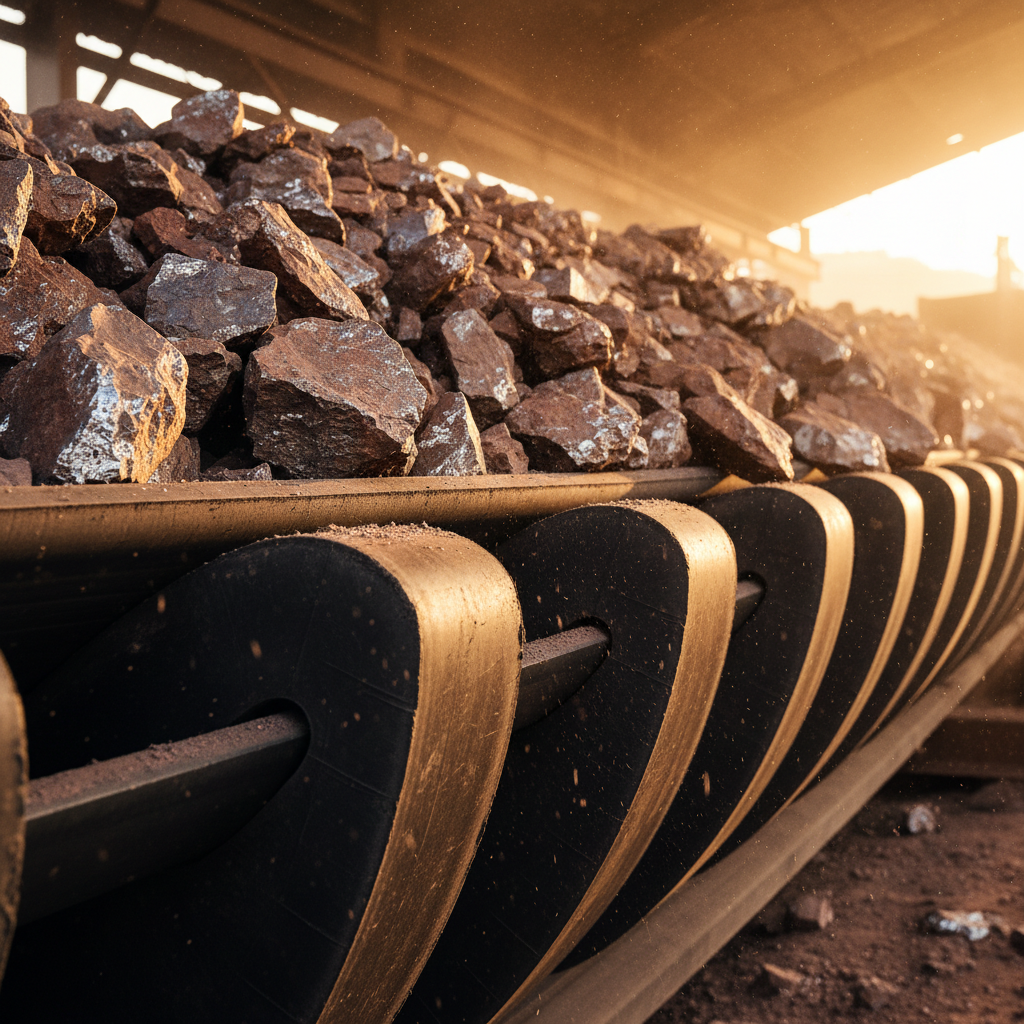
Grade A abrasion-resistant types of rubber conveyor belt are engineered specifically to withstand the punishing impact and shearing forces of jagged, high-density materials like iron ore. In heavy-duty mining, these belts use a high-tensile rubber compound that resists cutting and gouging from sharp rock edges.
Why is iron ore handling so destructive?
When you transport thousands of tons of iron ore daily, the abrasive nature of the mineral acts like industrial-strength sandpaper on your equipment. This constant friction strips away the top cover of standard belts, leading to carcass exposure and eventual snapping.
Think about it:
- High-velocity loading creates localized impact damage.
- Fines and dust increase the rate of surface erosion.
- Sharp edges can cause “through-cuts” in inferior rubber.
You need a belt that can take a beating and keep moving.
How do specialized scrapers impact belt life?
The cleaning systems you use, such as primary scrapers and skirting, exert continuous pressure on the belt surface to remove carryback. While essential for hygiene, these components can accelerate wear if the rubber grade isn’t hard enough to resist the friction.
The best part?
- Grade A rubber maintains its integrity against tungsten carbide blades.
- Reduced friction loss means lower energy consumption for your motors.
- Harder surfaces prevent the “grooving” effect caused by side skirts.
Key Takeaway: Grade A belts provide the highest level of mechanical durability for the world’s harshest commodities.
| Characteristic | Grade A Specification | Industrial Benefit | |
|---|---|---|---|
| Abrasion Loss | < 90 mm³ | Minimal surface wear over time | |
| Tensile Strength | High (20+ MPa) | Resists stretching and tearing | |
| Common Use | Mining, Ore, Quartz | Maximum uptime in heavy load zones |
Reliable abrasion resistance is the first line of defense against escalating operational expenses in open-pit mining environments.
How do types of rubber conveyor belt with Grade E properties prevent explosions?
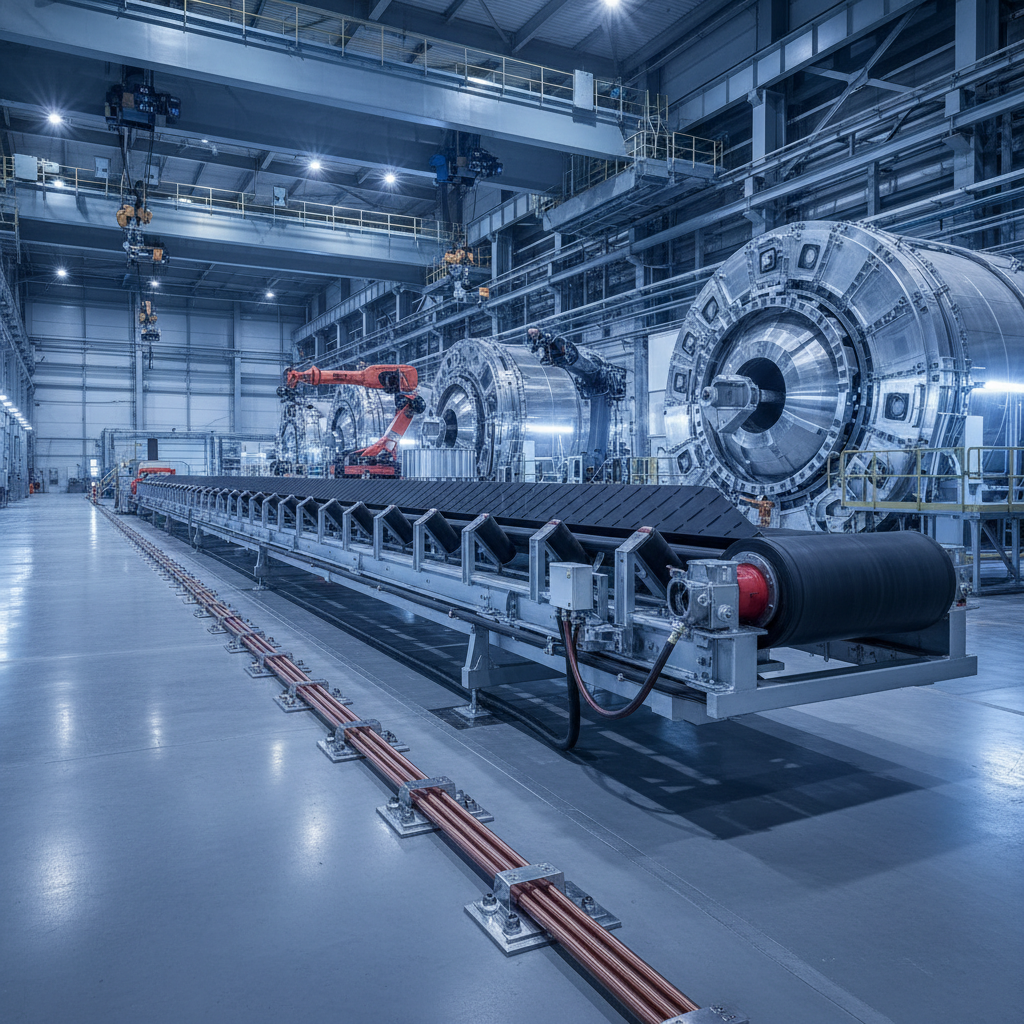
Grade E [types of rubber conveyor belt] function by safely conducting and discharging static electricity generated during the friction of high-speed material transport. These specialized belts prevent the accumulation of electrical charges that could otherwise lead to dangerous sparks in volatile industrial atmospheres.
What role do grounding paths play in safety?
In environments where fine dust or flammable gases are present, a single static spark can trigger a massive secondary explosion. You must ensure your belt acts as a bridge to a grounding path, effectively bleeding off electrons before they reach a critical voltage.
Look:
- Grade E compounds include carbon black for conductivity.
- Electrical resistance is kept strictly below 3×10⁸ ohms.
- Continuous discharge protects sensitive electronic sensors on the line.
You cannot afford to ignore the hidden dangers of static buildup.
Can aluminum refineries function without static discharge?
Refineries handling aluminum or other light metals often deal with fine particles that become highly charged during processing. Without Grade E belts, these particles would cling to the equipment or, worse, ignite in mid-air.
The best part?
- Safer working conditions for your plant floor personnel.
- Compliance with strict ATEX and national safety regulations.
- Reduced dust cling improves material transfer efficiency.
Key Takeaway: Static conductivity is a non-negotiable safety feature for any facility handling combustible powders or volatile liquids.
| Feature | Grade E Standard | Application Context | |
|---|---|---|---|
| Conductivity | Anti-static rubber | Chemical and metal processing | |
| Safety Rating | ISO 284 Compliant | Explosive atmosphere (Ex) zones | |
| Material Fit | Powders, Dust, Grains | Prevents ignition of airborne fines |
Selecting a conductive grade is essential for maintaining a risk-free environment in advanced manufacturing hubs.
Why are Grade F types of rubber conveyor belt mandatory for underground coal mines?
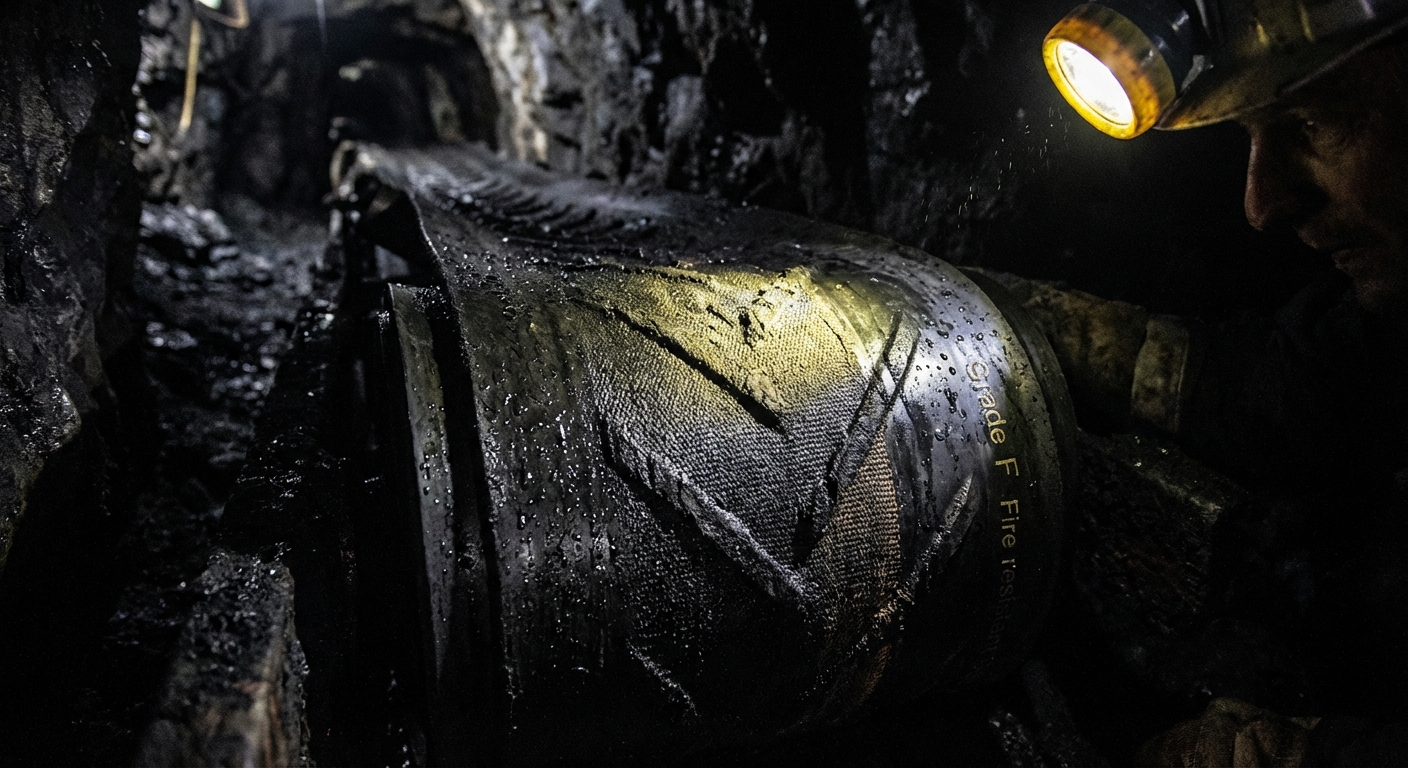
Grade F types of rubber conveyor belt are legally required in underground settings because they are formulated to be self-extinguishing and heat-resistant. These belts utilize flame-retardant chemicals that prevent the rubber from supporting a fire once the external ignition source is removed.
How does self-extinguishing rubber save lives?
In the confined spaces of an underground mine, smoke inhalation is often more deadly than the fire itself. You need a belt that will not act as a fuel source or a “wick” that spreads flames through the ventilation system.
Think about it:
- Grade F belts stop burning within seconds of flame removal.
- The rubber produces minimal toxic smoke during high-heat exposure.
- Fire-resistant covers protect the internal ep-conveyor-belt fabric carcass.
Your crew depends on these material properties to provide a window for safe evacuation.
When should you prioritize thermal ignition resistance?
If your facility operates power stations or coal handling units, the risk of a friction-induced fire is always present. A seized idler roller can generate enough heat to ignite a standard belt, making the Grade F rating a vital insurance policy.
Wait, there’s more:
- Fire resistance extends the life of the belt in high-heat zones.
- These belts meet the rigorous ISO 340 “Drum Friction” tests.
- Insurance premiums are often lower for fire-compliant facilities.
Key Takeaway: Grade F belts are the primary safety barrier against underground fires and smoke-related fatalities.
| Requirement | Grade F Metric | Operational Value | |
|---|---|---|---|
| Flame Test | Self-extinguishing < 3s | Prevents fire spread in tunnels | |
| Drum Friction | No ignition at 250°C | Safe during component failures | |
| Primary Sector | Underground Coal Mining | Total compliance with mining laws |
Maintaining a fire-safe infrastructure starts with the implementation of certified flame-retardant rubber compounds.
What defines Grade M and N types of rubber conveyor belt in standard operations?
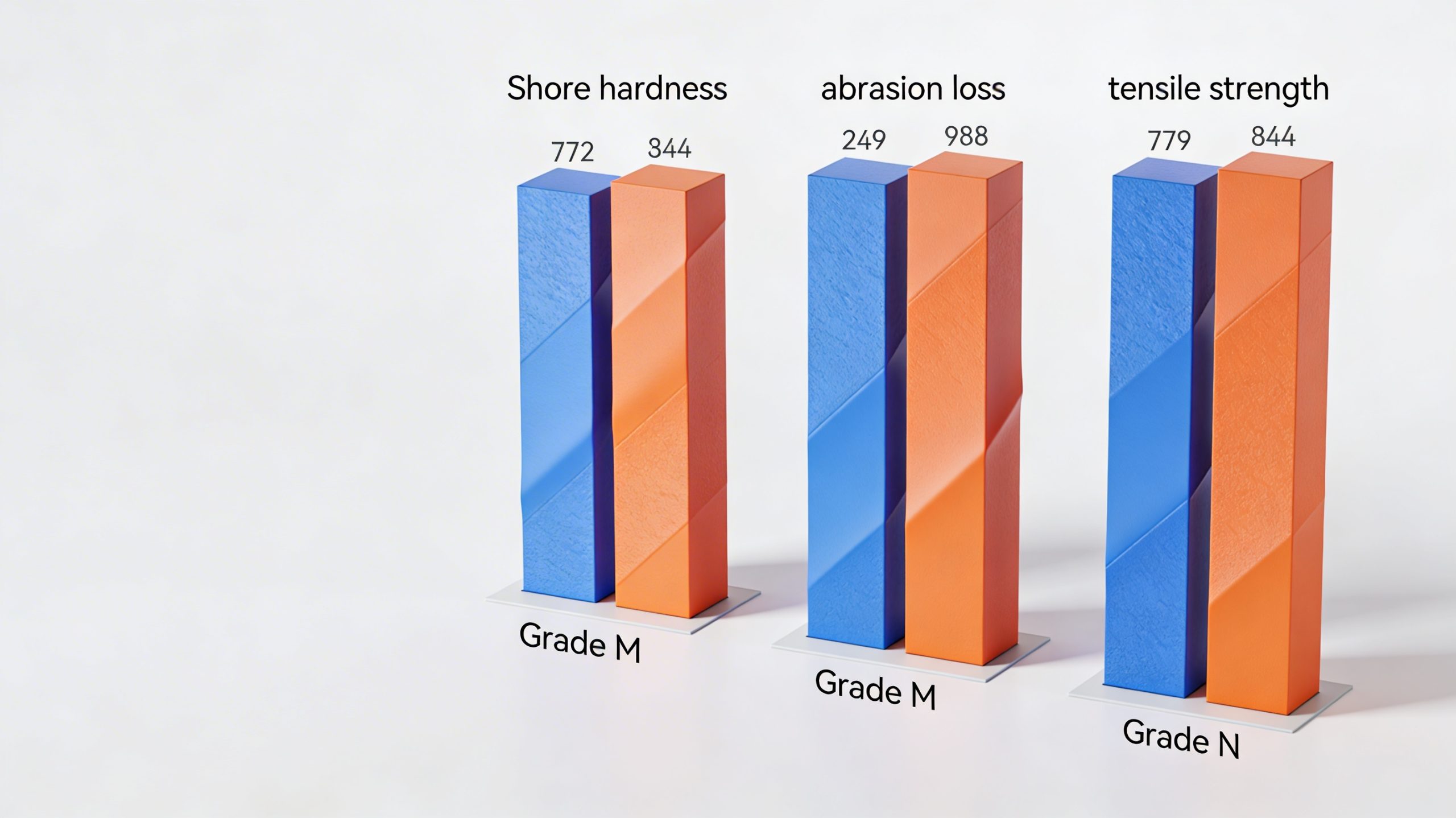
The primary difference between Grade M and Grade N [types of rubber conveyor belt] is the superior tensile strength and abrasion resistance of the Grade M compound. While both are considered general-purpose, Grade M is designed for heavy-duty stress, whereas Grade N is the economical choice for light material handling.
Why does tensile strength vary between these grades?
Grade M rubber is formulated with higher-quality polymers that allow it to withstand significant stretching and impact without permanent deformation. You will find that Grade M is much harder on the Shore A scale, providing a tougher surface for medium-to-heavy aggregates.
Look:
- Grade M typically offers 20 MPa tensile strength.
- Grade N offers a more modest 15 MPa for lighter loads.
- Higher elongation at break in Grade M prevents “brittle” snapping.
You should use Grade M when your system runs at high speeds or over long distances.
How do you choose the best fit for assembly lines?
For standard electronic assembly or packaging lines, a Grade N ep-conveyor-belt is usually more than sufficient and keeps your initial capital expenditure low. These belts handle non-abrasive items smoothly without the need for expensive, high-wear rubber additives.
The best part?
- Lower cost per meter for non-critical applications.
- Excellent flexibility for small pulley diameters.
- Reliable performance for boxes, plastics, and light parts.
Key Takeaway: Grade M is for heavy industrial endurance, while Grade N serves as the cost-effective standard for light-duty transport.
| Metric | Grade M (Premium) | Grade N (Standard) | |
|---|---|---|---|
| Tensile Strength | 20 MPa | 15 MPa | |
| Abrasion Loss | < 120 mm³ | < 200 mm³ | |
| Application | Heavy Aggregate, Steel | Packaging, Electronics |
Understanding the threshold between these two grades prevents you from overpaying for unnecessary performance in light-load scenarios.
When is the dual-rated Grade S among types of rubber conveyor belt necessary for power plants?
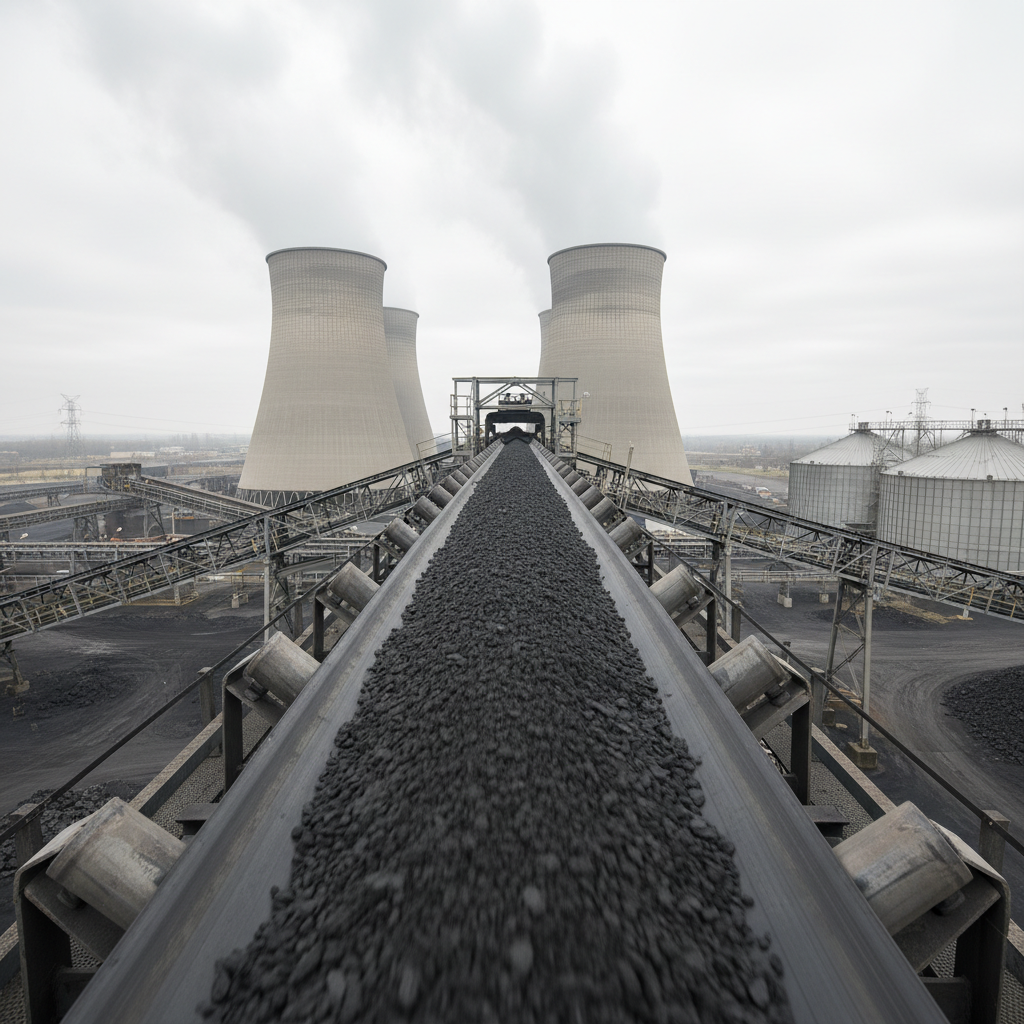
Grade S types of rubber conveyor belt are necessary when you require a combination of static conductivity (Grade E) and fire resistance (Grade F). This dual-property rating is the industry standard for thermal power stations where coal dust presents both an explosion risk and a fire hazard.
Why combine fire resistance with static conductivity?
The friction of moving dry coal creates massive amounts of static electricity, while the coal itself is highly flammable. If you used a belt that only resisted fire, a static spark could still ignite the coal dust floating in the air.
Think about it:
- Dual protection handles both the material and the environment.
- It eliminates the need to choose between two critical safety features.
- Grade S covers provide total peace of mind for site managers.
You need this “all-in-one” solution for the most hazardous bulk handling zones.
Can you reduce risk in hazardous dust zones?
In enclosed conveyors at power plants, dust accumulation is inevitable and highly dangerous. By using a Grade S belt, you ensure that the conveyor itself never becomes an ignition point, even if dust levels rise unexpectedly.
Fact is:
- Static is grounded through the belt’s conductive carcass.
- Fire-retardant properties prevent “hot spots” from spreading.
- These belts are often reinforced with high-strength fabric layers.
Key Takeaway: Grade S provides the comprehensive safety profile required for coal-fired power generation and hazardous silos.
| Safety Feature | Grade S Provision | Critical Function | |
|---|---|---|---|
| Anti-Static | Conductive surface | Prevents dust explosions | |
| Flame Retardancy | Self-extinguishing | Stops fire propagation | |
| Typical Site | Thermal Power Stations | Integrated risk management |
Combining these two protective layers is the most effective way to safeguard complex energy infrastructure against volatile accidents.
What are Grade Z special property types of rubber conveyor belt?
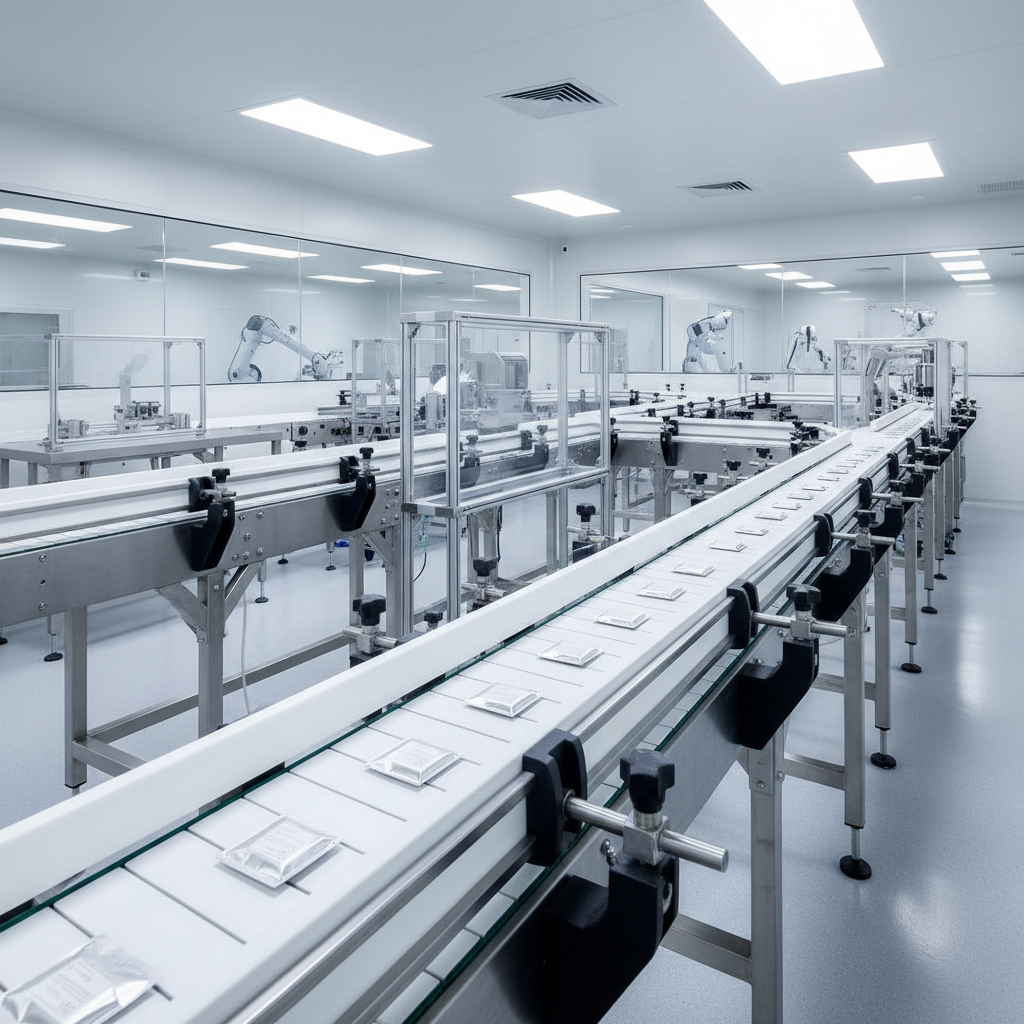
Grade Z [types of rubber conveyor belt] are custom-engineered solutions designed for niche applications that do not fall under standard abrasion or fire ratings. These belts are often found in the pharmaceutical, food-grade, or high-tech manufacturing sectors where contamination control and specific chemical neutrality are paramount.
Custom solutions for unique industrial needs
When you are working in a sterile environment, a standard black rubber belt is a liability because of carbon black shedding. Grade Z belts often use white or blue non-marking rubber that is FDA-approved and resistant to the aggressive cleaning agents used in medical facilities.
Wait, there’s more:
- Non-marking rubber prevents product discoloration.
- Anti-microbial additives inhibit bacterial growth on the belt.
- Smooth surface finishes allow for precise robotic picking.
You should opt for Grade Z when standard industrial grades threaten your product purity.
Why prioritize high-key visibility in tech plants?
In automated factories, optical sensors often need a high-contrast background to track items on the move. Grade Z belts can be manufactured in specific colors to enhance the accuracy of your vision-guided sorting systems.
The best part?
- Improved scanning accuracy for automated packaging.
- Easy visual inspection for hygiene and belt wear.
- Customized textures for handling fragile or slippery items.
Key Takeaway: Grade Z is the “catch-all” category for high-precision, sanitary, or highly specialized industrial requirements.
| Specialization | Grade Z Feature | Industry Application | |
|---|---|---|---|
| Coloration | White / Blue / Green | Food, Pharma, Vision Systems | |
| Hygiene | Anti-microbial / FDA | Sterile manufacturing lines | |
| Texture | Grip-top / Low-friction | Fragile electronics handling |
Tailoring your belt grade to the specific needs of your product is the best way to ensure quality control in high-tech industries.
How do types of rubber conveyor belt rated for high heat manage 400°C clinker?
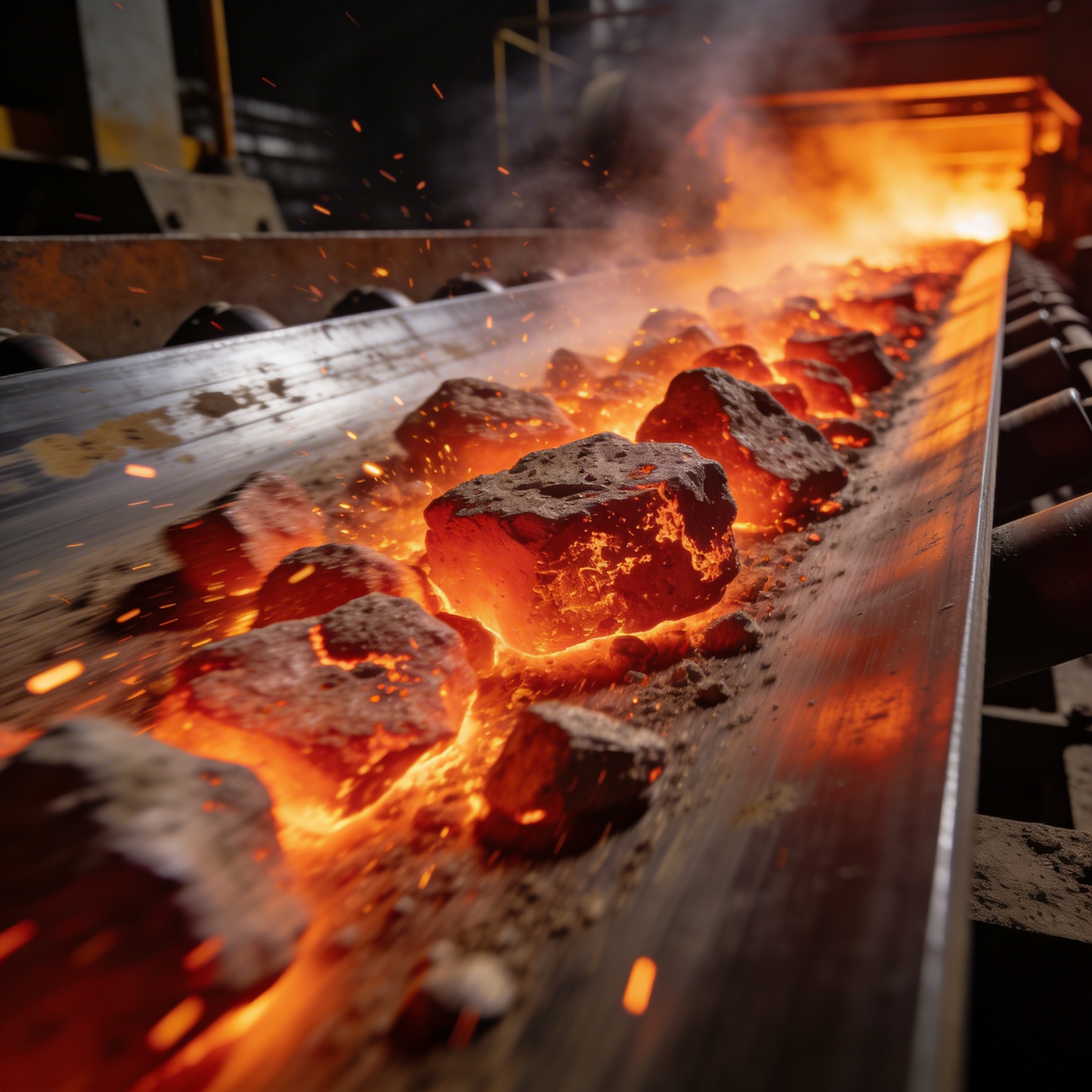
Heat-resistant types of rubber conveyor belt utilize Ethylene Propylene Diene Monomer (EPDM) or specialized synthetic rubbers that remain flexible even when transporting materials like cement clinker at 400°C. These belts are designed to resist “hardening” and cracking, which are the two most common failure modes for standard rubber exposed to high temperatures.
Managing clinker and foundry temperatures
In a cement plant, clinker leaves the kiln at extreme temperatures that would melt a standard belt within minutes. You need a Grade HR belt that can dissipate heat through its cover while the internal layers maintain their structural bond.
Look:
- Grade HR belts are rated T1 (125°C) up to T3 (200°C+).
- High-grade EPDM can handle peak temperatures up to 400°C.
- Heat-resistant covers prevent “heat-checking” or surface cracking.
You must match the specific “T” rating to your material’s average temperature.
ISO 433 standards for thermal resistance
The ISO 433 standard provides a framework for how long a belt can withstand specific heat levels before the rubber loses its elasticity. By following these guidelines, you can predict the service life of your belt and schedule maintenance before a catastrophic blowout occurs.
Think about it:
- Regular temperature monitoring extends the belt’s life.
- Proper cooling zones on the conveyor line assist the rubber.
- High-heat belts prevent the fabric carcass from “de-plying.”
Key Takeaway: Grade HR belts are essential for metallurgy and cement production, where thermal degradation is the primary threat.
| Heat Rating | Max Constant Temp | Common Material | |
|---|---|---|---|
| Grade T1 | 125°C | Foundry sand, Coke | |
| Grade T2 | 150°C | Sinter, Phosphate | |
| Grade T3 | 200°C+ | Cement clinker, Slag |
Investing in high-temperature rubber ensures your production line doesn’t grind to a halt during peak kiln operations.
Why must types of rubber conveyor belt for chemical plants be Grade OR?
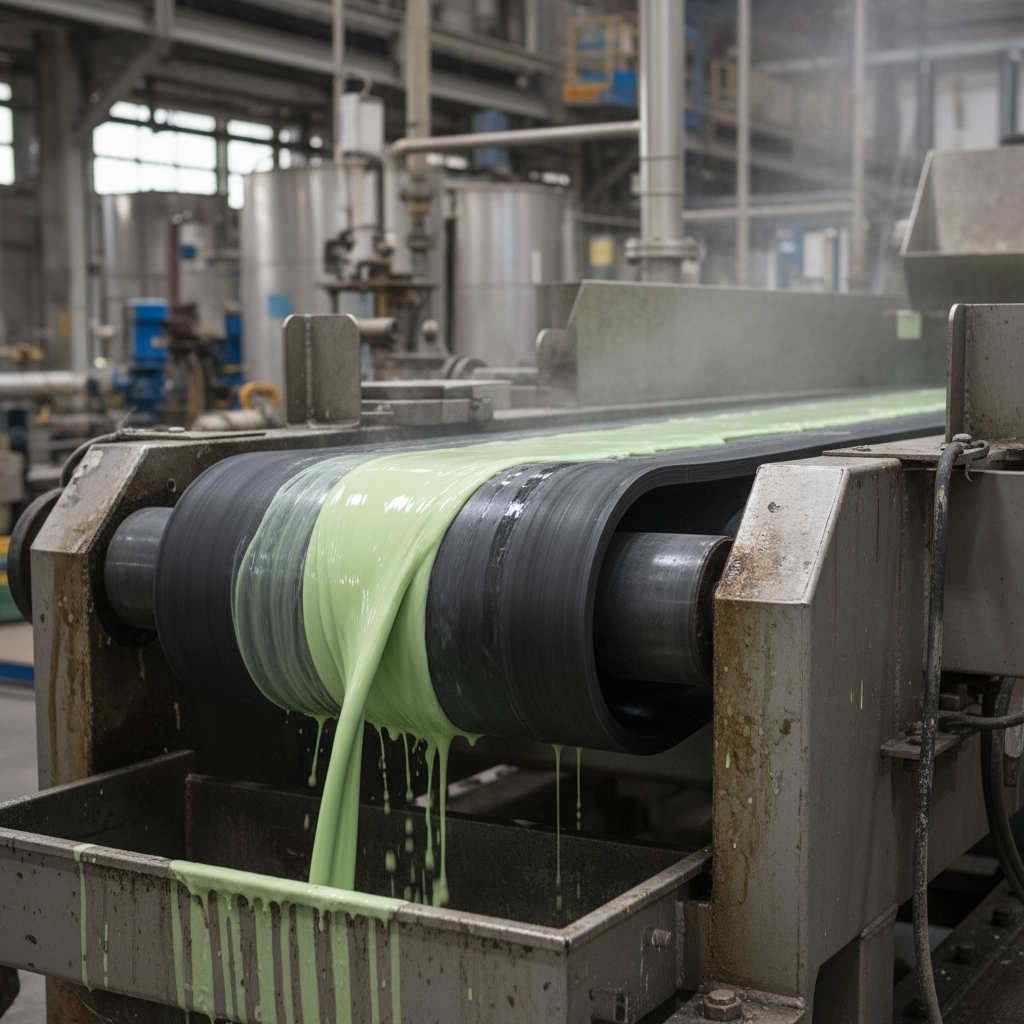
Grade OR (Oil Resistant) [types of rubber conveyor belt] are mandatory in environments where the rubber will come into contact with mineral oils, vegetable fats, or animal lipids. Standard rubber swells and softens when exposed to oil, but Grade OR compounds use Nitrile (NBR) to maintain their shape and mechanical strength.
Resisting acids and alkalis in processing
In many chemical plants, belts are subjected to more than just oil; they face a barrage of acidic or alkaline splashes. Grade OR belts, sometimes referred to as Grade C (Chemical), are formulated to resist the corrosive “eating” effect of these substances.
Fact is:
- Oil-resistant rubber prevents the belt from “waviness.”
- Chemical resistance stops the rubber from turning into a sticky paste.
- These belts are vital for fertilizer and pulp processing plants.
You cannot use a general-purpose belt if even a trace of oil is present.
Preventing rubber swelling from oil contact
When oil penetrates standard rubber, it causes the belt to expand, leading to tracking issues and catastrophic edge wear. You will notice the belt “smiling” or curling upwards at the edges, which is a clear sign of oil-induced swelling.
The best part?
- Grade OR belts maintain a flat profile for perfect tracking.
- Increased resistance to grease means easier cleaning.
- Longer service life in fertilizer and automotive plants.
Key Takeaway: Grade OR and Chemical-resistant belts are the only way to prevent rubber degradation in oily or corrosive environments.
| Resistance Type | Chemical Compound | Industrial Benefit | |
|---|---|---|---|
| Oil (OR) | Nitrile Rubber (NBR) | No swelling or softening | |
| Chemical (C) | Specialized Elastomers | Resists acid/alkali corrosion | |
| Application | Fertilizers, Recycling | Stable performance in fluids |
Using a correctly rated oil-resistant belt eliminates the expensive tracking failures caused by rubber saturation.
Can Grade K types of rubber conveyor belt meet the strictest DIN safety standards?
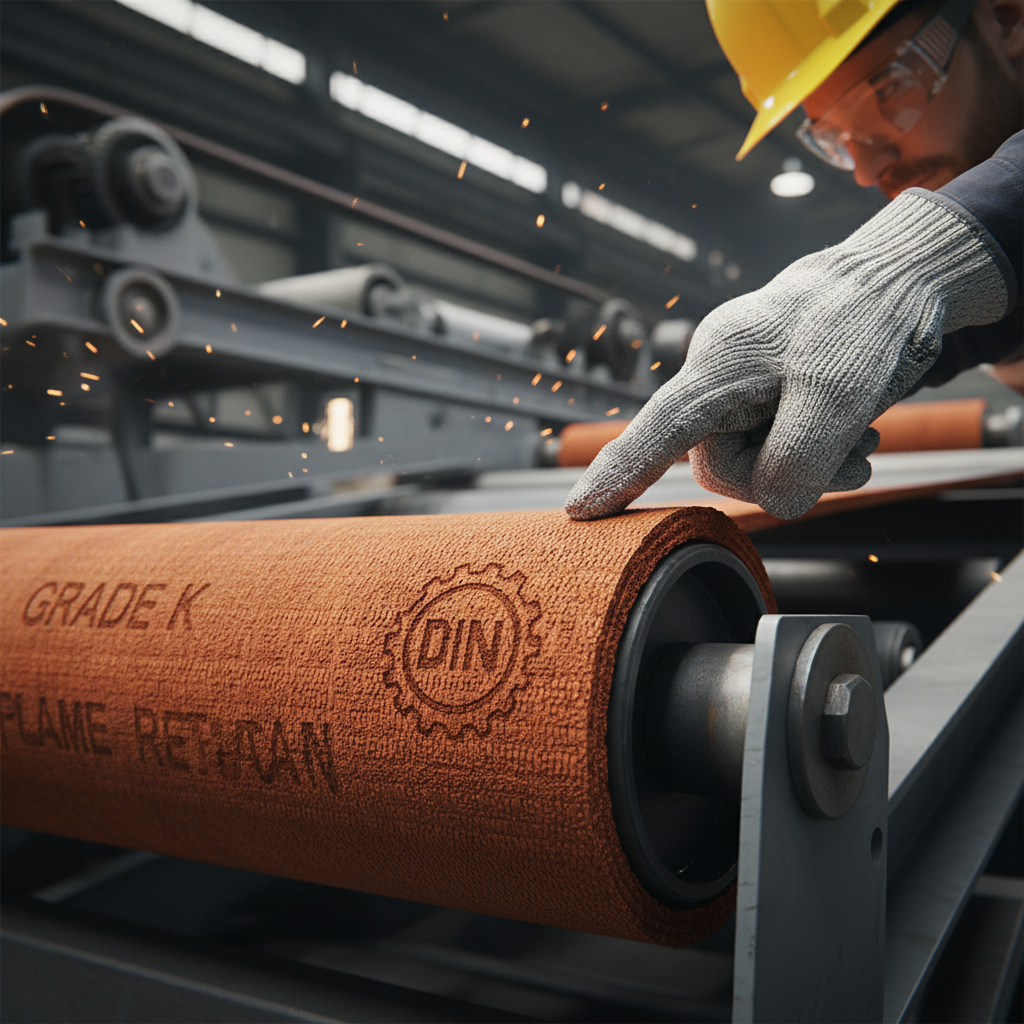
Grade K types of rubber conveyor belt are specifically designed to meet the DIN 22102 safety standards, which are among the most stringent flame-retardancy requirements in the world. These belts go beyond basic fire resistance by ensuring that even the internal fabric plies and the bond between layers are protected from ignition.
Compliance with DIN 22102 safety standards
When you operate in European markets or follow high-tier safety protocols, a basic fire rating isn’t enough. You need the DIN “K” certification to prove that your entire belt assembly—not just the cover—meets the flame-spread and electrical-conductivity requirements.
Look:
- Grade K includes mandatory anti-static properties.
- It covers a specific level of flame retardancy for above-ground use.
- Every belt is embossed with the DIN stamp for easy inspection.
You can simplify your safety audits by using pre-certified Grade K components.
Mitigating risks in volatile environments
In grain silos or chemical storage, the risk of a dust fire is a constant threat. Grade K belts act as a safeguard, ensuring that if a fire does start, the conveyor belt will not serve as the medium that carries the fire to other parts of the facility.
Wait, there’s more:
- Certified belts reduce your legal and environmental liability.
- They are built with high-grade synthetic fibers for strength.
- Resistant to the heat of friction-induced “smoldering.”
Key Takeaway: Grade K represents the gold standard for flame retardancy and safety compliance in modern industrial plants.
| Standard | Grade K Feature | Usage Requirement | |
|---|---|---|---|
| DIN 22102 | Flame & Static Rated | High-risk industrial zones | |
| Above Ground | Grain / Chemical / Silo | Non-mining flame protection | |
| Inspection | Embossed Certification | Simplifies safety compliance |
Strict adherence to DIN standards ensures that your facility remains at the cutting edge of global industrial safety.
How do hybrid Grade MA types of rubber conveyor belt improve system efficiency?
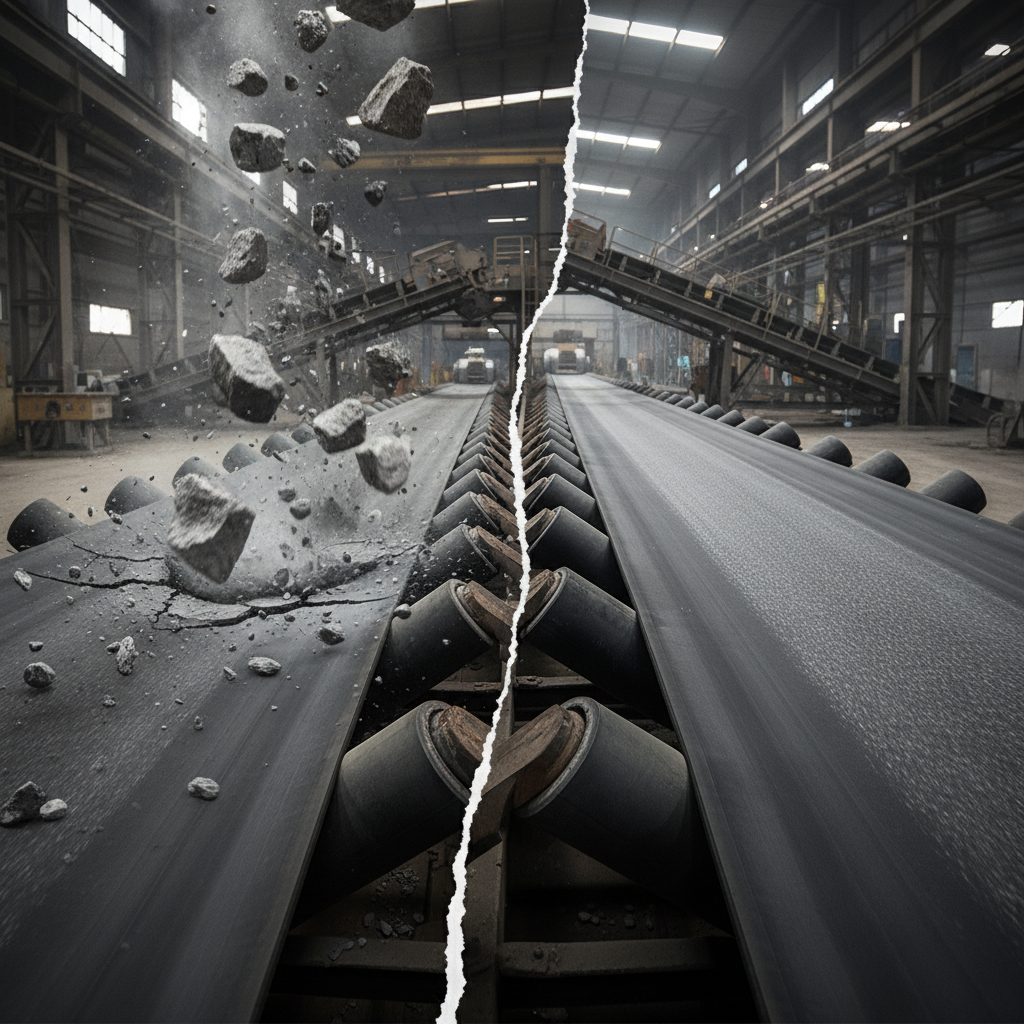
Hybrid Grade MA [types of rubber conveyor belt] improve efficiency by combining the extreme hardness and abrasion resistance of Grade A with the high tensile strength of Grade M. This combination allows the belt to handle high-impact loading of heavy boulders while simultaneously resisting the surface wear caused by high-speed transport.
Understanding MA and other hybrid specs
You often face situations where a single grade isn’t enough; for example, a belt that needs to be both oil-resistant and heat-resistant. Hybrid grades allow you to customize the top and bottom covers separately to address specific challenges on each side of the conveyor.
Think about it:
- A Grade MA belt can carry sharp rocks without puncture.
- The hybrid compound stays flexible for better troughing.
- You can specify different grades for the top and bottom covers.
You get the best of both worlds without compromising on any single metric.
Balancing cost and conveyor longevity
While hybrid belts like corrugated-sidewall-conveyor-belt designs or Grade MA covers have a higher upfront cost, they significantly lower your “cost per ton.” By extending the replacement interval from 12 months to 24 or 36 months, the long-term savings are massive.
The best part?
- Fewer maintenance shutdowns during peak season.
- Better resistance to “tramp metal” and accidental impact.
- Optimized performance for specific, difficult materials.
Key Takeaway: Hybrid grades like MA offer a tailored approach that maximizes durability in complex material handling scenarios.
| Hybrid Type | Combination | Ideal Use Case | |
|---|---|---|---|
| Grade MA | Abrasion + High Strength | Heavy-duty rock crushing | |
| Grade HR/OR | Heat + Oil Resistant | Specialized chemical processing | |
| Dual Cover | Different Top/Bottom | Uneven wear environments |
Customizing your belt grade is the final step in moving from reactive maintenance to a proactive, high-efficiency operation.
Choosing the correct grade is the most significant decision you will make regarding your conveyor’s operational lifespan. Whether you are dealing with the extreme heat of a cement kiln, the volatile dust of a coal plant, or the abrasive rocks of a mine, there is a specific rubber formulation designed to solve your problem. Our team is ready to help you analyze your material characteristics and select the optimal belt for your unique environment. Contact us today to receive a professional audit of your current system and discover how the right grade can transform your facility’s efficiency.
FAQ
Can I use a Grade N belt for iron ore if I have a low budget?No, because the sharp edges of iron ore will shred a Grade N belt in a fraction of the time it takes for a Grade A belt to wear. While you save money upfront, the cost of frequent replacements and labor will quickly exceed the price of the correct Grade A belt.
What’s the best grade for a facility that handles oily wood chips?Grade OR is the absolute best choice. Oily wood chips contain natural resins and moisture that will cause standard Grade M or N belts to swell and mistrack, whereas Grade OR is chemically engineered to remain stable in the presence of these oils.
How do I know if my current belt is anti-static?You should look for an “E”, “S”, or “K” marking embossed on the belt’s edge or surface. If you are unsure, a technician can perform a surface resistance test using a megohmmeter to see if it falls below the safety threshold of
3×10⁸
ohms.
Can I use a heat-resistant belt (HR) for cold materials?Yes, but it is not recommended because Grade HR rubber is more expensive and often has lower abrasion resistance than a dedicated Grade A belt. Using an HR belt for cold materials is an inefficient use of your maintenance budget.
What’s the best way to prevent fire in an underground mine?The only safe option is to use a certified Grade F or Grade S belt. These belts are the only ones with the self-extinguishing properties required by law to prevent a small friction fire from turning into a life-threatening disaster.