
A high-quality skirting rubber conveyor belt system prevents material spillage and dust leakage at transfer points, protecting equipment, reducing maintenance, and improving workplace safety and efficiency.
What is a skirting rubber conveyor belt system?
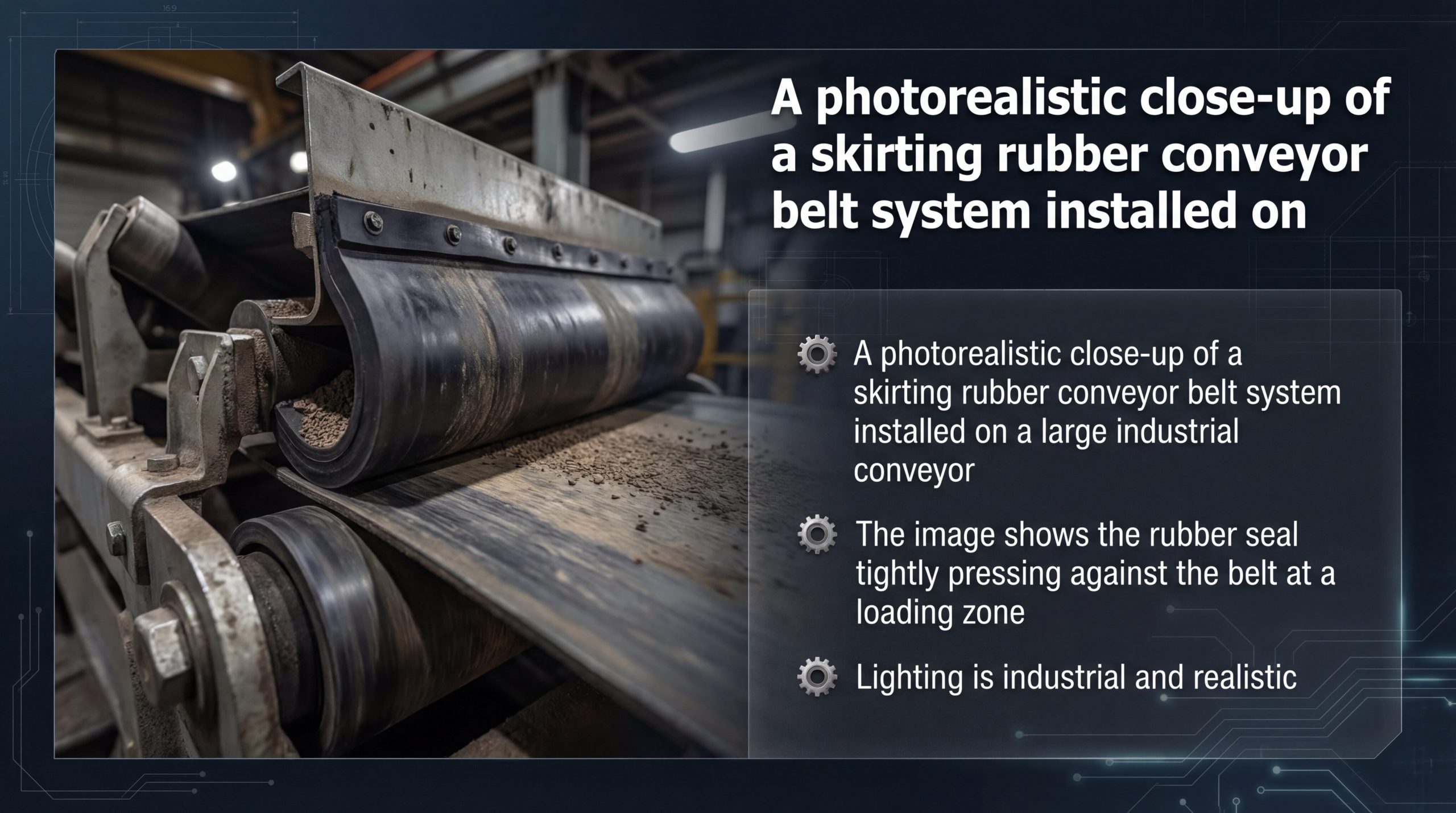
A skirting rubber conveyor belt system is a primary containment seal installed between a stationary chute and a moving conveyor belt to prevent material loss. It consists of flexible skirting rubber conveyor belt strips that apply light pressure to the belt surface. This mechanical interface ensures that bulk solids remain centered and dust remains trapped within the system.
The Anatomy of a Transfer Point Seal
The interface between the stationary chute wall and the moving belt surface is where the magic happens. By using specialized mounting hardware, the rubber strip is positioned to close the gap that naturally exists at loading zones.
Here is the deal:
- The seal must be flexible enough to follow belt vibrations.
- It requires rigid backing plates to maintain structural shape.
- Proper alignment prevents the seal from acting as a destructive scraper.
Distinguishing Between Primary and Secondary Seals
Modern systems often employ a dual-layered approach for maximum efficiency. The primary seal handles the heavy bulk load, while a secondary “outrigger” seal captures the remaining fine dust and particulates.
But wait, there is more:
- Primary seals are usually thicker and more rigid to resist material pressure.
- Secondary seals are softer to create a vacuum-like contact with the belt.
- Combining both creates a zero-leakage environment at high-speed transfer points.
| Feature | Description | |
|---|---|---|
| Primary Function | Containment of bulk solids at loading zones. | |
| Mechanical Interface | Clamps, backing plates, and rubber strips. | |
| Key Metric | Seal pressure vs. friction coefficient. |
This fundamental understanding of the skirting anatomy allows operators to diagnose where containment failures occur.
Key Takeaway: A skirting system is the primary seal between the stationary chute and the moving belt, designed to contain material and suppress dust.
Why is a skirting rubber conveyor belt essential for dust control?
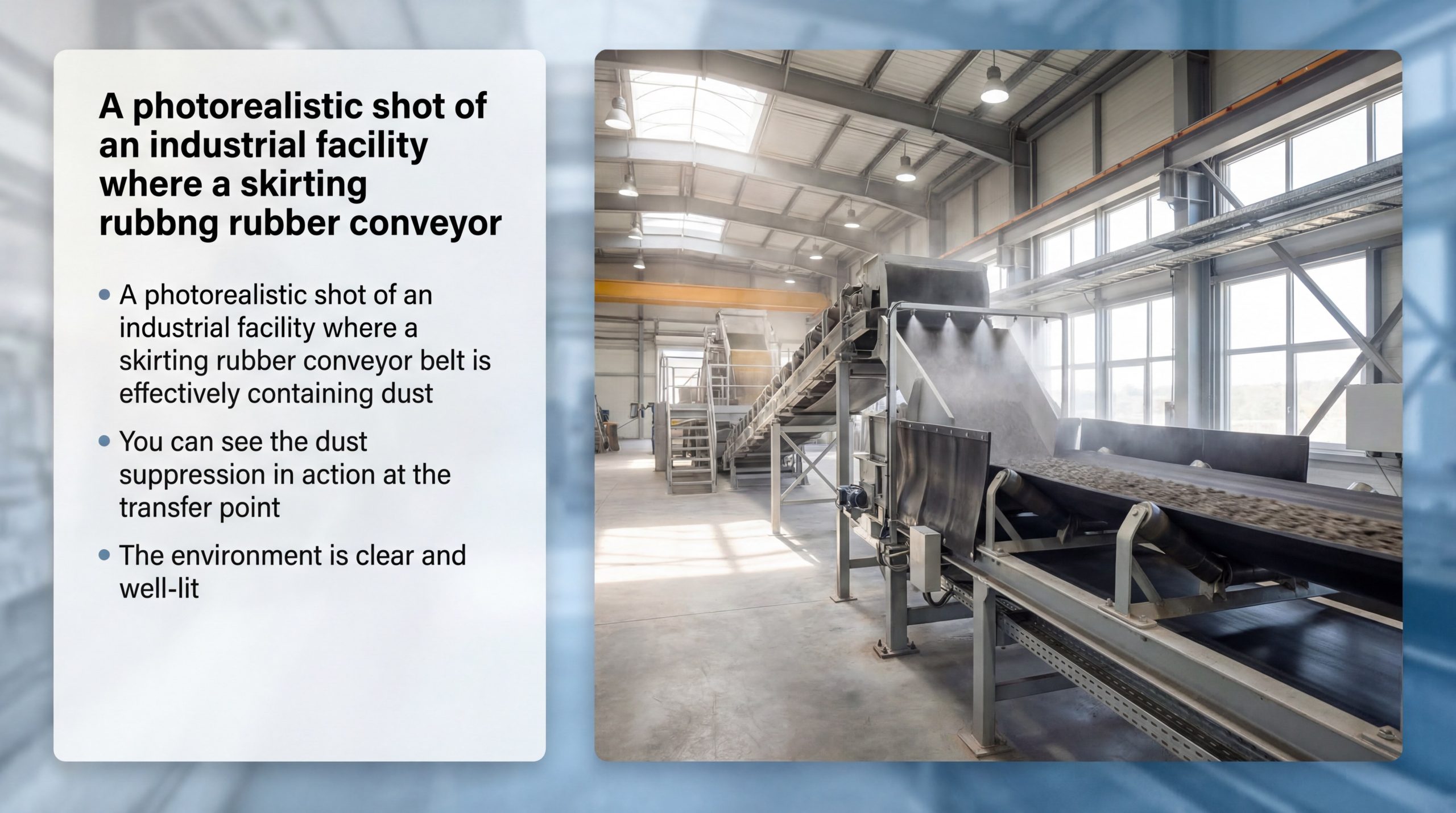
Skirting rubber conveyor belt components are essential for dust control because they create the negative pressure environment needed to keep fines on the belt. When material drops, it displaces air, forcing dust through any available gap. A high-quality seal acts as a barrier, ensuring that these airborne particulates are contained rather than released into the facility.
Mitigating Airborne Particulates (PM10 and PM2.5)
Controlling fine dust is critical for meeting strict MSHA and OSHA air quality standards. Fine particles like PM2.5 are invisible to the naked eye but can travel deep into the lungs of your workforce.
Here is the deal:
- Proper skirting reduces the “plume” effect at the exit of transfer chutes.
- It allows dust suppression systems (like misters) to work more effectively.
- Maintaining an airtight seal protects the long-term health of every site employee.
Preventing Dust-Induced Bearing Failure
Dust isn’t just a health hazard; it is a mechanical killer for your idlers and pulleys. Fine grit acts like sandpaper once it enters a bearing housing, leading to rapid component degradation and seized rollers.
But wait, there is more:
- Seized idlers increase the power consumption of your drive motors.
- Friction from stalled rollers can become a major fire risk in mining.
- A well-sealed skirting rubber conveyor belt keeps the environment clean and your bearings spinning freely.
| Factor | Impact of Proper Skirting | |
|---|---|---|
| Airflow | Reduced velocity at exit points. | |
| Visibility | Significantly improved in enclosed galleries. | |
| Cleanup Time | Reduced by up to 80% in high-dust areas. |
Reducing dust emissions directly translates to a safer, more visible, and more mechanically reliable production line.
Key Takeaway: Dust isn’t just an environmental hazard; it is lost product. Skirting creates the negative pressure environment needed to keep fines on the belt.
How does a skirting rubber conveyor belt prevent material spillage?
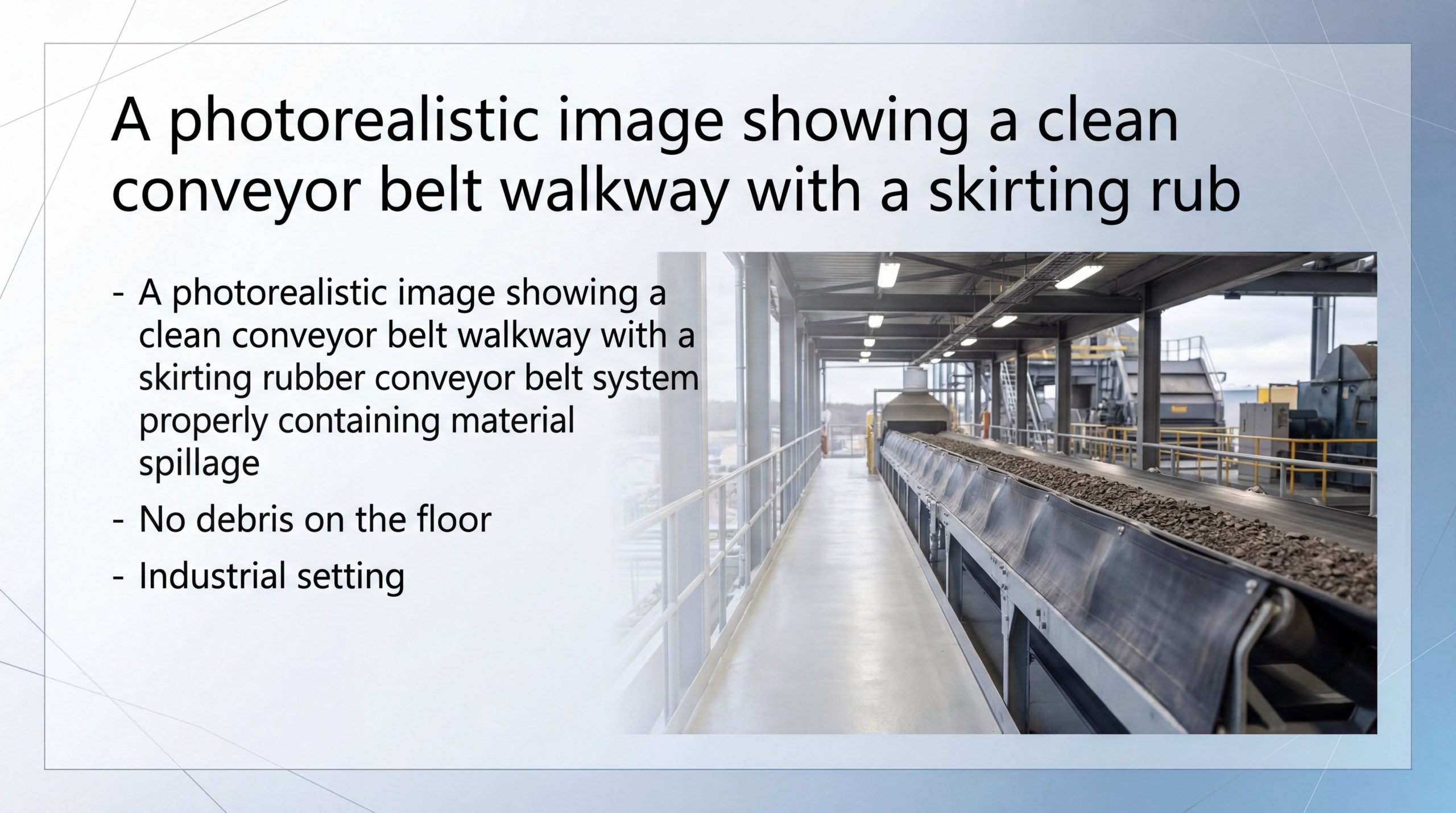
A skirting rubber conveyor belt prevents spillage by acting as a physical side-wall that absorbs the lateral energy of falling material. Without this barrier, large lumps and fines would simply bounce off the belt edges during the loading process. By containing the load until it stabilizes, the skirting ensures all material stays centered for the journey.
Managing High-Impact Loading Zones
Think about this: when material drops from a height, it doesn’t just sit still; it explodes outward in every direction. The skirting must be strong enough to resist this force while remaining flexible enough not to damage the belt cover.
Here is the deal:
- Thick rubber strips absorb the impact energy of falling rocks.
- The seal keeps the “boil” of the material within the chute’s footprint.
- Properly adjusted skirting guides the flow into a centered, stable profile.
The Role of Proper Belt Support
Skirting cannot work in a vacuum; it requires a flat, stable belt profile to maintain a consistent seal. If the belt sags between idlers, “scalloping” occurs, creating gaps where material can easily escape under the rubber.
But wait, there is more:
- Impact beds provide the continuous support needed for a perfect seal.
- Slider bars prevent the belt from bouncing as the load hits the surface.
- Combining a skirting rubber conveyor belt with solid support eliminates the primary causes of transfer point spillage.
| Cause of Spillage | Skirting Solution | |
|---|---|---|
| Belt Sag | Skirting used with slider bars to maintain seal. | |
| Material Turbulence | Extended skirting length for load stabilization. | |
| Off-Center Loading | Adjusted skirting profiles to guide material. |
Material containment is the most visible benefit of skirting, significantly reducing the labor required for manual shoveling.
Key Takeaway: Spillage causes belt damage and safety hazards. Skirting acts as a physical barrier to keep the load centered.
What materials are used in a skirting rubber conveyor belt?
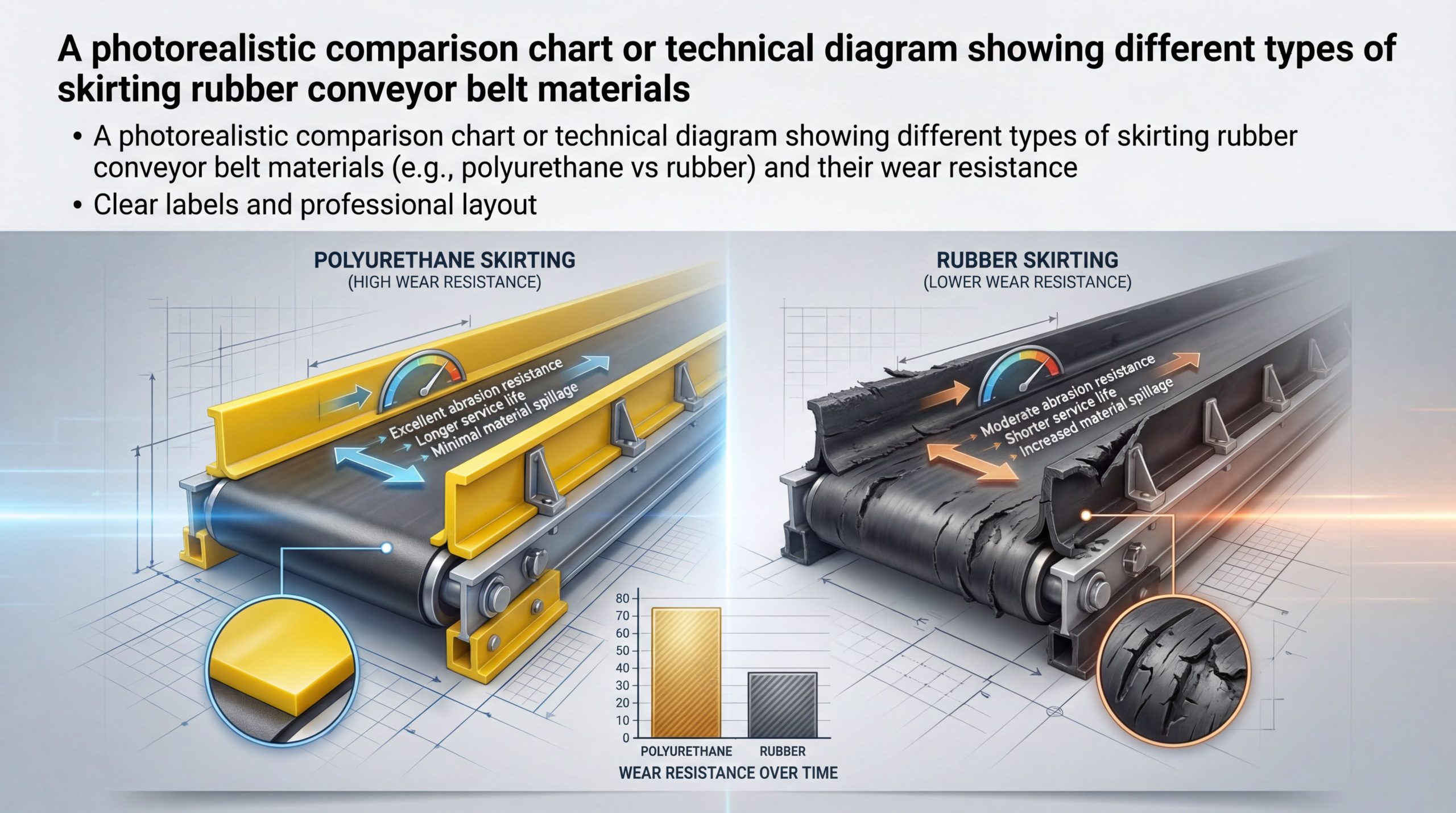
Materials used in a skirting rubber conveyor belt include SBR rubber, natural rubber, and high-performance polyurethane, selected based on the specific load characteristics. Different compounds offer varying levels of Shore A hardness, which dictates the balance between wear resistance and belt protection. Choosing the right material ensures the skirting lasts through abrasive cycles without carving into the main belt.
Comparing SBR, Polyurethane, and Natural Rubber
SBR (Styrene-Butadiene Rubber) is the industry standard for general-purpose applications due to its cost-effectiveness. However, in heavy-duty mining, polyurethane is often preferred for its exceptional resistance to cutting and gouging.
Here is the deal:
- Soft natural rubber is excellent for fine dust and sand.
- Polyurethane outlasts standard rubber by up to 5 times in abrasive environments.
- Higher hardness ratings (Shore A 70+) are used for heavy ore and rock.
Specialized Compounds for Extreme Environments
Standard materials may fail in specialized industries like underground coal mining or chemical processing. In these cases, you must use a skirting rubber conveyor belt formulated with fire-resistant or oil-resistant properties to prevent premature degradation.
But wait, there is more:
- FRAS (Fire Resistant Anti-Static) compounds are mandatory for underground safety.
- EPDM or Nitrile compounds are used when conveying oily or chemically active materials.
- Food-grade white rubber is used in pharmaceutical and food processing to ensure zero contamination.
| Material Type | Best For | Durability | |
|---|---|---|---|
| SBR Rubber | General purpose, low cost. | Moderate | |
| Polyurethane | Highly abrasive materials (Quartz, Ore). | Exceptional | |
| Silicone | High-temperature applications. | High |
The material you choose is the single biggest factor in determining the maintenance interval of your transfer points.
Key Takeaway: Material selection depends on the abrasiveness, temperature, and chemical composition of the conveyed load.
How do you install a skirting rubber conveyor belt correctly?
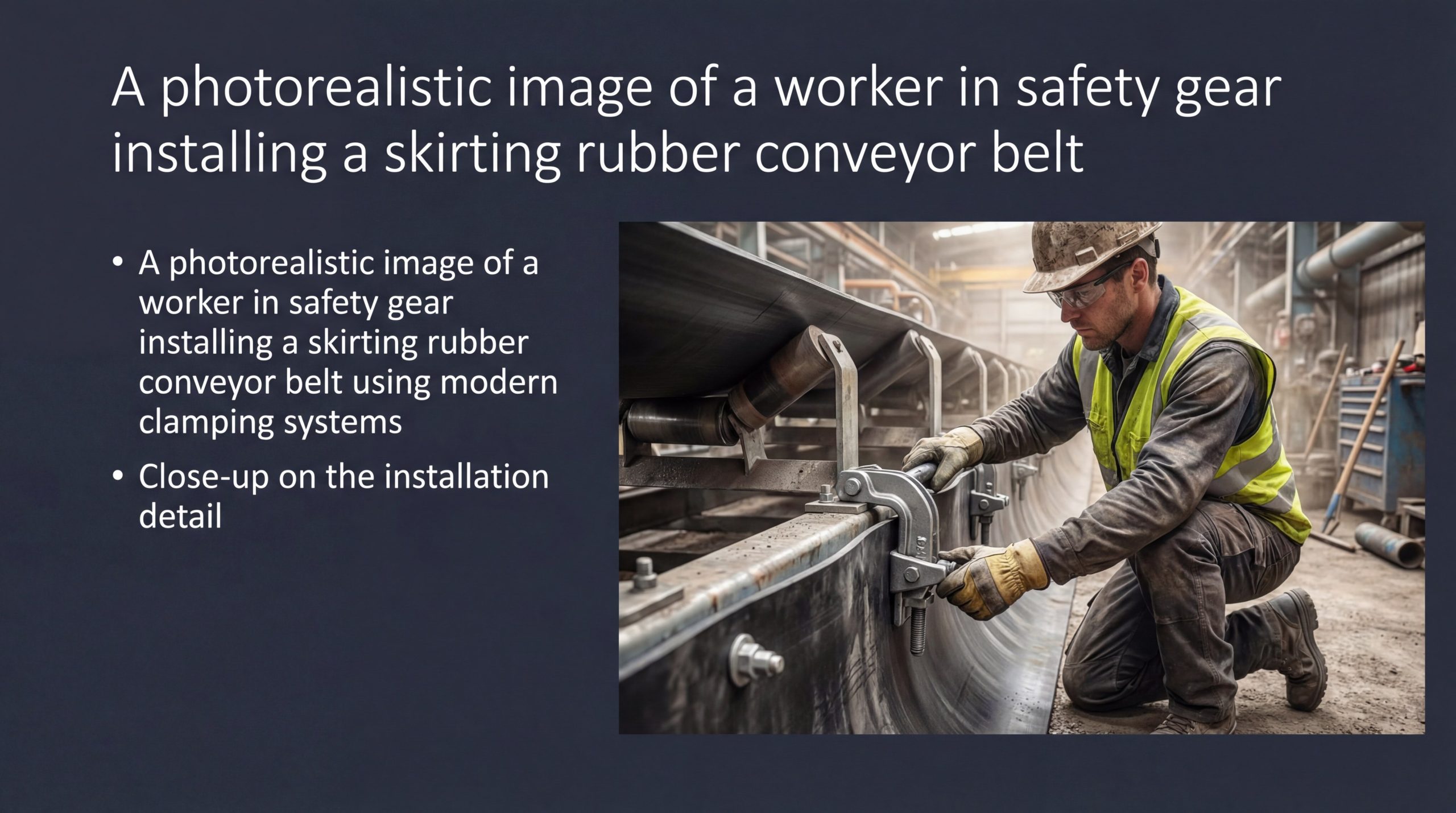
You install a skirting rubber conveyor belt correctly by ensuring the rubber applies only a light, uniform pressure to the belt surface without becoming a “scraper.” Precision is vital; if the skirt is too loose, material escapes, but if it is too tight, it will quickly wear a groove into your expensive conveyor belt. Proper installation follows a “light-touch” philosophy that prioritizes the seal while minimizing friction.
Setting the Correct Gap and Pressure
The most common mistake in installation is over-tightening the clamps to stop a leak. This creates massive friction heat and accelerates the wear on both the skirting and the belt cover itself.
Here is the deal:
- Skirting should be adjusted so it barely touches the belt during a dry run.
- Use a “no-touch” approach for primary seals if a secondary seal is present.
- Uniform pressure across the entire length prevents localized “hot spots” of wear.
Utilizing Quick-Release Clamping Systems
Maintenance teams are more likely to keep the skirting rubber conveyor belt adjusted if the hardware is easy to use. Modern quick-release clamps allow for tool-free adjustments, significantly reducing the downtime required for routine maintenance.
But wait, there is more:
- Traditional nut-and-bolt systems often corrode, making adjustments difficult.
- Wedge-style clamps provide a more even distribution of pressure.
- Modular hardware allows for the replacement of individual sections without dismantling the entire chute.
| Step | Action Item | |
|---|---|---|
| Alignment | Ensure skirting is parallel to belt travel. | |
| Tensioning | Apply uniform pressure across the length. | |
| Testing | Perform a dry run to check for friction heat. |
A precise installation ensures the containment system works with the belt rather than against it, extending the life of all components.
Key Takeaway: Precision during installation prevents the skirt from becoming a “scraper” that damages the belt cover.
When should you replace your skirting rubber conveyor belt?
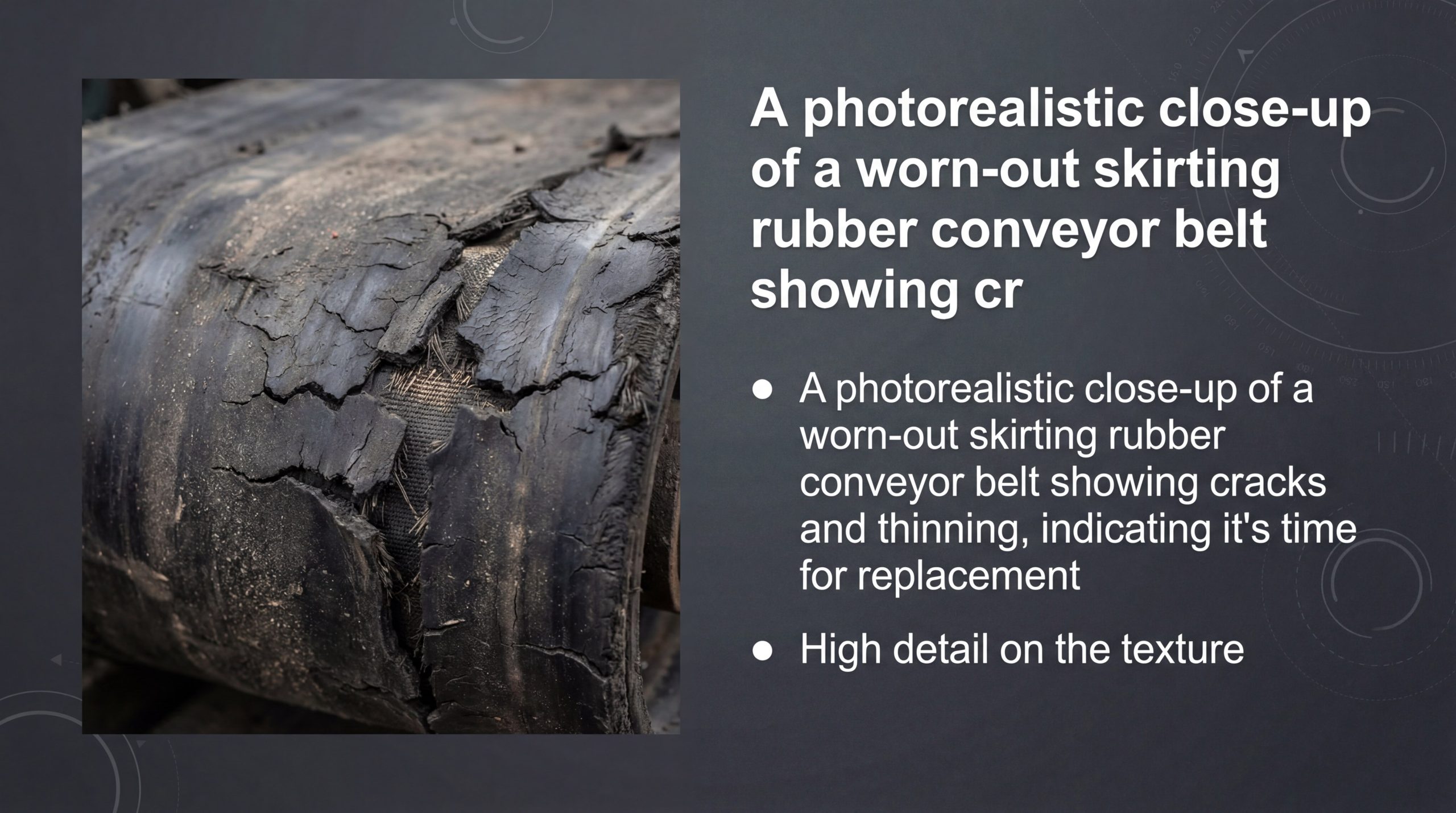
You should replace your skirting rubber conveyor belt when you observe visible fines escaping the seal or when the rubber edge has tapered to the point where it can no longer maintain contact. Waiting too long can lead to “grooving,” where the hardened, worn edge of the skirting actually carves a permanent track into the conveyor belt. Proactive replacement is always more cost-effective than a catastrophic belt failure.
Identifying Wear Patterns and “Grooving”
Here is the kicker: worn skirting can inadvertently become a cutting tool. As the rubber wears down, it loses its flexibility and can trap small rocks between the skirt and the belt, leading to deep longitudinal gouges.
Here is the deal:
- Inspect the belt surface for any new lines or grooves under the skirting area.
- Feel the edge of the rubber for “feathering” or hardening.
- If the rubber has lost its elasticity, it can no longer compensate for belt vibrations.
Signs of Seal Failure and Hardening
Environmental factors like UV exposure and chemical contact can cause a skirting rubber conveyor belt to harden prematurely. Once the rubber becomes brittle, it cracks instead of flexing, allowing dust to bypass the containment system entirely.
But wait, there is more:
- Look for “alligatoring” or surface cracks on the outer face of the rubber.
- Check if the seal has “set” in a permanent curled position.
- Significant material buildup on the outside of the chute is the ultimate sign of seal failure.
| Sign | Action Required | |
|---|---|---|
| Visible Fines | Adjust tension or check for hardening. | |
| Tapered Edges | Immediate replacement of the rubber strip. | |
| Material Trapping | Check for “scalloping” and replace support beds. |
Identifying these wear indicators early prevents minor seal issues from turning into major structural damage.
Key Takeaway: Proactive replacement is cheaper than the cost of a damaged belt or a 4-hour cleanup shift.
How does a skirting rubber conveyor belt improve conveyor safety?
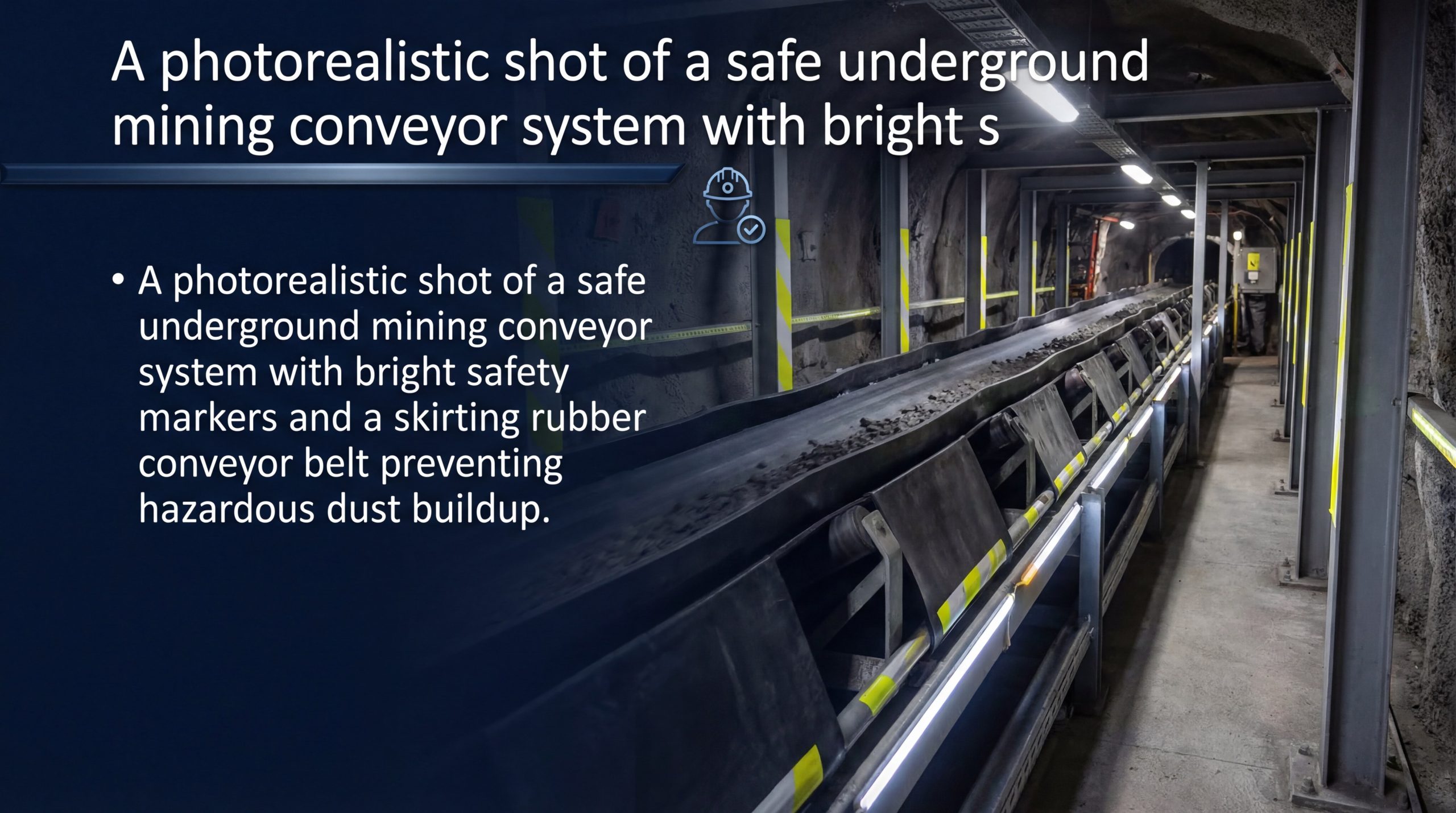
A skirting rubber conveyor belt improves safety by eliminating “slip and trip” hazards caused by escaped material on walkways and in restricted spaces. A clean plant is a safe plant, and by containing material at the source, you reduce the time workers spend performing manual housekeeping near moving parts. This drastically lowers the risk of entanglement and other common industrial accidents.
Reducing Manual Housekeeping in Restricted Spaces
One of the most dangerous jobs in a plant is shoveling material from underneath a running conveyor. By implementing an effective seal, you minimize the need for employees to enter these high-risk zones.
Here is the deal:
- Reduced spillage means fewer hours spent in “the danger zone.”
- Walkways stay clear, preventing falls in dimly lit areas.
- Maintenance crews can focus on mechanical health rather than cleaning.
Fire Prevention via Friction Control
In industries like coal mining, dust and friction are a volatile combination. A high-quality skirting rubber conveyor belt prevents the buildup of combustible dust while using low-friction compounds to stop heat from accumulating at transfer points.
But wait, there is more:
- FRAS materials prevent static sparks that could ignite methane or dust clouds.
- Proper adjustment prevents the extreme heat generated by over-tightened seals.
- Clean components run cooler and are less likely to experience a thermal runaway.
| Hazard | Skirting Mitigation | |
|---|---|---|
| Dust Inhalation | Seals particulates within the chute. | |
| Tripping | Eliminates piles of “fines” on walkways. | |
| Entanglement | Reduces the need for work near pulleys. |
Safety is the highest priority in any operation, and skirting is a foundational tool in achieving a zero-harm workplace.
Key Takeaway: A clean plant is a safe plant. Skirting eliminates the “slip and trip” hazards caused by spillage.
What are the different types of skirting rubber conveyor belt designs?
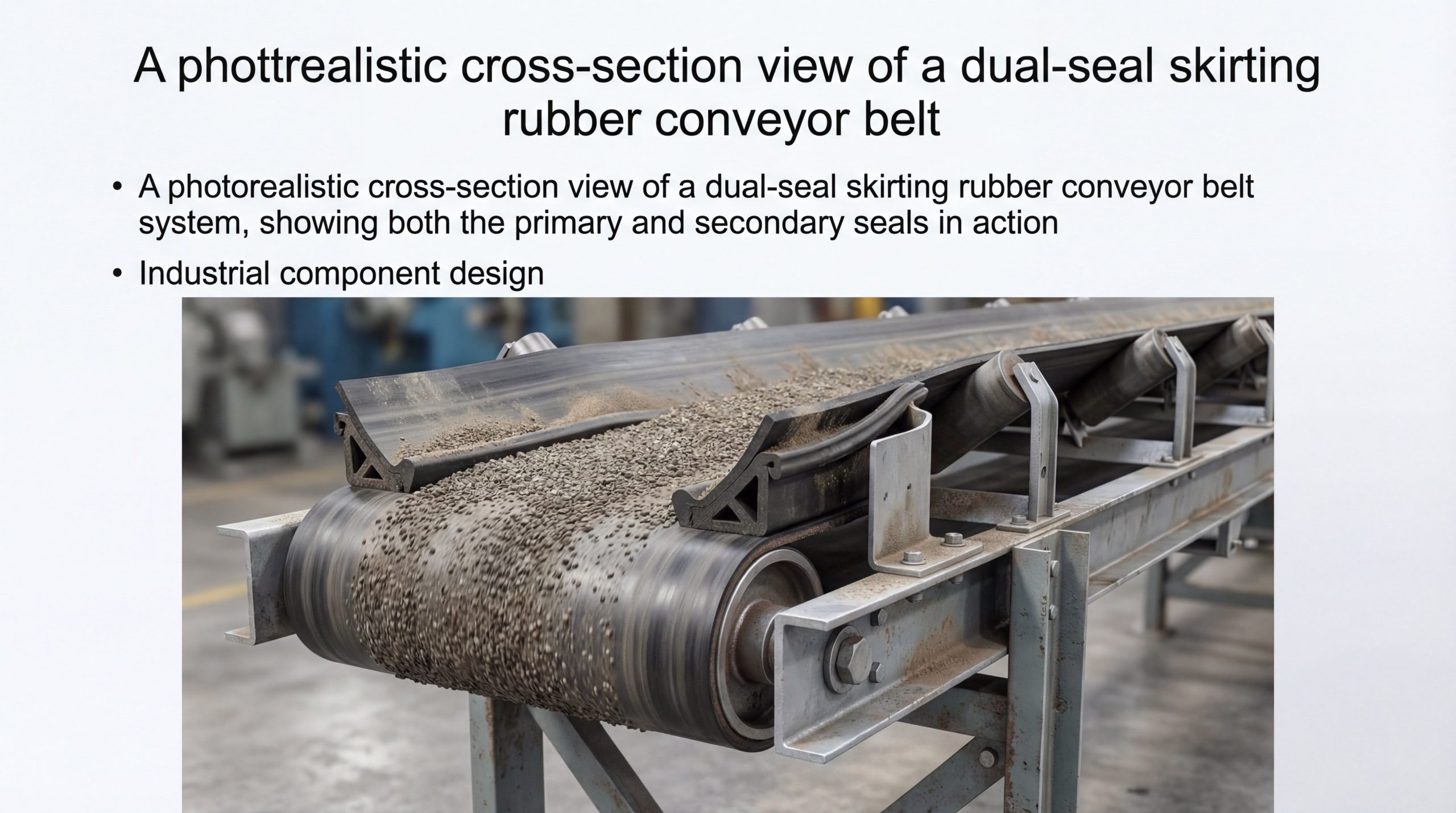
Different designs of skirting rubber conveyor belt systems include standard flat strips, T-type profiles, and advanced dual-seal configurations. The choice depends on the specific flow characteristics and the moisture content of the material being moved. While a simple flat strip is economic, more complex designs like the “Dual-Seal” offer far superior dust suppression by using two separate contact points.
Standard Single-Seal vs. Dual-Seal Systems
A single-seal system uses one thick slab of rubber to contain the main load. Dual-seal systems, however, utilize a primary containment flap and a secondary flexible membrane that follows the belt’s contours to trap microscopic dust particles.
Here is the deal:
- Single-seals are best for large, dry materials like rock and gravel.
- Dual-seals are essential for fine powders, sand, and cement.
- Dual-seal designs act as a labyrinth, making it nearly impossible for dust to escape.
Self-Adjusting Skirting Technology
Manually adjusting a skirting rubber conveyor belt can be time-consuming. Modern “self-adjusting” systems use weighted arms or spring tension to maintain a constant seal pressure even as the rubber wears down over time.
But wait, there is more:
- These systems reduce the human error associated with over-tightening.
- They ensure a consistent seal throughout the entire life of the rubber.
- Weighted systems are particularly effective at maintaining contact on uneven belts.
| Design Type | Primary Benefit | Complexity | |
|---|---|---|---|
| Flat Strip | Economic, easy to replace. | Low | |
| Dual-Seal | Superior dust suppression. | Medium | |
| Angle Skirt | Prevents material wedging. | Medium |
Choosing the right design ensures that your containment strategy matches the physical realities of your material.
Key Takeaway: From “T-type” to “Dual-Seal,” the design must match the material flow characteristics.
How do you maintain a skirting rubber conveyor belt for longevity?
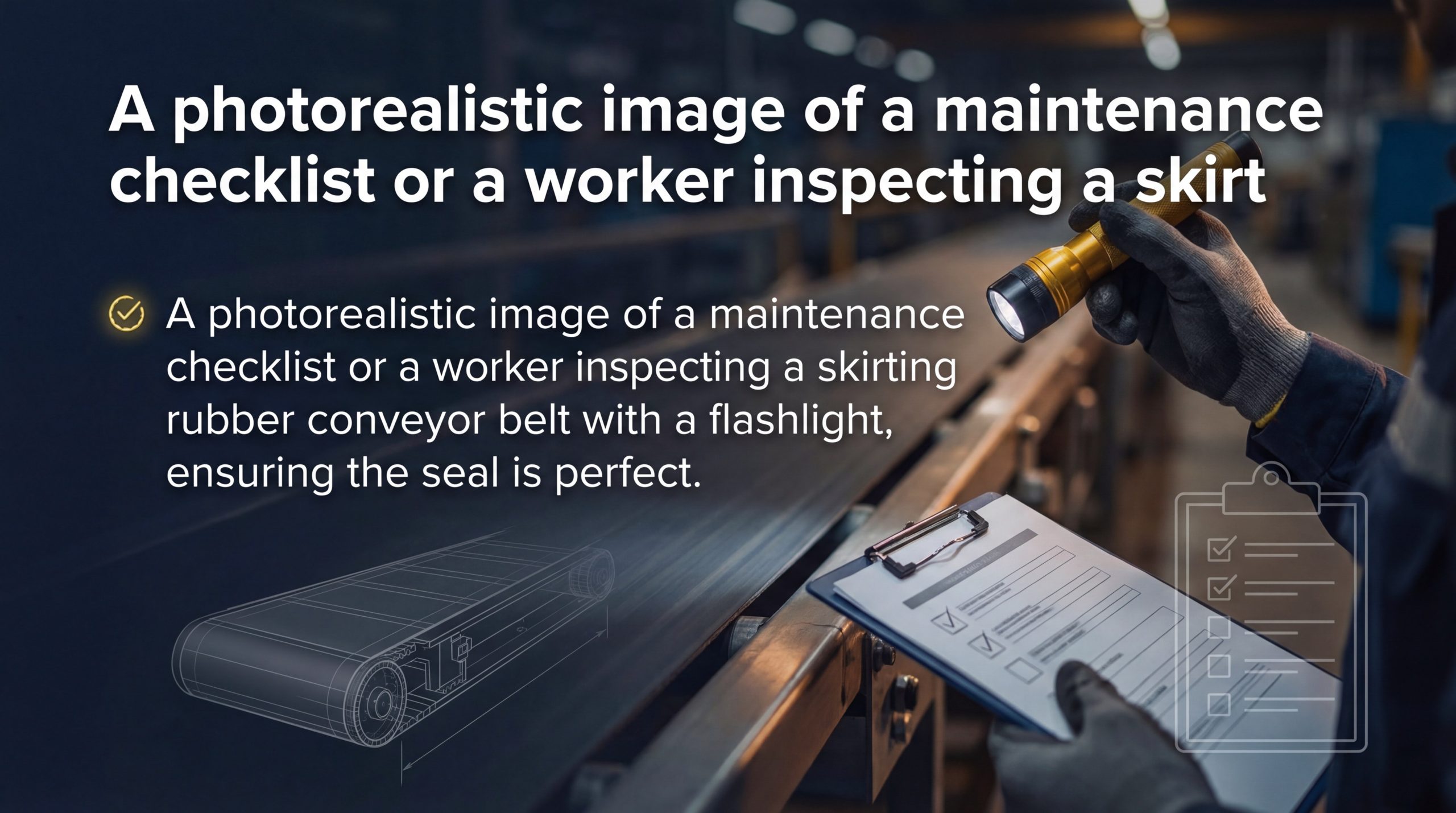
You maintain a skirting rubber conveyor belt for longevity by performing regular minor adjustments to account for wear and preventing material buildup behind the seal. Maintenance should follow a proactive “walk-the-line” protocol where operators inspect the physical state of the rubber and the hardware weekly. Small, frequent adjustments are far better for the system than waiting for a major failure to occur.
The Importance of Regular Inspection Intervals
Regular inspections allow you to catch small issues like a loose clamp or a trapped rock before they cause permanent belt damage. A simple visual check can save thousands of dollars in emergency repairs.
But that’s not all:
- Check for “material entrapment” where fines get stuck between the seal and the belt.
- Ensure the rubber hasn’t “vibrated” out of position during high-load shifts.
- Inspect the transition zones for any signs of uneven wear.
Cleaning and Lubrication of Clamping Mechanisms
The hardware that holds your skirting rubber conveyor belt is just as important as the rubber itself. If your clamps are rusted or jammed with dust, your maintenance team won’t be able to make the fine adjustments needed for a perfect seal.
But wait, there is more:
- Periodically clean the threads and hinges of your clamping system.
- Use a dry-film lubricant that won’t attract more dust to the hardware.
- Replace any bent or damaged backing plates immediately to maintain a straight seal.
| Frequency | Task | |
|---|---|---|
| Weekly | Inspect for material buildup between seal and belt. | |
| Monthly | Adjust clamping pressure to account for wear. | |
| Quarterly | Check for structural integrity of the skirt board. |
Consistent maintenance is the only way to ensure your skirting system delivers a high return on investment over many years.
Key Takeaway: Regular minor adjustments prevent the need for major overhauls.
How does a skirting rubber conveyor belt reduce operational costs?
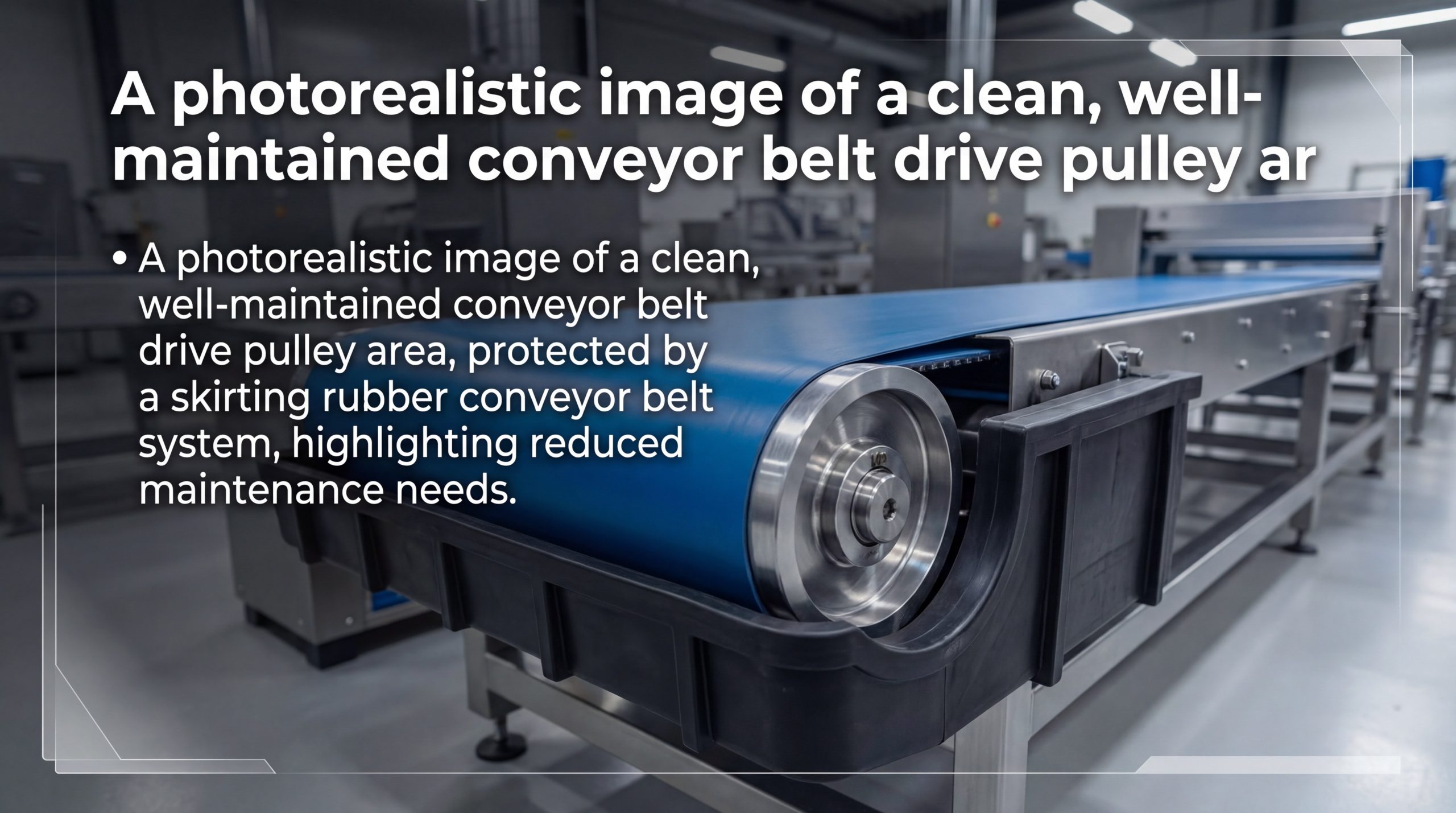
A skirting rubber conveyor belt reduces operational costs by extending the lifecycle of expensive idlers and pulleys and drastically cutting manual labor expenses. Every ton of material that falls off the belt represents a loss of sellable product and an increase in cleanup hours. By containing the load, you protect your mechanical infrastructure from dust infiltration, which is the leading cause of premature bearing failure and drive motor strain.
Calculating the Cost of Lost Material
The ROI of a skirting system is easily measured by the value of the material that no longer ends up on the floor. In high-value industries like gold or specialized chemicals, even a 1% reduction in spillage can save millions annually.
Here is the deal:
- Quantify the “tons per hour” saved by a proper seal.
- Account for the cost of re-processing spilled material.
- Factor in the reduction in labor hours dedicated solely to housekeeping.
Extending the Lifecycle of Idlers and Pulleys
Dust is the enemy of all rotating equipment. A well-sealed skirting rubber conveyor belt acts as a shield, preventing fine particles from entering the mechanical “guts” of your conveyor system.
But wait, there is more:
- Properly skirted systems see a 2x extension in return idler life.
- Drive pulleys experience less slippage when the belt stays clean.
- Drive motors run more efficiently because they aren’t fighting the friction of seized rollers.
| Expense Category | Savings with Proper Skirting | |
|---|---|---|
| Labor | 60-80% reduction in cleanup man-hours. | |
| Components | 2x life extension for return idlers. | |
| Energy | Lower friction compared to poorly adjusted old skirts. |
Investing in a high-quality skirting system pays for itself quickly through saved labor and preserved mechanical assets.
Key Takeaway: The ROI of a high-quality skirting system is measured in extended belt life and reduced labor.
FAQ Section
How thick should my skirting rubber be?It depends on your load, but standard thicknesses range from 1/2″ for fine materials to 1″ for heavy rock. Thicker rubber provides more rigid containment but requires stronger clamping systems to maintain alignment.
Can I use old conveyor belt as skirting?No, absolutely not. Old conveyor belts contain fabric or steel reinforcements that are much harder than the rubber itself. If you use them as skirting, these reinforcements will act like a saw and permanently damage the surface of your main belt.
What is the best Shore A hardness for skirting?Yes, 60-70 is the gold standard for rubber skirting. This provides enough rigidity to hold back the load while remaining soft enough to flex with the belt and prevent abrasive “grooving.”
How do I know if my skirting is too tight?You will notice excessive heat at the transfer point or see fine “rubber dust” accumulating. If you see a polished or discolored track developing on the belt cover, your skirting is definitely creating too much friction.
Does skirting work without an impact bed?No, it is highly ineffective. Without an impact bed, the belt sags between idlers, creating gaps that the skirting cannot seal. For a perfect seal, the belt must be held flat and stable across the entire loading zone.
Optimize Your Transfer Points Today
Don’t let spillage and dust erode your profit margins. Material loss and component wear are preventable challenges that require the right engineering and the highest quality materials. At Weifang Zhenxing Rubber, we are dedicated to providing the world’s most reliable and durable conveyor solutions. Our vision is to empower global industries with the infrastructure they need for a cleaner, safer, and more profitable future. To find the perfect configuration for your specific application, contact us today for a technical consultation.