
Using rubber conveyor belt repair and splicing material allows fast, durable on-site repairs by casting seamless patches that restore belt integrity and prevent further damage in industrial systems.
What is this rubber conveyor belt repair and splicing material?
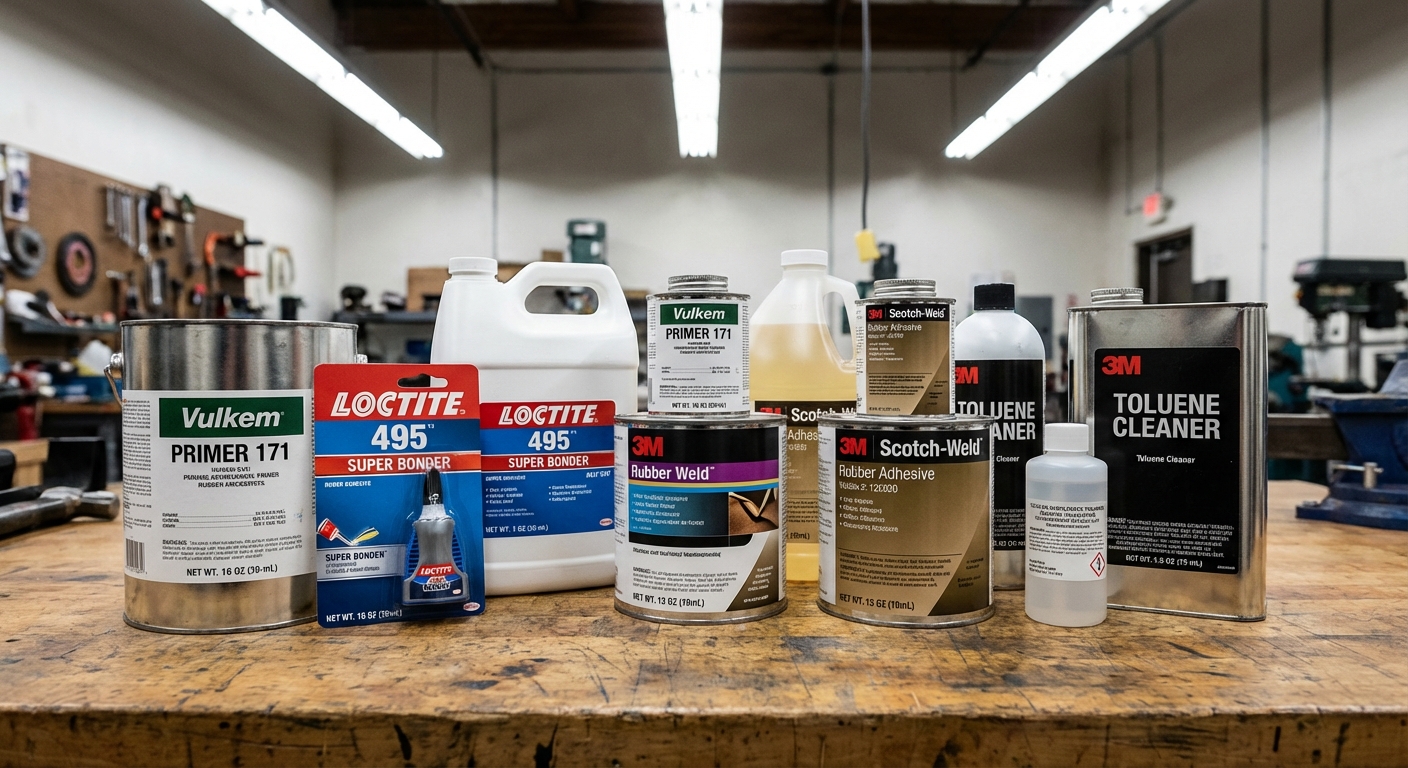
This material is a high-performance chemical compound designed to fill voids and bond segments of industrial belts. The rubber conveyor belt repair and splicing material typically consists of a liquid resin and a hardener that, when mixed, undergo a chemical reaction to form a solid but flexible elastomer. It is specifically formulated to mimic the physical properties of the belt’s original cover.
The chemistry of casting compounds
These compounds are engineered to achieve high adhesion levels on both fabric and rubber surfaces.
- Resin Base: Provides the primary elastomeric structure.
- Hardener: Triggers the curing process at ambient temperatures.
- Primers: Ensure a molecular bond between old and new materials.
Here is the deal: By using a castable liquid, you can fill irregular shapes that traditional patches cannot reach. This ensures that the repair is completely airtight and watertight.
Key Takeaway: Casting materials offer a liquid-to-solid transformation that perfectly matches the contours of belt damage.
| Feature | Description | |
|---|---|---|
| Material State | Two-component liquid | |
| Cure Method | Chemical reaction | |
| Finish | Flush, molded surface |
This table highlights why liquid casting is superior for achieving a smooth, integrated repair surface.
How does rubber conveyor belt repair and splicing material work?
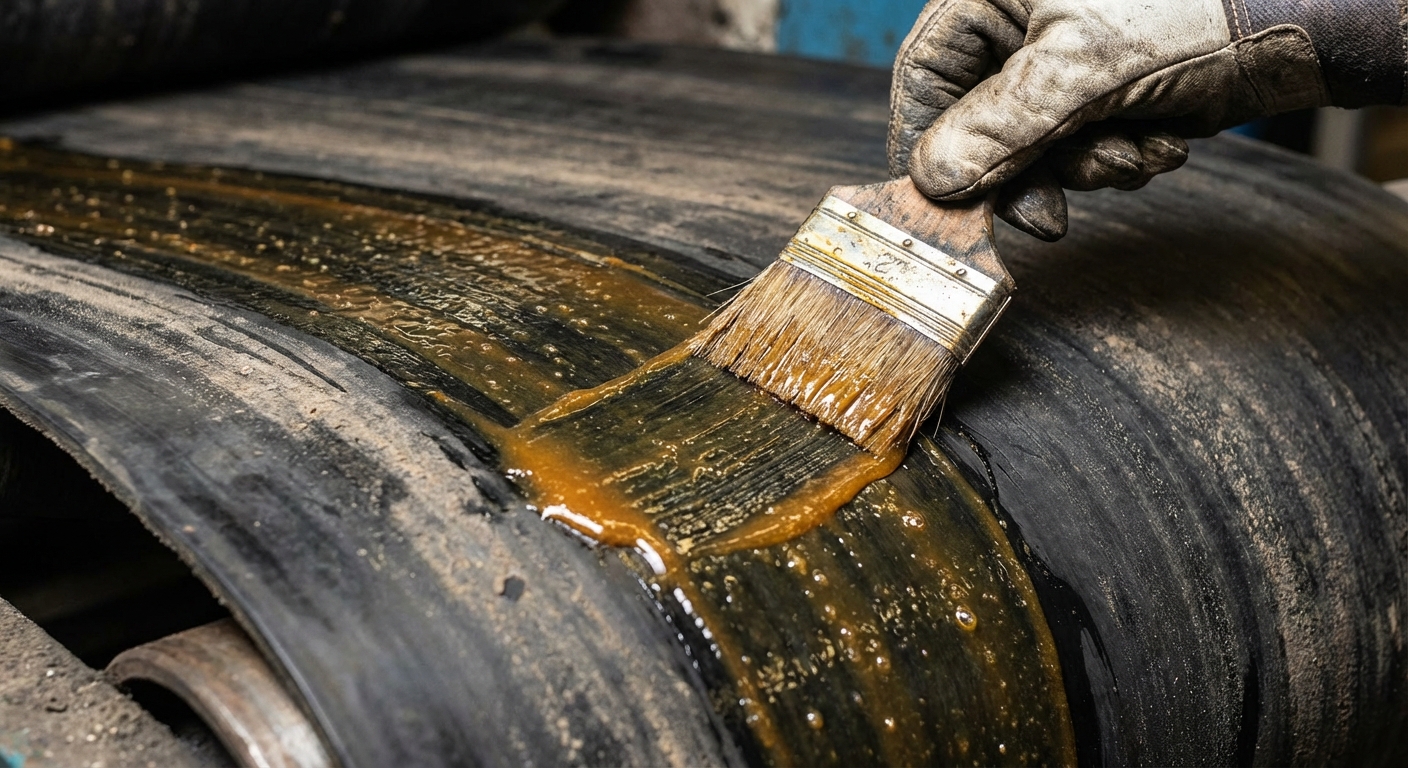
The material works by creating a chemical cross-link between the liquid compound and the buffed surface of the existing belt. When you apply this rubber conveyor belt repair and splicing material , it penetrates the micro-pores of the rubber created during the cleaning process. As the mixture cures, it hardens into a tough, wear-resistant “plaster” that is physically fused to the carcass.
The bonding mechanism
The strength of the repair depends on the activation of the belt’s surface polymers.
- Surface Activation: Primers prepare the rubber for chemical acceptance.
- Exothermic Reaction: The mixing process generates heat that aids bonding.
- Polymer Chain Link: The repair becomes an extension of the belt.
Think about it: If the bond isn’t molecular, the patch will simply peel off under the tension of a drive pulley. Casting ensures the material stays rooted even under extreme stress.
Key Takeaway: Chemical cross-linking turns the liquid repair into a permanent, structural part of the conveyor belt.
| Mechanism | Benefit | |
|---|---|---|
| Pore Penetration | Maximum grip surface | |
| Cross-Linking | High shear resistance | |
| Flexibility | No cracking at pulleys |
Understanding the chemical bond is essential for ensuring long-term reliability in high-tension applications.
Why use rubber conveyor belt repair and splicing material?
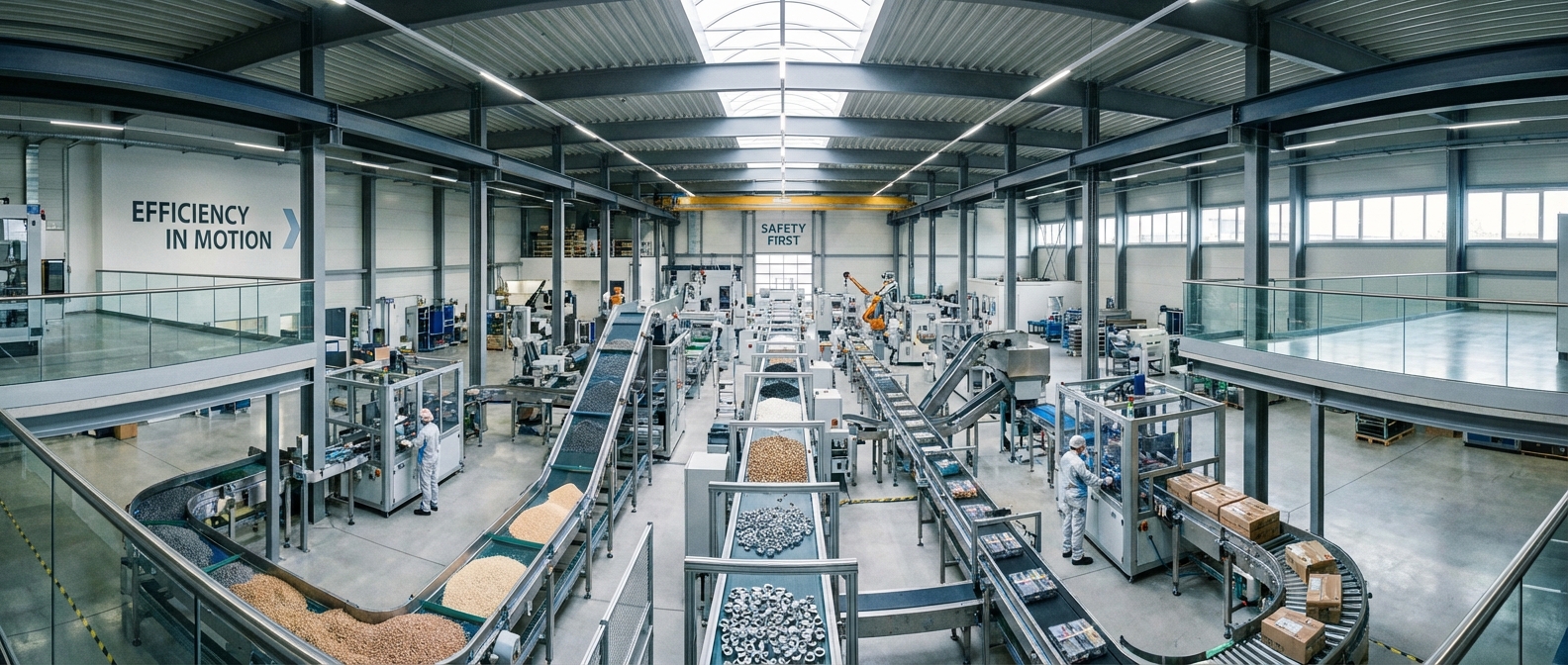
Using this rubber conveyor belt repair and splicing material is essential for maintaining a smooth surface that does not interfere with scrapers or pulleys. Unlike mechanical fasteners, a cast repair is flush with the belt, preventing catch-points that lead to further damage. This is a critical cement industry solution where fine materials often get trapped in mechanical joints.
Eliminating secondary damage
Mechanical clips often damage the very rollers and scrapers they are supposed to pass.
- Zero Profile: No raised edges to catch on system components.
- Scraper Friendly: Cleaning blades glide over the repair without impact.
- Moisture Seal: Prevents the carcass from rotting due to water ingress.
Here is the deal: A smooth belt is a quiet belt, and quiet belts last longer because they aren’t vibrating against the structure. Casting provides that elusive factory-finish smoothness.
Key Takeaway: Flush repairs eliminate the mechanical impact and wear associated with traditional belt fasteners.
| Advantage | Impact | |
|---|---|---|
| Flush Surface | Preserves scrapers | |
| Watertight | Protects internal cords | |
| Vibration Free | Reduces roller wear |
Choosing casting materials significantly lowers the total cost of ownership for your conveying hardware.
Where apply rubber conveyor belt repair and splicing material?
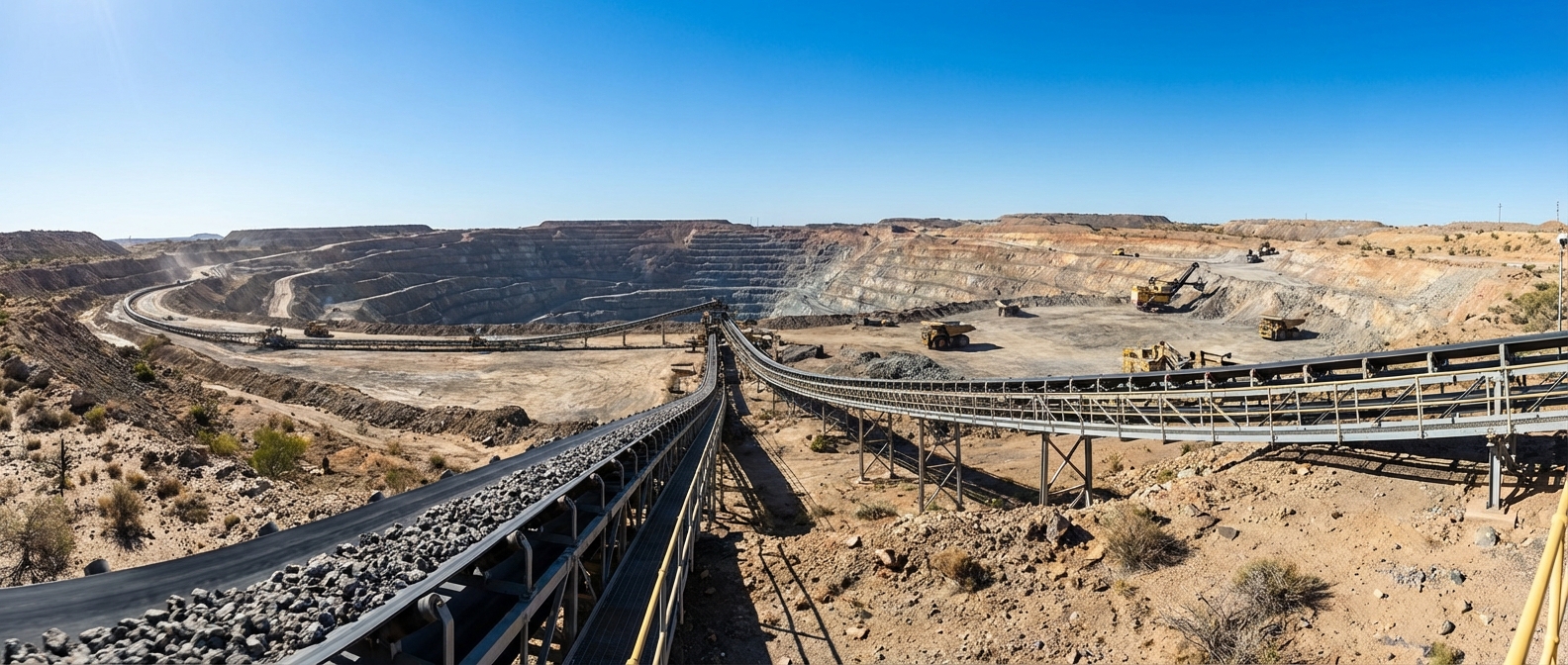
You should apply this material in environments where high-impact damage is common, such as the mining industry . This rubber conveyor belt repair and splicing material is ideal for fixing top-cover gouges caused by falling ore or sharp minerals. Because the material is poured, it can be used in hard-to-reach areas where a traditional heat press won’t fit.
Industrial use cases
The versatility of casting makes it suitable for diverse material handling sectors.
- Mining Operations: Sealing punctures from sharp rocks.
- Ports and Terminals: Repairing belts exposed to salt and humidity.
- Aggregate Plants: Filling wear spots on high-incline chevron belts.
Think about it: In a remote mine, you can’t always wait for a vulcanizing crew. Having a portable casting kit allows your local team to fix damage immediately.
Key Takeaway: Casting is the preferred method for on-site repairs in remote or high-impact industrial settings.
| Sector | Application | |
|---|---|---|
| Mining | Impact hole sealing | |
| Ports | Corrosion protection | |
| Aggregate | Edge wear restoration |
Applying the right material in the right location prevents minor surface nicks from becoming catastrophic tears.
When use rubber conveyor belt repair and splicing material?
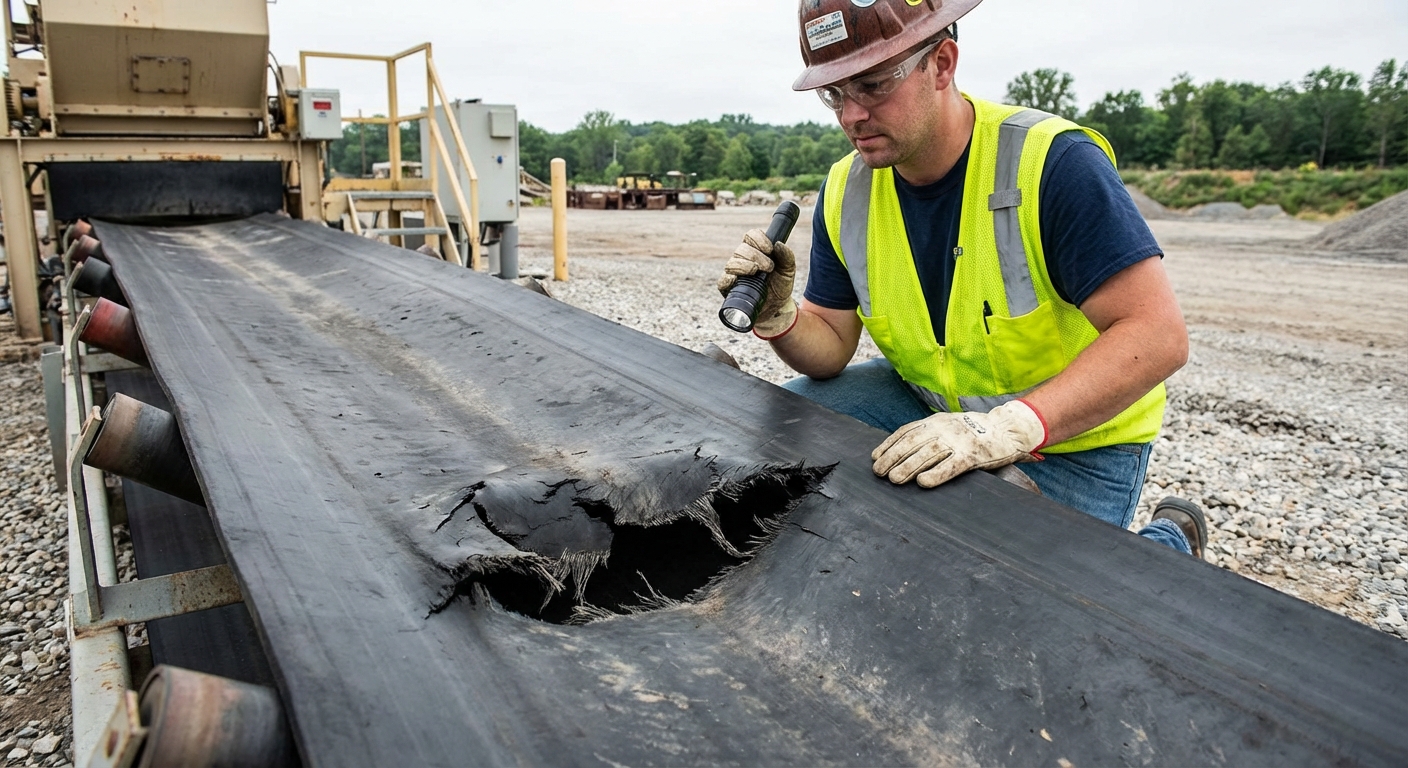
You must use rubber conveyor belt repair and splicing material the moment you identify exposed fabric or a deep cover gouge. Waiting until the belt snaps is a costly mistake that leads to massive downtime and safety risks. Proactive casting repairs seal the belt, preventing fine particles from embedding themselves into the carcass and causing ply separation.
Identifying the right time
Timing is everything when it comes to preventing longitudinal belt failure.
- Exposed Carcass: fabric or steel cords are visible to the eye.
- Ply Separation: Bubbles or delamination start to appear on the surface.
- Mechanical Failure: When old clips begin to pull out of the rubber.
Here is the deal: A small hole acts like a funnel for moisture. By casting a repair early, you stop the internal corrosion of steel cords before it starts.
Key Takeaway: Early intervention with casting materials can double the remaining life of a damaged belt.
| Symptom | Required Action | |
|---|---|---|
| Cover Gouge | Surface casting | |
| Edge Tear | Molded edge repair | |
| Carcass Exposure | Deep cavity filling |
Regular inspections allow you to deploy repair materials before a total belt replacement becomes inevitable.
Which rubber conveyor belt repair and splicing material is best?
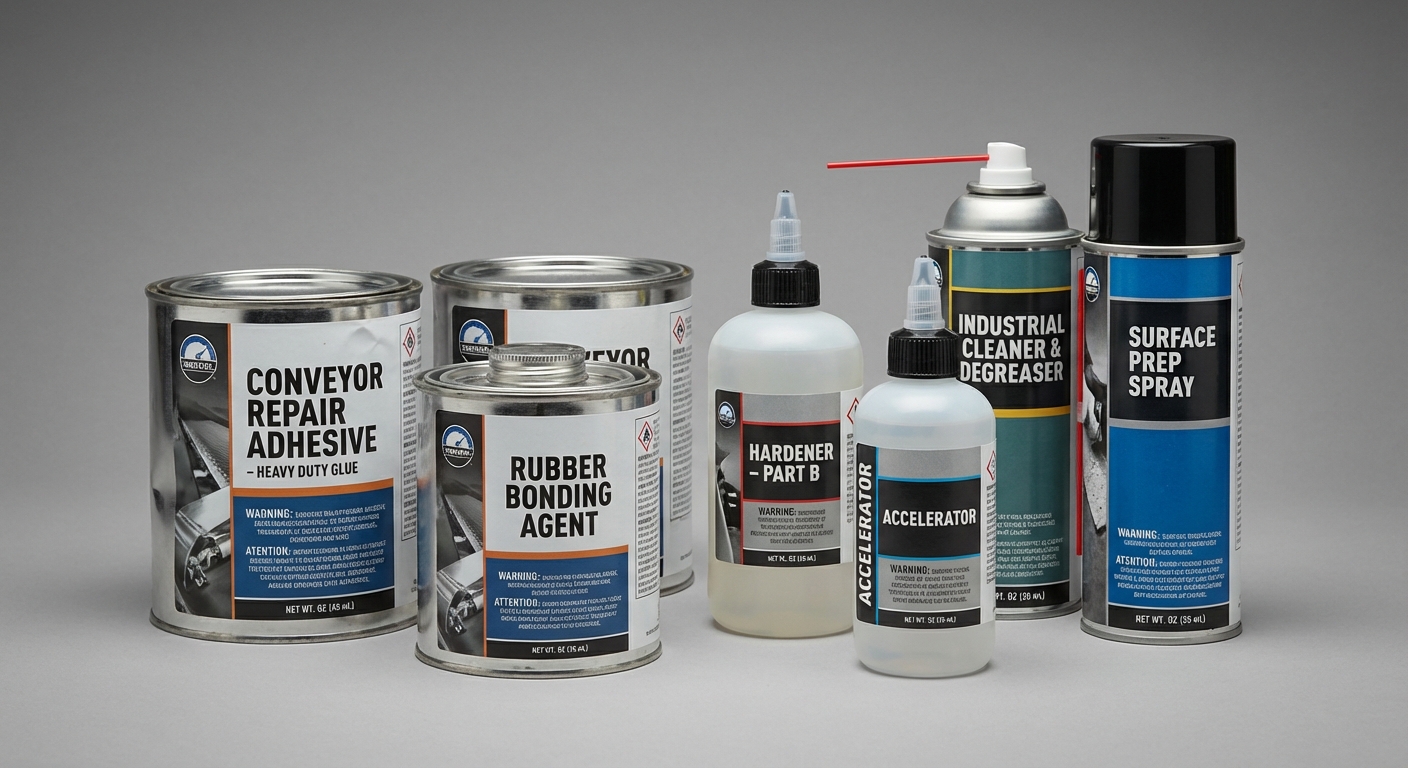
The best rubber conveyor belt repair and splicing material is one that matches the Shore hardness and abrasion resistance of your specific belt. If you are operating in a cement industry solution context, you need a heat-resistant compound that won’t soften at 150°C. For general mining, a high-impact polyurethane-based system usually provides the most durable result.
Selecting the right grade
Choosing the wrong compound can lead to a patch that is too brittle or too soft.
- Standard Grade: For warehouse and logistics belts.
- High-Impact: For mining and heavy aggregate transport.
- Heat-Resistant: For clinker and foundry applications.
Think about it: A patch that is harder than the belt will create a “hinge point” that eventually cracks. You need a material that flexes in harmony with the original rubber.
Key Takeaway: Matching the material properties to your belt’s grade is the only way to ensure a permanent bond.
| Belt Type | Recommended Material | |
|---|---|---|
| SBR / Natural | General-purpose elastomer | |
| EPDM / Heat | High-temp casting resin | |
| Oil Resistant | Nitrile-compatible compound |
Using a tailored chemical solution ensures the repair behaves exactly like the surrounding belt material.
Is rubber conveyor belt repair and splicing material durable?
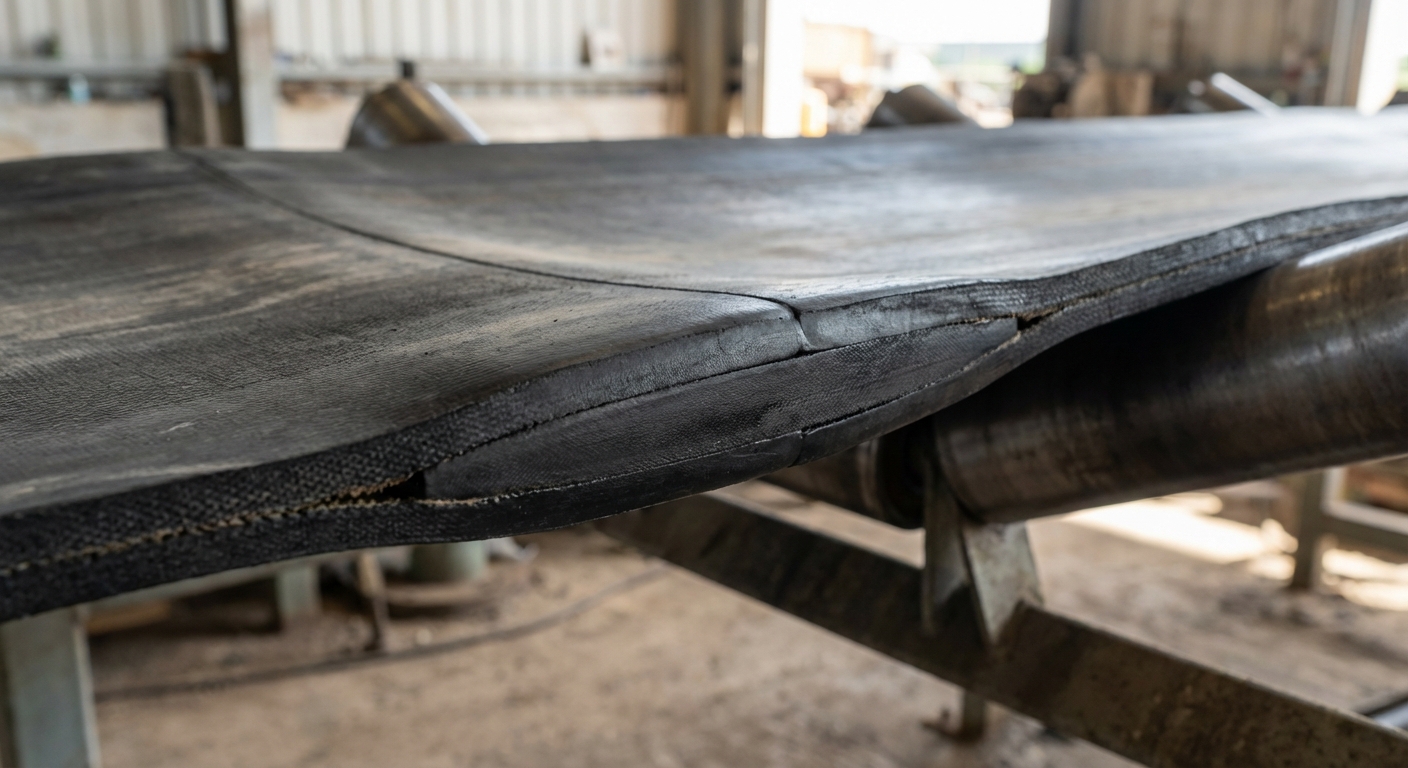
Modern rubber conveyor belt repair and splicing material is engineered to be as tough as the original cover. Once fully cured, the casted area exhibits extreme resistance to abrasion, ozone, and UV light. In many cases, the repaired section actually outlasts the surrounding rubber because it is less prone to aging and oxidative hardening.
Longevity of cast repairs
A well-executed casting can last for several years of continuous operation.
- Abrasion Resistance: Withstands the constant grinding of material.
- Tear Strength: Resists propagation of nicks from sharp impacts.
- Chemical Stability: Does not degrade when exposed to oils or salts.
Here is the deal: The secret to durability isn’t just the material; it’s the quality of the buffing and priming. If the foundation is solid, the casting will hold for the life of the belt.
Key Takeaway: Professionally applied casting compounds offer durability comparable to the original factory vulcanization.
| Property | Rating | |
|---|---|---|
| Abrasion Loss | Low (< 120mm³) | |
| Peel Strength | High (> 10 N/mm) | |
| Hardness | Balanced (60-70 Shore A) |
The high ratings in these technical categories prove that casting is a long-term structural solution.
Can rubber conveyor belt repair and splicing material save money?
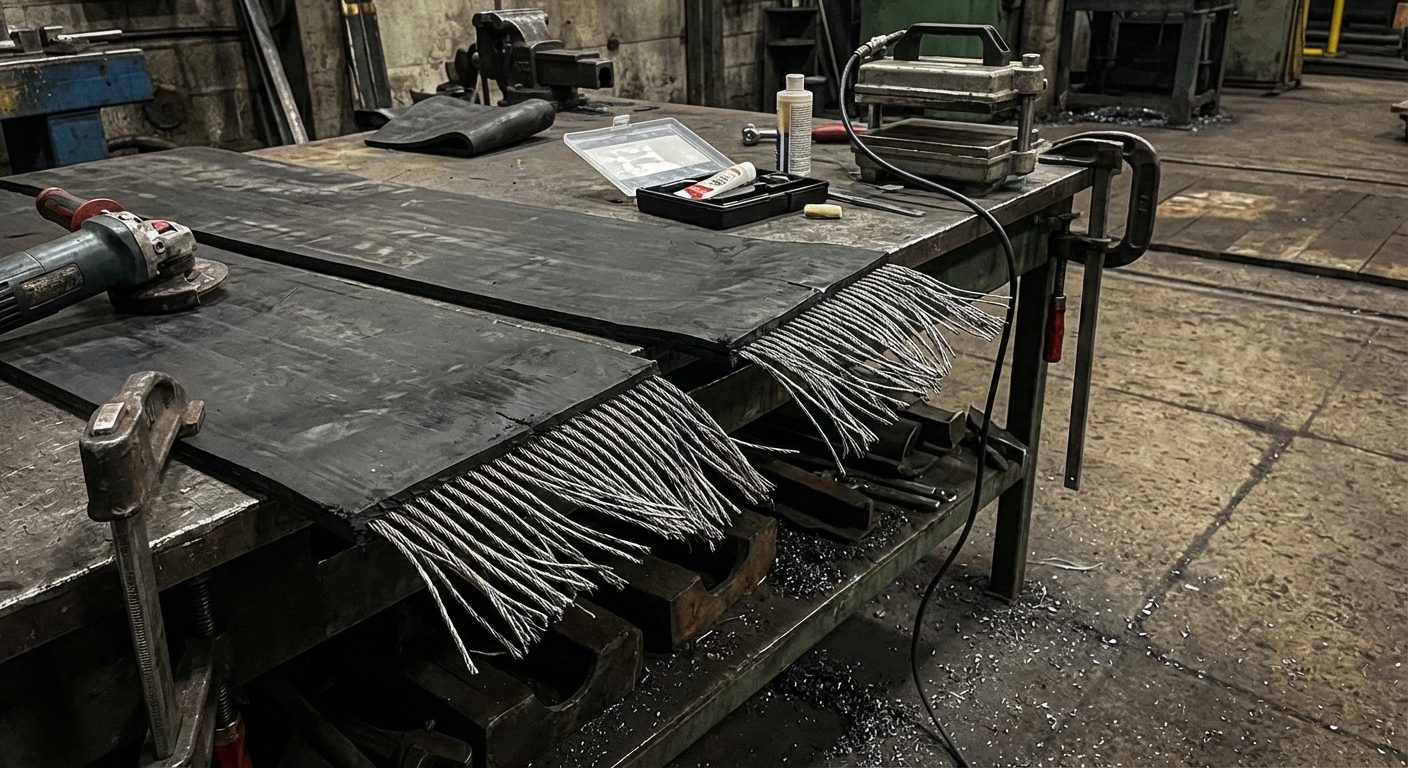
Using rubber conveyor belt repair and splicing material can save you thousands of dollars in emergency labor and replacement costs. By repairing a fabric textile conveyor belt in-house, you avoid the high fees associated with external splicing contractors. Furthermore, the rapid curing time of casting materials means your system is back online in hours, not days.
Financial benefits of in-house repair
Proactive maintenance is always cheaper than reactive replacement.
- Reduced Downtime: Quick-curing resins get production moving fast.
- Deferred Capex: Postpones the massive investment of a new belt roll.
- Labor Savings: Simple enough for your internal maintenance crew to apply.
Think about it: If your line stops for one shift, you lose more money than the cost of a hundred repair kits. The ROI on casting materials is virtually instantaneous.
Key Takeaway: Investing in a stock of repair materials is the most cost-effective insurance against production loss.
| Cost Factor | Mechanical Repair | Casting Repair | |
|---|---|---|---|
| Initial Cost | Very Low | Moderate | |
| Downtime | Low | Moderate | |
| Service Life | Short | Long |
While mechanical clips are faster to install, casting provides the best long-term value and lowest total cost.
How to apply rubber conveyor belt repair and splicing material?
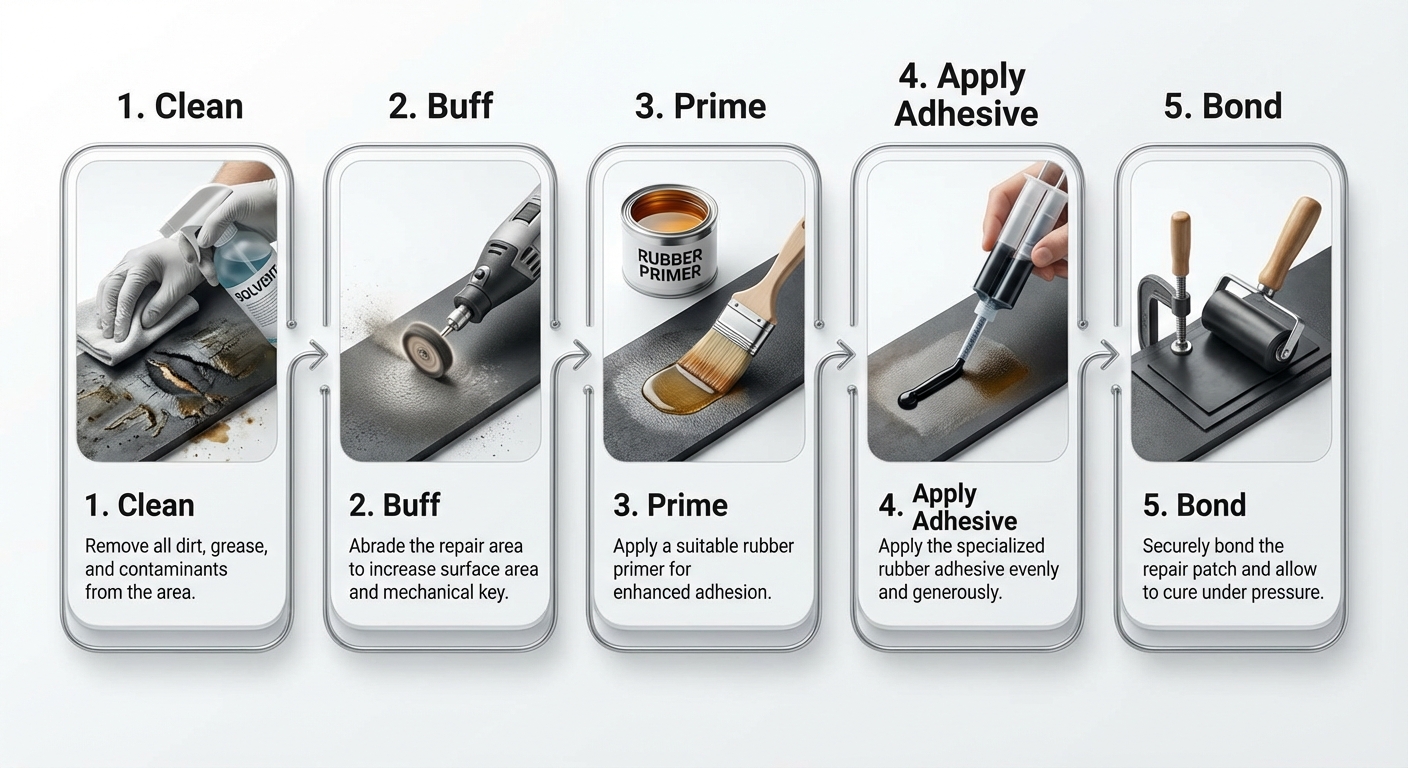
The process of using rubber conveyor belt repair and splicing material follows a strict five-step industrial protocol. First, you must clean the area with a specialized solvent to remove any grease or dirt. Then, the rubber is mechanically buffed to create a rough texture, followed by the application of a primer and the final pouring of the mixed elastomer.
Step-by-step casting process
Success lies in the meticulous preparation of the repair cavity.
- Clean: Remove all contaminants with an industrial solvent.
- Buff: Use a tungsten carbide buffing tool for a rough finish.
- Prime: Apply a thin, even coat of rubber-to-rubber primer.
- Mix & Pour: Combine the two components and fill the cavity.
- Finish: Level the liquid and allow it to cure under ambient heat.
Here is the deal: If you skip the cleaning or buffing stage, the material will have nothing to “bite” onto. Preparation is 90% of the work in a successful belt repair.
Key Takeaway: Following a standardized cleaning and buffing protocol is essential for the material to bond.
| Step | Goal | |
|---|---|---|
| Solvent Wash | Chemical purity | |
| Mechanical Buff | Physical keying | |
| Casting | Void elimination |
This workflow ensures that every repair meets industrial standards for strength and flexibility.
Who needs rubber conveyor belt repair and splicing material?
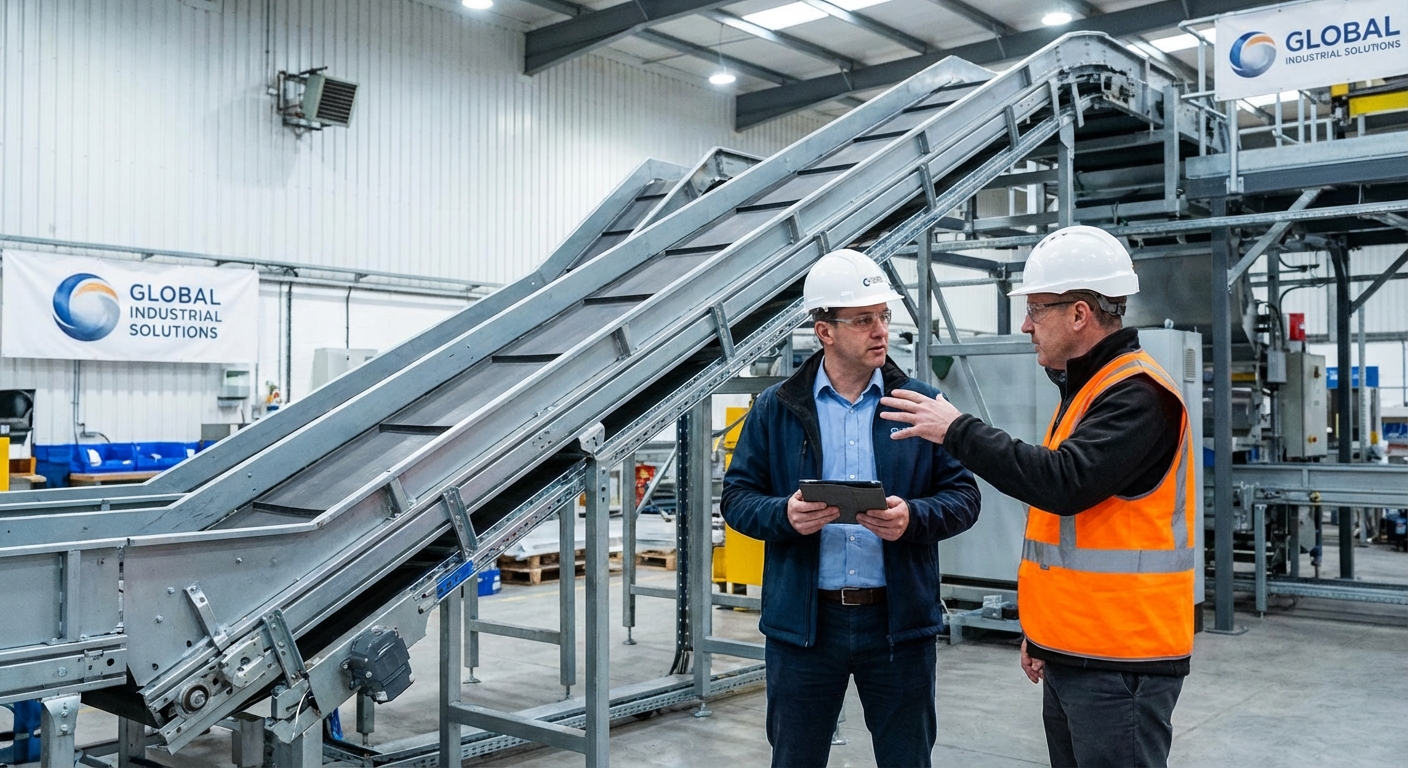
Any plant manager or maintenance engineer responsible for heavy-duty material handling needs this rubber conveyor belt repair and splicing material. Having these kits on-site empowers your team to handle emergencies without waiting for outside help. It is a vital resource for anyone looking to optimize their mining industry operations through smarter maintenance strategies.
Target users for casting kits
Different stakeholders benefit from the reliability of molded repairs.
- Maintenance Leads: For rapid response to belt damage.
- Operational Managers: To maintain throughput and hitting targets.
- Safety Officers: To eliminate the risks of failing mechanical joints.
Think about it: The most successful facilities are those that treat maintenance as a profit-center. Casting materials are a key tool in that professional arsenal.
Key Takeaway: Stocking professional-grade repair materials is a hallmark of efficient, modern industrial management.
| Role | Primary Benefit | |
|---|---|---|
| Engineer | Structural integrity | |
| Foreman | Reduced labor hours | |
| Owner | Protected assets |
Empowering your team with the right tools ensures that your facility remains operational and competitive.
Conclusion
Selecting the right rubber conveyor belt repair and splicing material is a strategic move to protect your operational uptime. From the seamless “plaster” finish of liquid casting to the deep molecular bond of professional-grade resins, these solutions provide the structural insurance every modern conveyor system requires.
Ready to maximize your belt’s lifespan?At Weifang Zhenxing Rubber, we are dedicated to providing the world’s most durable conveyor solutions. Whether you need heavy-duty belts or technical guidance on maintenance, our expert team is here to support your success. Contact us today to find the perfect solution for your facility.
Frequently Asked Questions
1. Can I use casting materials on a belt that is under high tension?Yes, once fully cured, high-performance casting materials are designed to handle the same tension and flexing as the rest of the belt. However, ensure the belt is stopped and the tension is slightly relaxed during the actual application for the best bond.
2. What’s the best way to speed up the curing time in cold weather?Most casting resins cure slower in the cold. You can use an infrared heater or a heat lamp placed a safe distance from the repair to maintain an ambient temperature of at least 20°C, which ensures the chemical reaction proceeds as planned.
3. How do I know if the belt is too damaged to repair with casting?If more than 25% of the internal carcass (fabric or steel) is severed, a simple surface casting may not be enough. In these cases, a full section splice or a reinforced patch may be required to restore the belt’s tensile strength.
4. Can I cast a repair on the bottom side of the belt?Yes, but it requires a “form” or a mold to hold the liquid in place until it gels. You can use tape or a plastic sheet as a temporary barrier to prevent the liquid resin from dripping out before it starts to harden.
5. Is a casted repair better than a cold-bonded patch?Casting is often superior because it fills the entire cavity and creates a flush surface. Cold-bonded patches are excellent for quick fixes, but they leave a raised edge that can eventually be caught by a belt scraper or damaged by impact.