
A rubber belt conveyor is a reliable material handling system designed to move bulk materials efficiently across industrial operations such as plaster casting, mining, and manufacturing plants. When transportation systems rely on low-quality belts or outdated handling methods, production lines can experience frequent bottlenecks that slow down overall output. Weak belts may tear easily or slip during operation, leading to material spillage, safety risks, and expensive downtime. By installing a durable rubber belt conveyor, companies can achieve smooth, continuous material flow while improving operational safety and long-term productivity.
Here is the deal: Without a reliable loop, your facility stops moving. But how do you identify the right specifications for your needs? Let’s explore the technical details.
What defines a high-quality rubber belt conveyor system?
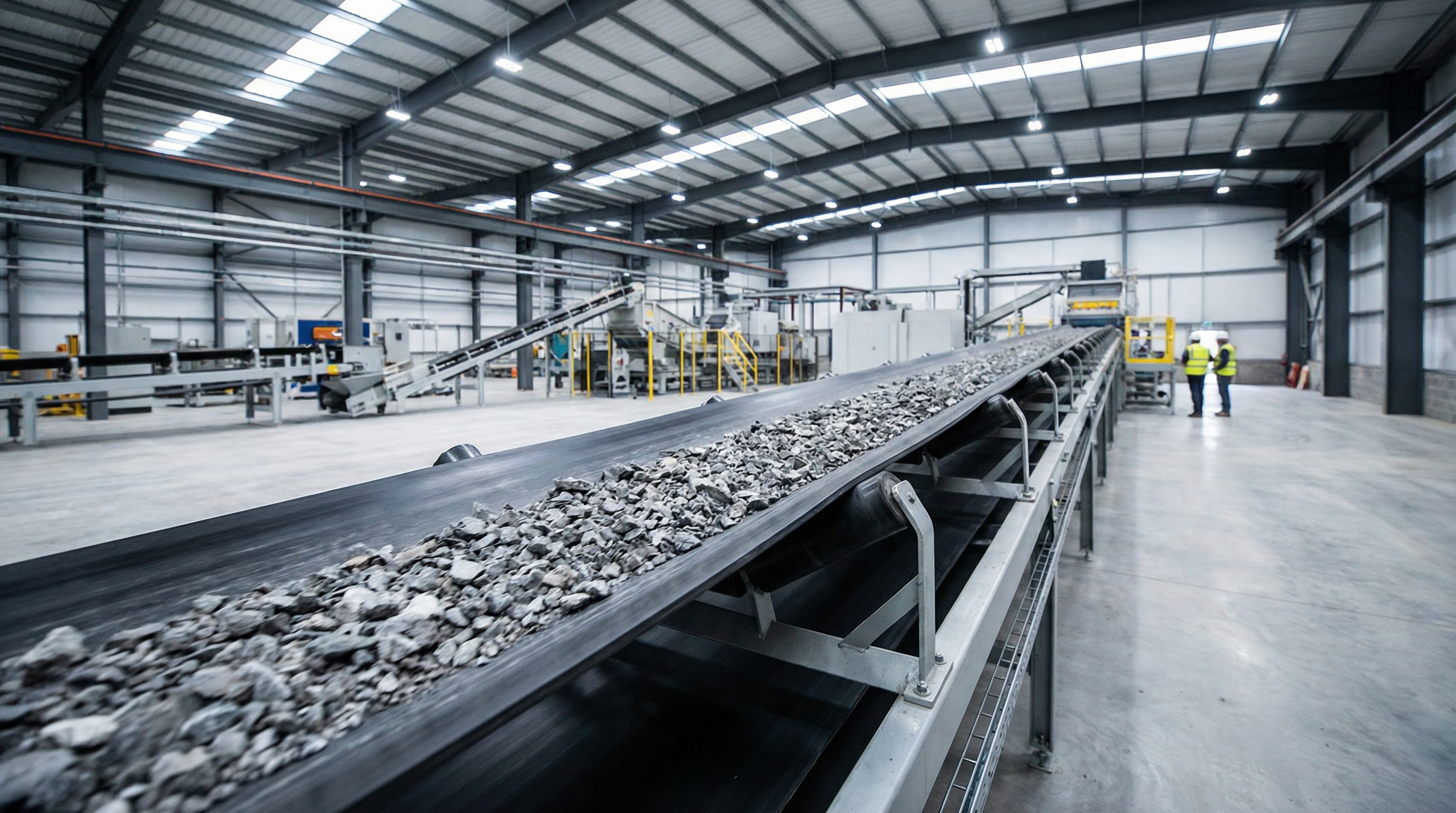
A high-quality system is defined by its ability to maintain structural integrity under high tension and abrasive loads. You must ensure that your rubber belt conveyor features a multi-layered carcass that prevents elongation over time. This foundational strength determines the maximum load capacity and the overall lifespan of the machinery.
Core Components of the Belt carcass
The internal layers, or the “carcass,” provide the necessary tensile strength to carry heavy plaster or minerals. Most modern systems utilize synthetic fabrics like polyester or nylon to resist rot and moisture.
- EP Fabrics: Offers low elongation and high impact resistance.
- Steel Cords: Ideal for long-distance transport with minimal stretch.
- Top Cover: Protects the carcass from abrasion and chemical damage.
The Role of Drive and Idler Rollers
Look: Drive rollers transfer the motor’s torque to the belt surface through friction. Idler rollers support the weight of the load and ensure the belt stays in a trough shape to prevent material spillage.
Frame and Support Structure Construction
Key Takeaway: A rigid frame prevents misalignment, which is the leading cause of premature belt edge wear. Choosing high-grade steel for supports ensures the system can handle the vibration of heavy industrial casting processes.
| Component | Primary Function | Quality Marker | |
|---|---|---|---|
| Carcass | Provides tensile strength | High-grade EP or steel cord | |
| Idlers | Support belt weight | Precision-sealed bearings | |
| Drive Pulley | Moves the belt | Vulcanized rubber lagging |
This table highlights how specific component choices directly impact the reliability of your material handling infrastructure.
How does a rubber belt conveyor handle material transport?
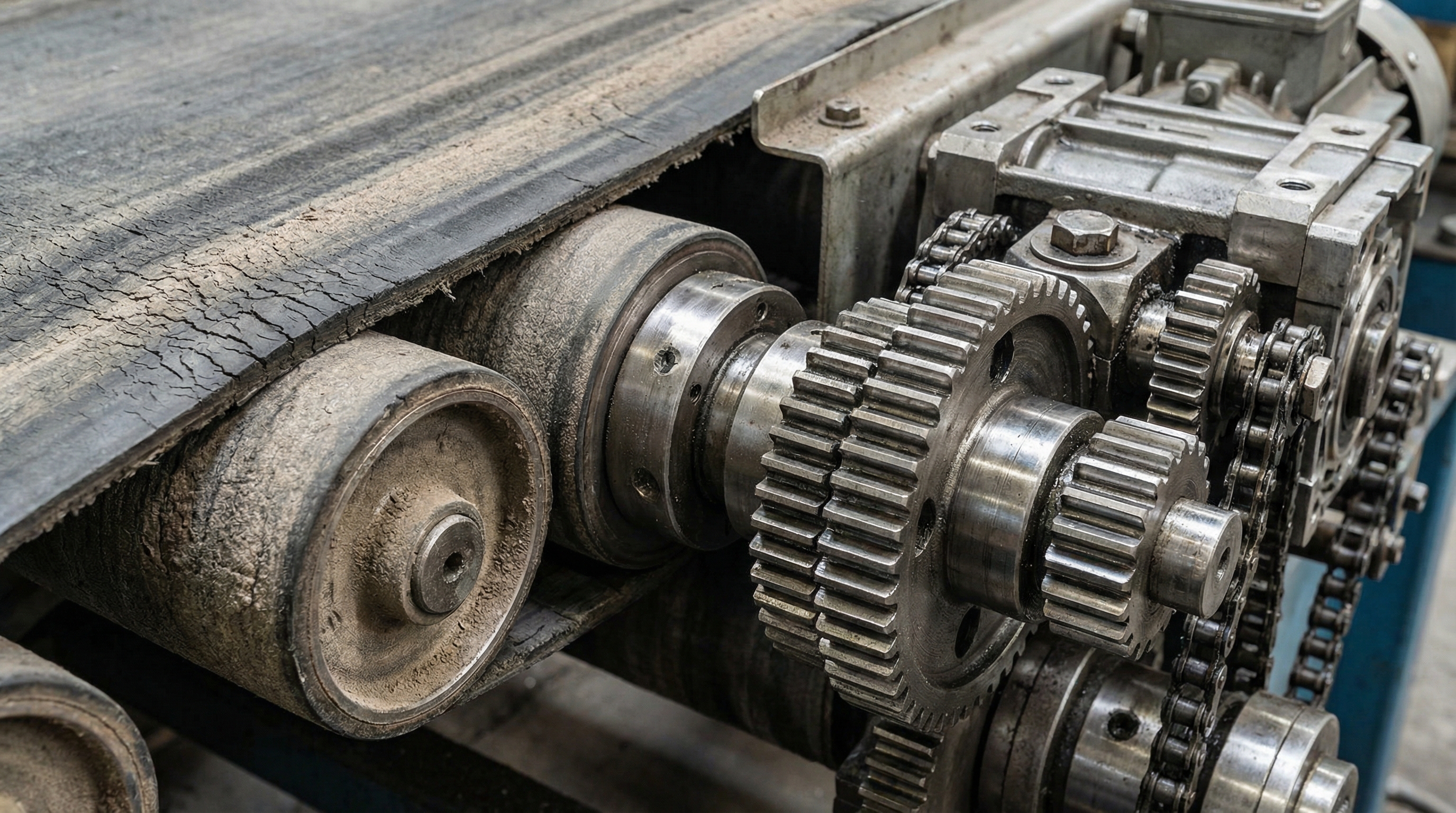
Material transport is achieved through the continuous rotation of a belt around a series of pulleys powered by an electric motor. The operational efficiency of a rubber belt conveyor depends heavily on the friction coefficient between the drive pulley and the belt’s bottom cover. This mechanical synchronization allows for the smooth movement of bulk goods over long distances.
Motor and Drive Pulley Mechanics
But wait, there is more: The motor must be sized to overcome the inertia of a fully loaded belt starting from a standstill. Variable frequency drives (VFDs) are often used to provide soft starts and adjustable speeds for different materials.
Tensioning and Alignment Systems
- Take-up Units: Maintain the correct tension to prevent pulley slippage.
- Tracking Sensors: Detect if the belt is drifting off-center during operation.
- Training Idlers: Automatically pivot to guide the belt back to the center path.
Discharge and Loading Dynamics
Key Takeaway: Proper loading at the “tail” end and controlled discharge at the “head” end minimizes dust and material degradation. This is crucial for maintaining the quality of delicate plaster molds or fine aggregates.
| Mechanism | Purpose | Efficiency Gain | |
|---|---|---|---|
| VFD Drive | Controlled speed | Reduced energy spikes | |
| Screw Take-up | Tension adjustment | Minimal belt slippage | |
| Troughing Idlers | Containment | Increased load volume |
The synergy between these mechanical elements ensures that your materials reach their destination without loss or damage.
Which industries rely on a rubber belt conveyor today?
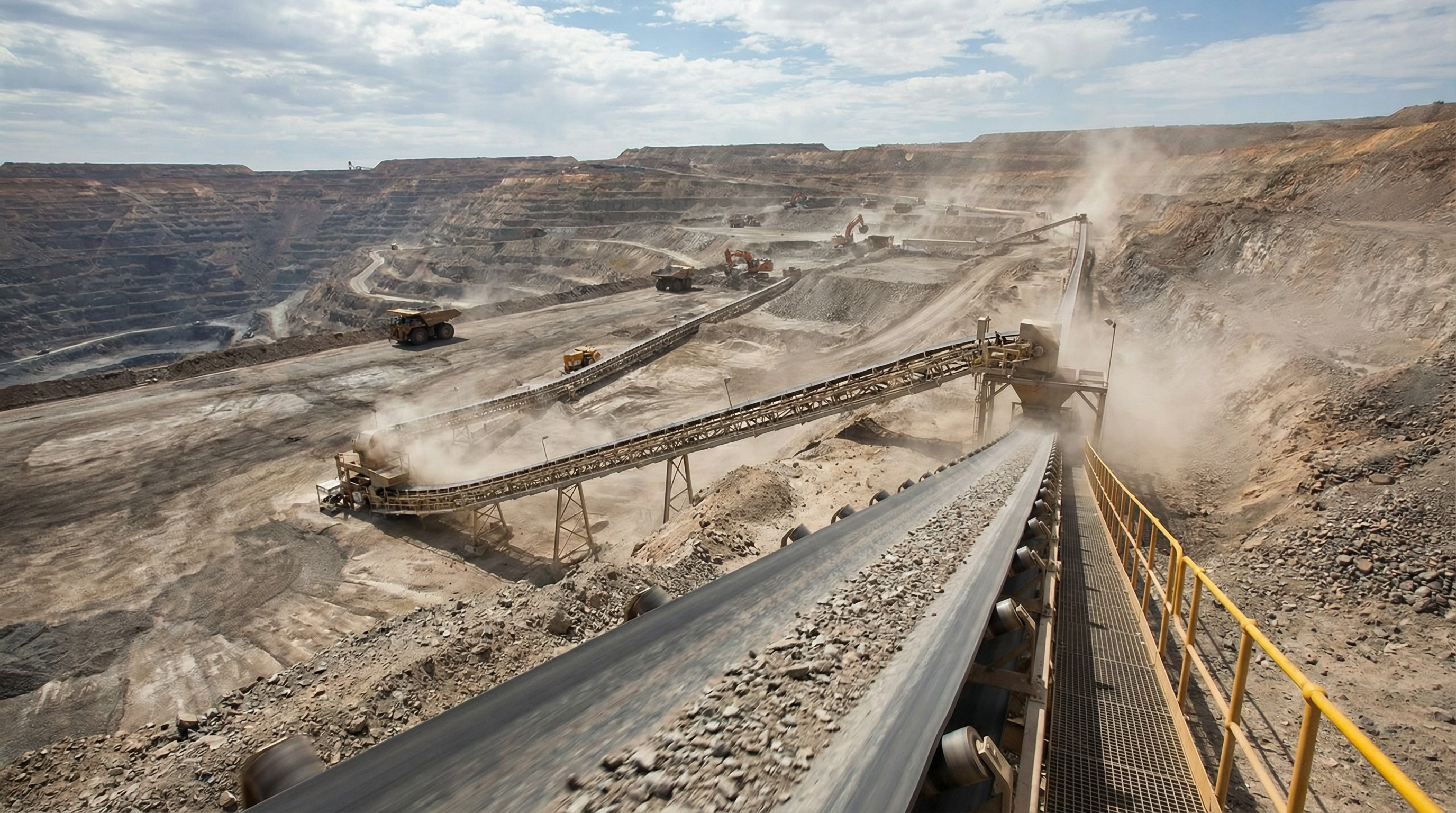
Industries ranging from heavy mining to precise pharmaceutical manufacturing utilize these systems for bulk transport. You will find that a rubber belt conveyor is the standard for moving abrasive ores and raw construction materials. Its versatility allows it to adapt to various environmental conditions, including extreme cold or humid casting pits.
Mining and Quarrying Operations
Mining facilities require belts that can withstand the sharp edges of crushed rocks and heavy ores. These systems often span several kilometers, requiring massive tensioning power and specialized tracking systems.
- Coal Handling: Requires flame-retardant properties for safety.
- Aggregate Transport: High abrasion resistance is mandatory for sand and gravel.
- Gold Mining: Chemicals in the process require oil-resistant rubber compounds.
Plaster and Construction Casting
Think about it. In plaster casting, the belt must move wet and dry materials without sticking or contaminating the mix. Easy-to-clean rubber surfaces prevent the buildup of dried plaster that could otherwise seize the rollers.
Logistics and Package Handling
Key Takeaway: The flexibility of rubber allows for high-speed sorting and distribution in modern e-commerce warehouses. This adaptability ensures that your facility can scale its throughput as demand increases.
| Industry | Material Moved | Critical Belt Property | |
|---|---|---|---|
| Mining | Iron ore / Copper | High tensile strength | |
| Construction | Wet plaster / Cement | Moisture resistance | |
| Agriculture | Grain / Fertilizer | Food-grade / Chemical resistance |
Different sectors require specific rubber formulations to maximize the return on investment for their transport systems.
What variations exist for a rubber belt conveyor design?
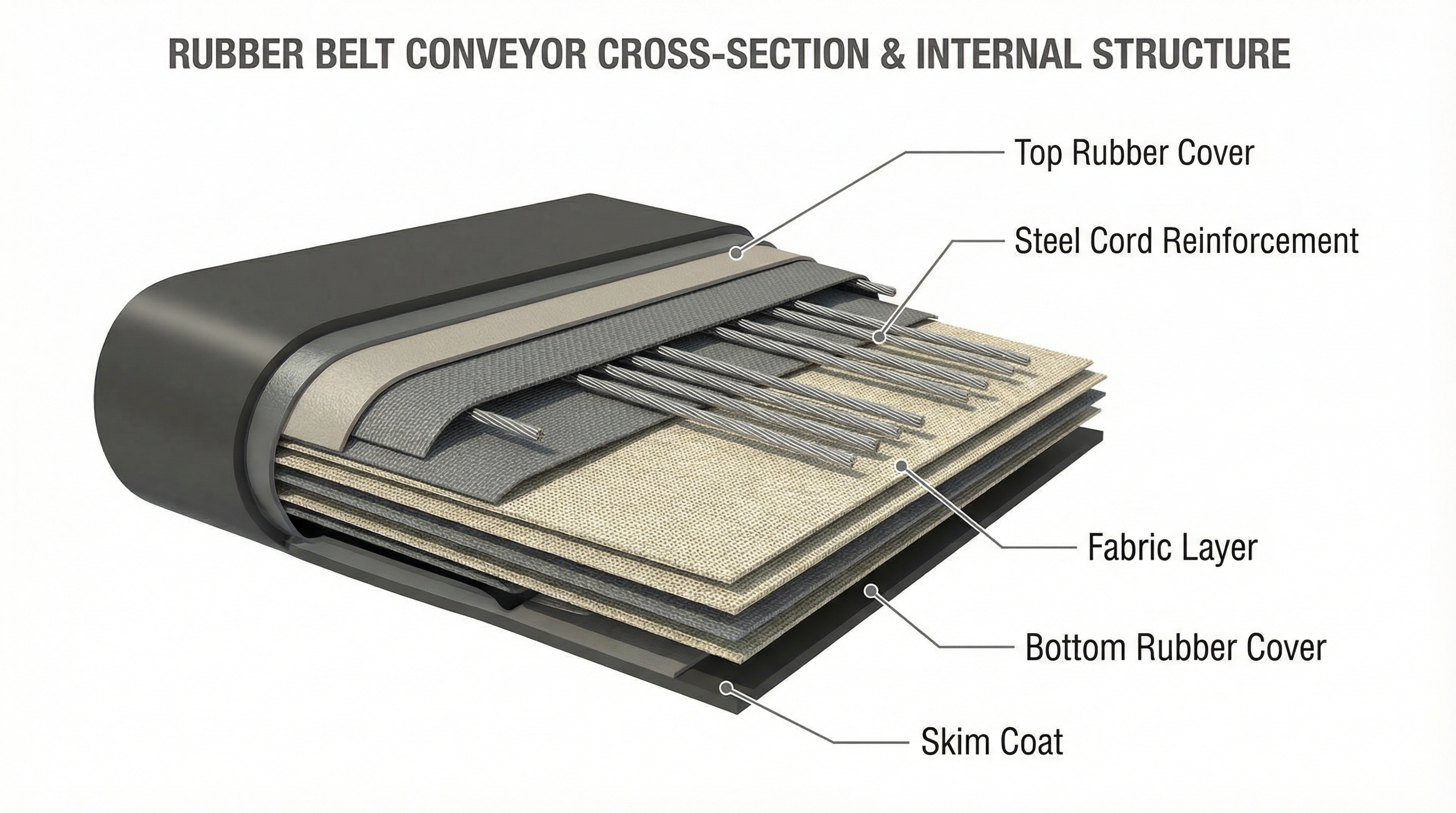
Design variations focus on the internal reinforcement and surface texture to meet specific slope and load requirements. A rubber belt conveyor can be customized with various rib patterns or internal skeletons to handle steep inclines. Understanding these variations helps you match the equipment to the unique topography of your site.
Reinforced Internal Structures
Look: Standard belts use fabric plies, but for heavy-duty applications, steel cords are embedded within the rubber. These cords allow for high-tension operation without the risk of the belt stretching or snapping under load.
Specialized Surface Patterns
- Chevron Belts: Feature “V” shaped cleats for carrying materials up steep angles.
- Rough Top: Provides extra grip for boxes or smooth-surfaced goods.
- Crescent Patterns: Excellent for moving wet or slurry-based materials.
Vertical and Sidewall Solutions
Key Takeaway: Sidewall belts allow for vertical lifting in tight spaces, saving significant floor area in your facility. This design prevents material fallback and maximizes the use of vertical space in casting plants.
| Belt Type | Best Use Case | Angle Limit | |
|---|---|---|---|
| Flat Belt | Horizontal transport | 0 – 15 Degrees | |
| Chevron Belt | High-incline bulk | 15 – 40 Degrees | |
| Sidewall Belt | Vertical lifting | Up to 90 Degrees |
Choosing the correct profile ensures that gravity does not work against your production goals.
What is the rubber belt conveyor manufacturing process?
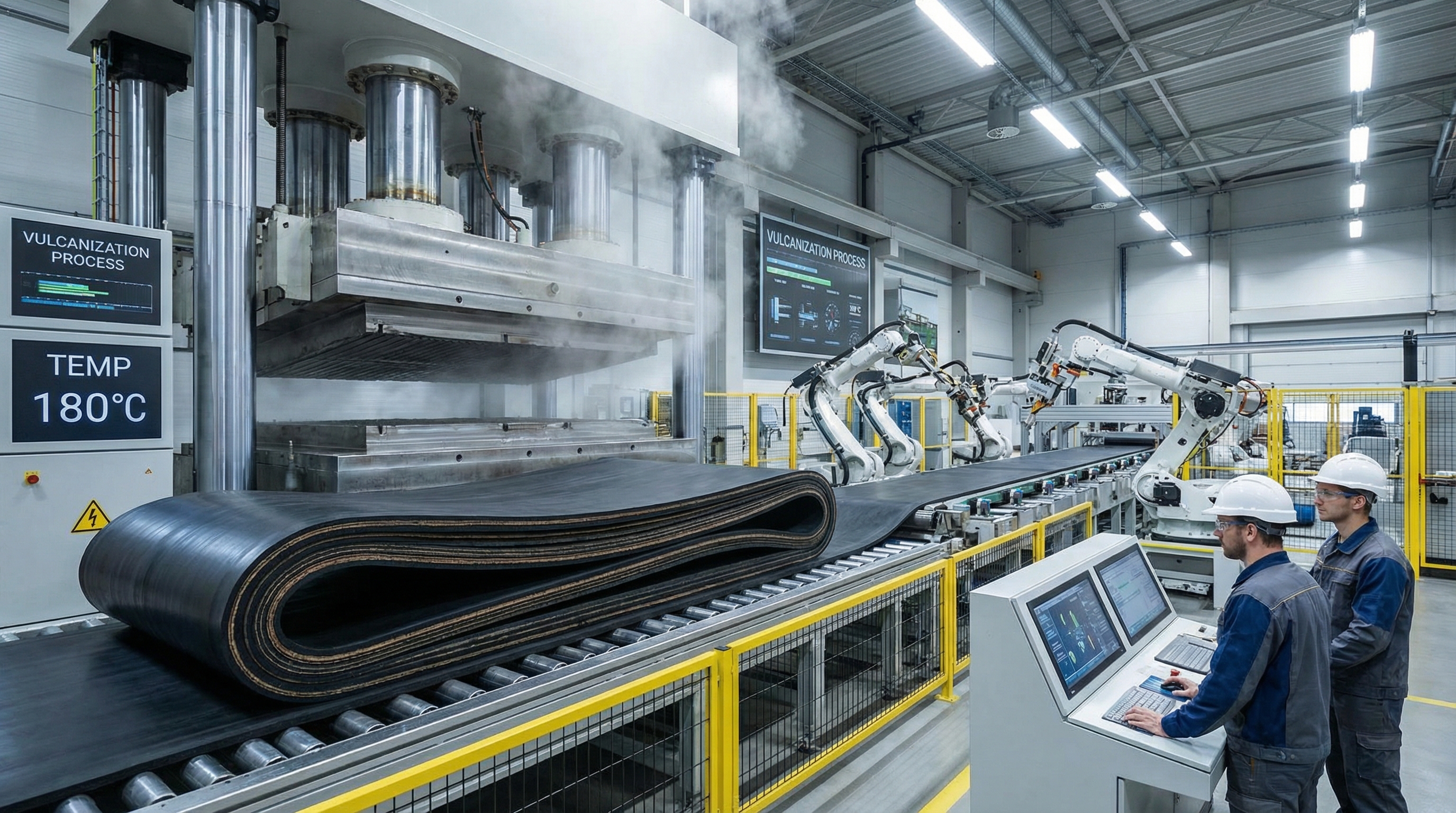
The manufacturing process involves compounding raw elastomers with reinforcements and curing them under high heat. Every high-performance rubber belt conveyor undergoes a precise vulcanization phase to bond the layers permanently. This creates a unified structure that can survive years of constant flexing and industrial wear.
Compounding the Rubber Material
The best part? Engineers mix natural and synthetic rubbers with carbon black and chemical stabilizers to achieve the desired hardness. This “recipe” is tailored to whether the belt needs to be oil-resistant, heat-resistant, or exceptionally flexible.
The Calendering and Layering Phase
- Fabric Impregnation: Coating the fabric plies with a thin layer of rubber.
- Lamination: Stacking the layers to reach the specified thickness.
- Edge Sealing: Protecting the internal carcass from environmental moisture.
Vulcanization and Quality Testing
Key Takeaway: Heating the belt in a large press creates the cross-links in the rubber molecules that provide elasticity. Rigorous testing ensures that the final product meets international standards for tensile strength and abrasion.
| Stage | Action | Result | |
|---|---|---|---|
| Mixing | Chemical blending | Targeted durability properties | |
| Calendering | Layer bonding | Uniform thickness and strength | |
| Vulcanization | Heat curing | Final elastomer stability |
Precision in manufacturing translates directly to a lower total cost of ownership for your facility.
What are the primary benefits of a rubber belt conveyor?
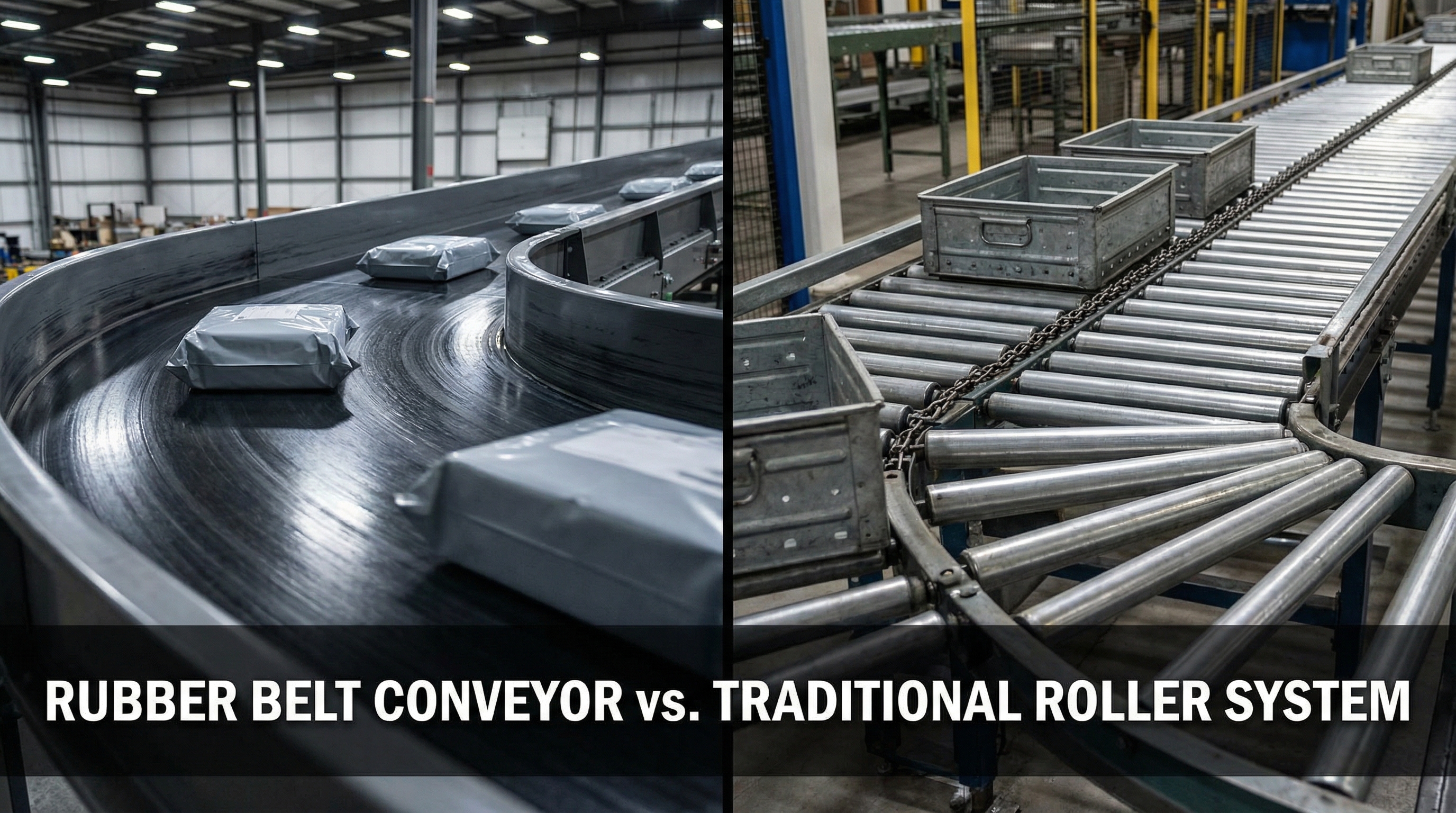
The primary benefits include high impact resistance, quiet operation, and the ability to handle a vast range of materials. A rubber belt conveyor is far superior to metal or plastic alternatives when you need to transport heavy, abrasive substances without damaging the system. These systems offer the best balance of speed, reliability, and maintenance simplicity.
Operational Noise Reduction
Now: Unlike chain conveyors that clatter and grind, rubber belts glide over idlers with minimal decibel output. This creates a safer and more productive environment for your staff, especially in enclosed casting facilities.
Material Versatility and Safety
- Impact Cushioning: Rubber absorbs the shock of falling rocks or heavy plaster molds.
- Non-Stick Surfaces: Specific coatings prevent materials from clinging to the belt.
- Safe Handling: No sharp metal links that could catch on clothing or tools.
Cost Efficiency and ROI
Key Takeaway: Low energy requirements and minimal spare parts make these systems the most economical choice for long-term operations. You spend less on power and more on productive output.
| Benefit | Impact on Site | Financial Advantage | |
|---|---|---|---|
| Durability | Fewer belt replacements | Lower CAPEX over time | |
| Speed | Higher material throughput | Faster order fulfillment | |
| Flexibility | Easier layout changes | Lower installation costs |
These advantages make rubber the gold standard for virtually all bulk material handling needs.
How can you maintain a rubber belt conveyor for longevity?
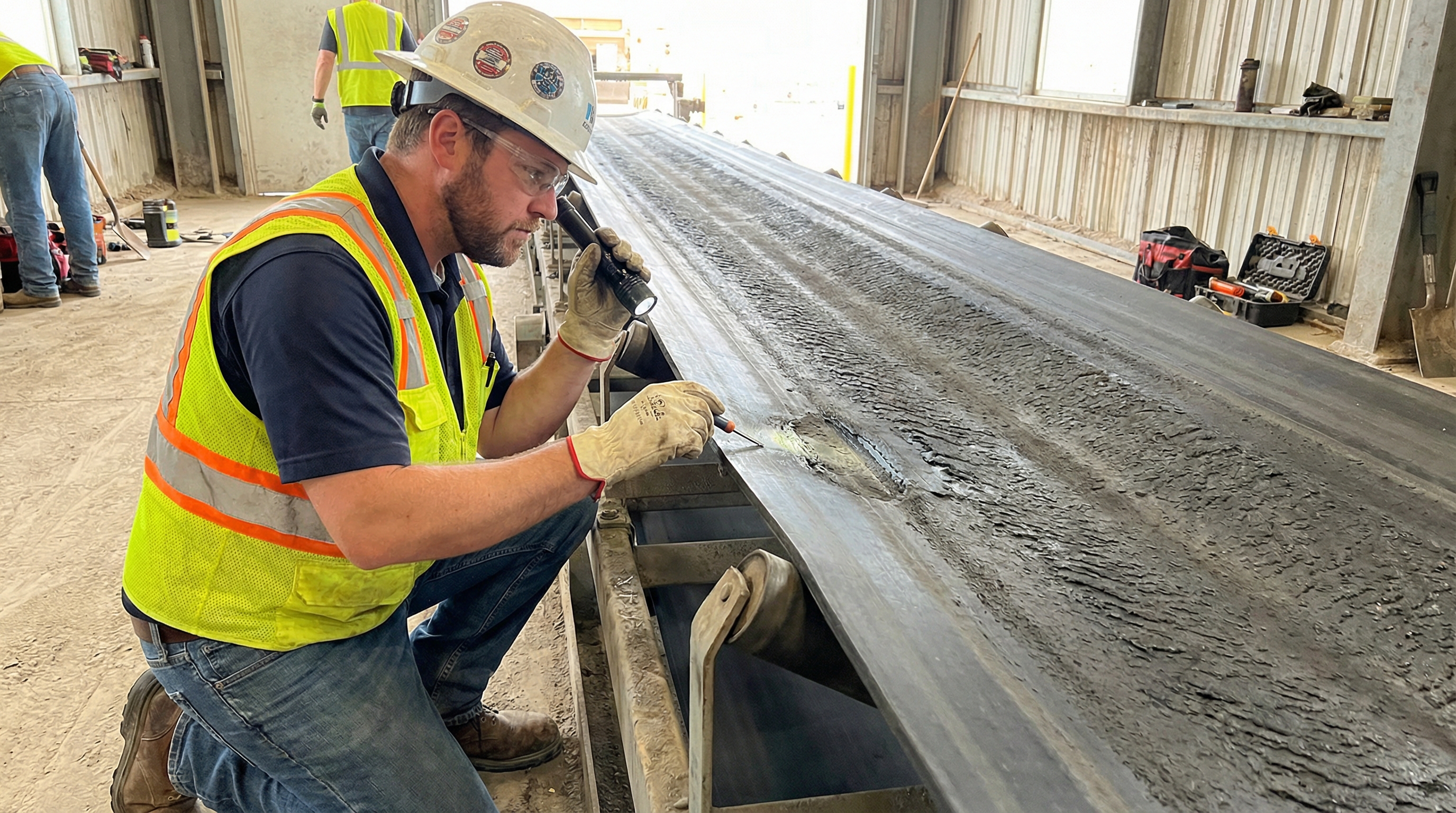
Longevity is achieved through scheduled inspections, proper lubrication of bearings, and consistent belt cleaning. You should refer to a rubber belt conveyor manual to establish a routine that catches small tears before they become catastrophic failures. Preventive maintenance is significantly cheaper than reacting to an unexpected system shutdown.
Regular Cleaning and Scraper Maintenance
Check this out: Belt scrapers remove material that “carries back” to the tail pulley, which can cause the belt to mistrack. Keeping the rollers clean ensures that friction remains constant and the motor is not overworked.
Inspection Protocols
- Edge Wear: Check for fraying caused by the belt hitting the frame.
- Splicing Integrity: Inspect the joints where the belt ends are bonded.
- Bearing Temperature: Monitor for overheating, which signals imminent failure.
Tension and Alignment Checks
Key Takeaway: A belt that is too loose will slip, while one that is too tight will snap; finding the “sweet spot” is vital. Regular tracking adjustments keep the belt running straight and preserve the edges.
| Task | Frequency | Objective | |
|---|---|---|---|
| Visual Check | Daily | Identify surface damage | |
| Lubrication | Monthly | Reduce roller friction | |
| Alignment | Quarterly | Prevent edge damage |
Diligent maintenance ensures your system remains an asset rather than a liability.
How to select the right rubber belt conveyor for your site?
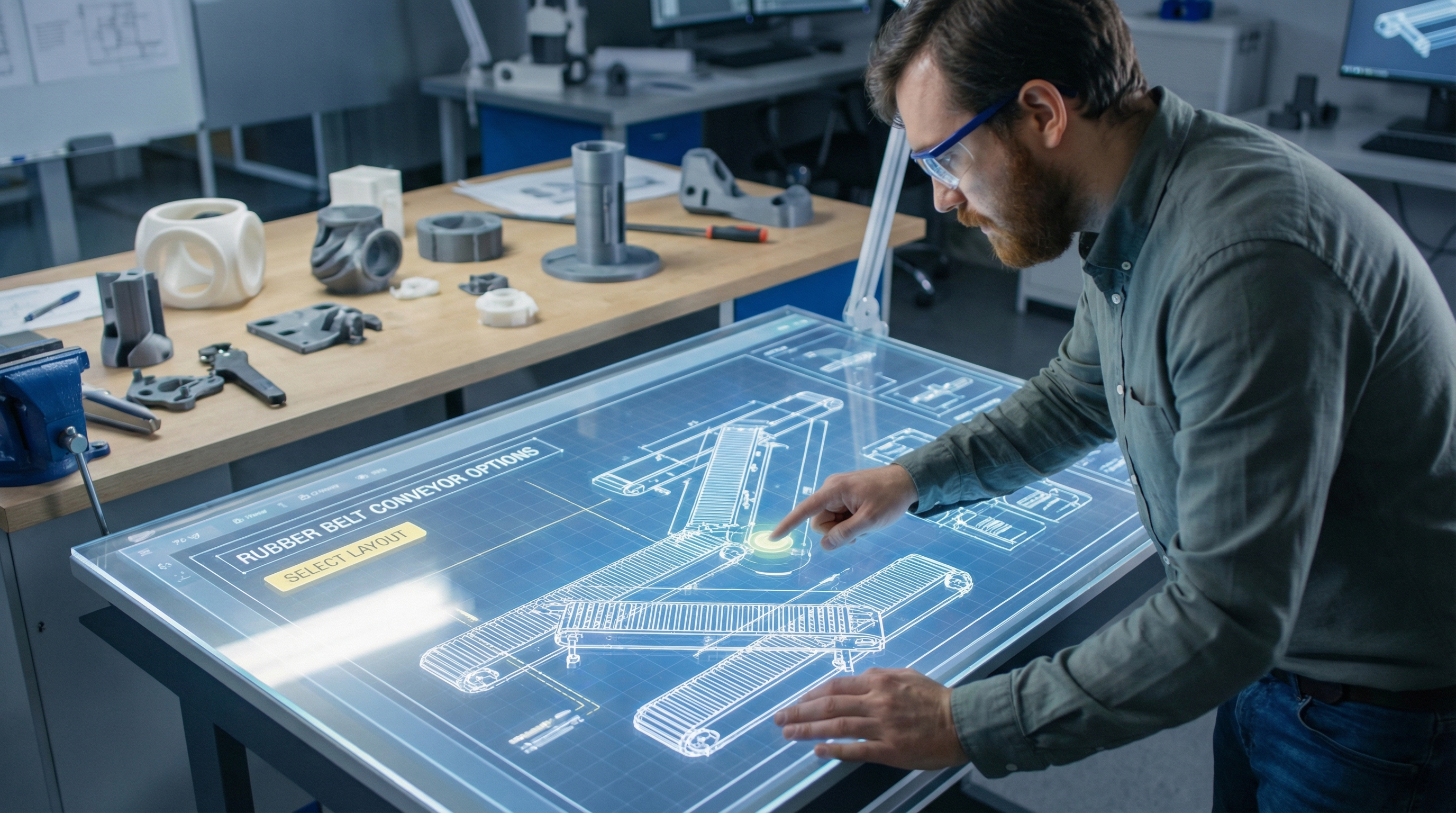
Selecting the right system requires a detailed analysis of the material’s weight, abrasiveness, and the path of travel. Honestly: if you choose a standard belt for a high-heat plaster environment, you will see it crack within weeks. You must match the belt’s tensile rating to the maximum expected load to ensure the motor can handle the peak demand.
Analyzing Material Characteristics
The chemical makeup of your material dictates the rubber compound you need. For instance, oily aggregates require synthetic rubber like Nitrile, whereas dry plaster may only need a standard SBR compound.
Determining Width and Speed
- Volumetric Flow: Calculate how much material must move per hour.
- Belt Width: Ensure the belt is wide enough to prevent spills at corners.
- Speed Limits: Higher speeds increase wear; find the optimal balance for throughput.
Calculating Path and Gravity
Key Takeaway: The number of turns and the total vertical rise determine the required motor horsepower and belt strength. Professional engineering ensures your system doesn’t stall when fully loaded on an incline.
| Factor | Consideration | Site Impact | |
|---|---|---|---|
| Density | Weight per cubic meter | Motor sizing | |
| Abrasiveness | Sharpness of material | Belt cover thickness | |
| Environment | Temperature and moisture | Rubber compound choice |
Correct selection at the start of a project prevents expensive retrofitting costs later.
Can a rubber belt conveyor withstand extreme heat levels?
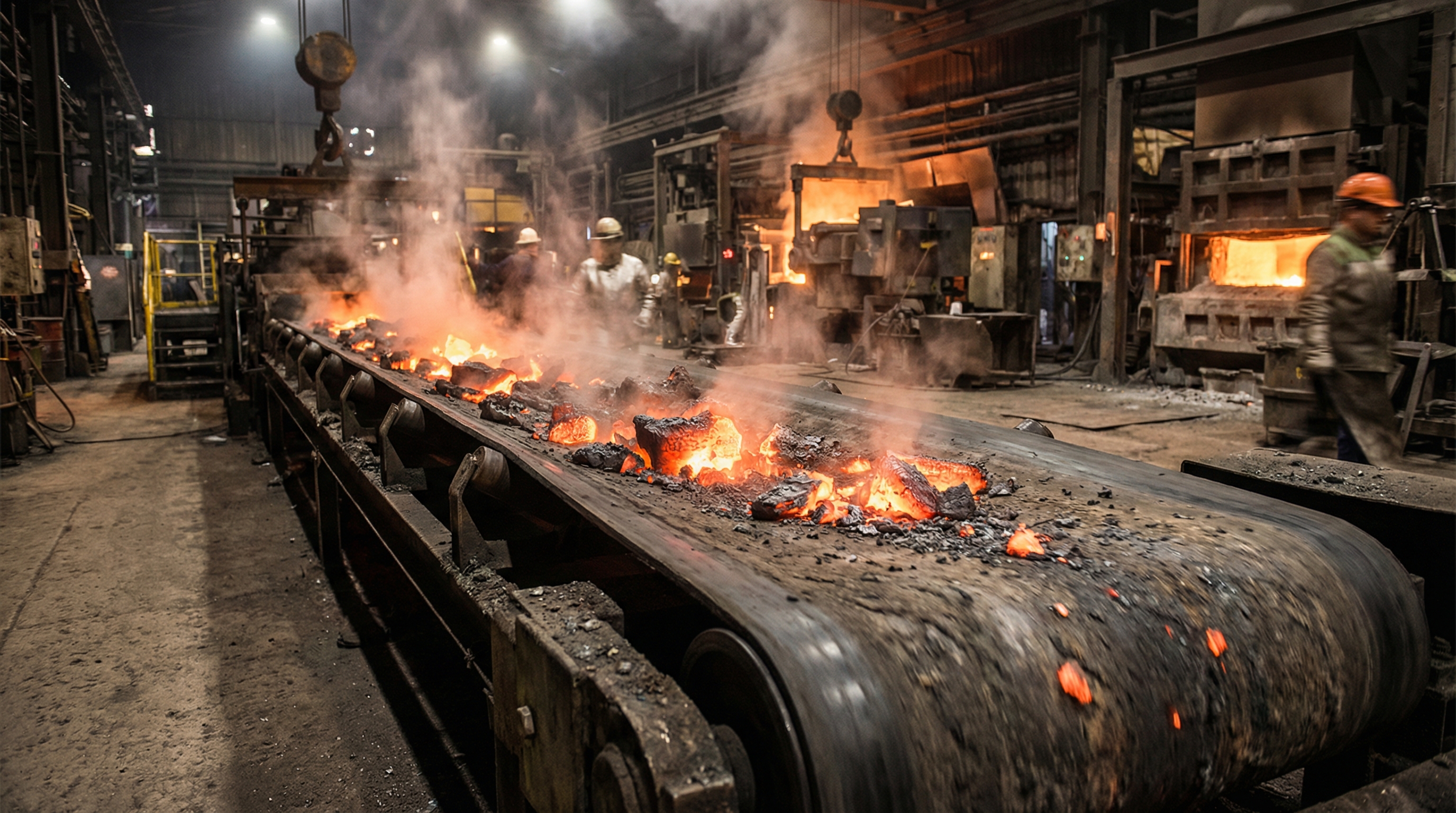
Yes, specialized heat-resistant belts are designed to operate in temperatures exceeding 200°C without losing their mechanical properties. In fact: using a specialized heat-resistant conveyor belt is mandatory for foundries, cement plants, and high-temperature casting processes. These belts use EPDM or chlorobutyl rubber to resist the hardening and cracking that kills standard belts.
Thermal Resistance Ratings
Heat-resistant belts are categorized by the temperature of the material they carry and the duration of exposure. T1, T2, and T3 ratings help you identify the specific thermal threshold required for your casting or furnace discharge.
- T1 Grade: Resists heat up to 125°C.
- T2 Grade: Resists heat up to 150°C.
- T3 Grade: Resists heat up to 200°C or higher.
Managing Surface Temperature
Believe it or not: The belt surface cools as it returns to the tail pulley, but internal heat can build up over time. Ensuring adequate airflow and using water sprays can help extend the life of a belt in extreme conditions.
Preventive Replacement Signs
Key Takeaway: Look for “alligatoring” or surface cracking as the first sign that the heat is breaking down the rubber. Replacing the belt before it becomes brittle avoids a catastrophic snap during operation.
| Grade | Max Temp | Typical Application | |
|---|---|---|---|
| T1 | 125°C | General industrial heat | |
| T2 | 150°C | Sinter and clinker transport | |
| T3 | 200°C+ | Foundry and glass works |
Thermal management is a critical safety and efficiency consideration for modern industrial sites.
What is the environmental impact of a rubber belt conveyor?
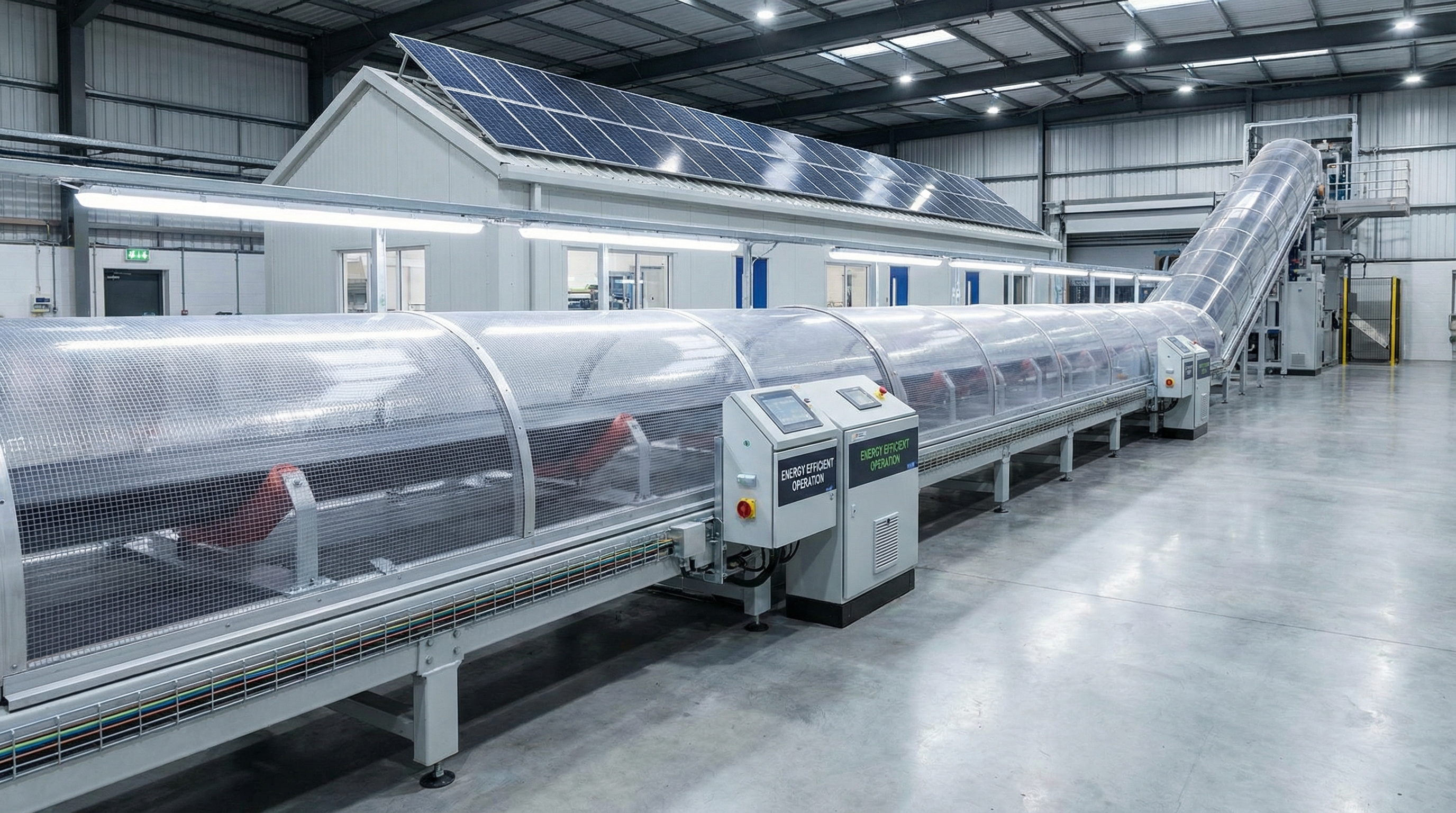
The environmental impact is mitigated by energy-efficient drives, the use of recycled rubber, and effective dust suppression systems. You can significantly reduce the carbon footprint of your rubber belt conveyor by selecting Low Rolling Resistance (LRR) rubber compounds. These advanced materials reduce the power needed to pull the belt over the rollers, lowering your monthly energy bill.
Energy-Efficient Drive Motors
Modern systems utilize IE3 or IE4 motors that maximize energy conversion. Combined with regenerative braking on downhill sections, these systems can actually return power to your facility’s grid.
Sustainable Material Usage
- Recycled Content: Using reclaimed rubber in the belt’s core layers.
- Extended Lifespan: Better durability means fewer belts end up in landfills.
- Synthetic Blends: Reducing the reliance on natural rubber harvesting.
Dust and Emission Control
Key Takeaway: Enclosed belt systems prevent fine particles from plaster or coal from escaping into the atmosphere. This protects the health of your workers and ensures compliance with local environmental regulations.
| Eco-Feature | Environmental Benefit | Operational Gain | |
|---|---|---|---|
| LRR Rubber | Lower power consumption | Reduced utility costs | |
| Enclosures | Minimal dust pollution | Cleaner facility air | |
| Recycling | Waste reduction | Potential tax incentives |
Focusing on sustainability not only protects the planet but also improves the long-term profitability of your operation.
Selecting the right conveyor solution is the foundation of industrial productivity. Whether you are managing a high-heat casting plant or a vast mining operation, a professional rubber belt system ensures your material flow remains uninterrupted. At Zhenxing Rubber, we are dedicated to engineering high-performance transport solutions that empower your business to reach new heights of efficiency. If you are ready to eliminate bottlenecks and optimize your handling costs, contact us today for a customized technical consultation.
Frequently Asked Questions
Can I use a standard rubber belt for moving wet plaster?No, you should use a belt with moisture-resistant synthetic fibers. Natural fibers can rot and weaken the belt’s structure when exposed to constant humidity.
What’s the best way to prevent belt slippage?Ensuring the drive pulley has vulcanized rubber lagging is the most effective method. This increases the friction coefficient, allowing the pulley to grip the belt even under heavy loads.
How do I know if my belt tension is correct?The belt should be tight enough to move without slipping on the drive pulley but loose enough that it doesn’t strain the motor or bearings. You can verify this by checking the “sag” between the idler rollers.
Can I repair a small tear in the belt myself?Yes, small surface cuts can be repaired using cold vulcanizing adhesives or mechanical fasteners. However, deep tears affecting the carcass usually require professional hot vulcanization to restore full strength.
How do I know if a belt is energy-efficient?Look for the LRR (Low Rolling Resistance) label on the technical datasheet. These belts are specifically engineered to flex with less internal friction, requiring less