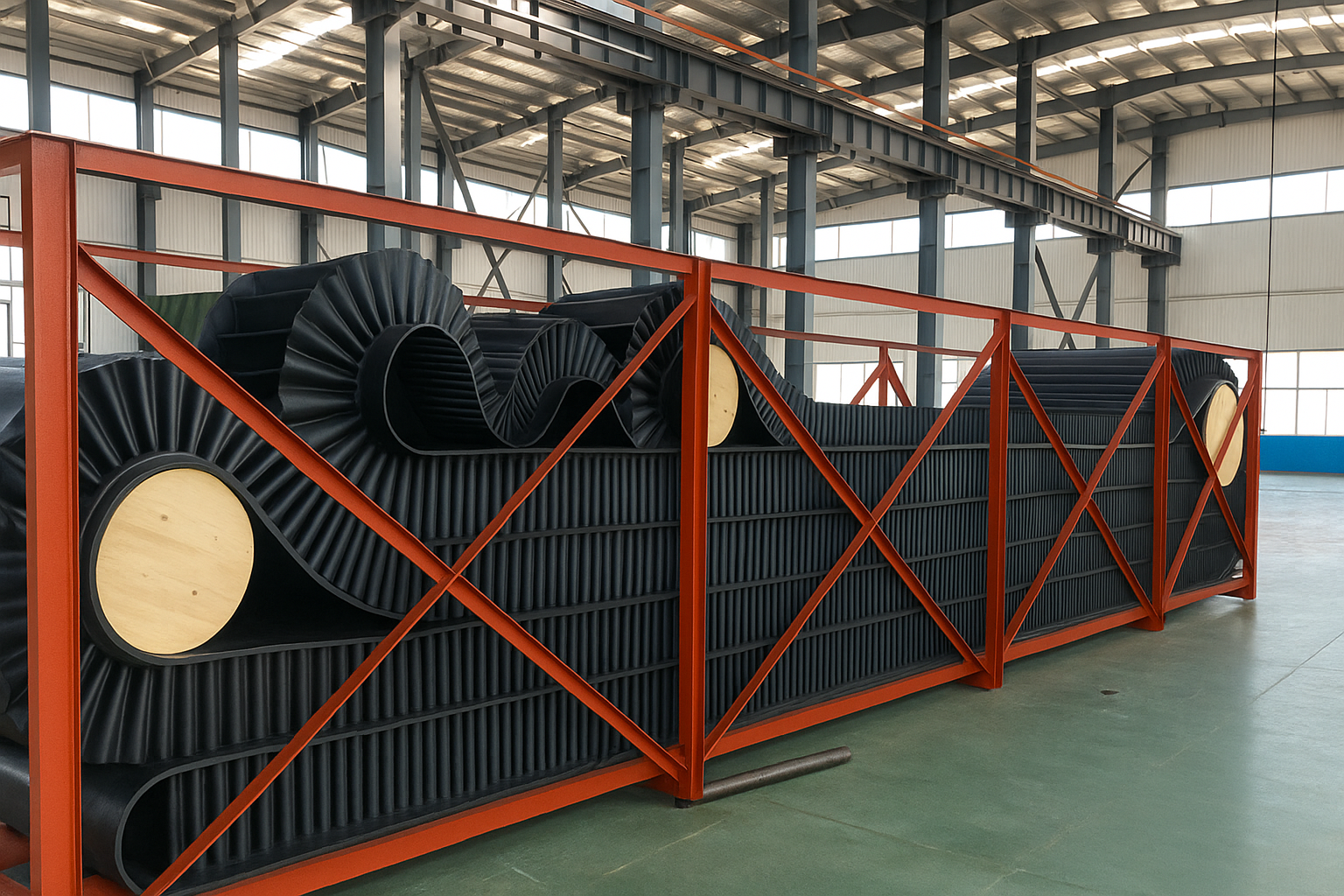
A sidewall rubber conveyor belt is designed to transport bulk materials efficiently at steep angles or even vertical inclines while minimizing the space required for conveyor installations. Traditional conveying systems often rely on long, shallow conveyor layouts that occupy large floor areas and increase infrastructure costs. Many facilities face challenges such as limited space, high energy consumption, and frequent material spillage during transfer points. By adopting a well-engineered sidewall rubber conveyor belt, companies can move materials at angles up to 90 degrees within a compact system design. This solution improves material containment, reduces maintenance requirements, and allows industrial operations to achieve higher efficiency with a smaller footprint.
Why use a sidewall rubber conveyor belt for steep angles?

You use a sidewall rubber conveyor belt for steep angles because it utilizes corrugated sides and cross-cleats to trap material securely. This design allows you to reach high elevations without the need for massive horizontal runs.
By consolidating your layout, you can remove unnecessary transfer towers and towers. This approach significantly lowers long-term operational costs by reducing the number of moving parts.
Can you save floor space with vertical lifting?
You can drastically reduce the physical footprint of your production line by switching to vertical lifting solutions. Traditional conveyors require significantly more horizontal space to reach the same height as a specialized sidewall system.
Here’s the deal: When you eliminate long conveyor runs, you open up floor space for other critical machinery or storage.
How do corrugated sides stop material spillage?
The corrugated sidewalls act as a continuous flexible barrier that expands around pulleys while keeping the load contained. You will find that these sides are often reinforced with fabric to maintain their shape under pressure.
- Prevents side-leakage of fine particulates.
- Allows for higher loading volumes per meter.
- Maintains material integrity during high-speed transitions.
Key Takeaway: Vertical conveying provides maximum spatial efficiency while maintaining high throughput for bulk goods.
| Feature | Conventional Belt | Sidewall Rubber Belt | |
|---|---|---|---|
| Max Angle | 18 – 22 Degrees | Up to 90 Degrees | |
| Space Required | High | Minimal | |
| Transfer Points | Multiple | Single / None |
The data confirms that the sidewall architecture is the most viable solution for high-density industrial environments.
How is a sidewall rubber conveyor belt constructed?
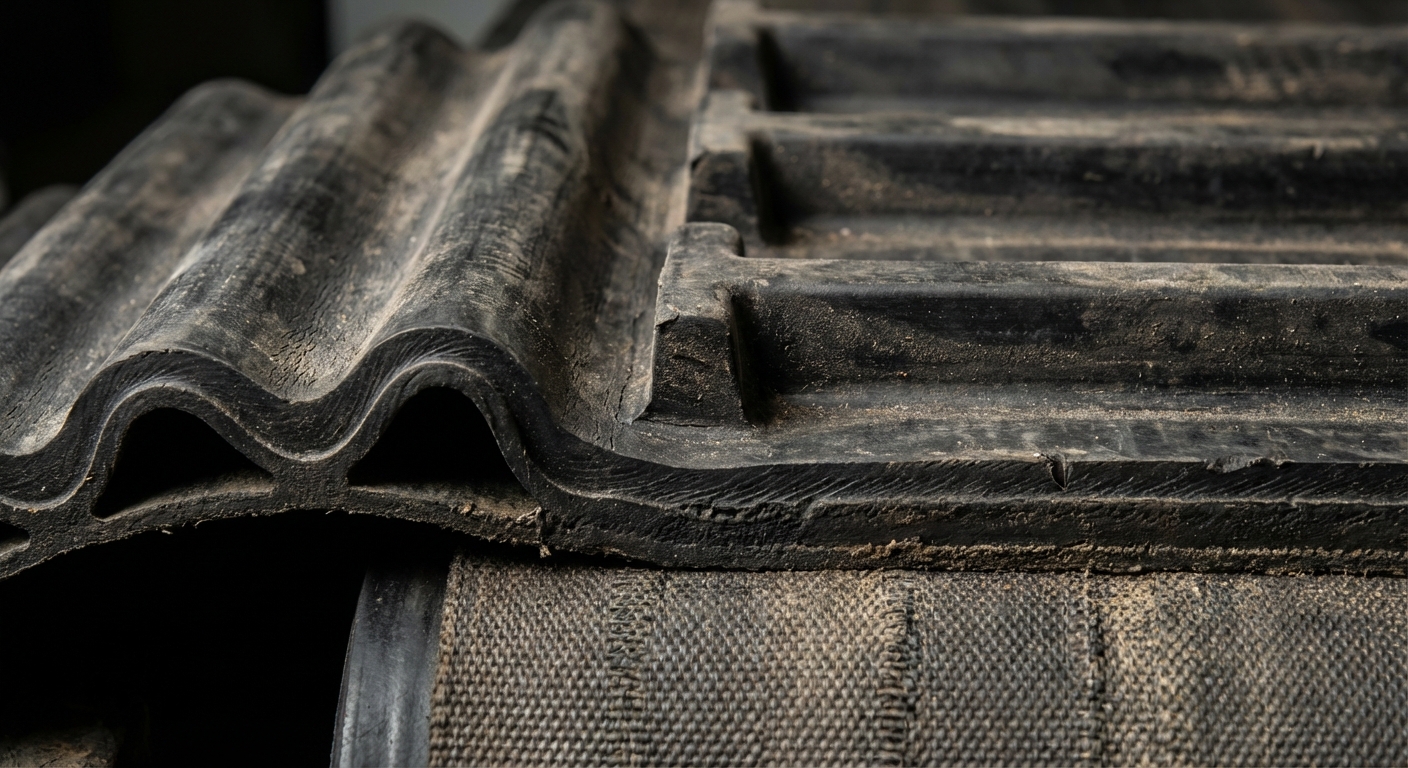
A sidewall rubber conveyor belt is constructed using a cross-rigid base belt, corrugated sidewalls, transverse cleats, and protective rubber covers. You will notice that the base carcass provides high lateral stiffness to ensure the belt remains level.
This complex construction allows the belt to flex over pulleys while maintaining a rigid profile across its width. High-strength vulcanization is used to attach the sidewalls, ensuring they withstand the constant stress of vertical lifting.
Do the corrugated sidewalls provide enough flexibility?
The sine-wave pattern of the corrugated walls is specifically designed to allow the rubber to compress as it moves. You won’t have to worry about the walls cracking because modern compounds are optimized for high fatigue resistance.
The best part? You get a belt that remains perfectly flat across its width while wrapping easily around the drive drum.
Why are large cleats essential for material lift?
Cleats serve as the sturdy shelves that carry your material upward against the force of gravity. Depending on your specific needs, you can choose between T-type, C-type, or TC-type cleats to match flow characteristics.
- T-type cleats for light inclines.
- C-type cleats for higher capacities.
- TC-type cleats for 90-degree vertical runs.
Key Takeaway: Robust construction and high-quality bonding are the foundations of a reliable vertical belt system.
| Component | Material Type | Primary Function | |
|---|---|---|---|
| Base Carcass | EP / Steel Cord | Tension and Rigidity | |
| Sidewall | SBR / EPDM | Material Containment | |
| Cleats | Abrasion-Resistant | Material Elevation |
Proper material selection for each component ensures the belt survives the high-stress environment of vertical conveying.
What is the capacity of a sidewall rubber conveyor belt?

The capacity of a sidewall rubber conveyor belt is determined by the pocket volume created by the sidewall height and cleat spacing. You can achieve higher throughput in a smaller width because the material is stacked vertically.
When you optimize the cleat frequency and height, you maximize the amount of material moved per revolution. This efficiency allows you to use a narrower conveyor structure, reducing your initial capital investment in steelwork.
How does cleat height affect your volume throughput?
Higher cleats create deeper pockets, allowing you to carry larger volumes of material without back-sliding issues. However, you must balance this height with the diameter of your pulleys to avoid mechanical interference.
It gets better: By choosing the right cleat profile, you can increase your capacity by up to 50% without changing width.
Can you calculate the ideal belt width for your load?
To determine width, you must consider the effective width between the sidewalls rather than the total belt width. You should also leave a safe margin on the edges to prevent the walls from rubbing.
- Measure the maximum lump size of your material.
- Determine the required tons-per-hour (TPH).
- Select the sidewall height that accommodates the surge load.
Key Takeaway: Capacity is a function of geometry and speed, requiring careful calculation for peak performance.
| Spec Factor | Impact on Capacity | Recommended Approach | |
|---|---|---|---|
| Cleat Spacing | Higher frequency = more pockets | Match to material lump size | |
| Sidewall Height | Taller = more volume | Check pulley diameter limits | |
| Belt Speed | Higher = more TPH | Keep under 2.5 m/s |
A well-balanced specification allows you to move massive quantities of bulk material in a very small structural footprint.
Which materials suit a sidewall rubber conveyor belt best?

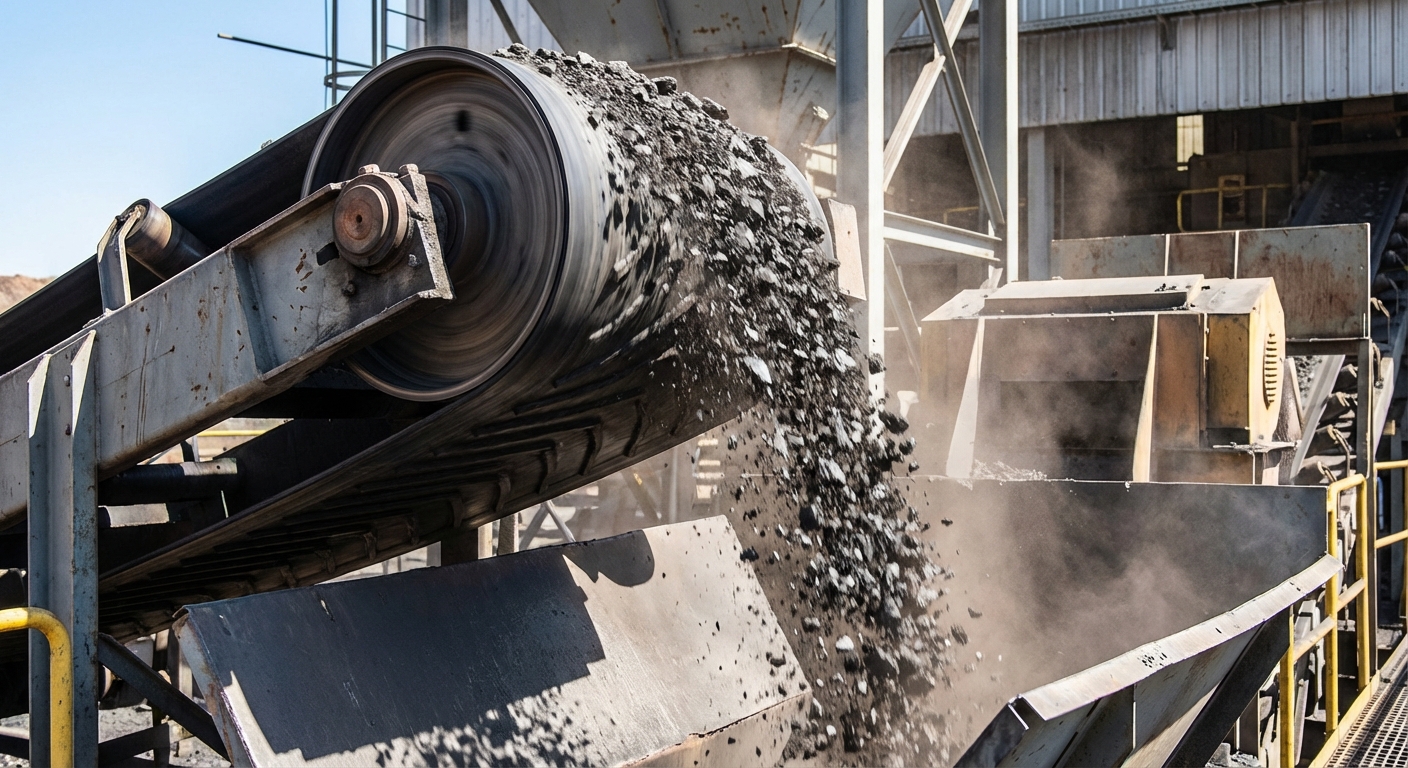
A sidewall rubber conveyor belt is ideal for bulk materials ranging from fine silica sand to large iron ore rocks. You will find that because the material is stationary within the pocket, there is very little internal friction.
For industries dealing with dusty materials, the pocket design provides an excellent foundation for enclosed configurations. This ensures that you maintain a clean work environment while transporting materials that would otherwise blow away.
Is this belt effective for abrasive mining ores?
The rubber covers of these belts are specifically formulated with high-abrasion resistance to handle sharp edges of stone. You can select different rubber grades depending on how destructive your specific material happens to be.
Believe it or not: A properly specified belt can outlast a standard flat belt by five times in abrasive mining environments.
How does it handle sticky or wet industrial materials?
Sticky materials can be a challenge because they might not discharge cleanly from the pockets at the top. You may need to install a mechanical beater on the return side to knock loose any residual material.
- Ideal for chemical fertilizers.
- Perfect for dry grain handling.
- Excellent for fly ash transport.
Key Takeaway: Most bulk materials are compatible with sidewall belts if the right rubber compound is used.
| Material Type | Recommended Cleat | Rubber Grade | |
|---|---|---|---|
| Sharp Rock / Ore | TC-Type (Reinforced) | High Abrasion Resistant | |
| Wet Sand / Sludge | C-Type | Oil / Moisture Resistant | |
| Fine Powders | T-Type (Frequent) | Anti-Static |
Matching the belt’s physical properties to the material’s nature is the only way to ensure long-term success.
How do you maintain a sidewall rubber conveyor belt?
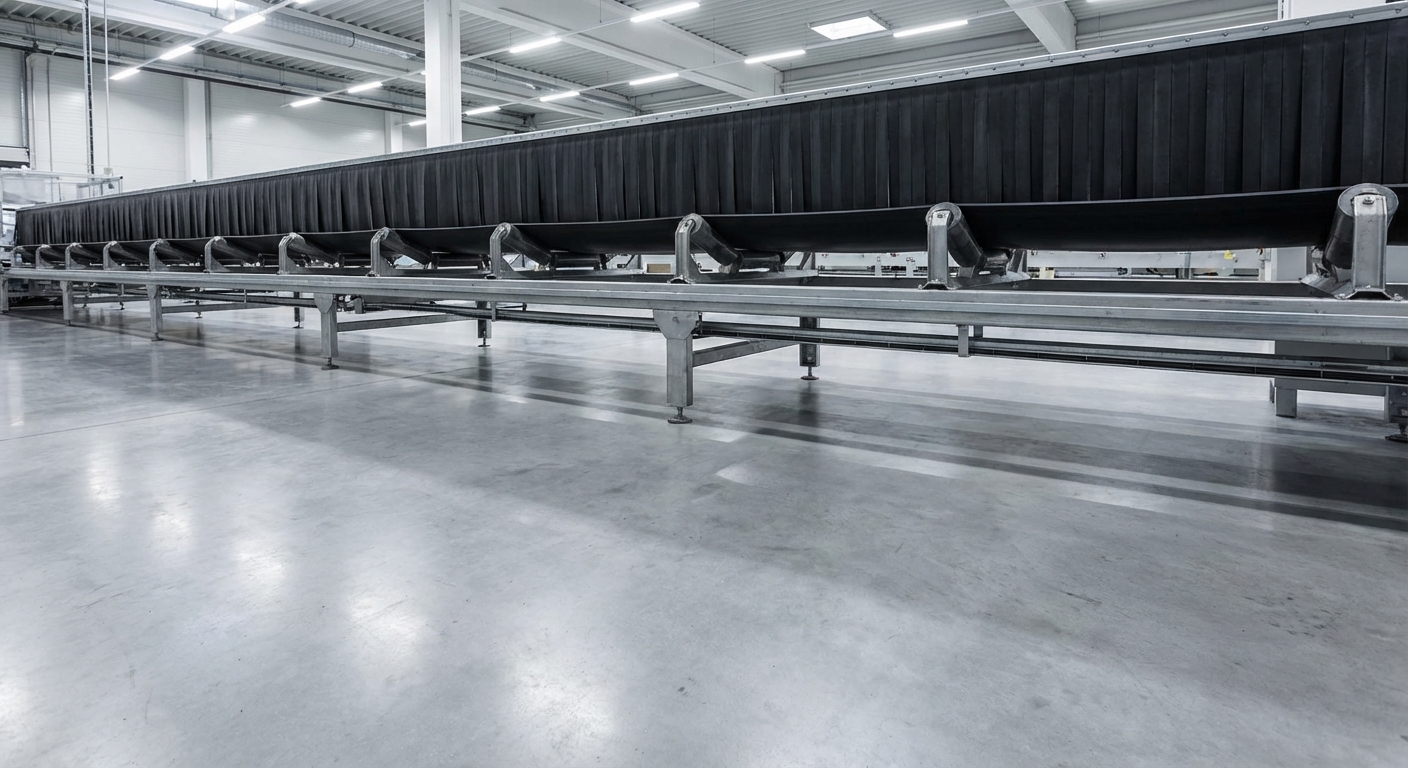
You maintain a sidewall rubber conveyor belt by focusing on the attachment points of the cleats and corrugated walls. You should perform weekly visual inspections to look for signs that the bonding agent is failing.
Because these belts are complex, they require precise alignment of the pulleys and idlers within the system. If your belt is even slightly off-track, the sidewalls will hit the frame, causing immediate and expensive damage.
What are the signs of sidewall fatigue or cracking?
Over time, constant flexing around pulleys can cause small cracks to appear in the valleys of the corrugated sidewalls. You must monitor these cracks; once they reach the fabric reinforcement, moisture can enter and cause delamination.
Think about it: Even a 5mm misalignment can cause the sidewall to rub against the structure, wearing down rubber in hours.
How do you ensure cleat attachment remains secure?
Cleats are subject to high impact during loading and high tension during the vertical lift phases. You should check for lifting at the edges, especially if you are transporting heavy, dense materials with high leverage.
- Use a torque wrench on bolted reinforcements.
- Check for material buildup behind the cleats.
- Inspect the vulcanized bond for separation.
Key Takeaway: Preventive inspections and perfect tracking are non-negotiable for sidewall belt maintenance.
| Maintenance Task | Frequency | Target | |
|---|---|---|---|
| Visual Bond Check | Weekly | Cleat and Wall bases | |
| Tracking Alignment | Daily | Deflection Wheels | |
| Debris Removal | Shift-End | Bottom of Pockets |
Consistency in maintenance prevents small issues from turning into catastrophic failures in your vertical transport system.
What are the energy benefits of a sidewall rubber conveyor belt?

The energy benefits of a sidewall rubber conveyor belt come from the elimination of multiple transfer points and reduced length. You only need one drive motor for a single vertical lift, reducing total energy losses significantly.
Furthermore, the vertical path is the shortest distance between two points in any facility. By taking a direct route upward, you reduce the total mass of the belt moved, lowering torque and electricity.
Do fewer transfer points reduce your power consumption?
Every time material moves from one belt to another, energy is lost through friction and material acceleration. By using a continuous sidewall belt, you keep the material at a constant velocity, which is more efficient.
Here is the deal: One large motor is almost always more efficient than three smaller motors running in sequence.
Can optimized motor sizing save operational costs?
With a single, direct-path belt, you can size your motor more precisely to the actual required load. You won’t have to over-spec motors to handle the startup friction of multiple separate conveyor stages.
- Less steel means lower structural resonance.
- Reduced weight lowers the load on foundations.
- Simplified design requires fewer lighting systems.
Key Takeaway: Vertical conveying is the most energy-efficient method for bulk elevation due to its direct path.
| Factor | Multi-Stage Flat Belts | Single Sidewall Belt | |
|---|---|---|---|
| Total Motors | 3 – 5 | 1 | |
| Energy Loss | High (at transfers) | Low (continuous) | |
| Moving Mass | High | Low |
Reducing the number of electromechanical components is the fastest way to hit your facility’s sustainability targets.
Where can you apply a sidewall rubber conveyor belt today?
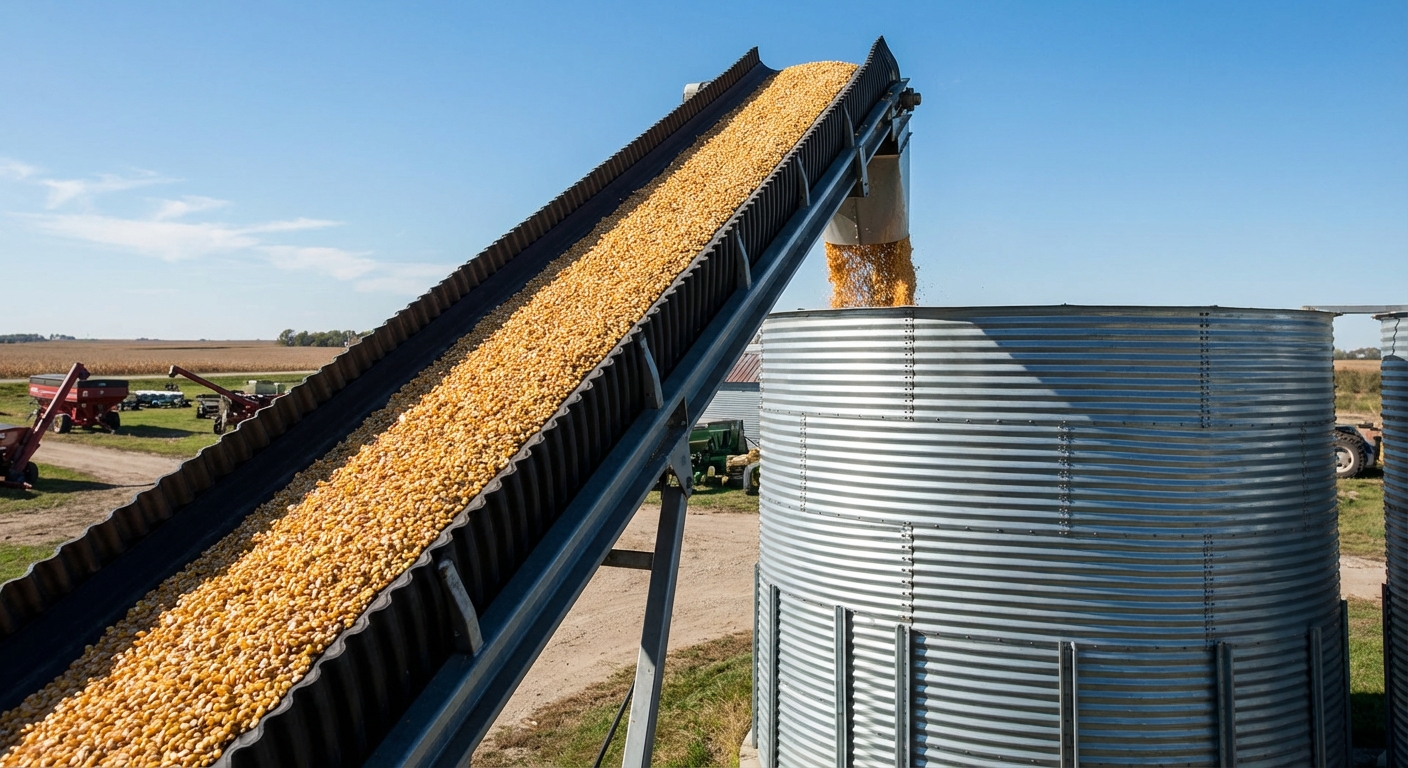
You apply a sidewall rubber conveyor belt in any industry involving bulk handling, from heavy mining to food processing. They are popular in urban areas where there is no room to build a traditional long conveyor ramp.
As global industries move toward green manufacturing, the ability to enclose these conveyors makes them a preferred choice. You can achieve a completely dust-free operation while saving up to 75% of the required land area.
Is it reliable for high-heat cement plant clinker?
In cement production, clinker often leaves the kiln at extreme temperatures that would melt standard industrial rubber. You can specify EPDM or high-heat resistant rubber for your sidewall belt to handle continuous extreme heat.
The best part? Specialized heat compounds allow for continuous operation up to 200 degrees Celsius without losing structural integrity.
Can power plants benefit from dust-free coal lift?
Power plants use these belts to lift coal to the top of boiler bunkers with minimal leakage. You can fully enclose the vertical run in a steel box to ensure that no coal dust escapes.
- Rapid ship loading and unloading.
- Minimal wharf space usage.
- Resistant to saltwater corrosion.
Key Takeaway: Sidewall belts are the go-to solution for space-constrained, high-intensity industrial applications.
| Industry | Primary Use Case | Key Requirement | |
|---|---|---|---|
| Mining | Underground to Surface | High Tensile Strength | |
| Cement | Silo Loading | Heat Resistance | |
| Ports | Bulk Cargo Loading | High TPH / Capacity |
The versatility of the sidewall design allows it to solve the specific logistical challenges of demanding industries.
How to select a sidewall rubber conveyor belt specification?
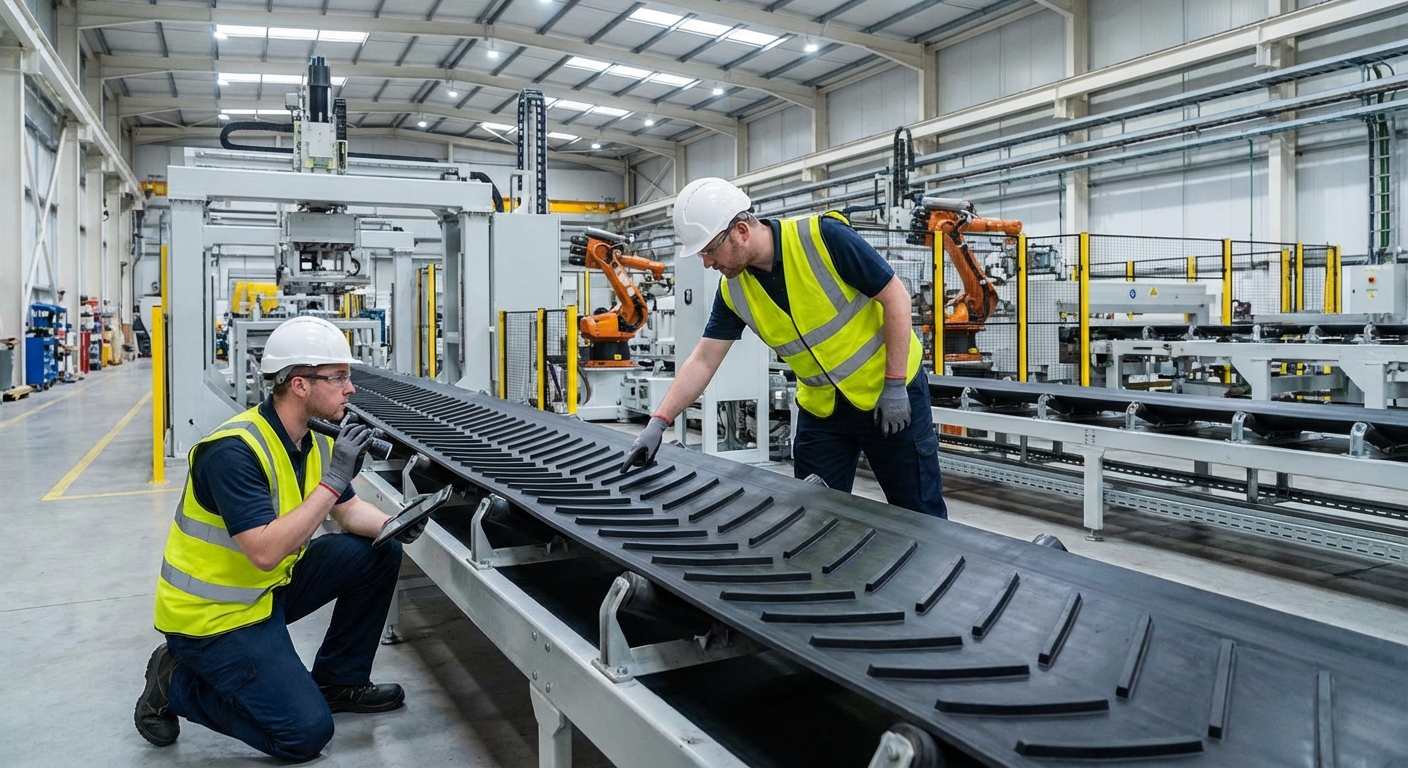
Selecting the right specification for your sidewall rubber conveyor belt requires understanding bulk density and maximum lump size. You must ensure the base belt has enough cross-rigidity to support the weight of the sidewalls.
If you choose a belt that is too light, it will bow under the weight of the load. Working with an engineering team to simulate the load is the best way to avoid these costly mistakes.
Should you choose textile or steel cord carcasses?
For lifts under 30 meters and moderate loads, a high-quality textile EP carcass is usually sufficient and cost-effective. However, if you are performing a 100-meter vertical lift, you must use steel cord reinforcement for stability.
Think about it: If the base belt stretches too much, the sidewall geometry will be compromised, leading to failure.
What cleat shape provides the best discharge angle?
The TC shape is the gold standard for vertical lifts because it creates a solid pocket that prevents tumbling. You should ensure the cleat is angled slightly forward to help the material slide out at discharge.
- T-Cleats: Best for angles up to 40 degrees.
- C-Cleats: Ideal for 40 to 60 degrees.
- TC-Cleats: Mandatory for 60 to 90 degrees.
Key Takeaway: Technical precision during the selection phase determines the ROI of your entire conveyor system.
| Selection Criteria | Option A: Textile | Option B: Steel Cord | |
|---|---|---|---|
| Lift Height | Low to Medium | High / Extreme | |
| Cost | Lower | Higher | |
| Elongation | 1.5% – 2.5% | < 0.2% |
Choosing the wrong reinforcement type is the leading cause of belt stretch issues in vertical installations.
Can a sidewall rubber conveyor belt reduce spillage?
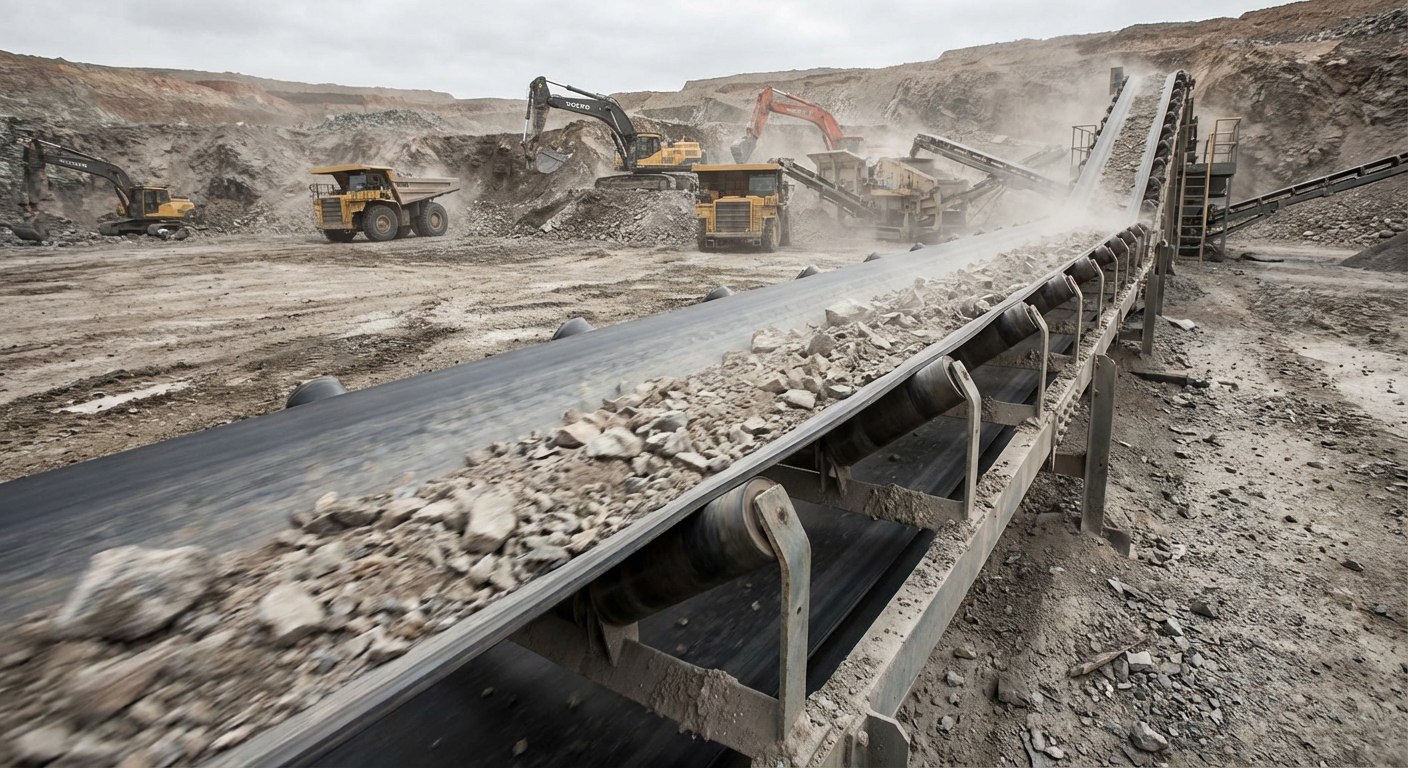
A sidewall rubber conveyor belt effectively creates a mobile bucket that moves your material without loss. Unlike flat belts, the corrugated walls provide a permanent physical barrier that keeps 100% of your product contained.
By reducing spillage, you are saving money on lost material and significantly reducing your manual labor costs. You will no longer need a crew of workers to manually shovel carry-back from under the structure.
Does the pocket design eliminate side leakage?
Because the sidewall is hot-vulcanized directly to the base belt, there are no gaps for fine material. You get a liquid-tight seal at the base of the wall, which is essential for transporting wet slurries.
It gets better: Even at high speeds, the pocket keeps the material centered, preventing the dusting effect caused by vibration.
How does cleat spacing impact material retention?
If your cleats are too far apart, the material can shift within the pocket, creating dust and potential blockages. You should space your cleats so that the pocket is never more than 75% full at peak.
- Maintains a stable center of gravity.
- Prevents material from surfing over cleats.
- Reduces impact damage at loading.
Key Takeaway: Zero-spillage operations are only possible when the belt geometry matches the material flow.
| Issue | Flat Belt Result | Sidewall Belt Result | |
|---|---|---|---|
| High Wind | Material Blow-off | Contained in Pockets | |
| Vibration | Edge Leakage | Side Barriers Stop Leak | |
| Steep Incline | Back-sliding | Cleats Hold Material |
Eliminating spillage isn’t just about cleanliness; it’s a fundamental strategy for increasing the profitability of your system.
Sidewall rubber conveyor belt: Frequently Asked Questions
Can I use this belt for 90-degree vertical lifts?
Yes, you certainly can. Sidewall belts are specifically engineered with TC-type cleats and cross-rigid carcasses to handle vertical transport safely without material back-sliding.
What’s the best way to prevent sidewall cracking?
You should use larger pulley diameters and ensure perfect alignment. Small pulleys put excessive bending stress on the corrugated rubber, while misalignment causes the walls to rub against the frame.
How do I know if I need steel cord reinforcement?
You usually need steel cords for very high lifts or extremely heavy loads. If your vertical lift exceeds 30 meters, steel cord provides the necessary low-stretch properties to maintain belt geometry.
Can I transport wet materials without them leaking?
Yes, the hot-vulcanized bond between the sidewall and the base belt creates a liquid-tight seal. This design is perfect for wet sand or slurries that would traditionally leak off the edges of a flat belt.
How often should I inspect the cleat attachments?
You should perform a visual check at least once a week. Look for any signs of peeling or lifting at the base of the cleats, especially if you are handling high-impact or very dense materials.
Conclusion
This article has demonstrated how the sidewall rubber conveyor belt solves the dual challenges of limited spatial footprints and high energy consumption in bulk material handling. We provide the engineering expertise and high-quality manufacturing needed to transition your facility to a more efficient, steep-angle transport model.
Our vision is to empower global industries with durable, sustainable conveying solutions that minimize waste and maximize operational uptime. Contact us today to discuss your specific project requirements and receive a customized technical consultation.