A nylon rubber conveyor belt offers high strength and elasticity for heavy-duty operations, reducing downtime, preventing belt failure, and ensuring reliable performance in demanding industrial environments.
What is a nylon rubber conveyor belt?
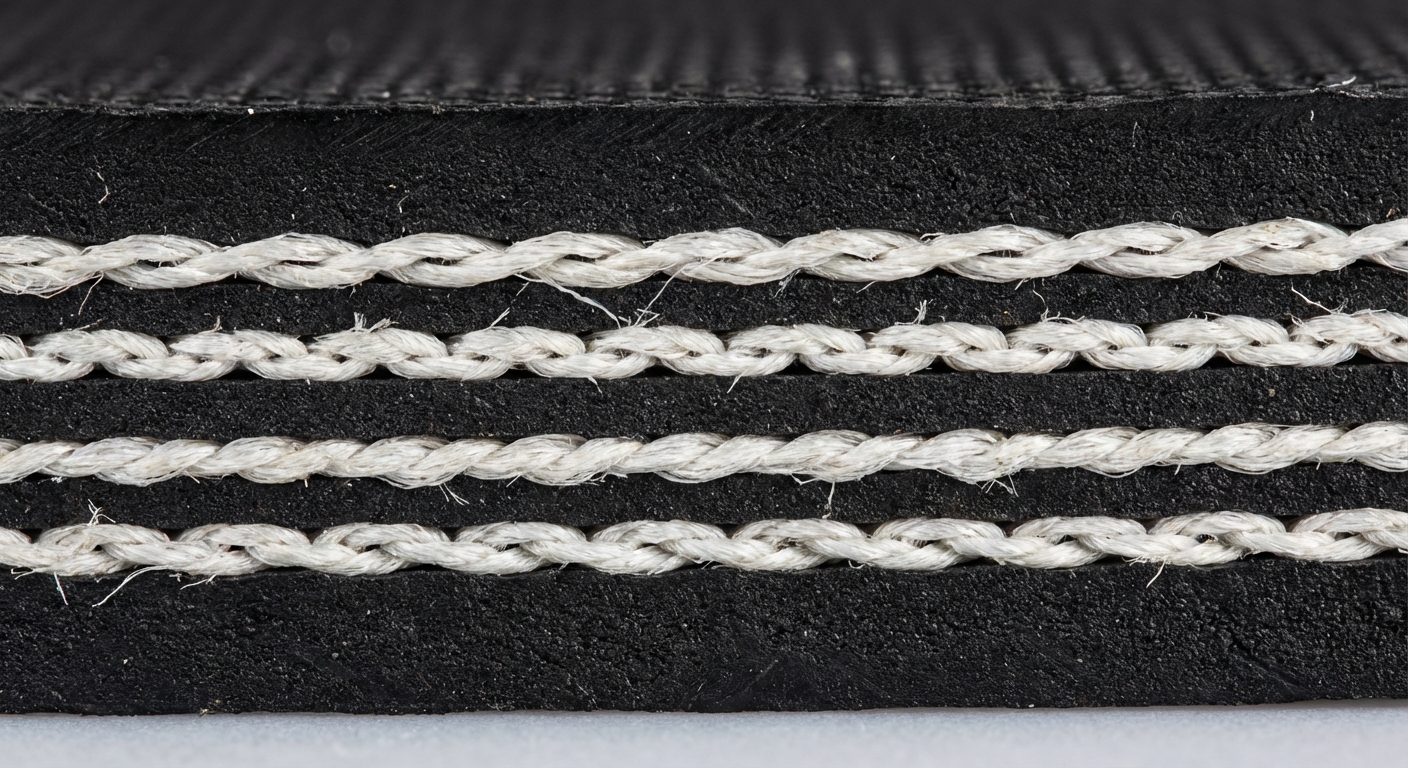
A nylon rubber conveyor belt is a multi-ply industrial handling solution featuring a carcass made of high-tenacity nylon fabric. This core is bonded with premium rubber layers to provide a resilient structure that excels in heavy-load scenarios. You will find these belts are favored for their incredible strength-to-weight ratio. They are often the preferred choice for systems requiring deep troughing and high impact resistance.
The structure of the nylon carcass
The internal skeleton consists of nylon 6 or nylon 66 fibers woven into a tight canvas. This fabric is treated with specialized dipping solutions to ensure a permanent bond with the outer rubber.
- High elasticity allows for shock absorption.
- Excellent “memory” helps the belt return to its original shape.
- Thin carcass design reduces overall system energy consumption.
Superior troughability for bulk handling
Because nylon fibers are highly flexible, the belt easily conforms to the shape of your idler rollers. This deep troughing capability allows you to transport larger volumes of material without spillage. You can explore more about our fabric textile conveyor belt options to find the perfect match for your system.
Key features for industrial longevity
Maintaining structural integrity under tension is the hallmark of a quality NN belt. These units are specifically engineered to resist fatigue from repeated bending over drive pulleys.
Key Takeaways: Nylon Belt Composition
| Component | Material Specification | Primary Benefit | |
|---|---|---|---|
| Carcass | Nylon 66 / Polyamide | High tensile strength and impact resistance | |
| Top Cover | Abrasive-resistant rubber | Protects against sharp material damage | |
| Skim Coat | Bonding rubber compound | Prevents ply delamination during use |
The strategic combination of high-strength fibers and specialized rubber ensures that the belt remains operational even under extreme mechanical stress.
How is a nylon rubber conveyor belt made?
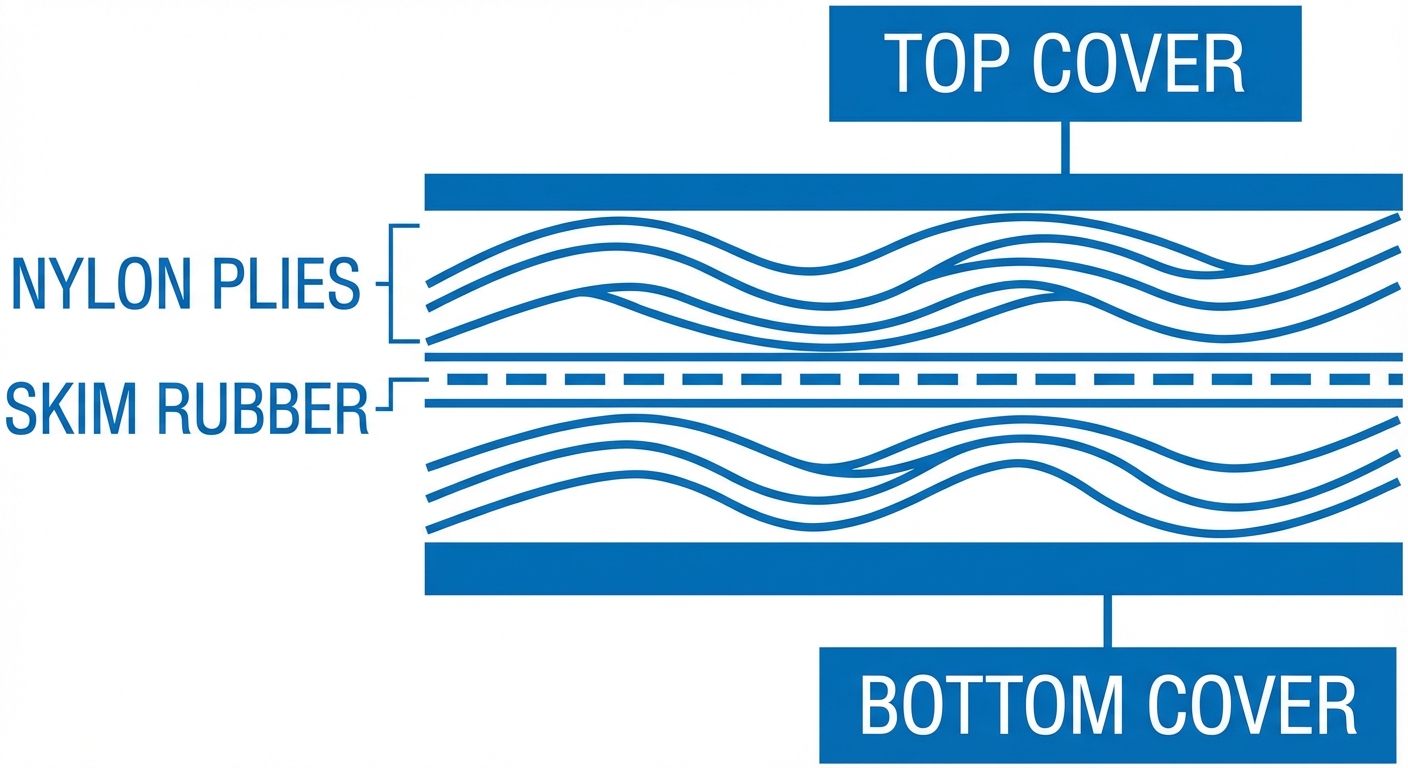
The manufacturing of a nylon rubber conveyor belt involves weaving polyamide fibers into a canvas and bonding them with specialized rubber compounds. This process ensures that every layer works in harmony to provide maximum tensile strength. Engineers monitor the tension during the weaving phase to ensure a consistent modulus across the entire roll.
Weaving and dipping the fabric core
The process starts in the loom where high-tenacity yarns are transformed into a durable canvas.
- Warp and weft yarns are balanced for stability.
- The fabric undergoes an RFL dipping process.
- This chemical treatment guarantees optimal adhesion.
Calendaring and final vulcanization
During calendaring, unvulcanized rubber is pressed into the nylon plies under immense pressure.
- This creates a unified “sandwich” of material.
- The belt then enters a high-pressure vulcanizing press.
- Heat transforms the raw rubber into its final, durable state.
Quality testing for tensile strength
Every batch undergoes rigorous testing to verify the N/mm strength rating before it leaves the factory. We ensure that our mining industry solutions meet or exceed international safety standards for heavy-duty hauling.
Key Takeaways: Manufacturing Workflow
| Stage | Technical Focus | Outcome | |
|---|---|---|---|
| Fabric Dipping | RFL Chemical Bonding | Superior ply adhesion | |
| Calendaring | Precision Layering | Uniform thickness and density | |
| Vulcanization | Heat & Pressure Treatment | Maximum rubber durability |
Precision in the vulcanization stage is critical because it determines the final physical properties and environmental resistance of the rubber.
Why use a nylon rubber conveyor belt?
You should choose a nylon rubber conveyor belt because it offers the highest impact resistance and flexibility among fabric-reinforced options. Its ability to absorb energy from falling rocks or heavy ore prevents the carcass from snapping under pressure. This resilience translates directly into a longer service life and fewer emergency replacements for your operation.
Resistance to moisture and mildew
Nylon is naturally resistant to water absorption and biological degradation.
- This makes it ideal for wet outdoor environments.
- The carcass won’t rot even if the cover is gouged.
- Maintenance requirements in humid climates are significantly reduced.
High flexibility for complex routes
If your conveyor system features small pulleys or sharp angles, the flexibility of nylon is a massive advantage.
- It prevents cracking at the flex points.
- You get better tracking on curved conveyor systems.
- Low thickness helps in reducing the total weight of the belt.
Impact and tear resistance benefits
The elasticity of the polyamide fibers allows the belt to stretch and recover instantly. This “shock absorber” effect protects the internal layers from being crushed against the rollers. Our cement plant solutions rely on this property to handle heavy clinker and raw limestone loads daily.
Key Takeaways: Performance Advantages
| Advantage | Technical Impact | Operational Benefit | |
|---|---|---|---|
| Elasticity | Shock energy absorption | Reduced carcass damage | |
| Moisture Resistance | Zero water wicking | No rot in wet conditions | |
| Flexibility | High flex life | Compatibility with small pulleys |
Selecting nylon over traditional cotton or polyester blends ensures that your material handling system remains reliable in high-impact zones.
Where is a nylon rubber conveyor belt used?
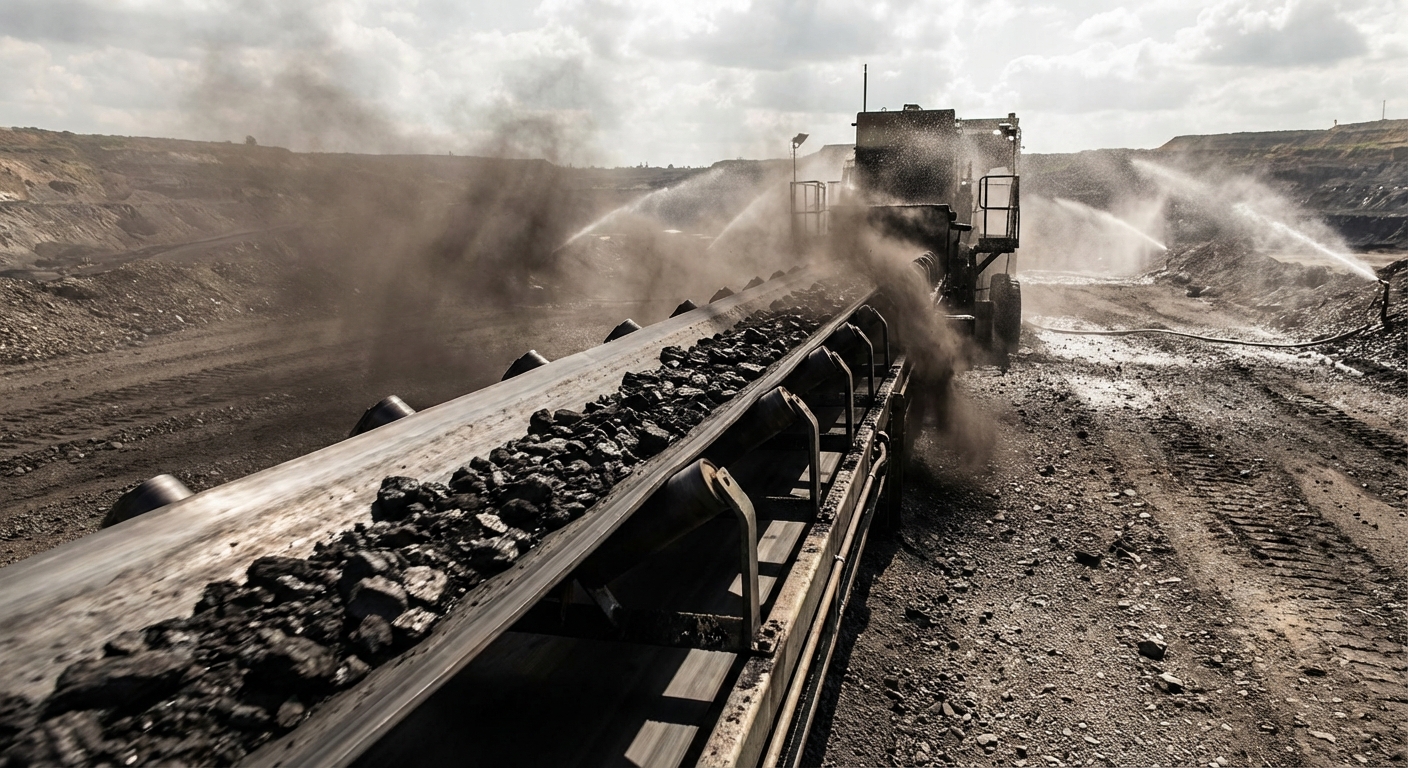
The most common applications for a nylon rubber conveyor belt include heavy-duty mining, quarrying, and bulk material ports. These environments demand a belt that can survive constant abrasion and the impact of large-sized aggregates. You will find NN belts moving thousands of tons of coal, iron ore, and copper every hour.
Heavy-duty mining and quarrying
In open-pit and underground mines, these belts are the backbone of production.
- They handle sharp, heavy ore with ease.
- High tensile strength supports long-distance hauling.
- They are perfect for primary crusher discharge lines.
Port terminals and bulk handling
Ports require high-speed belts that can load and unload massive vessels without delay.
- NN belts maintain stability at high belt speeds.
- Large widths up to 3200mm are available for high volume.
- They resist the corrosive effects of salt air and moisture.
Power plants and steel mills
Industrial facilities use these belts to move coal, ash, and sintered materials. Learn more about our history of providing specialized belts for global power infrastructure.
Key Takeaways: Industry Applications
| Sector | Material Handled | Key Belt Requirement | |
|---|---|---|---|
| Mining | Hard Rock / Coal | Impact & Tear Resistance | |
| Ports | Grains / Iron Ore | High Volume & Speed | |
| Construction | Sand / Gravel | Abrasion Resistance |
The versatility of the nylon carcass makes it a universal solution for almost any industry that requires the transport of heavy bulk solids.
Who sells nylon rubber conveyor belt units?
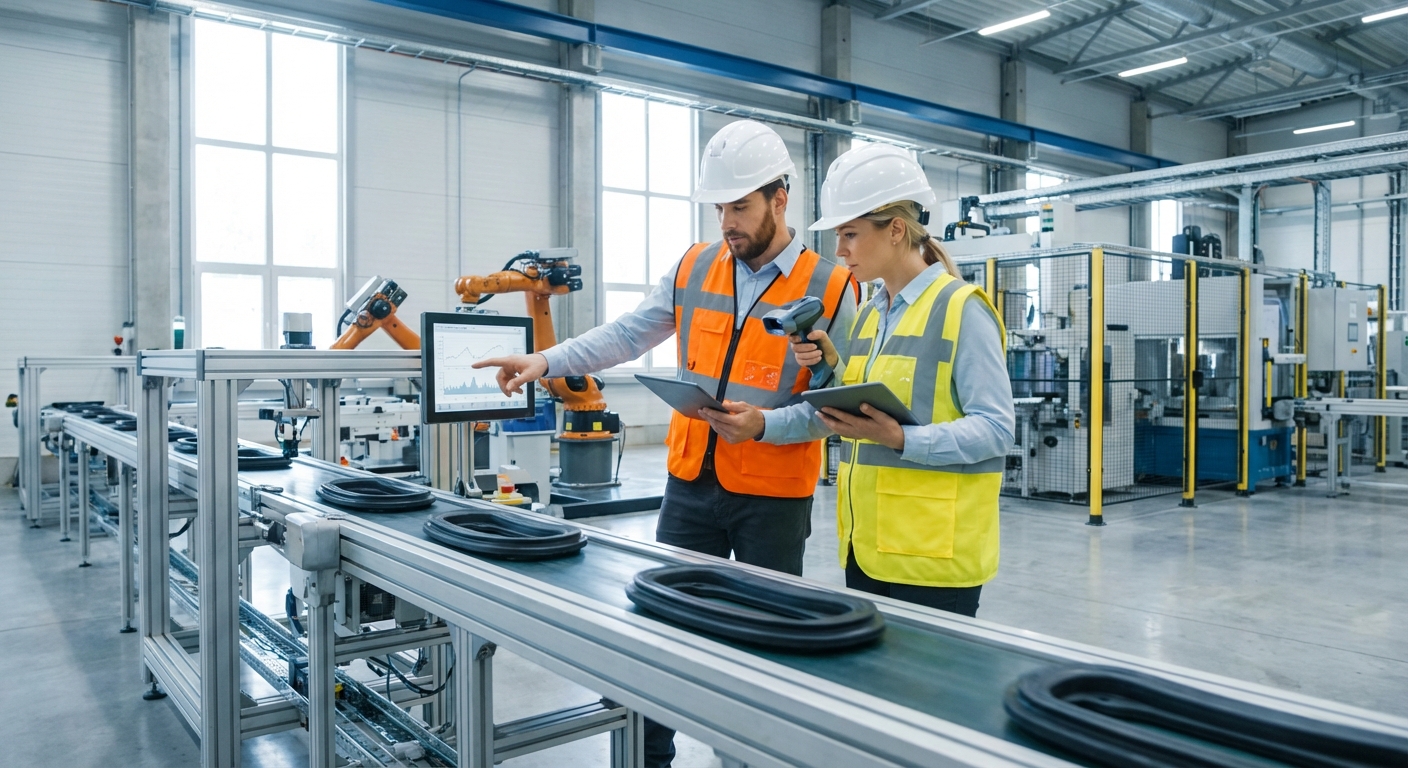
Leading global suppliers like ZHENXING manufacture and export nylon rubber conveyor belt units directly to industrial sites worldwide. Buying from a direct factory allows you to bypass middleman markups and receive expert engineering consultation. You benefit from a transparent supply chain and guaranteed material quality.
Direct factory manufacturers in China
Purchasing from a direct manufacturer ensures you get a product tailored to your local site conditions.
- Engineers can help with belt selection guidance.
- You get accurate quotations based on technical drawings.
- Large production capacities ensure stable lead times.
Global exporters and distributors
Working with an experienced exporter simplifies the logistics of moving heavy belt rolls across borders.
- We provide full documentation for customs clearance.
- Belts are packaged in waterproof nylon for sea freight.
- International standards like CE and ISO are strictly followed.
Evaluating your supplier’s capability
It is essential to verify that your supplier has an internal testing laboratory. Our team is ready for you to contact us today to discuss your specific technical requirements and volume needs.
Key Takeaways: Supplier Selection
| Criteria | Why It Matters | ZHENXING Capability | |
|---|---|---|---|
| Experience | Industry-specific knowledge | Over 40 years of manufacturing | |
| Customization | Precision fit for machinery | Up to 3200mm width options | |
| Logistics | On-time project delivery | Global export experience |
Choosing a reputable manufacturer ensures that the belt you install is engineered for the specific tension and environment of your facility.
How does a nylon rubber conveyor belt work?
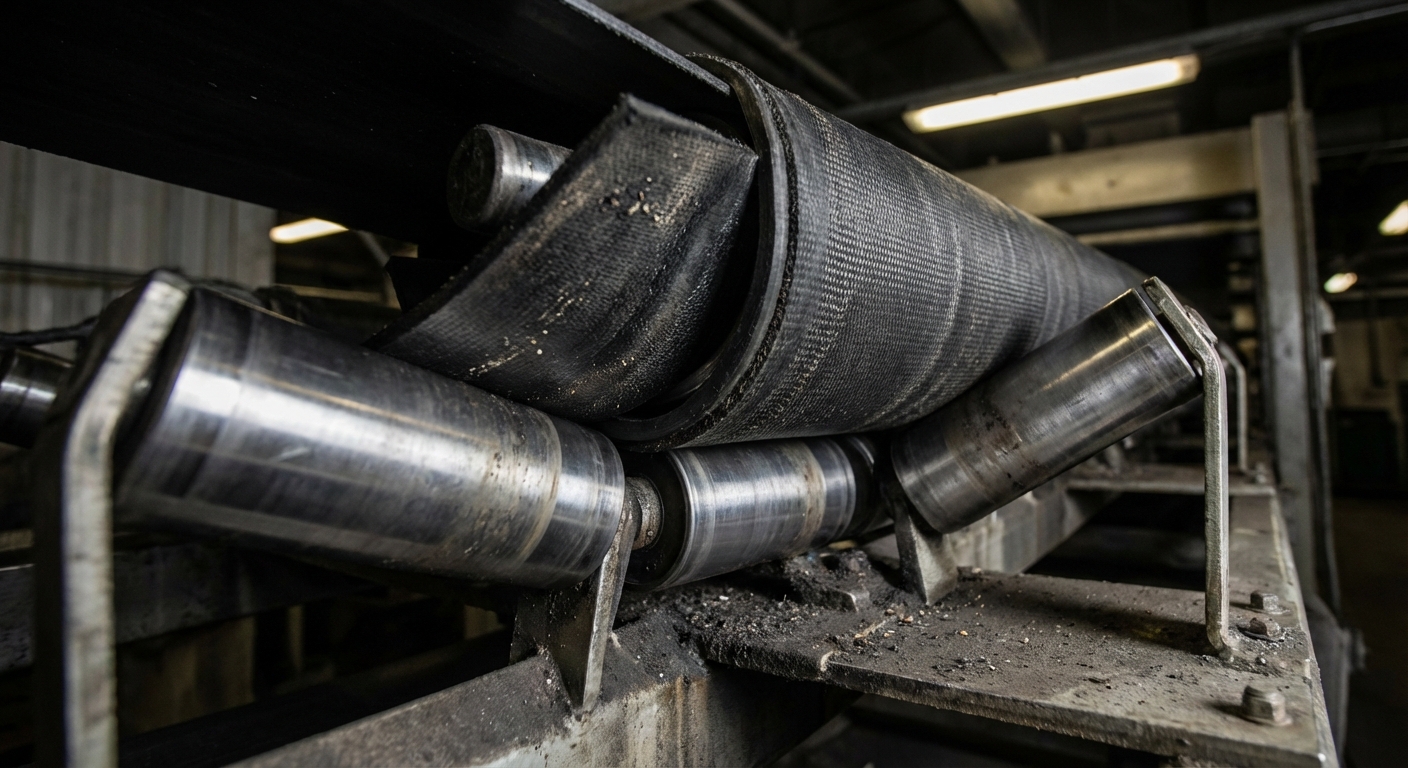
A nylon rubber conveyor belt works by utilizing the elastic memory of its carcass to absorb shock loads and track straight on rollers. The drive pulley transfers power to the belt, which then carries the material over a series of idlers. Because of its high elasticity, the belt can stretch slightly under load and then retract to its original length.
Power transmission and tensioning
The belt must maintain a specific level of tension to prevent slippage on the drive pulley.
- Gravity take-ups or screw tensioners provide this force.
- The nylon carcass provides the necessary modulus to hold the tension.
- This ensures efficient energy transfer from the motor to the material.
Load support and troughing
As material drops onto the belt, the center section bows downward between the idler rollers.
- This creates the “trough” that holds the material in place.
- Nylon’s flexibility allows for a deep 35-45 degree angle.
- This maximizes the carrying capacity of your conveyor system.
Friction and grip mechanisms
The bottom rubber cover is designed to provide optimal friction against the rollers. For more information on system maintenance, visit our contact page to speak with a technician.
Key Takeaways: Operational Mechanics
| Mechanism | Component Involved | Result | |
|---|---|---|---|
| Traction | Bottom Cover & Pulley | Constant material movement | |
| Centering | Nylon Carcass Stability | Reduced edge wear and tear | |
| Load Handling | Multi-ply Reinforcement | High carrying capacity |
The efficiency of a conveyor system relies on the belt’s ability to maintain its physical properties throughout thousands of operational hours.
Is a nylon rubber conveyor belt heat resistant?
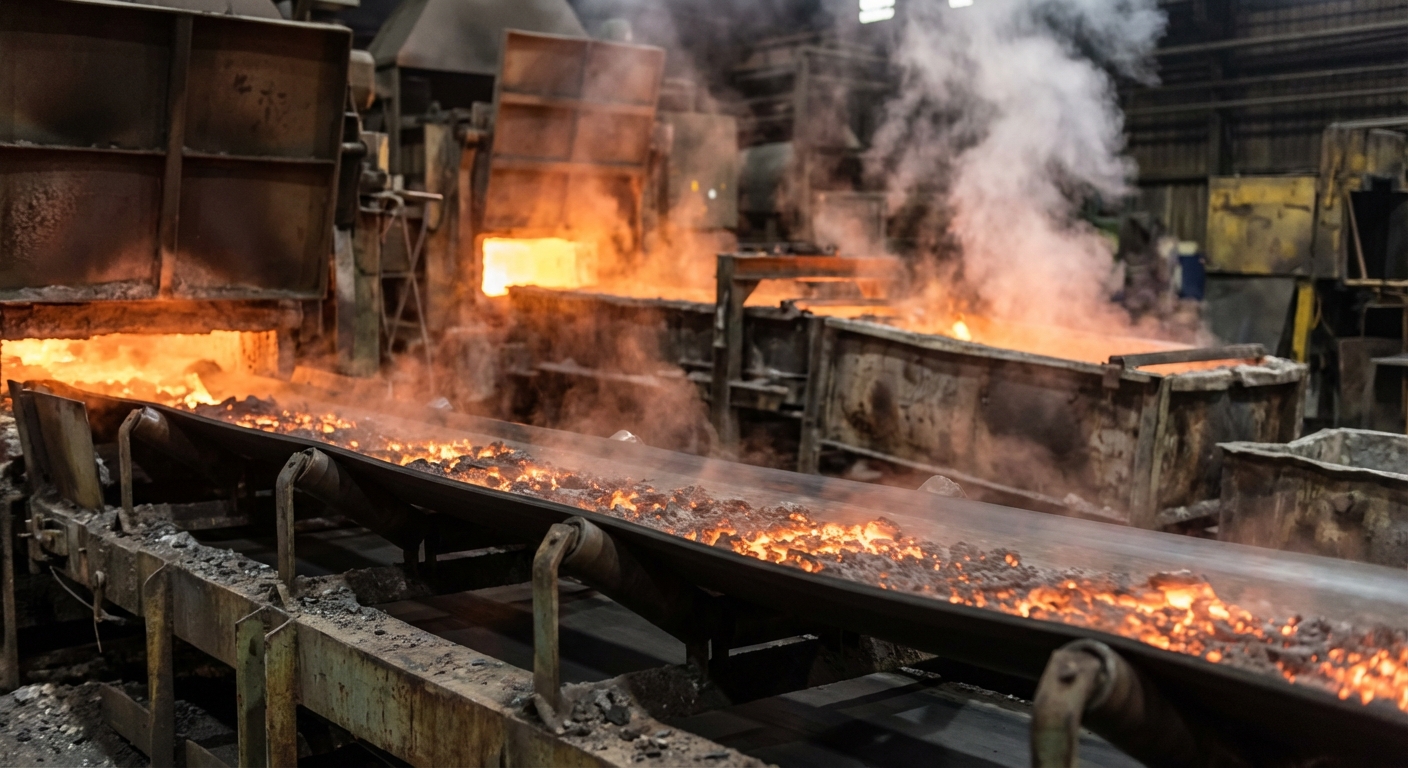
While standard models are for ambient use, a nylon rubber conveyor belt can be customized with EPDM covers to handle extreme heat. The internal nylon plies remain stable as long as the rubber covers protect them from direct thermal radiation. This makes them suitable for foundries, cement plants, and steel mills where materials are often hot.
Standard temperature limits
Standard nylon belts perform best in environments between -20°C and +60°C.
- Standard rubber protects the carcass from environmental heat.
- Beyond this, the rubber might harden or crack.
- Heat-resistant grades are required for higher temps.
Specialized high-heat rubber grades
For extreme cases, we use specialized compounds like SBR or EPDM for the cover layers.
- These can handle material temperatures up to 200°C.
- The rubber acts as a thermal barrier for the nylon.
- This prevents the carcass from losing its tensile strength.
Performance in cold climates
Nylon also excels in freezing conditions because it doesn’t become brittle like some cotton-based belts. Our fabric textile conveyor belt lineup includes options specifically for sub-zero mining operations.
Key Takeaways: Thermal Resistance
| Grade | Temp Limit (Material) | Typical Application | |
|---|---|---|---|
| Standard | Up to 60°C | Sand, Gravel, Coal | |
| Grade T1 | Up to 120°C | Warm chemicals or slag | |
| Grade T3 | Up to 200°C | Sintered ore or clinker |
Correctly matching the heat grade of the rubber cover to your material temperature is essential for preventing premature belt failure.
Can I customize a nylon rubber conveyor belt?
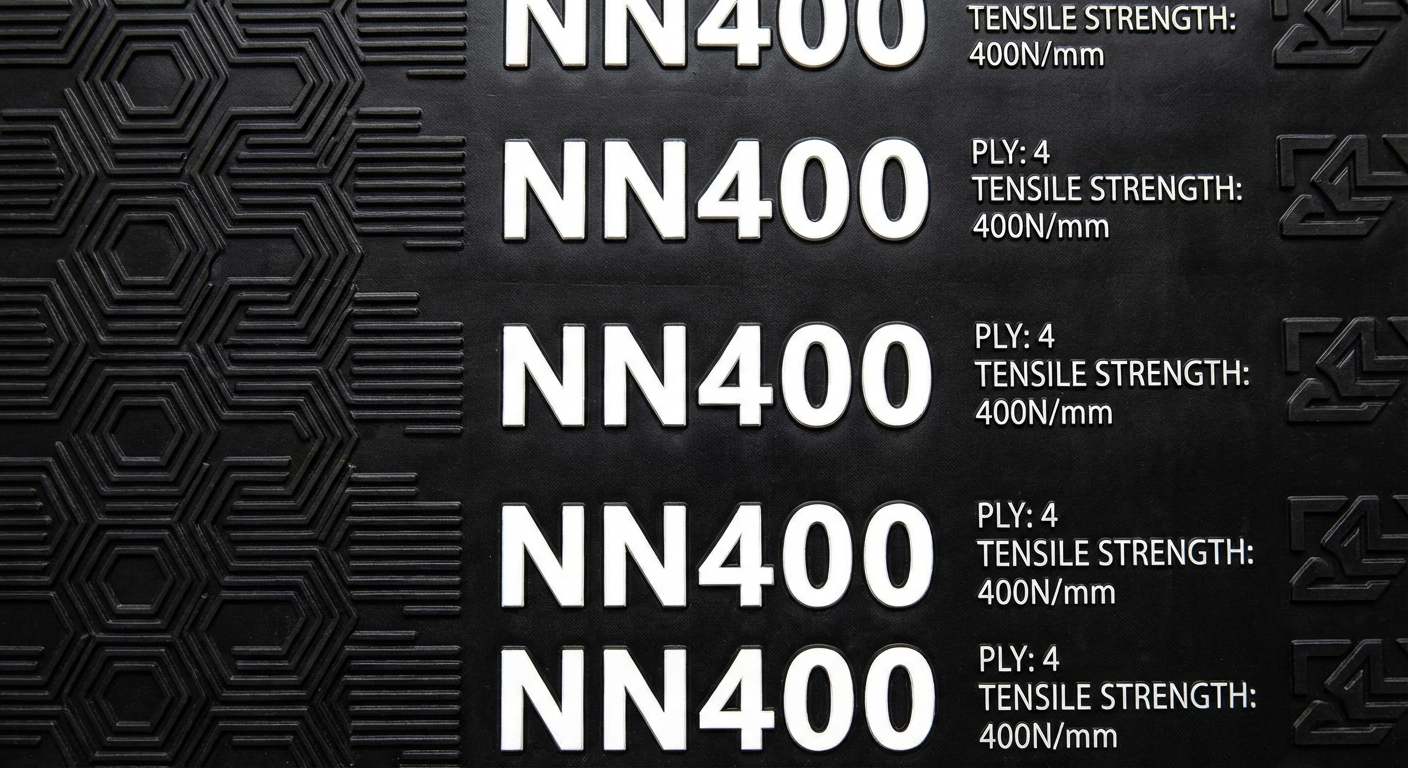
Yes, you can specify the width, ply count, and surface grade of your nylon rubber conveyor belt to match your specific plant requirements. Customization ensures that the belt fits your existing rollers and can handle the specific abrasion levels of your material. You are not limited to “off-the-shelf” sizes when working with a direct manufacturer.
Selecting the right ply count
Depending on the distance and load, you can choose from 2 to 8 plies of nylon fabric.
- More plies increase the total tensile strength (N/mm).
- Higher ply counts are better for long-distance transport.
- Fewer plies are used for smaller, flexible systems.
Custom cover thicknesses
You can decide exactly how much rubber you need on the top and bottom of the carcass.
- A 6mm top cover is common for heavy mining.
- A 2mm bottom cover is standard for drive efficiency.
- Custom ratios like 5+2 or 8+3 are easily accommodated.
Edge types and branding
You can choose between molded edges or cut edges depending on your wear requirements. Our mining industry solutions often include custom branding and logo embossing for easy site identification.
Key Takeaways: Customization Options
| Feature | Custom Range | Purpose | |
|---|---|---|---|
| Width | Up to 3200mm | Fit any conveyor frame | |
| Tensile Rating | NN100 to NN600 per ply | Match system tension | |
| Cover Grade | Grade M, N, RMA | Optimize for abrasion |
Bespoke belt engineering allows you to maximize the efficiency of your material handling system while reducing unnecessary weight and cost.
How to fix a nylon rubber conveyor belt?
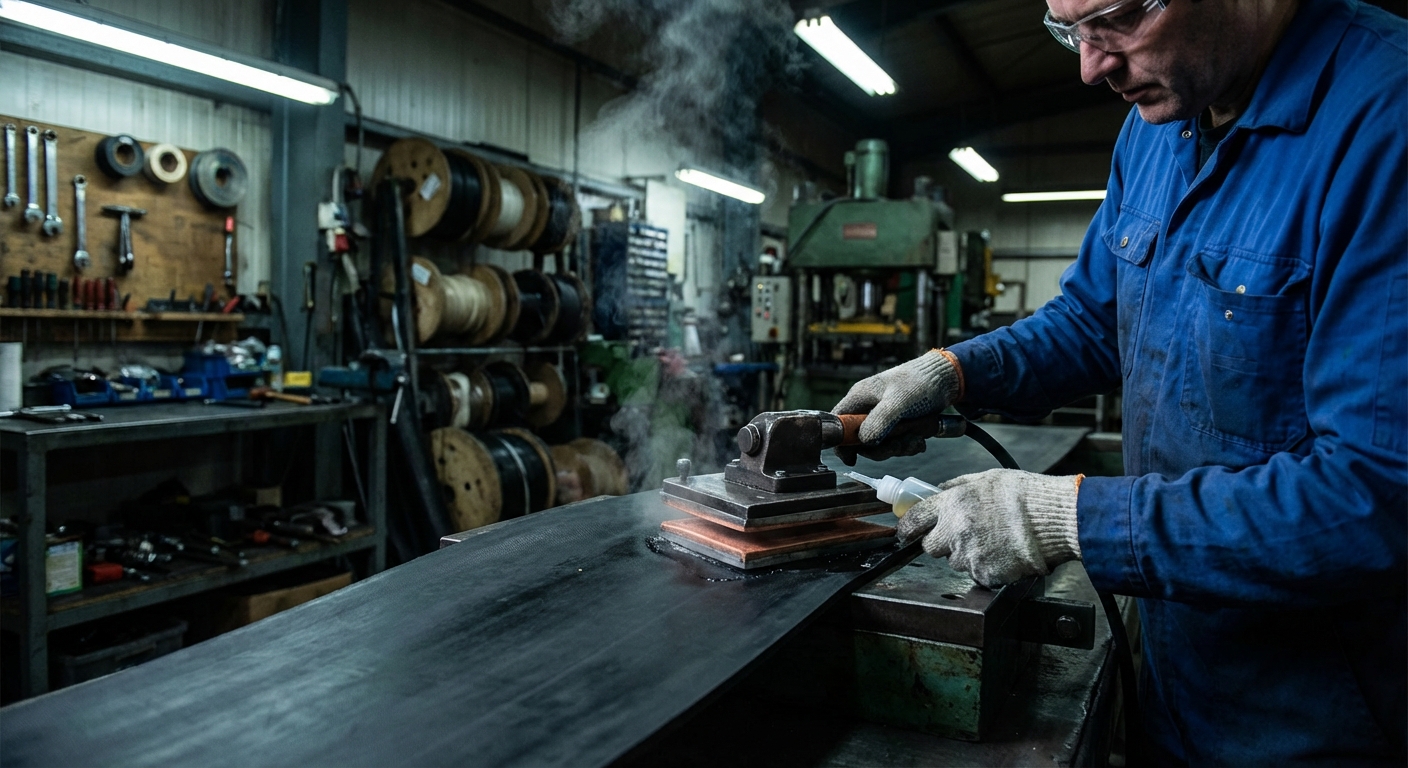
Fixing a nylon rubber conveyor belt effectively usually requires hot vulcanized splicing or professional-grade mechanical fasteners for high-tension areas. The goal is to restore the strength of the carcass so the joint doesn’t fail under load. You must ensure the repair area is clean and dry to achieve a permanent bond.
Hot vulcanized splicing method
This is the “gold standard” for repairing or joining nylon belts.
- Plies are “stepped” to create an interlocking pattern.
- Specialized bonding rubber and cement are applied.
- A vulcanizing press melts the layers into a single piece.
Mechanical fastener repairs
For emergency situations, steel fasteners can be installed quickly to get the line moving.
- These are ideal for low-tension zones.
- Bolt solid plate or rivet fasteners are commonly used.
- They allow for quick replacement during a shift.
Cold bonding and patch kits
Small holes or gouges can be fixed using cold-bond rubber strips and adhesives. Check our cement plant solutions for information on high-durability repair materials that withstand abrasive dust.
Key Takeaways: Repair Strategies
| Method | Speed | Strength | |
|---|---|---|---|
| Hot Splicing | Slow (8+ hours) | 90-100% of original | |
| Mechanical | Fast (1-2 hours) | 60-80% of original | |
| Cold Patch | Moderate | Seal only (no strength) |
A well-executed vulcanized splice is the only way to ensure the long-term structural integrity of a belt operating under high tension.
Which nylon rubber conveyor belt is best?
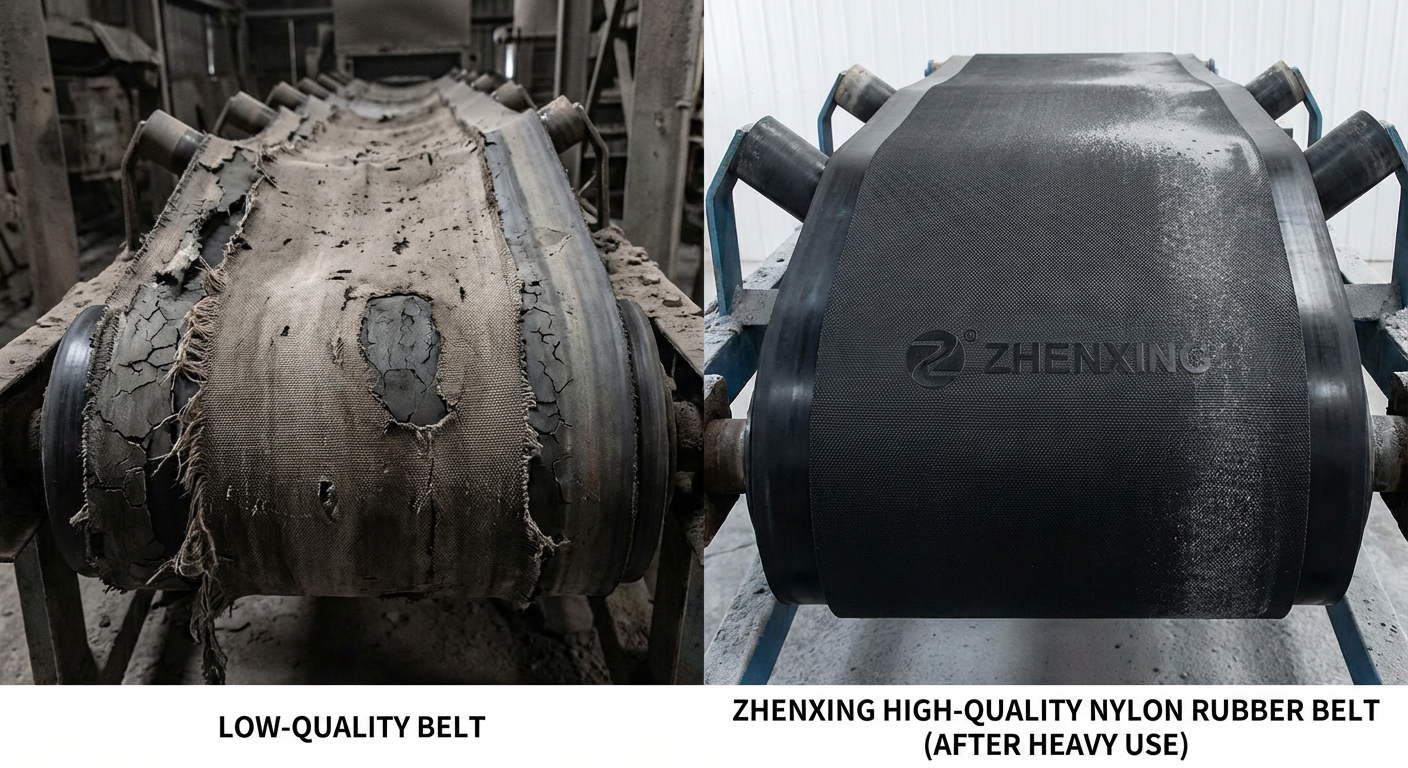
The best nylon rubber conveyor belt is one that balances high tensile strength with the correct abrasion-resistant grade for your material. You must consider the safety factor, the pulley diameters, and the expected impact energy at the loading point. A high-quality belt like ZHENXING ensures that every component is built to international specifications.
Grade M for high abrasion
If you are moving quartz, glass, or sharp iron ore, Grade M is the best choice.
- It features the highest abrasion resistance.
- It resists cutting and gouging from sharp edges.
- This grade significantly extends belt life in quarries.
Grade N for general purpose
For materials like coal, sand, or finished cement, Grade N provides an excellent cost-to-performance ratio.
- It is highly durable for standard bulk goods.
- It offers great flexibility for high-speed systems.
- This is the most common grade for port terminals.
Choosing the right manufacturer
The best belt in the world will fail if the manufacturer uses low-grade synthetic fibers. Learn more about our history to see how our commitment to quality raw materials makes our belts the industry standard.
Key Takeaways: Best Choice Criteria
| Material Type | Recommended Grade | Priority Feature | |
|---|---|---|---|
| Sharp Rock/Ore | Grade M (High Abrasion) | Carcass protection | |
| Coal/Limestone | Grade N (General) | Balanced durability | |
| Hot Clinker | Grade T3 (Heat Resistant) | Thermal stability |
Always consult with an engineering expert to calculate the specific N/mm requirements for your conveyor system before placing a bulk order.
Frequently Asked Questions
Can I get a sample before placing a bulk order?Yes, as a professional manufacturer, we provide samples for quality verification and internal testing to ensure the belt meets your specific site requirements before you commit to a full roll.
What’s the best way to prevent belt mistracking?The best way is to ensure proper idler alignment and use a nylon belt with high-quality structural stability. Nylon rubber belts are excellent at maintaining their “memory” and tracking straight once correctly tensioned.
Can I use a nylon rubber conveyor belt for food products?While standard NN belts are industrial grade, we can manufacture them with white, non-toxic, food-grade rubber covers that meet international safety standards for hygienic material handling.
What’s the best temperature range for an NN belt?Standard nylon belts perform best between -20°C and +60°C. For temperatures outside this range, specialized cold-resistant or heat-resistant rubber compounds must be specified by the engineering team.
How can I extend the lifespan of my conveyor belt?Regularly inspect your scrapers and cleaners to prevent material buildup on the pulleys, and ensure the tension is checked monthly to prevent excessive stretching or slippage.
If you are looking for a reliable partner for your material handling needs, contact us today for a tailored quote and expert technical support.