A profiled herringbone rubber conveyor belt improves steep-angle conveying by preventing material rollback, reducing spillage, and ensuring stable, efficient transport in industrial applications.
What is a profiled herringbone rubber conveyor belt?
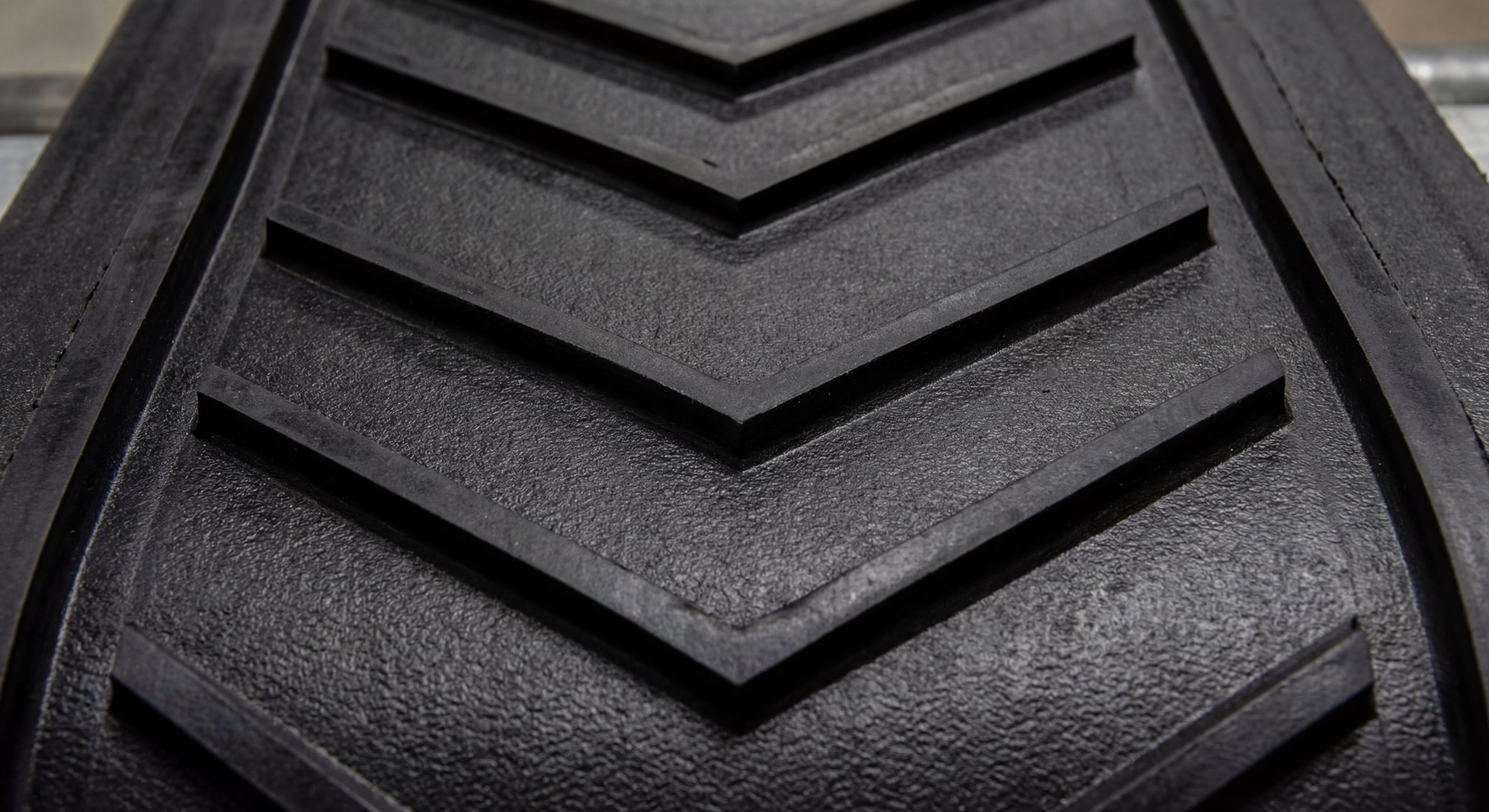
The profiled herringbone rubber conveyor belt is a high-traction rubber belt characterized by its unique V-shaped surface patterns. These profiles are integrated into the belt cover through a vulcanization process to prevent cleat detachment. This design allows the belt to carry bulk materials like plaster and minerals at angles exceeding 40 degrees.
What are the primary surface characteristics?
Understanding the profile geometry is key to selecting the right belt for your incline. The chevron pattern provides a physical barrier that prevents the “avalanche effect” of loose materials.
Look at this:
- Profile Heights: Usually range from 5mm to 32mm depending on the load.
- Pattern Widths: Engineered to match specific troughing idler dimensions.
- Rubber Compounds: Available in oil, abrasion, and heat-resistant grades.
You need to know that the height of the cleat determines the maximum possible incline your system can handle without slippage.
Why is the internal structure important?
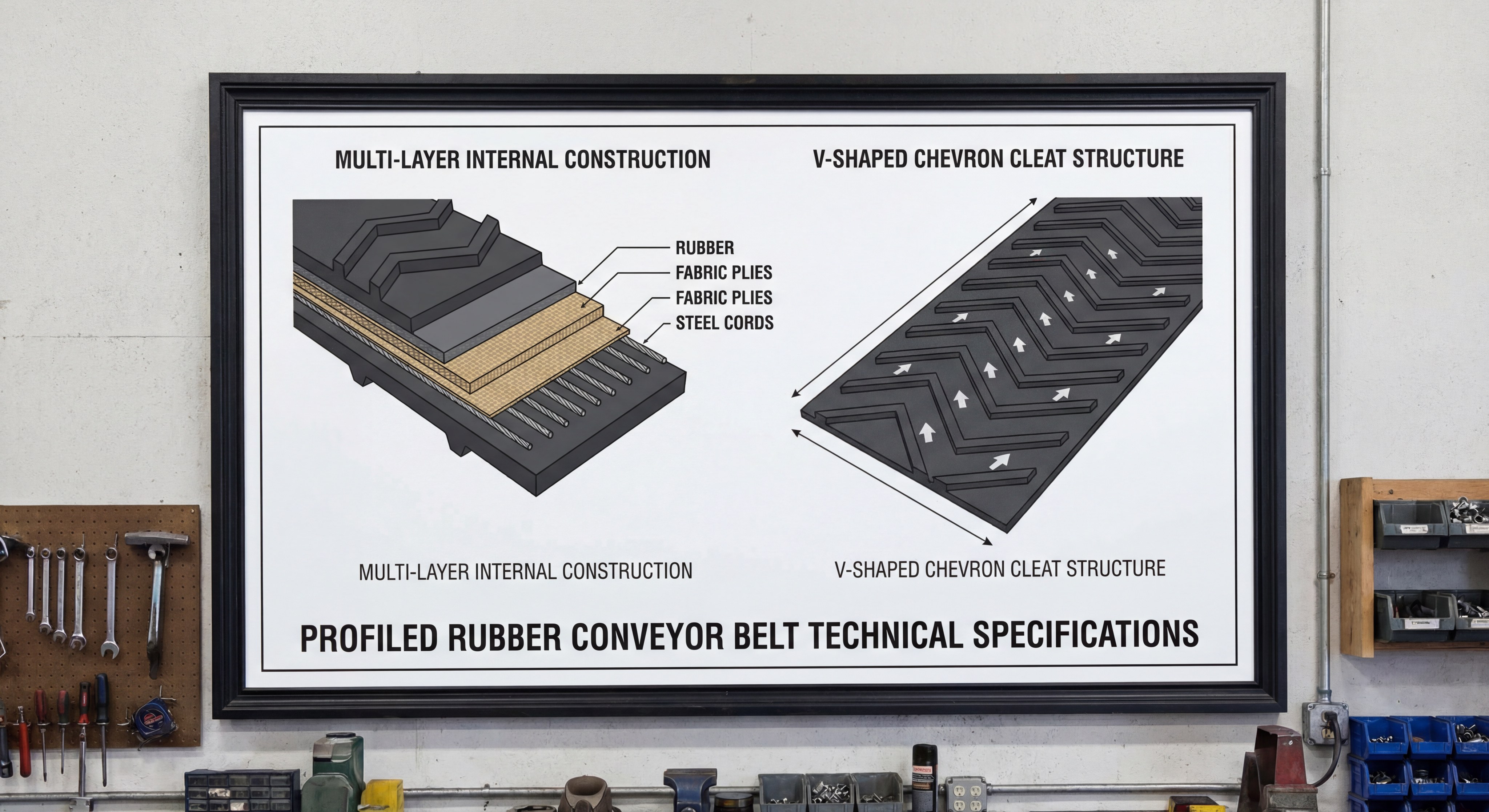
The belt is built on a multi-ply fabric core that provides the necessary tensile strength for heavy loads. This reinforcement prevents the belt from stretching or warping under the high tension required for vertical lifts.
Think about this:
- EP Fabric Layers: Provides low elongation and high impact resistance.
- Top Cover: Thick rubber layer where the herringbone cleats are molded.
- Bottom Cover: Low-friction rubber for smooth interaction with drive pulleys.
| Feature | Advantage | Industrial Result | |
|---|---|---|---|
| Molded Cleats | Prevents backslide | 99% Material Retention | |
| EP Fabric Core | High tensile strength | Minimal Belt Stretching | |
| V-Pattern | Centered loading | Reduced Edge Spillage |
Analysis: The combination of a high-traction surface and a rigid internal core ensures stable performance at extreme angles.
Key Takeaway: A profiled herringbone belt is the industry standard for transporting bulk goods up steep inclines where flat belts fail.
How does a profiled herringbone rubber conveyor belt work?
A profiled herringbone rubber conveyor belt works by using mechanical friction and physical obstruction to counteract gravity. As the belt moves upward, the V-shaped cleats act as small dams that trap individual particles or bags. This ensures the material moves at the same speed as the belt rather than sliding backward.
How is material stability maintained?
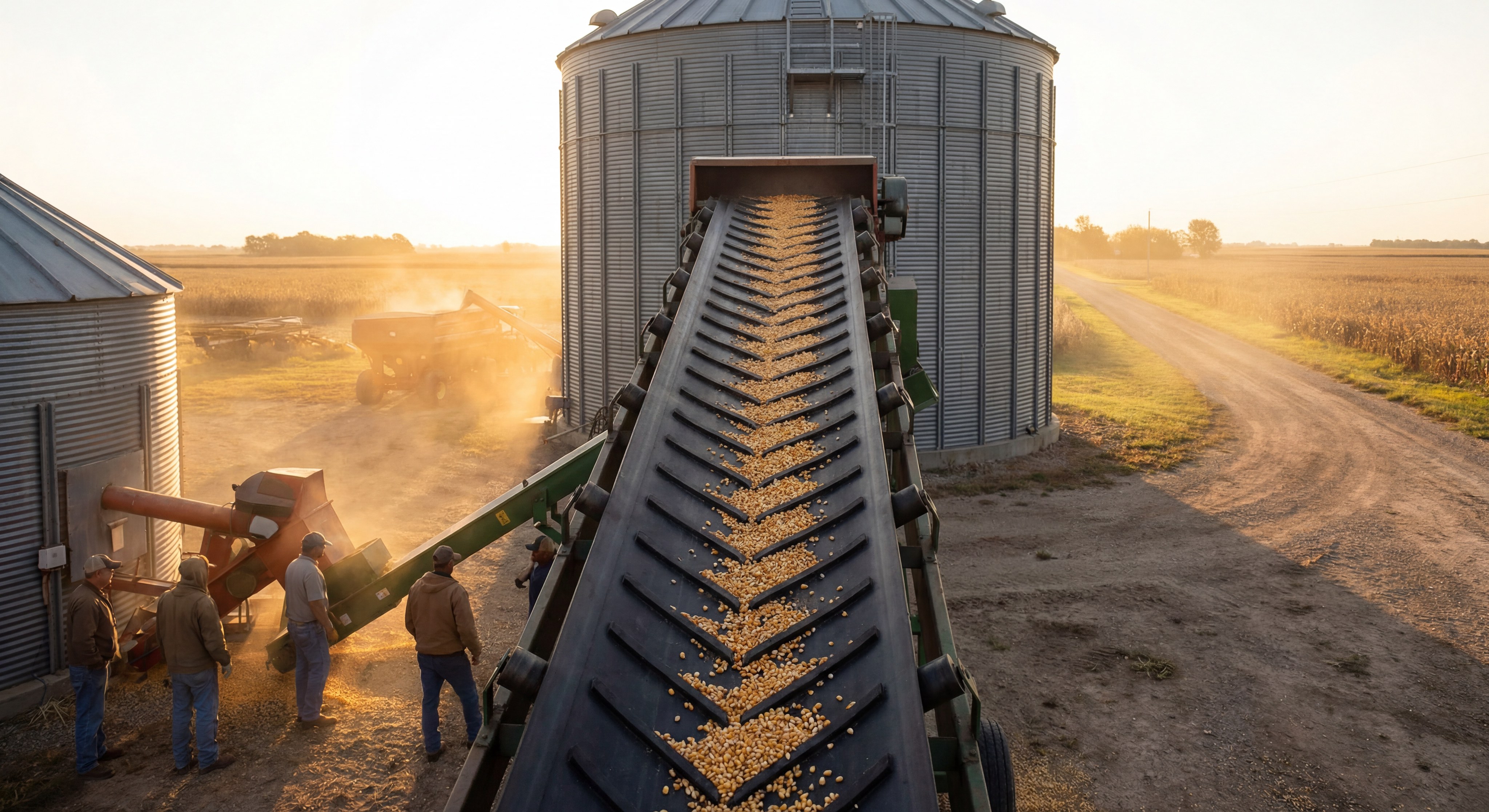
The herringbone pattern is designed to direct material toward the center of the belt width. This self-centering action prevents material from falling off the sides during transport.
It gets better:
- Angular Grip: Cleats provide 360-degree contact for granular items.
- Pocket Formation: Creates small “compartments” for the load to rest in.
- Vibration Control: Patterns are spaced to minimize noise on the return idlers.
The bottom line is that the profile creates a cradle for your material, making it ideal for high-speed silo filling.
Can it handle different material types?
Whether you are moving fine powders or large clumps, the cleat height can be adjusted to fit. High profiles are used for large rocks, while low profiles are better for fine seeds or grain.
Check this out:
- Fine Powders: Low cleats prevent dust buildup while providing grip.
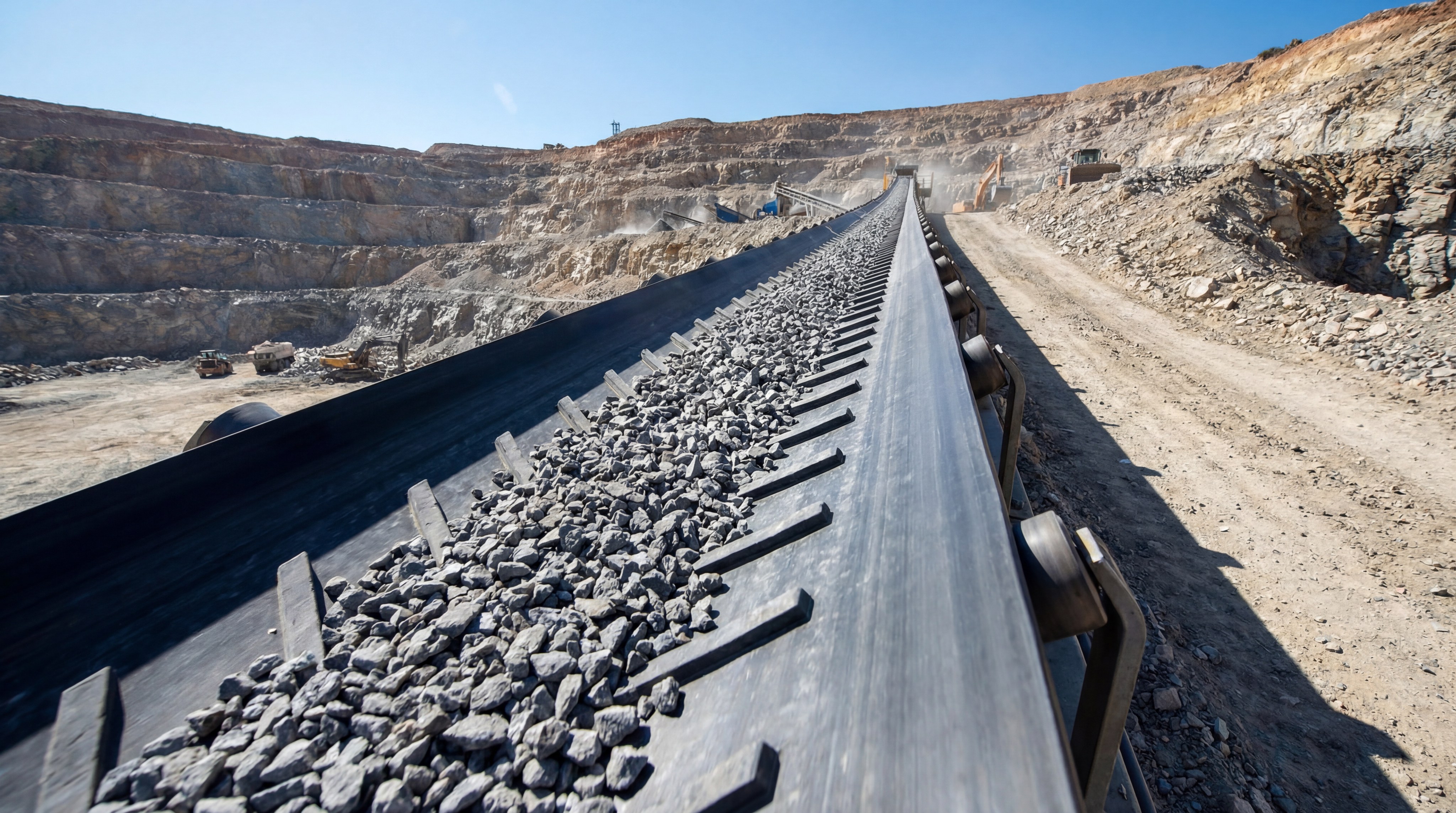
- Large Aggregates: High cleats provide the mechanical lift needed for weight.
- Bagged Goods: The pattern offers extra friction for slick plastic or paper bags.
| Material Type | Recommended Profile | Performance Goal | |
|---|---|---|---|
| Bulk Grain | 10mm – 15mm | High Flow Velocity | |
| Wet Sand | 15mm – 25mm | Drainage & Grip | |
| Heavy Ore | 25mm – 32mm | Maximum Retention |
Analysis: System efficiency is maximized when the cleat height is matched to the specific grain size of the transported material.
Key Takeaway: These belts work by converting gravitational pull into mechanical stability via molded surface profiles.
Why use a profiled herringbone rubber conveyor belt for plaster?
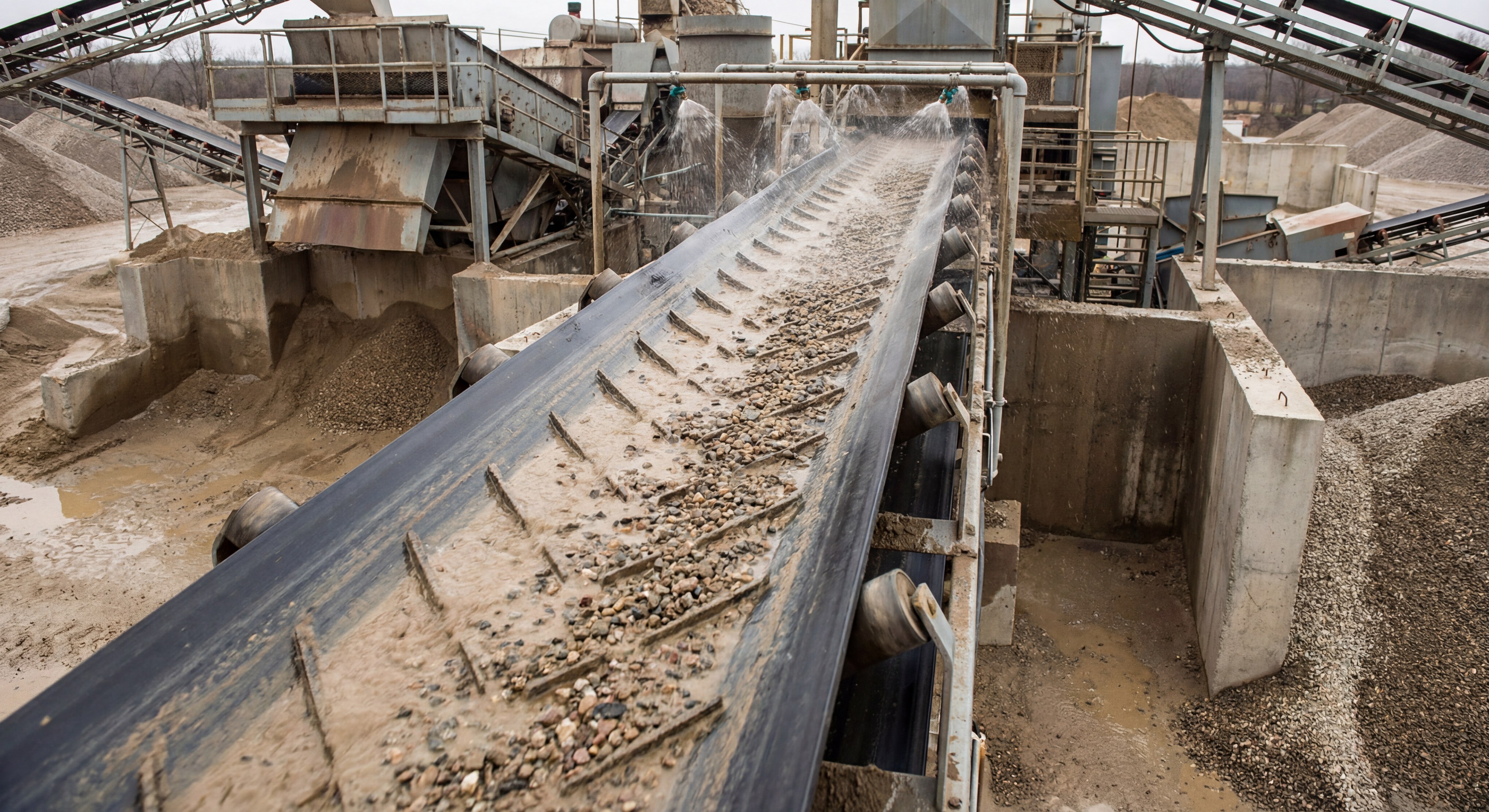
In the plaster industry, a profiled herringbone rubber conveyor belt is essential for moving raw gypsum from crushers to casting lines. Plaster is often fine and prone to fluidizing, meaning it can “flow” like a liquid on flat belts. The herringbone pattern locks the powder in place, ensuring a consistent feed rate to your casting machines.
Does it help with wet plaster mixes?
Many plaster casting processes involve wet or slurry-like materials that are extremely slippery. The open V-patterns allow excess water to drain away while the cleats maintain a firm grip on the solid content.
Believe it or not:
- Slurry Transport: Prevents heavy wet mixes from pooling at the bottom.
- Moisture Drainage: Open patterns prevent water from collecting on the belt.
- Zero Slippage: Maintains constant speed regardless of material moisture.
The reality is that without these profiles, wet plaster would simply slide off a standard belt during an incline.
How does it impact casting quality?
Consistent material delivery is critical for high-quality plaster casting. If the feed rate fluctuates due to slippage, the final product density and strength will be compromised.
Here is the deal:
- Uniform Feeding: Ensures mixers receive the exact amount of raw material.
- Reduced Waste: No spilled plaster means a cleaner, safer workspace.
- Process Speed: Allows for steeper conveyors, making the casting line more compact.
| Plaster Phase | Belt Requirement | Advantage | |
|---|---|---|---|
| Raw Gypsum | High Abrasion Cover | Long Service Life | |
| Fine Powder | Low Profile Cleat | Reduced Dusting | |
| Wet Slurry | Open V-Pattern | Superior Drainage |
Analysis: Profiled belts ensure the precise material dosing required for industrial-grade plaster casting and molding.
Key Takeaway: For plaster casting, chevron belts are the only reliable way to transport fluidized powders and wet slurries up steep inclines.
How is a profiled herringbone rubber conveyor belt made?
A profiled herringbone rubber conveyor belt is manufactured using a specialized high-pressure vulcanization press. In this process, the base belt and the herringbone profile are cured together as a single unit. This “molded” construction is significantly more durable than belts where cleats are simply glued on after manufacturing.
What is the vulcanization process?
Heat and pressure are applied to raw rubber and fabric layers within a steel mold. This causes the rubber to flow into the herringbone pattern while simultaneously bonding to the internal plies.
Let’s dive in:
- One-Piece Molding: The cleat is part of the cover, not an attachment.
- Ply Integration: Fabric layers are fused to prevent delamination.
- Curing Time: Precise timing ensures the rubber reaches optimal hardness.
This is the secret to a long-lasting belt: a molded profile will never peel off, even under heavy impact.
How do they ensure quality?
Every industrial conveyor belt must undergo rigorous testing before shipment. This ensures the belt can withstand the environmental stresses of your specific plant.
Check this out:
- Adhesion Testing: Ensures the profile won’t separate from the base.
- Tensile Strength: Verifies the belt can handle the rated load weight.
- Abrasion Resistance: Measures how long the cleats will last against friction.
| Step | Method | Quality Benefit | |
|---|---|---|---|
| Layering | EP/NN Fabric Stacking | Dimensional Stability | |
| Vulcanization | High-Pressure Curing | Permanent Cleat Bond | |
| Finishing | Edge Trimming | Smooth Tracking |
Analysis: High-quality manufacturing focuses on the chemical bond between the cleat and the belt body to ensure industrial longevity.
Key Takeaway: Molded vulcanization is the only manufacturing method that guarantees cleats won’t detach during heavy-duty operation.
What are the profiled herringbone rubber conveyor belt pattern types?
There are several variations of the profiled herringbone rubber conveyor belt designed for specific drainage and grip needs. Choosing between an open or closed V-pattern can drastically change how your system handles moisture and fine particles.
Open vs. Closed V-Patterns?
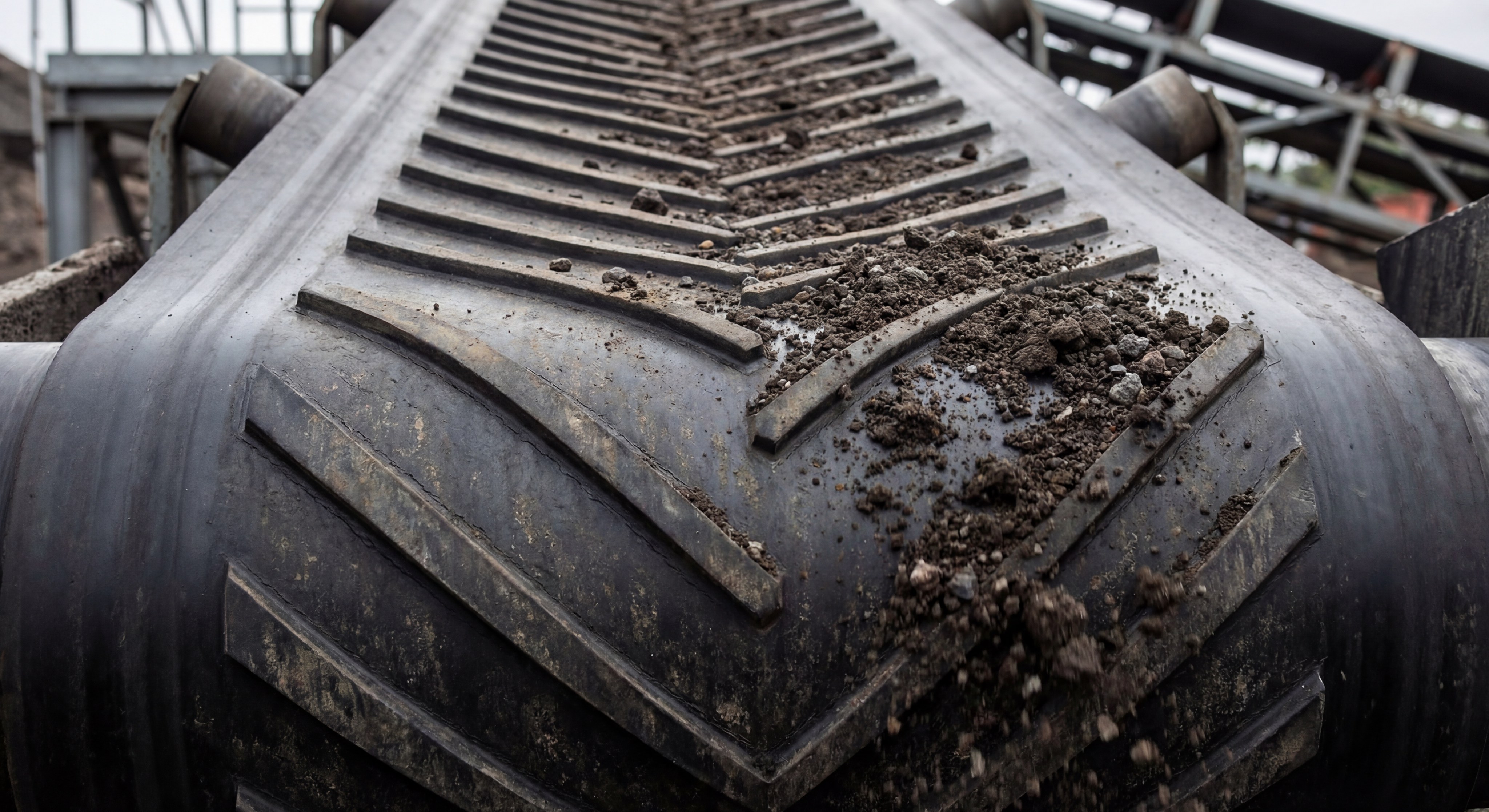
The choice depends entirely on the moisture content of your material. Open patterns allow liquid to escape, while closed patterns are better for containing dry, fine powders.
Here is the truth:
- Open V-Pattern: Best for wet sand, slurry, or outdoor construction.
- Closed V-Pattern: Ideal for dry grain, cement, or fine plaster powder.
- Multi-V Design: Provides extra grip points for very slippery loads.
You might be asking: which is easier to clean? Open patterns are generally simpler to spray down during maintenance.
What about profile heights?
Profile heights are categorized into low, medium, and high profiles. You must match the height to both the incline angle and the size of the material being moved.
But wait, there’s more:
- Low Profile (5-15mm): Used for inclines up to 25 degrees.
- Medium Profile (15-25mm): The standard for most industrial uses.
- High Profile (25-32mm): Necessary for angles up to 45 degrees.
| Pattern Type | Ideal Incline | Best Material | |
|---|---|---|---|
| Open V | 16 – 30° | Wet Aggregates | |
| Closed V | 16 – 35° | Fine Dry Powders | |
| High Cleat | 30 – 45° | Large Rocks / Bags |
Analysis: Pattern selection is a balance between material retention requirements and the physical constraints of the conveyor incline.
Key Takeaway: Matching the pattern type to your material’s moisture and particle size is critical for optimal system performance.
Why is a profiled herringbone rubber conveyor belt efficient?
Efficiency in a profiled herringbone rubber conveyor belt is defined by its ability to move more material in less horizontal space. Because these belts handle steeper inclines, you can reduce the overall length of your conveyor system. This leads to lower infrastructure costs and reduced energy consumption for the drive motor.
Does it reduce material loss?
Spillage is the primary enemy of efficiency in bulk material handling. The herringbone cleats trap material that would otherwise slide off, ensuring 100% of your product reaches the destination.
Think about it:
- No Backsliding: Eliminates the need to re-run spilled material.
- High Throughput: Move higher volumes at faster belt speeds.
- Less Cleanup: Reduces labor costs associated with spilled debris.
The reality is that a secure load allows for a much higher production rate per hour.
How does it save energy?
When material slides on a belt, the motor is working against friction without actually moving the product upward. A high-grip profile ensures every kilowatt of energy is converted into vertical lift.
In fact:
- Reduced Tension: Better grip means the belt doesn’t need to be over-tightened.
- Smaller Motors: Compact conveyor layouts require less power to operate.
- Continuous Flow: No bottlenecks caused by material piles at the belt base.
| Efficiency Factor | Benefit | Savings Potential | |
|---|---|---|---|
| Vertical Gain | Shorter Conveyors | 30% Space Savings | |
| Grip Profile | No Backsliding | 15% Material Recovery | |
| Centered Loading | No Edge Spillage | 20% Less Cleanup Labor |
Analysis: The efficiency of chevron systems lies in the mechanical advantage of the profile, which optimizes both space and energy.
Key Takeaway: Efficiency is maximized through the elimination of material slippage and the reduction of the conveyor’s horizontal footprint.
How do you size a profiled herringbone rubber conveyor belt?
Sizing a profiled herringbone rubber conveyor belt correctly requires an analysis of your pulley diameters and material density. If the belt is too thick or the cleats are too high for your pulleys, the rubber will crack prematurely. You must also ensure the belt width leaves enough edge clearance for the cleats to pass through the conveyor frame safely.
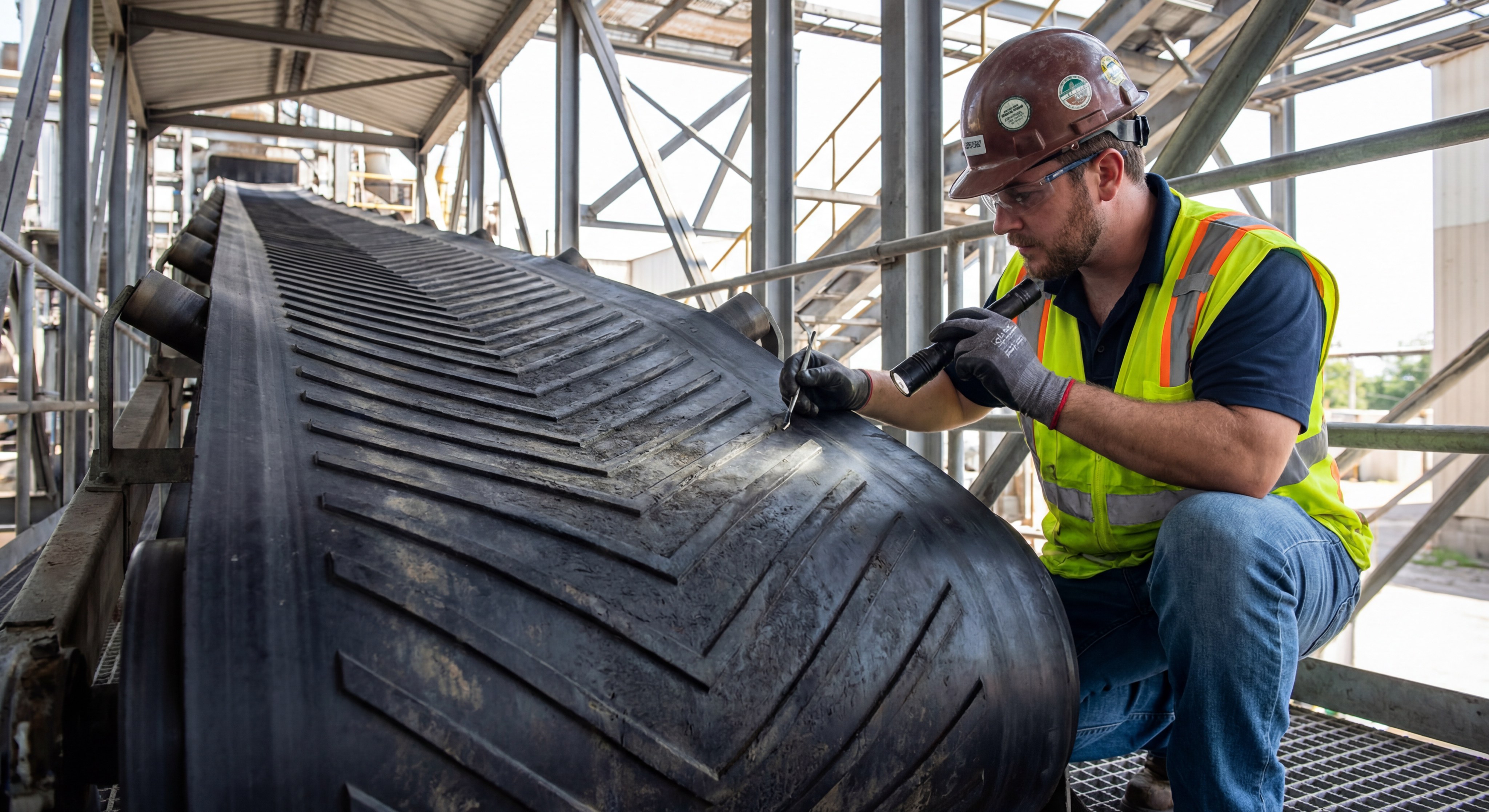
What is the role of pulley diameter?
The belt must be flexible enough to wrap around the drive and tail pulleys. Higher cleats require larger pulley diameters to prevent the base rubber from over-stretching and cracking at the cleat base.
Keep this in mind:
- Minimum Diameter: Each cleat height has a specific minimum pulley requirement.
- Troughing Ability: The belt must flex into a U-shape without damaging the profile.
- Return Idlers: Cleats must be spaced to avoid “jumping” on the return rollers.
The point is: always verify your existing hardware before upgrading to a higher profile belt.
How do you calculate capacity?
The volume of material a belt can carry is determined by the width of the pattern and the height of the cleats. A wider belt doesn’t always mean more capacity if the cleats are too low for the incline angle.
Here is the secret:
- Effective Width: The area covered by the herringbone pattern.
- Cross-Sectional Area: The space between cleats available for material.
- Bulk Density: Heavier materials require stronger internal fabric plies.
| Cleat Height | Min. Pulley Diameter | Max Incline | |
|---|---|---|---|
| 15mm | 250mm | 25 Degrees | |
| 25mm | 400mm | 35 Degrees | |
| 32mm | 500mm | 45 Degrees |
Analysis: Proper sizing balances mechanical flexibility with the load-carrying capacity required for steep-angle transport.
Key Takeaway: Always match cleat height to pulley diameter to prevent premature belt failure and rubber cracking.
How to maintain a profiled herringbone rubber conveyor belt?
Maintenance for a profiled herringbone rubber conveyor belt focuses on keeping the profiles clean and the tracking centered. Because the cleats are raised, any misalignment can cause the profile to rub against the conveyor frame, leading to rapid wear. Regular inspections of the cleat base are necessary to catch any signs of stress cracking early.
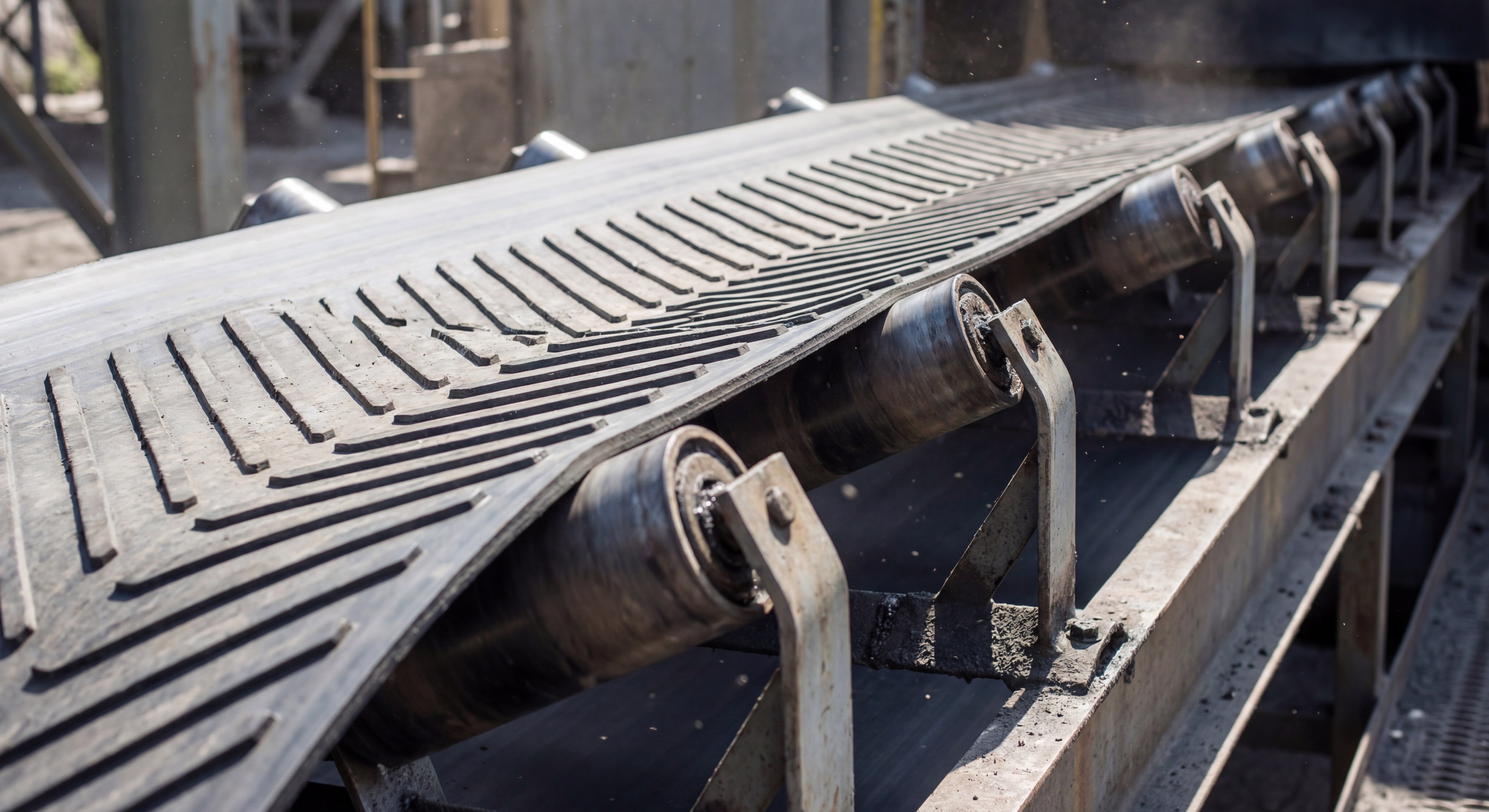
Why is cleaning so important?
Debris trapped in the V-pattern can harden and act like sandpaper, wearing down the cleats and the return idlers. Sticky materials like wet plaster must be washed off regularly to maintain the profile’s grip.
Follow these steps:
- Spray Wash: Use high-pressure water to clear the V-grooves.
- Scraper Selection: Use brush-style scrapers instead of rigid blades.
- Visual Checks: Look for “bald spots” where cleats have worn down.
Make no mistake: a dirty profile belt will lose its effectiveness and cause system vibration.
How do you prevent tracking issues?
Profiled belts are more sensitive to mis-tracking than flat belts. If the belt shifts, the raised cleats can strike the conveyor structure, causing catastrophic edge damage.
Pay attention:
- Automatic Trackers: Use sensors to keep the belt centered at all times.
- Idler Alignment: Ensure all rollers are perfectly perpendicular to the belt path.
- Tension Levels: Maintain even tension across the width of the belt.
| Maintenance Task | Frequency | Expected Result | |
|---|---|---|---|
| Pattern Cleaning | Daily / Weekly | Consistent Grip | |
| Tracking Audit | Daily | No Edge Wear | |
| Cleat Inspection | Monthly | Early Crack Detection |
Analysis: Preventive maintenance on chevron systems is primarily about protecting the molded profile from mechanical interference.
Key Takeaway: Proper cleaning and tracking are the two most important factors in extending the life of a profiled belt.
What technical features define a profiled herringbone rubber conveyor belt?
A profiled herringbone rubber conveyor belt is defined by its material composition and its cleat geometry. High-quality belts use specialized EPDM or SBR rubber to ensure the profiles remain flexible and durable under various environmental conditions. Technical specifications usually include the belt width, tensile strength, and the specific pattern code.
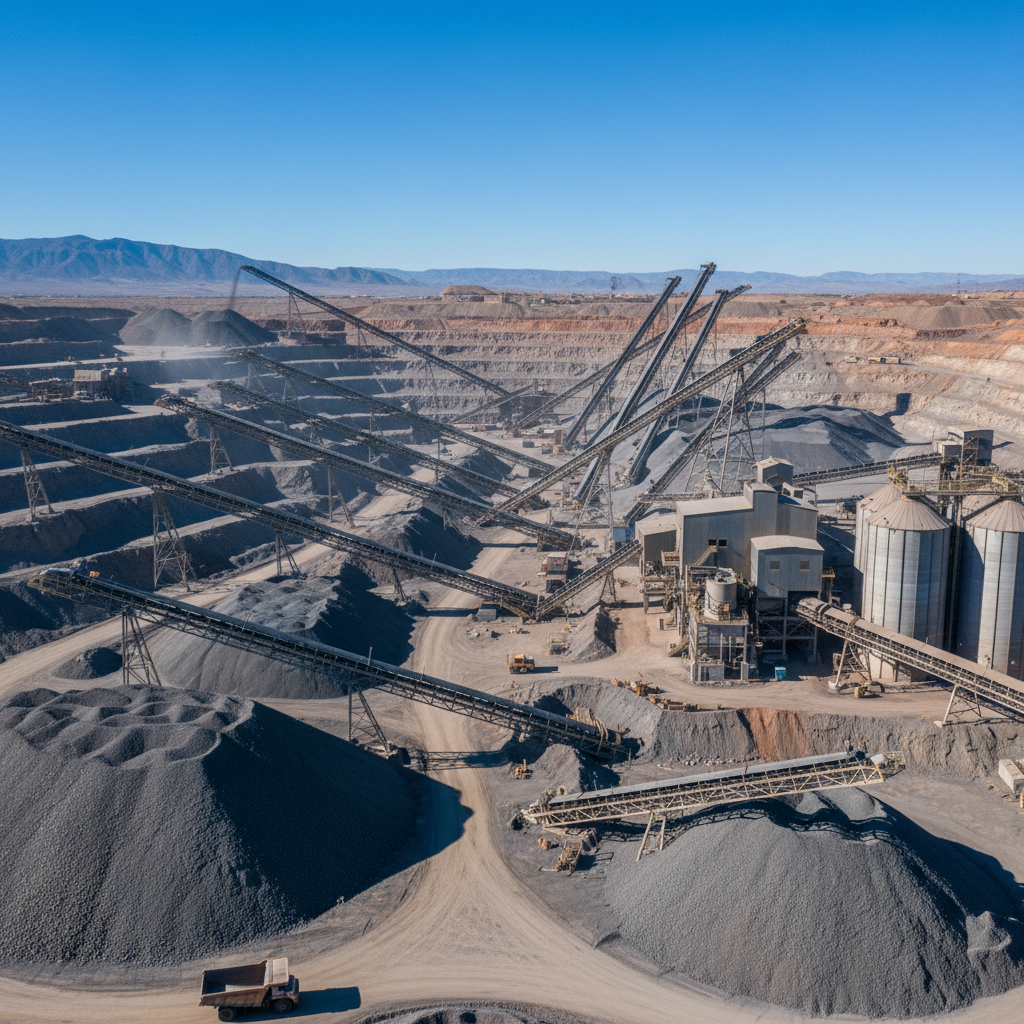
What are the standard patterns?
Manufacturers use standardized pattern codes to help engineers select the right grip. These patterns vary in width and spacing to accommodate different troughing angles and material types.
Look at this:
- Type C15: A standard 15mm V-pattern for general bulk handling.
- Type C25: A 25mm high cleat for steeper sand and gravel inclines.
- Type C32: A heavy-duty 32mm profile for large rocks and minerals.
You might be wondering: does pattern width matter? Yes, the pattern must be narrow enough to stay within the flat section of the rollers.
What is the internal reinforcement?
The “skeleton” of the belt is what prevents it from snapping under the strain of an incline. Most industrial belts use textile reinforced rubber with multiple plies of high-strength polyester or nylon.
Think about this:
- Ply Count: Usually 2 to 5 plies depending on the load.
- Tear Strength: High resistance to punctures from sharp rocks.
- Elongation: Low-stretch fabric ensures the belt stays at the correct tension.
| Technical Metric | Industrial Standard | Importance | |
|---|---|---|---|
| Tensile Strength | 200 – 3000 N/mm | Prevents Belt Snapping | |
| Abrasion Loss | < 150 mm³ | Extends Cleat Life | |
| Adhesion Strength | > 6.0 N/mm | Prevents Profile Peeling |
Analysis: Technical excellence in chevron belts is measured by the durability of the profile and the strength of the internal fabric.
Key Takeaway: Technical specifications should be used to match the belt’s physical properties to your specific industrial load and environment.
Can a profiled herringbone rubber conveyor belt handle heat?
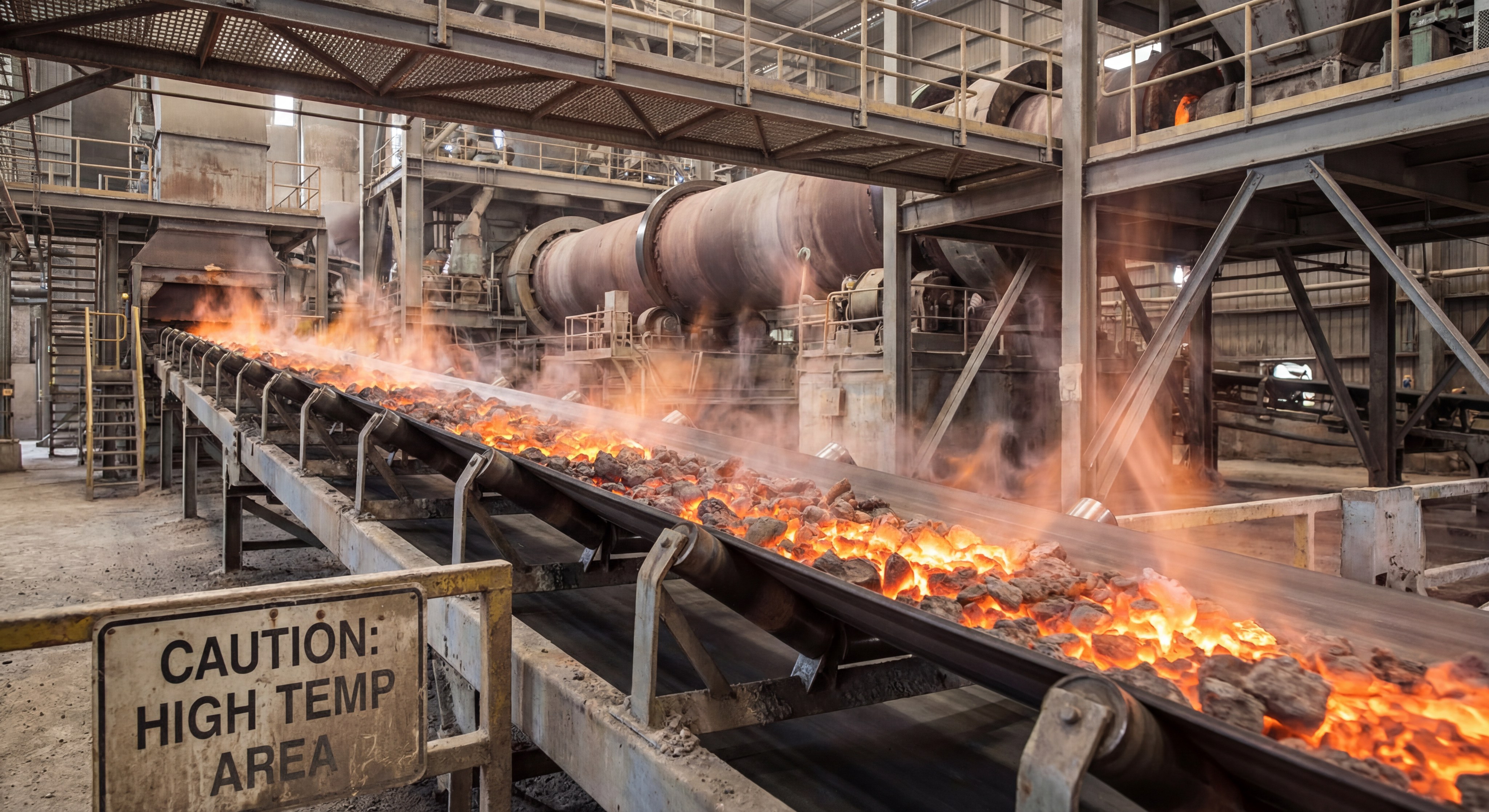
Yes, a profiled herringbone rubber conveyor belt can be manufactured with specialized heat-resistant compounds for high-temperature environments. This is particularly important in industries like cement or plaster casting, where materials can reach temperatures over 100°C. Standard rubber would harden and crack, but heat-resistant grades maintain their flexibility and grip.
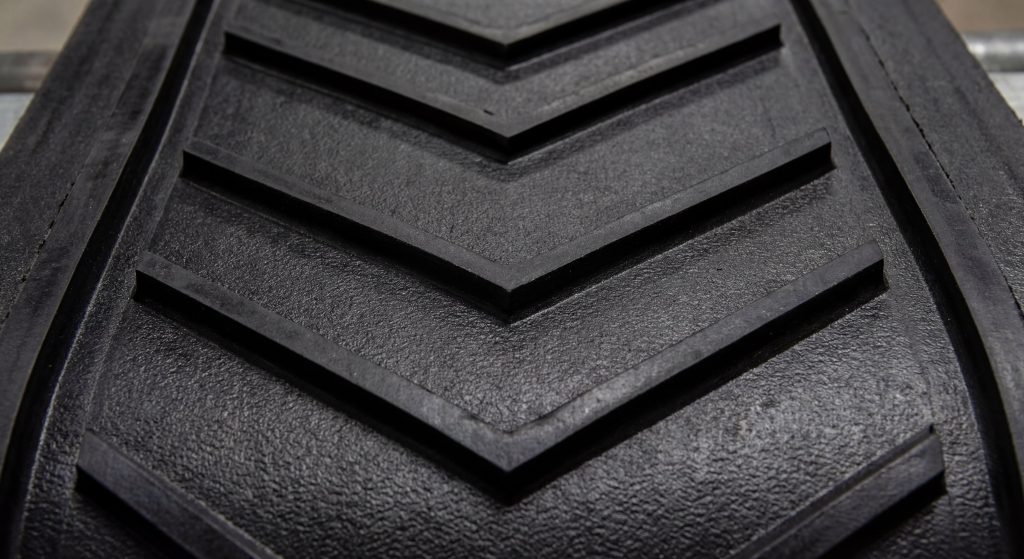
What are the heat resistance grades?
Different rubber compounds are used depending on the continuous and peak temperatures of the material. EPDM rubber is the most common choice for extreme heat environments.
You need to know:
- Grade T1: Resists material temperatures up to 100°C.
- Grade T2: Handles continuous loads up to 125°C.
- Grade T3: Designed for extreme peaks up to 200°C.
What happens if you use the wrong grade? The cleats will become brittle and snap off, leading to a complete loss of transport capability.
How does heat affect cleat bonding?
In molded chevron belts, the heat resistance is uniform throughout the entire belt. This prevents the “peeling” effect that occurs in low-quality belts where the adhesive fails under high thermal stress.
Look at this:
- Uniform Expansion: The belt and cleat expand at the same rate.
- Chemical Stability: The rubber doesn’t “cook” or lose its grip properties.
- Longevity: Heat-resistant belts last 3x longer in foundry environments.
| Temperature | Recommended Grade | Application | |
|---|---|---|---|
| Up to 100°C | Heat Resistant T1 | Foundry Sand | |
| 100 – 150°C | Heat Resistant T2 | Hot Asphalt | |
| 150 – 200°C | EPDM High Heat | Cement Clinker |
Analysis: Thermal engineering ensures that the chevron profile remains structurally sound even when moving steaming hot materials.
Key Takeaway: For hot material handling, always specify a heat-resistant grade to prevent cleat embrittlement and belt failure.
Conclusion
Maximizing the efficiency of your steep-angle material handling requires the right balance of pattern type, cleat height, and rubber durability. By selecting a high-performance profiled herringbone rubber conveyor belt, you ensure that your production line remains stable, clean, and cost-effective. Whether you are handling raw gypsum for plaster casting or heavy ore in a mining facility, chevron technology eliminates the risk of backsliding and inventory loss. If you need technical guidance on selecting the perfect belt for your incline, please contact us today to speak with our engineering specialists. Our brand vision is to provide the most reliable material handling solutions that empower global industrial growth through innovation and quality.
FAQ
Is a profiled herringbone belt better than a flat belt for inclines?
Yes, absolutely. Profiled belts are designed to handle angles up to 45 degrees, whereas flat belts typically fail once the incline exceeds 15 to 18 degrees due to material backsliding.
Can these belts be used for food-grade products?
Yes, they can be manufactured with FDA-approved white rubber compounds. This allows for the steep transport of bulk food items like sugar, salt, or grain while maintaining strict hygiene standards.
How do I know when to replace my chevron belt?
You should replace the belt when the cleat height has worn down by more than 50% or if you see significant cracking at the base of the profiles. Loss of cleat height directly leads to material slippage on steep angles.
Are these belts compatible with my existing conveyor?
Usually, yes, but you must check your pulley diameters. Because chevron belts are thicker and have raised profiles, they require larger minimum pulley sizes than standard flat belts to avoid cracking.
Can I repair a damaged chevron profile?
No, it is generally not recommended to repair individual cleats. Because the profiles are molded into the belt during vulcanization, any local patch or glue-on repair will likely fail under the stress of the incline.