

A wear resistant rubber conveyor belt protects against abrasion and impact, reducing downtime, extending service life, and ensuring reliable performance in heavy-duty material handling operations.
1. What is a wear resistant rubber conveyor belt?
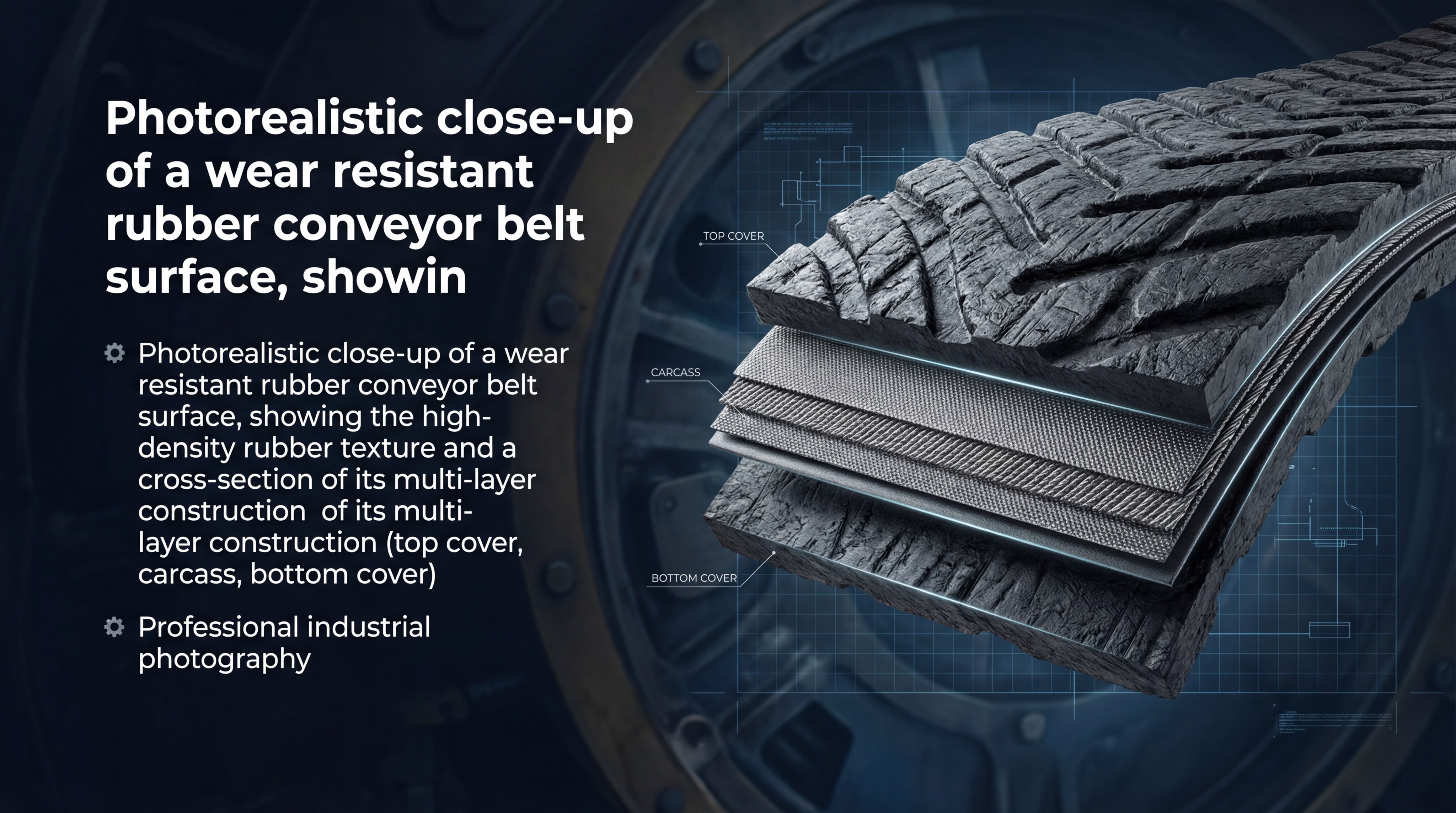
A wear resistant rubber conveyor belt is a specialized piece of equipment designed with a high-tensile top cover that resists abrasion and cutting from sharp industrial materials. These belts are essential for transporting bulk items that would typically shred standard rubber surfaces within weeks. They utilize advanced polymer chemistry to ensure the belt remains flexible while maintaining a surface hardness that prevents material penetration.
What are the core components?
The structural integrity of the belt depends on its multi-layered design. Look:
- Top Cover: High-abrasion rubber that takes the brunt of material impact.
- Carcass: The internal reinforcement, often made of fabric or steel cords.
- Bottom Cover: Designed to interact with pulleys with minimal friction loss.
Which grading systems are used?
International standards like DIN and ISO determine the quality of the rubber surface. The best part?
- Grade X: Designed for severe cutting and impact resistance.
- Grade Y: Standard resistance for moderately abrasive materials.
- DIN 22102: A common metric for measuring volume loss under friction.
You should analyze these technical specs before making a purchase to ensure the belt fits your specific material density and velocity.
| Component | Function | Technical Value | |
|---|---|---|---|
| Rubber Compound | Surface protection | Abrasion resistance <120mm³ | |
| Tensile Carcass | Load support | High break-strength | |
| Reinforcement | Structural stability | Low elongation |
Key Takeaway: A wear resistant belt is a high-performance investment that uses specialized rubber layers to protect the internal carcass from abrasive material destruction.
2. How does a wear resistant rubber conveyor belt work?
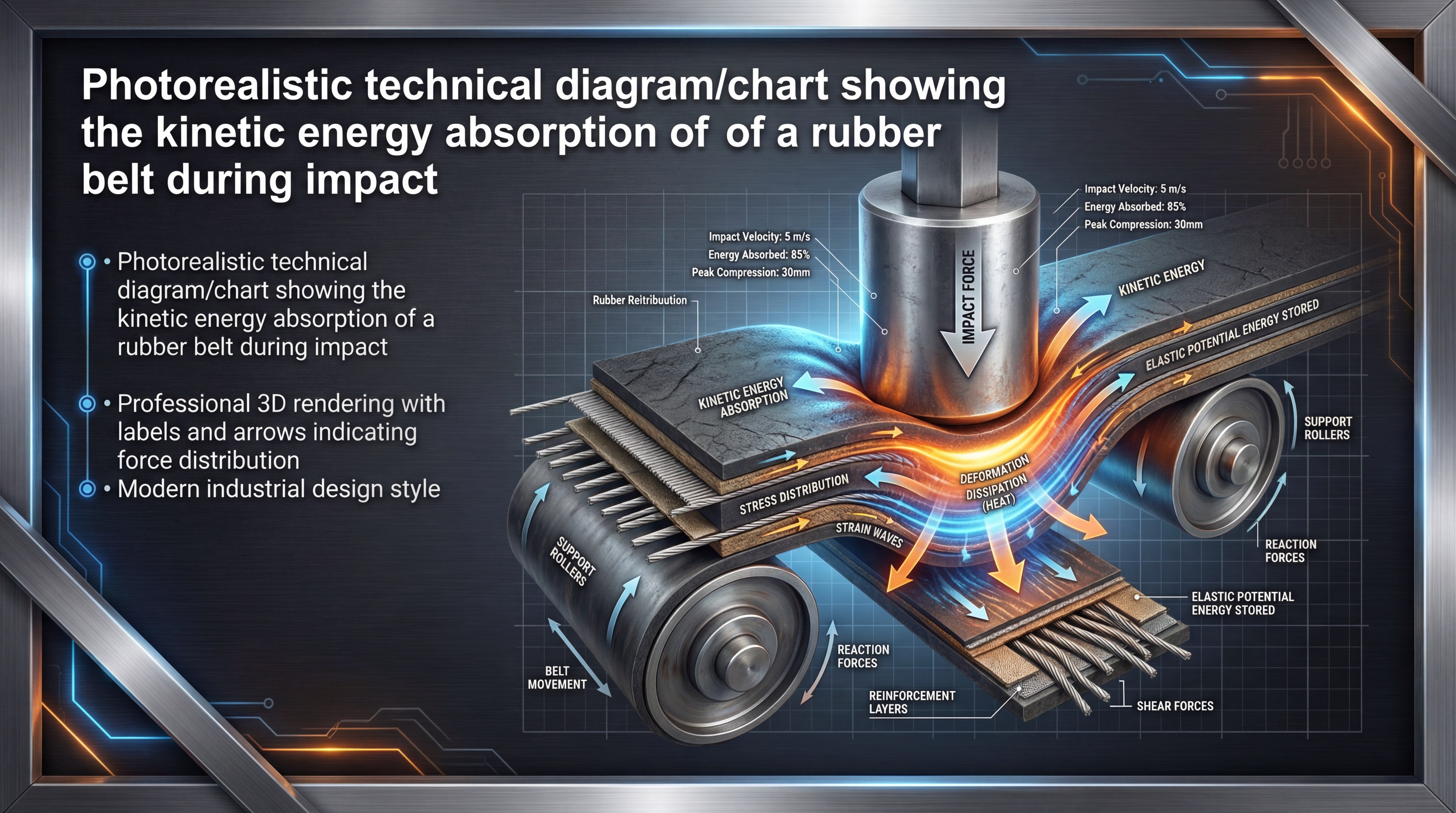
The mechanics of a wear resistant rubber conveyor belt revolve around its ability to absorb and dissipate the kinetic energy generated by material impact. When sharp particles hit the surface, the rubber deforms elastically rather than tearing, which prevents the material from reaching the sensitive internal reinforcement layers. This elasticity allows the belt to maintain its shape and integrity even under continuous high-volume loading.
How is impact energy absorbed?
Specialized rubber formulations allow the belt to act as a massive shock absorber for your machinery. Think about it:
- Elastic Deformation: The rubber “gives” slightly to prevent cutting.
- Energy Dissipation: Impact force is spread across a wider surface area.
- Surface Resilience: The cover bounces back to its original state instantly.
How does friction management work?
The surface texture and chemical makeup determine how material slides or grips during transport. It gets better.
- Troughing Ability: Flexibility allows the belt to carry more material without spillage.
- Low Drag: Smooth bottom covers reduce the energy required to turn pulleys.
- Heat Management: High-quality compounds prevent internal heat buildup from friction.
The following data demonstrates how energy absorption directly translates to industrial reliability and system longevity.
| Mechanism | Engineering Goal | Result | |
|---|---|---|---|
| Impact Damping | Protect internal cords | Zero structural cracks | |
| Friction Control | Reduce pulley wear | Lower power consumption | |
| Elastic Recovery | Maintain surface level | Even material distribution |
Key Takeaway: These belts function by turning destructive impact energy into harmless elastic movement, preserving the surface from permanent damage.
3. Where is a wear resistant rubber conveyor belt used?
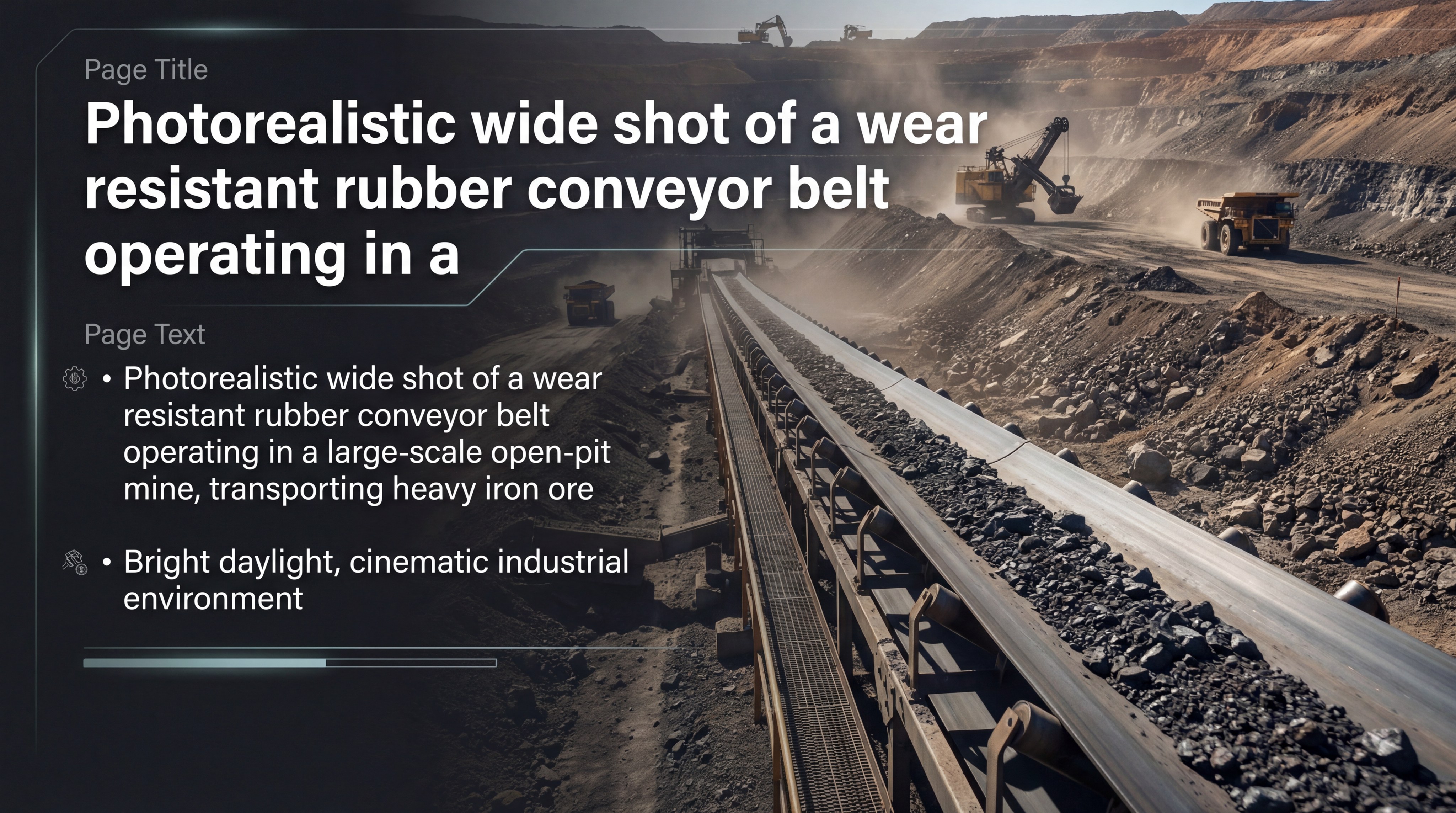
A wear resistant rubber conveyor belt is primarily used in heavy-duty environments such as mining, quarrying, and cement manufacturing where abrasive materials are moved constantly. These industries demand equipment that can handle thousands of tons of sharp ores or rocks every hour without degrading. In environments with high fire risks, engineers often combine these features with a flame retardant conveyor belt to ensure both durability and site safety.
Is it effective for mining?
Mining is the ultimate test for any material handling system due to the jagged nature of raw ores. Simply put:
- Iron Ore: Extremely heavy and abrasive material.
- Coal Handling: Requires high-volume transport with minimal dust.
- Primary Crushing: High impact zones where rocks drop directly onto the belt.
Can it handle construction materials?
Aggregates like sand and gravel act like sandpaper on standard conveyor surfaces. But there is more.
- Cement Plants: Handling hot clinker and limestone.
- Asphalt Production: Moving crushed stone at high speeds.
- Recycling Facilities: Transporting sharp metals and glass fragments.
Understanding the specific application helps you choose the right cover thickness and rubber grade for your unique operational stressors.
| Industry Sector | Primary Material | Wear Stress Level | |
|---|---|---|---|
| Mining | Hard Rock/Ore | Extreme (Cutting) | |
| Construction | Sand/Gravel | High (Abrasion) | |
| Recycling | Metal/Glass | Critical (Tearing) |
Key Takeaway: Industrial sectors with high-impact or abrasive material flows rely on these belts to prevent the “sandpaper effect” from destroying their logistics lines.
4. How is a wear resistant rubber conveyor belt manufactured?
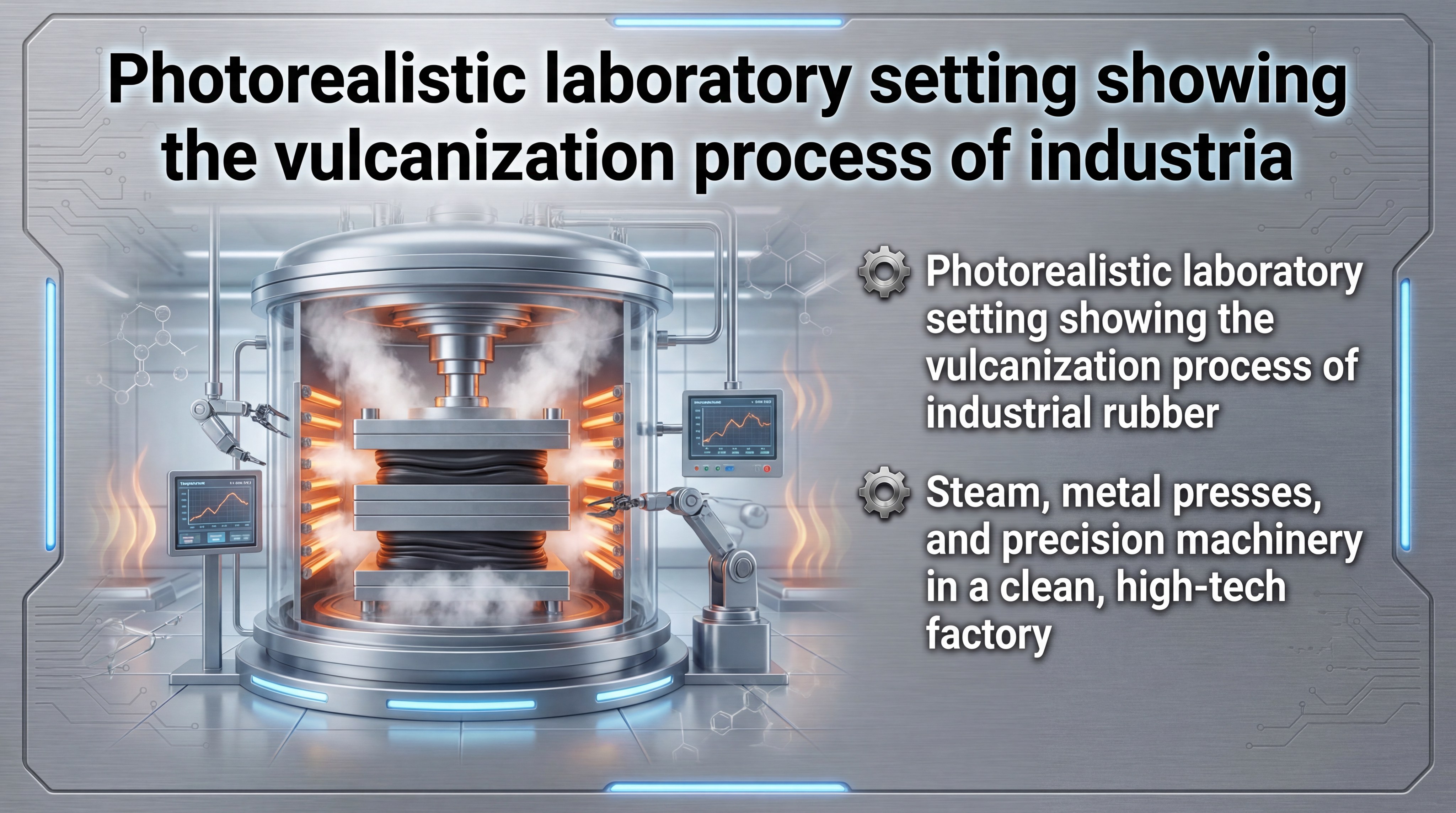
Manufacturing a wear resistant rubber conveyor belt involves a multi-stage process of polymer compounding, carcass layering, and high-pressure vulcanization. During production, raw rubber is mixed with strengthening agents like carbon black and specialized resins to enhance its natural toughness. The resulting sheets are then bonded to high-strength textiles or aramid conveyor belts reinforcement to ensure the final product can handle extreme tension.
What happens during compounding?
The chemical recipe determines whether the belt will survive for months or years. Here is the kicker:
- Polymer Selection: Choosing natural or synthetic rubber bases.
- Additive Mixing: Incorporating anti-oxidants and UV stabilizers.
- Homogenization: Ensuring the compound is uniform throughout the entire batch.
What is the role of vulcanization?
Heat and pressure are applied to create a permanent chemical bond between the rubber and the carcass. Make no mistake:
- Curing: Transforming the rubber from a soft plastic to a durable elastic.
- Layer Bonding: Ensuring the covers never peel away from the core.
- Surface Texture: Applying specific patterns for grip or cleaning efficiency.
Precision manufacturing is what separates a premium belt from a generic alternative that might fail under stress.
| Production Stage | Focus Area | Quality Metric | |
|---|---|---|---|
| Compounding | Chemical Stability | Hardness (Shore A) | |
| Calendaring | Layer Thickness | Gauge Uniformity | |
| Vulcanization | Cross-linking | Adhesion Strength |
Key Takeaway: Modern manufacturing uses chemical engineering and thermal processing to create a unified material that is significantly stronger than its individual parts.
5. Why choose a wear resistant rubber conveyor belt for durability?
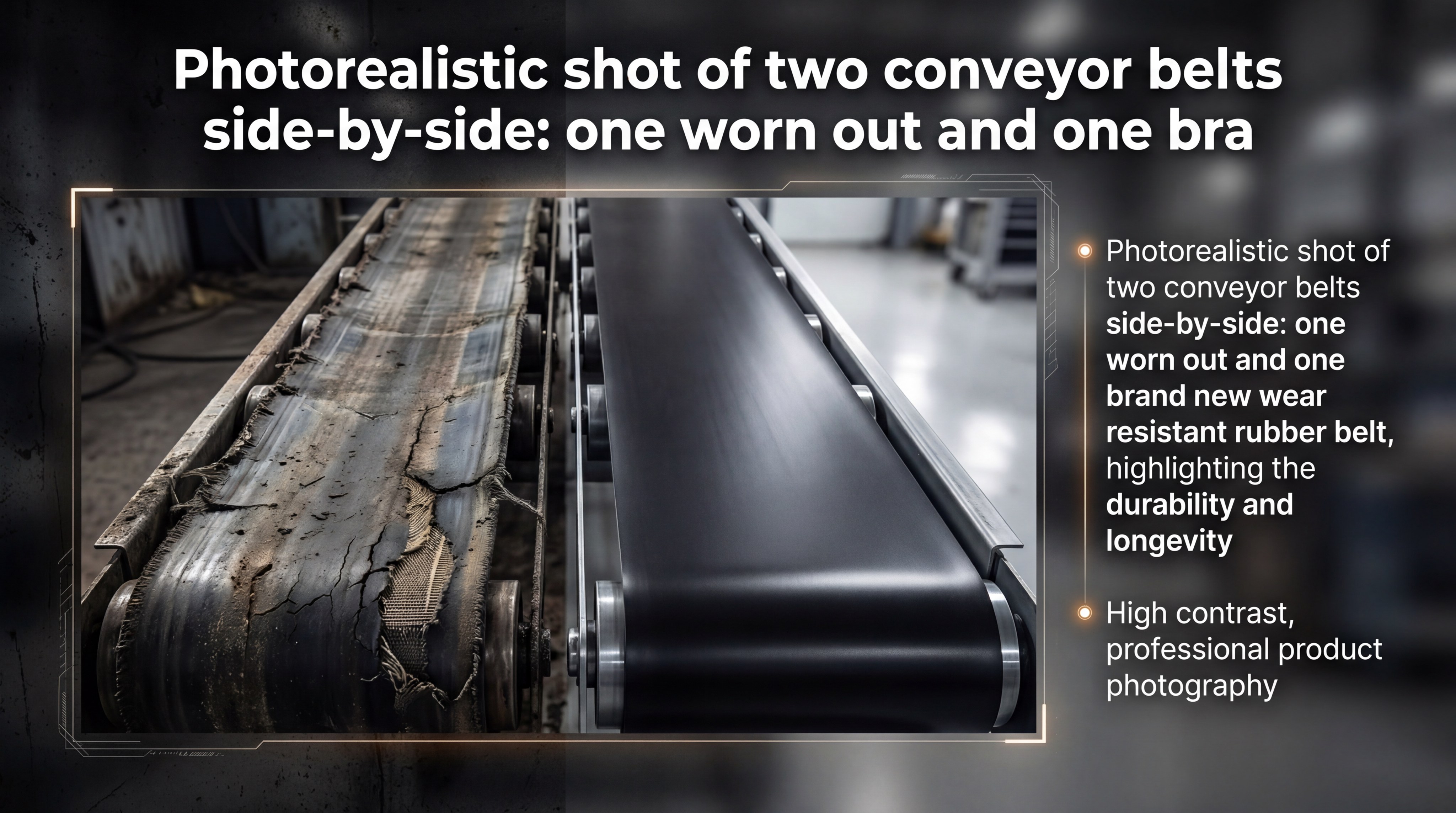
Choosing a wear resistant rubber conveyor belt for your facility dramatically increases the Mean Time Between Failures (MTBF) and reduces your overall operational costs. Standard belts often require frequent patches or total replacement, which halts production and requires expensive manual labor. By investing in durability, you ensure that your material flow remains consistent, even when handling the most punishing industrial loads.
Does it lower maintenance costs?
Reducing the frequency of belt repairs allows your maintenance team to focus on other critical machinery. The truth is:
- Fewer Splice Repairs: The carcass stays protected from moisture and rot.
- Less Carryback: Smooth, durable surfaces are easier for scrapers to clean.
- Reduced Inventory: You don’t need to keep as many spare belts on hand.
How does it improve safety?
Durable belts are less likely to snap or fray, which are common causes of industrial accidents. It gets better.
- Edge Stability: Prevents fraying that can catch on rollers.
- Reduced Dust: Integrity of the surface prevents material degradation.
- Predictable Wear: You can schedule maintenance rather than reacting to emergencies.
A side-by-side comparison reveals that quality belts pay for themselves through energy savings and reduced waste.
| Benefit Category | Impact on Business | ROI Timeline | |
|---|---|---|---|
| Operational | Higher Throughput | Immediate | |
| Financial | Lower Opex | 6 – 12 Months | |
| Structural | Extended Machine Life | 24+ Months |
Key Takeaway: Durability is not just about the belt; it is about protecting your entire production schedule and your employees’ safety.
6. How to verify wear resistant rubber conveyor belt integrity?
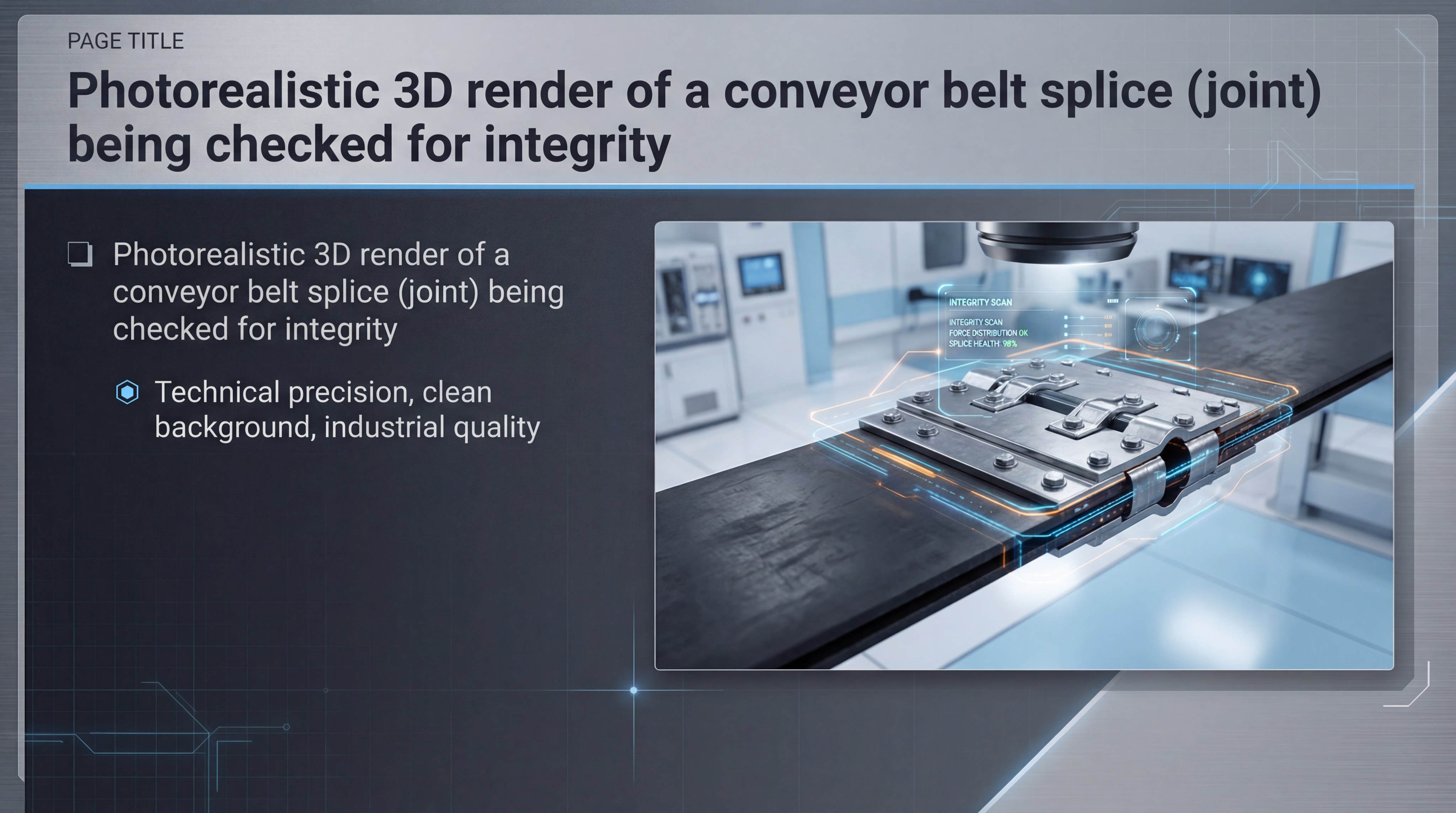
Verifying the integrity of a wear resistant rubber conveyor belt requires regular inspection of the surface thickness and the health of the spliced joints. Using ultrasonic thickness gauges, technicians can measure exactly how much rubber cover remains before the internal carcass is exposed to potential damage. These proactive checks allow you to predict the remaining life of the belt and avoid the high costs of unplanned system shutdowns.
How are splices inspected?
The joint is often the weakest point of any conveyor system and requires special attention. Look:
- Visual Scans: Checking for lifting edges or surface cracking.
- Integrity Testing: Ensuring the vulcanized bond is still holding firm.
- Width Checks: Monitoring if the belt is stretching or narrowing under load.
What tools are used for testing?
Modern technology makes it easier to spot internal failures before they reach the surface. The best part?
- Ultrasonic Gauges: Measuring cover thickness without stopping the belt.
- Magnetic Sensors: Detecting broken steel cords inside the rubber.
- Thermal Imaging: Finding hotspots caused by friction or bearing failure.
Consistent monitoring ensures that you get every possible hour of service out of your high-quality rubber components.
| Inspection Type | Frequency | Detection Goal | |
|---|---|---|---|
| Visual Surface | Daily | Surface cuts/Gouges | |
| Splice Health | Monthly | Joint separation | |
| Thickness Survey | Quarterly | Wear rate analysis |
Key Takeaway: Integrity verification is a data-driven process that uses specialized tools to prevent small surface issues from becoming catastrophic failures.
7. Can you use a wear resistant rubber conveyor belt at ports?

Yes, using a wear resistant rubber conveyor belt at shipping ports is standard practice for loading bulk materials like grain, ore, and coal onto massive vessels. Ports require extremely high speeds and continuous operation, meaning any belt failure can delay entire shipping schedules. To ensure long-term success in these environments, facility managers must choose reliable rubber belt conveyor manufacturers who understand the unique corrosive and abrasive challenges of coastal logistics.
What are port-specific challenges?
Coastal environments introduce salt and moisture that can degrade lower-quality rubber products. Think about it:
- Salt Corrosion: Requires ozone-resistant rubber compounds.
- High Speed: Increases the friction and heat on the belt surface.
- Heavy Volume: Loading thousands of tons per hour requires massive tensile strength.
How does it speed up loading?
Reliable belts allow for higher tension and faster speeds without the risk of slippage. It gets better.
- Precision Tracking: Keeps material centered during high-speed ship loading.
- Moisture Resistance: Prevents the belt from becoming heavy or slippery in rain.
- Tear Resistance: Protects against sharp objects often found in bulk scrap metal.
The efficiency of a port is directly tied to the reliability of its conveyor infrastructure.
| Port Requirement | Belt Feature | Operational Value | |
|---|---|---|---|
| High Throughput | Tensile Strength | Faster ship turnaround | |
| Corrosive Air | Ozone Resistance | Prevents surface cracking | |
| Sharp Bulk Cargo | Cut Resistance | Minimal downtime for repairs |
Key Takeaway: Ports demand a combination of high-speed capability and environmental resistance that only premium wear-resistant belts can provide.
8. Does a wear resistant rubber conveyor belt boost efficiency?
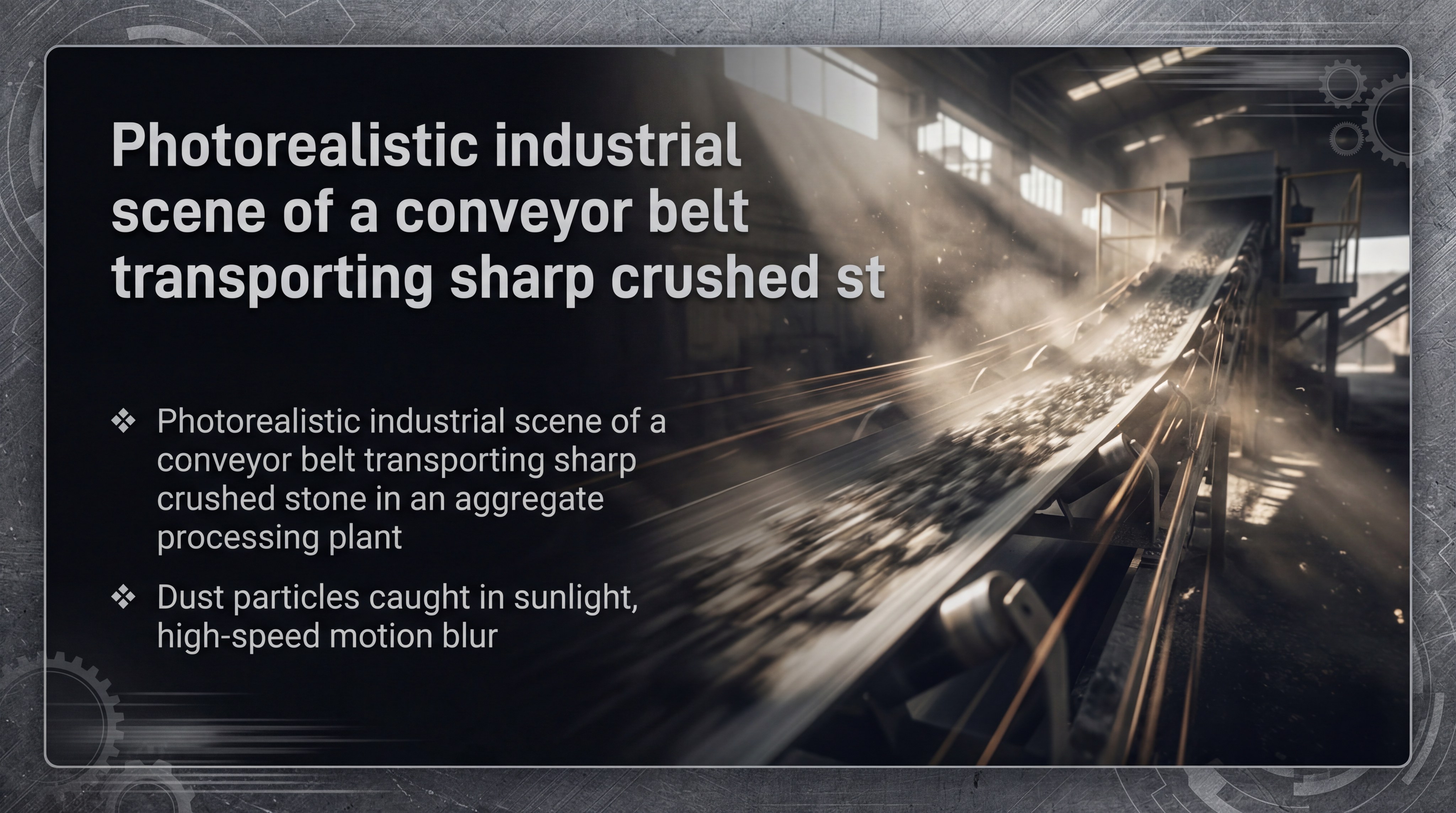
A wear resistant rubber conveyor belt boosts efficiency by maintaining a consistent surface profile, which ensures even material distribution and prevents costly spillage. When a belt remains smooth and intact, it tracks better on the rollers, reducing the energy required for the motors to pull the load. This leads to a direct reduction in electricity costs and increases the total tonnage of material moved per shift.
How does it save energy?
Lower rolling resistance and better pulley grip mean your system doesn’t have to work as hard. Simply put:
- Reduced Slippage: High-quality rubber maintains grip on the drive pulley.
- Lower Mass: Advanced compounds provide strength without unnecessary weight.
- Smooth Tracking: Reduces the friction caused by the belt hitting the frame.
How is spillage reduced?
A belt that maintains its shape prevents material from bouncing off the sides at transfer points. But there is more.
- Consistent Troughing: The belt stays in its “U” shape perfectly.
- Edge Integrity: High-density edges prevent sagging between idlers.
- Vibration Damping: Reduces the “chatter” that causes fine particles to fall off.
Efficiency gains in the material handling sector are cumulative, leading to massive annual savings.
| Efficiency Factor | Technical Cause | Financial Result | |
|---|---|---|---|
| Power Usage | Reduced friction/drag | Lower monthly utility bills | |
| Material Loss | Better tracking/troughing | Higher sellable tonnage | |
| Labor Costs | Less cleaning/repair | Optimized workforce usage |
Key Takeaway: System efficiency is a direct result of belt health; a smooth, durable belt requires less power and loses less material.
9. How to clean a wear resistant rubber conveyor belt properly?
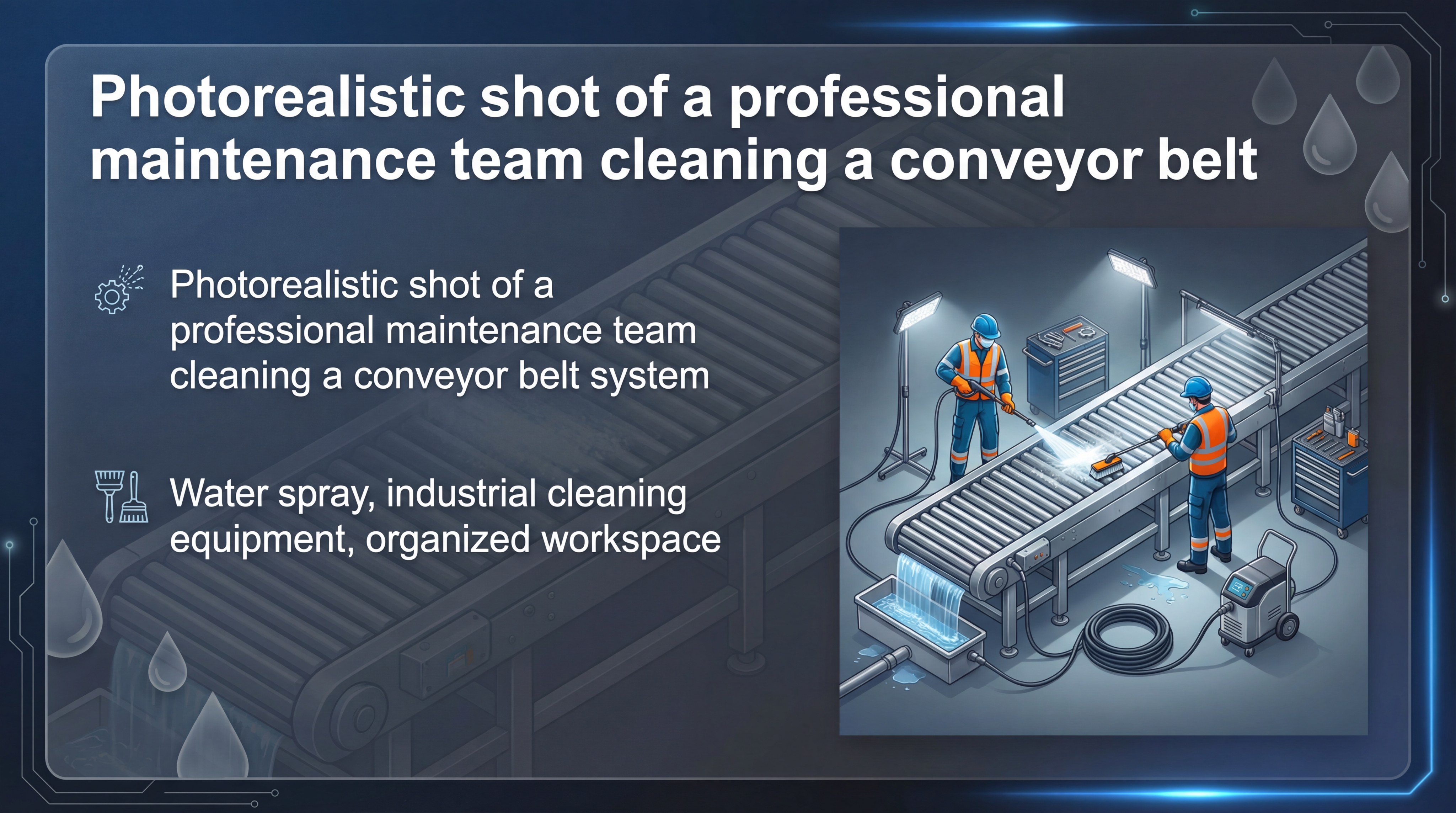
Proper cleaning of a wear resistant rubber conveyor belt involves using specialized scrapers and water sprays to remove “carryback” material that sticks to the surface after discharge. If abrasive particles are left on the belt, they can get trapped between the belt and the pulleys, acting like a grinding paste that destroys the rubber. For those performing repairs or deep cleaning, it is vital to know how to apply a rubber conveyor belt jointing solution to keep the system running.
What tools are best for cleaning?
Mechanical scrapers and brushes must be adjusted perfectly to remove debris without damaging the belt. Look:
- Primary Scrapers: Located at the head pulley to remove large debris.
- Secondary Scrapers: Provide a final wipe to remove fine particles.
- Water Jets: Used for sticky materials like wet clay or ore.
Why is carryback dangerous?
Material that stays on the belt eventually falls off under the return rollers, creating safety hazards. The truth is:
- Pulley Lagging Wear: Build-up on pulleys causes mistracking.
- Roller Seizure: Fine dust can enter the bearings of the idlers.
- Environmental Hazard: Piles of spilled material create tripping risks for staff.
A clean belt is a long-lasting belt, and a standardized cleaning schedule is the best way to protect your investment.
| Cleaning Component | Maintenance Frequency | Benefit | |
|---|---|---|---|
| Primary Scraper | Weekly Adjustment | Removes 90% of debris | |
| Return Idlers | Daily Inspection | Prevents belt mistracking | |
| Wash Box | Monthly Deep Clean | Removes hardened buildup |
Key Takeaway: Cleaning is not just an aesthetic task; it is a critical maintenance step that prevents abrasive buildup from destroying your belt and pulleys.
10. What are the wear resistant rubber conveyor belt safety rules?
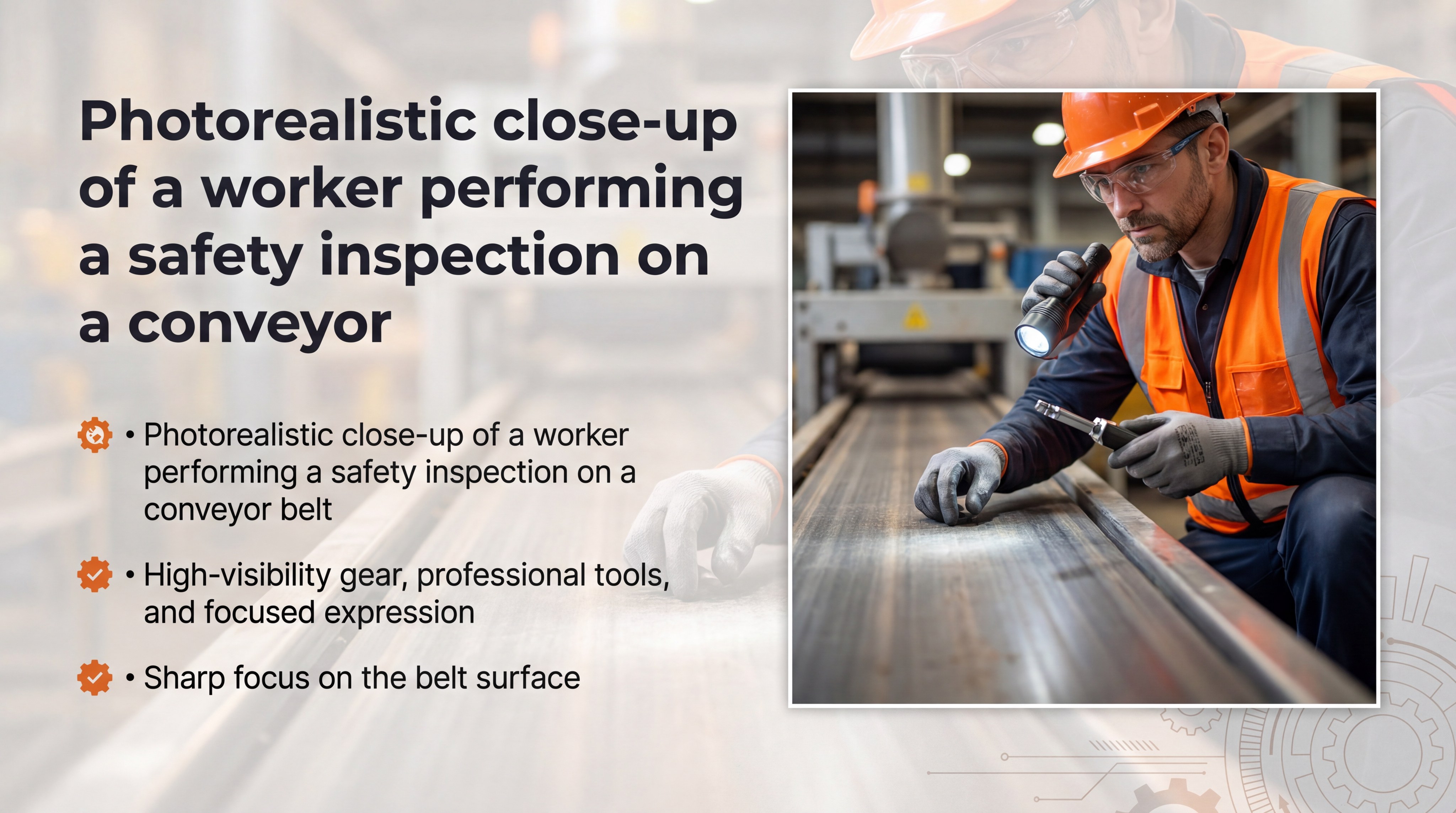
Safety rules for a wear resistant rubber conveyor belt include mandatory “Lock-Out Tag-Out” (LOTO) procedures during all inspections and the use of proper Personal Protective Equipment (PPE) around moving parts. Because these belts operate under high tension and move heavy loads, any contact with the moving surface can lead to severe injury. Regular training ensures that all staff understand the danger zones and can identify early signs of belt fatigue before a snap occurs.
What are the danger zones?
Knowing where not to stand is the first step in industrial safety. Here is the kicker:
- Pinch Points: Where the belt meets a pulley or idler.
- Transfer Points: High risk of falling material.
- Tail Pulley: The most common area for entanglement accidents.
How to perform safe inspections?
Inspections should always be a two-person job with a dedicated safety watcher nearby. Make no mistake:
- Use Flashlights: Never reach into dark areas while the belt is moving.
- Distance Maintenance: Use long tools to check for debris rather than hands.
- Emergency Stops: Ensure all E-stop cords are tested and reachable.
Safety is the foundation of any successful industrial operation, and it starts with the integrity of the conveyor belt itself.
| Safety Protocol | Action Required | Protective Goal | |
|---|---|---|---|
| LOTO | Physical lock on power | Prevent accidental startup | |
| PPE | Helmets, gloves, vests | Mitigate impact injuries | |
| Training | Annual safety certification | Reduce human error |
Key Takeaway: Safety protocols must be strictly enforced because the high tension and mass of industrial belts leave no room for error during maintenance.
Summary and Vision
Investing in a wear resistant rubber conveyor belt is more than a purchase; it is a commitment to operational excellence and long-term sustainability. At Zhenxing Rubber, we specialize in engineering high-performance solutions that withstand the harshest industrial environments on earth. Our mission is to provide the backbone for global infrastructure, ensuring your materials move safely and efficiently every single day. If you are ready to eliminate downtime and optimize your throughput, contact us today to find the perfect solution for your facility.
Frequently Asked Questions
1. How long does a wear resistant rubber conveyor belt typically last?The lifespan depends on the material moved, but a high-quality belt usually lasts 3 to 5 times longer than a standard belt in abrasive environments. Regular maintenance and proper scraper adjustment can extend this even further.
2. Can I use a wear resistant belt for hot materials?While these belts are designed for abrasion, you must specify a heat-resistant grade if materials exceed 80°C. Standard wear-resistant rubber may harden and crack if exposed to extreme heat for long periods.
3. What is the best way to repair a small cut in the belt surface?Small cuts should be repaired immediately using cold vulcanizing cement or rubber patches to prevent moisture from reaching the carcass. This stops the cut from expanding into a large tear that could snap the belt.
4. Does cover thickness matter more than rubber grade?No, both are equally important. A thick cover of low-grade rubber will wear away faster than a thinner cover of high-grade DIN X rubber, so always prioritize the rubber quality for abrasive loads.
5. How do I know if my belt is tracking incorrectly?If you see the edges of the belt rubbing against the conveyor frame or fraying, it is mistracking. This is often caused by material buildup on the pulleys or misaligned idlers and must be fixed to prevent belt destruction.