
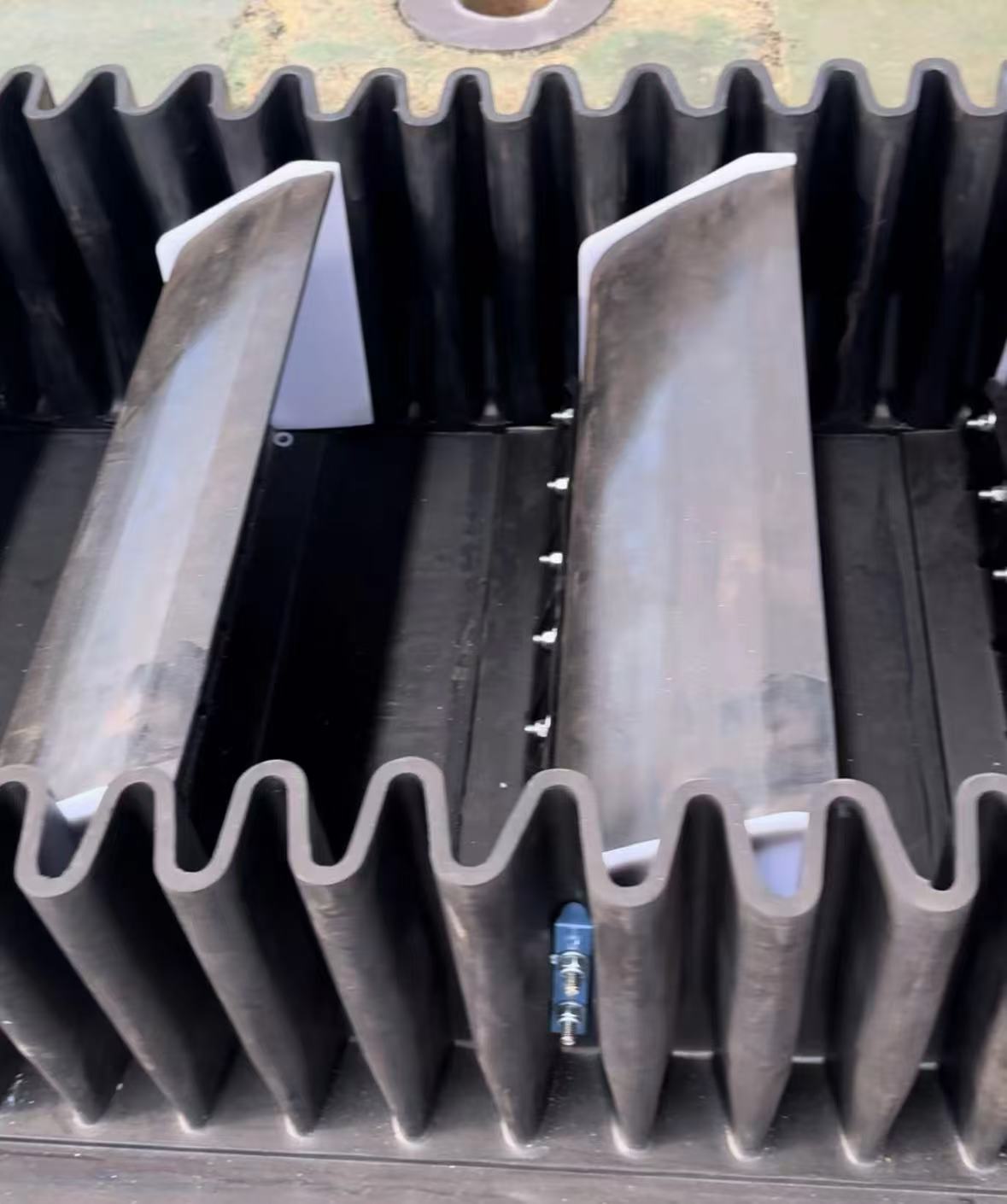
A professional rubber conveyor belt repair sidewall solution is essential for maintaining the performance and structural integrity of corrugated sidewall conveyor systems operating in demanding industrial environments. Continuous exposure to abrasive gypsum particles, mechanical stress, and heavy material loads can cause sidewall cracking, wear, and loss of flexibility, leading to material spillage, contamination, and costly production interruptions. High-quality repair compounds and sidewall restoration techniques help rebuild damaged corrugations, restore containment performance, and extend conveyor belt service life. By implementing an effective rubber conveyor belt repair sidewall maintenance program, industrial facilities can reduce downtime, improve operational reliability, and ensure efficient bulk material transport.
Why use rubber conveyor belt repair sidewall?
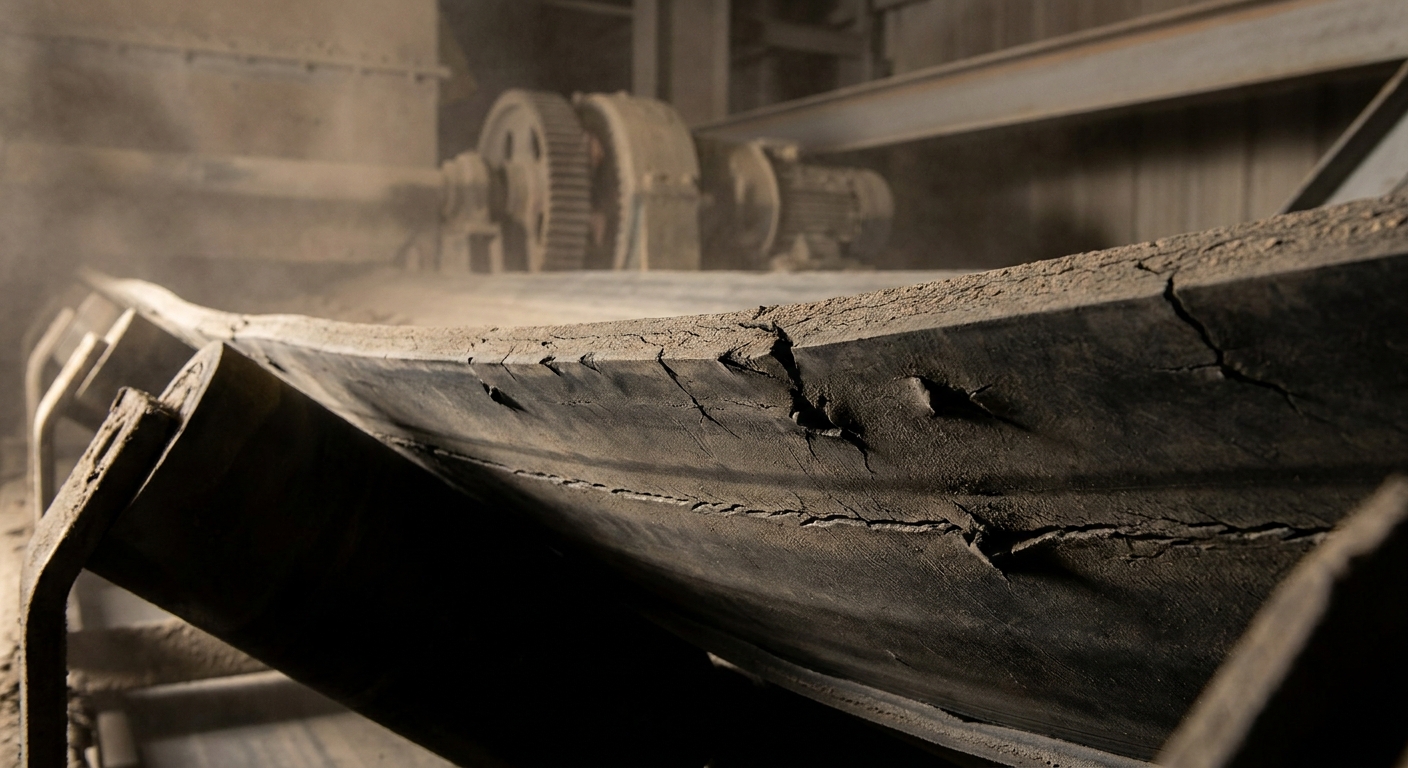
Using specialized rubber conveyor belt repair sidewall protocols is essential to prevent abrasive plaster casting elements from destroying your elastomer-based logistics framework. Uncured gypsum slurry and dynamic plaster mold transport generate massive structural stresses on high-angle belt profiles. This targeted maintenance keeps the lateral boundaries of your belt intact, stopping localized micro-tears from ripping the entire corrugated wall away. By restoring elastomer flexibility, you prevent structural collapse and protect delicate casting lines.
Does plaster casting require sidewall repairs?
Plaster slurries impose heavy, uneven dynamic stresses on the belt’s outer edges during the curing phase. Here is the absolute truth: if fine plaster dust migrates into elastomer pores, it behaves as a severe desiccant that saps essential plasticizers and makes the rubber highly brittle. Continuous flexing of these dehydrated rubber pleats over head and tail pulleys rapidly accelerates split formations. You must address this degradation promptly to maintain lateral material stability.
- Abrasive Friction: Plaster particulate migrating into the flexing folds of the sidewall.
- Flex Fatigue: Constant bending of the corrugated profile under high-load plaster molds.
- Chemical Desiccation: Moisture absorption by gypsum dust, leaving the elastomer brittle.
How do corrugated belts improve casting?
High-performance corrugated belts act as a reliable mobile container that prevents raw slurry from spilling over the belt margins before it solidifies. This vertical design enables steep-angle material elevation up to 90 degrees, allowing you to compress the factory footprint of your plaster production line. See our comprehensive guide on Fabric (Textile) Conveyor Belt to understand basic rubber compound dynamics and structural limits. Selecting the right base compound ensures high adhesion values between your flat base belt and the corrugated vertical walls.
Think about it:
- Steep-Angle Conveying: Elevating wet materials up to 90 degrees without back-slippage.
- Slurry Containment: Thick rubber barriers keep liquid compounds centered on the moving line.
- Vibration Absorption: Dampening structural shocks that might fracture fresh, uncured plaster molds.
Key Takeaway: Maintaining your corrugated sidewalls ensures that liquid plaster slurries remain securely contained during steep vertical transport, directly protecting your casting molds from structural distortion.
| Conveyor Design Feature | Benefit to Plaster Casting | Maintenance Mitigation Required | |
|---|---|---|---|
| Corrugated Sidewalls | Prevents lateral slurry spill and contains mold components | Regular inspection for pleat crack formation | |
| Integrated Cleats | Secures heavy casting molds during steep elevation | Check cleat-to-sidewall bonding points | |
| Elastomeric Base Belt | Dampens vibrations from casting mold vibratory tables | Address edge wear via proactive patch repair |
Understanding these design dynamics allows you to apply targeted maintenance patches before dynamic tension destroys your pocket belt’s load capacity.
When is rubber conveyor belt repair sidewall needed?
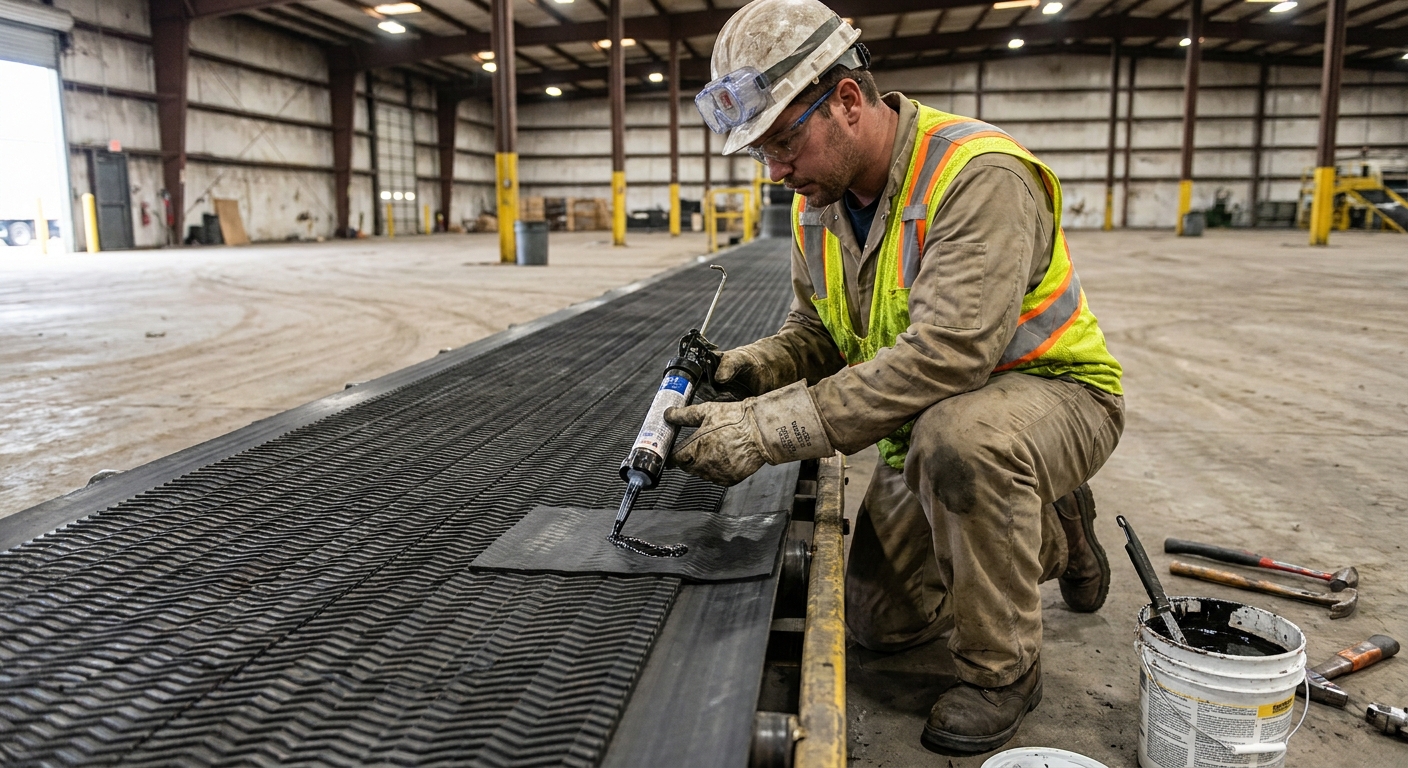
Recognizing exactly when to implement a rubber conveyor belt repair sidewall routine prevents localized flex fatigue from escalating into full belt failure. Plaster manufacturing exposes materials to severe chemical and thermal shifts that accelerate elastomer aging. Regular scheduled inspections are crucial to catch structural fatigue before raw materials begin leaking onto return rollers. Identifying subtle surface wear lets you coordinate repairs during planned shifts rather than emergency stops.
When does plaster damage the conveyor belt?
Thermal fatigue occurs primarily when the exothermic reaction of setting plaster transfers heat reaching up to 60°C directly to the rubber compound. It gets worse: this constant thermal cycling accelerates elastomer vulcanization breakdown, leading to microscopic cracking. Severe impact damage also occurs at loading points where heavy casting molds drop onto the moving surface. Over time, these repeated impacts fracture the vulcanized bonding layer of the vertical walls.
- Thermal Stress: High-temperature curing cycles accelerate rubber vulcanization breakdown.
- Impact Damage: Heavy casting molds dropped during loading fracture the rigid sidewall bases.
- Slurry Intrusion: Uncured plaster seeps into pre-existing micro-cracks, expanding as it crystallizes.
What are the signs of sidewall failure?
Industrial maintenance operators should look for distinct visual anomalies along the primary stress lines of the corrugations. Early warning signs typically manifest as small, web-like surface fissures that slowly expand into deep tears. If you ignore these patterns, the structural reinforcing fabric inside the belt carcass will begin to delaminate and snap. This internal deterioration leaves the belt incapable of handling lateral load pressures.
Here is the key:
- Delamination: Small gaps opening between the corrugated wall base and the flat belt.
- Micro-Crazing: Fine lines forming along the outer apex of the corrugated pleats.
- Fabric Fraying: Exposed white reinforcing threads showing through the outer rubber layer.
Key Takeaway: Identifying micro-fissures early lets B2B operators apply superficial cold repairs, saving the core belt fabric from irreversible structural delamination.
| Damage Type | Visual Indicator | Immediate Action Plan | |
|---|---|---|---|
| Micro-Crazing | Spiderweb surface cracks | Chemical cleaning and superficial rubber sealant sealing | |
| Wall Delamination | Gaps at base-to-wall joint | Buffing, chemical priming, and heavy cold bond repair paste | |
| Carcass Fraying | Snapped internal warp threads | Complete belt evaluation and planned section splicing |
Monitoring these precise wear stages helps you prevent minor surface cracks from developing into structural carcass failures.
How to do rubber conveyor belt repair sidewall?
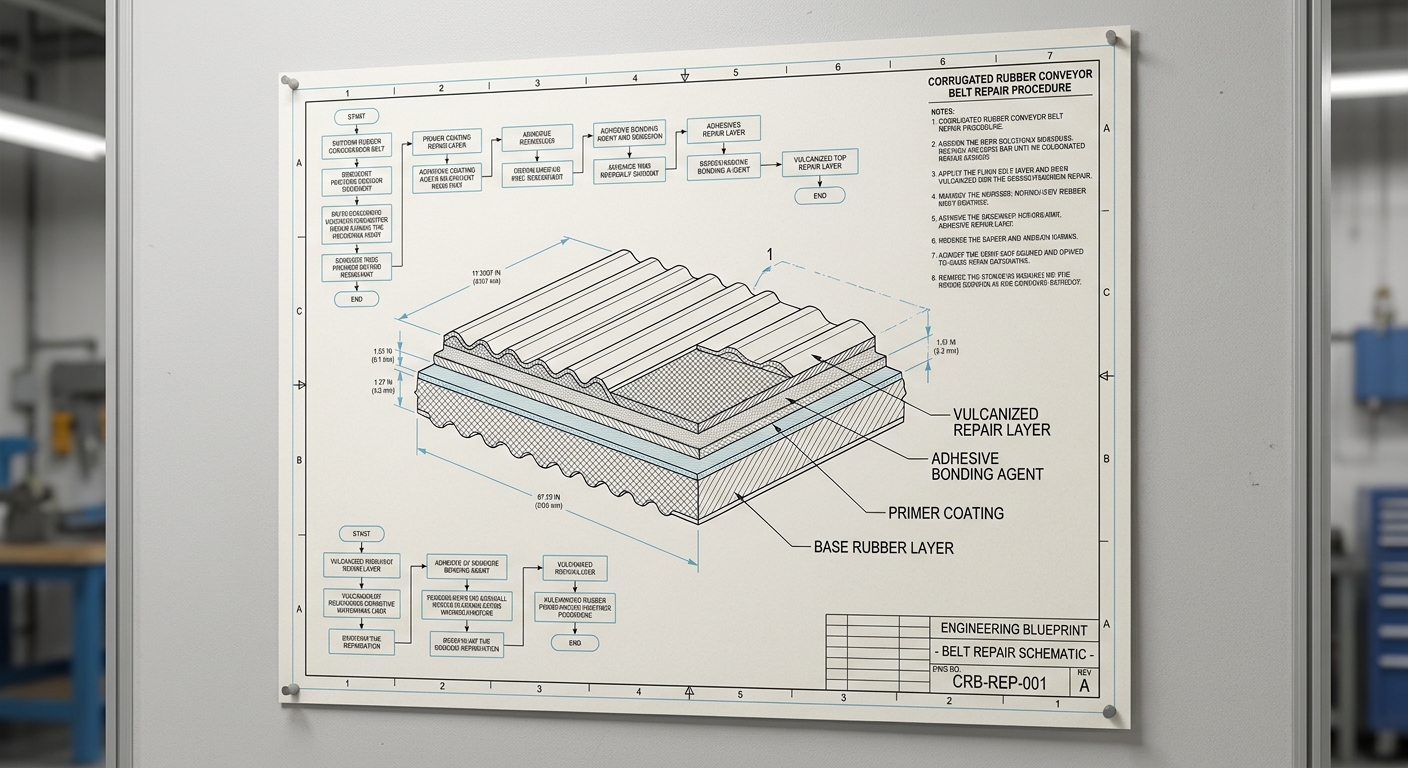
Executing a professional rubber conveyor belt repair sidewall procedure requires a precise combination of physical surface preparation and specialized adhesive chemistry. Standard off-the-shelf glues cannot survive the high mechanical bending stresses of industrial pulley systems. Proper repair steps must be followed methodically to guarantee that the patch matches the original elastic properties of your conveyor system. Any short-cut in cleaning or buffing will lead to immediate chemical bond failure under load.
What is the step-by-step repair process?
Restoring the structural integrity of your corrugated belt requires a systematic, professional approach. Step by step, here is how you fix it: first, thoroughly strip away all residual gypsum dust, then mechanically roughen the rubber to ensure a deep physical bite. Applying a premium chemical activator allows the dual-part liquid polyurethane compound to link directly with the base rubber at a molecular level. This cross-linking step guarantees high peel-resistant performance.
- Isolation & Cleaning: Decontaminate the damaged zone, removing all plaster residue and gypsum dust.
- Mechanical Buffing: Use a low-speed rotary rasp to create a rough texture on the rubber surface.
- Chemical Priming: Apply active rubber primer to promote cross-linking adhesion.
- Application: Mix and layer the dual-part polyurethane or elastomer-based repair paste.
- Curing: Allow the patch to chemically cure under controlled ambient conditions.
How does plaster casting cure on the belt?
The continuous casting process requires the belt to maintain precise structural support while the hot, wet plaster transitions into a dense solid. Because plaster curing is highly exothermic, your repair materials must withstand localized thermal stresses without softening or peeling. Selecting heat-stabilized repair materials ensures that the flexing sidewall remains perfectly sealed throughout the curing run. For systems that experience extreme tension, reviewing our high-tensile base options can reveal important design limits.
Here is the key:
- Exothermic Heat Management: Selecting repair compounds rated up to 80°C to withstand plaster hydration.
- Flex Retention: Keeping the repaired area pliable enough to navigate tight deflection rollers.
- Lateral Stability: Preventing the weight of wet plaster from bowing out the repaired section.
Key Takeaway: Adhering to a strict chemical and mechanical preparation protocol ensures the cured rubber patch matches your original belt’s flexibility, avoiding premature cracking during pulley wrapping.
| Curing Phase | Plaster State | Stress Type on Sidewall | Critical Belt Parameter | |
|---|---|---|---|---|
| Initial Pour | Liquid Slurry | Hydrostatic Lateral Pressure | Sidewall Rigidity | |
| Exothermic Set | Semi-Solid (Hot) | Thermal Expansion / Heat Transfer | Heat-Resistant Elastomer | |
| Final Release | Solid Mold | Shear Stress during Demolding | Tear and Peel Resistance |
Aligning your repair compounds with these curing phases prevents thermal expansion mismatches from degrading your newly completed repairs.
Who performs rubber conveyor belt repair sidewall?
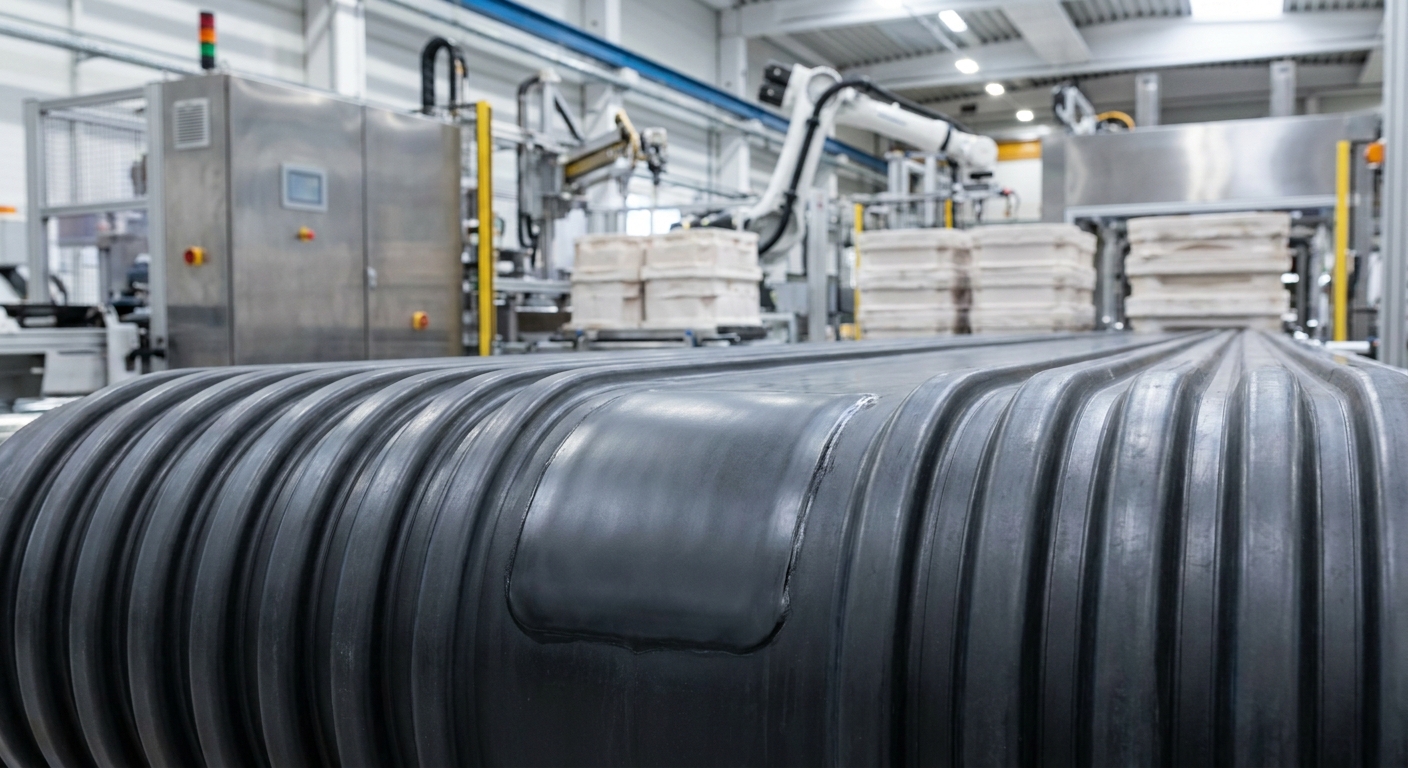
Deciding who should execute your rubber conveyor belt repair sidewall program depends directly on your internal maintenance capacity and the overall complexity of the damage. Specialized industrial conveyor systems require precise chemical handling and mechanical safety practices. While basic surface patch repairs can be managed by trained internal factory staff, structural damage to the carcass or major splits require professional field vulcanizing services. Evaluating these skills beforehand prevents costly repair failures and excessive plant downtime.
Should you hire plaster casting experts?
Contracting certified industrial conveyor technicians brings specialized tools and materials directly to your factory floor. Think about this for a second: if a non-expert attempts to glue high-flex corrugated sections, improper curing can cause the entire wall to tear loose under tension. Experienced industrial teams understand the specific alkaline environments of gypsum and plaster processing. They select specific chemical primers that prevent future degradation from highly alkaline plaster slurry.
Think about this for a second:
- Precision Alignment: Specialized tools are required to ensure the repaired sidewall matches original flex profiles.
- Material Compatibility: Experts select the exact chemical compounds resistant to gypsum’s high alkalinity.
- Certified Warranties: Professional repairs often come with service guarantees that minimize operator risk.
Do in-house maintenance teams need training?
Developing an internal repair protocol allows your staff to isolate and fix minor corrugated tears before they expand. Providing structured training in surface preparation prevents common issues like scorching the rubber with high-speed grinder wheels. Your in-house crew should be fully equipped with specialized cold-bond vulcanizing tools. For steep incline challenges where standard belts fail, exploring our professional designs can help optimize material transport.
Here is the key:
- Surface Prep Training: Teaching teams to roughen rubber without exposing or damaging carcass threads.
- Mixing Precision: Ensuring exact mixing ratios for two-part polyurethane repair compounds.
- Safety Integration: Implementing lockout-tagout procedures during repair cycles.
Key Takeaway: Combining highly trained in-house staff for minor repairs with professional services for major splices maximizes belt life and reduces unexpected downtime.
| Repair Crew | Skill Level Required | Best Applied For | Tooling Needed | |
|---|---|---|---|---|
| In-House Team | Basic Chemical & Mechanical Training | Superficial tears, minor edge wear, clean repairs | Hand tools, cold-bond kits, rasp discs | |
| Specialized Field Service | Advanced Vulcanization Certification | Carcass splicing, major delamination, structural welds | Hot presses, specialized alignment clamps |
Structuring your maintenance tasks based on this split ensures rapid response times for small tears while securing certified expertise for critical repairs.
What is a rubber conveyor belt repair sidewall kit?
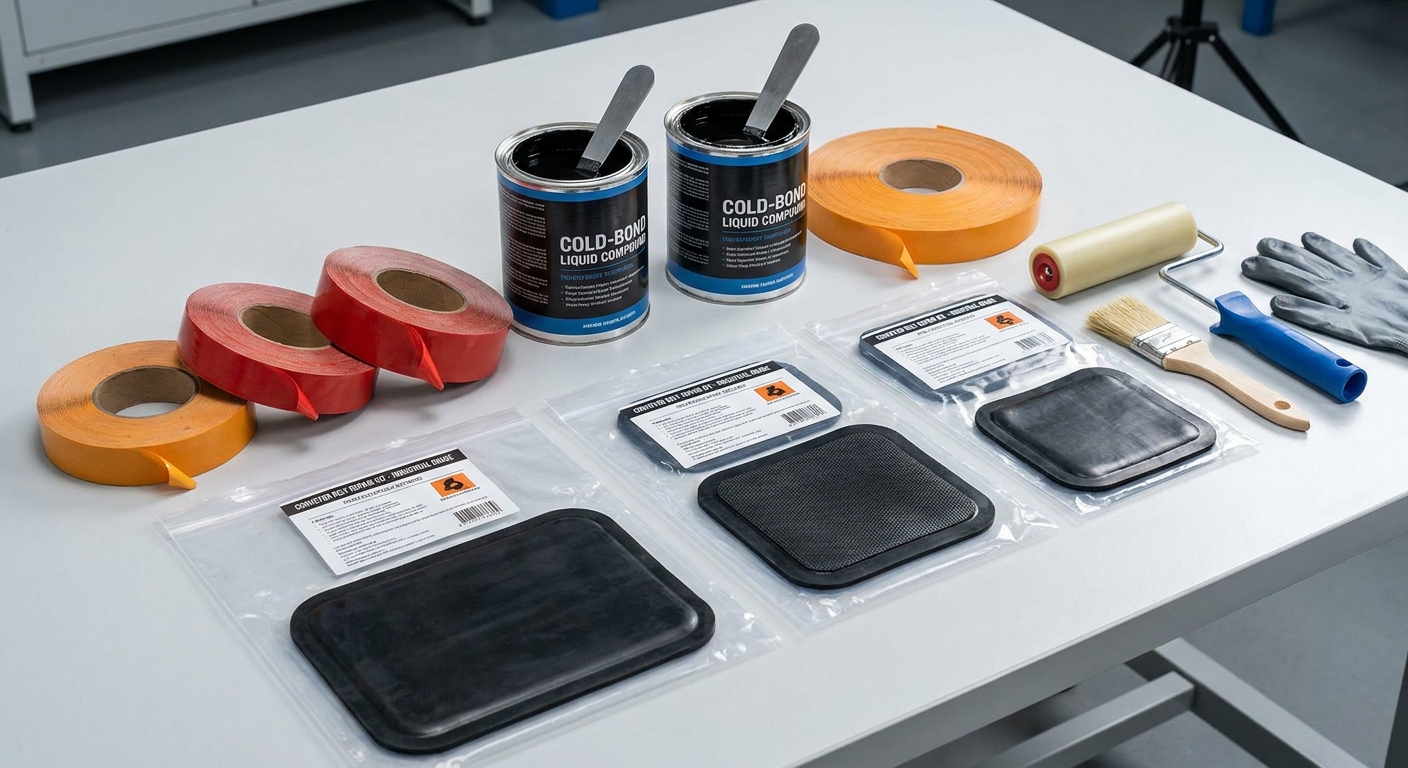
A professional-grade rubber conveyor belt repair sidewall kit contains a curated selection of chemical cleaning agents, specialized primers, and highly flexible cold-vulcanizing elastomer pastes. Keeping these specialized materials in your plant storage ensures your crew can respond immediately to localized cracks. These B2B kits are engineered to provide maximum bond strength and rapid curing times on heavy industrial belts. Using a unified chemical system ensures that your patch forms a robust structural bond with the existing rubber.
Which tools are inside a standard repair kit?
Relying on generic hardware glues is a recipe for instant repair failures on flexing vertical sidewalls. Here is what you actually need: a professional-grade kit packed with chemical primers, buffing rasp discs, and heavy-duty mechanical stitcher rollers. The dual-part polyurethane paste within these kits cures into a highly elastic patch that matches the natural stretch of your belt. This elasticity is crucial for surviving continuous pulley transitions.
Here is what you actually need:
- Stitcher Roller: Ensures complete expulsion of trapped air bubbles beneath the repair patch.
- Tungsten Carbide Buffing Disc: Creates a clean, textured surface without melting the rubber.
- Two-Part Urethane Compound: Delivers high flex-fatigue life and excellent chemical resistance to plaster.
Is a cold vulcanizing kit best for plaster?
Cold vulcanizing kits are highly preferred in plaster plants because they cure in hours without the need for massive, energy-consuming hot presses. This rapid turnaround significantly reduces the expensive operational downtime associated with full belt dismantling. These chemical polymers offer excellent resistance to gypsum dust and alkaline slurry exposure. To learn more about our manufacturing standards and long-term history of technical innovation, you can visit our About Us page to explore our specialized production facilities.
Think about it:
- Rapid Curing: Patches reach operating strength within 2 to 4 hours.
- Chemical Resistance: Highly stable against alkaline gypsum and moisture desiccation.
- Simplified Tooling: Requires only handheld pneumatic and manual tools.
Key Takeaway: Keeping a dedicated cold-vulcanizing repair kit in your warehouse allows B2B maintenance teams to complete robust repairs in under four hours, avoiding long production shutdowns.
| Parameter | Cold Vulcanizing Kit | Hot Vulcanizing Press | |
|---|---|---|---|
| Downtime Required | 2 to 4 Hours | 8 to 12 Hours | |
| Equipment Footprint | Hand tools, portable | Large, heavy hydraulic hot press | |
| Durability in Plaster | High (using chemical-resistant polymers) | Excellent (co-molded with base belt) | |
| Initial Cost | Economical | High Capital Investment |
Selecting cold vulcanizing tools optimizes your short-term maintenance budgets while delivering heavy-duty protection against abrasive gypsum.
Where to apply rubber conveyor belt repair sidewall?
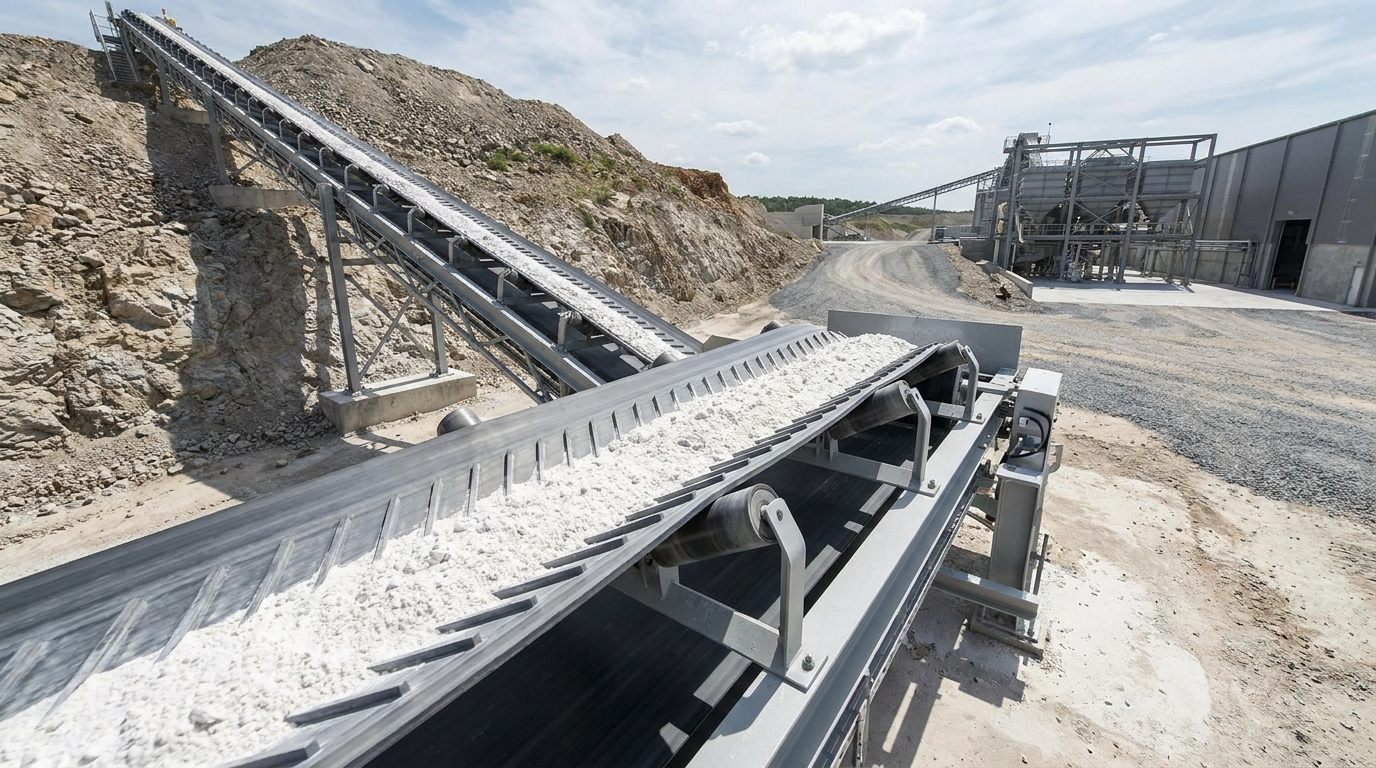
Pinpointing exactly where to perform a rubber conveyor belt repair sidewall application requires analyzing the physical forces operating at the high-stress transition zones of your conveyor frame. These dynamic tension areas suffer the highest rates of fatigue crack propagation. By targeting your inspection efforts on high-flex zones, you can resolve minor tears before they completely split the corrugated wall away from the flat base belt. This proactive monitoring ensures long-term system stability.
Where do high-stress fractures occur?
Heavy shear stresses are highly concentrated at the microscopic boundary where the vertical wall meets the flat base belt. Look closely at the joint: this is the exact location where fine, abrasive plaster particulate settles and acts as an abrasive wedge. In addition, the outer crests of the corrugated folds stretch dramatically as they pass over the pulleys. These repeating tensile loads trigger severe cracking along the outer edges.
Look closely at the joint:
- Base-to-Wall Joint: The highest shear stress occurs where the corrugated profile is bonded to the base belt.
- Pleat Apex: The outer crests of the corrugations suffer tensile stress during pulley wraps.
- Cleat Interfaces: The T-cleats or bucket profiles generate stress concentrations along the belt centerline.
Are corrugated curves the main failure points?
Undersized pulley diameters force the corrugated rubber to bend far beyond its physical limits, causing premature splits. This stress is worsened when dried plaster builds up on the steel rollers, throwing the belt out of alignment. Installing continuous mechanical belt scrapers is essential to keep the return rollers clean. For operations requiring vertical elevator systems with dense containment, choosing the right edge profile can prevent structural collision with the frame.
Here is the key:
- Pulley Diameter Checks: Ensure your head and tail pulleys match the minimum bend radius of your sidewall.
- Scraper Alignment: Place primary scrapers on the flat belt margins to avoid damaging vertical pleats.
- Deflection Roller Clearness: Keep side rollers free of hard plaster build-up to avoid edge abrasion.
Key Takeaway: Regularly inspecting and cleaning the high-stress base joints and outer corrugated crests prevents localized stress concentrations from destroying your vertical belt structure.
| Stress Location | Primary Mechanical Driver | Best Preventative Action | |
|---|---|---|---|
| Base-to-Wall Bond | High lateral load shearing | Reinforce the seam with dynamic polyurethane fillets | |
| Pleat Apex | Pulley bend tension | Use high-elasticity chemical-resistant cold compound patches | |
| Cleat Joint | Acceleration and impact shocks | Install gusseted reinforcement inserts along the base |
Focusing maintenance on these three high-tension zones stops early material splitting and extends overall operating life.
Which rubber conveyor belt repair sidewall is best?
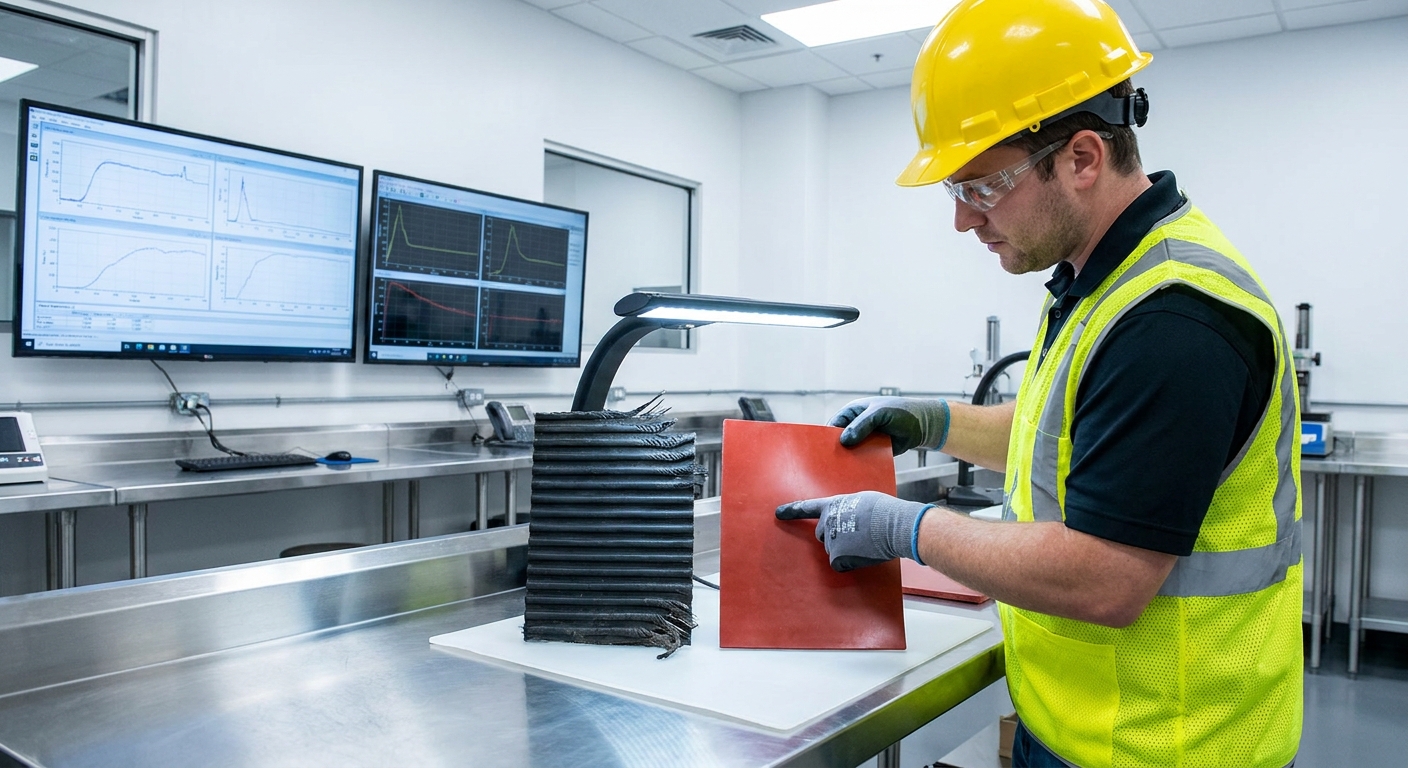
Choosing which rubber conveyor belt repair sidewall chemistry is best depends entirely on matching the physical Shore hardness and thermal limits of your compound with the parent rubber of your belt. Selecting an incompatible compound will create localized stiffness that leads to cracking at the patch boundary. The ideal repair material must remain highly flexible while resisting the severe abrasive action of industrial plaster casting. Evaluating these specific technical parameters ensures that your repair matches the dynamic performance of the original belt.
Should you use hot or cold curing methods?
Selecting the right curing method requires balancing the needed mechanical strength with the complexity of your corrugated belt shapes. The decision comes down to this: while hot vulcanization offers maximum tensile strength, the unique shape of corrugated walls makes traditional flat-plate hot presses nearly impossible to use. Because of this geometrical challenge, cold-applied chemical vulcanizers provide superior versatility. They adapt perfectly to any shape while maintaining high chemical resistance.
The decision comes down to this:
- High Elasticity: Cold compounds flow seamlessly into complex corrugated folds.
- Chemical Stability: Resists the alkaline hydration reaction of active plaster slurries.
- Application Speed: Avoids the long setup times required for heavy hot vulcanizing platens.
How does compound hardness affect casting?
If you apply a patch that is too hard, it acts as a rigid point on the flexing belt, focusing stress and causing a new tear right next to the repair. Maintaining a matching Shore A rating of 60 to 65 ensures that the repaired wall flexes smoothly over your pulleys. This matching flexibility prevents localized fatigue fractures and keeps your material transport lines running efficiently. For systems that operate in harsh chemical environments, choosing heat-stabilized compounds provides extra protection.
Think about it:
- Shore A 60-65: Ideal for maintaining flexibility in the corrugated sidewalls.
- Shore A 70-80: Reserved for flat base belt repairs subject to heavy impact from molds.
- Elastomeric Compliance: Prevents premature fatigue cracks at the repair margins.
Key Takeaway: Using cold-applied polymers with a Shore A hardness of 60 to 65 ensures that your repaired corrugated sidewall retains its essential flexibility, avoiding new cracks under tension.
| Operational Priority | Cold Chemical Compound | Hot Press Vulcanization | |
|---|---|---|---|
| Geometrical Flexibility | Adaptable to any corrugated shape | Requires custom mold shapes | |
| Tensile Strength | 15-20 MPa | 25+ MPa | |
| Environmental Hazard | Solvents require ventilation | No chemical fumes, high thermal hazard |
Selecting cold chemical compounds provides the complex shaping capabilities required to repair irregular vertical corrugated profiles.
Can rubber conveyor belt repair sidewall stop leaks?
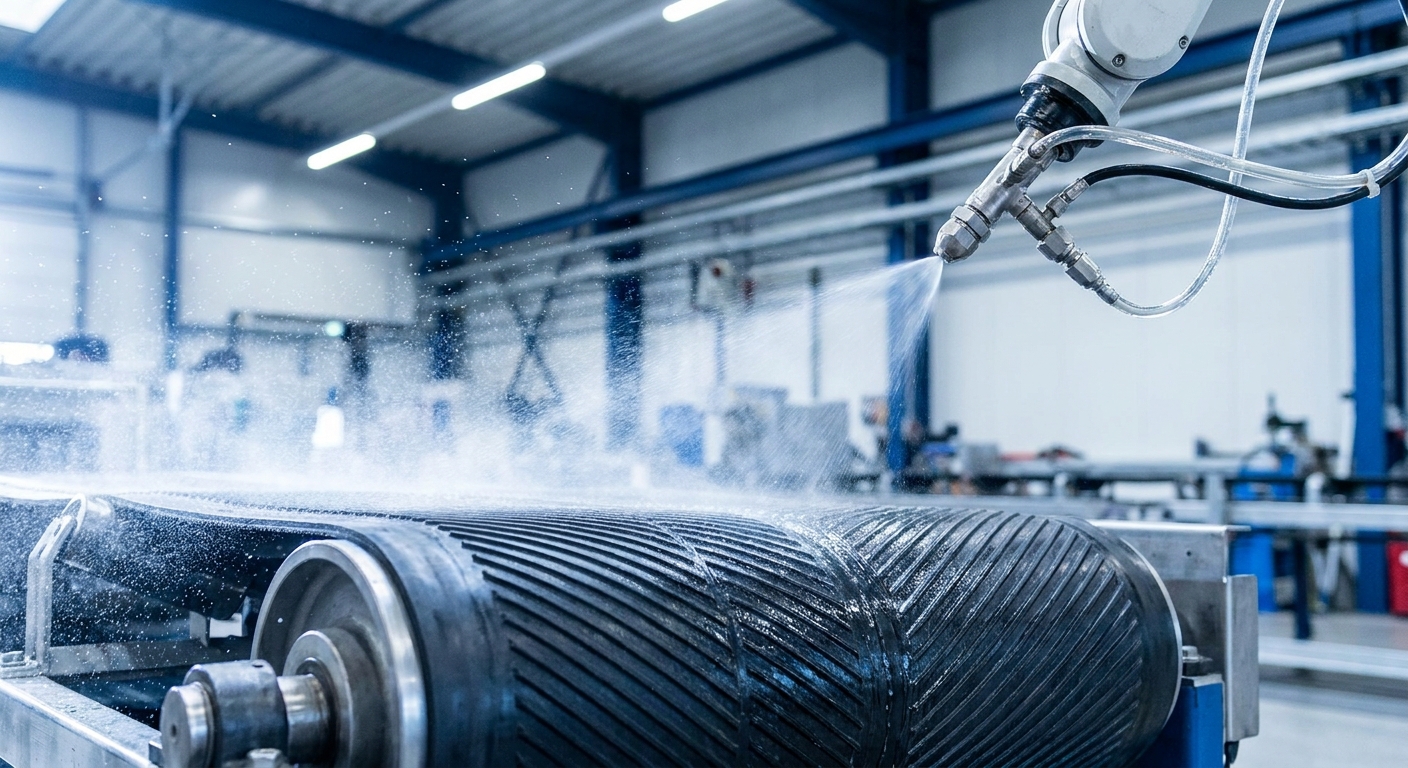
Applying a proper rubber conveyor belt repair sidewall technique directly eliminates dangerous plaster leaks that threaten the mechanical integrity of your rollers and drive systems. Even a tiny pinhole leak allows liquid plaster slurry to escape and build up on return idlers. Restoring a continuous, liquid-tight seal along your belt’s vertical walls keeps your materials securely contained. This effective sealing isolates your drive systems from abrasive dust contamination and prevents tracking problems.
Does slurry escape from damaged sidewalls?
Liquid plaster slurries find and escape through the smallest physical gaps in a worn belt edge. Here is the messy reality: this leaking material quickly solidifies on your idlers and pulleys, creating an uneven crust that forces the belt out of alignment. As the belt drifts off-center, its vertical walls rub against the steel conveyor frame, causing rapid and severe edge wear. Resolving these leaks immediately is vital to protect your entire mechanical system.
Here is the messy reality:
- Environmental Hazard: Hardened plaster on the floor creates safety risks for operators.
- Tracking Deviation: Solidified gypsum on pulleys forces the belt to drift and rub against frames.
- Idler Seizure: Abrasive slurry penetrates bearing seals, causing rollers to lock up.
How do sealed sidewalls protect the molds?
Maintaining a secure, liquid-tight B2B transportation seal ensures that your plaster slurries do not lose volume during high-speed transit. This containment is critical for ensuring that each cast mold is filled with absolute volumetric precision. A stable, leak-free run prevents structural distortions and guarantees clean casting edges. For deep-dive insights into custom factory configurations, reviewing premium multi-ply belt systems can help you design optimal containment solutions.
Here is the key:
- Volumetric Consistency: Ensures every mold receives the exact planned volume of slurry.
- Pressure Maintenance: Keeps hydrostatic pressure balanced during the initial pour phase.
- Product Quality: Eliminates casting flashing and ragged edges.
Key Takeaway: Fully sealing minor pinhole leaks along the vertical walls protects your return idlers from plaster buildup, preventing costly belt tracking issues and severe edge wear.
| Leaking Element | Impact on Drive Systems | Preventive Repair Method | |
|---|---|---|---|
| Liquid Gypsum | Solidifies on steel rollers, causing belt drift | Apply liquid elastic polyurethane sealant to pinholes | |
| Abrasive Dust | Migrates into bearings, causing mechanical seizure | Install continuous rubber seal margins along the base | |
| Solid Crust | Damages belt edges through abrasive wear | Use self-cleaning mechanical belt scrapers |
Eliminating slurry leaks at their source prevents abrasive plaster buildup from causing major belt tracking issues.
Does rubber conveyor belt repair sidewall add life?
Implementing a structured rubber conveyor belt repair sidewall program significantly extends the operational lifespan of your high-angle belt systems, saving you from expensive capital replacement costs. A well-executed cold-vulcanized repair can easily add up to 24 months of reliable service to an existing belt. For B2B plant operators, this extended life directly translates into a much stronger return on investment. Taking proactive care of your industrial belts avoids the massive costs associated with buying and installing complete replacement systems.
What is the expected lifespan after repair?
Throwing away a belt because of localized sidewall cracking is an unnecessary waste of resources. Do not write off that damaged belt just yet: a professional-grade polyurethane patch can easily extend your belt’s operational life by 18 to 24 months. These advanced elastic polymers are engineered to handle the high-tension flexing of industrial pulleys. This reliable longevity ensures that your casting line runs smoothly without constant breakdowns.
Do not write off that damaged belt just yet:
- Standard Rubber Patch: 500 – 1,000 Hours | Low (Temporary fix)
- Specialized Polyurethane Compound: 3,000 – 5,000 Hours | High (Optimal return on investment)
- Hot Vulcanization (In-Situ): 6,000+ Hours | Medium (High initial cost)
How does maintenance lower operating costs?
Replacing a complete corrugated side wall conveyor belt is a major project that requires significant capital expenditure and days of planned downtime. By choosing to apply highly targeted cold vulcanizing patches, you can resolve localized damage for a tiny fraction of that cost. This efficient approach minimizes your maintenance overheads while keeping your operations highly productive. For major operations looking to optimize their logistics, you can utilize our Contact Us page to schedule a customized design review with our engineering department.
Here is the key:
- Reduced Lead Times: Avoid waiting weeks for custom-molded corrugated belts to arrive.
- Lower Labor Costs: Repairs require only one or two technicians compared to a full replacement crew.
- Minimized Waste: Less discarded elastomer material aligns with plant sustainability targets.
Key Takeaway: Investing in targeted sidewall repairs adds up to two years of service life to your conveyor belts, drastically reducing your material handling capital costs.
| Repair Material / Method | Added Lifespan (Hours of Operation) | Cost Efficiency Index | |
|---|---|---|---|
| Standard Rubber Patch | 500 – 1,000 Hours | Low (Temporary fix) | |
| Specialized Polyurethane Compound | 3,000 – 5,000 Hours | High (Optimal return on investment) | |
| Hot Vulcanization (In-Situ) | 6,000+ Hours | Medium (High initial cost) |
Using specialized polyurethane repair materials maximizes the return on your maintenance budget, offering a highly cost-effective alternative to complete belt replacements.
Is rubber conveyor belt repair sidewall permanent?
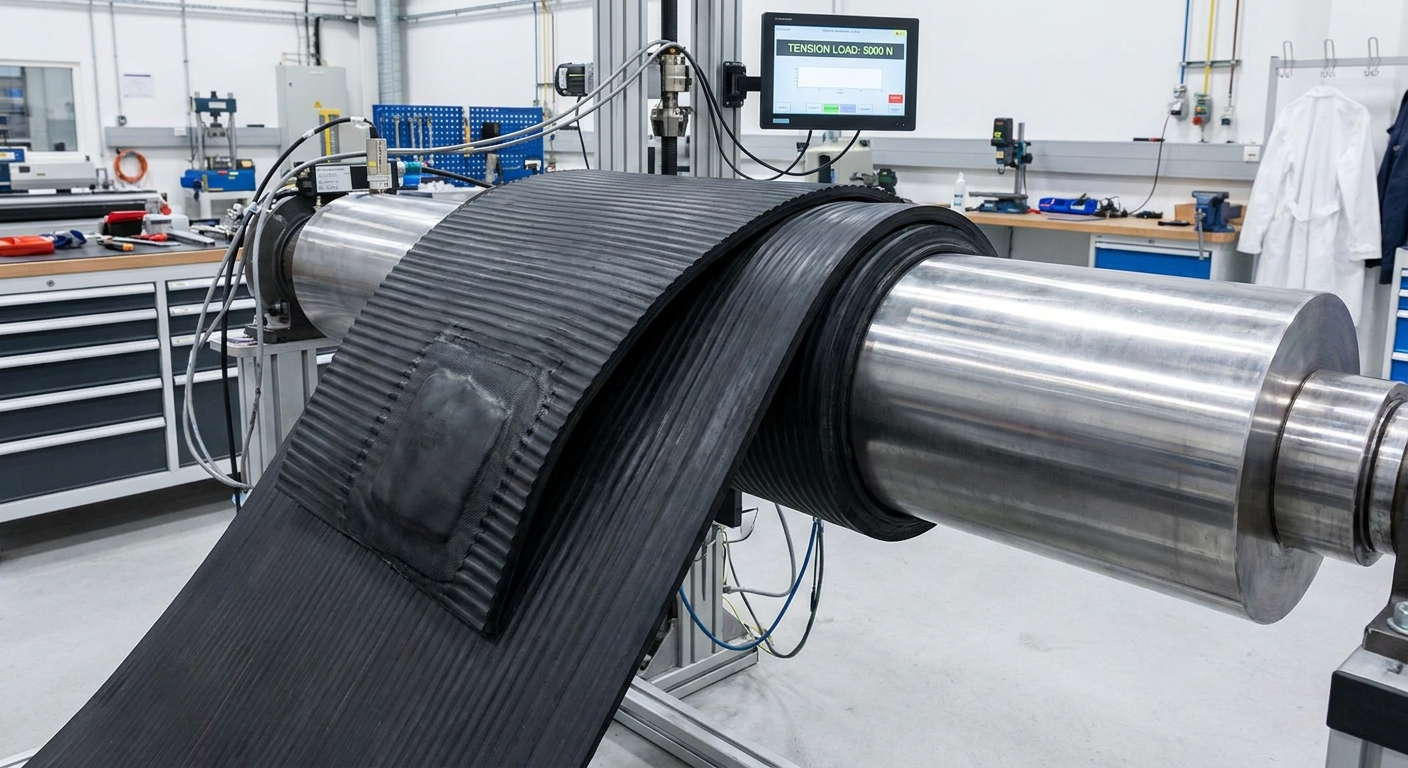
Determining if your rubber conveyor belt repair sidewall application provides a permanent fix depends directly on the quality of your surface prep and the thermal environment of your plaster casting facility. In normal operating conditions, a high-quality cold-bond repair will reliably match the remaining life of the parent belt. However, if your conveyor is subjected to extreme thermal loads or has severe structural damage, a complete belt replacement will eventually be necessary. Understanding these technical limits ensures your plant operates safely and efficiently.
Will a patched sidewall survive continuous heat?
High-performance cold-bond polymers are engineered to handle continuous operating temperatures up to 80°C. Here is where the chemistry gets tested: if the exothermic reaction of your plaster casting goes unchecked, cheap adhesives can soften and fail. Using premium, heat-stabilized repair compounds is essential to survive these extreme thermal cycles. This thermal stability ensures that your repairs remain highly secure under demanding conditions.
Here is where the chemistry gets tested:
- Thermal Expansion Mismatch: Different rates of expansion between the patch and parent rubber can cause edge curling.
- Polymer Degradation: Cheap repair resins degrade rapidly under constant thermal loads. Choose heat-stabilized compounds.
When is a complete replacement necessary?
When the internal reinforcing fabric of your conveyor carcass becomes visible or begins to snap, a patch is no longer a safe option. Trying to repair a belt with severe structural damage poses serious safety risks to your staff. If more than 20% of your corrugated wall has separated from the base, a full system replacement is the most cost-effective choice. When a full replacement is required, you must select high-performance replacement belts designed to withstand heavy, continuous plaster handling.
Here is the key:
- Carcass Compromise: Visible fraying or snapping of the internal warp/weft fabrics.
- Severe Delamination: Widespread separation of the sidewall from the base belt over more than 20% of the total belt length.
- Rotational Hardening: General elastomer aging where the entire belt becomes brittle and un-scrappable.
Key Takeaway: While premium cold repairs reliably fix localized cracks, monitoring the condition of your internal carcass fabrics is essential to determine when a full belt replacement is needed for safety.
| Belt Condition | Action Recommended | Estimated System Downtime | |
|---|---|---|---|
| Localized Pleat Tears | Apply targeted cold-bond chemical patch | 2 to 4 Hours | |
| Structural Fabric Fraying | Complete belt replacement | 24 to 48 Hours | |
| Widespread Wall Delamination | Complete belt replacement | 24 to 48 Hours |
Distinguishing between repairable surface wear and structural carcass failures prevents dangerous on-site belt snaps.
Secure Your Plaster Casting Operations Today
At Weifang Zhenxing Rubber Co., Ltd., we have been partnering with leading global industries since 1983 to resolve their most demanding material handling challenges. Whether your plant is struggling with severe gypsum wear, premature sidewall cracking, or catastrophic slurry leaks, our direct-factory engineering team is ready to design and deliver high-performance, ISO-certified corrugated sidewall conveyor belts tailored to your exact specifications.
Do not let preventable belt failures compromise your plant’s production targets and inflate your maintenance overheads. Our experts are standing by to provide you with free technical consultations, precise material selection guidance, and rapid quotations within 24 hours. Let us build a reliable, heavy-duty material handling solution that keeps your factory running at peak performance. For custom solutions or specific inquiries, please contact us today to schedule a technical consultation or request a custom quote.
We are committed to driving industrial efficiency forward with unmatched elastomeric durability, ensuring your operations never lose momentum.
Frequently Asked Questions
Can I perform cold-bond repairs on a steel-reinforced belt?
Yes, you can reliably use cold-bond repair materials on steel-reinforced belts for surface repairs. However, if the internal steel cords are snapped or severely frayed, a simple surface patch will not restore the belt’s tensile strength, and a professional vulcanized section splice or full belt replacement must be completed immediately for safety.
What’s the best Shore hardness for a plaster-conveying sidewall?
The best rating is a Shore A hardness of 60 to 65. This specific durometer range matches the natural elasticity of most high-angle corrugated sidewalls, ensuring that your repaired sections can flex smoothly around head and tail pulleys without focusing stress or causing new tears.
How do I know if my corrugated sidewall is too damaged to repair?
A complete replacement is necessary if the damage affects the core carcass fabric or if delamination is widespread. If you observe snap damage in the internal reinforcing plies, or if the corrugated wall has separated from the base belt over more than 20% of the total conveyor length, localized patch repairs are no longer safe or viable.
Can I run a patched belt around undersized head pulleys?
No, running a newly patched belt around undersized pulleys is highly discouraged. Small pulleys force the repaired rubber beyond its natural elongation limits, putting extreme tension on the bond line and causing your cold-applied patch to tear loose prematurely.
What’s the best way to prevent plaster buildup on my conveyor pulleys?
The most effective solution is to install continuous mechanical belt scrapers on your return rollers. These self-cleaning tools constantly scrape away wet plaster slurry before it can dry, crust, and throw your belt out of alignment, directly protecting your corrugated sidewalls from aggressive edge wear.