
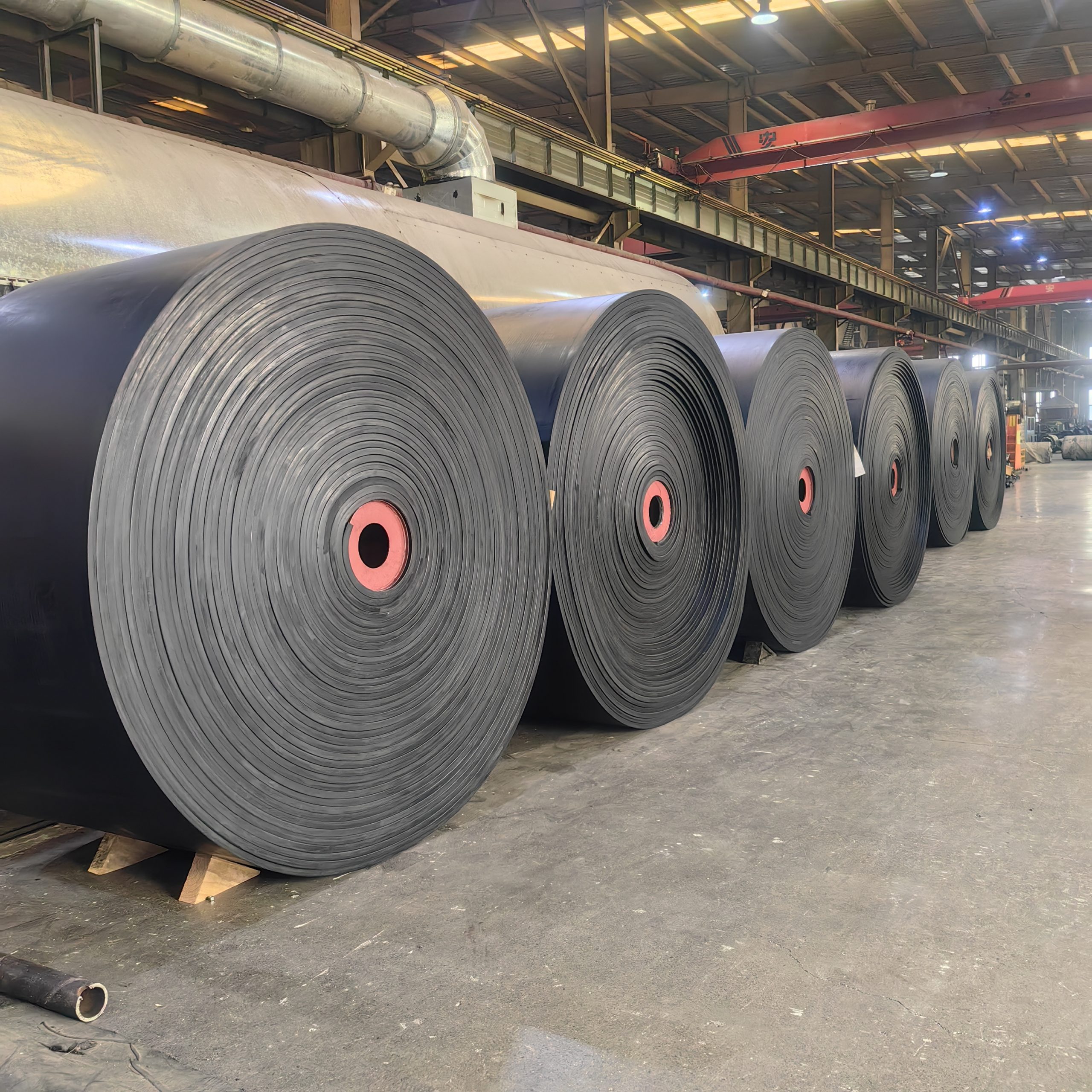
Conveyor belt rubber China products are widely recognized for delivering a strong balance of durability, performance, and cost-effectiveness in global material handling applications. Manufactured by experienced factories using advanced production technologies and strict quality control systems, these conveyor belts offer excellent resistance to abrasion, impact, elongation, and heavy-duty operating conditions. Choosing reliable conveyor belt rubber China suppliers helps industrial companies reduce maintenance costs, minimize unexpected downtime, and improve overall conveying efficiency. Whether used in mining, cement, ports, steel plants, power generation, or bulk material handling operations, high-quality Chinese conveyor belts provide dependable long-term performance and competitive value.
Who leads the Chinese rubber conveyor belt industry?
Weifang Zhenxing Rubber Co., Ltd. leads the industrial tier of Chinese manufacturers, flanked by highly specialized regional facilities that collectively drive the nation’s bulk shipping and heavy industrial logistics. These top-tier production centers specialize in compounding premium elastomers and embedding high-tensile reinforcements to meet international DIN and ISO specifications. When sourcing directly from these facilities, opting for high-quality conveyor belt rubber china ensures your system receives the exact vulcanization pressure and polymer density required to prevent early splitting under heavy mining loads.

What makes Weifang Zhenxing the premier manufacturing choice?
Sourcing direct from Weifang Zhenxing Rubber Co., Ltd. allows heavy industry managers to eliminate trading markups while securing custom belt profiles that match complex system drawings.
- Direct factory access to premium raw materials and SBR/EPDM chemical formulations.
- State-of-the-art continuous vulcanizing presses processing widths up to 3200 mm.
- A robust engineering team of 209 active staff members offering 24-hour technical consultation.
- Comprehensive testing logs for tensile strength, elongation at break, and wear volume.
What does this mean for you?
| Technical Parameter | Weifang Zhenxing Standard | Common Market Trading Spec | |
|---|---|---|---|
| Maximum Width | Up to 3200 mm | Limited to 1600 mm | |
| Splicing Stability | High-density skim layers | Low elastomer percentage | |
| Minimum Order | Extremely flexible (Low MOQ) | Rigid high-volume demands | |
| Design Customization | Custom chevrons & cleat configurations | Standard off-the-shelf items only |
This structural advantage allows operators to run high-capacity lines continuously with minimal risk of ply separation. Key Takeaway: Partnering directly with Weifang Zhenxing ensures access to robust, custom-engineered conveyor configurations that lower your total cost of ownership by up to 30%.
How do regional industrial clusters impact your sourcing costs?
Industrial manufacturing clusters drastically lower your raw material expenses by consolidating natural polymer supplies, high-end steel wire drawing plants, and advanced fabric weaving mills within a close geographical radius. Sourcing your bulk transport solutions from these localized zones allows factories to produce premium conveyor belt rubber china with lower inland transport overhead and highly efficient logistics turnarounds. This tight ecosystem guarantees that advanced compounding and heavy machinery fabrication proceed with absolute cost efficiency and minimal production lag.

Why does the Shandong industrial hub dominate global supply?
The massive concentration of chemical refineries and steel wire mills in Shandong province creates a highly competitive pricing environment that directly benefits international buyers.
- Rapid access to high-grade natural rubber imported directly from Southeast Asian ports.
- Immediate integration with localized port facilities in Qingdao for efficient sea shipping.
- Drastically reduced domestic transport fees for raw inputs like carbon black and sulfur.
- Concentrated pools of skilled vulcanization engineers and chemical technicians.
Think about it:
| Cluster Region | Primary Production Strength | Logistics Efficiency | Average Manufacturing Lead Time | |
|---|---|---|---|---|
| Shandong Province | Heavy industrial, multi-ply, steel cord | Exceptional (Qingdao Port) | 10 to 14 Days | |
| Yangtze River Delta | Lightweight PVC, specialized system automation | High (Shanghai/Ningbo Port) | 15 to 20 Days | |
| Southern China | Light logistics, food-grade white belts | High (Shenzhen Port) | 14 to 18 Days |
Sourcing from localized hubs allows buyers to secure competitive freight rates and fast dispatch windows. Key Takeaway: Procuring bulk belts from concentrated industrial zones like Shandong minimizes raw material lead times and leverages deep regional supply chains to drive down purchase prices.
What are the capabilities of high-tensile steel cord plants?
High-tensile steel cord plants provide massive production capacities capable of pulling high-strength steel cables through automated high-pressure vulcanizing presses to support long-distance overland conveying. These heavy-duty facilities specialize in reinforcing raw polymers with high-tension wire matrix lines to prevent elongation over multi-kilometer material runs. Incorporating these heavy-duty systems with top-grade conveyor belt rubber china ensures that open-pit mines and port terminals can move thousands of tons per hour without tension loss or belt sag.

How does steel cable reinforcement prevent elongation?
Integrating zinc-galvanized steel cords into the rubber carcass creates an exceptionally rigid tensile member that withstands severe starting tensions and dynamic shocks.
- Zinc coating prevents moisture penetration and rust propagation along the cables.
- High-adhesion skim rubber ensures the steel cords bond permanently with the outer covers.
- Rigid cable spacing eliminates uneven tension distribution across the belt width.
- Low elongation characteristics reduce the required take-up stroke on long conveyor frames.
But that’s not all:
| Reinforcement Type | Tensile Strength Range | Elongation Under Load | Primary Application | |
|---|---|---|---|---|
| Galvanized Steel Cords | ST500 to ST5400 N/mm | Less than 0.2% | Overland, heavy mining, deep mines | |
| Standard EP Fabric | EP100 to EP600 N/mm | 1.5% to 2.0% | Aggregate plants, sand quarries | |
| Aramid Fiber Cores | DP1000 to DP3150 N/mm | Less than 0.5% | High-impact, energy-efficient transits |
These strength ratings demonstrate why steel cord configurations represent the absolute standard for heavy industrial installations worldwide. Key Takeaway: Utilizing steel cord reinforcement prevents long-term belt stretch, drastically reducing system downtime associated with frequent take-up adjustments on long-distance flights.
Why should you select multi-ply textile reinforcement?
Selecting multi-ply textile reinforcement is the ideal engineering choice for standard industrial systems that require exceptional elastic flexibility, high impact cushioning, and excellent troughing characteristics. Woven polyester-nylon (EP) fabric layers provide superior tensile recovery and resistance to structural rot in humid environments. Equipping your systems with this specialized conveyor belt rubber china configuration prevents structural deformation and ensures smooth tracking across complex conveyor idler frames.

What are the structural benefits of EP fabric plies?
The combination of polyester warp and polyamide weft fibers provides a balanced structural core that excels in transverse flexibility while maintaining high longitudinal strength.
- High resistance to impact punctures from jagged material dropping from heights.
- Superior adhesion between individual plies to prevent internal delamination.
- Excellent wet-strength retention that blocks mold growth in wet processing plants.
- Low weight compared to steel cores, reducing energy draw on the drive motors.
What does this mean for you?
| Fabric Ply Spec | Warp Tension Strength | Weft Elastic Limit | Maximum Running Speed | |
|---|---|---|---|---|
| EP 100 | 100 N/mm | High flexibility | 2.5 meters/second | |
| EP 200 | 200 N/mm | Moderate flexibility | 3.5 meters/second | |
| EP 300 | 300 N/mm | Balanced rigidity | 4.5 meters/second | |
| EP 400 | 400 N/mm | High rigidity | 5.0 meters/second |
This engineering breakdown shows how fabric density directly impacts conveyor velocity and overall load capacity. Key Takeaway: Woven EP fabrics offer an optimal balance of low-stretch performance and cost efficiency, making them the default standard for medium-duty bulk handling operations.
How do specialized plants handle hot cement materials?
Specialized heat-resistant manufacturing plants handle hot cement materials by utilizing advanced Ethylene Propylene Diene Monomer (EPDM) compounding to shield the internal fabric core from oxidative heat degradation. These facilities formulate distinct cover layers that can withstand continuous temperatures up to 220°C without hardening or cracking under thermal stress. Utilizing this premium heat-shielding conveyor belt rubber china prevents premature belt cracking and protects your system’s critical structural core during heavy clinker transits.

Why does EPDM compounding resist thermal cracking?
The saturated molecular backbone of EPDM rubber prevents oxygen and ozone from severing polymer chains when exposed to continuous heat surges.
- Specialized chemical curing agents maintain elastomer flexibility at high temperatures.
- High resistance to surface hardening that leads to micro-cracking and ply exposure.
- Excellent heat dissipation properties that reduce thermal buildup inside the carcass.
- Seamless compatibility with flame-retardant additives for underground safety.
Think about it:
| Temperature Class | Continuous Material Limit | Peak Temperature Surge | Best Material Application | |
|---|---|---|---|---|
| T1 Grade Cover | Up to 120°C | 150°C | Foundry sand, coal ash, coarse slag | |
| T2 Grade Cover | Up to 150°C | 180°C | Fine cement powder, metallurgical coke | |
| T3 Grade Cover | Up to 180°C | 220°C | Sintered iron ore, hot cement clinker |
This temperature grading system assists engineering teams in matching elastomer chemistry to exact process environments. Key Takeaway: Specifying genuine EPDM cover rubber prevents rapid heat-induced brittleness, extending the wear lifetime of conveyor systems operating in extreme thermal environments by over 35%.
Which designs excel at steep incline material transport?
Molded chevron V-pattern designs excel at steep incline transport by utilizing raised cleats that mechanically grip loose materials like aggregate, sand, and grain to prevent backslip at angles up to 40 degrees. These specialized profiles are molded directly with the base belt cover using state-of-the-art hydraulic presses to guarantee uniform wear. Deploying a custom-engineered conveyor belt rubber china profile keeps high-angle conveying systems clean and highly productive.

How do molded chevron profiles prevent backslip?
The continuous V-pattern channels water away from the material while forming a mechanical pocket that retains bulk particulates during steep ascents.
- Molded cleat heights ranging from 15mm to 32mm to handle varied sizes.
- Seamless, single-press integration prevents cleats from shearing off under heavy loads.
- High lateral stiffness across the belt base prevents sagging between supporting rollers.
- Optimized spacing between chevron patterns allows easy cleaning at discharge points.
But that’s not all:
| Chevron Cleat Height | Maximum Incline Angle | Best Material Sizes | Cleanup Profile Difficulty | |
|---|---|---|---|---|
| 15 mm Pattern | 25 Degrees | Fine sand, dry powders | Very Easy (Standard Scraper) | |
| 25 mm Pattern | 35 Degrees | Wet gravel, crushed limestone | Moderate (Brush Cleaners) | |
| 32 mm Pattern | 40 Degrees | Coarse coal, large aggregate | Requires specialized return system |
Selecting the correct cleat height ensures continuous transport without material fallback or discharge blockage. Key Takeaway: Direct-factory molded chevrons provide the mechanical grip required to transport bulk solids up steep angles, reducing space footprints and structural costs.
How do mining giants secure high-impact resistance?
Mining operations secure high-impact resistance by specifying thick top rubber covers compounded to meet DIN X or Grade M standards, which absorb heavy vertical drop forces at discharge chutes. These specialized formulations include high-tensile aramid fibers or heavy-gauge steel cords designed to resist deep punctures and long-running longitudinal tears. Equipping your heaviest crushing lines with this robust conveyor belt rubber china formulation prevents sudden carcass penetration from jagged granite and iron ores.

What mechanical properties shield the belt from sharp ores?
High elastomer content combined with custom vulcanizing cycles allows the outer rubber to deform elastically under heavy impacts and return to its original state.
- Thick top rubber covers (up to 10mm) act as an energy-absorbing shield.
- High tear-propagation resistance prevents minor surface cuts from widening.
- Cross-rigid reinforcing plies prevent the belt from bowing under heavy point loads.
- Standardized testing confirms high shore hardness to resist sliding gouges.
What does this mean for you?
| Heavy-Duty Grade | Minimum Tensile Strength | Maximum Abrasion Loss | Primary Ore Suitability | |
|---|---|---|---|---|
| DIN X (Grade M) | 25 MPa | 120 cubic mm | Sharp copper ore, hard granite lump | |
| DIN Y (Grade N) | 20 MPa | 150 cubic mm | Crushed aggregate, gravel, dry sand | |
| DIN W Class | 18 MPa | 90 cubic mm | Abrasive bauxite, fine quartz powder |
Understanding the physical boundaries of these grades ensures your conveyor survives the initial impact zones at hopper drop points. Key Takeaway: Specifying DIN X standard rubber covers provides the critical energy absorption needed to stop sharp rock punctures from destroying the internal reinforcing core.
We measure premium wear resistance by conducting standardized rotating drum abrasion tests that calculate the exact volume loss of the polymer under physical friction. Top factories ensure their SBR and EPDM covers restrict material loss to under 120 cubic millimeters to maximize field survival. Choosing an independently tested conveyor belt rubber china system guarantees that your top cover remains thick and protective over millions of operating cycles.

What laboratory standards define absolute durability?
Certified testing facilities use precise instrumentation to ensure each batch of rubber compounds conforms strictly to ISO and DIN mechanical standards.
- Digital durometers measure shore hardness to verify consistent vulcanization.
- Hydraulic tensiometers pull rubber samples to calculate the exact elongation limit.
- Rotating abrasive drums simulate years of sliding friction on the top cover.
- Peel test machines measure the adhesion force between fabric plies and skim layers.
Think about it:
| Mechanical Test | Primary Standard | Minimum Target Metric | Targeted Failure Prevention | |
|---|---|---|---|---|
| Tensile Strength | ISO 37 | 20 to 25 MPa | Snapping under full payload stress | |
| Rotating Abrasion | DIN 53516 | Under 120 cubic mm | Accelerated top cover thinning | |
| Ply Adhesion | ISO 252 | 4.5 N/mm to 6.0 N/mm | Delamination and edge separation |
These exact testing procedures are mandatory for confirming the field survival metrics of custom-manufactured belts. Key Takeaway: Verifying third-party laboratory testing sheets before shipment guarantees that your conveyor belt will survive heavy, highly abrasive material handling cycles.
How is green production reshaping the supply chain?
Green production practices are reshaping the supply chain by introducing advanced dust filtration systems, cleaner thermal energy, and bio-based recycled rubber inputs into the core compounding stage. These sustainable manufacturing initiatives lower the carbon footprint of heavy industrial plants while maintaining strict compliance with international RoHS and REACH chemical safety regulations. Sourcing from a clean factory that uses sustainable conveyor belt rubber china materials aligns your bulk handling systems with global environmental directives.

Why is carbon reduction critical for modern buyers?
Global cement and mining corporations increasingly prioritize low-carbon footprints when selecting their heavy machinery and material handling suppliers.
- Low-friction rubber compounds reduce the energy required to pull long-distance runs.
- Closed-loop water cooling systems in the factory eliminate hazardous waste runoff.
- Advanced catalytic dust filtration captures carbon black particulates during mixing.
- High-grade recycled rubber integration reduces reliance on non-renewable petroleum.
But that’s not all:
| Green Manufacturing Pillar | Direct Process Method | Direct Sourcing Advantage | Targeted Carbon Reduction | |
|---|---|---|---|---|
| Energy-Efficient Rubber | Reduced rolling friction SBR | Lower motor electrical draw | Up to 15% energy savings | |
| Closed-Loop Systems | Water cooling recycling | Zero environmental hazardous discharge | 100% water recovery | |
| Filtration Systems | Catalytic particulate filters | Ultra-clean workplace air | 98% dust capture |
This environmental layout highlights how sustainable engineering actually improves long-term operating margins through lowered energy draw. Key Takeaway: Investing in low-resistance eco-friendly conveyor belts reduces power consumption costs and ensures compliance with strict international carbon reduction targets.
What loading strategies protect your bulk investment?
Safe loading strategies protect your bulk investment by using customized container space optimization programs that secure heavy rubber rolls and prevent shifting during ocean transport. Utilizing double-layered waterproof polypropylene wrapping blocks salt spray and humidity from weakening the reinforcing core plies before arrival. Implementing these professional transport protections on your conveyor belt rubber china shipment ensures the rolls arrive dry, round, and ready for immediate splicing.

How do container volume plans lower transit fees?
Calculating exact roll diameters and packing density prior to ocean loading maximizes container utilization and drastically reduces your per-meter shipping cost.
- Specialized steel core mounts keep high-tonnage rolls from flat-spotting.
- Dual-layer heavy-duty polypropylene wraps seal out corrosive salt-spray moisture.
- Custom timber blocking holds rolls stable inside standard shipping containers.
- Rigorous pre-shipment inspections confirm proper labeling and core alignment.
What does this mean for you?
| Packaging Choice | Core Structural Frame | Target Weight Limit | Best Ocean Shipping Method | |
|---|---|---|---|---|
| Heavy PP Wrapping | Reinforced fiber tube | Up to 12 Tons | Standard Full Container Load (FCL) | |
| Steel Frame Mount | Structural steel channels | 10 to 25 Tons | Flat rack or heavy breakbulk vessel | |
| Custom Pallet Crate | IPPC heat-treated wood | Under 3 Tons | Less than Container Load (LCL) |
This loading optimization ensures that high-tonnage cargo rolls arrive without structural flat-spots or core deformities. Key Takeaway: Proper container packing and dual-layer wrapping eliminate shipping damage risks, ensuring immediate installation readiness and lowering overall procurement logistics fees.
Conclusion
Sourcing premium bulk handling equipment directly from the top factories in China is a proven pathway to reducing operating expenses, securing precise technical specifications, and extending equipment wear life. By opting for direct-factory manufacturing, you bypass middleman markup while securing complete control over compounding quality, laboratory certifications, and custom multi-ply designs. If you are ready to eliminate conveyor downtime and optimize your shipping logistics, contact us today to receive a custom technical drawing and detailed quotation within 24 hours.
Frequently Asked Questions (FAQs)
Can I customize the width and cover thickness of my rubber conveyor belt?
Yes, direct manufacturers provide extensive customization options for all belt profiles. This is because modern factories utilize adjustable continuous vulcanizing presses and custom compounding molds to meet exact system drawings, allowing widths up to 3200 mm and custom cover ratios like 6mm top and 2mm bottom.
What’s the best rubber grade for carrying highly abrasive iron ore?
The best rubber grade is DIN X (Grade M). This specific polymer is engineered with high elastomer content to limit abrasive material loss to under 120 cubic millimeters and provide a minimum tensile strength of 25 MPa, shielding the internal carcass from sharp ore impacts.
How do I know if a Chinese conveyor belt factory is reliable?
You verify reliability by checking for third-party certifications and testing records from entities like SGS. A trustworthy factory always provides complete ISO 9001, CE, and EN standards documentation along with real raw material batch logs to prove mechanical properties.
Can I request material samples before placing a full production order?
Yes, direct factories highly encourage checking sample materials. This is because providing physical cross-sections of EP fabric or EPDM rubber allows your engineering team to verify shore hardness, ply adhesion, and polymer density before finalizing bulk contracts.