
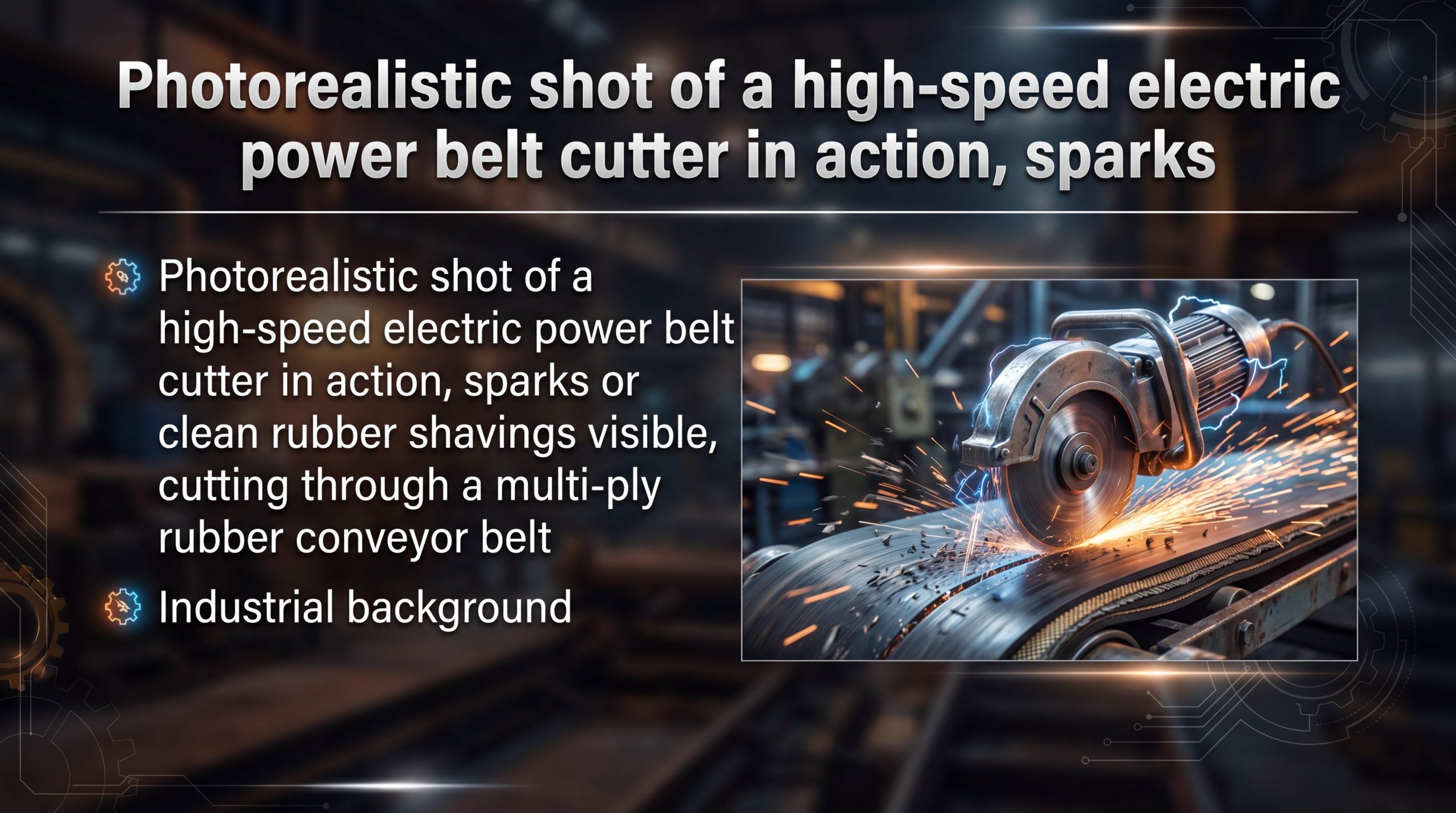
The best way to cut rubber conveyor belt is by using precision cutting tools and rail-guided systems that create perfectly straight and square belt edges for reliable splicing and long-term performance. Improper manual cutting methods often result in uneven edges, belt mistracking, increased splice stress, and premature conveyor system failure. By adopting professional conveyor belt cutting techniques, industrial operations can improve installation accuracy, enhance belt alignment, reduce maintenance downtime, and extend the overall service life of the conveyor system. Precision cutting also improves workplace safety and ensures consistent performance in demanding material handling environments.
What Is the Best Way to Cut Rubber Conveyor Belt?
The most effective method is utilizing a rail-guided electric cutter or a heavy-duty mechanical belt cutter that stabilizes the material during the slicing process. These tools allow you to achieve the square edge required for high-tension applications and mechanical fasteners.
Is precision really necessary?
Think about it: a belt that is even 1/8th of an inch out of square will never track perfectly across your pulleys. This slight deviation creates uneven tension across the splice, which acts as a catalyst for tearing.
- Common consequences of poor cuts:
- Immediate belt mistracking.
- Accelerated wear on belt edges.
- Uneven stress distribution on mechanical fasteners.
- Reduced life of the vulcanized joint.
How do I ensure a square cut?
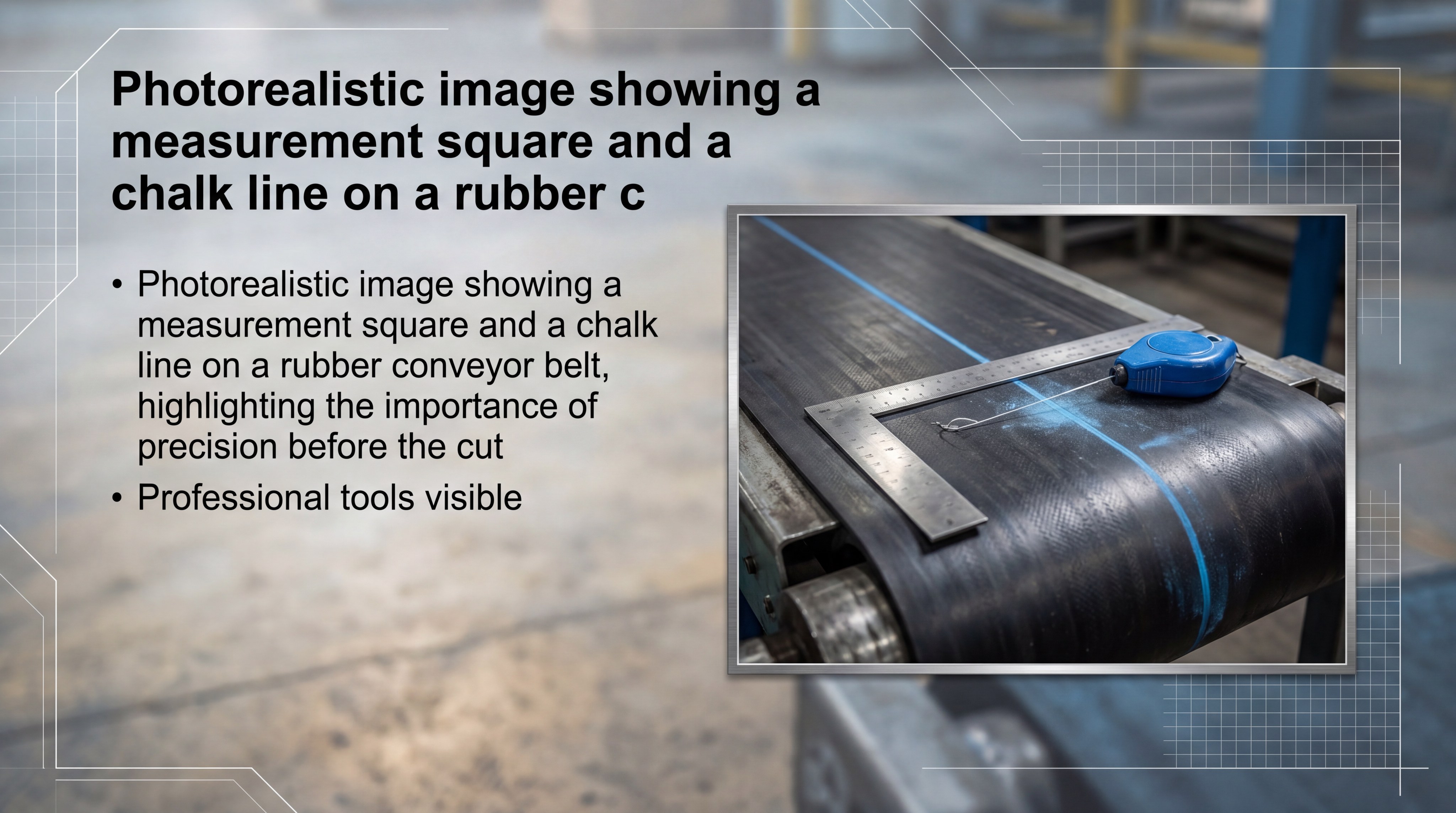
You might be wondering if a standard T-square is enough. For professional results, you must use the “Centerline Method” to mark your belt before any tool touches the rubber.
Key Takeaway: Precise cutting is the foundational step of belt maintenance; without a square cut, even the most expensive splice kit will fail prematurely.
| Goal | Requirement | Tool Recommendation | |
|---|---|---|---|
| Tracking | Perfectly Square Edge | Rail-Guided System | |
| Strength | Clean, Unfrayed Plies | Sharp Circular Blade | |
| Safety | Controlled Movement | Mechanical Belt Cutter |
Accurate marking and tool selection represent the first line of defense against conveyor system failure.
Why Learn the Best Way to Cut Rubber Conveyor Belt?
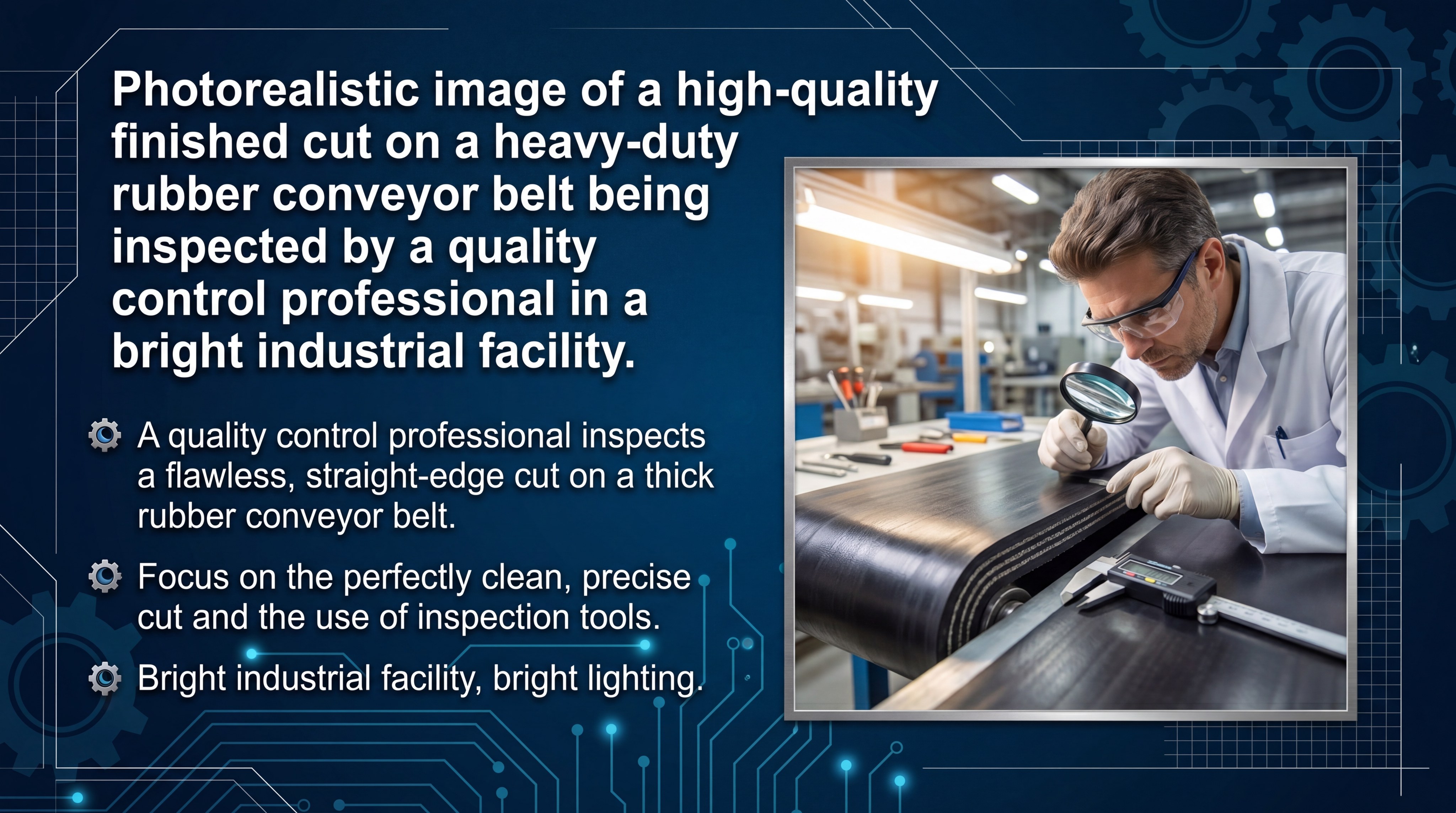
Mastering the best way to cut rubber conveyor belt is essential because it directly impacts the structural integrity of your entire material handling system. High-quality cuts reduce the risk of catastrophic belt failure that can stop production for hours or even days.
What are the long-term benefits?
But here’s the kicker: the time you save by using a proper cutter far outweighs the initial investment in specialized equipment. Professional tools allow one technician to do the work that previously required two, while providing a safer work environment.
- Lower Maintenance Costs: Fewer splice repairs and adjustments.
- Higher Throughput: Reduced downtime from tracking issues.
- Operator Safety: Minimized risk of knife slips or jagged edge injuries.
- Material Savings: Less wasted belt from “do-overs” or crooked slices.
Can bad cuts cause accidents?
You bet they can. Crooked belts often wander into the conveyor frame, creating friction that can lead to heat buildup and fire hazards in sensitive environments like coal mines.
Key Takeaway: Understanding professional cutting techniques is an investment in operational safety and long-term cost reduction.
| Impact Area | Benefit of Proper Cutting | Risk of Improper Cutting | |
|---|---|---|---|
| Maintenance | 30% reduction in tracking adjustments | Frequent belt “walk-off” | |
| Components | Extended pulley and idler life | Bearing failure due to side-loading | |
| Safety | Enclosed blades reduce injury risk | High risk of lacerations from utility knives |
Investing in proper training ensures your team views belt preparation as a precise engineering task rather than a manual chore.
Which Tools Deliver the Best Way to Cut Rubber Conveyor Belt?
Selecting the right equipment depends on your belt’s thickness and carcass construction, with power cutters being the gold standard for heavy-duty rubber. The best way to cut rubber conveyor belt usually involves a mix of electric power cutters for the main slice and manual skivers for prep work.
What are the top 3 tool categories?
There are several specialized tools designed to handle the high-density rubber and internal fabric or steel reinforcements found in modern belts.
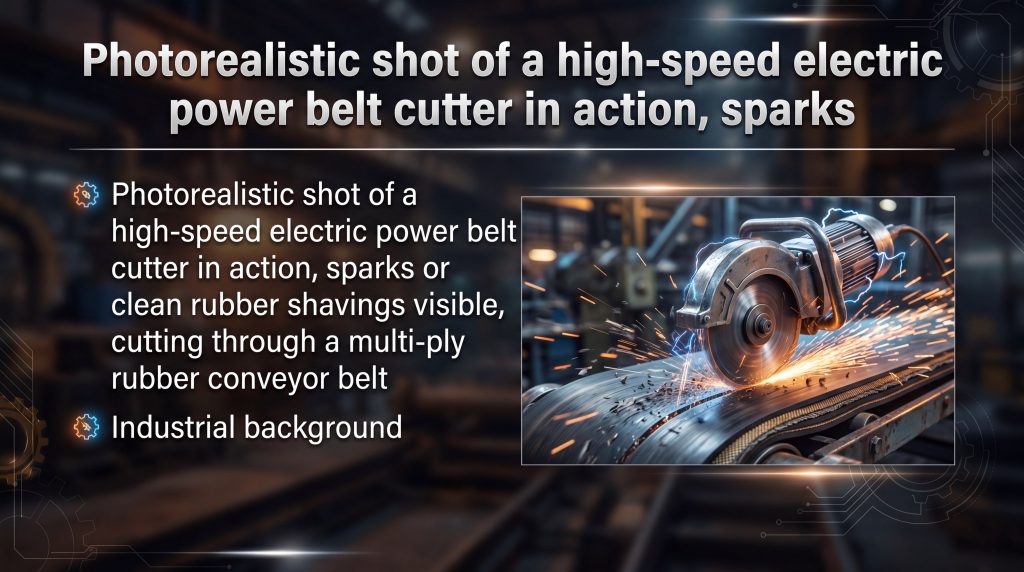
- Electric Power Cutters: High-speed circular blades that slice through 2-inch thick rubber with ease.
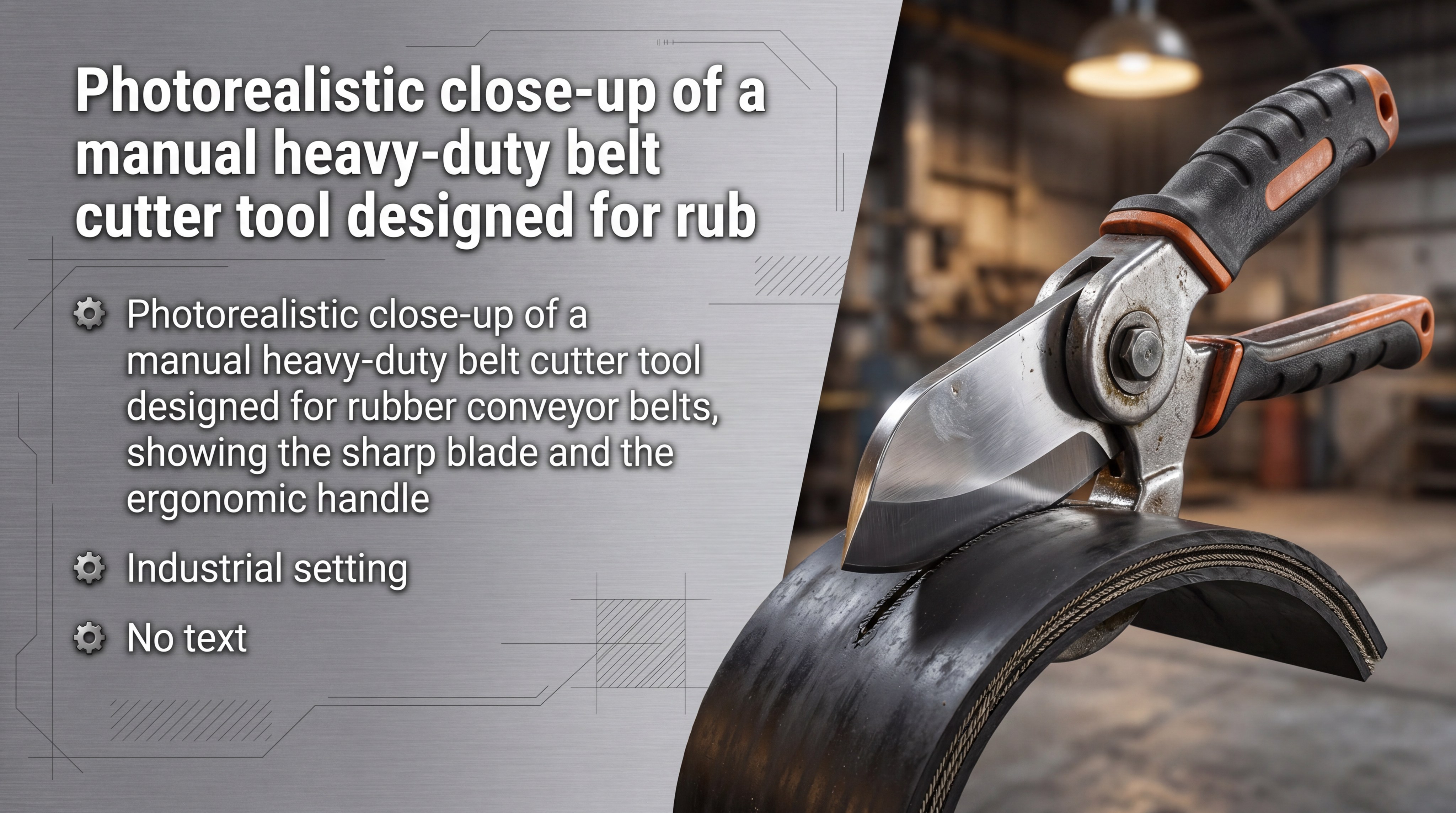
- Manual Mechanical Cutters: Lever-operated blades that provide high torque for clean, vertical cuts.
- Cordless Rotary Tools: Portable options for field repairs and thinner fabric-ply belts.
Do I need a skiver?
But wait, there’s more. If you are using mechanical fasteners, you also need a belt skiver to remove the top cover and “bury” the fastener below the belt surface.
Key Takeaway: Matching the tool to the specific belt thickness and material is non-negotiable for achieving a professional splice.
| Tool Type | Best For | Max Thickness | |
|---|---|---|---|
| Electric Power Cutter | Thick rubber, high-volume shops | Up to 50mm | |
| Mechanical Lever Cutter | On-site repairs, no power source | Up to 25mm | |
| Battery Rotary Cutter | Light fabric belts, quick patches | Up to 12mm |
The combination of power and precision allows for a clean finish that manual knives simply cannot replicate.
How to Choose the Best Way to Cut Rubber Conveyor Belt Safely?
Safety must be the primary consideration, meaning you should prioritize tools with fully enclosed blades and integrated guide rails. The best way to cut rubber conveyor belt safely is to eliminate “open blade” cutting whenever possible.
What are the essential safety features?
Look for tools that offer ergonomic handles and trigger locks to prevent accidental activation. A rail-guided system is inherently safer because it keeps the blade on a fixed path, away from the operator’s hands.
- Blade Guards: Protects the user from the sharp edge during and after the cut.
- Tension Clamps: Keeps the belt from moving or “jumping” during the slicing process.
- Dead-man Switches: Automatically stops power if the operator loses their grip.
Is PPE enough?
Think about it: even with the best gloves, a slip with a manual utility knife through thick rubber can be devastating. Mechanical tools remove the human error factor from the equation.
Key Takeaway: Safety is not just about gear; it is about choosing tools that physically separate the operator from the cutting edge.
| Safety Feature | Function | Operational Value | |
|---|---|---|---|
| Enclosed Housing | Keeps fingers away from blade | Eliminates major laceration risks | |
| Guide Rail | Prevents blade wandering | Reduces physical strain and “kickback” | |
| Clamp System | Secures belt material | Prevents material slippage during high-torque cuts |
Prioritizing tools with built-in safety mechanisms significantly reduces your facility’s recordable incident rate.
Is a Rail-Guided Cutter the Best Way to Cut Rubber Conveyor Belt?
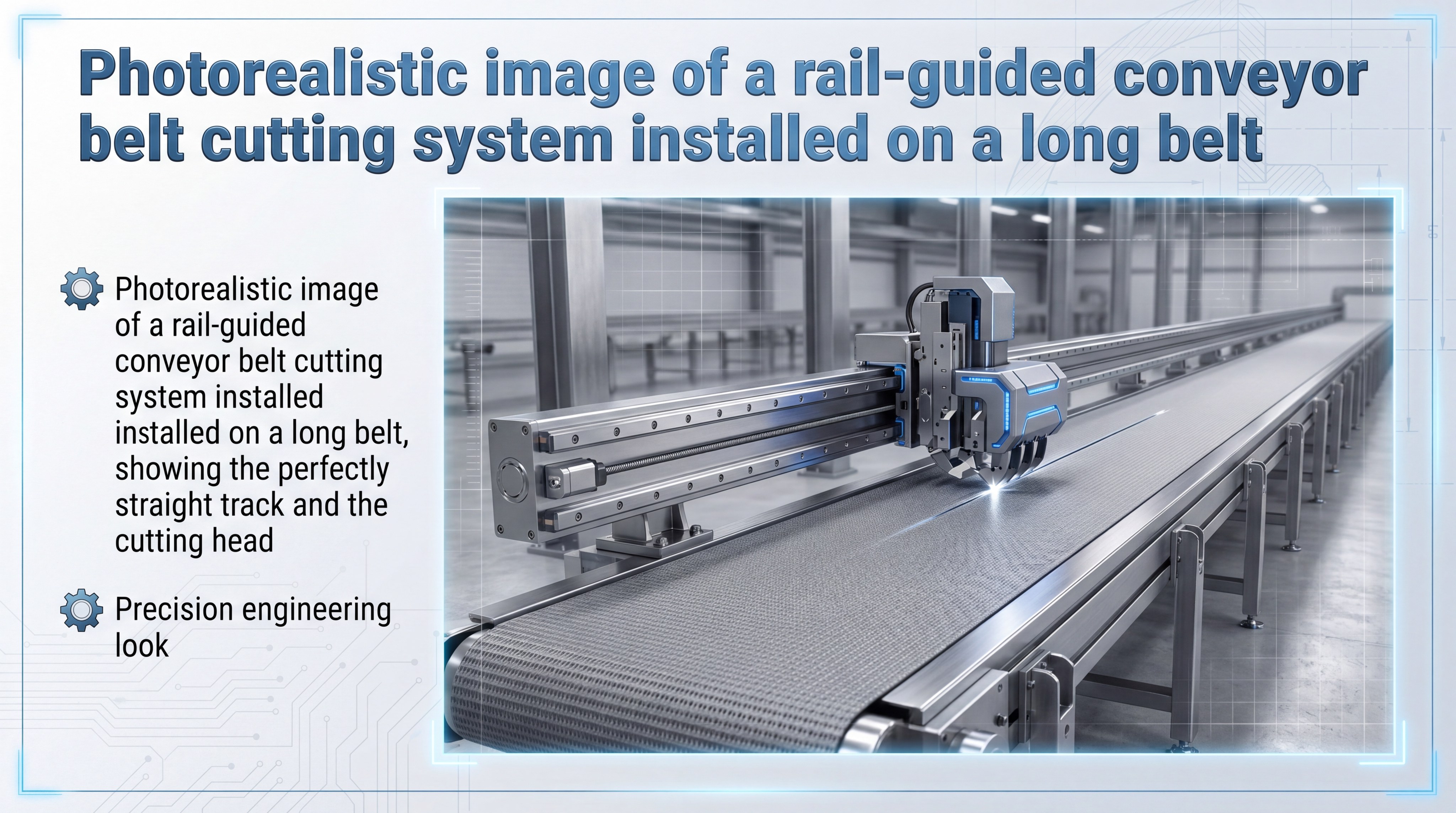
For industrial applications, a rail-guided cutter is widely considered the superior choice because it locks the belt in place and ensures a 100% straight path. The best way to cut rubber conveyor belt with these systems is by clamping the rail across the marked centerline for a perfect 90-degree finish.
Why use a guide rail?
The primary benefit is repeatability. Whether you are cutting a 24-inch or a 72-inch belt, the rail provides a consistent edge that doesn’t “wave” as the technician moves across the material.
- Vertical Accuracy: Ensures the blade stays perpendicular to the belt surface.
- Increased Leverage: Allows the user to apply downward force without losing the cut line.
- No Marking Loss: The rail covers the mark, preventing it from being obscured by rubber dust.
Is it worth the setup time?
You might be wondering if setting up a rail is too slow for quick fixes. However, the time saved by not having to re-cut a crooked edge makes it the fastest method overall.
Key Takeaway: Rail-guided systems turn a difficult manual task into a simple, repeatable mechanical process that guarantees squareness.
| Performance Metric | Rail-Guided System | Freehand Cutting | |
|---|---|---|---|
| Straightness | 99.9% | Variable (Technician dependent) | |
| Setup Time | 3-5 Minutes | 1 Minute | |
| Re-cut Rate | <1% | 15-20% |
The reliability of a rail system makes it the preferred tool for high-stakes maintenance environments.
Can a Rotary Cutter Be the Best Way to Cut Rubber Conveyor Belt?
A rotary cutter is often the best way to cut rubber conveyor belt when working with multi-ply fabric belts that require a high-speed slice to prevent ply separation. These tools use a spinning circular blade that “rolls” through the rubber, providing a much smoother finish than a traditional straight blade.
How does the rotary motion help?
But here’s the kicker: the rotation of the blade actually helps pull the tool through the material. This reduces the physical effort required by the operator and minimizes the “gumming” that often happens when cutting soft rubber.
- Advantages of Rotary Cutters:
- Slices through fabric reinforcement without snagging.
- Generates less heat than an angle grinder.
- Produces a very clean, “factory-style” edge.
- Excellent for curved or specialized trimming.
What about belt thickness?
You might be wondering if they handle the thick stuff. While standard rotary cutters are great for belts up to 1/2 inch, high-torque industrial versions can handle much more.
Key Takeaway: Rotary cutters are the ideal middle ground for technicians who need more power than a knife but more portability than a rail system.
| Belt Carcass Type | Recommended Cutter | Result | |
|---|---|---|---|
| Monofilament/Fabric | Rotary Blade | Zero fraying of internal threads | |
| Solid Woven | High-Torque Rotary | Uniform edge for mechanical clips | |
| Heavy Rubber Cover | Lubricated Rotary | Smooth finish without jagged “steps” |
Choosing a rotary tool ensures that the internal carcass of your belt remains intact and ready for splicing.
Is a Utility Knife the Best Way to Cut Rubber Conveyor Belt?
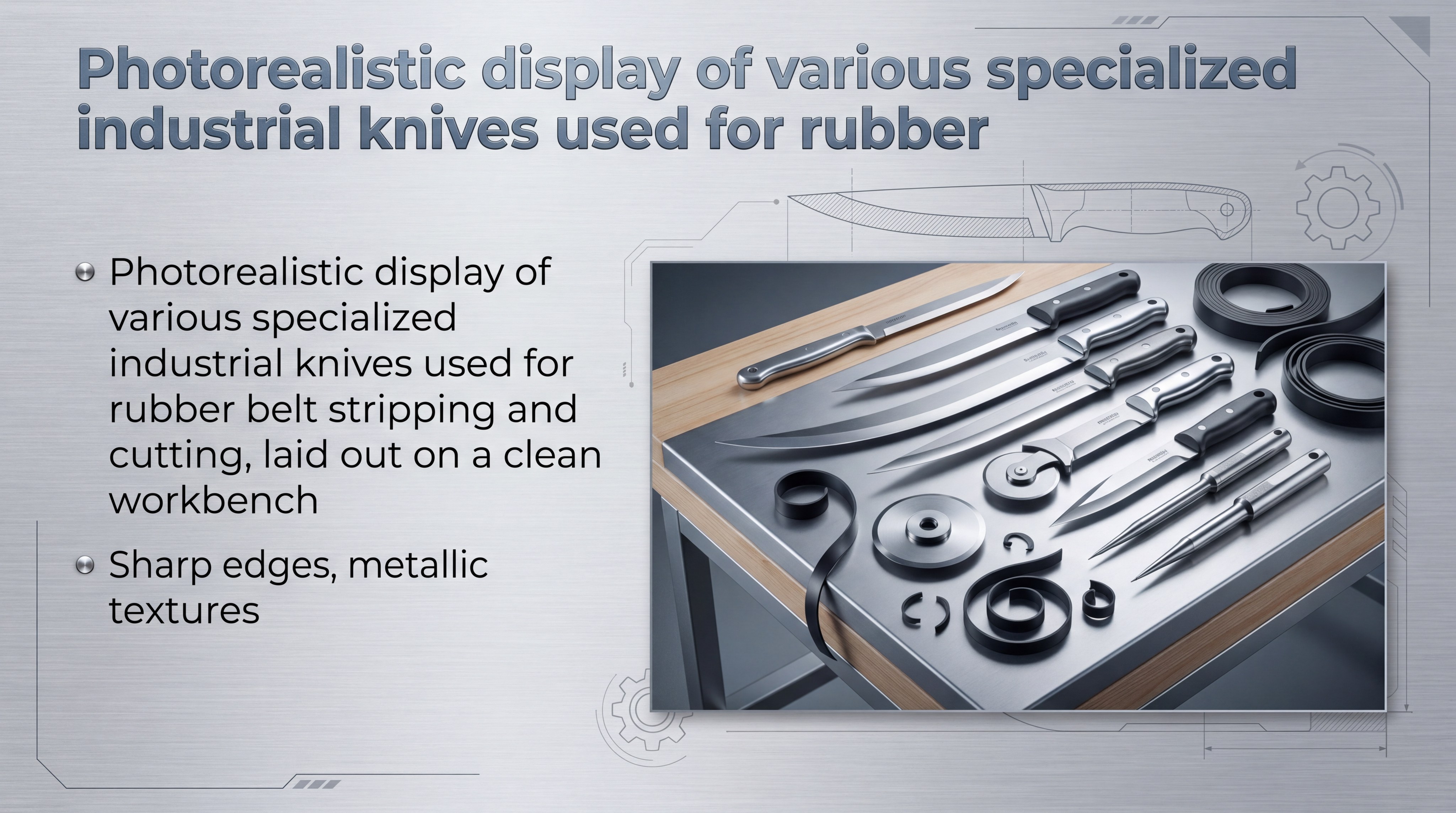
While a utility knife is common, it is rarely the best way to cut rubber conveyor belt for full-thickness slices because it lacks the stability and depth control needed for straight edges. Using a hand knife often results in “stepping,” where multiple passes create a jagged, uneven vertical surface.
When should you use a knife?
Utility knives are best reserved for “skiving” (stripping the top layer) or detailed trimming during the final stages of a vulcanized splice. They are surgical tools, not demolition tools.
- Stripping Covers: Removing rubber to expose the carcass for jointing.
- Corner Trimming: Rounding off edges to prevent snagging on scrapers.
- Emergency Patching: Small, non-critical repairs on light-duty belts.
Why do blades break?
Think about it: rubber is incredibly abrasive. A standard utility blade will dull after just a few inches of cutting heavy belt, leading the technician to apply excessive force, which is when most accidents happen.
Key Takeaway: Hand knives are essential for preparation work but should be replaced by mechanical cutters for any full-width belt slicing.
| Task | Tool Selection | Why? | |
|---|---|---|---|
| Main Slice | Mechanical Power Cutter | Ensures vertical and lateral squareness | |
| Cover Stripping | Heavy-Duty Utility Knife | Allows for delicate control of ply depth | |
| Edge Beveling | Specialized Beveling Knife | Prevents the splice from catching on cleaners |
Limiting hand knives to secondary tasks significantly improves both splice quality and workshop safety.
What Makes Flexco the Best Way to Cut Rubber Conveyor Belt?
Specialized systems like those from industry leaders provide the best way to cut rubber conveyor belt by integrating the clamp and the blade into a single, high-efficiency unit. These systems are specifically engineered to handle the unique resistance profiles of industrial rubber and steel-cord carcasses.
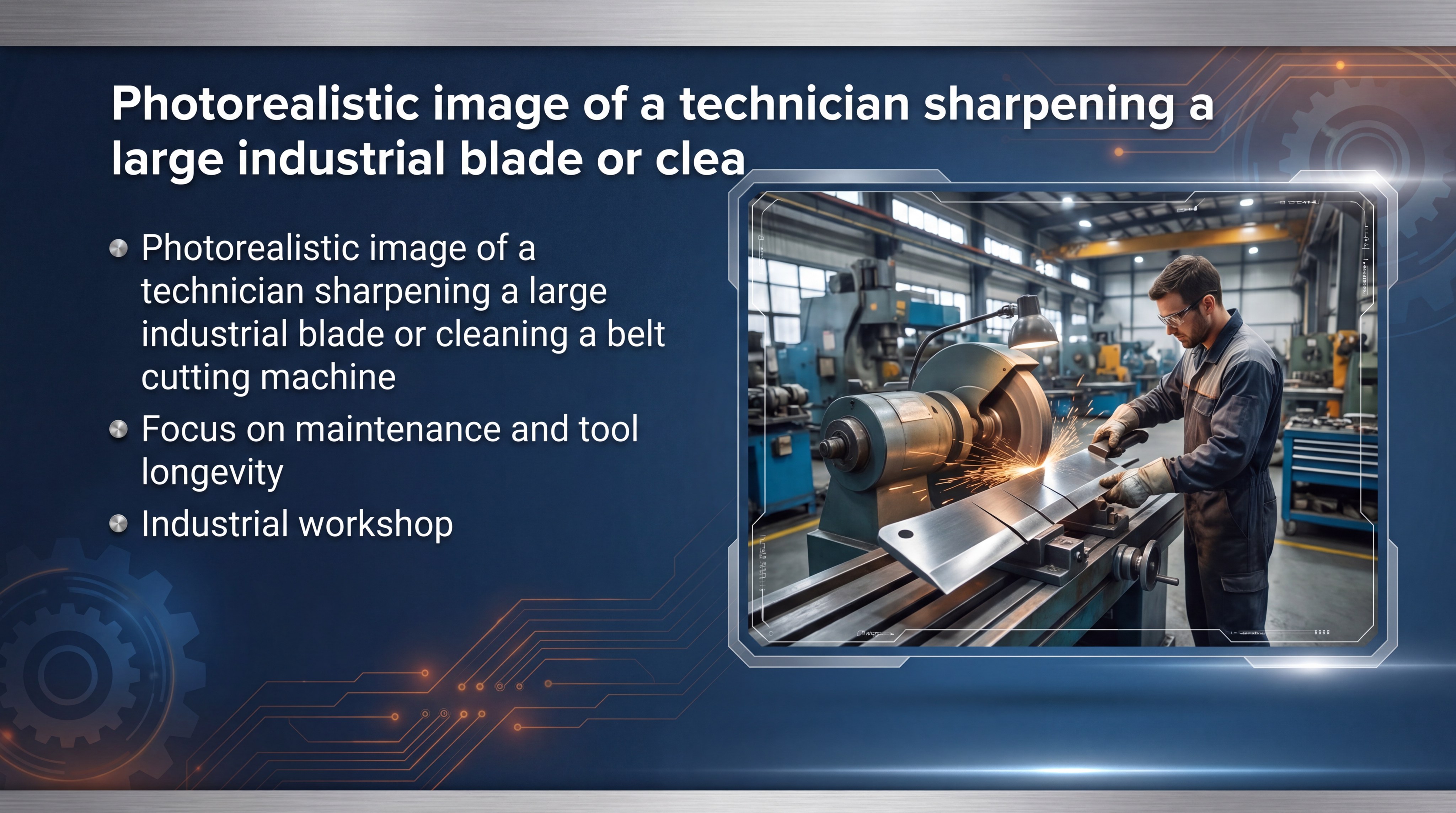
What sets these systems apart?
But here’s the kicker: these machines are designed to be used in the “belt shop” or out in the “field” with equal effectiveness. They utilize high-carbon steel blades that can be sharpened multiple times, reducing consumable costs.
- Integrated Clamping: Prevents the belt from bowing under pressure.
- Dual-Edge Blades: Allows for cutting in both directions across the belt.
- Sealed Bearings: Protects the mechanical parts from abrasive rubber dust and grime.
Is the investment justified?
You might be wondering about the price tag. In a high-volume facility, the reduction in wasted belt material and the speed of splicing usually pay for the tool within the first year.
Key Takeaway: Professional belt cutting machines are engineered specifically for the challenges of rubber, offering a level of precision that general-purpose tools cannot match.
| Feature | Industrial Grade Cutter | Shop-Built Solution | |
|---|---|---|---|
| Blade Material | Heat-Treated Tool Steel | Varies | |
| Belt Grip | Serrated Non-Slip Surface | Often lacks proper grip | |
| Longevity | 10+ Year Service Life | High failure rate under load |
Professional-grade equipment transforms belt maintenance from a high-risk struggle into a streamlined, predictable process.
How to Combine Tools for the Best Way to Cut Rubber Conveyor Belt?
Achieving the perfect splice often requires a “staged” approach, combining a rail cutter for the initial square slice with a skiver for cover preparation. No single tool does it all; the best way to cut rubber conveyor belt involves a systematic workflow.
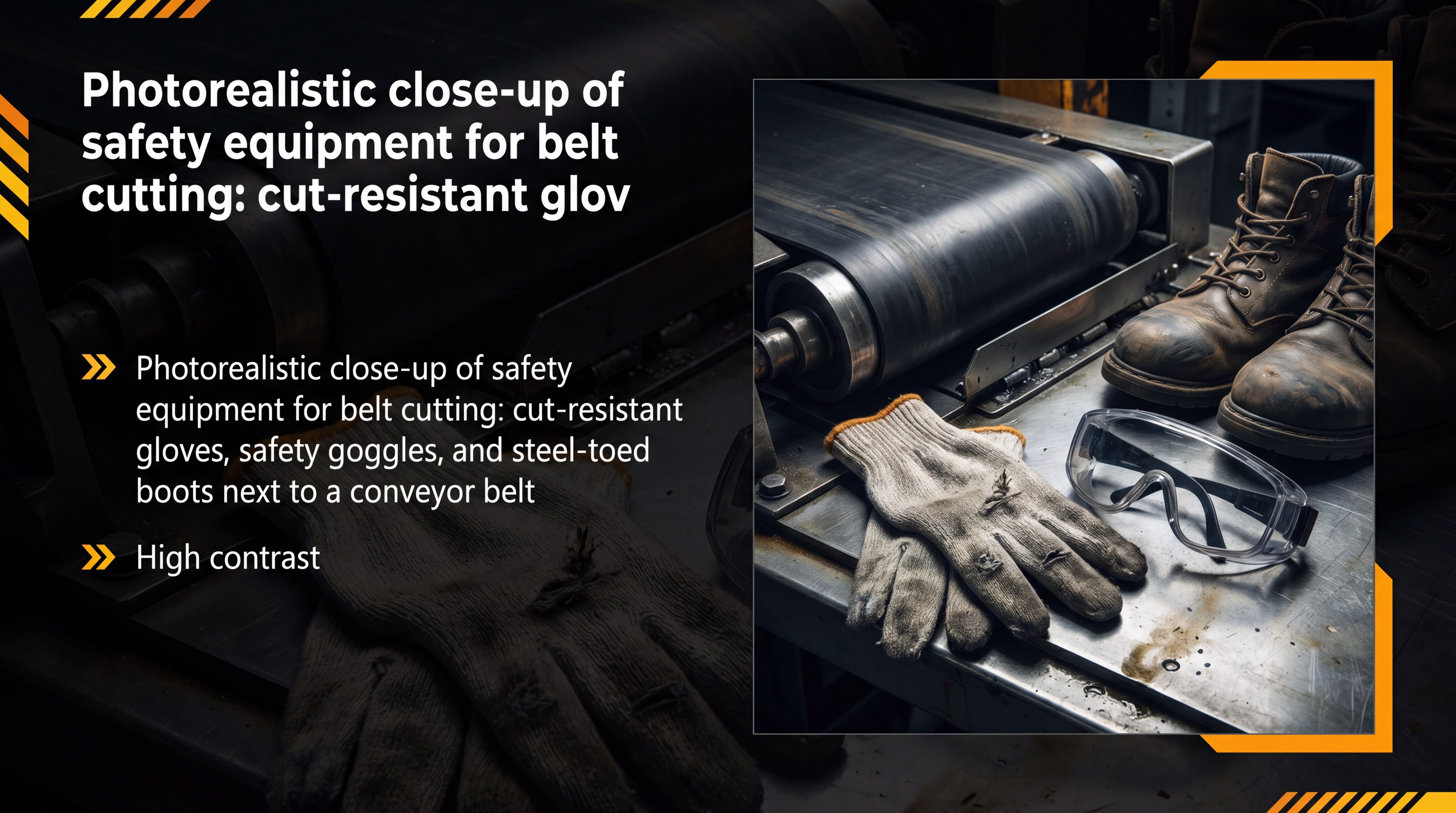
What is the ideal workflow?
First, use a center-line square to mark the belt. Then, execute the primary cut with a mechanical or power cutter. Finally, use specialized hand tools for the finishing touches.
- Marking: Steel square and chalk line for precision.
- Slicing: Rail-guided cutter for a square edge.
- Skiving: Removing the top cover to recess fasteners.
- Buffing: Roughing the rubber surface for better adhesive bond.
Why buff the edges?
But wait, there’s more. Even a perfect cut needs to be “prepped.” Buffing the cut edge removes oxidized rubber and exposes “fresh” molecules for the cold-bond or vulcanizing cement to grab onto.
Key Takeaway: A great splice is the result of a multi-tool process where each step—marking, cutting, and skiving—is performed with the correct specialized equipment.
| Workflow Step | Primary Tool | Secondary Tool | |
|---|---|---|---|
| Layout | Centerline Marking Kit | Large Steel Square | |
| Cut | Electric Belt Cutter | Manual Backup Cutter | |
| Recess | Mechanical Belt Skiver | Finish Knife |
By following a standardized tool sequence, your team can produce factory-quality splices every time they go into the field.
Where to Get the Best Way to Cut Rubber Conveyor Belt Results?
To get the most out of your material handling system, you must pair professional best way to cut rubber conveyor belt tools with high-quality belting products from a trusted manufacturer. High-grade rubber reacts more predictably to cutting tools, resulting in cleaner edges and stronger bonds.
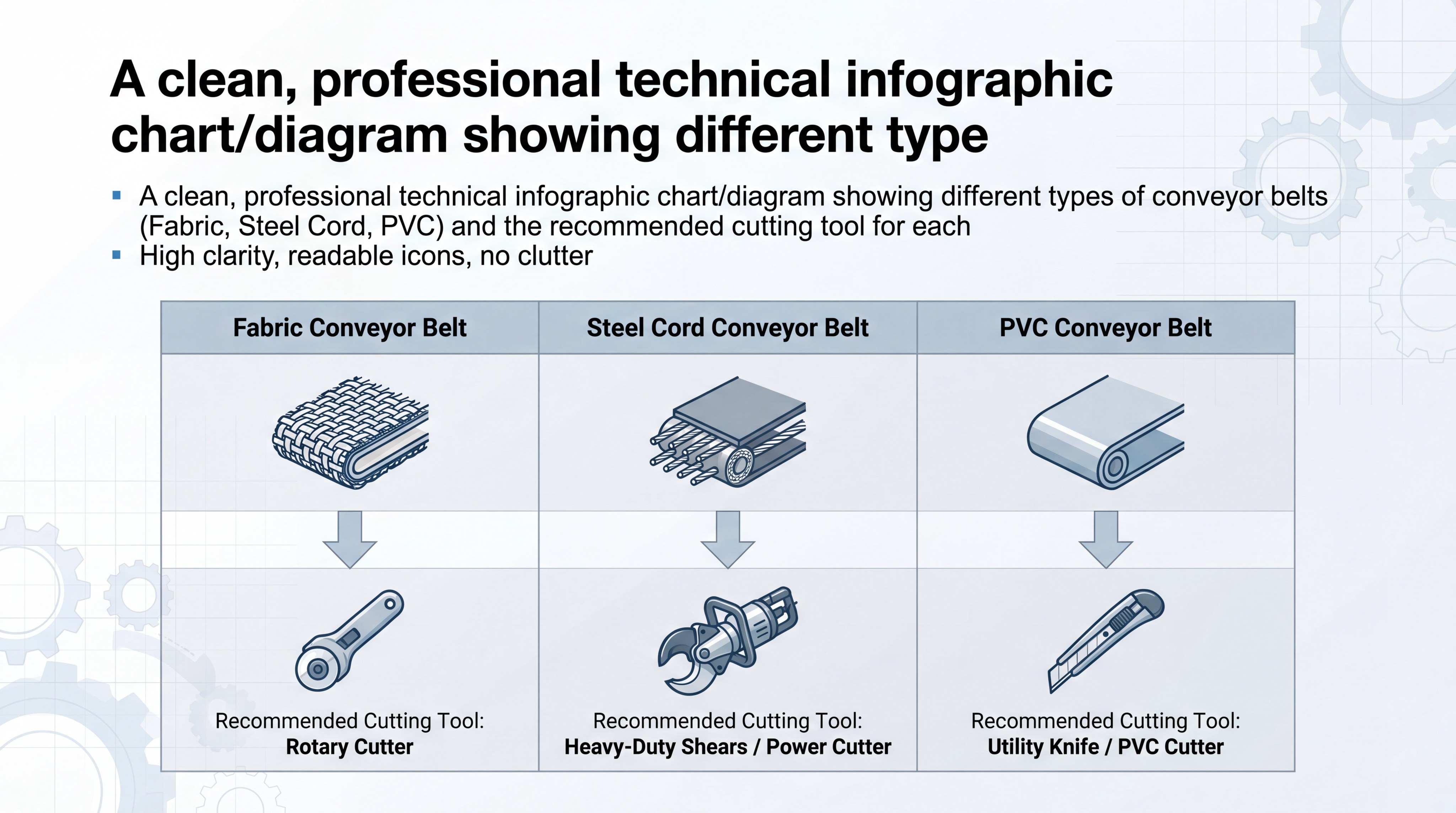
What defines a “cuttable” belt?
The internal composition of the rubber matters. High-tensile carcasses and premium cover compounds allow for a crisp, vertical cut that doesn’t “smear” or mushroom under the pressure of the blade.
- Look for these qualities:
- Uniform ply thickness.
- Consistent rubber-to-fabric adhesion.
- UV-stabilized covers that don’t become brittle and “chip” during cutting.
Does the manufacturer matter?
Think about it: if you start with a low-quality belt that has internal voids or inconsistent thickness, even the best cutter in the world can’t give you a perfect edge.
Key Takeaway: The quality of your final splice is a partnership between the precision of your tools and the structural integrity of the belt material you choose.
| Product Type | Cutting Characteristic | Maintenance Impact | |
|---|---|---|---|
| Premium EP Belt | Clean, non-fraying plies | Fast, strong splices | |
| Oil-Resistant Rubber | Firm resistance, no “smearing” | Long-lasting edge seal | |
| Heat-Resistant Belt | Dense structure, minimal chipping | Maintains squareness under load |
Starting with superior materials ensures that your maintenance efforts result in maximum conveyor uptime and safety.
Summary of Solutions
By following this guide, we have addressed the critical pain points of belt maintenance: mistracking, splice failure, and operator injury. We moved from the dangerous and inaccurate method of freehand knife cutting to a professional system of rail-guided tools, power cutters, and multi-stage preparation. These tools ensure that every belt in your facility is square, safe, and ready for long-term service.
Professional Conclusion
Achieving a high-performance conveyor system starts with the very first cut. By investing in specialized cutting tools and following a disciplined maintenance workflow, you protect your most valuable assets: your equipment and your people. Our vision at Zhenxing Rubber is to provide the high-quality belting foundations that make these professional results possible. To learn more about optimizing your conveyor maintenance or to source industrial-grade belts, contact us today .
Frequently Asked Questions
Can I use a standard circular saw to cut a rubber belt?No. Standard wood or metal blades generate excessive heat that can melt the rubber and ruin the internal plies. You should only use specialized belt cutters designed with specific tooth geometry and lubricated blades to prevent friction buildup.
What is the best way to mark a belt for a square cut?The centerline method is the gold standard. You mark the center of the belt at two points, snap a chalk line between them, and then use a large steel square off that centerline—rather than the belt edge—to mark your cut.
How often should I change my belt cutter blades?You should inspect the blade before every cut. If you notice any “tearing” of the rubber or if the tool requires more force than usual to push through, the blade is dull. Most professional blades can be sharpened 3-5 times before needing replacement.
Do I really need to skive the belt for mechanical fasteners?Yes. Skiving removes the top cover so the fastener sits flush with the belt surface. This prevents the metal clips from catching on belt scrapers or pulleys, which is a leading cause of premature splice failure.
Is it safe to cut a belt while it is under tension?Absolutely not. You must always perform a full lockout-tagout (LOTO) and use a belt clamp system to remove all tension from the splice area before making any cuts. Cutting a tensioned belt can cause the material to snap back violently, causing severe injury.