
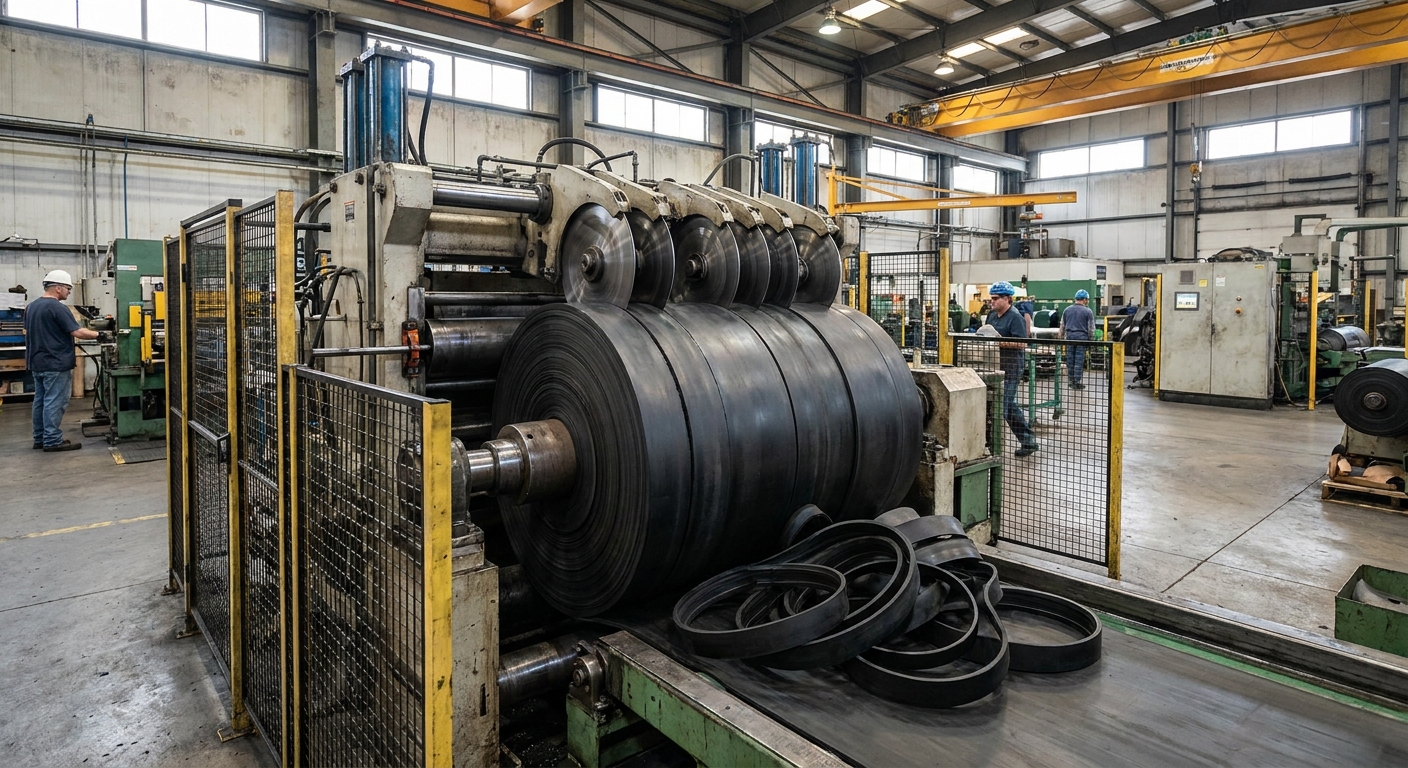
Understanding how to cut conveyor belt rubber correctly is essential for maintaining conveyor system performance, safety, and long-term durability. Precision cutting methods using heavy-duty utility knives, electric cutters, or rail-guided tools help create straight, accurate edges that ensure reliable belt splicing and proper belt tracking. Poor cutting techniques can lead to uneven stress distribution, premature belt failure, increased maintenance costs, and unexpected production downtime. By following professional procedures on how to cut conveyor belt rubber, industrial facilities can improve operational efficiency, reduce safety risks, and extend the lifespan of their material handling systems.
Why learn how to cut conveyor belt rubber properly?
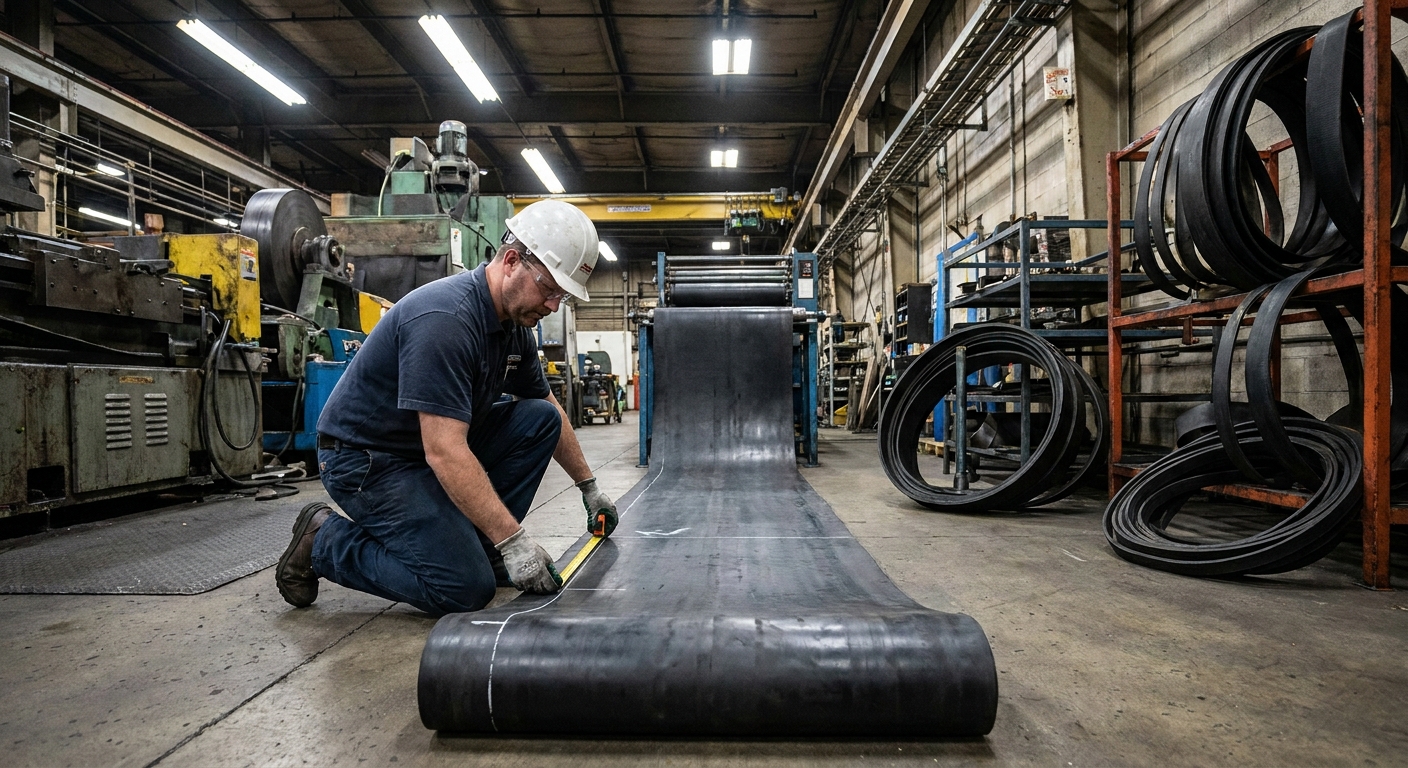
Learning how to cut conveyor belt rubber properly is essential because precise edges prevent immediate tracking issues and catastrophic splice failure. When you achieve a perfectly square cut, the tension is distributed evenly across the entire belt width.
Avoiding Uneven Tension and Splice Failure
A square cut ensures that the mechanical fasteners or vulcanized joints bear the load equally. If your cut is diagonal or jagged, the belt will “hunt” on the pulleys, leading to:
- Excessive edge wear against the conveyor frame.
- High localized stress on individual fasteners.
- Premature separation of the belt plies.
- Rapid degradation of the belt carcass.
Impact on Long-term System Durability
Precise cutting techniques directly extend the operational lifespan of your infrastructure. You reduce the vibration caused by uneven belt travel, which protects your rollers and pulleys.
- Lower energy consumption due to reduced friction.
- Fewer emergency maintenance interventions.
- Improved material retention at transfer points.
- Professional results that meet OEM specifications.
Key Takeaway: Mastery of cutting ensures that your belt tracking remains stable, preventing expensive downtime and mechanical damage.
| Feature | Impact of Precise Cut | Impact of Poor Cut | |
|---|---|---|---|
| Belt Tracking | Perfectly centered travel | Constant drifting and edge fraying | |
| Splice Strength | 100% load distribution | Concentrated stress points | |
| Maintenance | Scheduled and predictable | Emergency and reactive |
What tools help how to cut conveyor belt rubber?
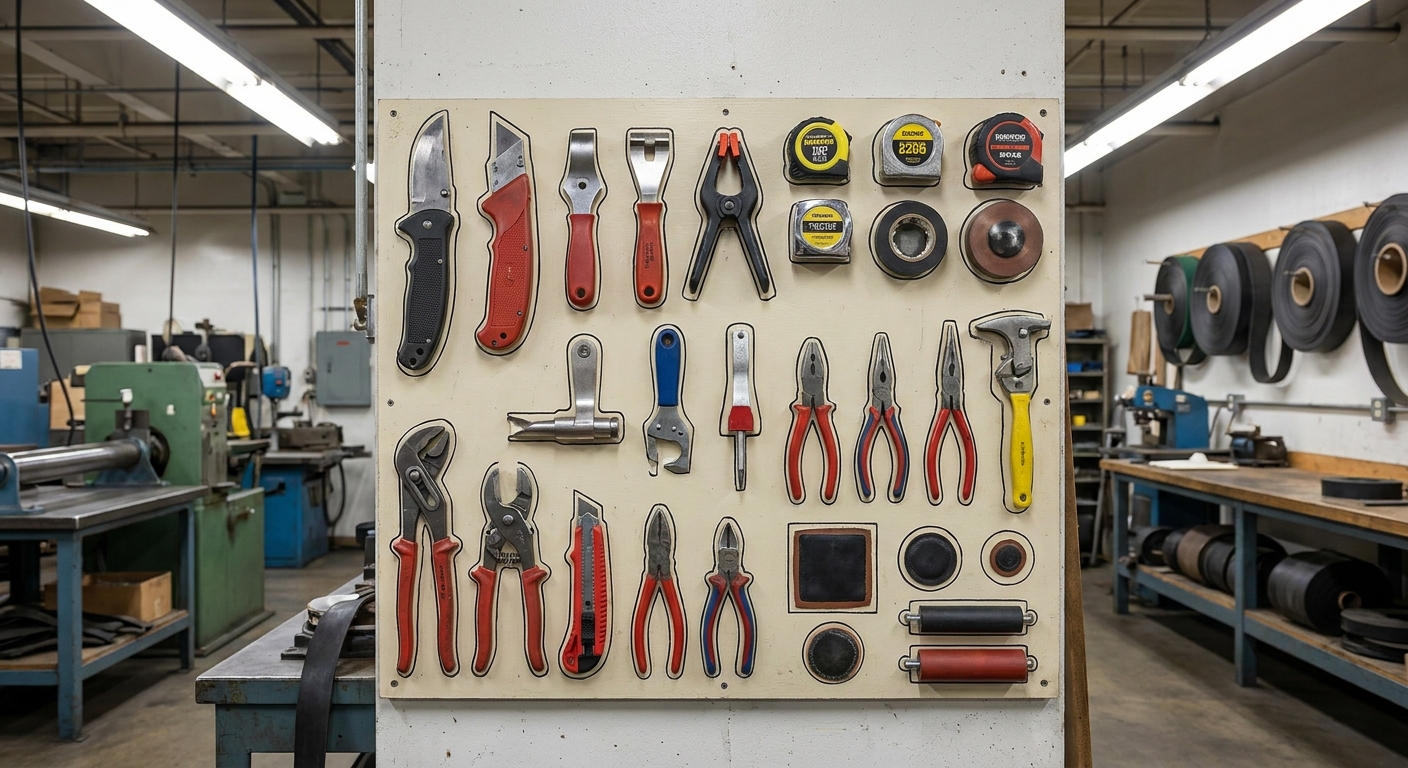
You can use industrial knives, circular saws, or hydraulic slicers when deciding how to cut conveyor belt rubber effectively. The choice of tool depends entirely on the belt’s thickness and internal reinforcement layers.
Essential Manual Knives and Straightedges
Manual tools are perfect for trimming lighter architectures like fabric (textile) conveyor belts. You should always use a calibrated steel straightedge to guide your blade for maximum accuracy.
- Heavy-duty retractable utility knives.
- Specialized “hook” blades for pull-cutting.
- Scribing tools for marking the rubber surface.
- Clamps to secure the guide during the cut.
Industrial Hydraulic and Electric Cutters
Power tools are required when you handle high-tension belts with thick covers. These machines offer the speed and precision necessary for large-scale factory operations.
- Cordless electric belt cutters for portability.
- Hydraulic guillotines for steel-reinforced rubber.
- Bench-mounted slitting machines for bulk resizing.
- Pneumatic shears for rapid field repairs.
Key Takeaway: Matching the tool to the belt type—manual for fabric and powered for steel—is the secret to a clean, effortless edge.
| Tool Category | Best Used For | Primary Benefit | |
|---|---|---|---|
| Manual Knives | Light textile/fabric belts | Low cost and high portability | |
| Electric Cutters | Multi-ply heavy rubber | Speed and reduced fatigue | |
| Hydraulic Tools | Steel cord reinforcement | Ability to cut through metal wires |
When should you how to cut conveyor belt rubber at site?
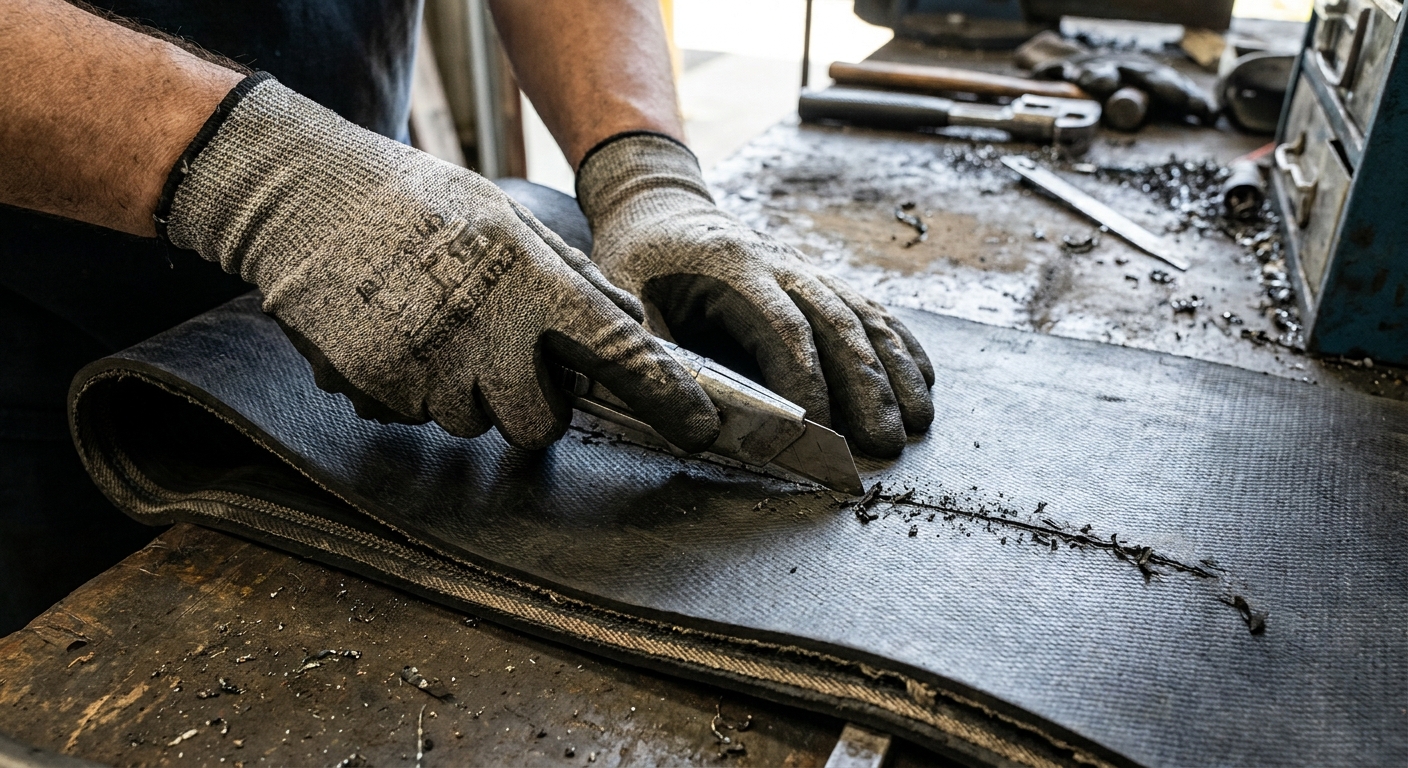
You should perform how to cut conveyor belt rubber at the site during emergency field repairs or when resizing a belt for a specific conveyor frame. Site cutting is often the only option when a belt suffers a mid-run tear.
Managing Emergency Field Repairs
Field cutting allows you to remove damaged sections quickly to restore production. You must ensure the environment is stable enough to permit a square cut under pressure.
- Quick removal of longitudinal tears.
- Squaring off ends for temporary mechanical fasteners.
- Trimming damaged edges to prevent further fraying.
- Preparing the belt for a “patch” splice.
Routine Maintenance and Belt Resizing
Resizing at the installation site ensures the belt fits the actual geometry of your pulleys. This is particularly important for customized systems where factory lengths might vary slightly.
- Trimming excess length after initial tensioning.
- Resizing widths for narrow conveyor structures.
- Creating beveled edges for specialized applications.
- Fitting belts to refurbished vintage machinery.
Key Takeaway: On-site cutting is a critical survival skill for maintenance teams to minimize downtime during catastrophic failures.
| Scenario | Urgency Level | Recommended Precision | |
|---|---|---|---|
| Emergency Repair | Critical | High (must be square) | |
| Installation Resizing | Planned | Very High (OEM standards) | |
| Edge Trimming | Routine | Moderate |
How does how to cut conveyor belt rubber affect belt life?
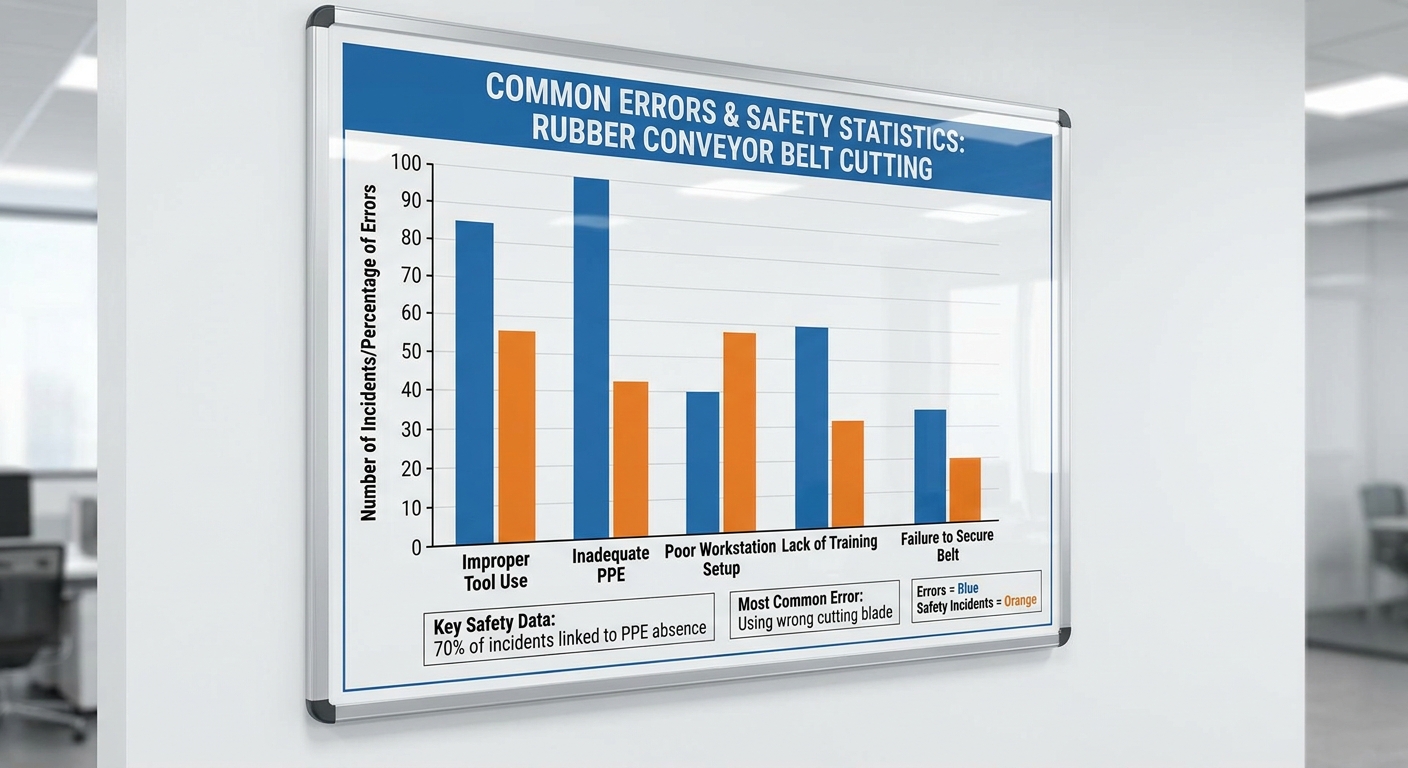
Executing how to cut conveyor belt rubber with high precision extends belt life by eliminating the vibrations associated with crooked splices. Even a slight 1-degree deviation in the cut can lead to thousands of dollars in premature wear on rough top conveyor belts and rollers.
Reducing Vibration and Material Spillage
A straight cut ensures the belt runs smoothly over idlers without oscillating. This stability prevents the “bouncing” effect that causes bulk materials to spill over the sides.
- Steady belt travel reduces idler bearing wear.
- Minimal vibration protects the conveyor’s structural joints.
- Cleaner work environments with less dust accumulation.
- Prevention of material entrapment under the belt.
Improving Drive Efficiency and Energy Savings
A properly cut belt requires less energy to stay centered on the drive pulley. When a belt is crooked, the motor works harder to overcome the friction of the belt rubbing against side guides.
- Lower amperage draw on the conveyor motor.
- Reduced heat buildup in the drive assembly.
- Less frequent replacement of lagging on pulleys.
- Optimized power transmission throughout the system.
Key Takeaway: Precision cutting is an investment in energy efficiency, as it removes the mechanical resistance caused by poor belt tracking.
| Efficiency Factor | Precise Cut Effect | Crooked Cut Effect | |
|---|---|---|---|
| Motor Load | Optimized/Low | Elevated/Variable | |
| Spillage | Minimal | Significant at transfer points | |
| Bearing Life | Extended | Reduced due to side-loading |
Where can you how to cut conveyor belt rubber in factories?
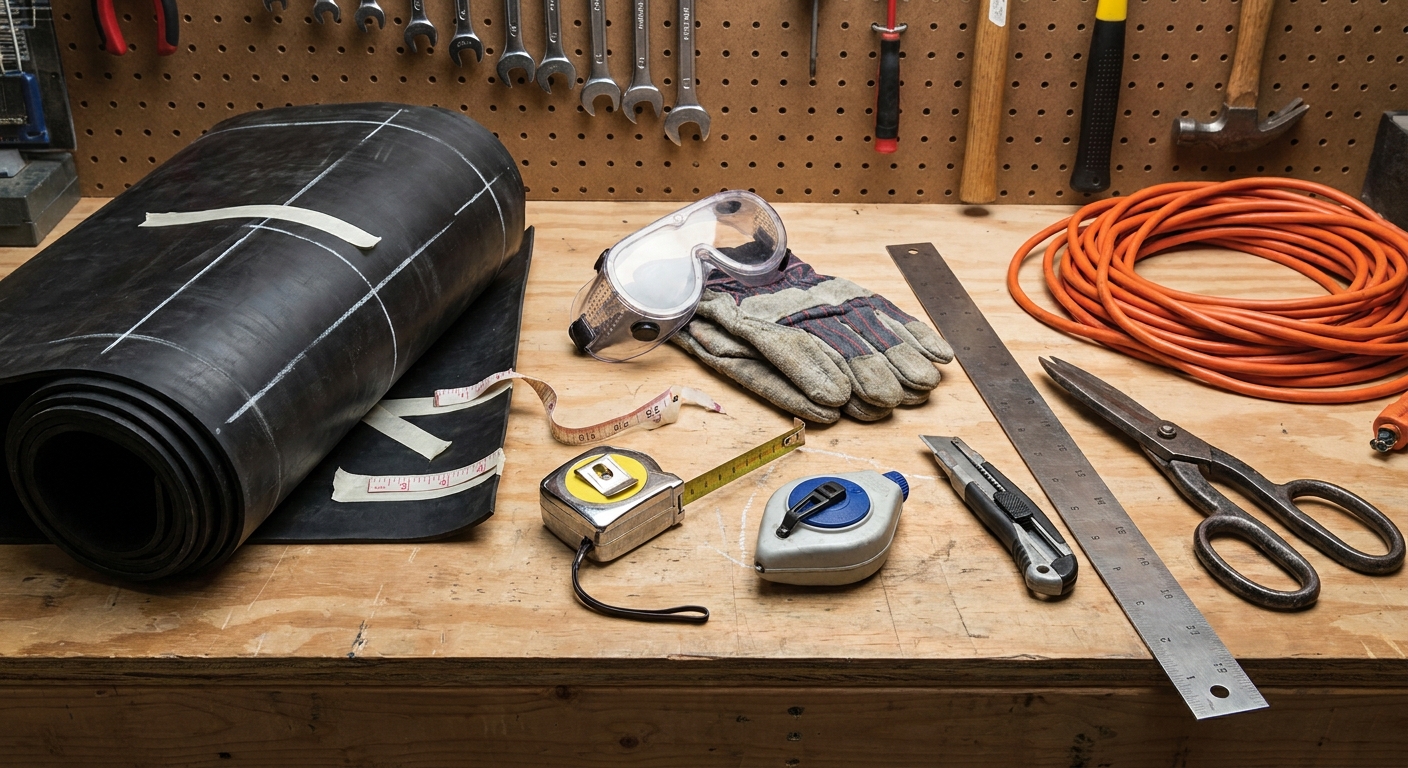
The best place to practice how to cut conveyor belt rubber in a factory is a dedicated cutting station with a flat, reinforced workbench. You need a space that allows the belt to lie completely flat to avoid “bowing” during the measurement phase.
Setting Up a Dedicated Cutting Station
A specialized station ensures that all necessary guides and safety equipment are within reach. This setup improves both the speed of the operation and the accuracy of the final edge.
- Use a table with a replaceable sacrificial top.
- Install overhead lighting to eliminate shadows.
- Ensure the floor is level to prevent belt sliding.
- Provide integrated clamps for large belt rolls.
Safety Requirements for Work Environments
Your work environment must be free of clutter and trip hazards to prevent accidental slips during heavy-cutting tasks. Proper ventilation is also required if you use power tools that generate heat or fumes.
- Clear egress paths for the maintenance team.
- Designated zones for sharp tool storage.
- Fire suppression equipment near power cutting zones.
- Non-slip flooring to ensure stable footing.
Key Takeaway: A flat, clean, and well-lit workspace is the foundation of every professional conveyor belt cut.
| Station Component | Purpose | Analysis Guide | |
|---|---|---|---|
| Flat Workbench | Prevents belt distortion | Must be longer than belt width | |
| Sacrificial Top | Protects tools and table | Replace when deeply scored | |
| Integrated Clamps | Holds belt under tension | Essential for straight lines |
Which safety gear for how to cut conveyor belt rubber is best?
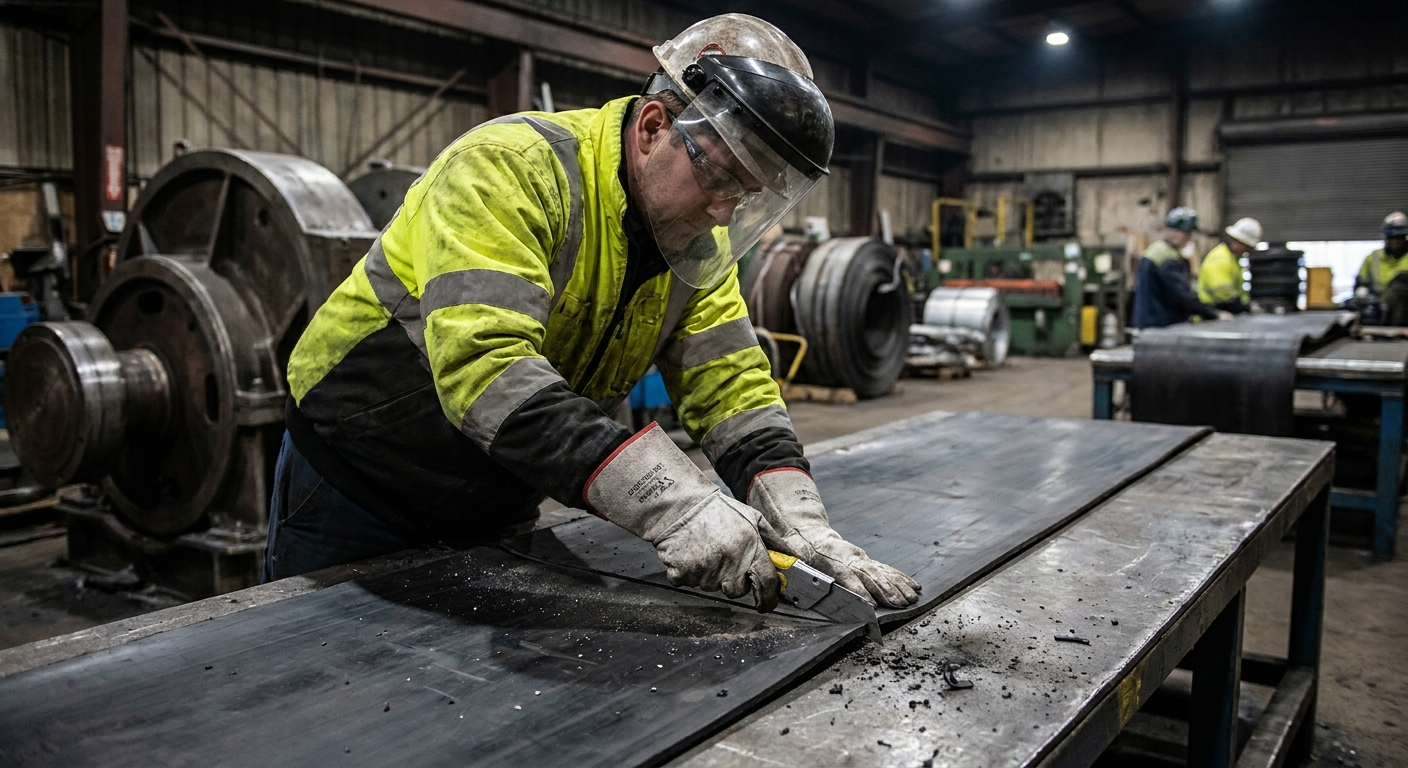
The best safety gear for how to cut conveyor belt rubber includes Level 5 cut-resistant gloves and impact-resistant face shields. You must prioritize protection against blade slips and high-velocity debris when working with steel cord conveyor belts.
Critical Cut-Resistant Gloves and Eye Protection
Hand injuries are the most common accidents during manual belt trimming. Using the correct PPE drastically reduces the risk of lacerations from sharp industrial blades.
- Stainless steel mesh or Kevlar gloves.
- Wrap-around safety goggles for dust protection.
- Full face shields when using angle grinders.
- Reinforced aprons to protect the torso.
Following LOTO Procedures for Worker Safety
You must always follow Lockout-Tagout (LOTO) protocols if you are cutting a belt that is already mounted on a conveyor frame. Never attempt to cut a belt while the drive system has the potential to move.
- Isolate the main power source.
- Use physical padlocks on the control panel.
- Verify zero energy before making the first cut.
- Inform all nearby personnel of the maintenance status.
Key Takeaway: PPE is not optional; it is your final line of defense against the high forces involved in rubber processing.
| Safety Item | Primary Risk Mitigated | Requirement | |
|---|---|---|---|
| Cut-Resistant Gloves | Blade slippage / Lacerations | ANSI Level A5 or higher | |
| Face Shield | Flying rubber or steel shards | Z87+ Impact Rating | |
| LOTO Kit | Accidental machine startup | OSHA Standard Compliant |
Can manual tools how to cut conveyor belt rubber effectively?
Manual tools can perform how to cut conveyor belt rubber effectively on belts thinner than 10mm or those made of pure textile plies. While slower than power tools, hand-cutting provides a level of control that prevents over-cutting and core damage.
Mastering the Scoring Technique for Thin Belts
You should use multiple shallow passes rather than trying to cut through the entire thickness in one go. This “scoring” method keeps the blade inside the track and produces a much cleaner finish.
- Apply moderate pressure on the first pass to mark the line.
- Use the second pass to cut through the top cover.
- The third pass should penetrate the fabric carcass.
- Final passes clear the bottom rubber layer.
Limitations of Hand-Cutting Heavy Rubber
Hand tools are often ineffective and dangerous when applied to heavy-duty industrial belts. Attempting to force a utility knife through 20mm of reinforced rubber can lead to blade breakage and severe injury.
- Increased risk of “blade wander” on thick belts.
- Physical fatigue leads to reduced accuracy.
- Inability to cut through steel cord reinforcements.
- High risk of the blade binding in the rubber.
Key Takeaway: Use manual tools for precision trimming and light repairs, but switch to power for anything reinforced or heavy-duty.
| Belt Thickness | Recommended Tool | Logic | |
|---|---|---|---|
| < 6mm | Utility Knife | Maximum control and speed | |
| 6mm – 12mm | Hook Knife / Power Saw | Balances speed and accuracy | |
| > 12mm | Industrial Electric Cutter | Manual cutting is too hazardous |
Are power saws how to cut conveyor belt rubber the fastest?
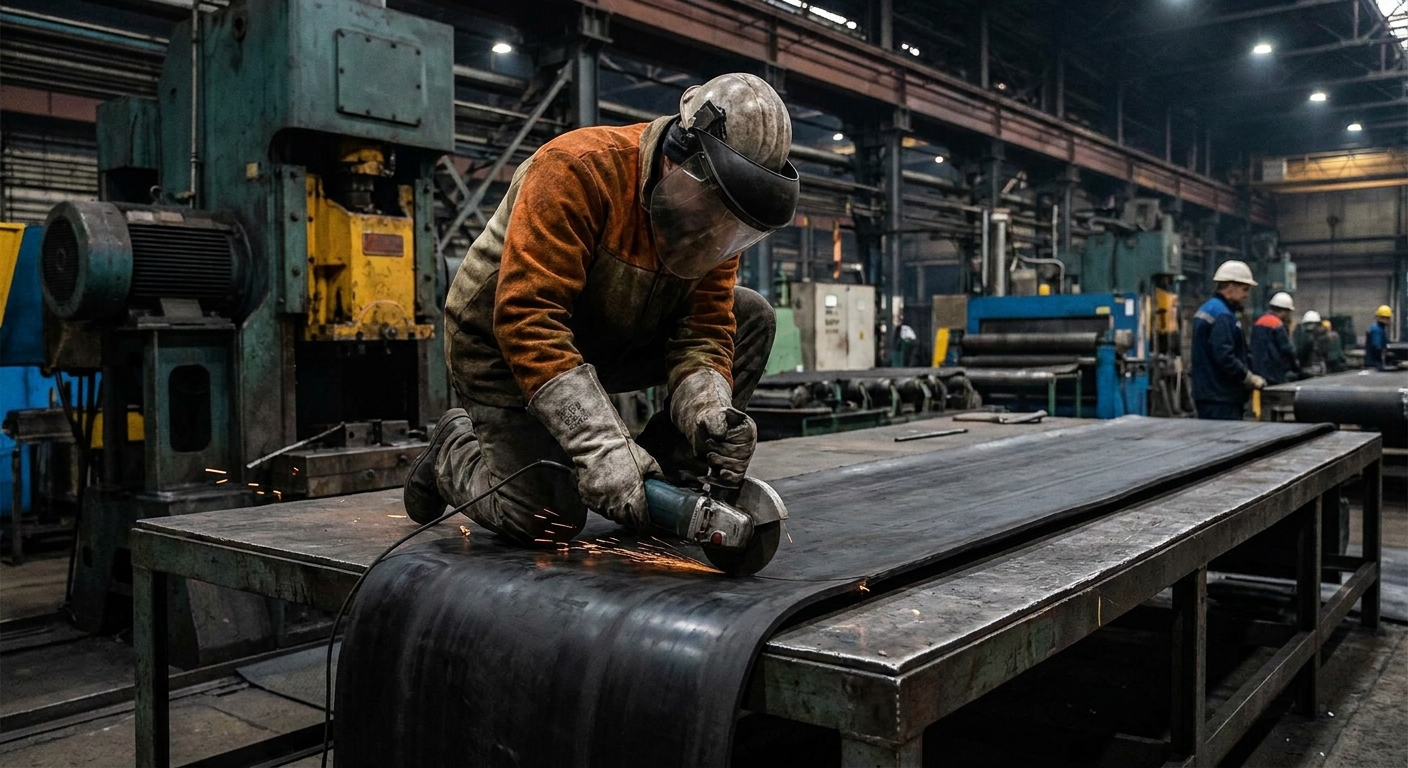
Power saws are undoubtedly the fastest method for how to cut conveyor belt rubber , especially when dealing with the high-tensile carcasses found in sidewall conveyor belts. These tools reduce a ten-minute manual job to a matter of seconds.
Using Angle Grinders for Versatile Cuts
Angle grinders equipped with rubber-cutting discs are highly effective for curved or complex cuts. You must maintain a steady hand and a consistent feed rate to prevent the rubber from melting due to friction.
- Use thin diamond blades for clean edges.
- Keep guards in place to deflect sparks.
- Lubricate the cut line with water to reduce smoke.
- Avoid forcing the tool into the material.
Precision Slitting with Circular Saw Guides
Circular saws are the gold standard for long, straight longitudinal cuts. By using a track or a clamped guide, you can achieve factory-level straightness across hundreds of meters of belt.
- Carbide-tipped blades handle fabric plies with ease.
- Adjustable depth settings prevent bench damage.
- Dust extraction ports keep the workspace clean.
- Consistent RPM ensures a smooth, non-jagged edge.
Key Takeaway: Power tools are essential for productivity, but they require higher safety awareness and heat management.
| Power Tool | Best Performance Area | Safety Warning | |
|---|---|---|---|
| Angle Grinder | Tight spaces and repairs | High risk of kickback | |
| Circular Saw | Long longitudinal slitting | Must use a guide rail | |
| Reciprocating Saw | Rough demolition cutting | Difficult to maintain squareness |
Does how to cut conveyor belt rubber vary by belt types?
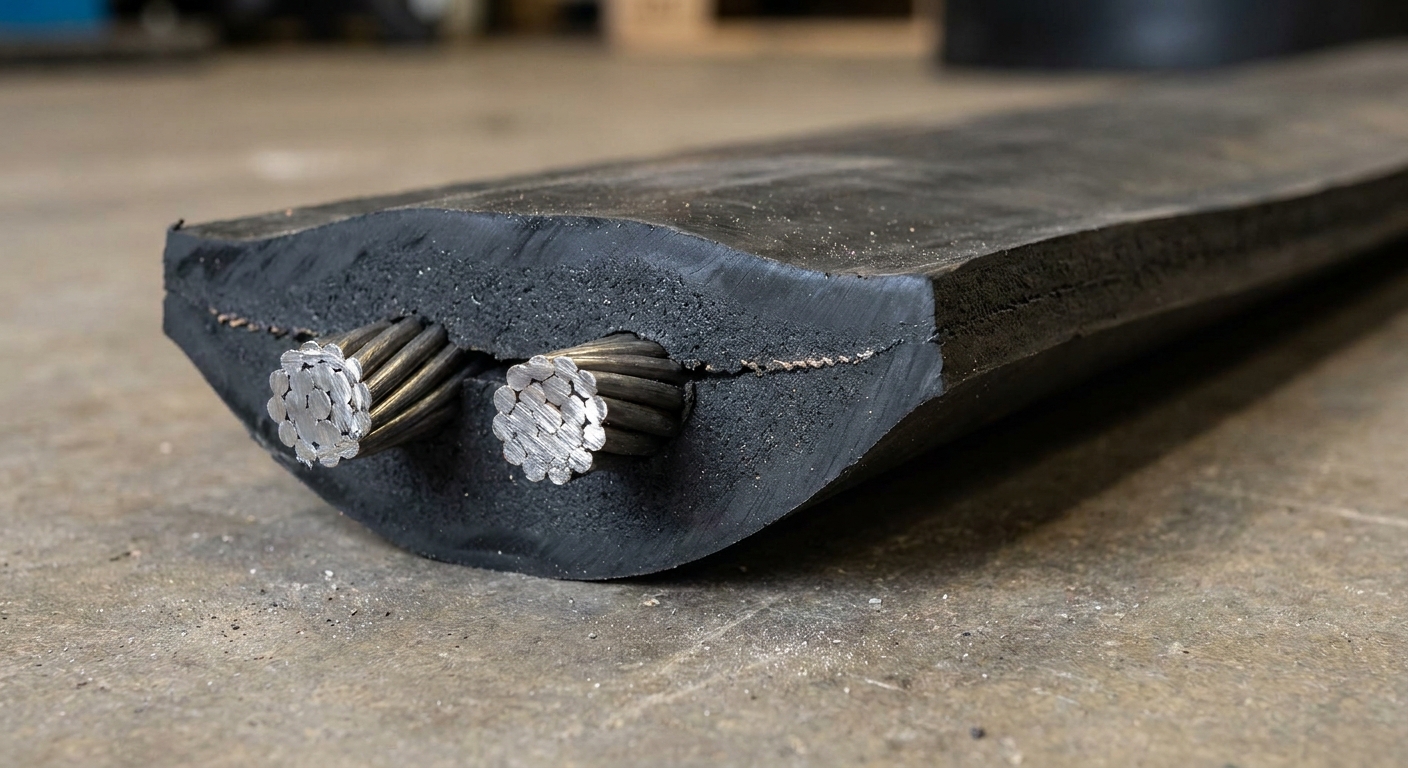
The technique for how to cut conveyor belt rubber varies significantly depending on whether you are handling textile plies or steel cable reinforcements. Steel cord belts require specialized hydraulic shears that can snap through high-carbon wires without causing delamination.
Specialized Methods for Steel Cord Belts
Cutting steel-reinforced rubber involves managing the tension of the internal wires. You cannot use standard knives; you must use high-torque grinders or hydraulic guillotines to ensure the cords are cut flush with the rubber.
- Inspect the cross-section for cord “birdcaging.”
- Use water cooling to prevent cord-to-rubber debonding.
- Ensure all wire ends are deburred before splicing.
- Protect your eyes from high-speed wire fragments.
Clean Cutting for EP Fabric and PVC Belts
Textile belts like EP (Polyester/Nylon) are much easier to slice but prone to fraying. You should use ultra-sharp blades and a high-speed cutting action to seal the fibers as you pass through.
- PVC belts may melt and “gum up” slow blades.
- NN (Nylon/Nylon) belts require high-tension cutting.
- Use a slight bevel to protect the fabric edges.
- Clean the edges with a solvent before splicing.
Key Takeaway: Always identify your belt’s internal carcass before selecting a tool to avoid damaging your equipment.
| Belt Carcass | Cutting Difficulty | Recommended Tool | |
|---|---|---|---|
| Steel Cord | Very High | Hydraulic Slicer | |
| EP Fabric | Low | Utility Knife / Circular Saw | |
| PVC / PVG | Moderate | High-speed Oscillating Tool |
Why hire pros for how to cut conveyor belt rubber needs?
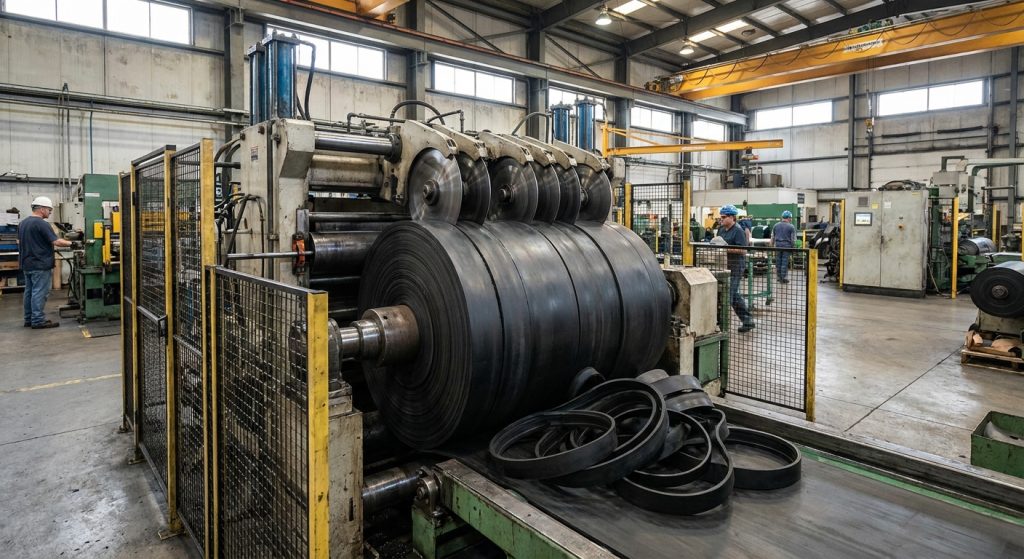
Hiring professionals for how to cut conveyor belt rubber ensures that your belts are resized using CNC-controlled slitting machines for 100% accuracy. Factory-cut solutions eliminate the human error associated with hand-measuring and manual tools.
Access to Advanced Factory Slitting Machines
Professional facilities use massive hydraulic slitters that can handle widths up to 3200mm. These machines apply uniform pressure and use laser guides to maintain tolerances within fractions of a millimeter.
- Simultaneous multi-strip slitting for efficiency.
- Automated tension control during the cut.
- Perfectly parallel edges for long-distance conveyors.
- Capability to handle the thickest “Super Brute” belts.
Professional Edge Beveling and Post-Cut Care
Expert technicians don’t just cut the belt; they finish the edges to prevent future failure. This includes beveling the rubber covers and sealing the carcass to protect it from moisture and chemicals.
- 45-degree beveling to reduce edge curl.
- Chemical sealing of exposed fabric plies.
- Precision marking for mechanical fastener holes.
- Comprehensive quality inspection and certification.
Key Takeaway: Professional cutting provides a level of precision and finishing that manual site-work simply cannot match.
| Service Level | Method | Accuracy Tolerance | |
|---|---|---|---|
| Professional | CNC Slitting Machine | +/- 0.5mm | |
| Experienced Team | Guided Power Saw | +/- 2.0mm | |
| General Labor | Hand Knife | +/- 5.0mm |
Frequently Asked Questions
- Can I use a regular wood saw to cut a rubber belt? No, wood saws lack the proper tooth geometry and speed, which causes the rubber to melt or the blade to bind dangerously.
- What’s the best way to prevent the edges from fraying? Apply a specialized rubber sealant or perform a 45-degree bevel grind to protect the internal fabric or steel carcass.
- Can I cut a belt while it is still under tension? Never attempt this, as the stored energy can cause the belt to snap violently, leading to catastrophic injury.
- What’s the best tool for an emergency field repair? A heavy-duty hook knife or a cordless angle grinder with a thin diamond blade offers the best balance of speed and control.
- Can I use water to lubricate the cut? Yes, a light spray of water acts as an excellent coolant and lubricant, preventing smoke and “gumming” of the rubber.
Conclusion
At ZHENXING, we believe that a conveyor system is only as strong as its weakest splice, and that splice starts with a perfect cut. Mastering how to cut conveyor belt rubber is a foundational skill that ensures your mining or industrial operations run without unnecessary vibration or material loss. Whether you are performing a quick field repair or utilizing our advanced factory slitting services, precision remains the key to equipment longevity. We provide the high-quality rubber and the engineering expertise to help you maintain it. For custom-cut solutions tailored to your specific industrial needs, please contact us today for a professional consultation.