
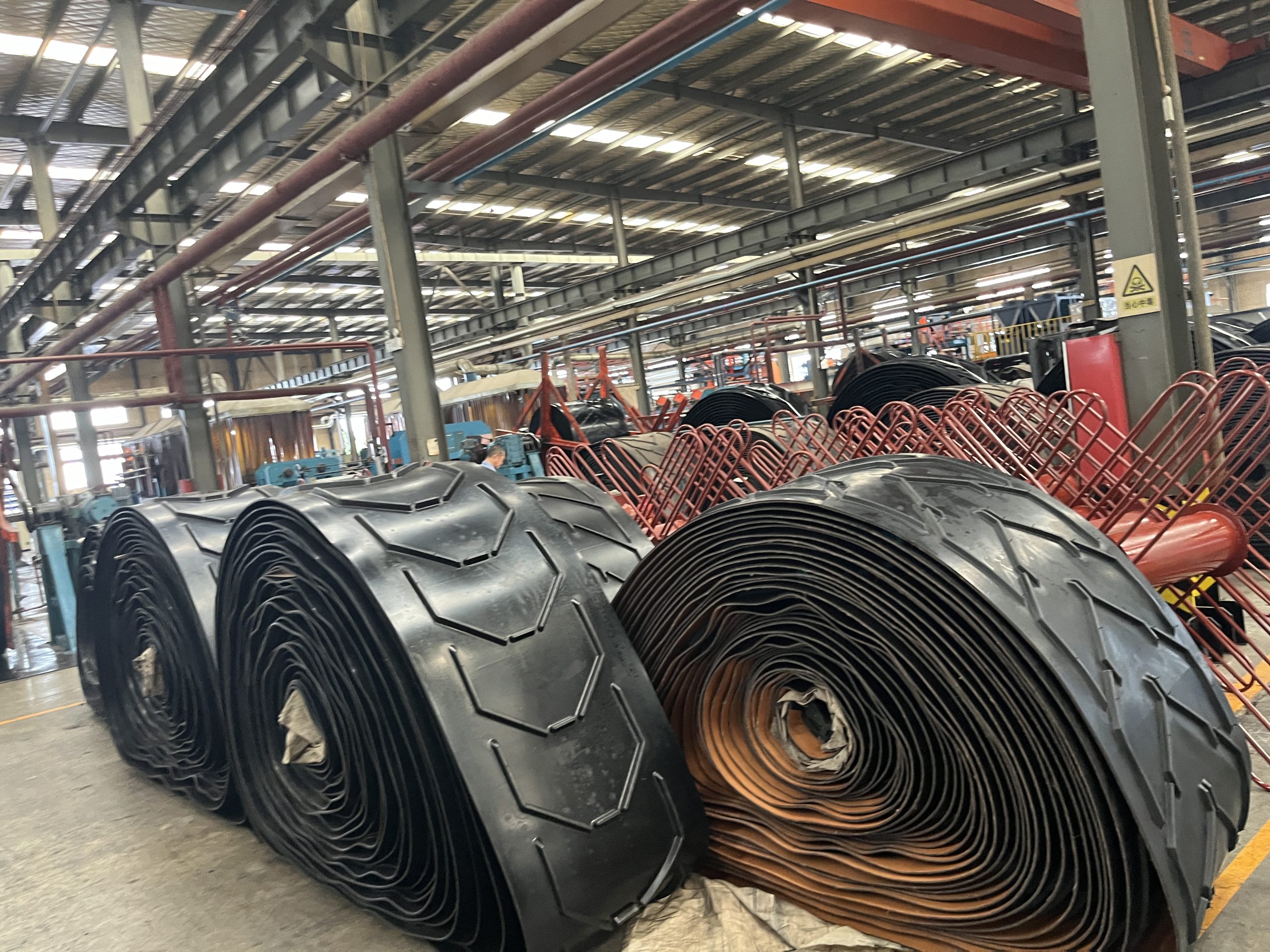
A reliable conveyor belt rubber manufacturer provides durable, high-performance belts for plaster casting, reducing downtime and ensuring stable operation under heavy loads and thermal stress.
1. What Is Plaster Casting in Industrial Environments?
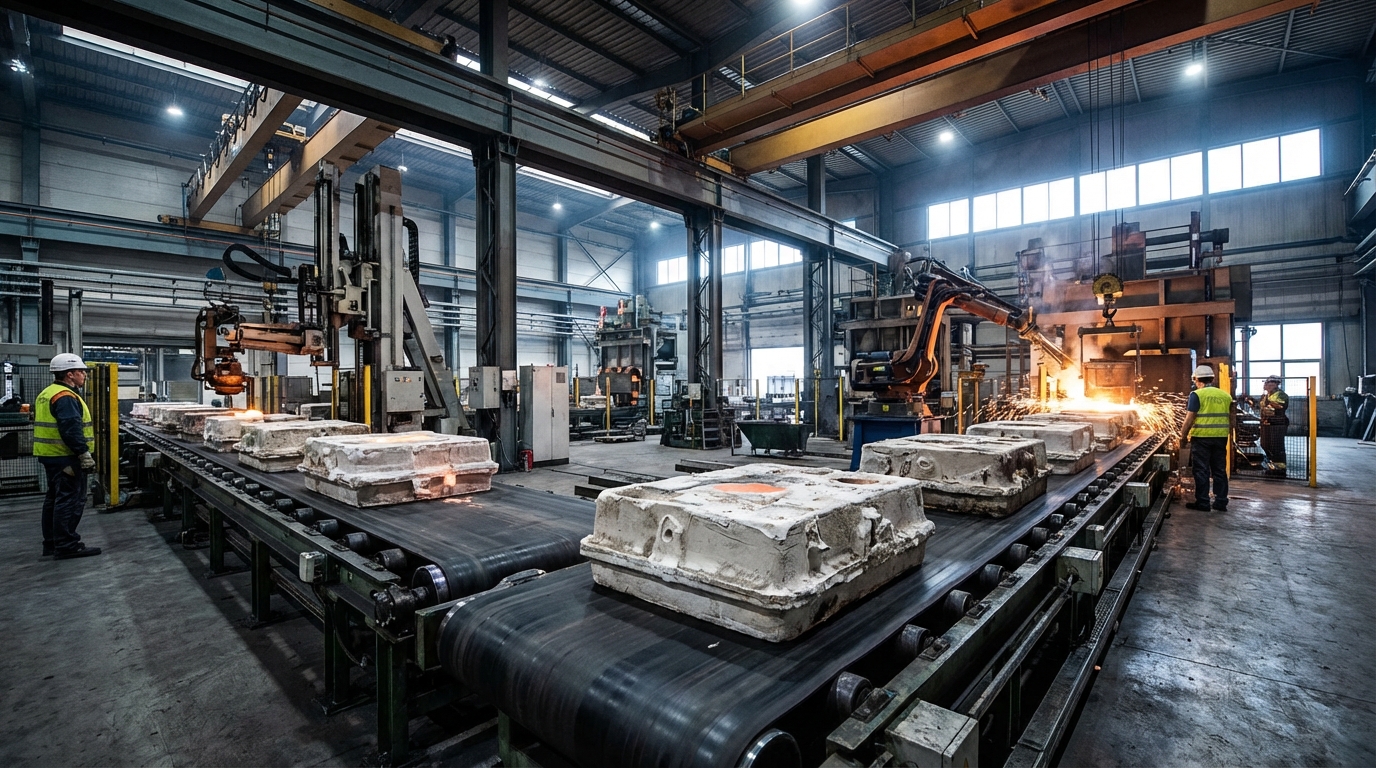
Plaster casting is a manufacturing technique utilizing plaster of Paris molds to produce complex non-ferrous metal shapes, supported by reliable logistics from a conveyor belt rubber manufacturer. This process is critical for industries that require smooth surface finishes and tight dimensional tolerances that sand casting simply cannot provide.
Is Plaster Casting Different from Sand Casting?
Sand casting uses granular materials, while plaster casting relies on a slurry that hardens into a solid, smooth mold. Think about it.
- Plaster provides finer detail.
- It requires more careful handling.
- Heat management is more critical.
What Materials Are Primarily Cast in Plaster?
The process is generally reserved for low-melting-point metals like aluminum, magnesium, and zinc alloys. But that’s not all…
- Copper alloys are also compatible.
- Fine ceramics use similar mold processes.
- High-temp alloys are usually avoided here.
Why Is Automation Necessary for This Process?
Automated belts ensure that heavy molds move through the pouring and curing stages without human intervention or vibration. Listen to this.
- Consistent speed prevents mold cracking.
- Safety is increased in high-heat zones.
- Labor costs are significantly reduced.
Key Takeaway: Heavy-duty automation is the backbone of modern casting, ensuring that fragile molds reach completion without structural damage.
| Feature | Industrial Description | |
|---|---|---|
| Primary Material | Gypsum-based Plaster of Paris | |
| Target Metals | Aluminum, Magnesium, Zinc | |
| Process Goal | High precision and smooth finish |
Industrial systems must prioritize vibration-free transport to maintain the integrity of the plaster molds during the critical setting phase.
2. How Does the Plaster Casting Process Work?
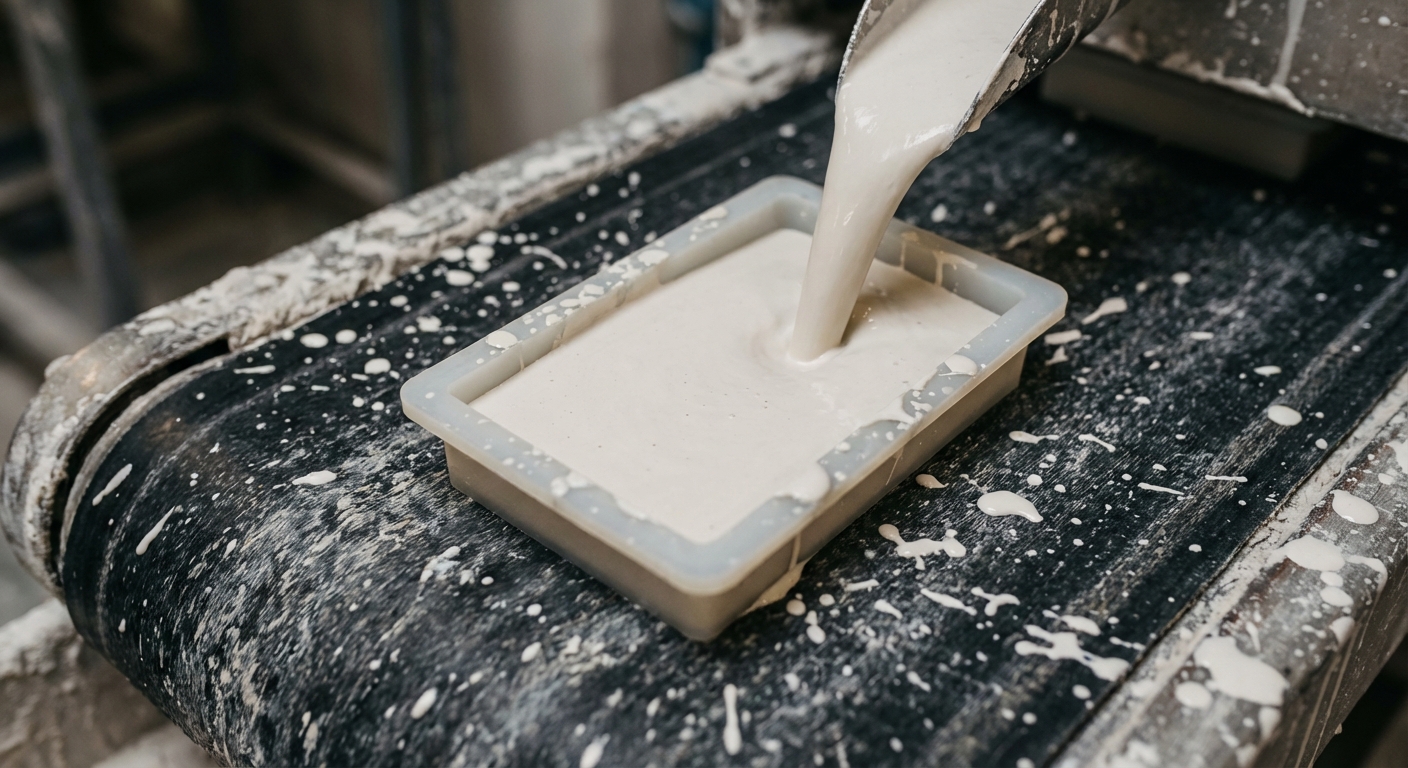
The process works by pouring a liquid plaster slurry over a pattern, a step that requires a conveyor belt rubber manufacturer to provide chemical-resistant surfaces. Once the plaster sets, the pattern is removed, and the mold is baked to remove moisture before metal is introduced.
How Are Molds Created and Cured?
Molds are formed by mixing gypsum with water and additives to create a slurry that captures every pattern detail. Think about it.
- Curing requires high-temperature ovens.
- Belt tracking must be perfect.
- Moisture can destroy standard belt plies.
What Happens During the Metal Pouring Stage?
Molten metal is poured into the pre-heated plaster mold to prevent thermal shock and ensure complete cavity filling. But that’s not all…
- Molds can weigh hundreds of pounds.
- Spillages require heat-resistant rubber.
- Precision placement on the belt is vital.
How Is the Final Product Extracted?
After the metal solidifies, the plaster mold is broken away in a process called “shakeout” to reveal the part. Here is the kicker.
- Shakeout zones are highly abrasive.
- Dust can seize standard idlers.
- Belt covers must resist scraping.
Key Takeaway: From slurry pouring to the final shakeout, each step puts immense physical and chemical stress on your conveyor infrastructure.
| Process Stage | Requirement | |
|---|---|---|
| Slurry Pouring | Chemical and moisture resistance | |
| Mold Curing | Thermal stability up to 400°F | |
| Extraction | High abrasion resistance (DIN X/Y) |
A robust system prevents the common issue of belt delamination caused by the extreme humidity and heat of the curing ovens.
3. Why Use Heavy-Duty Belts for Plaster Casting?
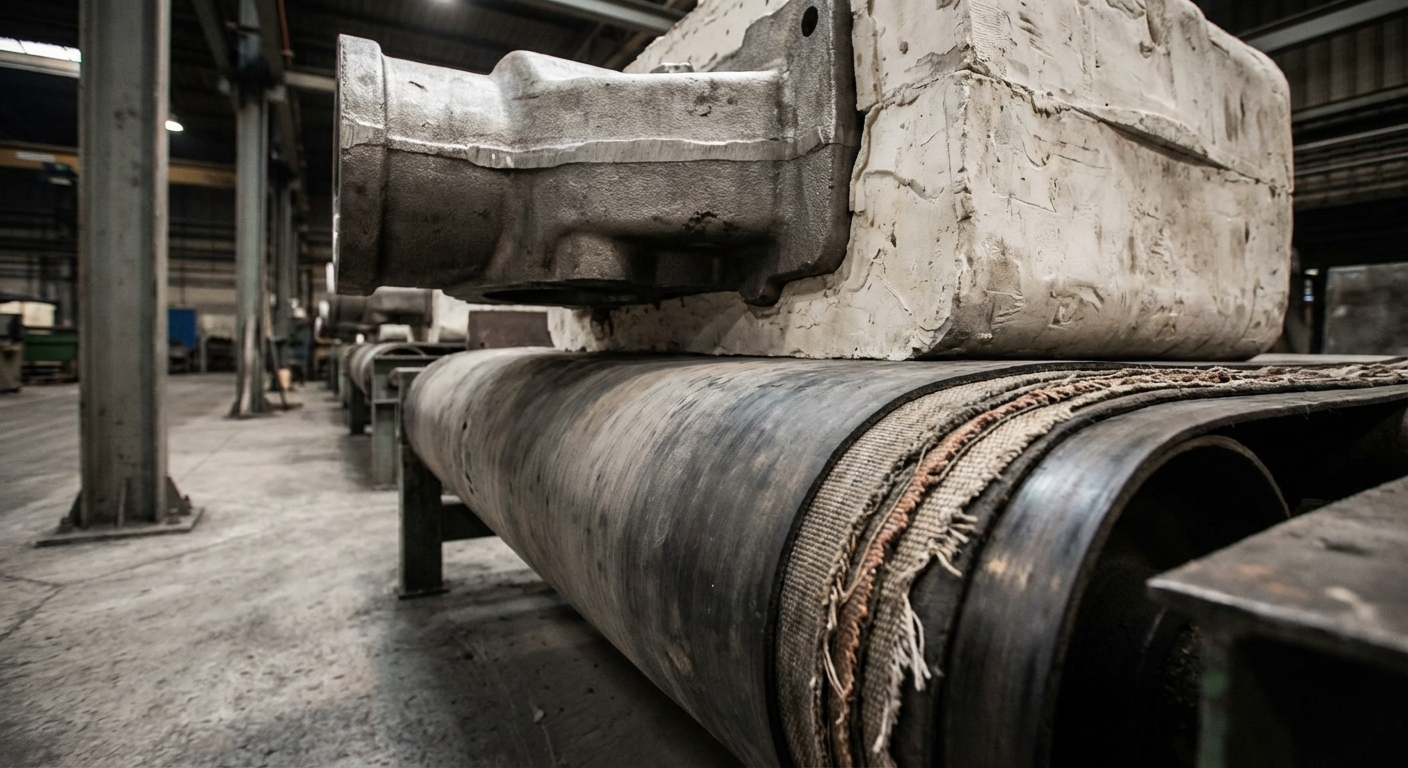
Heavy-duty belts are required to support the extreme weight and density of industrial molds, which is why sourcing from a conveyor belt rubber manufacturer is essential. Standard light-duty belts often warp or elongate under the localized pressure of large metal-filled plaster containers.
Can Regular Belts Handle Plaster Abrasion?
Standard rubber compounds will quickly erode when exposed to the fine, grit-like particles of dry plaster dust. Think about it.
- Abrasion leads to edge fraying.
- Dust particles penetrate belt layers.
- Maintenance costs skyrocket on cheap belts.
How Does Weight Impact Belt Tracking?
Massive plaster molds can cause a belt to “sag” between idlers, leading to tracking issues and catastrophic motor strain. But that’s not all…
- Misalignment causes side-wall damage.
- Sagging results in uneven metal cooling.
- Reinforced carcasses are the only solution.
What Are the Risks of Using Low-Grade Rubber?
Low-grade covers will harden and crack, especially when moving between different temperature zones in the casting plant. Listen to this.
- Cracks trap abrasive plaster residue.
- Trapped dust causes internal ply separation.
- Belt lifespan is cut by 60% or more.
Key Takeaway: Investing in heavy-duty belting is a direct investment in the reliability and safety of your production line.
| Challenge | Heavy-Duty Solution | |
|---|---|---|
| Massive Load | High tensile EP or Steel Cord | |
| Dust Friction | Thick, high-abrasion covers | |
| Thermal Cycling | EPDM heat-resistant compounds |
Utilizing a reinforced carcass ensures that your belt maintains its original length and tension throughout years of heavy service.
4. What Is the Role of Heat Resistance in Casting?
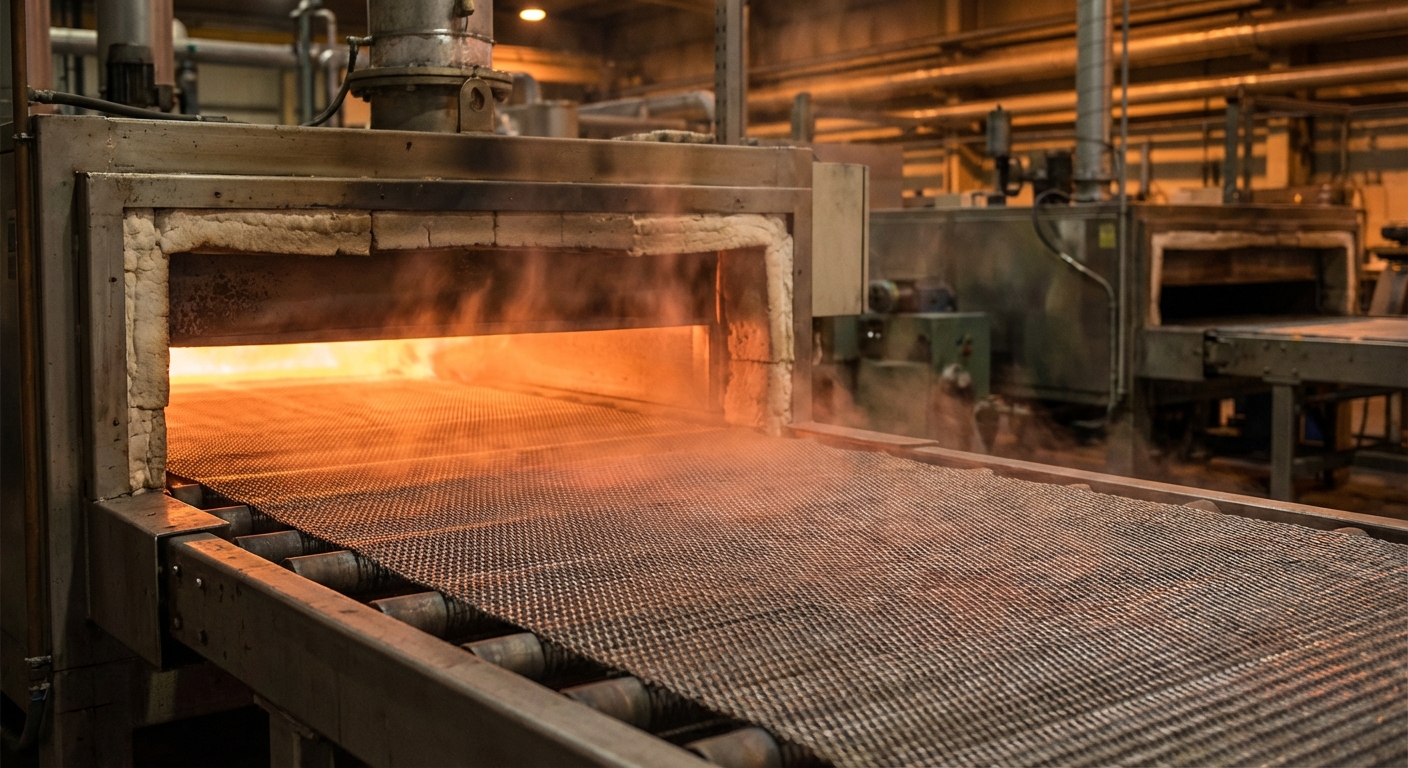
Heat resistance allows the conveyor to transport molds directly through drying ovens, a capability provided by a specialized conveyor belt rubber manufacturer. Without heat-resistant EPDM covers, the rubber would oxidize and lose its flexibility, leading to immediate system failure.
How Does Heat Cause Belt Delamination?
Constant exposure to temperatures over 200°F breaks down the bonding agents between the internal fabric plies. Think about it.
- Layers begin to bubble and separate.
- The belt loses its structural integrity.
- Sudden breakage can happen under load.
What Is the Benefit of EPDM Rubber Covers?
EPDM (Ethylene Propylene Diene Monomer) is designed to resist aging, heat, and oxygen at a molecular level. But that’s not all…
- It stays flexible in extreme cold.
- It resists surface cracking at 400°F.
- It prevents the rubber from “cooking.”
Can Heat Belts Reduce Cooling Time?
By using specialized belts that allow air circulation or resist high heat, you can move parts faster through the cooling tunnel. Here is the kicker.
- Faster cycles lead to higher output.
- Managed cooling improves part quality.
- Heat belts handle the “hot spots” safely.
Key Takeaway: Thermal management is non-negotiable in casting; high-temp belts prevent the catastrophic failure of the transport line.
| Temperature Zone | Recommended Belt Grade | |
|---|---|---|
| Drying Ovens | T2/T3 Heat Resistant (EPDM) | |
| Pouring Station | High Abrasion + Heat Resistant | |
| Cooling Tunnel | Standard Heavy Duty Rubber |
Selecting the correct heat grade ensures the belt does not become brittle, which is the leading cause of splice failure in foundries.
5. Which Belt Materials Suit Plaster Mold Handling?
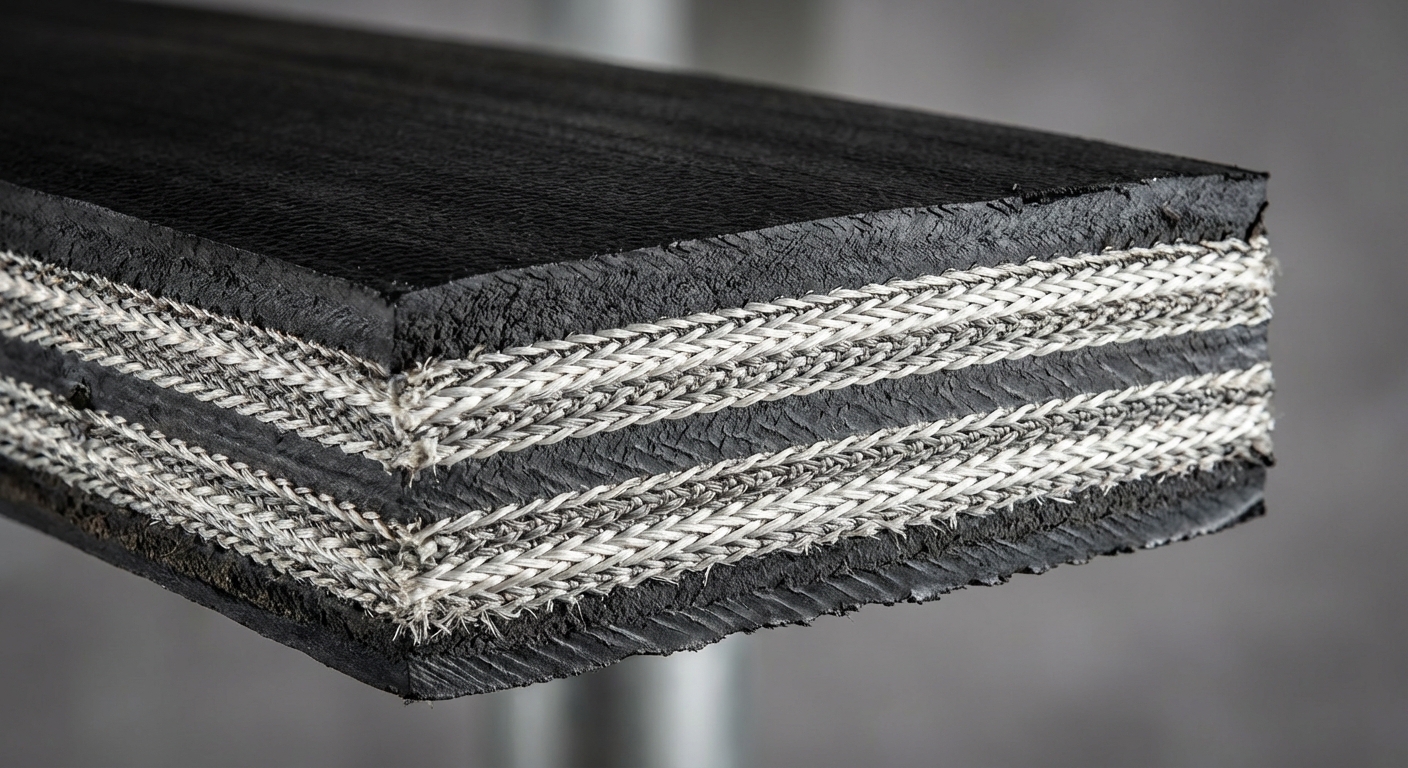
Polyester and Nylon (EP) fabrics are the preferred materials for plaster handling, as recommended by any conveyor belt rubber manufacturer . These materials provide the high tensile strength and low-stretch characteristics needed to move heavy molds over long distances accurately.
Why Is Polyester Preferred Over Cotton?
Polyester does not absorb moisture, which is critical in an environment filled with wet plaster slurry and steam. Think about it.
- Cotton plies rot in humid conditions.
- Polyester maintains tension when wet.
- It offers superior impact resistance.
Does Nylon Provide Better Impact Resistance?
Nylon (NN) is often used in the transverse direction to provide the belt with the flexibility to trough while resisting heavy impacts. But that’s not all…
- It handles the “drop” at transfer points.
- NN plies are incredibly hard to rip.
- It allows for smaller pulley diameters.
How Does Cover Thickness Affect Belt Life?
A thicker top cover (typically 6mm to 10mm) provides a wear buffer against the abrasive grinding of the plaster molds. Listen to this.
- More rubber equals more years of use.
- It protects the internal fabric plies.
- Thicker covers dampen vibration.
Key Takeaway: The combination of EP fabrics and thick rubber covers creates a belt that is both moisture-proof and physically indestructible.
| Belt Component | Industrial Standard | |
|---|---|---|
| Carcass Material | EP (Polyester / Nylon) | |
| Top Cover Thickness | 6mm – 12mm | |
| Bottom Cover | 2mm – 4mm |
Properly specified materials eliminate the risk of “belt stretch,” which often leads to take-up limit issues and tracking errors.
6. How Do Steel Cord Belts Enhance Casting Lines?
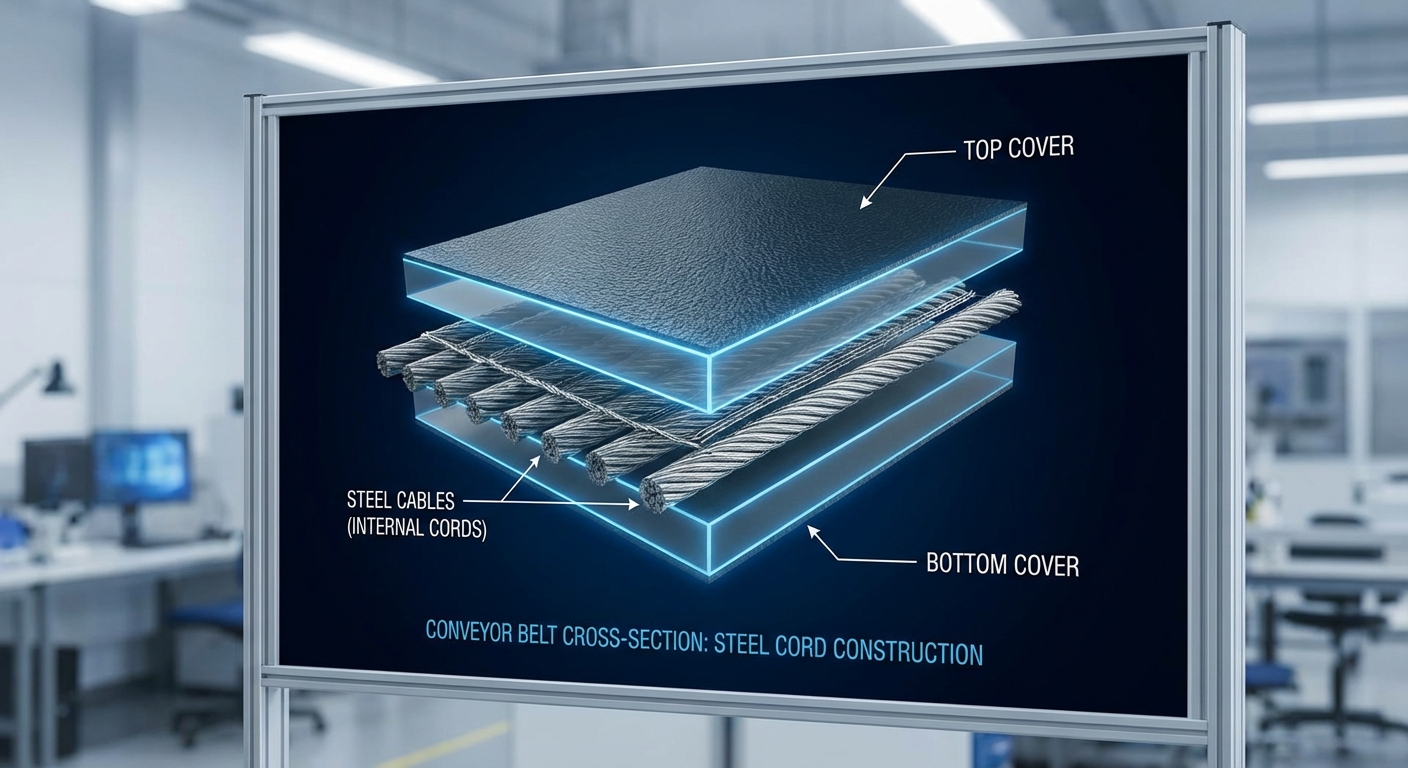
Steel cord belts enhance lines by offering virtually zero elongation under the massive loads common in a conveyor belt rubber manufacturer facility. These belts utilize high-tensile steel cables embedded in rubber to handle weights that would snap standard textile belts.
Are Steel Cords Better for Long Lines?
Steel cord construction is the gold standard for long-distance casting lines where maintaining precise tension is critical. Think about it.
- There is no “creep” or stretching.
- One belt can span several hundred meters.
- Fewer transfer points mean less breakage.
How Do Steel Cords Prevent Ripping?
The longitudinal steel cables provide a physical barrier that prevents sharp metal debris from slicing through the entire belt. But that’s not all…
- Some belts include transverse rip sensors.
- Impact pads can be built into the rubber.
- High-tensile strength prevents catastrophic snapping.
What Maintenance Do Steel Cord Belts Require?
While durable, these belts require regular ultrasonic or X-ray inspections to check for internal cable corrosion or breakage. Here is the kicker.
- Splices must be done with extreme care.
- Proper cleaning prevents cable rusting.
- They last 3-5 times longer than EP belts.
Key Takeaway: Steel cord belts are the ultimate solution for heavy industrial casting operations where downtime is not an option.
| Performance Metric | Steel Cord Advantage | |
|---|---|---|
| Elongation | < 0.25% (Virtually Zero) | |
| Tensile Strength | ST1000 – ST5400 N/mm | |
| Service Life | 15 – 20 Years |
Choosing steel cord allows you to design longer, more efficient production lines without the need for multiple intermediate motors.
7. What Are the Main Advantages of Plaster Casting?
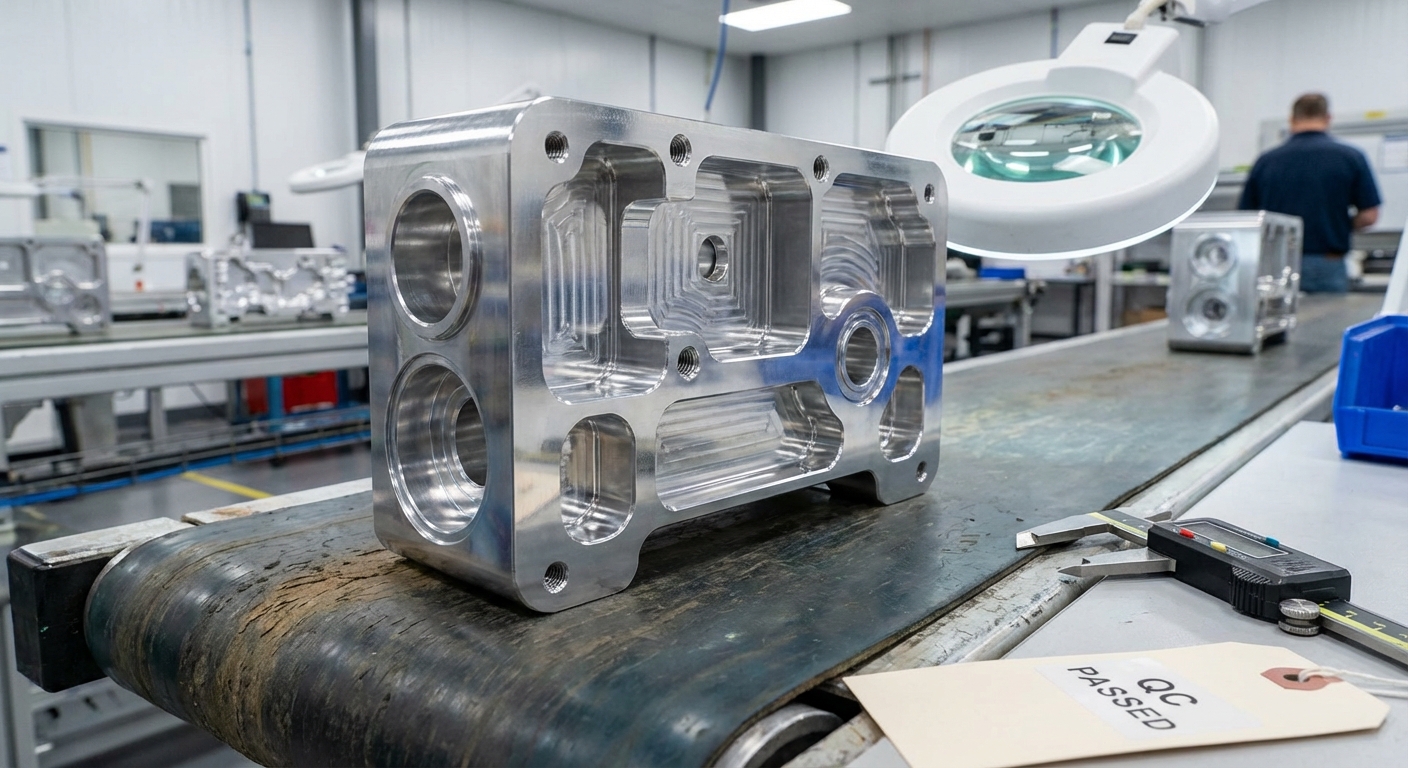
The main advantages of this process include exceptional surface finishes and dimensional accuracy, features that are preserved by a conveyor belt rubber manufacturer providing vibration-free transport. This makes it the ideal choice for complex aerospace and automotive components.
Does Plaster Provide Better Detail?
The fine particles of the plaster slurry capture intricate textures and geometries that sand casting simply misses. Think about it.
- Post-processing machining is reduced.
- Surface roughness is extremely low.
- Branding and logos are crisp.
Can You Achieve Thinner Wall Sections?
Plaster molds have lower cooling rates, allowing molten metal to flow into thinner sections before it solidifies. But that’s not all…
- Weight reduction is easier to achieve.
- Complex internal cooling fins are possible.
- Design freedom is significantly expanded.
Why Is It More Cost-Effective?
For low-to-medium production volumes, plaster casting eliminates the need for expensive permanent steel dies used in die casting. Listen to this.
- Tooling costs are much lower.
- Prototypes can be made quickly.
- Design changes cost less to implement.
Key Takeaway: Plaster casting offers a bridge between sand casting and expensive die casting, providing high-quality parts at a lower entry cost.
| Benefit | Impact on Manufacturing | |
|---|---|---|
| Surface Finish | Eliminates secondary grinding | |
| Wall Thickness | Allows for lightweight designs | |
| Tooling Cost | Ideal for low-volume prototypes |
The precision of the casting is only as good as the belt it travels on; any vibration during cooling can distort the final metal part.
8. How Do You Maintain Belts in Abrasive Environments?
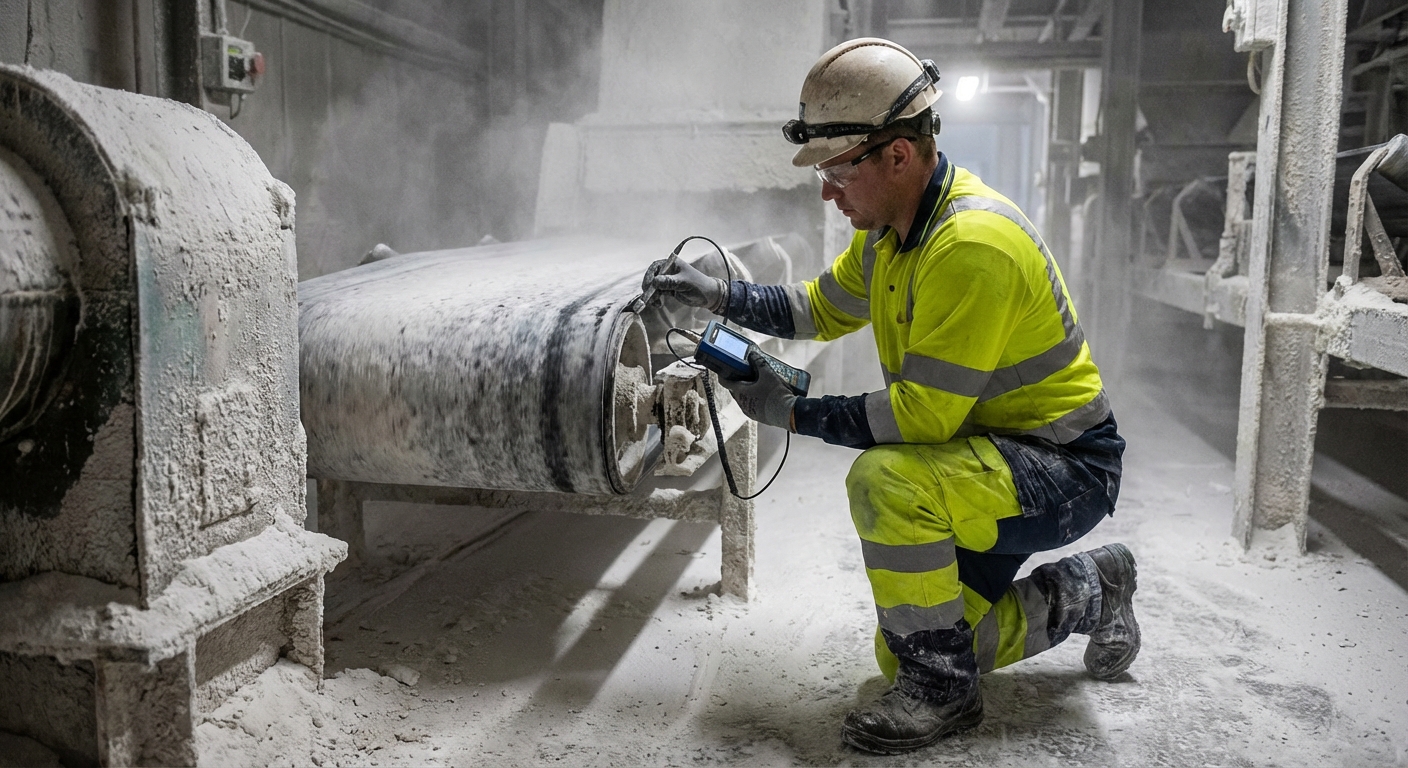
Maintaining belts involves continuous cleaning and regular inspections of the rubber covers to prevent damage in the lines of a conveyor belt rubber manufacturer. Plaster dust is a powerful abrasive that can destroy idlers and rollers if it is allowed to accumulate.
How Often Should You Inspect Edges?
Weekly inspections are necessary to ensure that abrasive plaster hasn’t begun to “saw” into the belt’s side-walls. Think about it.
- Frayed edges lead to tracking failure.
- Moisture enters the carcass through fraying.
- Early detection saves the entire belt.
What Is the Best Cleaning Method?
Primary and secondary urethane scrapers should be installed to remove fine plaster residue before it reaches the return idlers. But that’s not all…
- Water spray systems can be used.
- Air knives blow away dry dust.
- Clean idlers prevent belt slippage.
Can Scrapers Damage Heat Belts?
Scraper blades must be matched to the rubber grade to ensure they do not “chatter” or gouge the heat-softened surface. Here is the kicker.
- Tension must be perfectly calibrated.
- Tungsten carbide tips are often too harsh.
- Urethane is the safest choice for heat belts.
Key Takeaway: A clean conveyor is a long-lasting conveyor; removing abrasive plaster dust daily is the most important maintenance task.
| Maintenance Task | Frequency | |
|---|---|---|
| Scraper Adjustment | Daily | |
| Edge Inspection | Weekly | |
| Pulley Lagging Check | Monthly |
Effective cleaning systems prevent the “sandpaper effect” where plaster dust grinds down your pulleys and belt covers simultaneously.
9. Where Is Plaster Casting Applied Industrially?
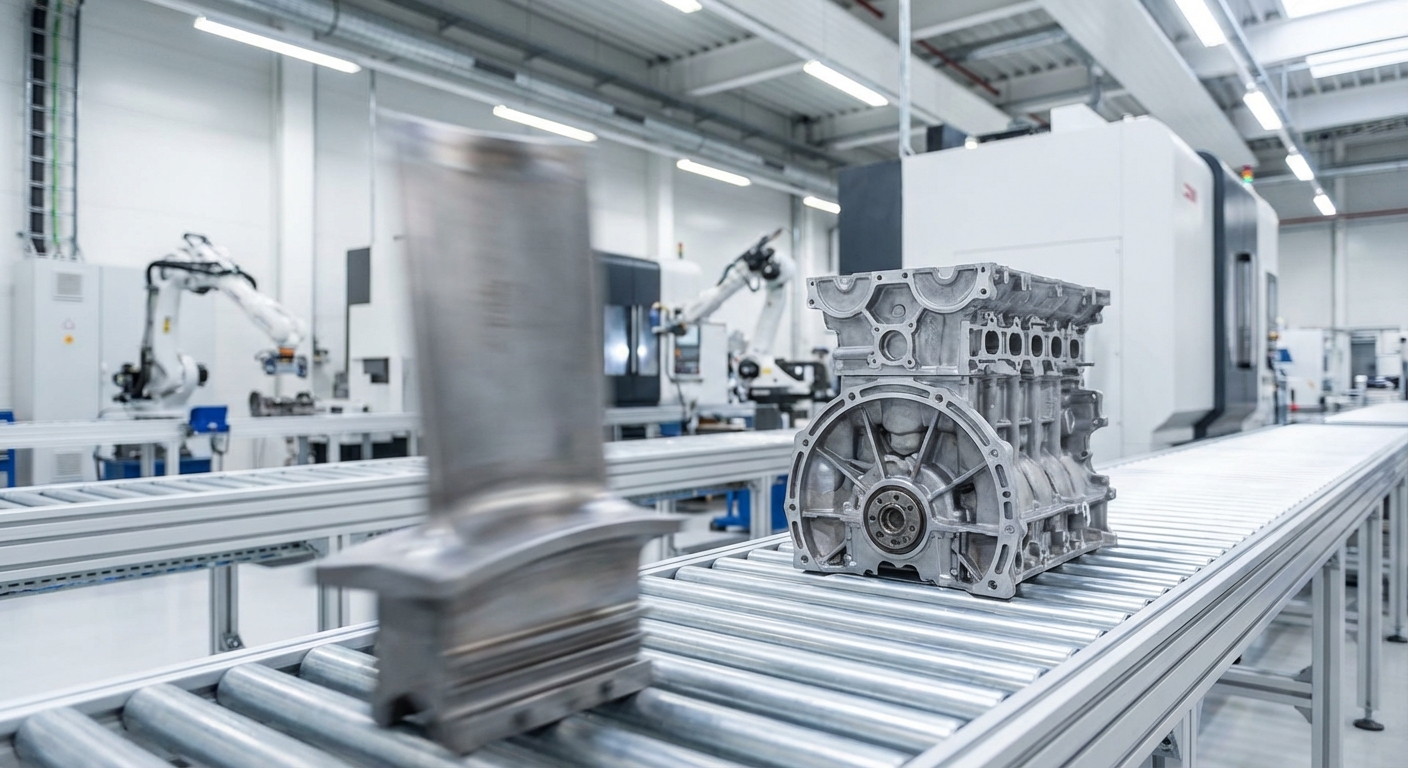
Plaster casting is applied across the aerospace, automotive, and artistic sectors, all supported by the high-capacity belts of a conveyor belt rubber manufacturer . Whether it is a turbine housing or a bronze sculpture, the transport needs remain consistently heavy-duty.
How Is It Used in the Aerospace Sector?
Aerospace manufacturers use plaster casting for complex engine components and fuel system parts that require high precision. Think about it.
- Reliability is a matter of life or death.
- Parts must be lightweight yet strong.
- Internal geometries are often very complex.
Does the Automotive Industry Use This?
While high-volume parts are die-cast, the automotive industry uses plaster casting for high-performance racing components and prototypes. But that’s not all…
- It allows for rapid engine block testing.
- Custom gearboxes use this process.
- It is perfect for limited-run supercars.
What Role Does It Play in Artistic Foundries?
Artists utilize the “lost-plaster” method to create detailed bronze replicas that capture every thumbprint and texture. Listen to this.
- Detail preservation is the #1 priority.
- Large sculptures require huge belts.
- Vibration-free movement prevents distortion.
Key Takeaway: This process is the secret behind some of the world’s most intricate and critical industrial and artistic components.
| Industry | Typical Components | |
|---|---|---|
| Aerospace | Turbine vanes, fuel housings | |
| Automotive | Racing manifolds, prototypes | |
| Fine Art | Bronze statues, replicas |
Each of these industries relies on the heavy-duty conveyor belt to act as a stable, reliable “moving floor” for their high-value products.
10. How Do Manufacturers Ensure Belt Longevity?
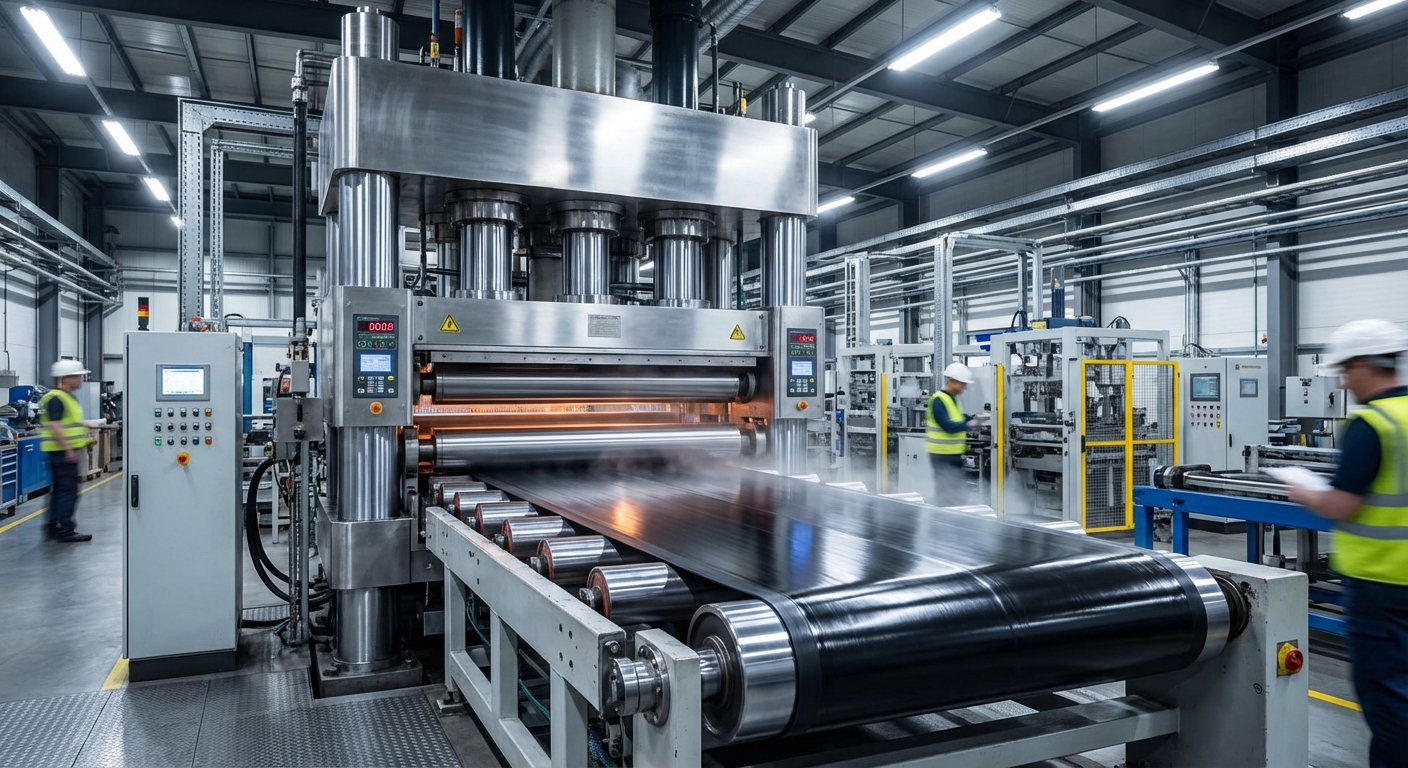
Manufacturers ensure longevity through advanced vulcanization and high-quality chemical compounding, the hallmarks of a leading conveyor belt rubber manufacturer. By controlling the bonding process at the molecular level, they create a product that resists the delamination common in humid foundries.
What Is the Impact of Advanced Vulcanization?
State-of-the-art presses apply uniform heat and pressure to fuse the rubber and fabric layers into a single, inseparable unit. Think about it.
- High adhesion strength prevents peeling.
- Splices become as strong as the belt.
- It eliminates air pockets that cause heat failure.
How Do Quality Inspections Prevent Failure?
Every meter of belt undergoes tensile testing and abrasion loss measurements before it leaves the factory floor. But that’s not all…
- X-rays check for steel cord alignment.
- Laser sensors verify cover thickness.
- Chemical analysis ensures heat resistance.
Why Does Compound Chemistry Matter?
The specific blend of polymers and carbon blacks determines how the belt will react to hot oil, steam, or plaster dust. Here is the kicker.
- One wrong additive can ruin the belt.
- EPDM requires precise curing times.
- Custom compounds solve specific plant problems.
Key Takeaway: Quality is built into the belt during the manufacturing phase; choosing a reputable supplier is the only way to guarantee longevity.
| Quality Metric | Industry Requirement | |
|---|---|---|
| Adhesion Strength | > 10 N/mm | |
| Abrasion Loss | < 120 mm³ | |
| Heat Grade | Up to 400°F (Continuous) |
By prioritizing these engineering standards, you ensure your casting facility operates at peak efficiency for years to come.
Frequently Asked Questions
- Can I use a standard belt for high-temperature casting? No. Standard belts will become brittle and crack under thermal stress; you must use EPDM heat-resistant covers.
- What’s the best way to prevent plaster buildup? Use a dual-scraper system with urethane blades specifically designed for fine, abrasive particulates.
- Can I repair a heat-damaged belt? No. Once the internal plies have delaminated due to heat, the belt’s structural integrity is lost and it requires replacement.
- What’s the best belt for heavy metal molds? High-tensile EP (Polyester) multi-ply belts or Steel Cord belts are recommended for their low-stretch and high weight capacity.
- How do I choose between EP and NN belts? Choose EP for long distances and low-stretch needs; choose NN for zones with high impact or frequent loading drops.
Maximize Your Casting Efficiency Today
Selecting the right conveyor system is the difference between a smooth production line and a facility plagued by downtime. Don’t let inferior rubber compounds hold back your industrial output. Our team of experts is ready to design a custom solution tailored to your specific temperature and weight requirements. To get a quote on high-performance belting, contact us today and stabilize your facility’s future.