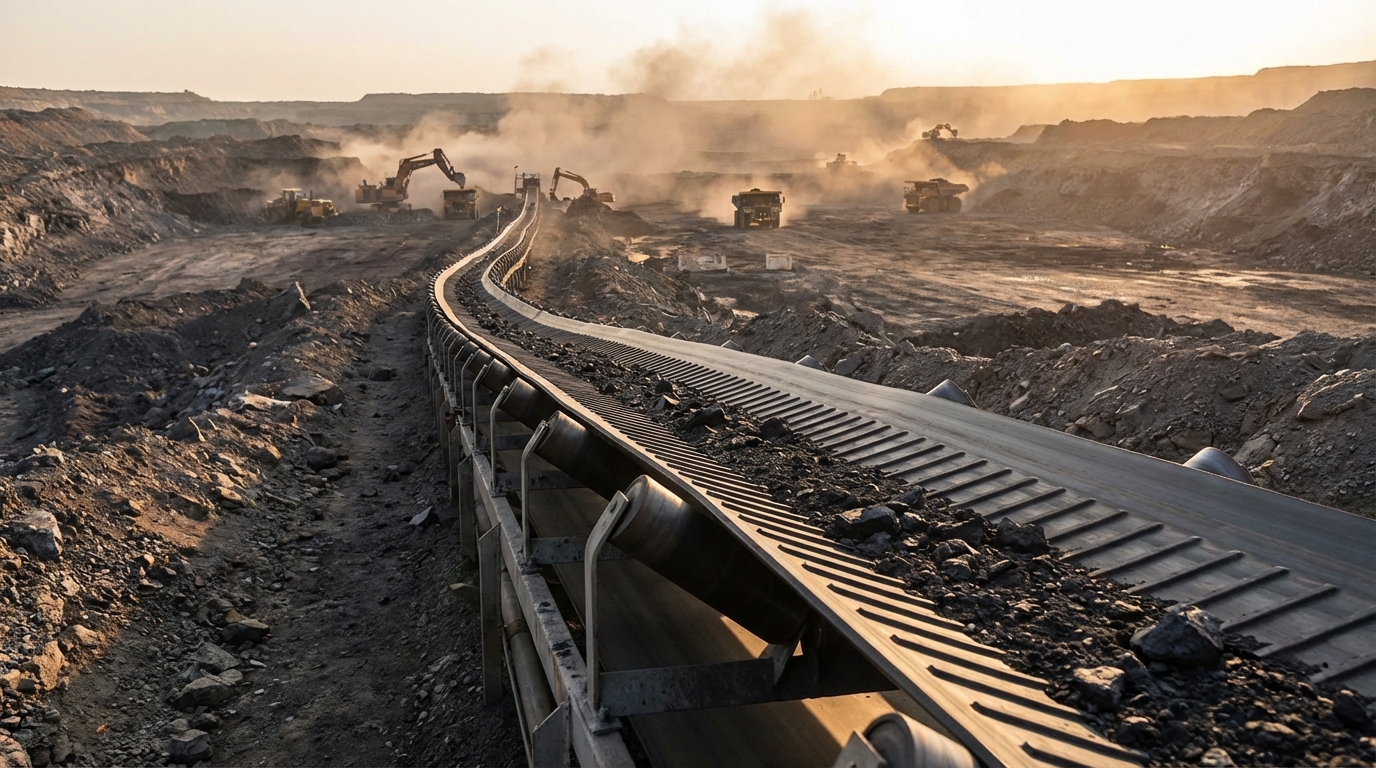
A corrugated rubber conveyor belt enables efficient steep-angle transport, preventing spillage, reducing downtime, and maximizing throughput in space-constrained industrial environments.
What is a corrugated rubber conveyor belt?
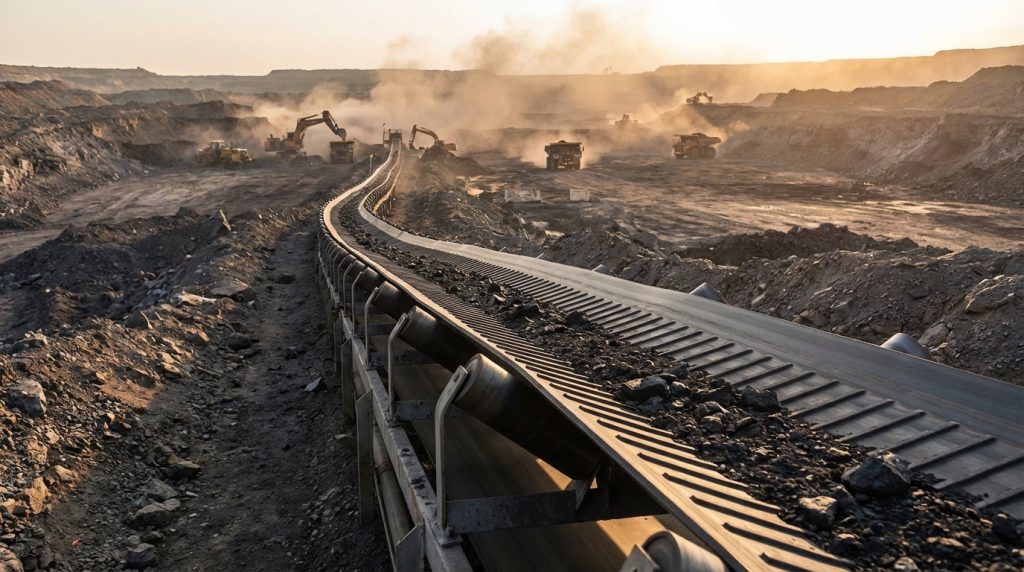
A corrugated rubber conveyor belt is a specialized material handling solution featuring flexible, wavy sidewalls and horizontal cleats designed to transport bulk materials at steep angles. This design allows the belt to carry more volume than a flat belt while preventing the material from falling off the sides.
What are the main components?
When you examine the structure, you will see a base belt, vertical sidewalls, and transverse cleats. These parts work together to create a moving “pocket” that holds your material securely.
- The base belt provides the tension.
- The sidewalls prevent side-spillage.
- The cleats prevent material from sliding backward.
Think about this: If you need to move heavy ore or grain vertically, these three components are your best friends. You will find that the base belt is often reinforced with fabric or steel cord to handle the immense weight.
How does the flexible sidewall function?
The corrugated design allows the sidewall to compress and stretch as it travels around the conveyor pulleys. You need this flexibility to prevent the rubber from cracking or tearing under constant bending.
- Corrugation allows for a tight turning radius.
- It absorbs the stress of high-speed operation.
- The height can be customized to your specific needs.
Look at it this way: You are essentially giving the belt “lungs” that expand and contract as it moves. This ensures your system stays operational without the maintenance headaches associated with rigid edges.
Key Takeaway: Understanding the anatomy of the belt is the first step toward optimizing your facility’s vertical material transport efficiency.
| Component | Primary Function | Benefit to You | |
|---|---|---|---|
| Base Belt | Structural Integrity | Handles high tension | |
| Sidewalls | Containment | Zero material spillage | |
| Cleats | Gravity Resistance | Steep angle transport |
The integration of these three parts ensures a seamless flow of material regardless of the incline angle.
Why choose a molded corrugated rubber conveyor belt?
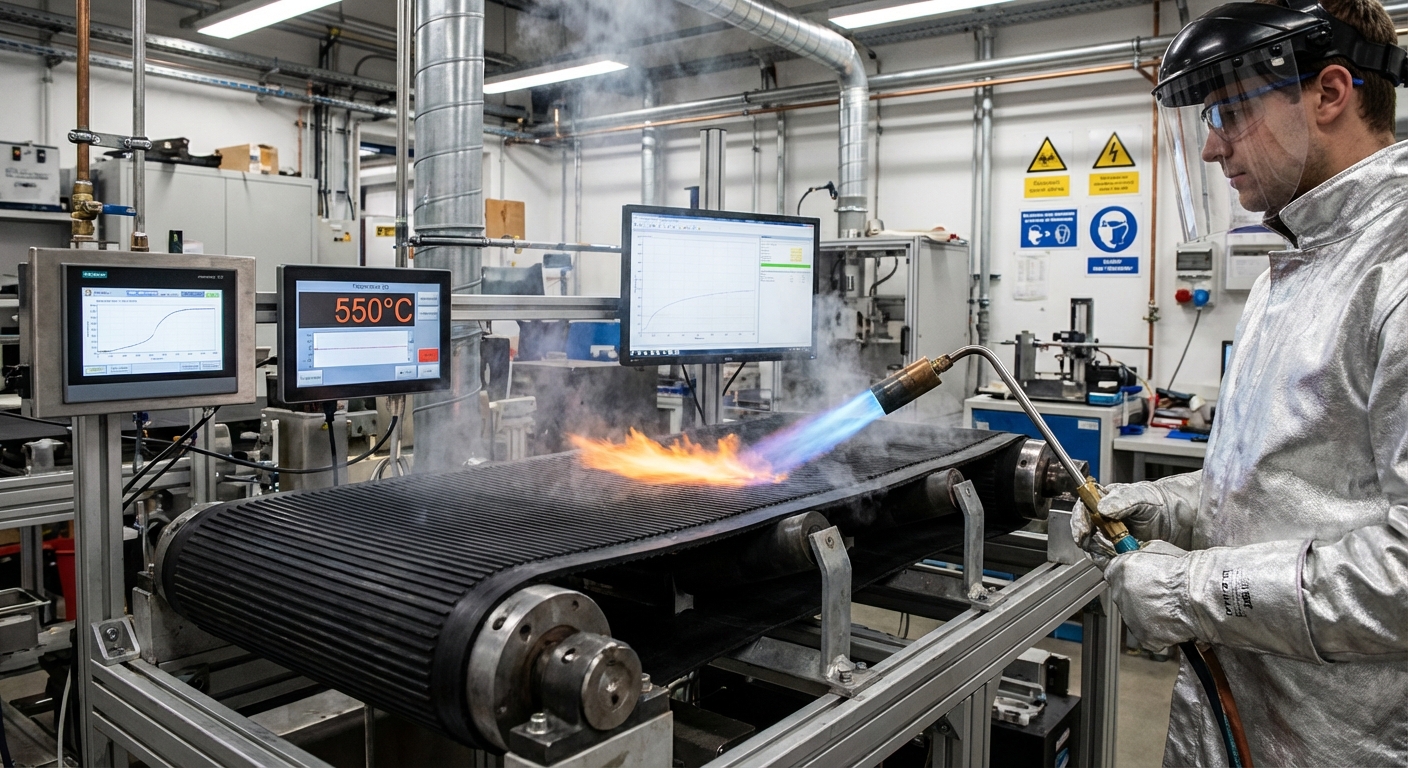
Choosing a molded corrugated rubber conveyor belt ensures that the sidewalls and cleats are vulcanized directly to the base belt for maximum bond strength. This process creates a single, homogenous unit that outperforms belts using cold-glued attachments.
What are the benefits of one-piece molding?
When you opt for one-piece molding, you eliminate the risk of the sidewalls peeling off during heavy use. You get a product where the chemical bond is as strong as the rubber itself.
- Extended service life of the belt.
- Reduced risk of catastrophic failure.
- Better resistance to moisture and debris.
Here’s the deal: You don’t want to be the one explaining why production stopped because a glued-on wall fell off. One-piece molding protects your reputation and your budget simultaneously.
How does it prevent belt delamination?
Molding removes the weak interface points that are inherent in traditional cold-bonding methods. You will notice that the stress is distributed evenly across the entire surface of the belt.
- Uniform rubber thickness throughout.
- No adhesive lines to fail.
- High resistance to thermal expansion.
In other words: You are investing in a belt that behaves as a single organism rather than a collection of parts. This structural unity is what allows you to push the system to its absolute limits.
Key Takeaway: One-piece molding is the gold standard for industrial durability and should be your primary requirement during the procurement process.
| Bonding Type | Reliability | Longevity | |
|---|---|---|---|
| Cold Bonded | Moderate | 12-18 Months | |
| Hot Vulcanized | High | 3-5 Years | |
| Molded Monolithic | Extreme | 5+ Years |
The transition to molded systems significantly reduces the total cost of ownership by extending the replacement cycle.
How does a corrugated rubber conveyor belt save costs?
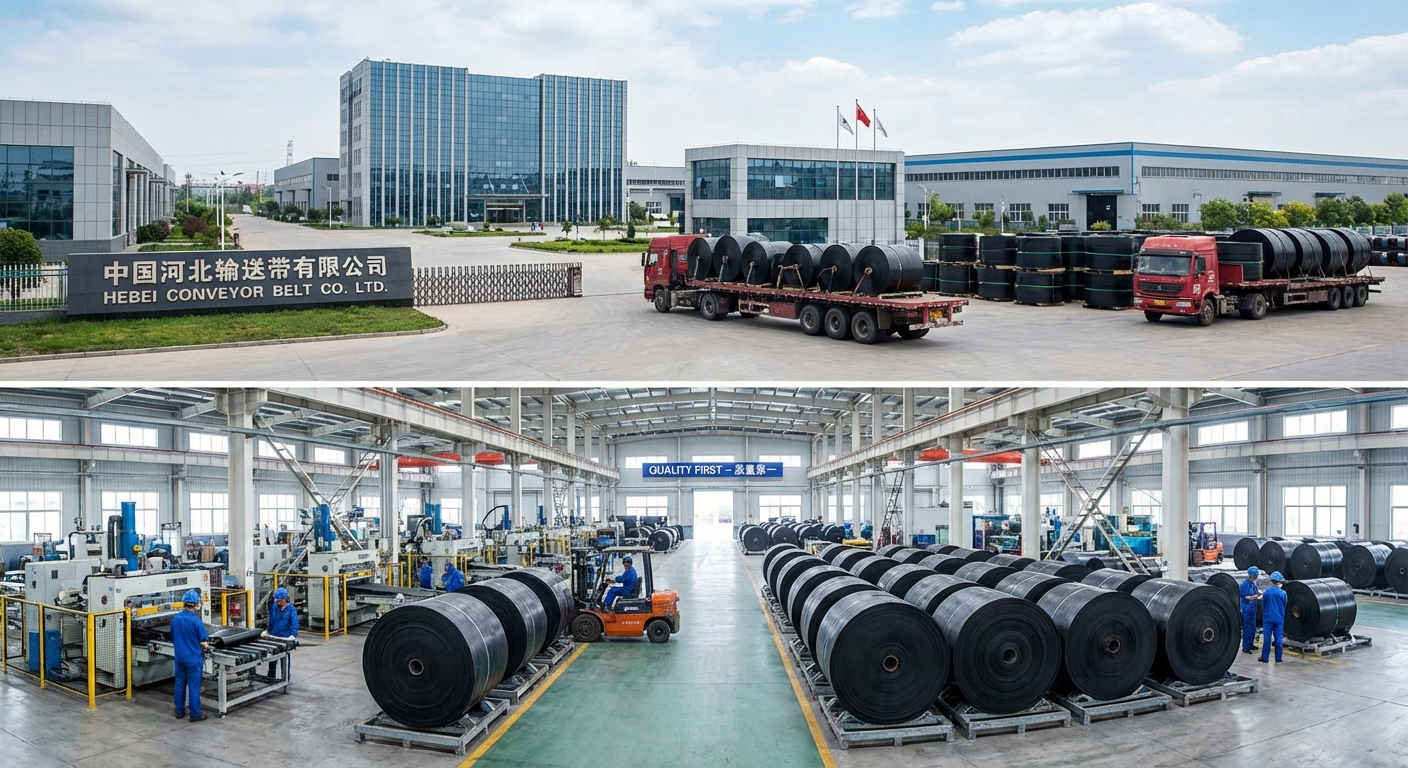
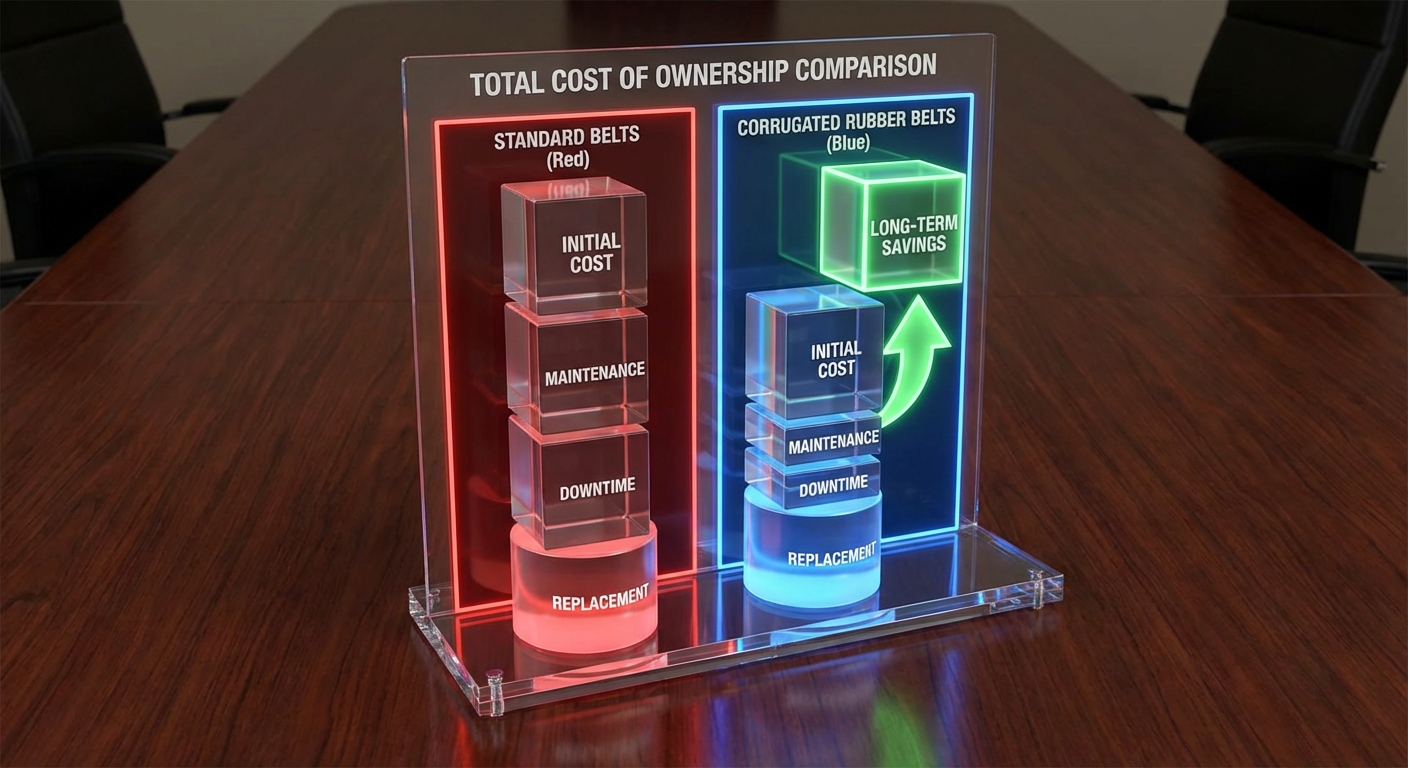
A corrugated rubber conveyor belt saves costs by reducing the footprint of your conveyor system and virtually eliminating material waste through spillage. By moving materials vertically, you save valuable floor space that can be used for other revenue-generating activities.
What is the total cost of ownership?
You must look beyond the initial purchase price to understand the true value of your investment. You will find that higher-quality belts pay for themselves through reduced energy consumption and fewer replacements.
- Lower installation costs due to smaller footprints.
- Reduced cleanup labor for spilled materials.
- Lower inventory requirements for spare parts.
The bottom line? You are paying for performance, not just rubber. Saving a few dollars on a cheaper belt today will cost you thousands in downtime tomorrow.
Does it reduce maintenance downtime?
Because these belts are built to withstand harsh conditions, you will spend less time on repairs and more time on production. You can schedule maintenance during planned outages rather than reacting to emergency breaks.
- Predictable wear patterns for easier inspection.
- Fewer moving parts in the overall conveyor structure.
- Simple cleaning processes.
Think about this: Every hour your line is down is money out of your pocket. A reliable belt keeps your operations moving like a well-oiled machine.
Key Takeaway: Strategic investment in high-quality belts transforms your conveyor system from a cost center into a competitive advantage.
| Expense Category | Standard Belt | Corrugated Belt | |
|---|---|---|---|
| Floor Space | Large | Minimal | |
| Cleanup Labor | High | Near Zero | |
| Power Usage | High | Optimized |
Reducing the horizontal footprint of your system directly correlates to lower operational overhead.
Which industries use a corrugated rubber conveyor belt?
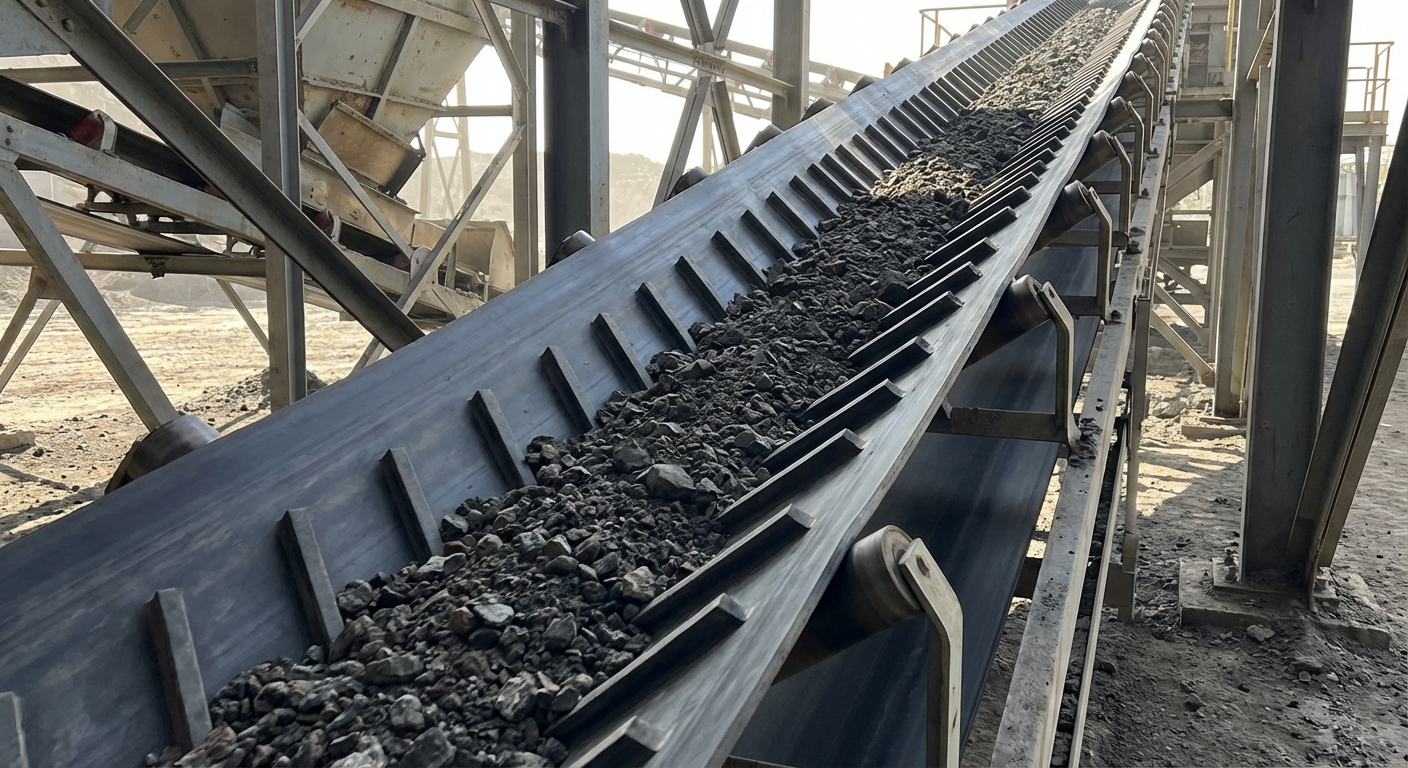
Many sectors rely on the corrugated rubber conveyor belt to move bulk solids efficiently in constrained environments. From mining and agriculture to chemical processing, this technology is a staple of modern industrial infrastructure.
Is it suitable for mining applications?
In the mining sector, you need to transport heavy ores out of deep pits or into tall silos. You will find that these belts handle the abrasive nature of rock and coal without tearing.
- Excellent abrasion resistance for ore transport.
- Flame-retardant options for underground safety.
- High-tension capacity for long lifts.
It gets better: You can move more tonnage per hour using a vertical system than you ever could with a traditional truck haulage route. This saves you fuel and reduces your carbon footprint.
How does it perform in cement plants?
Cement production involves handling dusty, abrasive clinker that can easily spill and cause environmental issues. You can use these belts to keep the material contained while moving it between various stages of the kiln process.
- Heat-resistant compounds for hot clinker.
- Dust suppression through total containment.
- Compact designs for tight plant layouts.
Don’t forget: Cement plants are often crowded with machinery, and the ability to go vertical is often the only way to expand capacity. You gain the flexibility to grow your plant without buying more land.
Key Takeaway: The versatility of corrugated belts makes them the preferred choice for any industry dealing with bulk material transport challenges.
| Industry | Primary Material | Key Benefit | |
|---|---|---|---|
| Mining | Coal, Copper, Iron | Durability under load | |
| Agriculture | Grain, Fertilizer | Gentle handling | |
| Cement | Clinker, Limestone | Heat and dust control |
Industrial leaders choose these belts because they solve the dual problems of space and material loss simultaneously.
What is the capacity of a corrugated rubber conveyor belt?
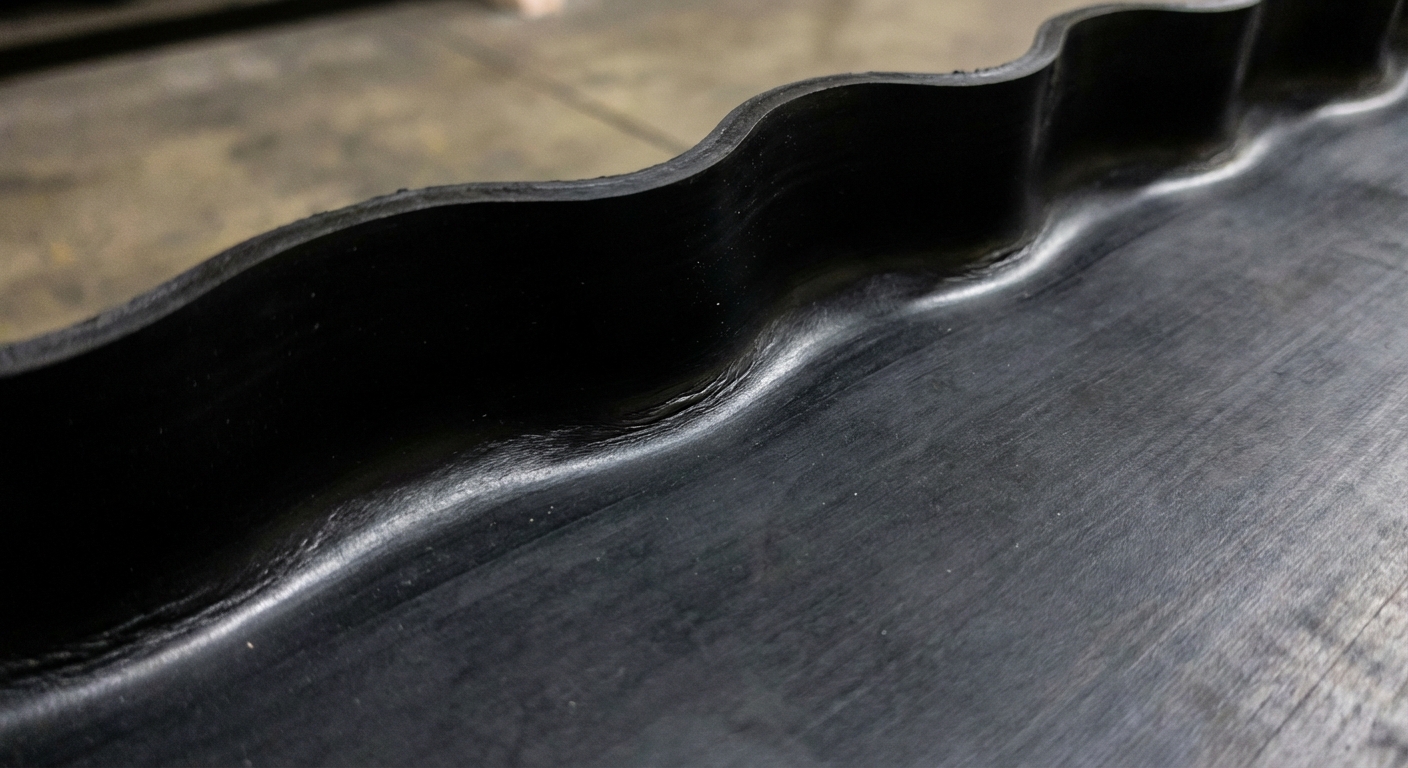
The capacity of a corrugated rubber conveyor belt is determined by the height of the sidewalls and the spacing of the transverse cleats. You can move thousands of tons per hour depending on the belt width and the speed of your system.
What widths are available for bulk transport?
You have access to a wide range of belt widths, typically from 400mm up to 2400mm or more. You must choose a width that matches your maximum material lump size to avoid blockages.
- Small widths for specialized chemical dosing.
- Medium widths for grain and agriculture.
- Extra-wide belts for heavy mining operations.
The kicker is: You don’t just pick a size off the shelf; you customize the width to ensure maximum throughput without overloading the motor. You should always consult with an engineer to find your “sweet spot.”
How do cleats increase material volume?
Cleats act as the floors of your vertical pockets, allowing you to carry material at angles up to 90 degrees. You can specify different cleat shapes, such as “T” or “C” types, to suit the flowability of your specific material.
- Prevents material fallback on steep inclines.
- Increases the effective cross-sectional area.
- Ensures consistent discharge at the head pulley.
In other words: The cleats turn your conveyor into a series of buckets that never stop moving. You get the continuous flow of a belt with the high-angle capacity of an elevator.
Key Takeaway: Capacity is a function of geometry; by customizing sidewall and cleat height, you can double your throughput without increasing belt speed.
| Wall Height (mm) | Cleat Type | Typical Capacity (m³/h) | |
|---|---|---|---|
| 40 – 100 | T-Type | 50 – 200 | |
| 120 – 300 | C-Type | 300 – 800 | |
| 400+ | TC-Type | 1000+ |
Careful selection of cleat geometry prevents material “back-sliding” and ensures the belt operates at peak volumetric efficiency.
How to maintain your corrugated rubber conveyor belt?
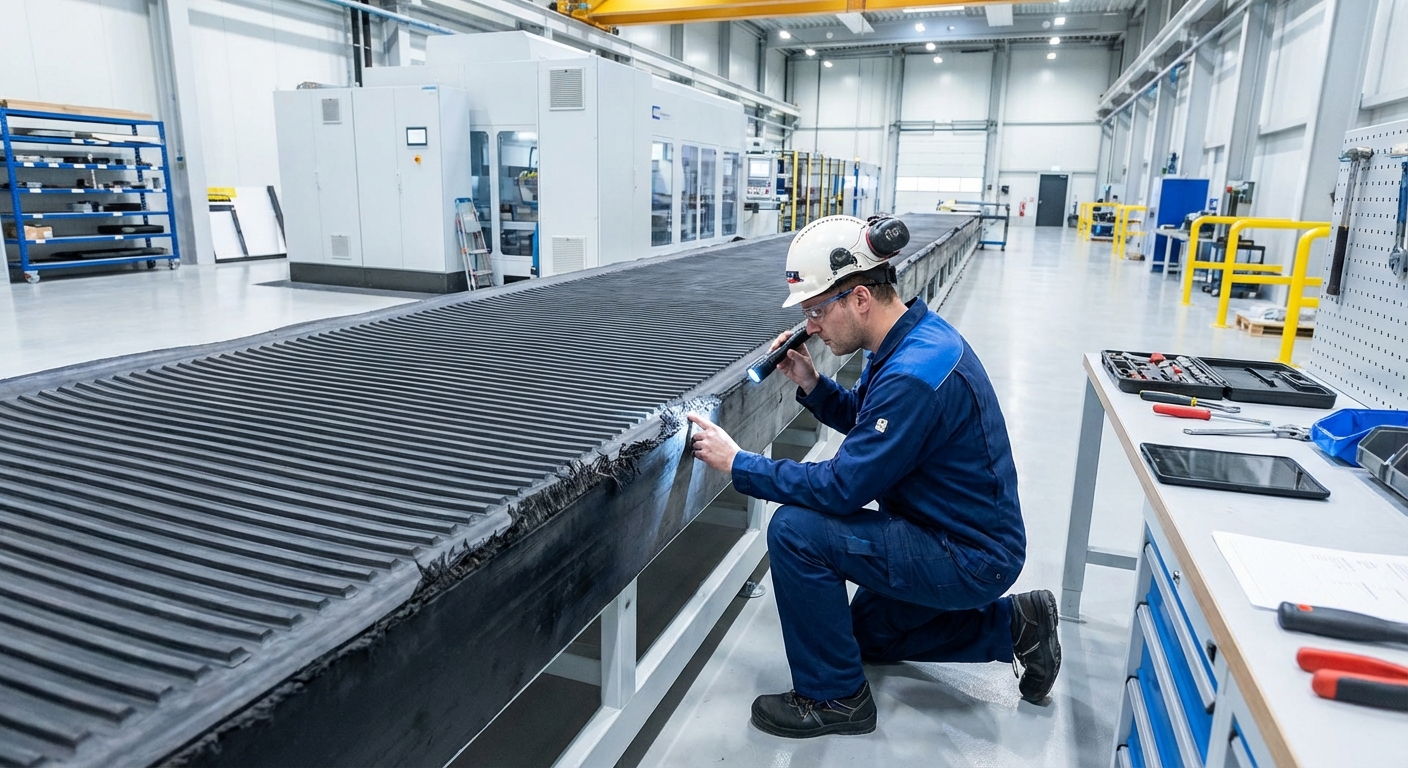
Maintaining your corrugated rubber conveyor belt requires a proactive inspection schedule and the use of specialized cleaning systems. You must ensure that the belt is tracking correctly to prevent the sidewalls from rubbing against the conveyor frame.
What are common signs of belt wear?
You should look for small cracks at the base of the corrugations or signs of cleat deformation. You will often find that the first signs of trouble appear where the belt wraps around the smallest pulley in your system.
- Sidewall “weeping” or delamination.
- Cleats that are leaning or cracked.
- Fraying edges on the base belt.
Here is the secret: If you catch these issues early, you can often perform a “hot patch” repair instead of replacing the entire belt. You save thousands by just paying attention to the details during your weekly walk-through.
How to clean the corrugated sidewalls?
You need to remove sticky or granular residue that can build up inside the corrugations and cause the belt to become heavy or unbalanced. You can use specialized beaters or air knives that are designed to reach into the wavy sections.
- Avoid using sharp metal scrapers that can cut the rubber.
- Use water sprays for non-reactive materials.
- Install belt turnovers to allow cleaning on the return side.
Think about this: A clean belt is a balanced belt. If you let material build up, you are essentially asking your motor to work twice as hard to move half as much material.
Key Takeaway: Maintenance is an investment in longevity; a well-cared-for belt can last twice as long as one that is neglected.
| Task | Frequency | Target Area | |
|---|---|---|---|
| Visual Check | Daily | Cleats and Tracking | |
| Cleaning | Weekly | Corrugation Intersections | |
| Lubrication | Monthly | Pulley Bearings |
Consistency in maintenance prevents small issues from snowballing into expensive mechanical failures.
Can a corrugated rubber conveyor belt handle steep inclines?
A corrugated rubber conveyor belt is specifically engineered to handle inclines from 0° to a full 90° vertical lift. This capability allows you to design your facility with a much smaller footprint by eliminating the need for long, sloping conveyor galleries.
What incline angles are possible?
You can successfully move material at angles that would be impossible for a standard belt. While a flat belt maxes out at about 18°, you can easily achieve 90-degree vertical transport with the right cleat configuration.
- 0-30°: Standard corrugated belt.
- 30-60°: Belts with reinforced cleats.
- 60-90°: High-profile “S” or “TC” cleats.
Here is the kicker: Going vertical doesn’t just save space; it simplifies your plant layout. You can feed silos directly from the ground level without complex intermediate transfer points.
When should you use a 90-degree lift?
You should consider a vertical lift whenever your horizontal space is limited or when you need to bridge a large elevation gap in a short distance. You will find this especially useful in city-based recycling centers or crowded port facilities.
- Vertical lifts reduce the number of transfer towers.
- They minimize the environmental impact of long galleries.
- They are easier to enclose for dust control.
In other words: You are trading horizontal land for vertical air. Since land is expensive and air is free, the economic choice is obvious for any expanding facility.
Key Takeaway: Vertical conveying is the ultimate space-saving solution for modern industrial sites with limited real estate.
| Incline Angle | Best Cleat Type | Space Requirement | |
|---|---|---|---|
| 20 Degrees | Flat/Chevron | High | |
| 45 Degrees | T-Cleat | Medium | |
| 90 Degrees | TC-Cleat | Minimal |
By increasing the incline, you reduce the total structural steel needed for the conveyor gallery.
Is your corrugated rubber conveyor belt heat resistant?
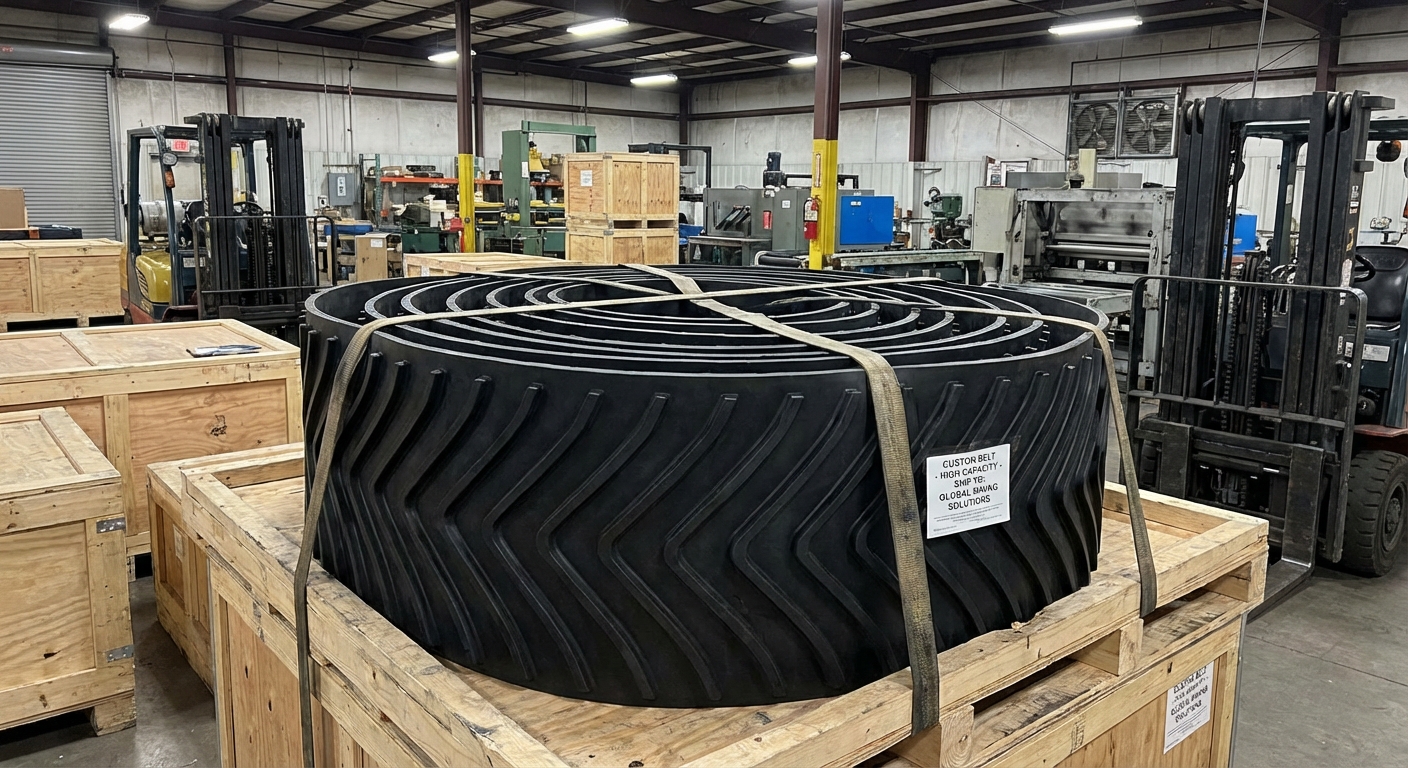
You can specify a corrugated rubber conveyor belt with advanced heat-resistant compounds designed to handle materials up to 200°C or higher. This is essential for industries like foundry work, cement production, and chemical processing where hot bulk solids are common.
What temperatures can the rubber withstand?
Depending on the polymer used, you can select belts that thrive in environments ranging from sub-zero to extreme heat. You must match the temperature of your material to the correct rubber grade to prevent the belt from hardening and cracking.
- T1 Grade: Up to 125°C.
- T2 Grade: Up to 150°C.
- T3 Grade: Up to 200°C+.
Look at it this way: Heat is the enemy of rubber. By using a heat-resistant belt , you are putting an armor plating on your system that prevents the “cooking” effect of hot materials.
Are there oil-resistant options?
If you are moving oily grains or petroleum-contaminated soils, you need an oil-resistant compound to prevent the belt from swelling. You will notice that a standard belt will quickly turn “mushy” and lose its tension if exposed to oils.
- OR Grade: Resistant to mineral oils.
- MOR Grade: Moderate oil resistance for wood chips.
- SOR Grade: Super oil resistance for heavy chemicals.
The bottom line? Using the wrong compound is the fastest way to destroy your investment. You should always share your Material Safety Data Sheet (SDS) with your belt supplier to ensure a perfect match.
Key Takeaway: Material chemistry is just as important as mechanical design when selecting a belt for extreme environments.
| Grade | Max Material Temp | Typical Application | |
|---|---|---|---|
| Standard | 80°C | Sand and Gravel | |
| HR (Heat) | 180°C | Sinter and Clinker | |
| OR (Oil) | 60°C | Soybeans and Fertilizer |
Selecting the correct compound prevents premature belt failure and maintains the integrity of the sidewall bonds.
How to customize a corrugated rubber conveyor belt?
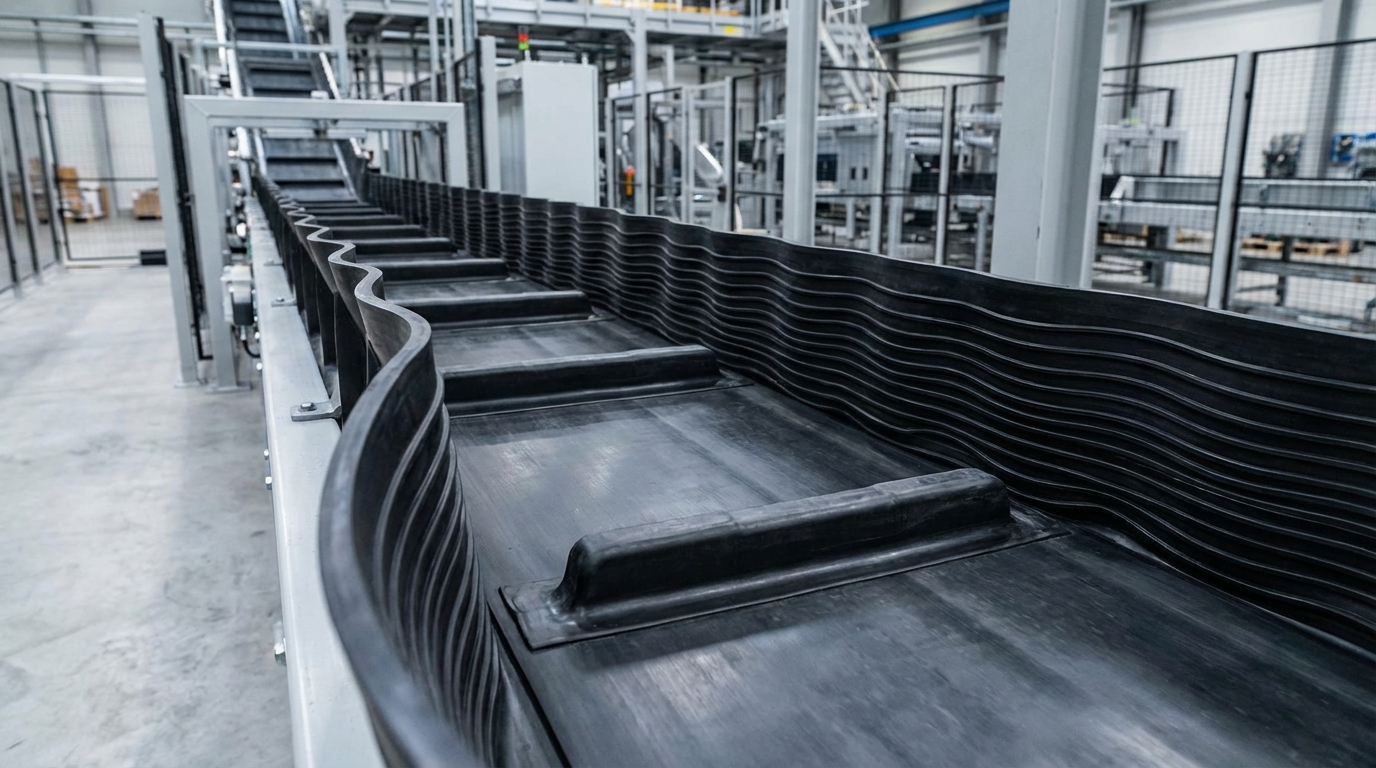
Customizing a corrugated rubber conveyor belt allows you to tailor the system to your specific material density, lump size, and throughput requirements. You can choose from various sidewall heights, cleat patterns, and base belt reinforcements to build your ideal solution.
Can you specify custom sidewall heights?
You can select sidewall heights from 40mm to over 600mm to ensure your material is fully contained even at high speeds. You should base this height on the largest lump size you expect to transport to prevent “dead zones” where material gets stuck.
- Tall walls for high-volume, low-density materials.
- Short walls for heavy, dense ores.
- Reinforced walls for high-impact loading zones.
Think about this: The sidewall is the “bucket” of your conveyor. If the bucket is too small, you spill; if it’s too large, you add unnecessary weight and cost to the system.
What base belt reinforcements are used?
You can choose between fabric (EP) layers for general use or steel cord reinforcements for high-tension, long-distance lifts. You must ensure the base belt has enough transverse stiffness to support the sidewalls and cleats without sagging.
- EP Fabric: Flexible and cost-effective.
- Steel Cord: Minimal stretch for vertical lifts.
- Cross-rigid layers: Prevents belt “cupping.”
Here is the deal: The reinforcement is the skeleton of your belt. You need it to be strong enough to hold the weight, but flexible enough to wrap around your drive pulleys without snapping.
Key Takeaway: Customization transforms a generic product into a precision industrial tool that fits your facility perfectly.
| Feature | Customization Option | Resulting Benefit | |
|---|---|---|---|
| Sidewall | 40mm – 630mm | Precise containment | |
| Reinforcement | Steel Cord / EP | Tension management | |
| Cleat Pattern | T, C, or TC | Flow optimization |
Engineering a bespoke belt ensures that you are not over-paying for capacity you don’t need or under-designing for loads you can’t handle.
Where to buy a quality corrugated rubber conveyor belt?
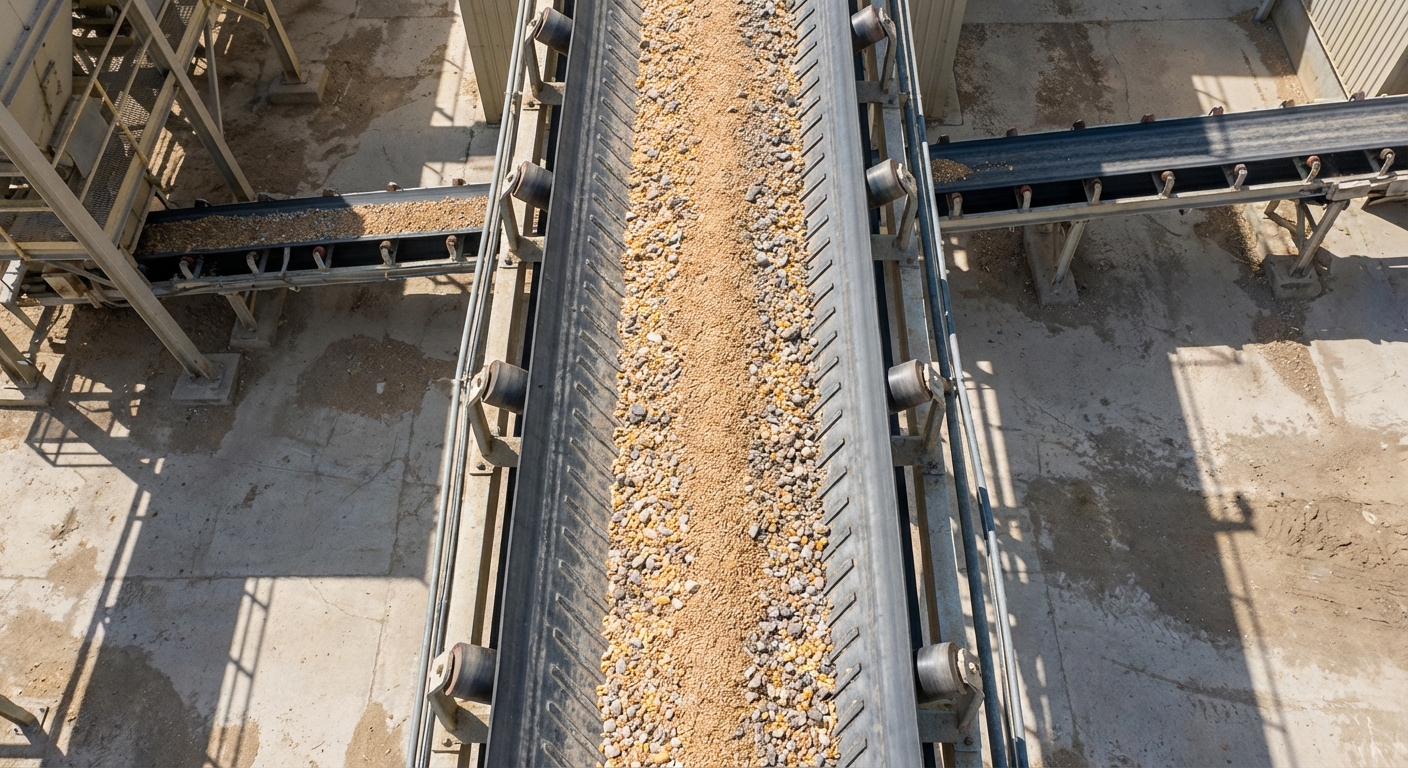
Buying a corrugated rubber conveyor belt directly from a specialized manufacturer ensures you get the best price and technical support. You should look for a factory with a proven track record in hot vulcanization and high-tension belt design.
Why buy direct from a China factory?
When you buy direct, you eliminate the middleman and gain direct access to the engineers who built your belt. You will find that leading Chinese factories offer world-class quality at a fraction of the price of Western distributors.
- Lower manufacturing costs passed to you.
- Bespoke engineering for custom projects.
- Fast production times for urgent replacements.
The best part? Modern Chinese facilities use the same high-grade polymers and German-engineered machinery as the big global brands. You are getting the same quality without the “brand name” markup.
How to request an accurate quotation?
You must provide detailed specifications including the incline angle, material density, belt width, and required lift height. You will get a much more accurate price if you include a sketch of your conveyor layout and the pulley diameters.
- Specify the material type (e.g., wet sand, hot clinker).
- State the required throughput in tons per hour.
- Mention any environmental factors like oil or acid exposure.
Think about this: A vague request leads to a vague quote. If you want the best price, give the factory the exact data they need to optimize the belt design for your budget.
Key Takeaway: Direct factory sourcing is the most effective way to secure high-performance industrial components while maintaining project profitability.
| Sourcing Step | Action Item | Priority | |
|---|---|---|---|
| Research | Check vulcanization certs | High | |
| Engineering | Submit SDS and drawings | High | |
| Logistics | Confirm lead times | Medium |
Choosing a partner with deep manufacturing expertise ensures that your belt arrives on time and performs as promised for years to come.
FAQ
Can I use a corrugated belt on my existing flat conveyor?No, you typically cannot because the sidewalls require specialized pulleys and idlers that allow for the wavy edge. You must modify your frame or install a dedicated system.
What’s the best way to prevent material sticking?The best way is to use a non-stick rubber compound or install “knockers” on the return side to vibrate the material loose. This is especially important for wet clays or fine powders.
How do I know if my belt needs replacing?You should replace the belt if the sidewalls show significant delamination or if more than 10% of the cleats are missing. A failing bond is a sign of an imminent catastrophic break.
Can these belts handle food-grade materials?Yes, you can order them in white, FDA-approved rubber compounds. This makes them ideal for vertical grain or sugar transport in food processing plants.
What is the maximum height for a vertical lift?Vertical lifts can reach over 100 meters using steel cord reinforced belts. For most industrial applications, you will find they are used for lifts between 10 and 50 meters.
Strategic Summary and Next Steps
Choosing the right corrugated rubber conveyor belt is a decision that impacts your facility’s efficiency for years. By moving away from inefficient flat belts and embracing vertical transport, you solve the chronic problems of material spillage and space constraints. High-performance molded belts provide the durability needed for mining, cement, and heavy industrial use while significantly lowering your total cost of ownership.
We are committed to providing the most robust and cost-effective material handling solutions in the industry. Our focus on hot vulcanization and custom engineering ensures that your project is built on a foundation of reliability. Contact us today to discuss your specific requirements and receive a detailed engineering assessment for your next conveyor system upgrade. Let us help you turn your space constraints into a streamlined, high-capacity operation.