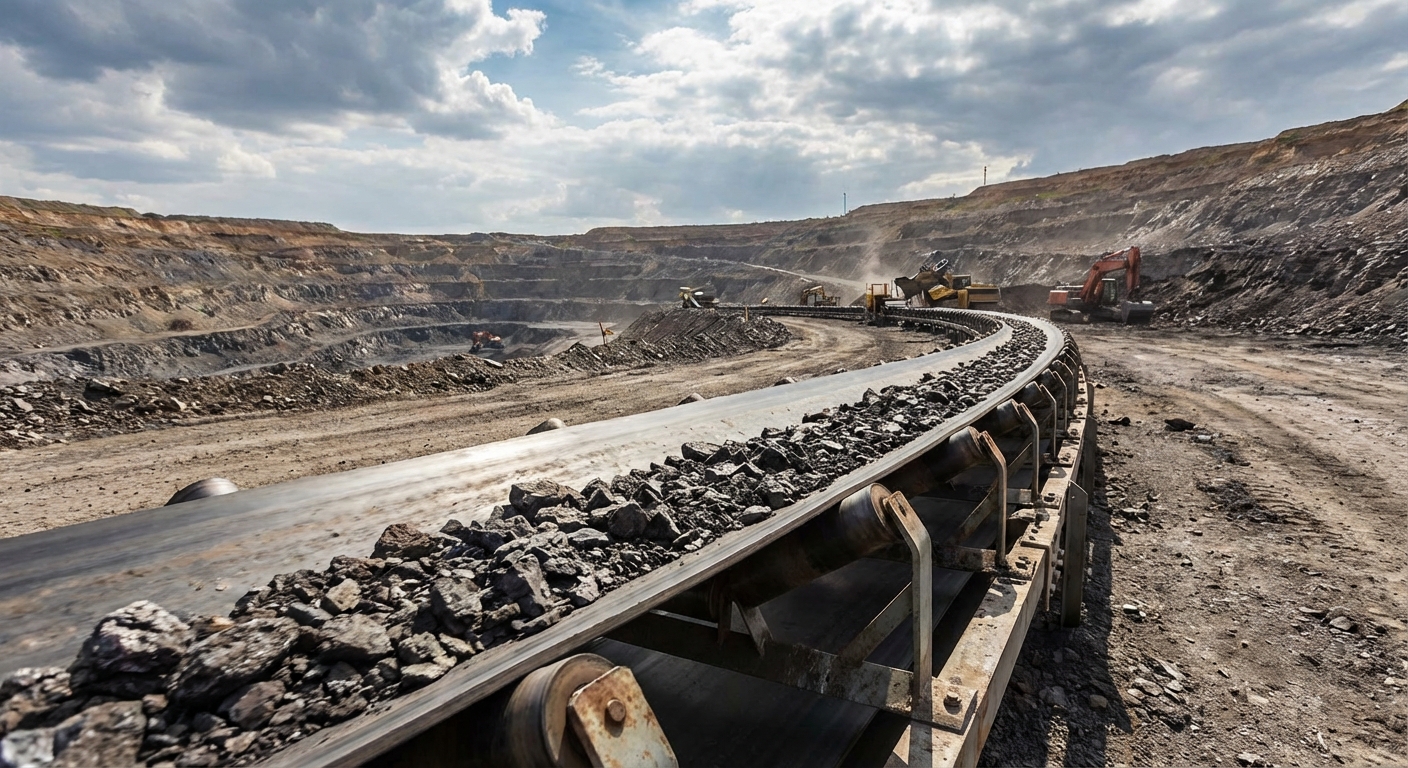
A flat rubber conveyor belt provides reliable power transmission and durability, reducing downtime, improving efficiency, and ensuring stable performance in industrial material handling systems.
What defines a quality flat rubber conveyor belt?
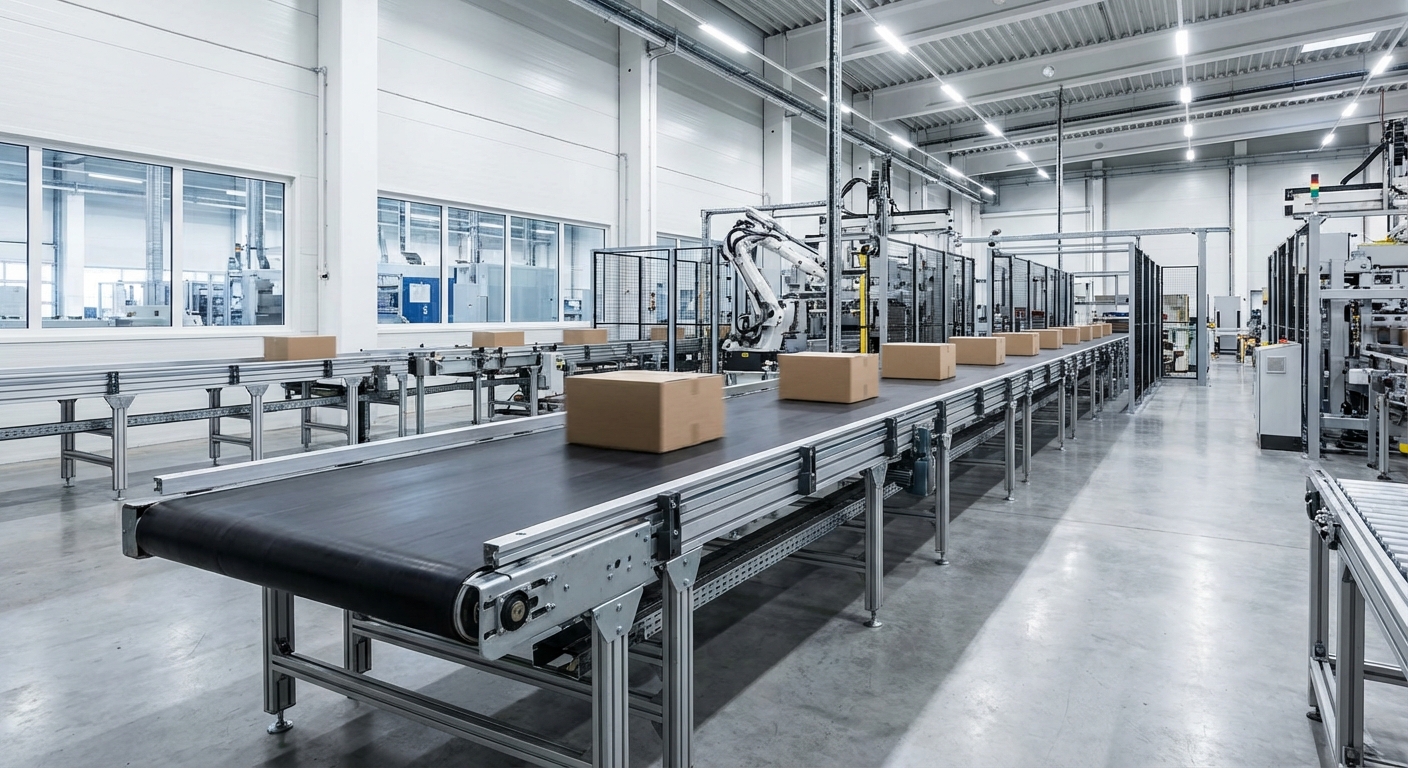
A quality flat rubber conveyor belt is defined by its ability to maintain dimensional stability while providing a high coefficient of friction for positive drive. You need a belt that doesn’t just move; it must withstand repeated flexing around pulleys without internal structural fatigue.
This specific type of flat rubber conveyor belt must strike a delicate balance between surface grip and internal carcass durability. If the surface is too hard, you lose friction; if it is too soft, the belt wears out prematurely in abrasive environments.
Identifying Key System Components
Your system relies on the synergy between the reinforced internal carcass and the specialized rubber top covers. These layers must be perfectly bonded to prevent delamination during high-speed operations.
How Friction Drives Your Transmission?
Think about this: without sufficient friction, your motor’s energy is wasted as heat rather than movement.
- Surface Texture: Influences the initial grip on the motorized pulley.
- Rubber Durometer: Determines how the material deforms under tension.
- Pulley Lagging: Works in tandem with the belt surface to prevent slippage.
Key Takeaway: You must prioritize the relationship between surface friction and internal reinforcement to maximize the energy efficiency of your conveyance system.
| Feature | Importance | Benefit | |
|---|---|---|---|
| Tensile Strength | Critical | Prevents elongation under heavy load | |
| Flexibility | High | Allows for smaller, space-saving pulleys | |
| Friction Level | Essential | Ensures 97% power transmission efficiency |
The table above demonstrates that selecting the right technical specifications directly impacts your long-term operational costs and energy consumption.
How is a flat rubber conveyor belt carcass built?
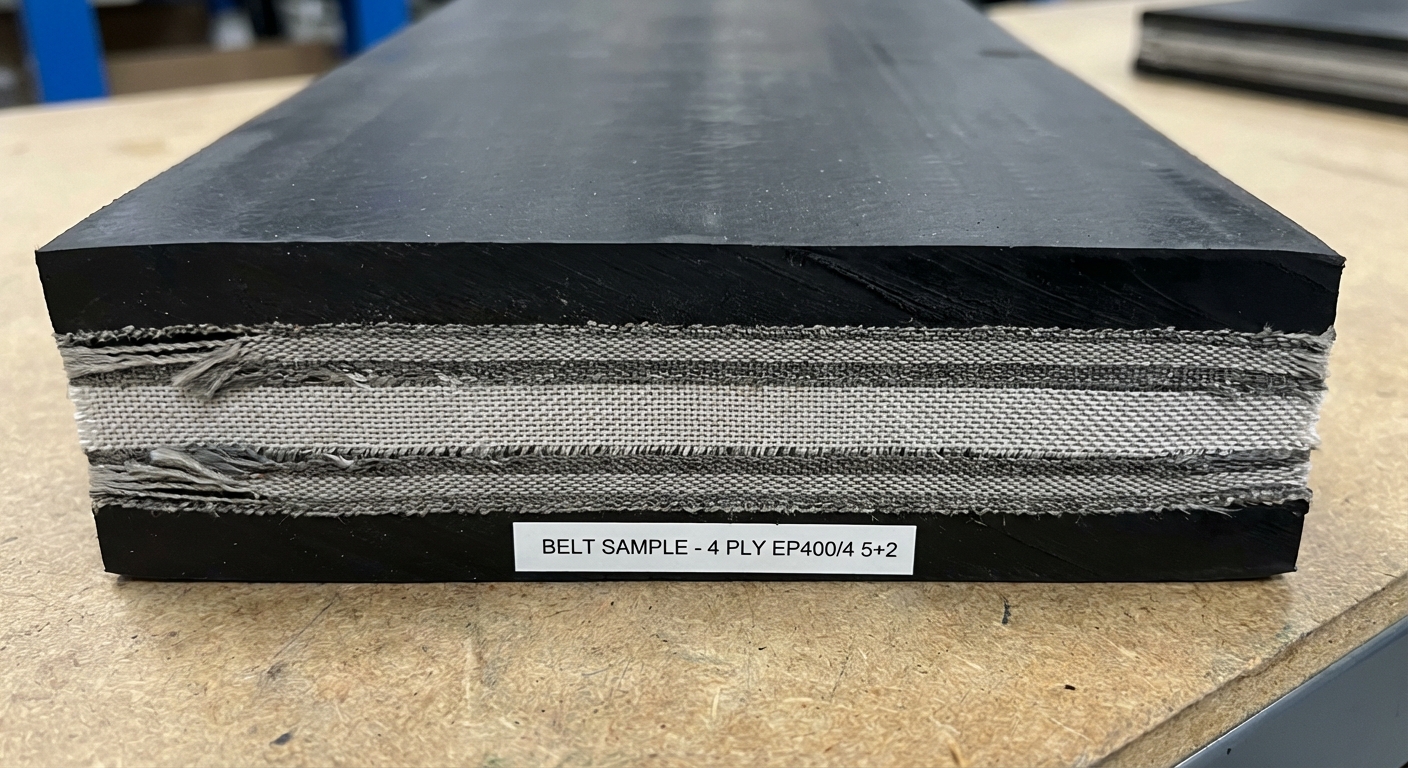
The carcass of a flat rubber conveyor belt is built as a multi-layered skeleton using woven fabrics or steel cords to absorb operational tension. This internal architecture is what prevents your belt from stretching excessively and falling off the tracking path.
Every high-quality flat rubber conveyor belt utilizes a carcass designed to distribute load evenly across the entire width of the system. Whether you choose a single-ply or multi-ply design depends entirely on the impact levels and the total length of your conveyor.
Understanding Multi-Ply Fabric Layers
Multi-ply belts use several layers of synthetic fabric bonded with rubber skim coats to provide a fail-safe structural design.
- The warp threads handle the longitudinal tension.
- The weft threads provide transverse stability and fastener holding.
- The rubber interface prevents internal friction between plies.
Does Material Choice Affect Flexibility?
The truth is, not all carcass materials are created equal when it comes to navigating tight turns or small pulleys.
- Cotton: Offers natural flexibility but lacks the strength of modern synthetics.
- Nylon: Excellent for impact resistance and high-troughability applications.
- Polyester: The industry standard for low-stretch performance in general-duty belts.
Key Takeaway: You should choose a carcass material that aligns with your pulley diameters to avoid internal ply separation and premature fatigue.
| Carcass Type | Best Use Case | Strength Advantage | |
|---|---|---|---|
| Single-Ply | Light packaging | Maximum flexibility | |
| Multi-Ply | Bulk handling | High impact resistance | |
| Solid Woven | Mining | Longitudinal integrity |
The data indicates that carcass complexity must scale with the weight and impact frequency of the materials you are transporting daily.
Why use an EP fabric flat rubber conveyor belt?
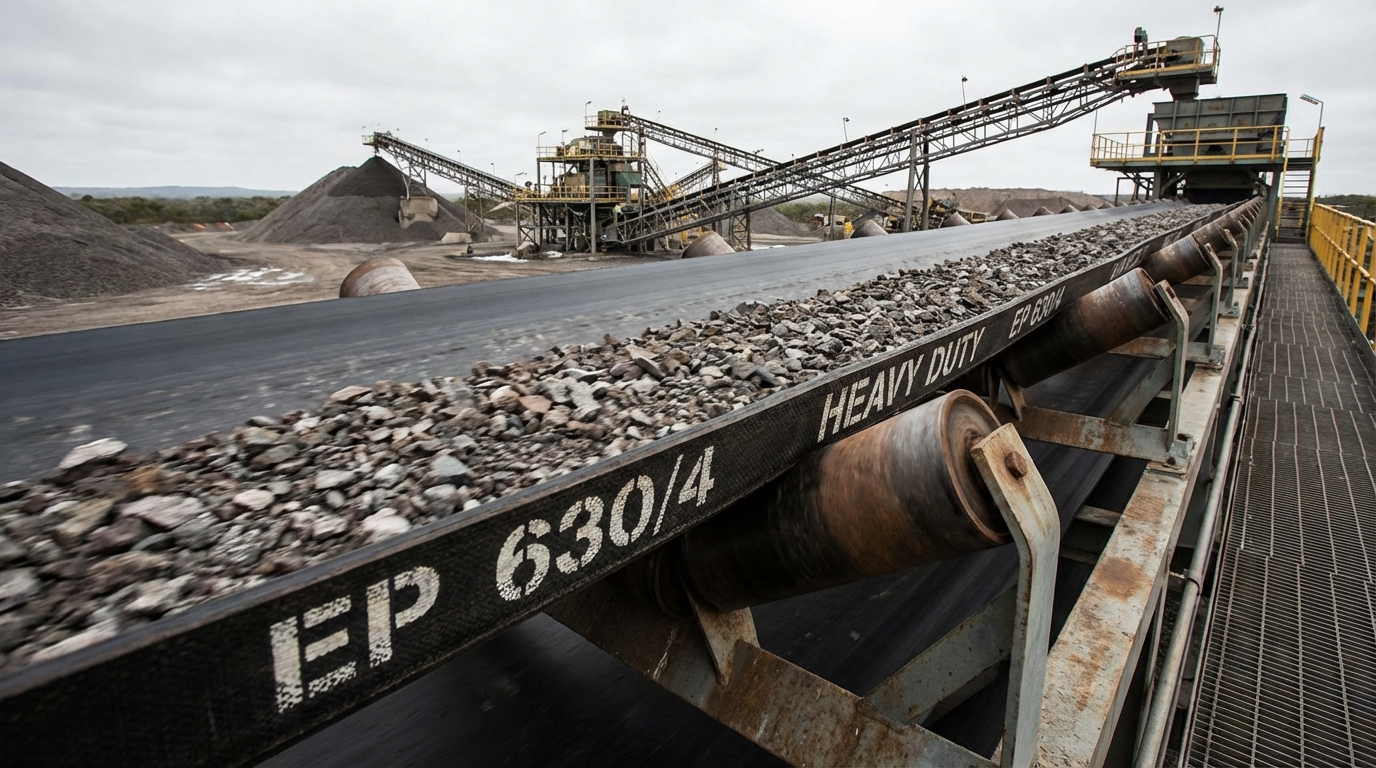
An EP fabric flat rubber conveyor belt is the ideal choice because it combines the low-stretch properties of polyester with the high impact resistance of nylon. This combination ensures that your system remains tensioned correctly for longer periods, reducing the need for manual adjustments.
You will find that the flat rubber conveyor belt made with EP fabric offers a superior strength-to-weight ratio compared to older cotton or pure nylon belts. This makes it a cost-effective solution for a vast majority of industrial material handling tasks.
The Role of Polyester and Nylon
The “E” represents polyester in the longitudinal direction, providing the low elongation you need to keep the belt tight. Meanwhile, the “P” represents Polyamide (Nylon) in the cross-direction, giving the belt the flexibility to trough and resist punctures.
Why Low Elongation Matters for Efficiency
Here is the thing: a belt that stretches too much requires constant take-up adjustments and leads to energy loss.
- Reduced Downtime: Less frequent need to stop production for tensioning.
- Better Tracking: Stable dimensions keep the belt centered on the idlers.
- Longevity: Minimal internal stress preserves the integrity of the rubber covers.
Key Takeaway: Selecting EP fabric reinforcement provides you with a versatile, low-maintenance belt that handles both tension and impact with ease.
| Property | EP Fabric Benefit | Result | |
|---|---|---|---|
| Tensile Stretch | Extremely Low | Minimal maintenance requirements | |
| Impact Grip | Very High | Resists damage from falling heavy debris | |
| Rot Resistance | Full | Perfect for humid or outdoor environments |
Using EP fabric allows your facility to maintain high throughput without the constant worry of belt elongation or moisture-related degradation.
When is a steel cord flat rubber conveyor belt needed?
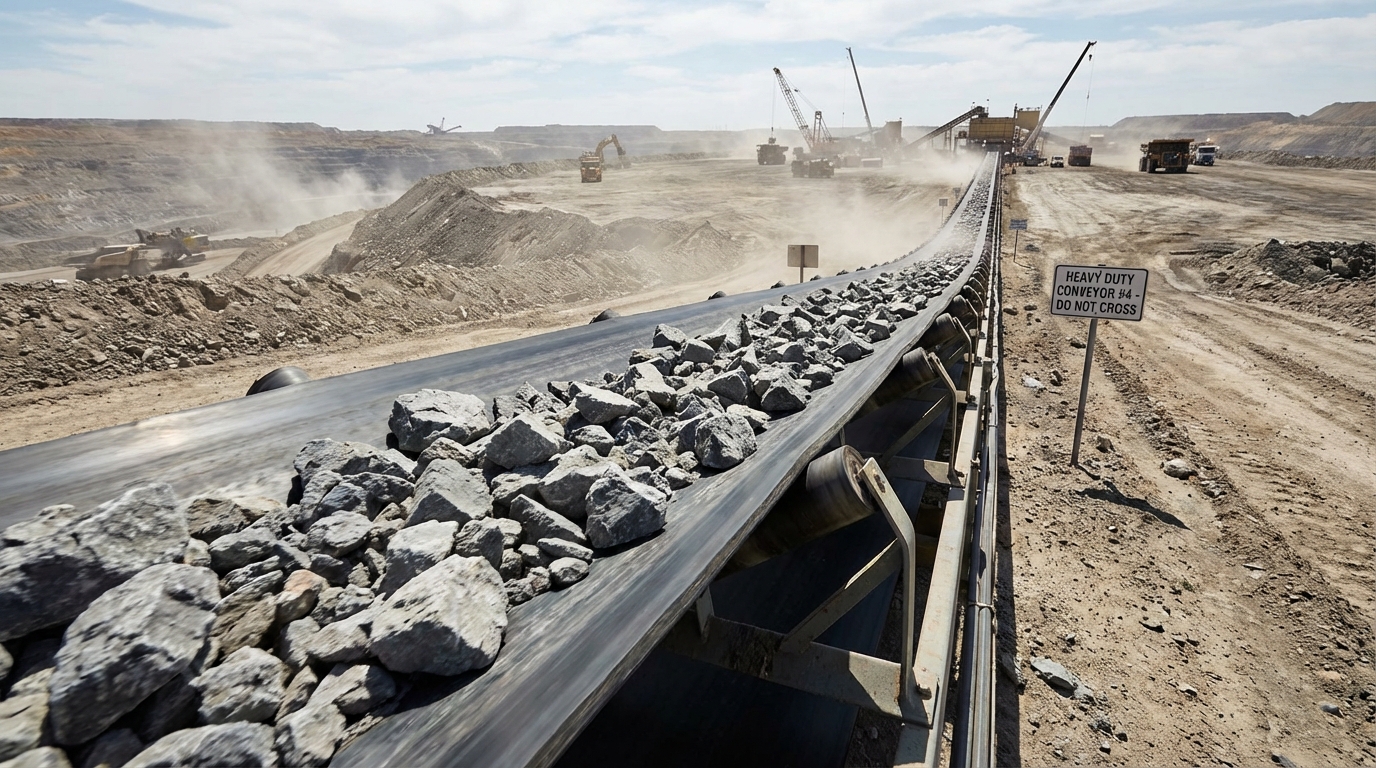
A steel cord flat rubber conveyor belt is required when your operation involves long-distance transport or extreme tensile loads that would cause fabric belts to snap. These belts are engineered for the most punishing environments, such as open-pit mines or heavy cement plants.
In these high-load scenarios, a flat rubber conveyor belt must rely on galvanized steel cords to provide the ultimate strength needed to move thousands of tons of material per hour. The lack of stretch in steel cord designs makes them the only choice for conveyors spanning several kilometers.
Handling High-Load Mining Applications
Mining environments subject belts to massive tension and constant abrasion from sharp rocks and ore. Steel cord reinforcement provides the structural backbone necessary to prevent the belt from snapping under the weight of a full load.
Benefits of Galvanized Steel Reinforcement
Think about the environment: moisture and chemicals can easily ruin standard steel.
- Corrosion Resistance: Galvanization ensures the internal cords remain rust-free.
- Bonding Strength: Specialized rubber compounds adhere tightly to the steel to prevent pull-out.
- Flex Life: Despite their strength, these cords are designed to flex over large pulleys repeatedly.
Key Takeaway: You should transition to steel cord reinforcement for any application exceeding 500 meters in length or carrying high-density bulk materials.
| Metric | Steel Cord Spec | Industrial Context | |
|---|---|---|---|
| Elongation | < 0.25% | Ideal for long-haul stability | |
| Tensile Rating | Up to ST5400 | Supports massive vertical or horizontal lifts | |
| Belt Width | Up to 3200mm | Designed for high-volume bulk movement |
The extreme strength of steel cords ensures that your most demanding transport lines remain operational even under maximum weight capacities.
Can a flat rubber conveyor belt resist high heat?
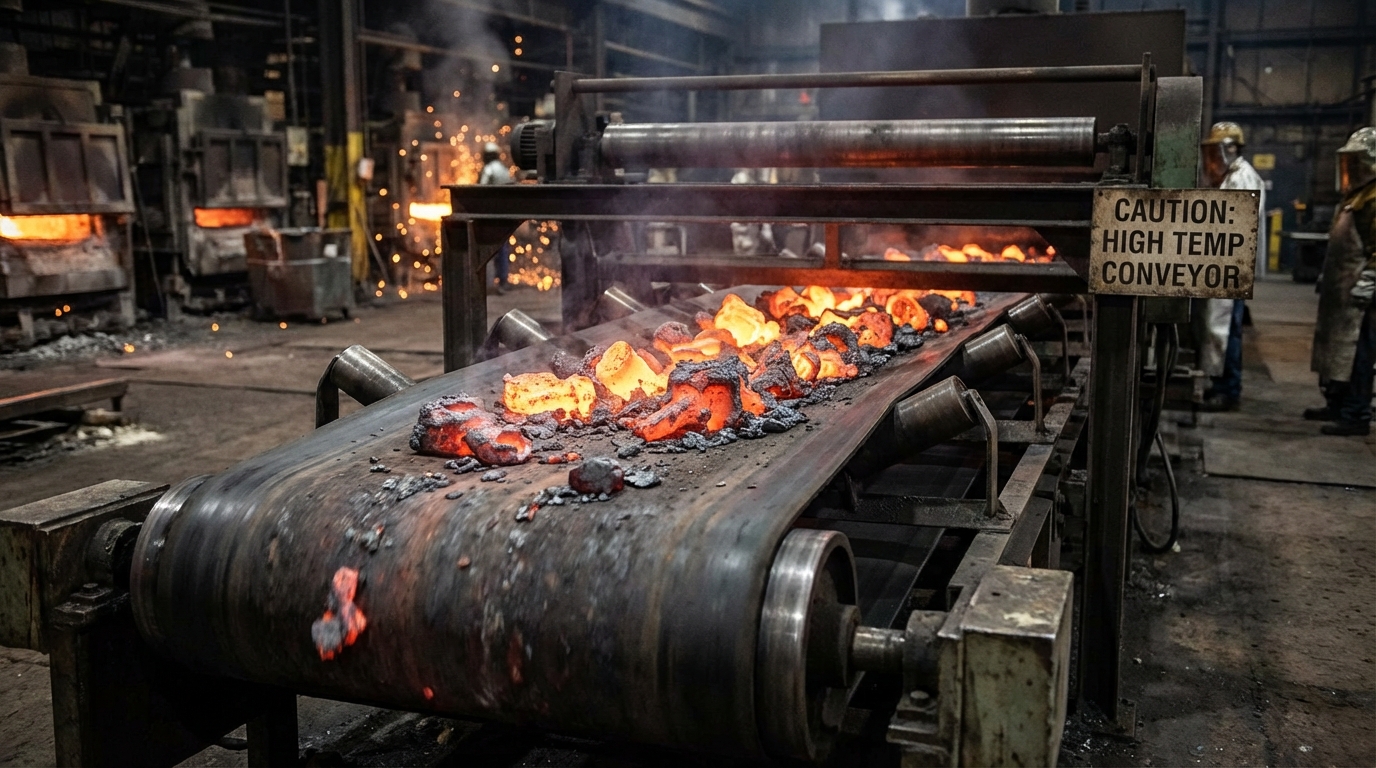
A specialized flat rubber conveyor belt can resist temperatures exceeding 200°C by utilizing synthetic EPDM or chloroprene rubber compounds. Standard natural rubber will quickly become brittle and crack if exposed to the intense heat found in foundries or glass manufacturing.
When you install a heat-resistant flat rubber conveyor belt, you are protecting the internal carcass from thermal degradation. These belts are essential for transporting hot clinker, sintered ore, or chemicals that would melt a standard industrial belt.
Synthetic vs. Natural Rubber Compounds
Natural rubber is great for general use, but it fails once temperatures climb past 60°C. Synthetic compounds like EPDM are engineered at a molecular level to resist the oxidizing effects of high heat and ozone exposure.
Solutions for Heat-Treating Environments
Here is the thing: heat doesn’t just affect the surface; it penetrates the belt and weakens the fabric plies.
- T1 Grade: Resists materials up to 125°C, perfect for standard cement handling.
- T2 Grade: Handles up to 150°C for foundry sand and slag.
- T3 Grade: Built for 200°C+ environments like steel mills and sintered ore lines.
Key Takeaway: You must match the specific heat grade of the rubber cover to your material’s temperature to prevent premature belt brittleness.
| Heat Grade | Max Material Temp | Common Use | |
|---|---|---|---|
| T1 | 125°C | Clinker, Cement | |
| T2 | 150°C | Foundry Sand | |
| T3 | 200°C+ | Sintered Ore, Metal |
Selecting the correct thermal grade ensures that your belt doesn’t crack and fail during critical high-temperature processing stages.
Does a flat rubber conveyor belt need patterns?
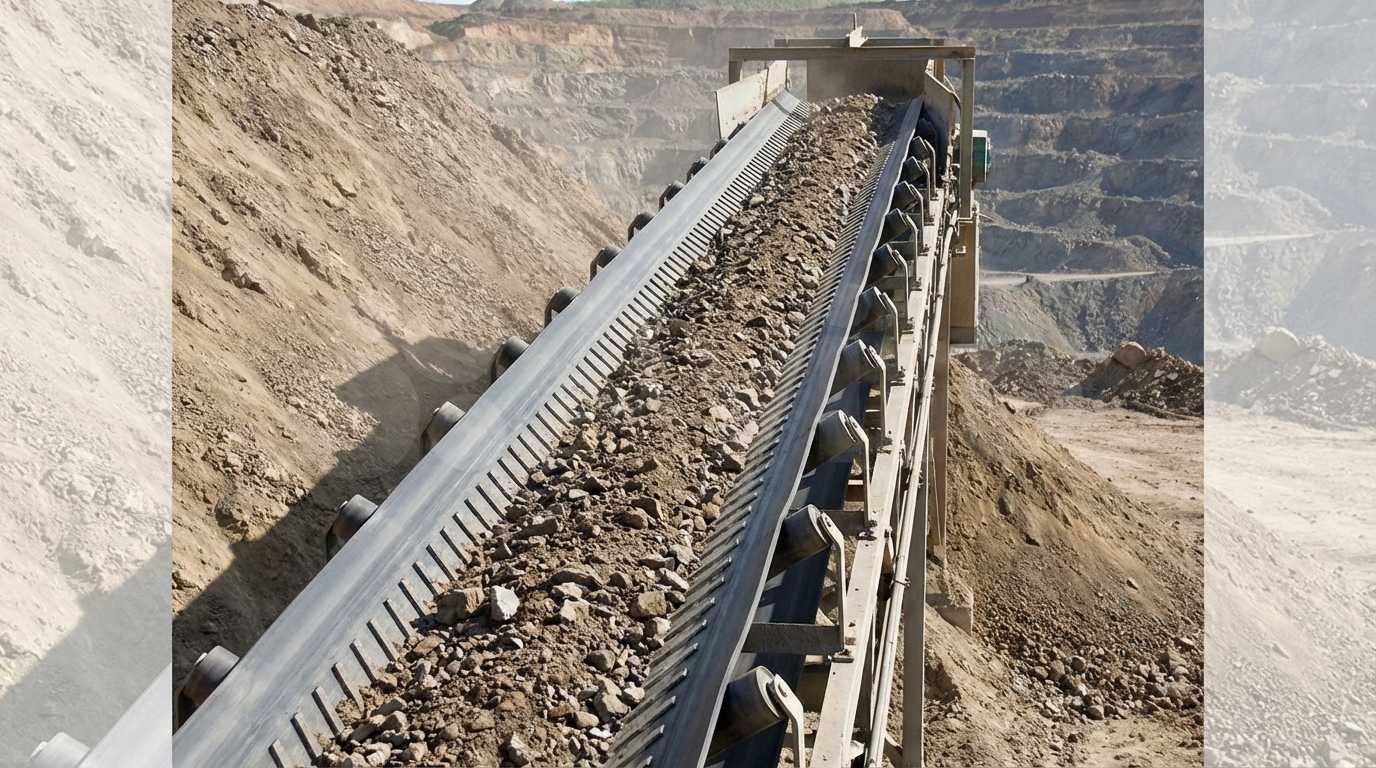
A flat rubber conveyor belt needs patterns, such as chevrons or cleats, whenever the incline angle exceeds 15 degrees to prevent material rollback. Smooth belts rely entirely on surface friction, which is often insufficient for bulk materials when gravity begins to pull them backward.
By adding a patterned surface to your flat rubber conveyor belt, you create mechanical “pockets” that lock the material in place. This allows you to increase the vertical lift of your conveyor without requiring more floor space.
Preventing Slip with Chevron Mold Patterns
Chevron belts use V-shaped profiles molded directly into the top cover to grip loose materials like grain, sand, or coal. These patterns are available in various heights to accommodate different particle sizes and steepness requirements.
Are Sidewalls Necessary for Incline?
If you are moving materials at very steep angles, sometimes patterns aren’t enough.
- Containment: Corrugated sidewalls prevent material from spilling off the edges.
- Cleats: Horizontal ribs act as shelves to lift material vertically.
- Efficiency: You can achieve 90-degree vertical lifts with the right combination of sidewalls and cleats.
Key Takeaway: You should analyze your conveyor’s incline angle and material type to decide if a smooth or patterned surface is required for stability.
| Pattern Type | Max Angle | Material Suitability | |
|---|---|---|---|
| Smooth Surface | 15° | Packaged boxes, flat goods | |
| Chevron Pattern | 40° | Bulk grain, wet sand, coal | |
| Sidewall & Cleat | 90° | Large aggregates, vertical lift |
The table illustrates that the steeper your conveyor, the more mechanical grip you need to maintain a consistent flow of material.
How does aramid enhance a flat rubber conveyor belt?
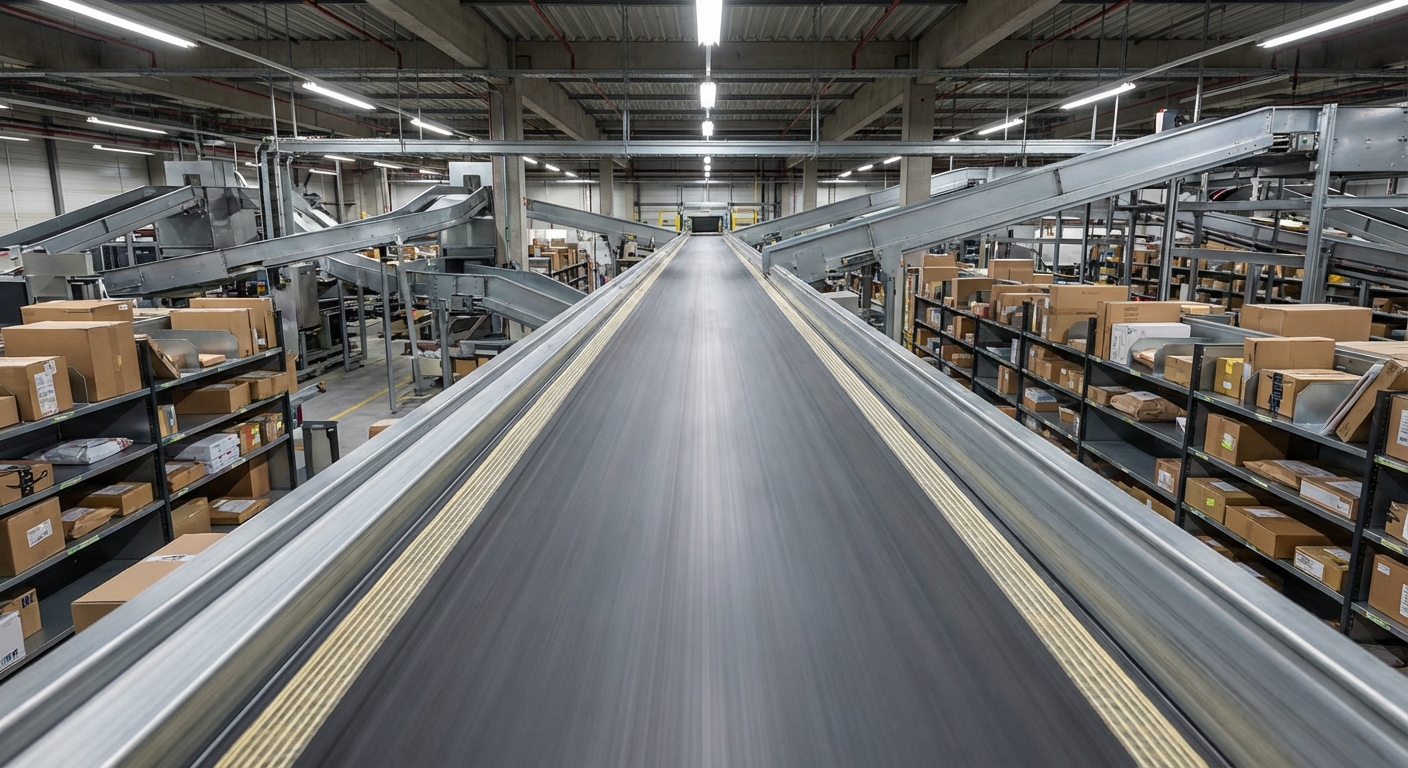
Aramid fibers enhance a flat rubber conveyor belt by providing the high tensile strength of steel at a much lighter weight, which significantly reduces your energy consumption. These belts are perfect for high-speed logistics where you need rapid acceleration and deceleration without the heavy inertia of metal reinforcement.
Using an aramid-reinforced flat rubber conveyor belt allows you to downsize your motors and supporting structures. This reduction in dead weight translates directly into lower utility bills and less wear on your system’s bearings and pulleys.
Weight Reduction and Energy Savings
Think about this: a lighter belt requires less torque to start and less power to maintain its speed. Aramid belts can be up to 30% lighter than their steel cord counterparts while offering similar break-strength ratings.
Is Aramid Better Than Steel Cord?
While steel is the traditional choice for strength, aramid offers several unique advantages for specific industries.
- Corrosion Proof: Aramid will never rust, even in chemical or saltwater environments.
- Impact Damping: The material naturally absorbs shocks better than rigid steel cords.
- Non-Magnetic: Ideal for systems using magnetic separators to pull metal contaminants from the product stream.
Key Takeaway: You should consider aramid reinforcement if you are looking to optimize energy efficiency or operate in highly corrosive environments.
| Feature | Aramid Advantage | Operational Benefit | |
|---|---|---|---|
| Weight | 30% Lighter | Lower motor power consumption | |
| Rust | 100% Resistant | Longer life in wet/chemical areas | |
| Fatigue | High Flex Life | Works better with smaller pulley systems |
The transition to aramid reinforcement is a strategic move for facilities aiming for “green” energy standards and reduced structural maintenance.
What specialty covers fit a flat rubber conveyor belt?
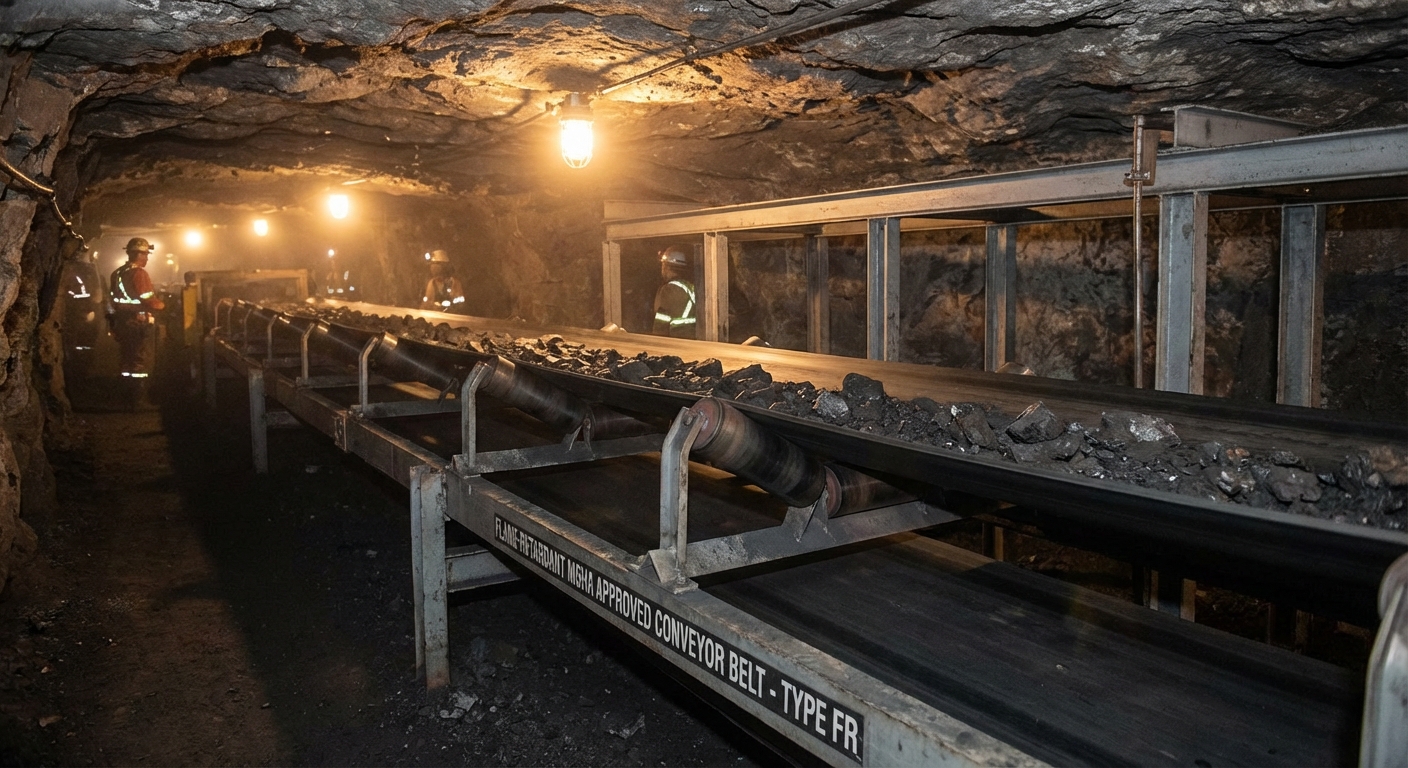
Specialty covers like oil-resistant nitrile or flame-retardant rubber fit a flat rubber conveyor belt to protect it from specific chemical or fire hazards. You cannot use a general-purpose belt in an environment with high oil content, as the rubber will swell and the belt will eventually delaminate.
For underground operations, a flame-retardant flat rubber conveyor belt is a mandatory safety feature to prevent the spread of fire along the tunnel. These specialized covers are self-extinguishing and meet strict international safety standards for mining and tunneling.
Oil and Chemical Resistance Properties
Oils and hydrocarbons are the enemies of standard rubber compounds, causing them to soften and lose their grip. Nitrile-based covers are engineered to maintain their durometer and friction levels even when saturated with industrial lubricants or vegetable oils.
Flame Retardant Standards for Safety
In the mining world, safety isn’t just a suggestion; it is the law.
- Self-Extinguishing: The belt stops burning as soon as the ignition source is removed.
- Low Smoke: Formulations reduce toxic fumes during a fire event.
- Static Conductive: Prevents the buildup of static electricity that could trigger explosions in dusty environments.
Key Takeaway: You must select a cover grade—like MOR (Moderate Oil) or FR (Flame Retardant)—that specifically matches the environmental risks of your facility.
| Cover Grade | Resistance Type | Ideal Industry | |
|---|---|---|---|
| MOR | Moderate Oil | Grain, wood chips, fertilizer | |
| OR | High Oil | Machine parts, automotive scrap | |
| FR | Fire/Flame | Underground coal mining, power plants |
The analytical choice of cover material acts as an insurance policy against environmental degradation and catastrophic safety failures.
How to fix a mistracking flat rubber conveyor belt?
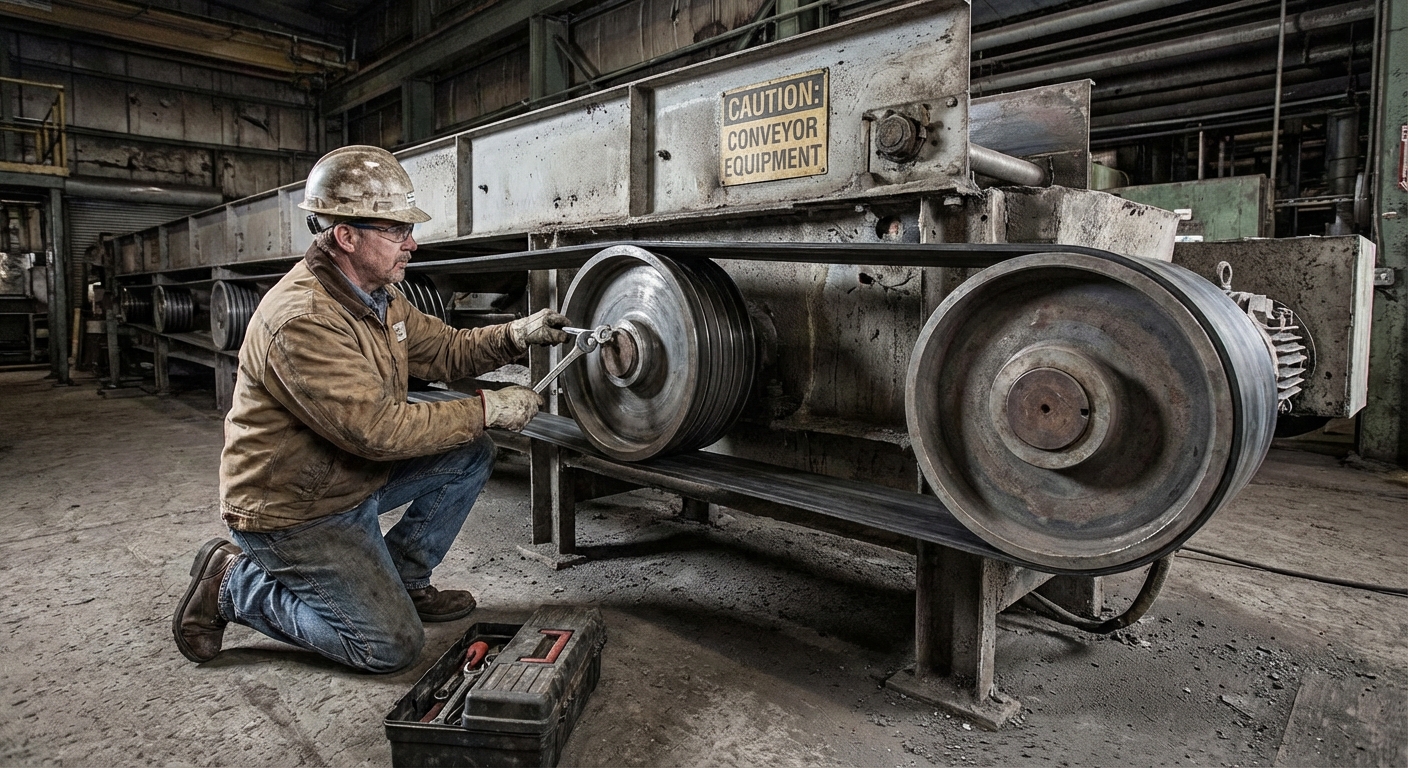
You can fix a mistracking flat rubber conveyor belt by first identifying if the issue is caused by material buildup on pulleys or a misaligned conveyor frame. Mistracking is the number one cause of edge damage, and ignoring it will lead to a total belt failure.
When your flat rubber conveyor belt drifts to one side, it creates friction against the structure that can cause smoke, heat, and eventually a fire. Regular inspections of your idlers and loading chutes are necessary to keep the belt centered.
Solving Material Buildup on Pulleys
Material “carry-back” often sticks to the tail pulley, creating an uneven surface that forces the belt to drift. You should install belt scrapers and cleaners to ensure that the contact surface between the belt and pulley remains pristine.
Is Your Conveyor Frame Misaligned?
Think about this: if the foundation is crooked, the belt will never run straight.
- Check Levels: Use a laser level to ensure the conveyor structure hasn’t shifted over time.
- Square the Idlers: Ensure every idler is exactly perpendicular to the belt’s path.
- Center the Load: Off-center loading is a common hidden cause of persistent tracking drift.
Key Takeaway: Most tracking problems are mechanical issues with the conveyor structure rather than a defect in the belt itself.
| Problem | Potential Root Cause | Corrective Action | |
|---|---|---|---|
| Drift at Tail | Pulley buildup | Clean pulley and install scrapers | |
| Drift at Loading | Off-center discharge | Re-align the loading chute | |
| Sinuous Drift | Bowed belt | Replace the damaged belt segment |
Solving tracking issues through mechanical alignment prevents expensive edge wear and extends the operational life of your entire system.
How to source a reliable flat rubber conveyor belt?
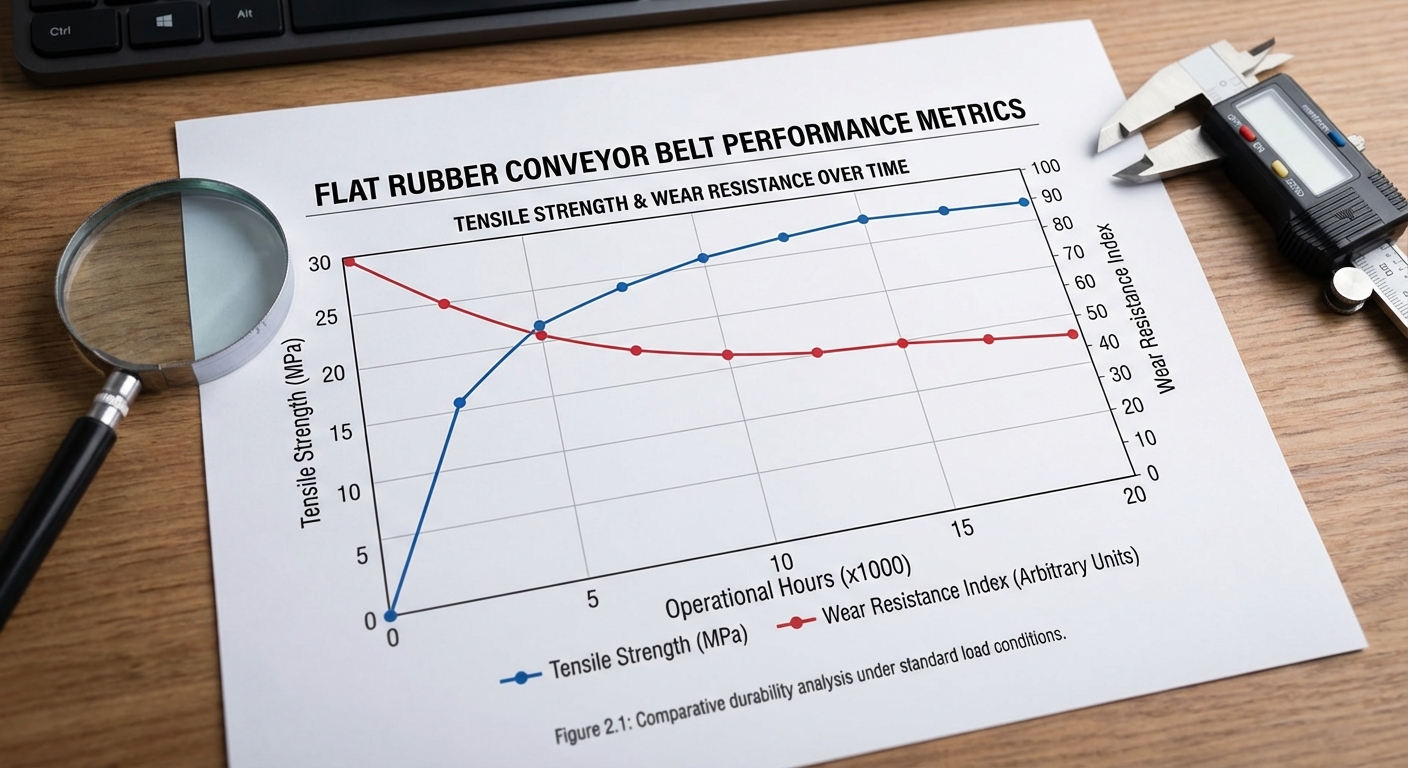
You source a reliable flat rubber conveyor belt by partnering with a manufacturer that provides documented technical specifications, such as tensile strength and abrasion loss metrics. A trusted supplier should have a long history of serving heavy industries and hold international certifications like ISO or CE.
When evaluating a flat rubber conveyor belt, you should request data sheets that prove the rubber compound’s durability against your specific material handling needs. Price should never be the only factor; a cheaper belt that fails twice as fast is actually the more expensive choice.
What to Look for in a Global Supplier?
Experience in the field is irreplaceable when it comes to custom belt engineering. You want a manufacturer that offers a wide variety of mold patterns, reinforcement types, and cover grades to ensure a perfect fit for your application.
Evaluating Technical Support and Specs
Here is the thing: a good supplier is a technical partner, not just a vendor.
- Abrasion Loss: Lower mm³ values mean the cover will last longer against sharp materials.
- Elongation: Ensure the belt meets the low-stretch requirements of your drive system.
- Customization: Check if they can provide custom widths, plies, and edge treatments.
Key Takeaway: You should verify the manufacturer’s testing protocols and past project history to ensure they can deliver a belt that survives your environment.
| Criteria | Target Metric | Why it Matters | |
|---|---|---|---|
| Certification | CE / ISO 9001 | Guarantees consistent quality standards | |
| Abrasion Loss | < 120 mm³ | Ensures the cover resists heavy wear | |
| History | 20+ Years | Proves the product’s long-term reliability |
Selecting a vetted manufacturer ensures that your investment provides the highest possible return through years of trouble-free material handling.
Summary of Excellence
At Zhenxing Rubber, we solve the common problems of belt slippage, rapid wear, and structural failure by providing heavy-duty, engineered solutions. Whether you need the high-tension strength of steel cords, the lightweight efficiency of aramid, or the heat resistance of specialized EPDM, we provide the durability your facility demands. Our vision is to empower global industry with conveyor systems that are as resilient as the materials they move. To optimize your production line today, contact us today for a technical consultation.
Frequently Asked Questions
Can I use a flat rubber conveyor belt for vertical lifting?Yes, but you will need to specify a version with integrated sidewalls and cleats to prevent material from rolling back during the ascent. Smooth belts are limited to low-angle inclines and will not function for steep vertical transport.
What’s the best material for a belt exposed to heavy industrial oils?Nitrile-based rubber covers, often graded as OR (Oil Resistant), are the best choice for these environments. They resist the softening and swelling that occurs when standard natural rubber comes into contact with hydrocarbons.
How do I know if my belt needs a heat-resistant cover?You should monitor the temperature of the material being moved; if it consistently exceeds 60°C, a heat-resistant grade like T1 or T2 is necessary. Standard rubber will quickly become brittle and crack if used for hot clinker or foundry sand.
Can I repair a small tear in the rubber cover?Yes, small punctures can often be fixed using cold vulcanizing compounds or mechanical fasteners to prevent the tear from spreading. However, if the internal carcass is visible or damaged, a professional hot-press splice or belt replacement is usually required.
What’s the best way to stop belt slippage on the drive pulley?Applying rubber lagging to the surface of the drive pulley is the most effective way to increase the coefficient of friction. This ensures the belt grips the pulley firmly, preventing the energy loss and heat buildup caused by slippage.