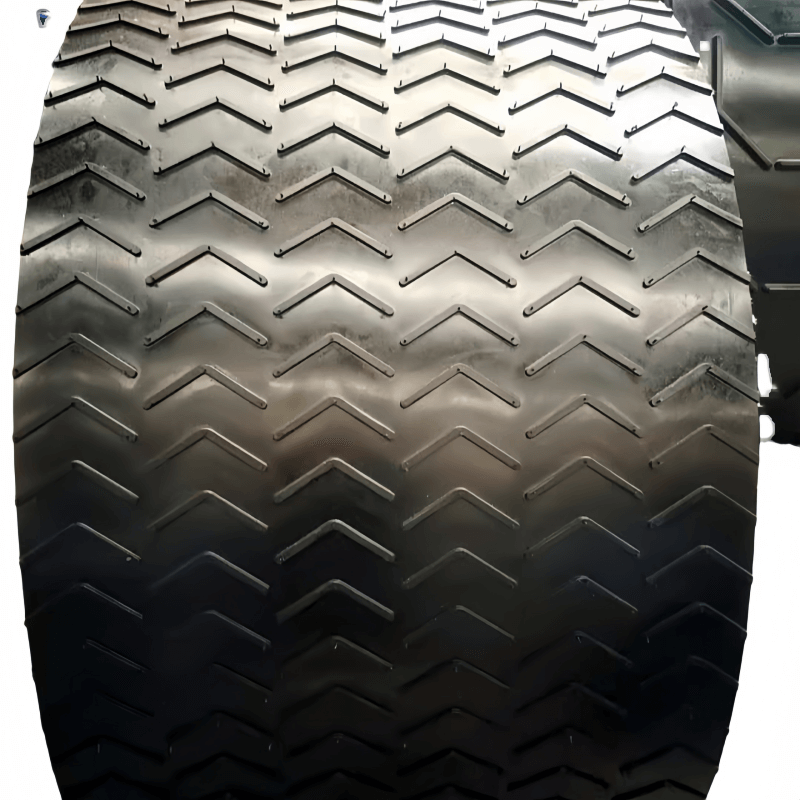
A herringbone pattern rubber conveyor belt provides superior grip for steep inclines, preventing material rollback, reducing spills, and ensuring efficient, continuous transport in industrial environments.
What defines a herringbone pattern rubber conveyor belt?
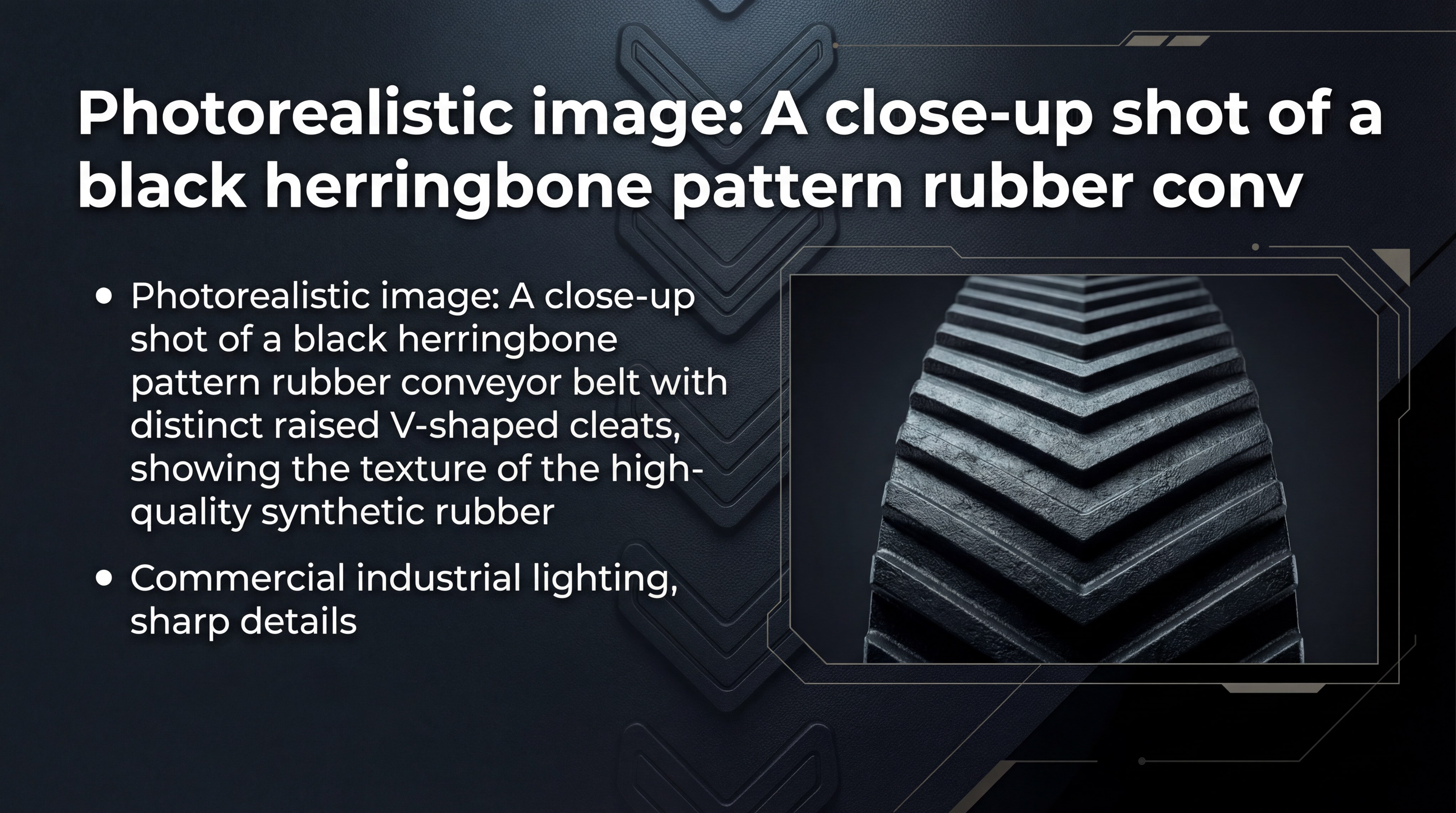
A herringbone pattern rubber conveyor belt is a specialized heavy-duty belt featuring raised V-shaped profiles or “chevrons” that are vulcanized directly onto the top cover. This unique geometry creates a series of physical barriers that prevent bulk materials or packaged goods from sliding backward during inclined transport. Unlike flat belts, this textured surface significantly increases the coefficient of friction, allowing for high-performance handling of loose materials.
Structural integrity and design
The design is centered on providing a “centering” effect for the load, keeping materials from drifting toward the edges. But that is not all.
- Integrally vulcanized V-shaped cleats.
- High-abrasion resistant top cover.
- Multi-ply EP or NN fabric carcass.
- Custom profile heights for specific inclines.
Open vs. Closed patterns
The pattern type dictates how the belt manages drainage and fine material containment.
- Open Pattern: Ideal for wet aggregates that require liquid runoff.
- Closed Pattern: Best for dry, powdered materials like gypsum.
Key Takeaway: The structural ribbing of the belt is the primary defense against material slippage on steep factory inclines.
| Feature | Specification | Benefit | |
|---|---|---|---|
| Cleat Shape | V-Pattern (Herringbone) | Centers the load | |
| Material | SBR/EPDM Rubber | Wear & Heat Resistance | |
| Base Carcass | EP/NN Fabric | Low Stretch, High Strength |
Analysis: Matching cleat height to material type is essential for optimal grip and long-term durability.
Can a herringbone pattern rubber conveyor belt handle steep angles?
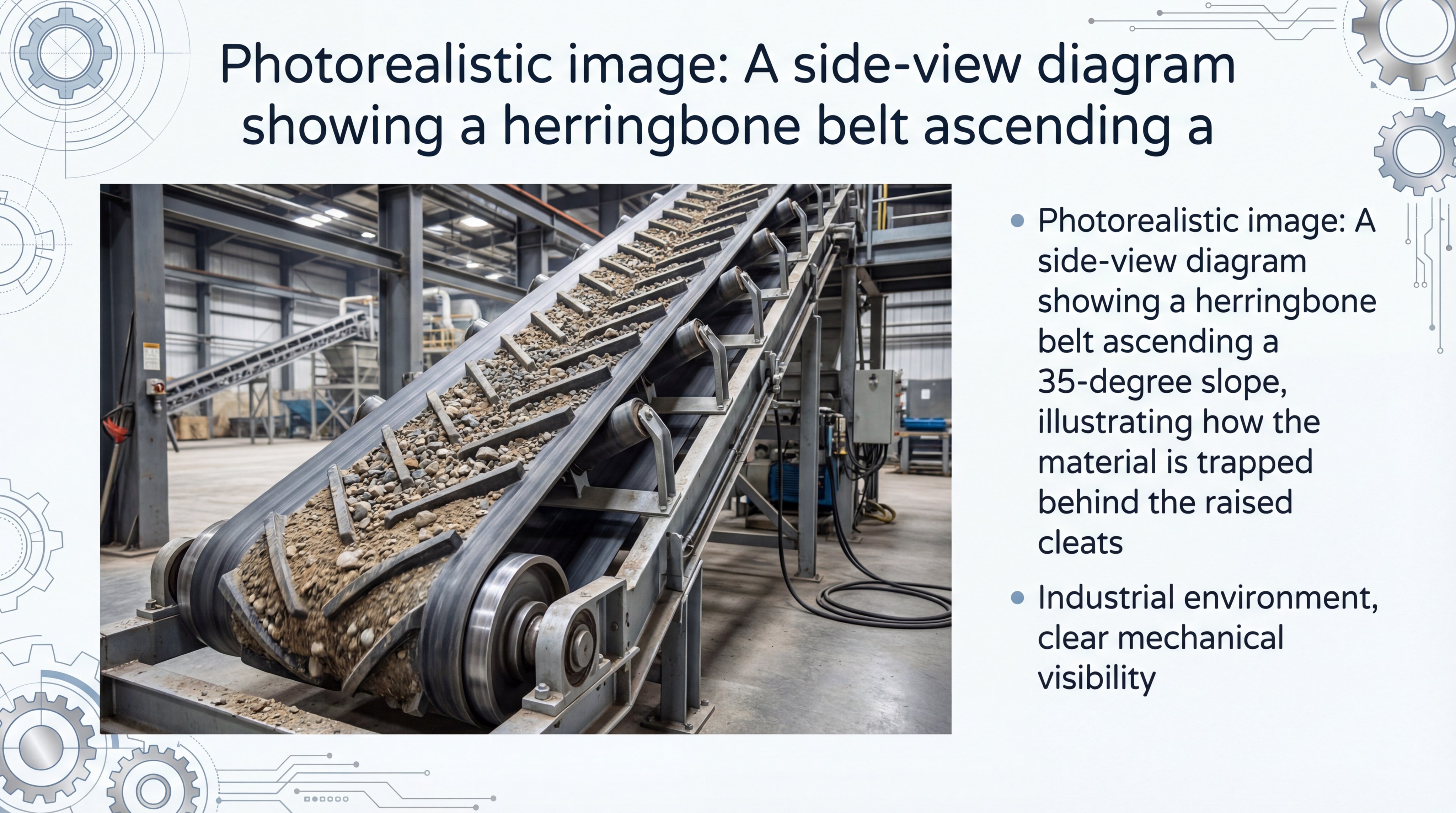
Yes, a herringbone pattern rubber conveyor belt is engineered to transport materials at much steeper angles than traditional flat belts, often reaching inclines up to 45 degrees. When your facility needs more vertical lift than a sidewall conveyor belt can provide in tight spaces, these profiled solutions are the standard choice. They utilize mechanical locking to ensure load stability throughout the ascent.
Achieving maximum incline performance
The secret lies in the height and spacing of the chevrons, which create a “pocketing” effect. Here is the kicker:
- Standard inclines up to 30 degrees for dry materials.
- Enhanced profiles for 45-degree vertical lifts.
- Self-cleaning V-shape prevents material buildup during return.
Stability on the slope
The mechanical interlocking of the profile ensures that gravity does not overcome surface friction.
- Resists backsliding of round particles.
- Distributes weight evenly across the belt width.
- Dampens vibrations during high-speed operation.
Key Takeaway: You can drastically shorten your conveyor length by utilizing the steep incline capabilities of profiled belts.
| Incline Degree | Material Type | Recommended Profile | |
|---|---|---|---|
| 0-15° | All materials | Flat or Low-Profile | |
| 16-30° | Dry Bulk | 10mm-15mm Cleat | |
| 31-45° | Wet/Round | 25mm-32mm Cleat |
Analysis: Increased cleat height directly correlates with the ability to handle higher vertical gradients without material loss.
How is the herringbone pattern rubber conveyor belt used in casting?
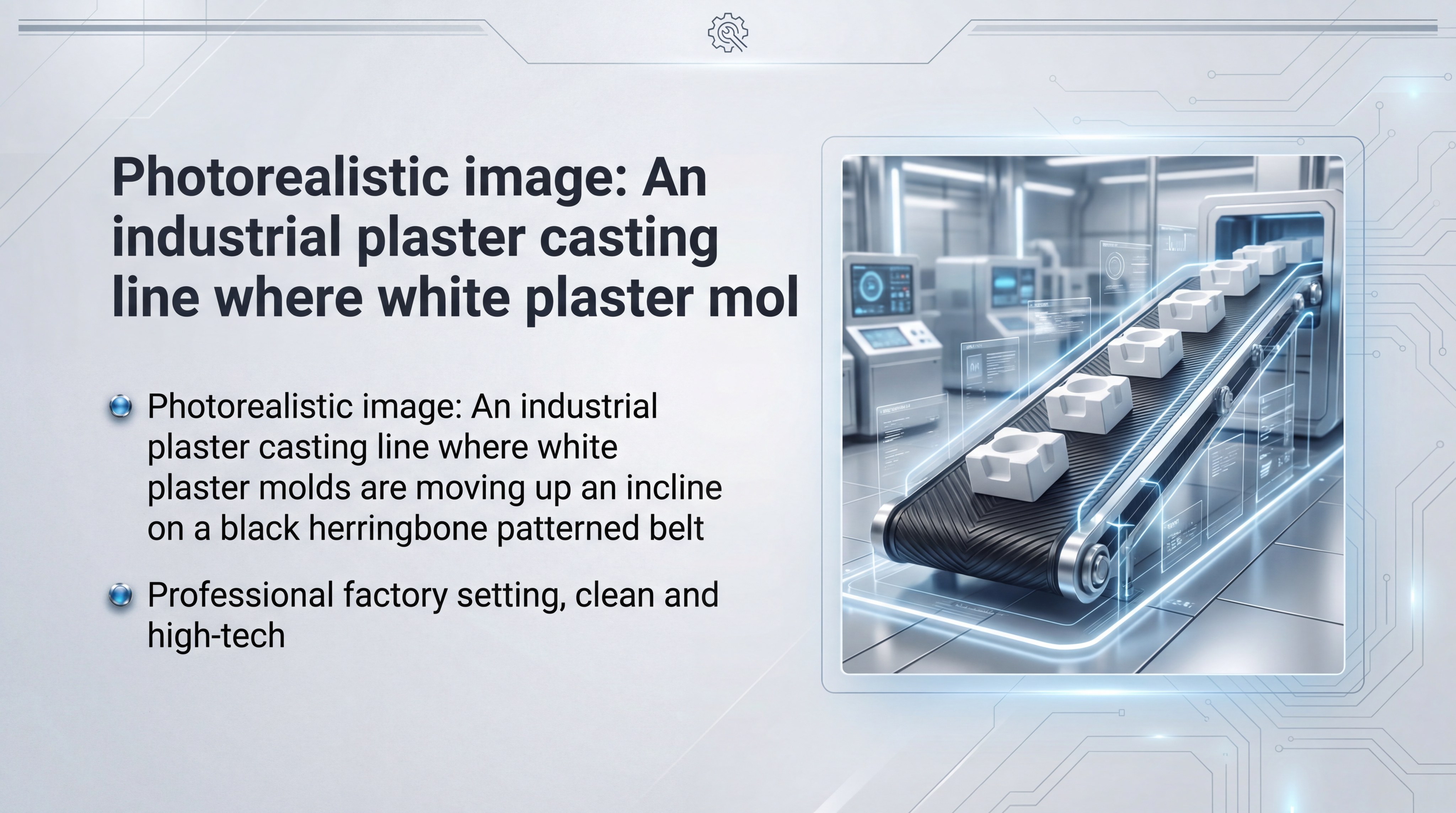
In the plaster casting industry, the herringbone pattern rubber conveyor belt is used to move wet molds and liquid-rich gypsum mixtures through dehydration and curing stages. Because wet plaster acts as a lubricant, standard belts lose traction almost immediately, causing molds to crash and causing significant production delays. These profiled belts provide the stable footing needed to keep production lines moving without mold damage.
Moisture management in the casting line
Casting environments are notoriously humid and often deal with excess slurry or water runoff. Think about it:
- V-grooves channel excess moisture away from the contact point.
- Profiles stabilize the center of gravity for delicate molds.
- Rubber compounds resist chemical degradation from plaster additives.
Precision for delicate molds
The consistent grip allows for smooth transitions through curing ovens without jarring the product.
- Vibration-dampened transport.
- Consistent speed control on inclines.
- Reduced breakage of semi-cured plaster.
Key Takeaway: Profiled ribbing ensures that delicate plaster casts remain stationary even when the belt surface is wet.
| Casting Need | Profiled Solution | Outcome | |
|---|---|---|---|
| Slip Prevention | 15mm V-Cleats | Zero Mold Displacement | |
| Moisture Removal | Open Herringbone | Faster Surface Dehydration | |
| Heat Exposure | EPDM Compound | Long-Term Belt Integrity |
Analysis: The traction provided by the V-pattern is critical for maintaining mold integrity and alignment during the curing phase.
What technical data supports a herringbone pattern rubber conveyor belt?
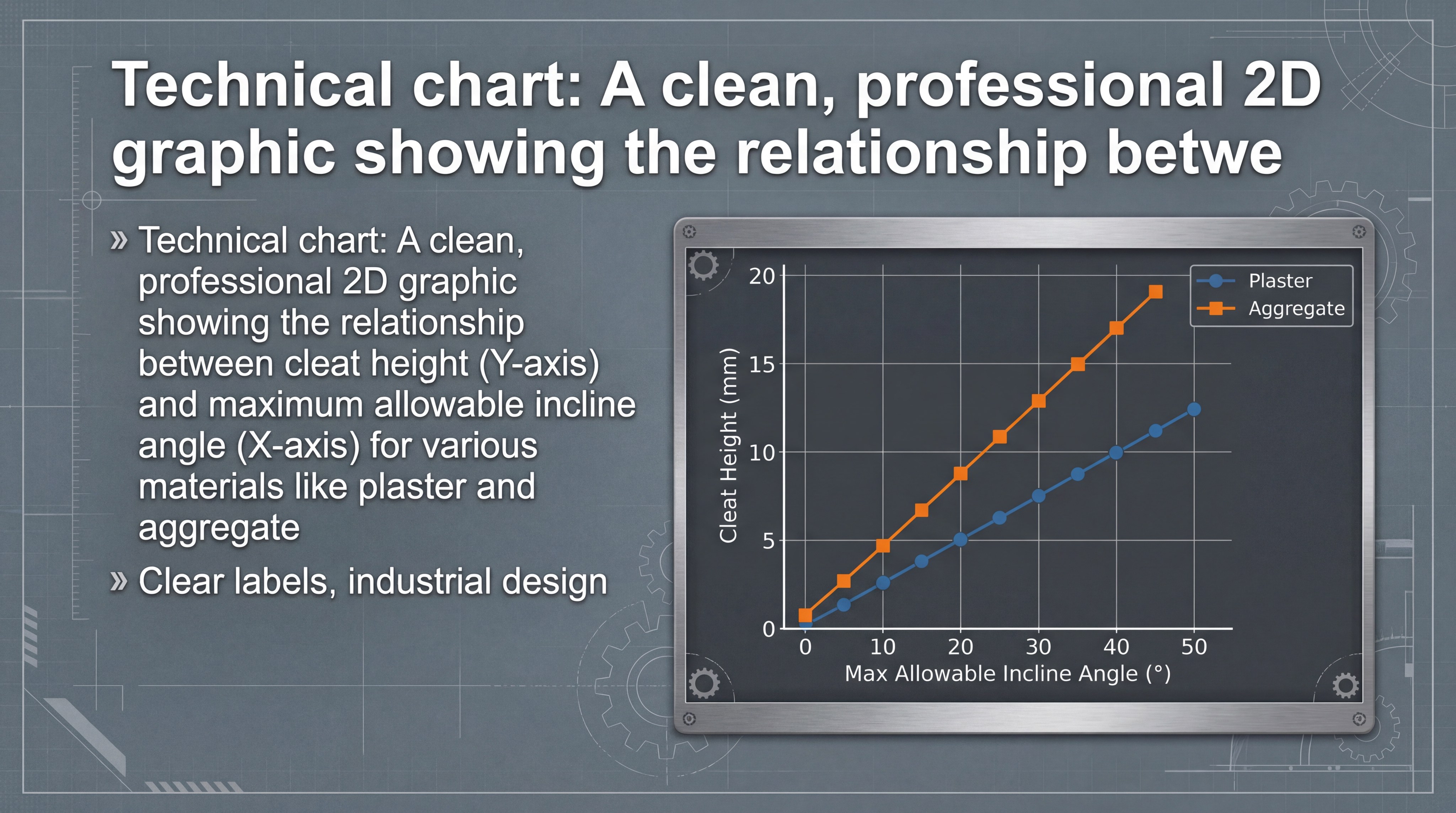
The performance of a herringbone pattern rubber conveyor belt is backed by rigorous technical charts that map cleat height against the angle of repose for various materials. For high-heat environments, a heat resistant conveyor belt specification can be combined with the herringbone profile to handle hot plaster directly from the furnace. These data points ensure you select a belt that won’t fail under specific thermal or mechanical stress.
Understanding the grip mechanics
Grip is a mathematical result of profile geometry and rubber compound Shore hardness. But there is more:
- Tensile strength ratings from 100N/mm to 2000N/mm.
- Cover grades optimized for high abrasion or thermal resistance.
- Cleat pitch designed to match specific idler spacing.
Technical specification options
Customization allows the belt to be tailored to specific factory demands.
- EP Carcass: High tensile strength, low stretch.
- Top Cover: 3mm to 10mm thickness.
- Cleat Height: 5mm to 32mm standard range.
Key Takeaway: Engineering a belt requires balancing tensile strength with the physical height of the traction cleats.
| Parameter | Range | Purpose | |
|---|---|---|---|
| Adhesion Strength | > 4.5 N/mm | Prevents Cleat Delamination | |
| Abrasion Loss | < 150 mm³ | Ensures Long Surface Life | |
| Elongation | < 1.5% | Prevents Belt Sagging |
Analysis: Data-driven selection prevents premature belt wear and ensures total system compatibility with your drive motors.
Does a herringbone pattern rubber conveyor belt save facility space?
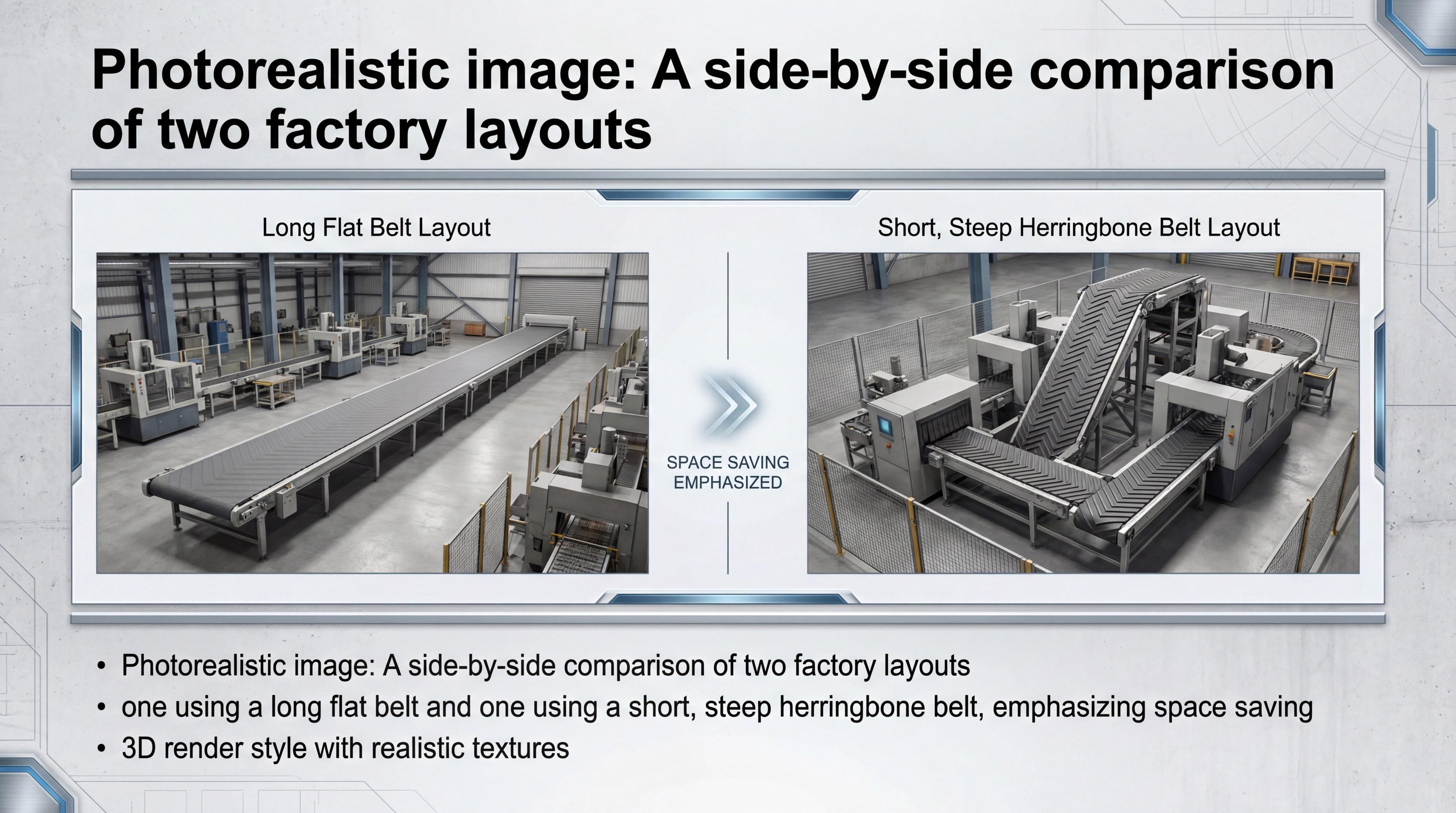
A herringbone pattern rubber conveyor belt allows you to save significant floor space by enabling steeper vertical climbs in a shorter horizontal footprint. Standard flat belt conveyors require long, gradual ramps to avoid spillage, which can consume a massive amount of factory real estate. By switching to a profiled design, you can compress your production line and utilize more of your vertical space for other equipment.
Optimizing your factory layout
Space optimization is often the difference between a profitable line and an expensive bottleneck. Make no mistake:
- Reduces horizontal conveyor length by up to 50%.
- Simplifies factory traffic flow around steep inclines.
- Lower infrastructure costs for shorter conveyor frames.
Vertical efficiency
Utilizing the vertical dimension of your facility is the most cost-effective way to expand.
- Multi-level conveying made possible.
- Shorter transport times between stages.
- Compact machinery integration.
Key Takeaway: Steeper angles mean smaller footprints, allowing for more equipment in the same facility area.
| Layout Type | Length Required (10m Lift) | Footprint Impact | |
|---|---|---|---|
| Flat Belt (15°) | ~37 Meters | High Real Estate Use | |
| Profiled Belt (35°) | ~17 Meters | 50% Space Savings | |
| Profiled Belt (45°) | ~14 Meters | Maximum Efficiency |
Analysis: Profiled belts are the superior choice for compact, modern manufacturing environments where every square meter counts.
Which pattern is best for your herringbone pattern rubber conveyor belt?
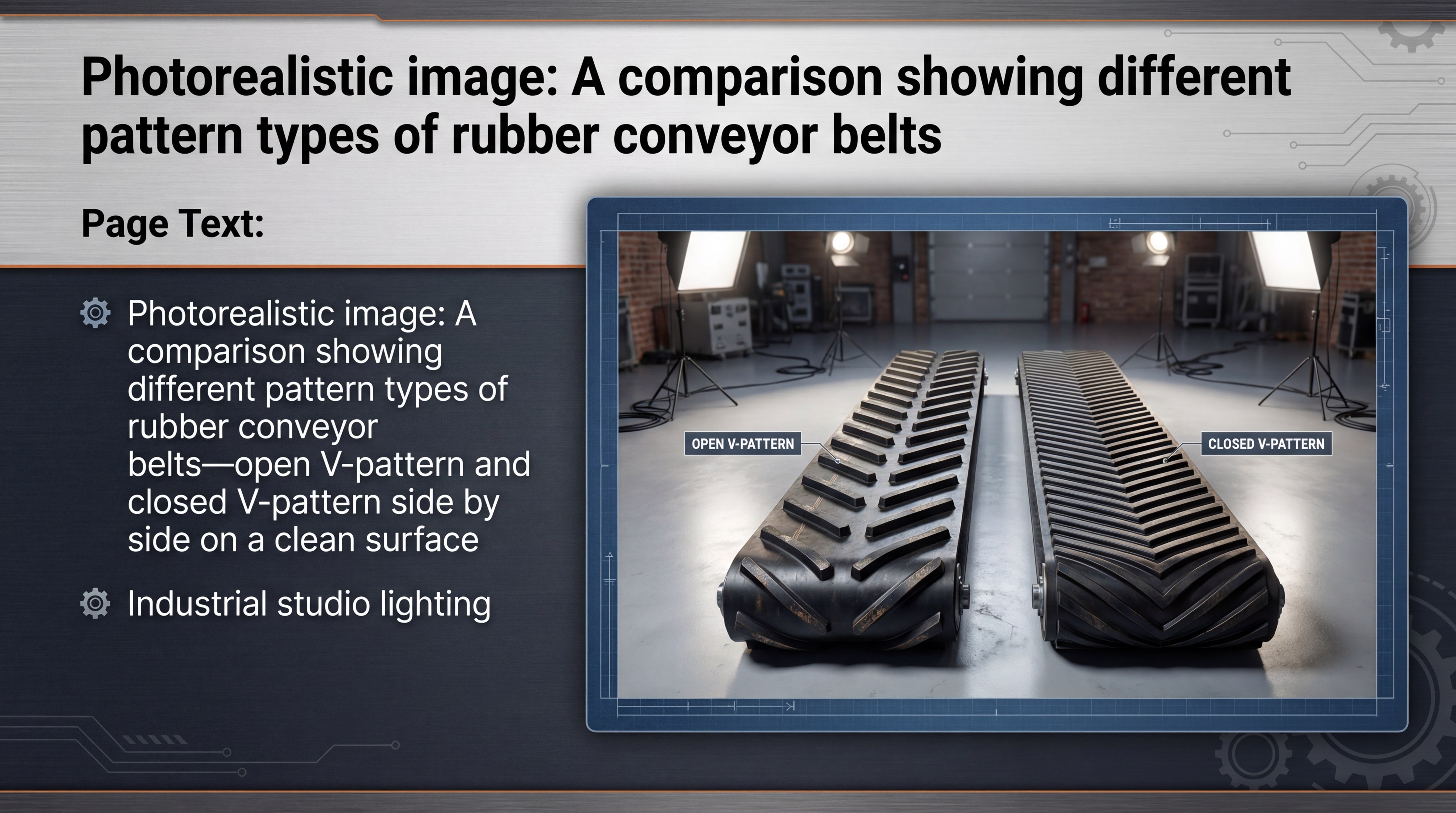
Choosing the correct pattern for your herringbone pattern rubber conveyor belt depends on whether your material is dry and powdery or wet and coarse. You can browse a variety of these patterns in our complete products list to find the specific geometry that matches your material’s flow characteristics. Both open and closed “V” styles offer unique advantages in drainage and containment.
Open V vs. Closed V patterns
The distinction between pattern types is more than just aesthetic; it determines how material behaves on the return. Here is the catch:
- Open V: Best for drainage and pushing wet aggregates or slurry.
- Closed V: Superior for containing fine powders and dry plaster.
- Multi-V: Ideal for small, lightweight unit handling or packages.
Pattern pitch and height
The spacing between chevrons determines the “bucket” size for your material.
- Close pitch for fine materials.
- Wide pitch for large, irregular lumps.
- Tall cleats for maximum slope stability.
Key Takeaway: Matching the pattern “openness” to your material’s moisture content is vital for clean, spill-free operation.
| Material Condition | Recommended Pattern | Advantage | |
|---|---|---|---|
| Wet Slurry | Open V-Pattern | Prevents Liquid Pooling | |
| Dry Gypsum | Closed V-Pattern | Maximum Powder Retention | |
| Small Castings | Multi-V Pattern | Multi-Point Grip |
Analysis: Correct pattern selection reduces material accumulation and improves the self-cleaning cycle of the belt.
How do you maintain a herringbone pattern rubber conveyor belt?
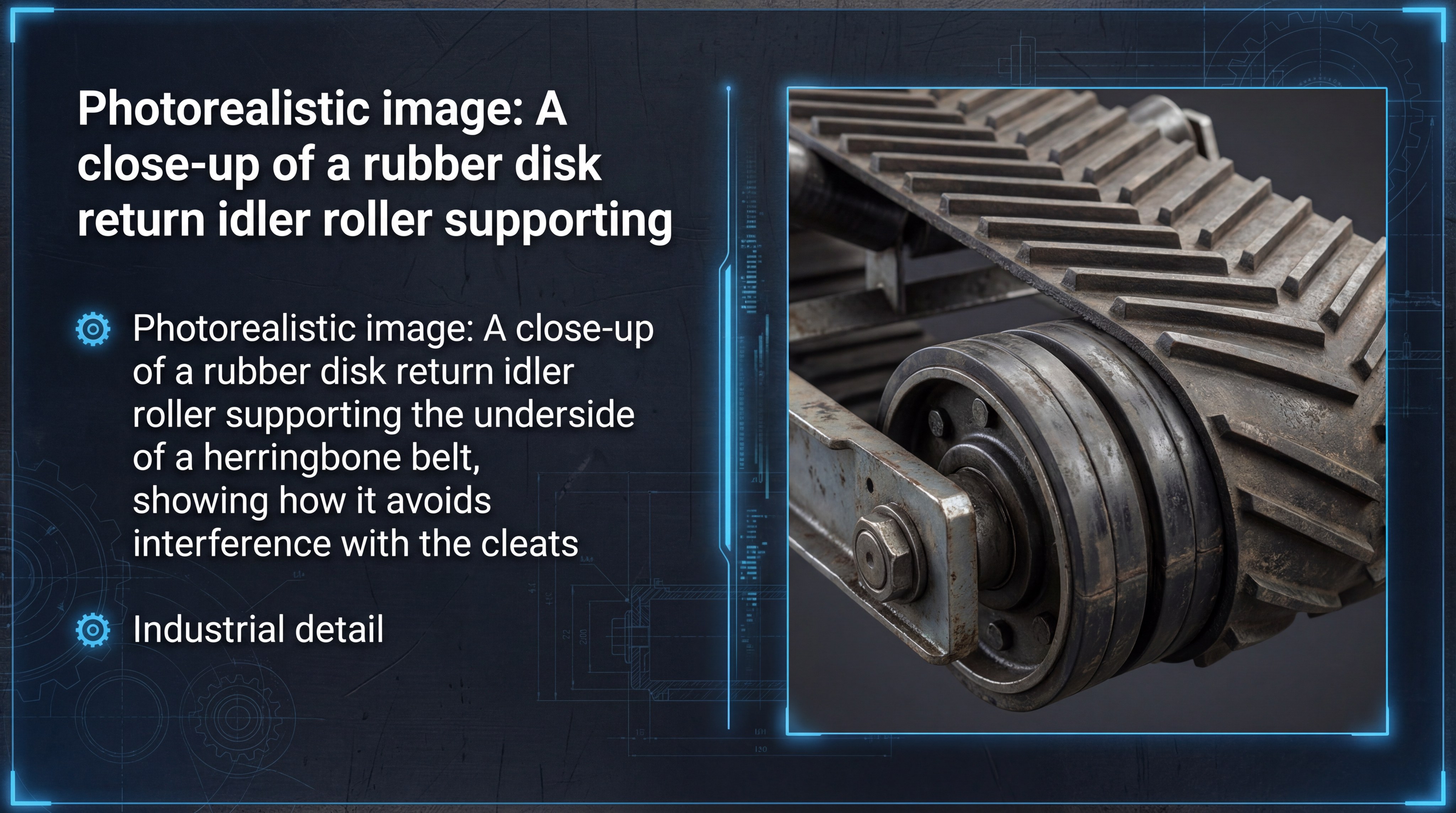
Maintaining a herringbone pattern rubber conveyor belt requires specialized return idlers and cleaning systems that don’t damage the raised profile. Because the cleats are vulnerable to mechanical shear, you must ensure that your return rollers are “disk” types that support the belt between the profile rows. Regular inspection of the cleat “valleys” is also necessary to prevent hardened plaster or aggregate buildup.
Specialized cleaning and support
Traditional flat scrapers will simply bounce off the cleats and fail to clean the belt, leading to carry-back. Here is the kicker:
- Rotary brush cleaners are required for profiled surfaces.
- Rubber disk return rollers prevent “profile thumping.”
- Tensioning must be checked to prevent cleat-to-structure interference.
Preventing premature wear
Misalignment is the number one killer of profiled belts.
- Track the belt carefully to prevent cleat shearing.
- Inspect loading chutes for impact damage.
- Clean return idlers to maintain proper rotation.
Key Takeaway: Investing in compatible support hardware is the only way to ensure the long-term life of a profiled belt.
| Component | Standard Flat Belt | Herringbone Belt | |
|---|---|---|---|
| Return Idler | Steel Roller | Rubber Disk Roller | |
| Cleaner | Tungsten Scraper | Rotary Power Brush | |
| Chute Guard | Standard Skirt | Flexible Gap Seal |
Analysis: Proper support hardware prevents the physical “beating” that can peel vulcanized cleats from the belt surface.
How is the herringbone pattern rubber conveyor belt manufactured?
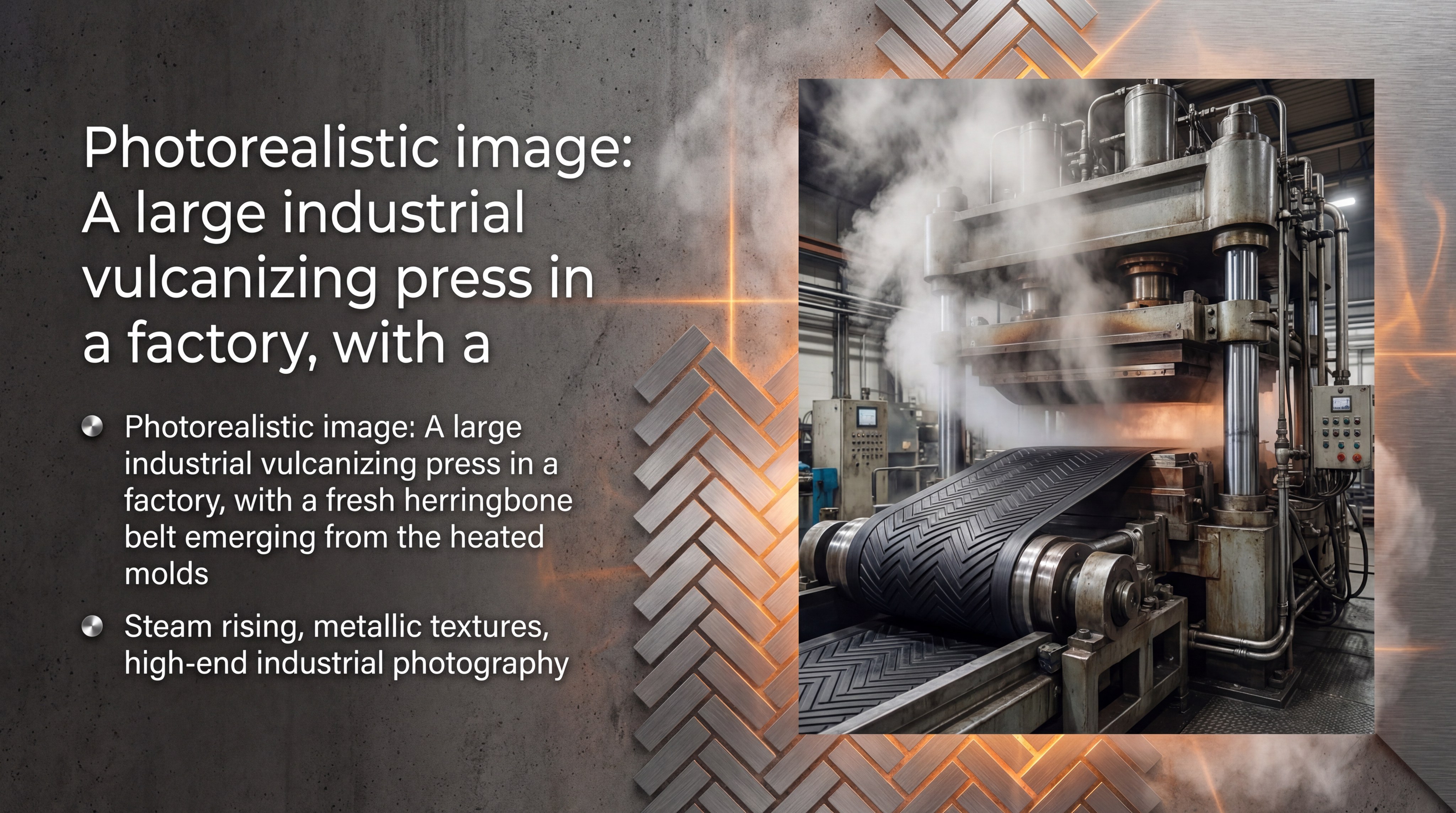
The high-quality herringbone pattern rubber conveyor belt is produced using a high-pressure, integral vulcanization process that bonds the profile to the carcass in a single thermal cycle. As a leading industrial manufacturer , we utilize massive presses that ensure the cleats are a molecularly bonded part of the top cover. This prevents the “cleat peeling” that is common in cheaper, cold-glued alternatives found in the market.
The vulcanization advantage
Heat and pressure are the only ways to achieve a truly permanent bond between the traction pattern and the belt. But that is not all:
- Uniform rubber density throughout the cleat and cover.
- No adhesive failure points during heavy load cycles.
- Precise mold geometry for consistent pattern spacing.
Material reinforcement
The strength isn’t just in the rubber; it’s in the high-tenacity fabric layers beneath.
- Multi-ply construction for tear resistance.
- High-adhesion layers between fabric and rubber.
- Specialized compounds for oil, heat, or cold resistance.
Key Takeaway: Integrally vulcanized belts offer vastly superior durability compared to belts with manually attached cleats.
| Process Step | Action | Benefit | |
|---|---|---|---|
| Calendaring | Layering Fabric & Rubber | Dimensional Stability | |
| Molding | High-Pressure Pressing | Precision Pattern Detail | |
| Vulcanization | Thermal Chemical Bonding | Unbreakable Cleat Bond |
Analysis: Single-cycle vulcanization creates a monolithic belt structure that resists extreme mechanical stress and thermal fatigue.
Where can you install a herringbone pattern rubber conveyor belt?
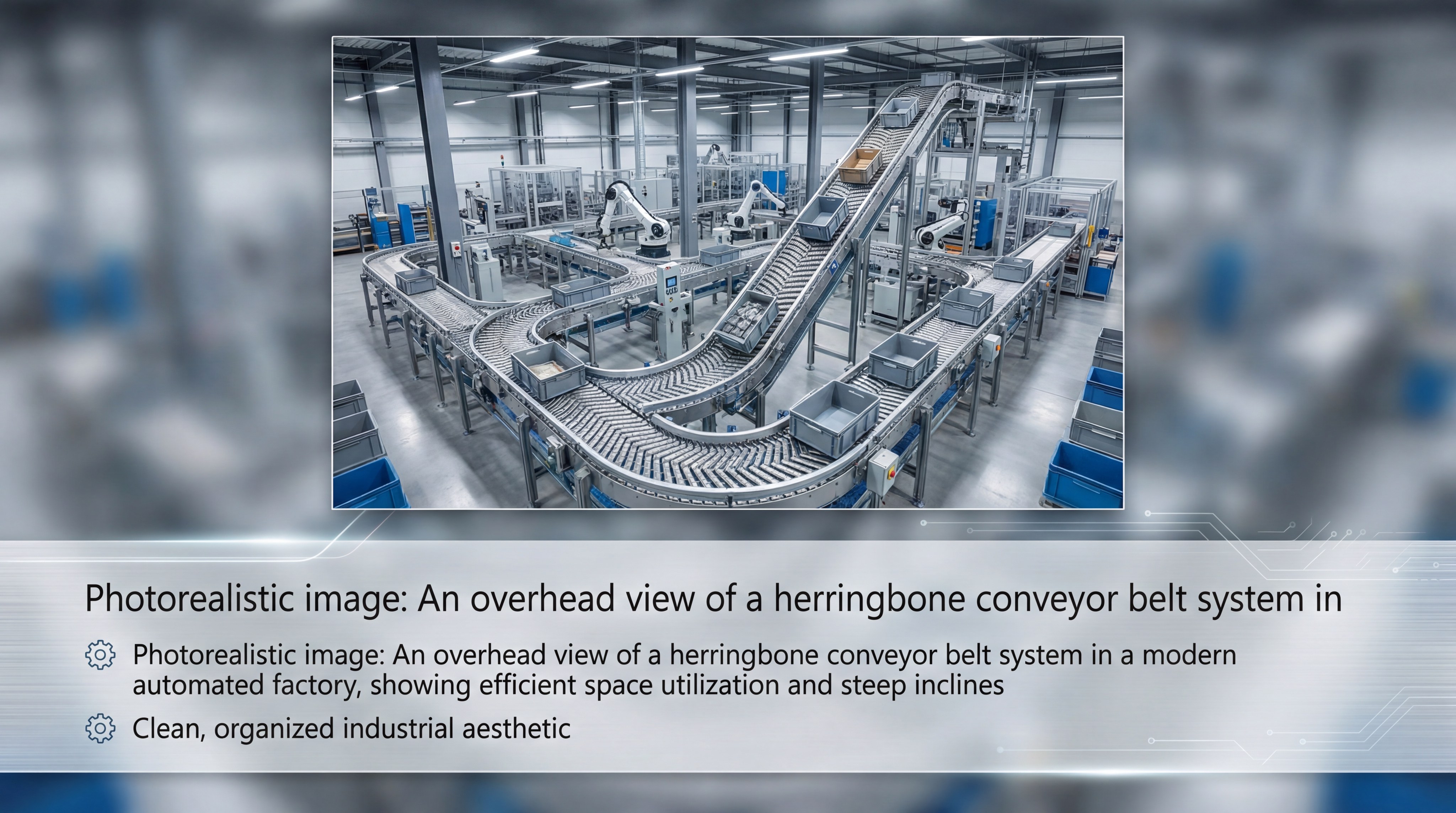
You can install a herringbone pattern rubber conveyor belt in virtually any environment where bulk materials need to be elevated, from mining pits to automated packaging centers. These systems are ubiquitous in modern automated factories where space is at a premium and efficiency is mandated by high throughput requirements. Their ability to handle both unit loads and bulk materials makes them a universal solution for modern logistics.
Diverse industrial applications
From the ground up, these belts are built for versatility and reliability. Think about it:
- Overhead transport systems for warehouse logistics.
- Vertical feeding for chemical mixers and storage silos.
- Mobile crushing and screening plants for construction.
Environmental adaptability
Whether indoors or out, the herringbone design performs consistently.
- Resists UV and weather degradation.
- Handles temperature extremes in casting ovens.
- Operates reliably in dust-heavy mining environments.
Key Takeaway: The herringbone design is adaptable to nearly every bulk material handling challenge in the industry.
| Industry Sector | Primary Material | Primary Challenge | |
|---|---|---|---|
| Construction | Sand & Gravel | Steep Site Grades | |
| Casting | Wet Plaster | Surface Lubrication | |
| Agriculture | Bulk Grain | Spillage Management |
Analysis: High-traction belts are the backbone of efficient, multi-level industrial facility design and automated material flow.
Is your herringbone pattern rubber conveyor belt right for aggregates?
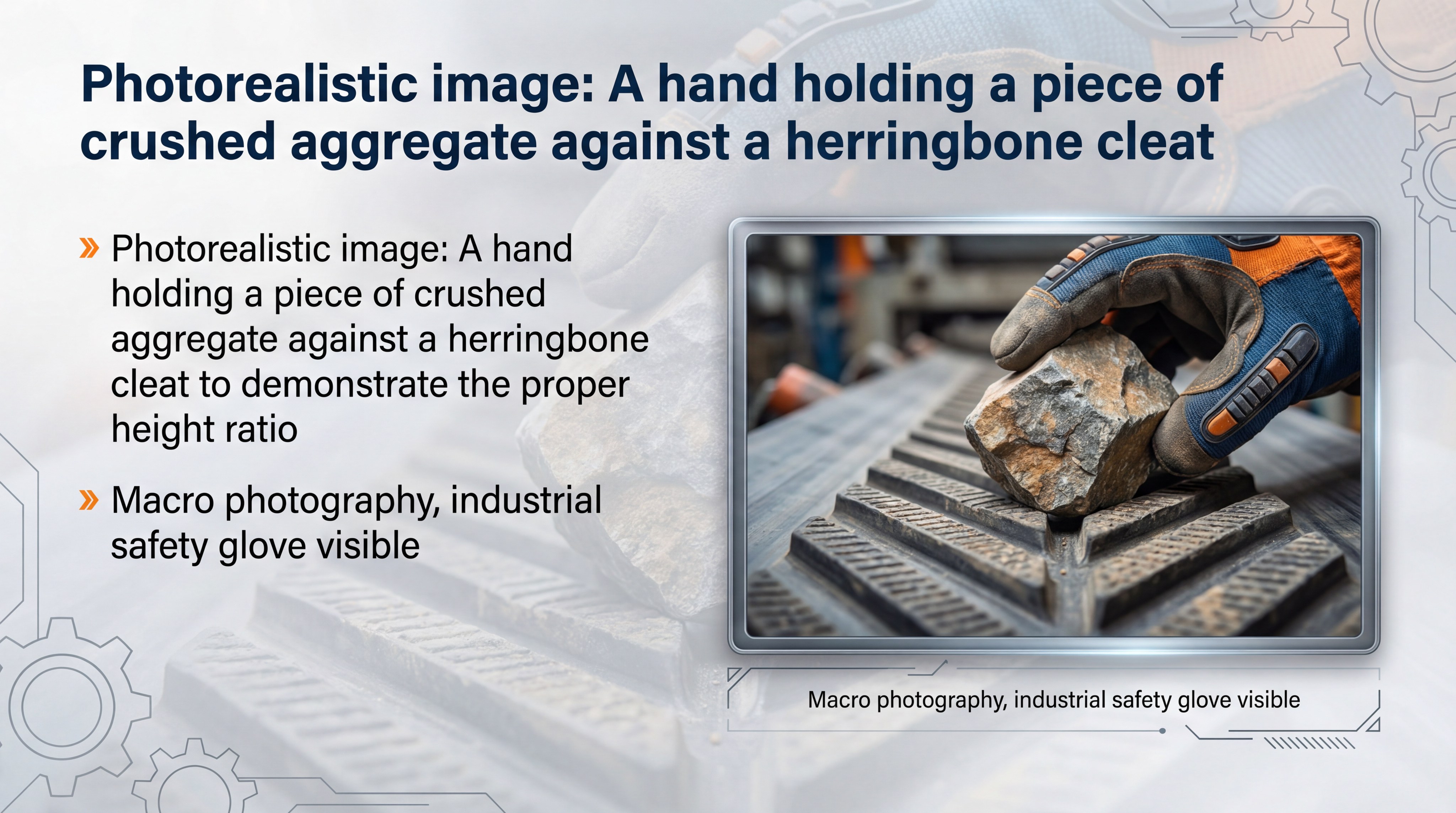
Determining if a herringbone pattern rubber conveyor belt is suitable for your aggregate operation depends on the maximum particle size and the abrasive index of the stone. If the aggregate is too large for the cleat height, it will simply tumble over the profile, causing system damage and material waste. Choosing the right ratio between cleat height and stone diameter is the most critical step in successful system design.
Scaling profiles to material size
The height of the traction rib must exceed the center of gravity of the material being transported. Make no mistake:
- Low-profile (5mm): For sand, fine grains, and powders.
- Medium-profile (15mm): For crushed stone and industrial plaster molds.
- High-profile (32mm): For large, round aggregates and heavy ores.
Impact and abrasion resistance
Aggregate handling puts immense stress on the rubber compound itself.
- High-shore hardness prevents stone penetration.
- Specialized “Super Brute” compounds for extreme impact zones.
- Thick top covers protect the fabric reinforcement.
Key Takeaway: Always match your chevron height to the largest 10% of your material’s particle size to prevent back-roll.
| Particle Size | Recommended Cleat | Incline Capacity | |
|---|---|---|---|
| < 10mm | 5mm Pattern | Up to 25° | |
| 10mm – 30mm | 15mm Pattern | Up to 35° | |
| > 50mm | 32mm Pattern | Up to 45° |
Analysis: Correct sizing prevents back-roll and minimizes impact damage to the belt surface, significantly extending service life.
Conclusion
A herringbone pattern rubber conveyor belt is more than just a piece of equipment; it is a strategic solution for material handling challenges that traditional flat belts simply cannot solve. By providing the mechanical grip necessary for steep-angle transport, these belts reduce your facility footprint, eliminate spillage, and protect delicate products like plaster casts from transport damage. Whether you are dealing with moisture, heat, or extreme inclines, our integrally vulcanized profiles provide the reliability your production line demands. To optimize your facility and reduce downtime, contact us today for a professional technical consultation. We look forward to powering your industrial efficiency with world-class rubber solutions.
FAQ
Can I use a herringbone belt for food-grade applications?Yes, we manufacture white, non-toxic herringbone belts specifically designed for hygienic environments and food processing.
What’s the best way to prevent the cleats from wearing down too fast?The best way is to ensure your belt speed is synchronized with the material feed rate to reduce abrasive “slippage” at the loading point.
How do I know if I need an open or closed V pattern?If your material contains liquid that needs to drain away during transport, choose an open V; if you are moving dry, dusty materials, a closed V is superior.
Can I install these belts on my existing flat-belt conveyor frame?In most cases, yes, though you may need to adjust the tensioning system and swap your return rollers for rubber disk types to accommodate the raised cleats.
What is the maximum temperature a herringbone belt can handle?Standard rubber handles up to 80°C, but our specialized EPDM heat-resistant compounds can withstand continuous temperatures up to 150°C for casting ovens.