
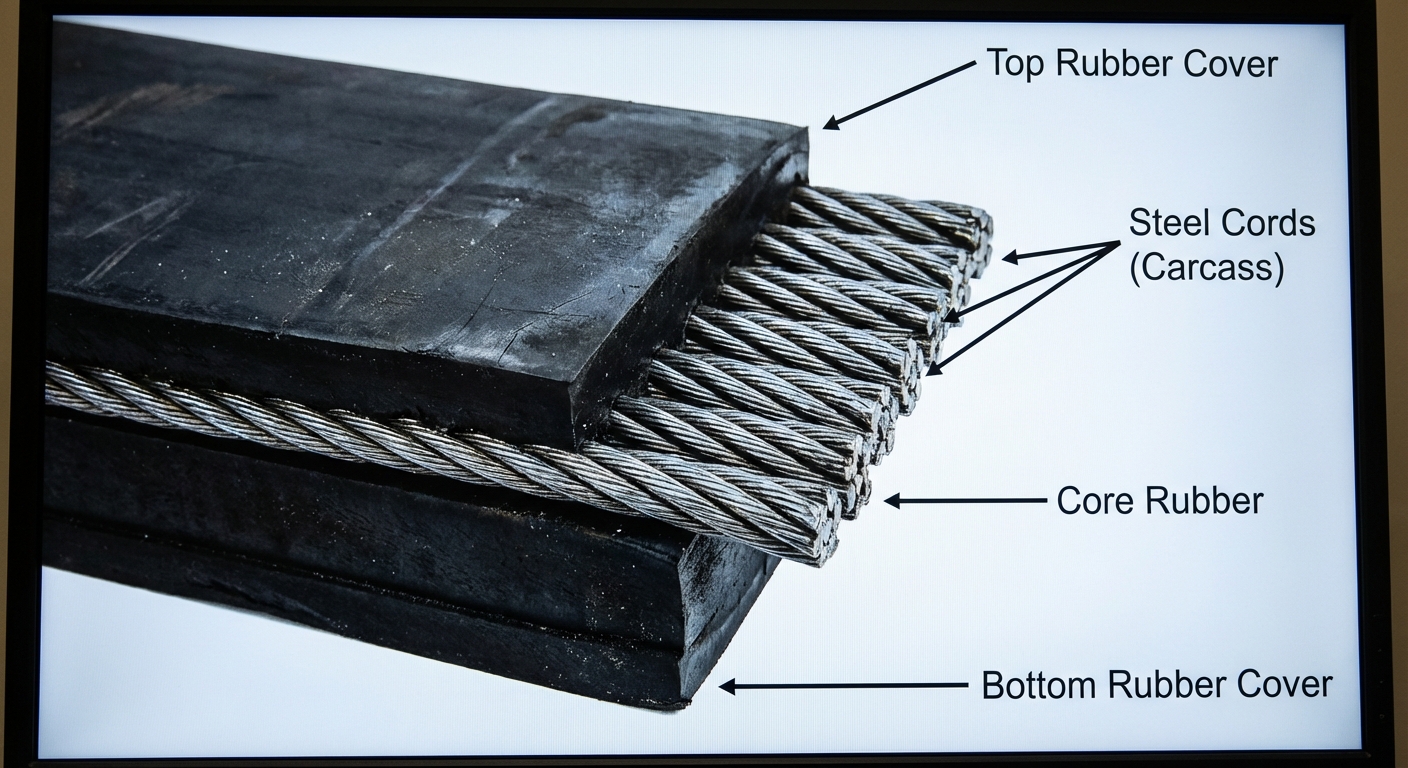
A wholesale steel cord rubber conveyor belt delivers high tensile strength and minimal elongation, reducing downtime and ensuring reliable performance in heavy-duty industrial applications.
Why choose a wholesale steel cord rubber conveyor belt for high tension?
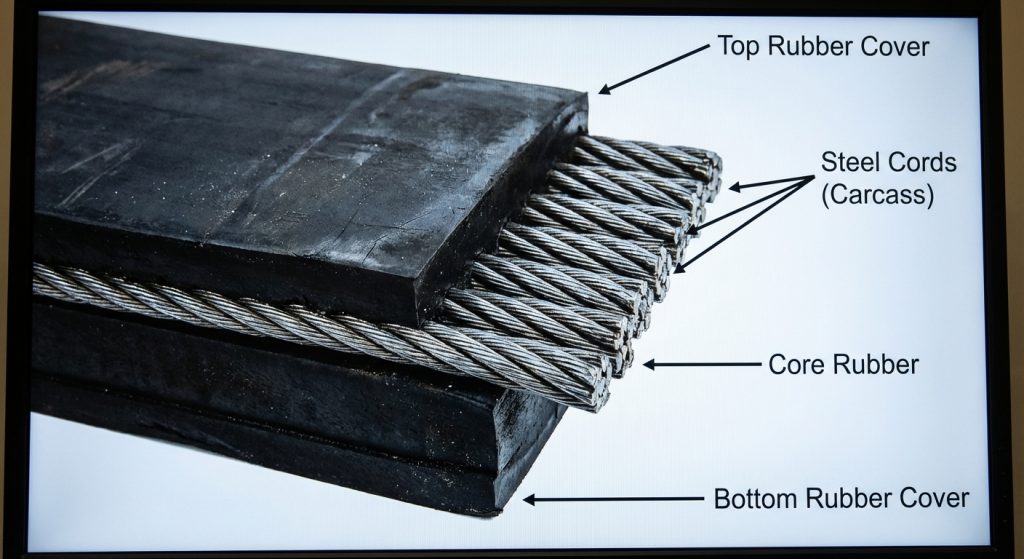
Steel cord rubber conveyor belts are chosen for high-tension applications because they offer unparalleled structural integrity and resistance to elongation. Choosing to source a wholesale steel cord rubber conveyor belt ensures that your operations can handle heavy loads over several kilometers without the need for massive take-up strokes. These belts act as the backbone of large-scale industrial infrastructure where reliability is non-negotiable.
What makes the carcass construction so durable?
The durability of the carcass comes from the integration of zinc-coated steel cords embedded deeply within a specialized bonding rubber layer. This construction prevents corrosion while ensuring that the cords do not pull out under extreme stress.
- High-tensile steel cord reinforcement.
- Advanced adhesion rubber compounds.
- Protective top and bottom rubber covers.
You might be wondering if this is overkill, but the truth is, it’s the only way to ensure 24/7 uptime.
Is elongation a problem with steel reinforcements?
No, steel reinforcements provide a very low elongation rate, typically less than 0.25% at working load. This allows for shorter take-up systems and more stable tracking across long distances compared to fabric belts.
- Minimal stretch during start-up.
- Reduced maintenance on tensioning units.
- Consistent belt tracking performance.
Let’s face it, nobody wants to adjust belt tension every single week.
How does load capacity improve with steel cords?
Load capacity increases significantly as the steel cords provide the necessary tensile strength to move thousands of tons per hour. The uniform cord tension distribution allows the belt to carry heavier bulk materials over steeper inclines.
Key Takeaway: Using a steel cord belt dramatically reduces the footprint of your tensioning equipment while maximizing your facility’s total throughput.
| Feature | Advantage | Operator Benefit | |
|---|---|---|---|
| Low Elongation | Short take-up travel | Lower infrastructure cost | |
| High Strength | Heavy load capacity | Increased hourly production | |
| Steel Reinforcement | Impact resistance | Fewer belt punctures |
How does a wholesale steel cord rubber conveyor belt operate?
Operational efficiency in a steel cord belt is achieved through the synergy between the high-strength steel cables and the surrounding flexible rubber matrix. As the wholesale steel cord rubber conveyor belt travels over pulleys, the steel cords absorb the primary pulling force while the rubber protects against abrasion. This allows the system to remain flexible enough for troughing while staying rigid enough to prevent sagging between idlers.
How do pulleys interact with steel cables?
Pulleys interact with the steel cables by transmitting drive torque through the rubber cover to the internal reinforcements. The diameter of the pulleys must be carefully matched to the cord thickness to prevent fatigue from repeated bending.
- Specific pulley diameter ratios.
- Lagging materials to increase friction.
- Dynamic stress distribution across the cord plane.
The bottom line is that the right pulley setup extends your belt life by years.
What role does the bonding rubber play?
The bonding rubber creates a chemical and mechanical lock between the smooth steel cords and the outer protective covers. Without this high-adhesion layer, the cords would slip or delaminate, leading to catastrophic belt failure under load.
- Superior adhesion levels.
- Protection against moisture ingress.
- Shock absorption for the internal cables.
Believe it or not, the rubber-to-steel bond is the most critical technical aspect of the entire belt.
How does the belt maintain its trough shape?
Steel cord belts maintain their trough shape through the specific spacing and diameter of the cords, which allow the belt to “bend” into a U-shape on idler sets. This deep troughing capability increases the volumetric carrying capacity and prevents material spillage.
Key Takeaway: Proper operation relies on the perfect balance between the stiffness of the steel cords and the flexibility of the rubber cover.
| Component | Function | Material | |
|---|---|---|---|
| Steel Cords | Tension Bearing | Carbon Steel / Zinc Coated | |
| Bonding Layer | Adhesion | Specialized Rubber Compound | |
| Cover Rubber | Protection | Natural/Synthetic Rubber |
What are the primary uses of wholesale steel cord rubber conveyor belt?
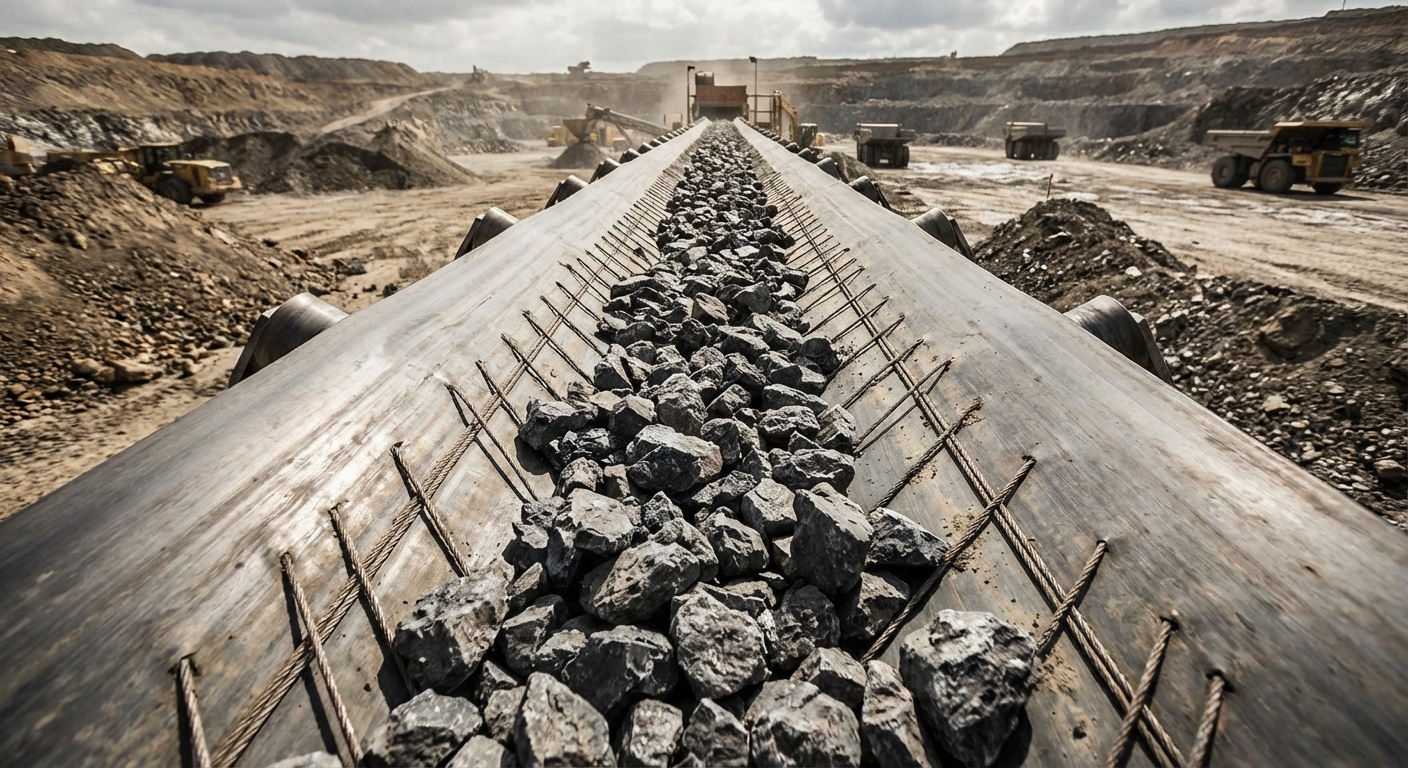
Primary uses for these belts include long-distance overland conveying, high-lift mining applications, and heavy-duty port terminal material handling. When you buy a wholesale steel cord rubber conveyor belt , you are usually equipping a facility that moves coal, iron ore, or crushed stone in massive volumes. These industries require the high-tensile strength that only steel can provide to bridge long spans between transfer points.
Why is it preferred in open-pit mining?
Open-pit mining prefers steel cord belts because they can handle the high-impact energy of large falling rocks at loading points. The internal steel structure acts as a defense against longitudinal rips which would destroy a standard fabric belt instantly.
- High impact resistance at loading chutes.
- Ability to transverse rugged terrain.
- Long service life in abrasive environments.
It’s no secret that mining is the toughest environment for any conveyor system.
How does it function in port terminals?
In port terminals, these belts facilitate the rapid loading and unloading of bulk carriers by moving material at high speeds over long jetties. The minimal stretch ensures that the belt does not jump or slip during the frequent starting and stopping inherent in ship loading.
- Continuous high-speed operation.
- Resistance to salt-air corrosion.
- Minimized downtime for belt maintenance.
Every minute a ship sits in dock costs thousands, so reliability is everything.
Can it be used in underground coal mining?
Yes, steel cord belts are frequently used in underground mining when they are manufactured with flame-retardant (FR) rubber compounds. They provide the necessary strength for steep incline “slope” conveyors that bring coal from deep shafts to the surface.
Key Takeaway: Steel cord belts are the standard for any industry where material must be moved at high capacities over distances exceeding one kilometer.
| Industry | Application | Specific Requirement | |
|---|---|---|---|
| Mining | Over-land Transport | High Tensile Strength | |
| Ports | Ship Loading | Speed & Precision | |
| Power Plants | Coal Feeding | Flame Retardancy |
What is the manufacturing process for wholesale steel cord rubber conveyor belt?
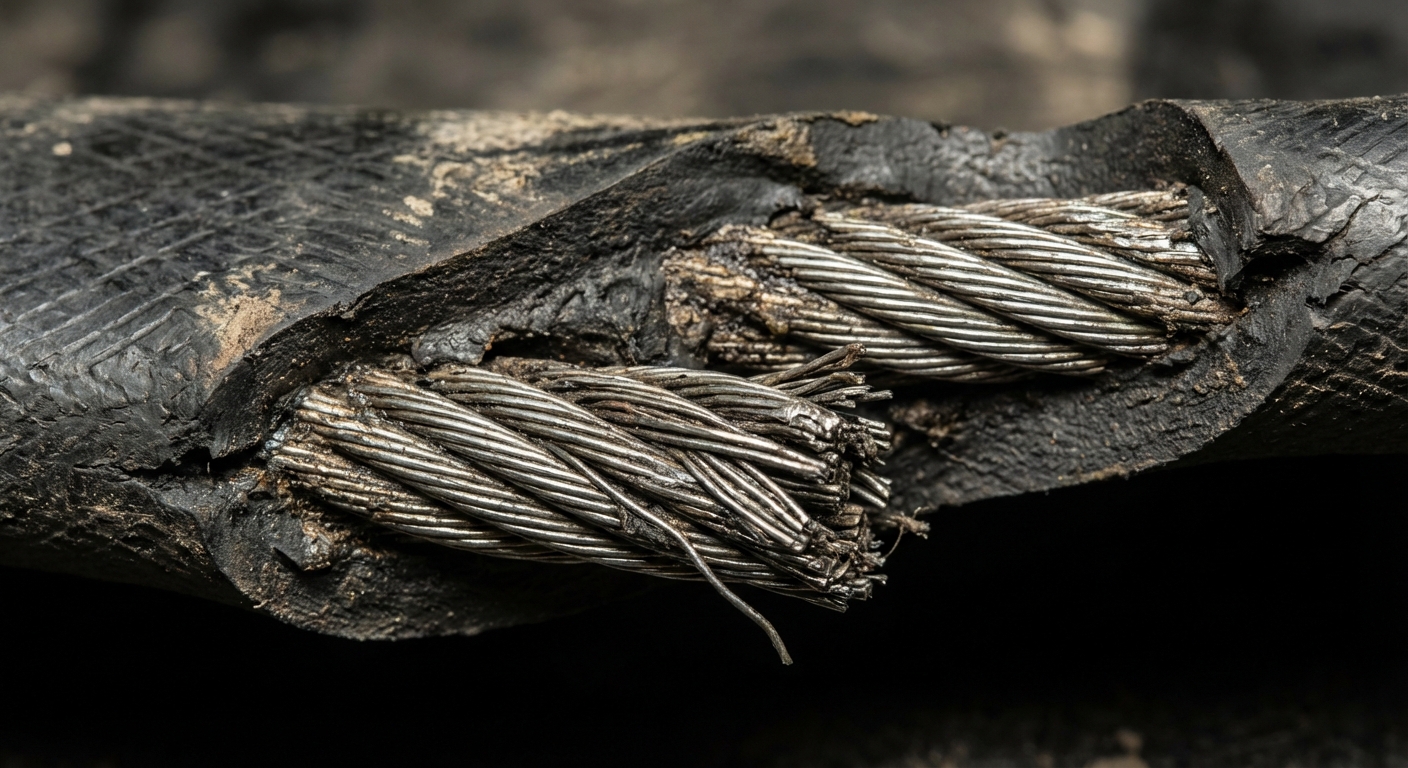
The manufacturing process involves a precision vulcanization technique where steel cords are tensioned and embedded between layers of unvulcanized rubber. Producing a wholesale steel cord rubber conveyor belt requires large-scale calenders and massive vulcanizing presses to ensure the cords remain perfectly straight and evenly spaced throughout the belt’s length. Any deviation in cord tension during this phase can lead to a belt that curves or mistracks once installed.
How are the steel cords prepared?
Steel cords are prepared by twisting multiple fine wires into a rope-like structure and coating them with zinc to prevent rust and improve rubber adhesion. These cords are then fed into a tensioning station to ensure every cord carries an equal share of the load.
- Selection of high-carbon steel wire.
- Hot-dip galvanization for corrosion resistance.
- Uniform tensioning across the creel room.
Precision at this stage is what separates a premium belt from a generic one.
What happens during the calendering stage?
During calendering, layers of rubber are pressed onto the steel cords under high pressure to eliminate any trapped air. This ensures that the rubber penetrates deep into the cord interstices, creating a permanent, inseparable bond.
- Controlled rubber thickness applied.
- Removal of air pockets (bleeding).
- Correct cord alignment and pitch.
You need to get this right the first time, or the belt will delaminate.
How does vulcanization finalize the belt?
Vulcanization involves applying heat and pressure in a continuous or stationary press, which triggers a chemical reaction that transforms the soft rubber into a durable, elastic material. This process “cures” the belt and locks the steel cords into their final position.
Key Takeaway: A specialized manufacturing process ensures that the steel cords are protected from environment and mechanical stress for their entire life cycle.
| Stage | Process | Quality Metric | |
|---|---|---|---|
| Creel Room | Cord Tensioning | Uniformity of Tension | |
| Calendering | Layering | Cover Thickness Accuracy | |
| Vulcanization | Pressure & Heat | Adhesion Strength |
Why is rip detection vital for wholesale steel cord rubber conveyor belt?
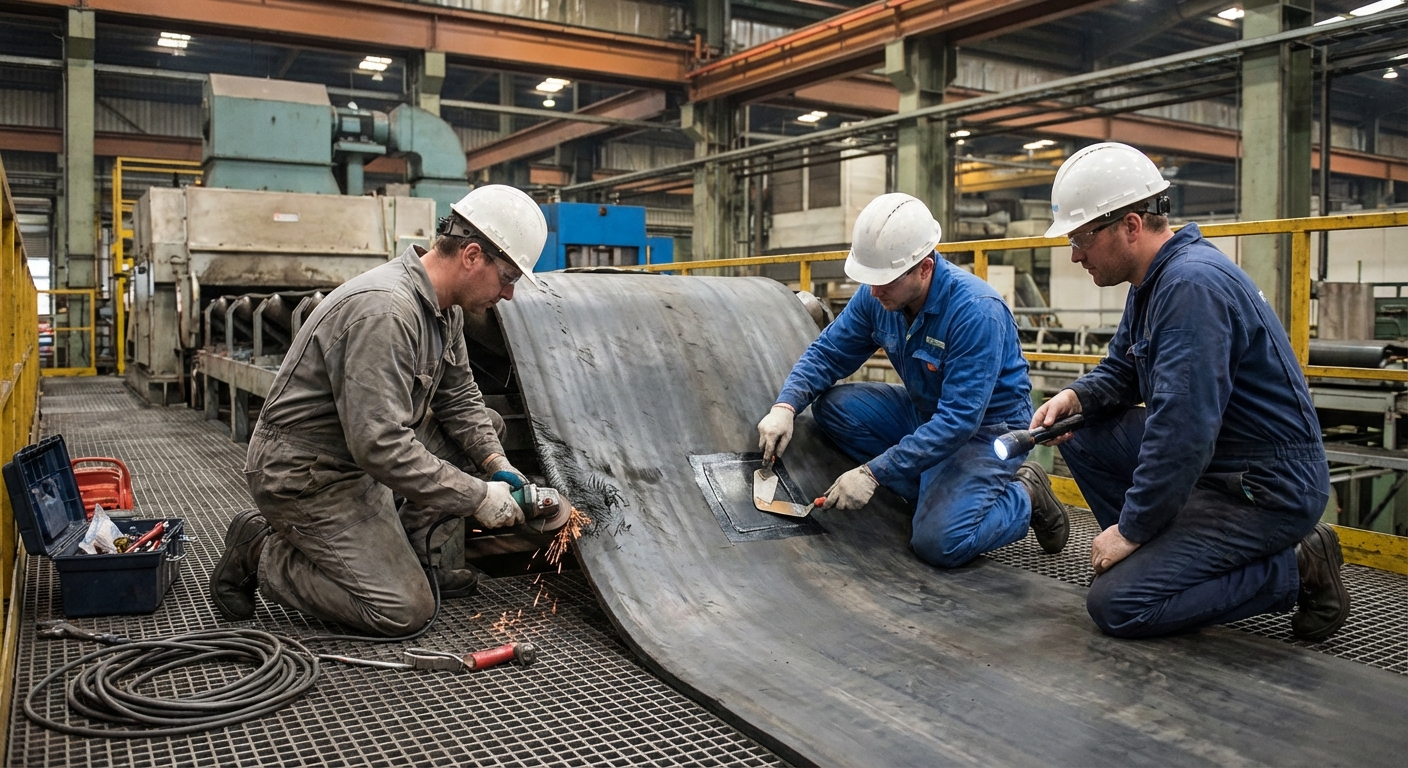
Rip detection is vital because a longitudinal tear can destroy an entire wholesale steel cord rubber conveyor belt in a matter of minutes if the system is not stopped immediately. Since these belts represent a massive capital investment, integrated sensors are used to detect metal objects or belt damage before it escalates. These systems typically involve inductive loops embedded in the rubber at regular intervals.
How do inductive loops work?
Inductive loops work by sending a signal through a copper wire embedded in the belt; if the loop is severed by a rip, the signal is lost and the system shuts down. These are placed every 50 to 100 meters to limit the length of potential damage.
- Real-time monitoring of belt integrity.
- Automatic emergency stop triggers.
- Easy integration into PLC systems.
It’s better to lose five minutes of production than five miles of belt.
Are there ultrasonic detection methods?
Yes, ultrasonic detection uses sound waves to “see” inside the rubber and identify internal cord breaks or delamination that isn’t visible on the surface. This allows for proactive maintenance before the belt snaps under tension.
- Non-destructive testing (NDT).
- Mapping of internal cord health.
- Predictive failure analysis.
Knowledge is power when it comes to preventing catastrophic failures.
Can X-ray technology be used?
X-ray technology can be used for occasional deep-scan inspections to provide a complete picture of cord corrosion and splice integrity. Mobile X-ray units can scan the belt while it is running at reduced speed to minimize operational impact.
Key Takeaway: Modern monitoring technologies protect your multi-million dollar belt investment by catching small issues before they become terminal.
| Tech Type | Detection Target | Benefit | |
|---|---|---|---|
| Embedded Loops | Longitudinal Rips | Hardware Protection | |
| Ultrasonic | Hidden Cord Breaks | Safety Assurance | |
| X-Ray Scans | Splice Integrity | Lifetime Prediction |
What advantages does steel reinforcement offer over fabric?
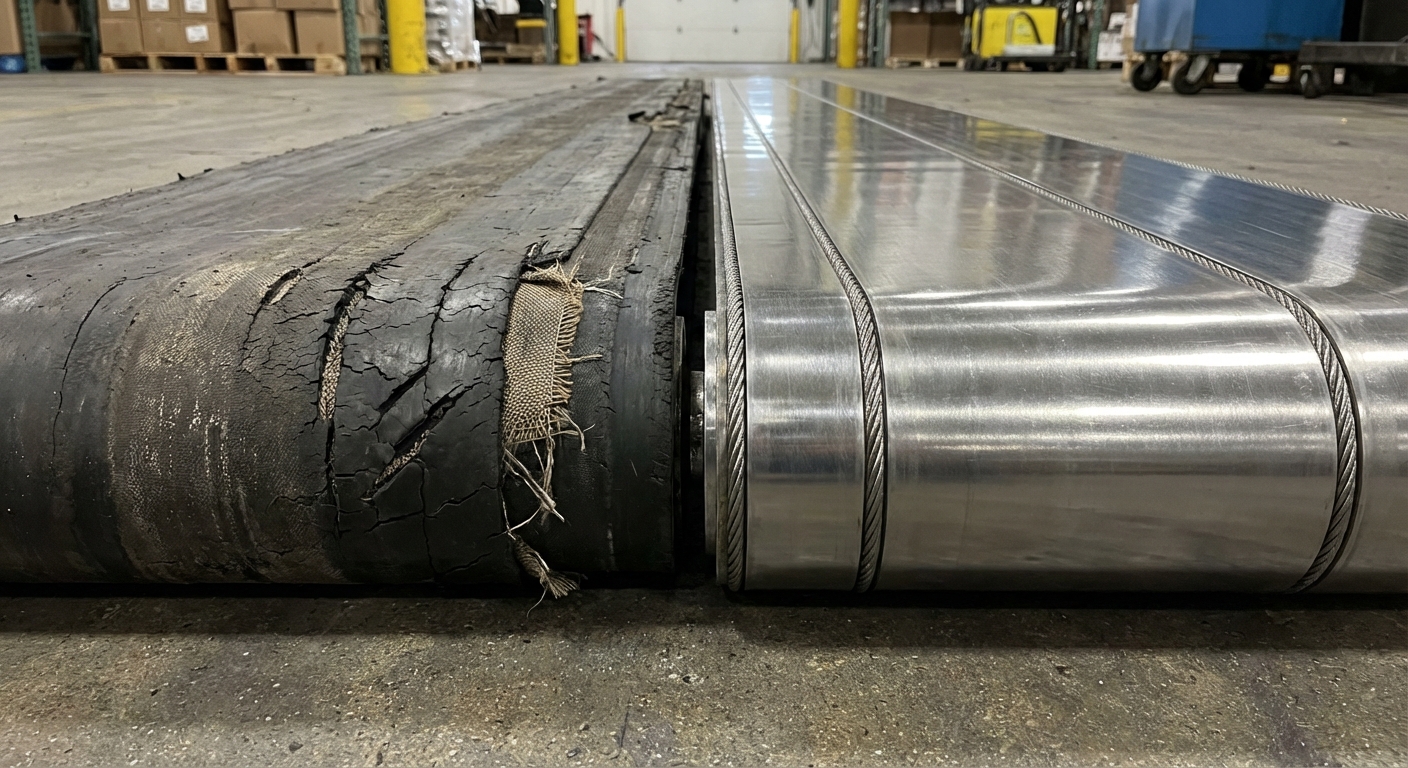
Steel reinforcement offers superior strength-to-weight ratios and remarkably lower permanent stretch compared to traditional fabric or nylon belts. When you source a wholesale steel cord rubber conveyor belt , you are eliminating the “elastic” behavior of fabric belts which causes surging and tracking issues on long conveyors. Furthermore, steel cords do not rot or lose strength when exposed to moisture, unlike many organic fabric carcasses.
How does longevity compare to fabric?
Steel cord belts typically last 2 to 3 times longer than fabric belts in high-tension applications because the carcass is virtually immune to fatigue. While a fabric belt might fray at the edges or stretch out of spec, a steel cord belt maintains its dimensions for its entire service life.
- Higher resistance to environmental degradation.
- Zero moisture absorption in the carcass.
- Increased resistance to edge wear.
In the long run, the more expensive belt is actually the cheapest option.
What about the frequency of maintenance?
Maintenance frequency is lower because the belt does not require constant retensioning or tracking adjustments once it has been properly broken in. The stability of the steel cables ensures that the belt “remembers” its path even when loaded unevenly.
- Less time spent on take-up units.
- Fewer tracking corrections needed.
- Longer intervals between splice inspections.
Set it and forget it—almost.
Is weight a significant factor?
Weight is a factor, but steel cord belts are often lighter than multi-ply fabric belts of equivalent strength, reducing the power required to start and run the conveyor. This translates directly into energy savings for large-scale industrial operations.
Key Takeaway: Steel reinforcements provide a more stable, durable, and energy-efficient platform for material handling than any textile-based alternative.
| Metric | Steel Cord | Fabric (EP/NN) | |
|---|---|---|---|
| Elongation | < 0.25% | 1.5% – 4% | |
| Impact Strength | Excellent | Moderate | |
| Max Width/Length | Unlimited | Limited by Stretch |
How do you select the right wholesale steel cord rubber conveyor belt?
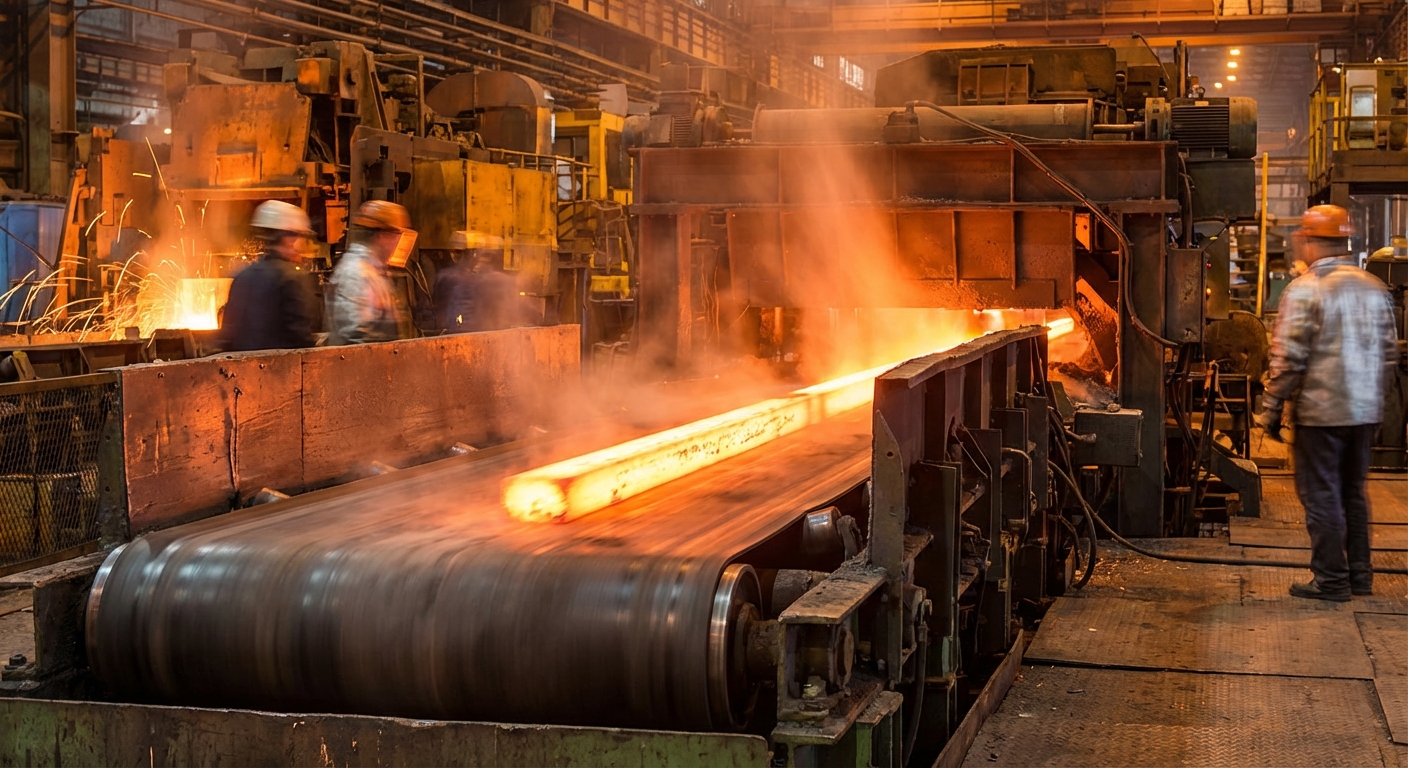
Selecting the right belt involves calculating the maximum dynamic tension and choosing a cord diameter and rubber grade that fits your specific environment. A wholesale steel cord rubber conveyor belt must be rated with a safety factor (typically 6.7:1 or higher) to ensure it can withstand surge loads without breaking. You must also consider the rubber cover’s resistance to heat, oil, or flame depending on the material being transported.
What tensile strength rating is required?
Tensile strength (ST rating) is determined by the total load, lift height, and conveyor length; for instance, an ST2000 belt has a breaking strength of 2000 N/mm. You should always consult with an engineer to perform a dynamic analysis of your conveyor start-up forces.
- ST500 to ST5400 standard ranges.
- Peak tension during acceleration.
- Safety factor requirements per local standards.
Always over-specify your strength requirements to account for aging.
Which rubber cover grade is best?
The best rubber grade depends on whether you are moving sharp rocks (requires abrasion resistance grade M/X) or hot clinker (requires heat resistant grade T). Selecting the wrong rubber grade can lead to the covers wearing down to the steel cords in just a few months.
- Grade X/Y (Abrasion resistance).
- Grade S/F (Fire/Flame resistance).
- Grade OR (Oil resistance).
Don’t let the wrong rubber ruin your expensive steel cables.
Does the cord diameter matter for pulleys?
Yes, the cord diameter dictates the minimum diameter of your drive and tail pulleys to prevent the steel from experiencing “bending fatigue.” If you use pulleys that are too small, the steel wires inside the cords will eventually snap from the constant flexing.
Key Takeaway: Selection is a balance of tensile engineering and environmental protection to ensure the belt survives its intended lifespan.
| Consideration | Decision Factor | Impact | |
|---|---|---|---|
| ST Rating | Conveyor Geometry | Prevents Snap Failure | |
| Cover Grade | Material Type | Prevents Premature Wear | |
| Cord Pitch | Load Support | Prevents Belt Sagging |
What are the costs vs savings of a wholesale steel cord rubber conveyor belt?

While the initial purchase price is higher, the total cost of ownership is significantly lower due to reduced downtime and the elimination of frequent belt replacements. Investing in a wholesale steel cord rubber conveyor belt allows you to run longer conveyors with fewer transfer points, which are the main source of material degradation and equipment wear. Over a five-year period, these savings in power and labor typically outweigh the initial capital outlay.
How does it reduce energy consumption?
Energy consumption is reduced because steel cord belts have low rolling resistance and do not “stretch and shrink” as they pass over rollers, which wastes energy in fabric belts. The precision of the steel carcass ensures efficient power transfer from the motor to the belt.
- Lower friction losses.
- More efficient drive transmission.
- Reduced motor heating.
In high-tonnage operations, a 5% energy saving equals huge dollars.
What are the labor savings?
Labor savings come from the fact that you won’t need a maintenance crew constantly repairing splices or adjusting huge take-up pulleys to compensate for belt stretch. Additionally, the long-term reliability means fewer emergency call-outs for snapped belts during the night shift.
- Reduced splice maintenance.
- Elimination of tracking adjustments.
- Fewer manual inspections required.
Your maintenance team can focus on other parts of the plant instead of the belt.
Is the scrap value significant?
Yes, at the end of its life, the high volume of steel and rubber can be recycled, providing a small but notable return on the original investment. Specialized recycling plants can separate the steel cords for scrap metal and grind the rubber for use in asphalt or playground surfaces.
Key Takeaway: Looking at the “price per ton moved” rather than the “price per meter” reveals that steel cord belts are the most economical choice.
| Cost Element | Steel Cord (Long Term) | Fabric (Short Term) | |
|---|---|---|---|
| Initial Price | High | Low | |
| Energy Cost | Low | Moderate | |
| Maintenance | Minimal | Frequent |
How do you install a wholesale steel cord rubber conveyor belt?
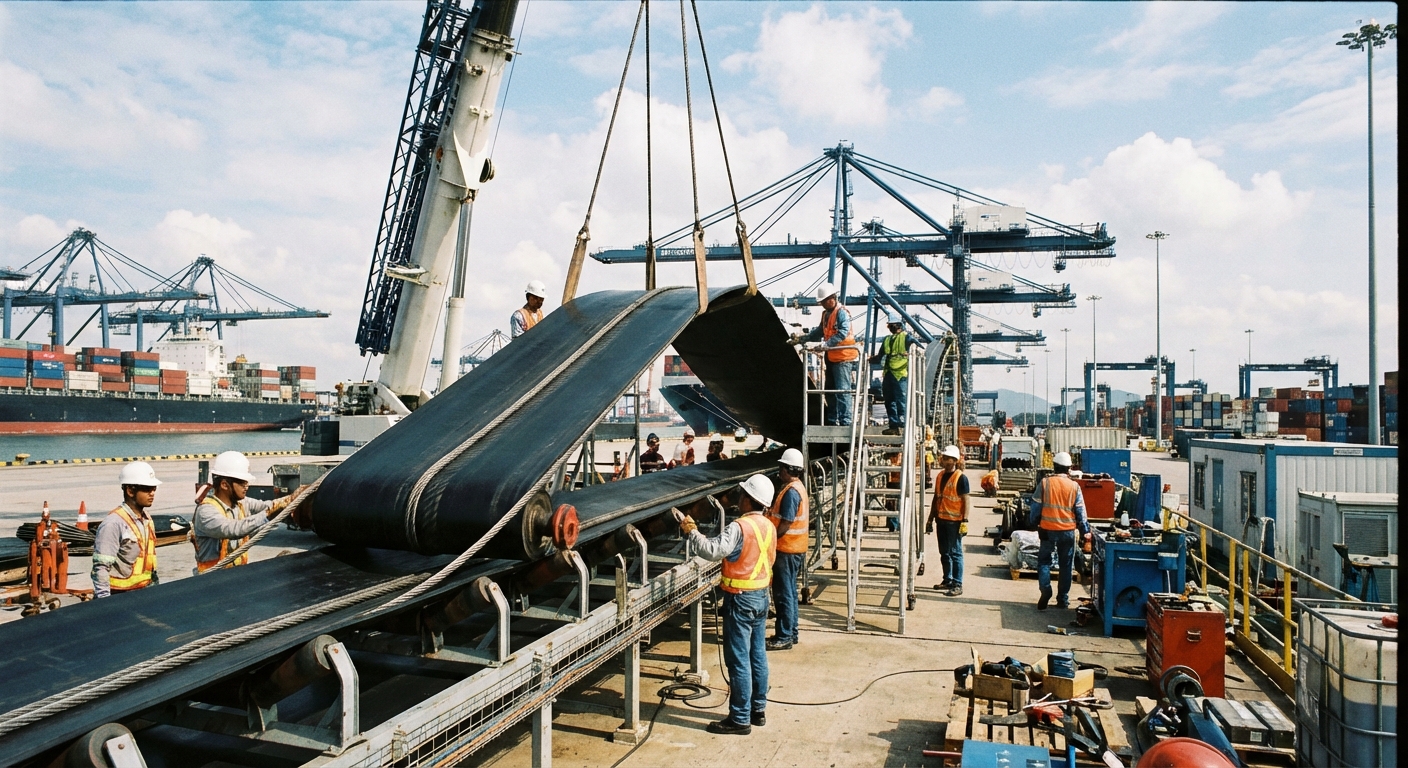
Installation is a complex technical process that requires heavy-duty pulling equipment and a specialized splicing team to join the steel cords together. When installing your wholesale steel cord rubber conveyor belt , the belt is pulled through the conveyor structure using a “messenger” belt and high-tension winches. Because the belt is extremely heavy and rigid, the rigging and pulling plan must be executed with extreme caution to prevent “runaway” scenarios on inclined systems.
What is the splicing process like?
Splicing involves stripping back the rubber to expose the steel cords, which are then interlaced in a specific pattern before being re-vulcanized in a portable press. This “finger-splice” method ensures that the joint is nearly as strong as the rest of the belt.
- Precision cord alignment.
- Use of specialized “non-cure” filler rubber.
- Controlled heating and cooling cycles.
The splice is the belt’s weakest link—make sure it’s done by experts.
How do you handle such heavy rolls?
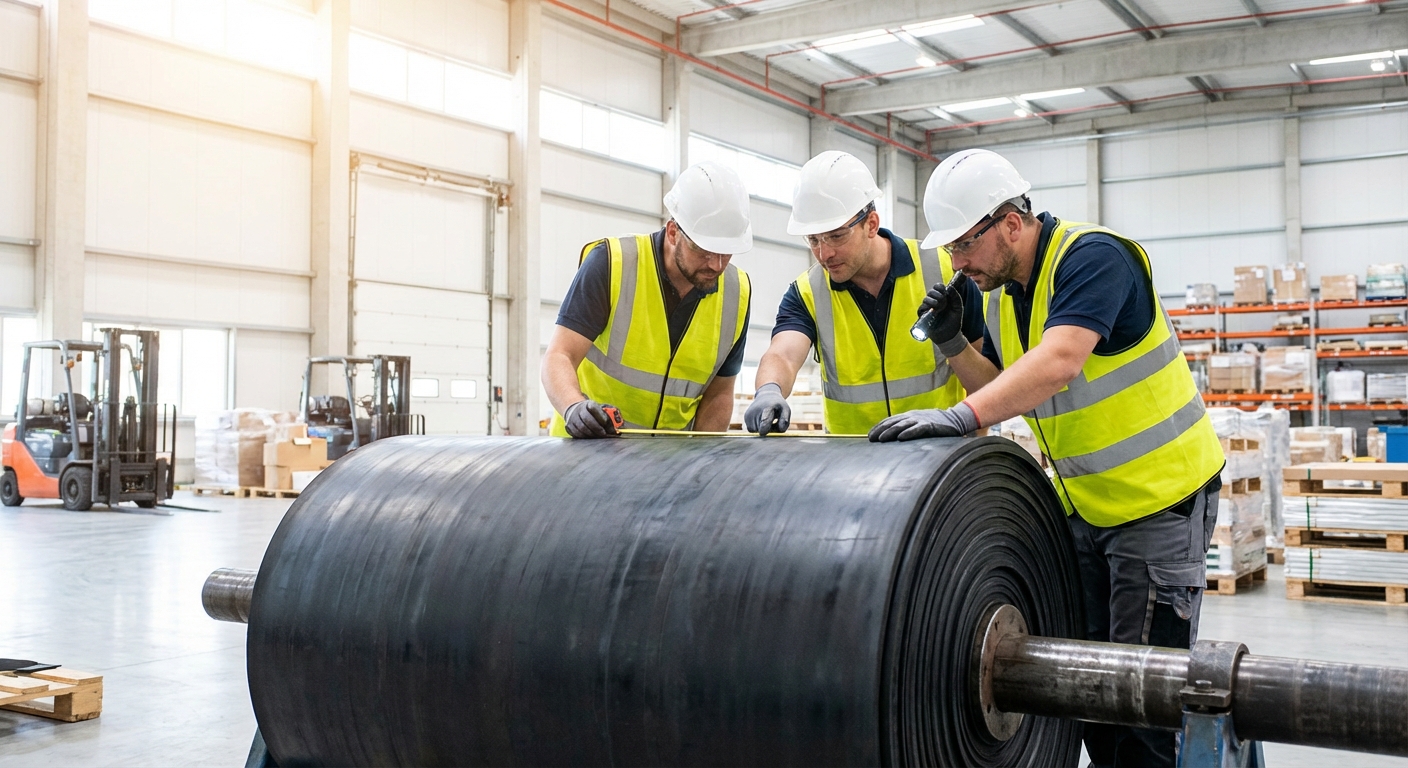
Heavy rolls are handled using specialized belt stands and high-capacity cranes to prevent the belt from buckling or the roll from unravelling out of control. Many mine sites use permanent belt reels designed to hold over 50 tons of material during the change-out process.
- High-capacity hydraulic unwinding.
- Safety braking systems on the reel.
- Engineered lifting points.
Safety must be the number one priority when moving 50 tons of rubber.
How long does an installation take?
A typical installation and splicing of a 1,000-meter belt can take anywhere from 48 to 96 hours depending on the number of splices required and the accessibility of the conveyor. Advance preparation of the splicing stations and pulling equipment is essential to minimizing the production window loss.
Key Takeaway: Accurate installation and professional splicing are mandatory to ensure the belt reaches its 10+ year designed service life.
| Step | Equipment | Critical Success Factor | |
|---|---|---|---|
| Pulling | 50-ton Winch | Controlled Tension | |
| Stripping | Electrical Cord Strippers | No Damage to Zinc Coating | |
| Vulcanizing | Portable Heating Press | Temperature Uniformity |
How can you maximize the life of your wholesale steel cord rubber conveyor belt?
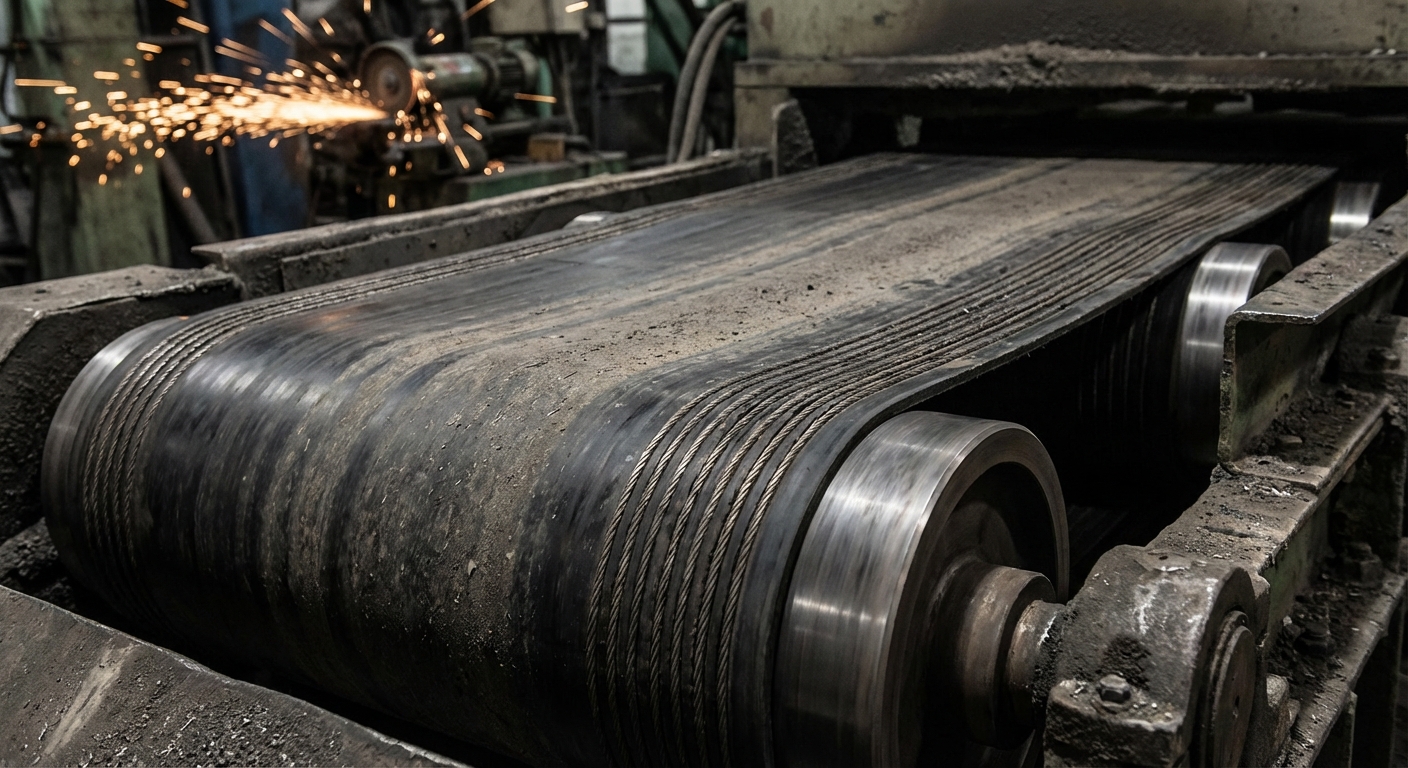
Maximizing belt life requires a combination of high-grade impact pulleys at loading points and a consistent regimen of ultrasonic or visual inspections. Protecting your wholesale steel cord rubber conveyor belt from “tramp metal” like discarded drill bits or bolts is crucial, as these items are the most common cause of belts being ripped. Regular cleaning of the pulleys and idlers also prevents build-up that can cause the belt to mistrack and rub against the conveyor structure.
Why are belt scrapers important?
Belt scrapers remove fine material that sticks to the return side of the belt, preventing it from getting trapped between the belt and the pulleys where it can cause abrasion and cord damage. A clean belt is a long-lasting belt, especially in corrosive mining environments.
- Primary and secondary scraper systems.
- Regular blade tension adjustment.
- Prevention of material “carryback.”
Scrapers are the cheapest insurance policy your conveyor has.
How often should idlers be replaced?
Idlers should be replaced as soon as they seize or show significant wear, as a “frozen” idler can wear through a rubber cover in just a few days of continuous operation. Ultrasonic testing can often hear a bearing failure before the idler stops turning completely.
- Daily visual inspections.
- Acoustic monitoring for bad bearings.
- Regular lubrication where applicable.
One bad roller can destroy miles of expensive belt if ignored.
Can localized damage be repaired?
Yes, small gouges or cuts can be repaired using “cold vulcanizing” patches or hot-filled rubber to prevent moisture from reaching the steel cords and causing rust. Quick response to surface damage prevents water from “wicking” along the cords and causing internal delamination.
Key Takeaway: A proactive maintenance strategy that combines cleanliness, hardware upkeep, and technical inspections will double the life of your belt.
| Maintenance Task | Frequency | Purpose | |
|---|---|---|---|
| Visual Inspection | Daily | Catch Rips/Tracking Issues | |
| Scraper Adjustment | Monthly | Ensure Belt Cleanliness | |
| Ultrasonic Scan | Annually | Monitor Internal Cord Health |
This article has explored the technical intricacies, operational advantages, and strategic value of the steel cord rubber conveyor belt. By understanding how these systems mitigate the risks of high-tension failure and material spillage, you can now make an informed decision for your facility. We have covered everything from manufacturing and installation to the advanced rip-detection technologies that keep your operations running.
At Zhenxing Rubber, we believe that your material handling system shouldn’t be a source of stress, but a foundation for growth. Our wholesale steel cord rubber conveyor belts are engineered to the highest international standards, ensuring your project moves forward with power and precision. If you are ready to upgrade your throughput and eliminate unnecessary downtime, contact us today to speak with a belt specialist.
Frequently Asked Questions
Can I use a steel cord belt on a system designed for fabric?No, not without a complete engineering audit. Steel cord belts have vastly different weights and flexibility profiles, meaning your motors, pulleys, and take-up systems would likely need significant upgrades to handle the transition.
What’s the best way to prevent rust in the cords?Ensure you choose a belt with high-quality galvanized cords and superior bonding rubber. Keeping the rubber covers intact through prompt repairs is the most effective way to prevent moisture from ever reaching the metal carcass.
How do I know if my splice is failing?Check for localized bulging, cracking on the surface, or the belt running crooked through the drive pulley. If you suspect a failure, an X-ray scan is the only way to verify the internal condition of the interlaced cords.
Can I repair a rip without replacing the whole belt?Yes, longitudinal rips can often be repaired using mechanical clips for temporary operation or a hot-vulcanized longitudinal repair for a permanent fix. However, the integrity of the belt is permanently lowered, and rip monitoring should be increased.
What’s the best pulley lagging for steel cord belts?Ceramic lagging is generally the best choice for steel cord drive pulleys because it provides the high friction coefficient needed to move high-tension belts without slipping. It also offers extreme durability against the high-pressure contact these belts create.