Professional custom conveyor belt rubber strips makers deliver precision-engineered solutions that improve tracking, reduce downtime, and enhance durability in demanding industrial conveyor systems.
Why trust custom conveyor belt rubber strips makers for quality?
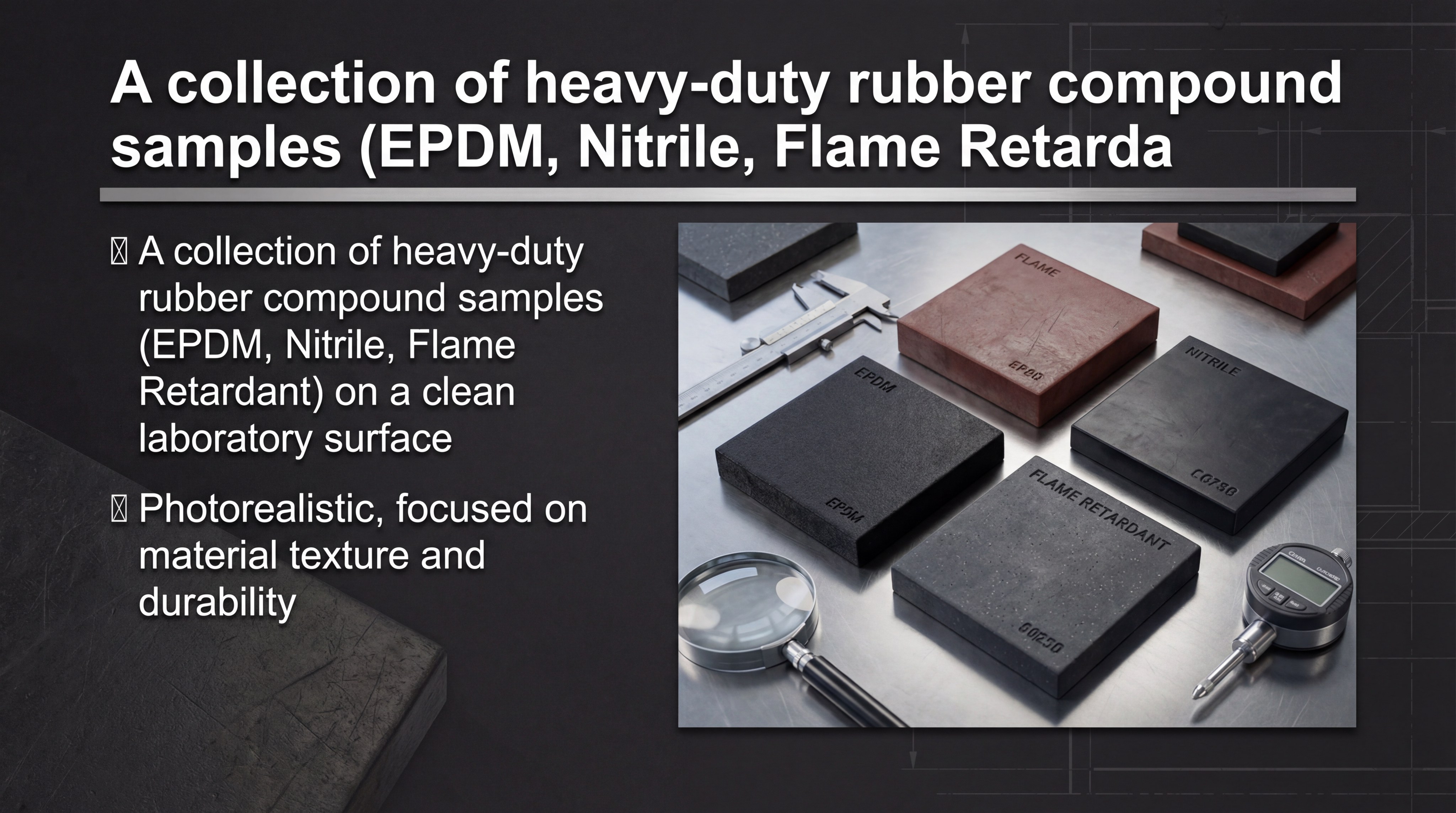
You should trust custom conveyor belt rubber strips makers because they control the chemical composition of the rubber to match your specific environmental stressors. In-house fabrication means we don’t rely on generic, one-size-fits-all materials that degrade prematurely. Instead, we select compounds based on their resistance to abrasion, oils, and extreme temperatures.
Do you need specialized compounds?
Choosing the right base polymer is the foundation of a long-lasting belt. We offer a variety of heavy-duty options designed for specialized performance.
- EPDM: Ideal for high-heat environments like cement plants.
- Nitrile: Best for resisting oils and chemicals in recycling.
- SBR: Excellent for general-purpose abrasion resistance.
How does testing ensure durability?
Here is the deal: every batch of rubber we produce undergoes rigorous laboratory testing before it ever touches the production line. We measure tensile strength and elongation to guarantee the belt can handle the rated tension of your conveyor system.
Key Takeaway: Customizing your rubber compound ensures that your belt is specifically engineered to survive your unique operating conditions, leading to significantly longer service life.
| Compound Type | Primary Benefit | Common Application | |
|---|---|---|---|
| Heat Resistant | Prevents cracking at 200°C+ | Cement & Steel Plants | |
| Oil Resistant | Resists swelling and softening | Recycling & Wood Chips | |
| Abrasion Resistant | Protects against sharp minerals | Mining & Aggregates |
Precision testing of rubber compounds is the first line of defense against premature belt failure.
Can custom conveyor belt rubber strips makers handle steep angles?
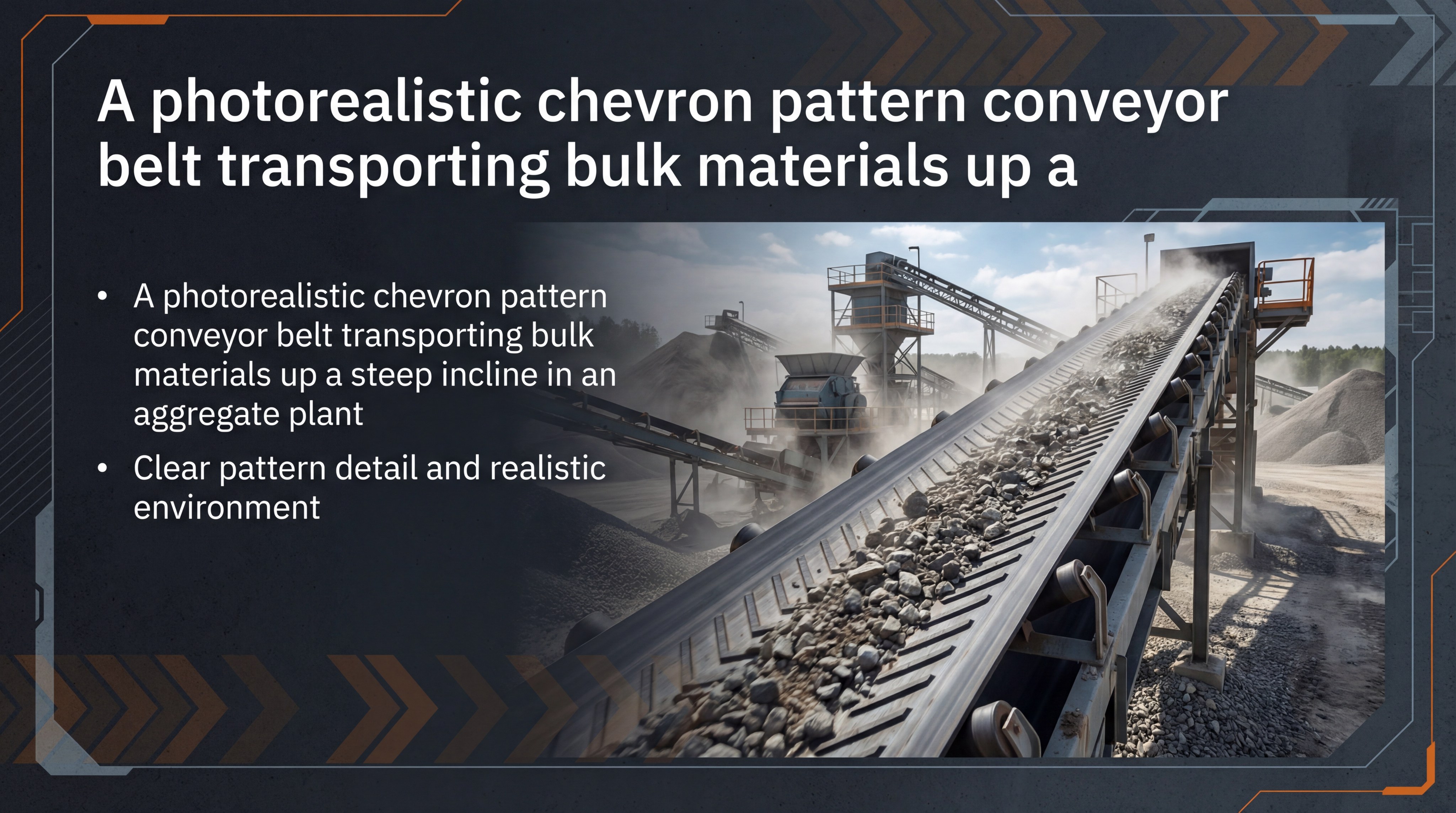
Yes, custom conveyor belt rubber strips makers can handle steep angles by integrating molded patterns that provide superior grip for bulk materials. Standard flat belts often suffer from material fallback when the incline exceeds 15 degrees, which leads to massive spills and safety hazards. By utilizing specialized patterns, we ensure your materials move upward efficiently without the risk of sliding back down the line.
What are the benefits of chevron patterns?
Chevron belts are specifically designed to trap materials in a “V” or “Y” shape during transport. This geometric advantage is crucial for moving sand, gravel, and ore in aggregate plants.
- Increased carrying capacity on steep inclines.
- Reduced material spillage at transfer points.
- Lower overall motor strain due to stable load distribution.
Why choose molded over glued cleats?
But wait, there’s more: our facility uses integrated molding rather than simple adhesive bonding for these patterns. This means the chevron profile is a part of the belt itself, preventing the profiles from peeling off under heavy impact.
Key Takeaway: Utilizing molded chevron patterns allows your facility to maximize incline angles, saving valuable floor space and increasing the volume of material transported.
| Pattern Type | Maximum Angle | Material Type | |
|---|---|---|---|
| Low Profile | 20-25 Degrees | Fine sand and grain | |
| High Profile | 30-45 Degrees | Large rocks and coal | |
| Closed V-Pattern | Up to 40 Degrees | Wet or slurry materials |
Molded profiles provide the structural integrity needed for the most demanding inclined transport systems.
How do custom conveyor belt rubber strips makers improve tracking?
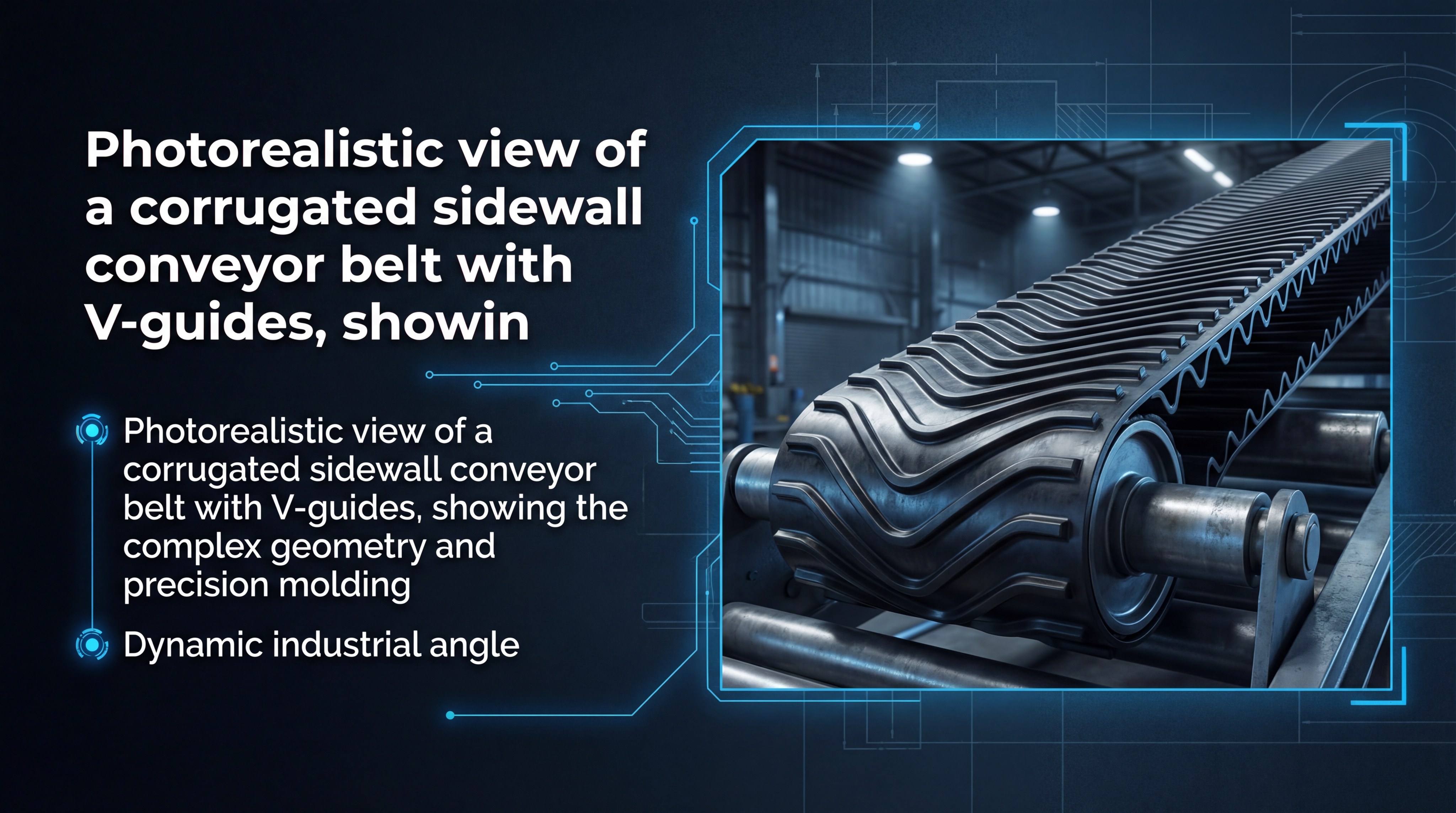
Experienced custom conveyor belt rubber strips makers improve tracking by vulcanizing V-guides and corrugated sidewalls directly to the belt surface for mechanical stability. Tracking issues are often the result of side-loading or misaligned frames, which cause the belt to rub against the structure. By adding these custom components, we provide a physical guide that keeps the belt centered on the pulleys and contain the material within the belt’s “pocket.”
How do V-guides prevent mistracking?
V-guides act like a rudder for your conveyor belt, sitting perfectly within the groove of the pulley. This is particularly effective for short-center conveyors that are prone to lateral movement.
- Maintains alignment during side-loading.
- Reduces edge wear caused by frame contact.
- Simplifies the tensioning process for maintenance crews.
What is the role of corrugated sidewalls?
Think about it: corrugated sidewalls allow you to move high volumes of bulk material on a narrow belt without losing a single grain. These walls are flexible enough to wrap around small pulleys while remaining stiff enough to hold back tons of pressure.
Key Takeaway: Corrugated sidewalls and V-guides provide the ultimate containment and tracking solution, virtually eliminating material loss and edge damage.
| Component | Function | Advantage | |
|---|---|---|---|
| Corrugated Sidewall | Material Containment | Prevents spillage on inclines | |
| V-Guide | Lateral Alignment | Stops side-to-side wander | |
| T-Cleats | Volume Separation | Creates transport pockets |
Structural reinforcements like guides and walls transform standard belts into high-capacity transport solutions.
Do custom conveyor belt rubber strips makers offer vacuum belts?
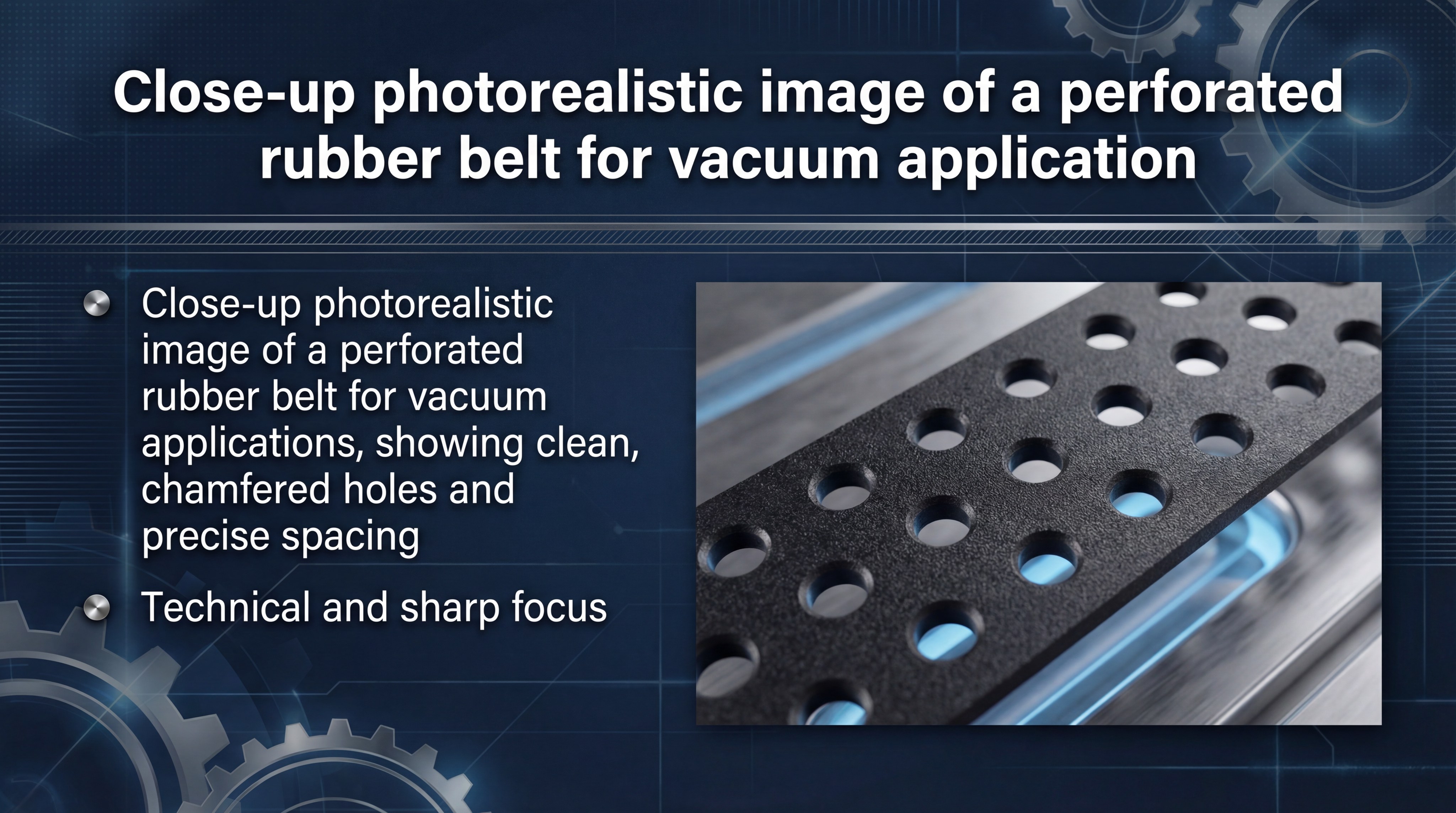
Yes, custom conveyor belt rubber strips makers offer vacuum belts that feature precision-machined perforations to hold lightweight products in place during high-speed movement. These belts are essential for industries like packaging, printing, and automated sorting where precision is non-negotiable. Without vacuum suction, items like paper or plastic bags would slide off the belt as it accelerates or rounds curves.
Why are clean perforations important?
The holes in a vacuum belt must be perfectly smooth and chamfered to prevent the rubber from snagging on the vacuum plenum. Our CNC machining ensures that every hole is identical, providing uniform suction across the entire surface.
- Consistent suction pressure for fragile items.
- Longer belt life due to reduced friction on the underside.
- Minimal noise during high-speed operation.
Can perforation patterns be customized?
The best part? We can customize the size, shape, and spacing of the perforations to match your existing equipment exactly. Whether you need small round holes for fine powders or large slots for heavy drainage, our facility can deliver.
Key Takeaway: Custom-perforated vacuum belts allow your automated systems to run at higher speeds with absolute product security, increasing your overall throughput.
| Hole Shape | Best Use Case | Industry | |
|---|---|---|---|
| Round (Small) | Packaging suction | Food & Bev | |
| Elongated Slot | Water drainage | Mining | |
| Square Pattern | Heavy-duty sorting | Recycling |
Precision machining of perforations ensures that vacuum systems operate at peak efficiency without material disruption.
Why do custom conveyor belt rubber strips makers prioritize safety?
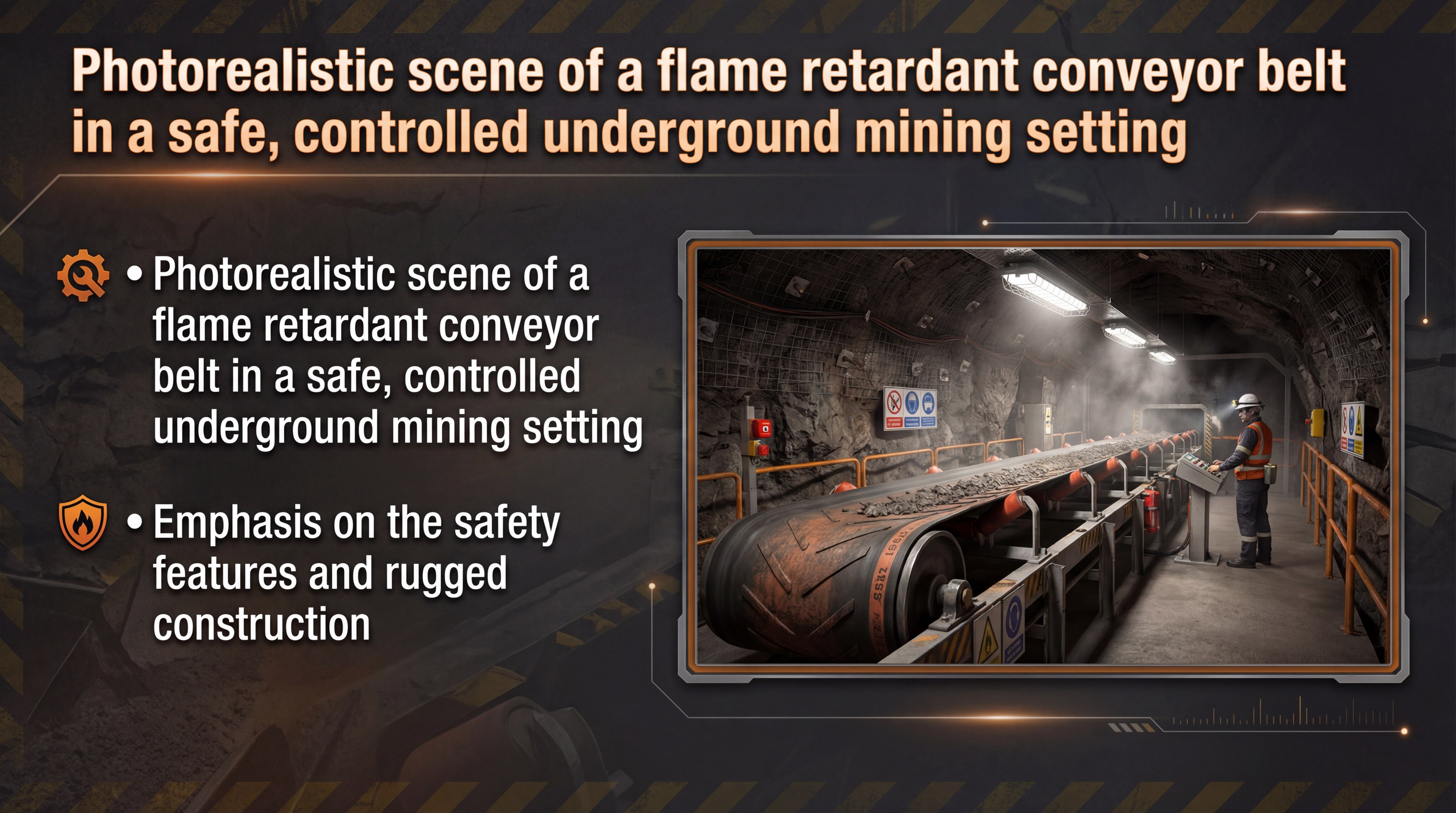
Highly skilled custom conveyor belt rubber strips makers prioritize safety by engineering flame-retardant belts that meet strict international mining and industrial certifications. In environments like underground coal mines or power plants, a single spark can turn a standard belt into a high-speed fire hazard. We fabricate belts with self-extinguishing compounds to ensure that if a fire does start, the belt will not facilitate its spread throughout your facility.
How does flame retardancy work?
Our flame-retardant belts use specialized chemical additives that release gases when exposed to high heat, which naturally chokes out the oxygen fueling the flame. This chemical reaction happens instantly, protecting your workers and equipment.
- Self-extinguishing properties within seconds.
- Anti-static covers to prevent sparks.
- Low smoke emission for safer evacuation.
Are these belts certified for mining?
Now, consider this: we manufacture belts that comply with MT 668 and CE EN14973 C1 standards. These are not just labels; they represent hours of rigorous fire and safety testing conducted in controlled environments.
Key Takeaway: Investing in flame-retardant belts provides peace of mind and fulfills legal safety requirements, protecting your most valuable assets: your people and your plant.
| Standard | Environment | Level of Protection | |
|---|---|---|---|
| MT 668 | Underground Mining | Highest (Flame & Static) | |
| EN14973 | General Industrial | High (Flame Retardant) | |
| ISO 340 | International Cargo | Standard (Fire Resistance) |
Choosing certified safety belts is a critical decision that prevents catastrophic industrial disasters.
How can custom conveyor belt rubber strips makers sort scrap?
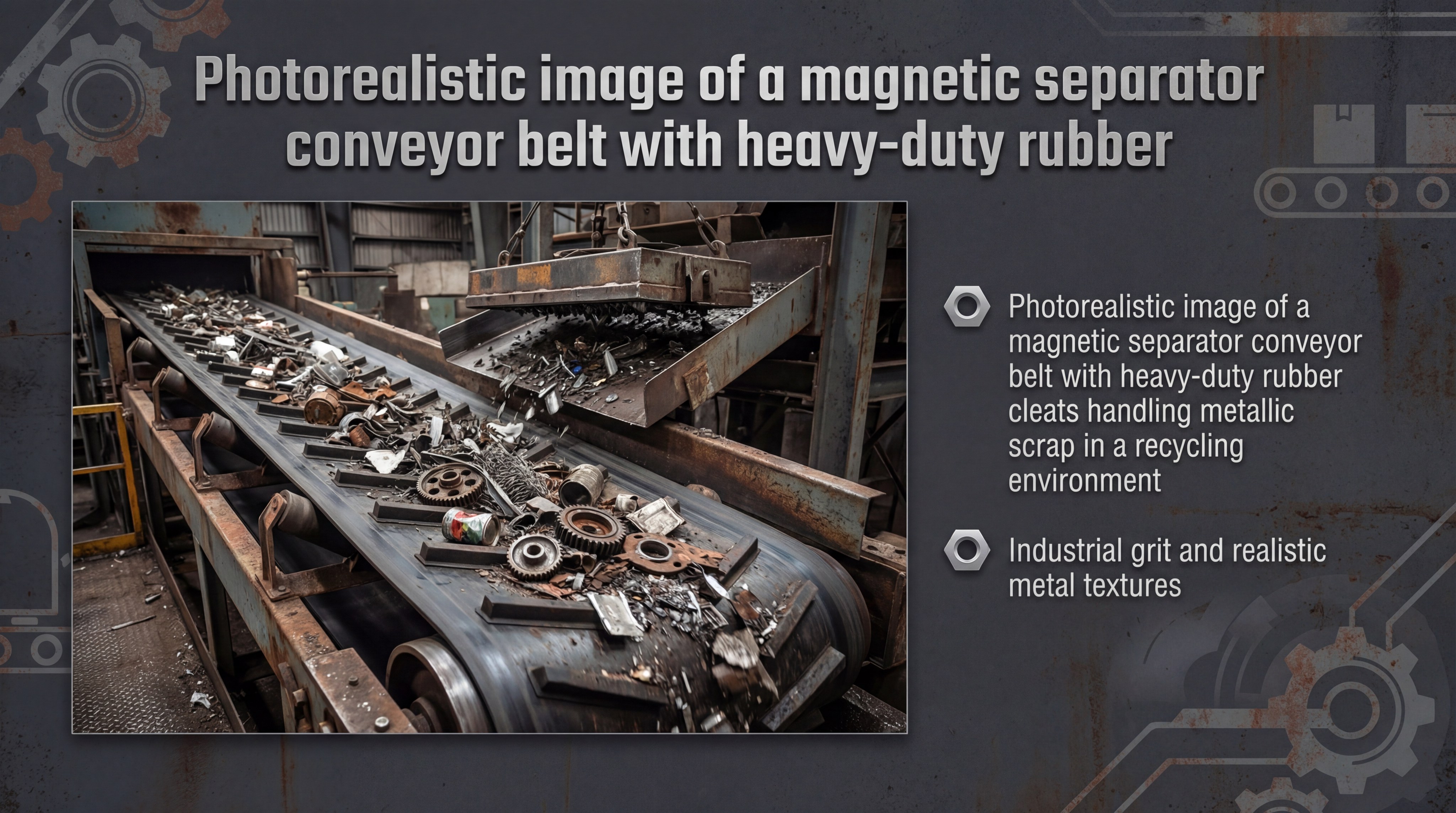
Specialized custom conveyor belt rubber strips makers can sort scrap by fabricating magnetic separator belts that feature high-impact cleats and magnetically transparent materials. These belts operate over magnetic drums to pull ferrous metal away from non-metallic debris in recycling and demolition facilities. The fabrication must be incredibly rugged to handle the constant impact of sharp metal being sucked onto the belt’s surface at high speeds.
What makes a good separator belt?
A separator belt needs a thin but incredibly strong carcass to allow the magnetic field to penetrate through the rubber. We use high-tensile polyester fabrics that maintain their shape even under the stress of heavy scrap loads.
- Thin profiles for maximum magnetic pull.
- Heavy-duty cleats to move metal away from the drum.
- Cut-and-gouge resistant covers for sharp debris.
How do we prevent cleat failure?
Here is the deal: magnetic separator belts experience massive vertical force as metal is pulled toward the magnet. We use hot vulcanization to ensure the cleats never shear off, even when handling heavy iron castings or rebar.
Key Takeaway: Engineered separator belts significantly improve the purity of your sorted materials, increasing the resale value of your scrap while protecting downstream machinery.
| Scrap Type | Cleat Height | Belt Thickness | |
|---|---|---|---|
| Shredded Tin | 1-2 Inches | Thin (High Pull) | |
| Heavy Rebar | 3-4 Inches | Medium (Impact Protection) | |
| Mixed E-Waste | 1.5 Inches | Very Thin (Precision Pull) |
The right combination of magnetic transparency and impact resistance is essential for profitable recycling operations.
Which joins do custom conveyor belt rubber strips makers use?
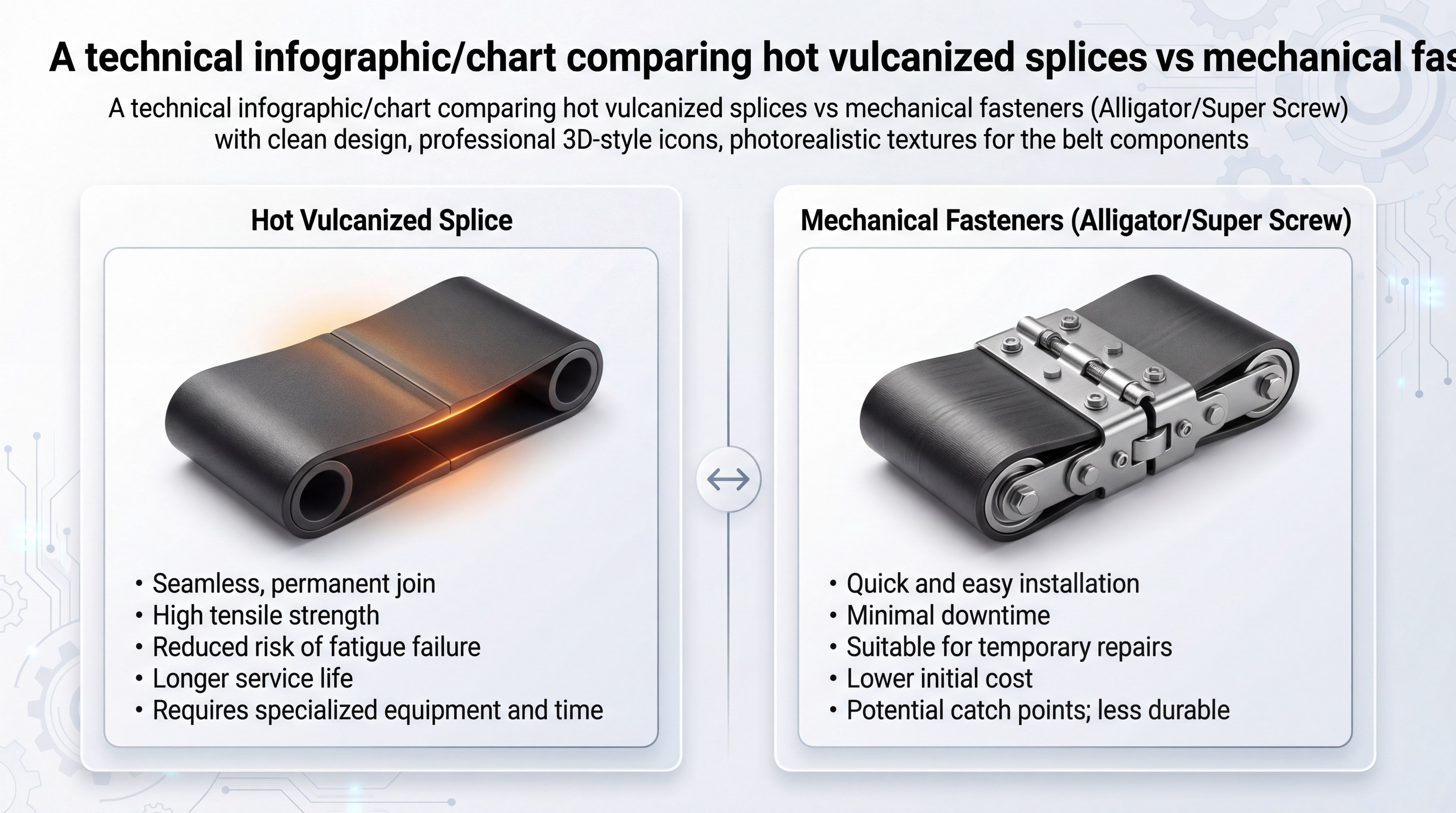
Leading custom conveyor belt rubber strips makers use a combination of hot vulcanized splices for permanent strength and mechanical fasteners for rapid emergency repairs. The choice of join determines the overall uptime of your system; a poor splice is the most common point of failure on any conveyor. We provide both services, ensuring that your high-tension steel cord or fabric belts are joined with the most reliable methods known to modern engineering.
Why choose hot vulcanization?
Hot vulcanization creates a seamless, molecular bond that is as strong as the belt itself. This is the preferred method for belts that must wrap around small pulleys or operate at high tension for years.
- Seamless finish prevents material buildup.
- Zero risk of catch points for scrapers.
- Maximum longevity in high-tension applications.
When are mechanical fasteners better?
But wait, there’s more: mechanical fasteners like Super Screw can be installed in a fraction of the time. If you are losing thousands of dollars an hour in downtime, a high-quality mechanical join can get you back online immediately.
Key Takeaway: Understanding the trade-off between the absolute strength of vulcanization and the speed of mechanical fasteners allows you to make the best decision for your budget and schedule.
| Join Method | Install Time | Relative Strength | |
|---|---|---|---|
| Hot Vulcanized | 8-12 Hours | 100% (Permanent) | |
| Super Screw | 1-2 Hours | 85% (High Reliability) | |
| Metal Lacing | < 1 Hour | 70% (Temporary/Light) |
Selecting the correct splicing method is the most important factor in preventing catastrophic belt breaks.
How do custom conveyor belt rubber strips makers attach cleats?
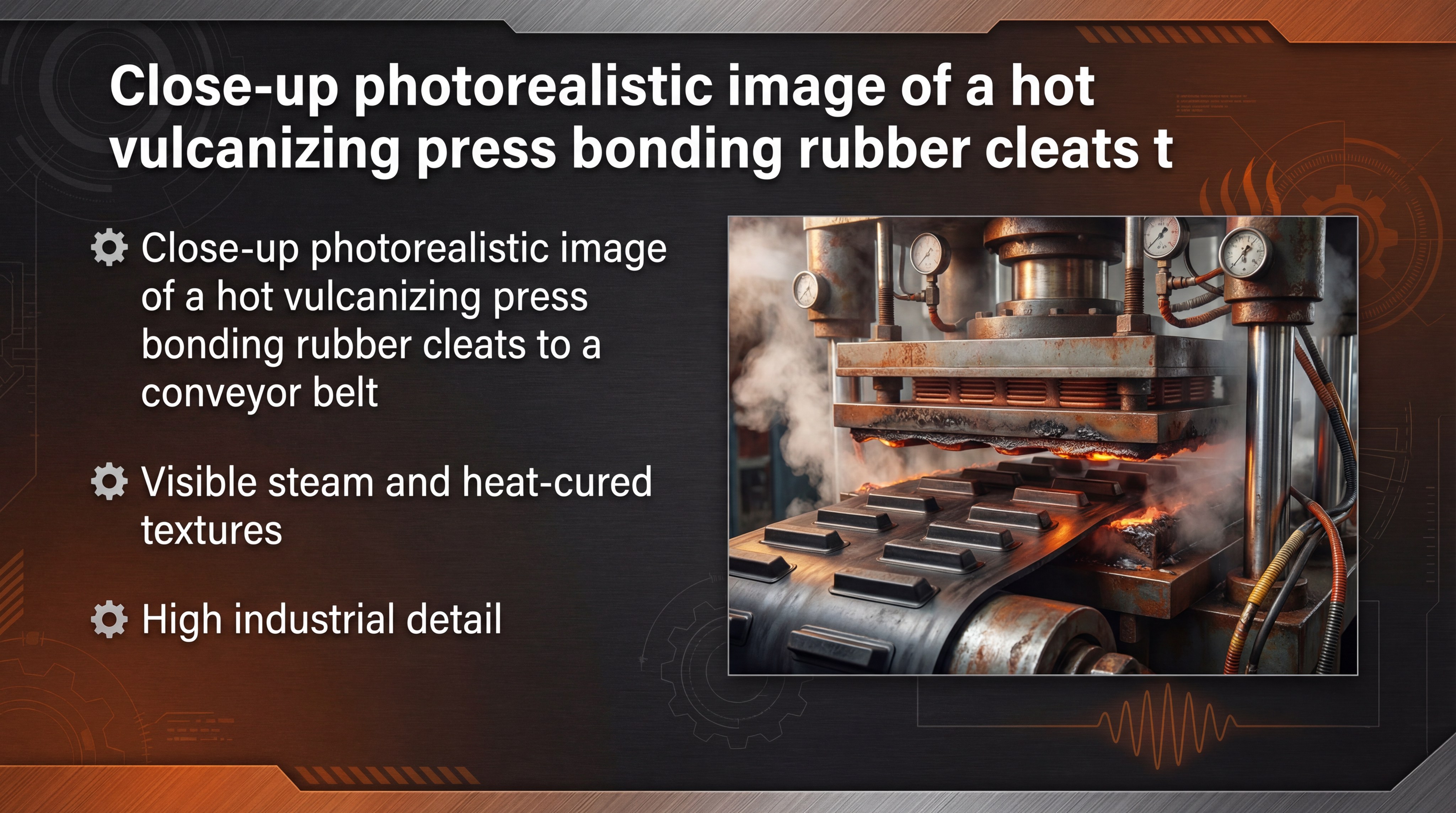
Professional custom conveyor belt rubber strips makers attach cleats using high-pressure vulcanizing presses that bond the rubber components together at the molecular level. This process involves applying heat and hundreds of pounds of pressure to “cure” the cleat and the belt cover into a single, unified structure. Glued cleats often fail when they hit a belt scraper or cold temperatures, but vulcanized cleats are virtually inseparable from the carcass.
Why use heat-cured bonding?
Heat-cured bonding ensures that the attachment point is flexible and can withstand the constant bending over pulleys. Cold adhesives tend to become brittle and crack, but vulcanized rubber remains supple.
- Superior resistance to high-impact loading.
- Better performance in extreme cold and heat.
- Reduced maintenance costs over the belt’s life.
What cleat shapes are available?
The best part? We can mold cleats in various shapes including I-cleats, T-cleats, and C-cleats. Each shape is designed for a specific volume of material and a specific angle of transport.
Key Takeaway: Vulcanized cleats provide the rugged durability needed for high-volume transport, ensuring that your material stays in place even under the most violent industrial vibrations.
| Cleat Type | Angle of Incline | Benefit | |
|---|---|---|---|
| T-Cleat | 0-30 Degrees | General bulk handling | |
| C-Cleat (Curved) | 30-45 Degrees | Maximum volume per pocket | |
| I-Cleat (Straight) | 0-20 Degrees | Easy cleaning with scrapers |
Vulcanized attachments are the gold standard for belts that must endure heavy stress and high-speed cycles.
Where do custom conveyor belt rubber strips makers boost efficiency?
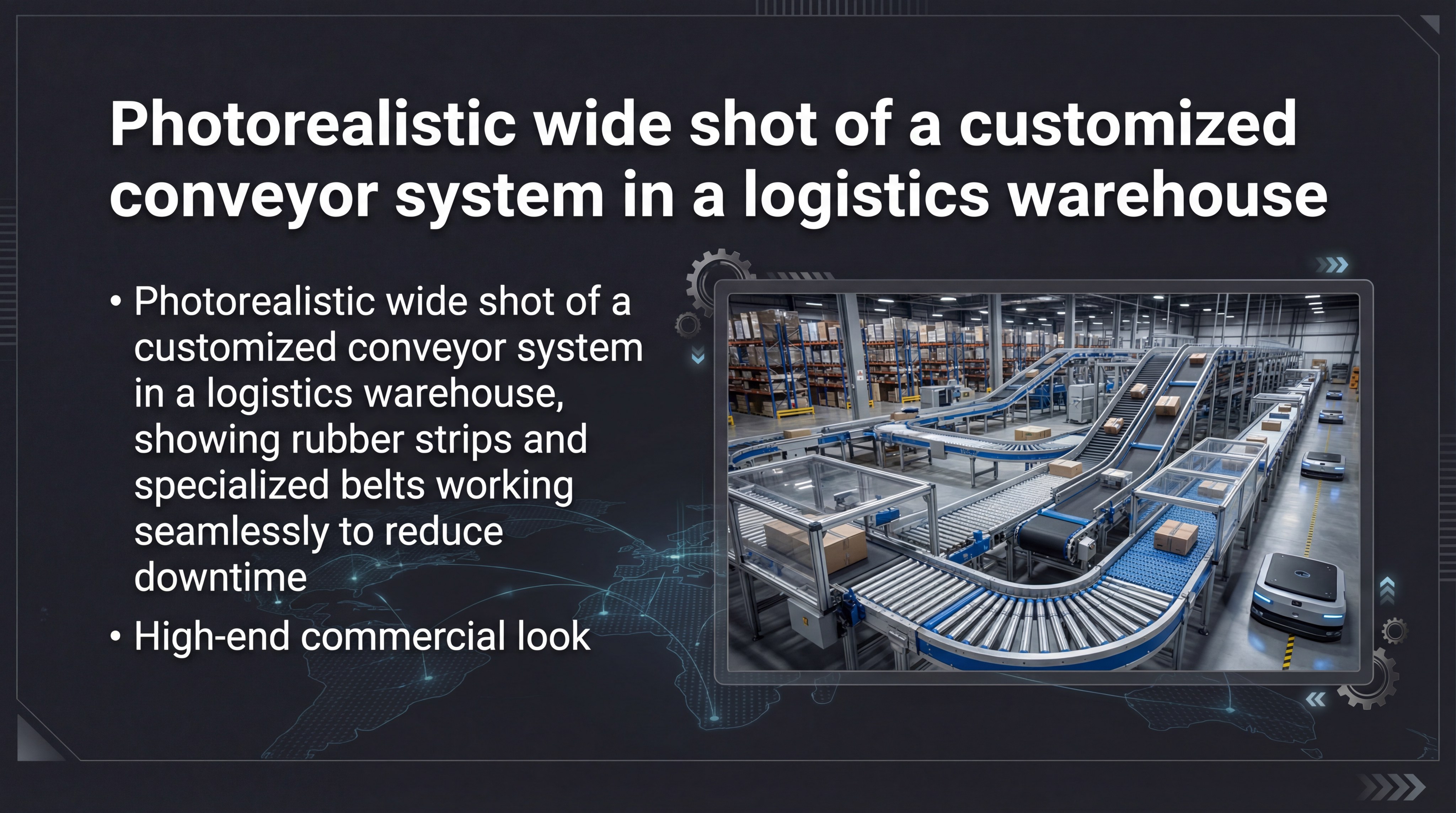
In logistics and warehousing, custom conveyor belt rubber strips makers boost efficiency by fabricating specialized rough-top belts that prevent package slippage during high-speed sorting. In a modern logistics hub, belts must move thousands of boxes per hour without a single error. Our rough-top and “sticky” covers provide the necessary friction to move packages up inclines and around tight turns without losing momentum or causing jams.
How does friction increase speed?
When a belt has a specialized texture, it can grip the bottom of a cardboard box or plastic tote much more effectively. This allows the conveyor system to accelerate and decelerate faster without the product sliding out of position.
- Higher sorting speeds for increased volume.
- Reduced jams in automated parcel lines.
- Lower noise levels in fulfillment centers.
Can non-marking rubber be used?
Think about it: in a warehouse, you cannot have black rubber scuffing up a customer’s package. We fabricate non-marking rubber strips that provide extreme grip without leaving a single trace of residue on your products.
Key Takeaway: High-grip, non-marking belts allow your warehouse to operate at peak velocity, ensuring that customers receive their orders on time and in perfect condition.
| Belt Feature | Logistics Benefit | Material | |
|---|---|---|---|
| Rough Top | High-friction grip | SBR / PVC | |
| Non-Marking | No product scuffing | White/Tan Rubber | |
| Low Elongation | Less frequent tensioning | Polyester Reinforced |
Customized surface textures are the key to unlocking the full speed potential of automated logistics systems.
What plant do custom conveyor belt rubber strips makers operate?

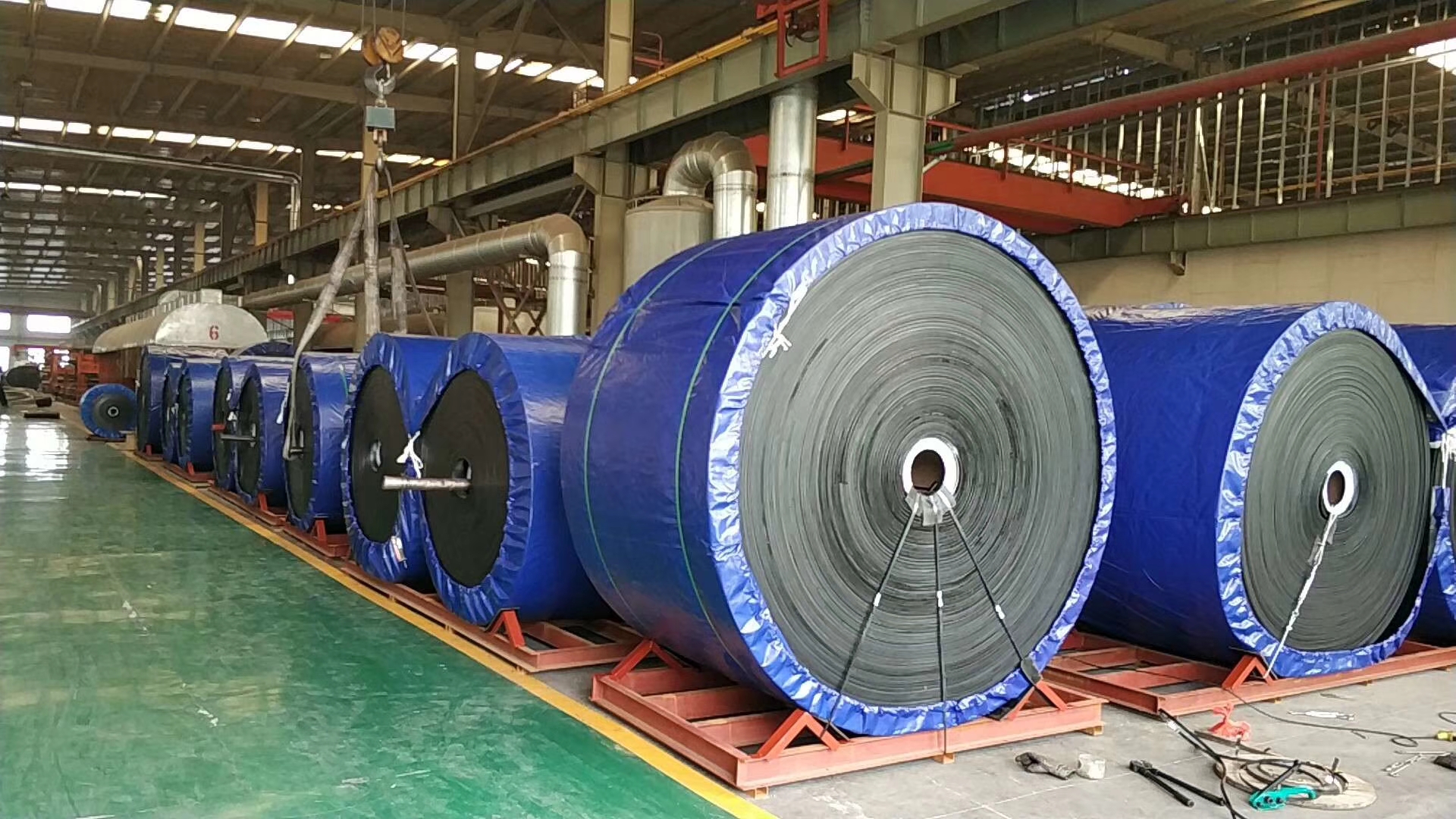
We operate a state-of-the-art rubber conveyor belt fabrication facility that combines automated machinery with the expertise of over 200 dedicated employees. Our facility is not just a warehouse; it is a full-scale production center where we control everything from rubber mixing to final vulcanization. This allows us to offer custom widths up to 3200mm and specialized moldings that trading companies simply cannot provide.
What equipment do we use?
We utilize large-scale vulcanizing presses and CNC perforation machines to ensure every belt meets exact specifications. This equipment allows us to maintain the tightest tolerances in the industry for thickness and width.
- Automated rubber calendaring for uniform thickness.
- High-pressure vulcanizing presses for cleat bonding.
- Precision CNC machines for custom perforations.
Why choose factory-direct?
Here is the deal: when you buy factory-direct, you eliminate the middleman and save 15-30% on your procurement costs. More importantly, you have a direct line to the engineers who are actually building your belts.
Key Takeaway: Buying directly from a fabrication facility ensures you get a better price, a faster lead time, and a product that is built specifically for your machinery.
| Facility Feature | User Benefit | Capacity | |
|---|---|---|---|
| 3200mm Max Width | Extra wide applications | High Volume | |
| 72 Chevron Molds | Massive variety of patterns | High Versatility | |
| In-House Lab | Guaranteed material quality | ISO Certified |
Direct factory control over every manufacturing step guarantees a level of quality and customization that is unmatched in the market.
Conclusion
When you choose to work with our in-house production team, you are investing in more than just a belt; you are securing the reliability and efficiency of your entire operation. We have explored how specialized rubber compounds, precision chevron patterns, and hot vulcanized attachments solve the most common industrial pain points. From the safety of flame-retardant mining belts to the high-speed grip required in logistics, our facility delivers the engineered solutions you need to eliminate downtime and maximize profit. We believe in a future where material handling is seamless, safe, and cost-effective for every industry we serve. Don’t let poor quality belts hold your production hostage— contact us today and let’s build a more reliable system together.
Frequently Asked Questions
Can I get a custom width belt for my old machine?Yes, we can fabricate belts in any custom width up to 3200mm. We specialize in producing exact replacements for older or discontinued OEM systems to keep your facility running.
What’s the best rubber for high-heat clinker?EPDM is the superior choice for high-heat environments. It resists the cracking and hardening that usually occur when rubber is exposed to temperatures exceeding 200°C for long periods.
How do I know if my cleats are vulcanized or glued?You can tell by inspecting the base of the cleat. A vulcanized cleat will have a smooth, integrated “fillet” where it meets the belt, whereas a glued cleat often shows adhesive residue or signs of peeling at the edges.
Can I visit the factory to see my order?Yes, we welcome all customers to visit our production facility in China. You can see our mixing process, the vulcanization presses, and our quality control lab firsthand.
What is the fastest way to repair a broken belt?The fastest method is using mechanical fasteners or a Super Screw splice. These can be installed in under two hours without heavy equipment, which is much faster than the 8-12 hours required for a vulcanized splice.