
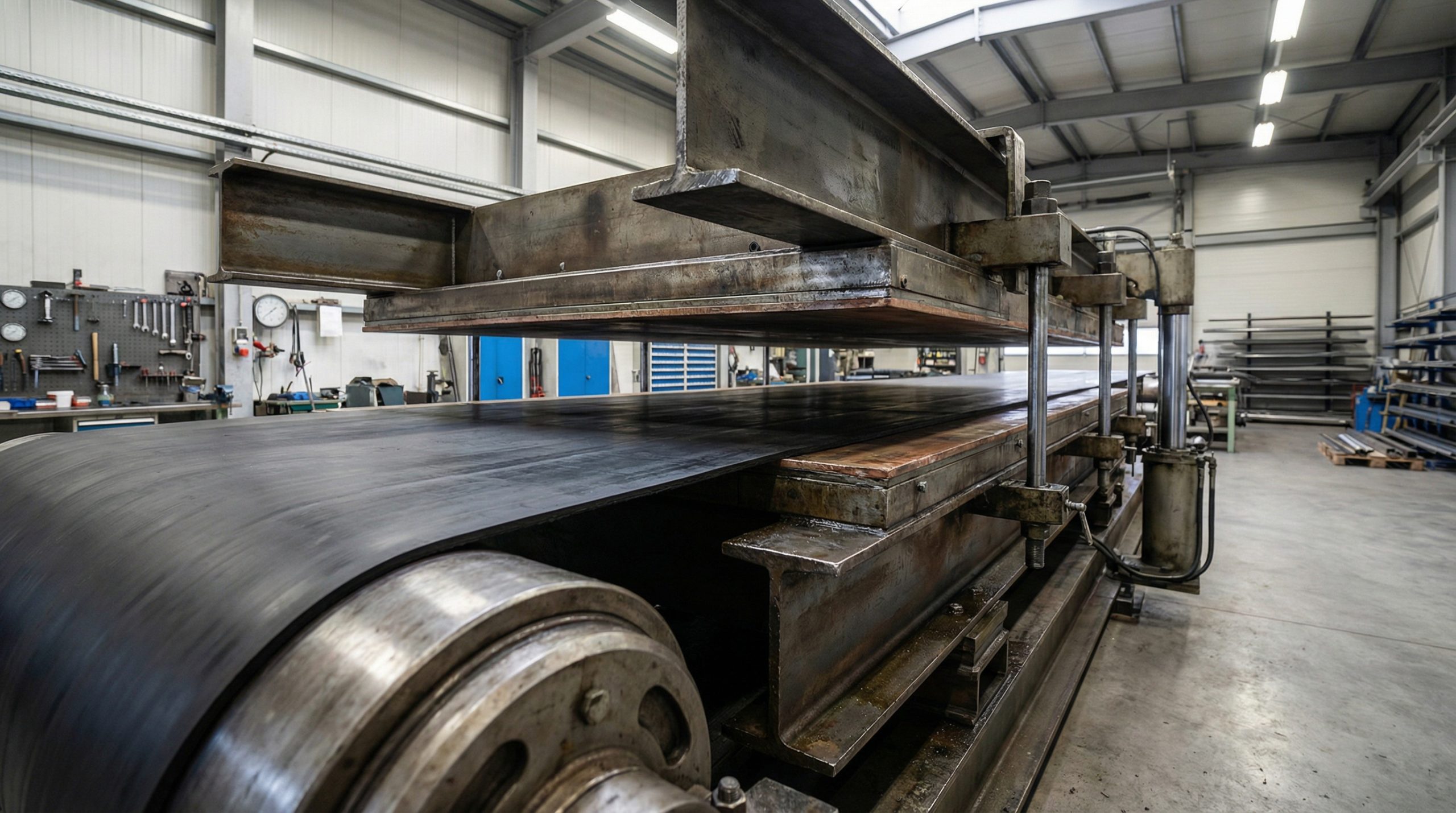
A high-precision rubber conveyor belt machine ensures uniform vulcanization, strong belt bonding, and reliable performance, reducing downtime and improving durability in industrial material handling systems.
1. What is a rubber conveyor belt machine for plaster casting?
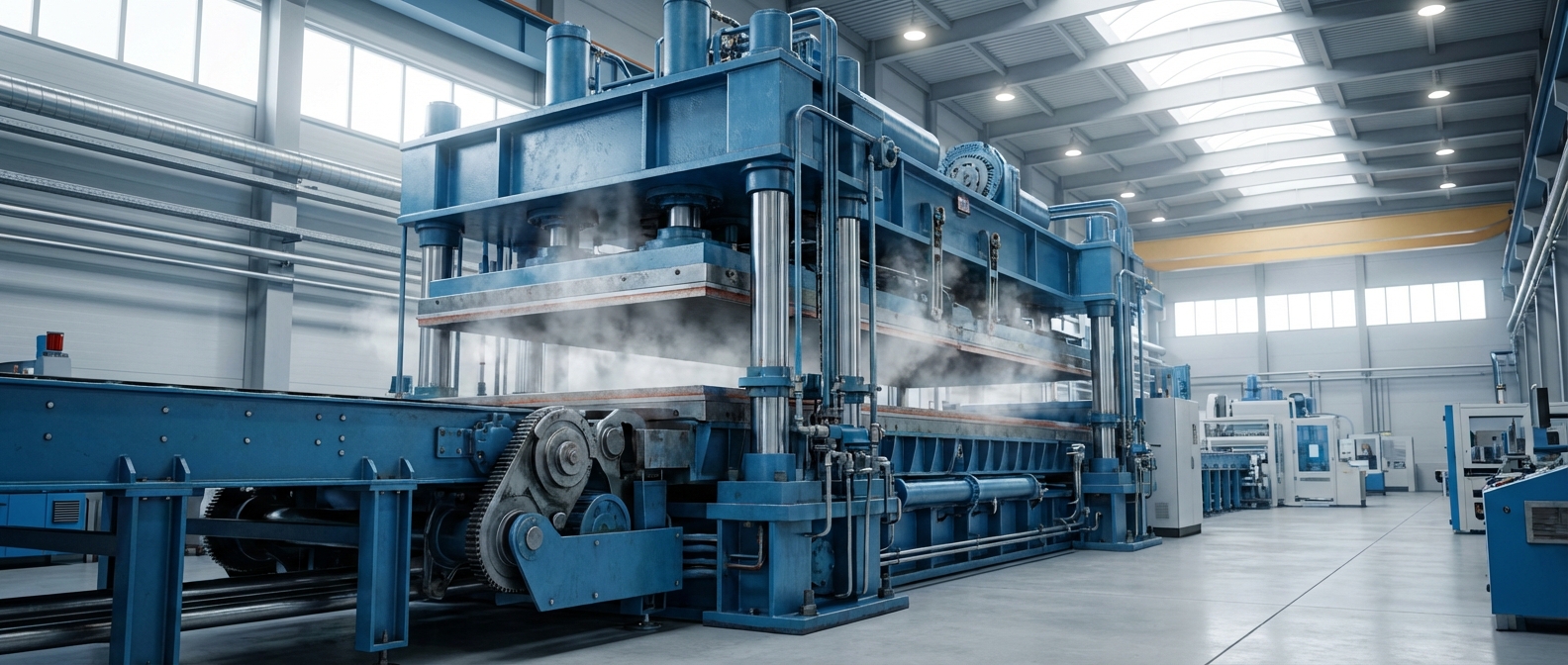
Every rubber conveyor belt machine designed for plaster casting serves as the primary tool for curing and bonding Solid Woven (PVC PVG) Conveyor Belts through heat and pressure. This specific equipment is tailored to handle the unique viscosity and curing requirements of belts that use plaster or high-density molding during their formation. You will find that these machines allow for the seamless integration of various reinforcement layers, creating a single, homogenized unit capable of surviving extreme tension.
Core Components Explained
Here is the deal: the effectiveness of your production relies entirely on the mechanical harmony of the press’s internal systems. You need a setup that includes high-capacity heating plates, a synchronized hydraulic array, and a real-time thermal monitoring unit.
- Heating Plates: Provide the calibrated thermal energy needed to trigger the chemical vulcanization process.
- Hydraulic Array: Ensures that thousands of kilonewtons are applied evenly across every square millimeter of the belt’s surface.
- Cooling System: Rapidly stabilizes the rubber polymer after curing to prevent warping or internal stress.
Understanding the Plaster Casting Process
The process involves pouring or molding a specialized plaster or rubber compound into a predefined cast before high-pressure vulcanization begins. This allows you to create specialized textures or profiles on the belt surface that are traditionally difficult to achieve with standard extrusion.
| Component | Function | Material Requirement | |
|---|---|---|---|
| Press Frame | Structural Support | High-Grade Carbon Steel | |
| Hot Plate | Thermal Conductivity | Specialized Alloy or Steam-Chambered Steel | |
| Plunger | Force Application | Hard-Chrome Plated Steel |
The structural integrity of this machinery determines the final output quality of your industrial rubber products.
Key Takeaway: You should use this specialized machine to manufacture belts that require custom surface profiles or high-density reinforcement because standard presses often lack the molding precision required for these advanced designs.
2. How does this rubber conveyor belt machine actually work?
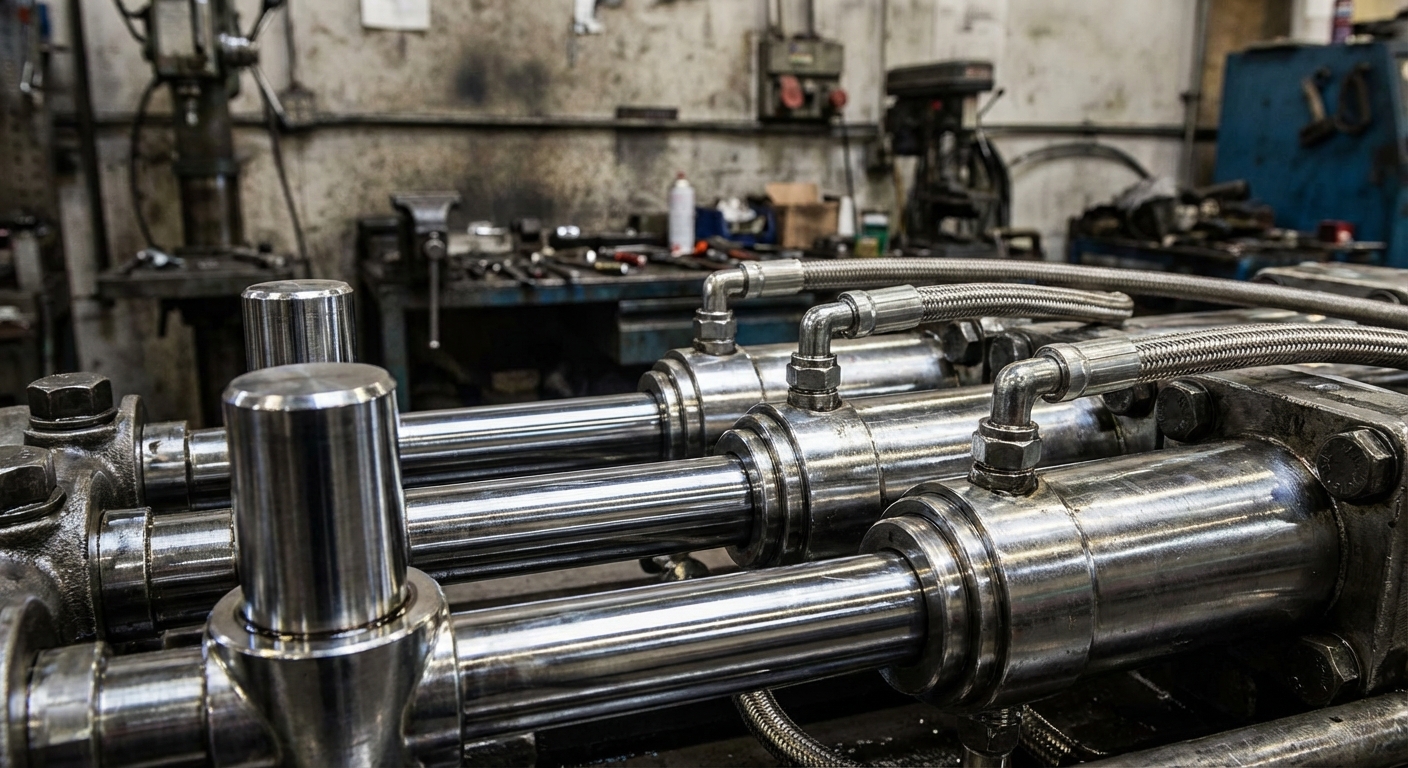
The rubber conveyor belt machine operates by feeding raw rubber layers into a hydraulic press where specific temperature profiles are maintained by high-grade heating plates. As you initiate the cycle, the hydraulic plungers descend, exerting massive force to squeeze out air pockets and fuse the rubber layers at a molecular level. This thermal-mechanical combination is what transforms raw, tacky rubber into the durable, flexible material used in global mining and agriculture.
The Role of Pressure and Heat
But wait, there’s more: it isn’t just about applying raw force; it is about the “curing curve” that happens inside the press. If your temperature fluctuates even by a few degrees, the rubber may under-cure, leading to delamination, or over-cure, making the belt brittle and prone to cracking under load.
- Phase One: Pre-heating the layers to ensure the rubber reaches its optimal flow state.
- Phase Two: Full pressure application (vulcanization) where the cross-linking of sulfur and rubber molecules occurs.
- Phase Three: Controlled cooling to lock the chemical bonds in place.
Step-by-Step Operation
You start by laying the prepared fabric or steel cord reinforcement between the top and bottom rubber covers. Once positioned, you engage the PLC system to manage the timers and pressure valves, ensuring the machine follows the exact recipe for the specific belt type being manufactured.
| Operational Stage | Primary Driver | Target Outcome | |
|---|---|---|---|
| Layering | Manual/Feeding System | Perfect Alignment | |
| Compression | Hydraulic Pump | Air Elimination | |
| Curing | Steam/Electric Heat | Molecular Fusion |
Operational precision in the hydraulic circuit directly correlates to the lifespan of the finished conveyor belt.
Key Takeaway: You must monitor the curing curve via the PLC interface to prevent structural defects, as the thermal stability of the rubber determines its resistance to environmental wear.
3. Why choose a hydraulic rubber conveyor belt machine?
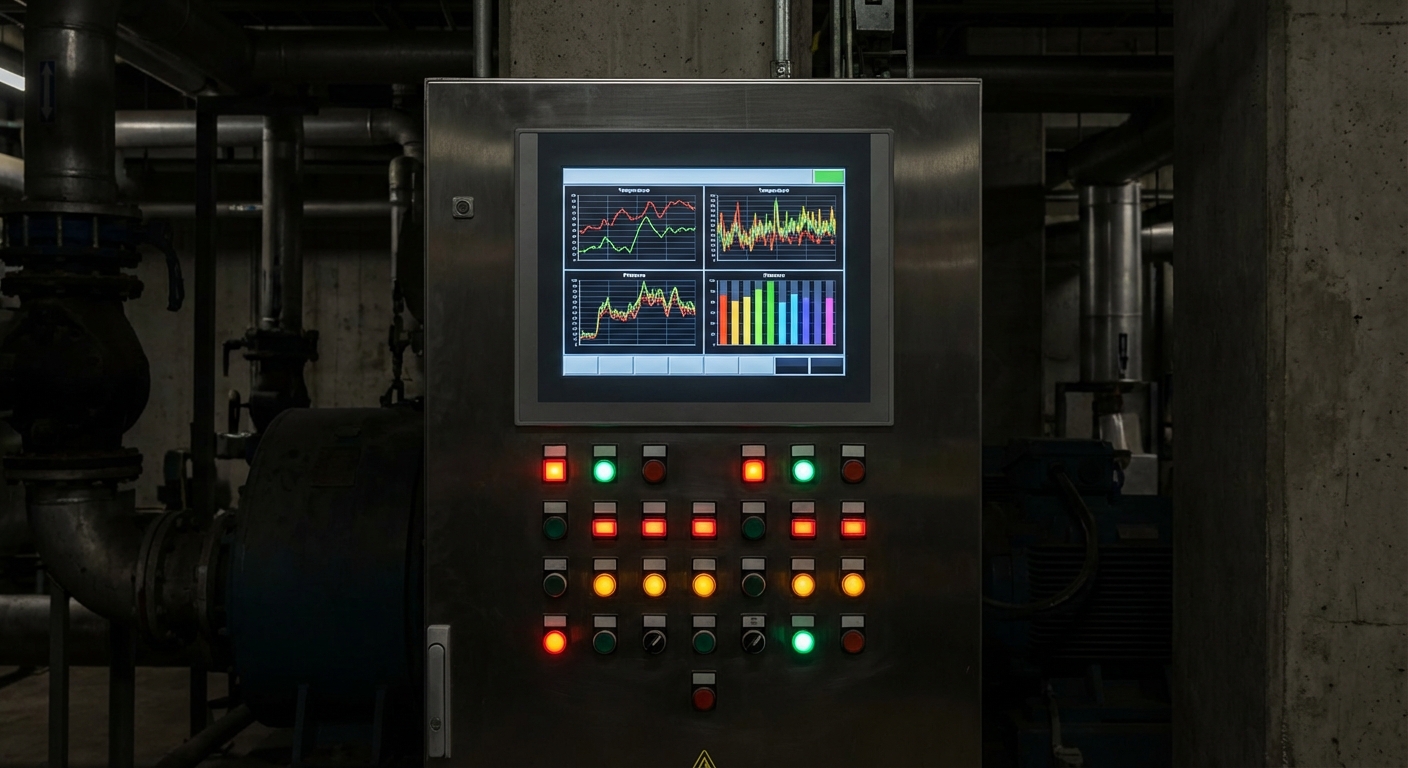
Investing in a hydraulic rubber conveyor belt machine ensures that the tension and compression applied during the vulcanization process are perfectly uniform across the belt width. You gain the ability to produce longer belt sections with fewer splices, which significantly reduces the “weak points” in your transportation system. The hydraulic system provides a level of control that mechanical or pneumatic presses simply cannot match, especially when handling heavy-duty industrial specifications.
Precision Pressure Control
Here is the deal: inconsistent pressure is the number one cause of belt failure in high-torque environments. With a hydraulic setup, you can maintain constant force even if the material thickness varies slightly, ensuring a consistent density throughout the entire product.
- Equalizing Valves: Distribute pressure evenly among multiple plungers.
- Pressure Transducers: Provide millisecond feedback to the control unit for instant adjustments.
- Variable Speed Pumping: Allows for a “soft start” to prevent material shifting during the initial clamp.
Increased Belt Durability
The high-pressure environment created by hydraulic cylinders forces the rubber into every crevice of the fabric or steel cord reinforcement. This results in superior adhesion levels, which you will notice prevents the belt from splitting apart when it passes over small-diameter pulleys or high-tension drives.
| Feature | Advantage | Impact on ROI | |
|---|---|---|---|
| Constant Force | Uniform Thickness | Reduced Material Waste | |
| Multi-Plunger Array | Wide Belt Capability | Increased Market Versatility | |
| High Clamping Force | Better Reinforcement Bond | Extended Belt Life (Years) |
Choosing a hydraulic platform over alternative methods is a fundamental step toward achieving ISO-certified manufacturing standards.
Key Takeaway: You should opt for hydraulic technology if you are producing belts for high-tension applications, as the superior bonding of internal plies eliminates the risk of catastrophic under-load separation.
4. Which industries use a rubber conveyor belt machine?
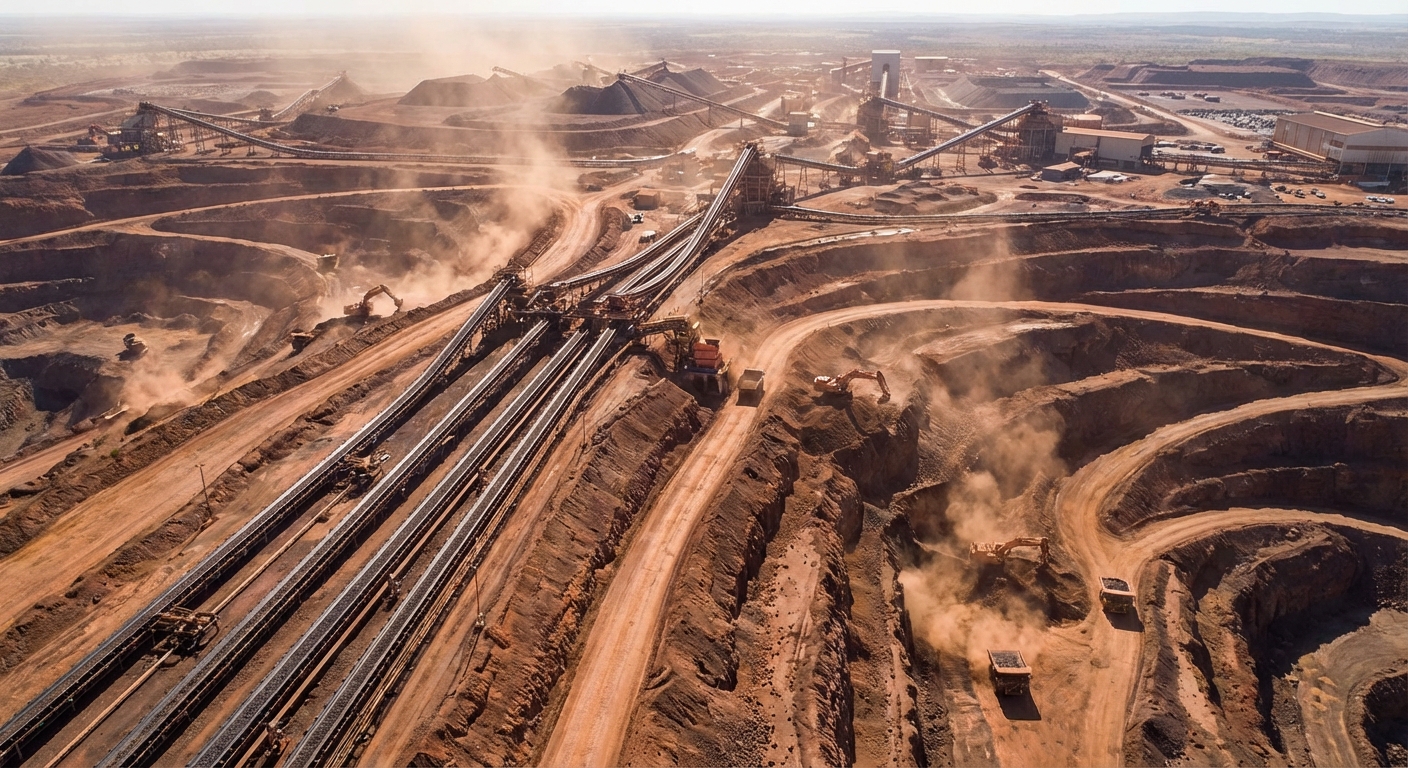
The rubber conveyor belt machine is essential for creating high-traction Chevron Conveyor Belts used extensively in the mining, cement, and logistics sectors. You will see these machines in any facility where the raw materials are heavy, abrasive, or must be transported up steep inclines. Because these industries operate 24/7, they require belts manufactured with the highest possible precision to avoid line stoppages that can cost thousands of dollars per hour.
Heavy-Duty Mining Solutions
But wait, there’s more: in the mining world, your conveyor belt is basically a moving floor that carries tons of sharp, heavy rock. The hydraulic press ensures that the “super-impact” compounds are properly cured to withstand the constant pounding at loading points.
- Iron Ore Transport: Requires high tensile strength and puncture resistance.
- Coal Splicing: Often utilizes field-repairable hydraulic units for on-site maintenance.
- Underground Operations: Demands flame-retardant belts cured under strict pressure controls.
Cement and Aggregate Plants
In cement plants, the environment is often high-heat and incredibly dusty, which can destroy poorly vulcanized belts. Your conveyor belt machine allows you to cure heat-resistant (HR) rubber covers that can transport clinker at temperatures exceeding 200°C without melting or hardening.
| Industry Sector | Typical Belt Requirement | Machine Benefit | |
|---|---|---|---|
| Mining | High Impact / Steel Cord | Extreme Structural Integrity | |
| Agriculture | Oil Resistant / Food Grade | Chemical Stability | |
| Port Logistics | Extra Wide / High Speed | Dimensional Precision |
Understanding industry-specific needs allows you to calibrate your vulcanizing press for maximum regional market share.
Key Takeaway: You can use this machinery to tap into high-growth sectors like mining and cement by offering specialized belts that are proven to last longer in abrasive or high-heat environments.
5. What are the rubber conveyor belt machine technical specs?
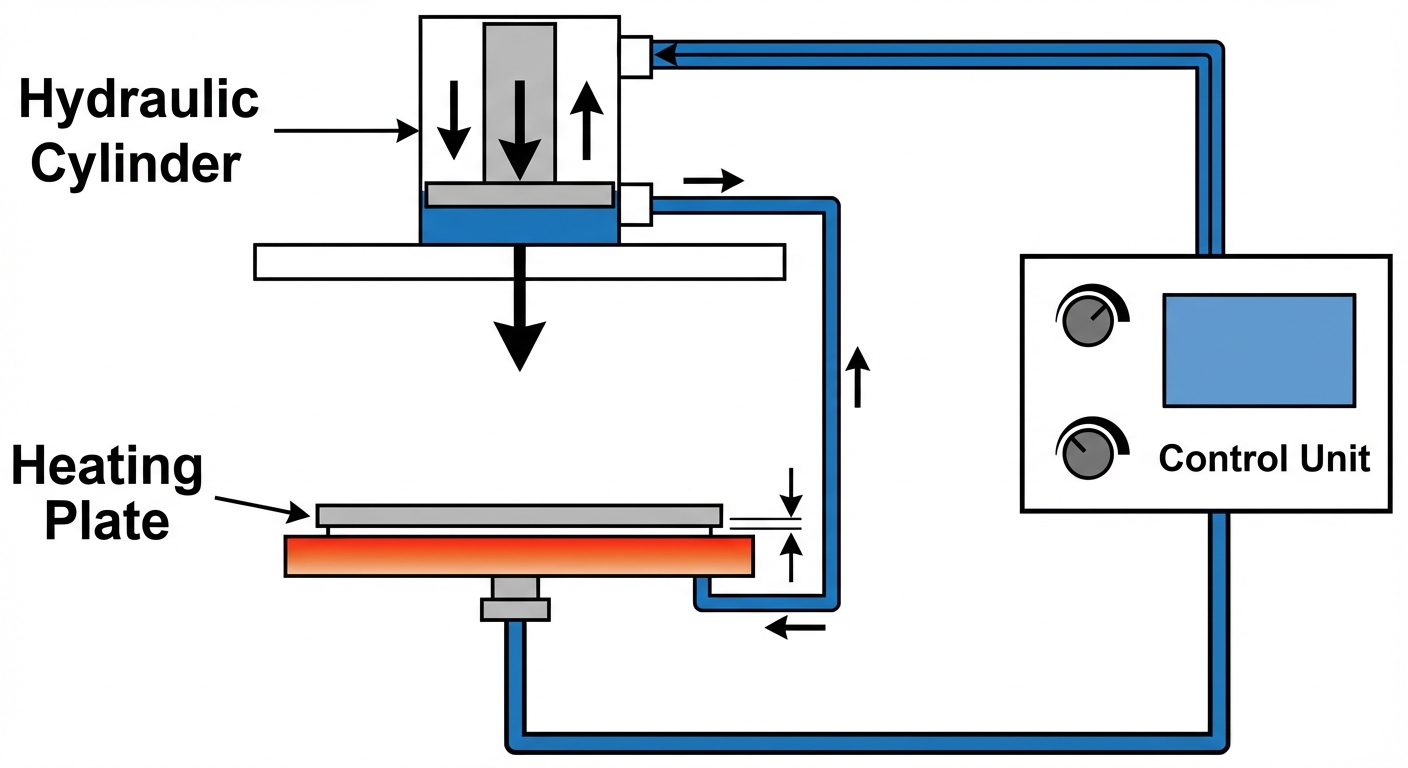
Selecting a rubber conveyor belt machine requires a deep dive into parameters such as hot-plate size, total pressure (MN), and the plunger stroke capacity. You must match the machine’s “Hot-plate unit pressure” (measured in MPa) to the specific requirements of the rubber compound you intend to use. For instance, if you are manufacturing heavy-duty steel cord belts, you will likely need a machine with a total pressure of at least 50 MN and a hot-plate length exceeding 10 meters.
Heating Plate Dimensions
Here is the deal: the size of your heating plates determines the maximum width of the belt you can sell and the length of each “pull” or production cycle. Choosing a wider plate (e.g., 1800mm or 2400mm) allows you to enter the port and bulk handling markets where high throughput is the standard.
- Length (mm): Ranges from 5000 to over 12000 for high-capacity lines.
- Material: Must resist thermal deformation to maintain a perfectly flat vulcanizing surface.
- Heating Method: Options include steam, thermal oil, or high-efficiency electric elements.
Maximum Plunger Stroke
The plunger stroke determines the versatility of your press when it comes to thickness. If you plan to produce thick, cleated belts or corrugated sidewalls, you need a stroke capacity (e.g., 300mm to 400mm) that allows the machine to open wide enough for the molds to be inserted and removed.
| Technical Parameter | Standard Value Range | Importance Level | |
|---|---|---|---|
| Hot-plate Size | 1400×8000 to 1800×12000 | Critical for Product Range | |
| Unit Pressure | 3.1 to 4.0 MPa | Essential for Bond Quality | |
| Control Method | PLC / Touchscreen | High for Precision |
Consulting a technical data sheet prevents you from under-buying a machine that cannot meet future production demands.
Key Takeaway: You should prioritize hot-plate unit pressure over total pressure, as the even distribution of force (MPa) is what actually determines the quality of the internal rubber-to-fabric bond.
6. How to maintain your rubber conveyor belt machine?
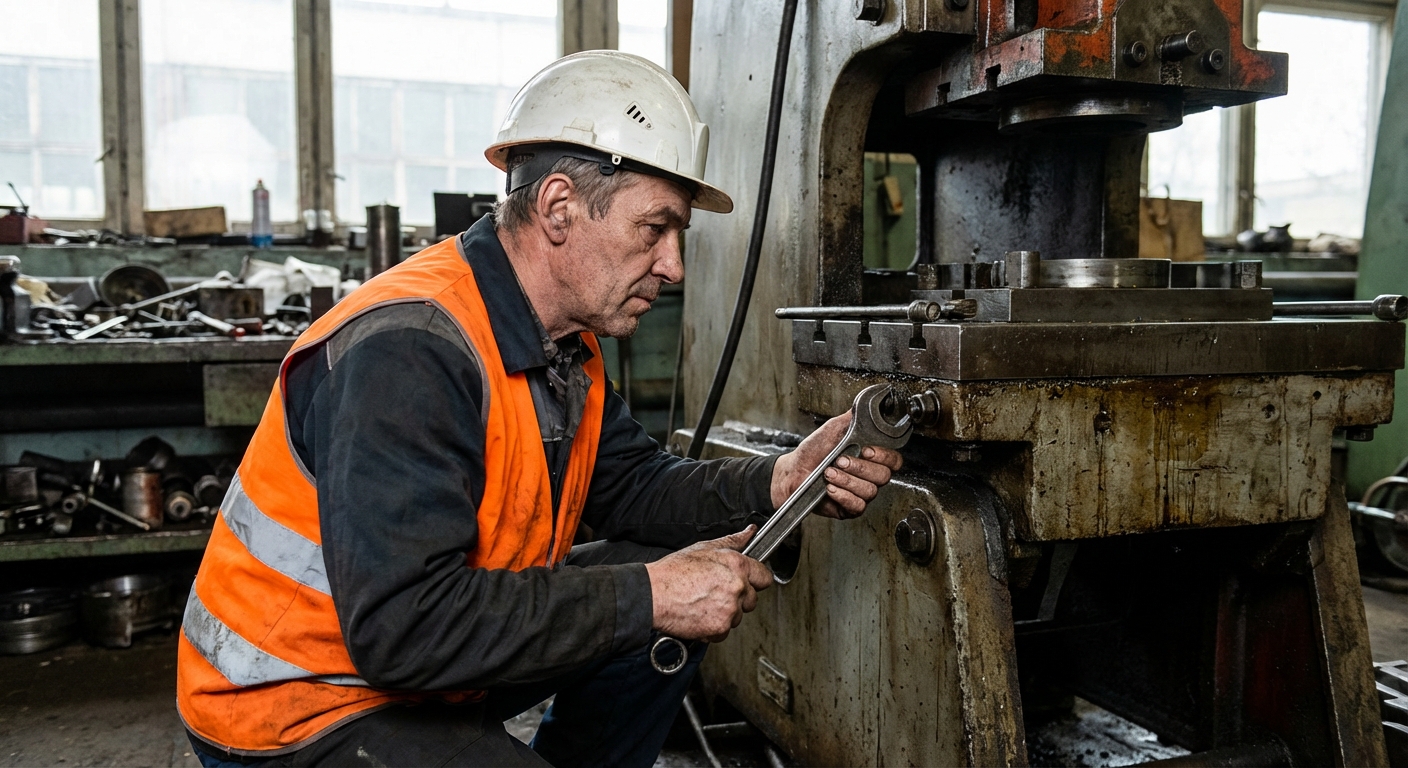
Maintaining a rubber conveyor belt machine involves regular checks of the hydraulic fluid levels and the calibration of the electronic temperature monitoring system. You cannot afford to let the hydraulic seals leak, as a drop in pressure during a curing cycle will ruin an entire section of belt. Regular maintenance ensures that the heater plates remain perfectly parallel, which is the only way to guarantee a uniform belt thickness from edge to edge.
Daily Inspection Checklist
But wait, there’s more: a simple daily walkaround can save you from a million-dollar breakdown. You should focus on identifying early signs of thermal fatigue or hydraulic bypass before they result in a full system failure.
- Leak Detection: Inspect all hoses and fittings for weeping hydraulic oil.
- Plate Cleanliness: Clear off any cured rubber residue that could create “dimples” in the next belt run.
- Emergency Stop Test: Ensure the safety circuit is fully operational at the start of every shift.
Hydraulic System Care
The hydraulic oil is the lifeblood of your press; keeping it clean is non-negotiable. You should utilize high-micron filtration and perform annual oil analysis to ensure no metal shavings or moisture are circulating through your expensive valves and pumps.
| Maintenance Task | Frequency | Skill Level | |
|---|---|---|---|
| Sensor Calibration | Every 3 Months | Instrument Technician | |
| Seal Replacement | Every 1-2 Years | Mechanical Engineer | |
| Heater Inspection | Monthly | Electrician |
Proactive maintenance schedules dramatically reduce the overhead costs associated with unexpected machinery downtime.
Key Takeaway: You must implement a strict “Clean Plate” policy, as even tiny amounts of debris on the heating surface can cause structural thin-spots that will lead to premature belt failure in the field.
7. Can a rubber conveyor belt machine produce sidewall belts?
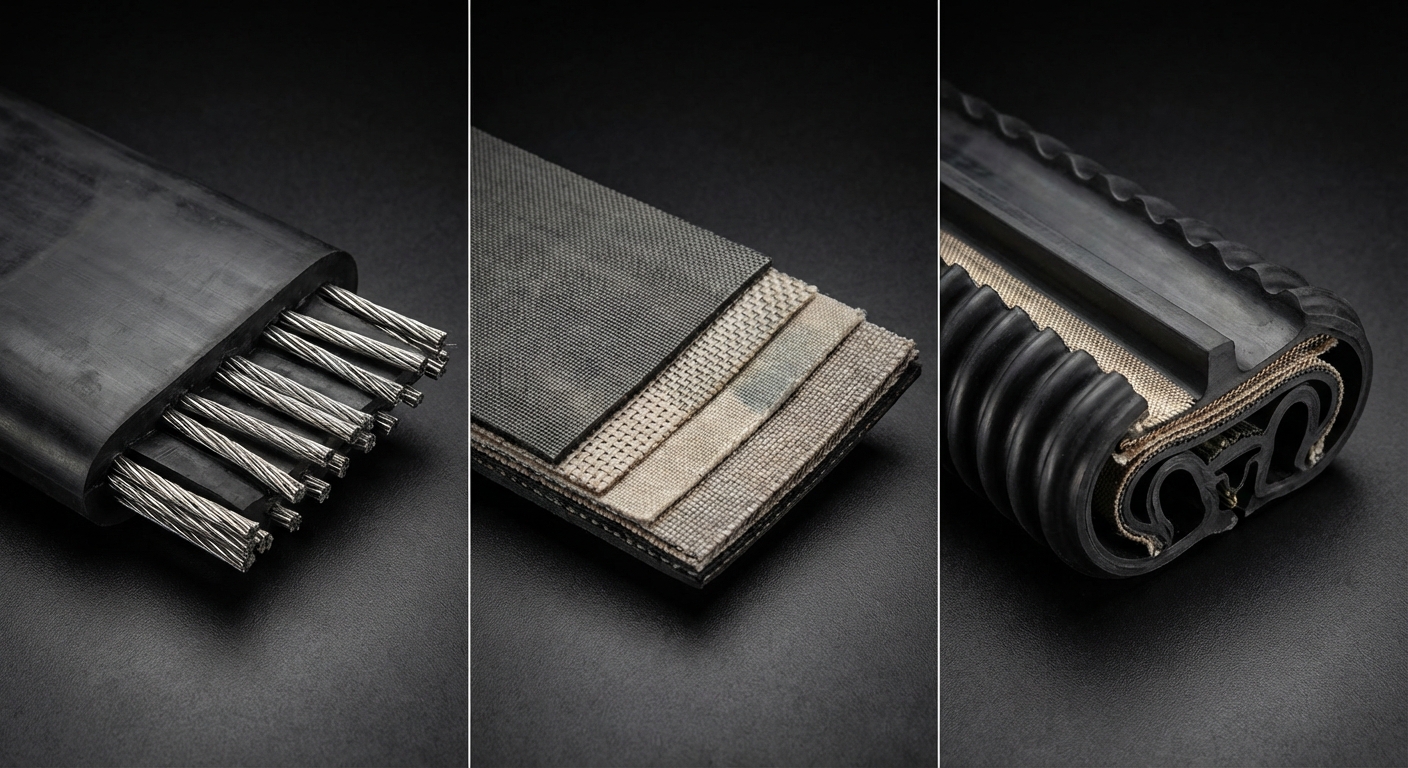
Yes, a versatile rubber conveyor belt machine can be configured to manufacture complex structures like Fabric (Textile) , Steel Cord , and Sidewall Conveyor Belts . You achieve this by using specialized molds that fit within the platens of the press. For sidewall and cleated belts, the hydraulic press provides the steady, high-intensity heat required to bond the vertical rubber cleats to the base belt without damaging the reinforced core.
Handling Fabric Textile Belts
Here is the deal: fabric belts (EP or NN) require delicate tension control during the vulcanization process to ensure the textile layers do not shrink or distort. The hydraulic press allows you to apply “Gripping Strength” (MN) to hold the belt in place while the tensioning units maintain the perfect longitudinal stretch.
- EP (Polyester): Low elongation and high impact resistance.
- NN (Nylon): Superior flexibility for small pulleys and high-troughing systems.
- Cotton (CC): Used for lightweight or traditional industrial applications.
Custom Cleat Integration
When manufacturing sidewall belts, the press acts as the bonding agent that fuses the corrugated walls to the base rubber. This “cold-bonding vs. hot-vulcanizing” debate is won by the press, as hot-vulcanized sidewalls are significantly less likely to peel off when transporting wet or heavy materials at a 90-degree angle.
| Belt Type | Reinforcement Material | Best Machine Spec | |
|---|---|---|---|
| Textile | Polyester / Nylon Plies | Multi-Daylight Press | |
| Steel Cord | Galvanized Wire Cables | High Unit Pressure (MPa) | |
| Sidewall | Reinforced Base + Cleats | Large Plunger Stroke |
The flexibility of your hydraulic press determines how broad of a product catalog you can offer to your clients.
Key Takeaway: You should utilize your press for sidewall manufacturing because hot-vulcanized cleats offer a 50% stronger bond than cold-glued alternatives, ensuring safety on steep-angle inclines.
8. Is the rubber conveyor belt machine energy efficient?
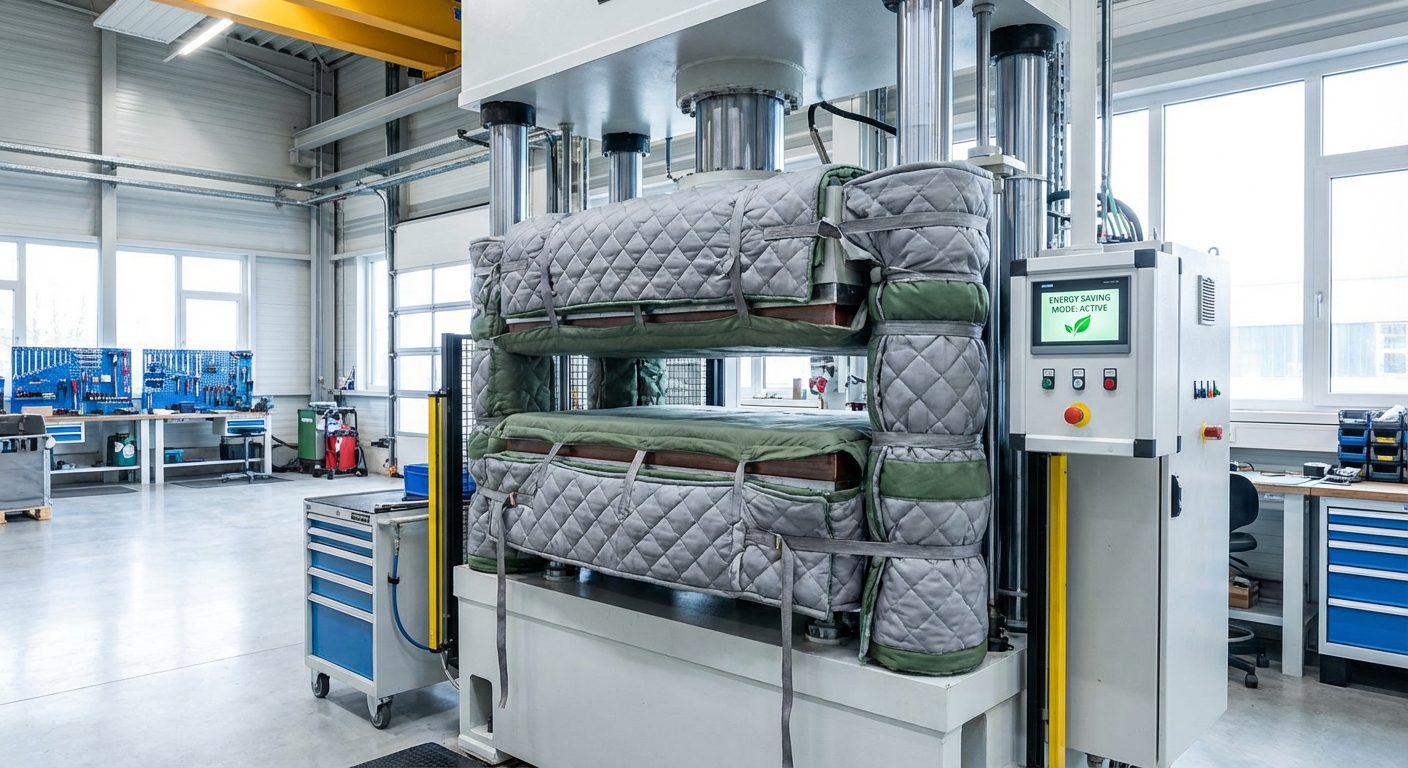
Modern rubber conveyor belt machine designs incorporate energy-saving thermal insulation and rapid-cooling systems to reduce electricity consumption during long production runs. You can now use advanced PLC controls that automatically enter “Power Saving Modes” during idle times or between loads. By wrapping the heating plates in high-density silicate insulation, you keep the heat where it belongs—in the belt—rather than letting it escape into the factory air, which also makes for a much more comfortable working environment for your team.
Advanced Power Saving Modes
But wait, there’s more: it’s not just about insulation; it’s about intelligent pump management. Modern hydraulic units use variable frequency drives (VFDs) that only run the pump at full speed when pressure is actually needed, saving you thousands on your monthly utility bill.
- Stage 1: Rapid heating using full wattage.
- Stage 2: PWM (Pulse Width Modulation) control to maintain temperature with minimal draw.
- Stage 3: Heat recovery systems that recycle thermal energy for the next cycle.
Sustainable Vulcanizing
As global regulations regarding factory emissions tighten, using an energy-efficient press isn’t just a cost-saving measure—it’s a compliance necessity. Investing in “Green” rubber machinery allows you to market your conveyor belts as sustainably produced, a growing requirement for major mining and government contracts.
| Efficiency Feature | Energy Saving % | Secondary Benefit | |
|---|---|---|---|
| Plate Insulation | 20-30% | Lower Ambient Factory Heat | |
| VFD Pump Motors | 15-25% | Quieter Machine Operation | |
| PLC Logic Timing | 10% | Consistent Product Quality |
Smart energy management is the difference between a high-profit margin and just breaking even in the competitive rubber market.
Key Takeaway: You must insist on high-grade thermal insulation for your heating platens, as this single addition can pay for itself in under a year through reduced electricity bills.
9. What safety features does a rubber conveyor belt machine have?
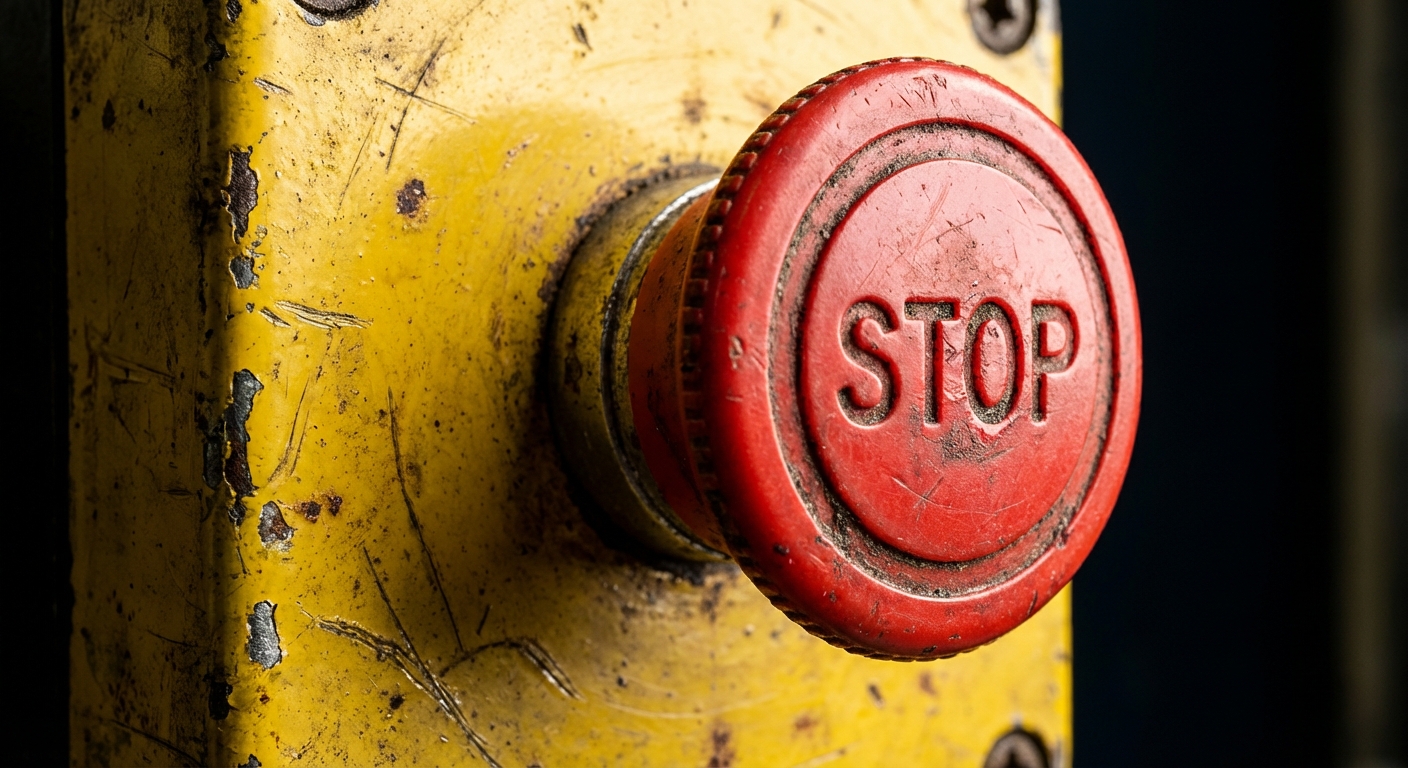
Safety is paramount, so every rubber conveyor belt machine is equipped with emergency stop buttons, interlocking guards, and hydraulic pressure relief valves. You are dealing with hundreds of tons of force and high temperatures; therefore, the safety system must be “fail-safe,” meaning any electrical or mechanical fault will automatically cause the press to open or stop all movement. These features protect your most valuable asset—your workers—while preventing damage to the machine during an accidental overload.
Emergency Stop Mechanisms
Here is the deal: in a high-pressure environment, seconds count. You need emergency stops positioned at every corner of the machine and the main control panel. If the PLC detects a “Pressure Spike” or a thermal runaway, it will instantly vent the hydraulic fluid into the reservoir to neutralize the clamping force.
- Light Curtains: Invisible infrared beams that stop the machine if someone’s hand enters the danger zone.
- Safety Interlocks: Ensure the machine cannot start a cycle unless all physical guards are locked in place.
- Pressure Relief Valves: Protect the hydraulic cylinders from exploding if there is a block in the return line.
Operator Protection Guards
Physical steel barriers are still the gold standard for protecting against mechanical pinch points. You should ensure that your machine includes heavy-duty sliding or hinged guards that provide visibility without compromising the physical separation between the operator and the moving platens.
| Safety Component | Primary Hazard Prevented | Legal Compliance | |
|---|---|---|---|
| E-Stop Button | Mechanical Crushing | OSHA / CE Standard | |
| Relieve Valve | Hydraulic Explosion | Pressure Vessel Code | |
| Interlock Guard | Accidental Activation | ISO Safety Certification |
Building a culture of safety around your heavy machinery ensures long-term operational stability and employee trust.
Key Takeaway: You should conduct weekly tests of all light curtains and E-stops, because in a high-pressure vulcanizing environment, sensor failure can lead to catastrophic workplace accidents.
10. Where to buy a quality rubber conveyor belt machine?
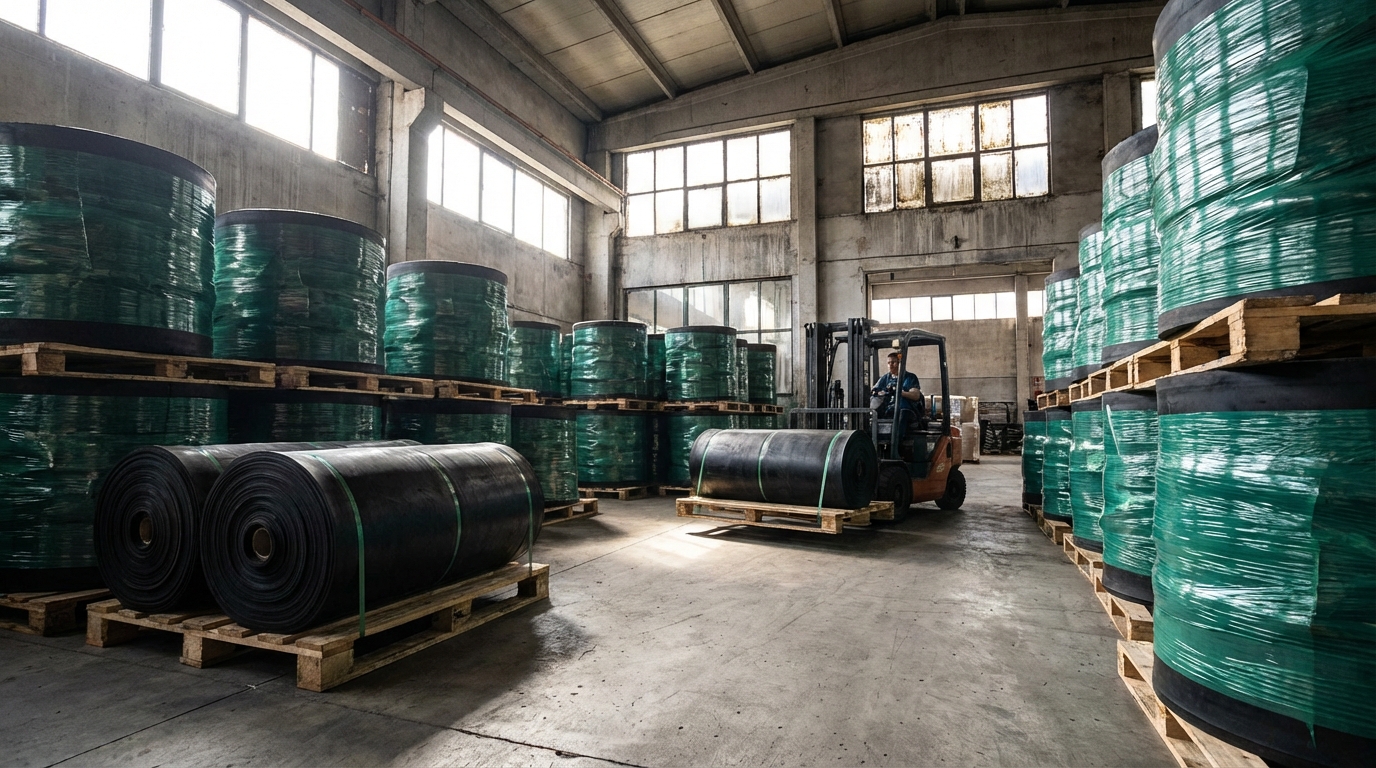
To secure a reliable rubber conveyor belt machine, industrial buyers should partner with direct factory manufacturers that offer ISO-certified quality and global technical support. You want to avoid middlemen who cannot provide deep technical answers about the PLC logic or hydraulic schematics. By purchasing directly from a manufacturer with over 30 years of history, you ensure that spare parts—like heating elements or high-pressure seals—will be available for at least the next decade, protecting your machinery investment.
Direct Factory Benefits
But wait, there’s more: buying direct isn’t just about the lower price; it’s about customization. A factory can build a press specifically for your unique floor space or electrical requirements, whereas a trading company can only sell you what is “on the shelf.”
- Customization: Tailor the plate size and pressure to your specific belt catalog.
- Direct Support: Speak directly to the engineers who designed the hydraulic circuit.
- Factory Pricing: Save 15-30% on the initial purchase price by cutting out commission agents.
Global Shipping and Support
A reputable manufacturer will assist you with the complex logistics of shipping a multi-ton machine and send a team of technicians halfway around the world to oversee the initial installation and staff training. This “turnkey” approach is what differentiates a top-tier supplier from a generic machinery vendor.
| Buying Option | Customization | After-Sales Support | Long-Term Cost | |
|---|---|---|---|---|
| Direct Factory | High | Expert / Technical | Lowest | |
| Local Distributor | Low | Fast / General | Higher | |
| Second-Hand | Zero | None | Risky |
Your choice of supplier is just as important as the specifications of the machine itself for long-term production success.
Key Takeaway: You should perform a factory audit before purchase to verify that their manufacturing tolerances and quality control systems meet the rigorous demands of ISO 9001 standards.
Strategic Conclusion
A conveyor belt hydraulic press is not just a piece of hardware; it is the cornerstone of your industrial reliability and market competitiveness. By choosing a machine with precision PLC controls, high-capacity hydraulic units, and energy-efficient insulation, you solve the dual problems of high operational costs and inconsistent product quality. At Weifang Zhenxing Rubber, we believe that “Quality is the Tread, Reliability is the Core”—a vision that has guided our world-class manufacturing for decades. If you are ready to modernize your production facility with a high-performance system, we invite you to contact us today to receive a customized technical solution within 24 hours. Let’s build the future of material handling together.
FAQ
Can I utilize my existing steam system for the heating plates?Yes, you can. Most high-end hydraulic presses are designed with “Universal Platen” options that can be configured for steam, high-temperature oil, or electric heating based on your facility’s current infrastructure.
What’s the best way to handle multiple belt widths on one machine?The best method is using a “Modular Platen” or a wide-plate press. This allows you to vulcanize narrower belts in the center of the press while the unused width remains under pressure, ensuring the heating plates do not warp.
How do I know if my machine needs a seal replacement?You can tell by monitoring the “Pressure Hold” time. If the pump has to kick on frequently during the curing cycle to maintain pressure while the press is closed, it indicates that hydraulic fluid is bypassing a worn internal seal.
Can I manufacture food-grade belts on a heavy-duty mining press?Yes, but you must ensure perfect cleanliness. The best practice is to separate your “Industrial Black” and “Food-Grade White” production cycles to prevent carbon black contamination on the hygienic belt surfaces.
What’s the best pressure for standard textile belts?The best pressure is typically between 3.1 and 3.5 MPa. This specific range provides enough force to fuse the rubber plies without crushing the fabric fibers or distorting the belt’s weave.