
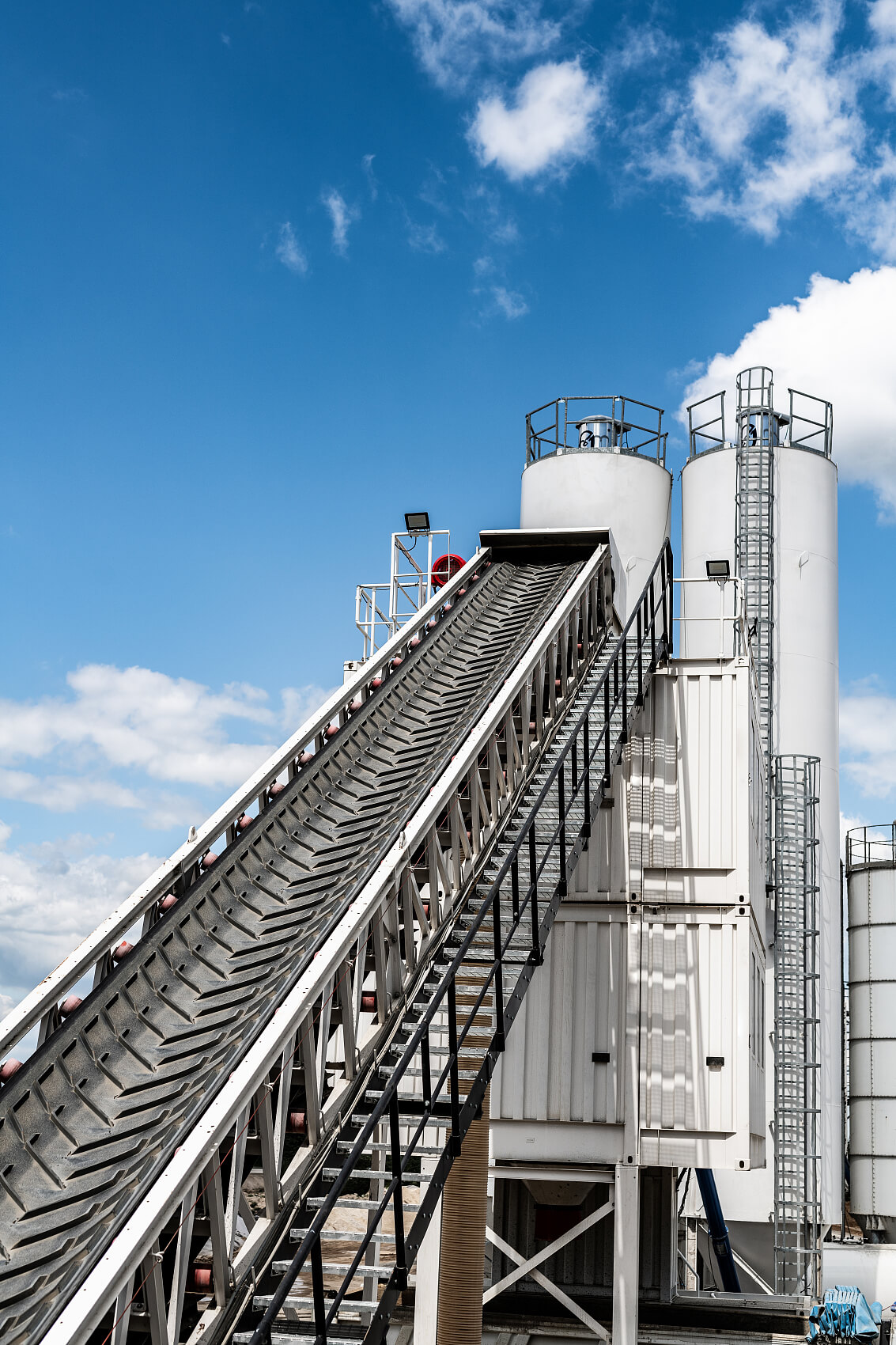
A pattern rubber conveyor belt prevents material slippage on steep inclines by using chevron profiles, improving transport efficiency, reducing waste, and ensuring stable operation in casting facilities.
What is a pattern rubber conveyor belt for plaster?
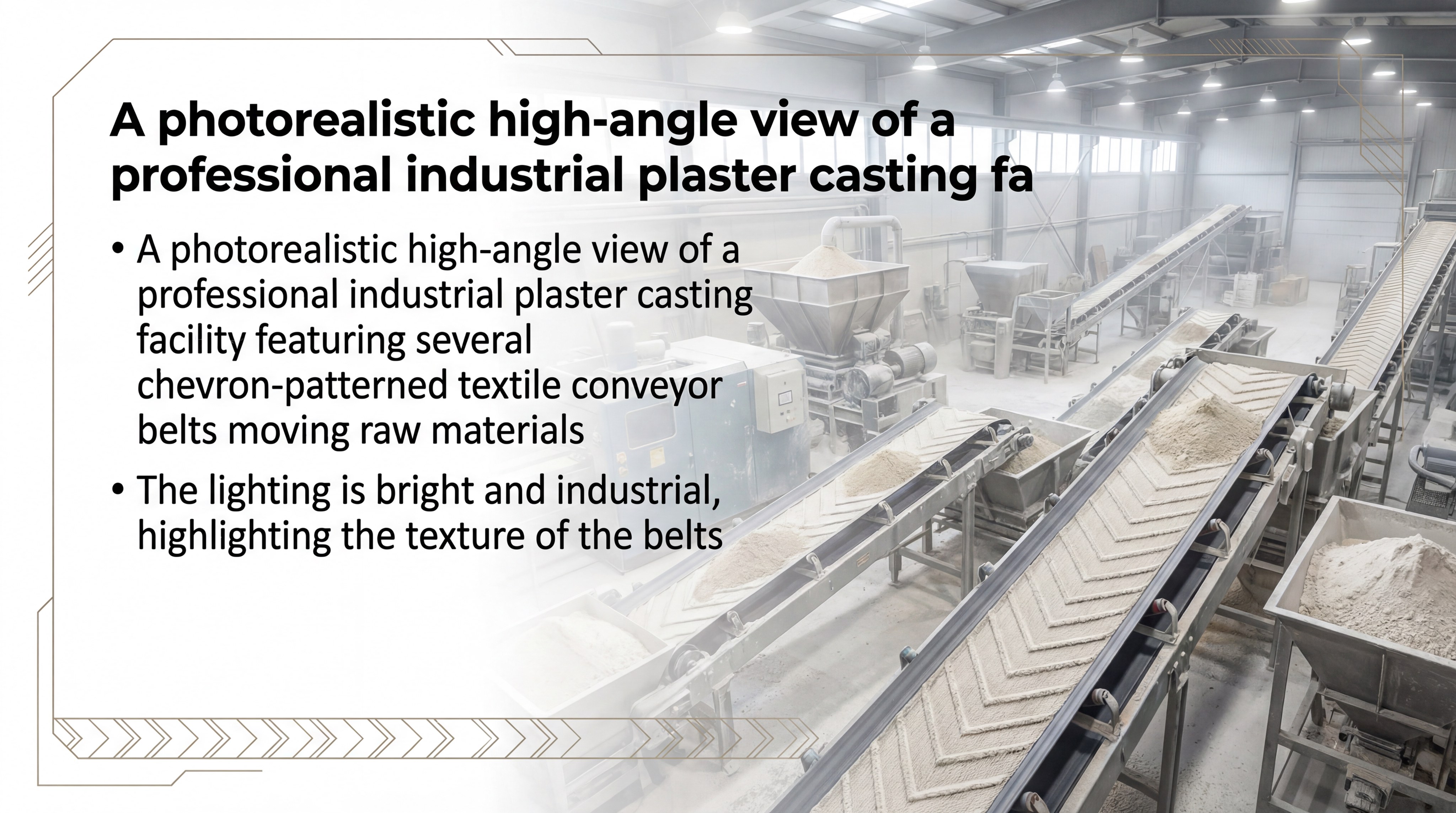
A pattern rubber conveyor belt is a textile-reinforced material handling solution featuring molded chevron or herringbone profiles designed to increase friction for high-angle plaster transport. These belts are essential in industrial casting because they provide the mechanical grip necessary to move slurries or powders at angles where smooth belts would simply fail.
What defines the chevron profile?
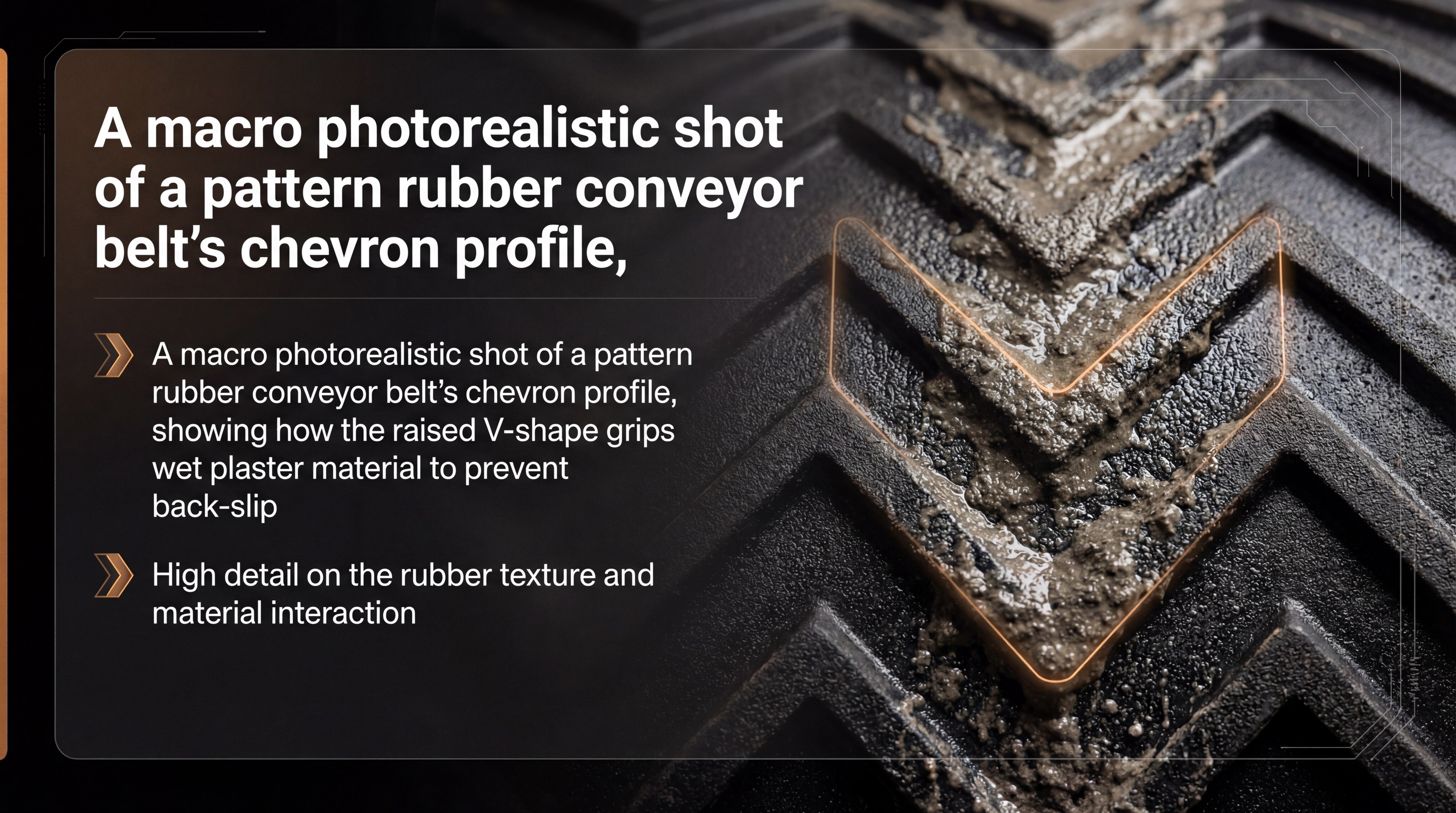
The chevron profile is characterized by its “V” or “Y” shape, which is molded directly into the top cover of the belt. These profiles act as individual cleats that trap the plaster material, preventing it from sliding back down the conveyor line during the elevation process.
You might be wondering:
- How tall are these profiles?
- Do they handle liquid plaster?
- Are they part of the belt carcass?
The heights of these patterns usually range from 5mm to 32mm depending on your specific incline requirements.
How do textile carcasses enhance strength?
Textile carcasses, often made of EP (Polyester-Polyamide) fabric, provide the structural integrity needed to support heavy plaster loads without excessive stretching. This multi-ply construction ensures that the belt maintains its tension and tracking accuracy even under the continuous stress of a high-volume casting plant.
Think about this:
- High tensile strength prevents belt elongation.
- Excellent flexibility allows for smaller pulley diameters.
- Moisture resistance protects against plaster slurry penetration.
Key Takeaway: Profiled belts combine mechanical grip with textile strength to solve the problem of material slip in steep plaster casting applications.
| Feature | Plaster Casting Benefit | |
|---|---|---|
| Chevron Pattern | Stops material fallback on inclines | |
| EP Textile Carcass | Maintains belt shape under load | |
| Integrated Molding | Prevents cleat detachment |
This combination of features ensures that your production line remains stable and efficient regardless of the conveyor’s gradient.
How does a pattern rubber conveyor belt work?
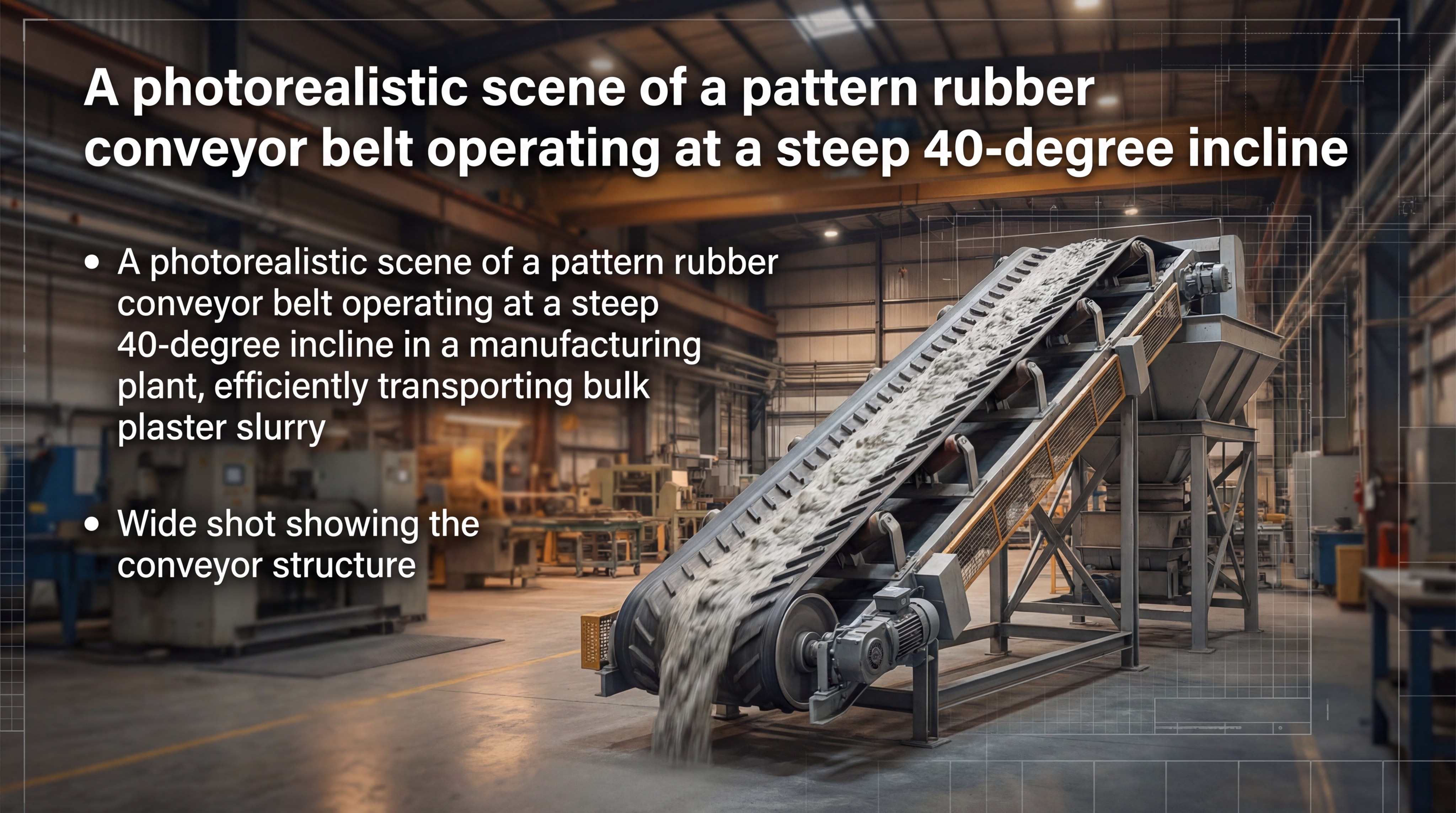
A pattern rubber conveyor belt works by utilizing its raised chevron cleats to create pockets of friction that mechanically lock the material against the belt surface. This physical barrier is what allows you to transport bulk plaster at angles reaching up to 40 degrees without the risk of material rollback.
Why is the incline angle important?
The incline angle determines the height and type of pattern required for your specific profiled herringbone rubber conveyor belt system. As the angle increases, gravity acts more forcefully on the plaster, necessitating deeper “V” patterns to maintain stability.
Let’s dive in:
- 0-15 degrees: Standard flat belts often suffice.
- 15-25 degrees: Shallow patterns (5mm-15mm) are required.
- 25-40 degrees: High-profile chevrons (15mm-32mm) are essential.
Failure to match the pattern to the angle results in immediate production delays and material waste.
How does the profile prevent rollback?
Each chevron profile acts as a miniature dam that catches the plaster as it tries to slide backward. By distributing the load across multiple “pockets,” the belt ensures that the weight of the plaster is evenly supported throughout the entire vertical lift.
But here is the kicker:
- The V-shape naturally centers the material on the belt.
- This design reduces edge spillage significantly.
- It allows for higher speeds on steep gradients.
Key Takeaway: The mechanical interaction between the chevron profile and the plaster material is the primary mechanism for preventing slippage on steep conveyor slopes.
| Component | Working Principle | |
|---|---|---|
| V-Pattern Cleats | Creates a mechanical barrier for material | |
| Friction Surface | Increases the coefficient of friction | |
| Centering Action | Keeps plaster in the middle of the belt |
By understanding these principles, you can optimize your conveyor setup to handle higher volumes without increasing the risk of spills.
Which pattern rubber conveyor belt types exist?
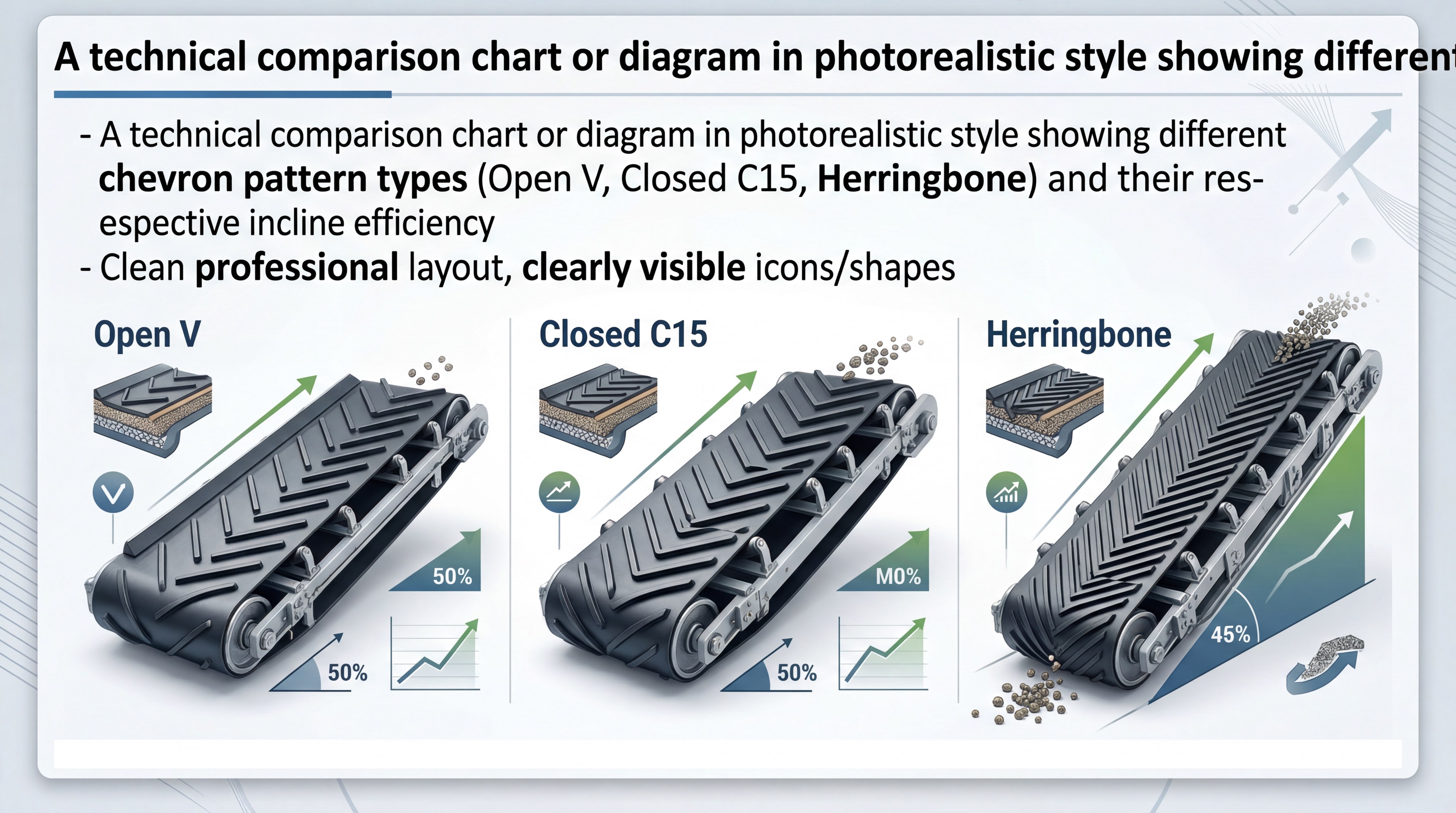
The selection of a pattern rubber conveyor belt depends on the specific moisture content and particle size of the plaster you are transporting through your facility. From open-V designs that allow for drainage to closed-C15 patterns for fine powders, there is a specific configuration for every stage of the casting process.
What are open vs closed chevron types?
Open chevron patterns feature gaps at the point of the “V” to allow water or liquid slurry to drain away while keeping the solid plaster in place. Closed patterns, conversely, form a solid barrier that is better suited for dry, dusty, or granulated materials that might otherwise leak through gaps.
You might be wondering:
- Which one is easier to clean?
- Does water affect the grip?
- Open V: Best for wet slurries and easy cleaning.
- Closed V: Best for dry powders and maximum lift.
Choosing the wrong pattern can lead to massive cleanup efforts at the end of every shift.
When is the C15 pattern most effective?
The C15 pattern is a specialized design often used on an 800mm width c15 chevron pattern rubber conveyor belt for medium-duty applications. It offers a balanced profile height of 15mm, which is the “sweet spot” for transporting semi-dry plaster at moderate inclines without the bulk of a heavy-duty mining belt.
Consider these advantages:
- Fits standard conveyor frames easily.
- Provides excellent flexibility over small pulleys.
- Optimized for consistent material flow.
Key Takeaway: Selecting between open and closed patterns is a critical decision based on whether your plaster is in a wet slurry or dry powder state.
| Pattern Type | Ideal Application | Incline Limit | |
|---|---|---|---|
| Open Chevron | Wet plaster slurries / Drainage | 25° – 30° | |
| Closed Chevron | Fine dry plaster powders | 30° – 40° | |
| C15 Profile | General-purpose casting | Up to 30° |
Matching your material state to these specific patterns will drastically reduce waste and improve your system’s overall reliability.
Why choose a pattern rubber conveyor belt for casting?
Using a pattern rubber conveyor belt in your casting facility is the most effective way to maintain a continuous, high-speed production line while minimizing material loss. Unlike smooth belts that require extremely long footprints to achieve height, patterned belts allow for compact, steep conveyor designs that save valuable floor space.
How does it handle wet plaster materials?
Wet plaster is notoriously difficult to transport because its low viscosity causes it to act like a fluid on smooth surfaces. The chevron patterns on these belts trap the moisture and solids together, preventing the “river effect” where liquid material flows backward over the moving belt.
The secret lies here:
- Profiles break the surface tension of the liquid.
- Deep grooves provide a stable “nest” for the slurry.
- High-grade rubber resists the suction of wet plaster.
This ensures that the material moves with the belt rather than sliding over it.
Can it improve production cycle times?
By enabling steeper inclines, a patterned belt allows you to move materials between different floor levels faster and in a smaller horizontal distance. This compact layout means your plaster reaches the casting molds more quickly, reducing the time raw materials spend in transit and potentially improving your overall output.
Check out these benefits:
- Reduced footprint for conveyor systems.
- Higher material throughput per hour.
- Lower energy consumption due to shorter belt lengths.
Key Takeaway: Profiled belts are the superior choice for casting because they handle the unique fluid dynamics of plaster while saving significant facility space.
| Benefit | Impact on Casting Facility | |
|---|---|---|
| Steep Incline | Smaller machine footprint | |
| High Traction | Zero material fallback/waste | |
| Fast Transport | Increased daily production output |
Switching to a patterned system often pays for itself through the reclaimed floor space and reduced material waste alone.
Is a pattern rubber conveyor belt heavy-duty?
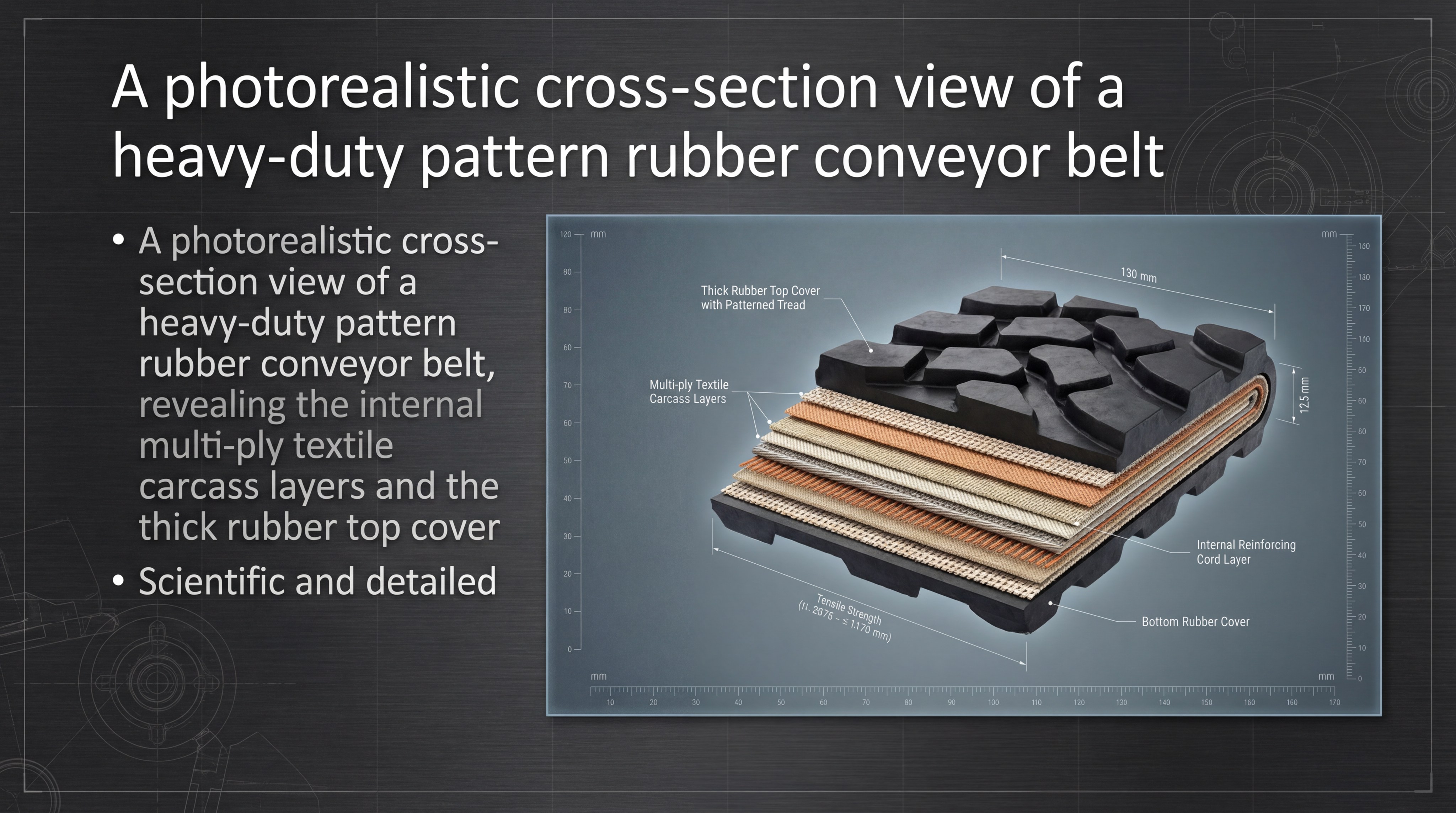
A pattern rubber conveyor belt is built specifically for heavy-duty industrial service, featuring a rugged construction that withstands the weight and abrasive nature of bulk plaster. These belts are engineered with multiple layers of high-strength fabric and thick rubber covers to ensure they don’t tear or wear down prematurely under constant load.
What materials are used in the carcass?
The core of a heavy duty grooved pattern rubber conveyor belt for sale typically consists of EP textile layers, which offer the perfect balance of low stretch and high impact resistance. This ensures that even when the belt is fully loaded with heavy plaster, it remains stable and does not slip on the drive pulley.
Let’s look at the layers:
- Top cover: Thick, abrasion-resistant rubber.
- Carcass: 2 to 5 plies of high-strength EP fabric.
- Bottom cover: Friction-optimized rubber for pulley grip.
These layers are vulcanized together into a single, inseparable unit.
How does the grooved design resist wear?
While you might worry that the raised patterns would wear off quickly, they are actually molded as