
A roller rubber conveyor belt ensures smooth, vibration-free transport in plaster casting, protecting fragile molds, reducing breakage, and improving production efficiency.
What is plaster casting using a roller rubber conveyor belt?
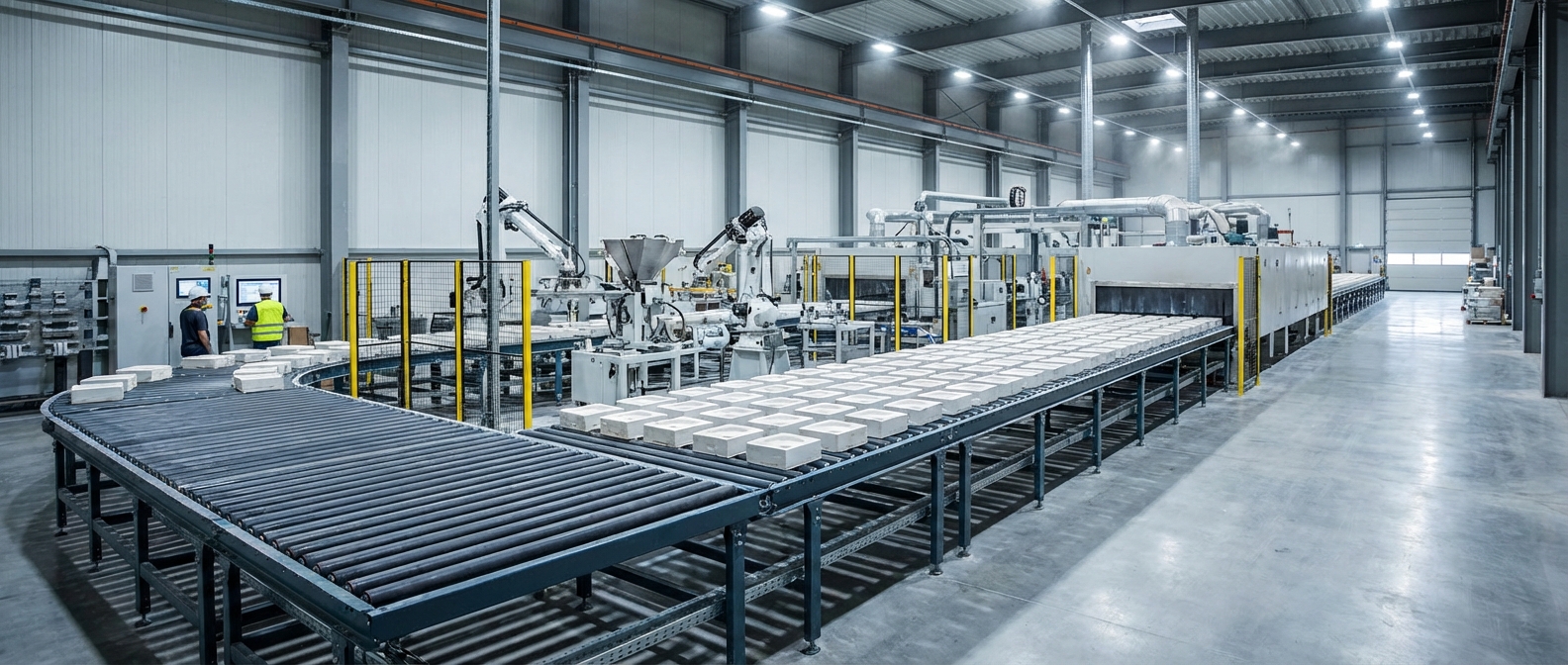
Plaster casting is a refined version of sand casting that utilizes gypsum plaster to form the mold cavity for molten metal. In modern industrial facilities, a roller rubber conveyor belt acts as the primary transport mechanism for these delicate molds. This system ensures that the liquid slurry remains undisturbed while it begins the chemical setting process.
How is the plaster mold created?
The mold is formed by mixing gypsum, water, and strengthening additives into a liquid slurry. You must pour this mixture over a reusable pattern to capture intricate details.
Here is the kicker.
- Materials: High-grade gypsum and talc.
- Detail: Capable of producing thin-walled sections.
- Finish: Exceptional surface smoothness compared to sand.
Key Takeaway: The use of a conveyor system allows you to automate the pouring and setting phases for consistent mold quality.
| Feature | Plaster Mold Detail | |
|---|---|---|
| Material Basis | Gypsum and Strengthening Agents | |
| Tolerance | Very high dimensional accuracy | |
| Compatibility | Non-ferrous alloys only |
The integration of automated belts reduces the physical handling that often leads to micro-cracks in the plaster structure.
How does a roller rubber conveyor belt aid the casting process?
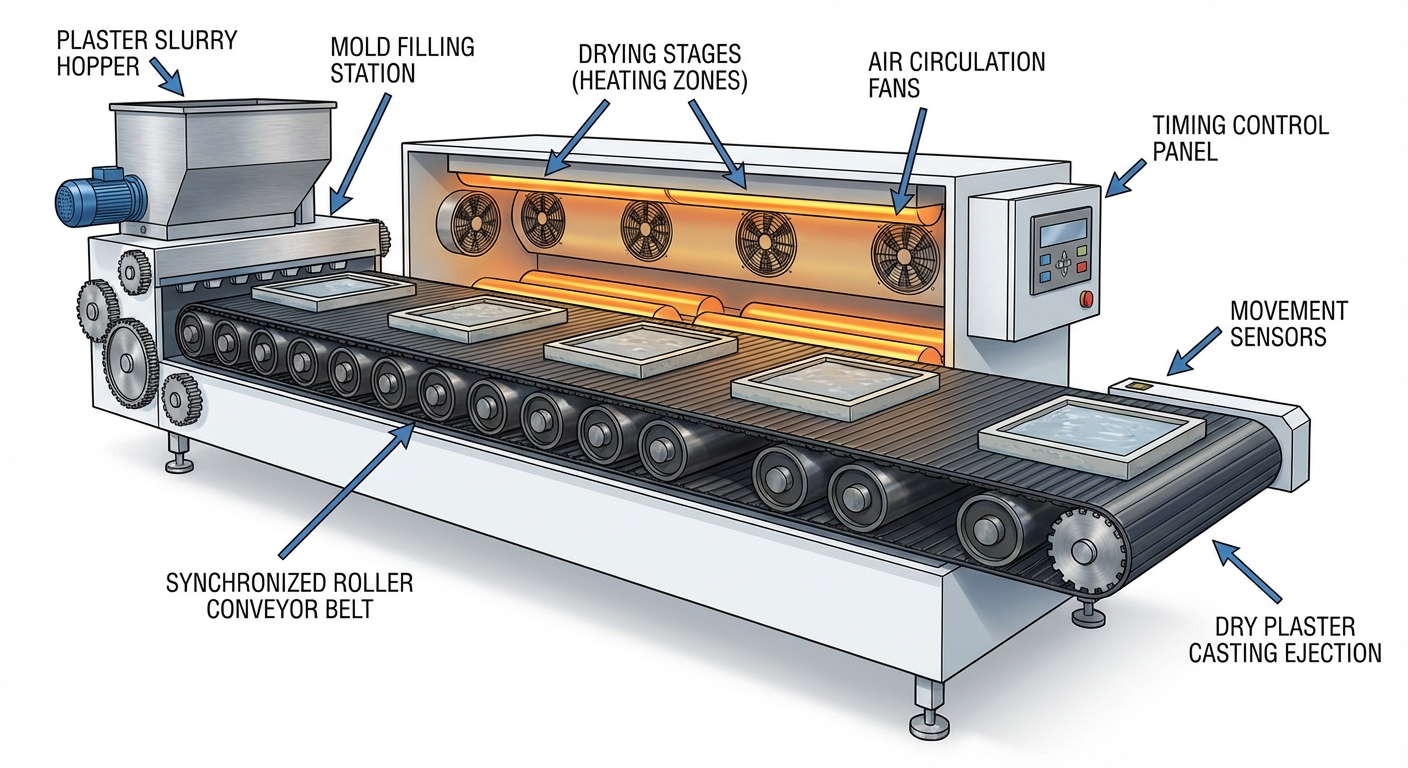
A roller rubber conveyor belt aids the process by providing a stable, shock-absorbent platform that prevents vibrations from damaging the setting plaster. If you use rigid metal conveyors, the mechanical shocks can cause air bubbles to rise or the plaster to settle unevenly. This automated movement ensures that every mold travels through the drying tunnel at a perfectly synchronized speed.
Why is synchronized movement essential?
Synchronized transport allows the chemical reaction in the plaster to occur under controlled atmospheric conditions. By using a Fabric (Textile) Conveyor Belt , you maintain a smooth flow that matches your pouring cycle.
Think about this.
- Vibration Dampening: Protects the slurry from external shocks.
- Flow Control: Eliminates bottlenecks between mixing and drying.
- Repeatability: Ensures every batch receives the same curing time.
Key Takeaway: Automation through rubber belts ensures that environmental variables are minimized during the mold’s most vulnerable state.
| Aid Factor | Industrial Benefit | |
|---|---|---|
| Rubber Friction | Prevents mold slippage during inclines | |
| Roller Support | Maintains a perfectly flat belt surface | |
| Speed Control | Matches the plaster’s setting time |
A steady transport speed results in uniform moisture evaporation and stronger final molds for the metal pouring stage.
Why choose a roller rubber conveyor belt for mold transport?
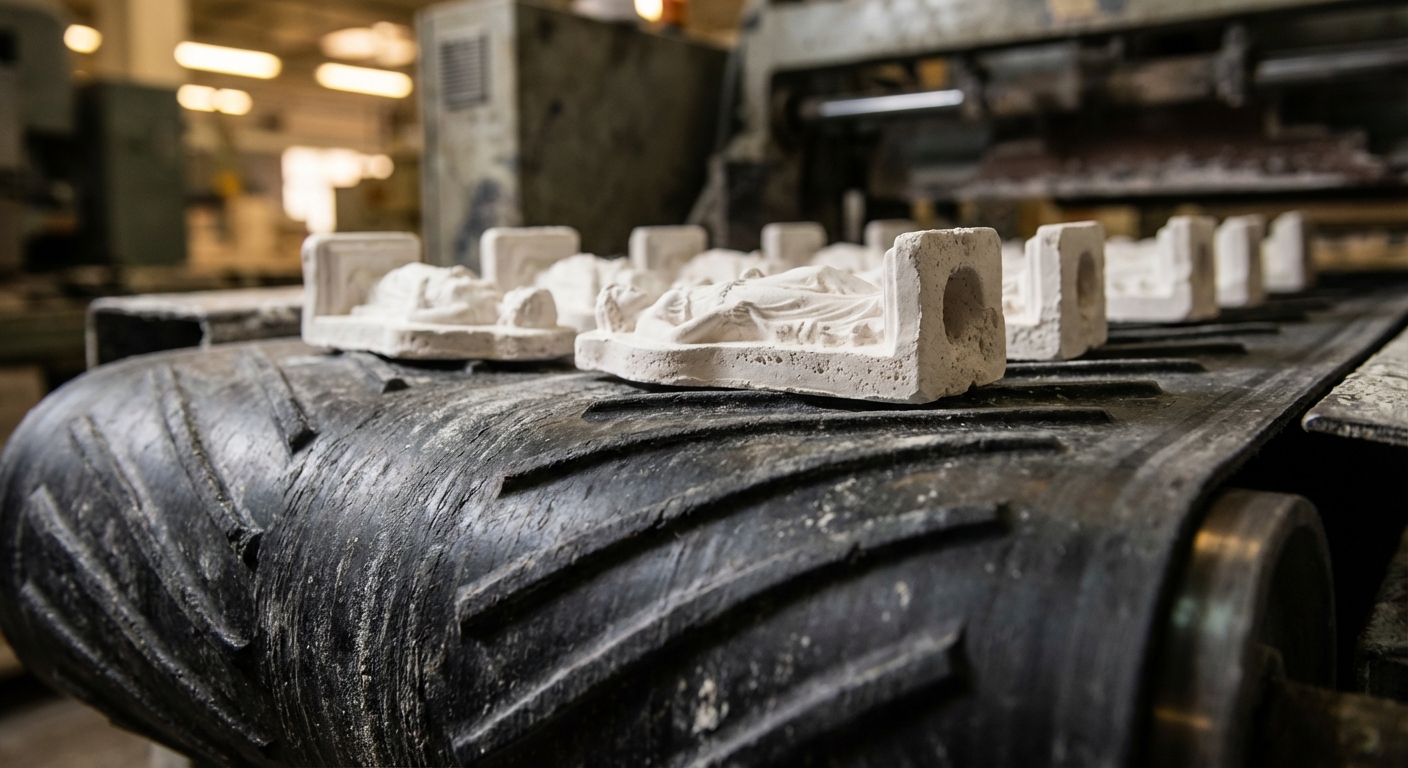
You choose a roller rubber conveyor belt because it offers superior impact resistance and a “soft” surface that prevents brittle plaster from cracking. Plaster is notoriously fragile before it is fully cured, and any rough transition can ruin hours of preparation. The rubber material grips the mold base firmly, ensuring it doesn’t shift or slide during start-stop cycles.
Does rubber outperform steel in this application?
Rubber is the preferred choice for plaster casting because it absorbs the high-frequency vibrations generated by the conveyor motors. While steel slats are durable, they transmit every mechanical jolt directly into the mold.
But wait, there’s more.
- Impact Absorption: Shields the mold from drive system jolts.
- Surface Grip: Ideal for moving molds through 15-degree inclines.
- Cost-Efficiency: Lower maintenance costs than segmented metal chains.
Key Takeaway: Selecting a rubber-based belt material is a strategic decision to maximize your casting yield and reduce waste.
| Material | Mold Safety | Vibration Level | |
|---|---|---|---|
| Rubber Belt | Excellent Protection | Minimal | |
| Steel Slat | Poor/Rigid | High | |
| Plastic Link | Moderate | Medium |
Using a high-friction rubber surface allows for more compact facility layouts by enabling steeper transport angles without spillages.
Which roller rubber conveyor belt types suit plaster casting?
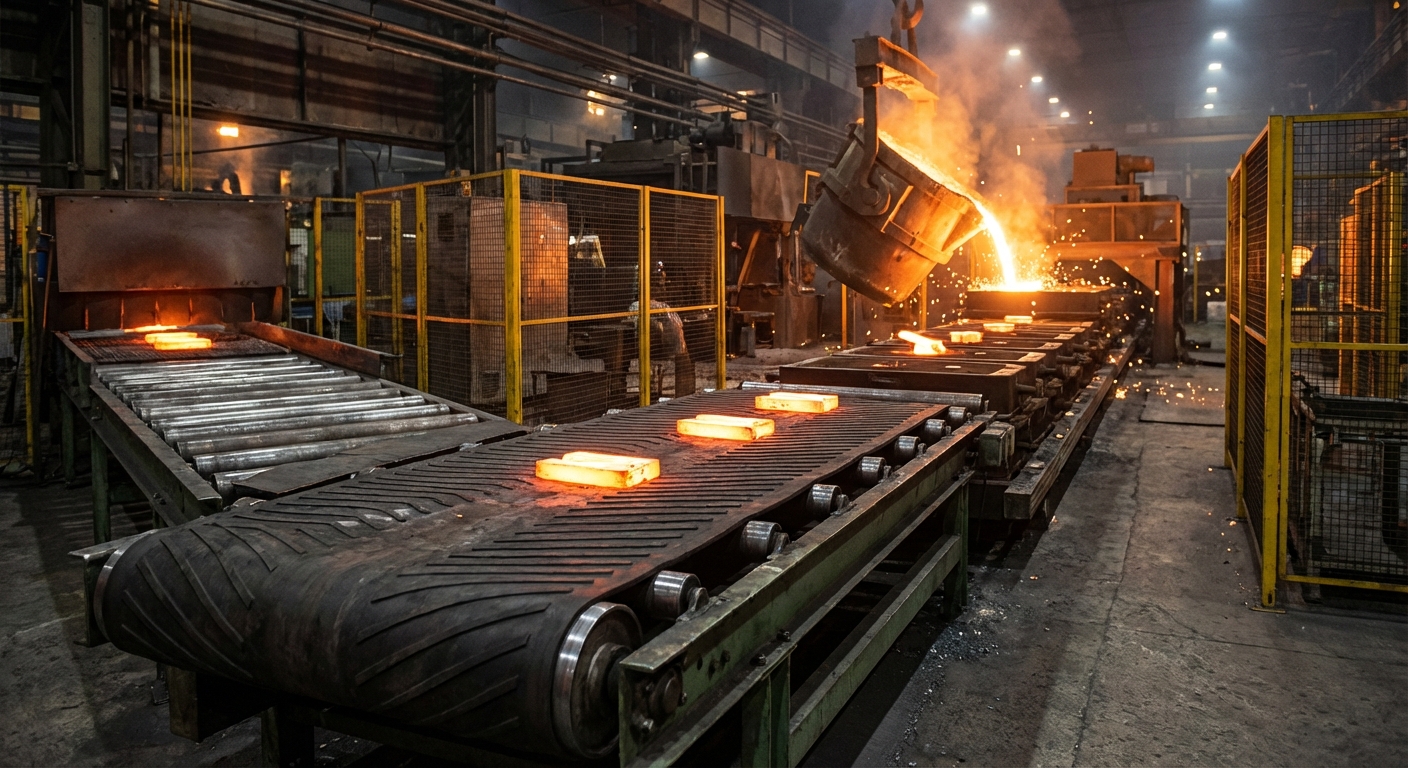
The specific roller rubber conveyor belt types suited for this process include heat-resistant and high-stability multi-ply fabric belts. Once the molten aluminum or copper is poured, the molds radiate significant thermal energy into the belt surface. You must utilize specialized compounds to prevent the rubber from hardening or losing its elastic properties.
When should you use heat resistant belts?
Heat resistant belts are necessary in the “hot zone” where metal pouring and initial cooling occur. Integrating a Heat Resistant Conveyor Belt prevents the system from warping under extreme thermal loads.
It gets better.
- T1 Grade: Handles mold temperatures up to 125°C.
- T2/T3 Grade: Designed for continuous exposure to 150°C+.
- EP Core: Provides the tensile strength to carry heavy metal loads.
Key Takeaway: Matching the belt grade to your specific pouring temperature is critical for avoiding premature belt failure.
| Belt Type | Temp Range | Casting Zone | |
|---|---|---|---|
| Standard EP | Up to 80°C | Slurry and Mold Prep | |
| Heat Resistant | 125°C – 200°C | Pouring and Solidification | |
| Oil Resistant | Up to 100°C | Mold Release Application |
Standard belts are sufficient for the slurry preparation area, but the pouring line requires high-temperature rubber compounds.
How do rollers support a roller rubber conveyor belt system?
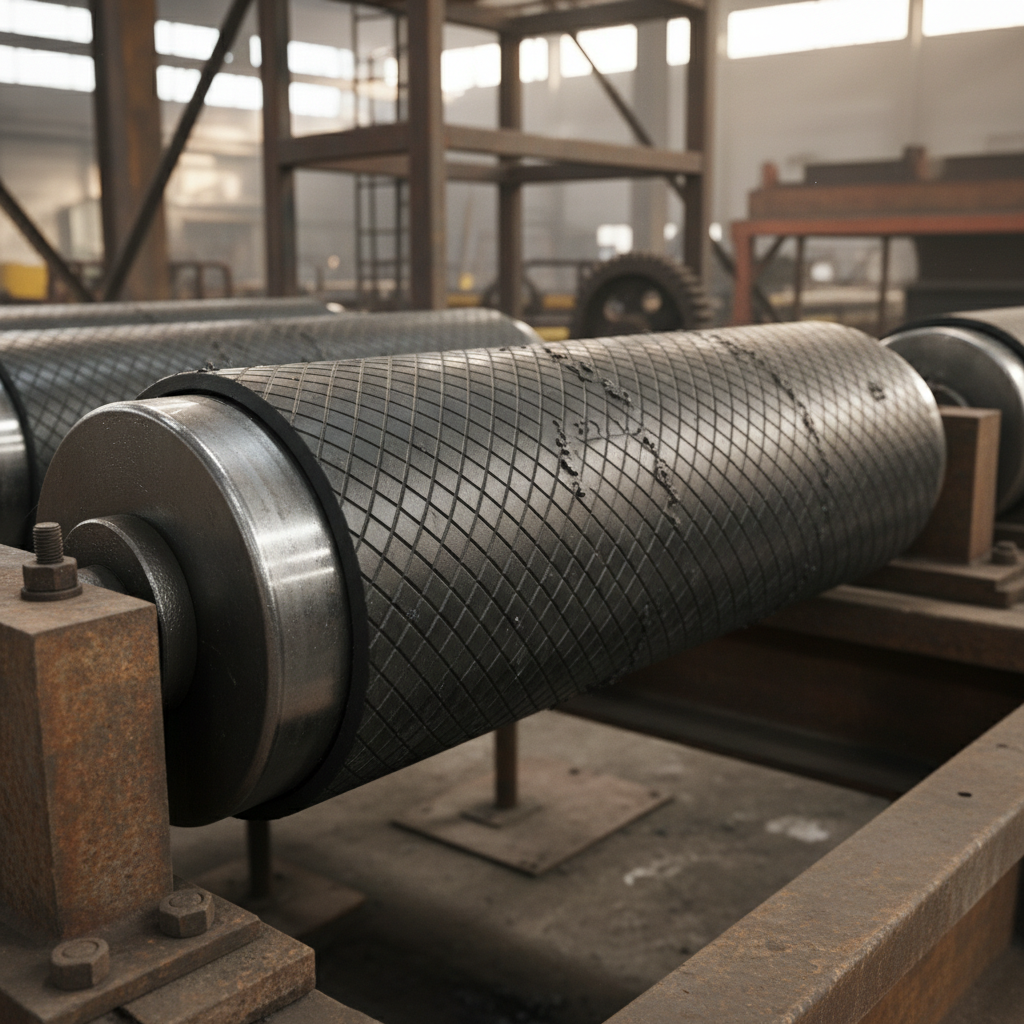
Rollers support the roller rubber conveyor belt by acting as the structural “skeleton” that distributes the weight of heavy plaster molds. These rollers ensure that the belt remains flat and taut, which is essential for maintaining the level profile of liquid slurry. Without proper roller alignment, the belt would sag, causing the plaster to pool and cure with uneven thicknesses.
What is the role of carrier vs drive rollers?
Carrier rollers hold the weight of the molds, while drive rollers provide the necessary torque to move the heavy load. You need a combination of both to ensure the system operates without slipping or dragging.
Believe it or not.
- Carrier Rollers: Precision-engineered for low friction.
- Drive Rollers: Often rubber-lagged to increase belt traction.
- Return Rollers: Keep the belt aligned on its journey back.
Key Takeaway: High-quality rollers reduce the “drag” on the motor and extend the service life of the rubber belt.
| Roller Category | Main Task | Material Choice | |
|---|---|---|---|
| Carrier | Weight Support | Stainless Steel | |
| Drive | Motion Power | Rubber-Lagged Steel | |
| Snub | Increased Wrap | Hardened Steel |
Investing in precision-machined rollers ensures that your belt tracks perfectly, preventing edge wear and material spillage during transport.
What are the stages of casting with a roller rubber conveyor belt?
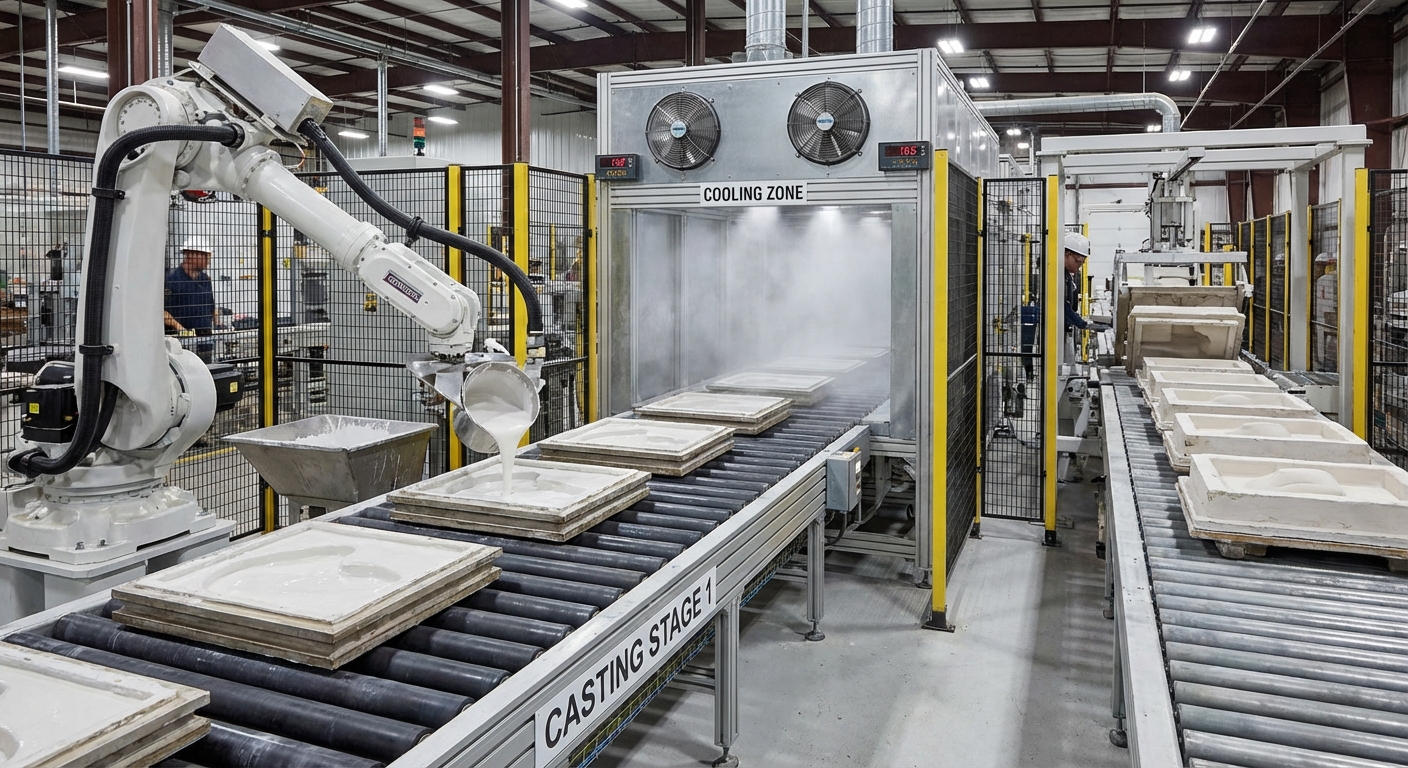
The stages of casting involve a sequence from pattern preparation to final breakout, all facilitated by a roller rubber conveyor belt . You begin by spraying the pattern with a release agent before the belt moves the flask to the slurry station. Once the plaster is poured, the belt carries it through a drying oven to remove all moisture.
What happens during the pouring stage?
During the pouring stage, molten non-ferrous metal is introduced into the hot plaster mold. The Steel Cord Conveyor Belt is often used for this section due to the immense weight of the metal and molds.
Here is the deal.
- Solidification: The metal cools slowly within the insulating plaster.
- Breakout: The brittle plaster is mechanically crushed to reveal the part.
- Cleaning: High-pressure water or air removes remaining gypsum.
Key Takeaway: An automated loop allows you to treat plaster casting as a continuous flow process rather than a slow batch operation.
| Process Stage | Belt Action | Thermal State | |
|---|---|---|---|
| Slurry Pour | Slow/Steady | Ambient | |
| Oven Drying | Continuous | High (120°C) | |
| Metal Pour | Static/Pulsed | Extreme (200°C+) |
By using a conveyor system, you can process hundreds of molds per shift with minimal manual intervention and high repeatability.
Where is a roller rubber conveyor belt used in plaster casting?
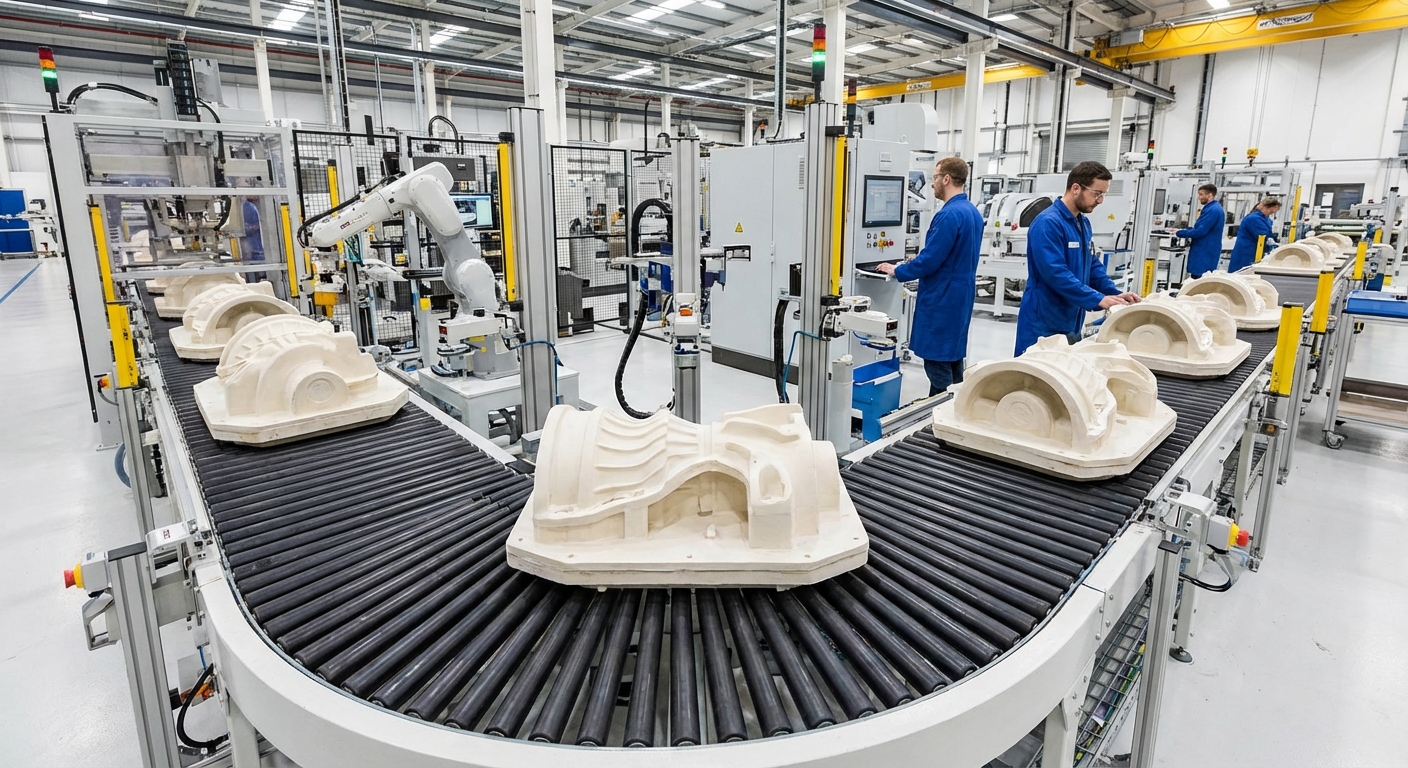
A roller rubber conveyor belt is used across various high-precision industries including aerospace, automotive prototyping, and architectural hardware manufacturing. These sectors require parts with complex geometries that other casting methods cannot easily achieve. If you are producing impellers, cylinder heads, or intricate decorative panels, a conveyorized plaster line is the standard.
Which industries benefit the most?
Aerospace firms benefit because plaster casting allows for very thin walls and complex internal cooling channels. You will also find these systems in Construction & Aggregate facilities for architectural plaster molding.
Keep reading.
- Aerospace: Complex housings and turbine components.
- Automotive: High-precision prototypes and intake manifolds.
- Electronics: Heat sinks with intricate fin designs.
Key Takeaway: Any industry requiring the surface finish of investment casting with the cost-efficiency of sand casting utilizes this technology.
| Industry Sector | Typical Components | Conveyor Requirement | |
|---|---|---|---|
| Aerospace | Impellers / Housings | High Stability | |
| Automotive | Prototype Blocks | High Weight Capacity | |
| Architecture | Ceiling Medallions | Clean Surface |
Automating these specialized lines ensures that the high-value parts are never compromised by inconsistent manual handling during the molding phase.
What are the benefits of a roller rubber conveyor belt setup?
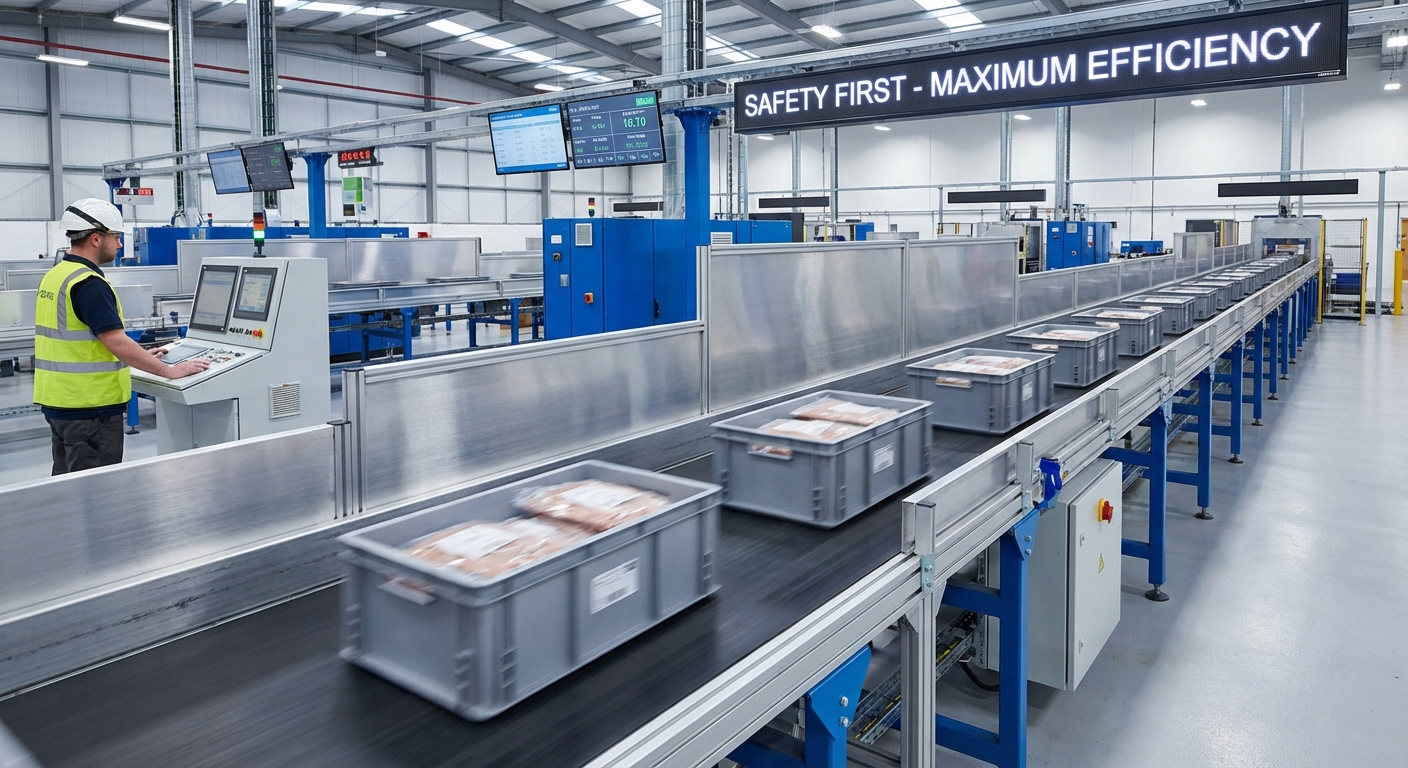
The primary benefits of a roller rubber conveyor belt setup include increased production speed, reduced labor costs, and significantly lower scrap rates. By removing human touchpoints, you eliminate the risk of accidental mold drops or improper placement in the drying zone. The system creates a predictable production rhythm that allows for better resource planning and inventory management.
Can it solve material spillage issues?
Yes, by using Sidewall Conveyor Belts , you can transport dry plaster powder or breakout waste vertically without mess. This keeps your facility floors clear and reduces the time spent on environmental maintenance.
The best part?
- Safety: Reduces heavy lifting and exposure to hot metal zones.
- Consistency: Every mold is dried and cooled for the exact same duration.
- Scalability: Easily increase output by adjusting the belt speed.
Key Takeaway: Automation transforms a delicate artisan process into a robust, industrial-scale manufacturing operation.
| Benefit Area | Impact on ROI | Success Metric | |
|---|---|---|---|
| Throughput | 25% Increase | Units per Hour | |
| Quality | 15% Less Scrap | Rejection Rate | |
| Labor | 40% Reduction | Man-Hours per Part |
The initial investment in a rubber belt system pays for itself through the drastic reduction in rejected parts and material waste.
How to maintain your roller rubber conveyor belt for casting?
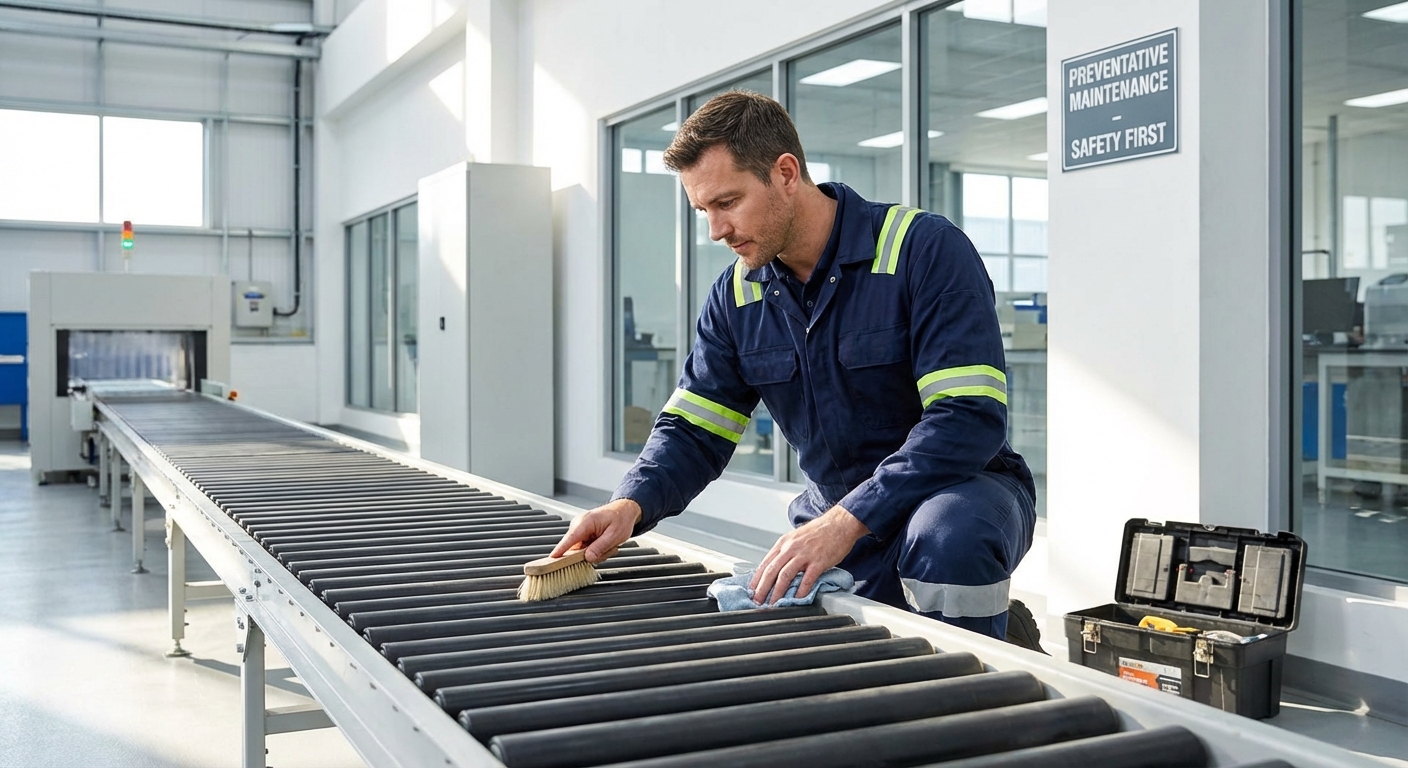
Maintaining your roller rubber conveyor belt requires a strict cleaning schedule to prevent abrasive plaster dust from damaging the rollers and belt surface. Plaster dust is extremely fine and can infiltrate roller bearings, causing them to seize and creating “drag” on the system. You should install secondary scrapers and brushes to remove debris from the return side of the belt.
How do you handle fine dust accumulation?
You must use sealed-for-life bearings in your rollers to prevent dust ingress. Regular air-jet cleaning of the drive assembly ensures that the rubber maintains its grip on the rollers.
Look no further.
- Daily Inspection: Check for plaster buildup on the rollers.
- Weekly Cleaning: Use industrial vacuums to clear the track.
- Monthly Audit: Test belt tension and alignment for optimal tracking.
Key Takeaway: A proactive maintenance strategy extends the life of your equipment and prevents costly unplanned downtime.
| Task | Interval | Component | |
|---|---|---|---|
| Dust Removal | Daily | Scrapers / Brushes | |
| Lubrication | Monthly | Roller Bearings | |
| Tension Check | Weekly | Drive Pulley |
Cleaning the underside of the belt is just as important as the top surface to ensure consistent power transmission from the drive roller.
Can a roller rubber conveyor belt improve casting efficiency?
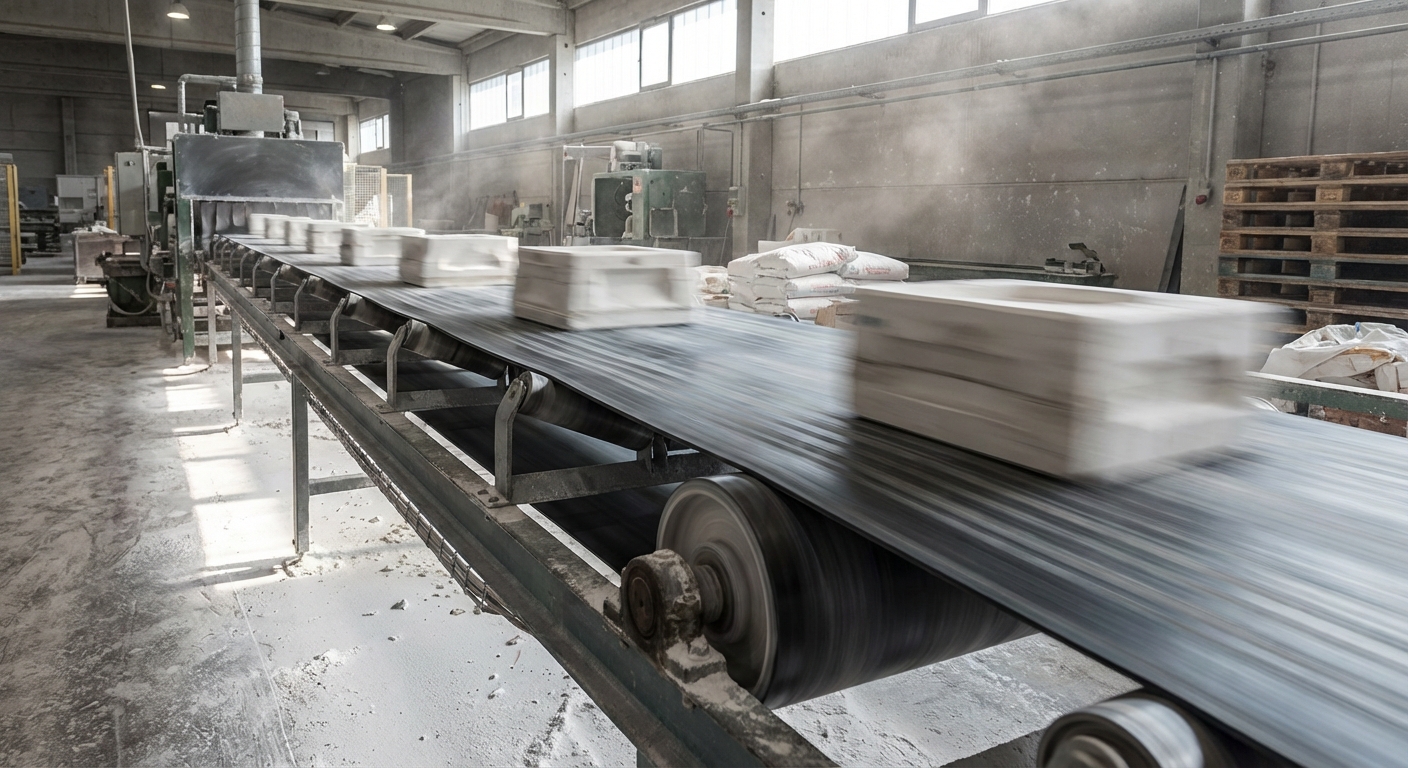
A roller rubber conveyor belt improves efficiency by enabling a continuous manufacturing loop that minimizes idle time between stages. If you rely on manual transport, your workers spend more time moving molds than they do pouring metal. The automated system allows you to run multiple production lines in parallel, sharing a single drying tunnel or cooling station.
Is energy efficiency a factor?
Modern systems use low-friction rollers and high-efficiency motors to reduce the power required to move heavy loads. This lowers your operational costs and reduces the carbon footprint of your manufacturing facility.
Check this out.
- Optimized Routing: Minimal travel distance between stations.
- Heat Recovery: Tunnel belts can pass through recycled heat zones.
- Reduced Labor: Operators focus on quality control rather than transport.
Key Takeaway: Efficiency is the result of merging precision timing with a reliable mechanical transport foundation.
| Efficiency Gain | Methodology | Result | |
|---|---|---|---|
| Time Savings | Continuous Motion | 30% Faster Cycles | |
| Energy Use | Low-Friction Rollers | 15% Lower Utility Bills | |
| Space Use | Multi-Tier Belts | 50% Less Floor Area |
The combination of durable rubber and precision rollers provides the most cost-effective solution for moving heavy, fragile molds through the casting cycle.
FAQ: Common Questions About Plaster Casting Conveyors
1. Can I use a standard belt for the metal pouring station?No, you should use a heat-resistant grade because the molds radiate intense heat that can crack or melt standard rubber. Standard belts are only suitable for the initial slurry and prep stages.
2. What’s the best way to prevent plaster dust from seizing rollers?The most effective method is utilizing sealed-for-life bearings and installing automated belt brushes. This prevents fine abrasive particles from entering the mechanical components and causing friction damage.
3. Can I transport heavy aluminum casts on a textile belt?Yes, but you must ensure the belt has enough plies (usually 3 or more) to handle the point-load weight without sagging. For extremely heavy blocks, a steel-reinforced belt might be a safer long-term choice.
4. What’s the best belt width for a plaster casting line?Your belt should be at least 200mm wider than your largest mold flask. This extra margin prevents accidental spills from reaching the rollers and provides a safety buffer during high-speed turns.
5. Can I run the conveyor through a high-temperature curing oven?Only if you use specialized EPDM or heat-resistant silicone-based rubber belts. Standard rubber will quickly lose its elasticity and snap under the combined stress of heat and tension.
Conclusion
Integrating a high-performance roller rubber conveyor belt is the most effective way to modernize your plaster casting facility. By protecting fragile molds and synchronizing your production stages, you achieve the precision required for high-stakes industries like aerospace and automotive prototyping. Our mission is to provide you with direct-factory solutions that withstand the unique thermal and abrasive challenges of the foundry environment. If you are ready to optimize your throughput and eliminate mold breakage, contact us today for a custom engineering consultation. We are dedicated to building reliable conveyor solutions that empower industrial leaders to meet the manufacturing demands of tomorrow.