
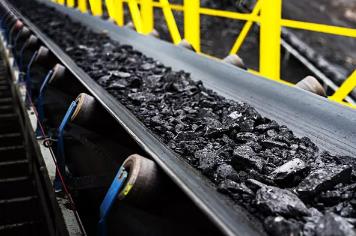
Understanding pvc vs rubber conveyor belt differences helps you choose the right material for durability, reduce downtime, and ensure efficient, reliable industrial conveyor performance.
1. What are the core differences in a pvc vs rubber conveyor belt?
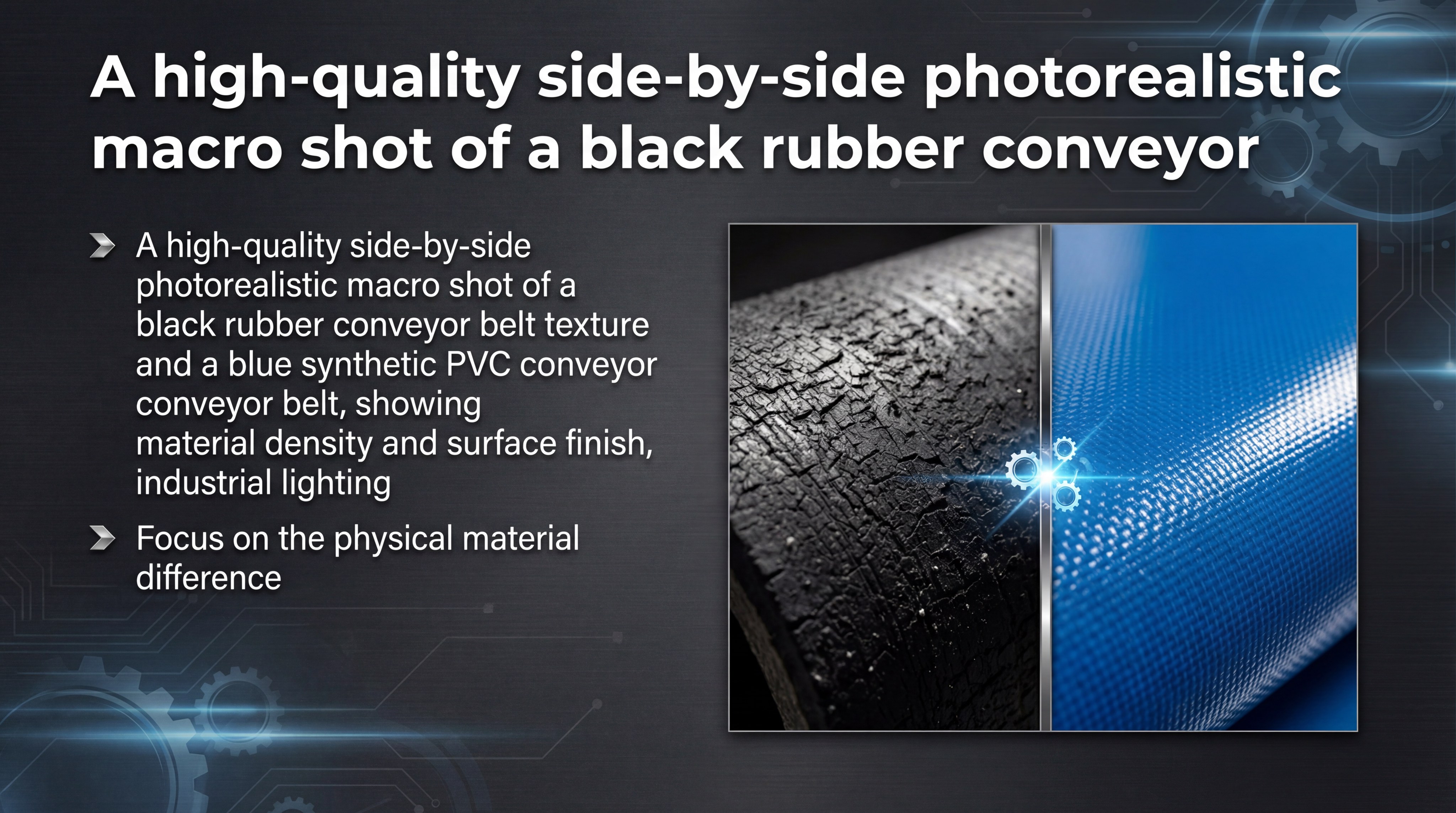
The primary difference in a pvc vs rubber conveyor belt lies in the chemical base, where rubber utilizes elastomers for flexibility while PVC uses synthetic polymers for chemical resistance. Rubber belts are typically constructed with natural or synthetic compounds reinforced by textile or steel. Conversely, PVC belts feature a solid woven core or multiple synthetic plies impregnated with plastic resin.
Material Composition and Texture
The physical texture of these belts dictates how they interact with your rollers and pulleys. Rubber offers a high-coefficient of friction and superior elasticity, allowing for better energy absorption during impact. PVC is generally smoother and stiffer, which can be advantageous for hygiene-sensitive environments but less effective in heavy impact zones.
Think about it:
- Rubber provides “memory” that allows the belt to return to its original shape after heavy loading.
- PVC is often easier to clean and resists oils better in light-duty industrial cycles.
- Fabric reinforcements like EP or NN are common in both types but behave differently under tension.
Structural Integrity Under Load
A belt’s structural response to tension determines its reliability in your conveyor system. While PVC is lightweight and easy to track, it may lack the transverse rigidity found in heavy-duty rubber alternatives. Rubber belts are often thicker, providing a robust cushion for jagged or abrasive materials that would quickly pierce a thinner plastic cover.
Key Takeaway: Rubber belts excel in heavy-duty, high-impact environments, whereas PVC is better suited for light to medium-duty applications requiring chemical stability.
| Feature | Rubber Belts | PVC Belts | |
|---|---|---|---|
| Material Base | Natural/Synthetic Elastomers | Synthetic Polymer (Plastic) | |
| Friction Level | Very High | Moderate to Low | |
| Impact Absorption | Superior | Moderate |
This comparison shows that selecting the correct material base is the foundation of conveyor longevity.
2. Why is a pvc vs rubber conveyor belt chosen for heavy mining?
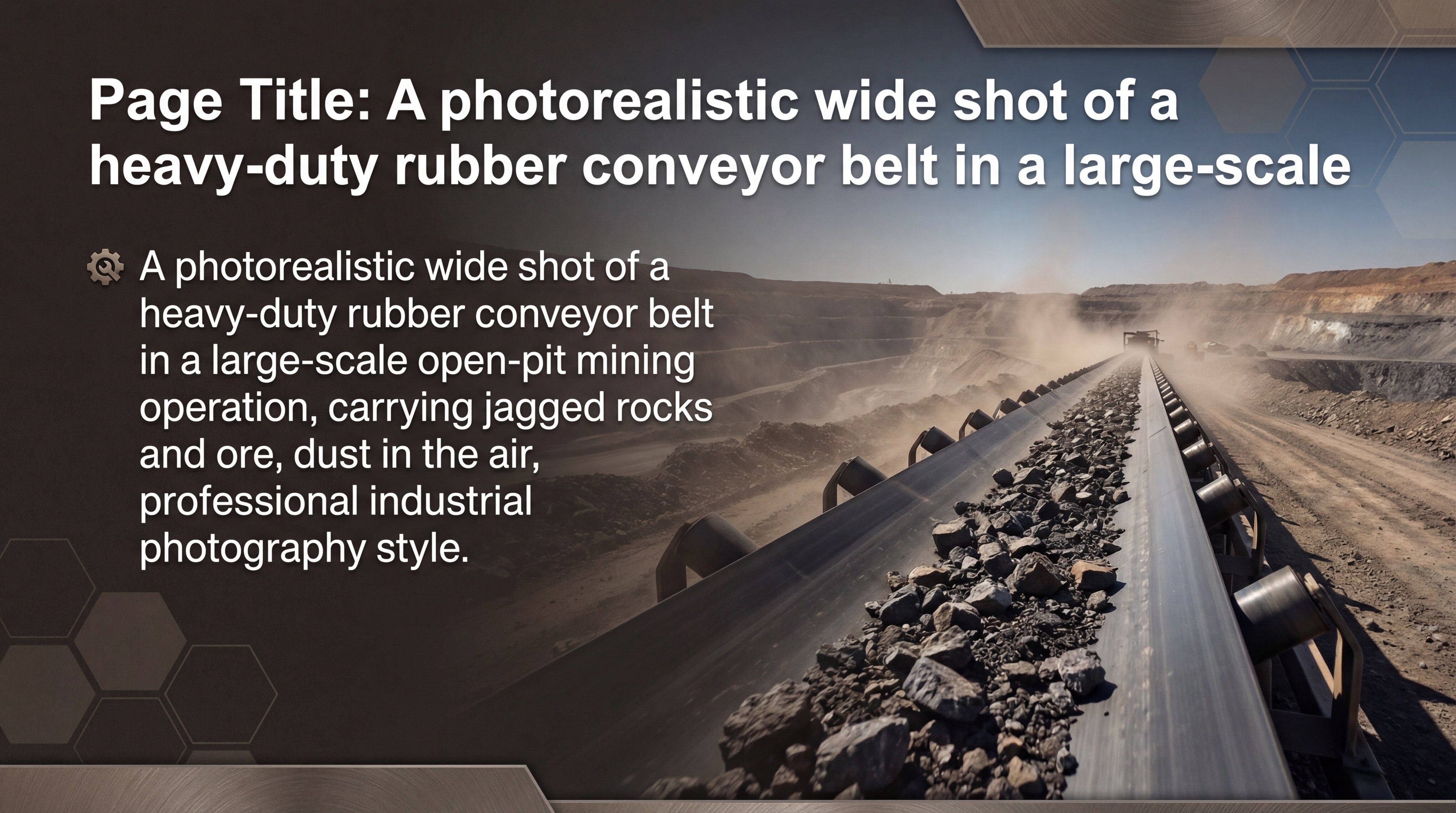
In heavy mining, the choice between a pvc vs rubber conveyor belt often favors rubber due to its exceptional tear resistance and ability to handle high-tonnage ore loads. Mining operations expose belts to sharp rocks and constant abrasion that require the high-density covers only rubber can provide. While PVC has its place in specific mining sectors, rubber remains the global standard for open-pit and heavy-duty primary crushers.
Impact Resistance in Ore Handling
Mining belts must survive the brutal force of falling ore at transfer points. Rubber’s inherent elasticity acts as a shock absorber, preventing the carcass from sustaining internal damage. This resilience is critical when you are moving thousands of tons of material per hour in remote locations where repairs are difficult.
Look at the evidence:
- High-tensile rubber compounds prevent rock penetration.
- The thicker covers can be repaired through hot or cold vulcanization.
- Steel cord reinforcement is almost exclusively used with rubber for extreme distances.
Load Capacities and Troughing
Proper troughing is essential for material containment, and rubber’s flexibility allows it to form a deep “U” shape even on 45-degree idlers. PVC belts can be stiffer, sometimes causing tracking issues if the belt is too light for the idler configuration. Rubber’s weight helps it “seat” properly on the rollers, ensuring a straight run even under maximum load.
Key Takeaway: Rubber is the superior choice for high-impact mining zones where belt durability and deep troughing are operational requirements.
| Metric | Rubber Mining Belt | PVC Mining Belt | |
|---|---|---|---|
| Tear Strength | Extremely High | Moderate | |
| Troughing Ability | Excellent | Limited in heavy plies | |
| Primary Use | Ore, Rock, Aggregate | Coal, Fertilizer, Salt |
The mechanical superiority of rubber in mining contexts ensures that your downtime is minimized during peak production cycles.
3. How does temperature affect a pvc vs rubber conveyor belt?
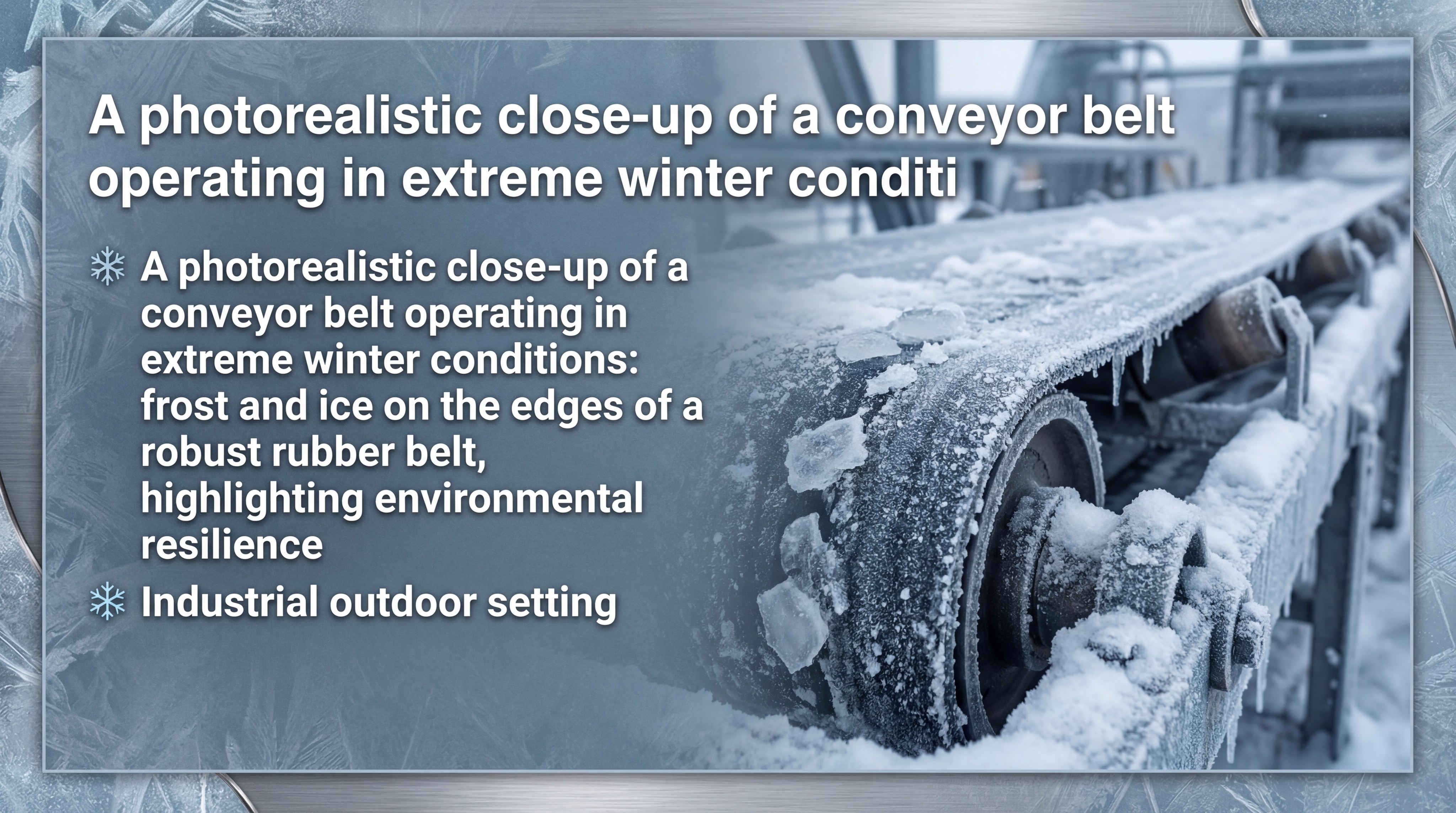
Temperature extremes significantly impact a pvc vs rubber conveyor belt, as rubber retains its flexibility in freezing conditions while PVC can become brittle and crack. Standard PVC is a thermoplastic, meaning its physical state changes drastically with heat and cold. Rubber, once vulcanized, maintains a much more stable molecular structure across a wider temperature range.
Cold Weather Performance
In sub-zero environments, a belt must remain pliable to wrap around pulleys without cracking the top cover. Rubber compounds can be specifically engineered to operate at -40°C without losing structural integrity. PVC, however, tends to harden, which increases the energy required to start the conveyor and can lead to catastrophic surface failures.
Here is the deal:
- Rubber stays flexible, reducing motor strain during cold starts.
- PVC may suffer from “glass transition,” where the plastic becomes as brittle as glass.
- Specially formulated “Cold Resistant” belts are mandatory for arctic operations.
Heat Stability in Industrial Zones
High-temperature materials like cement clinker or hot foundry sand will melt or deform standard PVC belts almost instantly. While PVC can handle moderate heat, rubber compounds like EPDM are designed to withstand continuous temperatures exceeding 200°C. If your process involves thermal stress, rubber is the only viable long-term investment.
Key Takeaway: Environmental resilience is much higher in rubber, making it the preferred choice for outdoor or high-heat industrial sectors.
| Condition | Rubber Stability | PVC Stability | |
|---|---|---|---|
| Extreme Cold (-30°C) | Maintains Flexibility | Brittle / Risk of Cracking | |
| High Heat (+100°C) | Stable (with FR/HR) | Softens / Loses Tension | |
| UV Exposure | High Resistance | Can Degrade Over Time |
Weatherproofing your conveyor system begins with selecting a belt material that ignores the thermometer.
4. What defines the lifespan of a pvc vs rubber conveyor belt ?
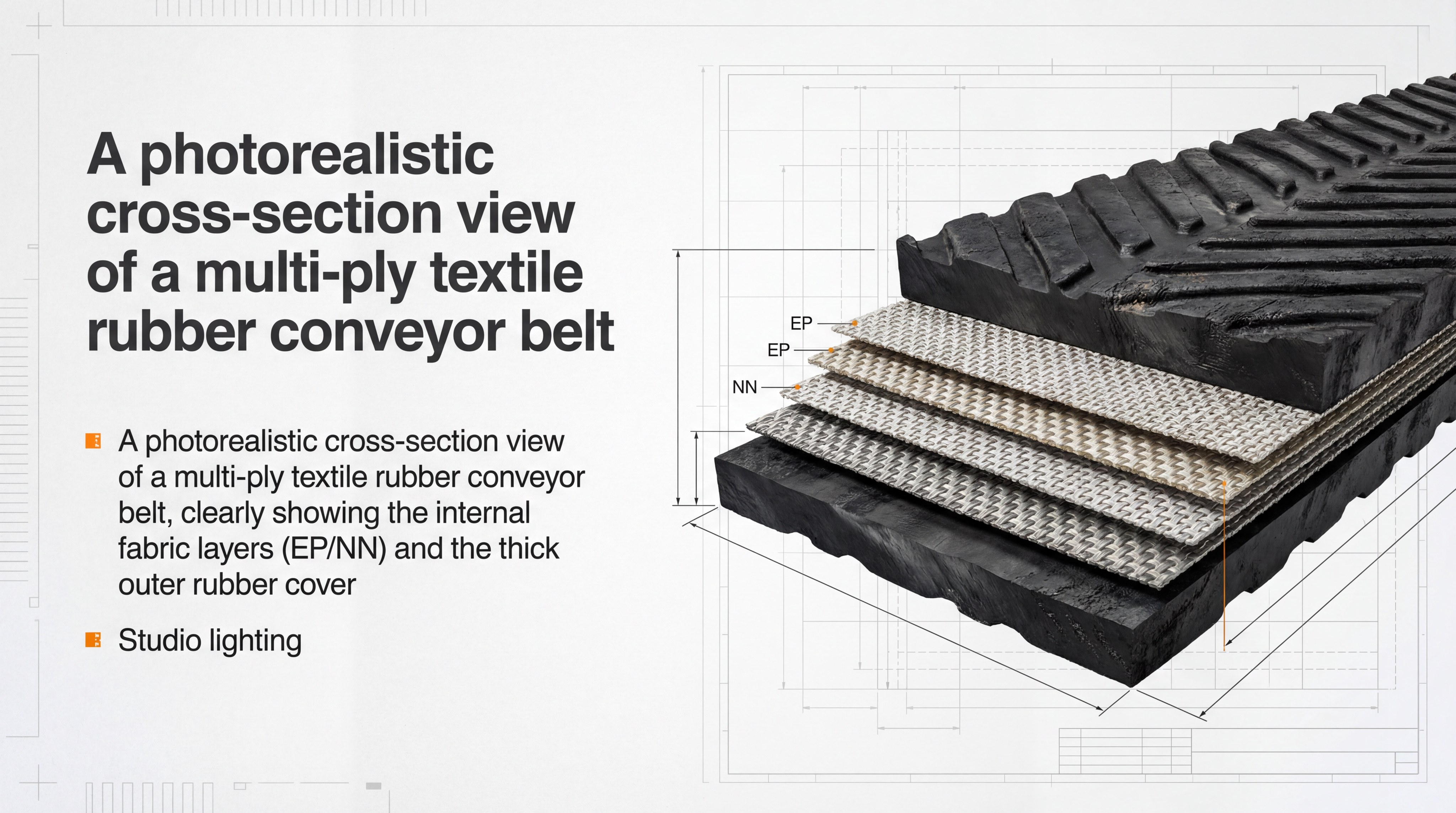
The lifespan of a pvc vs rubber conveyor belt is primarily determined by its abrasion resistance and the quality of its internal fabric reinforcement. Rubber belts are designed to wear down slowly over years of service, with cover thickness being a sacrificial layer. PVC belts often have a shorter mechanical life in abrasive settings but can last longer in chemically corrosive environments where rubber might swell.
Abrasion Resistance and Cover Wear
Wear and tear is the number one enemy of conveyor belts in bulk material handling. Rubber’s molecular bonds are tougher to break through friction, allowing it to carry sand, gravel, and glass with minimal surface loss. In contrast, PVC’s plastic surface can be “shaved” away by sharp particles, eventually exposing the carcass to moisture and rot.
Keep this in mind:
- Rubber abrasion loss is measured in mm³, with lower numbers being better.
- Internal textile layers like Polyester (EP) provide the necessary stretch resistance.
- Proper alignment is more critical for PVC to prevent edge fraying.
Multi-ply Construction Benefits
Modern belts use multiple layers of fabric to increase tensile strength without adding excessive weight. Rubber encapsulates these plies in a thick protective “sandwich,” shielding the core from external damage. PVC belts often use a solid woven core which is excellent for safety but may offer less “give” during accidental overloads.
Key Takeaway: Long-term durability is a hallmark of rubber belts, particularly in applications involving high friction and heavy abrasive materials.
| Factor | Rubber Longevity | PVC Longevity | |
|---|---|---|---|
| Abrasion Loss | 90 – 150 mm³ | 150 – 250+ mm³ | |
| Repairability | High (Vulcanizable) | Low (Mechanical only) | |
| Chemical Resistance | Variable | Very High |
Investing in a higher-grade rubber cover significantly extends the time between belt replacements for your facility.
5. Is fire safety better in a pvc vs rubber conveyor belt?
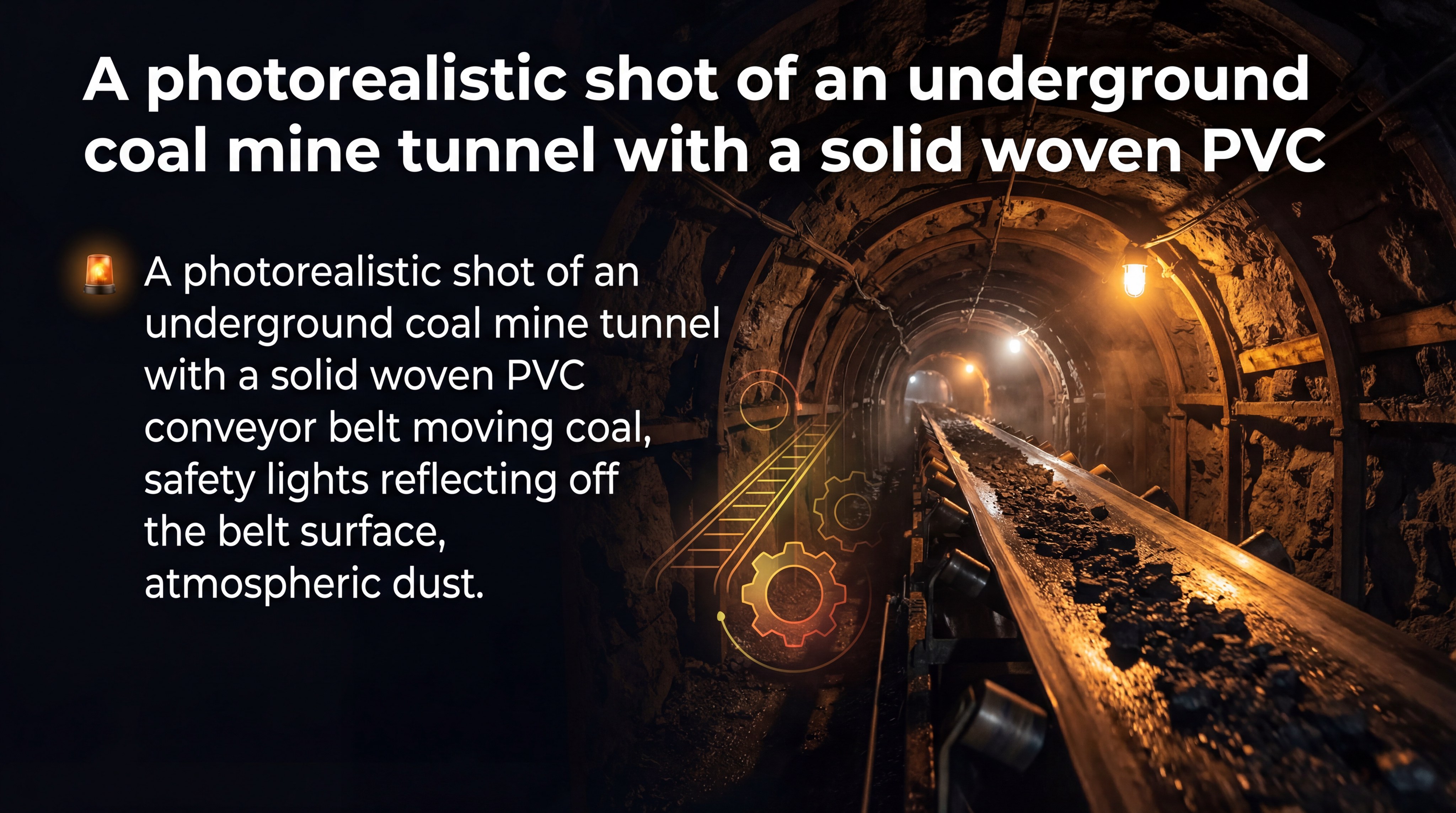
Fire safety in a pvc vs rubber conveyor belt is a critical consideration for underground mining, where PVC’s inherent self-extinguishing properties offer a natural advantage. Because PVC is a chlorinated polymer, it is naturally more resistant to ignition than standard rubber. However, modern rubber science has produced Flame Retardant (FR) compounds that meet or exceed global safety standards for the most dangerous environments.
Underground Mining Standards
Underground coal mines have the strictest safety requirements due to the presence of methane and coal dust. Solid woven PVC belts have traditionally been the “gold standard” for these zones because they do not support combustion. This prevents a small friction fire at a roller from turning into a catastrophic mine-wide blaze.
The reality is:
- PVC is inherently flame-resistant due to its chlorine content.
- Rubber requires specialized chemical additives to achieve fire ratings.
- Static electricity must be dissipated by both types to prevent sparks.
Flame Retardant Compounds
When rubber is chosen for underground use, it must be Grade S or Grade K fire-resistant. These belts are tested with “burner tests” to ensure they stop burning immediately once the heat source is removed. While PVC is naturally safer in this regard, rubber’s mechanical strength often makes it the preferred “high-safety” choice for high-tension main trunk lines.
Key Takeaway: While PVC is naturally fire-resistant, both materials can be engineered to meet the highest global fire safety standards for underground use.
| Safety Feature | PVC (Solid Woven) | Rubber (FR Grade) | |
|---|---|---|---|
| Inherent Fire Resistance | High | Low | |
| Added FR Chemicals | Minimal Needed | Mandatory | |
| Anti-Static Grade | Standard | Special Order |
Choosing the right safety grade is non-negotiable when human lives and multi-million dollar assets are in the tunnel.
6. Which incline performance varies in a pvc vs rubber conveyor belt ?
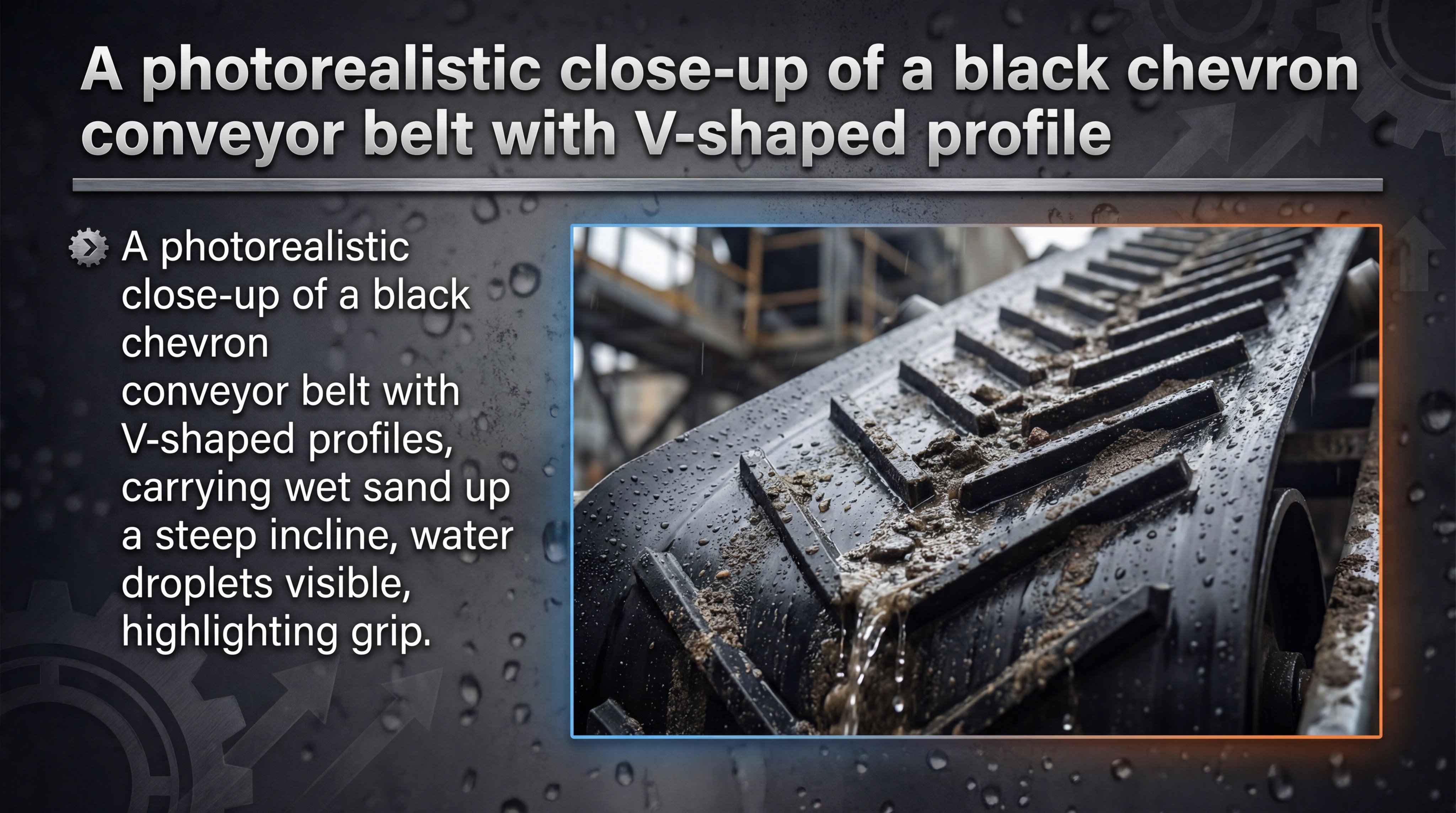
Incline performance in a pvc vs rubber conveyor belt varies based on the surface friction and the ability to integrate molded profiles like chevrons. Rubber’s higher natural “tackiness” allows it to carry materials at steeper angles than smooth PVC without slippage. For angles exceeding 20 degrees, rubber belts with molded-in profiles are the industry standard for keeping your material moving upward.
Chevron and Cleated Profiles
To prevent material fallback on steep inclines, belts are often equipped with V-shaped or U-shaped profiles. Rubber is much easier to mold into these complex shapes during the vulcanization process, creating a one-piece “monolithic” structure. PVC chevrons are often glued or welded on, which can be a point of failure under heavy mechanical stress.
Consider the following:
- Molded rubber chevrons won’t peel off under high load.
- Rubber profiles can be up to 32mm high for wet or loose solids.
- PVC profiles are excellent for light-duty package handling.
Grip and Friction Coefficients
Even on flat inclines, rubber’s surface grip is superior for bulk solids. When transporting wet sand or grain, a PVC belt might let the material slide backward, causing spillage and motor overload. Rubber “bites” into the material, ensuring that what goes in at the bottom comes out at the top of the conveyor.
Key Takeaway: For steep angles and bulk material transport, profiled rubber belts offer the best grip and structural integrity.
| Incline Type | Rubber Suitability | PVC Suitability | |
|---|---|---|---|
| Flat (0-15°) | Excellent | Good | |
| Steep (15-30°) | Excellent (Chevron) | Moderate | |
| Vertical (up to 90°) | High (Sidewall) | Limited |
The grip of your belt is the only thing preventing a productive incline from becoming a dangerous material slide.
7. How do costs compare for a pvc vs rubber conveyor belt?
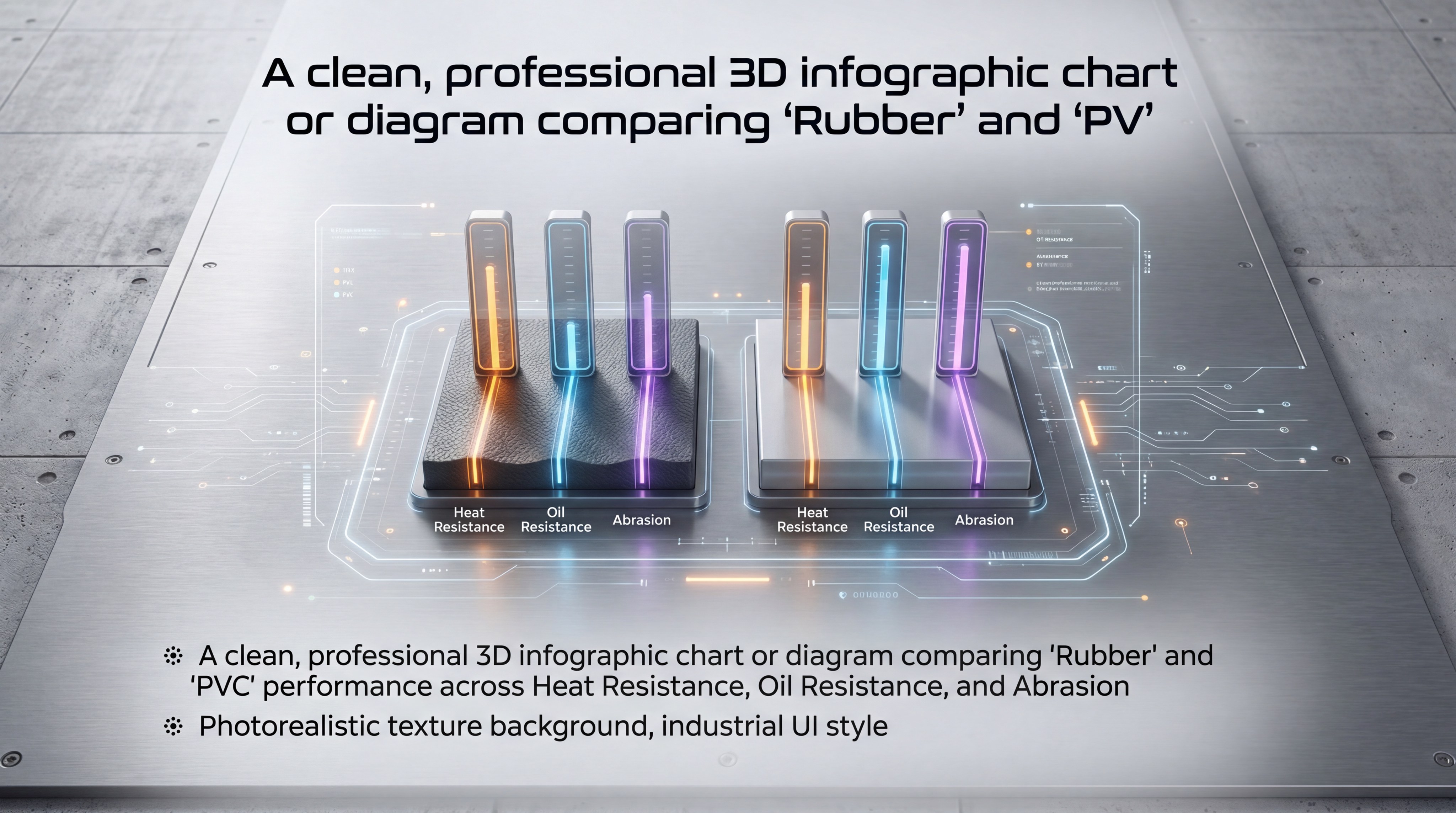
Comparing costs for a pvc vs rubber conveyor belt requires looking beyond the initial purchase price to consider the total cost of ownership. PVC belts are generally cheaper to buy upfront, making them attractive for low-budget projects or light-duty applications. However, rubber belts often provide a lower “cost per ton” over their lifespan due to fewer replacements and lower maintenance requirements.
Upfront Investment vs. Quality
You might be tempted by the low price of PVC, but the “cheap” option can be the most expensive in the long run. In heavy-duty industries, a PVC belt might last only six months where a rubber belt would last three years. The labor cost of replacing a belt three times far outweighs the initial savings of a cheaper material.
Here is why:
- PVC manufacturing is less energy-intensive, reducing purchase price.
- Rubber involves complex vulcanization, which increases factory costs.
- Shipping costs are similar, but rubber’s weight provides more stability.
Total Cost of Ownership (TCO)
TCO includes the cost of energy, maintenance, downtime, and eventual disposal. Rubber’s superior efficiency and durability mean it pays for itself through reduced energy consumption and longer service intervals. If your conveyor is the “heart” of your operation, spending more on rubber is often the smartest financial decision you can make.
Key Takeaway: PVC is the budget-friendly choice for light-duty cycles, but rubber offers the best return on investment for high-utilization industrial sites.
| Financial Metric | PVC Belt | Rubber Belt | |
|---|---|---|---|
| Purchase Price | Low | Moderate to High | |
| Replacement Frequency | High | Low | |
| Maintenance Cost | Moderate | Low |
A strategic procurement approach focuses on the belt’s performance over five years rather than its price today.
8. What maintenance is needed for a pvc vs rubber conveyor belt ?
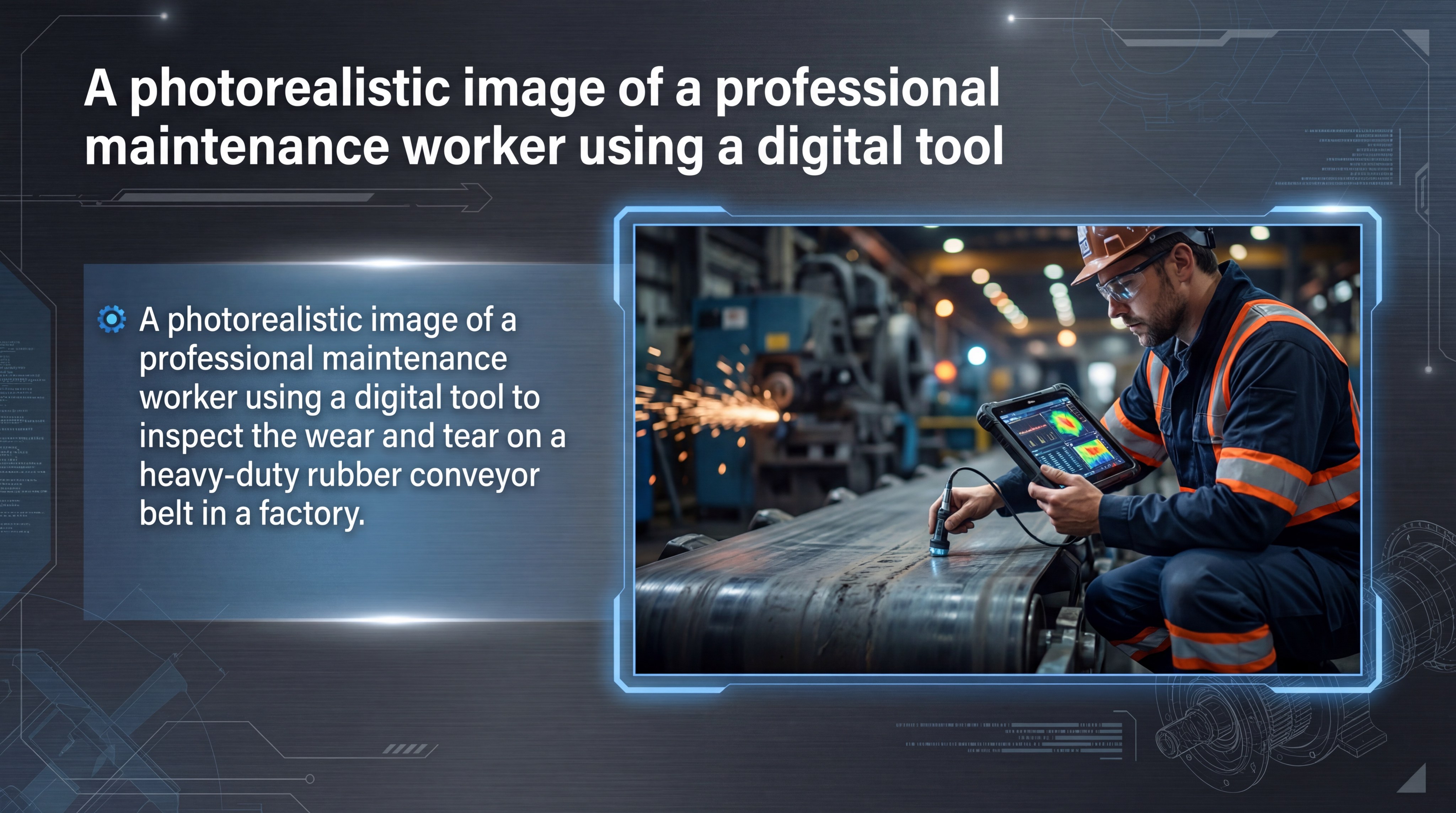
Maintenance requirements for a pvc vs rubber conveyor belt center on splice integrity and surface inspections to prevent small tears from becoming major breaks. Rubber belts allow for hot vulcanized splicing, which creates a joint as strong as the belt itself. PVC maintenance often relies on mechanical fasteners or “finger” welds, which are quicker to install but may not withstand the same level of tension over time.
Routine Inspections and Wear Patterns
Regularly checking your belt for edge wear and tracking issues can save you thousands in premature replacements. Rubber belts are forgiving but will eventually show signs of thinning or “chunking” if the load is too aggressive. You should monitor the top cover thickness to know exactly when to schedule a professional refurbishment.
Don’t ignore the signs:
- Cracks in the cover indicate environmental stress or aging.
- Frayed edges suggest the belt is mistracking against the structure.
- Material buildup on rollers can cause internal carcass damage.
Splice Integrity and Joint Strength
The joint is the weakest point of any conveyor belt. Hot vulcanized splices on rubber belts use heat and pressure to bond the ends chemically, creating a seamless loop. PVC belts often use metal lacing or cold-glued joins, which can snag on scrapers or pull apart under high torque. Ensuring your maintenance team understands these differences is vital for uptime.
Key Takeaway: Rubber belts offer superior joint strength and easier long-term cover maintenance through professional vulcanization.
| Maintenance Task | Rubber Belt | PVC Belt | |
|---|---|---|---|
| Joint Type | Hot/Cold Vulcanized | Finger Weld / Mechanical | |
| Patch Repair | Easy (Plug or Patch) | Difficult (Needs Welding) | |
| Cleaning Needs | High Friction Surface | Easy-Clean Surface |
Preventative maintenance is the difference between a planned weekend shutdown and an emergency 2 AM crisis call.
9. Which industrial scale suits a pvc vs rubber conveyor belt?

Matching industrial scale to a pvc vs rubber conveyor belt involves evaluating the volume, speed, and automation level of your facility. PVC is the dominant choice for modern automated warehouses and food processing plants where high-speed, light-load transport is required. Rubber remains the undisputed king of high-volume bulk terminals and industrial production lines where heavy raw materials are moved 24/7.
Automated Fulfillment and Logistics
In the world of e-commerce and package sorting, speed and low noise are your priorities. PVC belts are lighter, requiring less motor power to run at high velocities, and their smooth surface works perfectly with automated diverters. If you are running a logistics hub, the efficiency of PVC will significantly lower your daily operational costs.
Here is the secret:
- Low-noise compounds are available for urban fulfillment centers.
- Smooth surfaces prevent damage to delicate consumer goods.
- PVC tracks well on small-diameter pulleys found in sorting machines.
Large Volume Handling in Ports
When the scale moves to thousands of tons of coal or grain per hour at a shipping terminal, you need the massive tensile strength of rubber. Rubber belts can be manufactured in widths up to 2400mm or more, handling the extreme tension required to span hundreds of meters between towers. No plastic belt can match the sheer power of a high-grade steel cord rubber belt.
Key Takeaway: Choose PVC for high-speed logistics and food processing; choose rubber for heavy-duty production and massive bulk handling.
| Facility Type | Preferred Belt | Primary Reason | |
|---|---|---|---|
| E-commerce Hub | PVC | Speed & Low Noise | |
| Ship Loading Terminal | Rubber | Tensile Strength | |
| Cement Plant | Rubber | Heat Resistance |
Scaling your operation successfully requires selecting a belt material that matches the mechanical “rhythm” of your facility.
10. How do you select the right pvc vs rubber conveyor belt ?
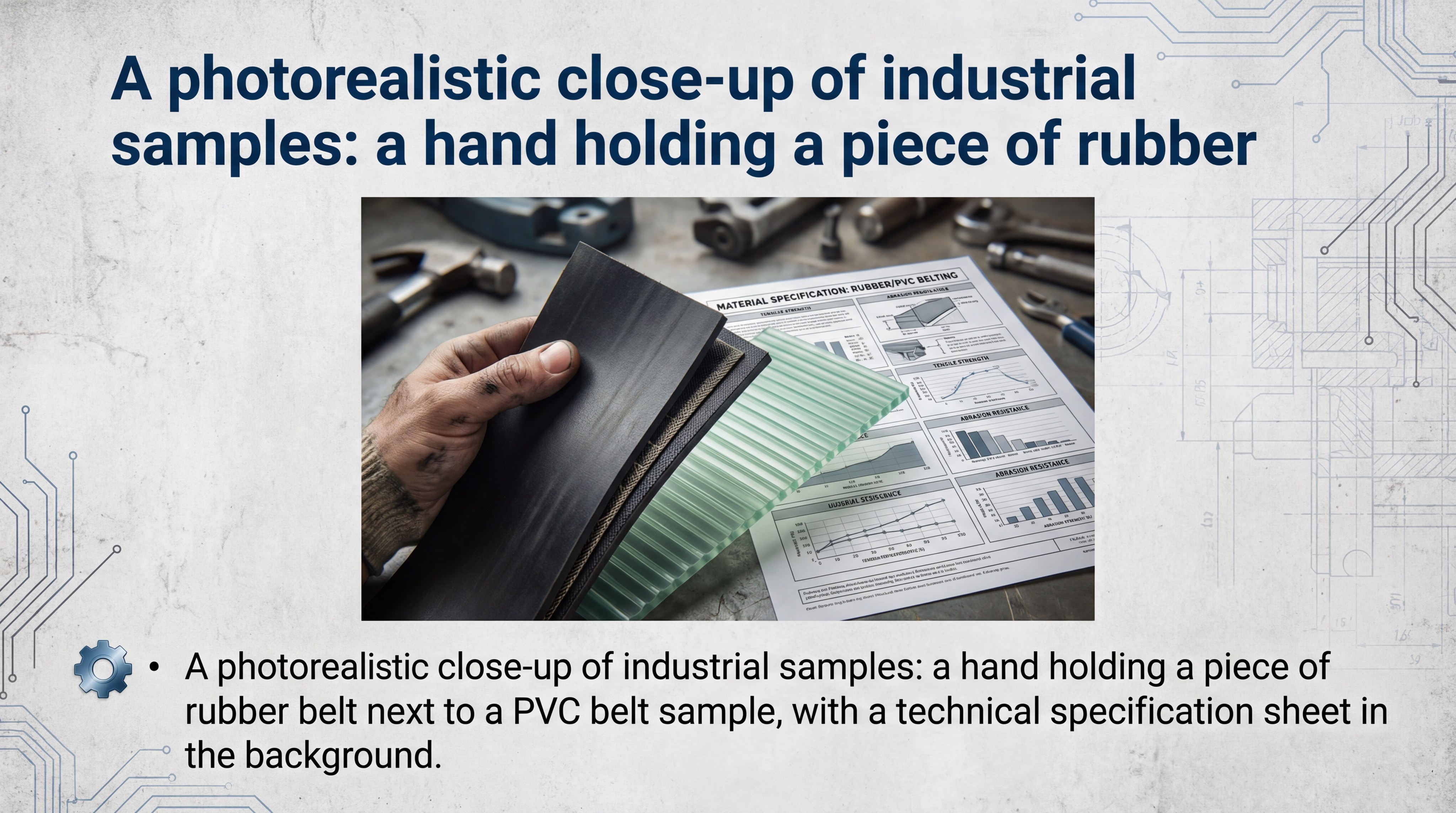
Selecting the right pvc vs rubber conveyor belt requires a deep audit of your material properties, environmental conditions, and mechanical constraints. You must consider everything from the average particle size of your material to the minimum pulley diameter of your conveyor frame. A wrong choice here will lead to years of maintenance headaches and inefficient production.
Technical Specifications Audit
Before ordering, you must define the “duty cycle” of your conveyor. Is it running 8 hours a day or 24? Is the material oily, hot, or jagged? Rubber belts offer specialized grades like “Super Abrasion Resistant” or “Oil Resistant,” while PVC offers “Anti-Static” and “FDA Approved” food-grade options. Matching these specs to your reality is the key to success.
Steps for selection:
- Define the maximum load and belt speed requirements.
- Assess environmental factors (Indoor/Outdoor, Temp, Chemicals).
- Check the conveyor frame’s minimum pulley diameter.
- Request material samples to test for grip and abrasion.
Application Matching and ROI
The final decision should always be based on the Return on Investment (ROI) over the expected life of the equipment. If you are building a temporary conveyor for a 3-month construction project, a cheap PVC belt is logical. If you are upgrading a primary crusher in a gold mine, only the highest-spec rubber belt will protect your margins.
Key Takeaway: Expert selection combines technical data with environmental reality to find the most cost-effective belt material for your specific site.
| Selection Factor | PVC Recommendation | Rubber Recommendation | |
|---|---|---|---|
| Material Type | Light, Clean, Non-Abrasive | Heavy, Sharp, Hot, Abrasive | |
| Pulley Size | Can handle small pulleys | Requires larger pulleys | |
| Budget Cycle | Short-term / OPEX savings | Long-term / CAPEX investment |
The right choice ensures that your conveyor system remains a silent, efficient partner in your business success.
Conclusion
Navigating the pvc vs rubber conveyor belt comparison is more than a technical exercise; it is a strategic business decision that impacts your bottom line and operational safety. While PVC offers cost-effective, high-speed solutions for light-duty logistics and chemical-rich environments, rubber stands as the powerhouse for mining, heavy industry, and extreme temperature applications. By matching the material’s inherent strengths to your specific operational pain points, you eliminate unnecessary downtime and maximize your facility’s throughput. Don’t let an improper belt choice disrupt your supply chain— contact us today to speak with our engineering experts and find the perfect high-performance solution for your next project.
Frequently Asked Questions
Can I use a PVC belt for outdoor gravel transport?It is not recommended because PVC can become brittle in cold weather and suffers more from UV degradation than rubber. Rubber is the standard for outdoor aggregate due to its superior weather and abrasion resistance.
What’s the best belt for a food processing facility?PVC is generally the best choice because it is easier to clean, resists bacteria growth, and can be manufactured with FDA-approved food-grade compounds. Its smooth surface prevents food particles from getting trapped in the belt grain.
Can rubber belts be made fire-resistant?Yes, specialized rubber compounds are engineered to be self-extinguishing and anti-static for underground use. These are often rated under Grade S or Grade K standards to ensure maximum safety in coal mines.
What is the minimum pulley diameter for a heavy rubber belt?Heavy-duty rubber belts typically
Comparing Conveyor Belt Types: Rubber vs. PVC Belts
Choosing between the two depends entirely on your specific industrial application, load requirements, and operational environment. Picture your heavy-duty facility operating at peak capacity: material is flowing seamlessly, but suddenly, an inappropriate belt tears under extreme stress, halting the entire line. This catastrophic downtime costs thousands of dollars per minute and exposes the painful reality of improper material selection. By understanding the core attributes of a pvc vs rubber conveyor belt , you can engineer a resilient, highly optimized material handling system that eliminates unexpected failures.
1. What defines a pvc vs rubber conveyor belt?
A pvc vs rubber conveyor belt is defined by its core polymer composition, where elastomers provide exceptional elasticity and synthetic plastics provide rigid chemical resistance. Elastomeric options utilize natural or synthetic compounds reinforced with high-strength fabrics to deliver outstanding recovery under mechanical stress. Conversely, polyvinyl chloride alternatives utilize a solid woven core infused with plastic polymers for a lighter, more structurally rigid profile.
Understanding these foundational differences allows you to accurately predict how your system will behave under continuous stress. Using the wrong polymer type ultimately leads to rapid degradation and costly replacements.
Understanding structural composition
Here is the deal: structural integrity dictates your operational success. You must carefully evaluate the base materials before deploying a high-capacity system.
- Elastomers offer high impact absorption.
- Synthetics provide excellent chemical shielding.
- Woven cores prevent ply separation in rigid designs.
Material durability and load handling
Evaluating these materials reveals distinct advantages in load-bearing capabilities and wear resistance over time. Think about it: a system failing prematurely completely destroys your operational maintenance budget.
Key Takeaway: Always match your foundational material choice to the primary abrasive forces and chemical exposures present in your specific handling environment.
| Feature | Elastomeric Material | Synthetic Material | |
|---|---|---|---|
| Flexibility | High (Elastic Recovery) | Moderate (Rigid Structure) | |
| Load Capacity | Heavy-Duty | Light to Medium | |
| Primary Resistance | Abrasive Forces | Chemical Exposure |
This table highlights that elastomeric solutions dominate heavy-duty applications, while synthetic polymers excel in chemically aggressive, lighter-load environments.
2. Is pvc vs rubber conveyor belt better for mining?
When determining if a pvc vs rubber conveyor belt is better for mining, elastomeric materials consistently dominate due to their superior impact resistance against heavy ores. The extreme kinetic energy of falling rocks quickly destroys rigid synthetic polymers, leading to catastrophic system failures. Therefore, heavy-duty surface mining operations rely heavily on reinforced elastomeric covers that absorb tremendous physical shock.
Absorbing impact in open-pit operations
Here is why: falling jagged rocks exert massive localized pressure on the carrying surface. You need a material that flexes rather than fractures under these extreme point loads.
- Reinforced covers absorb kinetic energy effectively.
- Elastic memory prevents permanent structural deformation.
- Multi-ply designs distribute heavy shock loads evenly across the carcass.
Managing high-tonnage ore transport
Transporting thousands of tons per hour requires a system engineered for relentless, punishing abrasion. Think about the consequences: unexpected structural tears halt production lines entirely and instantly erode your profit margins.
Key Takeaway: High-tonnage surface mining demands the maximum impact absorption and tear resistance that only heavily reinforced elastomeric materials can provide.
| Application Factor | Elastomeric Solution | Synthetic Solution | |
|---|---|---|---|
| Rock Impact | Excellent Absorption | Poor (Prone to cracking) | |
| Tear Resistance | Superior | Moderate | |
| Tonnage Capacity | Very High | Medium |
The data demonstrates that elastomeric compounds are the definitive choice for absorbing the punishing impacts characteristic of open-pit mining environments.
3. How does weather affect pvc vs rubber conveyor belt?
Weather dramatically affects a pvc vs rubber conveyor belt by altering its flexibility, with extreme cold causing synthetics to shatter while elastomers remain pliable. Synthetic thermoplastic polymers become highly brittle when temperatures drop below freezing, making them unsuitable for harsh winter operations. In contrast, specialized elastomeric compounds are specifically engineered to maintain their structural integrity and flexibility even in sub-zero or high-UV outdoor environments.
Moisture ingress is another critical environmental factor you must actively manage in outdoor applications. If internal carcasses become exposed to continuous rain, structural failure is inevitable.
Temperature extremes and UV degradation
Look at the facts: exposing improper materials to extreme weather guarantees premature degradation. You must engineer your system to withstand the specific local climate.
- Thermoplastics harden and crack in freezing conditions.
- UV radiation accelerates polymer surface aging.
- Elastomers maintain memory across broad temperature ranges.
Moisture and environmental sealing
Think about your outdoor infrastructure: constant exposure to rain, snow, and ice demands superior sealing capabilities. Once water penetrates the outer layer, internal rotting begins immediately.
Key Takeaway: Outdoor environments with significant temperature fluctuations and high moisture levels absolutely require the resilient, weather-resistant properties of specialized elastomeric compounds.
| Environmental Condition | Elastomeric Performance | Synthetic Performance | |
|---|---|---|---|
| Sub-Zero Cold | Highly Flexible | Brittle / High Failure Risk | |
| Direct UV Exposure | Excellent Stability | Moderate Degradation | |
| Moisture Resistance | Robust Edge Sealing | Prone to Wicking |
This comparison confirms that elastomeric materials offer vastly superior resilience and operational longevity in harsh, unpredictable outdoor climates.
4. Why choose textile in a pvc vs rubber conveyor belt?
You choose textile reinforcement in a pvc vs rubber conveyor belt because it significantly multiplies tensile strength while maintaining the crucial flexibility needed for small pulley wrapping. Standard industrial elastomeric belts utilize multi-ply fabric carcasses, such as polyester and nylon, to achieve incredible strength-to-weight ratios. This specialized construction allows the system to trough effectively, making it the ideal architecture for high-volume bulk material handling.
Without this internal textile skeleton, the external polymer would simply stretch and snap under tension. The fabric provides the necessary longitudinal strength to