
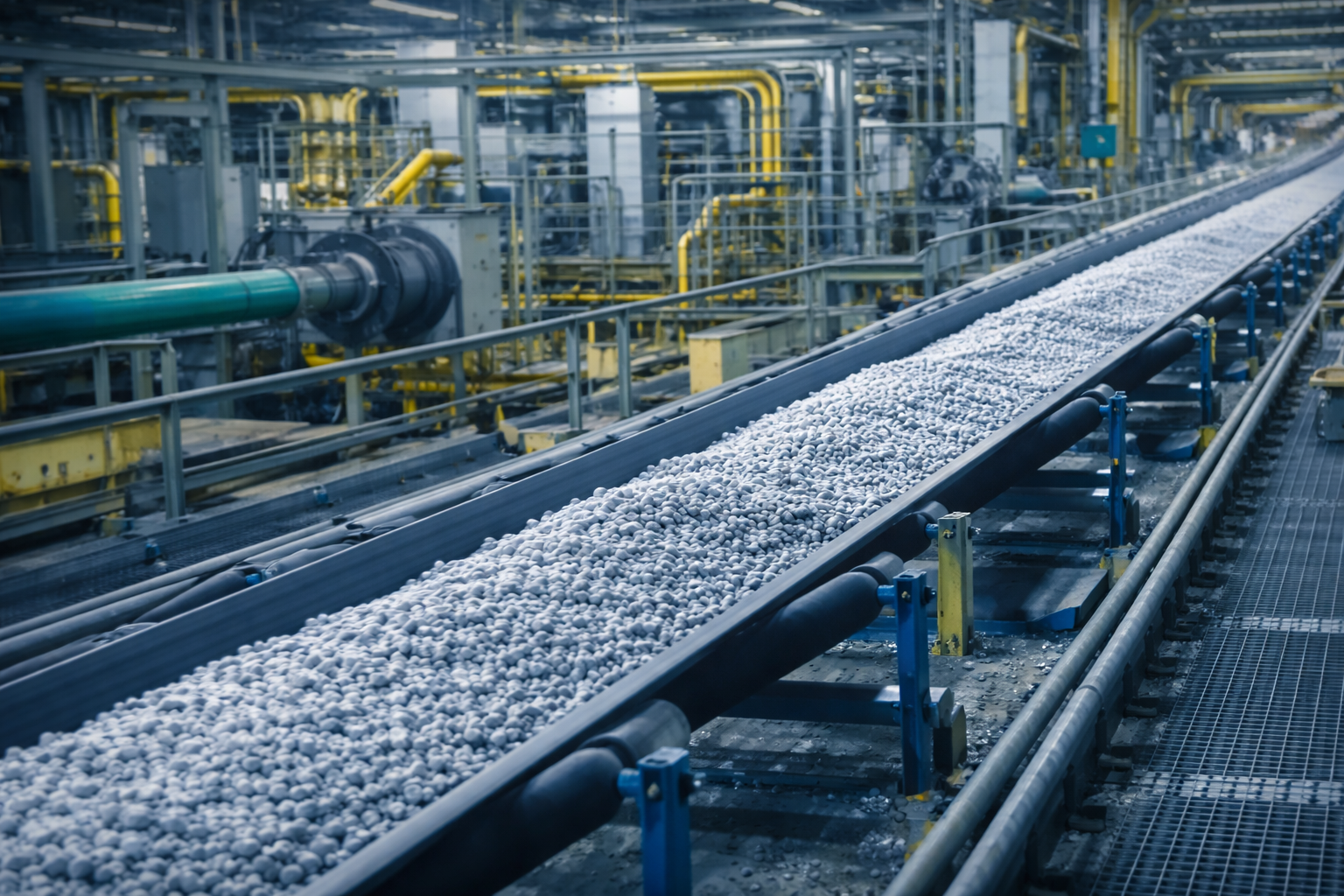
A rubber belt conveyor for sand automates material transport in plaster casting, reducing labor costs, improving efficiency, and ensuring consistent, high-volume production.
Why use a rubber belt conveyor for sand in large-scale logistics?
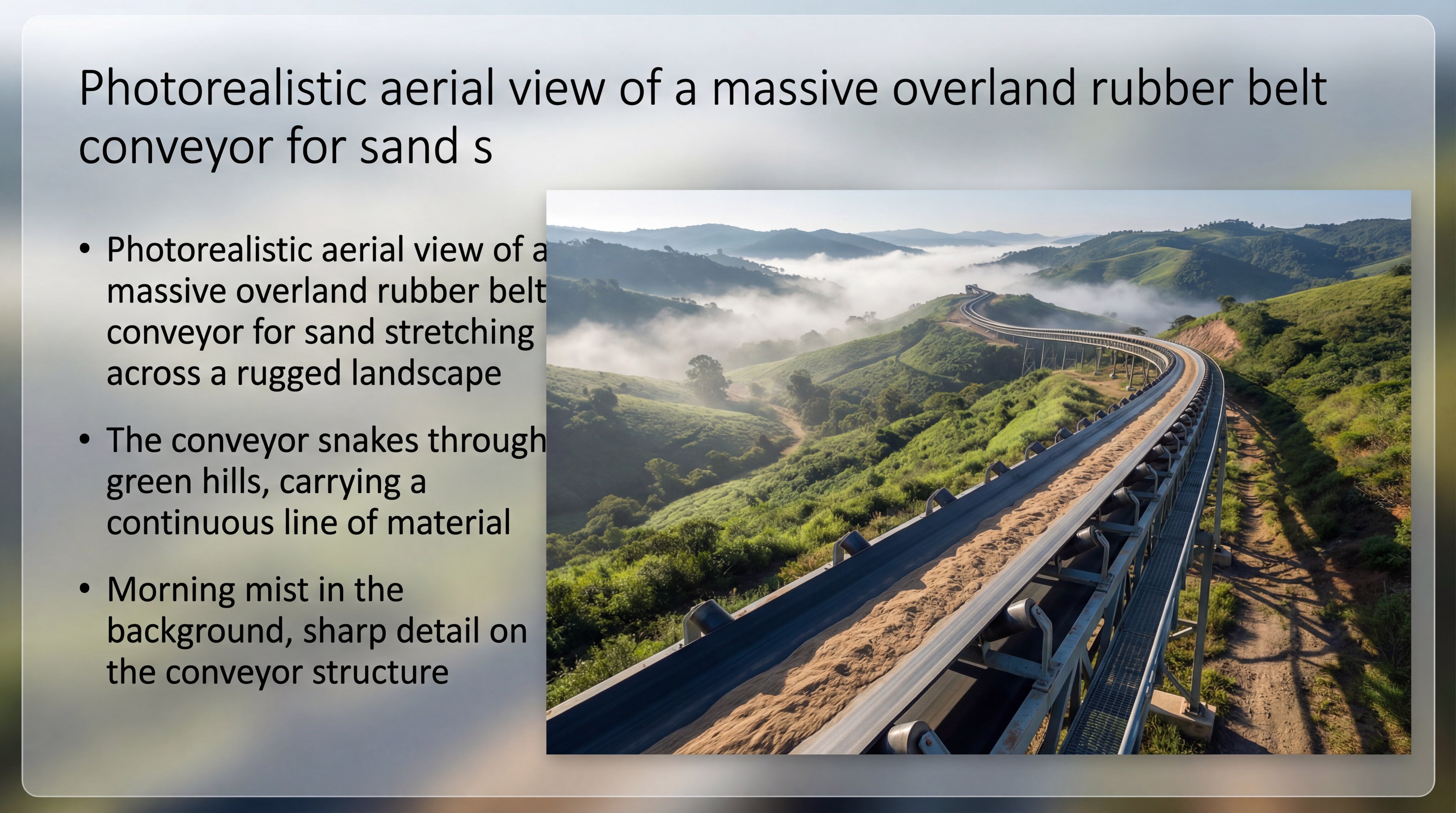
You should use a rubber belt conveyor for sand because it allows you to transport massive quantities of material over long distances with minimal power. These systems are designed to bridge the gap between extraction points and processing units without the need for constant truck traffic. By automating the flow, you ensure a consistent supply to your plaster casting molds every single day.
How does distance affect your costs?
Moving sand over hundreds of yards manually or via truck is expensive and slow.
- Reduced fuel consumption across the site.
- Lower labor requirements for transport roles.
- Minimized road maintenance on industrial paths. But that’s not all. You can adapt these belts to almost any terrain to keep your plaster casting process moving.
Can you scale up with automation?
Automation is the key to handling the high volumes required for large-scale construction or industrial manufacturing.
- Continuous flow eliminates material bottlenecks.
- Variable speed drives allow for precise delivery.
- System integration reduces human error significantly. It gets even better. You will find that an automated system is much safer than manual loading.
Key Takeaway: Overland systems provide a permanent, low-cost solution for transporting sand over distance while maintaining process speed.
| Feature | Advantage | |
|---|---|---|
| Distance Capacity | Covers miles without fuel waste | |
| Energy Usage | High-efficiency drive systems | |
| Automation | Full site-wide integration |
Strategic overland transport is the most effective way to lower the total cost per ton of sand delivered to your casting stations.
What makes a rubber belt conveyor for sand durable and flexible?
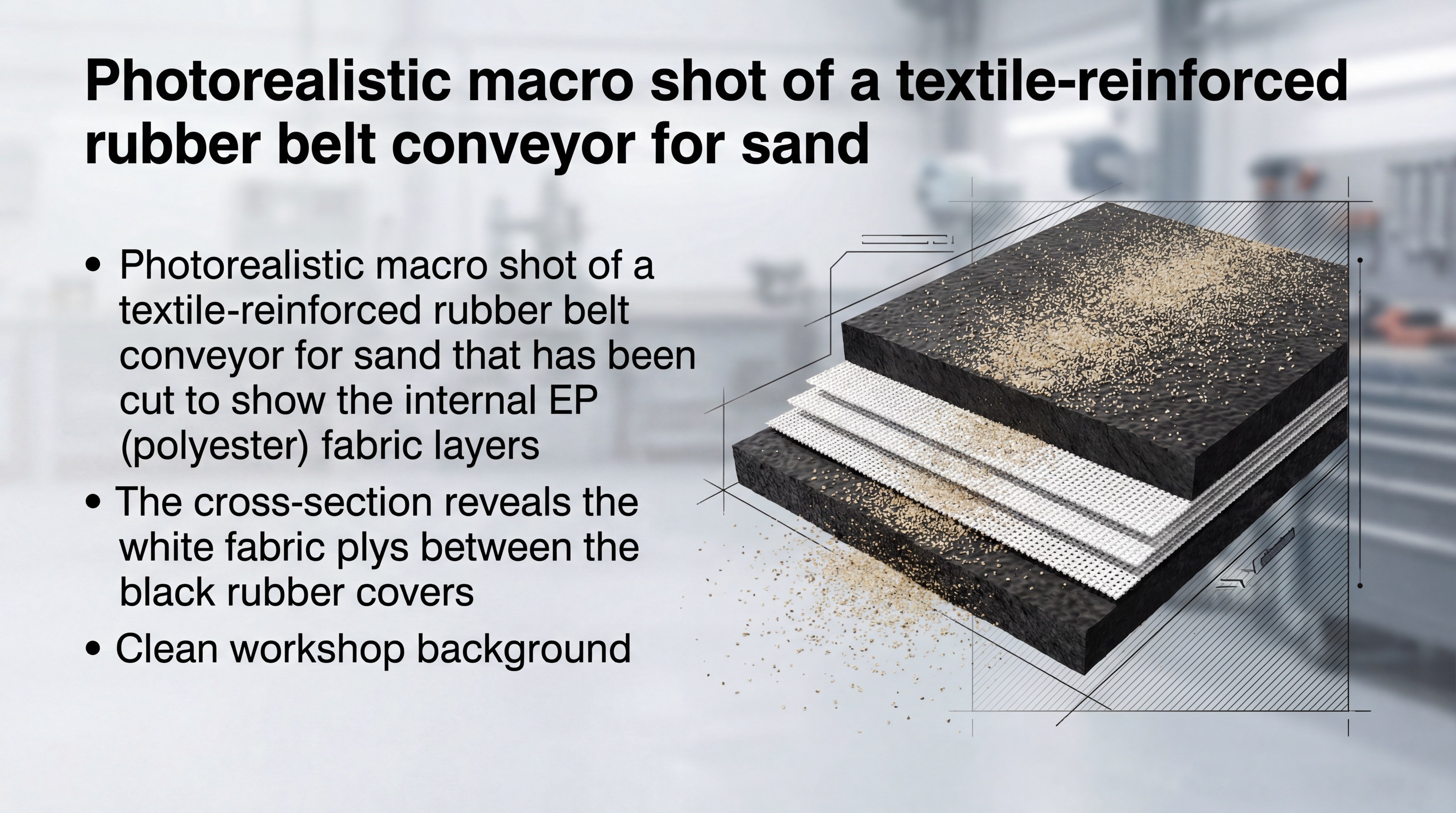
The durability comes from the multi-ply fabric or steel cord reinforcement layers that prevent stretching and tearing in a rubber belt conveyor for sand. These belts are engineered to withstand the abrasive nature of fine silica sand while remaining flexible enough to wrap around small pulleys. You will notice that a high-quality carcass significantly extends the operational life of your system.
Why is EP fabric so popular?
EP fabric offers low stretch and high impact resistance which is perfect for heavy sand loads.
- Polyester warp provides high tensile strength.
- Nylon filling ensures excellent flexibility.
- Moisture resistance prevents internal rotting. You might be wondering about the life expectancy. With proper care, these belts can last several years in heavy industrial environments.
Does rubber quality matter?
The rubber compound determines how well the belt resists the cutting and gouging of sharp sand grains.
- RMA II standard rubber covers.
- Heat-resistant compounds for specialized casting.
- Anti-static properties for safer operation. Here is the kicker. You can choose different cover thicknesses depending on your specific material abrasiveness.
Key Takeaway: The internal fabric plys provide the strength needed to carry tons of sand without the belt sagging or snapping.
| Component | Function | |
|---|---|---|
| Rubber Cover | Protects against surface abrasion | |
| EP Fabric | Prevents belt stretch and elongation | |
| Bottom Layer | Ensures smooth pulley interaction |
Understanding the cross-section of your belt helps you select the right grade for your specific plaster casting workload.
How does a rubber belt conveyor for sand handle bulk stockpiling?
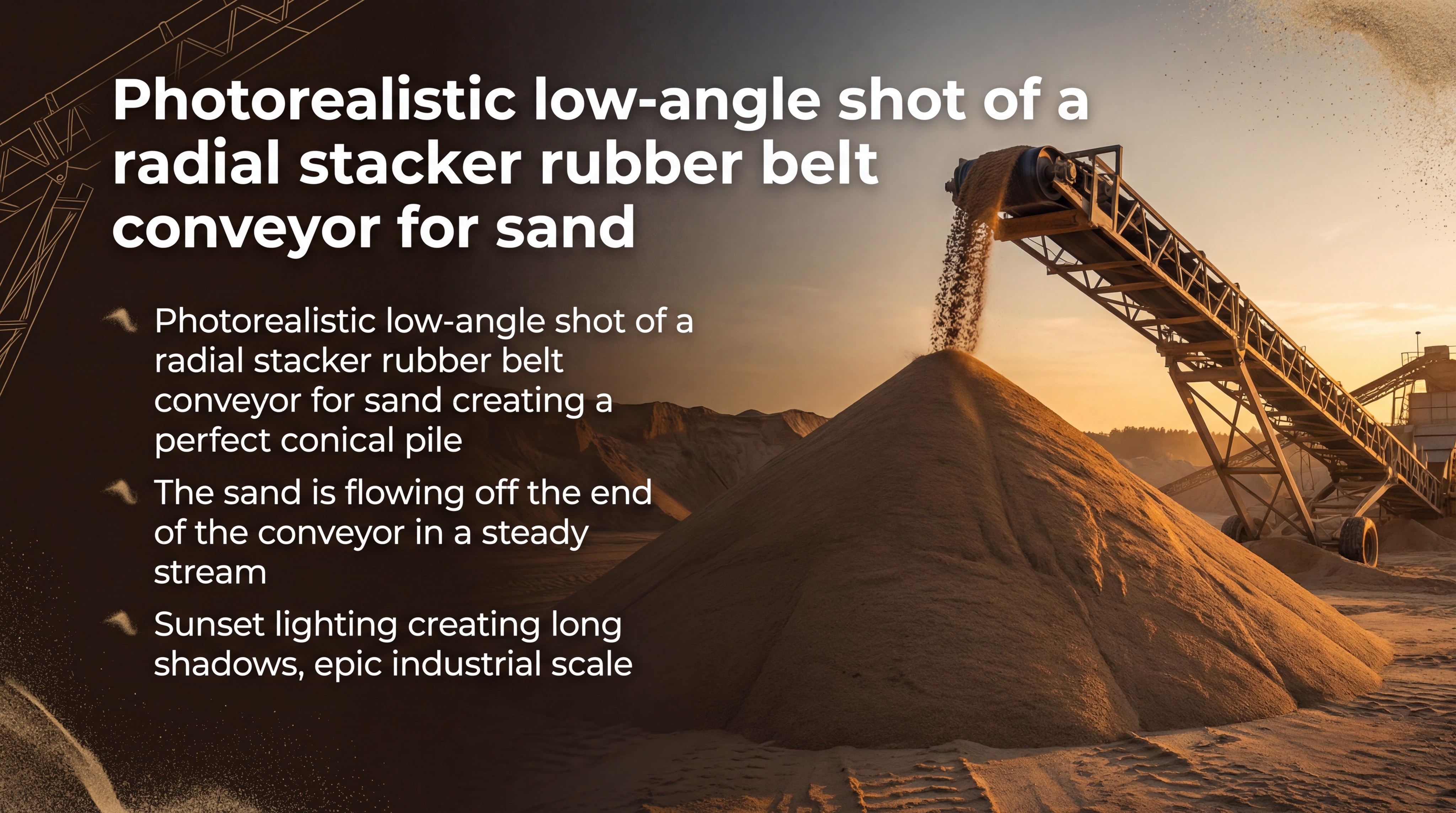
A rubber belt conveyor for sand handles bulk stockpiling by using radial stackers that create large, organized piles for easy inventory management. These stackers move in a semi-circular path to distribute sand evenly across a storage yard. You will find this much more efficient than using wheel loaders to build mounds.
What is a radial stacker?
A radial stacker is a conveyor that can pivot around a single point to create a 180-degree stockpile.
- Increased storage capacity in a small footprint.
- Automated pile building reduces operator labor.
- High discharge heights for massive sand mounds. It gets even better. You can adjust the height of the boom to minimize dust during the drop.
Why is organization vital?
Keeping your sand types separated and organized ensures that your plaster casting molds remain high-quality and consistent.
- Prevents cross-contamination of aggregate grades.
- Allows for easy access by front-end loaders.
- Optimizes the use of limited yard space. You might be surprised at how much space you save. Organized piles mean more material can be stored safely in one location.
Key Takeaway: Radial stackers are essential for high-volume casting plants that need to store several days’ worth of sand inventory.
| Stockpile Method | Efficiency Level | |
|---|---|---|
| Manual Piling | Low / High Cost | |
| Wheel Loaders | Medium / High Labor | |
| Radial Stacker | High / Low Labor |
Using a radial system allows you to build larger piles while taking up significantly less ground space in your facility.
Which parts drive a rubber belt conveyor for sand efficiently?
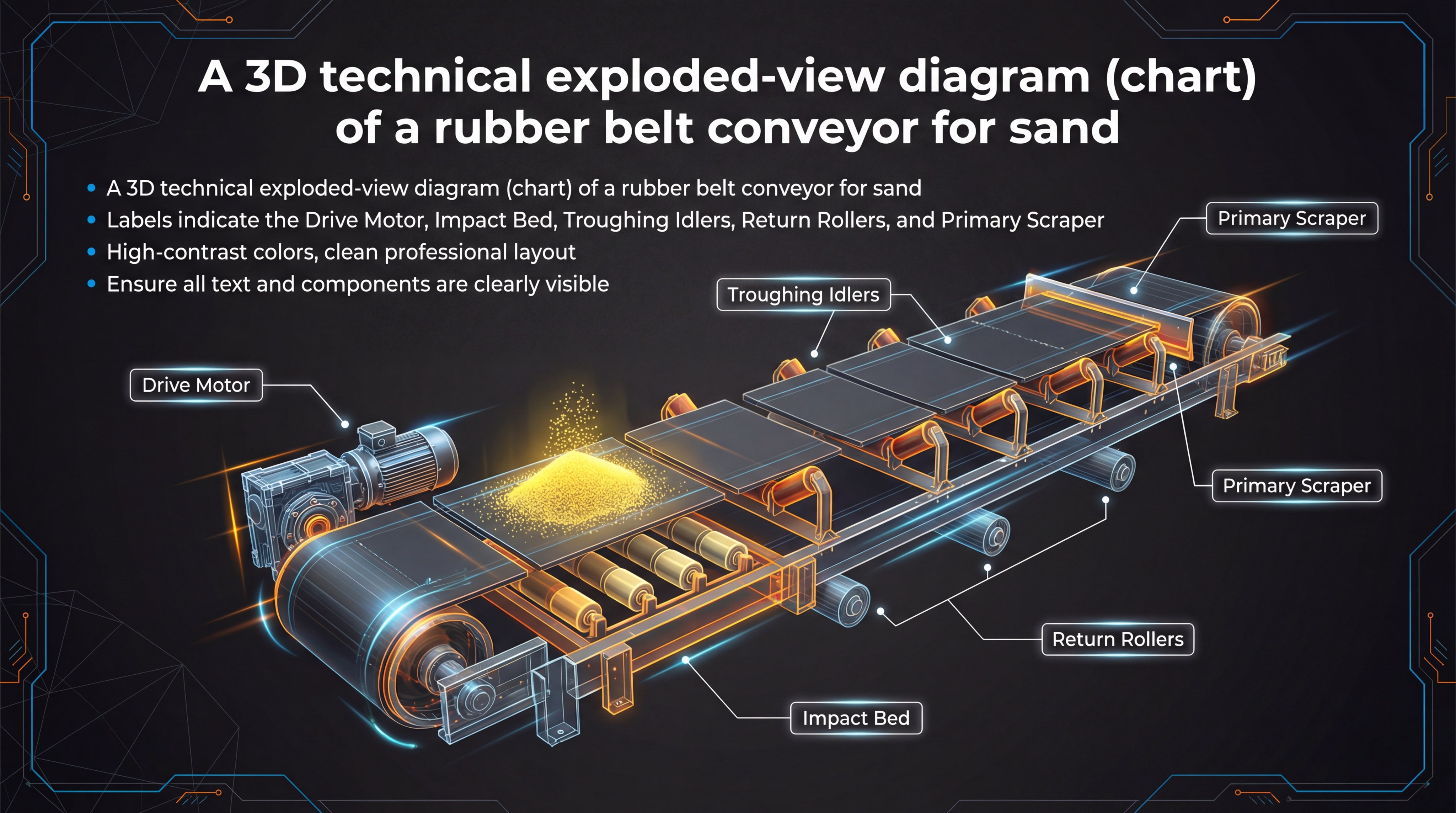
The primary drive components include the motor, gearbox, and head pulley which work together to propel the rubber belt conveyor for sand. Each part must be perfectly aligned to prevent belt slippage or motor burnout during high-load periods. You should understand how these parts interact to troubleshoot issues before they halt your plaster casting line.
How does the motor work?
The electric motor provides the rotational force needed to pull the weighted belt across the idlers.
- High-torque AC motors for heavy starts.
- Variable frequency drives for speed control.
- Weatherproof enclosures for outdoor use. But that’s not all. You can synchronize multiple motors for extremely long conveyor runs.
What are idlers and rollers?
Idlers are the supporting frames that hold the belt in a “trough” shape to keep the sand centered.
- Troughing idlers prevent material spillage.
- Return rollers support the empty belt underneath.
- Impact rollers absorb shock at loading zones. You will see that properly maintained idlers reduce the drag on your motor.
Key Takeaway: A complex system of motors, pulleys, and idlers must function in harmony to maintain a reliable sand flow.
| Part | Essential Task | |
|---|---|---|
| Head Pulley | Pulls the belt forward | |
| Tail Section | Returns the belt and contains dust | |
| Take-up Unit | Maintains proper belt tension |
Each component is a critical failure point, making regular mechanical audits necessary for your industrial success.
How do aggregate yards use a rubber belt conveyor for sand?
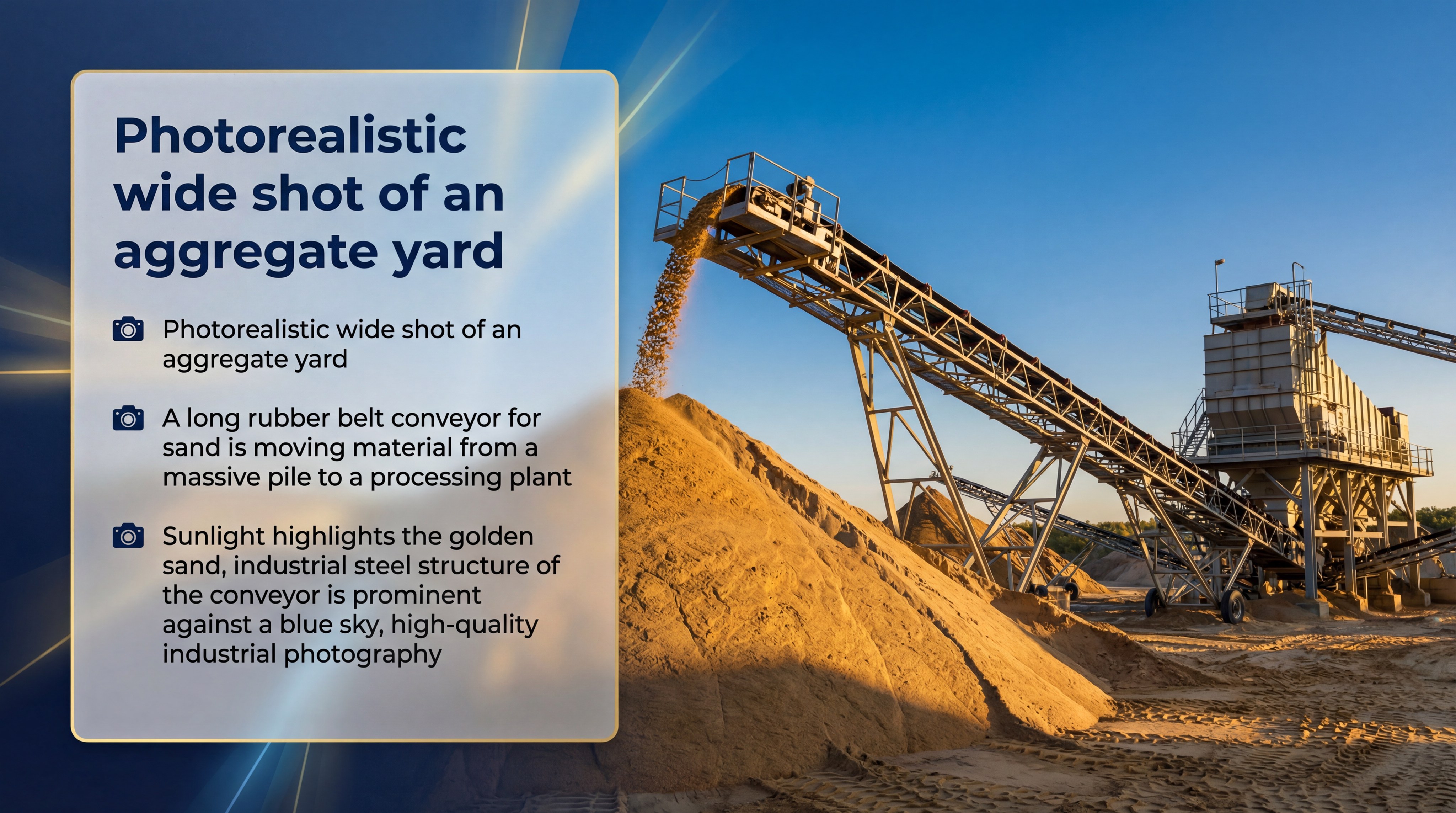
Aggregate yards use a rubber belt conveyor for sand to transfer raw material from wash plants directly to storage bins or mixing hoppers. This continuous link is much faster and cleaner than using a fleet of trucks to shuttle material back and forth. You will see a drastic reduction in site noise and dust when you switch to belt transport.
Why is speed important?
In high-volume casting, any delay in sand delivery can lead to mold drying issues and wasted material.
- Moves up to 1,200 tons per hour instantly.
- Operates 24/7 without the need for breaks.
- Eliminated “empty truck” return trips. It gets even better. Your throughput remains consistent regardless of operator fatigue.
Can you reduce site dust?
Open trucking often kicks up fine silica dust, but enclosed conveyors keep the environment cleaner for your workers.
- Enclosed galleries trap fine particles.
- Sprinkler systems can be integrated on belts.
- Cleaner air reduces maintenance on other machines. You might be wondering about safety. Reducing dust also minimizes the risk of respiratory issues for your team.
Key Takeaway: Belt systems transform aggregate yards from chaotic truck zones into streamlined, automated material pipelines.
| Transport Type | Speed | Cleanliness | |
|---|---|---|---|
| Loader Buckets | Slow | Dusty | |
| Dump Trucks | Medium | Very Dusty | |
| Conveyor Belts | Fast | Controlled |
Switching to belt transport is the single best investment you can make to modernize your aggregate handling logistics.
Why is factory-direct rubber belt conveyor for sand more reliable?
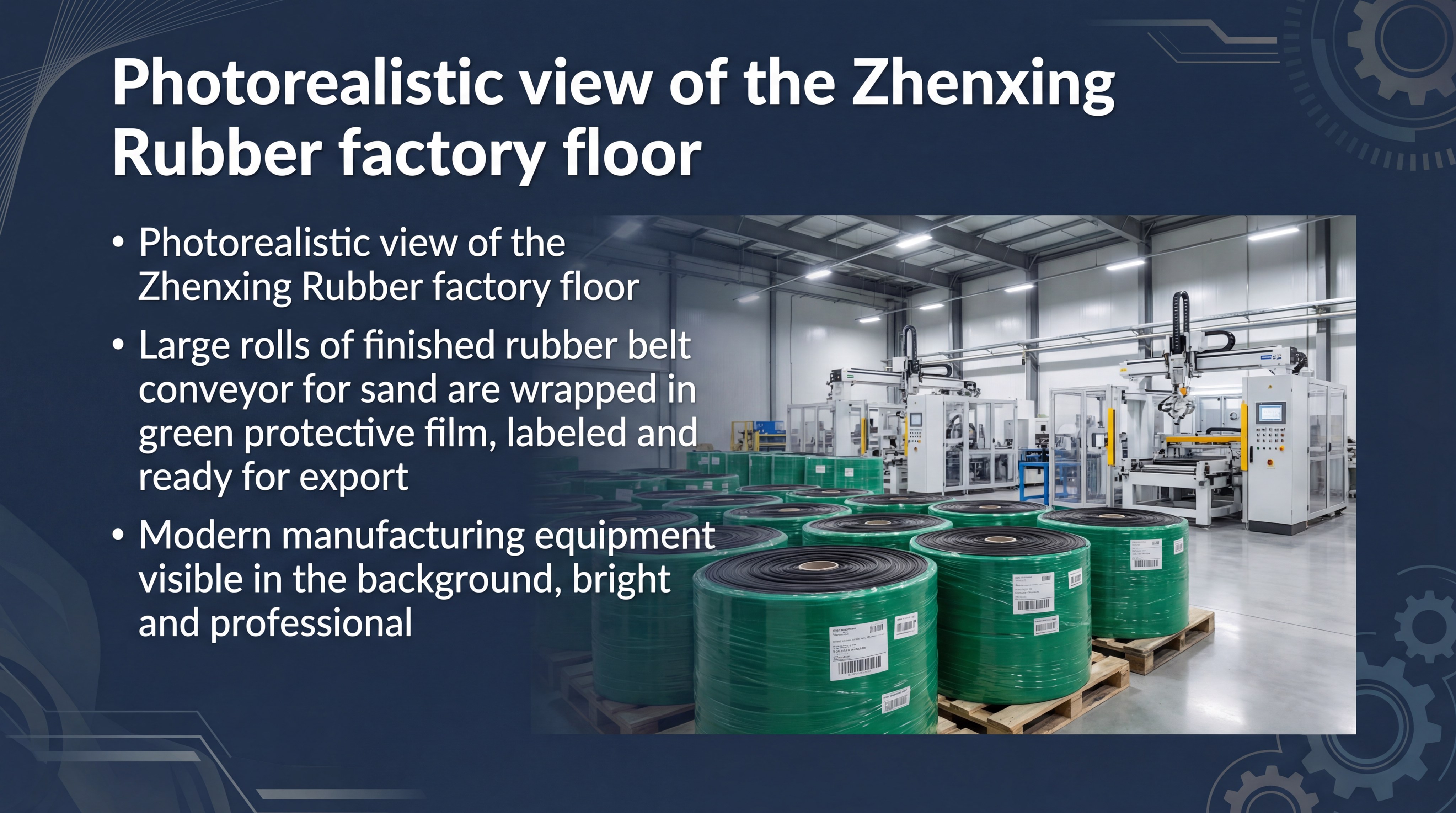
A factory-direct rubber belt conveyor for sand is more reliable because the manufacturer has total control over the rubber compounding and vulcanization processes. By cutting out the middleman, you get a product that is built to your exact specifications without trading company markups. You can also visit the facility to inspect the quality of the raw materials used in your belts.
What is the advantage?
Buying directly allows you to consult with the engineers who actually design the belt for your specific plaster casting needs.
- Customized rubber covers for your material.
- Direct technical support for installation.
- Competitive pricing on replacement parts. But wait, there’s more. You get faster lead times since the product doesn’t sit in a third-party warehouse.
Is quality control better?
Factory-direct producers use ISO 9001 standards to ensure every foot of the belt meets tensile strength requirements.
- Rigorous testing of internal fabric plys.
- Visual inspection for surface defects.
- Verified shipment documents and certifications. You will appreciate the peace of mind. Knowing your belt was tested in-house ensures it won’t fail under pressure.
Key Takeaway: Dealing directly with the factory ensures you receive high-quality materials and expert engineering at the best price.
| Source Type | Pricing | Tech Support | |
|---|---|---|---|
| Trading Company | High | General | |
| Third-party Retail | Medium | Limited | |
| Direct Factory | Low | Expert |
Eliminating intermediaries allows you to invest more in the actual quality of your conveyor belt for better long-term ROI.
What are the safety rules for a rubber belt conveyor for sand?
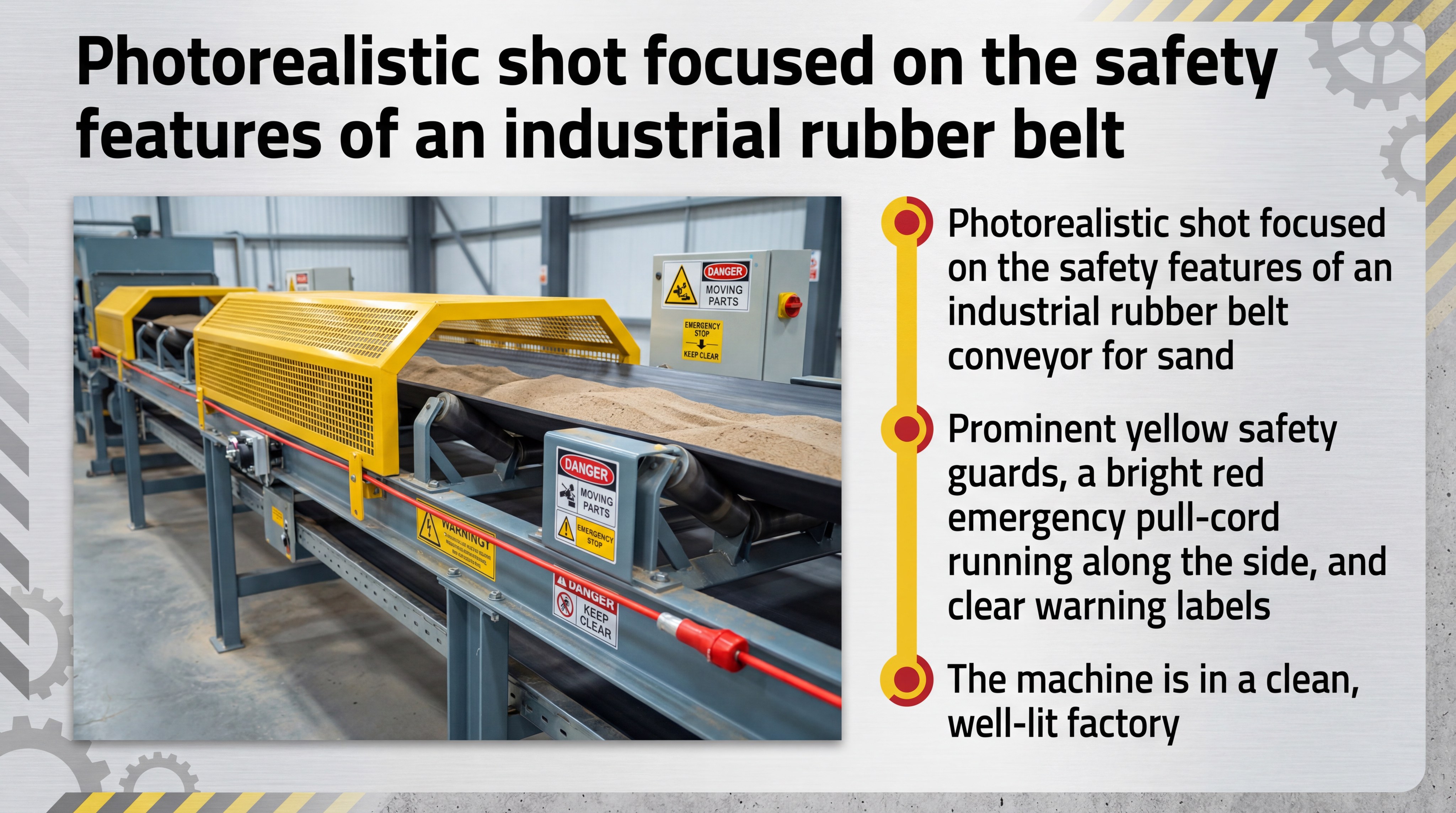
The safety rules for a rubber belt conveyor for sand require that all moving parts be guarded and that emergency stop pull-cords are accessible from any point. You must train your staff to never reach near a moving belt to prevent serious pinch-point injuries. Following these strict protocols protects your workers and keeps your plaster casting facility compliant with local laws.
Why are pull-cords necessary?
Pull-cords allow any worker to stop the entire line instantly if they see a hazard or a mechanical failure.
- Instant shutdown across the entire length.
- Visual indicators of which cord was pulled.
- Reduces the severity of accidents. You might be wondering. Can these be automated? Yes, they can trigger alarms in the control room as well.
What are pinch-point guards?
Guards are physical barriers placed over pulleys and rollers to prevent hands or clothing from getting caught.
- Constructed of durable steel mesh.
- Easy to remove for maintenance only.
- Painted bright yellow for high visibility. It gets even better. Modern guards are designed to allow for visual inspection without needing removal.
Key Takeaway: Safety is not an option; it is the foundation of a productive and sustainable casting environment.
| Safety Device | Purpose | |
|---|---|---|
| Pull-cord Switch | Emergency stop mechanism | |
| Belt Guarding | Prevents physical contact | |
| Warning Signage | Alerts to automatic starts |
Implementing a “Safety First” culture ensures that your rubber belt conveyor for sand remains an asset rather than a liability.
How to inspect your rubber belt conveyor for sand for peak health?
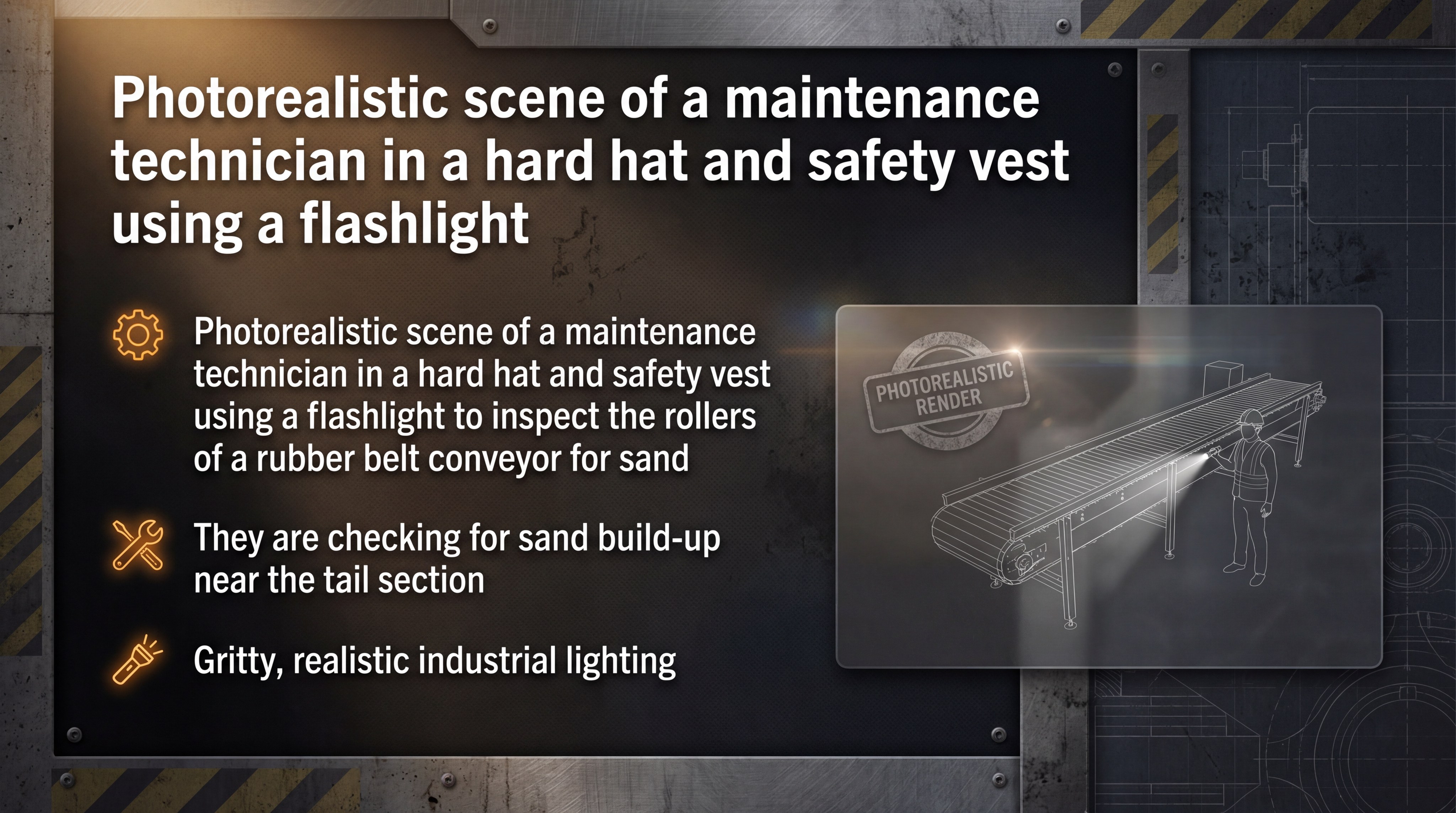
You should inspect your rubber belt conveyor for sand by performing a daily walk-through to check for belt mistracking or unusual bearing noises. Identifying a small tear in the rubber today can prevent a catastrophic belt break tomorrow. You will find that proactive maintenance is much cheaper than emergency repairs during a plaster casting run.
What should you look for?
Look for sand build-up around the tail section and ensure that your belt scrapers are still making contact.
- Check the belt edges for signs of fraying.
- Listen for squealing from the idler bearings.
- Inspect the gearboxes for oil leaks. But that’s not all. You should also verify that the take-up unit has enough travel left for tensioning.
How often is maintenance needed?
A deep inspection should occur monthly, while basic visual checks must happen before every shift starts.
- Daily: Check scrapers and belt tracking.
- Weekly: Lubricate moving parts and bearings.
- Monthly: Measure belt thickness and tension. You might be surprised. Keeping the belt clean is often 90% of the maintenance battle.
Key Takeaway: Consistent inspection routines are the only way to guarantee the 24/7 uptime required for industrial casting.
| Checkpoint | Status | Frequency | |
|---|---|---|---|
| Belt Tracking | Centered on idlers | Daily | |
| Scraper Blades | Making firm contact | Weekly | |
| Motor Heat | Within normal range | Daily |
A healthy conveyor system is the backbone of your factory, so treat your inspections with the highest priority.
Can a chevron rubber belt conveyor for sand handle steep grades?
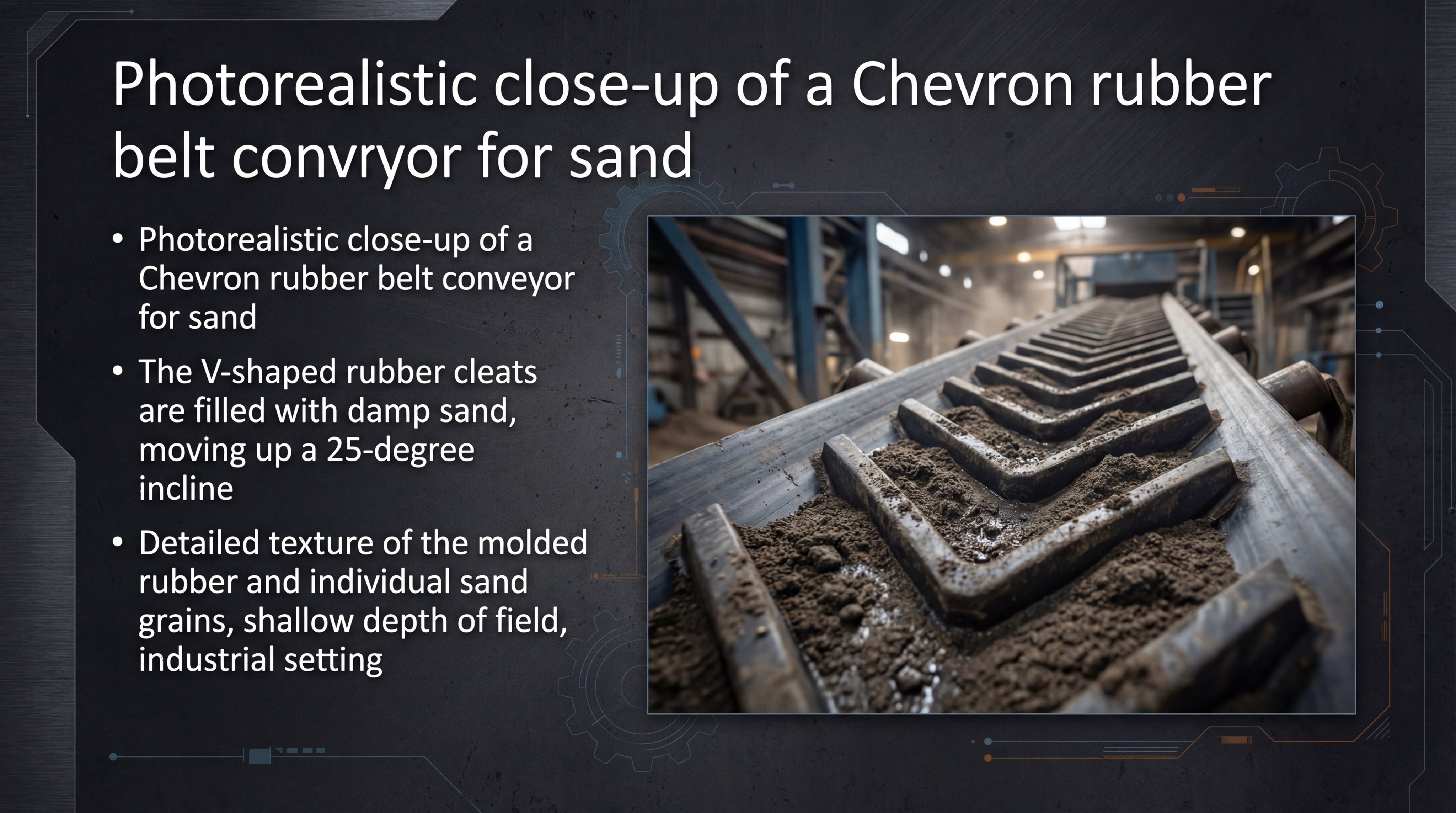
A chevron rubber belt conveyor for sand can handle grades up to 35 degrees because of the molded V-shaped cleats that lock the material in place. Without these cleats, dry sand would simply slide backward on an incline, causing massive spillage and waste. You will find that chevron belts are essential for facilities with tight footprints and high vertical needs.
Why the V-pattern?
The V-pattern creates “pockets” that trap the sand grains and prevent them from rolling down the slope.
- Increased vertical capacity in small areas.
- Molded cleats that won’t peel off easily.
- Available in various cleat heights for wet sand. It gets even better. You can use these belts for both uphill and downhill transport with equal success.
Is spillage a problem?
No, the chevron design is specifically engineered to contain loose aggregate better than a flat belt on any slope.
- Keeps the sand centered on the belt.
- Reduces the need for high-speed operation.
- Minimizes cleanup costs under the conveyor. You might be wondering about cleaning. Specialized brush scrapers are used to clean chevron patterns effectively.
Key Takeaway: Chevron belts allow you to utilize vertical space, making them perfect for compact plaster casting plants.
| Belt Style | Max Incline | Best For | |
|---|---|---|---|
| Flat Belt | 15 Degrees | Long distance | |
| Chevron V | 30 Degrees | Steep delivery | |
| Sidewall | 60 Degrees | Vertical lifts |
Choosing a chevron profile ensures that your sand reaches the upper hoppers without sliding back and creating a mess.
How is a rubber belt conveyor for sand used in plaster casting?
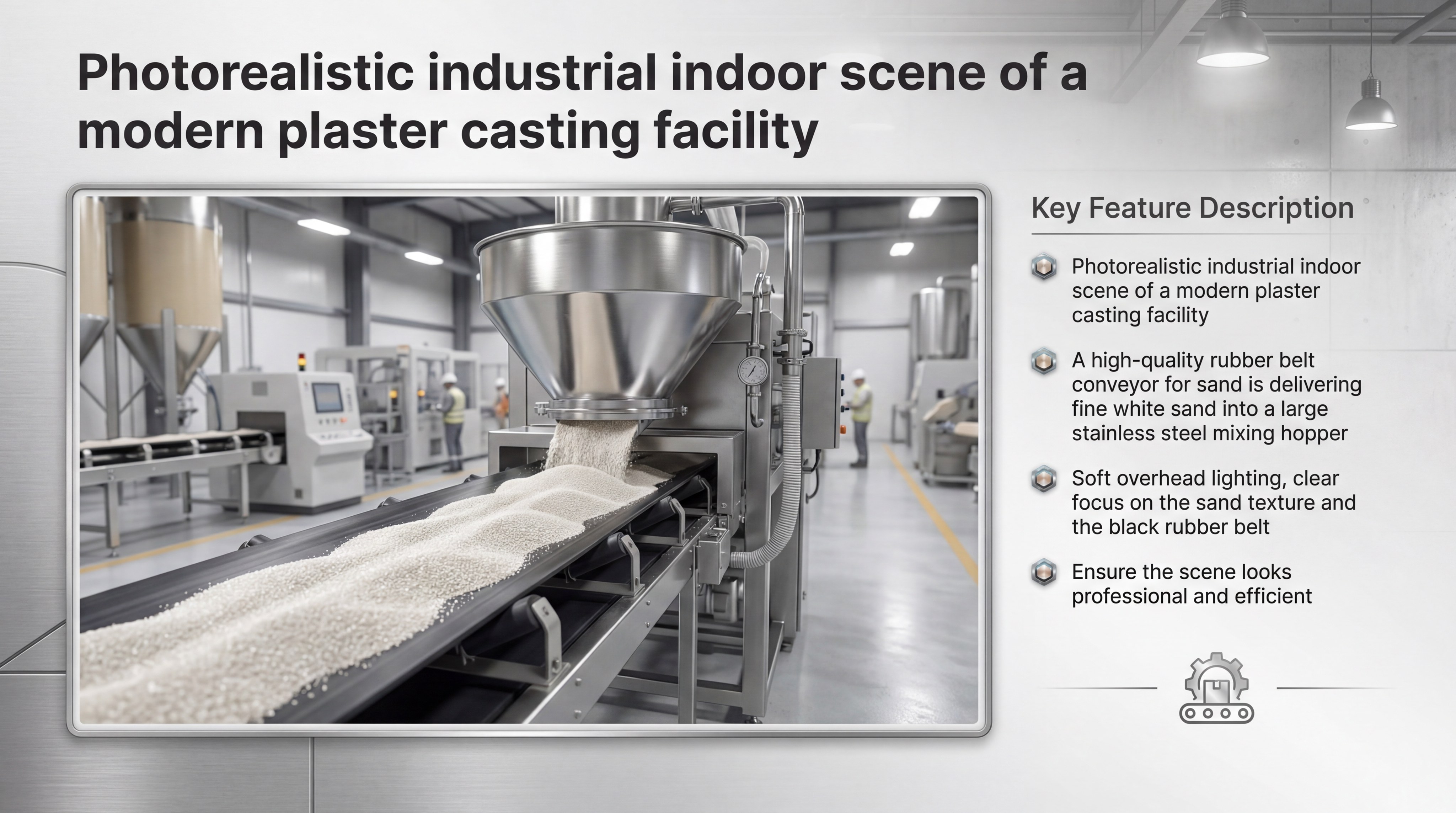
In a typical facility, a rubber belt conveyor for sand delivers the precise amount of aggregate needed into a mixing hopper where the plaster is combined. This automated delivery ensures that the ratio of sand to gypsum is always perfect for the mold. You will achieve much higher precision in your final products when your material handling is this controlled.
Where does the sand go?
The conveyor carries sand from the outdoor storage piles directly into the temperature-controlled mixing room.
- Transfer chutes guide the sand into mixers.
- Automated scales measure the sand weight.
- Sealed systems prevent plaster dust escape. But that’s not all. The speed of the belt can be slaved to the mixer’s demand for a “just-in-time” supply.
Why is this better?
Using a conveyor system eliminates the need for workers to carry heavy bags of sand, which reduces injury risks.
- Lower physical strain on your workforce.
- Cleaner work environment with less spillage.
- Faster mold production cycles. You will see the ROI quickly. Higher output and lower labor costs mean your business can grow faster.
Key Takeaway: Conveyors are the hidden engine of a modern plaster casting plant, ensuring precision and safety at every step.
| Process Step | Conveyor Role | |
|---|---|---|
| Storage | Transfers sand to the plant | |
| Batching | Delivers weighed sand to mixers | |
| Molding | Keeps the line moving constantly |
Integrating high-quality transport into your plaster casting workflow is the most logical step toward industrial excellence.
Summary and Brand Vision
At Zhenxing Rubber, we believe that your material handling system should be as precise as your final product. We have dedicated decades to perfecting the engineering behind every rubber belt conveyor for sand we produce. Our vision is to empower global manufacturers with durable, factory-direct solutions that reduce downtime and maximize efficiency. Whether you are building massive architectural molds or delicate industrial parts, our belts provide the reliability you need. To see how we can transform your facility, contact us today for a custom quote.
Frequently Asked Questions
Can I customize the width of my belt for a specific casting machine?Yes, we offer widths up to 3200 mm to fit any industrial setup. Our engineering team can help you select the exact dimensions required for your load capacity and machine footprint.
What’s the best way to prevent sand from sticking to the belt?Installing a high-quality primary scraper with a carbide or urethane blade is the most effective solution. This ensures that the belt surface is clean before it returns, preventing “carryback” and build-up.
How do I know if my rubber belt conveyor for sand needs more tension?If you notice the belt sagging between idlers or slipping on the drive pulley under load, you need to adjust your take-up unit. Proper tensioning is vital to prevent motor strain and premature belt wear.
Can I use a standard belt for steep 30-degree inclines?No, a smooth belt will allow sand to slide backward at that angle. You must use a chevron or sidewall belt with molded cleats to lock the material in place and prevent spillage.
How do I know if the rubber compound is right for my sand?Our engineers analyze your material’s grain size and moisture content to recommend the best RMA grade. We offer specialized oil, heat, and abrasion-resistant compounds to match any industrial environment.