
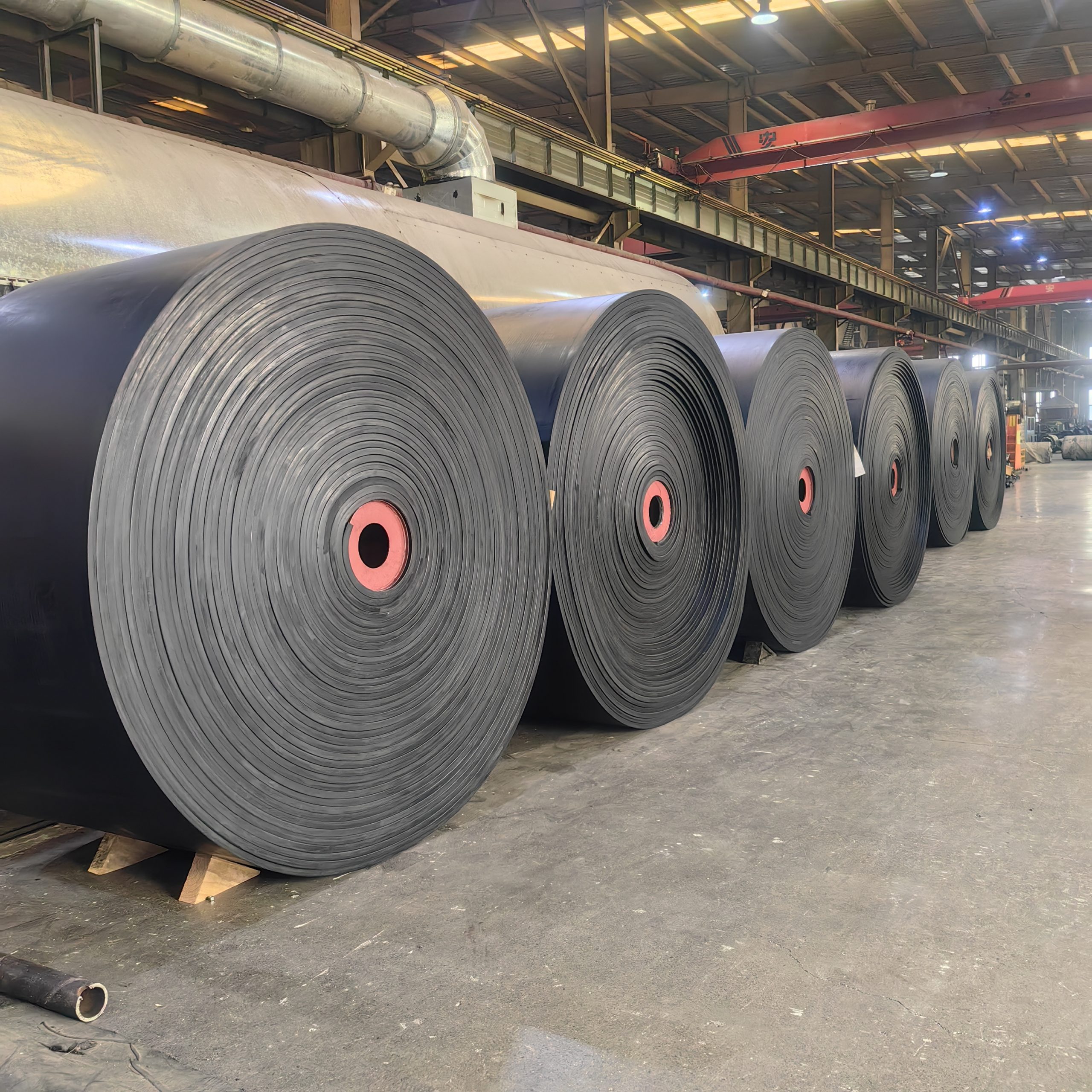
Choosing reliable rubber conveyor belt manufacturers china ensures high-strength belts with superior durability, reducing downtime and supporting stable performance in demanding industrial environments.
How do logistics hubs manage finished belt rolls?
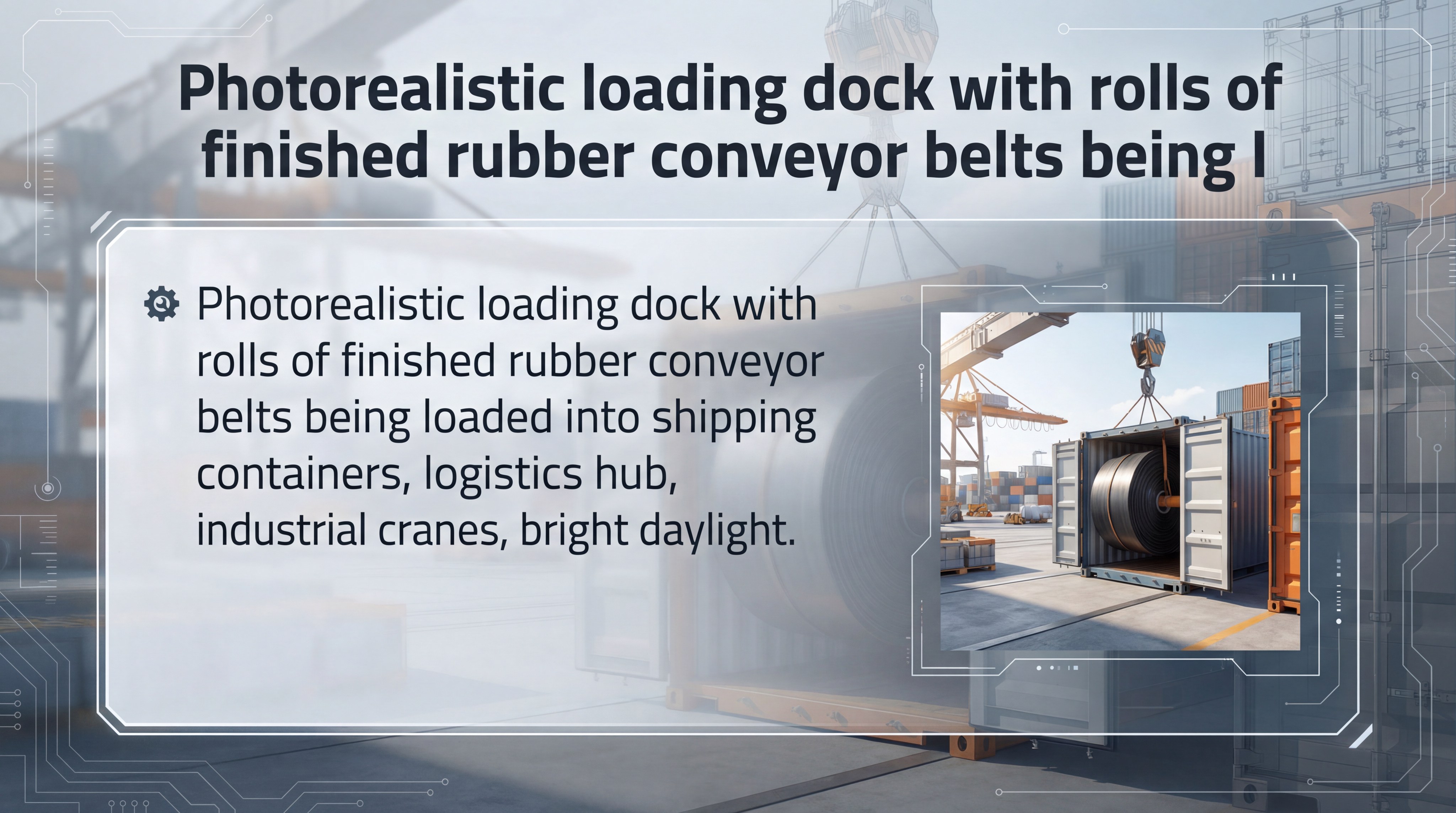
Logistics management at the factory level involves the use of heavy-duty cranes and specialized storage racks to ensure rubber conveyor belt manufacturers china can export products without damaging the internal carcass. Think about it: a single roll of steel-cord belting can weigh several tons, requiring extreme precision during the loading process.
Why is specialized loading crucial for your order?
When you receive a shipment, you expect the belt to be in pristine condition without edge deformation. But here is the kicker: improper handling during the logistics phase can create permanent “sets” in the rubber that lead to tracking issues later.
- Use of industrial cranes for vertical lift.
- Reinforced core pipes to prevent roll collapsing.
- Climate-controlled containers for long-distance sea freight.
Key Takeaway: Professional logistics ensure that the high-tensile properties of your belts are preserved from the factory floor to your specific site installation.
| Logistics Factor | Method | User Benefit | |
|---|---|---|---|
| Roll Protection | Core Reinforcement | Prevents structural deformation | |
| Loading Speed | Heavy-duty Cranes | Reduces lead time for global shipping | |
| Shipping Safety | ISO Containers | Protects rubber from UV and moisture |
The efficiency of a logistics hub directly correlates to the reliability of the supply chain for global infrastructure projects.
How is precision laser alignment achieved?
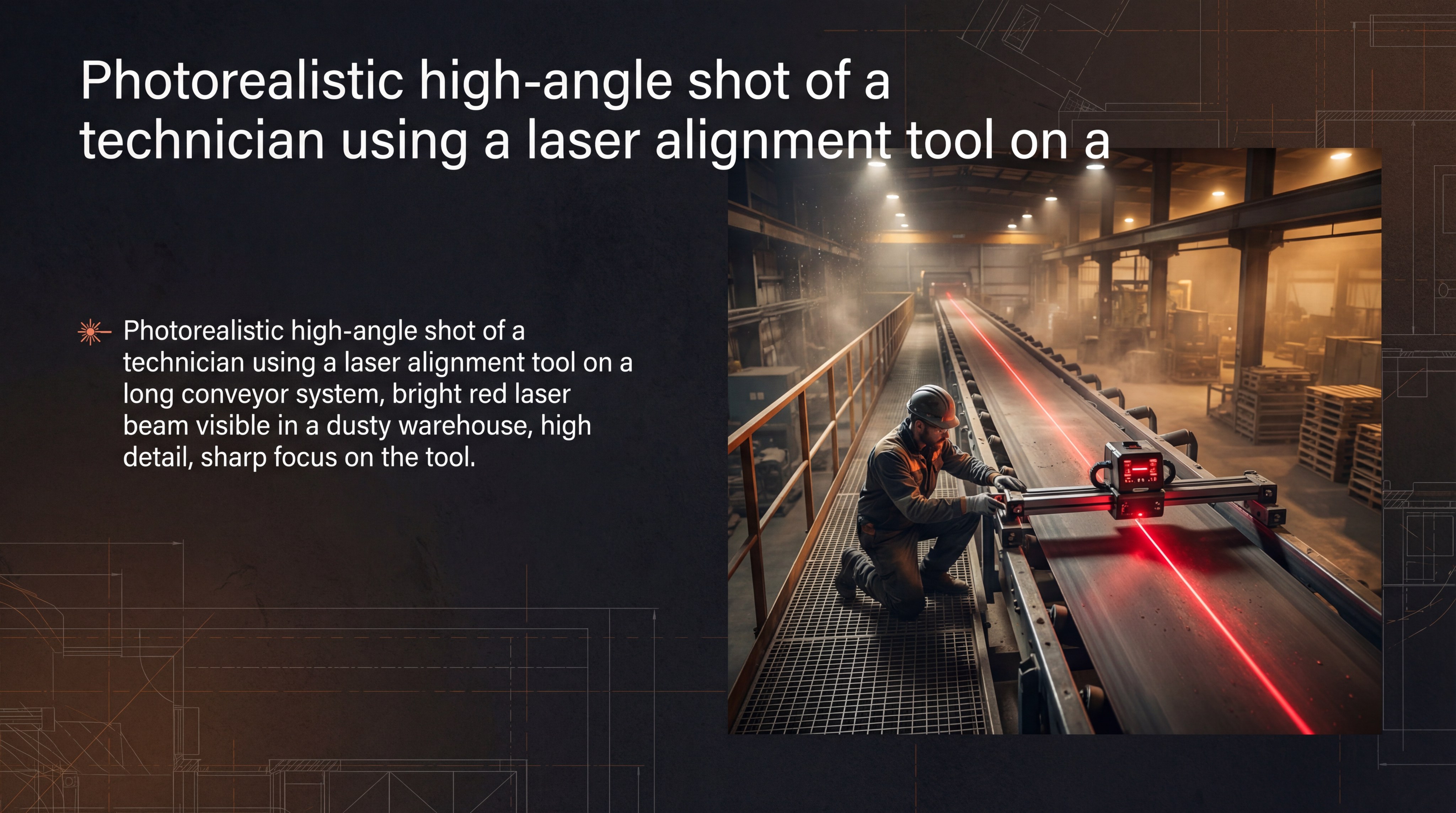
Precision alignment is achieved by using high-frequency laser beams to establish a perfectly straight longitudinal axis, a service provided by top rubber conveyor belt manufacturers china during the installation phase. This technology eliminates human error and ensures that every pulley and idler is perfectly synchronized with the belt’s path.
Can you prevent premature edge wear?
You might be surprised to learn that over 70% of belt failures are caused by poor tracking. But here is the deal: laser tools allow you to identify misalignments as small as a fraction of a millimeter.
- Establishment of a master centerline.
- Vertical and horizontal pulley checks.
- Real-time tracking adjustments during test runs.
Key Takeaway: Investing in laser alignment during setup saves you thousands in replacement costs by preventing the belt from rubbing against the conveyor frame.
| Alignment Tool | Function | Accuracy Level | |
|---|---|---|---|
| Laser Aligner | Centerline Verification | High (±0.1mm) | |
| Mechanical Square | Pulley Squaring | Moderate | |
| Digital Level | Incline Management | High |
Using advanced optics for system calibration is the only way to guarantee the 20-year lifespan of a high-tension industrial belt.
Where are modern industrial factories located?
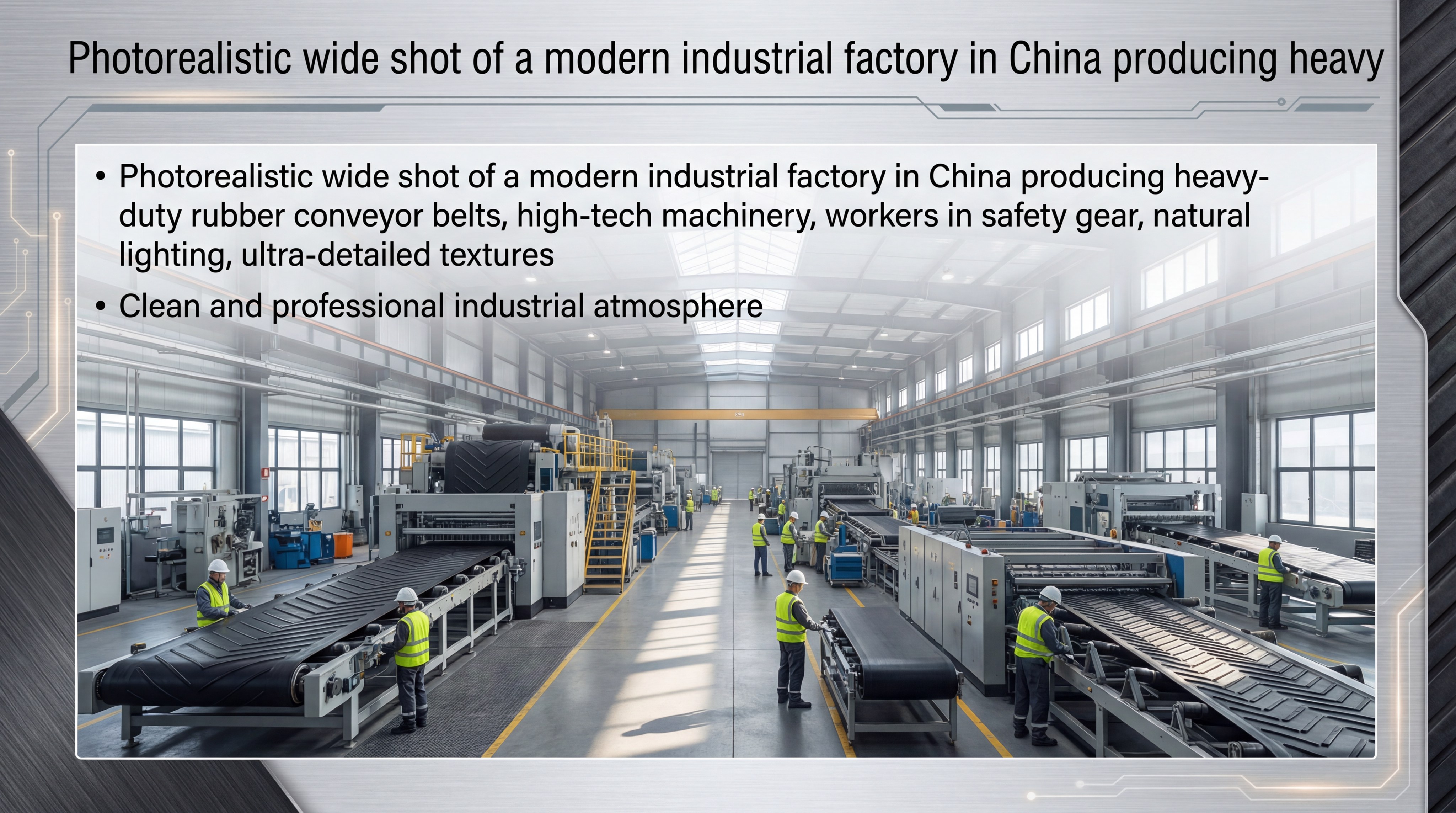
Most modern facilities for these components are located in high-tech industrial zones where rubber conveyor belt manufacturers china can access integrated raw material supplies and advanced vulcanization machinery. These hubs serve as the heart of the world’s material handling industry, combining R&D with massive scale.
How does factory automation benefit you?
When you partner with a factory that utilizes automated rolling machines, you receive a product with consistent thickness and bonding strength. Think about it: manual processes often lead to “weak spots” in the rubber that fail under pressure.
- Automated rubber compounding for chemical consistency.
- Multi-stage vulcanization presses for superior bonding.
- In-line quality sensors to detect fabric defects.
Key Takeaway: Proximity to tech hubs allows manufacturers to integrate the latest polymer science into every belt they produce for your facility.
| Factory Feature | Technology | Impact on Quality | |
|---|---|---|---|
| Mixing Room | Computerized Dosing | Exact rubber chemistry every time | |
| Vulcanization | High-pressure Presses | Indestructible ply bonding | |
| Inspection | Ultrasonic Sensors | Zero-defect manufacturing |
The concentration of expertise in specialized industrial zones drives the rapid innovation seen in high-strength synthetic rubber compounds.
How is large-scale production managed?

Large-scale production is managed through massive, integrated plant layouts that allow rubber conveyor belt manufacturers china to move from raw polymer mixing to finished roll storage in a continuous, streamlined workflow. These facilities often span hundreds of thousands of square meters to accommodate the long vulcanization lines required for high-tensile belts.
What does plant scale mean for your budget?
You stand to gain significantly from the economies of scale provided by these massive operations. It gets better: large plants can fulfill multi-kilometer orders in a fraction of the time required by smaller boutique shops.
- High-volume material purchasing reduces your cost.
- Dedicated lines for different belt types (EP, NN, Steel).
- Solar-powered energy systems to reduce carbon footprints.
Key Takeaway: Massive manufacturing infrastructure ensures that even the largest mining projects receive their materials on schedule and within budget.
| Management Pillar | Strategy | Result for Client | |
|---|---|---|---|
| Production Capacity | Parallel Processing Lines | Faster delivery for large orders | |
| Energy Efficiency | Solar Integration | Lower overhead and greener products | |
| Quality Control | Centralized Lab Testing | Guaranteed spec compliance |
Scaling production through massive physical infrastructure is essential for meeting the global demand for heavy-duty transmission solutions.
What is the transmission belt design?
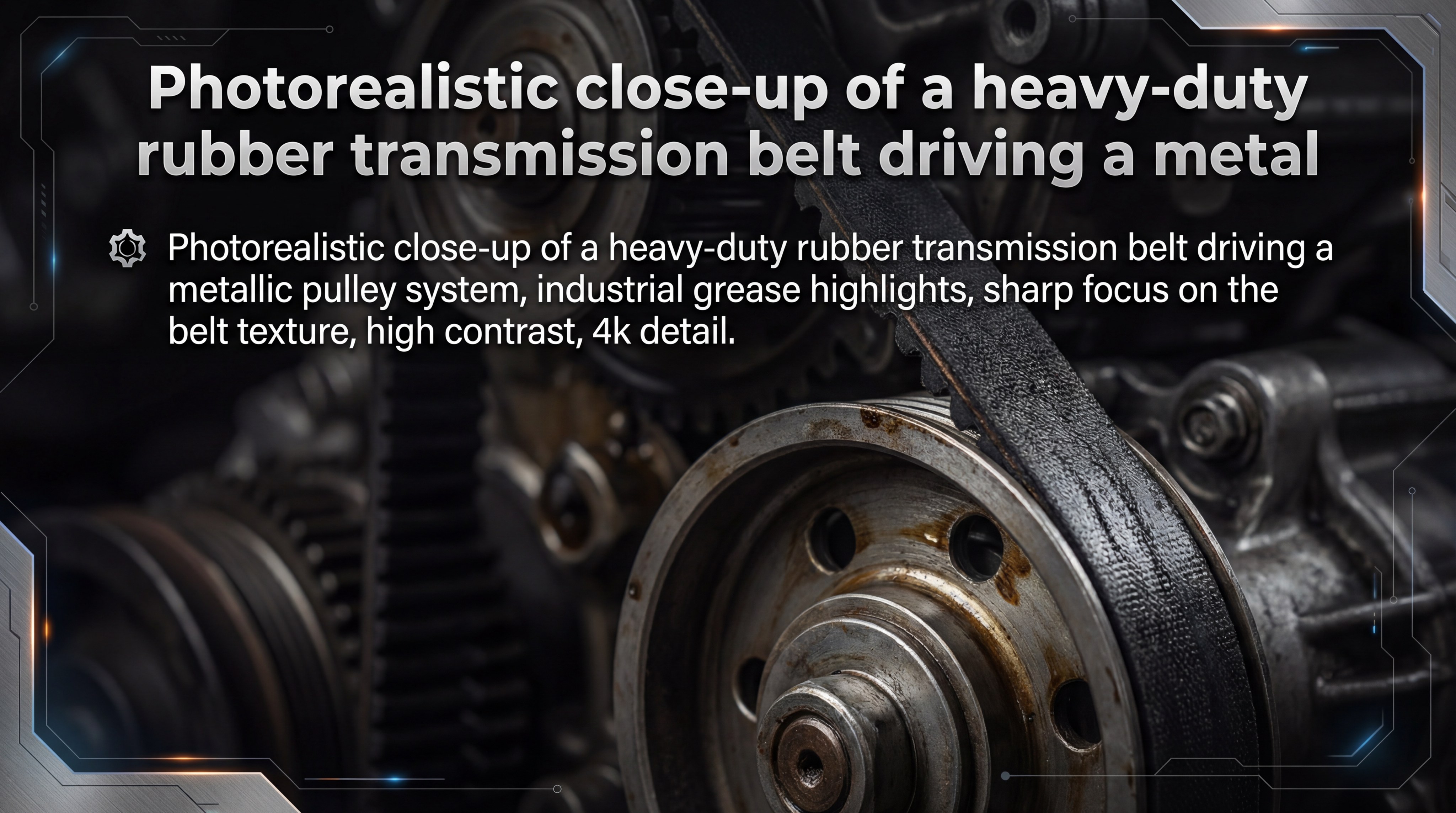
The design of a heavy-duty transmission belt focuses on high-friction coefficients and heat-resistant polymers, ensuring rubber conveyor belt manufacturers china can provide components that transfer torque without slipping. These belts are engineered to handle the extreme RPMs found in industrial motors and agricultural machinery.
How does tooth geometry affect performance?
Believe it or not, the shape of the belt’s “teeth” or ribs determines how much power you can actually transfer to your machinery. But here is the kicker: precision-molded designs prevent the “jumping” that causes mechanical vibrations and gear wear.
- Reinforced tensile cords to prevent stretching.
- Heat-resistant backing for high-speed operation.
- Oil-resistant compounds for machine tool use.
Key Takeaway: High-performance transmission designs ensure that your motor’s energy is converted into productive work with minimal loss.
| Design Element | Material/Feature | Primary Benefit | |
|---|---|---|---|
| Tensile Member | Aramid or Steel Cords | Zero stretch under load | |
| Friction Surface | Specialized Chloroprene | No slip even in wet conditions | |
| Ribbed Profile | Multi-V Design | Increased contact surface area |
Precision engineering in transmission belts is the foundation of mechanical reliability in automated production environments.
How is tensile strength tested?
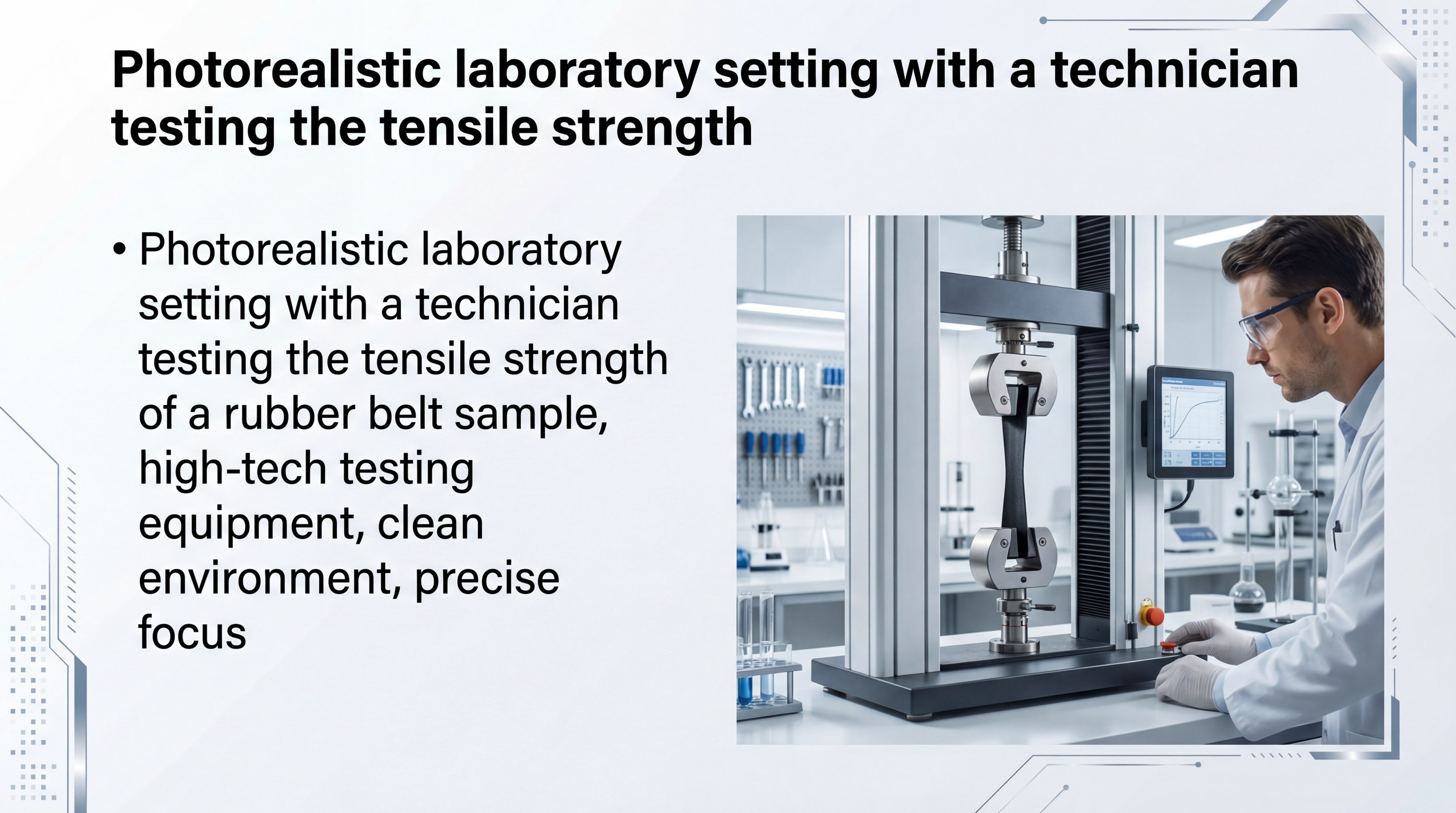
Tensile strength is tested by placing a standardized rubber sample into a vertical hydraulic press that applies increasing force until the material ruptures, a mandatory protocol for rubber conveyor belt manufacturers china. This data provides the “Breaking Strength” rating that you see on every technical specification sheet.
Why should you care about lab results?
You need to know exactly how much weight your belt can pull before it fails. Think about it: a belt rated for 2000 N/mm provides a safety buffer that prevents catastrophic snaps during peak load cycles.
- Measurement of “Elongation at Break.”
- Adhesion testing between rubber and fabric plies.
- Abrasion loss testing using rotating drums.
Key Takeaway: Rigorous laboratory testing is your insurance policy against the hidden defects that cause expensive downtime in the field.
| Test Type | Metric | Industrial Significance | |
|---|---|---|---|
| Tensile Test | N/mm (Strength) | Maximum load-bearing capacity | |
| Adhesion Test | N/mm (Bonding) | Resistance to ply separation | |
| Abrasion Test | mm³ (Volume Loss) | Expected lifespan in rocky terrain |
Empirical data from laboratory stress tests is the only reliable way to predict how a belt will perform under extreme industrial conditions.
What is the multi-ply belt cross-section?
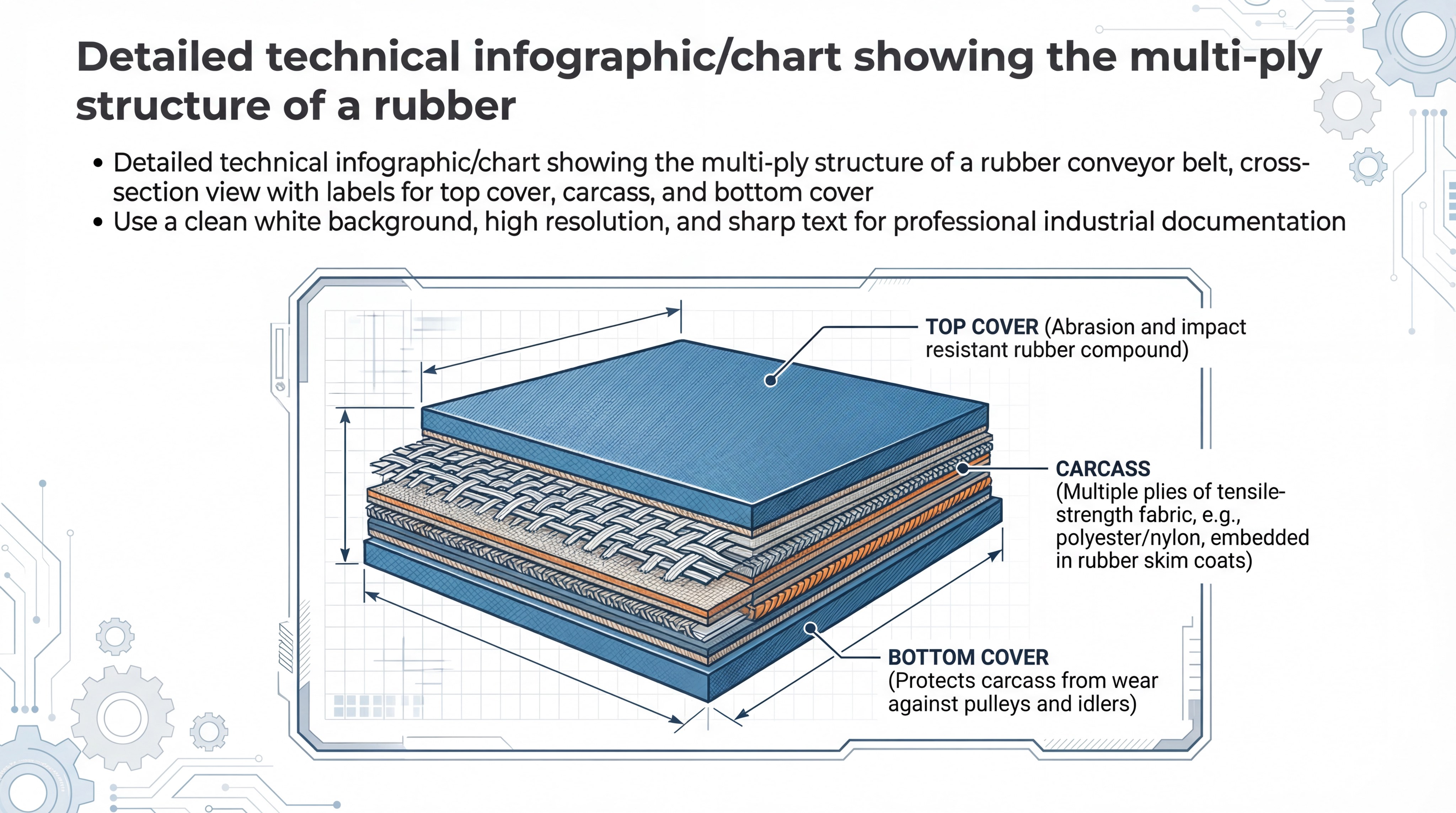
The cross-section of a multi-ply belt reveals a sandwich of high-grade rubber covers and a central carcass made of synthetic fabrics, a standard configuration for rubber conveyor belt manufacturers china. This layered structure is what gives the belt its unique combination of flexibility and longitudinal strength.
How do the layers work for you?
When you look at a cross-section, you see that the top cover is significantly thicker than the bottom. But here is the deal: the top layer is your primary defense against the sharp edges of the materials you are transporting.
- Top Cover: Abrasion and impact resistance.
- Carcass: The “skeleton” providing tensile strength.
- Bottom Cover: Protects the carcass from pulley friction.
Key Takeaway: Understanding the internal anatomy of your belt helps you select the right cover-to-carcass ratio for your specific material density.
| Belt Component | Typical Material | Primary Job | |
|---|---|---|---|
| Top Cover | SBR/NR Blend | Impact and wear protection | |
| Carcass Plies | EP or NN Fabric | Support and tension management | |
| Skim Coat | Adhesive Rubber | Bonding the layers together |
The engineering of a belt’s internal layers determines its ability to transition around pulleys without delaminating over time.
How is heavy-duty mining supported?
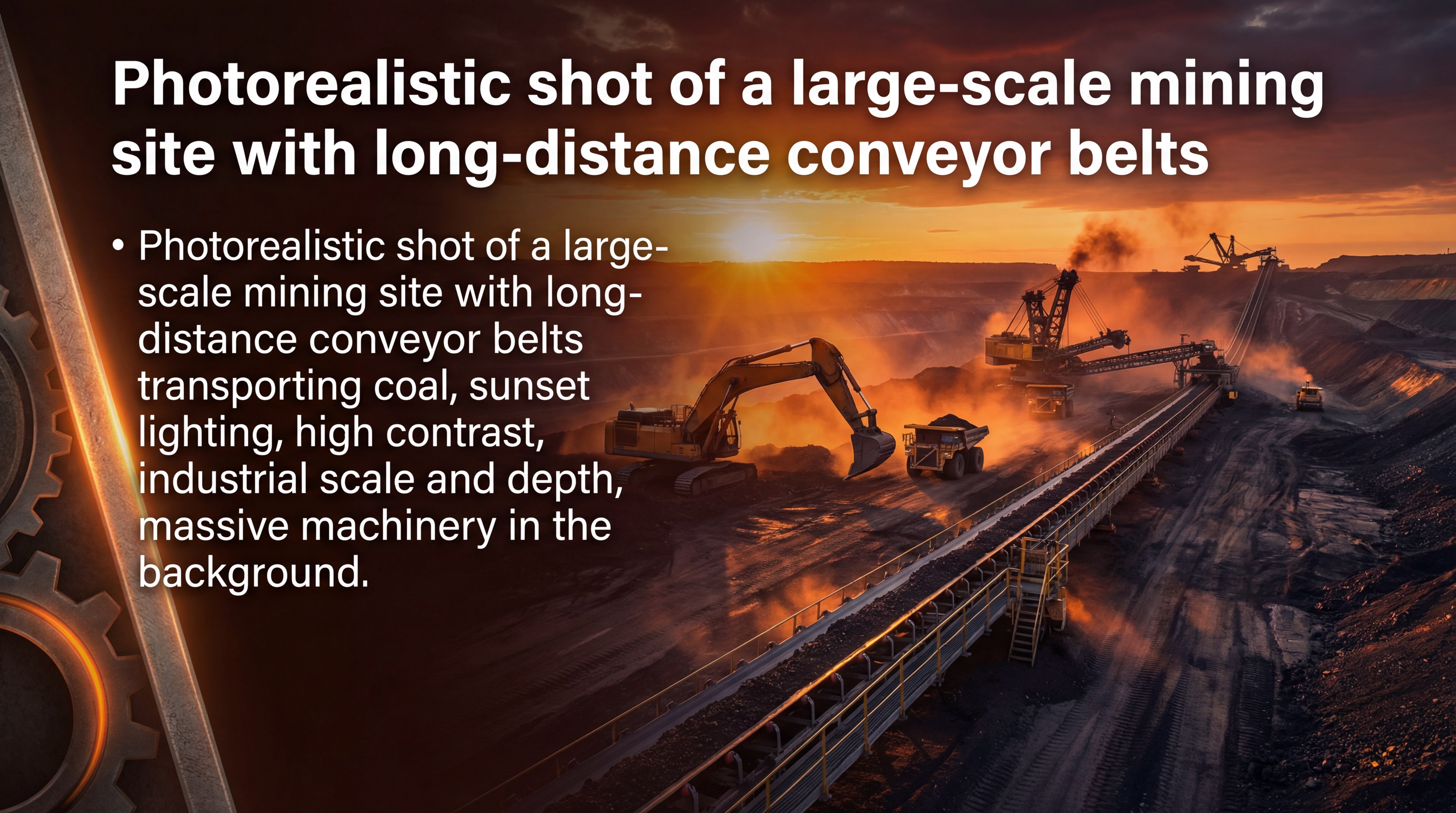
Heavy-duty mining is supported by long-distance conveyor systems that use steel-cord reinforced belts provided by rubber conveyor belt manufacturers china to move thousands of tons of ore per hour. These belts must operate in 24/7 cycles, often spanning several kilometers across rugged, open-pit terrain.
Can you handle extreme incline loads?
You might be wondering how belts manage to pull heavy rocks up steep grades without the material sliding backward. It gets better: specialized chevron patterns and sidewall designs allow you to transport bulk loads at angles up to 90 degrees.
- Steel cord reinforcement for minimal stretch over miles.
- Flame-retardant compounds for underground coal safety.
- Heat-resistant covers for handling hot sintered ores.
Key Takeaway: Mining-grade belting is a high-performance asset that serves as the literal lifeline of your primary production cycle.
| Mining Challenge | Belt Solution | Operational Win | |
|---|---|---|---|
| Sharp Ore Impact | Rip-stop Fabric / Steel | Prevents longitudinal tearing | |
| Long Distance | Steel Cord Carcass | Reduced power consumption | |
| Steep Grades | Chevron / Cleated Belts | Higher material throughput |
The synergy between heavy machinery and high-tensile rubber belting is what enables the modern scale of global resource extraction.
Who leads industrial innovation?
Industrial innovation is led by visionary executives and engineers at rubber conveyor belt manufacturers china who prioritize long-term R&D investment over short-term manufacturing shortcuts. These leaders focus on developing “smart” belts integrated with sensors that can predict a failure before it happens.
How does leadership affect your purchase?
When you buy from a firm with strong technical leadership, you aren’t just buying rubber; you are buying engineering expertise. Think about it: a CEO who invests in high-end vulcanizing presses is ensuring that your product has the best possible bonding.
- Focus on sustainable, energy-saving rubber compounds.
- Global expansion to provide local technical support.
- Investment in ISO and CE safety certifications.
Key Takeaway: Choosing a manufacturer with a reputation for innovation means your facility stays ahead of the curve with the latest material handling tech.
| Leadership Value | Business Practice | Value to You | |
|---|---|---|---|
| Technical Vision | Heavy R&D Spending | Access to next-gen materials | |
| Quality Culture | Zero-tolerance for Defects | Consistent belt performance | |
| Global Strategy | Local Distribution | Faster support and parts |
Strategic leadership in the rubber industry ensures that manufacturing processes evolve to meet the increasing stresses of modern mining.
What defines the industry history?

The history of the industry is defined by the transition from simple canvas belts to the high-tech, multi-compound polymers used by rubber conveyor belt manufacturers china today. This timeline showcases decades of patents, safety breakthroughs, and the scaling of production to meet the needs of a growing global economy.
Why does a manufacturer’s history matter to you?
You should look for a partner with a long “Milestone Wall.” But here is the kicker: a firm that has survived 40 years in the market has refined its formulas through thousands of real-world applications.
- Development of the first fire-resistant underground belts.
- The shift from natural to high-performance synthetic rubber.
- Introduction of computer-controlled tensioning during production.
Key Takeaway: A manufacturer’s historical milestones are a roadmap of their reliability and their ability to solve your complex material handling problems.
| Historical Era | Key Innovation | Industrial Impact | |
|---|---|---|---|
| 1980s | Multi-ply EP Fabric | Standardized general-purpose belting | |
| 2000s | Steel Cord Proliferation | Enabled ultra-long distance mining | |
| 2020s | Energy-Saving Compounds | 15% reduction in motor power needs |
Reflecting on industrial milestones proves that the most reliable solutions are built on a foundation of decades of empirical improvement.
Choosing the right partner for your material handling needs is more than a procurement decision; it is a strategic investment in your facility’s uptime. Our mission is to provide the world’s most durable and efficient conveyor solutions, ensuring that your production never stops. We invite you to contact us today to discuss your custom specifications and experience the precision of a top-tier global manufacturer.
Frequently Asked Questions
Can I customize the rubber thickness for my specific mining application?Yes, you can. Leading manufacturers offer variable cover thicknesses, typically ranging from 3mm to 25mm, allowing you to optimize for either impact resistance or belt flexibility based on your material’s density.
What’s the best way to prevent my conveyor belt from mistracking?The most effective method is a combination of laser alignment during installation and the use of specialized self-aligning idlers. This ensures the belt stays centered on the pulleys, preventing the edge damage that leads to premature failure.
How do I know if I need a steel cord belt or a fabric belt?You should base this decision on the total distance and tension requirements of your system. Steel cord belts are essential for high-tension, long-distance transport (over 1km), while fabric (EP/NN) belts are ideal for shorter, more flexible applications.
Can I get fire-resistant belts for underground coal mining operations?Absolutely. We produce specialized belts that meet international fire safety standards like EN 14973 and MT 668, ensuring the rubber self-extinguishes and prevents the spread of flames in confined environments.
What’s the best way to handle belt jointing for a fast repair?The most reliable method for a permanent fix is hot vulcanization, which creates a joint as strong as the rest of the belt. However, for emergency downtime, cold vulcanizing kits or mechanical fasteners can get your line moving again in just a few hours.