
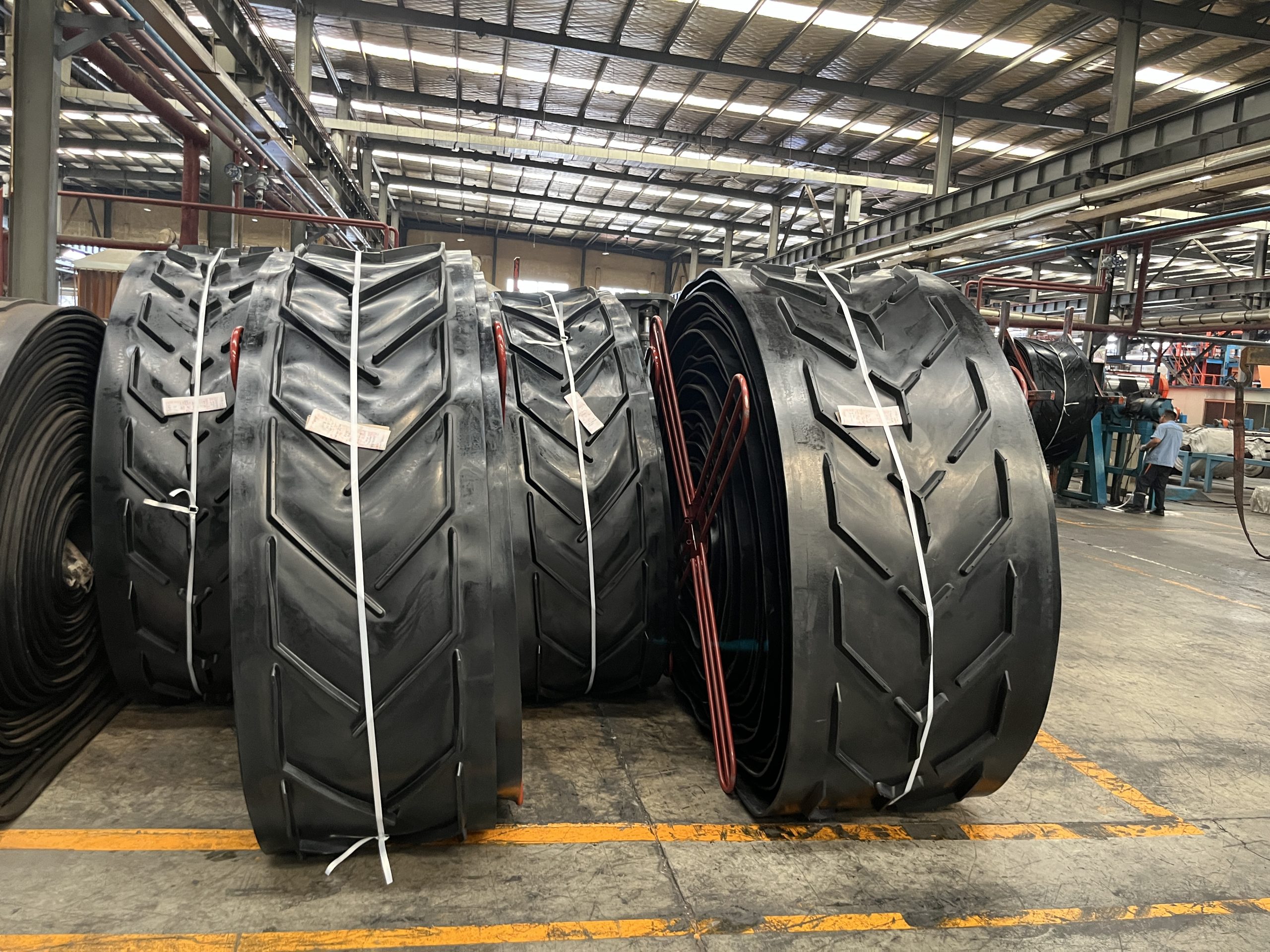
Optimizing rubber belt conveyor specification ensures proper strength, durability, and safety, reducing downtime and improving long-term efficiency in heavy-duty industrial applications.
Why does rubber belt conveyor specification matter?
A technical specification defines the exact performance boundaries and safety limits of your material handling system. Without a precise rubber belt conveyor specification, you risk purchasing equipment that is either too weak for the load or unnecessarily expensive for simple tasks. Engineers rely on these data points to sync the motor torque with the physical capabilities of the belt.

Is data the language of performance?
Look: Technical data is the only way to communicate your environmental needs to a manufacturer. If you ignore the numbers, you are essentially guessing the lifespan of your heavy machinery.
- Load capacity metrics.
- Thermal resistance limits.
- Tensile strength ratings.
Key Takeaway: Precise technical data acts as the “contract” between the buyer and the application requirements, ensuring the belt can handle specific environmental stressors without premature degradation.
| Parameter | Importance | Primary Impact | |
|---|---|---|---|
| Carcass Strength | High | Load Capacity | |
| Rubber Grade | Critical | Environmental Life | |
| Dimensions | Essential | System Alignment |
Detailed data allows for proactive maintenance planning rather than reactive fire-fighting when components fail.
How to read rubber belt conveyor specification?
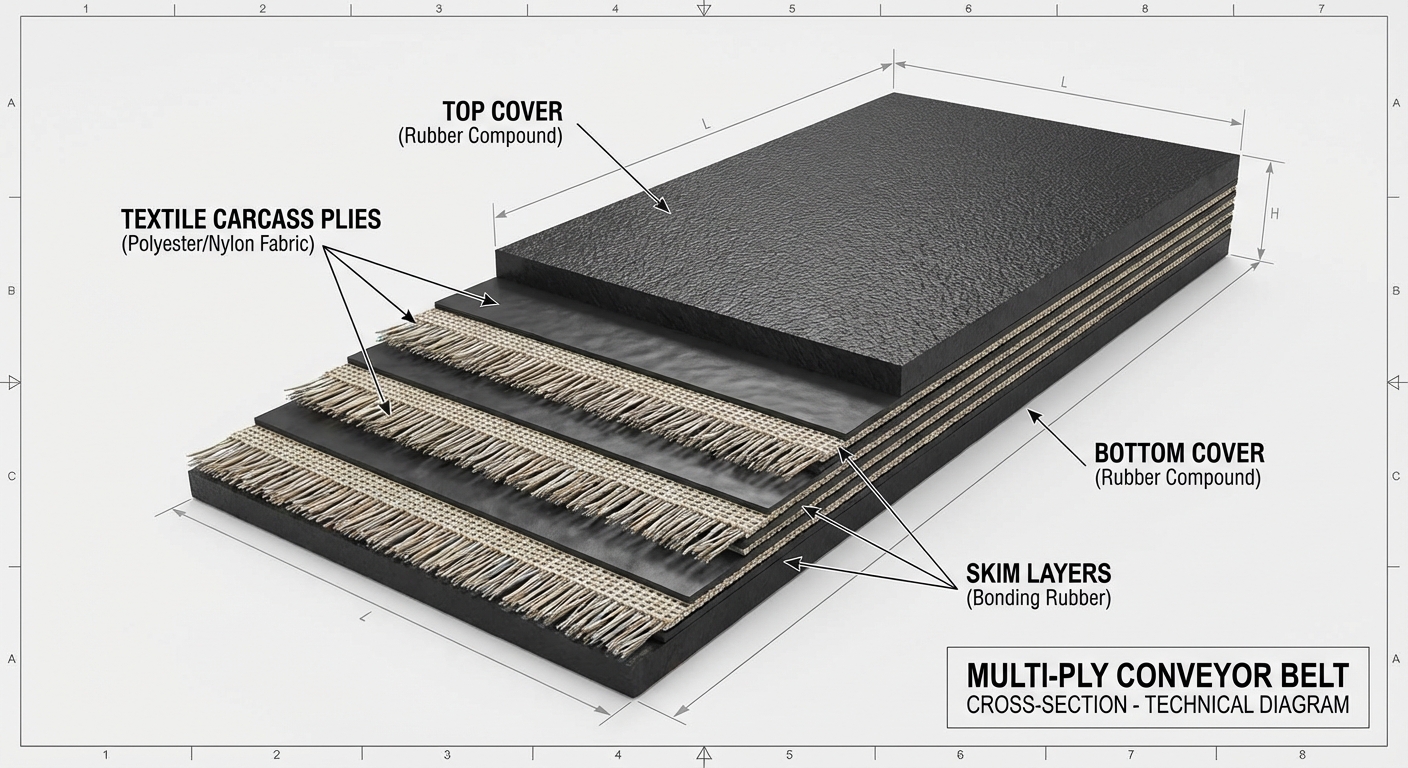
Reading a spec sheet requires identifying the core components like carcass type, width, and cover thickness. Understanding your rubber belt conveyor specification allows you to decode professional grade markings such as EP400/3 or DIN-Y. These codes represent a balance between internal textile reinforcement and external rubber protection.
What is the carcass type and strength?
Here is why: The carcass is the backbone of the belt, and its strength is measured in Newtons per millimeter of width. Choosing the wrong carcass leads to excessive stretching and frequent take-up adjustments.
- EP (Polyester/Nylon) for low stretch.
- NN (Nylon/Nylon) for high impact.
- ST (Steel Cord) for long distances.
Key Takeaway: Reading a specification requires understanding the balance between internal reinforcement (tensile strength) and external protection (rubber covers).
| Spec Code | Meaning | User Application | |
|---|---|---|---|
| EP400/3 | Polyester Carcass, 400N strength, 3 plies | General heavy-duty | |
| 6+2 | 6mm top cover, 2mm bottom cover | High-impact loading | |
| 1200mm | Physical width of the belt | Matching trough rollers |
Properly identifying these codes ensures you don’t accidentally install a light-duty belt in a heavy-duty mining environment.
What logic drives rubber belt conveyor specification?
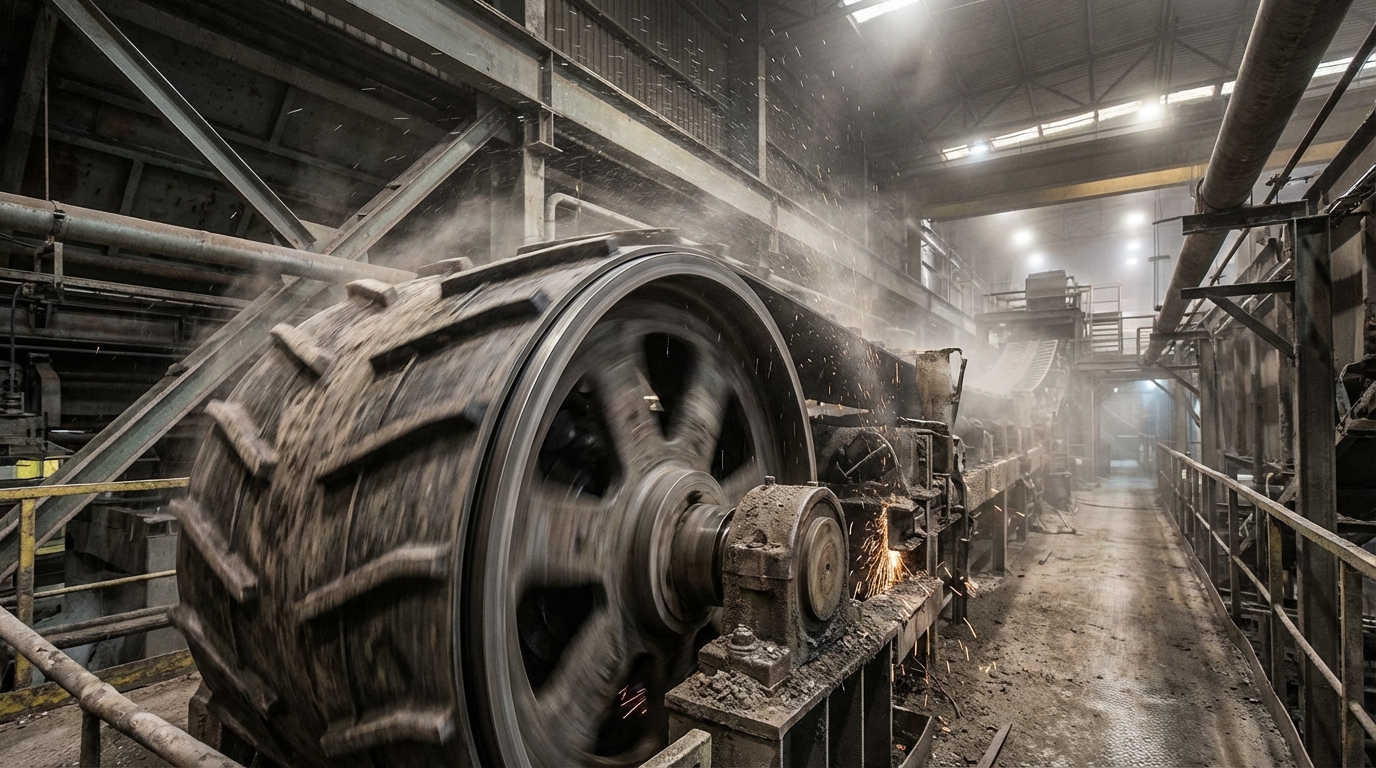
Engineering logic dictates that your belt must match the mechanical dimensions of your pulleys and motors. Every rubber belt conveyor specification choice must account for the bending stress that occurs when the belt wraps around the drive pulley. If the belt is too thick for the pulley diameter, the layers will eventually delaminate and fail.
Does thickness affect power usage?
Look: A thicker belt is heavier, which requires significantly more electricity to start and move under load. You must weigh the benefits of extra wear life against the daily cost of increased energy consumption.
- Drive motor torque requirements.
- Belt weight per meter calculations.
- Energy efficiency standards.
Key Takeaway: Engineering logic dictates that every specification choice must align with the mechanical diameter of pulleys to prevent flex cracking.
| Logic Pair | Relationship | Risk of Mismatch | |
|---|---|---|---|
| Thickness vs Weight | Direct | Increased Motor Load | |
| Ply Count vs Pulley | Inverse | Carcass Delamination | |
| Tension vs Stretch | Direct | Take-up System Failure |
Balancing these engineering factors prevents premature mechanical fatigue in the belt’s internal fabric layers.
How to test rubber belt conveyor specification?
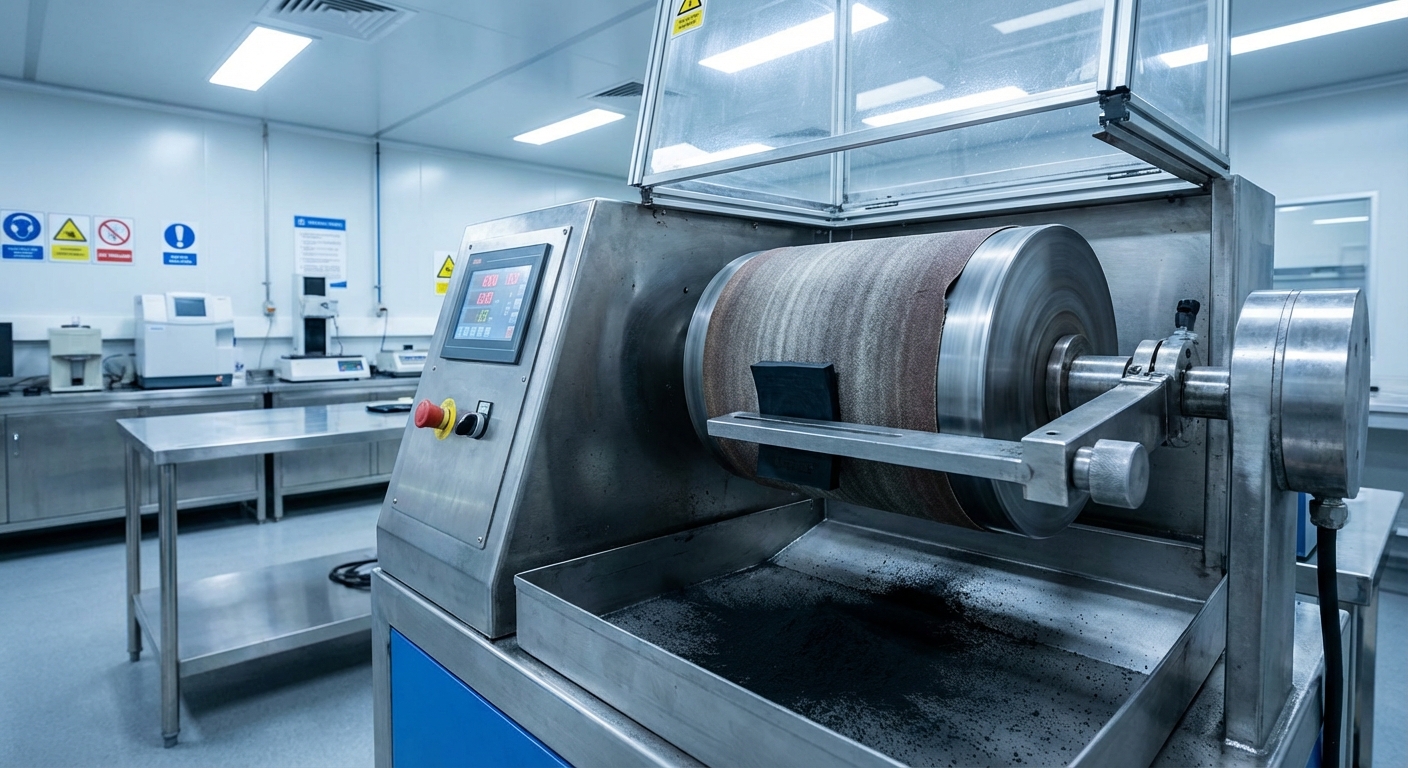
Testing involves standardized laboratory procedures that verify the physical properties of the rubber and fabric. You must check your rubber belt conveyor specification against DIN or ISO test results to ensure the product meets the advertised safety levels. Verification turns theoretical performance into a field guarantee for your production line.
What is the abrasion resistance test?
Here is why: The DIN abrasion test measures how many cubic millimeters of rubber are lost during a standardized friction cycle. Lower numbers indicate a longer-lasting belt that can handle sharp ores and abrasive sands.
- DIN 22102 standards.
- Volume loss measurements.
- Surface friction coefficients.
Key Takeaway: Verification through standardized testing (like the DIN abrasion or flame tests) turns theoretical numbers into guaranteed field performance.
| Test Type | Metric | Performance Goal | |
|---|---|---|---|
| Abrasion | Volume Loss (mm³) | Lower is better (Longer life) | |
| Heat | Temperature Limit (℃) | Material survival at 200℃+ | |
| Flame | Self-extinguish time | Mine safety compliance |
Consistent testing protocols eliminate the variability of rubber quality across different manufacturing batches.
Which rubber belt conveyor specification is global?
Global standards like ISO, DIN, and RMA provide a unified language for belt quality across international borders. When selecting a rubber belt conveyor specification, you must identify which regional standard your facility follows for compliance. These standards ensure that belts manufactured in one country will fit and perform in systems located elsewhere.

How do different standards compare?
Look: While DIN is common in Europe, the RMA standards dominate the American market with focus on abrasion grades. You need to understand the conversion between these systems to source parts globally without error.
- ISO 10247 for quality.
- RMA Grade 1 and 2.
- AS standards for Australia.
Key Takeaway: Different regions (Europe, USA, Australia) use different grading systems, making it essential to cross-reference specs across international boundaries.
| Region | Major Standard | Focus Area | |
|---|---|---|---|
| International | ISO | General quality & safety | |
| USA | RMA | Abrasion grades 1 and 2 | |
| Germany | DIN | Precise wear resistance |
Utilizing international standards simplifies the procurement process for multi-national industrial corporations.
Where to use rubber belt conveyor specification?
Application-specific environments determine the necessary tensile strength and rubber compound required for your system. Using the right rubber belt conveyor specification in a coal mine is vastly different from using one in a food processing plant. Each industry presents unique hazards like oil, heat, or fire that your belt must survive.
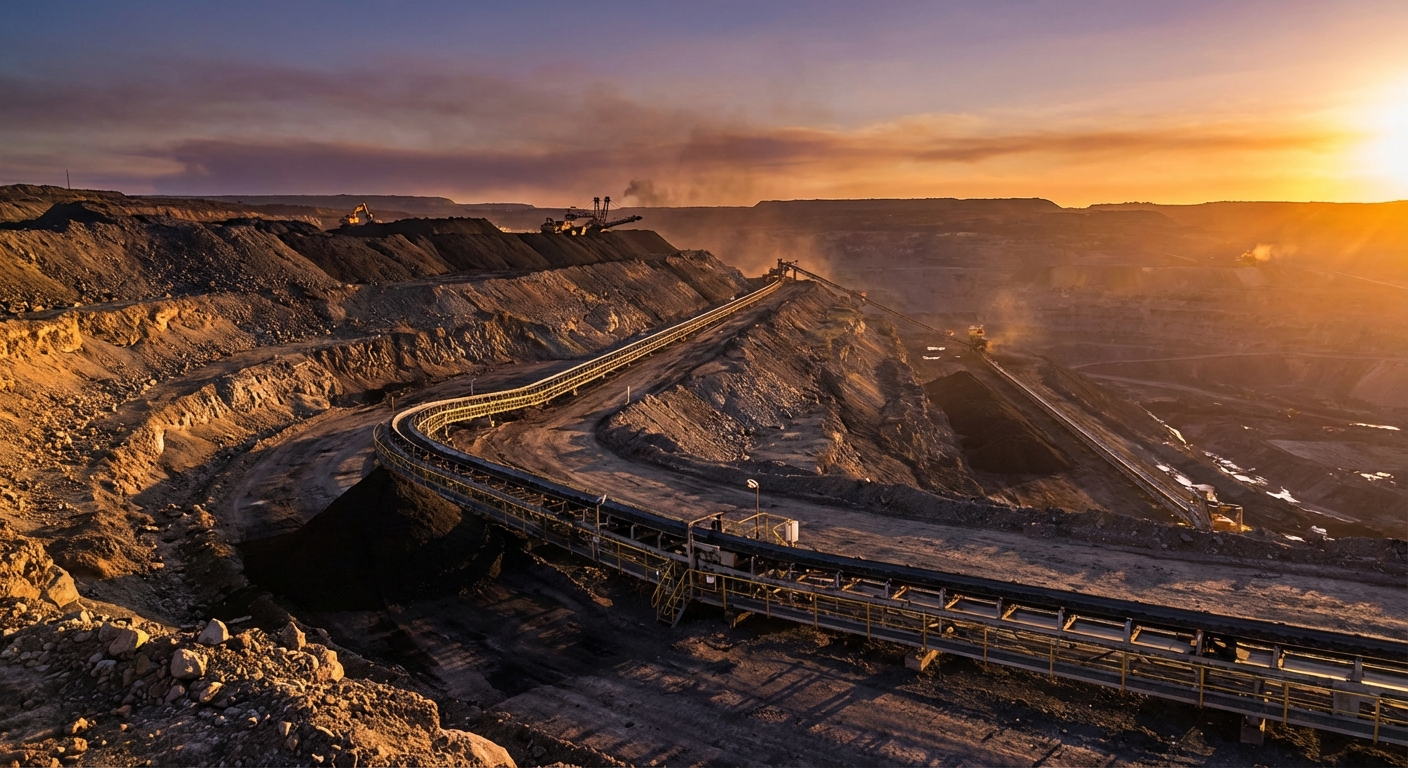
What is needed for mining and coal?
Here is why: Mining requires high-tension steel cords and flame-retardant compounds to prevent underground disasters. These belts must also resist high impact from large rocks dropping onto the conveyor from height.
- Flame resistance (FR) grades.
- Anti-static (AS) properties.
- Steel cord reinforcement.
Key Takeaway: Application-specific specs ensure the equipment survives unique industry hazards like sharp ore or extreme chemicals.
| Industry | Recommended Spec | Primary Challenge | |
|---|---|---|---|
| Mining | Steel Cord / ST2000 | Extreme Tension | |
| Cement | Heat Resistant / T3 | High Temp Clinker | |
| Agriculture | Oil Resistant / OR | Grain Oils & Swelling |
Choosing industry-specific specs prevents the rubber from swelling or cracking when exposed to caustic materials.
What errors hit rubber belt conveyor specification?
The most common errors involve over-specifying thickness while ignoring carcass compatibility and pulley diameter. A flawed rubber belt conveyor specification often focuses solely on price, leading to a “cheap” belt that fails within months. You must avoid the trap of thinking “thicker is always better” when it actually increases system stress.
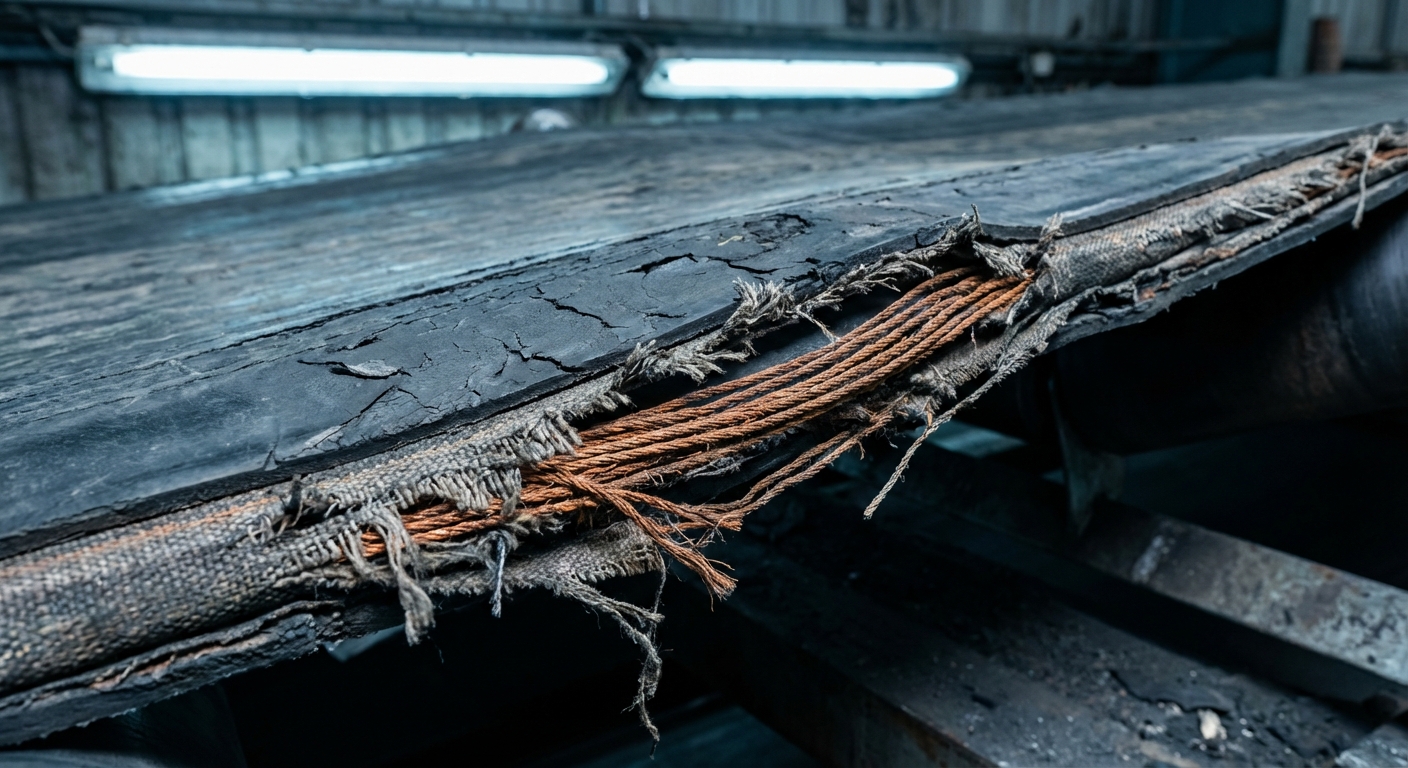
Is thicker always a better choice?
Look: Adding extra rubber covers increases the weight of the belt, which can burn out your drive motors prematurely. It also makes the belt more rigid, increasing the risk of surface cracking during cold starts.
- Excessive weight issues.
- Motor overheating risks.
- Flexibility degradation.
Key Takeaway: The most common mistake is focusing on a single parameter (like thickness) while ignoring the overall system compatibility.
| Common Trap | The Reality | Result | |
|---|---|---|---|
| “Thicker is better” | Increases weight/power | Higher electricity bills | |
| “Lowest price” | Lower rubber quality | 3x faster replacement | |
| Ignoring pulleys | High bending stress | Surface cracking in weeks |
Avoiding these common pitfalls requires a holistic view of the entire conveyor mechanical assembly.
What is rubber belt conveyor specification cost?
Cost calculation must focus on the total cost of ownership rather than the initial purchase price. A high-grade rubber belt conveyor specification might cost more today, but it saves thousands in reduced maintenance and longer replacement cycles. You are investing in uptime and reliable production volume when you pay for quality.

How to calculate total cost of ownership?
Here is why: Total cost includes the purchase price plus the energy usage and the labor cost of every belt splice and repair. A premium belt that lasts three times longer than a cheap one is almost always the more profitable choice.
- Initial purchase price.
- Energy consumption costs.
- Maintenance labor hours.
Key Takeaway: A high-spec belt might cost 20% more initially but can reduce the total 5-year spend by 50% due to fewer replacements.
| Financial Factor | Standard Belt | High-Spec Belt | |
|---|---|---|---|
| Initial Cost | Low | Moderate | |
| Service Life | < 1 Year | 3+ Years | |
| 5-Year Replacement Spend | High | Low |
A strategic financial analysis proves that durable specifications significantly improve the plant’s bottom line.
How is rubber belt conveyor specification made?
Manufacturing specs are realized through precise mixing of rubber compounds and controlled vulcanization under high pressure. The rubber belt conveyor specification you receive is the result of multiple factory layers being bonded together in a massive press. Quality control during this phase ensures that the final product matches the engineering data provided.
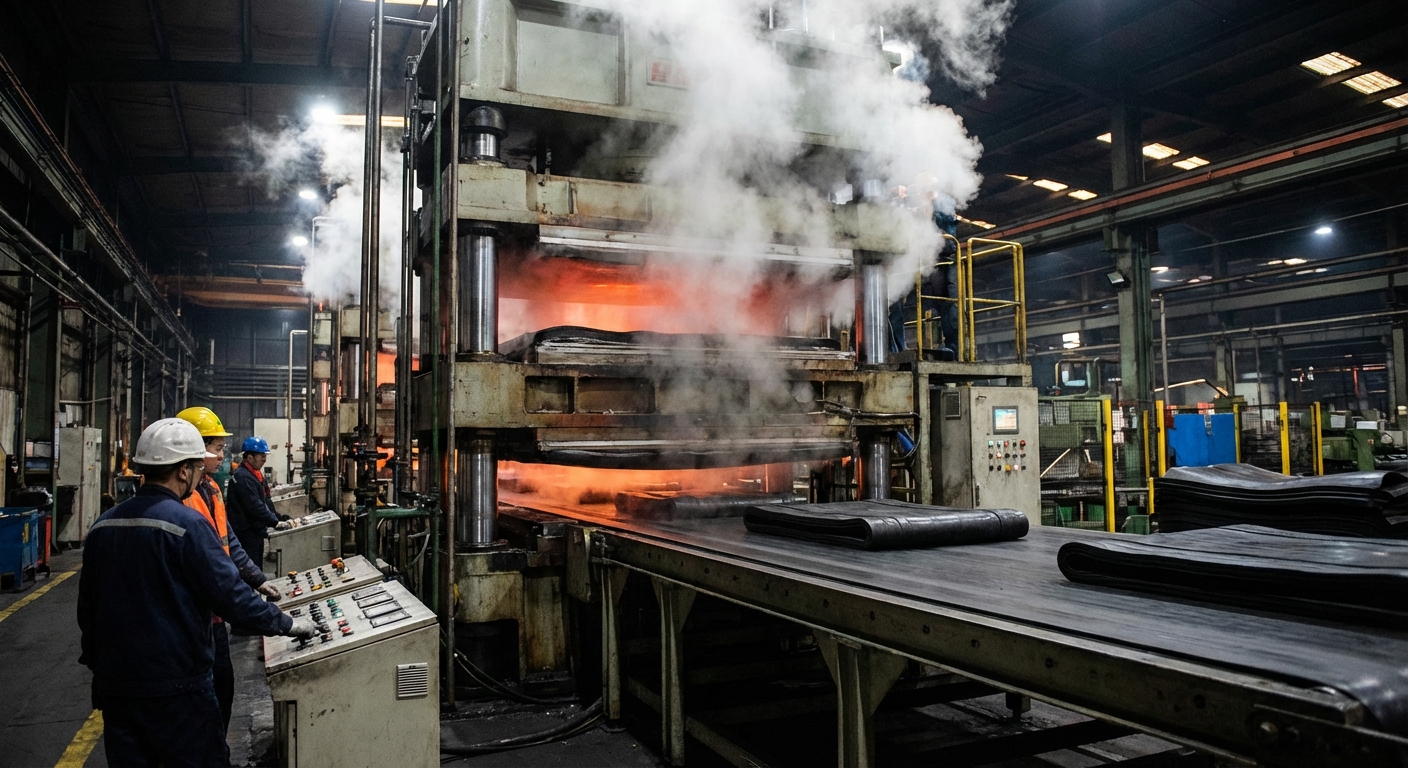
Is forming a critical control point?
Look: The way the fabric plies are aligned and tensioned before pressing determines the tracking accuracy of the final belt. If the forming process is sloppy, your belt will always wander and fray at the edges.
- Curing temperature control.
- Ply alignment precision.
- Chemical bonding integrity.
Key Takeaway: Quality specifications are only as good as the manufacturing process; bonding integrity is what makes a spec “real.”
| Factory Step | Spec Impact | Quality Outcome | |
|---|---|---|---|
| Mixing | Rubber Grade | Chemical Resistance | |
| Forming | Adhesion | No Delamination | |
| Vulcanizing | Cure State | Tensile Elasticity |
Understanding the manufacturing process helps you vet suppliers based on their factory equipment and quality standards.
Why select rubber belt conveyor specification?
Smart selection protects your staff and ensures your production targets are met every single month. Choosing a specialized rubber belt conveyor specification prevents the catastrophic failures that put workers at risk and stall operations. It is the ultimate tool for budget control and operational excellence in a modern industrial setting.
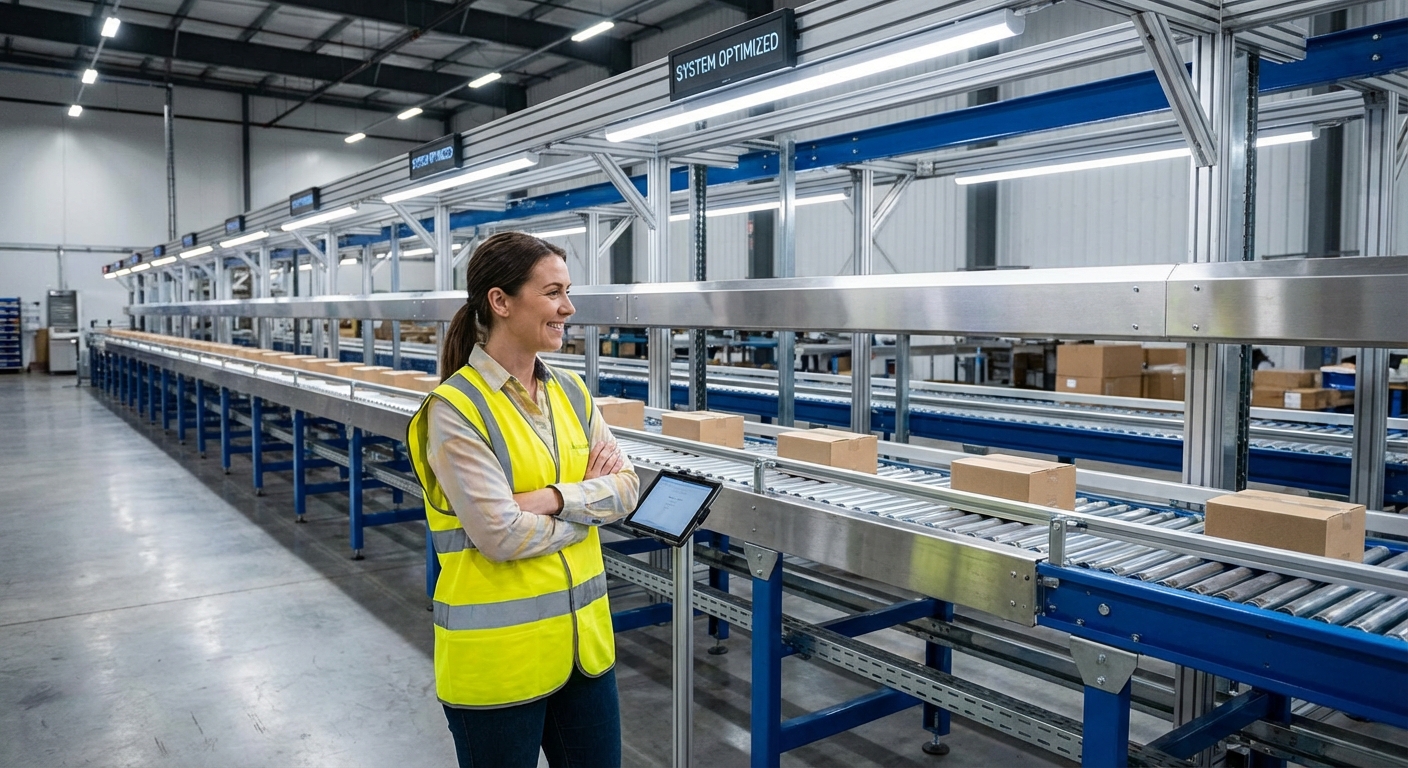
Is specification the core of selection?
Here is why: Selection without a spec is just a gamble with your company’s most vital equipment. A complete specification allows you to compare quotes from different manufacturers on a “like-for-like” basis.
- Manufacturer accountability.
- Price comparison accuracy.
- Performance guarantees.
Key Takeaway: Smart selection starts with a complete specification; it is the ultimate tool for protecting your budget and staff.
| Step | Action | Outcome | |
|---|---|---|---|
| Audit | Check Pulley & Load | Foundation Data | |
| Specify | Use Full Codes (EP/DIN) | Accurate Quotes | |
| Verify | Request Test Reports | Performance Guarantee |
By following a structured selection process, you eliminate the risks associated with unverified belt components.
Selecting the right equipment for your facility doesn’t have to be a complicated process if you have the right technical partner. Our team specializes in high-performance solutions that reduce downtime and maximize your operational throughput. If you are ready to upgrade your system or need a custom quote, please contact us today to speak with a domain expert.
FAQ: Rubber Belt Conveyor Specification
Can I use a fabric belt for long-distance mining?No, because long-distance mining usually requires steel cord specifications to handle extreme tension and prevent stretching. Fabric belts lack the necessary tensile modulus for systems extending several kilometers.
What’s the best way to choose between DIN-W and DIN-Y?The best way is to analyze the abrasiveness of your material. Choose DIN-W for sharp rocks like granite and DIN-Y for less aggressive materials like coal or cement.
How do I know if my pulley is too small for my belt?Check the manufacturer’s minimum pulley diameter table against your belt’s ply count and thickness. If your pulley is smaller than the recommended value, the belt will experience internal delamination and cracking.
What’s the best cover thickness for general purpose usage?The best balance is typically a 5mm top cover and a 2mm bottom cover for standard industrial loads. This provides decent wear protection without adding excessive weight to the drive system.
How do I know if I need a flame-retardant belt?You need this specification whenever you are operating in an underground mine or a high-heat environment with explosive dust. Standard rubber can act as a fuel source during a fire, whereas FR compounds self-extinguish.