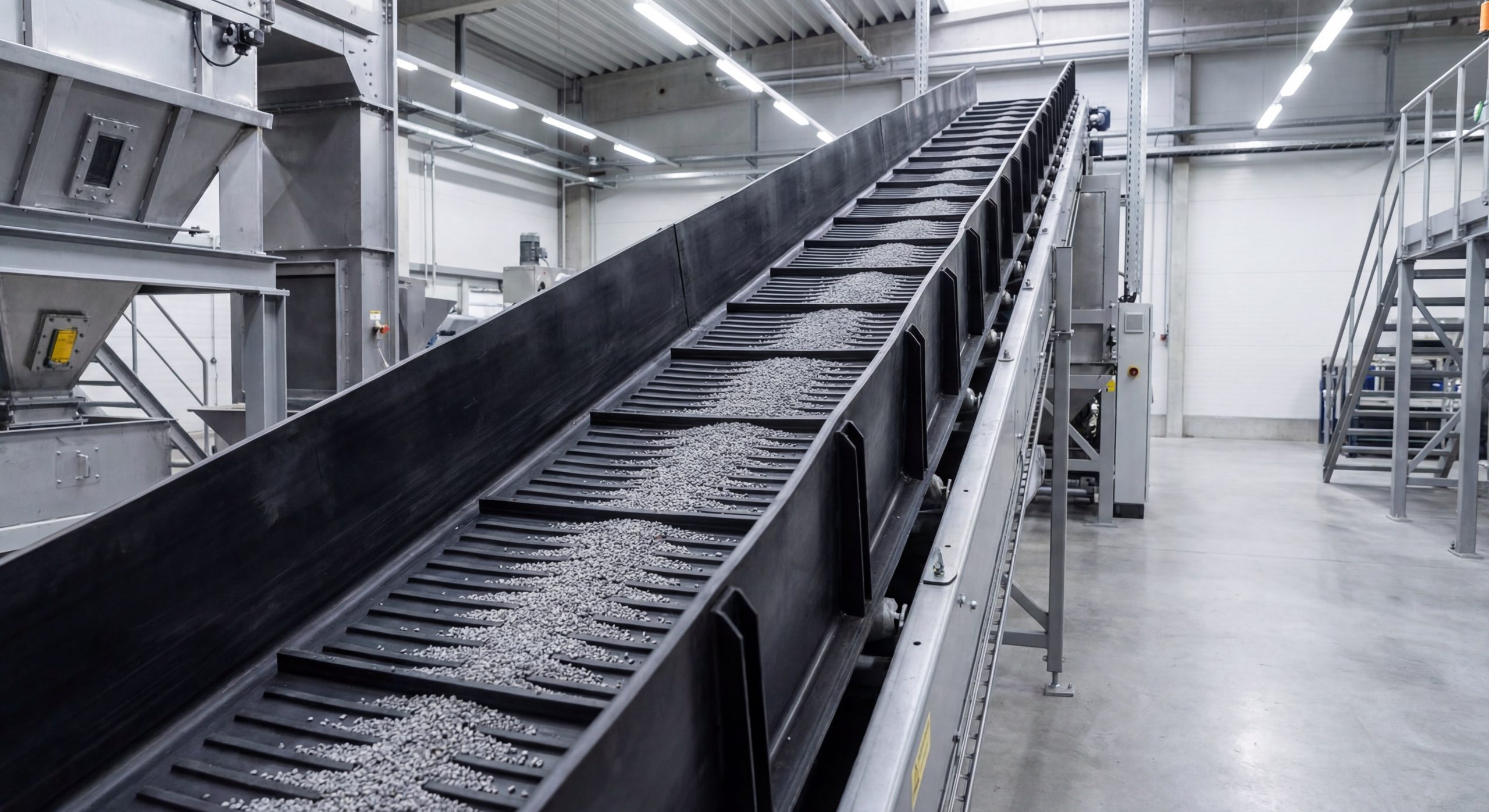
A rubber corrugated conveyor belt enables steep-angle and vertical transport, preventing material rollback, reducing spillage, and improving efficiency in industrial material handling systems.
What is a rubber corrugated conveyor belt?
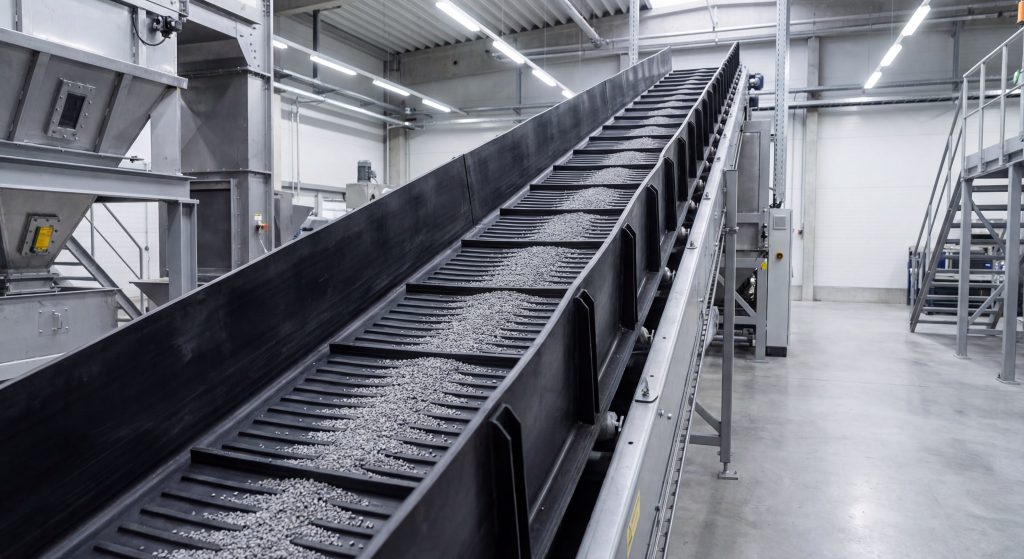
A rubber corrugated conveyor belt is a specialized transport system featuring flexible side ribs and transverse cleats that create a sealed environment for bulk materials. This unique construction allows the belt to move products vertically or at steep angles without the risk of side-spilling. It serves as a unified solution for industries requiring high-volume transport in compact footprints.
The integration of sidewalls and cleats ensures that even fine-grained materials remain contained during the entire conveying cycle. You will find that this design effectively replaces multiple traditional conveyor stages with a single, continuous loop. It is the gold standard for modern plants looking to optimize throughput while minimizing equipment complexity.
Understanding the three-part design
The system relies on a high-strength base belt, corrugated side ribs, and stabilizing transverse cleats. These components are vulcanized together to form a rugged “bucket” structure that survives heavy industrial use.
- Base Belt: Provides the necessary tension and cross-rigidity for the entire system.
- Corrugated Sidewalls: Create the vertical containment walls that flex around pulleys.
- Transverse Cleats: Act as the floor of the pocket to carry material upwards.
Make no mistake: The synergy between these three parts determines the overall reliability of your material handling line.
How the moving pocket concept works
The corrugated design allows the sidewalls to compress and expand seamlessly as the belt travels over head and tail pulleys. Because the walls are flexible, they maintain a tight seal even when the belt is under high tension or bending at sharp angles.
Key Takeaway: The moving pocket design ensures that your materials are treated as individual batches within a “container,” preventing friction-based product damage.
| Component | Function | Material | |
|---|---|---|---|
| Sidewall | Containment | Flexible Rubber | |
| Cleat | Elevation | Reinforced Polymer | |
| Base | Support | Steel or Fabric Cord |
This table demonstrates that the specialized components work in unison to provide a superior containment system compared to flat alternatives.
Why choose a rubber corrugated conveyor belt over flat ones?
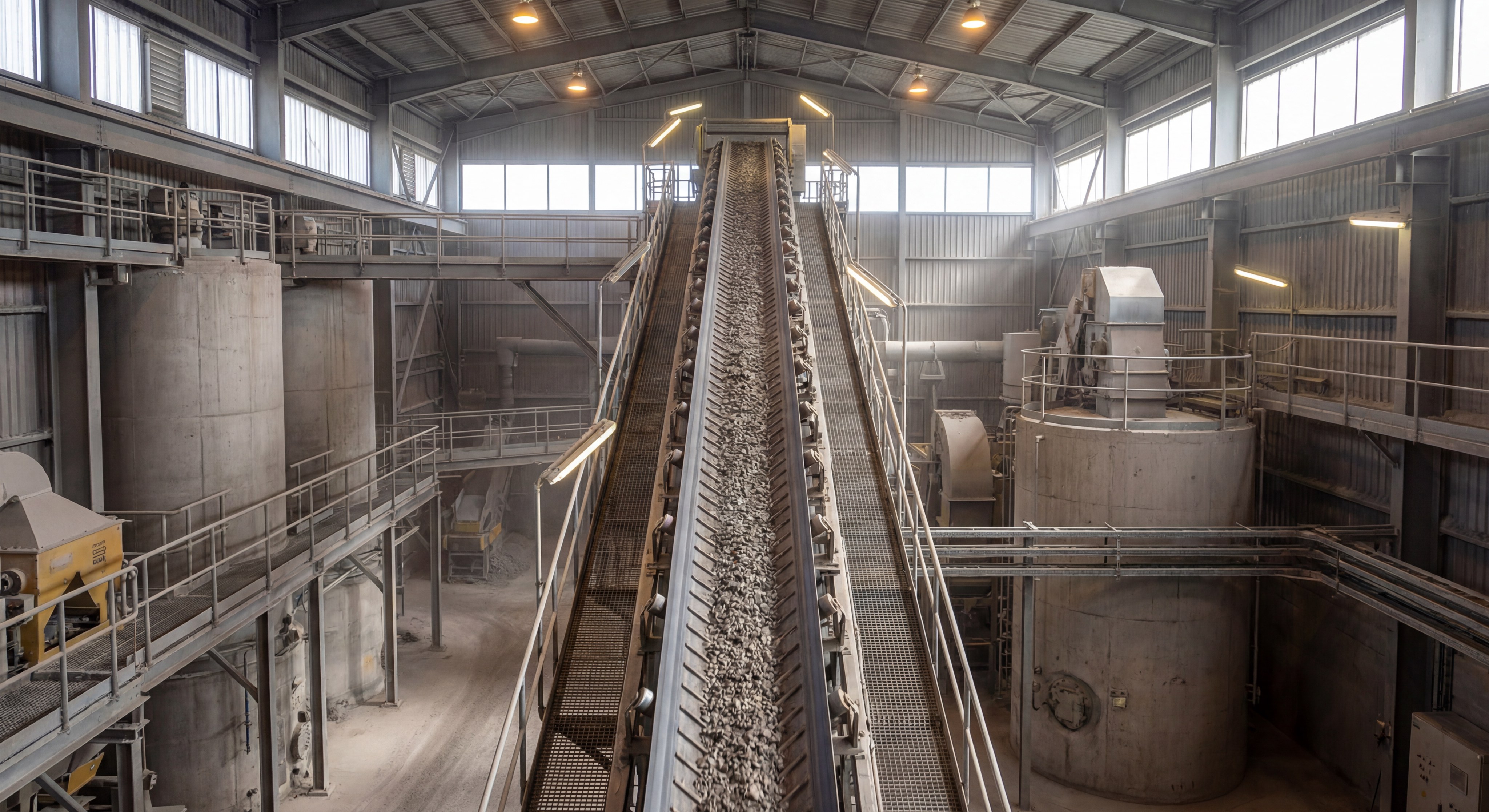
Choosing a rubber corrugated conveyor belt allows you to transport materials at angles up to 90 degrees, which is impossible for standard flat belts. Flat systems require long horizontal distances to reach specific heights, consuming valuable floor space and increasing infrastructure costs. By switching to a sidewall design, you can achieve the same elevation in a fraction of the horizontal distance.
Material loss is also a major factor when comparing these two technologies. Flat belts often experience spillage at the edges, leading to wasted product and increased cleaning labor for your team. The “container” effect of the sidewall ensures that every ounce of material reaches its destination safely and efficiently.
Vertical lifting in confined spaces
In modern industrial facilities, floor space is often the most expensive resource you have. Using a sidewall belt allows you to reclaim up to 75% of the space typically required for a standard conveyor ramp.
- Compact Footprint: Reduces the total length of the conveyor structure.
- Steep Angles: Operates effectively from 30 to 90 degrees.
- Direct Incline: Eliminates the need for transfer points between different belt sections.
Believe it or not: This vertical capability allows you to design taller, more efficient processing towers without expanding your building’s foundation.
Eliminating material loss and dust
The sealed edges of the sidewall prevent fine particles from escaping into the air or falling onto the conveyor frame. This not only keeps your workplace cleaner but also protects sensitive mechanical parts like idlers and bearings from abrasive dust.
Key Takeaway: Eliminating spillage directly increases your profit margins by ensuring that 100% of the loaded material is delivered to the discharge point.
| Metric | Flat Belt | Sidewall Belt | |
|---|---|---|---|
| Max Angle | 20 Degrees | 90 Degrees | |
| Spillage Risk | High | Minimal | |
| Space Needed | Large | Compact |
This table demonstrates that the sidewall configuration offers significant spatial and operational advantages for high-angle transport.
What are the types of a rubber corrugated conveyor belt?
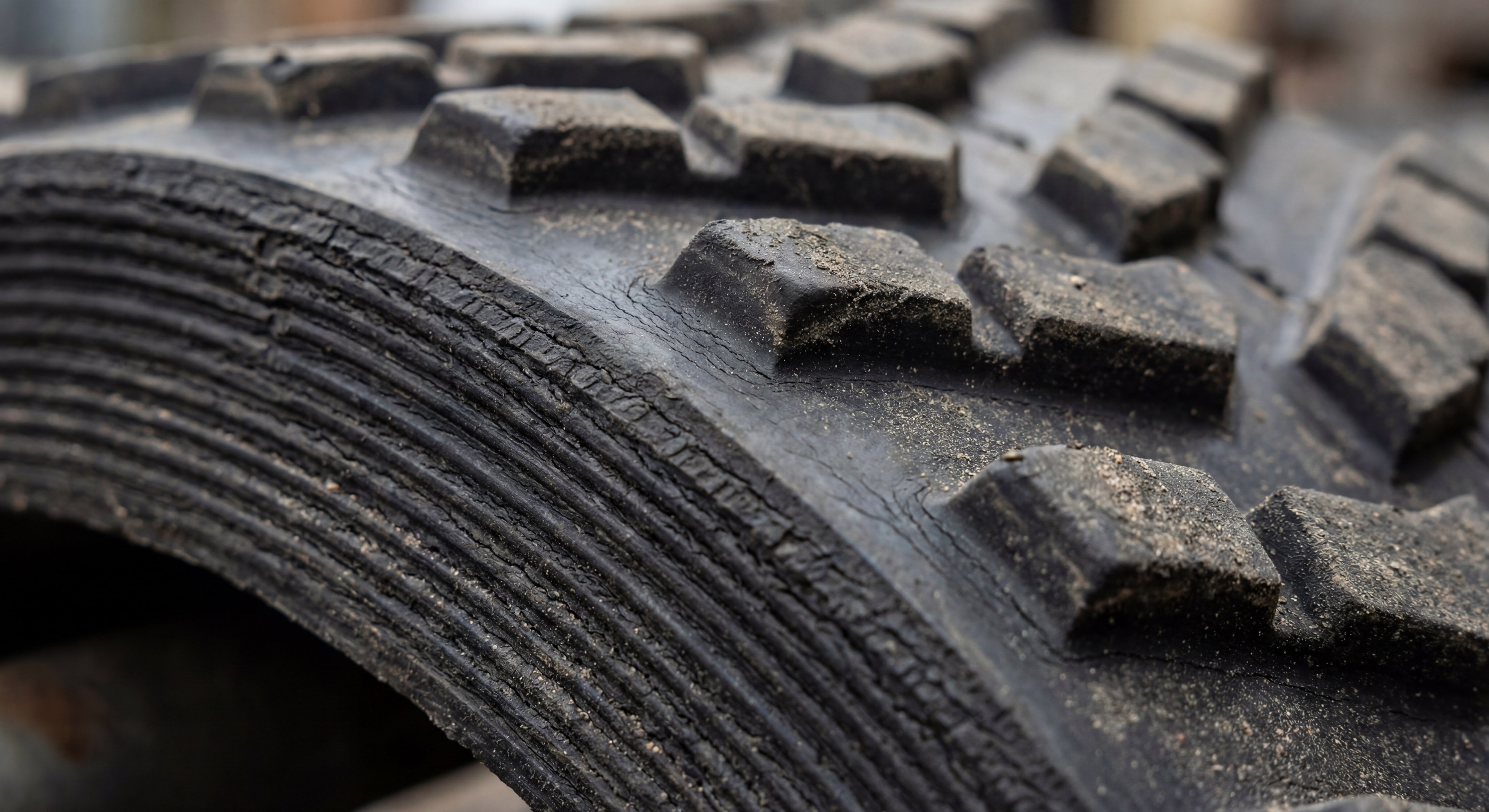
The specific types of a rubber corrugated conveyor belt are generally categorized by the shape of their sidewall profiles and the geometry of their cleats. Standard S-type profiles are the most common, featuring a sinusoidal wave that provides excellent flexibility for light to medium-duty applications. For heavier loads, reinforced profiles like the W-type offer greater vertical stability and load-bearing capacity.
You must also consider the cleat design, which can be T-shaped, C-shaped, or TC-shaped. Each cleat type is engineered to handle specific material flow characteristics and incline angles. Selecting the right combination of wall and cleat ensures your belt operates at peak efficiency without mechanical fatigue.
Standard S-type and heavy-duty profiles
Most light-duty industries prefer the S-type sidewall because it balances cost with high performance. However, if you are moving heavy ores or large rocks, the reinforced W-type is necessary to prevent the walls from bowing under the weight.
- S-Type: Ideal for small aggregates, grains, and recycled materials.
- W-Type: Designed with extra fabric reinforcement for high-capacity mining loads.
- WM-Type: A hybrid design that offers both flexibility and extreme lateral strength.
The bottom line is: The profile you choose must match the density and volume of the material you intend to move every day.
Matching cleats to your incline angle
Cleats act as the “buckets” that hold your material against the pull of gravity. T-cleats work well for angles up to 40 degrees, while C or TC cleats are mandatory for steep or vertical lifts to prevent rollback.
Key Takeaway: Correct cleat selection prevents material backflow, ensuring that your conveyor maintains its rated capacity even at a 90-degree incline.
| Profile Type | Max Height | Best Application | |
|---|---|---|---|
| S-Profile | 120mm | Food & Light Aggregates | |
| W-Profile | 400mm | Heavy Mining & Construction | |
| TC-Cleat | N/A | Vertical Transport |
This table demonstrates that different profiles are engineered to meet specific industrial demands and height requirements.
What materials make a rubber corrugated conveyor belt durable?
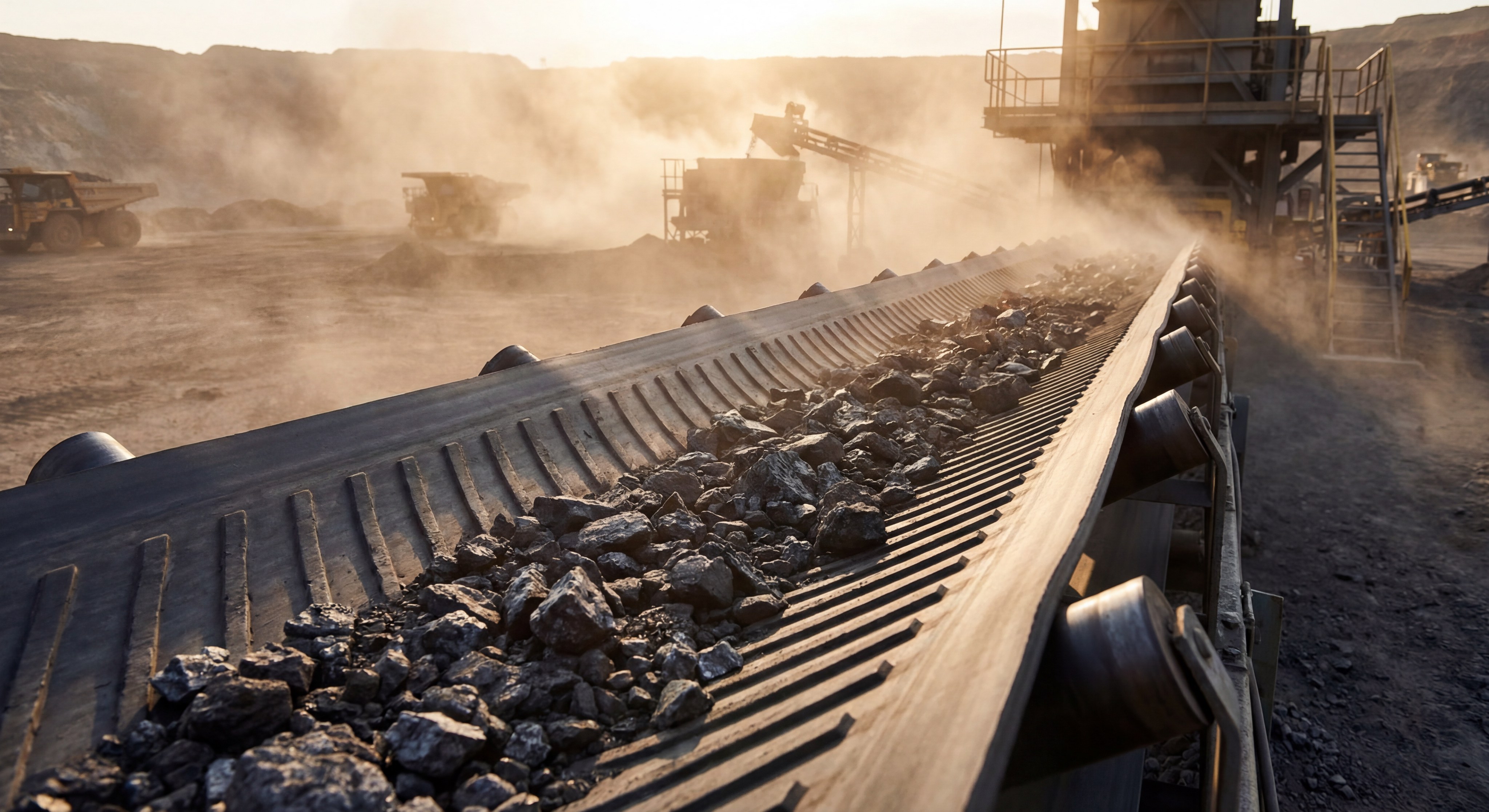
A durable rubber corrugated conveyor belt is constructed using high-grade rubber compounds and specialized reinforcement layers like polyester or steel cord. The rubber must be resistant to abrasion, tearing, and the specific environmental conditions of your site, such as extreme heat or oil exposure. Without the right chemical composition, the sidewalls can become brittle and crack under the constant stress of pulley rotation.
You also need to look at the internal carcass of the base belt, which provides the longitudinal tension. Whether you choose fabric (EP/NN) or steel cord depends on the length of the conveyor and the weight of the material being lifted. Heavy-duty applications typically require steel cord reinforcement to prevent belt stretching over time.
Selecting the right rubber compounds
Different industries require different rubber properties to ensure a long service life. If you are transporting hot cement, you need EPDM-based compounds that can withstand temperatures up to 150°C.
- Abrasion Resistant: Standard for sand, gravel, and crushed stone.
- Oil Resistant: Essential for recycling plants and chemical processing.
- Heat Resistant: Necessary for foundry sand or hot clinker transport.
Think of it this way: The rubber is the skin of your system, and it must be tough enough to survive the harshest elements of your environment.
Reinforcement: Fabric vs. steel cord
Fabric carcasses offer great flexibility and are cost-effective for most medium-range applications. Steel cord carcasses are the heavy hitters, providing the zero-stretch performance needed for extremely high vertical lifts in the mining sector.
Key Takeaway: Choosing the correct reinforcement prevents premature belt failure and reduces the frequency of tensioning adjustments in your maintenance schedule.
| Material Type | Heat Resistance | Tension Strength | |
|---|---|---|---|
| SBR Rubber | Moderate | Standard | |
| EPDM Rubber | High (150°C) | Standard | |
| Steel Cord | Moderate | Very High |
This table demonstrates that material selection is a balance between environmental resistance and structural requirements.
How is a rubber corrugated conveyor belt vulcanized?
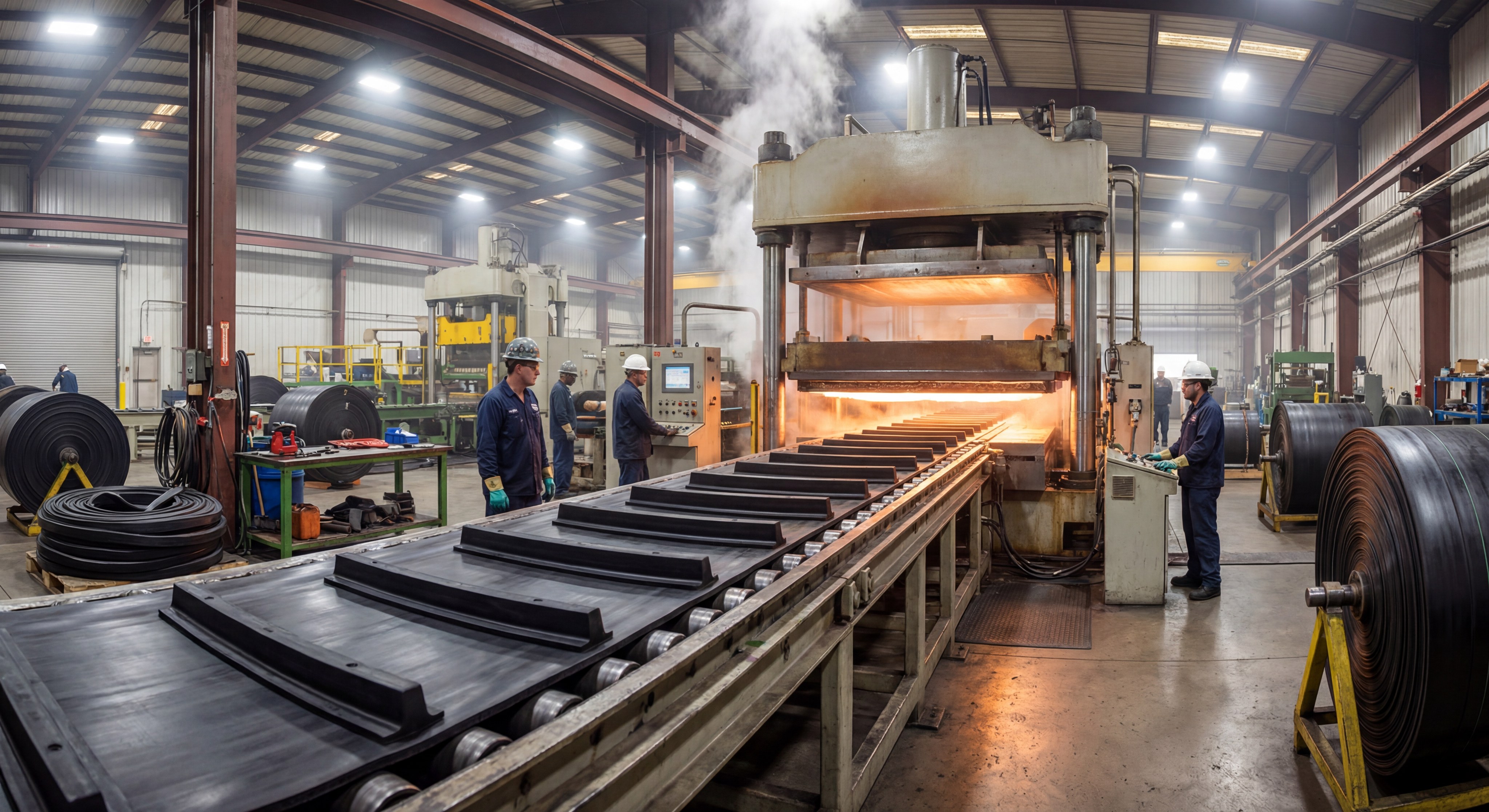
The manufacturing of a rubber corrugated conveyor belt relies on a double vulcanization process to ensure the sidewalls and cleats never separate from the base belt. During this process, the components are bonded under high heat and pressure, creating a molecular link between the rubber layers. This is significantly stronger than cold bonding, which uses adhesives that can fail under heavy stress or temperature fluctuations.
When you invest in a hot-vulcanized belt, you are buying a single, monolithic piece of equipment. This thermal bonding ensures that the sidewalls remain upright and the cleats stay firmly attached even when the belt is fully loaded at a 90-degree angle. It is the most critical step in ensuring the long-term reliability of your transport system.
The double vulcanization advantage
Double vulcanization means the base belt is cured first, and then the sidewalls and cleats are cured directly onto it in a second specialized press. This creates a seamless joint that can withstand the constant flexing required as the belt passes over pulleys.
- Superior Adhesion: Prevents the peeling of sidewalls during high-speed operation.
- Heat Resistance: The bond remains stable even in high-temperature environments.
- Longevity: Extends the service life of the belt by preventing structural delamination.
Here is the kicker: Hot vulcanization is the only way to ensure that your belt doesn’t fall apart when it encounters the extreme tensions of vertical lifting.
Hot vulcanization vs. cold bonding
While cold bonding is sometimes used for quick on-site repairs, it cannot match the structural integrity of factory-made hot vulcanization. Cold-bonded seams are prone to failure at the edges, which can lead to catastrophic material spillage.
Key Takeaway: Professional hot vulcanization provides the structural security needed to run your conveyor 24/7 without worrying about component detachment.
| Bonding Method | Strength | Durability | |
|---|---|---|---|
| Hot Vulcanization | Excellent | High | |
| Cold Bonding | Moderate | Low | |
| Fusion (PU/PVC) | High | Moderate |
This table demonstrates that hot vulcanization is the superior choice for high-stress B2B industrial applications.
Where is a rubber corrugated conveyor belt most effective?
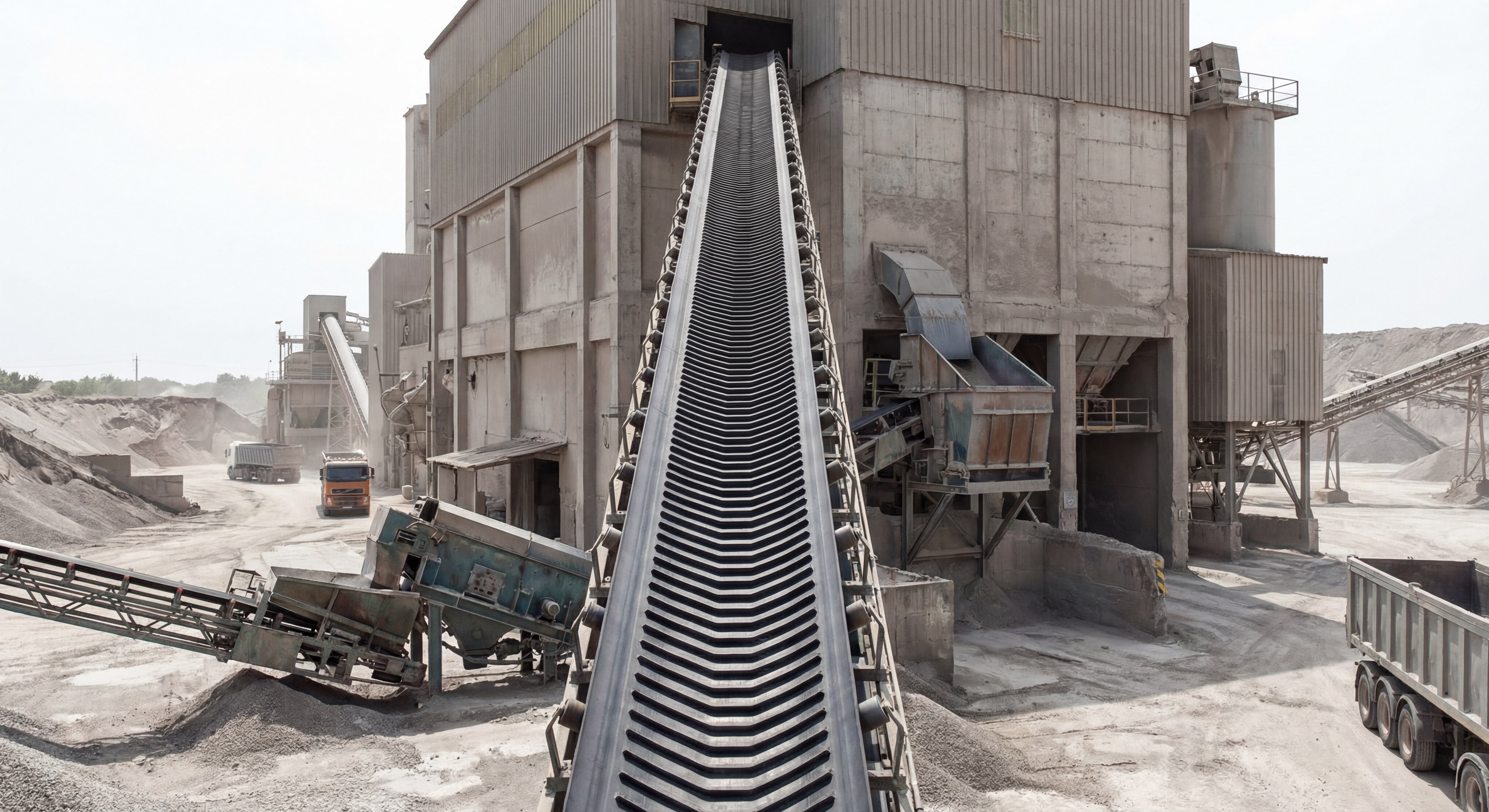
A rubber corrugated conveyor belt is most effective in industrial settings where vertical space is limited and material containment is a priority. You will find these belts frequently in concrete mixing plants, where they transport sand and gravel to high mixing towers. They are also widely used in the mining industry for moving coal, ore, and waste rock out of deep pits or into processing silos.
Beyond construction and mining, these belts excel in the recycling and power generation sectors. They are used to handle ash, shredded waste, and biomass, where preventing dust and spillage is essential for environmental compliance. If your facility needs to move bulk solids upward in a tight space, this belt is your best solution.
Concrete and construction plants
In concrete plants, height is everything, as materials must be elevated to gravity-fed mixers. A sidewall belt allows these plants to build vertically rather than horizontally, saving massive amounts of land.
- Tower Elevation: Moves aggregates directly to the top of the batching plant.
- Clean Operation: Prevents gravel from falling into the sensitive mixing machinery.
- High Throughput: Handles thousands of tons of sand daily without issue.
The reality is: Without sidewall technology, modern high-rise concrete plants would require four times the land area to operate.
Mining and power generation
Mining operations use these belts to move heavy minerals across rugged terrain and up steep slopes. In power plants, they are the preferred method for handling coal and wood chips because they keep the materials contained and reduce fire-hazard dust.
Key Takeaway: Using sidewall belts in high-volume industries reduces your infrastructure costs by simplifying the conveyor layout and reducing the number of transfer points.
| Industry | Primary Material | Benefit | |
|---|---|---|---|
| Concrete | Sand/Gravel | Space Saving | |
| Mining | Ore/Coal | Vertical Lifting | |
| Recycling | Waste/Plastic | Spillage Control |
This table demonstrates that sidewall belts are versatile tools across a wide range of heavy-duty industrial sectors.
How do you determine the correct belt specifications?
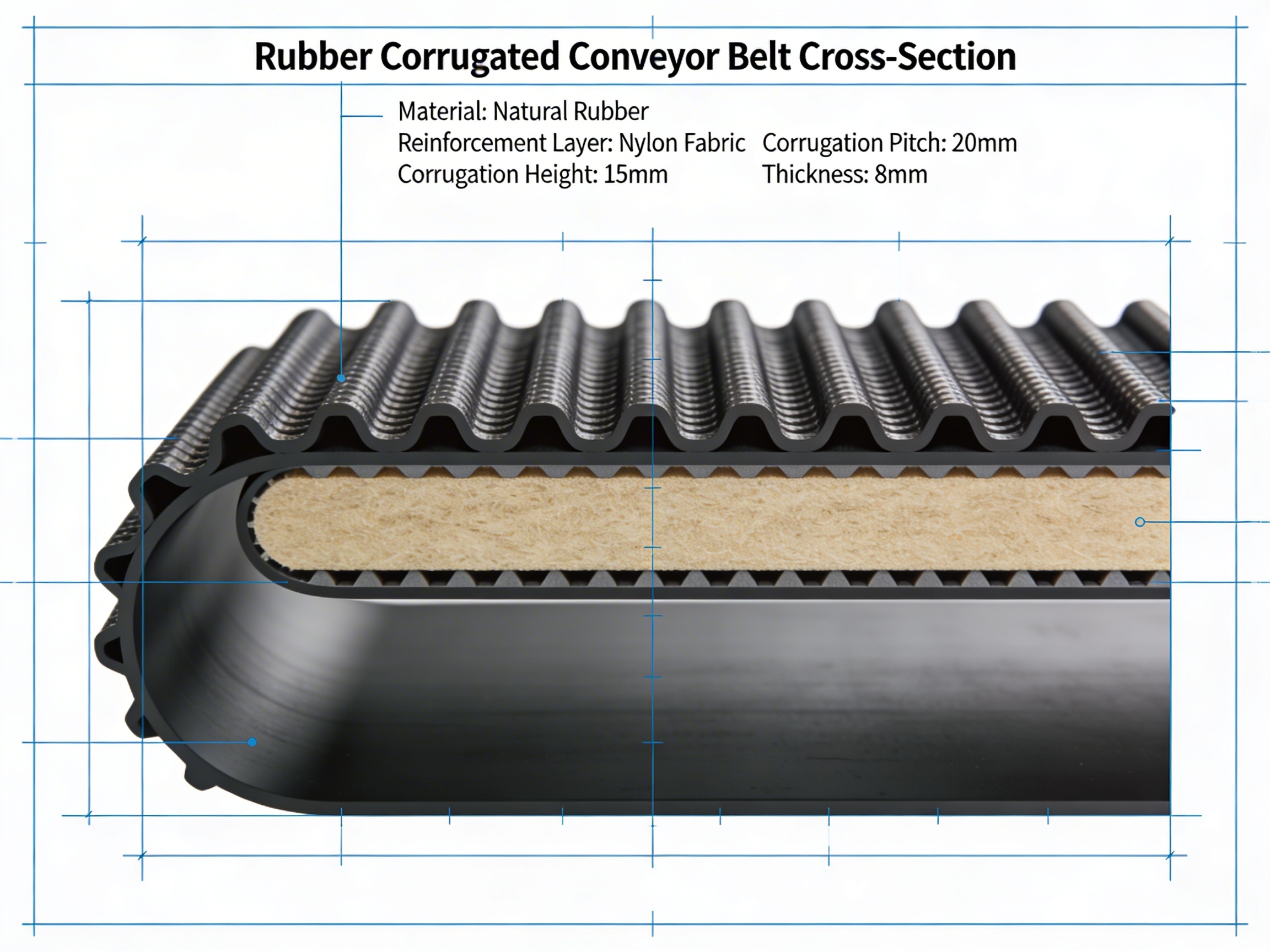
Determining the correct specifications for your rubber corrugated conveyor belt requires a detailed analysis of your required height, capacity, and material type. You must start by calculating the volumetric throughput you need, which dictates the width of the belt and the height of the sidewalls. A taller sidewall allows for larger “buckets,” which in turn increases the amount of material you can move per hour.
You also need to match the cleat spacing and height to the specific incline of your conveyor. If the cleats are too far apart, the material may settle unevenly; if they are too low, the product could roll back over the top of the cleat. Proper specification ensures that your motor power is used efficiently and that the belt does not experience unnecessary strain.
Calculating height and capacity needs
To get the most out of your system, you must balance belt speed with bucket volume. Higher speeds can move more material, but they also increase the wear on the sidewalls as they flex around the pulleys.
- Sidewall Height: Ranges from 40mm to 400mm based on load size.
- Belt Width: Typically 300mm to 1400mm depending on the plant structure.
- Throughput: Calculated in cubic meters per hour for bulk solids.
Look at it this way: Sizing your belt correctly is like choosing the right engine for a truck; it needs enough power to do the job without wasting fuel.
Matching cleats to the incline angle
The steeper your incline, the more aggressive your cleat profile needs to be. For vertical 90-degree lifts, a TC-style cleat provides the maximum surface area to support the weight of the material.
Key Takeaway: Accurate technical specifications prevent system bottlenecks and ensure your conveyor meets its production targets from day one.
| Requirement | Specification | Result | |
|---|---|---|---|
| High Volume | 200mm+ Sidewalls | Increased Capacity | |
| 90° Incline | TC-Type Cleats | Zero Rollback | |
| High Tension | Steel Cord Carcass | No Stretching |
This table demonstrates that every specification choice directly impacts the performance and reliability of your transport system.
How does cross-rigidity help a rubber corrugated conveyor belt?
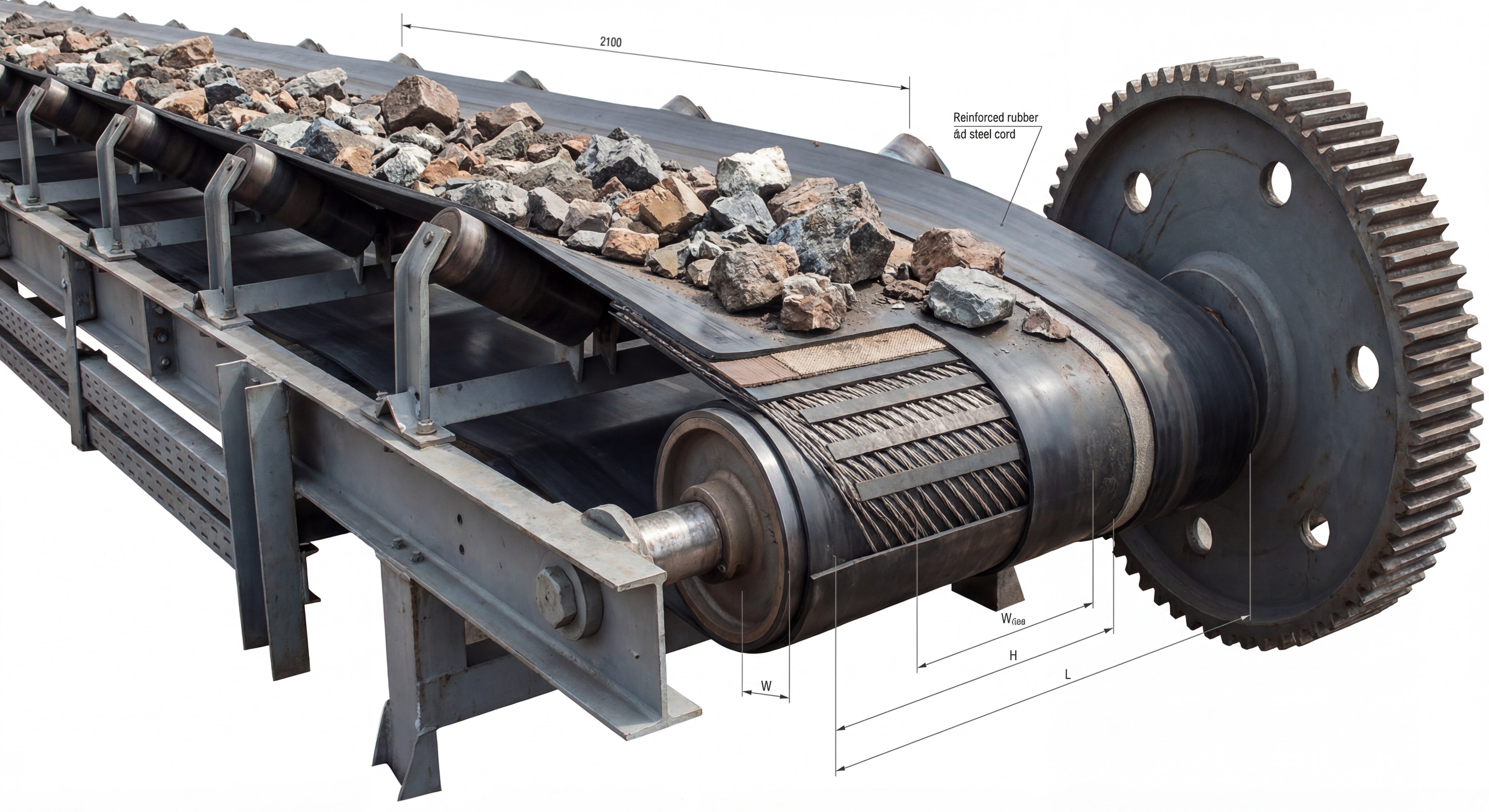
Cross-rigidity is a critical feature that prevents a rubber corrugated conveyor belt from “cupping” or sagging under the weight of its own sidewalls. The base belt must be designed to stay perfectly flat across its width, even when it is carrying a heavy load of ore or gravel. Without this lateral stiffness, the belt would bow in the middle, causing the sidewalls to lean inward and reducing the overall volume of the moving buckets.
You achieve this rigidity through the use of specialized cross-stable fabric plies or steel reinforcement in the base belt construction. This ensures that the belt stays level on the return side of the conveyor, preventing it from rubbing against the support frame. A cross-rigid belt is the foundation of a stable, long-lasting vertical transport system.
Preventing the “cupping” effect
Cupping happens when the edges of the belt lift higher than the center, which is a common failure point for standard belts used in sidewall applications. A cross-rigid belt uses extra layers of horizontal reinforcement to keep the surface flat.
- Lateral Stability: Keeps the sidewalls vertical for maximum containment.
- Return Support: Allows the belt to rest flat on the return idlers without damage.
- Load Distribution: Spreads the weight evenly across the entire width of the belt.
Here is the kicker: A belt that stays flat lasts twice as long because it avoids the internal friction and stress caused by bending.
Optimizing load distribution
When your belt stays flat, the cleats can work at their maximum efficiency because the material doesn’t pool in the center. This even distribution reduces the peak stress on any single point of the belt carcass.
Key Takeaway: Investing in a cross-rigid base belt ensures that your sidewalls stay upright and your system remains mechanically stable under full capacity.
| Feature | Standard Base | Cross-Rigid Base | |
|---|---|---|---|
| Lateral Flex | High (Cupping) | Minimal (Flat) | |
| Wall Support | Poor | Excellent | |
| Service Life | Moderate | High |
This table demonstrates that cross-rigidity is the essential structural element for supporting heavy sidewalls and vertical loads.
How does a rubber corrugated conveyor belt improve ROI?
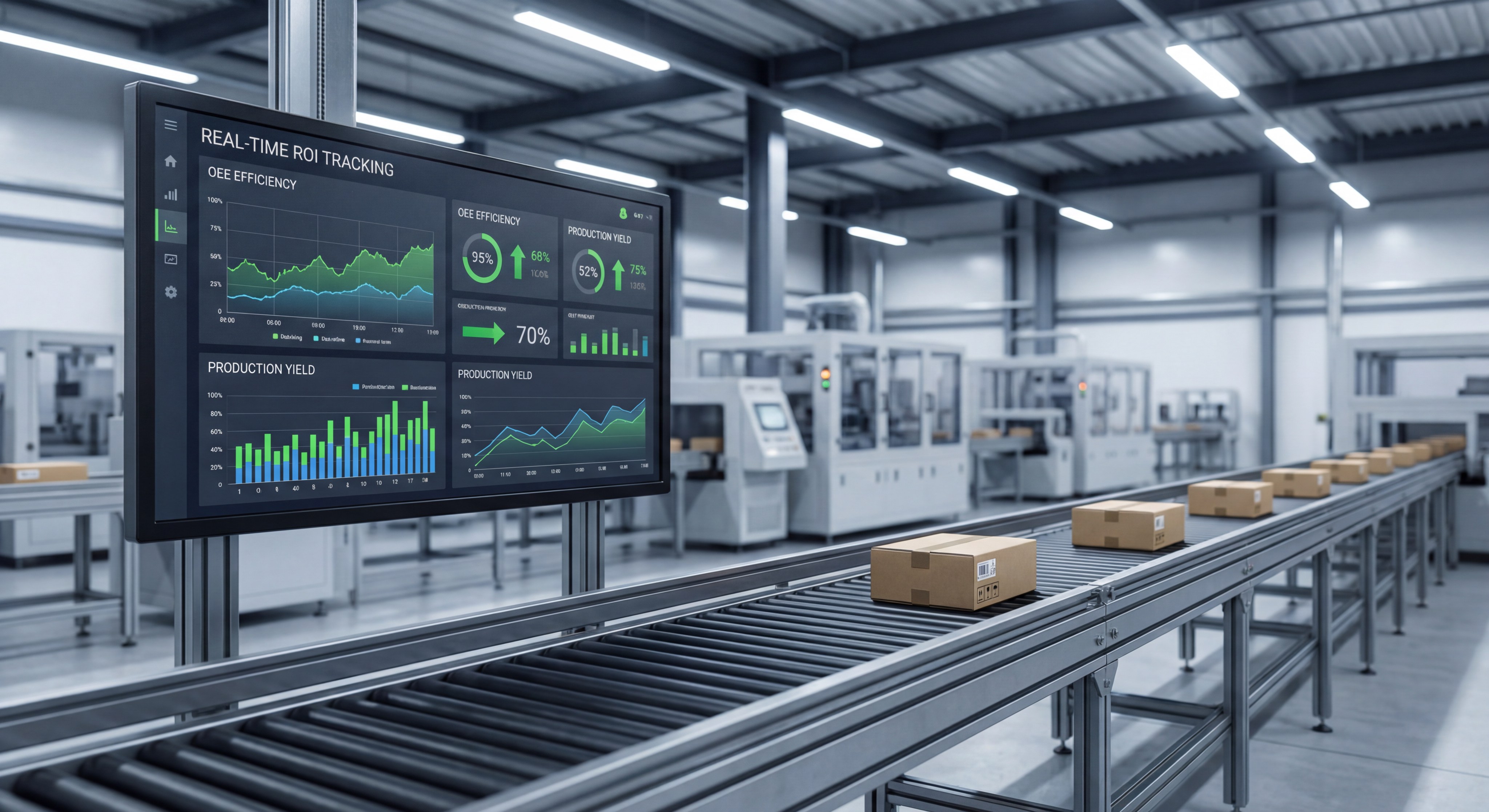
A rubber corrugated conveyor belt improves your return on investment (ROI) by significantly reducing the total cost of ownership for your material handling system. By replacing multiple horizontal and inclined conveyors with a single vertical unit, you reduce the number of motors, bearings, and transfer chutes that require maintenance. This reduction in moving parts leads to lower energy consumption and fewer potential points of failure in your production line.
Furthermore, you will see a direct increase in revenue by eliminating material spillage and dust loss. Every ton of material that falls off a standard belt is lost profit; the containment provided by sidewalls ensures that your yield remains at 100%. Over the lifespan of the equipment, the savings in labor and reclaimed product far outweigh the initial investment in specialized belt technology.
Reducing energy and labor costs
Fewer conveyor stages mean fewer motors to power and fewer transition points to clean. You can consolidate your control systems and reduce the electrical load on your facility while lowering your weekly maintenance man-hours.
- Motor Efficiency: One powerful motor is more efficient than four small ones.
- Cleaning Savings: No more manual shoveling of spilled material under the belt.
- Simplified Spares: Fewer types of bearings and rollers to keep in stock.
The simple truth is: Efficiency isn’t just about moving material faster; it is about moving it with the least amount of wasted energy and human effort.
Minimizing infrastructure investment
Building a 90-degree vertical conveyor requires much less steel and concrete than building a 500-meter horizontal ramp. You can spend your capital on better processing equipment rather than expensive conveyor support structures.
Key Takeaway: The high ROI of sidewall belts comes from the dual benefit of lower operational expenses and a drastically reduced physical footprint for your plant.
| ROI Factor | Conventional System | Sidewall System | |
|---|---|---|---|
| Energy Usage | High (Multiple Motors) | Low (Single Motor) | |
| Cleaning Labor | Daily | Minimal | |
| Capital Cost | High (Long Structures) | Lower (Vertical Towers) |
This table demonstrates that the long-term economic benefits of sidewall technology far exceed the performance of traditional flat belt layouts.
What maintenance saves a rubber corrugated conveyor belt?
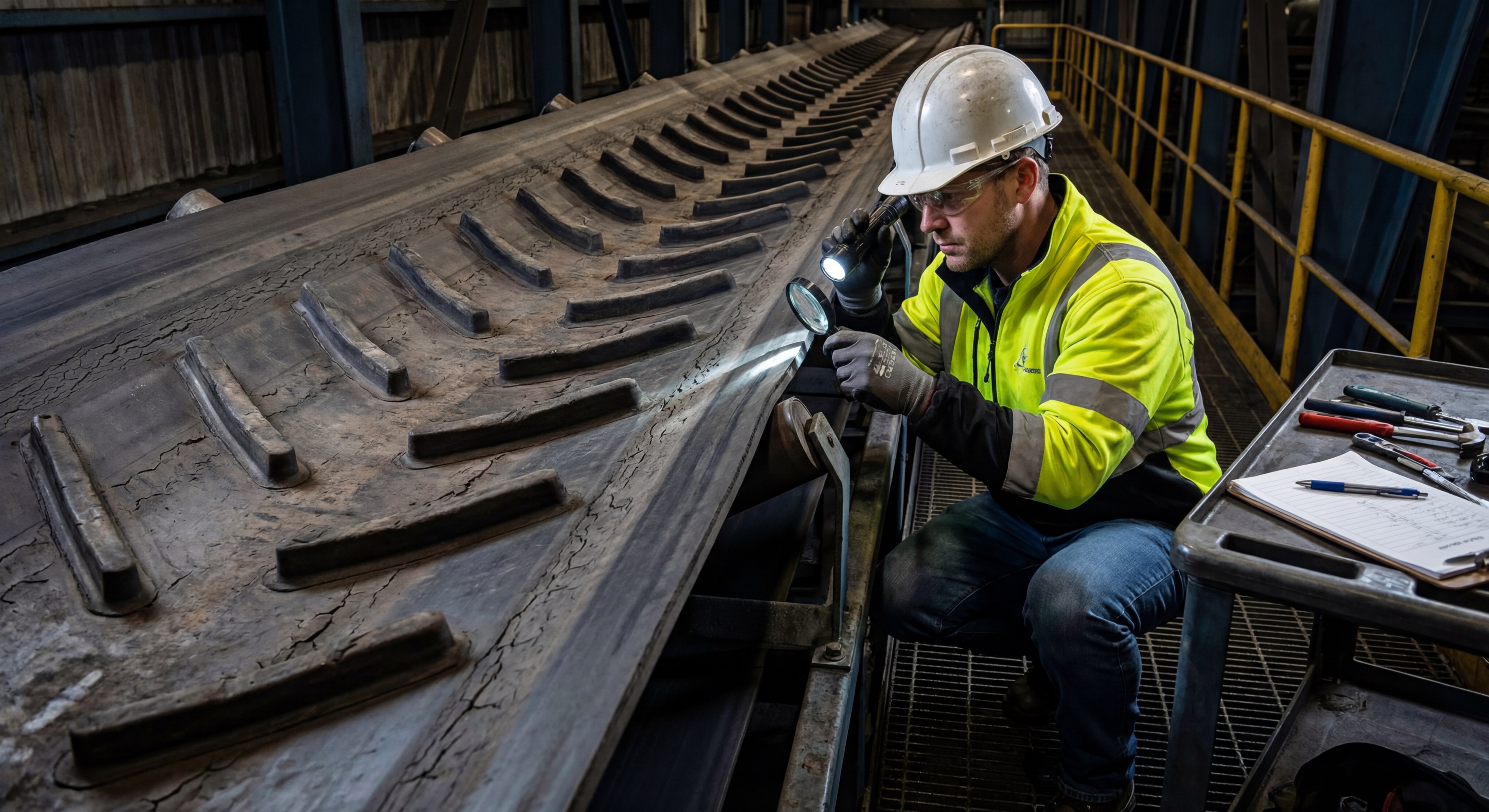
Regular maintenance is the only way to save a rubber corrugated conveyor belt from premature failure caused by misalignment or material buildup. You should conduct weekly inspections of the sidewall and cleat joints to look for any signs of fatigue or delamination. Catching a small crack in the rubber early allows for a simple repair, whereas ignoring it could lead to a complete wall failure that shuts down your entire plant.
Proper alignment of the pulleys and idlers is also crucial because the corrugated walls are sensitive to edge friction. If the belt is not tracking perfectly centered, the walls will rub against the conveyor frame, causing rapid wear and heat damage. You must also use specialized cleaning systems, such as air knives or beaters, instead of standard scrapers which can tear the corrugated profiles.
Inspecting sidewall and cleat integrity
The constant flexing around pulleys puts immense stress on the vulcanized bonds. You should use a flashlight and magnifying glass to check the base of the sidewalls for any tiny separation lines.
- Visual Checks: Look for missing cleat sections or torn wall segments.
- Bond Testing: Gently pull on the wall to ensure it remains molecularly attached.
- Crack Detection: Identify environmental cracking caused by UV or chemical exposure.
Keep this in mind: A five-minute inspection today can prevent a ten-hour emergency repair job next week.
Proper pulley and idler alignment
The height of the sidewalls makes the belt top-heavy, so it must be supported correctly on the return side. Using “stub” idlers that only support the edges of the base belt ensures that the corrugated walls don’t get crushed.
Key Takeaway: Consistent maintenance and correct alignment extend your belt’s life by years, ensuring you get the maximum value from your industrial investment.
| Maintenance Task | Frequency | Purpose | |
|---|---|---|---|
| Alignment Check | Weekly | Prevent Edge Wear | |
| Bond Inspection | Monthly | Prevent Delamination | |
| “Beater” Cleaning | Continuous | Prevent Material Build-up |
This table demonstrates that a structured maintenance routine is the most effective way to protect your conveyor’s structural integrity.
Conclusion
Transitioning to a high-performance material handling system solves the critical problems of space constraints, material spillage, and high operational costs. By integrating a sidewall and cleat system, we provide you with a vertical lifting solution that maximizes your facility’s throughput while keeping your workplace clean and safe. Our vision is to elevate industrial standards through durable, hot-vulcanized rubber technology that stands the test of time.
Ready to optimize your material handling?Our engineering team is standing by to help you design a custom solution tailored to your specific height and capacity needs. Contact us today for a professional technical audit and a personalized quote to elevate your operations.
FAQ
Can I use a sidewall belt for food-grade materials?Yes. You should select specialized white nitrile or PU materials that meet FDA standards for hygiene and oil resistance.
What’s the best way to clean a corrugated belt?The best is a “beater” roller or an air knife system. You cannot use standard flat scrapers because they will destroy the corrugated walls and cleats.
How do I know if my belt needs replacing?The best sign is widespread cracking at the base of the sidewalls or significant cleat detachment. If you see internal reinforcement fabric, it is time for a new belt.
Can I run these belts at high speeds?No. The best practice is to run at moderate speeds to reduce the centrifugal force and stress on the flexible walls as they turn.
How do I prevent material from sticking to the cleats?The best is to use a non-stick rubber compound or a mechanical “beater” on the return side to knock loose any residual material.