
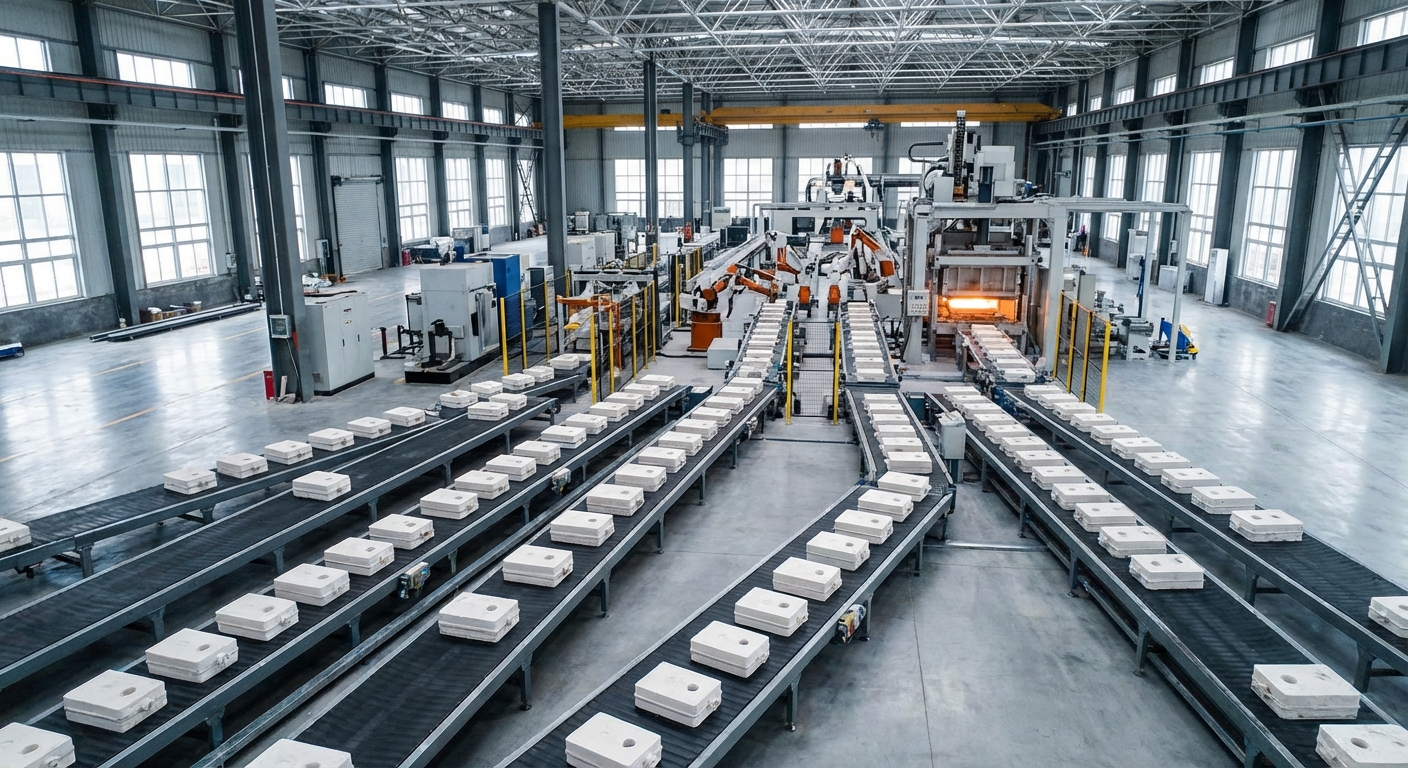
A professional rubber conveyor belt machine supplier provides stable, automated transport solutions that protect fragile plaster molds, reduce scrap rates, and improve efficiency in precision casting operations.
What is a rubber conveyor belt machine supplier?
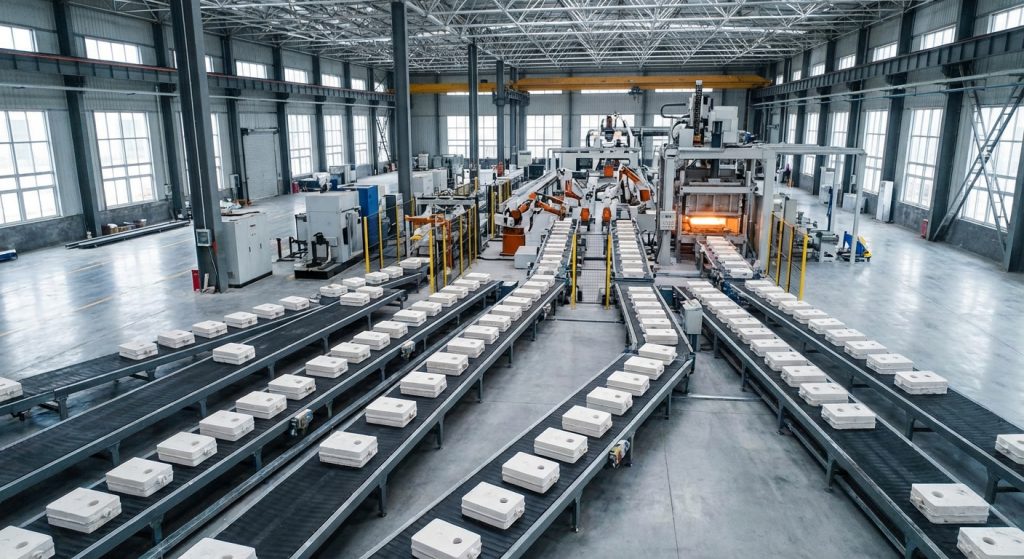
A rubber conveyor belt machine supplier is a specialized entity that provides the high-tensile, durable transport systems required to move heavy raw materials and delicate molds through a foundry. By offering customized solutions, they bridge the gap between manual labor and full-scale industrial automation.
How does it support your precision casting?
In a modern plaster casting environment, you need a system that can handle both the weight of the metal and the fragility of the gypsum. These suppliers design tracks that minimize mechanical shock, which is vital for preventing cracks in your cured plaster.
- Custom multi-ply belt construction for heavy loads.
- Anti-vibration rollers to protect delicate mold flasks.
- Integration with existing slurry mixing stations.
Think about it. Without a steady movement system, your production line becomes a series of disconnected islands of labor.
Key Takeaway: A professional supplier ensures your facility has the structural backbone to move products safely from pouring to breakout.
| Component | Function in Foundry | Impact | |
|---|---|---|---|
| High-Tensile Belts | Load-bearing transport | High durability | |
| Precision Rollers | Vibration reduction | Mold integrity | |
| Drive Motors | Consistent timing | Process control |
The right mechanical support transforms a chaotic workshop into a synchronized production powerhouse.
How does a rubber conveyor belt machine supplier work?
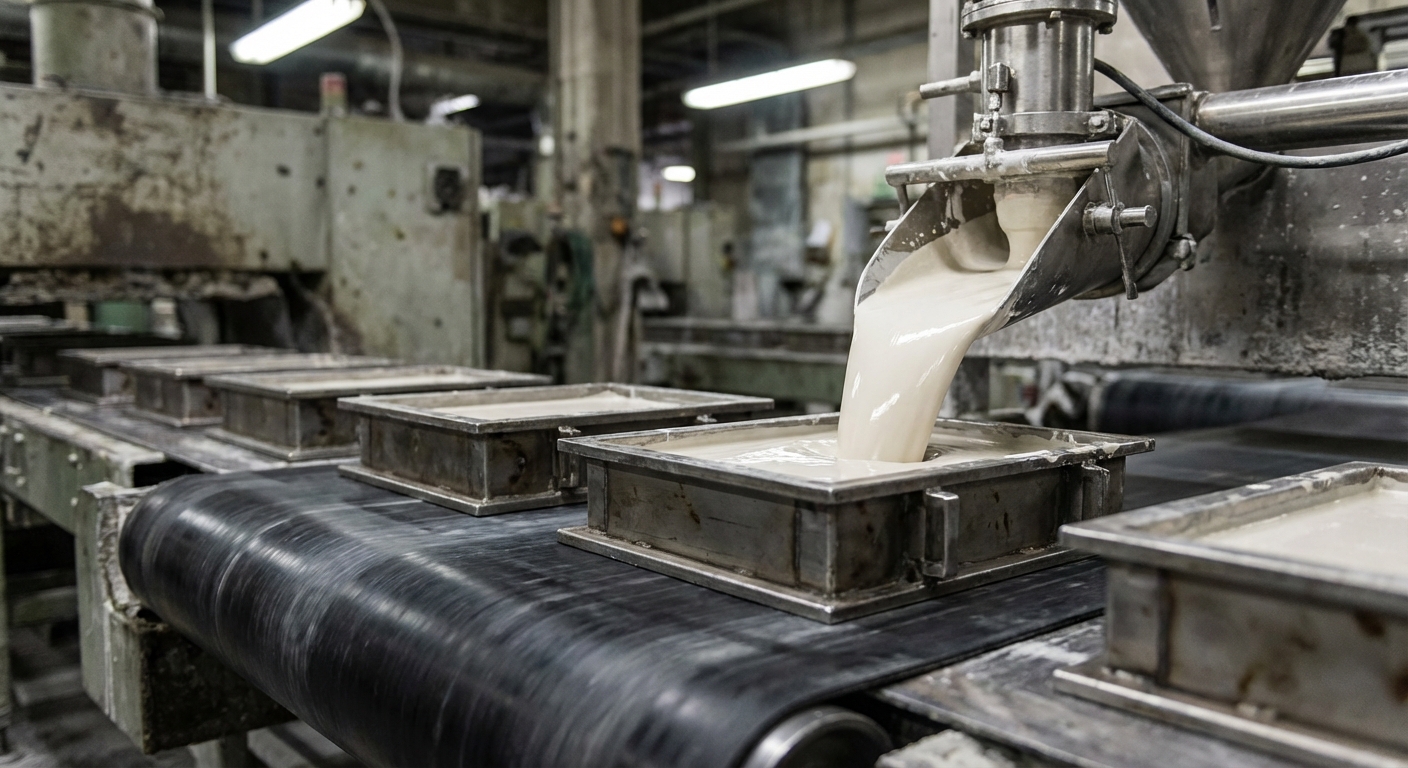
The core mechanics provided by a rubber conveyor belt machine supplier involve synchronized motorized drives and high-friction belt surfaces that automate the flow of casting flasks. These systems are engineered to operate continuously, ensuring that each step of the plaster setting process happens within a controlled timeframe.
Can you automate your slurry pouring?
When you integrate automated conveyors, you allow the mold boxes to pass under mechanical nozzles with perfect timing. This ensures that every flask receives an identical volume of plaster slurry, reducing human error and material waste.
- Synchronized speed control for pouring.
- Impact-resistant surfaces for heavy flasks.
- Heat-resistant covers for baking oven transit.
But that’s not all. You can also link these systems to sensors that stop the belt precisely when the mold is in position.
Key Takeaway: Automation through specialized conveyors eliminates the variability of manual handling and pouring.
| Action | Automation Benefit | Result | |
|---|---|---|---|
| Slurry Delivery | Volumetric precision | Less waste | |
| Belt Timing | Controlled set time | Harder molds | |
| Movement | Smooth transitions | Zero breakage |
Advanced mechanics allow your team to focus on quality control rather than heavy lifting.
Why need a rubber conveyor belt machine supplier?
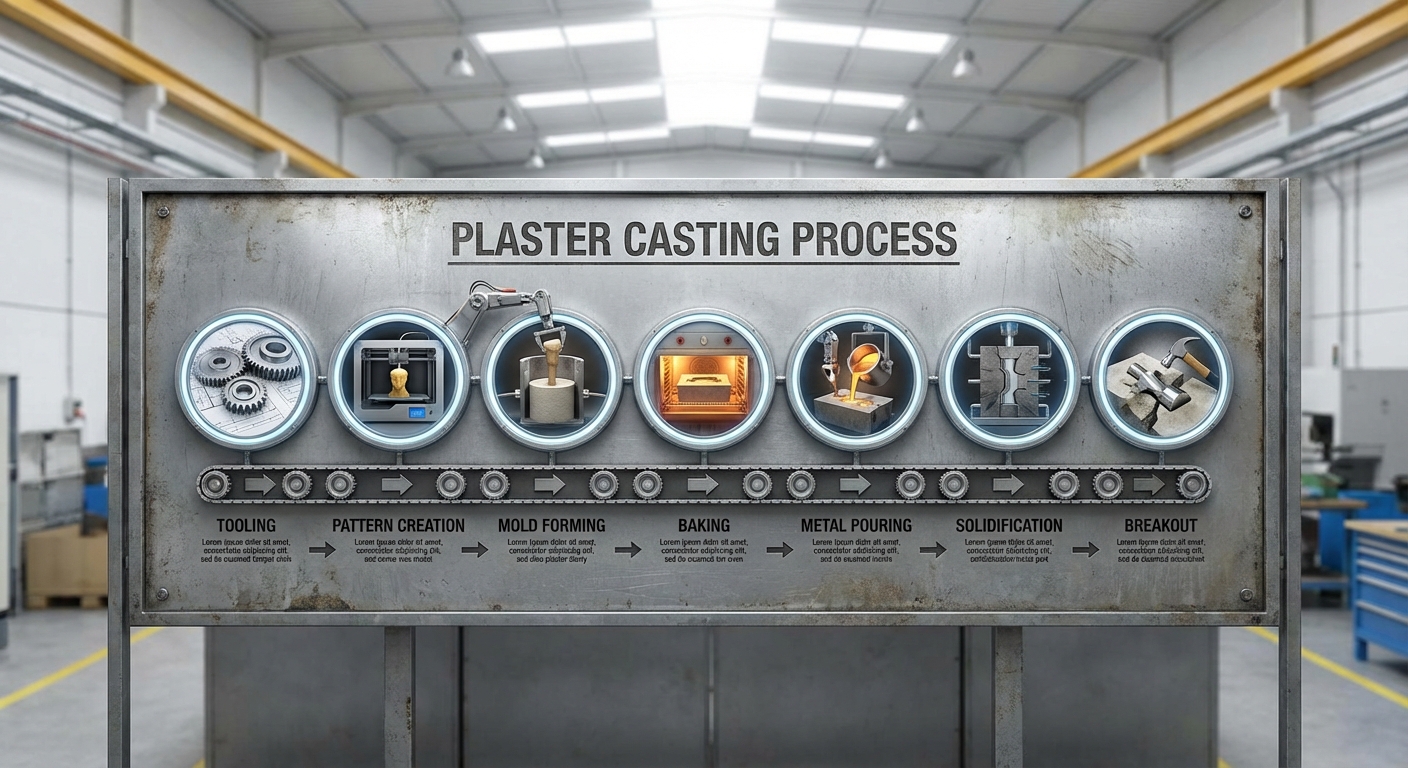
Precision casting requires a stable, vibration-free environment that only a specialized rubber conveyor belt machine supplier can deliver. Managing the complex seven-step process—from tooling to breakout—requires seamless transitions to prevent defects in the final metal part.
How does it manage your seven casting steps?
You need a reliable way to move molds through baking ovens and cooling zones without risking thermal shock or physical damage. Specialized heat resistant conveyor belts allow your facility to maintain a high temperature during the mold-curing phase without degrading the belt material.
- Tooling and Pattern transport.
- Slurry pouring and vibration zones.
- Baking and burnout transit.
Make no mistake. A failure at any step due to poor transport can ruin an entire batch of high-value aerospace parts.
Key Takeaway: Reliable transport systems are the only way to ensure the delicate transition between the seven critical stages of casting.
| Casting Step | Conveyor Role | Performance Metric | |
|---|---|---|---|
| Mold Forming | Stable setting | Surface finish | |
| Baking | High-heat transit | Belt lifespan | |
| Breakout | Waste removal | Floor cleanliness |
The strategic integration of conveyors ensures that your metallurgical journey is never interrupted by mechanical failure.
Can a rubber conveyor belt machine supplier help mold?
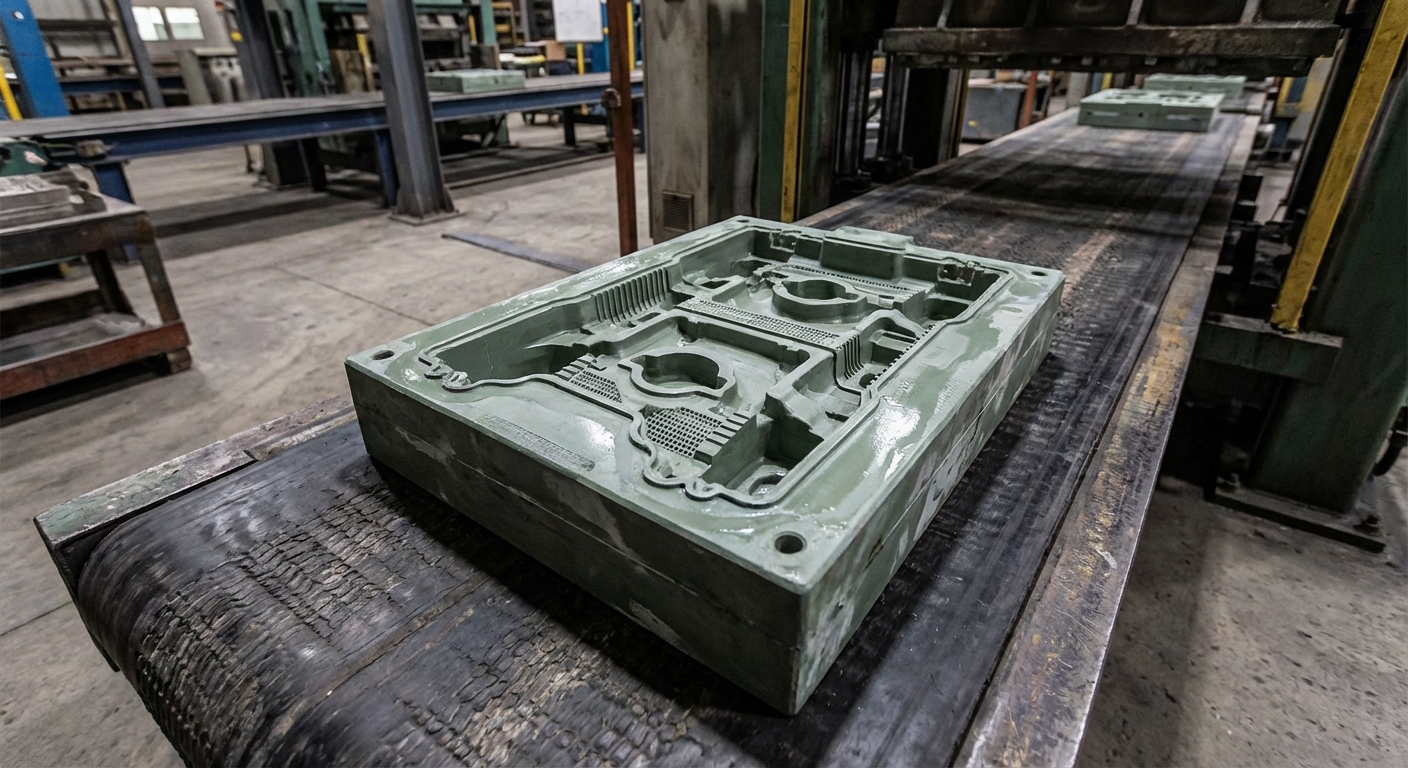
Yes, a rubber conveyor belt machine supplier improves mold quality by ensuring that the plaster slurry sets undisturbed on a steady, level surface. Stability during the initial set is the most critical factor in achieving a superior surface finish (Ra 0.8–3.2 µm).
Why is stability crucial for your patterns?
If you move a setting plaster mold by hand, the slight tremors from your steps can cause internal micro-cracks or surface ripples. A precision belt system provides a smooth glide that preserves the fine details of your master pattern.
- Constant speed prevents slurry sloshing.
- Soft-cover belts reduce impact during loading.
- Level tracking ensures uniform mold thickness.
Believe it or not, the smallest vibration can compromise a high-tolerance medical housing.
Key Takeaway: Specialized conveyors act as a stabilization platform that protects the integrity of the liquid-to-solid transition.
| Mold Feature | Conveyor Impact | Advantage | |
|---|---|---|---|
| Surface Smoothness | No ripples | Less polishing | |
| Internal Cavities | Stable setting | Dimensional accuracy | |
| Thin Walls | No cracking | Complex geometry |
Investing in a steady movement platform is essentially investing in the final quality of your cast products.
Does a rubber conveyor belt machine supplier cut cost?
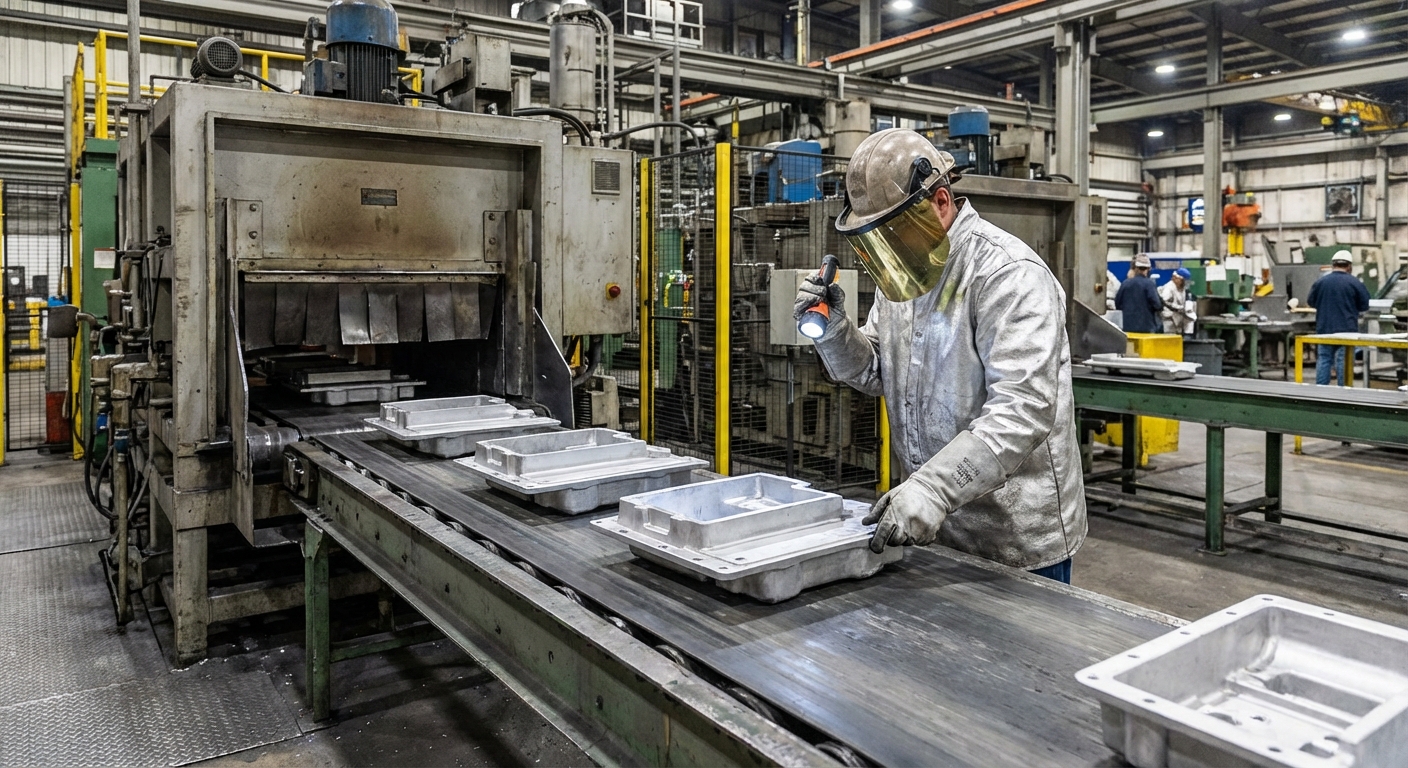
Automation provided by a rubber conveyor belt machine supplier significantly reduces labor costs and minimizes the scrap rate of delicate components. By streamlining the flow of non-ferrous aluminum castings to inspection stations, you increase the overall ROI of low-volume production runs.
Will it improve your low-volume ROI?
When you handle high-value materials like magnesium or zinc, even a 5% reduction in scrap can lead to massive annual savings. You can also reallocate your workers from basic transport tasks to higher-value finishing and inspection roles.
- Reduced manual mold handling labor.
- Lower scrap rates through gentle transport.
- Faster throughput from pouring to inspection.
Think about it. Every mold saved from breaking is pure profit added back to your bottom line.
Key Takeaway: Cost cutting is achieved by replacing high-risk manual labor with reliable, long-lasting industrial automation.
| Cost Driver | Manual Impact | Conveyor Solution | |
|---|---|---|---|
| Labor Hours | High | Reduced by 50%+ | |
| Scrap Rate | Variable | Minimized/Consistent | |
| Output Speed | Slow | Accelerated |
Economic efficiency in a foundry is directly tied to the reliability of your material handling systems.
How a rubber conveyor belt machine supplier aids use?
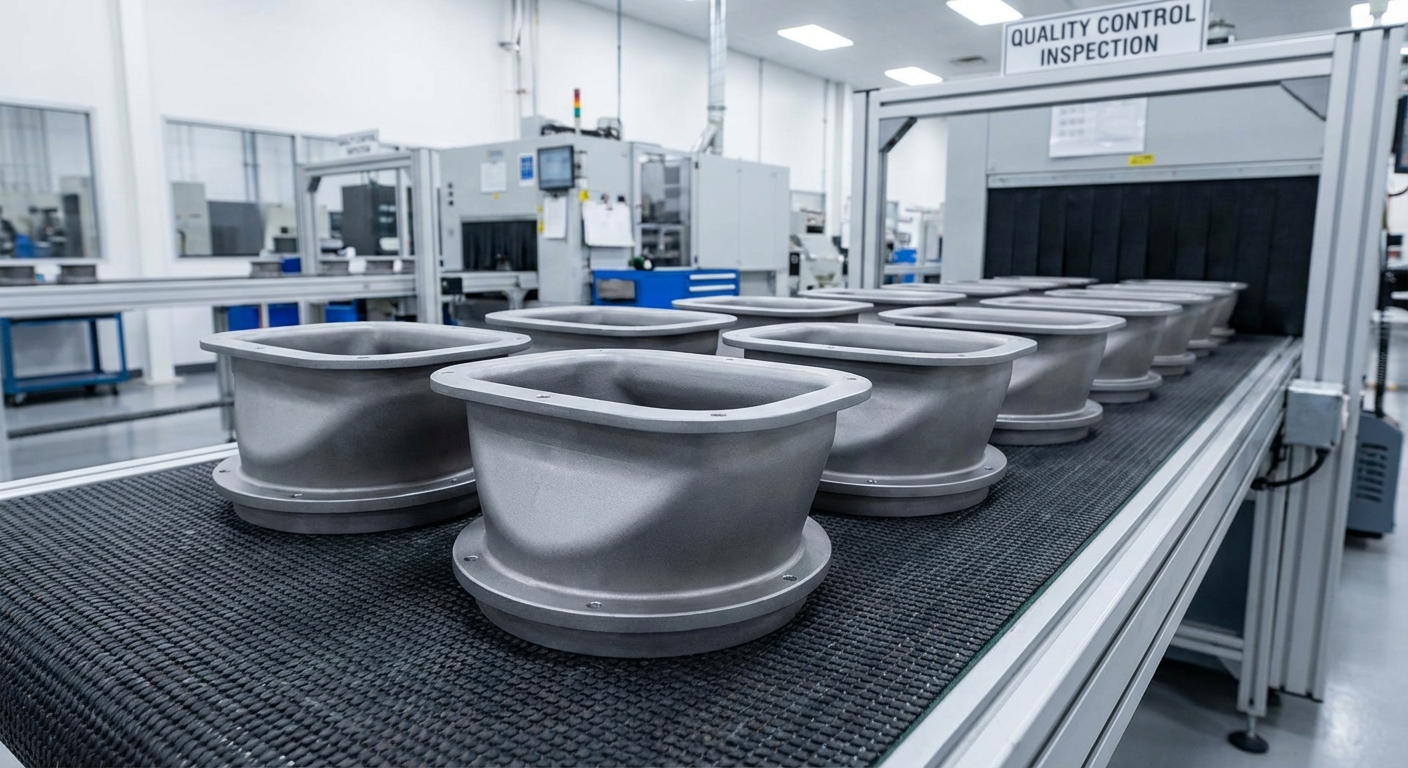
A rubber conveyor belt machine supplier aids in the production of high-value parts for industries that demand perfection, such as aerospace and medical device manufacturing. These systems allow for the gentle handling of parts with complex geometries that would be impossible to move safely by hand.
Are complex geometries easier for you to handle?
When you produce air intake housings or surgical robot arms, you cannot afford any surface nicks or scratches. High-grip, soft-surface products ensure that your finished castings stay exactly where they are placed during transit.
- Precise positioning for robotic inspection.
- Gentle acceleration for thin-walled parts.
- Synchronized cooling for uniform grain structure.
It’s simple. Better handling leads to better parts, which leads to happier clients.
Key Takeaway: Advanced conveyor technology is the “silent partner” in achieving the zero-defect standards required by top-tier industries.
| Industry | Component Type | Handling Priority | |
|---|---|---|---|
| Aerospace | Air intakes | Zero surface nicks | |
| Medical | Pump housings | Dimensional tolerance | |
| Robotics | Gear fittings | High detail retention |
By utilizing specialized belts, you open the door to bidding on high-specification contracts that others cannot fulfill.
Is a rubber conveyor belt machine supplier essential?
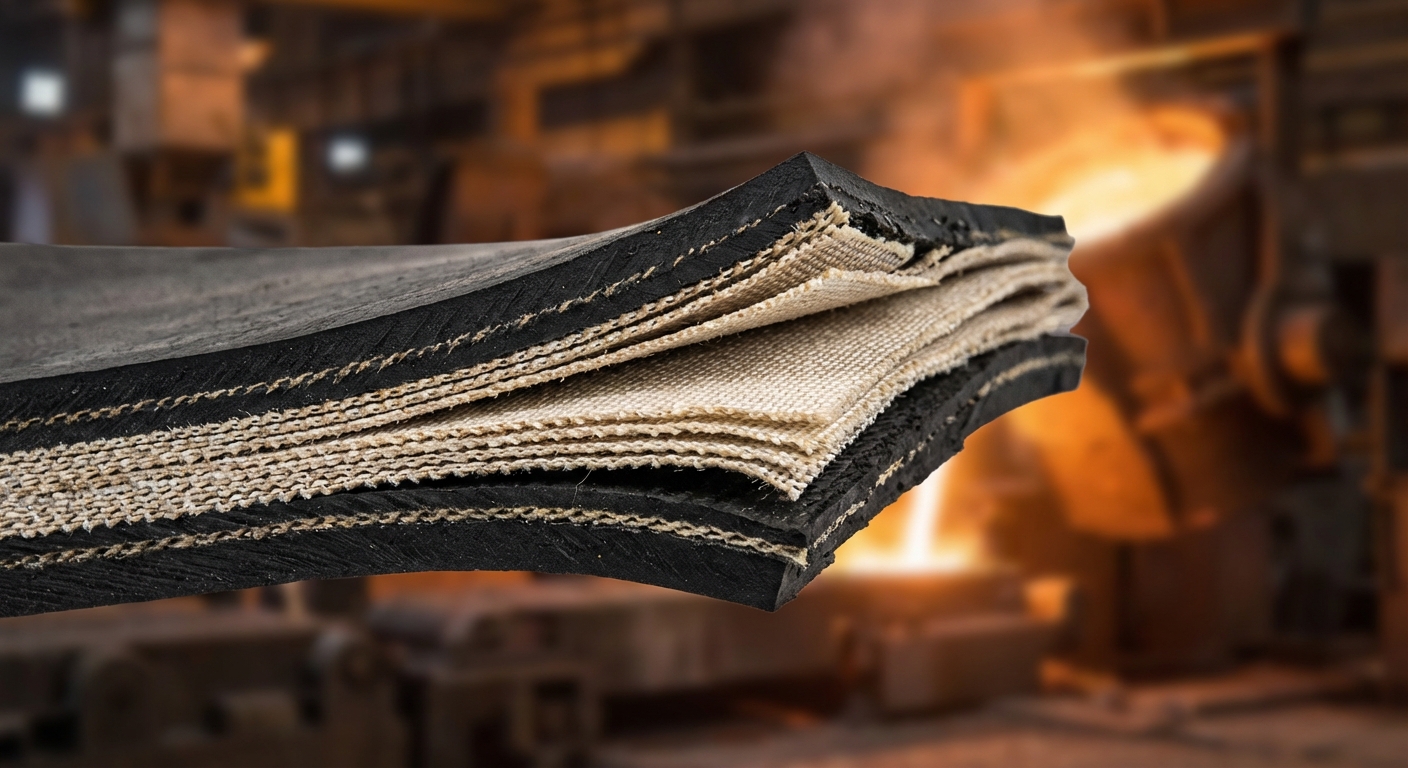
In the harsh, high-temperature environment of a casting foundry, a specialized rubber conveyor belt machine supplier is absolutely essential. Standard belts will quickly fail under the heat and abrasive nature of gypsum-based plaster, leading to catastrophic production halts.
Can your belts resist abrasive plaster?
You need a multi-ply belt with specific reinforcement layers designed to withstand both heat and the cutting action of broken plaster molds. Specialized EPDM or SBR compounds are the only materials that can provide a long service life in these conditions.
- Resistance to sulfur reactions from gypsum.
- High-temperature durability for oven exit zones.
- Multi-ply fabric for superior tensile strength.
But here is the kicker. If your belt snaps during a pour, you lose the belt, the metal, and your deadline.
Key Takeaway: Specialized foundry-grade belts are a safety and reliability insurance policy for your entire operation.
| Environmental Challenge | Standard Belt | Foundry-Grade Belt | |
|---|---|---|---|
| Heat Exposure | Melts/Warps | Remains flexible | |
| Abrasive Dust | Tears/Wears | Abrasion resistant | |
| Load Weight | Stretches | Maintains tension |
Durability in the face of extreme conditions is what separates professional suppliers from generic hardware.
What does a rubber conveyor belt machine supplier sell?
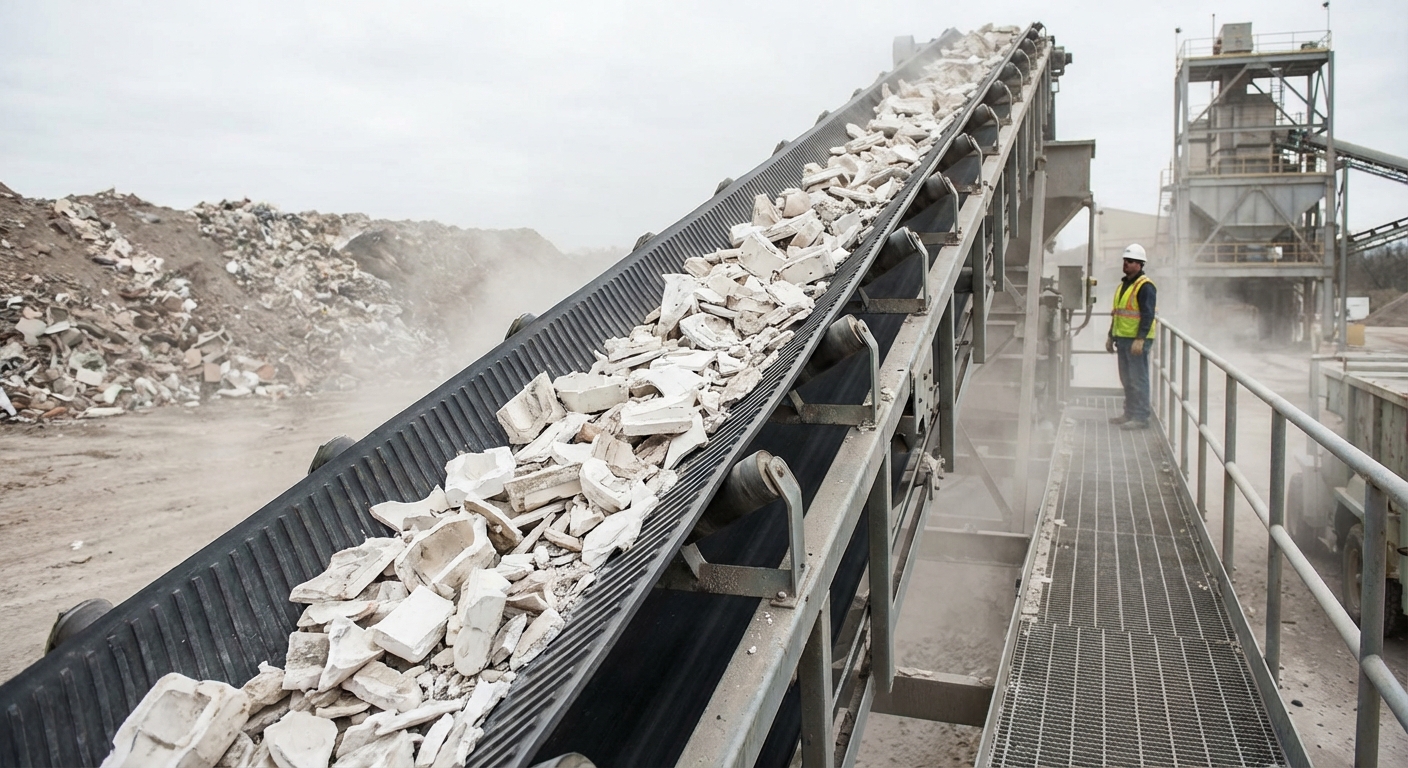
A professional rubber conveyor belt machine supplier sells a range of specialized products, including EPDM heat-resistant belts and sidewall conveyor belts for waste reclamation. These components are designed to solve the specific material handling headaches found only in a foundry.
Should you choose specialized belt grades?
Selecting the right grade depends entirely on the material’s temperature and consistency. If you are moving broken plaster molds up a steep incline for disposal, you need a corrugated sidewall to prevent spill-back and silica dust emissions.
- Grade A (Abrasion Resistant) for rough castings.
- EPDM for high-temperature clinker and molds.
- Corrugated sidewalls for bulk waste transport.
Think about it. The wrong belt choice can lead to a messy, dangerous floor and constant maintenance.
Key Takeaway: Suppliers provide a catalog of materials specifically engineered to thrive where others fail.
| Belt Type | Ideal Application | Material | |
|---|---|---|---|
| Sidewall Belt | Steep waste removal | Reinforced Rubber | |
| Heat Resistant | Oven & Cooling zones | EPDM Compound | |
| Multi-ply Fabric | High-load transport | Polyester/Nylon |
Using the correct belt for each zone of your foundry is the most effective way to lower your long-term maintenance costs.
Can a rubber conveyor belt machine supplier do more?
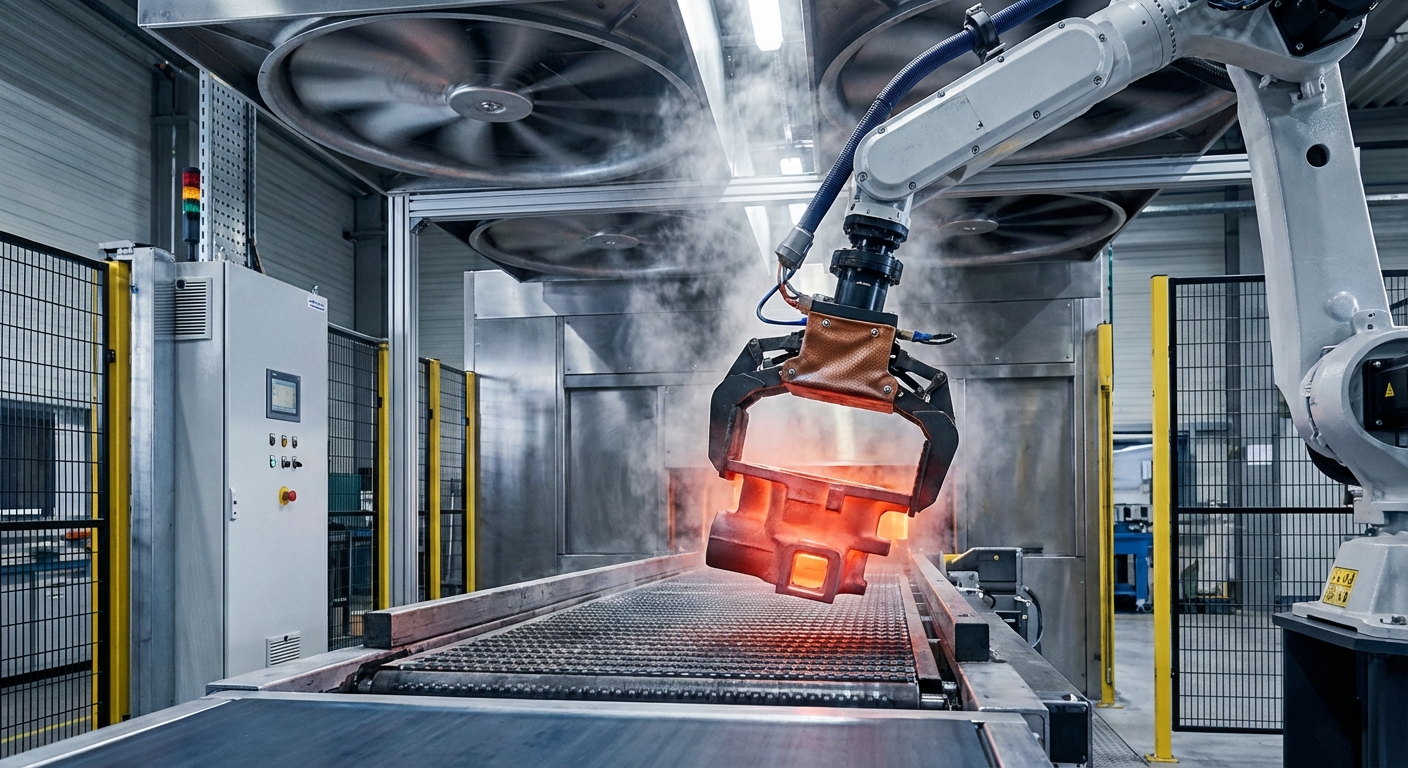
Modern suppliers go beyond simple belts by integrating advanced automation like robotic arms and specialized cooling fans into the conveyor line. A rubber conveyor belt machine supplier can transform your facility into a “smart foundry” where human intervention is minimized.
Can you integrate robotic pick-and-place?
By synchronizing your conveyor with robotic arms, you can automate the delicate task of lifting hot parts from a cooling belt to a secondary cleaning station. This increases safety by removing workers from high-heat and high-noise zones.
- Automated cooling with overhead fans.
- Robotic integration for precise part removal.
- Variable speed drives for cooling time control.
But there’s more. These systems can provide real-time data on your production speed and part count.
Key Takeaway: Integration with robotics represents the next frontier in foundry efficiency and worker safety.
| Feature | Production Impact | Long-term Value | |
|---|---|---|---|
| Robotic Arms | Precise handling | Lower labor risks | |
| Cooling Fans | Faster fettling | Shorter cycle time | |
| Digital Sensors | Process tracking | Data-driven ROI |
The evolution of the conveyor line is the evolution of your business’s competitive edge.
Why trust a rubber conveyor belt machine supplier?
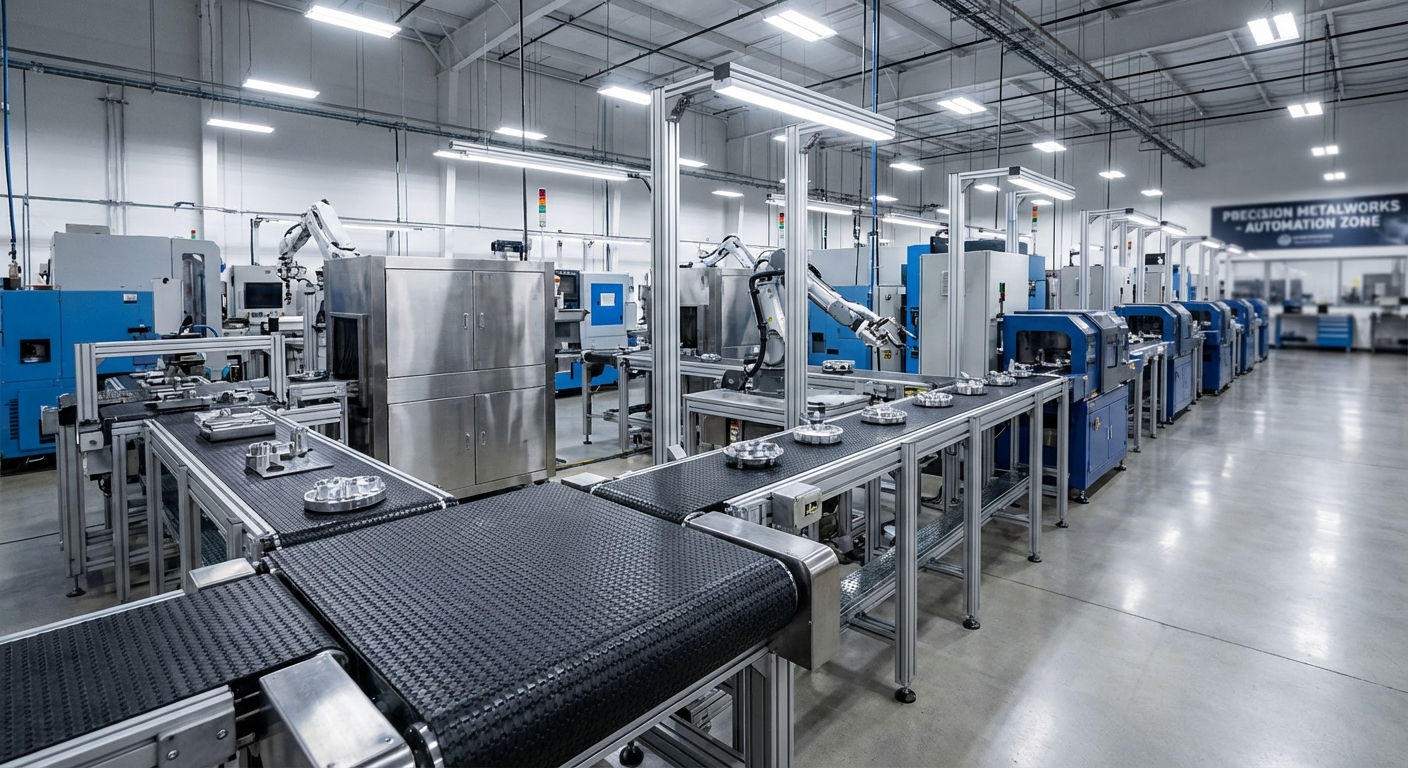
Trusting a verified rubber conveyor belt machine supplier ensures that your facility meets international safety and quality standards. With over 20 years of experience, a supplier like Zhenxing Rubber understands the technical nuances required to maximize your operational efficiency.
Does quality impact your final parts?
When you work with a supplier that prioritizes tensile strength and ISO-certified manufacturing, you are ensuring that your production line never falters. You can learn more about our commitment to excellence on our about us page.
- Verified tensile strength (12 MPa to 24 MPa).
- Custom belt widths up to 3200 mm.
- Global export experience and technical support.
Believe it or not, the reliability of your transport system is the final seal of quality on every part you ship.
Key Takeaway: Trust is built through consistent performance, high-grade materials, and a deep understanding of the foundry environment.
| Criteria | Supplier Standard | Production Benefit | |
|---|---|---|---|
| Experience | 20+ Years | Proven solutions | |
| Certification | ISO/CE | Guaranteed safety | |
| Support | 24/7 Technical | Zero downtime |
Reliability is not an accident; it is the result of choosing a partner that understands your specific industrial challenges.
Plaster casting offers unparalleled precision for complex metal components, but its success depends entirely on the reliability of the systems that move your molds through the foundry. By solving the problems of mold breakage and manual labor bottlenecks, Zhenxing Rubber provides the industrial-grade infrastructure needed to secure your profit margins. We are dedicated to being the world’s most reliable rubber conveyor belt machine supplier, ensuring that every metallurgical journey—from liquid slurry to finished aerospace component—is smooth, safe, and efficient. Our vision is to empower foundries worldwide with the automation they need to achieve zero-defect production. To optimize your facility and reduce operational costs, contact us today for a custom technical consultation.
FAQ
Can I use a standard rubber belt for hot castings?Generally, no. You should always use a heat-resistant EPDM grade to prevent the rubber from melting or losing its structural integrity under high temperatures.
What’s the best way to move broken plaster waste?A corrugated sidewall conveyor belt is the ideal solution because it contains the granular and clumpy waste, preventing spillage and minimizing silica dust.
Can I get a custom width for my narrow casting line?Absolutely. Specialized suppliers offer custom-cut widths and lengths to fit your specific facility layout and machine footprints perfectly.
What is the minimum set time before moving a plaster mold?While it varies, you should typically wait 15-30 minutes for initial hardening, though a precision conveyor can handle molds even earlier due to its smooth motion.
How do I choose between EP and Steel Cord belts?Steel cord is best for extremely long distances and heavy-duty loads, while EP (fabric) belts are usually sufficient for the standard distances found in most foundries.