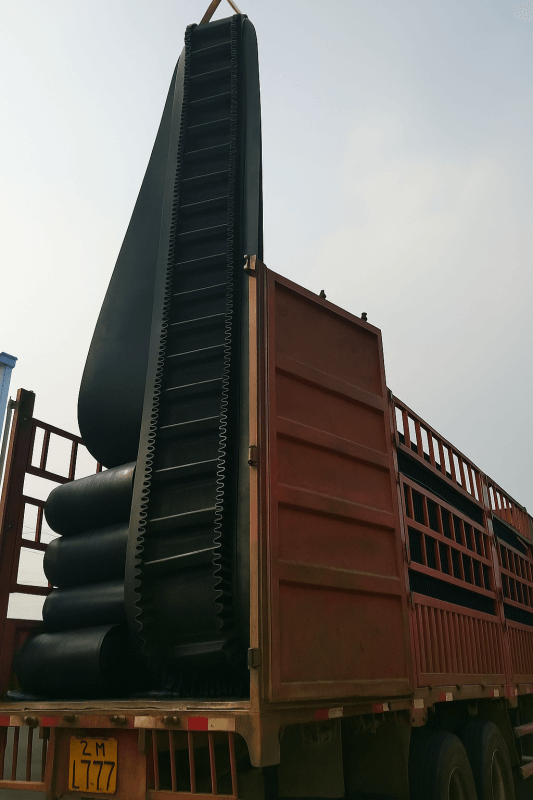
A sidewall for rubber conveyor belt enables steep-angle material transport by preventing spillage, improving efficiency, and reducing labor costs in bulk handling applications.
Why is a sidewall for rubber conveyor belt essential for steep inclines?
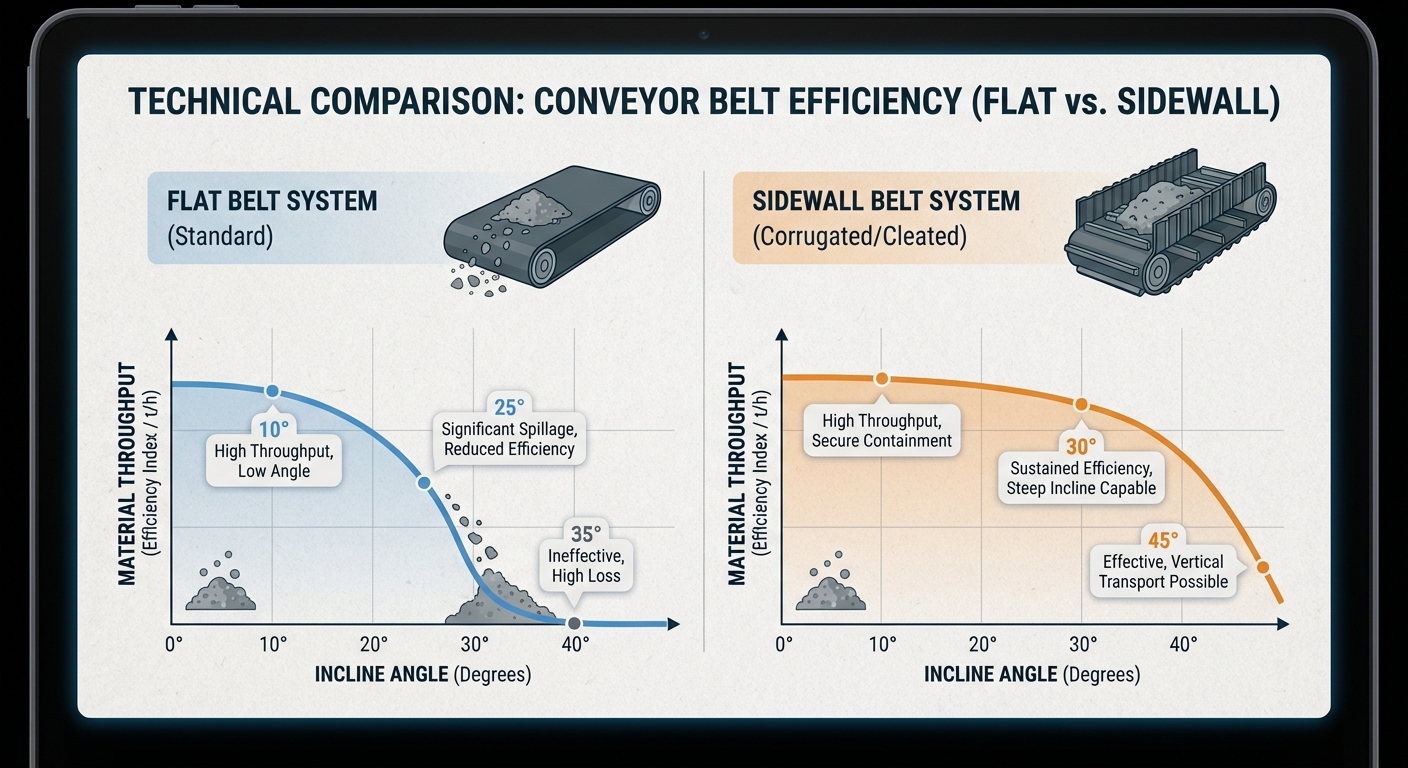
A sidewall for rubber conveyor belt is essential because it provides the lateral containment and mechanical grip necessary to move bulk materials at angles that would cause standard flat belts to fail. This design allows you to dramatically reduce the horizontal footprint of your conveyor system.
How does the pocket design prevent material rollback?
The corrugated sidewalls work in tandem with transverse cleats to create internal compartments that trap material securely. By forming these individual pockets, the system eliminates the gravitational slide that usually limits standard conveying angles.
Think about it:
- Pockets provide 100% containment of fine powders.
- Cleats act as vertical “shelves” for heavy loads.
- The system allows for vertical lift in confined spaces.
And the best part? You can achieve 90-degree lifts without the need for expensive and complex bucket elevators.
Key Takeaway: Utilizing pocket-style containment allows for maximum incline efficiency and significant floor space savings in industrial layouts.
| Angle Capacity | Material Retention | System Footprint | |
|---|---|---|---|
| Up to 90 Degrees | Near 100% | Ultra-Compact | |
| 0-15 Degrees | Variable (Low) | Large/Extended |
This structural advantage translates directly into lower infrastructure costs for your facility.
How does a sidewall for rubber conveyor belt optimize mining sites?
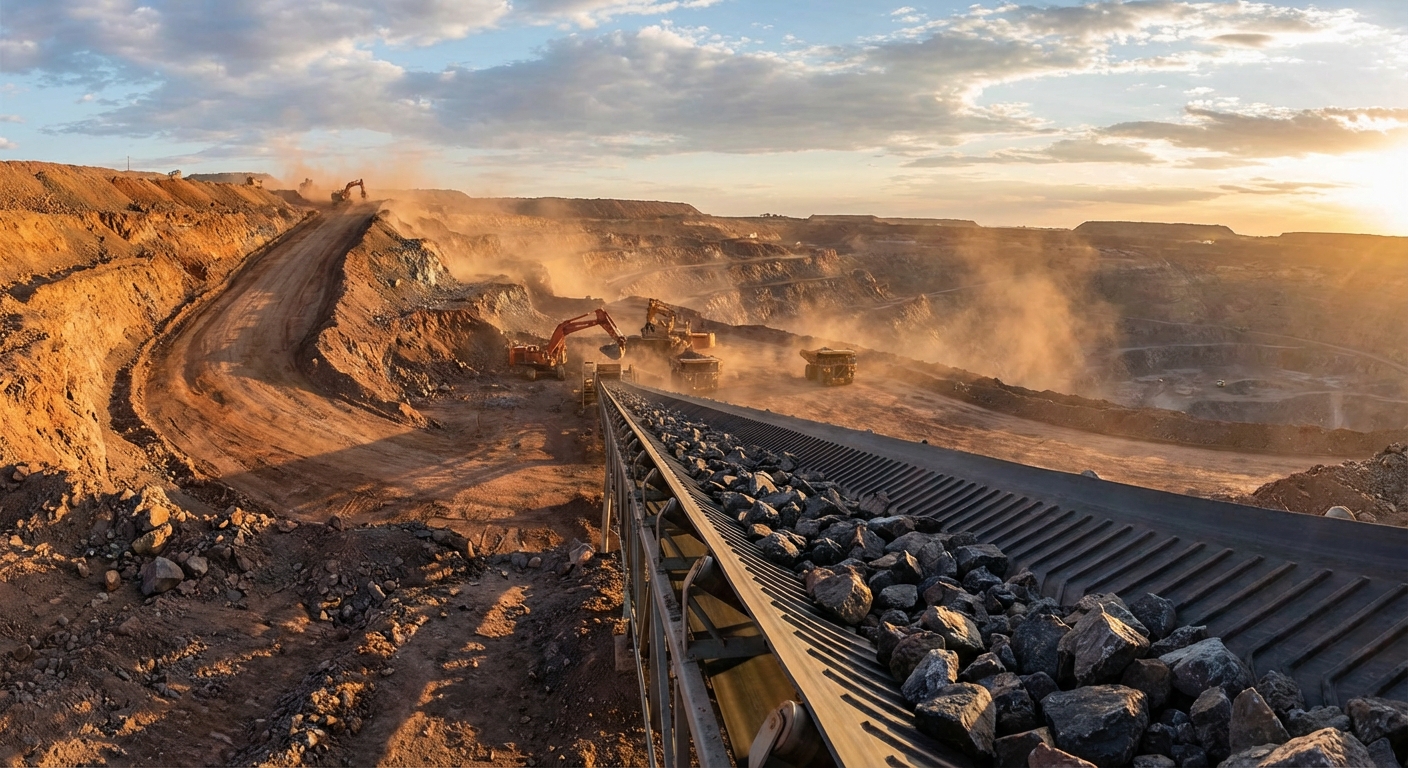
In mining, a sidewall for rubber conveyor belt optimizes operations by allowing for the direct vertical transport of ore and minerals from deep pits to the surface. This eliminates multiple transfer points and reduces the mechanical complexity of the site.
Can it handle the impact of heavy mineral ores?
Mining-grade belts are reinforced with high-strength fabric or steel cords to withstand the punishing impact of large rocks. The sidewalls are specifically engineered to remain flexible under heavy tension while resisting the abrasive nature of mineral transport.
But here is the kicker:
- Reduces the need for long, winding haulage roads.
- Decreases the energy consumption of material transport.
- Lowers the risk of belt punctures at loading zones.
The reliability of these belts ensures that your mine operates at peak throughput even in harsh environmental conditions.
Key Takeaway: Vertical lift capabilities in mining reduce operational steps and mechanical failure points, driving down the cost per ton of material moved.
| Application | Material Type | Primary Benefit | |
|---|---|---|---|
| Open-Pit Mining | Heavy Ore | Slope Reduction | |
| Underground Mining | Coal/Aggregates | Space Optimization |
Optimizing the vertical haulage route is the most effective way to increase mining site profitability.
Why is alignment critical for a sidewall for rubber conveyor belt?
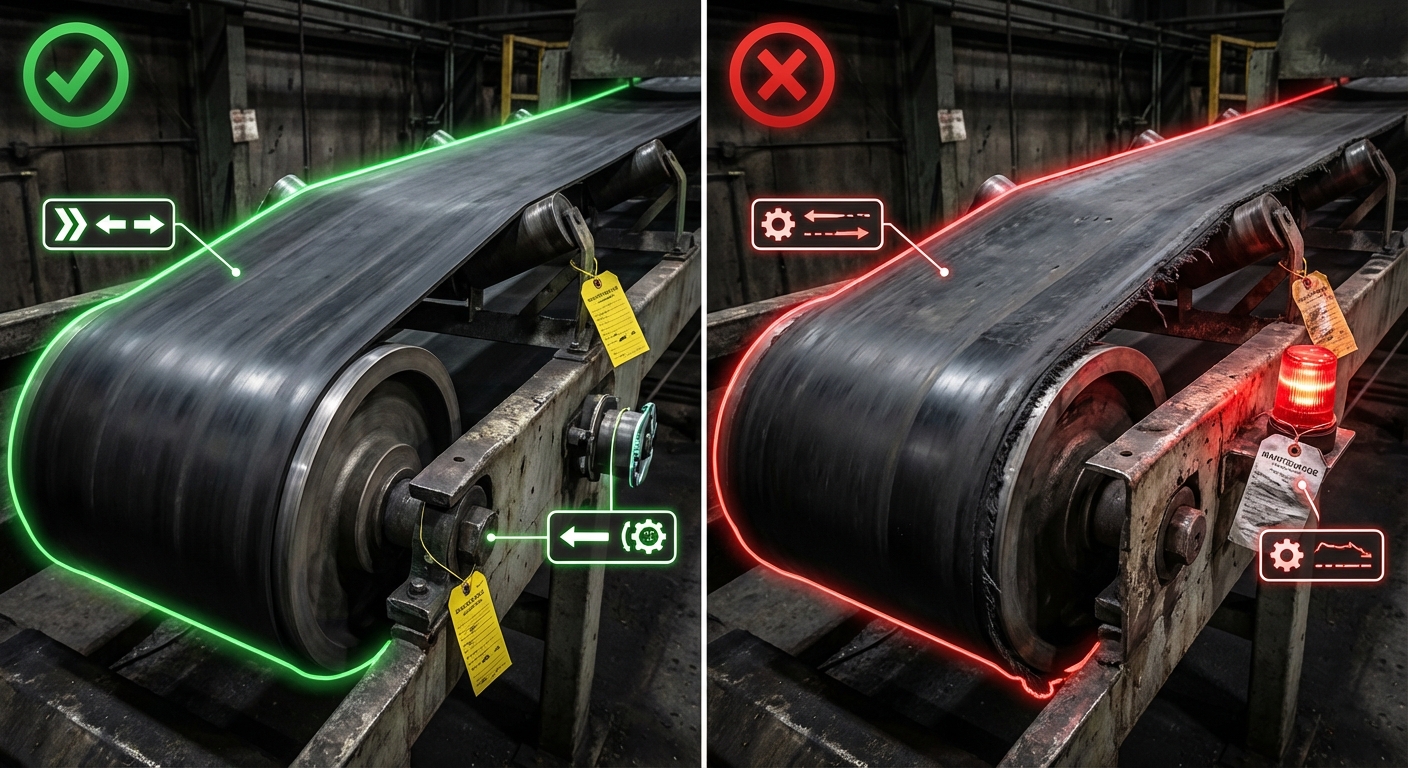
Alignment is critical for a sidewall for rubber conveyor belt because any mistracking can cause the vertical corrugated walls to rub against the conveyor frame, leading to rapid wear and delamination. Proper tracking ensures the belt remains centered during high-speed operations.
How do you maintain perfect belt tracking?
Maintaining tracking involves regular inspection of the return idlers and the tensioning system to ensure the belt is not pulling to one side. Because of the high profile, even a slight misalignment can result in significant structural damage to the sidewalls.
Think about it:
- Prevents edge fraying and wall separation.
- Reduces heat buildup from friction.
- Ensures consistent discharge at the head pulley.
But here is the deal: A well-aligned belt can extend your service life by up to 50% compared to a neglected system.
Key Takeaway: Precise alignment is the foundation of belt longevity, preventing mechanical interference that causes premature wall failure.
| Alignment Check | Symptom of Failure | Corrective Action | |
|---|---|---|---|
| Wall Rubbing | Edge Wear | Re-align Idlers | |
| Center Tracking | Material Spillage | Adjust Tensioning |
Regular monitoring of tracking parameters is a non-negotiable part of industrial maintenance.
What are the size options for a sidewall for rubber conveyor belt?
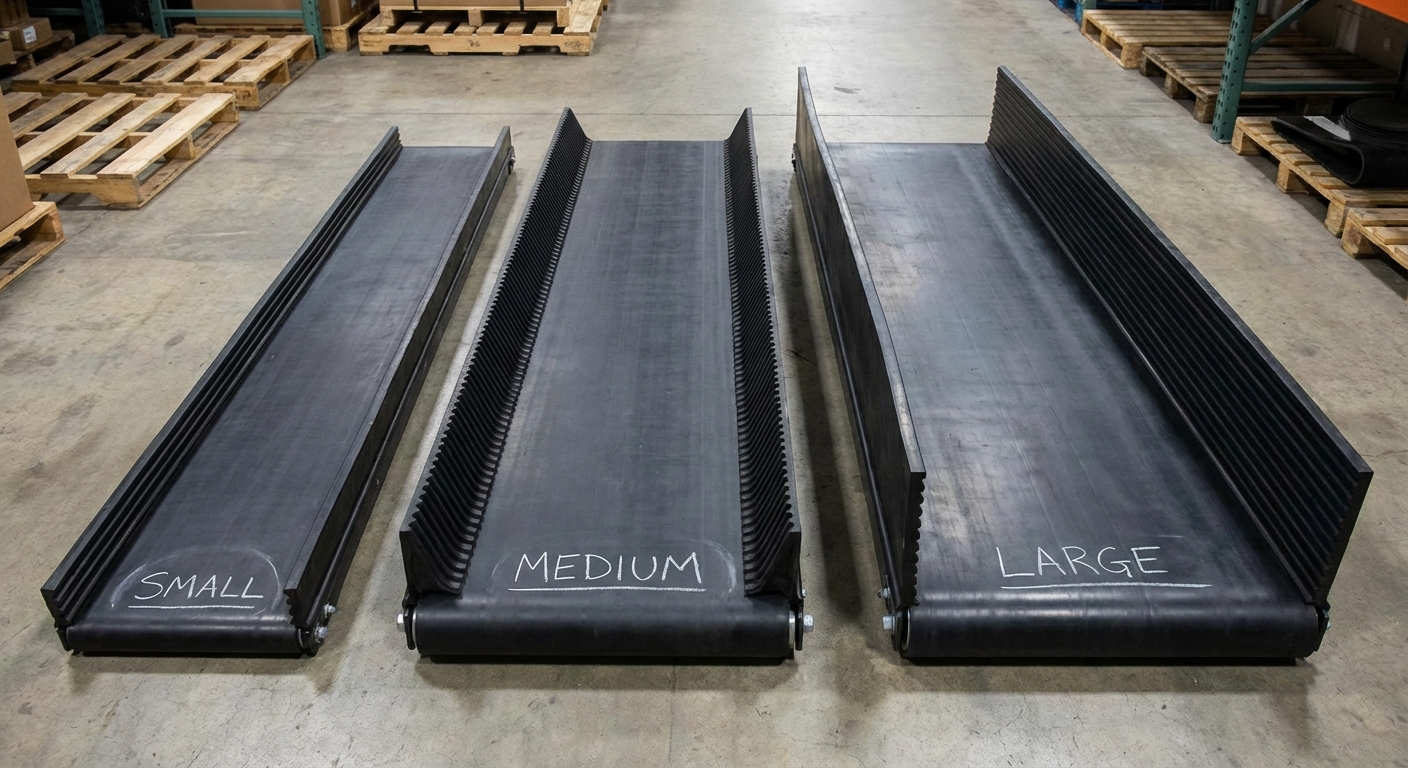
Sizes for a sidewall for rubber conveyor belt range from 40mm to over 400mm in height, allowing you to customize the belt based on the volume and particle size of your material. Choosing the right wall height is essential for balancing capacity with pulley diameter.
How do you choose between small and large profiles?
Small profiles are ideal for fine materials like sand or grain, while large profiles are required for heavy bulk items like coal or iron ore. The width of the belt must also be factored in to ensure the base carcass can support the vertical load.
And the best part?
- Custom heights allow for specific volume throughput.
- Reinforced bases can handle ultra-wide configurations.
- Various widths fit existing conveyor structures.
Choosing the correct size prevents “over-filling” which leads to spillage and belt strain during the incline phase.
Key Takeaway: Size selection must be a data-driven decision based on material density, particle size, and required throughput.
| Wall Height | Common Material | Pulley Diameter Req. | |
|---|---|---|---|
| 40mm – 80mm | Sand/Grain | Small to Medium | |
| 120mm – 400mm | Rock/Coal | Large |
Matching the belt dimensions to your specific material profile is the first step in system optimization.
How does a sidewall for rubber conveyor belt handle industrial coal?
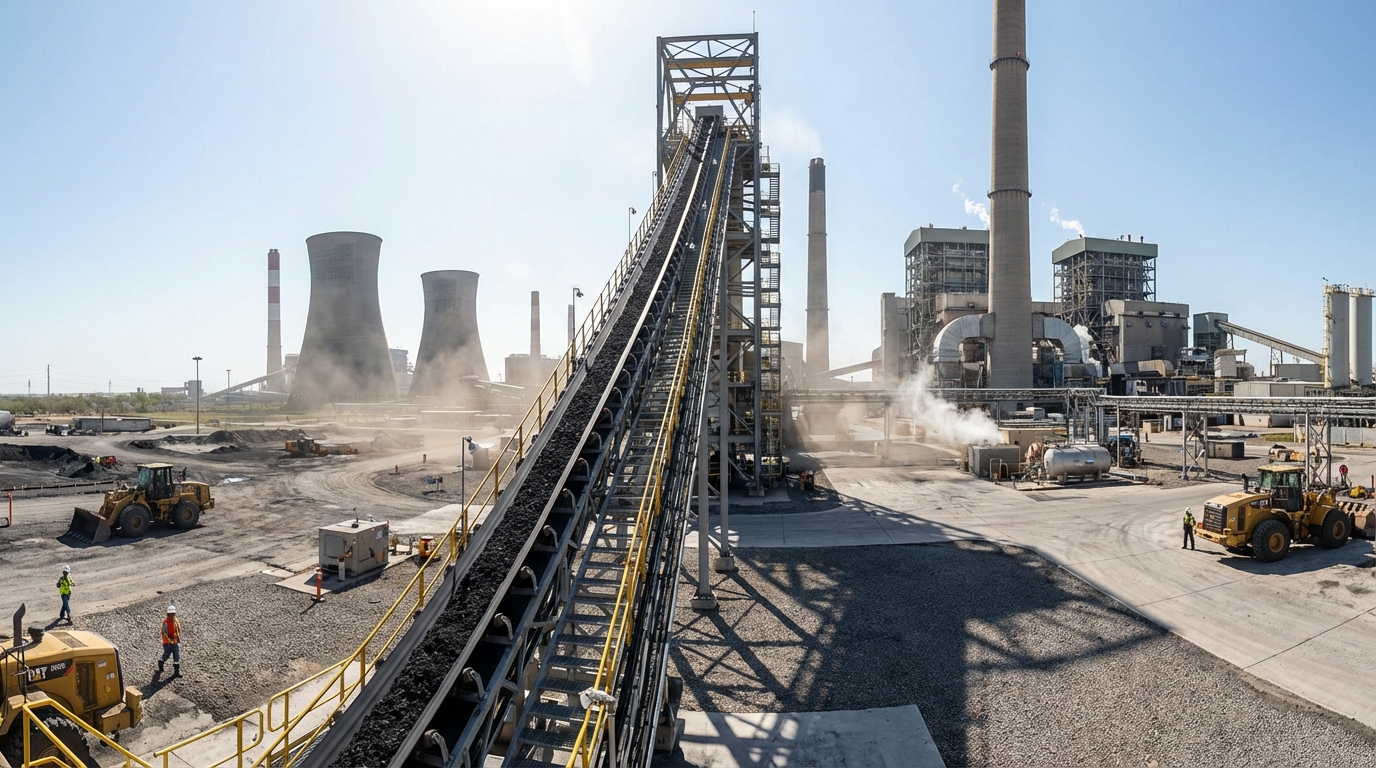
In coal transport, a sidewall for rubber conveyor belt handles the material by providing a dust-tight, secure channel that prevents fines from escaping into the environment. This is particularly vital for power plants where cleanliness and safety are paramount.
Is fire resistance necessary for coal handling?
Coal handling often requires specialized flame-retardant compounds to meet stringent safety regulations and prevent underground or facility fires. The sidewall design ensures that coal stays contained, reducing the risk of coal dust explosions.
But here is the kicker:
- Reduces cleanup labor in power plant galleries.
- Ensures consistent feeding of boilers.
- Resists the abrasive nature of raw coal.
Using a contained system is the most efficient way to maintain a clean and safe industrial energy facility.
Key Takeaway: Containment and safety grade compounds make sidewall belts the standard for modern coal handling infrastructure.
| Feature | Industrial Requirement | Outcome | |
|---|---|---|---|
| Corrugated Wall | Dust Containment | Clean Facility | |
| FR Compound | Fire Safety | Regulatory Compliance |
Protecting your facility starts with choosing a belt that manages both the material and the associated risks.
What goes into designing a sidewall for rubber conveyor belt?
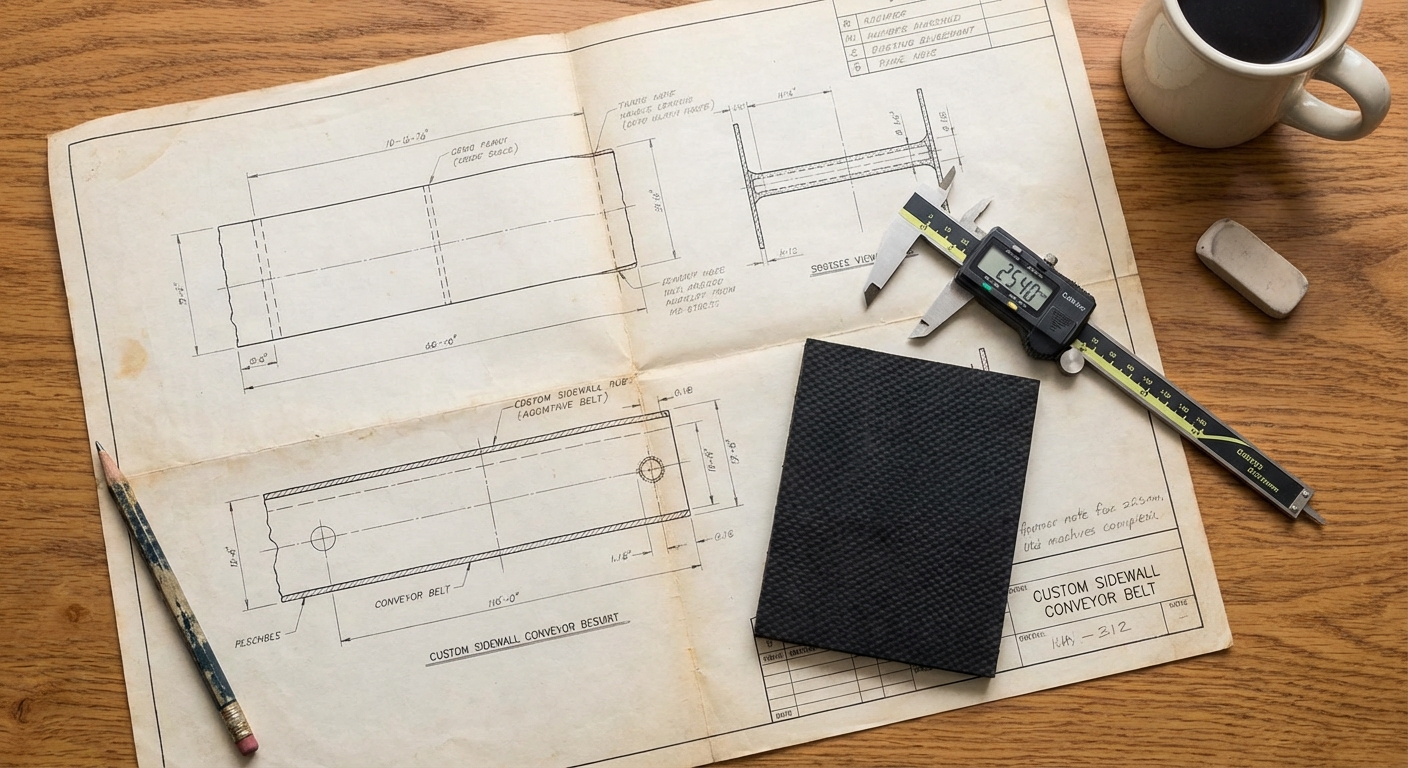
Designing a sidewall for rubber conveyor belt involves a complex calculation of tension, material weight, and pulley curvature to ensure structural integrity. Engineers must determine the optimal spacing for cleats and the exact height of the sidewalls.
Why is carcass strength the foundation of the design?
The base carcass must be rigid enough to remain flat under the weight of the sidewalls but flexible enough to wrap around pulleys. High-modulus fabrics or steel reinforcements are used to provide the necessary tensile strength without excessive stretching.
Think about it:
- Design determines the minimum pulley diameter.
- Cleat spacing affects discharge efficiency.
- The blueprint accounts for environmental stress.
But here is the deal: A custom-engineered design can reduce your maintenance costs by up to 40% over the life of the belt.
Key Takeaway: Engineering precision during the design phase eliminates mechanical bottlenecks and ensures long-term operational stability.
| Design Factor | Component Affected | Importance | |
|---|---|---|---|
| Tensile Strength | Base Carcass | Load Capacity | |
| Wall Flex | Sidewall Compound | Life Expectancy |
Professional blueprints are the only way to guarantee that your custom belt will perform in real-world conditions.
How is the sidewall for rubber conveyor belt vulcanized for strength?
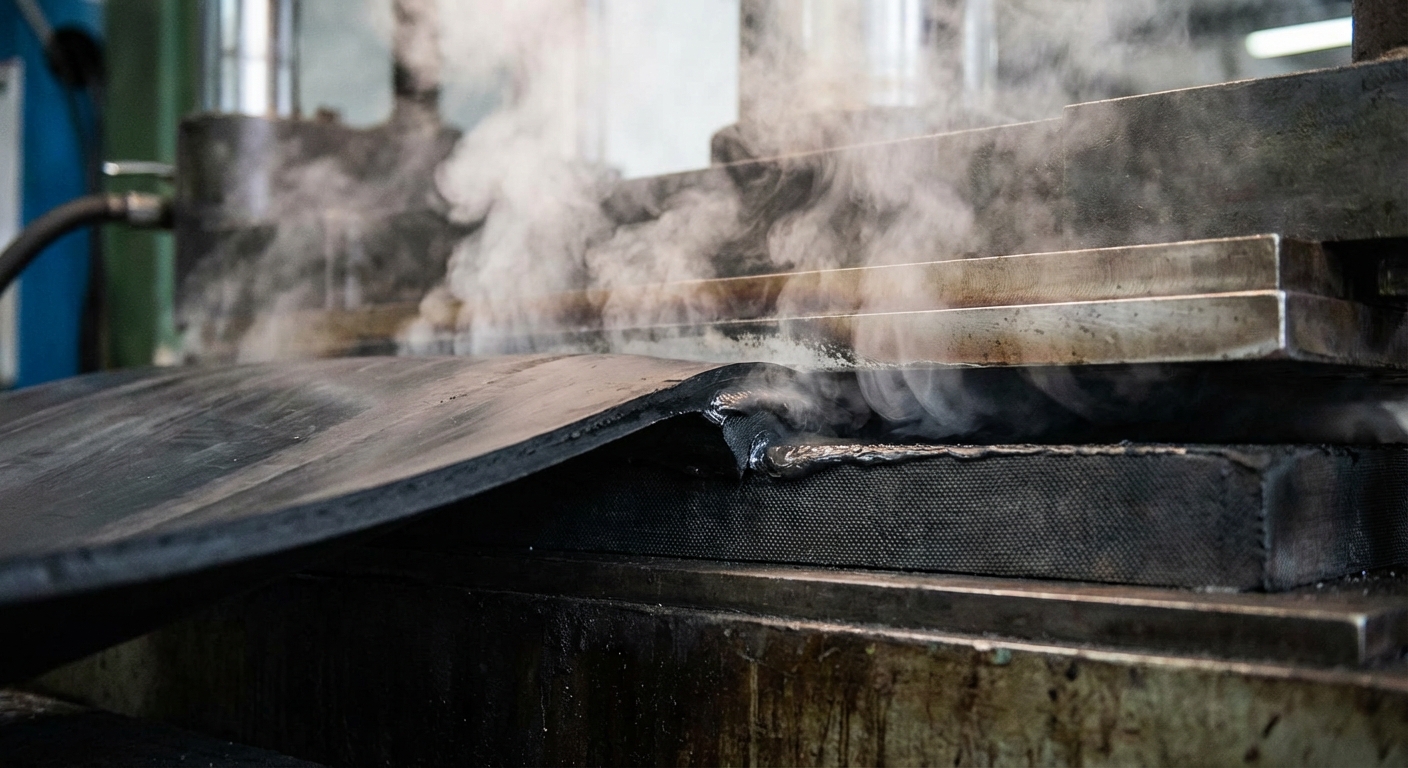
Vulcanization for a sidewall for rubber conveyor belt uses heat and pressure to bond the corrugated walls and cleats into a monolithic unit with the base belt. This “one-piece” process creates a chemical bond that is far superior to standard gluing methods.
Does hot vulcanization prevent delamination?
Hot vulcanization creates cross-linked polymer chains across the entire structure, making it virtually impossible for the sidewalls to separate from the base carcass. This process is essential for belts operating in extreme temperatures or high-tension applications.
And the best part?
- Zero risk of “cold bond” adhesive failure.
- Maximum adhesion strength for heavy loads.
- Uniform material properties across the belt.
By manufacturing the belt as a single homogenous unit, you eliminate the primary failure point found in lower-quality competitors.
Key Takeaway: Monolithic vulcanization is the gold standard for industrial durability, ensuring the belt remains a single, rugged piece.
| Bonding Method | Adhesion Quality | Environment Suitability | |
|---|---|---|---|
| Hot Vulcanized | Maximum | High Heat/Tension | |
| Cold Bonded | Moderate | Light Duty Only |
Choosing a vulcanized solution is an investment in permanent structural integrity.
Why is inspection vital for a sidewall for rubber conveyor belt?
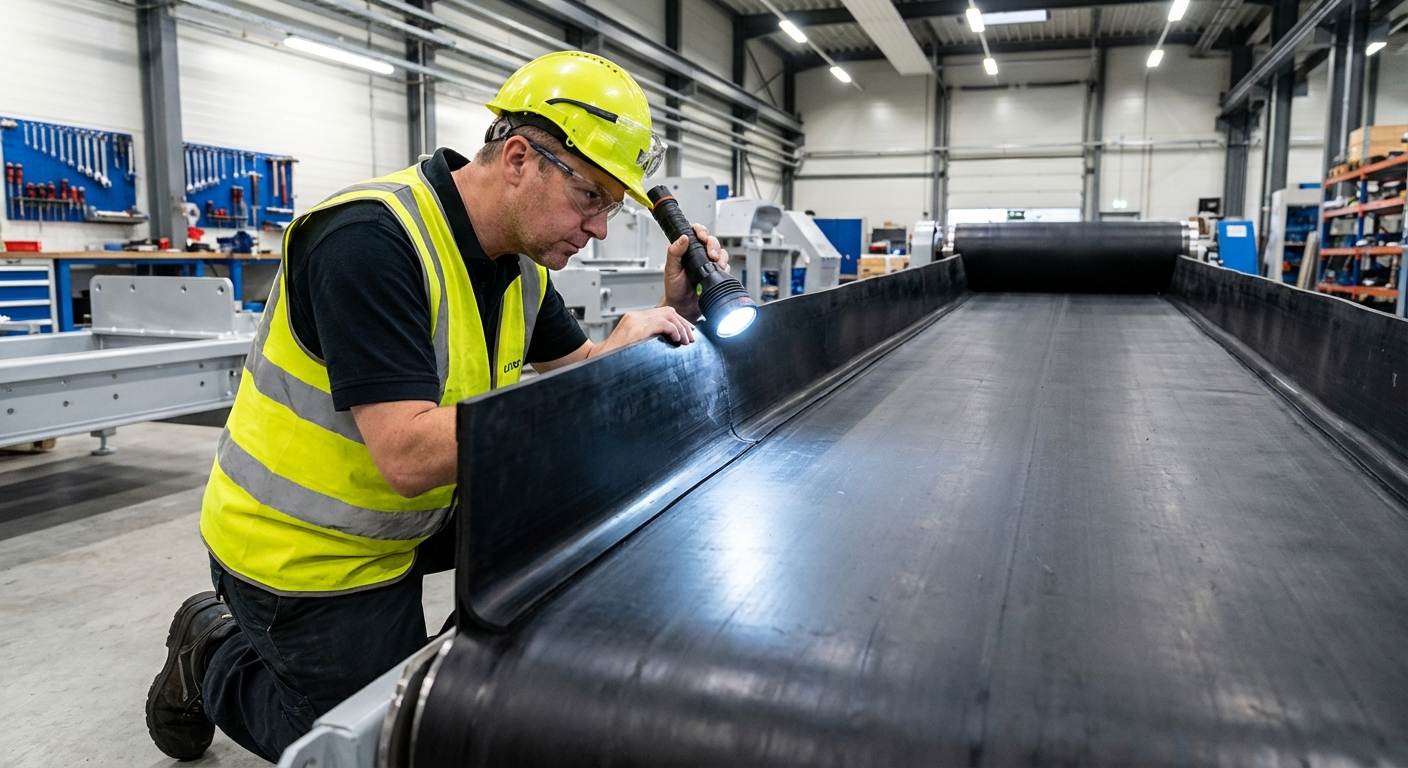
Inspection is vital for a sidewall for rubber conveyor belt because it allows you to identify small cracks or wall fatigue before they lead to a catastrophic system failure. Proactive monitoring keeps your production line running without unplanned interruptions.
What should an inspector look for at the belt edges?
An inspector focuses on the bond line between the wall and the base, looking for any signs of lifting or edge fraying caused by misalignment. They also check the “valleys” of the corrugated wall for signs of ozone cracking or mechanical stress.
Think about it:
- Catches minor issues before they stop production.
- Verifies that cleaners aren’t damaging the walls.
- Ensures cleats are securely attached.
And the best part? A ten-minute visual check every shift can save you thousands of dollars in emergency repair costs.
Key Takeaway: Consistent inspection protocols are the most cost-effective way to maximize the “useful life” of your material handling equipment.
| Inspection Point | Danger Sign | Priority | |
|---|---|---|---|
| Wall Base | Separation/Lifting | High | |
| Cleat Surface | Excessive Wear | Medium |
Empowering your team to perform detailed inspections creates a culture of operational excellence.
What are the structural details of a sidewall for rubber conveyor belt?
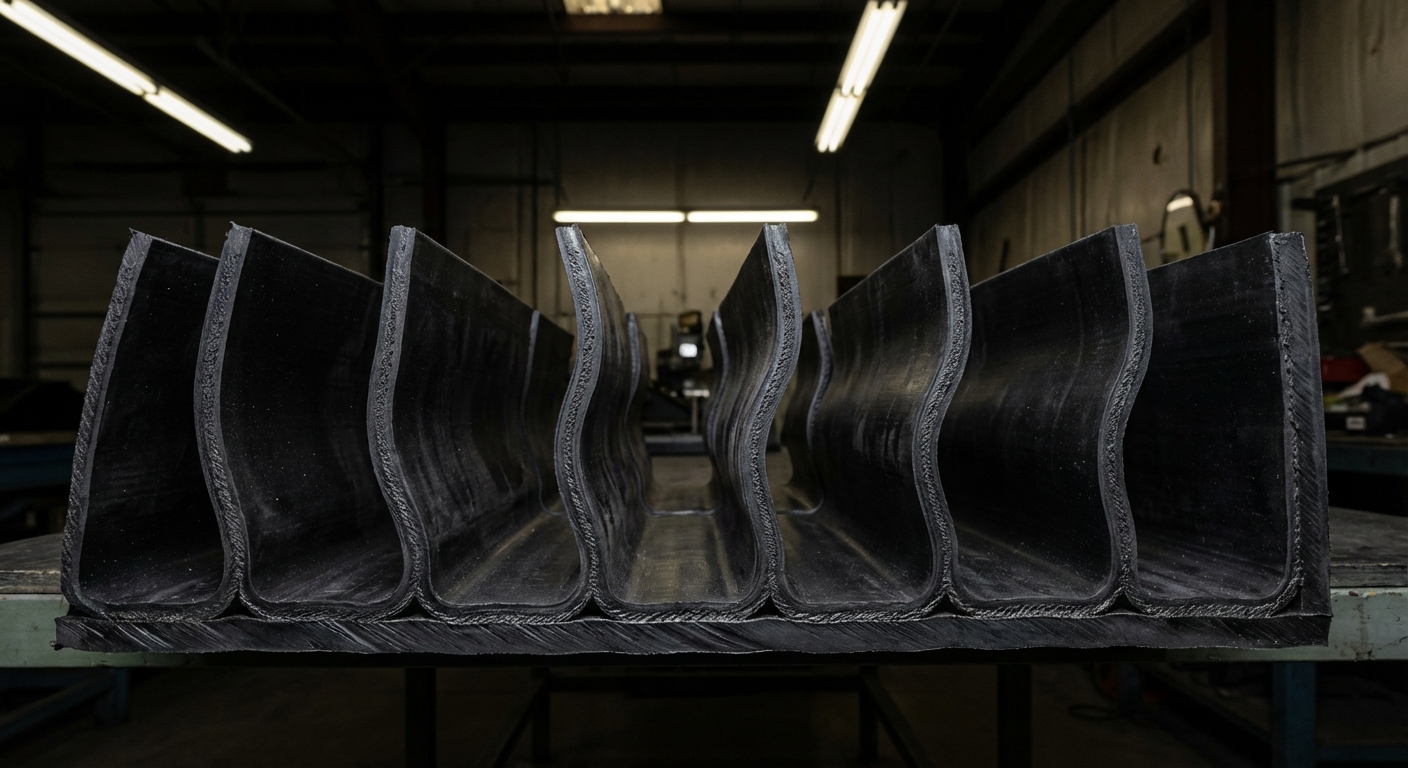
Structural details of a sidewall for rubber conveyor belt include the fabric reinforcement within the corrugated walls and the specific rubber compounds used for the outer covers. These details determine the belt’s resistance to chemicals, oils, and abrasive materials.
Why is the “S” shape used for the sidewall?
The “S” or corrugated shape is used because it allows the wall to compress and stretch as it travels around pulleys without cracking. This geometry provides vertical rigidity while maintaining the flexibility needed for a continuous loop system.
But here is the deal:
- Reinforced walls prevent bowing under load.
- Base carcasses resist longitudinal stretching.
- Compounds are tailored to specific industries.
Understanding these layers helps you choose a belt that won’t just fit your conveyor, but will thrive in your specific environment.
Key Takeaway: The combination of geometric design and material science is what allows these belts to perform 24/7 in harsh conditions.
| Component | Material Detail | Function | |
|---|---|---|---|
| Outer Cover | NBR/EPDM |