
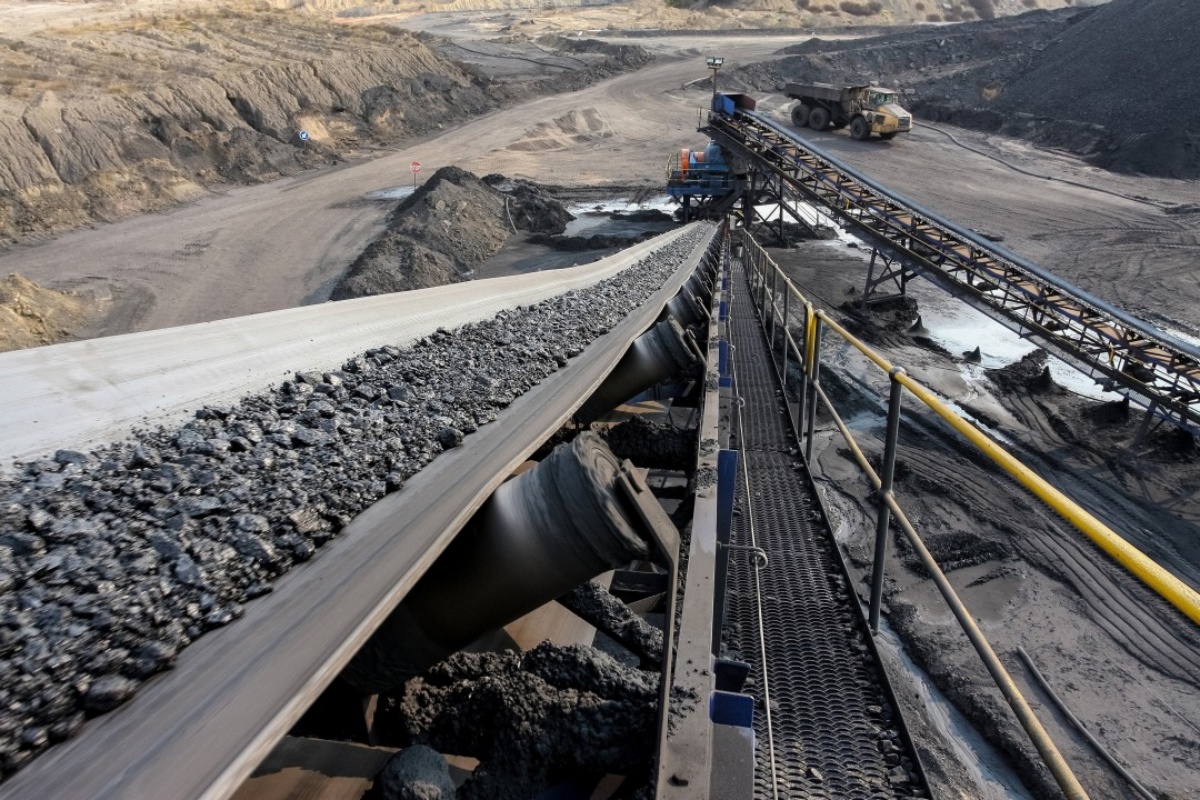
A strong rubber conveyor belt ensures reliable transport of heavy plaster materials, reducing downtime, resisting abrasion and moisture, and maintaining stable, efficient production flow.
What is a strong rubber conveyor belt?
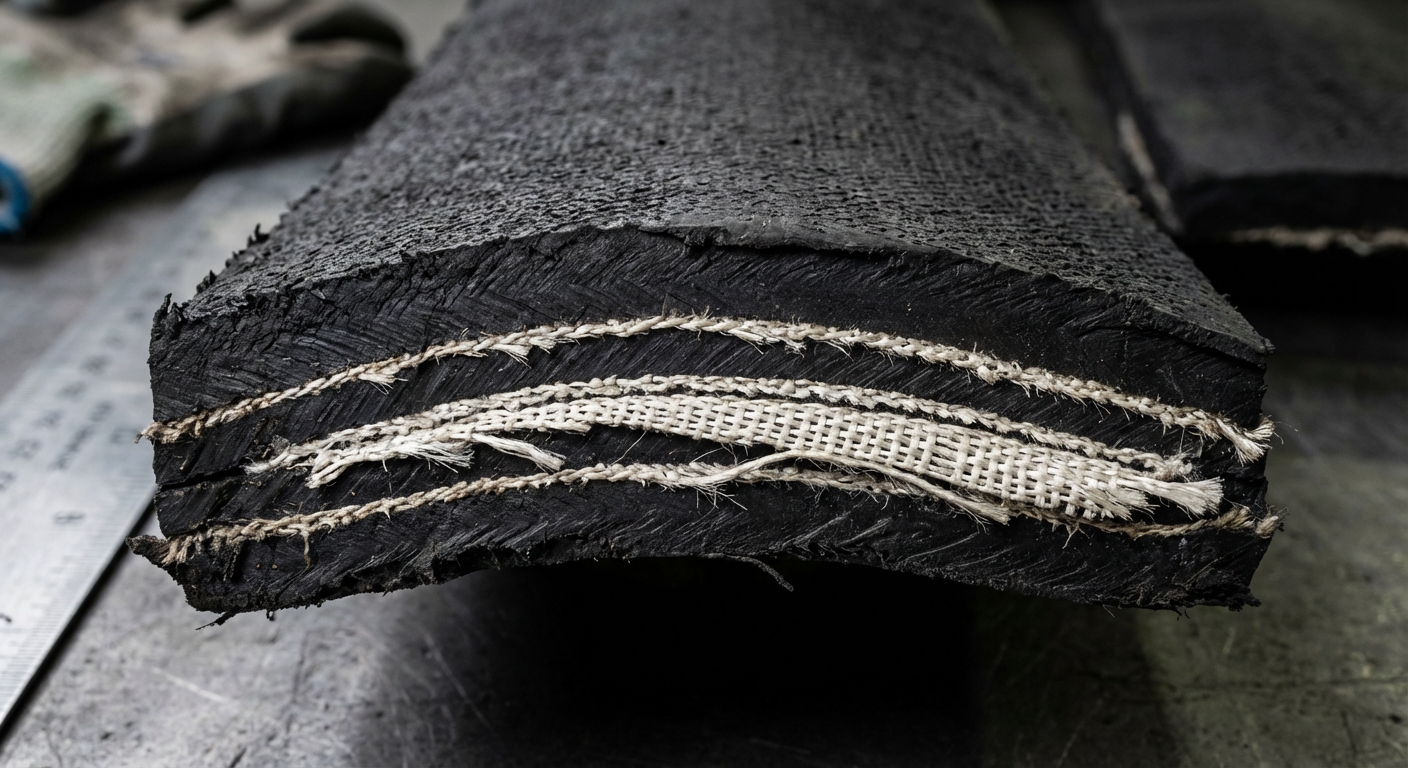
A strong rubber conveyor belt is a multi-layered industrial component designed with a reinforced carcass and a durable rubber cover to handle extreme tensile loads. This specialized belt utilizes synthetic fabrics or steel cords to provide the structural integrity required for heavy material handling.
Material composition and quality
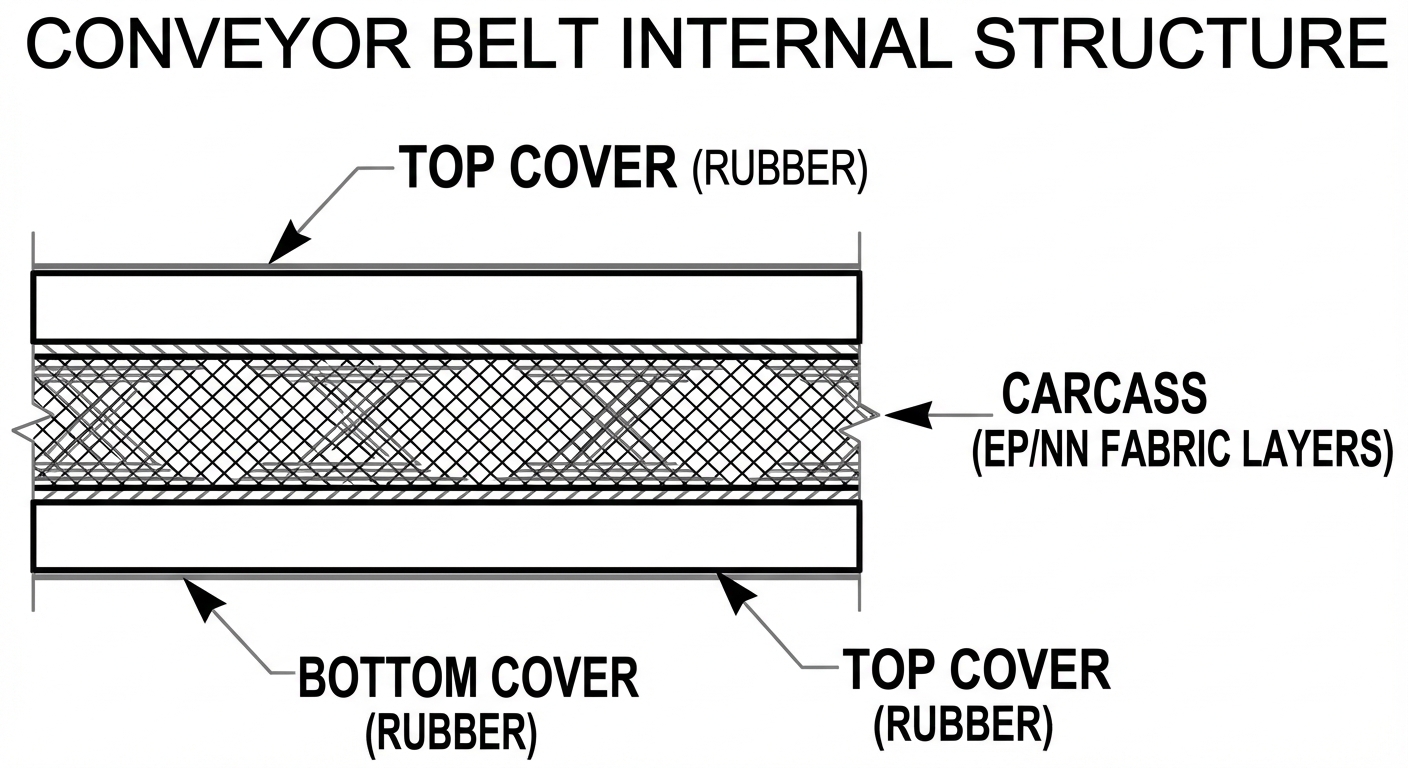
The core of a high-quality belt consists of several plies of EP (polyester/polyamide) or NN (nylon/nylon) fabric that determine its elongation properties. Superior rubber compounds are applied as top and bottom covers to protect the inner carcass from abrasion, impact, and chemical exposure.
- High-tensile EP fabric layers.
- Abrasion-resistant SBR or NBR rubber covers.
- Specialized bonding layers for ply adhesion.
Here is the kicker: The quality of these materials directly dictates the belt’s ability to resist delamination under heavy stress. Using premium compounds ensures that the belt remains flexible while maintaining its structural shape over thousands of operational hours.
Why durability matters in casting
Plaster casting involves significant weight and moisture, which can quickly degrade inferior belt surfaces. A durable belt prevents sagging between rollers, ensuring that the fragile plaster molds remain level and undisturbed during the initial setting phase.
- Minimizes vibration during transport.
- Resists moisture absorption from wet plaster.
- Reduces the risk of belt mistracking under uneven loads.
But that’s not all… A reliable belt also protects the machinery’s rollers and motors by providing consistent tension. This stability is crucial for maintaining the precise dimensions required in industrial plaster manufacturing.
Key Takeaway:A strong rubber conveyor belt provides the foundational stability needed for heavy-duty casting, combining advanced textile reinforcement with resilient rubber chemistry.
| Component | Function | Material Benefit | |
|---|---|---|---|
| Top Cover | Protects against impact | High abrasion resistance | |
| Carcass | Provides tensile strength | Low elongation fabric (EP/NN) | |
| Bottom Cover | Ensures pulley friction | Optimized grip and wear |
Analytical Guide: When selecting a belt, match the cover thickness to the specific weight of your plaster molds to prevent premature wear.
How does a strong rubber conveyor belt work?
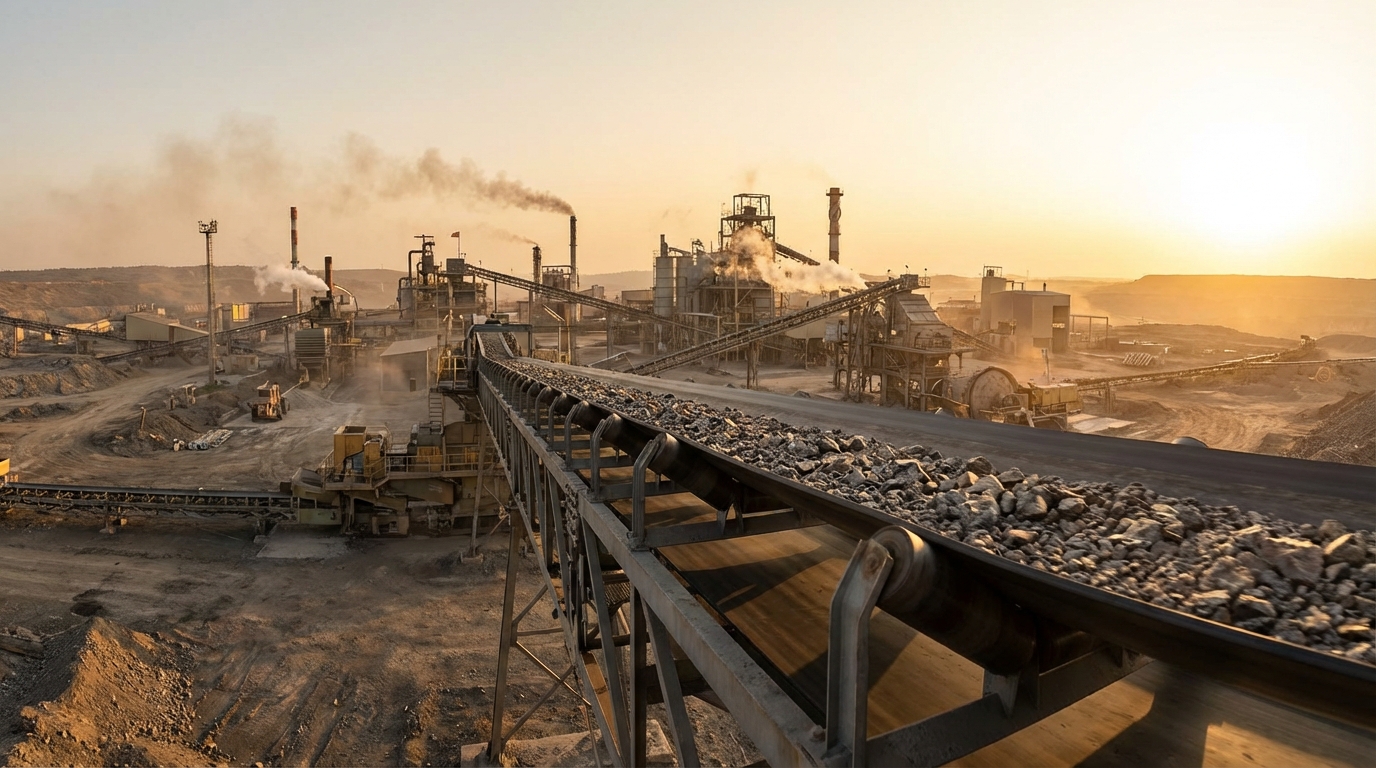
This system operates through a combination of friction mechanics and high-tension reinforcement that allows it to pull massive weights across long distances. A strong rubber conveyor belt utilizes its rubber cover to maximize traction against the drive pulley, converting motor torque into linear motion.
Friction and traction mechanics
The drive pulley grips the bottom cover of the belt, relying on the coefficient of friction to move the load. If the belt is not sufficiently strong, the tension required to move heavy plaster could cause the belt to stretch or slip, leading to heat buildup.
- Pulley lagging increases grip.
- Tensioning units maintain consistent contact.
- Counterweights prevent belt slack.
Make no mistake: The interaction between the belt and the pulleys is the heart of the system. Without proper traction, even the most powerful motor cannot effectively move high-density bulk materials.
Handling heavy plaster molds
In the casting process, molds are often moved in bulk, placing localized stress on the belt surface. The reinforced carcass of the belt distributes this weight evenly, preventing the “troughing” effect from becoming too deep and damaging the belt edges.
- Supports high-density mold weights.
- Distributes point-loads across the carcass.
- Maintains a flat surface for mold stability.
But wait, there’s more: The belt must also handle the transition from wet pouring to dry heat. The mechanical design allows it to expand and contract slightly without losing its alignment or grip on the drive system.
Key Takeaway:Effective operation relies on the synergy between rubber friction and internal reinforcement, ensuring heavy molds move smoothly without slippage.
| Mechanical Feature | Impact on Casting | Performance Value | |
|---|---|---|---|
| Tensile Strength | Prevents belt snapping | High (up to 3150 N/mm) | |
| Surface Friction | Ensures mold stability | Controlled traction | |
| Troughing Ability | Increases capacity | Optimized for bulk |
Analytical Guide: Monitor the belt tension regularly; a well-tensioned strong rubber conveyor belt reduces motor energy consumption by up to 20%.
Which types of strong rubber conveyor belt exist?
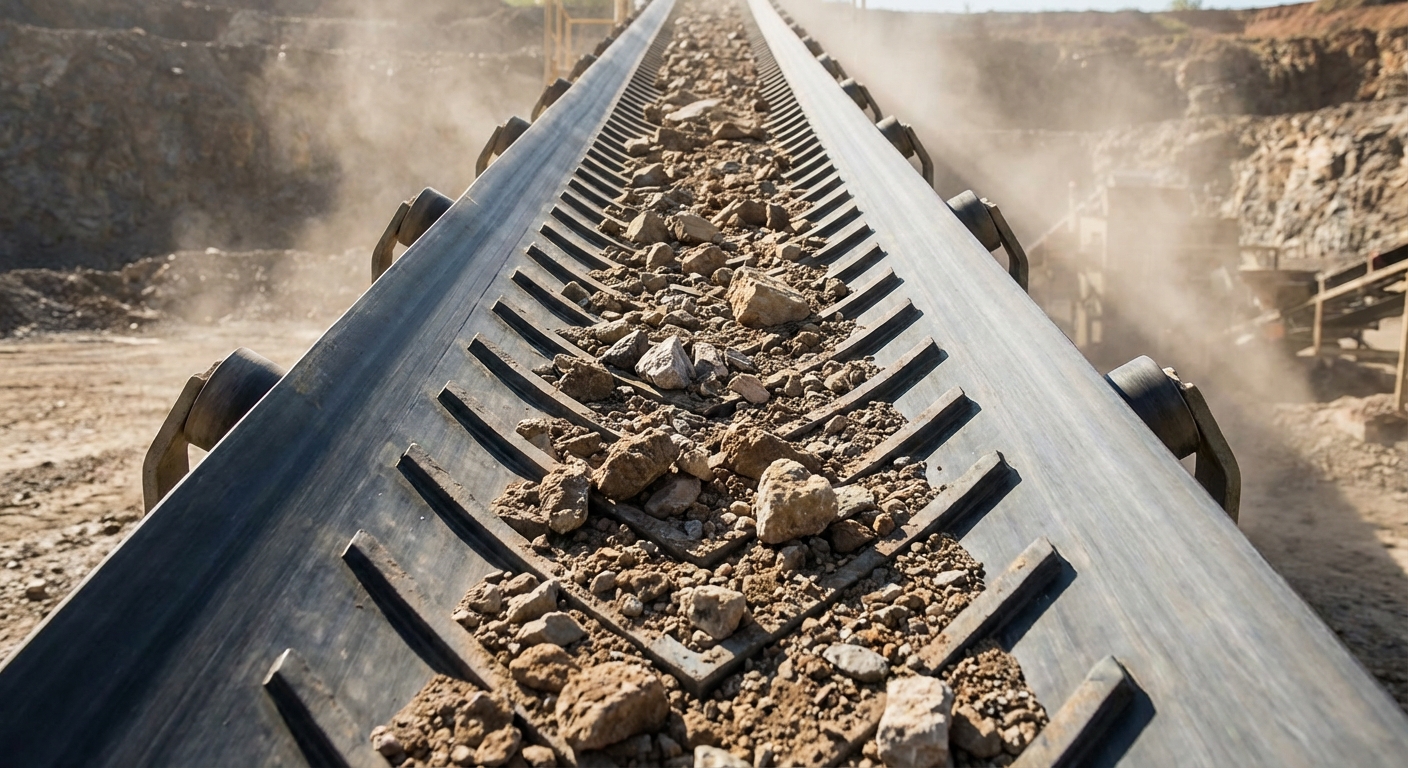
There are several variations of the strong rubber conveyor belt, ranging from heat-resistant options for ovens to high-grip profiles for inclined transport. Selecting the right type depends on the specific environmental conditions of your production line.
Heat resistant belt options
Plaster casting often requires molds to pass through drying tunnels where temperatures can reach over 200°C. Heat-resistant belts are formulated with EPDM or specialized compounds that prevent the rubber from cracking or hardening under extreme thermal stress.
- EPDM covers for continuous heat exposure.
- Heat-shielded carcasses to prevent ply separation.
- Optimized for drying and curing zones.
Here is the deal: Standard rubber will fail within days in a high-heat environment. Investing in a heat-resistant variant is the only way to ensure continuous operation in the curing stage of plaster casting.
Sliding belts for smooth transport
In certain casting setups, the belt must slide over a flat metal bed rather than idler rollers to provide a perfectly level surface. These sliding belts feature a low-friction fabric bottom to reduce drag and energy consumption.
- Low-friction bottom fabric (Slider bed).
- Perfectly flat top surface for molds.
- Reduced noise during operation.
Here is the kicker: Sliding belts are essential when the molds are sensitive to the slight vibrations caused by idlers. They provide the “glass-like” transport required for intricate plaster designs.
Key Takeaway:Whether you need thermal resistance or a low-friction slider bed, there is a specialized rubber belt designed for every stage of the casting process.
| Belt Type | Primary Environment | Core Advantage | |
|---|---|---|---|
| Heat Resistant | Drying/Curing Tunnels | Resists hardening/cracking | |
| Sliding Belt | Flat Bed Conveyors | Low friction/Energy efficient | |
| High Grip | Inclined Transport | Prevents material backslide |
Analytical Guide: Use sliding belts for the pouring section and heat-resistant belts for the drying section to maximize the life of each component.
Where is a strong rubber conveyor belt used?
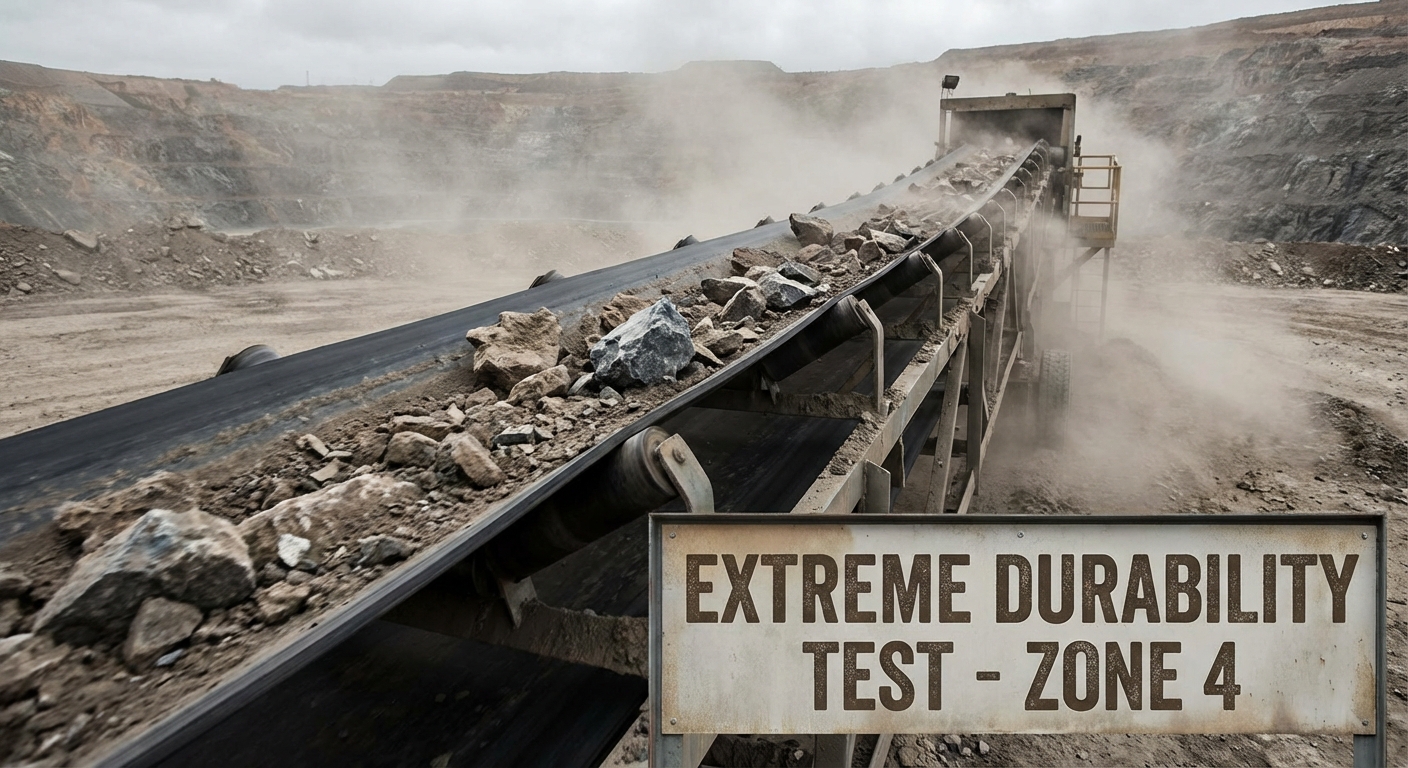
Applications for a strong rubber conveyor belt extend far beyond plaster casting, including mining, sand extraction, and heavy agricultural processing. Any industry that moves abrasive, heavy, or bulk materials relies on this technology for its primary logistics.
Mining and sand extraction
In mining environments, the belt must transport jagged rocks and wet sand over long distances. The high impact resistance of the rubber cover prevents sharp materials from piercing the internal fabric plies.
- Transports iron ore and coal.
- Handles wet sand and aggregate.
- Resists gouging from sharp debris.
But that’s not all… Mining belts often operate outdoors, meaning they must also resist UV radiation and extreme weather conditions without losing their flexibility or tensile strength.
Industrial plaster casting
Within a plaster facility, the belt is the lifeline between the mixer and the shipping dock. It handles raw powder, liquid plaster, and heavy finished blocks, often operating 24/7 in a dusty environment.
- Moves raw gypsum to the mixer.
- Carries wet molds through setting lines.
- Transports finished products to packaging.
You might be wondering: How does a belt survive constant dust exposure? The high-quality rubber compounds are designed to be “self-cleaning” or compatible with belt scrapers that remove buildup before it can damage the system.
Key Takeaway:From the depths of a mine to the precision of a casting plant, these belts are the standard for moving heavy bulk materials worldwide.
| Industry Sector | Material Handled | Key Requirement | |
|---|---|---|---|
| Mining | Ore and Rock | Impact and tear resistance | |
| Agriculture | Grain and Fertilizer | Oil and moisture resistance | |
| Plaster Casting | Gypsum and Molds | Level surface and heat tolerance |
Analytical Guide: If your facility handles multiple materials, choose a multi-purpose belt with moderate oil and heat resistance to cover all bases.
Why choose a strong rubber conveyor belt?
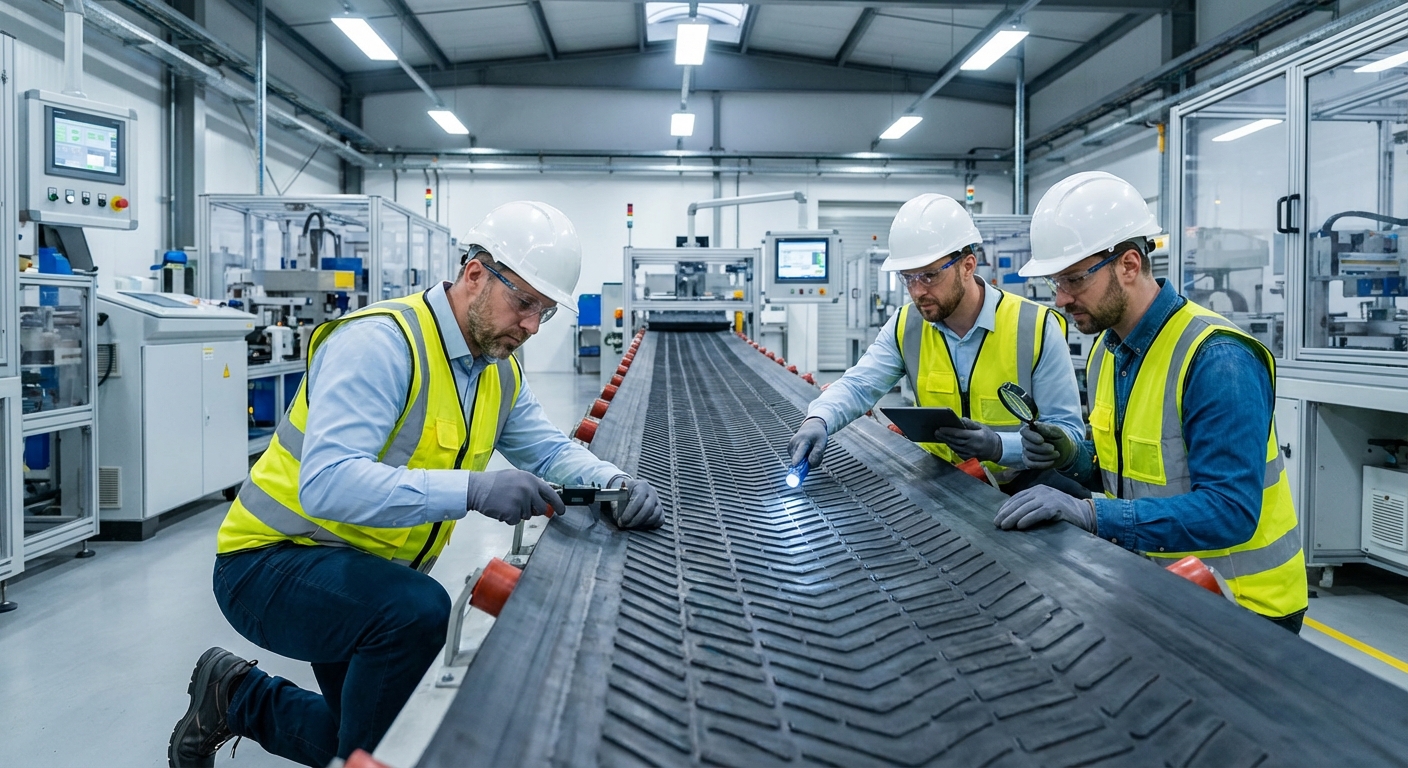
The primary reason to invest in a strong rubber conveyor belt is its unmatched ability to withstand extreme physical and environmental stress. Unlike synthetic or lightweight belts, heavy-duty rubber offers a “memory” that allows it to absorb impacts and return to its original shape.
Resistance to extreme conditions
These belts are engineered to survive where others fail, including environments with high acidity, extreme cold, or intense heat. The chemical stability of modern rubber ensures it won’t swell or soften when exposed to the additives often used in plaster.
- Resistant to moisture and humidity.
- Chemical tolerance for industrial additives.
- UV and ozone protection for longevity.
Here is the kicker: Resistance isn’t just about surviving; it’s about maintaining performance. A belt that doesn’t swell stays on track, preventing edge damage and spillages.
Extended operational lifespan
A high-strength belt typically lasts 3 to 5 times longer than a standard utility belt in the same environment. This longevity reduces the total cost of ownership by minimizing replacement labor and lost production time.
- Fewer belt changes required.
- Reduced wear on pulleys and rollers.
- Lower long-term maintenance costs.
But wait, there’s more: Longer life also means a smaller environmental footprint. By reducing the frequency of belt replacements, facilities generate less industrial waste and consume fewer raw materials.
Key Takeaway:The combination of environmental resilience and long-term durability makes the heavy-duty rubber belt the most cost-effective choice for industrial casting.
| Benefit Category | Impact on Business | Resulting Value | |
|---|---|---|---|
| Durability | Less frequent replacements | Lower CAPEX | |
| Reliability | Consistent uptime | Higher throughput | |
| Versatility | One belt for many tasks | Simplified inventory |
Analytical Guide: Calculate your “cost per ton transported” to see the true financial advantage of a premium strong rubber belt over cheaper alternatives.
What accessories fit a strong rubber conveyor belt?
Enhancing a strong rubber conveyor belt with the right accessories allows it to handle steeper inclines and more complex material paths. Items like cleats, guide ropes, and specialized edges transform a flat belt into a custom material handling solution.
Using cleats for material control
Cleats are raised profiles attached to the top of the belt to prevent materials from sliding backward. In plaster casting, cleats are often used to separate individual molds or to carry bulk gypsum powder up an incline.
- Prevents material backslide on hills.
- Segregates products for automated counting.
- Increases the effective incline angle.
Here is the kicker: Hot-vulcanized cleats are far superior to cold-glued ones. They become part of the belt’s structure, ensuring they won’t snap off under the weight of a heavy plaster mold.
Guide ropes for stable tracking
A guide rope is a profile welded to the bottom of the belt that runs in a groove on the pulleys. This accessory is vital for preventing the belt from drifting sideways, which is a common problem with heavy, uneven loads.
- Ensures perfect belt alignment.
- Protects belt edges from frame damage.
- Reduces the need for constant adjustment.
But that’s not all… Guide ropes are especially useful in long casting lines where even a slight mistrack can lead to molds falling off the side and causing a production halt.
Key Takeaway:Accessories like cleats and guide ropes allow you to customize your belt for specific incline and tracking challenges, ensuring a more controlled process.
| Accessory | Main Purpose | Best Use Case | |
|---|---|---|---|
| Cleats | Inclined transport | Moving bulk powder up 45° | |
| Guide Ropes | Tracking stability | Long, narrow conveyor lines | |
| Corrugated Edges | Containment | Preventing side spillage |
Analytical Guide: Always choose hot-vulcanized accessories for heavy-duty rubber belts to ensure the bond strength matches the belt’s own durability.
How do sidewalls aid a strong rubber conveyor belt?
Integrating corrugated sidewalls onto a strong rubber conveyor belt significantly increases the volume of material that can be transported. Sidewalls create a “pocket” on the belt, allowing for the movement of loose bulk materials at angles that would be impossible for a flat belt.
Increasing volume capacity
By adding sidewalls, you effectively create a flexible trough that contains the material. In plaster casting, this is particularly useful for transporting raw gypsum or recycled plaster scrap without side-spillage.
- Increases bulk volume by up to 400%.
- Eliminates the need for external side skirts.
- Keeps the factory floor cleaner by containing dust.
Here is the deal: More capacity means you can use a narrower belt to move the same amount of material, which can save significant space in a crowded facility.
Enabling steep transport angles
Sidewalls, when combined with cross-cleats, allow for vertical or near-vertical transport (up to 90 degrees). This is essential for facilities that need to move materials between different floors but have limited horizontal space.
- Supports transport up to 90 degrees.
- Saves valuable floor space.
- Reduces the number of transfer points.
But wait, there’s more: Vertical transport reduces the number of individual conveyors needed, which in turn reduces the number of motors and moving parts that require maintenance.
Key Takeaway:Sidewalls maximize the efficiency of your conveyor system by increasing capacity and allowing for steep vertical elevation.
| Sidewall Benefit | Technical Advantage | Operational Result | |
|---|---|---|---|
| Zero Spillage | Contained edges | Reduced cleanup labor | |
| Vertical Flow | 90-degree capability | Smaller facility footprint | |
| High Strength | Rigid corrugated design | Long life under heavy load |
Analytical Guide: When using sidewalls, ensure your pulley diameters are large enough to accommodate the bending radius of the corrugated edges to prevent cracking.
Can you customize a strong rubber conveyor belt?
Yes, a strong rubber conveyor belt is highly customizable, from its width and number of plies to the specific profile of its top surface. Modern manufacturing allows for bespoke designs that meet the exact requirements of a specific casting machine.
Tailored belt widths and plies
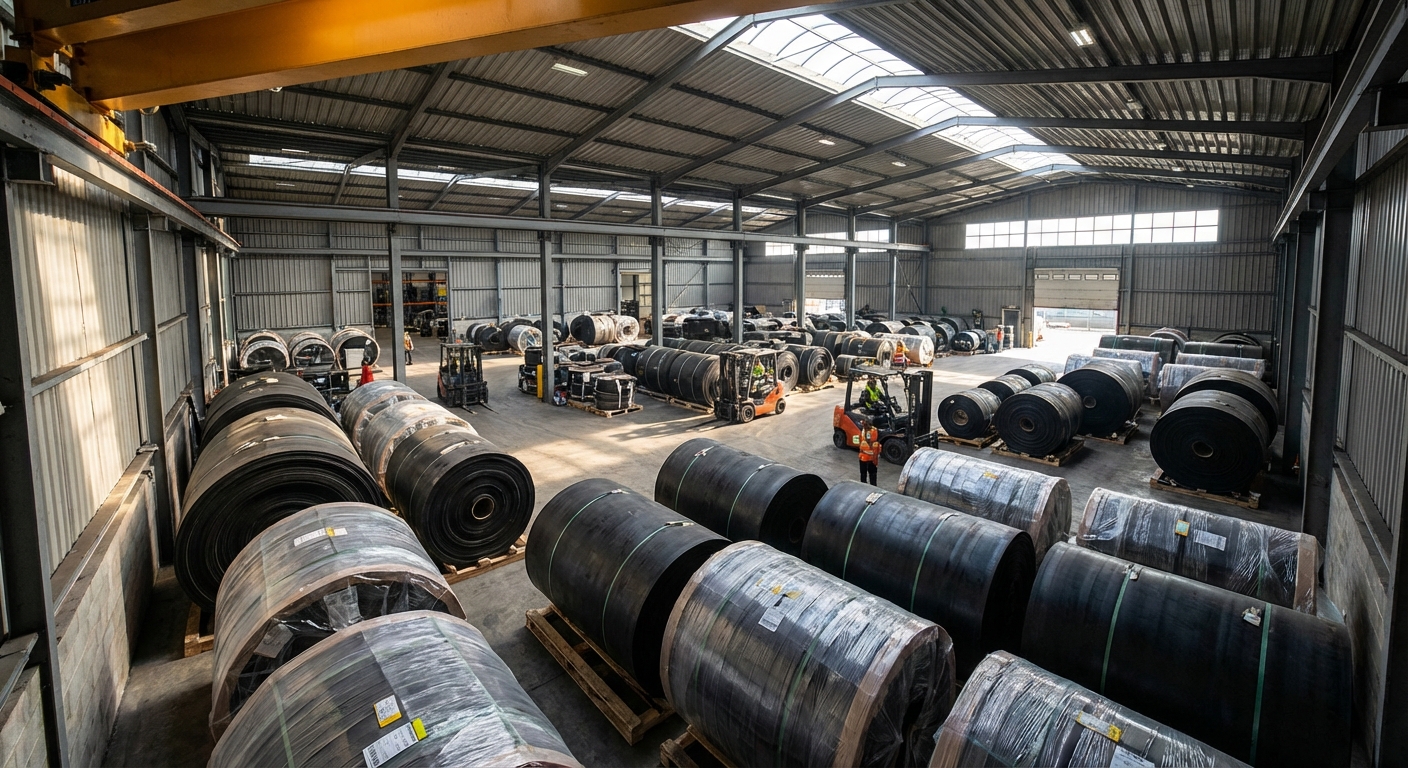
Whether you need a narrow 300mm belt for small parts or a massive 3200mm belt for industrial slabs, manufacturers can cut and finish belts to exact specifications. The number of plies can also be adjusted to balance strength and flexibility.
- Widths up to 3200mm available.
- Custom ply counts (2-ply to 6-ply).
- Adjustable cover thicknesses (e.g., 6mm top, 2mm bottom).
Here is the kicker: Customization allows you to “over-engineer” the belt only where needed, such as adding a thicker top cover if your molds are particularly abrasive, while keeping the rest of the belt light and efficient.
Specific profiles for traction
Beyond standard flat surfaces, belts can be molded with specific patterns like “Rough Top” or “G-Profile” to provide extra grip. These profiles are essential for handling wet or slippery plaster molds during the initial curing stages.
- Rough top for extra mold grip.
- Chevron patterns for light inclines.
- Embossed logos for brand identification.
But wait, there’s more: Specialized profiles can also help with air release under the molds, preventing a vacuum effect that might make it difficult to remove the molds from the belt at the end of the line.
Key Takeaway:Customization ensures that every aspect of the belt—from its internal structure to its surface texture—is optimized for your specific casting process.
| Customization Option | Purpose | Benefit | |
|---|---|---|---|
| Width | Fitting specific machinery | Edge protection/Efficiency | |
| Ply Count | Matching tensile load | Prevents stretching/Snapping | |
| Profile | Improving traction | Stabilizes molds during motion |
Analytical Guide: Consult with an engineer before finalizing ply count; too many plies can make a belt too rigid for small pulley diameters.
Is a strong rubber conveyor belt heat resistant?
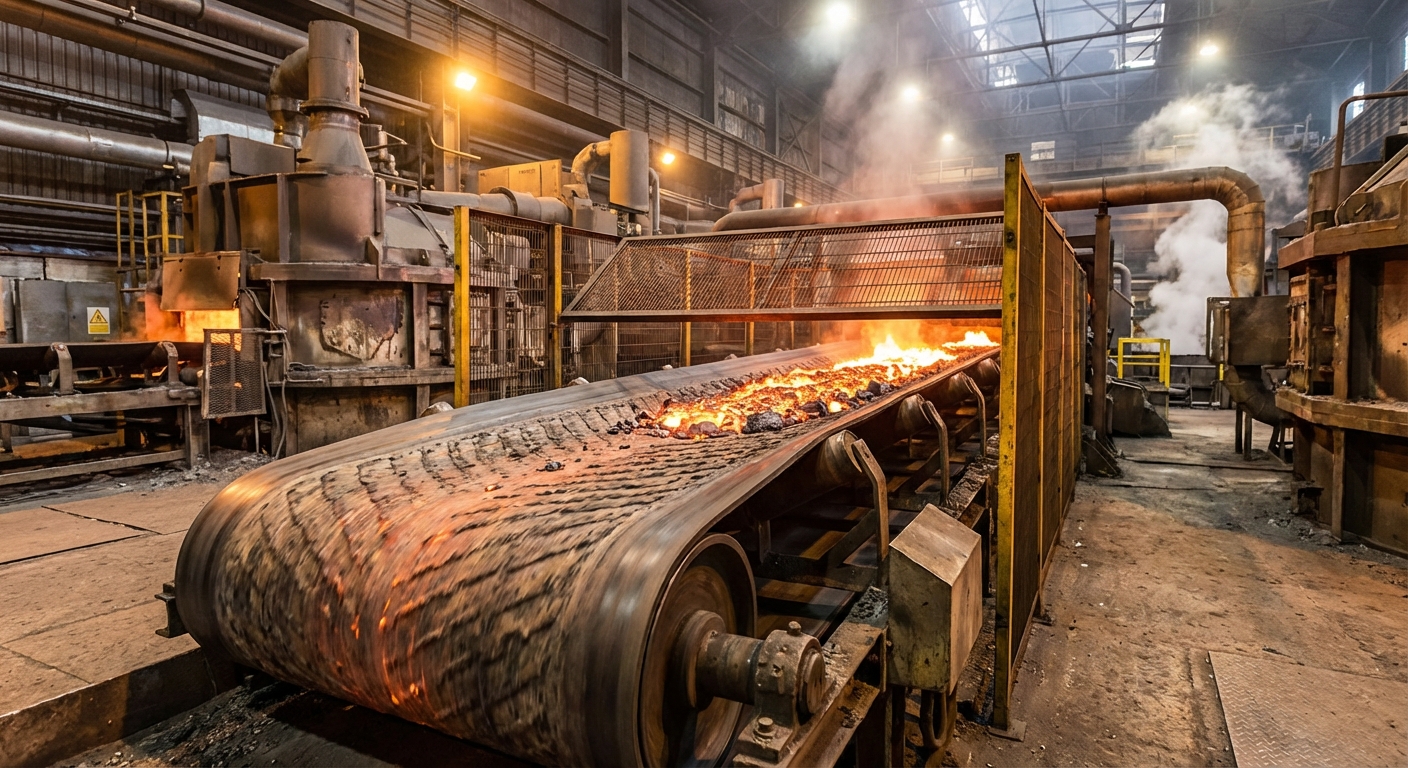
A strong rubber conveyor belt can be specifically engineered to be heat resistant, using compounds like EPDM to withstand continuous temperatures up to 200°C or more. This makes them ideal for the high-temperature drying phases of the plaster casting process.
Formulated bulk material compounds
The rubber covers are formulated with heat-stabilizing additives that prevent the molecular chains from breaking down when exposed to thermal energy. This prevents the belt from becoming “brittle,” which is the leading cause of belt failure in drying tunnels.
- Resists hardening and surface cracking.
- Maintains flexibility in high-heat zones.
- Prevents the “scorched” look of standard rubber.
Here is the deal: Heat resistance is graded (T1, T2, T3). T3 belts are designed for the most extreme environments, handling bulk materials up to 220°C without significant degradation.
Handling hot plaster materials
When plaster is cured, it releases heat, and the belt must absorb this without losing its tension or tracking. A heat-resistant belt ensures that the thermal expansion of the material doesn’t cause the belt to sag or slip on the pulleys.
- Compatible with 24/7 oven operations.
- Minimizes thermal expansion issues.
- Extends belt life in hot environments by 200%.
But that’s not all… Modern heat-resistant belts also feature specialized carcasses that resist “heat-aging,” ensuring the internal fabric stays strong even after months of continuous high-temperature exposure.
Key Takeaway:Specially formulated heat-resistant rubber is essential for the drying stage, preventing the belt from becoming brittle and failing prematurely.
| Heat Rating | Max Temperature | Best Application | |
|---|---|---|---|
| T1 | 120°C | General warm transport | |
| T2 | 150°C | Standard drying lines | |
| T3 | 200°C+ | High-temp curing ovens |
Analytical Guide: Always measure the surface temperature of the belt, not just the air temperature, to ensure you select the correct heat-resistance grade.
How to maintain a strong rubber conveyor belt?
Maintaining a strong rubber conveyor belt involves regular inspections for edge wear, surface damage, and proper tension. Because these belts handle such heavy loads, a minor alignment issue can quickly escalate into a major belt failure if not addressed.
Regular inspection procedures
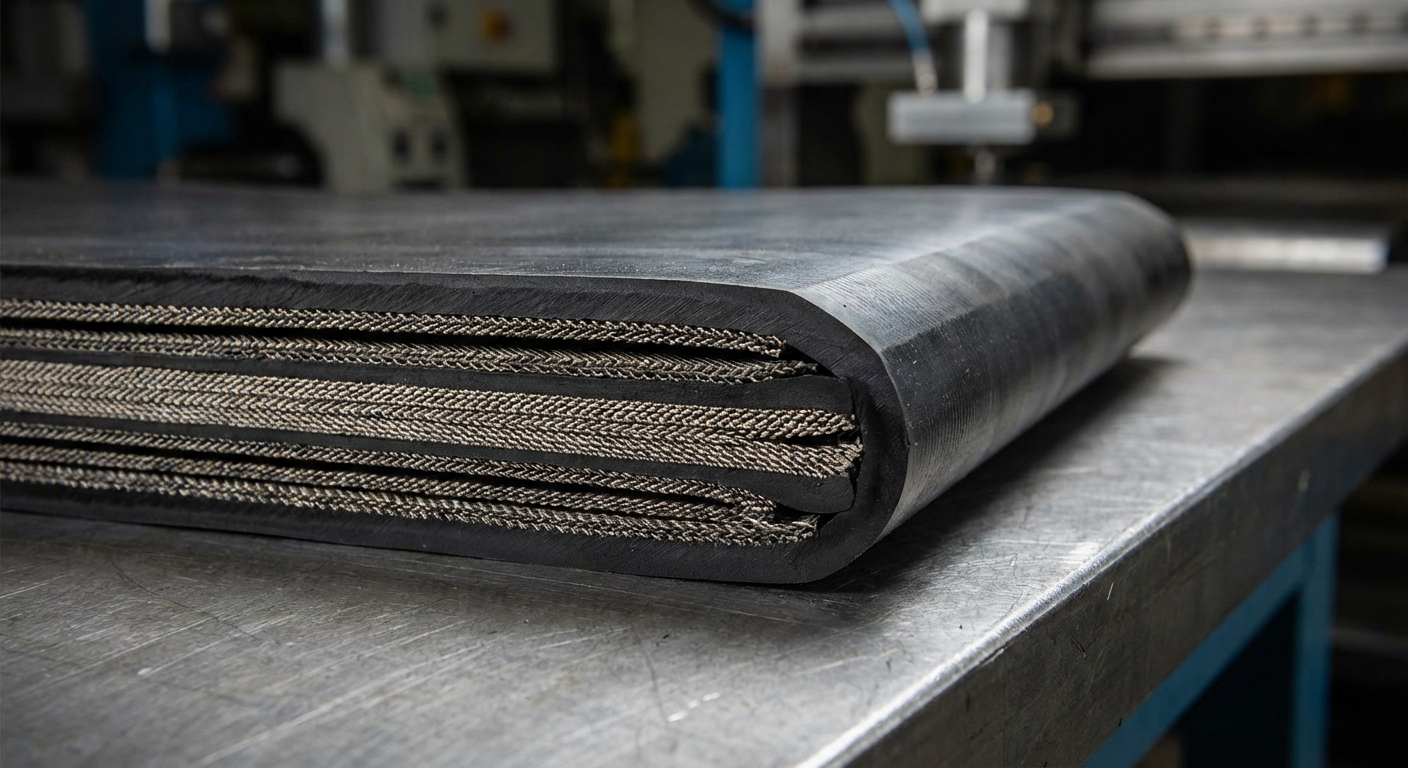
A weekly visual check should focus on the belt edges and the state of the top cover. Look for signs of “fraying” on the edges, which indicates that the belt is mistracking and rubbing against the conveyor frame.
- Check for uneven surface wear.
- Monitor for belt edge fraying.
- Inspect the cleanliness of the pulleys.
Here is the deal: Catching a tracking issue early can save the belt. Once the edge is severely damaged, the internal carcass is exposed to moisture, which can lead to rapid delamination.
Mechanical connector checks
If your belt is joined with mechanical fasteners rather than being hot-vulcanized, these joints must be checked for signs of pull-out or corrosion. In the humid environment of plaster casting, stainless steel fasteners are often preferred to prevent rust.
- Inspect for loose or bent fasteners.
- Ensure the joint is running smoothly over idlers.
- Clean joints to prevent material buildup.
But wait, there’s more: Hot vulcanization is always the “gold standard” for heavy belts. If possible, upgrade to a vulcanized endless belt to eliminate the weakness and noise of mechanical connectors entirely.
Key Takeaway:Proactive maintenance, focusing on tracking and joint integrity, is the only way to achieve the full 5+ year lifespan of a high-strength rubber belt.
| Maintenance Task | Frequency | Objective | |
|---|---|---|---|
| Tracking Check | Daily | Prevent edge damage | |
| Visual Inspection | Weekly | Identify surface gouges | |
| Tension Audit | Monthly | Prevent pulley slippage |
Analytical Guide: A clean conveyor is a long-lasting conveyor; removing plaster dust from the pulleys reduces the chance of belt mistracking by 70%.
Conclusion
A strong rubber conveyor belt is not just a part of your assembly line; it is the critical link that determines your facility’s total efficiency. By selecting a belt with the right reinforcement, heat resistance, and customized accessories, you can overcome the challenges of weight, heat, and abrasion inherent in plaster casting. Our mission is to provide industrial operators with the high-performance components they need to minimize downtime and maximize output. To find the perfect solution for your specific application, contact us today for an expert consultation.
FAQ
Can I use a strong rubber conveyor belt for hot plaster?Yes, provided you choose a heat-resistant grade like T2 or T3. Standard rubber will quickly harden and crack under high temperatures, whereas specialized compounds like EPDM maintain their flexibility and strength.
What’s the best width for my casting system?It depends on your mold size; however, we recommend a belt width at least 150mm wider than your largest mold. This provides a safety margin for slight mistracking and prevents molds from falling off the side.
How do I know if my belt needs replacing?Look for exposed carcass fabric. Once the rubber cover is worn through and the inner fabric plies are visible, the belt’s structural integrity is compromised and failure is imminent.
Can I add sidewalls to an existing belt?Generally, no. Sidewalls are most effective when hot-vulcanized during the manufacturing process. Attempting to glue them to a used, dirty belt rarely results in a bond strong enough for industrial use.
What’s the maintenance schedule for heavy use?For 24/7 operations, we recommend daily tracking checks and a comprehensive physical inspection every week. Monthly tension audits ensure the system remains energy efficient and prevents pulley wear.