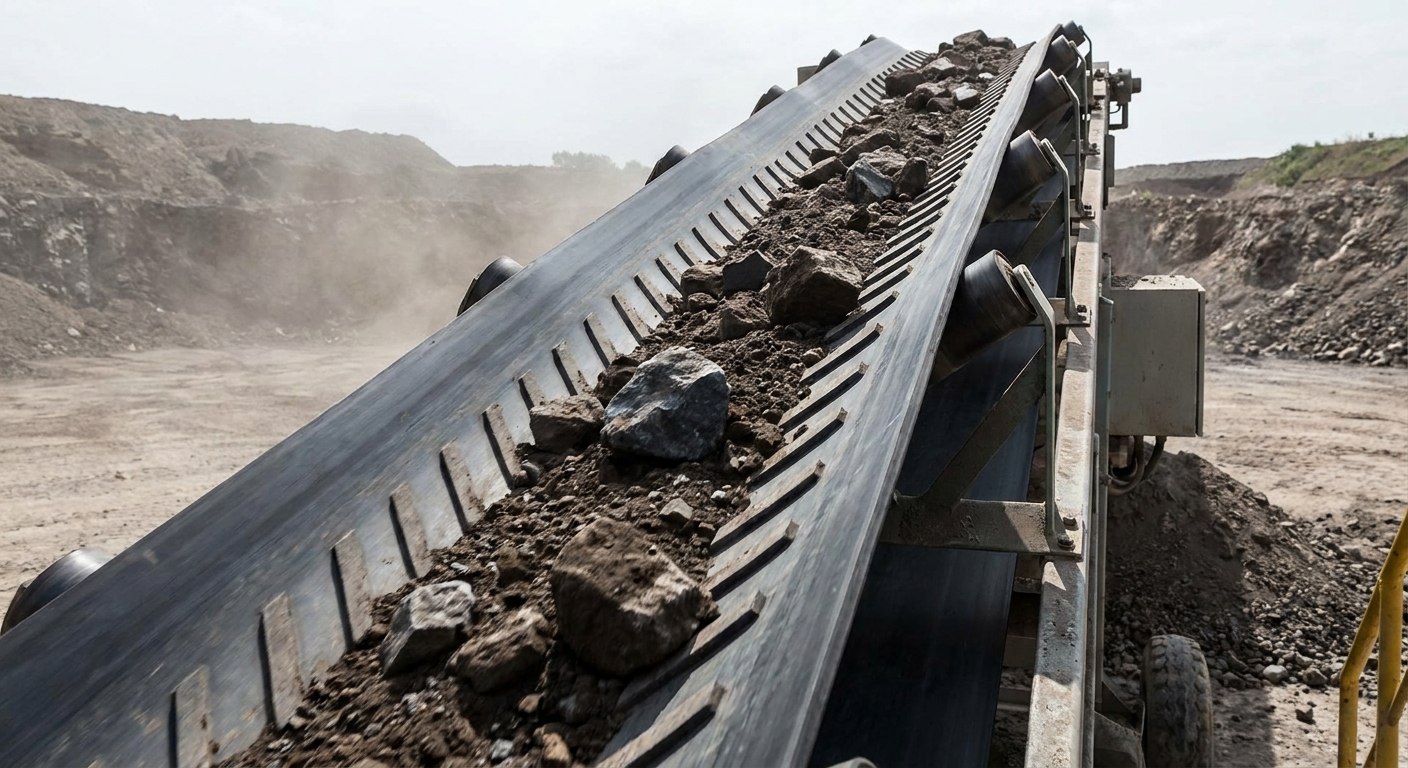
Leading chevron rubber conveyor belt manufacturers provide high-performance belting solutions designed to prevent material rollback on steep inclines. With advanced profile patterns and durable rubber compounds, these belts ensure maximum grip, improved safety, and consistent throughput in demanding industries such as mining and gypsum processing.
What do chevron rubber conveyor belt manufacturers offer?
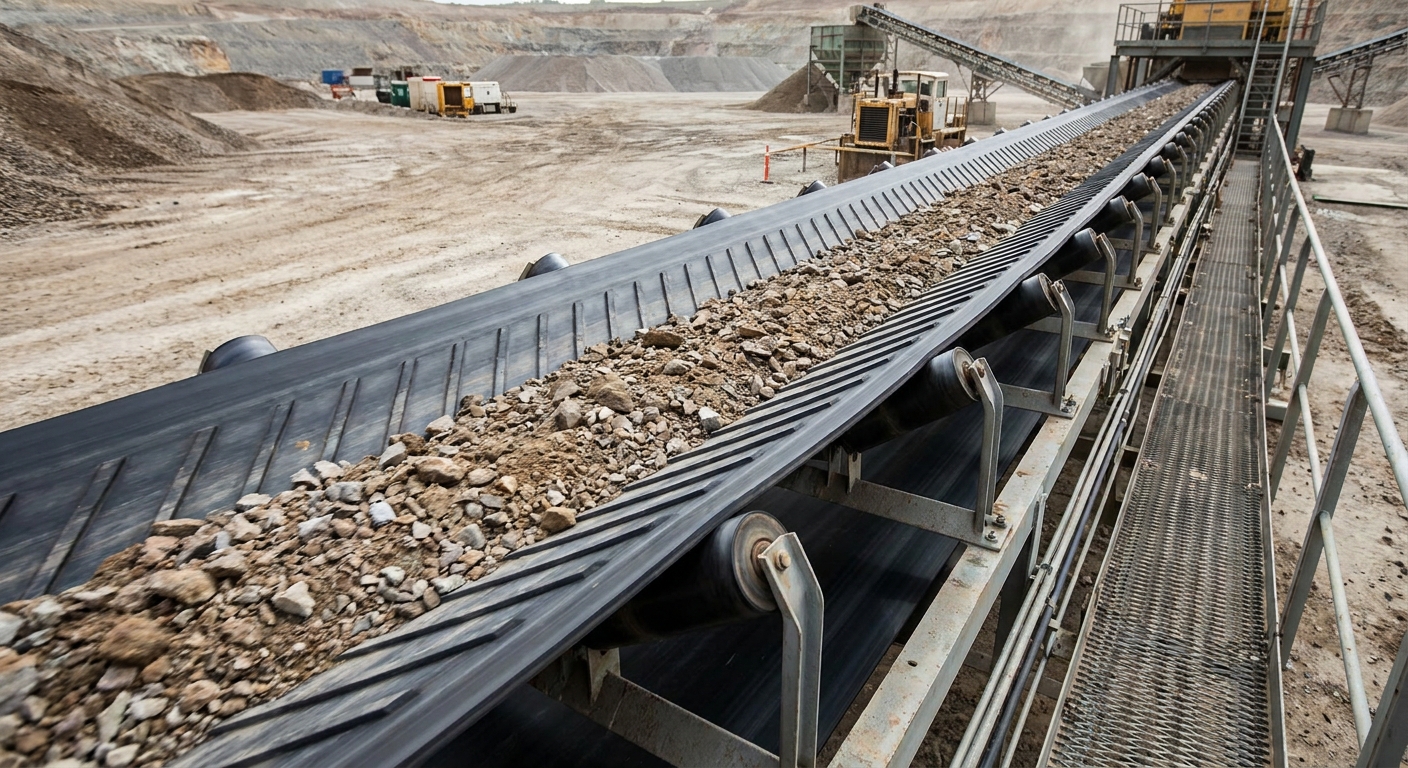
Professional chevron rubber conveyor belt manufacturers offer specialized “V” or “U” shaped profile belts designed to transport bulk materials up steep inclines without back-sliding. These experts provide a range of cleat heights and patterns tailored to specific industry needs, from fine powders to heavy ores.
Defining chevron profile technology
The core technology involves integrally molded cleats that create a physical barrier for materials. These profiles are designed to trap the load within the “V” shape, distributing weight effectively across the belt surface.
Why is high-grip surface essential?
High-grip surfaces are vital because they prevent the “avalanching” effect commonly seen on smooth belts.
- Improved traction for wet or oily materials.
- Reduced power consumption by maintaining steady load flow.
- Minimized spillage at high speeds.
Think about it: a belt without grip is just a slide for your profits.
Key Takeaway: Manufacturers provide the structural “bones” needed for steep conveying, turning impossible angles into efficient transport routes for your facility.
| Feature | Benefit | |
|---|---|---|
| Cleated Profile | Prevents material rollback | |
| Rubber Compound | High abrasion resistance | |
| Fabric Reinforcement | Superior tensile strength |
The integration of these features ensures your system handles maximum capacity with minimal oversight.
How do chevron rubber conveyor belt manufacturers design cleats?
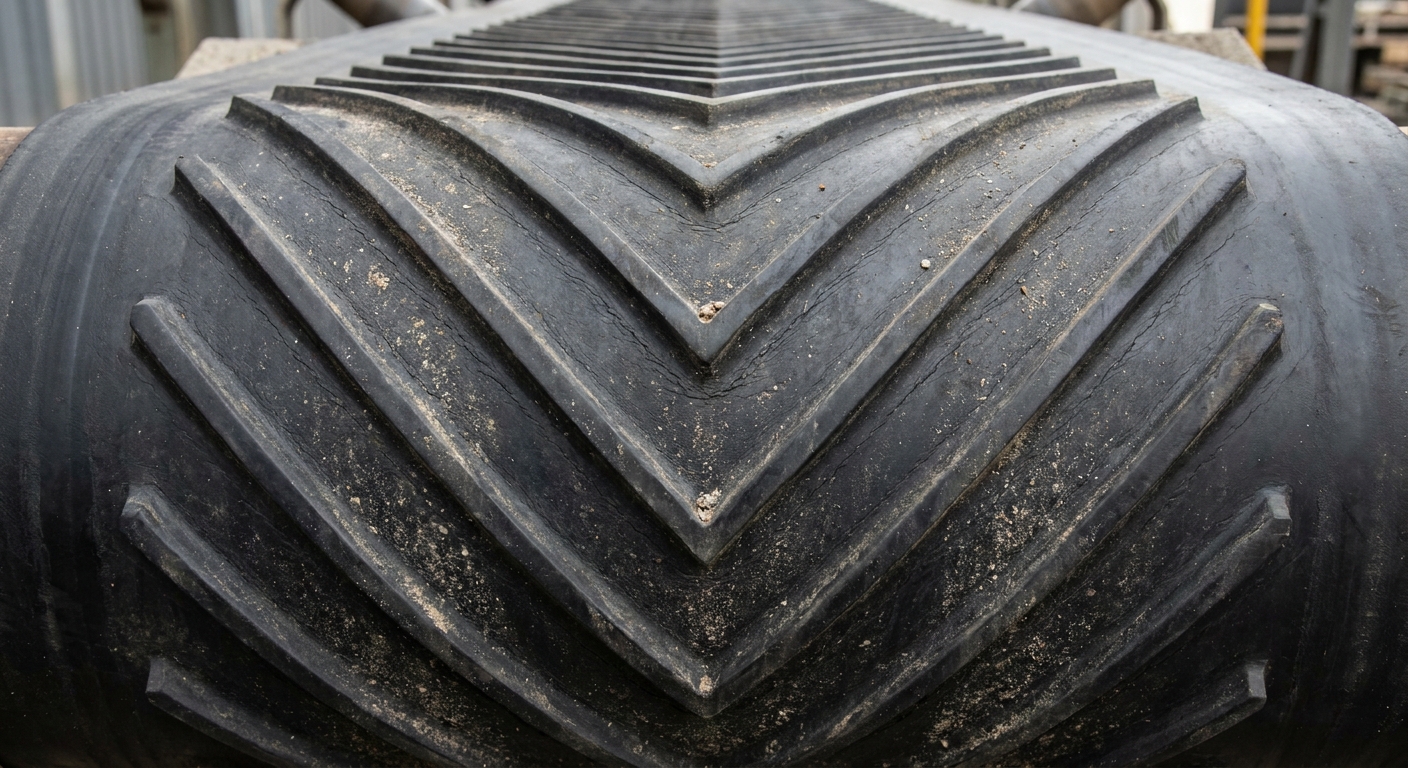
Leading chevron rubber conveyor belt manufacturers design cleats using advanced geometry to optimize the angle of repose for various bulk materials. By varying the width and pitch of the cleat, they ensure the belt can handle specific lump sizes without clogging the system.
The science of anti-slip profiles
Anti-slip design relies on the height of the cleat relative to the material’s grain size. Manufacturers use computerized modeling to predict how different textures will interact with the rubber surface.
Can cleats handle 40-degree inclines?
Yes, high-profile cleats are specifically engineered to manage inclines between 25 and 45 degrees.
- Materials stay nested in the cleat pocket.
- Gravity is countered by the mechanical lock of the rubber “V”.
- The load remains stable even during motor starts and stops.
But wait: the angle of the incline must always be matched to the material’s internal friction.
Key Takeaway: Precise cleat design is what separates a standard conveyor from a high-performance steep incline system capable of moving heavy loads.
| Cleat Type | Max Angle | Best Use Case | |
|---|---|---|---|
| Low Profile (15mm) | 25° | Fine Sand, Grain | |
| High Profile (32mm) | 45° | Wet Coal, Crushed Stone |
Detailed engineering allows for a specialized fit that maximizes your operational uptime.
Do chevron rubber conveyor belt manufacturers use vulcanization?
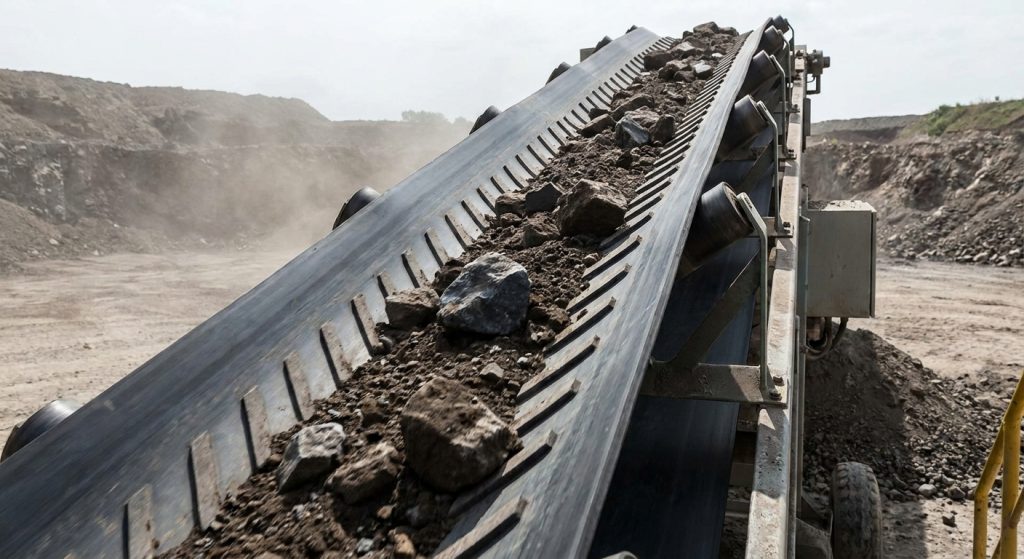
Top-tier chevron rubber conveyor belt manufacturers utilize hot vulcanization to mold the cleats and the base belt into a single, homogeneous structure. This process ensures that the cleats cannot be ripped off or delaminated under the heavy stress of industrial loads.
Moulding a single homogeneous structure
During the vulcanizing process, the raw rubber of the cleat and the belt cover fuse at a molecular level. This creates a bond that is actually stronger than the rubber itself, preventing mechanical failure.
The benefits of integral strength
Integral strength is a “must-have” for any heavy-duty application where impact is common.
- No gaps for material to get stuck under.
- Resistance to high-pressure belt cleaners.
- Longer service life in mining environments.
Here is the truth: cold-bonded cleats simply cannot compete with the durability of a vulcanized belt.
Key Takeaway: Vulcanization is the gold standard for durability, ensuring your chevron belt remains intact even when subjected to extreme mechanical tension.
| Process | Durability Rating | Maintenance Needs | |
|---|---|---|---|
| Hot Vulcanization | 5/5 | Extremely Low | |
| Cold Bonding | 2/5 | High (Cleat Replacement) |
Choosing a vulcanized product significantly reduces the risk of catastrophic belt failure.
Where do chevron rubber conveyor belt manufacturers find use?
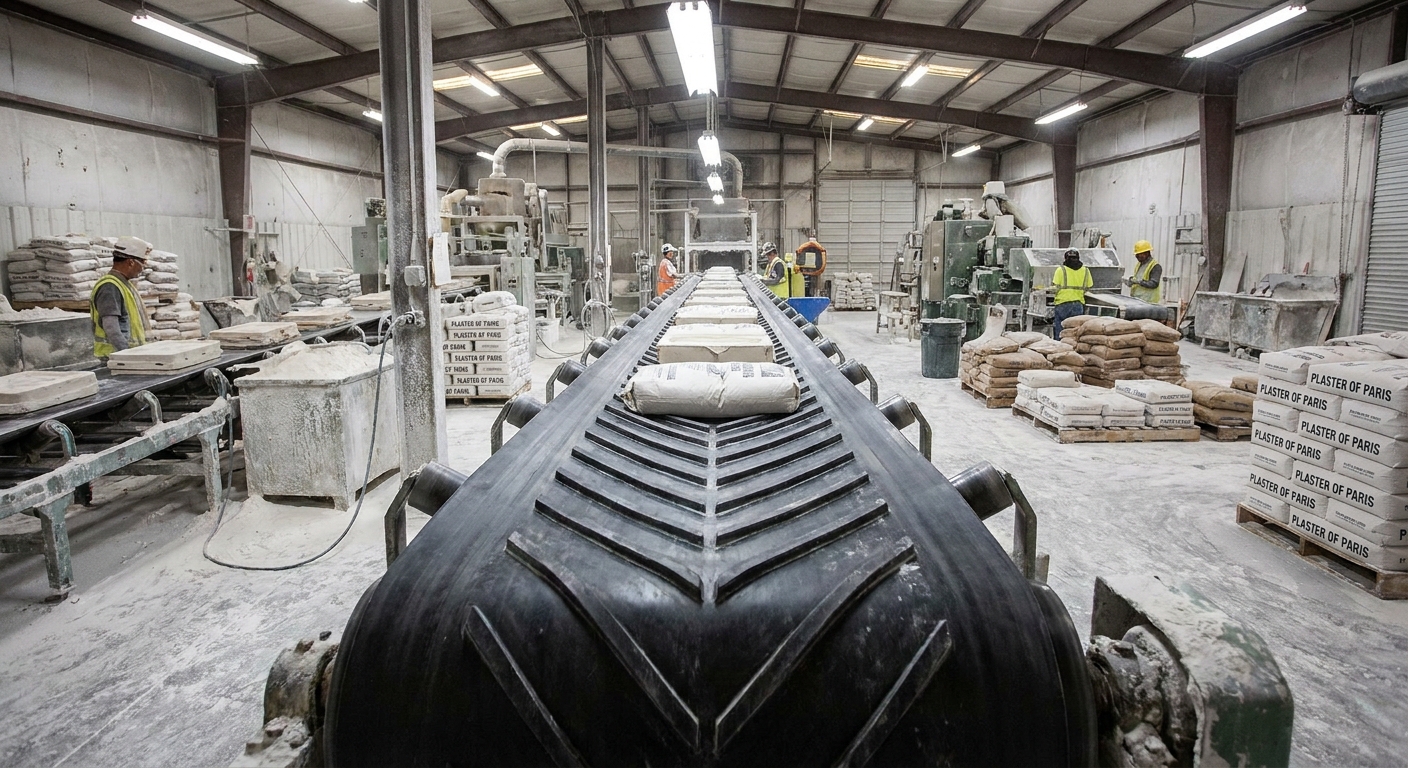
In many heavy industries, chevron rubber conveyor belt manufacturers find use within plaster casting facilities, cement plants, and coal mines where space is limited. Because these belts allow for steeper inclines, factories can be built with a smaller footprint by utilizing vertical height.
Industrial mining and quarrying
Quarries rely on these belts to move jagged rocks and aggregates from the pit to the primary crusher. The cleated surface handles the impact of large stones while maintaining a steady flow.
Agriculture and bulk material handling
Agricultural operations use chevron profiles to move grain and fertilizer into high-capacity silos.
- Prevents kernels from sliding back.
- Protects delicate crops from crushing.
- Works efficiently in outdoor, dusty conditions.
You might be wondering: what about recycled waste?
Is it suitable for recycling and waste?
Yes, the open-V pattern is excellent for moving mixed waste streams where moisture might otherwise cause slippage. It ensures that bottles, plastics, and metals move upward consistently.
Key Takeaway: The versatility of chevron belts makes them the preferred choice for any industry needing to overcome gravity while saving floor space.
| Industry | Primary Material | Incline Requirement | |
|---|---|---|---|
| Plaster Casting | Gypsum / Powder | High (35°+) | |
| Coal Mining | Wet/Dry Coal | Medium (25-30°) | |
| Construction | Sand / Gravel | Steep (40°+) |
Sophisticated material handling requires a belt that adapts to the specific physics of the load.
Why trust chevron rubber conveyor belt manufacturers for grip?
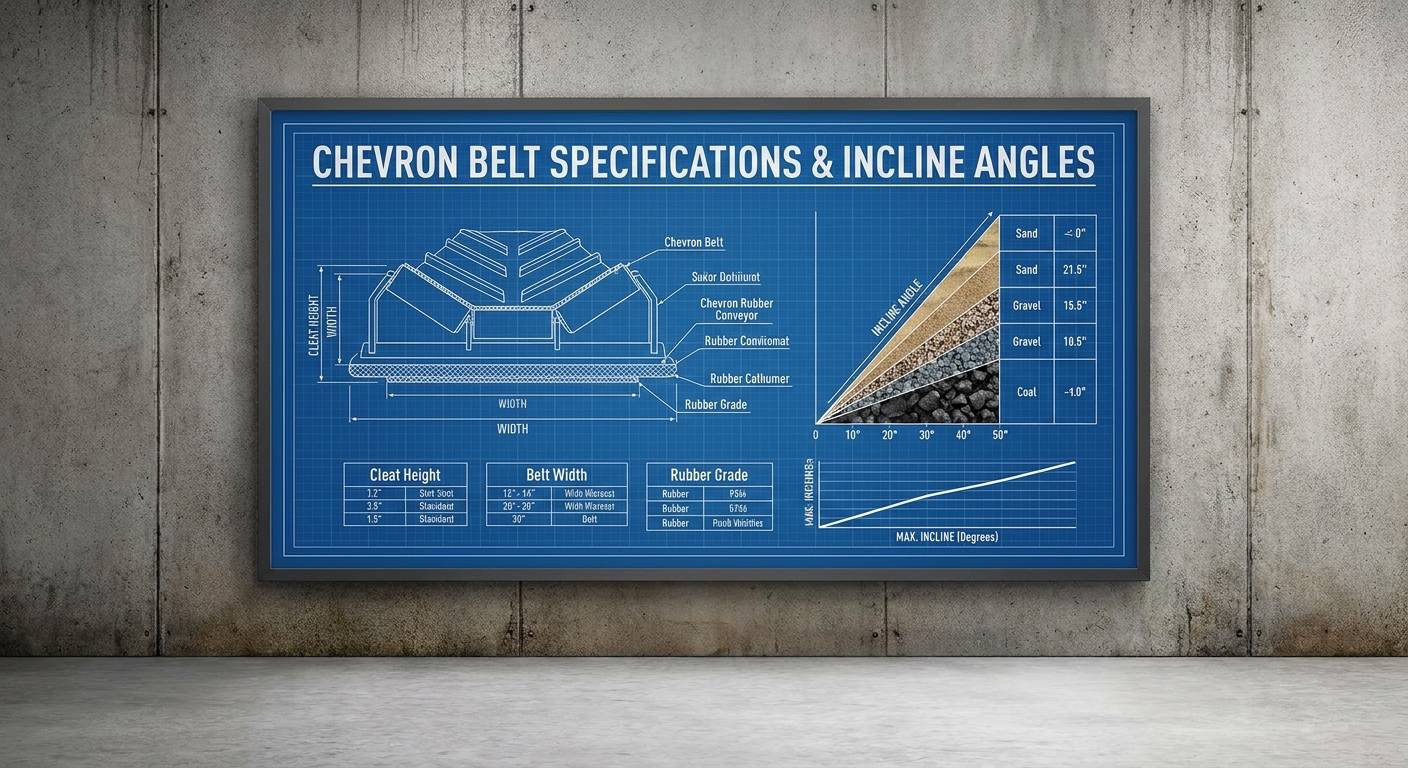
You should trust chevron rubber conveyor belt manufacturers because they utilize high-friction rubber compounds specifically formulated for wet and slippery conditions. These manufacturers perform rigorous testing to ensure their patterns provide the necessary mechanical interlocking for stable transport.
Reducing material rollback and loss
Material rollback is not just a nuisance; it is a major safety risk and a financial drain. The chevron pattern acts as a continuous series of dams that catch falling material before it gains momentum.
Maximizing throughput on steep slopes
By securing the load, you can run your conveyor at higher speeds without fearing spillage.
- Increased tons-per-hour (TPH) metrics.
- Lower cleanup costs around the conveyor tail.
- More predictable production cycles.
But that’s not all.
Key Takeaway: Trusting a specialized manufacturer ensures you receive a belt with the correct friction coefficient for your specific climate and material type.
| Grip Factor | Impact on System | Result | |
|---|---|---|---|
| Pattern Depth | Mechanical Lock | 0% Rollback | |
| Rubber Softness | Surface Friction | Better Grip on Wet Material |
Analytical data shows that high-grip belts can improve system efficiency by over 20% on inclines.
Can chevron rubber conveyor belt manufacturers customize heights?
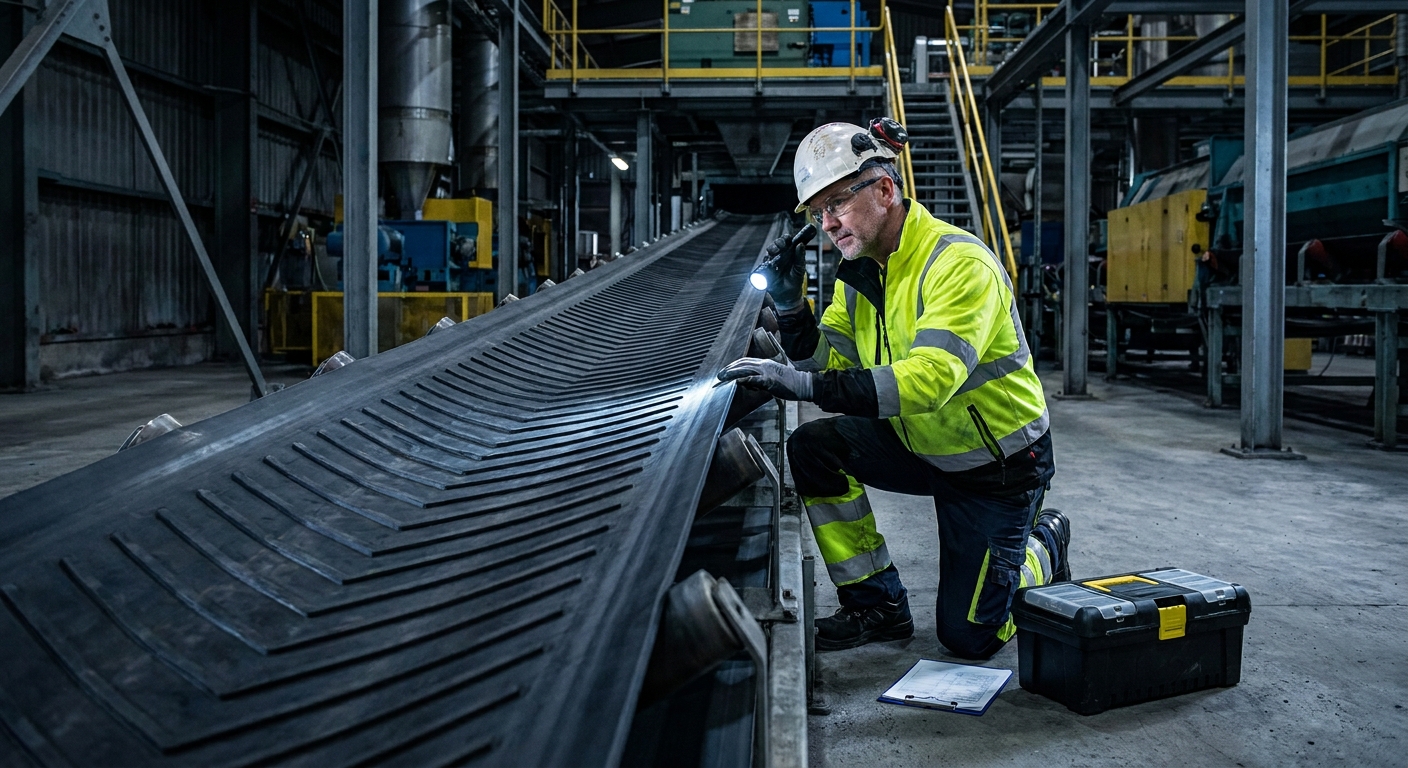
Experienced chevron rubber conveyor belt manufacturers can customize cleat heights ranging from 5mm to 32mm to suit different material characteristics. This customization allows you to balance the need for grip with the requirements of your conveyor’s return rollers and pulleys.
Choosing between 16mm and 32mm cleats
Low-profile cleats (16mm) are generally used for smaller, dry materials like sand or fine gypsum. Higher cleats (32mm) are necessary for larger lumps or very steep inclines where maximum containment is required.
Material lump size considerations
If your material contains large rocks, the cleats must be tall enough to “cradle” the lump.
- Measure the average diameter of your largest material.
- Ensure the cleat height is at least 30% of that diameter.
- Consider the impact of the material falling onto the belt.
Here’s the deal: wrong cleat height leads to either material bouncing or return-side vibrations.
Key Takeaway: Customization ensures the belt integrates perfectly with your existing hardware while providing the exact amount of lift required.
| Cleat Height | Return Idler Compatibility | Typical Material | |
|---|---|---|---|
| 5mm – 10mm | Standard Flat Idlers | Fine Grain | |
| 15mm – 25mm | Disc Idlers Recommended | Crushed Stone | |
| 30mm+ | Specialized Return Support | Large Ore / Coal |
A tailored height selection prevents premature wear on your rollers and minimizes noise.
Do chevron rubber conveyor belt manufacturers prevent ozone damage?
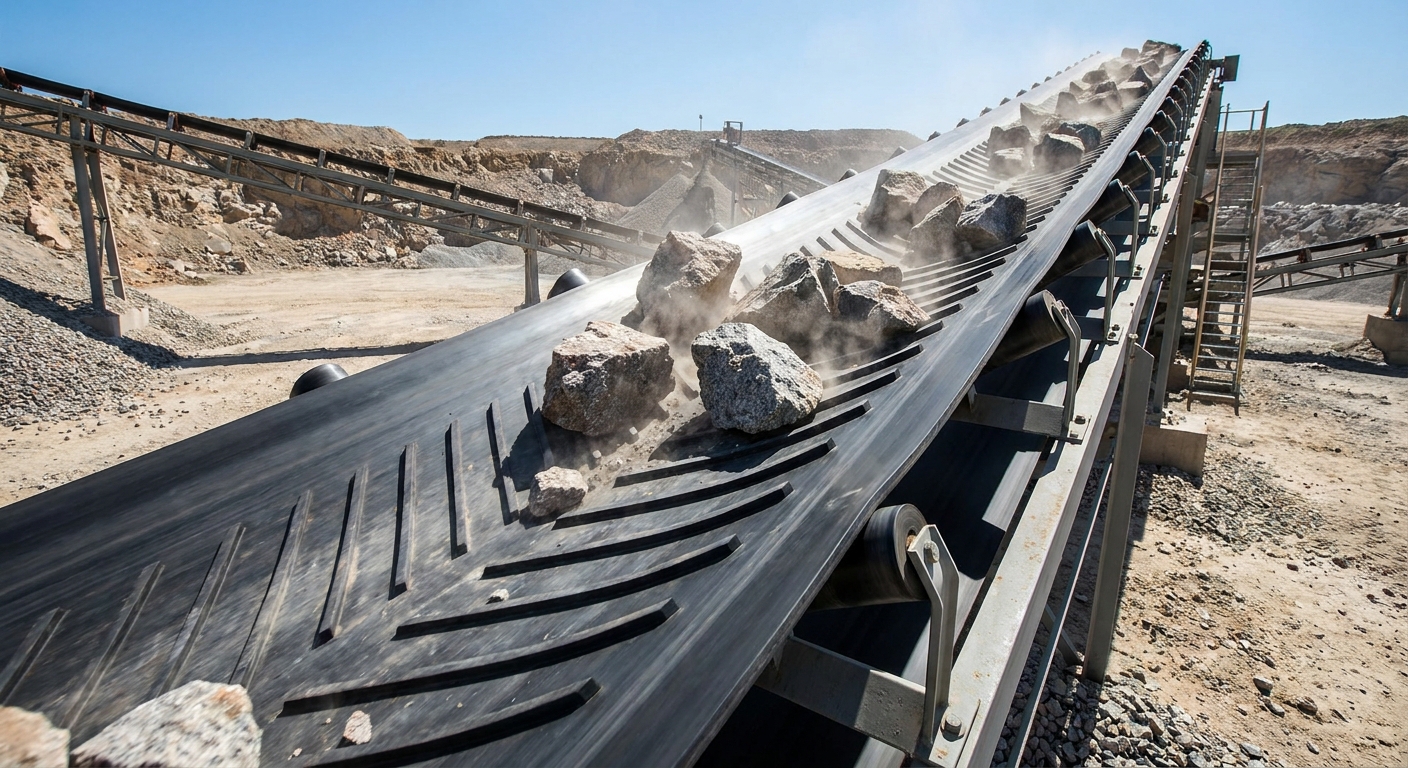
Reliable chevron rubber conveyor belt manufacturers incorporate anti-oxidants and anti-ozonants into their rubber recipes to prevent surface cracking. This protection is critical for belts used in outdoor environments where sun exposure and atmospheric ozone can degrade raw rubber quickly.
UV resistance and operational life
UV radiation breaks down the polymer chains in rubber, leading to “crazing” or small cracks. High-quality manufacturers use carbon black and chemical stabilizers to absorb these rays and extend the belt’s life.
Avoiding surface cracking in harsh environments
Surface cracks are more than just cosmetic; they allow moisture and chemicals to penetrate the belt’s fabric core.
- Prevents delamination of the plies.
- Stops internal rot in cotton/polyester fabrics.
- Maintains flexibility in freezing temperatures.
The bottom line? A protected belt lasts twice as long.
Key Takeaway: Ozone resistance is a hidden but vital feature that preserves the structural integrity of your investment over years of outdoor use.
| Environmental Threat | Protection Method | Expected Life Extension | |
|---|---|---|---|
| Sun (UV Rays) | Carbon Black / Stabilizers | +3 Years | |
| Ozone | Chemical Anti-ozonants | Prevents Premature Cracking |
Investing in high-grade rubber compounds pays for itself by reducing the frequency of belt replacements.
Which patterns do chevron rubber conveyor belt manufacturers use?
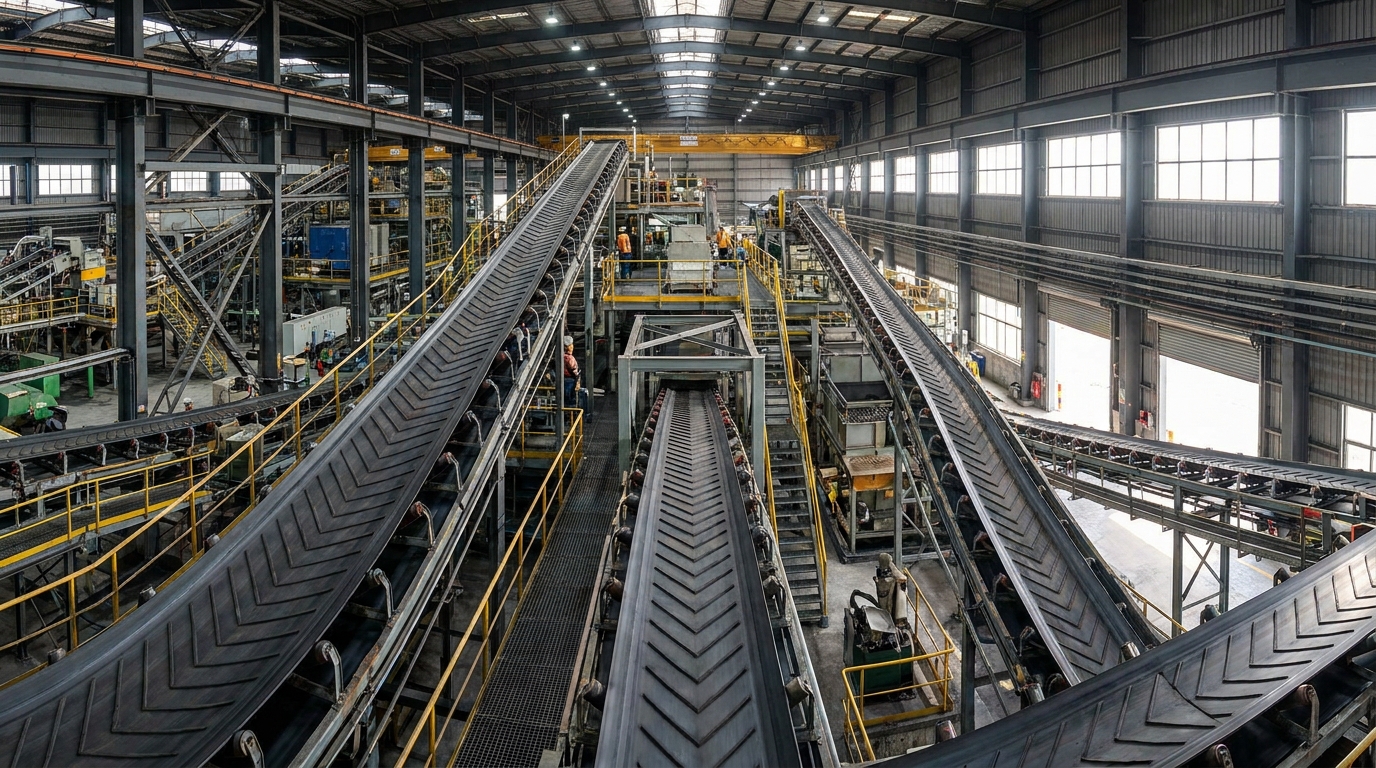
Most chevron rubber conveyor belt manufacturers use three primary patterns: Open-V, Closed-V, and Multi-V. Each pattern serves a specific drainage and material handling purpose, depending on whether you are moving dry solids or wet slurries.
Comparing V-shaped and U-shaped designs
The V-shape is the industry standard for general purpose lifting. U-shaped patterns are often wider and provide more surface area for moving heavy, bulky items like boxes or large aggregate.
When to use “Fish-bone” or “Multi V” styles?
Multi-V patterns are designed for belts with smaller pulley diameters.
- Cleats are shorter and more frequent.
- Flexibility is increased for tight turns.
- Water drainage is improved between the small gaps.
But wait: the more complex the pattern, the harder it is to clean with a standard scraper.
Understanding open vs. closed cleat designs
Open designs allow water to drain out the sides, which is essential for outdoor conveyors. Closed designs trap more material and are better suited for fine, dry powders that might blow away.
Key Takeaway: Selecting the right pattern is about balancing material containment with the practicalities of belt cleaning and drainage.
| Pattern Name | Drainage Ability | Containment Power | |
|---|---|---|---|
| Open V | Excellent | Moderate | |
| Closed V | Poor | Excellent | |
| Multi V | High | Low |
Matching the pattern to your material’s moisture content is the secret to a clean operation.
Are chevron rubber conveyor belt manufacturers cost-effective?
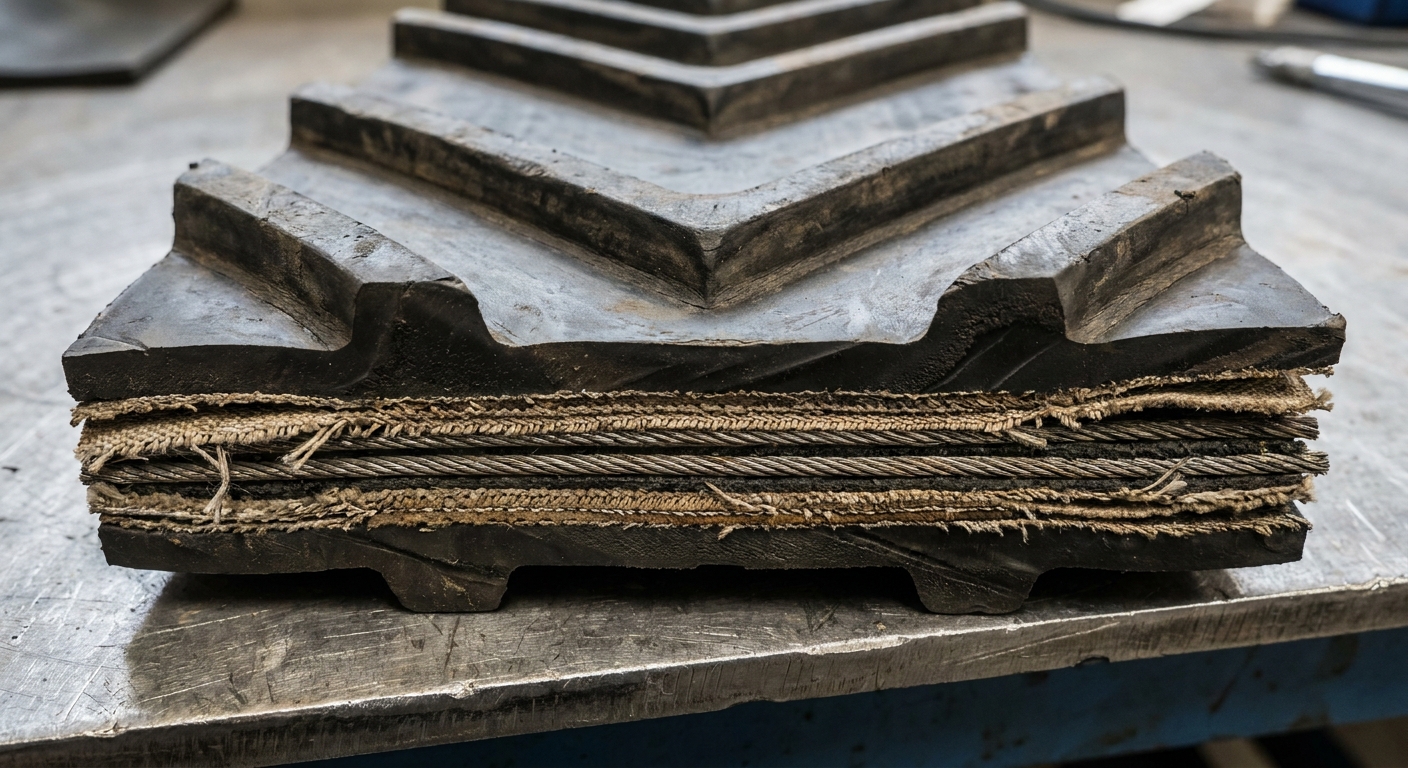
Yes, chevron rubber conveyor belt manufacturers provide a cost-effective solution by significantly reducing the required length of a conveyor system. Because these belts operate at steeper angles, you spend less on steel structure, land, and electrical components for long, shallow conveyors.
Analyzing the whole life cost
While the initial price of a chevron belt is higher than a smooth belt, the “whole life cost” is much lower. You save on energy, cleanup labor, and the lost value of spilled materials every single day.
Can smaller pulley diameters be used?
Modern chevron belts are designed with highly flexible fabric cores.
- Reduces the size of the drive motor.
- Requires less space for the head and tail sections.
- Lowers the cost of replacement rollers.
Think about it: smaller machines are cheaper to build and maintain.
Key Takeaway: The ability to transport more material in a shorter distance makes chevron belting the most economical choice for modern plant design.
| Cost Component | Smooth Belt System | Chevron Belt System | |
|---|---|---|---|
| Structural Steel | High (Longer Runs) | Low (Vertical Lift) | |
| Maintenance Labor | Moderate | Low (Less Spillage) |
Total system ROI is typically achieved within the first year of switching to a high-grip profile.
How do chevron rubber conveyor belt manufacturers ensure safety?
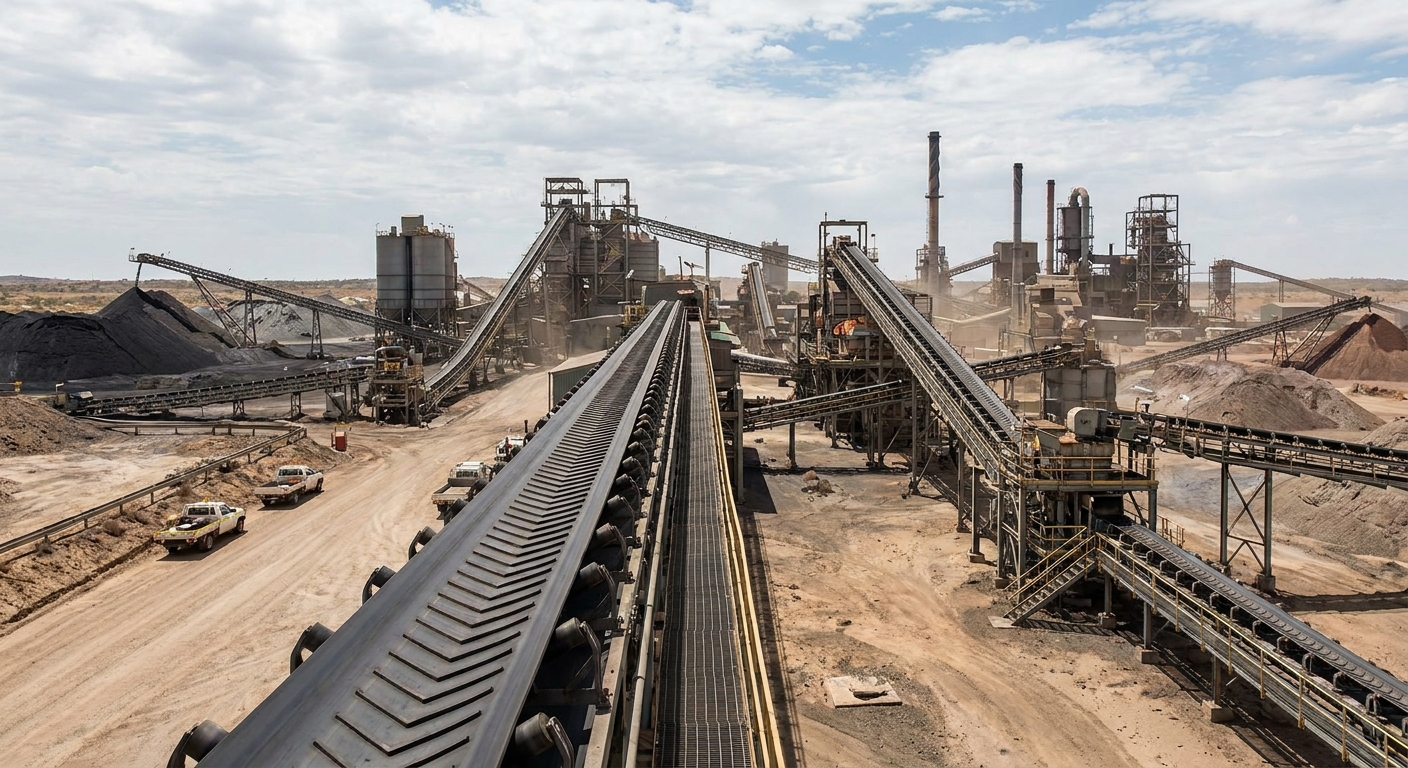
Professional chevron rubber conveyor belt manufacturers ensure safety by adhering to strict ISO and DIN standards for flame retardancy and anti-static properties. These safety features are mandatory in underground mining and chemical processing to prevent friction-based fires.
Adhering to international ISO standards
Manufacturers test every batch for tensile strength and elongation. These standards guarantee that the belt will not snap under a full load, which could cause a catastrophic “runaway” event on a steep incline.
Ensuring fire and oil resistance
Oil-resistant compounds prevent the rubber from swelling and becoming soft when handling greasy materials.
- Rubber stays firm and maintains its grip.
- Flame retardant additives stop fire spread.
- Anti-static covers prevent spark discharge.
Here is the truth: a cheap belt is a major liability in a high-risk facility.
Key Takeaway: Safety-certified belts protect your workforce and your facility from the hidden dangers of friction, fire, and structural failure.
| Safety Standard | Hazard Protected | Application | |
|---|---|---|---|
| ISO 284 | Static Electricity | Grain/Coal Handling | |
| ISO 340 | Fire / Flame | Underground Mines | |
| DIN 22102 | Structural Failure | General Industrial |
Rigorous compliance with these metrics ensures that your operations meet all local and international legal requirements.
Conclusion
The selection of a high-performance chevron belt is the most critical decision for any facility operating on steep inclines. By eliminating material rollback and maximizing vertical space, these belts transform inefficient production lines into high-capacity assets. Whether you are handling gypsum for plaster casting or heavy ores in a remote quarry, the integrity of your rubber profile determines your daily success.
We believe that every industrial incline is an opportunity for greater efficiency, not a bottleneck for your progress. Our vision is to empower global industries with the most resilient, high-traction conveying solutions that endure the world’s harshest conditions. Don’t let slippage steal your profits or compromise your safety standards any longer.
Contact us today to receive a custom engineering consultation and a quote that will revolutionize your material handling capabilities.
FAQ
Can I use a chevron belt on my existing smooth belt conveyor?Yes, because most chevron profiles are designed to be flexible enough to wrap around standard pulley diameters without requiring a complete system overhaul. You simply need to ensure your return rollers are compatible with the cleat pattern.
What’s the best way to clean a chevron belt?The best method is using a specialized brush cleaner or a flexible “finger” scraper, as these can reach into the “V” pattern where a flat blade scraper would fail. Regular cleaning is essential to prevent material carry-back.
How do I know if my incline is too steep for a chevron belt?You can determine this by checking the material’s angle of repose; if your incline exceeds 45 degrees, you may need a sidewall belt with cross-cleats instead. Most bulk materials are perfectly stable on chevron belts up to 40 degrees.
Can I get a chevron belt with oil resistance?Yes, because manufacturers offer specialized rubber grades like MOR (Moderate Oil Resistance) or SOR (Super Oil Resistance) for handling materials like treated coal or fertilizers. This prevents the rubber from swelling and losing its profile shape.
What’s the best cleat pattern for wet sand?An Open-V pattern is the best choice because it allows excess water to drain away while still providing the mechanical lift needed to move the sand upward. Closed patterns might trap too much water, making the load unstable.