
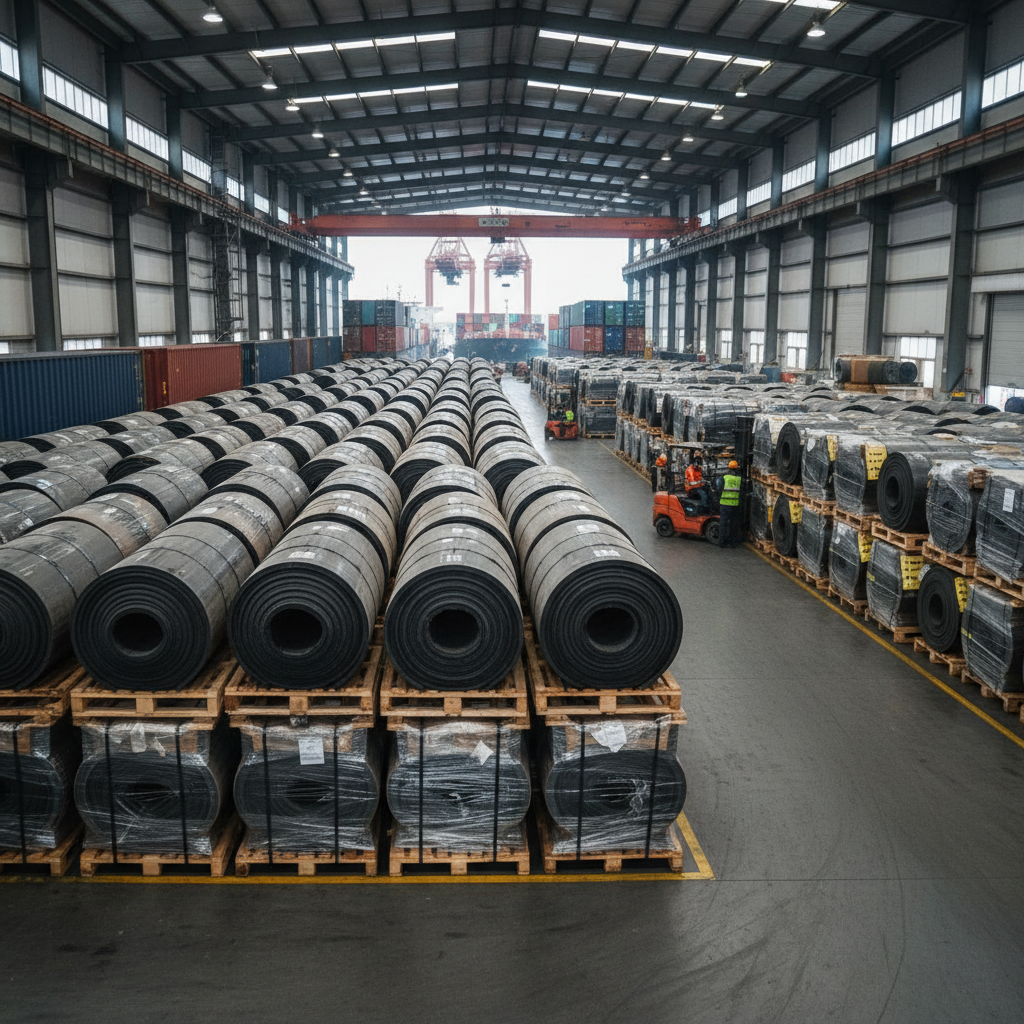
Working with professional conveyor belt rubber suppliers is essential for plaster casting operations that demand precision and reliability. The right conveyor belt solution ensures smooth gypsum transport, prevents costly downtime, and protects delicate molds in continuous 24/7 production environments, ultimately improving efficiency and reducing material waste.
What is the process of industrial plaster casting?
Industrial plaster casting involves the creation of precision molds and products using gypsum-based materials that require highly specialized handling. Leading conveyor belt rubber suppliers here emphasize that in large-scale manufacturing, such as plasterboard production, this process requires a continuous flow of slurry that must be handled with extreme care to maintain uniformity.
Key stages of the casting cycle
The process begins with mixing raw gypsum and additives into a slurry, which is then poured onto a moving surface. You need to ensure the system handles moisture efficiently to facilitate a smooth setting environment.
- Mixing of raw materials
- Pouring onto the forming belt
- Setting and hydration period
- Cutting and drying of final sections
How does material chemistry affect belts?
The chemical composition of industrial plaster can be abrasive and moisture-heavy. You will find that experts often recommend belts with specific cover grades to prevent premature degradation during the chemical reaction of the plaster setting.
It’s a known fact that the setting process is exothermic, meaning it generates heat. This thermal energy, combined with chemical moisture, can quickly delaminate a standard rubber belt if it isn’t properly rated.
Key Takeaway: Success in plaster casting depends on a controlled setting process where the conveyor belt serves as the foundation for product formation.
| Stage | Process Requirement | Belt Feature | |
|---|---|---|---|
| Mixing | High moisture resistance | Non-porous rubber cover | |
| Forming | Absolute surface flatness | Multi-ply fabric reinforcement | |
| Setting | Heat dissipation | Temperature stable compound |
The integration of specific rubber compounds ensures that the chemical reaction of the gypsum does not compromise the belt’s structural integrity over time.
Why are conveyor systems vital for casting?
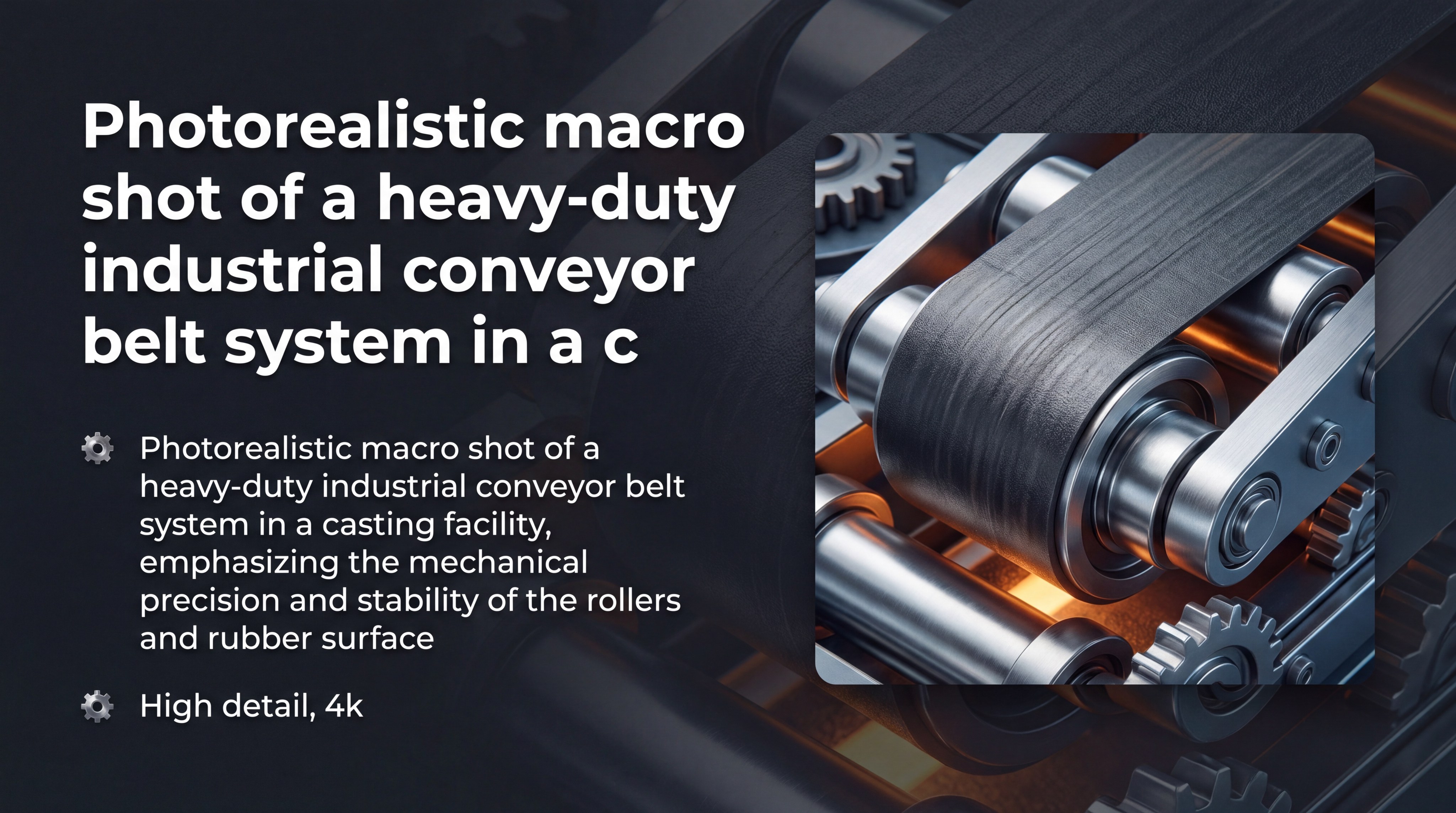
Conveyor belts are the most critical, yet often underestimated, component of a casting facility because they act as the platform for chemical transitions. Every reputable conveyor belt rubber suppliers will tell you that these systems don’t just move materials; they dictate the final quality of the cast.
Maintaining production continuity
A reliable conveyor system ensures that the plaster sets at the correct rate throughout the entire line length. Any vibration or irregular movement from the belt can cause ripples or defects in the final cast, leading to high rejection rates.
Can belts handle different casting speeds?
Modern systems must be highly adaptable to various production volumes. Here is the bottom line: precision-engineered Fabric (Textile) Conveyor Belts provide the necessary flexibility and stability to handle varying line speeds without stretching or slipping.
- Consistent speed control
- Reduced mechanical vibration
- Enhanced load-bearing capacity
Key Takeaway: The conveyor system is the “spine” of the production line, dictating the speed, quality, and consistency of the casting output.
| Benefit | Impact on Production | |
|---|---|---|
| Stability | Reduces surface irregularities in casts | |
| Precision | Ensures accurate cutting of hardened plaster | |
| Longevity | Lowers the frequency of belt replacements |
Without a stable mechanical foundation, the delicate chemical balance required for perfect plaster setting becomes impossible to maintain.
How do conveyor belt rubber suppliers add value?
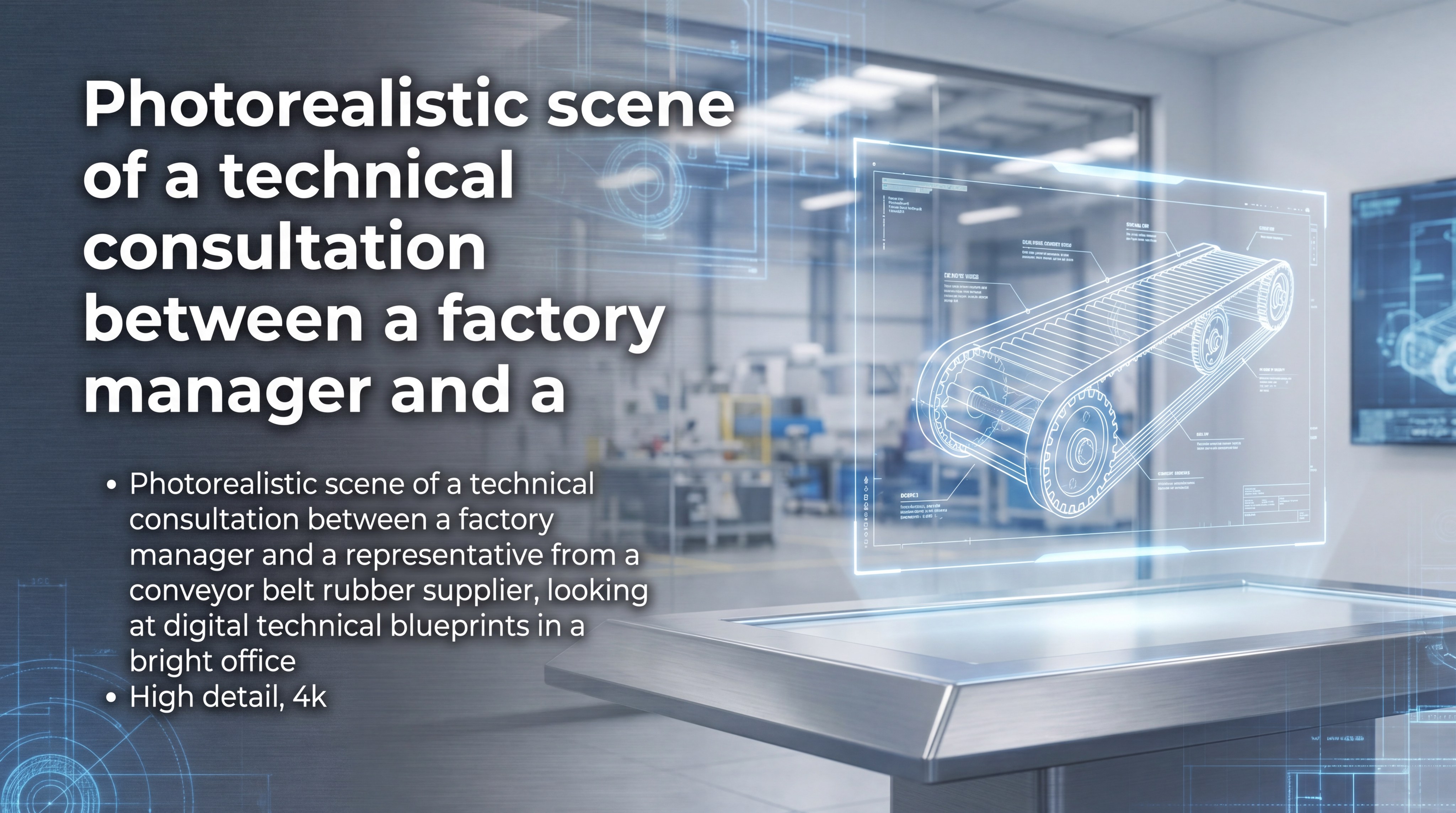
Expert conveyor belt rubber suppliers here provide the technical consultation needed to match belt specifications with specific industrial challenges, moving beyond simple transactions. Choosing a supplier is more than a purchase; it is a strategic partnership that safeguards your machinery.
Technical selection guidance
Suppliers analyze factors like load weight, ambient temperature, and chemical exposure before making a recommendation. This ensures the belt carcass and cover are perfectly suited for your environment, rather than using a generic “one-size-fits-all” solution.
Providing custom-engineered solutions
You know your facility has a unique layout that requires specific configurations. Top-tier manufacturers offer the following:
- Custom widths for specialized machines
- Drawing-based quotation support
- Specific edge treatments (molded or cut)
Let’s face it: a standard belt rarely meets the rigorous demands of a modern plaster casting plant without customization.
Key Takeaway: Expert suppliers eliminate the guesswork, providing data-backed recommendations that maximize the return on investment for conveyor components.
| Supplier Service | Value to Customer | |
|---|---|---|
| Drawing-based Quotation | Accurate fit for existing machinery | |
| Sample Testing | Verification of rubber quality before purchase | |
| Global Export Experience | Reliable delivery and international standards |
By leveraging supplier expertise, you can reduce unplanned downtime by selecting materials that are chemically compatible with your specific plaster additives.
What are the main types of rubber conveyor belts?
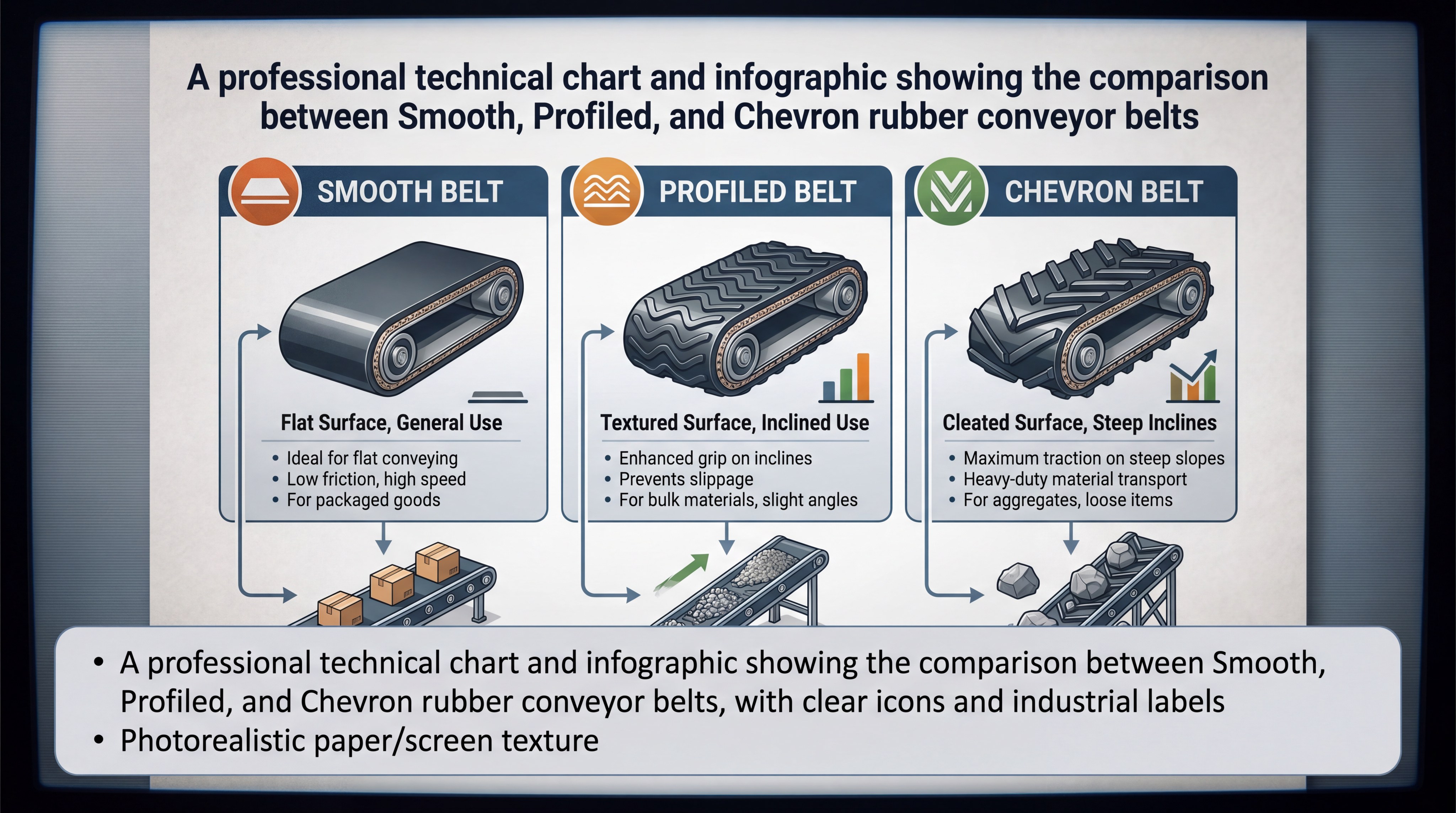
Industrial applications require a variety of belt architectures ranging from smooth horizontal surfaces to complex vertical lifting designs. Professional conveyor belt rubber suppliers categorize these based on their physical structure and how they interact with the material being moved.
Smooth belts for horizontal transport
Smooth surface belts are the standard for horizontal movement up to approximately 20 degrees. They are ideal for plasterboard lines where a flat, clean surface is required for the slurry to set correctly without interference.
What are profiled and cleated belts?
When the angle of transport increases, smooth belts lose their grip on the material. Profiled belts use vulcanized patterns to prevent material rollback, which is essential for:
- Transporting raw aggregates
- Handling packaged plaster bags
- Moving materials between floor levels
Believe it or not, the right profile can increase your throughput capacity by 40% on inclined sections.
Key Takeaway: Selecting the correct belt profile is essential for maintaining throughput efficiency across different sections of a plant.
| Belt Type | Typical Application | Angle Limit | |
|---|---|---|---|
| Smooth Flat | Plasterboard forming | Up to 20° | |
| Profiled/Grip Top | Inclined packaged goods | 20° – 35° | |
| Chevron | Bulk raw materials | 35° – 45° |
A mismatch between the material type and the belt surface leads to spillage, which increases cleanup costs and reduces overall safety.
Should you use fabric or steel cord reinforcement?
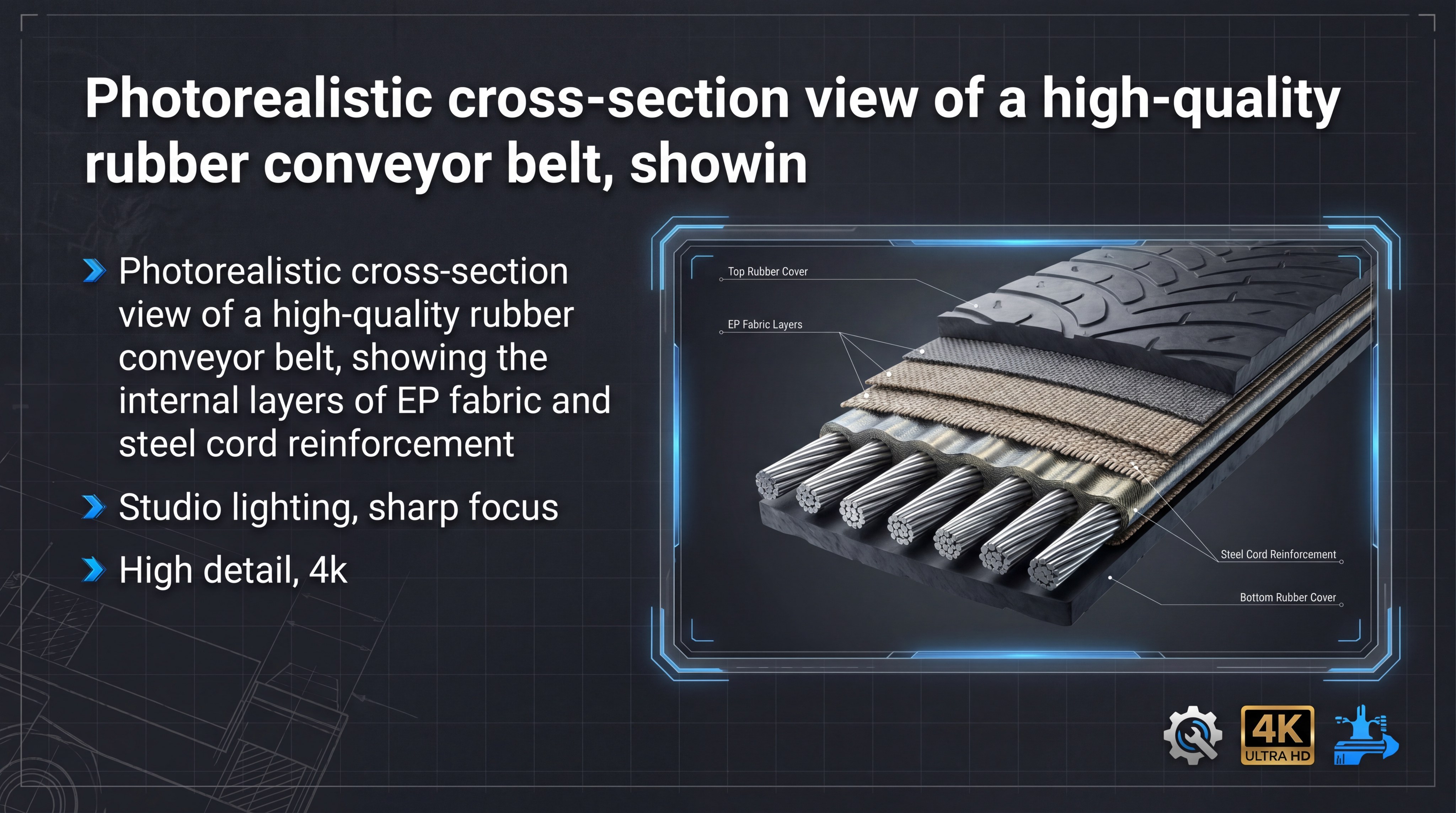
The choice between fabric and steel cord reinforcement depends on the length of your conveyor and the tension required for the load. Trusted conveyor belt rubber suppliers here evaluate the internal reinforcement, or carcass, to determine the belt’s tensile strength and elongation.
The versatility of textile reinforcement
The majority of small to medium-length conveyors utilize multi-ply fabric designs for their excellent flexibility. These belts are cost-effective for most standard industrial applications and offer high resistance to fatigue.
When is steel cord necessary?
For extremely long distances or high-tension operations, Steel Cord Conveyor Belts provide the ultimate strength. They offer:
- Minimal elongation (low stretch)
- High impact resistance
- Long service life in mining environments
The simple truth is that for long-haul systems, fabric belts would stretch too much, leading to constant tracking issues.
Key Takeaway: Match the reinforcement to the system’s tension requirements; use fabric for flexibility and steel cord for high-load, long-distance stability.
| Feature | Fabric (EP/NN) | Steel Cord | |
|---|---|---|---|
| Tensile Strength | Moderate to High | Extremely High | |
| Elongation | Low (EP) to Moderate (NN) | Very Low | |
| Flexibility | Excellent | Limited |
Choosing the right internal structure ensures that the belt maintains its shape even under the heavy weight of a wet plaster load.
Is a smooth or profiled belt better for inclines?
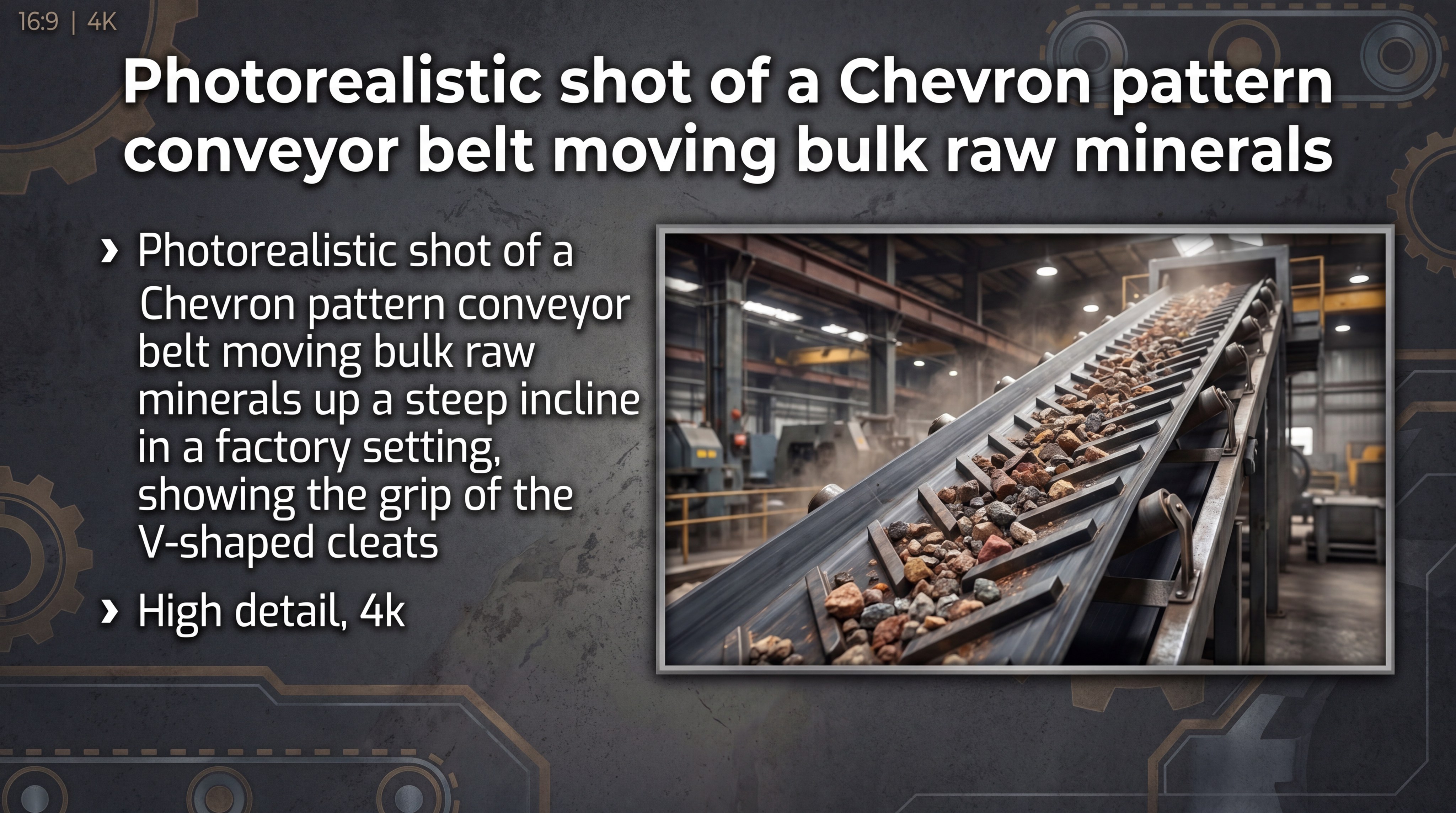
The geometry of the transport path is the primary factor in surface selection, as gravity affects material stability on slopes. In many facilities, conveyor belt rubber suppliers recommend specific patterns to combat material rollback during steep climbs.
The role of chevron patterns
Chevron belts feature integrated “V” or “U” shaped cleats vulcanized directly onto the top cover. These patterns are essential for:
- Moving bulk gypsum or sand
- Preventing material sliding
- Handling loose aggregates up to 45°
This makes Chevron Conveyor Belts the go-to solution for raw material handling in the initial stages of production.
Why use structured “Grip Top” surfaces?
For parcelled goods or finished plaster products, a structured cover provides additional friction. This is particularly useful in the packaging and palletizing sections where you need to prevent product sliding during transport.
Key Takeaway: Profiled surfaces like Chevron belts are necessary once the incline exceeds 20 degrees to prevent material loss.
| Surface Style | Best For | Benefit | |
|---|---|---|---|
| Smooth | Liquid/Slurry | Flat formation | |
| Chevron | Raw Bulk | Anti-rollback | |
| Rough Top | Packaging | High friction |
The correct surface geometry significantly reduces the amount of material wasted through rollback and side-spillage.
How do sidewall belts manage steep transport?
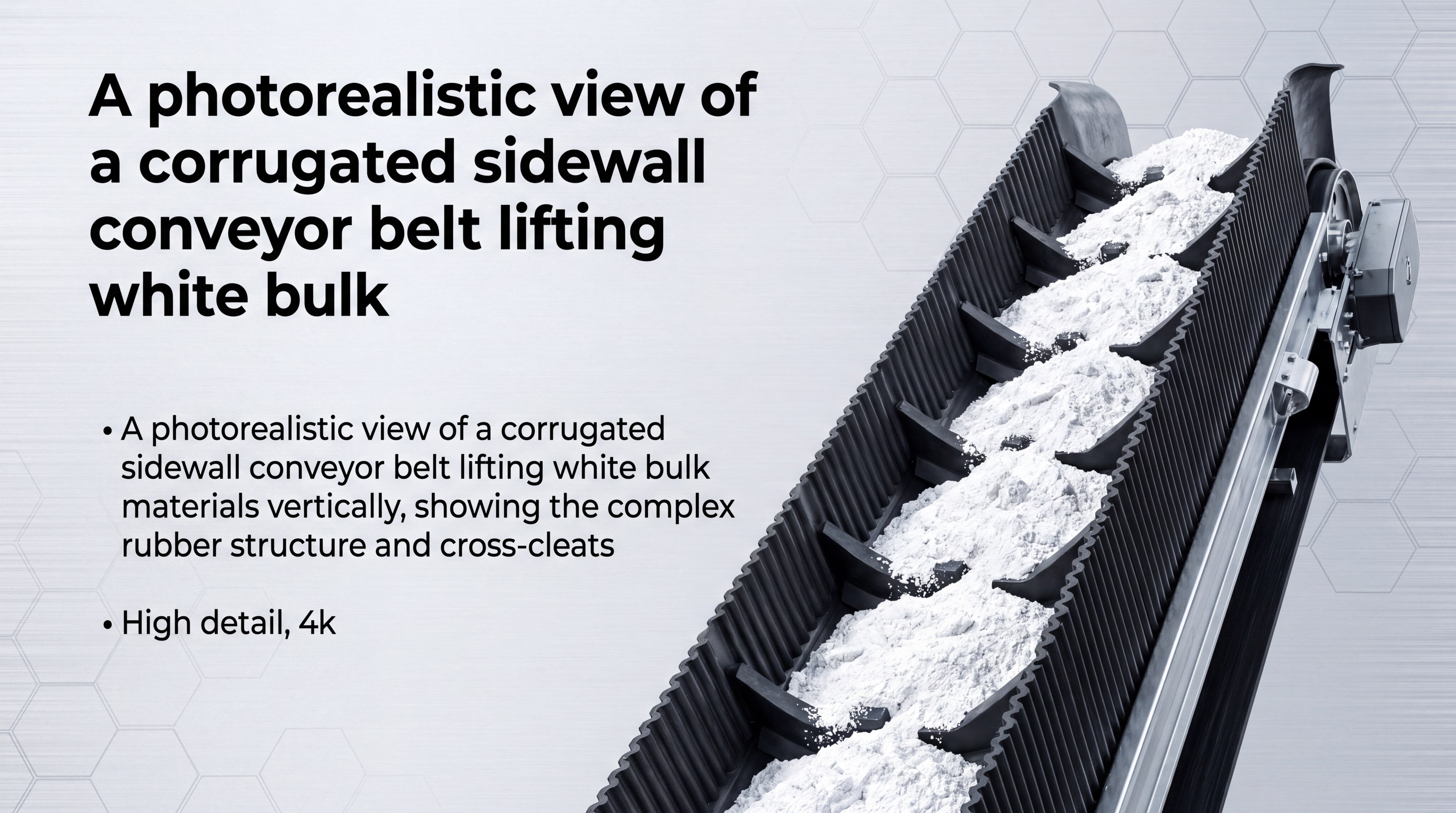
Sidewall belts are specialized solutions designed for high-capacity, steep-angle conveying when your facility footprint is limited. Your conveyor belt rubber suppliers here will point out that these belts allow for vertical material movement that would otherwise be impossible.
The advantage of corrugated sidewalls
Corrugated sidewalls prevent material from falling off the edges during vertical or near-vertical lifts. This design allows you to replace long, shallow-angled conveyors with a single vertical lift, saving massive amounts of floor space.
Can sidewall belts reach 90 degrees?
Yes, when combined with horizontal cleats, Sidewall Conveyor Belts can transport bulk materials at angles up to 90 degrees. This “S-shape” transport is highly efficient for:
- Filling tall silos
- Feeding processing towers
- Vertical aggregate lifting
At the end of the day, if you are short on space, sidewall technology is the only viable option for high-volume transport.
Key Takeaway: Sidewall belts are the ultimate solution for space-constrained environments requiring vertical material handling.
| Component | Function | |
|---|---|---|
| Base Belt | Provides longitudinal strength | |
| Corrugated Side | Containment of material | |
| Cross Cleats | Lifts material vertically |
Using corrugated sidewalls transforms a standard belt into a moving container, ensuring that 100% of the material reaches its destination.
Can rubber belts withstand extreme temperatures?
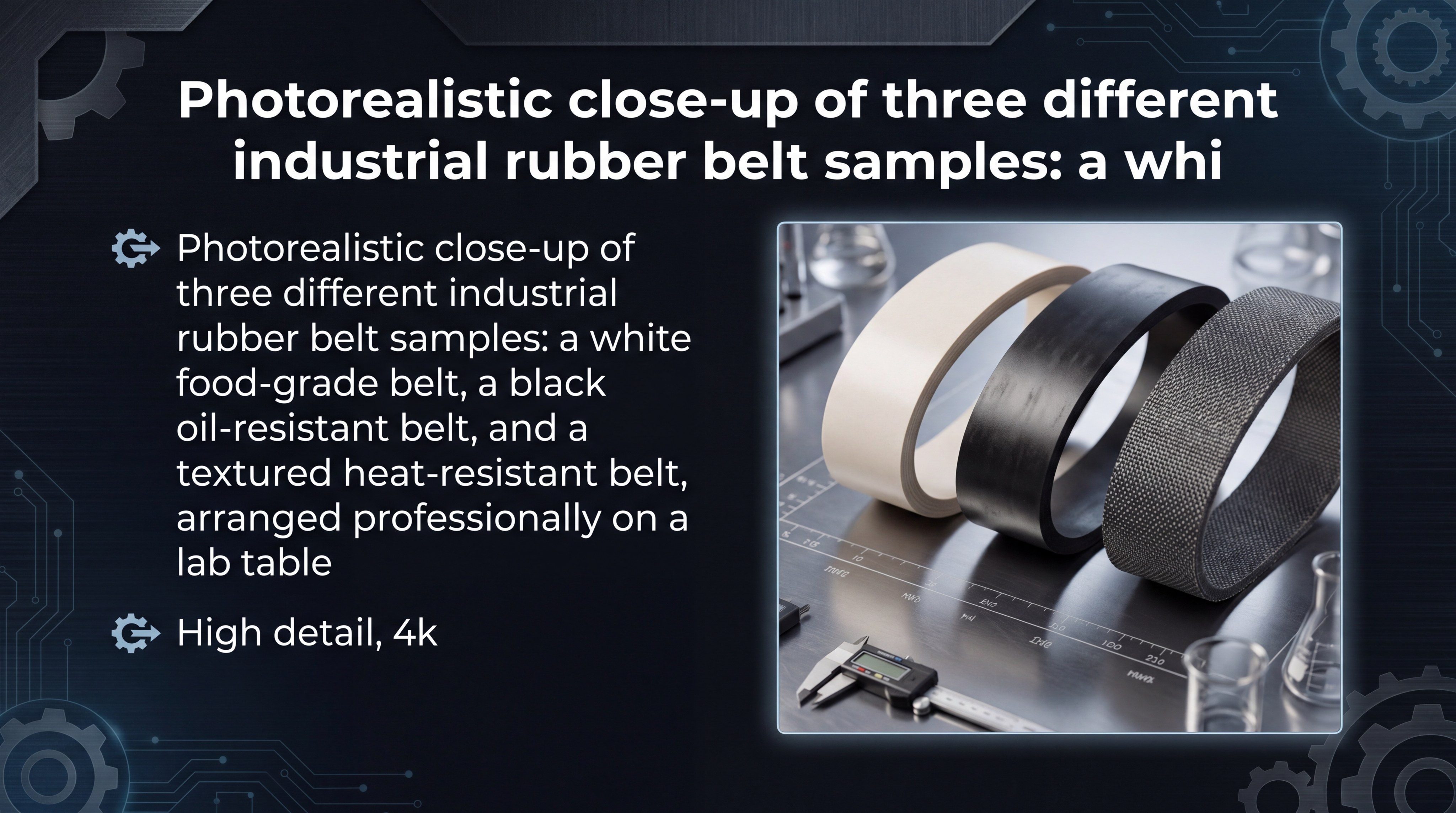
In casting and cement plants, belts must be specifically formulated to handle materials that could otherwise cause rubber to crack or delaminate. Heat is the natural enemy of industrial rubber, which is why conveyor belt rubber suppliers focus on specialized heat-resistant compounds.
Challenges of high-temperature clinker
In the production of gypsum and cement, materials like clinker can reach temperatures exceeding 200°C. Standard rubber would fail almost immediately, leading to:
- Hardening and cracking
- Cover separation
- Catastrophic belt fire risks
What are heat-resistant compounds?
Specialized EPDM or high-temperature resistant compounds are used to create belts that maintain their integrity under stress. These Flame Retardant and Heat Resistant Belts are engineered to endure constant thermal cycles.
Key Takeaway: Investing in heat-resistant belts prevents premature aging and the dangerous risk of belt fires in high-temperature zones.
| Grade | Continuous Temp | Peak Temp | |
|---|---|---|---|
| HR (Standard) | 120°C | 150°C | |
| UHR (Ultra) | 180°C | 220°C | |
| Fire Resistant | Ambient | Flame Extinguishing |
Temperature-rated belts are an insurance policy for your production line, ensuring that hot materials don’t melt your conveyor system.
What industries use specialized rubber compounds?
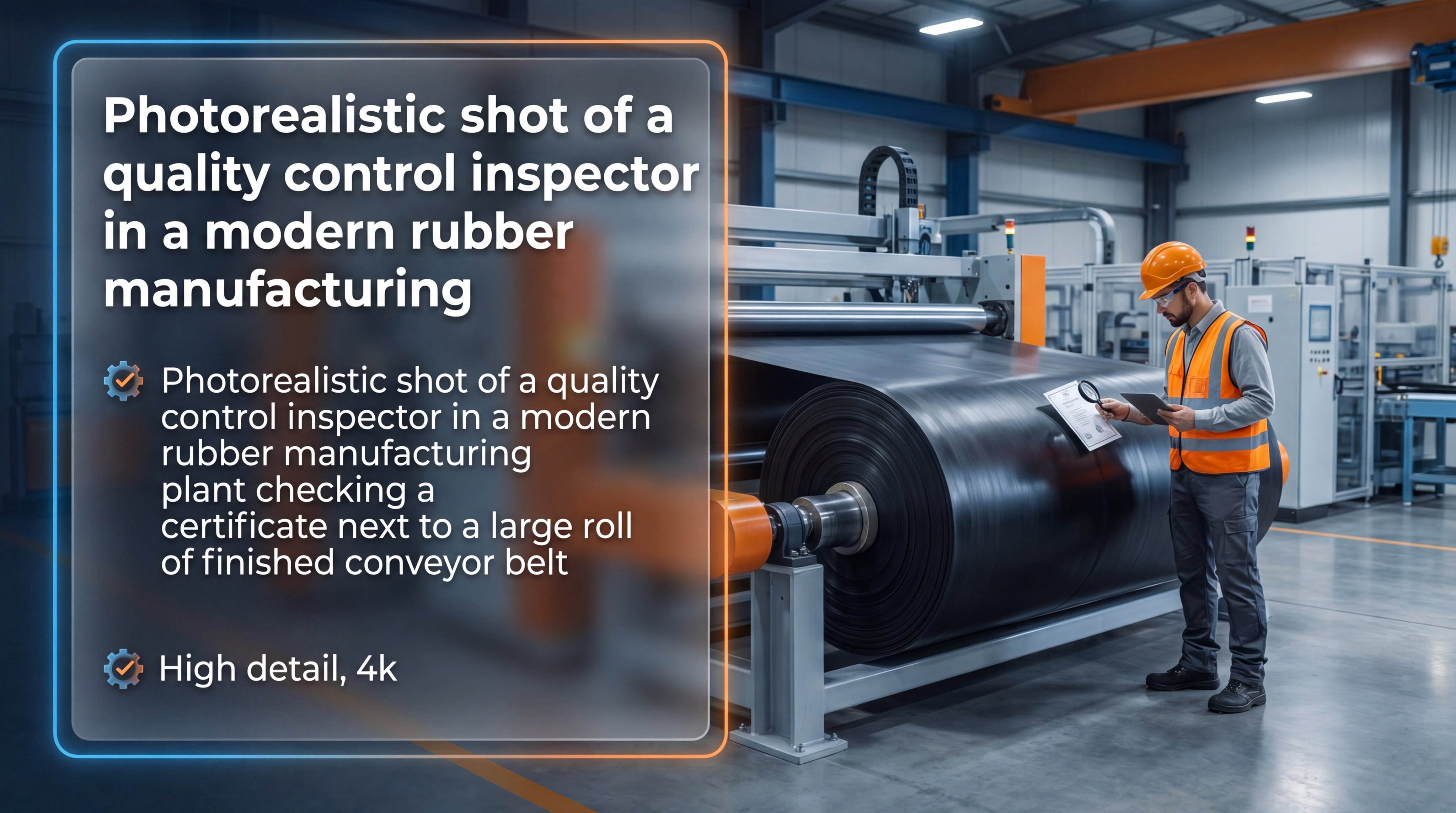
While plaster casting is a major user, many other sectors require specific rubber qualities to handle unique environmental challenges. Professional conveyor belt rubber suppliers here provide a wide range of specialized compounds tailored to these diverse needs.
Oil and chemical resistance
In fertilizer and chemical plants, rubber must resist degradation from oils and acids. You will need “OR” (Oil Resistant) belts to prevent the rubber from swelling, which can cause the belt to lose its tension and track off the rollers.
The importance of food-grade white belts
The food industry requires non-toxic, FDA-approved white belts. These are essential for:
- Harvesting crops
- Processing and packaging
- Zero-contamination environments
You simply cannot use a standard black industrial belt for food products due to the risk of chemical migration and contamination.
Key Takeaway: Always select a belt compound—whether oil-resistant, acid-resistant, or food-grade—that matches the chemical profile of your industry.
| Industry | Required Quality | Key Feature | |
|---|---|---|---|
| Mining | Abrasion Resistant | High tear strength | |
| Food | FDA White Belt | Non-toxic, easy clean | |
| Fertilizer | Chemical/Oil Resistant | Swell protection |
By matching the rubber compound to the material chemistry, you extend the belt life and maintain the purity of your final product.
How do you identify a reliable belt manufacturer?
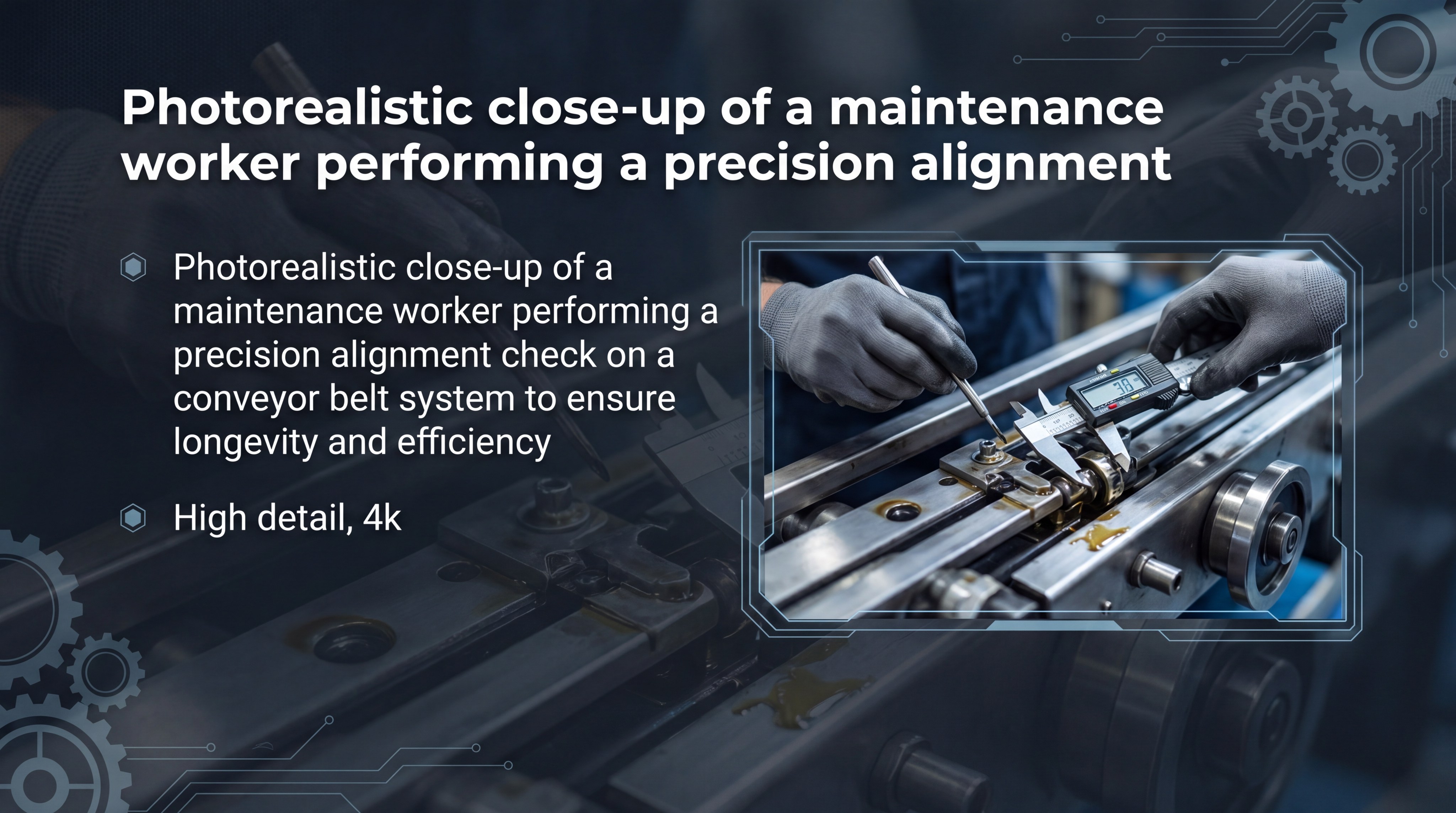
To ensure long-term reliability, a manufacturer must demonstrate transparency in their production and quality control processes. Not all conveyor belt rubber suppliers are created equal, and your choice determines the future stability of your operation.
Direct factory vs. trading company
Purchasing directly from a manufacturer often eliminates middleman markups and provides direct access to the engineering team. This ensures that:
- Technical questions are answered accurately
- Lead times remain stable
- Customization is easily handled
Importance of international certifications
A reliable partner should hold recognized certifications such as ISO 9001 for quality management and CE standards for safety. These certifications guarantee that every belt has undergone rigorous tensile and abrasion testing before leaving the factory.
“A reliable manufacturer doesn’t just sell a belt; they provide a solution that includes testing reports, factory inspections, and ongoing technical support.”
Key Takeaway: Look for manufacturers with a proven global track record and the ability to provide detailed testing documentation for every batch produced.
By selecting a certified manufacturer, you are investing in a product that has been proven to meet international industrial standards. We are committed to engineering excellence, ensuring that your production never stops. Contact us today to find your perfect conveyor solution.
Frequently Asked Questions (FAQ)
1. How long does a typical rubber conveyor belt last?Lifetime varies by application. In abrasive mining, a belt might last 12-18 months, whereas, in a climate-controlled plaster casting line, a high-quality belt can last several years with proper maintenance.
2. Can I get a custom logo or branding on my conveyor belt?Yes, professional manufacturers offer OEM branding services where your logo or specific belt markings can be embossed or printed on the rubber surface.
3. What is the difference between EP and NN fabric belts?EP (Polyester/Nylon) belts have lower stretch and are better for medium distances, while NN (Nylon/Nylon) belts offer higher impact resistance and are often used in heavy-duty mining.
4. How do I know if I need an oil-resistant belt?If your material contains mineral oils or chemicals that cause standard rubber to feel “tacky” or swollen, you must switch to an oil-resistant (OR) grade to prevent failure.
5. Is it possible to visit the factory before placing a large order?Reputable manufacturers welcome factory visits, as seeing the mixing and vulcanizing processes firsthand is the best way to verify production capabilities and quality standards.