
Reliable steel cord rubber conveyor belt suppliers provide high-strength solutions for heavy-duty material handling, reducing downtime, preventing stretching, and ensuring long-distance conveying performance.
What do steel cord rubber conveyor belt suppliers offer?
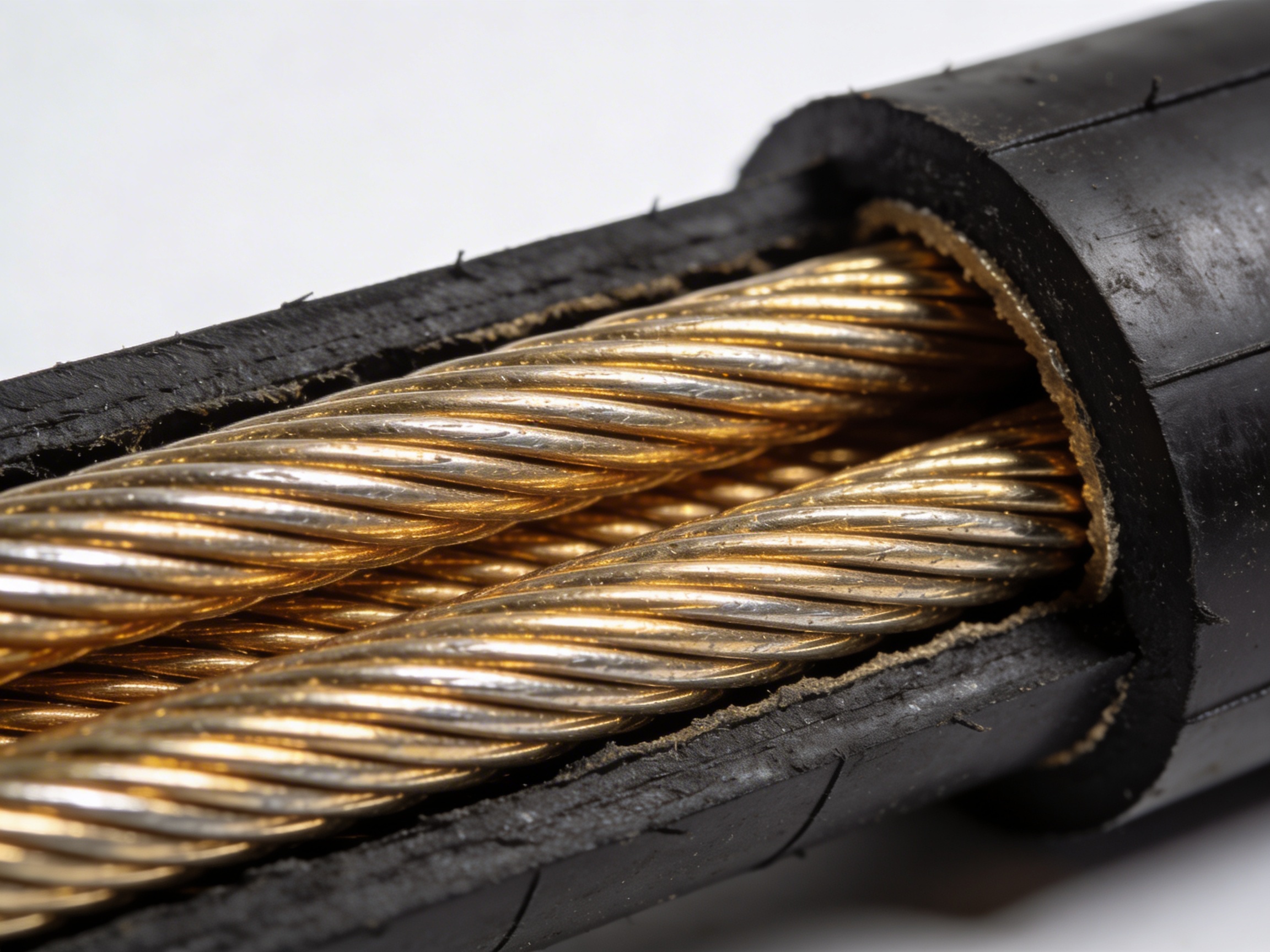
These specialized suppliers offer heavy-duty belts reinforced with high-tensile longitudinal steel cables instead of traditional multi-ply fabric layers. By partnering with leading steel cord rubber conveyor belt suppliers , you gain access to belts that provide unmatched breaking strength and minimal elongation.
These products are specifically engineered for bulk handling systems where reliability is non-negotiable. You can expect various cover grades tailored for abrasion, heat, or flame resistance.
Defining the Steel Cord Carcass
The carcass consists of a single plane of steel cables that serve as the main tension-bearing member. Let’s get started by looking at how this structure differs from textile alternatives.
The Role of the Rubber Cover
High-quality rubber covers protect the internal steel cords from external damage and environmental corrosion. Professional suppliers ensure the core rubber creates a permanent chemical bond with the cables.
- Tension Cables: Provide high longitudinal strength.
- Insulation Rubber: Ensures internal adhesion and impact absorption.
- Cover Layers: Offer protection against sharp materials.
- Edge Reinforcement: Prevents moisture penetration.
You might be wondering if these components actually improve longevity.
Key Takeaway: Selecting the right belt composition allows your system to handle larger volumes without the risk of sudden mechanical failure.
| Component | Function | Material | |
|---|---|---|---|
| Steel Cords | Tension Member | Brass-coated steel | |
| Core Rubber | Adhesion | Specialized synthetic | |
| Top Cover | Impact Surface | Natural/Synthetic blend |
This structural breakdown highlights how steel-reinforced belts provide the foundational strength required for high-capacity industrial throughput.
How do steel cord rubber conveyor belt suppliers design it?
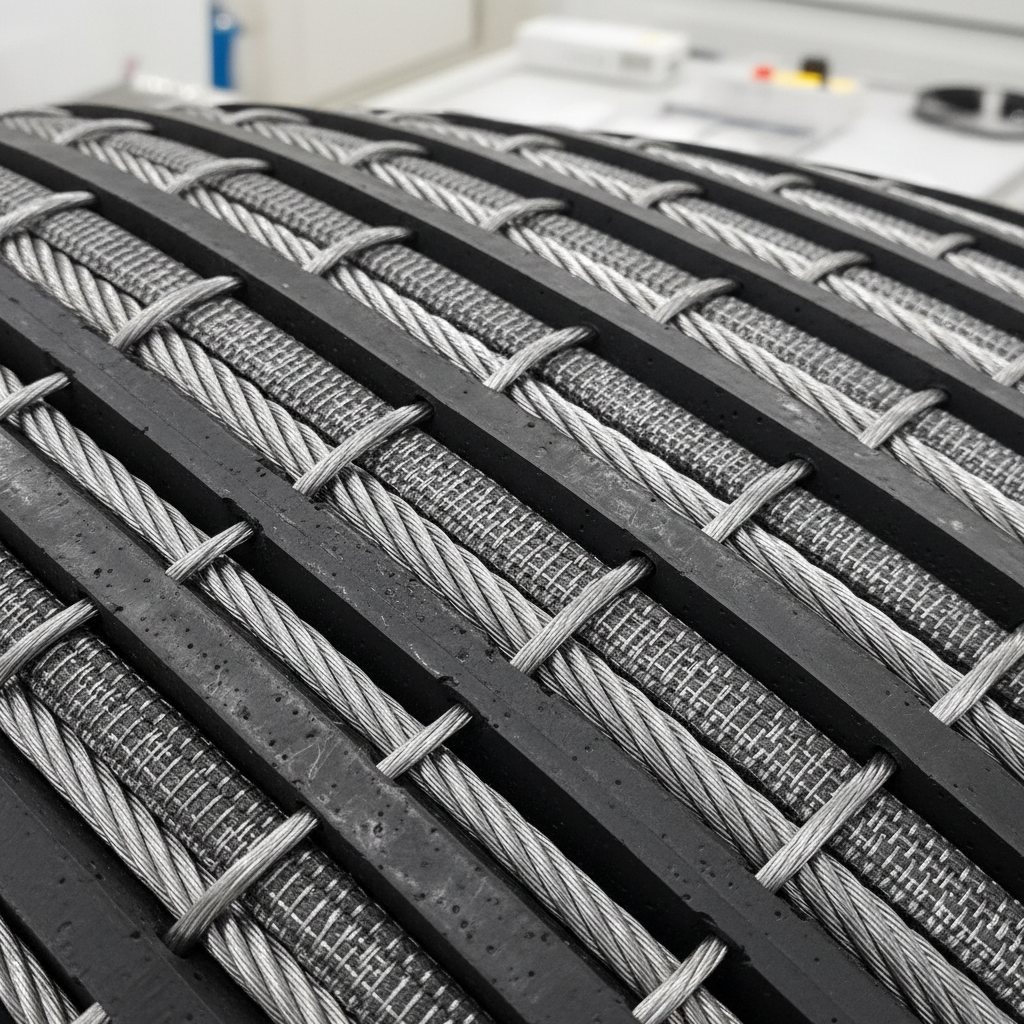
Designers arrange high-strength steel wires in a precise bi-dimensional form of protection to prevent tearing and improve longitudinal stiffness. Every design from steel cord rubber conveyor belt suppliers focuses on optimizing the cable pitch and diameter for your specific conveying distance.
The internal matrix is calculated to balance flexibility with rigidity. This ensures your belt can navigate troughing idlers while remaining stable under full load.
Advanced Brass Coating Technology
Cables are typically coated with brass to facilitate a superior chemical bond with the surrounding rubber matrix. This technology prevents the cables from pulling out under extreme stress.
Longitudinal Cable Alignment
Maintaining perfect alignment of the cables across the belt width is critical for straight tracking. Think about this: even a small deviation can cause the belt to drift off the rollers.
- Open Warp Cords: Increase longitudinal elasticity for specific applications.
- Closed Warp Cords: Provide maximum stability for traditional setups.
- Pitch Precision: Ensures uniform load distribution across the belt.
Key Takeaway: Precision design translates to lower energy consumption and fewer tracking adjustments during the belt’s life cycle.
| Design Feature | Purpose | User Benefit | |
|---|---|---|---|
| Brass Coating | Chemical Adhesion | No cord separation | |
| Open Structure | Rubber Penetration | Internal rust prevention | |
| Precise Pitch | Load Distribution | Lower roller wear |
Engineering these specific characteristics ensures that the belt remains a reliable asset rather than a constant maintenance burden.
Why shift to steel cord rubber conveyor belt suppliers?
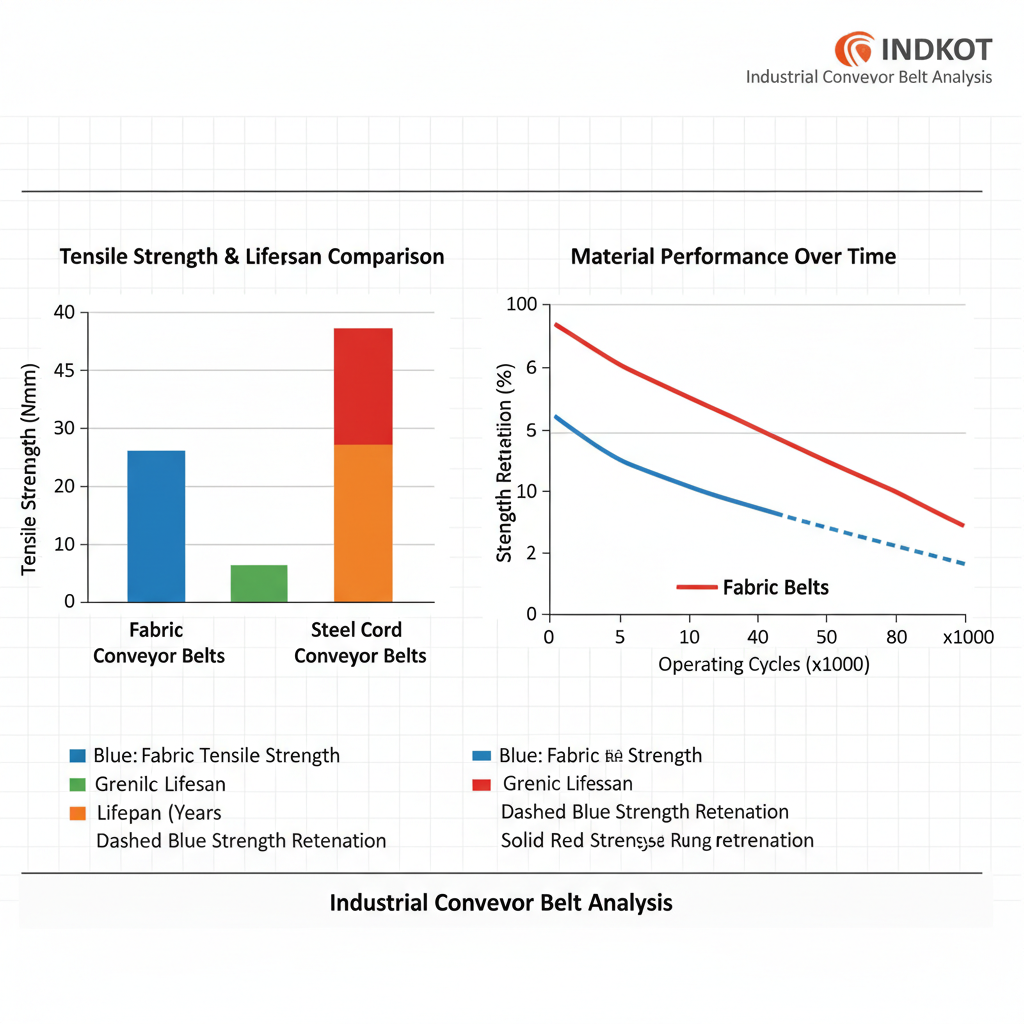
Operations shift to these suppliers because steel cord belts overcome the inherent physical limitations of fabric belts, such as high elongation and low impact resistance. By working with reputable steel cord rubber conveyor belt suppliers , you can significantly reduce the “creep” or permanent stretch that plagues textile systems.
This shift is particularly vital if you are handling “foreign” sharp objects in bulk material. Fabric belts often tear in half under such impacts, whereas steel cord provides a bi-dimensional shield.
Overcoming Traditional Fabric Limits
Textile belts often require frequent re-tensioning, which increases operational downtime. Here is the truth: steel cord belts maintain their length and tension far more effectively over thousands of hours.
From Metal Mesh to Steel Cables
Modern steel cord technology has evolved from simple metal mesh to sophisticated, high-flexibility cables. This evolution allows you to use smaller pulley diameters without sacrificing power.
- High Strength: Supports longer conveyor centers.
- Low Stretch: Eliminates the need for long take-up strokes.
- Impact Resistance: Handles heavy, sharp rocks with ease.
- Cost Efficiency: Reduces total cost of ownership over time.
Key Takeaway: Upgrading to steel cord allows your facility to scale production levels that textile belts simply cannot support.
| Feature | Fabric Belt | Steel Cord Belt | |
|---|---|---|---|
| Elongation | High (1.5%+) | Low (0.25%) | |
| Centers | Short to Medium | Long Distance | |
| Impact Resistance | Moderate | High |
The data confirms that steel-reinforced systems provide a much more stable platform for long-term industrial material handling.
Which specs do steel cord rubber conveyor belt suppliers use?

Specifications typically vary between “open” and “closed” warp constructions, defining how much rubber can penetrate the internal cable filaments. When you consult with steel cord rubber conveyor belt suppliers, they will recommend a specific series like IW or HE based on your impact requirements.
These technical specs dictate the belt’s ability to resist longitudinal cuts. Understanding these variations is the first step toward optimizing your bulk handling machinery.
Understanding Weft Reinforcements
Some belts feature additional transversal steel cables, known as weft, to increase resistance against tearing. Consider this for a moment: weft layers act like a safety net for your most critical assets.
Open vs. Closed Warp Construction
Open construction allows rubber to reach the center of the cord, while closed construction is standard for traditional tensile needs. You must choose based on your environment’s moisture and corrosion levels.
- ID Series: Regular warp cords for standard high-strength needs.
- IW Series: Single steel weft for improved transversal flexibility.
- HE Series: Double steel weft for exceptional cut resistance.
Key Takeaway: Matching the correct warp and weft specification to your material type prevents premature belt failure.
| Specification | Construction | Primary Use | |
|---|---|---|---|
| ID Series | Regular/Closed | Standard long-haul | |
| IW Series | Single Weft | Troughing applications | |
| HE Series | Double Weft | Extreme impact zones |
Choosing the precise specification ensures your conveyor system operates at peak efficiency while minimizing the risk of catastrophic tears.
Where do steel cord rubber conveyor belt suppliers ship to?
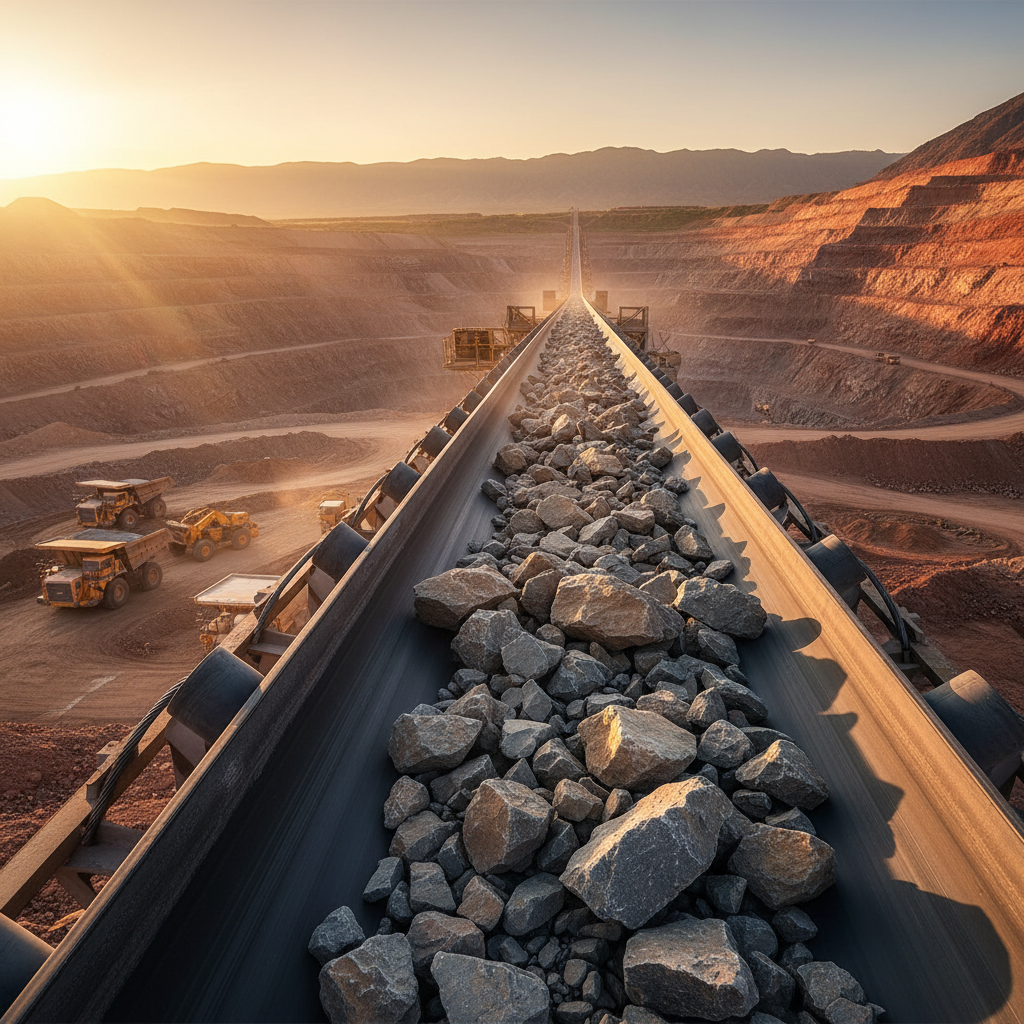
Suppliers ship these critical components to global industrial hubs, including major open-pit mines, cement plants, and power generation facilities. Leading steel cord rubber conveyor belt suppliers maintain distribution networks that reach from Turkey and Russia to Australia and the UAE.
Because these belts are essential for bulk infrastructure, they are often exported to port terminals for ship loading operations. If you run a high-volume facility, global shipping reliability is just as important as the belt’s strength.
Global Mining and Cement Portals
Large-scale mining operations require massive quantities of high-strength belts to move iron ore and coal. It gets better: many suppliers provide customized packaging to ensure the belts arrive undamaged at remote sites.
Port Terminals and Power Plants
Ports handling grain or biomass rely on these belts for 24/7 reliability in high-humidity environments. Shipping to these locations requires strict adherence to international safety and quality standards.
- Mining Sites: Handling raw ore and minerals.
- Cement Factories: Managing hot clinker and limestone.
- Steel Mills: Transporting recycled and raw metals.
- Port Facilities: Bulk ship loading and unloading.
Key Takeaway: Accessing a global supply chain ensures your facility stays operational regardless of its geographic location.
| Region | Primary Industry | Common Belt Grade | |
|---|---|---|---|
| Australia | Iron Ore Mining | Super Impact | |
| Turkey | Cement Production | Heat Resistant | |
| UAE | Port Terminals | Food/Grain Grade |
This wide distribution network guarantees that expert-grade conveying solutions are available for critical infrastructure projects worldwide.
How is it made by steel cord rubber conveyor belt suppliers?
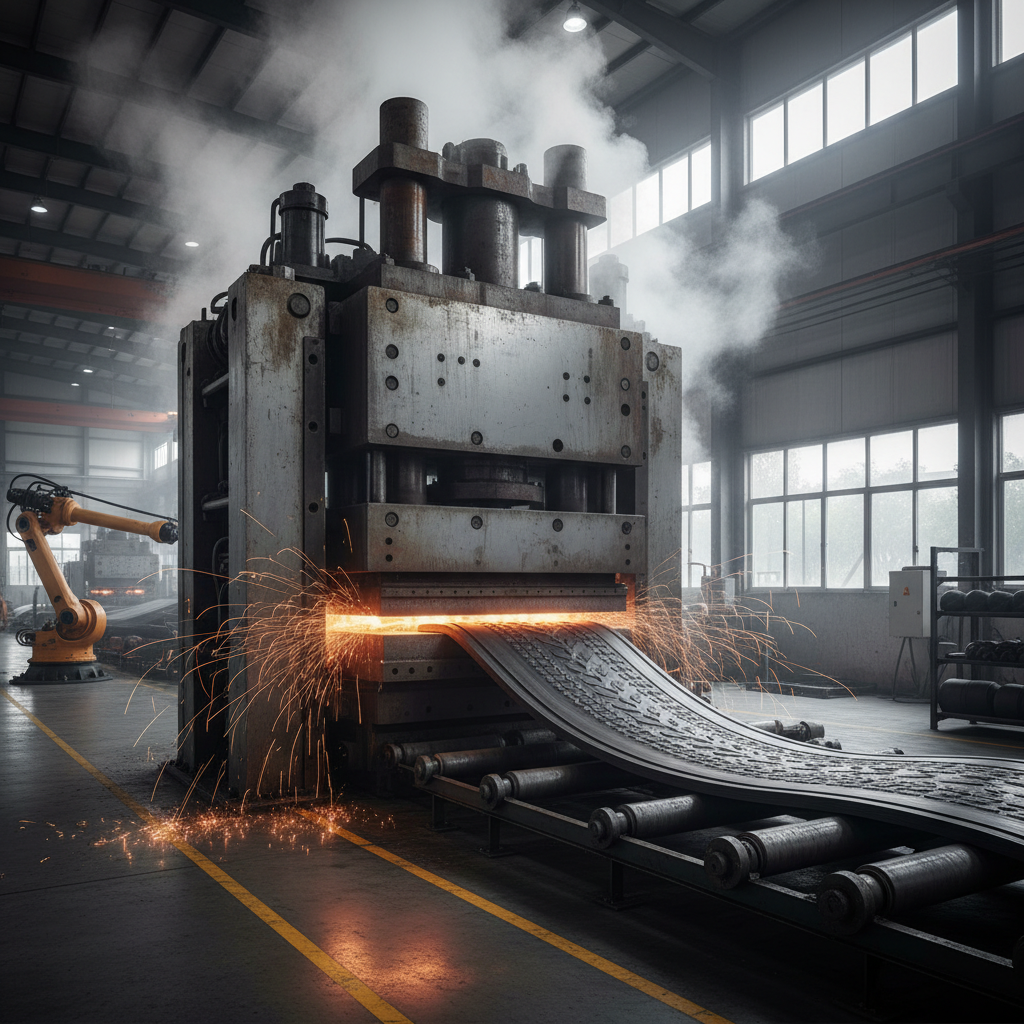
The manufacturing process involves a high-pressure vulcanization stage where core rubber is forced between the steel filaments to create a permanent bond. Every reputable factory among steel cord rubber conveyor belt suppliers uses advanced calendaring equipment to ensure uniform belt thickness.
Raw materials are inspected first to verify the tensile strength of the steel cables. Only after passing these checks is the rubber compound applied to the internal structure.
Mixing and Calendaring Precision
Precision mixing of synthetic and natural rubber ensures the final product meets specific hardness and abrasion standards. This is the secret to a belt that lasts for decades instead of years.
The Vulcanization Press Process
Large hydraulic presses apply heat and pressure to the assembled belt layers. This chemical reaction creates the adhesion necessary to prevent the cords from pulling loose under load.
- Raw Inspection: Testing cord tensile and rubber quality.
- Calendaring: Applying the core rubber to the cords.
- Assembly: Layering the top and bottom covers.
- Vulcanization: Permanent curing under heat and pressure.
Key Takeaway: Understanding the manufacturing process gives you confidence in the belt’s ability to withstand extreme physical stress.
| Process Step | Control Factor | Benefit to You | |
|---|---|---|---|
| Mixing | Compound Ratio | Specific resistance | |
| Calendaring | Tension Control | Straight tracking | |
| Pressing | Temperature | Maximum adhesion |
Rigorous manufacturing standards ensure that every meter of belt you install provides consistent performance throughout its operational life.
Why trust steel cord rubber conveyor belt suppliers’ belts?
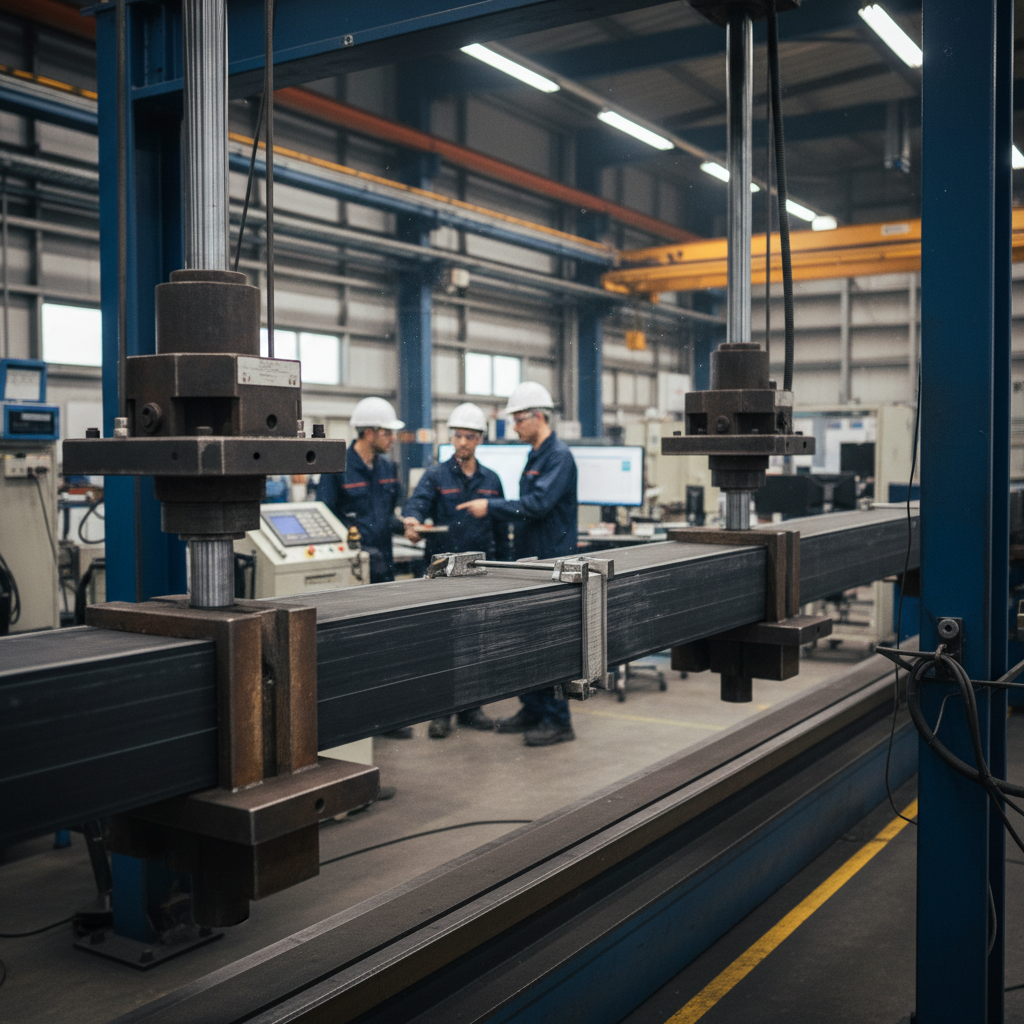
You should trust these belts because they offer the lowest elongation rates in the industry, typically staying below 0.25% at reference loads. Partnering with professional steel cord rubber conveyor belt suppliers ensures you receive belts that have passed rigorous third-party inspections and lab tests.
Trust is also built through the belt’s high impact absorption. Standard fabric belts fail when oversized materials hit the surface, but steel cord belts use their flexible carcass to dissipate that energy.
Unmatched Tensile Strength
Steel cords provide the highest breaking load possible for a standard conveyor footprint. The bottom line is this: no other material offers the same strength-to-weight ratio for industrial conveying.
The Advantage of Low Elongation
Low stretch means you won’t have to waste time adjusting take-up units or shortening the belt after installation. This mechanical stability directly translates to higher annual uptime for your plant.
- Creep Resistance: Minimal permanent stretch over time.
- Flex Life: Capable of millions of cycles over pulleys.
- Adhesion Strength: Cords will not separate from the rubber.
- Certification: ISO 9001 and CE compliance for safety.
Key Takeaway: Investing in trusted steel-reinforced belts eliminates the “hidden costs” of frequent maintenance and belt stretching.
| Performance Metric | Industry Standard | User Value | |
|---|---|---|---|
| Tensile Strength | Up to 5400 N/mm | Heavy load capacity | |
| Elongation | <0.25% | Low maintenance | |
| Adhesion | >10 N/mm | Long-term durability |
Proven performance metrics ensure that your investment in high-quality belts pays dividends through reduced operational risks.
How do steel cord rubber conveyor belt suppliers join belts?
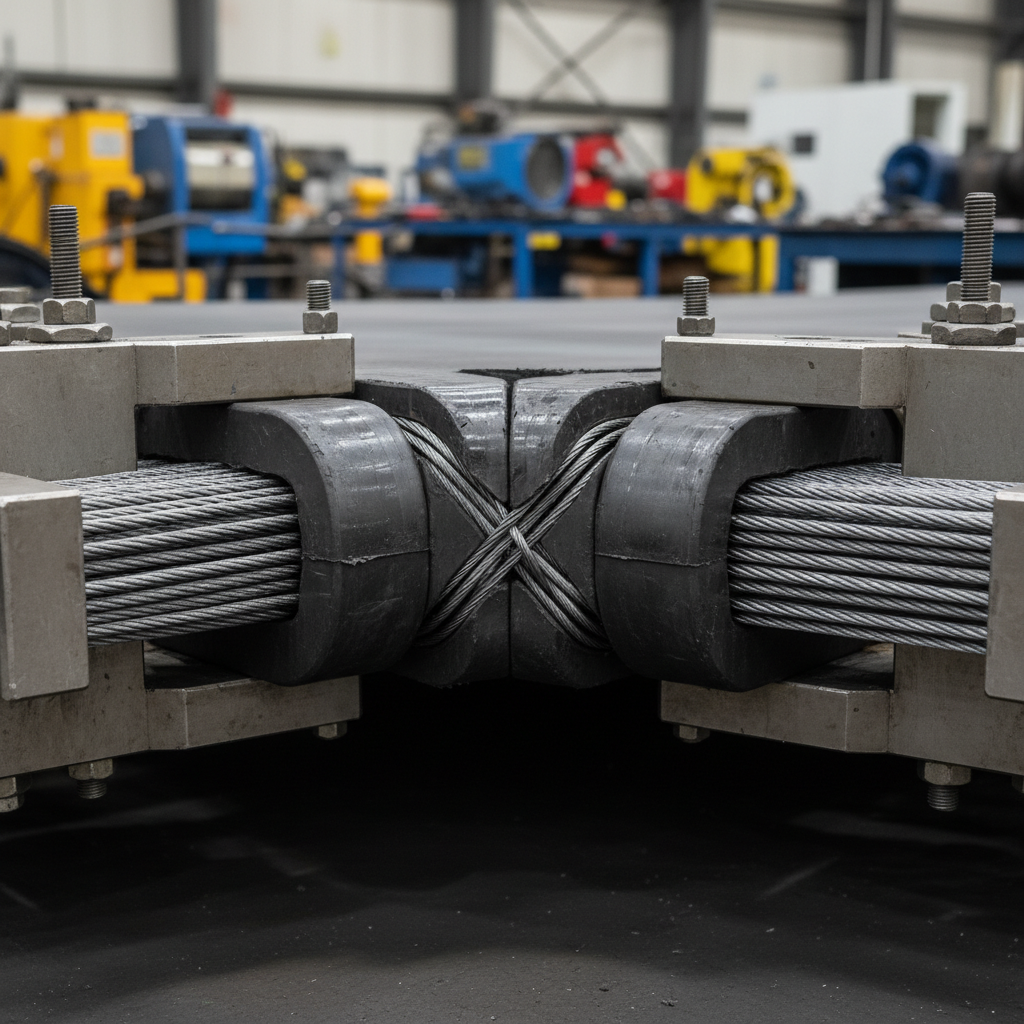
Suppliers typically recommend finger splicing, a method where the cords from both ends are interleaved and vulcanized to maintain longitudinal strength. Experienced steel cord rubber conveyor belt suppliers provide detailed splicing kits containing specialized un-vulcanized rubber strips and adhesives.
Proper joining is the most critical part of the installation process. A poor joint is the most common point of failure, so following factory guidelines is essential for safety.
The Efficiency of Finger Splicing
Finger splicing allows the joint area to remain as flexible as the rest of the belt. But that’s not all; this method also preserves up to 100% of the belt’s original tensile strength.
Insertion and Mechanical Fasteners
While hot vulcanization is the gold standard, some HE series belts can use mechanical fasteners for temporary repairs. You should only use these in emergencies to prevent further damage to the system.
- Finger Joint: Interleaving cables for maximum strength.
- Insertion Joint: Faster to prepare but slightly more rigid.
- Cold Splice: Used for specific repairs with chemical adhesives.
- Mechanical Fastener: Only for short-term HE series emergency use.
Key Takeaway: Using the correct splicing technique ensures that the weakest link in your system is just as strong as the belt itself.
| Joint Type | Strength Retention | Application | |
|---|---|---|---|
| Finger Splice | 90-100% | Permanent installation | |
| Insertion Joint | 70-80% | Fast secondary joints | |
| Mechanical | 40-50% | Emergency repair only |
Mastering the joining process is essential for maintaining the structural integrity of your long-distance conveying system.
Do steel cord rubber conveyor belt suppliers stop rust?
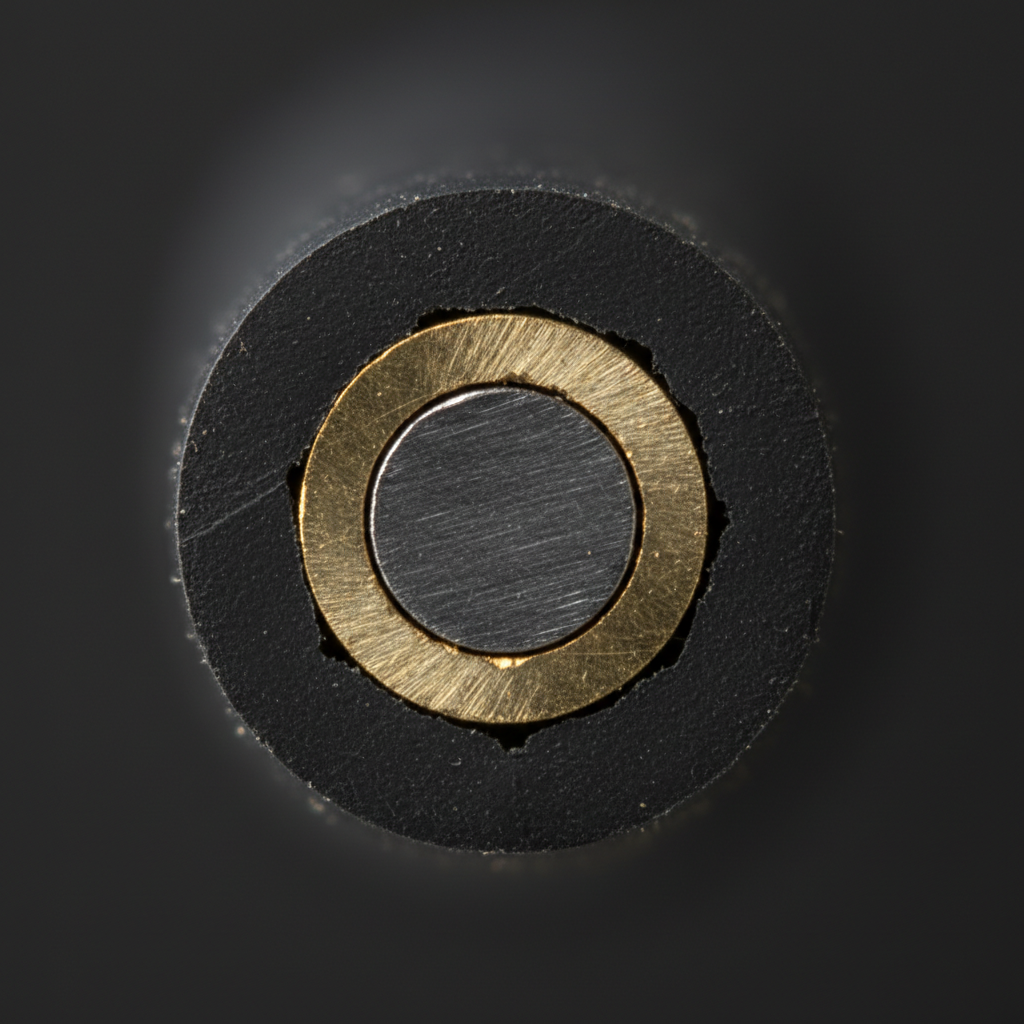
Yes, suppliers prevent internal rust by using brass-coated cables and “open cord” designs that allow rubber to fully encapsulate every steel filament. Reliable steel cord rubber conveyor belt suppliers focus on eliminating the capillary action that could draw moisture into the belt’s core.
If moisture reaches the steel cords, it can lead to corrosion and eventual separation from the rubber. Advanced coating technology ensures your belt remains durable even in wet or chemically aggressive environments.
Corrosion Prevention Techniques
Brass coating provides a chemical advantage by reacting with the rubber during vulcanization to form a waterproof bond. Consider this for a moment: if the rubber doesn’t stick perfectly, moisture will find a way in.
Rubber Penetration Benefits
Open cord construction spaces the filaments so that liquid rubber can flow into the very center of the cable. This creates a solid, internal moisture barrier that protects every single wire.
- Brass Coating: Superior chemical adhesion over zinc.
- Open Cord Structure: Eliminates air pockets inside the cable.
- Core Rubber Grade: Specifically designed for waterproof sealing.
- Edge Sealing: Protects the sides from environmental ingress.
Key Takeaway: Preventing internal corrosion is the single most important factor in achieving a 15-year belt lifespan.
| Feature | Protection Method | Result | |
|---|---|---|---|
| Brass Coating | Chemical Reaction | No cord pull-out | |
| Open Warp | Rubber Flow | Internal moisture seal | |
| Edge Guard | Mechanical Seal | No side rot |
By addressing rust at the molecular level, these belts maintain their high-tensile strength in the most unforgiving industrial climates.
How to find steel cord rubber conveyor belt suppliers?
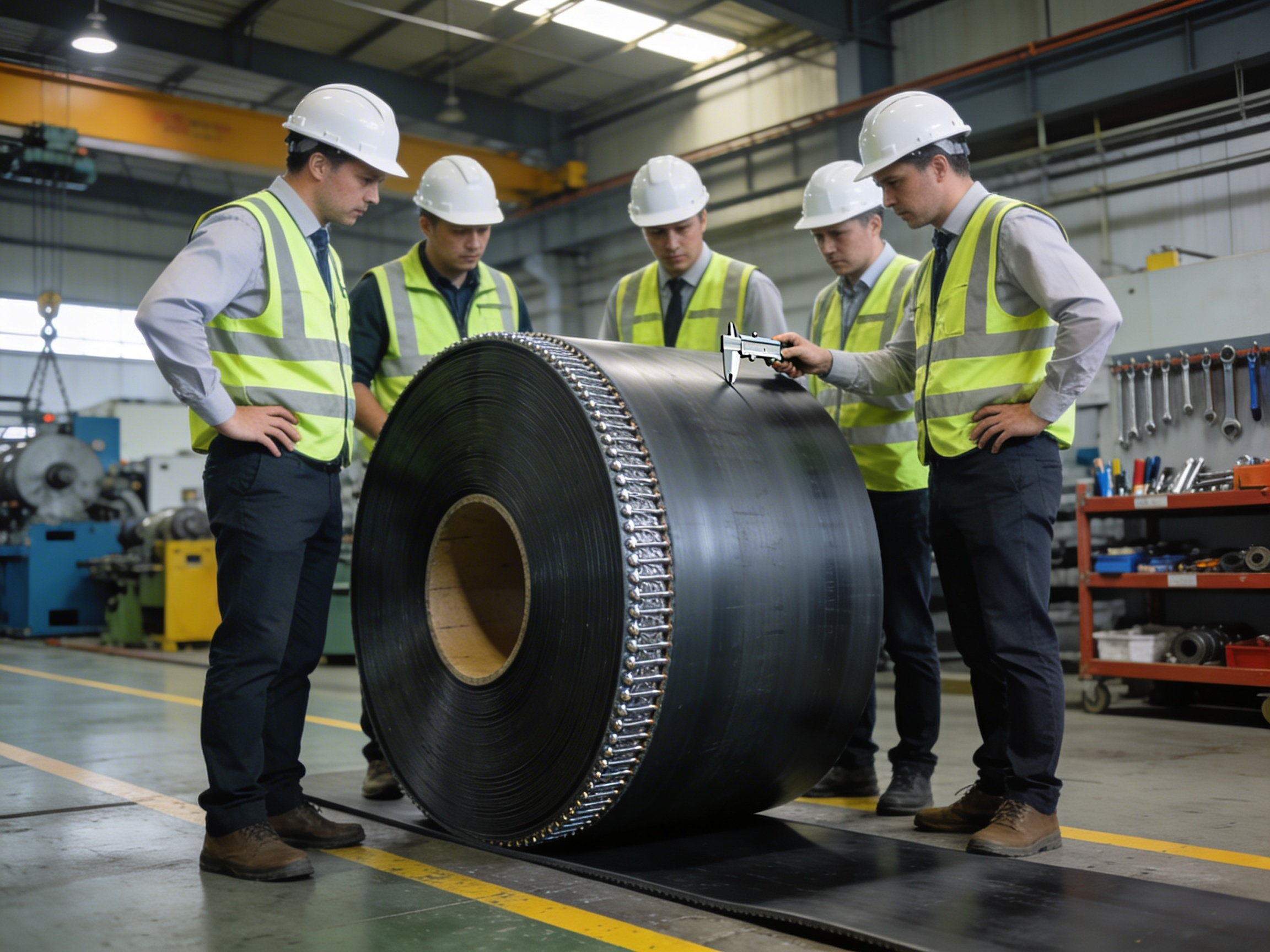
You should look for suppliers who own their manufacturing facilities and offer direct factory technical consultations rather than just trading services. Evaluating steel cord rubber conveyor belt suppliers requires checking for ISO, CE, and SGS certifications to verify their quality claims.
A good supplier will ask for your specific material characteristics and drawing requirements. They should be able to provide accurate quotations and technical solutions within 24 hours.
Evaluating Factory Certifications
Certification reports prove that the manufacturer follows international safety and performance standards. So, what is the next step? Always ask for recent testing reports for tensile strength and abrasion resistance.
Requesting Technical Consultations
Reliable partners offer free engineering support to help you choose between different belt grades. This expert guidance prevents you from over-spending on specs you don’t need or under-specifying for a critical task.
- Lead Times: Ensure they can meet your project deadlines.
- Factory Visit: Verification of production and R&D capabilities.
- Sample Availability: Testing quality before committing to a large order.
- Reference Projects: Checking their success in your specific industry.
Key Takeaway: Choosing a direct factory supplier can save you 15-30% in costs while providing much more stable quality control.
| Criteria | Why it Matters | Benefit to You | |
|---|---|---|---|
| Direct Factory | No middleman markups | Lower procurement cost | |
| ISO Certified | Standardized quality | Predictable performance | |
| 24h Quotation | Engineering support | Faster project planning |
Finding the right partner is about balancing technical expertise with manufacturing transparency to ensure your bulk handling system never fails.
Moving from traditional fabric belts to modern steel-reinforced systems is the most effective way to optimize high-volume material handling and reduce long-term operational costs. These systems provide the strength and stability required for the next generation of industrial growth. If you are ready to upgrade your conveying system for maximum efficiency, contact us today for a custom technical solution and a competitive quotation within 24 hours. Our engineering team is standing by to help you solve your most complex bulk handling challenges with precision-made rubber products.
FAQ
How long does a steel cord conveyor belt last?It typically lasts between 10 to 15 years. This durability depends heavily on regular maintenance, the abrasiveness of the materials handled, and the quality of the original installation.
What is the main difference between EP and steel cord belts?Steel cord belts use cables and have nearly zero stretch. EP belts use fabric plies and are prone to significant elongation under heavy industrial loads.
Can I handle high temperatures with these belts?Yes, you certainly can. Suppliers use specialized EPDM or heat-resistant rubber covers to protect the internal steel cables from temperatures exceeding 200°C.
What’s the best way to prevent internal rust?The best way is to ensure the manufacturer uses open-cord construction. This allows rubber to penetrate the center of the cable and eliminate moisture-trapping air pockets.
How do I know if my system needs steel cord?You should consider it if your conveyor length exceeds 200 meters or if you are handling extremely heavy, sharp materials. These conditions usually exceed the physical limits of standard textile belts.