
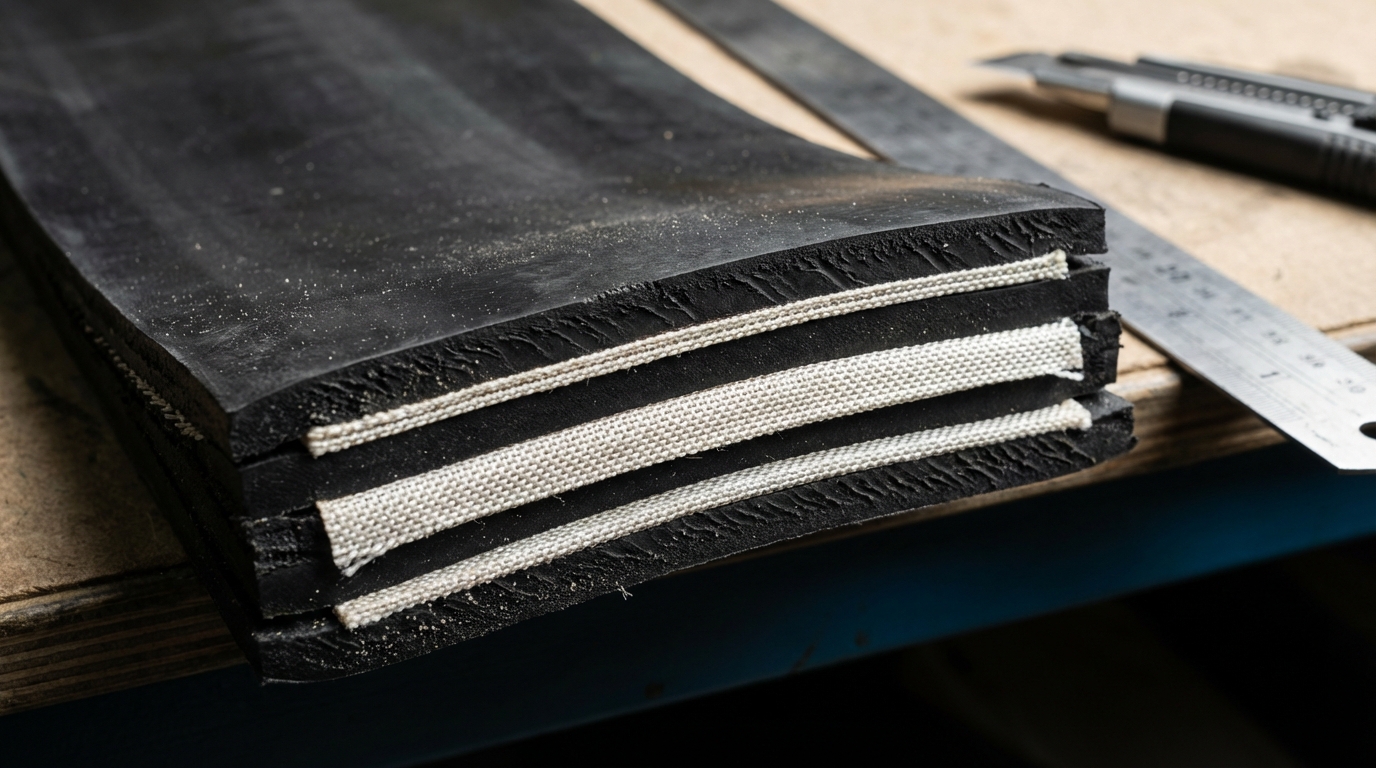
Maximize durability and reduce costly downtime with a thick rubber conveyor belt designed for heavy-duty industrial environments. Built to withstand sharp materials, extreme impact, and severe abrasion, this robust solution enhances system reliability and can extend service life by up to 40%, making it ideal for mining, aggregates, and other high-impact applications.
What is a thick rubber conveyor belt?
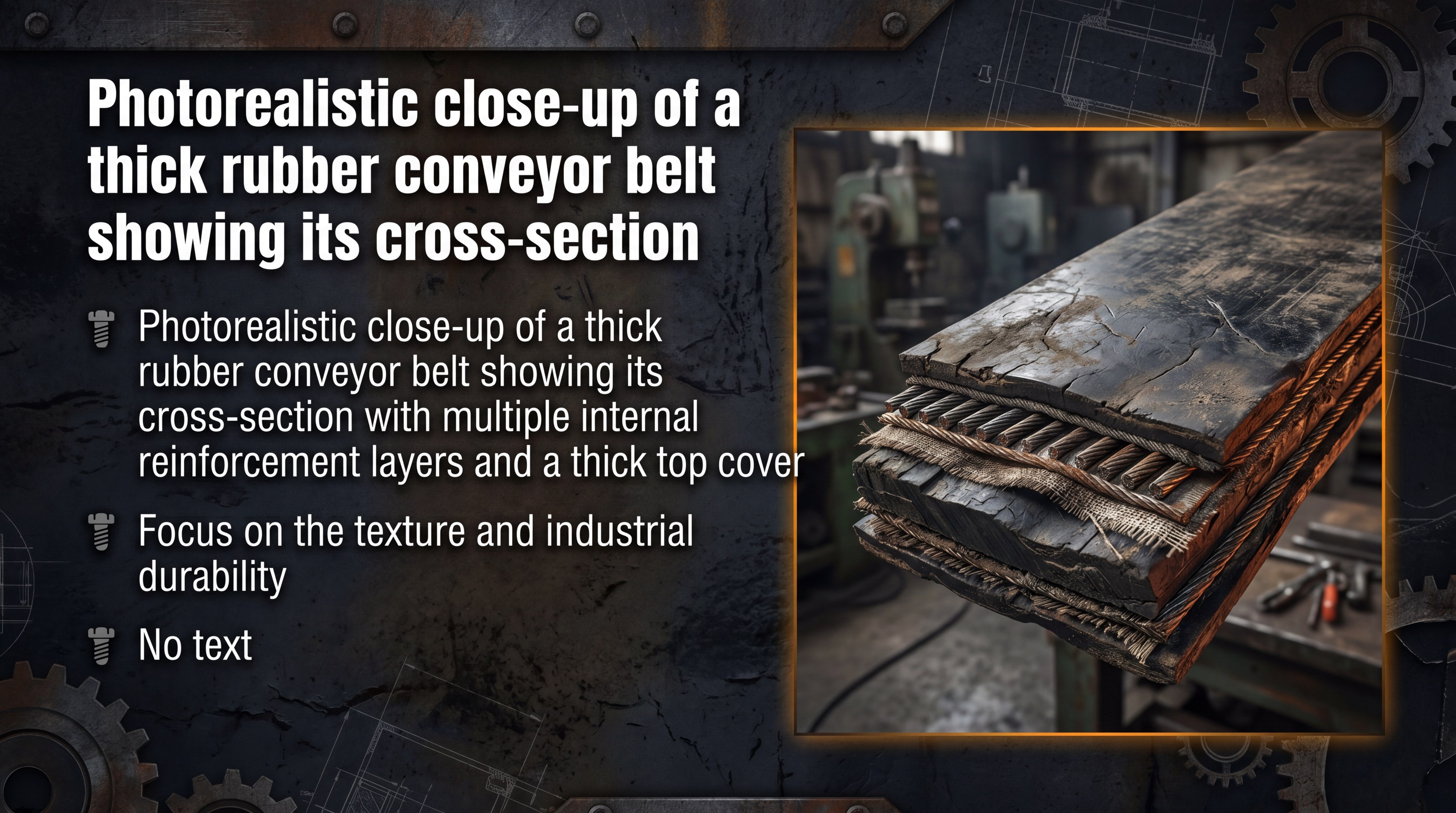
A thick rubber conveyor belt is a heavyweight industrial component designed with an oversized top cover to protect the internal carcass from extreme wear and impact. These belts are defined by their protective cover depth, which is engineered to sacrifice rubber over time while keeping the high-tension reinforcement layers intact.
What are the core layers of this belt?
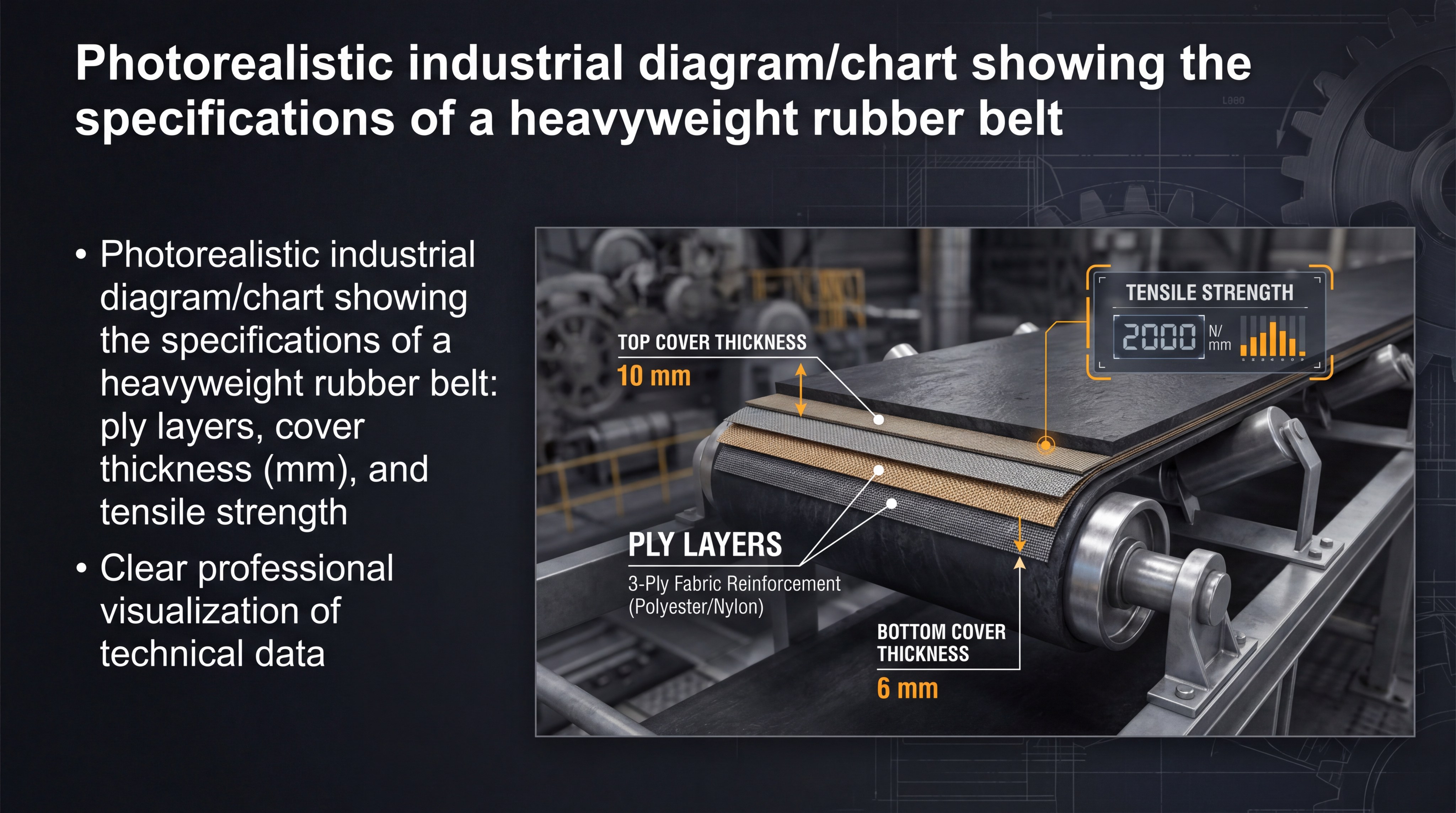
The structural integrity of a heavyweight belt depends on a high-strength internal carcass protected by premium rubber compounds. You will typically find multiple plies of EP fabric or steel cords that provide the necessary tensile strength to move massive tonnages.
Look:
- Top Cover: Thickest layer for impact and abrasion resistance.
- Internal Carcass: Provides the backbone and stretch resistance.
- Bottom Cover: Optimized for pulley grip and roller protection.
The kicker: Without a balanced ratio between these layers, the belt will either be too rigid to track or too thin to survive.
How thick should your industrial rubber belt be?
Determining the ideal thickness requires you to analyze the drop height of your materials and the sharpness of the load. While standard belts might only feature a 3mm cover, heavyweight variants can reach 20mm or more to ensure a long lifecycle.
Key Takeaway: A thick belt is an investment in durability that prevents internal structural damage.
| Component | Function | Typical Thickness | |
|---|---|---|---|
| Top Cover | Abrasion/Impact Resistance | 5mm – 20mm | |
| Carcass | Tensile Strength | 3-ply to 6-ply | |
| Bottom Cover | Pulley Protection | 2mm – 6mm |
This configuration ensures your system can handle bulk materials without frequent belt replacements.
How does a thick rubber conveyor belt work?
The thick rubber conveyor belt works as a mechanical shock absorber that dissipates the kinetic energy of falling materials at loading points. By utilizing a high-density rubber polymer, the belt prevents impact forces from reaching the internal reinforcement, which keeps the system running smoothly under heavy loads.
How does it handle high-impact energy?
When heavy rocks or ores fall onto the belt, the extra rubber thickness compresses to absorb the energy. This prevents the “cutting” effect that usually destroys thinner belts during primary crushing or discharge operations.
Here is the kicker:
- Energy Diffusion: Spreads the force across a wider surface area.
- Surface Resilience: Bounces back after impact to maintain shape.
- Ply Protection: Keeps the textile or steel core from snapping.
But there is more: You also benefit from reduced vibration across the entire conveyor framework.
How does the reinforcement layer support heavy loads?
The internal carcass of the belt ensures that it maintains its shape and tracking even when loaded with thousands of kilograms of material. Because the outer cover is so substantial, you don’t have to worry about external gouges weakening the tension-bearing core.
Key Takeaway: Thickness acts as a shield that preserves the mechanical properties of the tension members.
| Working Phase | Thick Belt Response | Benefit | |
|---|---|---|---|
| Loading | Energy Absorption | Prevents Carcass Rupture | |
| Transition | Flexibility Maintenance | Reduces Pulley Stress | |
| Return | Surface Resiliency | Resists Roller Wear |
Understanding this mechanical behavior helps you optimize your loading zones for maximum belt longevity.
Why use a thick rubber conveyor belt in mining?
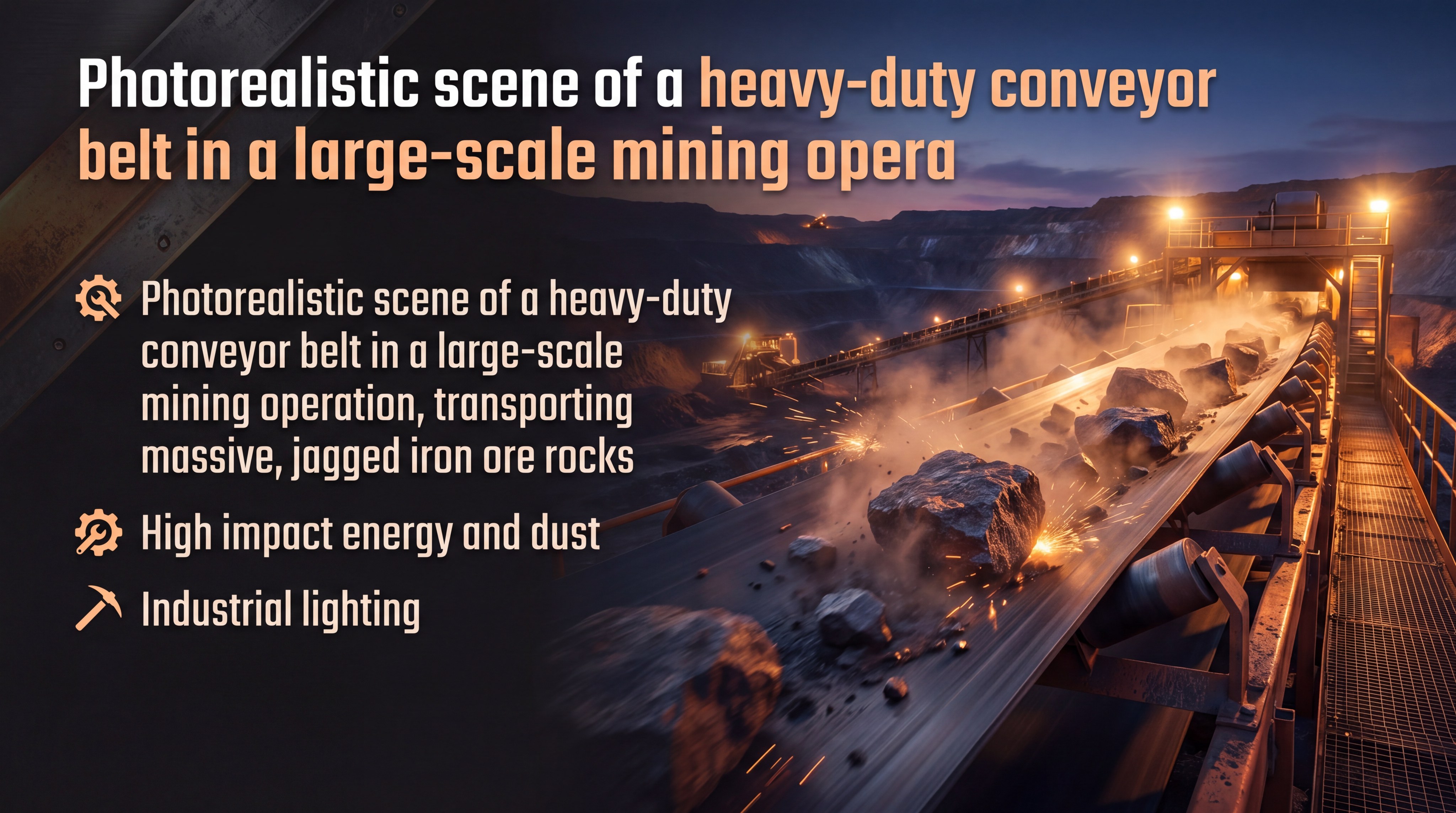
Mining operations require a thick rubber conveyor belt to survive the continuous abuse of moving sharp ores and massive rock fragments. These belts are essential for primary crusher discharge and long-distance stockpile transport where jagged minerals would shred standard textile belting in days.
Can it resist sharp rocks and ore impact?
Yes, because these belts use specialized “Super Impact” compounds that are designed to resist cutting and gouging. You will find that the rubber compound is specifically formulated to be tough yet elastic enough to handle the 24/7 demands of an open-pit mine.
Look:
- Abrasion Resistance: Withstands the scrubbing action of rough minerals.
- Tear Strength: Prevents small nicks from turning into long longitudinal rips.
- Heavy Gauges: Provides a large wear life for high-tonnage throughput.
The kicker: In the mining world, a few extra millimeters of rubber can mean the difference between a year of service and a week of repairs.
Is steel reinforcement necessary for deep mines?
For deep mines or vertical shafts, you should consider combining thick covers with a Steel Cord Conveyor Belt structure. This combination gives you the ultimate tensile strength needed for long lifts while maintaining a massive wear surface.
Key Takeaway: In mining, belt thickness is your primary defense against catastrophic punctures.
| Mining Material | Impact Level | Recommended Belt Type | |
|---|---|---|---|
| Iron Ore | High | Steel Cord Thick Cover | |
| Coal | Medium | FR Multi-ply Thick Cover | |
| Limestone | High | Abrasion Resistant (AR) |
Choosing the right compound for your specific mineral type is critical for ROI.
What materials make a thick rubber conveyor belt durable?
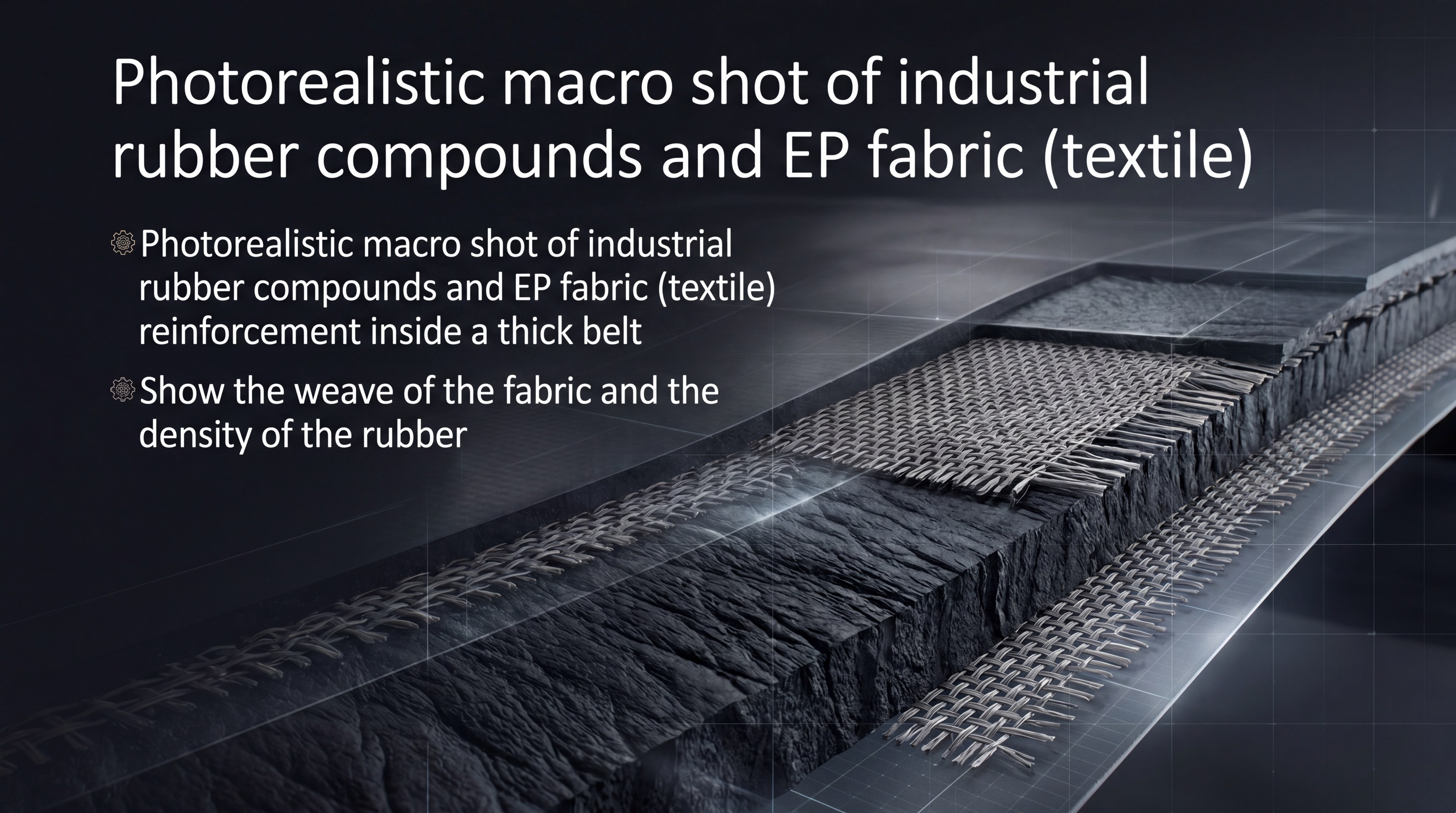
Durability in a thick rubber conveyor belt is achieved through a precise blend of natural and synthetic polymers combined with high-strength reinforcement plies. The quality of the rubber determines whether the thickness provides real protection or just adds unnecessary weight to your system.
What is the role of EP fabric in belt construction?
EP (Polyester/Nylon) fabric layers are the most common choice for heavyweight loads due to their low stretch and high moisture resistance. When you use Fabric (Textile) Conveyor Belts , the thick rubber covers protect these fibers from being exposed to the environment.
Look:
- Polyester (E): Provides longitudinal strength and low elongation.
- Nylon (P): Offers excellent transverse flexibility and impact absorption.
- Adhesion Layers: Ensures the rubber and fabric stay bonded under stress.
Here is the kicker: If the covers are too thin, material will eventually wear through and expose the fabric, leading to rapid rot.
How do top cover compounds improve abrasion resistance?
Manufacturers use blends of SBR (Styrene Butadiene Rubber) or EPDM to create surfaces that resist the constant grinding of material. You should select a compound based on whether your primary threat is sharp-edge cutting or smooth-surface friction wear.
Key Takeaway: The internal fabric provides the strength, but the rubber polymer provides the survival.
| Material Type | Primary Property | Best Use Case | |
|---|---|---|---|
| EP Fabric | Low Stretch | Long Distance | |
| NN Fabric | High Elasticity | Impact Resistance | |
| Steel Cord | Ultra-High Strength | Vertical/Heavy Lifting |
Analyzing the material properties allows you to custom-match a belt to your environment.
Which industries need a thick rubber conveyor belt?
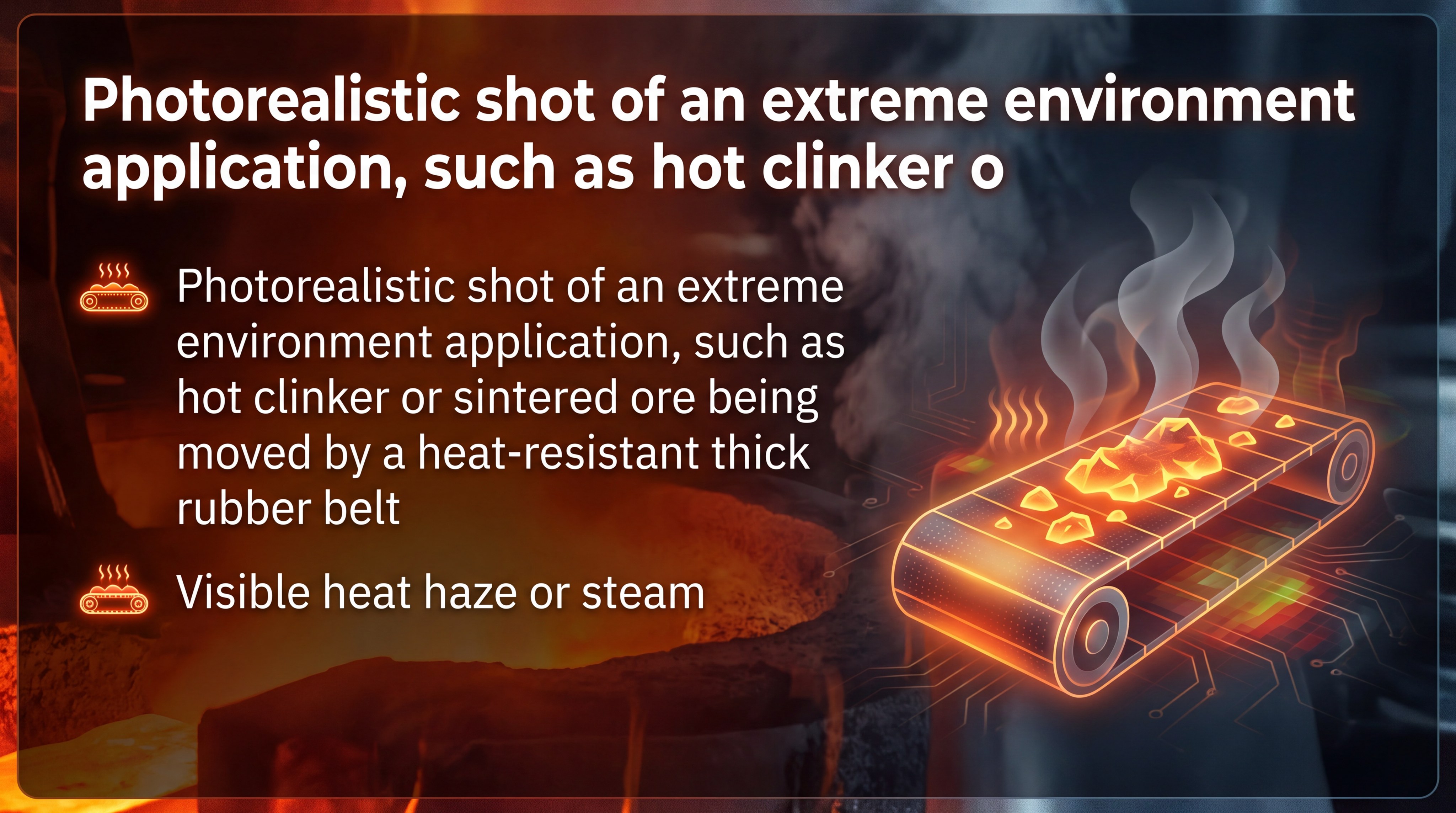
The thick rubber conveyor belt is a staple in industries where bulk material volume and material density create high stress on the handling system. From cement plants handling hot clinker to ports loading massive cargo ships, these belts provide the reliability needed for 24/7 operations.
How does it benefit cement and aggregate plants?
Cement plants often deal with abrasive limestone and high-temperature clinker that can quickly degrade standard rubber. By using a belt with a thick, heat-resistant cover, you ensure that the core of the belt stays cool and flexible even during peak production.
Look:
- Heat Dissipation: Thicker rubber acts as an insulator for the carcass.
- Aggregate Handling: Resists the crushing force of heavy stone loads.
- Chemical Stability: Protects against additives used in cement processing.
The kicker: A belt failure in a cement kiln line can shut down an entire facility’s output for days.
Is it suitable for fire-resistant coal handling?
Absolutely, and it is often a safety requirement to use a Flame Retardant Conveyor Belt with substantial cover thickness in underground mining. The extra rubber ensures that the belt maintains its fire-extinguishing properties even as the surface wears down over years of use.
Key Takeaway: Heavyweight industries rely on thick belts to maintain high uptime and safety standards.
| Industry | Specific Challenge | Belt Requirement | |
|---|---|---|---|
| Cement | High Heat/Clinker | HR Thick Rubber | |
| Ports | Bulk Tonnage | Wide/Thick EP Belt | |
| Fertilizer | Corrosive Materials | Oil/Chemical Resistant |
Selecting an industry-specific compound ensures your belt doesn’t just fit, but excels.
How is a thick rubber conveyor belt manufactured?
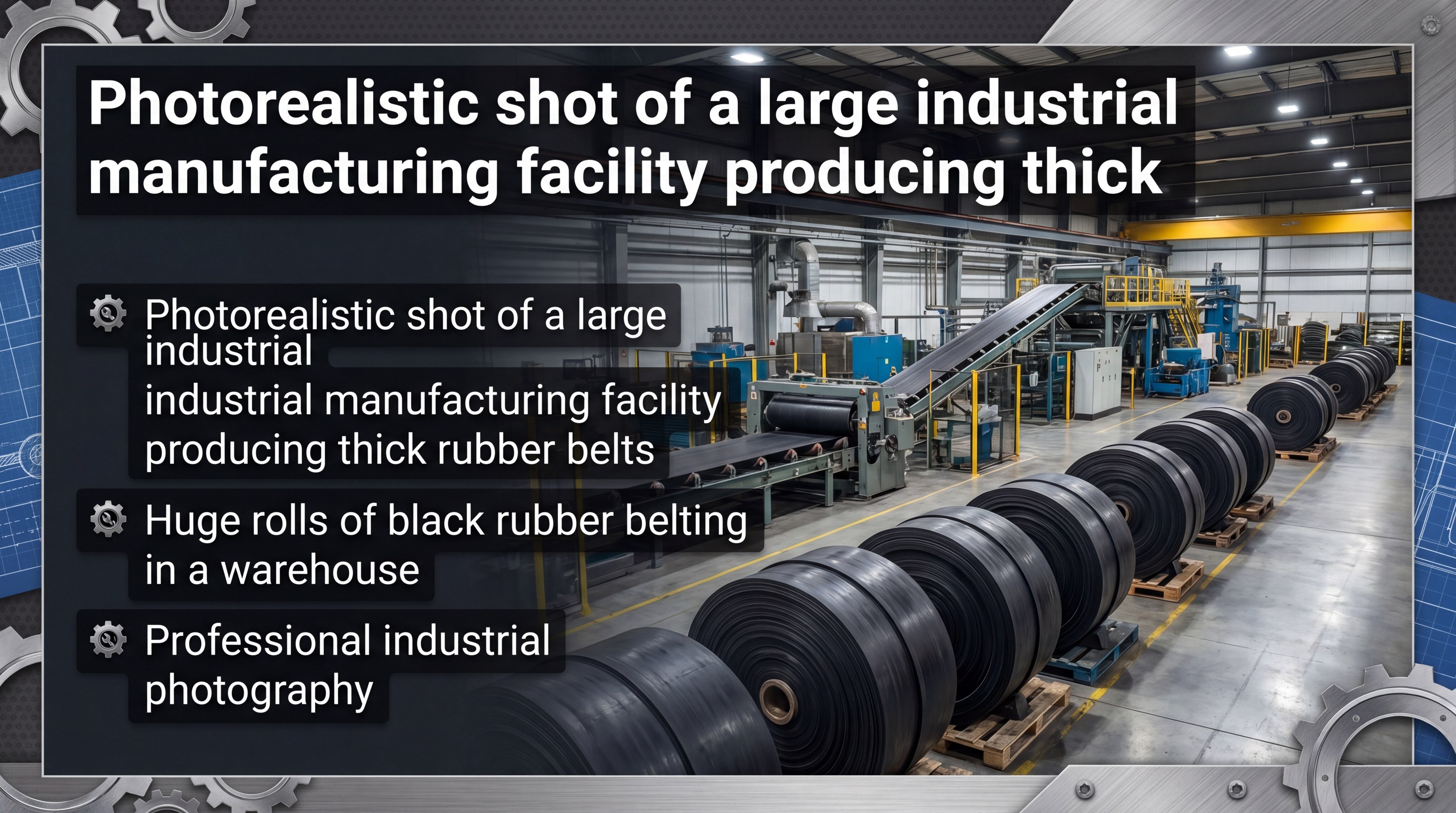
Manufacturing a thick rubber conveyor belt involves a rigorous vulcanization process that bonds multiple layers of rubber and reinforcement into a single, cohesive unit. This process requires massive pressure and precise temperature control to ensure there are no internal air pockets or “thin spots” that could lead to premature failure.
What happens during the vulcanizing and molding phase?
In our factory, the raw rubber and fabric plies are placed into a high-pressure vulcanizing press. The heat triggers a chemical reaction that creates cross-links between the polymer chains, turning the soft rubber into a tough, durable material that you can rely on.
Look:
- Mixing: Proprietary chemical blends for specific wear resistance.
- Calendaring: Precision rollers ensure the thickness is uniform across the width.
- Molding: Patterns or cleats are pressed into the surface during this stage.
Here is the kicker: High-quality manufacturing ensures the belt won’t delaminate or separate, even under extreme tension.
How does the calendaring process ensure uniform thickness?
The calendaring stage is where the rubber is squeezed onto the fabric plies at a specific millimetre gauge. You need this level of precision to ensure that the belt tracks perfectly on your pulleys and doesn’t lean to one side.
Key Takeaway: Superior manufacturing guarantees consistent density and thickness across the entire belt length.
| Process Step | Quality Control | Outcome | |
|---|---|---|---|
| Mixing | Compound Homogeneity | Consistent Wear | |
| Calendaring | Thickness Precision | Perfect Tracking | |
| Vulcanizing | Molecular Bonding | No Ply Separation |
Strict manufacturing standards are the only way to produce a belt that survives in heavyweight applications.
What are the advantages of a thick rubber conveyor belt?
The primary advantage of a thick rubber conveyor belt is the massive reduction in the total cost of ownership (TCO) for your material handling system. While the initial cost may be higher than standard belting, the extended service life and reduced maintenance requirements provide a significantly higher return on investment.
Does it offer a longer service life than standard belts?
Yes, because the extra millimeters of rubber provide a larger “wear bank” that can be sacrificed over years of service. You will find that a 10mm top cover lasts disproportionately longer than a 5mm cover because it better resists the initial deep gouges that lead to catastrophic tears.
Look:
- Wear Bank: More rubber to lose before reaching the carcass.
- Maintenance Gaps: Fewer stops for patch repairs or splicing fixes.
- System Stability: Keeps the entire conveyor aligned and running smoothly.
The kicker: You save more on labor and downtime than you spend on the premium belt upgrade.
How does it reduce unplanned operational downtime?
By over-specifying your belt thickness, you create a safety margin against unexpected impact events. If a large boulder falls onto a thin belt, it breaks; if it falls on a heavyweight belt, it merely leaves a surface mark that doesn’t halt production.
Key Takeaway: Investing in belt thickness is the most effective way to eliminate frequent conveyor failures.
| Advantage | Feature | Financial Impact | |
|---|---|---|---|
| Durability | Thicker Wear Layer | Lower Replacement Cost | |
| Safety | Tear Resistance | Reduced Accident Risk | |
| Versatility | Custom Compounds | One Belt for Many Uses |
These benefits make heavyweight belting the standard choice for any high-capacity operation.
How to choose the right thick rubber conveyor belt?
Choosing the right thick rubber conveyor belt requires you to balance the need for surface protection with the mechanical flexibility of your system. You must ensure that the belt is thick enough to handle the material but flexible enough to wrap around your smallest pulley diameter without cracking.
Should you select a chevron pattern for steep inclines?
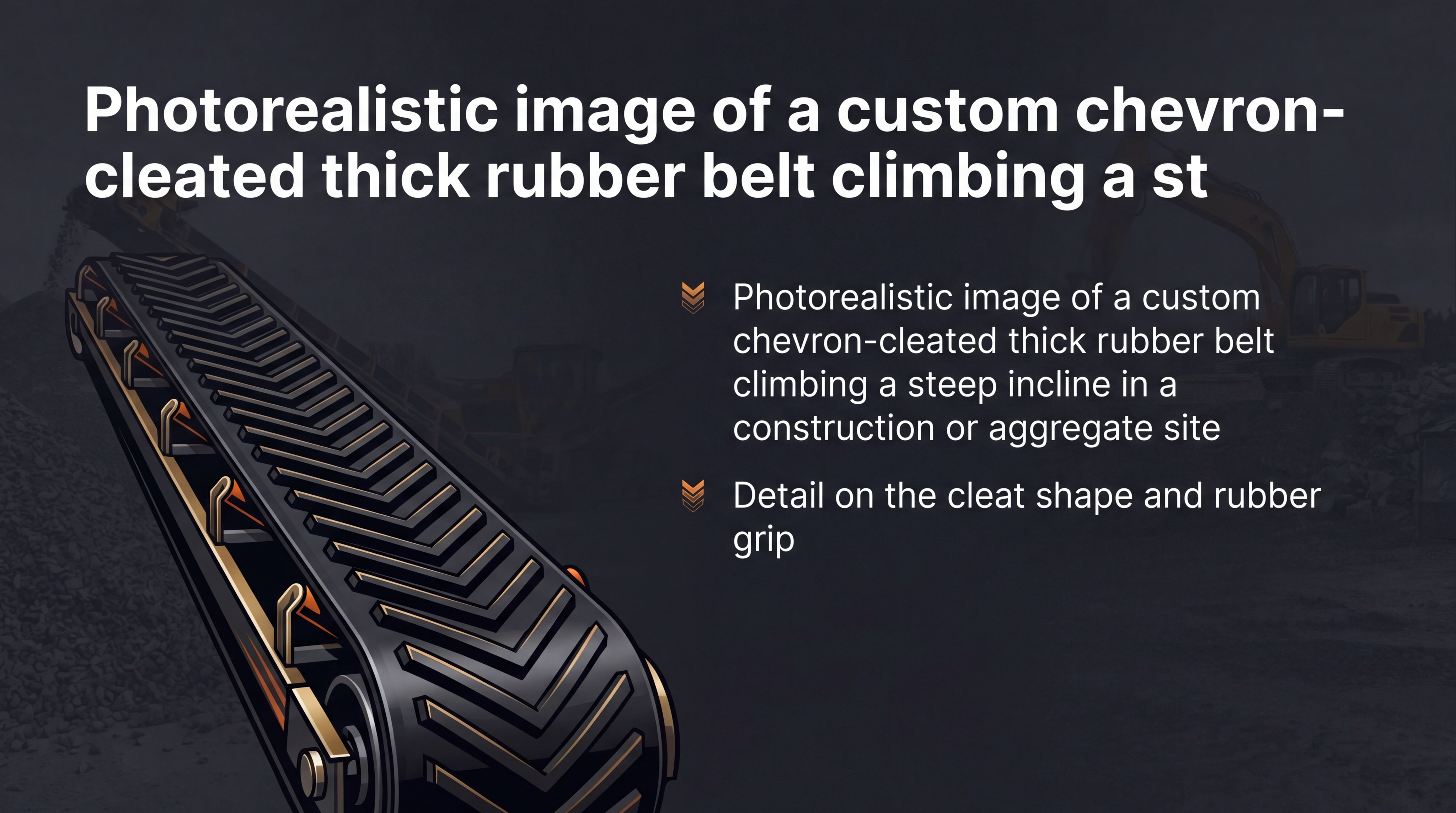
If your facility involves moving bulk materials at angles greater than 18 degrees, you should utilize a Chevron Conveyor Belt design. The thick rubber profile allows for deep, molded-in cleats that prevent material backslide and increase your throughput capacity.
Look:
- V-Pattern: Channels water away while gripping solids.
- Cleat Height: Choose based on the maximum size of your material.
- Pitch: Determines how much material can be held between each cleat.
But there is more: The cleats on a heavyweight belt are part of the original vulcanized structure, meaning they won’t peel off like glued-on versions.
What specifications match your material tonnage?
You need to calculate the Tension Rating (N/mm) based on the total weight of the material on the belt at any given time. A thicker belt often requires a higher tension rating to support its own mass plus the load without excessive sagging between idlers.
Key Takeaway: Selection must match the mechanical limits of your pulleys and the physical demands of your load.
| Factor | Choice | Consideration | |
|---|---|---|---|
| Angle | Chevron Profile | Prevents Backslide | |
| Load | Multi-ply EP | High Tensile Support | |
| Material | Thick AR Cover | Sharp/Abrasive Handling |
Proper selection prevents you from buying a belt that is “too much” or “too little” for the job.
Can you customize a thick rubber conveyor belt?
Vertical lifting and enclosed conveying are easily achievable when you customize a thick rubber conveyor belt with specialized profiles. Customization allows you to adapt heavyweight belting to confined spaces or unique architectural challenges within your plant.
Are sidewalls and cleats available for thick belts?
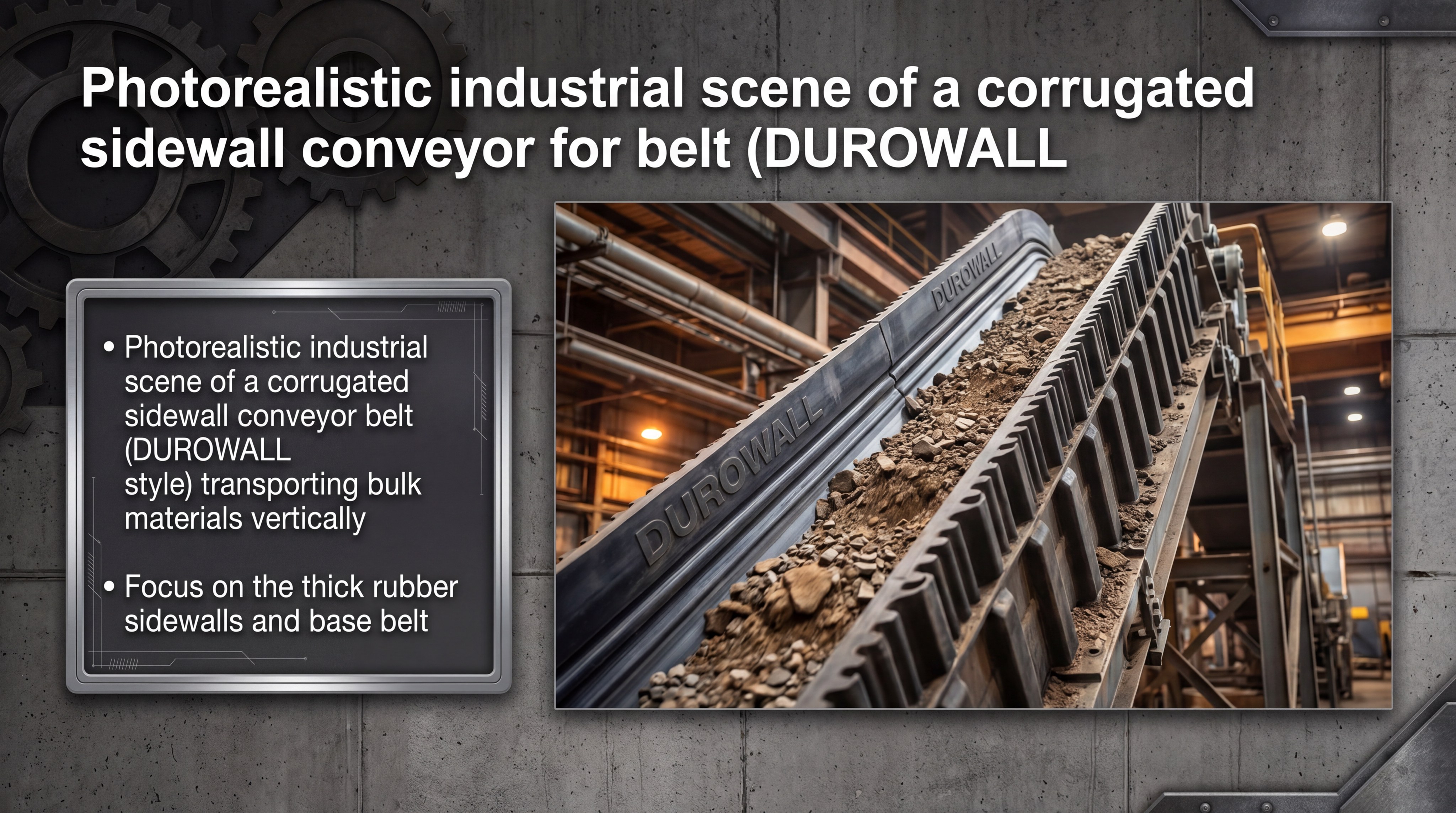
Yes, you can integrate Sidewall Conveyor Belts technology to create a moving pocket that carries material vertically up to 90 degrees. The base belt in these systems is specifically made extra thick and rigid to support the weight of the corrugated sidewalls and the material load.
Look:
- Corrugated Sidewalls: Prevents material from falling off the edges.
- Transverse Cleats: Creates the “buckets” for vertical transport.
- Cross-Rigid Carcass: Keeps the belt flat even when carrying heavy side loads.
Here is the kicker: Customized thick belts allow you to replace multiple conveyor stages with a single vertical system, saving floor space.
Can you add custom branding and logos during production?
As a direct factory, we can emboss your company logo or belt specifications directly into the thick rubber cover during vulcanization. This is excellent for OEM suppliers or large facilities that need to track belt types across different zones for maintenance logs.
Key Takeaway: Customization transforms a standard heavyweight belt into a precision tool for specific industrial tasks.
| Custom Feature | Application | Benefit | |
|---|---|---|---|
| Corrugated Sidewall | High Incline | Zero Spillage | |
| Cleats/T-Steps | Vertical Lift | High Throughput | |
| Custom Branding | OEM Supply | Easy Identification |
Tailoring the belt to your specific layout is the fastest way to increase plant efficiency.
How to maintain a thick rubber conveyor belt?
Maintaining a thick rubber conveyor belt requires regular inspection to ensure that the massive cover is wearing evenly and that the tension remains within the design parameters. Because these belts are so heavy, neglecting simple maintenance can lead to excessive wear on your motors and gearboxes.
How to inspect for surface wear and tear?
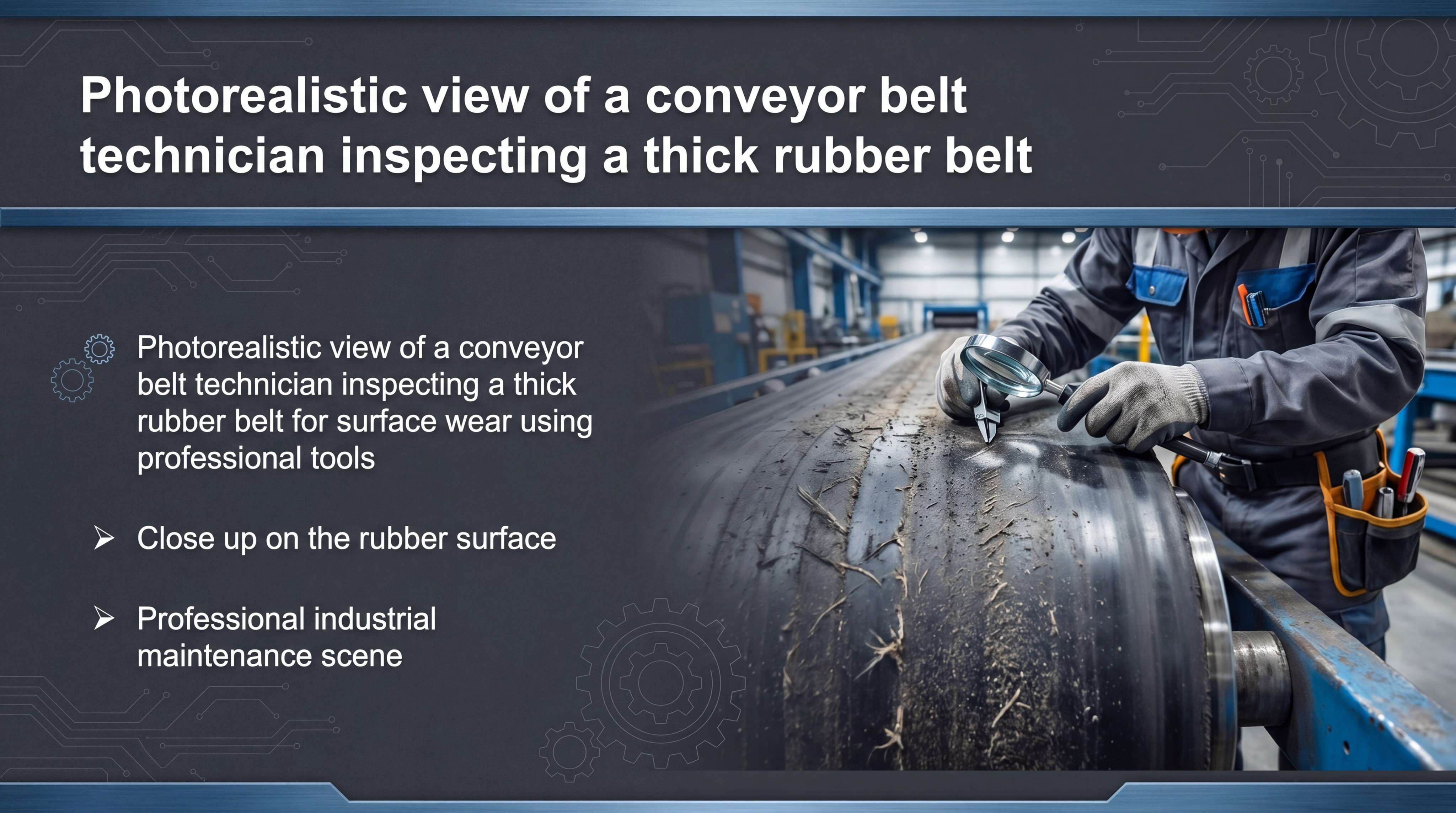
You should perform quarterly thickness checks using a professional gauge to monitor the remaining “wear bank” of the rubber. Identifying deep gouges early allows you to perform spot repairs before moisture reaches the internal fabric carcass and causes ply separation.
Look:
- Gouge Depth: Check if cuts reach the internal plies.
- Edge Wear: Ensure the belt isn’t rubbing against the conveyor frame.
- Alignment: Verify the belt is centered on the pulleys to prevent uneven wear.
The kicker: A belt that looks “fine” from a distance may have significant internal thinning that only a close inspection will reveal.
What are the best practices for splicing thick rubber?
For heavyweight belts, hot vulcanized splicing is always recommended over mechanical fasteners. This process uses heat and pressure to bond the two ends together, creating a joint that is nearly as strong as the rest of the belt and just as thick.
Key Takeaway: Proactive maintenance and professional splicing are essential for reaching the full lifespan of a heavyweight belt.
| Maintenance Task | Frequency | Purpose | |
|---|---|---|---|
| Thickness Check | Quarterly | Predict End-of-Life | |
| Splicing Audit | Bi-Annually | Prevent Joint Failure | |
| Cleaner Tuning | Monthly | Protect Top Cover |
Consistent upkeep ensures that your investment in heavyweight rubber pays off over the long term.
FAQ: Common Questions About Heavyweight Belting
1. What is the maximum width available for a thick rubber conveyor belt?We manufacture belts up to 3200 mm wide to accommodate the massive bulk handling systems found in international ports and large-scale mining sites.
2. Can these thick belts handle high temperatures like 200°C?Yes, by using specialized EPDM or heat-resistant (HR) compounds, thick belts can transport hot clinker or sintered ore without cracking or hardening.
3. How do I know if I need a fabric or steel cord thick belt?Fabric belts are ideal for medium distances and offer better flexibility, while steel cord is required for ultra-high tensile strength and extremely long-distance transport.
4. Do you provide testing reports for abrasion and tensile strength?Every batch undergoes rigorous internal testing. We provide SGS, CE, and ISO-certified reports covering tensile strength, abrasion resistance, and tear performance.
5. What is the typical lead time for a customized thick belt?As a direct factory with over 200 employees, we maintain stable lead times and typically provide a tailored solution and quote within 24 hours of your initial inquiry.
Conclusion
A thick rubber conveyor belt is not just an equipment purchase; it is a strategic solution for reducing operational risk and maximizing uptime. By investing in superior cover thickness and precision-engineered compounds, you protect your infrastructure from the harsh realities of heavy-duty material handling. Since 1983, we have partnered with industries worldwide to provide belting that outlasts the competition. If you are ready to eliminate unplanned downtime and optimize your conveyor system’s performance, contact us today for a custom technical analysis.