
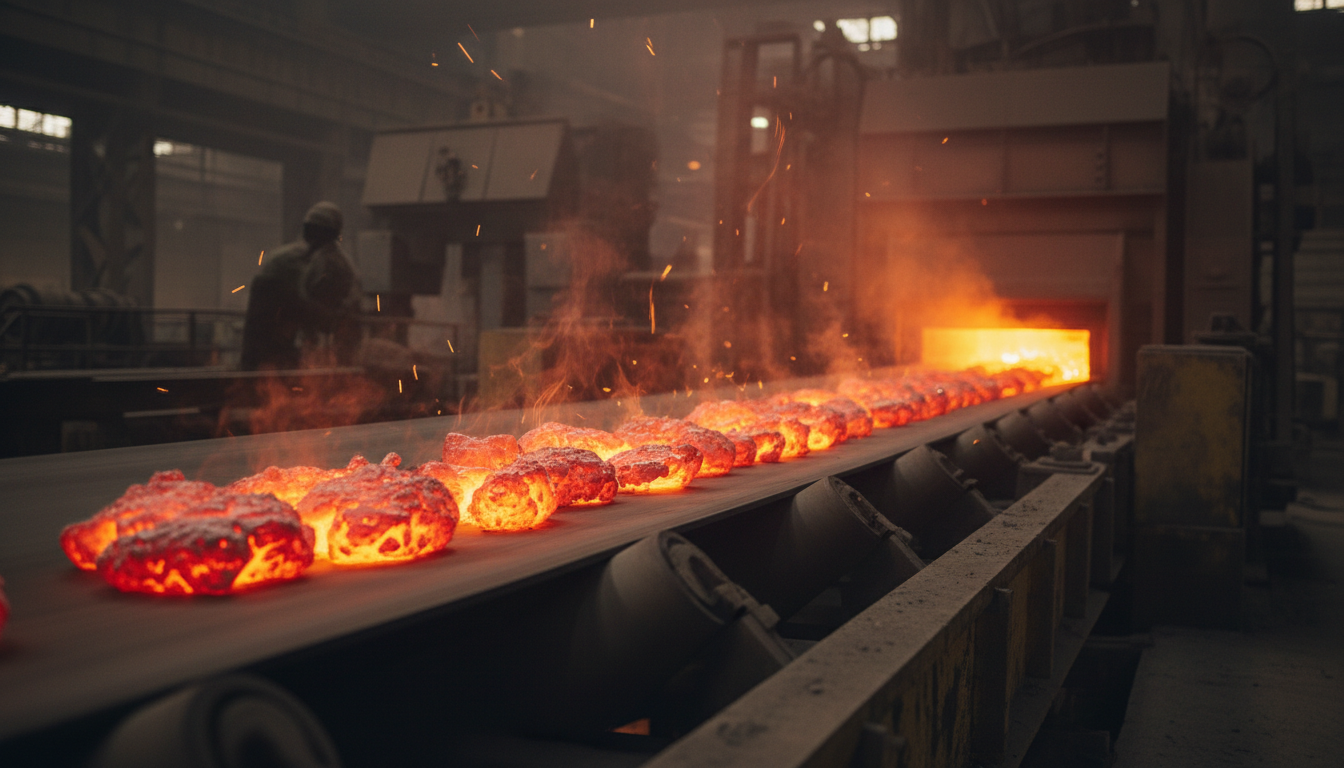
Defining Heat Resistance in Rubber Belts
You will find that a high temperature rubber conveyor belt is a specialized material handling solution designed to transport bulk goods that exceed the thermal limits of standard Home utility belts. These belts are engineered to resist the cracking and hardening typically caused by extreme heat.
Key Components of Thermal-Grade Compounds
The core of your belt utilizes advanced polymers like EPDM or specialized SBR. These compounds are specifically formulated to maintain flexibility and structural integrity when exposed to materials like clinker, slag, or hot foundry sand.
Temperature Limits for Continuous Operation
Depending on your specific operational needs, these belts can handle constant material temperatures ranging from 120°C to over 200°C. Selecting the right heat-resistant grade ensures you avoid premature cover failure and core delamination.
Key Takeaway: A high temperature rubber conveyor belt is essential for maintaining belt life and preventing thermal degradation when transporting materials above 60°C.
How does a high temperature rubber conveyor belt work?
The Role of Heat-Resistant Cover Polymers
The top cover acts as a sacrificial shield for the internal carcass. As you move hot materials, the specialized rubber compound slows down the heat transfer process, preventing the core from reaching critical temperatures that would compromise the Fabric (Textile) Conveyor Belt reinforcement.
Thermal Dissipation Through Multi-Ply Layers
Your belt’s structure allows for controlled thermal expansion. The multi-ply textile or steel cord carcass provides the necessary tensile strength while resisting “heat-shrinking” or bowing, which are common issues in lower-quality industrial belts.
Resistance Against Premature Hardening
Standard rubber becomes brittle when heated, leading to cracks that expose the carcass. These high-performance belts utilize antioxidants and heat-stabilizers that allow the rubber to remain elastic even after thousands of hours of high-heat exposure.
Key Takeaway: By utilizing thermal barriers and specialized chemistry, the belt maintains its mechanical properties despite constant heat exposure.
Summary Table: Mechanical Functionality
| Feature | Standard Belt Impact | High Temp Belt Impact | |
|---|---|---|---|
| Elasticity | Becomes brittle/cracks | Maintains flexibility | |
| Carcass Integrity | Potential delamination | Heat-resistant bonding | |
| Surface Texture | Hardens and glazes | Resists thermal oxidation |
Why install a high temperature rubber conveyor belt?
Maximizing Uptime in Extreme Environments
When you switch to a high temperature rubber conveyor belt, you significantly reduce the frequency of belt replacements. This reliability is crucial for 24/7 operations where a single belt failure can halt your entire production line.
Reducing Costly Maintenance and Replacements
Maintenance costs drop when your belts are designed for the environment. You will experience fewer instances of splice failure and cover cracking, allowing your team to focus on production rather than constant repairs.
Enhancing Safety in Hot Material Handling
Heat-related belt failures can lead to material spills or, in extreme cases, smoldering. Using a belt rated for your specific temperature ensures a safer work environment for your personnel by preventing catastrophic belt breakages.
Key Takeaway: Investing in heat-rated belts pays for itself through extended service life and significantly lower operational risk.
Summary Table: Operational Benefits
| Benefit Category | Impact on Your Business | |
|---|---|---|
| Cost Efficiency | Lower Total Cost of Ownership (TCO) | |
| Productivity | Minimal unplanned downtime | |
| Safety | Reduced risk of thermal failure |
Where is a high temperature rubber conveyor belt used?
Critical Roles in the Cement Industry
In your Cement Plant Solutions , these belts are vital for transporting hot clinker from the kiln to the storage silos. Without thermal resistance, the intense heat would destroy a standard belt within days.
Mining and Sinter Plant Operations
For Mining Industry Solutions , you will use these belts to handle sintered ore and pellets. The high impact resistance combined with heat tolerance makes them ideal for heavy-duty mineral processing.
Foundry and Glass Production Applications
If you operate a foundry or glass factory, the belt must handle red-hot castings or cullet. The high temperature rubber conveyor belt provides the necessary resilience to withstand direct contact with these extreme materials.
Key Takeaway: From cement to metalwork, these belts are the backbone of industries that handle thermally processed bulk materials.
Summary Table: Industry Applications
| Industry | Typical Material Carried | Average Temp Range | |
|---|---|---|---|
| Cement | Hot Clinker/Limestone | 150°C – 200°C | |
| Metallurgy | Sintered Ore/Coke | 120°C – 180°C | |
| Fertilizer | Chemically Dried Bulks | 100°C – 130°C |
What is the high temperature rubber conveyor belt process?
Advanced Rubber Mixing and Calendaring
The manufacturing process begins with precision mixing of heat-stable polymers. You benefit from advanced calendaring where the rubber is pressed into the reinforcement layers under high pressure to ensure zero air pockets.
Precise Vulcanization for Thermal Stability
Your belt undergoes a strictly controlled vulcanization process. This “curing” stage cross-links the rubber molecules, creating a stable matrix that won’t “re-cure” or melt when it encounters heat in your facility.
Quality Testing for Heat Aging Resistance
Before it reaches you, the belt is subjected to accelerated heat-aging tests. This ensures the high temperature rubber conveyor belt meets international standards like ISO 4195, guaranteeing performance at the rated temperature.
Key Takeaway: A rigorous manufacturing process involving specialized curing ensures the belt remains stable under thermal stress.
Summary Table: Manufacturing Stages
| Process Stage | Importance for Heat Resistance | |
|---|---|---|
| Compound Mixing | Incorporates heat-stabilizers/EPDM | |
| Calendaring | Ensures deep carcass penetration | |
| Vulcanization | Sets the thermal-stable molecular bond |
What types of high temperature rubber conveyor belt exist?
EP Fabric Belts for Moderate Heat
For your general-purpose hot material needs, the Fabric (Textile) Conveyor Belt with EP (Polyester/Nylon) reinforcement offers excellent flexibility and heat resistance for temperatures up to 150°C.
Steel Cord Belts for Heavy Loads and High Heat
If you are moving massive volumes over long distances, a Steel Cord Conveyor Belt provides superior heat dissipation and extremely low elongation, even when carrying materials above 200°C.
Customized Chevron Designs for Hot Inclines
When you need to move hot materials at an incline, a chevron-profiled high temperature rubber conveyor belt prevents material rollback while maintaining the same thermal integrity as flat belts.
Key Takeaway: Matching the carcass type (Fabric vs. Steel Cord) to your load and distance is as important as the rubber grade itself.
Summary Table: Belt Type Comparison
| Belt Type | Max Load Capacity | Best Heat Use-Case | |
|---|---|---|---|
| Multi-ply Fabric | Moderate | Medium distance/Lower cost | |
| Steel Cord | Very High | Long distance/High heat | |
| Pipe Conveyor | High | Dust-free/Enclosed hot transport |
How to select a high temperature rubber conveyor belt?
Assessing Material Temperature vs. Belt Surface
You must distinguish between the temperature of the material and the actual surface temperature of the belt. Factors like material size and conveyor length will influence how much heat the belt actually absorbs.
Choosing the Correct Rubber Grade (T1-T3)
Selecting the right grade (T1, T2, or T3) is vital. Under-specifying leads to belt failure, while over-specifying results in unnecessary costs. You should consult with an engineering team to match the grade to your peak and constant temperatures.
Evaluating Chemical and Oil Resistance Needs
In many applications, heat isn’t the only challenge. If you are conveying oily hot materials, you will need a high temperature rubber conveyor belt that features a dual-rated compound for both thermal and oil resistance.
Key Takeaway: Proper selection requires a holistic view of material temperature, cooling time, and secondary environmental factors.
Summary Table: Selection Checklist
| Criteria | Question to Ask | |
|---|---|---|
| Material Temp | Is the material constant or peak temp? | |
| Ambient Temp | Is the conveyor in a ventilated area? | |
| Cooling Time | Does the belt have time to cool on the return? |
What grades of high temperature rubber conveyor belt exist?
Grade T1 for Temperatures Up to 125°C
This grade is your standard choice for moderately hot materials. It is ideal for industries handling grains or dried chemicals where the temperature rarely exceeds 125°C for long periods.
Grade T2 for Constant 150°C Environments
Grade T2 is the “workhorse” for many industrial plants. If you handle materials like cement or foundry sand that stay consistently around 150°C, this grade provides the best balance of cost and performance.
Grade T3 for Peak Resistance Above 200°C
For your most extreme applications, Grade T3 (often EPDM-based) handles peak temperatures reaching 220°C. This is the high temperature rubber conveyor belt required for clinker discharge and sinter plants.
Key Takeaway: Grades (T1-T3) provide a standardized way to ensure the belt you buy matches the heat of the material you move.
Summary Table: Heat Grade Standards
| Grade | Continuous Temp | Peak/Short-term Temp | |
|---|---|---|---|
| T1 | 100°C | 125°C | |
| T2 | 125°C | 150°C | |
| T3 | 150°C | 220°C |
How to protect a high temperature rubber conveyor belt?
Proper Cleaning to Prevent Heat Buildup
You should ensure your belt cleaners are properly adjusted. Residual hot material stuck to the belt surface during the return run prevents the rubber from cooling, which can lead to localized “hot spots” and premature failure.
Tension Adjustment for Thermal Expansion
Heat causes materials to expand. You must verify that your take-up system is functioning correctly to accommodate the slight elongation a high temperature rubber conveyor belt may experience during peak heat cycles.
Regular Inspection of the Vulcanized Joint
The splice is often the weakest point of any belt. You must regularly inspect your joints for signs of thermal separation, especially if you are using mechanical fasteners instead of vulcanized splices.
Key Takeaway: Maintenance focused on cleaning and tensioning allows the belt to dissipate heat effectively, extending its operational life.
Summary Table: Maintenance Tasks
| Task | Frequency | Target Goal | |
|---|---|---|---|
| Surface Cleaning | Daily | Prevent heat accumulation | |
| Splice Check | Weekly | Identify thermal separation | |
| Tension Check | Monthly | Adjust for thermal expansion |
Is this high temperature rubber conveyor belt right for you?
Frequently Asked Questions on Belt Lifespan
How long will your belt last? On average, a correctly specified heat-resistant belt lasts 3 to 5 times longer than a standard belt in the same environment. Your actual lifespan depends on the cooling time between loads.
Common Signs of Thermal Belt Failure
You should look for “alligator cracking,” hardening of the rubber cover, or the cover peeling away from the carcass. If you see these signs, your high temperature rubber conveyor belt is likely operating beyond its rated temperature.
Getting a Custom Quote for Your Facility
Every facility is unique. To ensure you receive the most cost-effective and durable solution, you should provide your supplier with detailed material specs, conveyor length, and ambient temperature data for an accurate quotation.
Key Takeaway: A high-quality heat-resistant belt is a strategic investment that secures your production and reduces long-term maintenance overhead.