
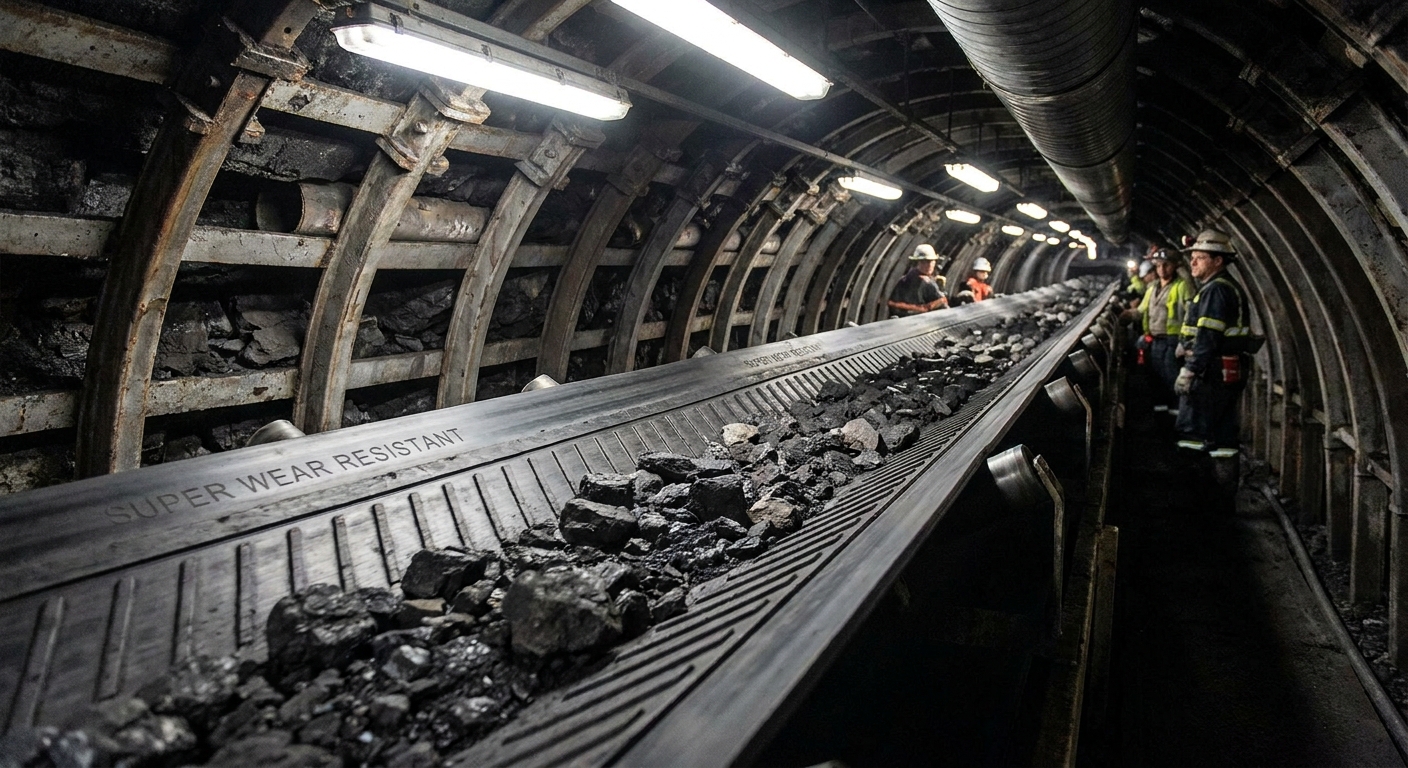
A super wear resistant rubber conveyor belt is engineered to perform reliably in the most demanding industrial environments where sharp, abrasive, and heavy materials can quickly destroy ordinary conveyor systems. Featuring high-strength carcass construction and advanced abrasion-resistant rubber compounds, these belts are specifically designed to withstand continuous impact, friction, and extreme operating conditions. By reducing belt wear, minimizing maintenance frequency, and preventing unexpected production downtime, a super wear resistant conveyor belt helps improve operational efficiency, lower replacement costs, and ensure stable long-term performance in mining, quarrying, cement, and bulk material handling industries.
What is a super wear resistant rubber conveyor belt?
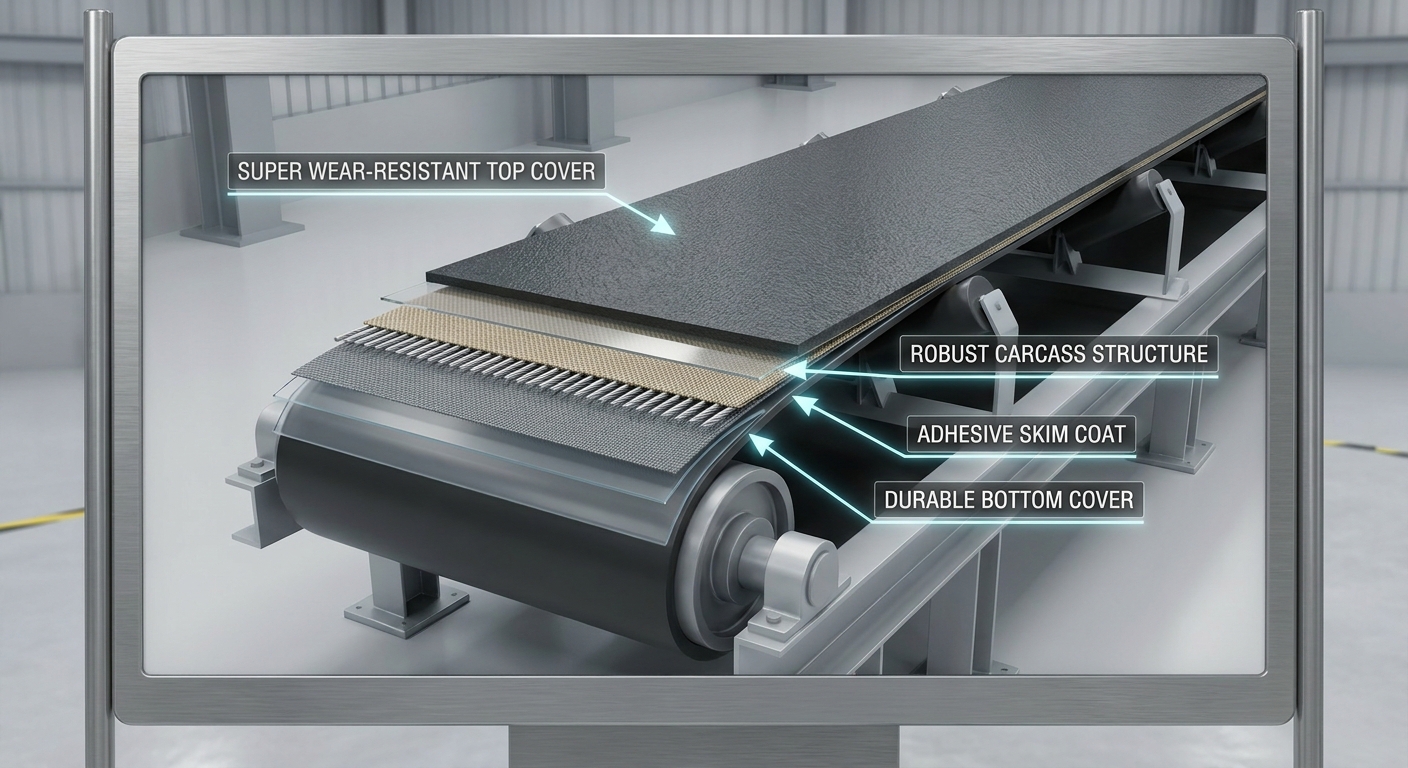
A super wear resistant rubber conveyor belt is a multi-layered industrial component built to transport heavy, abrasive materials while resisting surface degradation and internal structural failure. These belts utilize advanced synthetic rubber blends and high-modulus fabrics to ensure they remain functional even when subjected to constant friction.
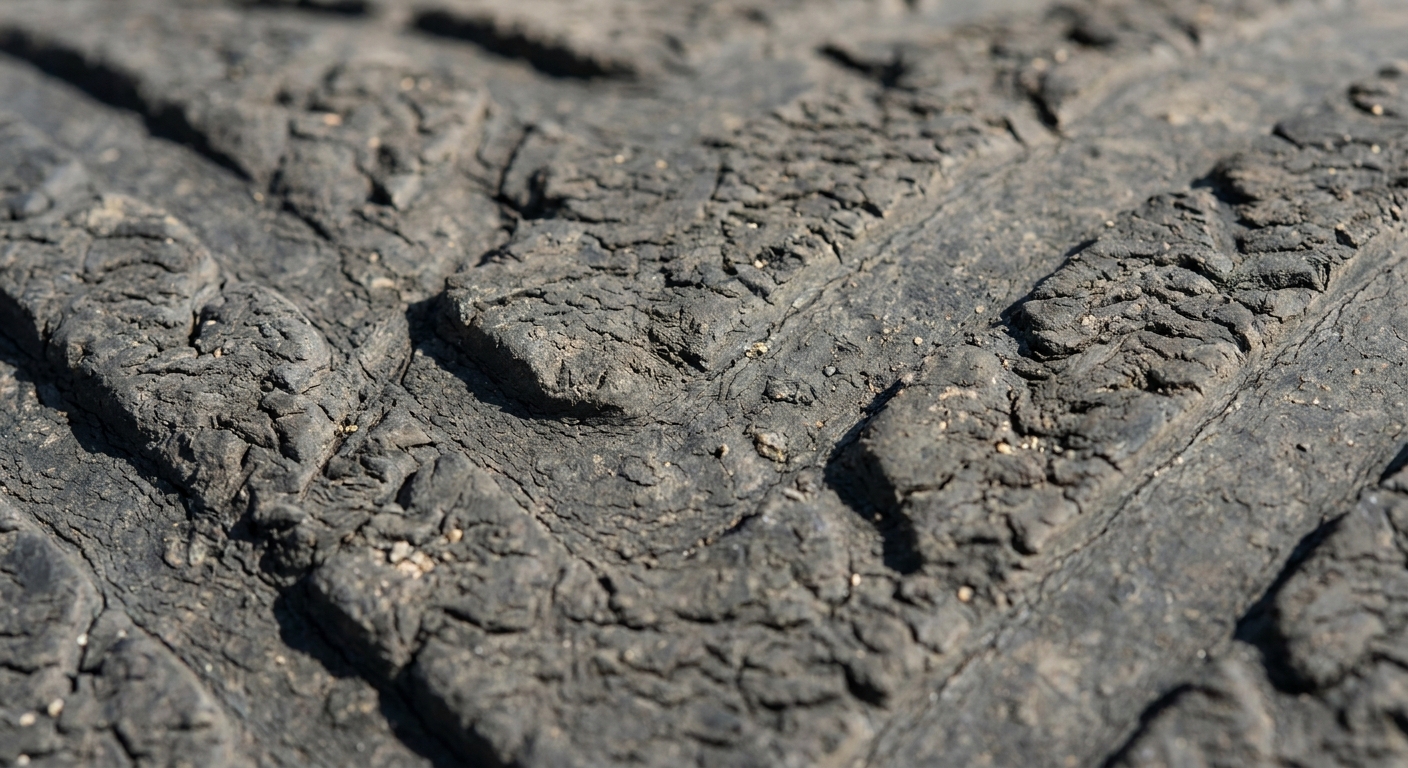
Durable carcass layers
The carcass acts as the backbone of your system, providing the necessary tension and flexibility for long-distance hauls. You can choose between various core materials depending on your specific load requirements.
- Polyester (EP) for low elongation.
- Nylon (NN) for superior impact resistance.
- Steel cord for maximum tensile strength.
But that’s not all… Think about it: without a strong core, even the thickest rubber cover will eventually fail under high-stress loads. You need to ensure your belt has the structural integrity to support the weight of your business.
Key TakeawayThe fundamental structure of these belts combines a resilient cover with a strong internal carcass to provide a comprehensive handling solution for abrasive materials.
| Feature | Specification | Benefit | |
|---|---|---|---|
| Cover Material | High-Abrasion Rubber | Extends service life | |
| Carcass Type | EP / NN / Steel | High load capacity | |
| Standard | GB/T or DIN | Certified quality |
Analysis: The combination of certified standards and robust materials ensures long-term ROI for heavy industrial users.
How does a super wear resistant rubber conveyor belt work?
A super wear resistant rubber conveyor belt works by distributing the energy of falling materials across its surface while utilizing specialized rubber polymers to minimize the “cutting and gouging” effect. The elastic properties of the rubber allow it to bounce back from impacts, maintaining a smooth conveying surface.
Effective impact absorption
When heavy rocks drop from a height, they hit the belt with immense force. You want a belt that acts like a shock absorber rather than a rigid surface that cracks under pressure.
- Thick top covers cushion the blow.
- Skim coats enhance internal bonding.
- Elasticity prevents surface fractures.
It’s a game changer. You see, the way a belt manages energy determines how long it will last in your quarry or mine. If the energy isn’t dissipated, your belt becomes a disposable item rather than a long-term asset.
Key TakeawayDynamic energy distribution and high elasticity are the core mechanisms that prevent premature wear and surface damage during high-load operations.
| Mechanism | Description | Result | |
|---|---|---|---|
| Energy Dissipation | Spreads impact force | Prevents punctures | |
| Surface Sliding | Reduces friction heat | Lowers power consumption | |
| Polymer Recovery | Returns to original shape | Maintains tracking |
Analysis: Efficient energy management directly correlates to lower maintenance costs and higher system reliability.
Who needs a super wear resistant rubber conveyor belt?
A super wear resistant rubber conveyor belt is essential for industries dealing with sharp, hard, or high-volume materials such as granite, iron ore, and clinker. If your site processes primary crushed materials, a standard belt will likely fail within months, making the super wear resistant rubber conveyor belt a necessity for cost control.
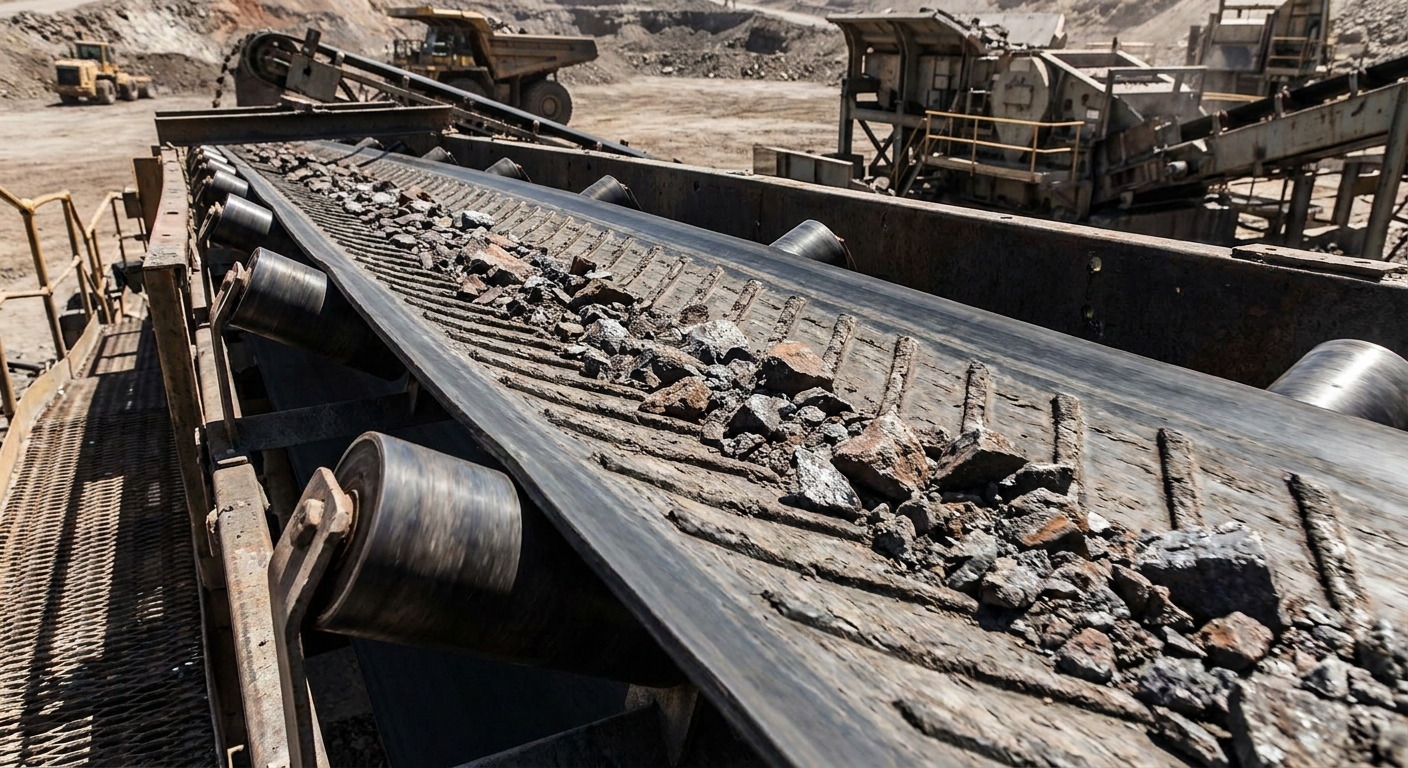
Mining and quarrying applications
In the mining world, your equipment is only as strong as its weakest link. You deal with jagged rocks and massive drop heights every single day.
- Primary stone crushing lines.
- Sand and gravel washing plants.
- Deep-pit coal extraction.
The truth is… You can’t afford to use inferior belts when your production targets are high. Think about how much you lose every time you have to stop to patch a hole or replace a section of belt.
Key TakeawayHeavy industries like mining and quarrying rely on high-grade wear resistance to maintain continuous production cycles and prevent catastrophic system failures.
| Industry | Material Type | Stress Level | |
|---|---|---|---|
| Mining | Hard Ore / Rock | Extreme | |
| Cement | Hot Clinker / Lime | High | |
| Metallurgy | Sinter / Iron | High |
Analysis: High-stress environments demand specialized belting to handle the unique physical and thermal properties of industrial raw materials.
Which grade fits a super wear resistant rubber conveyor belt?
A super wear resistant rubber conveyor belt is typically categorized by international standards like the German DIN 22102 or Chinese GB/T 7984, which define tensile strength and abrasion loss. Selecting the correct grade depends on the “abrasiveness” of your material, with Grade H and Grade X offering the highest levels of protection.
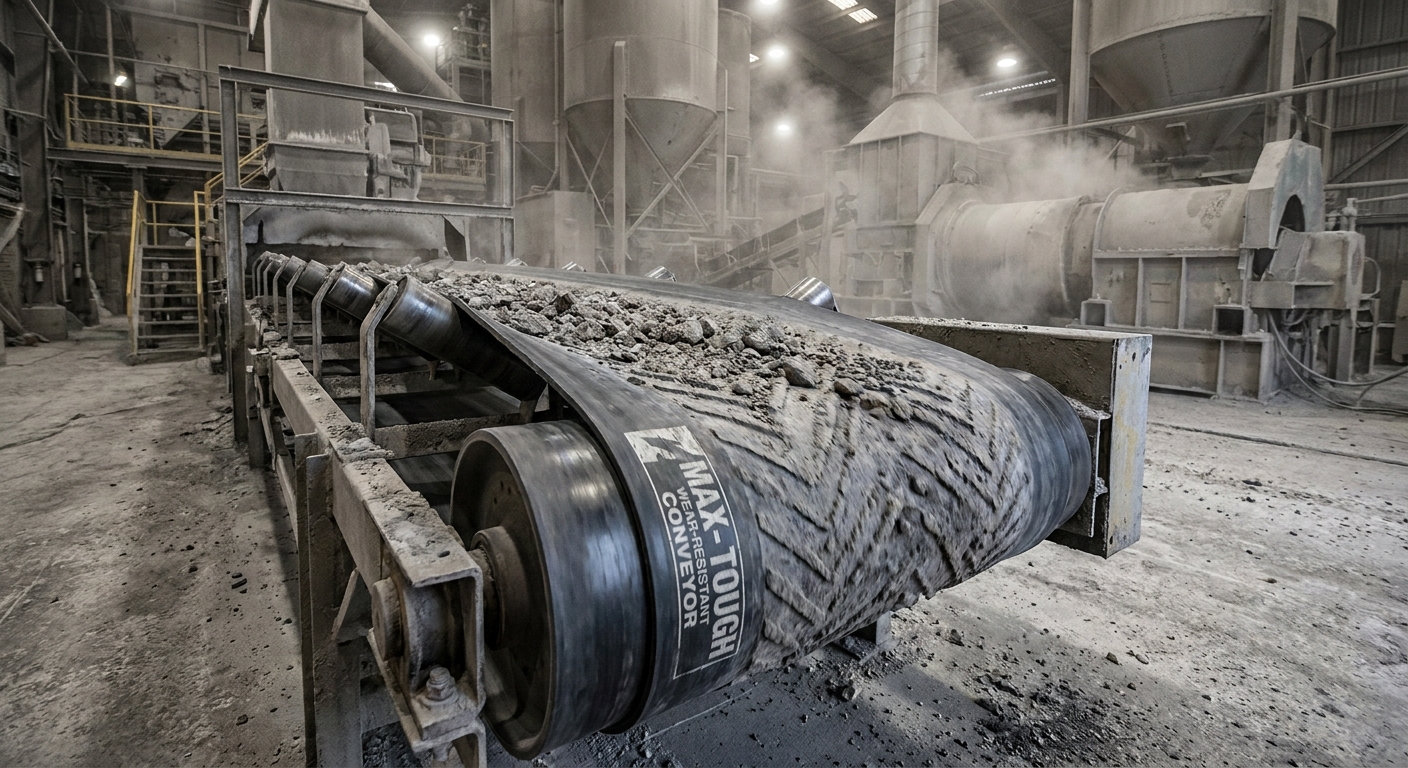
Understanding the grading standards
You need to know the numbers before you make a purchase. Each grade tells a story about how the belt will perform under friction.
- Grade H (GB): 24Mpa strength, low abrasion.
- Grade X (DIN): 120mm³ abrasion loss maximum.
- Grade W (DIN): 90mm³ abrasion loss (Superior).
Don’t settle for less. You might be tempted by a lower-priced “general purpose” belt, but the math rarely works out in your favor. Investing in a higher grade now means you won’t be buying a replacement belt next quarter.
Key TakeawayStandardized grades provide a clear benchmark for comparing belt quality, allowing you to match the belt’s abrasion limits to your specific material challenges.
| Standard | Grade | Abrasion Loss (mm³) | Tensile Strength | |
|---|---|---|---|---|
| DIN 22102 | W | 90 | 18 MPa | |
| DIN 22102 | X | 120 | 25 MPa | |
| GB/T 7984 | H | 120 | 24 MPa |
Analysis: Choosing a Grade W or X belt offers the best balance of longevity and strength for extreme material handling.
How is a super wear resistant rubber conveyor belt tested?
A super wear resistant rubber conveyor belt undergoes rigorous laboratory evaluation, specifically the ISO 4649 abrasion test, to measure volume loss under standard friction conditions. By checking these test reports, you can verify that the super wear resistant rubber conveyor belt you receive meets the promised technical parameters.
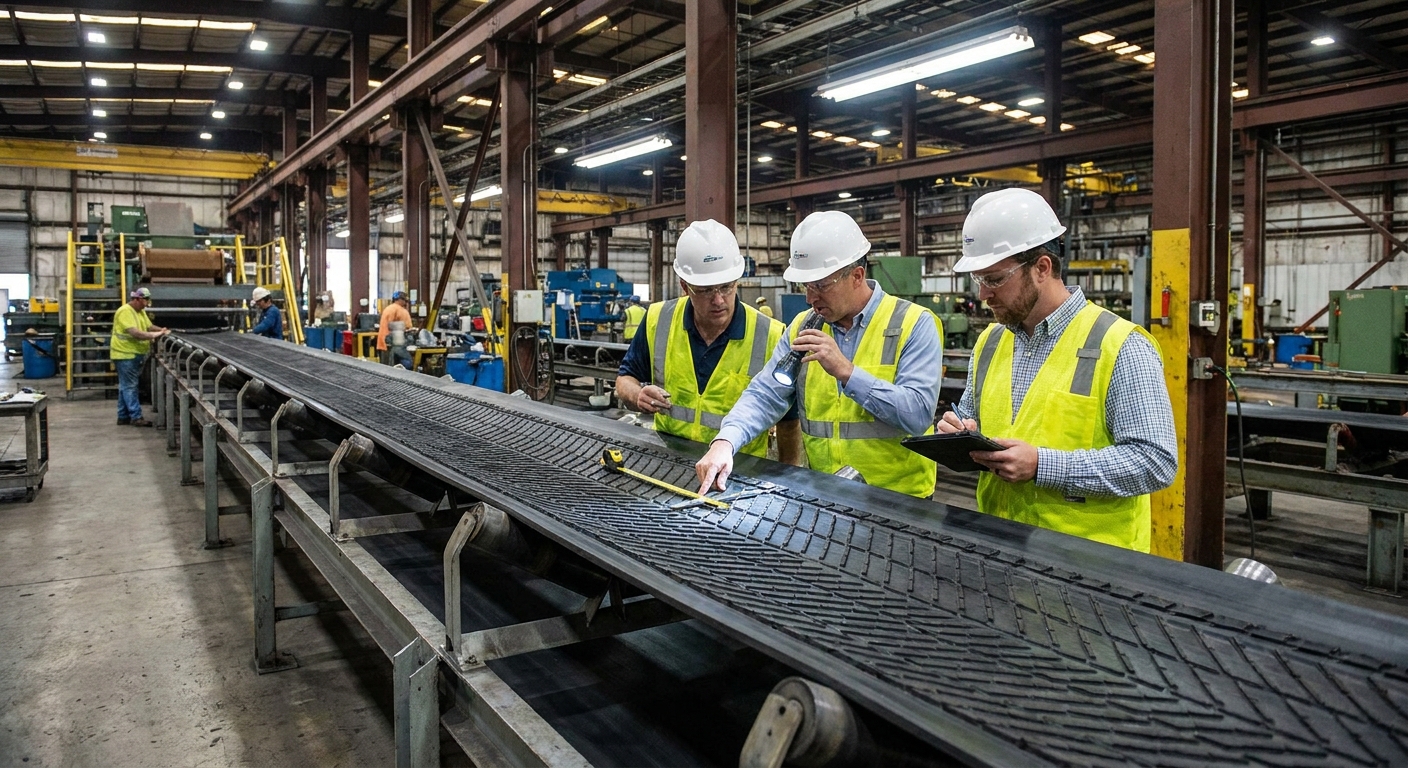
Abrasion and tensile testing
Before a belt leaves the factory, it is tested to its limits. You deserve to know that the product you install won’t fail during the first week of operation.
- Volume loss measurement in mm³.
- Longitudinal breaking elongation.
- Adhesion strength between rubber and fabric.
Wait, there’s more. You should also look for accelerated aging tests. These ensure the rubber remains flexible and resistant even after months of exposure to UV rays and outdoor elements.
Key TakeawayComprehensive laboratory testing is the only way to guarantee that a belt meets global standards for wear resistance and structural durability.
| Test Category | Metric | Goal | |
|---|---|---|---|
| Abrasion Test | Volume Loss (mm³) | Minimize loss | |
| Tensile Test | Mpa / Strength | Maximize load | |
| Adhesion Test | N/mm | Prevent delamination |
Analysis: Rigorous inspection protocols eliminate the risk of premature belt failure and ensure consistent batch quality.
What components make a super wear resistant rubber conveyor belt?
A super wear resistant rubber conveyor belt consists of three main parts: the top cover rubber, the internal carcass reinforcement, and the bottom cover rubber. The “magic” lies in the top cover, which is formulated with high-grade carbon black and specialized polymers to create a shield against external damage.
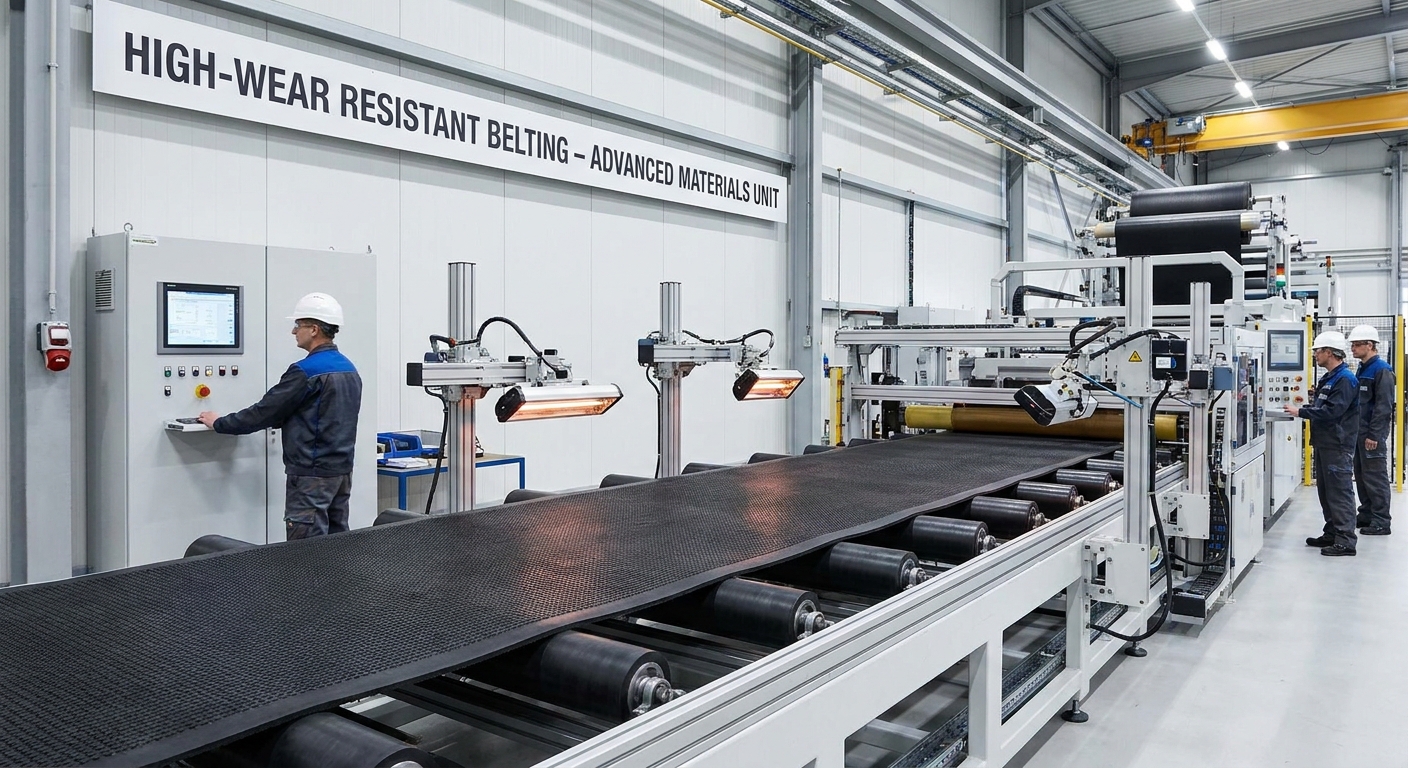
Specialized cover rubber quality
The quality of your rubber determines your belt’s fate. You want a compound that can withstand long-term friction without shredding or cracking.
- Proprietary wear-resistant materials.
- Anti-oxidant additives for longevity.
- Specific hardness levels for impact protection.
It’s simpler than you think. Good rubber feels different; it has a density and resilience that you can practically see. When you invest in high-quality components, you are investing in the heart of your conveyor system.
Key TakeawayThe synergy between advanced rubber chemistry and robust fabric reinforcement creates a belt capable of handling millions of tons of material.
| Component | Function | Material | |
|---|---|---|---|
| Top Cover | Resists abrasion/cutting | SBR / BR / NBR | |
| Skim Coat | Bonds layers together | High-adhesion rubber | |
| Carcass | Provides tensile strength | Polyester / Nylon |
Analysis: Every layer of the belt is engineered for a specific task, resulting in a cohesive unit that outperforms standard industrial products.
How to pick a super wear resistant rubber conveyor belt?
A super wear resistant rubber conveyor belt must be selected based on your conveyor’s width, the material’s drop height, and the expected hourly throughput. If you are handling large, sharp materials, you should choose a super wear resistant rubber conveyor belt with an extra-thick top cover and a high-strength carcass.
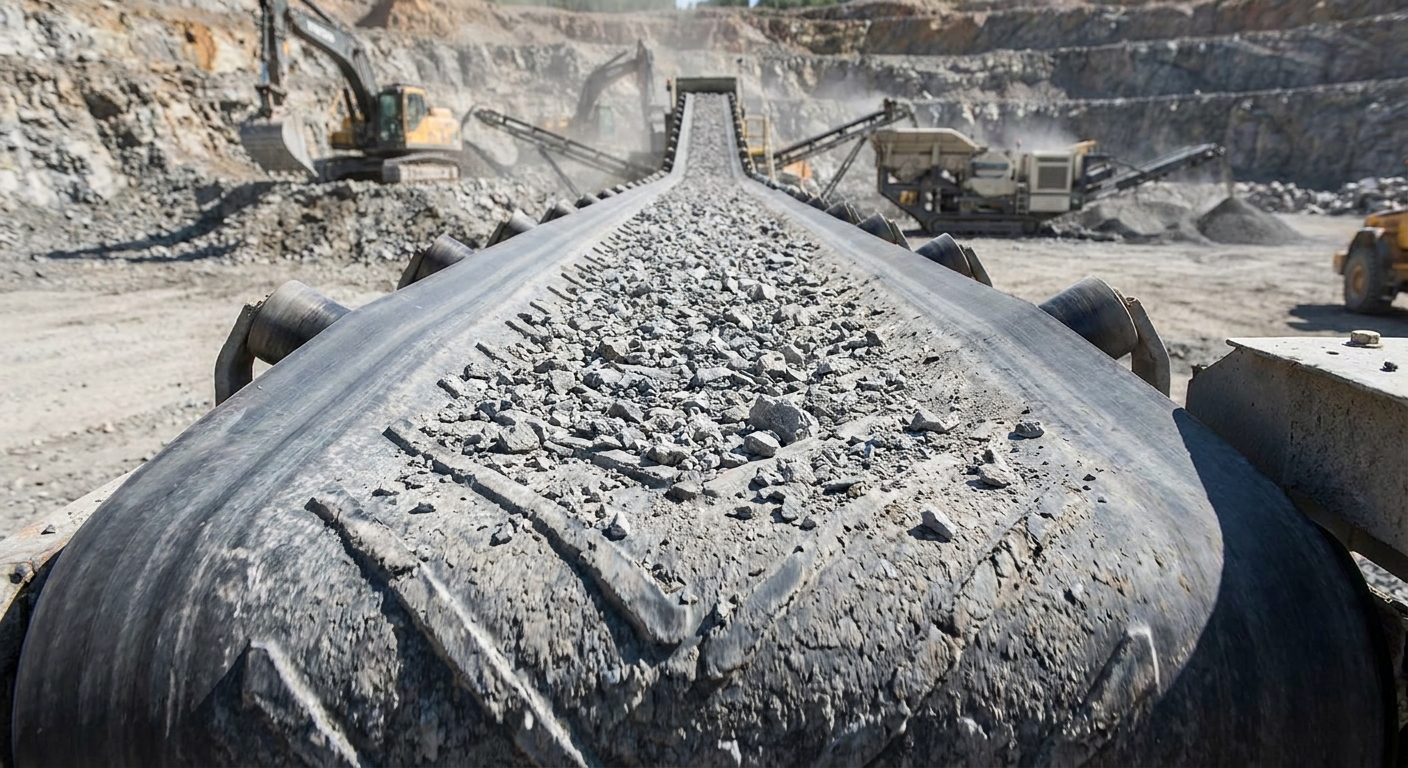
Matching belt to environment
You can’t just pick any belt and expect it to work. You have to analyze your specific site conditions to find the perfect match for your equipment.
- Calculate the maximum load per meter.
- Assess the chemical nature of the material.
- Consider the ambient operating temperature.
Make no mistake… The wrong belt choice will cost you more in the long run through energy inefficiency and frequent replacements. You need to consult with engineers who understand the nuances of rubber belting.
Key TakeawayProper selection involves a deep dive into technical specifications to ensure the belt is neither under-engineered for the load nor over-engineered for the budget.
| Selection Factor | Consideration | Recommendation | |
|---|---|---|---|
| Drop Height | High impact potential | Thick top cover | |
| Conveying Angle | Steep inclines | Patterned surface | |
| Belt Width | Throughput volume | 800mm to 2400mm |
Analysis: A tailored selection process ensures the belting solution perfectly aligns with the mechanical constraints of your conveyor system.
How is a super wear resistant rubber conveyor belt made?
A super wear resistant rubber conveyor belt is produced through a precise vulcanization process where layers of rubber and fabric are bonded together under intense heat and pressure. This process ensures that the finished product is a singular, inseparable unit that can withstand thousands of hours of operation.
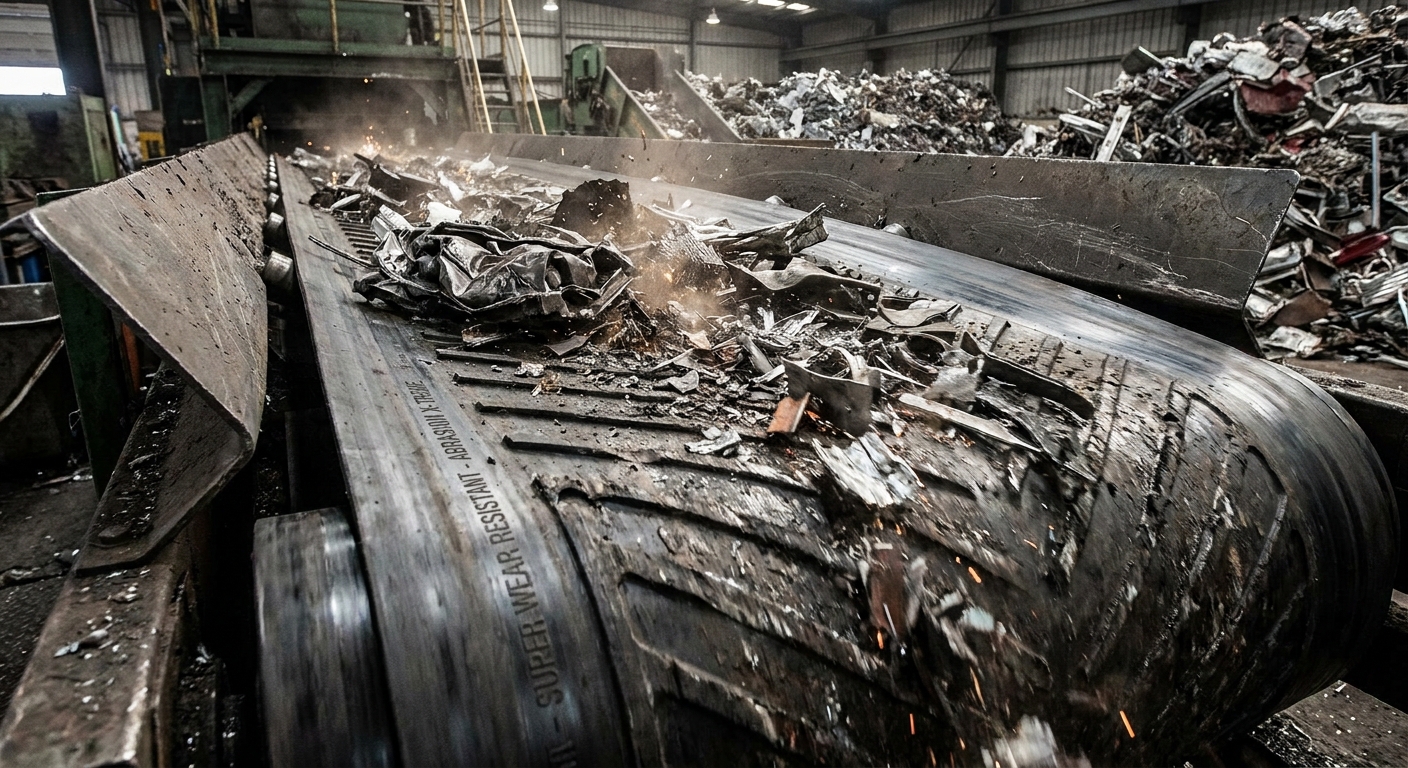
The precision vulcanization process
This is where the strength is born. You wouldn’t want a belt that separates after a few weeks, which is why the bonding phase is so critical.
- Automated calendering for uniform thickness.
- High-pressure vulcanizing presses.
- Controlled cooling to maintain structural integrity.
You’ll love this. Modern manufacturing uses computer-controlled systems to ensure that every millimeter of the belt is consistent. This level of precision translates directly into better tracking and fewer alignment issues on your rollers.
Key TakeawayAdvanced manufacturing techniques ensure that the thermal bonding of layers is perfect, creating a belt with no weak points or potential for delamination.
| Process Step | Action | Outcome | |
|---|---|---|---|
| Calendering | Layers the rubber/fabric | Uniform thickness | |
| Vulcanization | Applies heat and pressure | Permanent bonding | |
| Trimming | Cuts to precise width | Clean edge finish |
Analysis: Precision engineering during the manufacturing phase is the secret behind the long-term reliability of premium belting.
Can I custom a super wear resistant rubber conveyor belt?
A super wear resistant rubber conveyor belt can be fully customized to include your company logo, specific edge types, and unique material compositions. By ordering a super wear resistant rubber conveyor belt , you can receive a product tailored to your specific logistical challenges and branding needs.
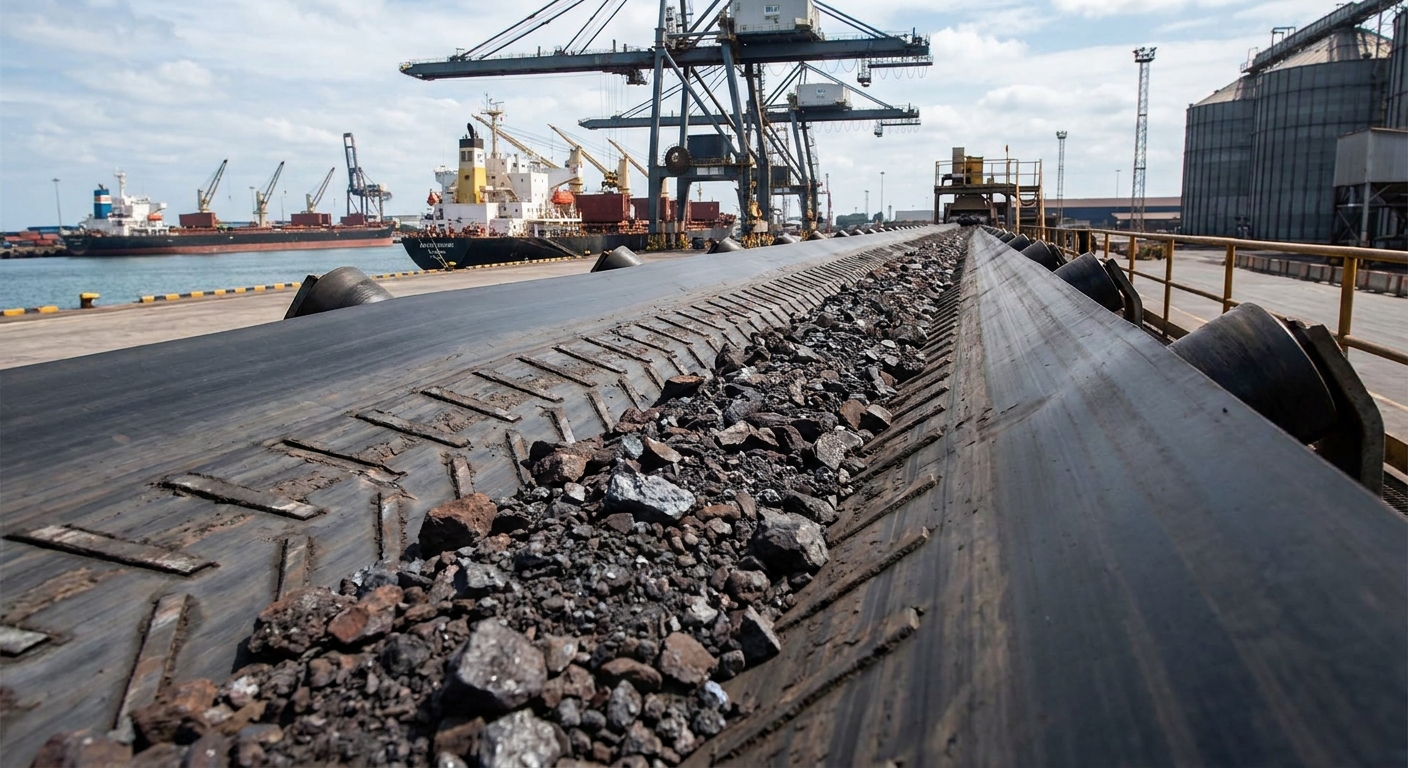
OEM branding and sizing
You can make the product truly yours. Professional manufacturers support processing and OEM services to give you a competitive edge in your market.
- Embossed or printed company logos.
- Custom widths up to 3000mm.
- Specialized cover properties (Oil/Heat).
Now, think about this. Customization isn’t just about looks; it’s about functionality. If you need a belt that is both oil-resistant and super wear-resistant, a custom order is the only way to get exactly what you need.
Key TakeawayCustomized belting allows you to solve specific operational problems while maintaining a professional brand image through OEM support.
| Custom Option | Description | Application | |
|---|---|---|---|
| Logo Printing | Brand identification | Distributor support | |
| Edge Type | Cut edge or molded edge | Material containment | |
| Specialty Cover | Acid / Alkali resistance | Chemical plants |
Analysis: The ability to customize technical properties ensures that even the most niche industrial requirements are met with precision.
How to save a super wear resistant rubber conveyor belt?
A super wear resistant rubber conveyor belt can be preserved through regular inspection, correct roller diameter selection, and proper tensioning. Even the most durable belt will fail prematurely if it is installed on damaged rollers or if the tracking is constantly off-center.
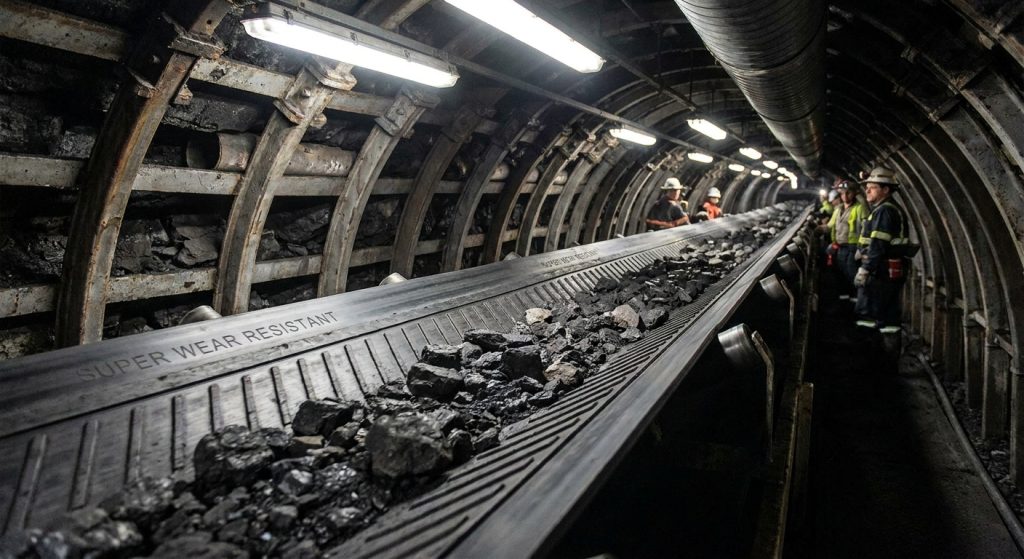
Inspection and maintenance protocols
You have to keep a close eye on your system. A small investment in time today can save you a fortune in replacement costs tomorrow.
- Check for uneven wear patterns.
- Monitor belt tension weekly.
- Clear debris from rollers and pulleys.
But wait, there’s a catch. If you ignore the warnings of a misaligned belt, you are literally throwing money away. You need to train your staff to recognize the signs of belt distress before they lead to a full system shutdown.
Key TakeawayProactive maintenance and the use of high-quality auxiliary components are essential for maximizing the life expectancy of your conveyor belt.
| Task | Frequency | Benefit | |
|---|---|---|---|
| Tracking Check | Daily | Prevents edge damage | |
| Roller Inspection | Weekly | Reduces friction heat | |
| Cleaning | Ongoing | Minimizes abrasive build-up |
Analysis: A disciplined approach to maintenance ensures that you get every possible hour of service out of your belting investment.
Investing in high-performance material handling equipment is the only way to ensure your facility remains competitive in a demanding global market. By choosing a belt designed for extreme abrasion, you reduce the frequency of costly replacements and keep your production lines moving without interruption. Don’t let your business be slowed down by inferior equipment that can’t handle the heat. For tailored solutions and expert technical guidance, please contact us today to find the perfect belt for your specific industrial needs.
Frequently Asked Questions
- Can I get a sample of the rubber compound for independent laboratory testing? Yes, we provide samples created to your specific requirements so you can evaluate the abrasion resistance and tensile strength before placing a bulk order.
- What’s the best way to verify that my belt meets DIN-X standards? You should always request a comprehensive laboratory test report from the manufacturer that explicitly lists the abrasion loss in cubic millimeters (mm³).
- Can I customize the belt with my company’s logo for resale purposes? We fully support OEM and processing services, allowing you to emboss or print your brand logo directly onto the belt surface during the manufacturing process.
- What’s the best top cover thickness for a primary rock crushing line? For high-impact, primary crushing environments, we typically recommend a top cover thickness of at least 6mm to 10mm to provide a sufficient wear buffer.
- Can I use a wear-resistant belt in an underground coal mining environment? Yes, but you must specify that you require a flame-retardant and anti-static version (such as Grade K or MT668) to meet safety regulations for underground use.