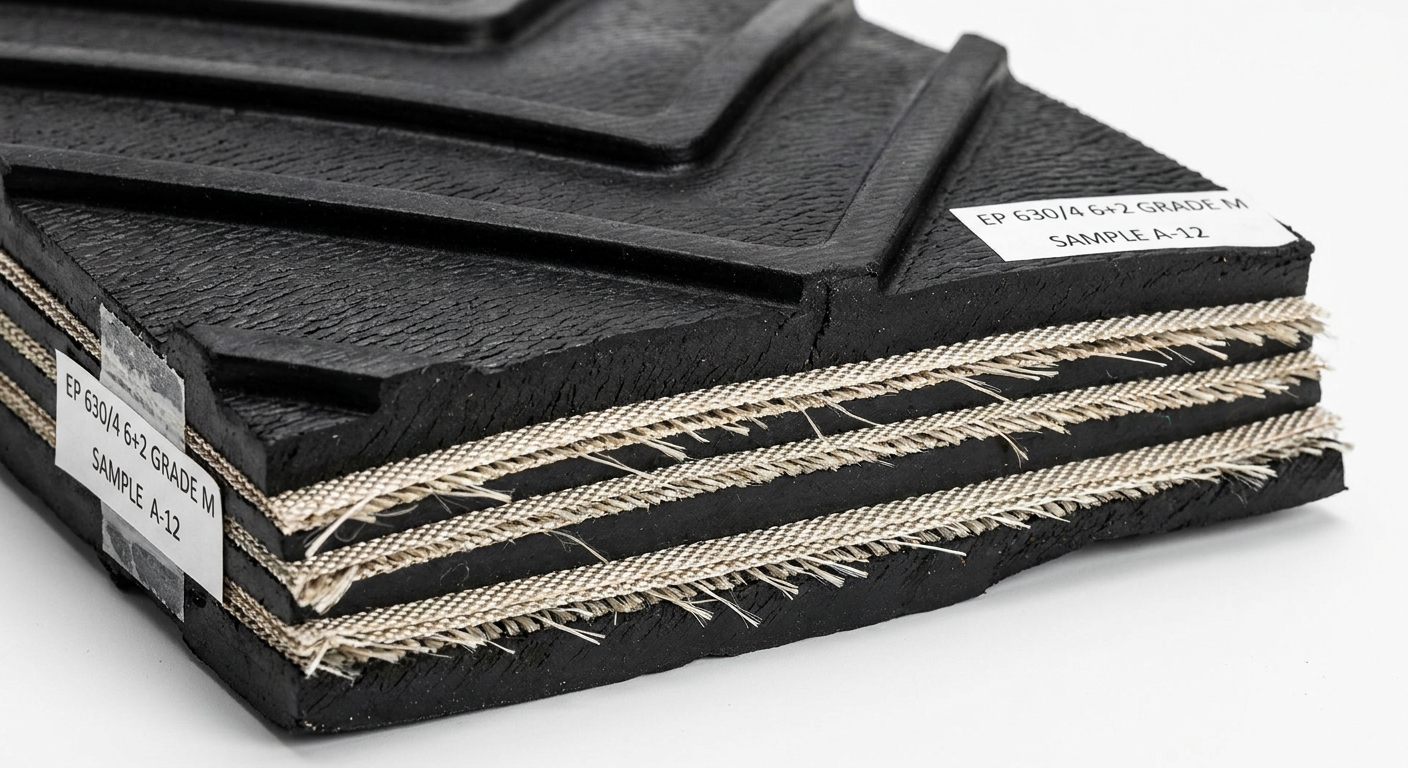
A chevron pattern rubber conveyor belt is specially engineered for high-incline bulk material transport where ordinary smooth belts cannot prevent material rollback or slippage. Designed with durable V-shaped cleats, these conveyor belts securely hold materials in place during steep conveying operations, reducing spillage, improving transport efficiency, and enhancing workplace safety. Widely used in mining, construction, agriculture, and aggregate industries, a chevron conveyor belt helps minimize downtime, lower maintenance costs, and maintain continuous production performance even in demanding operating conditions.
What is a chevron pattern rubber conveyor belt?
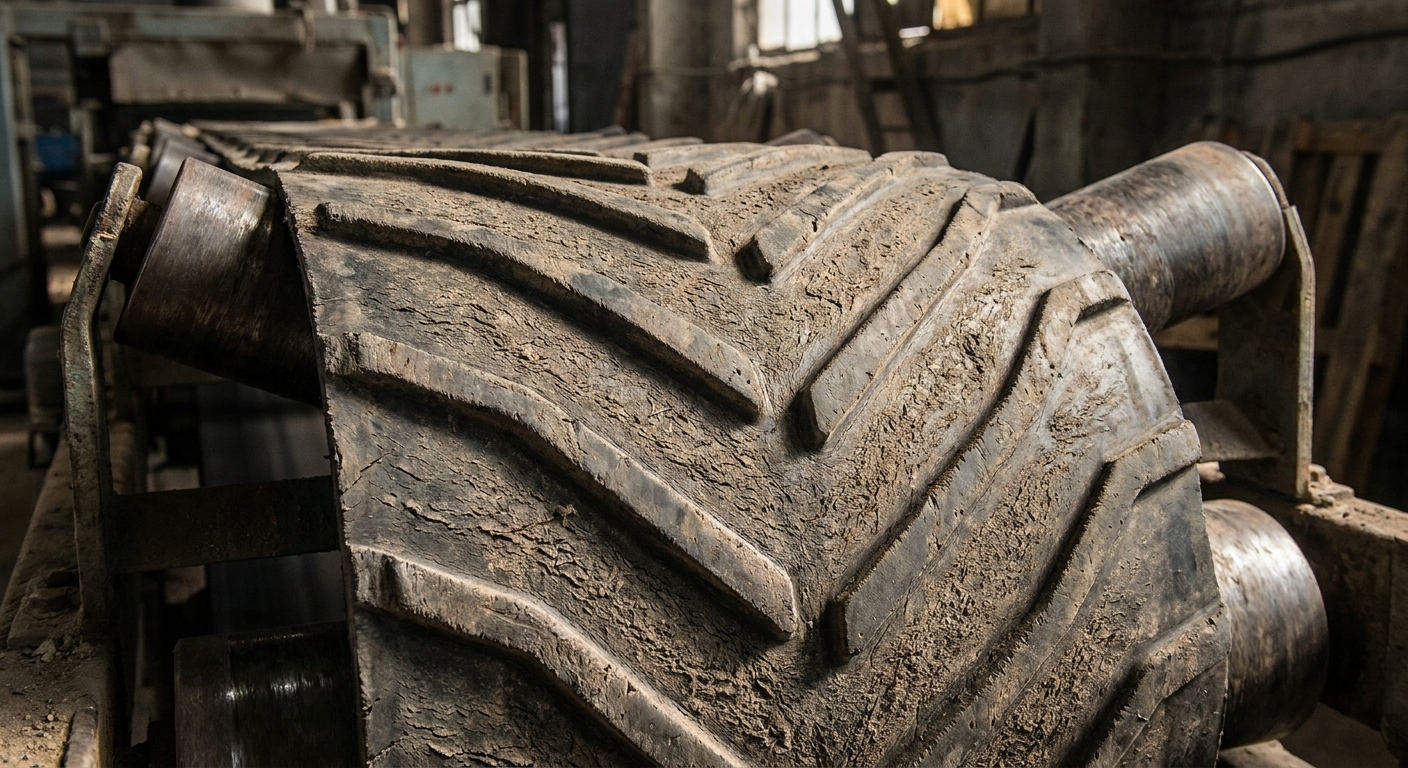
This specialized equipment is a rubber transport belt featuring integrally molded V-shaped or U-shaped cleats on its top surface. A chevron pattern rubber conveyor belt provides the necessary friction and mechanical grip to move loose materials up steep gradients without back-sliding.
Defining the V-shaped cleat design
You will find that the V-shaped design is the industry standard for handling loose bulk solids on inclines. These profiles are typically molded directly into the top cover, ensuring they do not peel away under heavy loads.
Think about it:
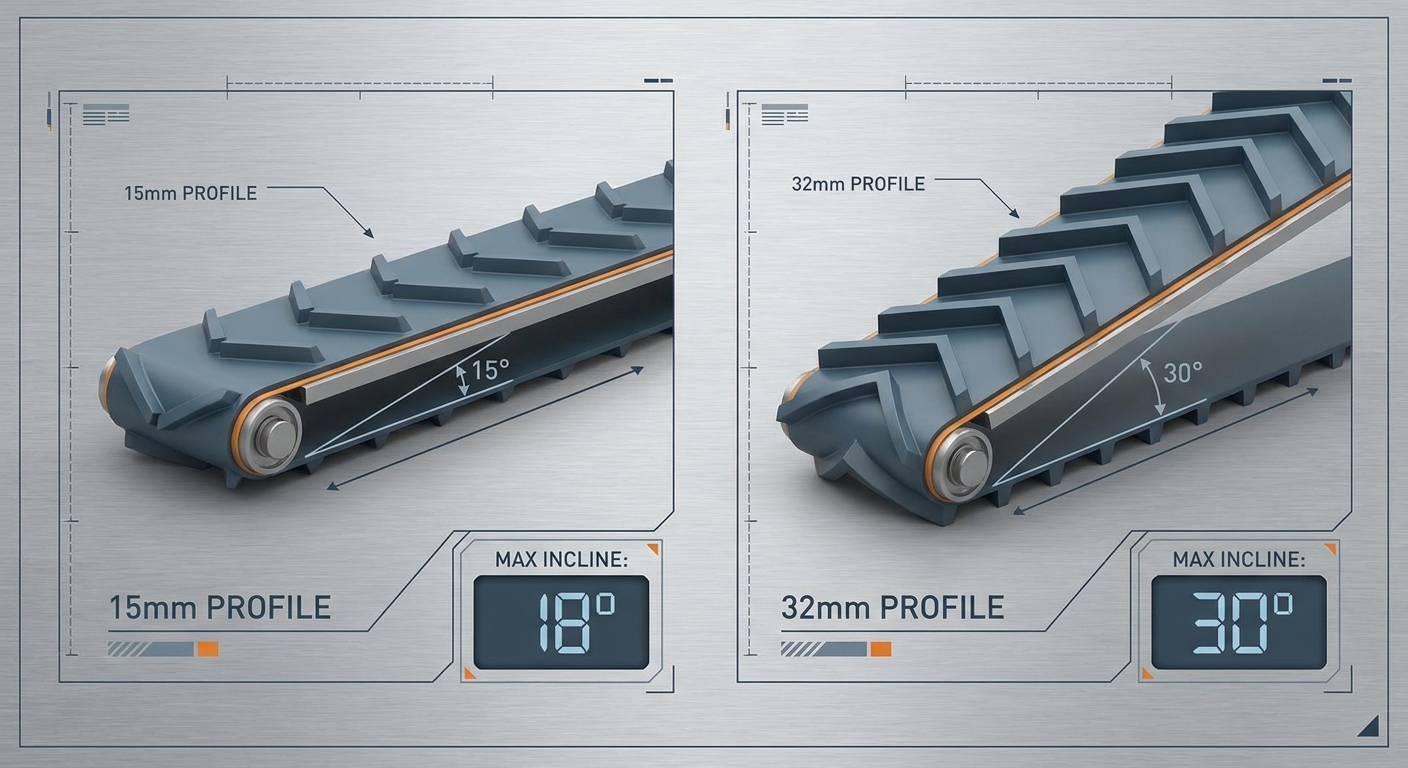
- Cleats vary in height from 15mm to 32mm.
- The V-shape creates a pocket for the material.
- Molded designs offer superior durability over glued cleats.
Why a textured surface beats smooth belts
When you use a smooth belt for inclines over 15 degrees, the material naturally wants to roll backward due to gravity. The textured surface of a chevron belt overcomes this by providing physical barriers that stop the flow of material toward the tail pulley.
The best part?
- It allows for steeper conveyor designs.
- You save space in your factory layout.
- Material throughput remains consistent regardless of the angle.
Key Takeaway: The molded cleat design is essential for maintaining material stability on steep inclines, far outperforming traditional flat surfaces.
| Feature | Smooth Belt | Chevron Belt | |
|---|---|---|---|
| Max Incline | 15 – 18 Degrees | 30 – 40 Degrees | |
| Profile Type | Flat | V-Shaped Cleats | |
| Material Grip | Low Friction | Mechanical Interlock |
The mechanical interlock provided by these cleats ensures that even rolling materials like gravel remain stationary during the lift.
How does a chevron pattern rubber conveyor belt work?
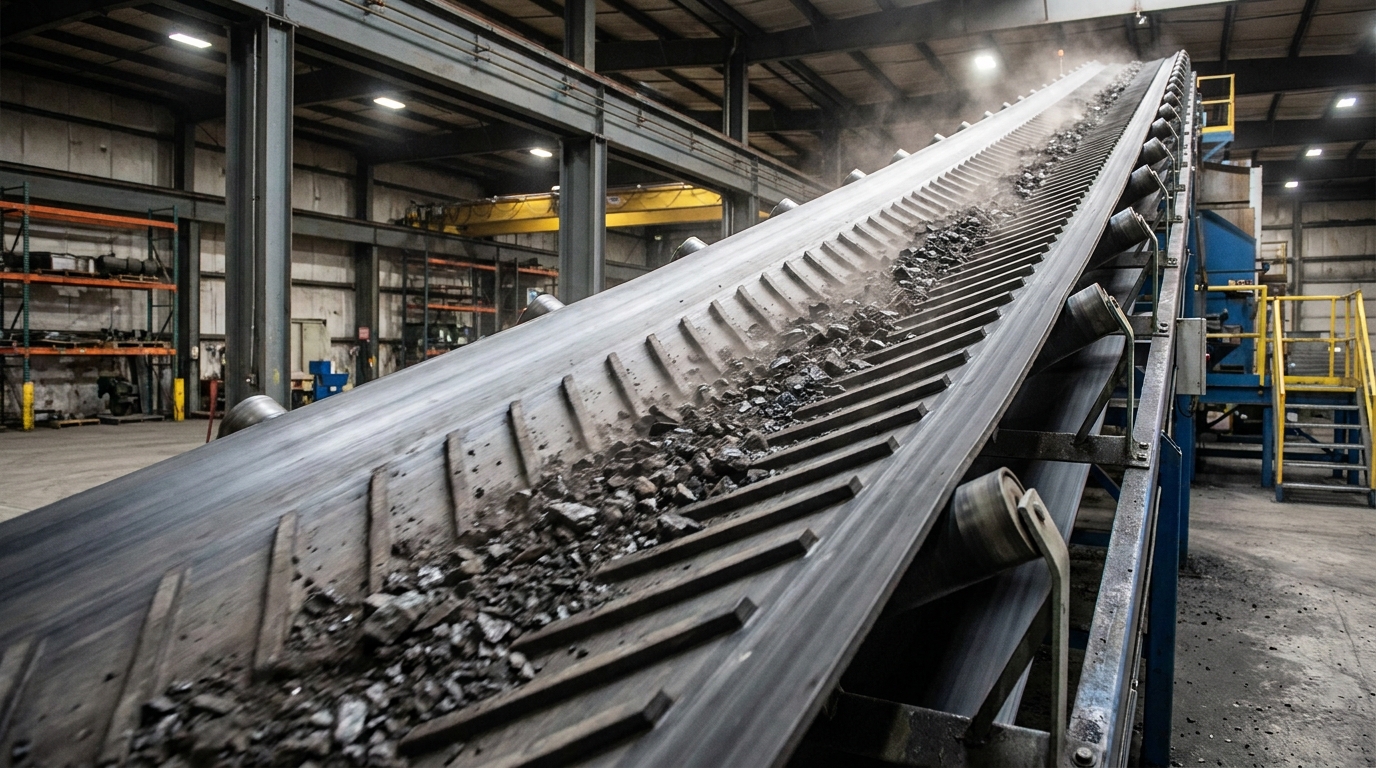
These belts work by utilizing their raised profiles to trap material against the belt surface, creating a “staircase” effect that defies gravity. By choosing a chevron pattern rubber conveyor belt , you ensure that the friction between the cleat and the material is higher than the force of gravity pulling it down.
Preventing material rollback on steep slopes
You can finally say goodbye to the mess at the bottom of your conveyor with this technology. The cleats act as dams, holding the material in individual pockets as the belt moves upward.
Think about it:
- Grip is maintained even when materials are wet.
- Rollback is virtually eliminated for most bulk solids.
- The belt handles surges in material volume more effectively.
How do the cleats interact with bulk solids?
As you load material onto the belt, the bulk solids settle into the “V” or “U” shaped channels. This interaction creates a stable mass that moves as a single unit with the belt, rather than a loose pile that can slide.
The best part?
- Pressure is distributed evenly across the belt width.
- Fines are trapped between larger lumps.
- The cleats prevent “avalanching” during sudden stops.
Key Takeaway: Chevron profiles function as mobile retaining walls that prevent gravitational rollback, enabling much steeper operational angles.
| Interaction Type | Result on Material | Impact on Efficiency | |
|---|---|---|---|
| Pocket Trapping | Zero sliding | High throughput | |
| Friction Increase | Stable transport | Lower waste | |
| Lateral Support | Reduced spillage | Cleaner site |
This physical interaction is the primary reason why these belts are favored in high-capacity quarrying and mining operations.
Why use a chevron pattern rubber conveyor belt for inclines?
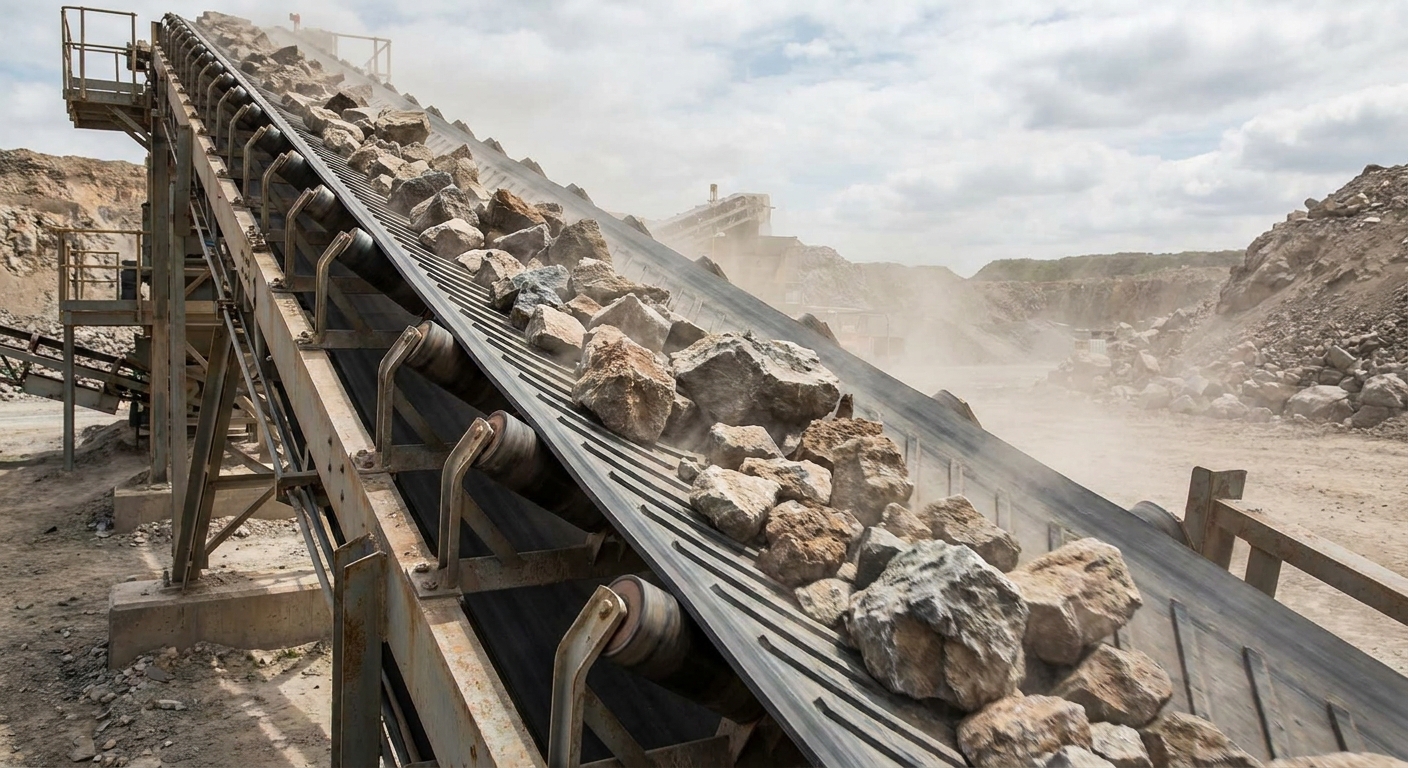
The primary reason to use these belts is their ability to transport materials at angles as steep as 40 degrees. A chevron pattern rubber conveyor belt is the most cost-effective way to achieve vertical height in a short horizontal distance.
Handling inclination angles up to 40 degrees
You can significantly reduce the length of your conveyor system by increasing the angle of inclination. Standard belts fail early, but these profiles are designed to keep your cargo secure even on the most aggressive slopes.
Look at the facts:
- Reduces the need for multiple transfer points.
- Minimizes the footprint of the entire conveyor structure.
- Handles materials that are prone to rolling.
Improving material flow and system productivity
When you eliminate slippage, your system productivity increases because every revolution of the belt carries a full load. This consistency allows you to better predict your output and manage downstream processing equipment.
Think about it:
- Higher capacity per hour is achievable.
- Energy consumption is lower because no material is “re-conveyed.”
- Maintenance on tail pulleys is reduced due to less spillage.
Key Takeaway: Using cleated belts for inclines saves space and maximizes throughput by preventing material backflow.
| Angle | Belt Type | Material Stability | |
|---|---|---|---|
| 0-15° | Smooth | Very Stable | |
| 15-25° | Chevron (15mm) | High Stability | |
| 25-40° | Chevron (32mm) | Maximum Stability |
Higher cleats are generally required as the angle approaches the maximum 40-degree limit to ensure safety.
What is a chevron pattern rubber conveyor belt made of?
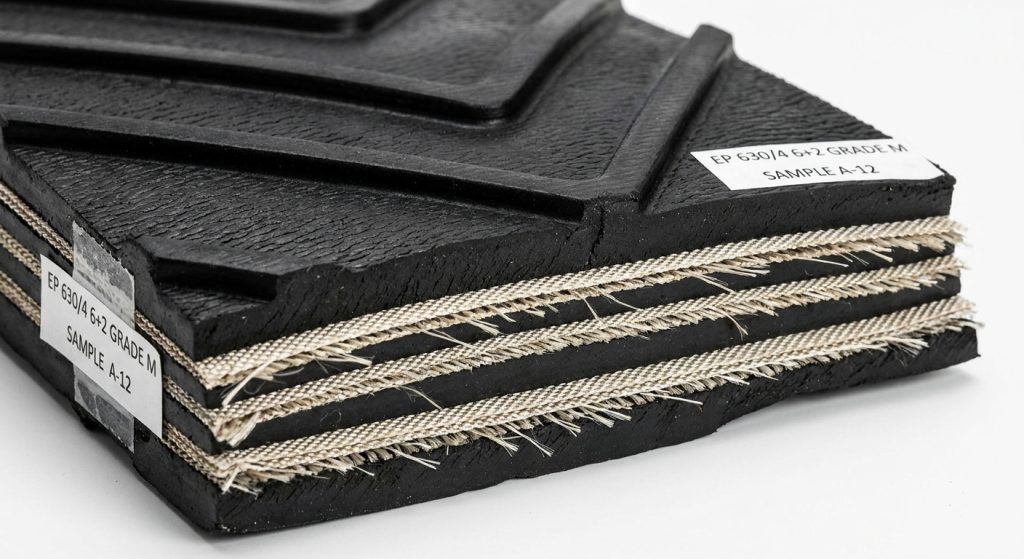
The construction typically consists of a high-strength carcass made of EP or EPP fabric layers protected by a durable rubber cover. Utilizing a chevron pattern rubber conveyor belt with a high-grade carcass ensures that the belt can withstand the high tension required for vertical lifts.
Understanding EP and EPP carcass constructions
You will benefit from EP (Polyester/Polyamide) fabrics because they offer low stretch and high impact resistance. EPP constructions are often chosen when you need even more lateral stiffness to support heavy profiles.
The best part?
- Low elongation means less tension adjustment.
- High moisture resistance prevents rotting.
- Excellent troughability for centered material loading.
Why cover grade material matters for durability
When you transport abrasive materials like crushed rock, the quality of the rubber cover determines how long your belt will last. Using the correct grade prevents the chevron profiles from wearing down prematurely.
Think about it:
- Grade M rubber offers excellent abrasion resistance.
- Oil-resistant covers are available for specialized needs.
- Heat-resistant grades protect against hot clinker.
Key Takeaway: The combination of a stable fabric carcass and a high-wear rubber cover is vital for the longevity of cleated belts.
| Component | Material | Benefit | |
|---|---|---|---|
| Carcass | EP Fabric | Strength & Low Stretch | |
| Profiles | Vulcanized Rubber | Maximum Adhesion | |
| Cover | Abrasion Resistant | Long Wear Life |
A high-quality carcass ensures that the belt remains straight and true even under the uneven stresses of inclined transport.
Which industries use a chevron pattern rubber conveyor belt?
These belts are used extensively in mining, agriculture, construction, and any industry requiring the movement of loose bulk solids. A chevron pattern rubber conveyor belt is a versatile tool found in everything from mobile crushers to large-scale grain silos.
Heavy duty use in quarries and mining
In your quarrying operations, you likely deal with heavy, abrasive aggregates that need to be moved from the pit to the crusher. These belts provide the ruggedness needed to handle sharp rocks and heavy impact loads.
Think about it:
- Moves gravel, sand, and crushed stone.
- Resists gouging from sharp mineral edges.
- Works reliably in dusty and outdoor environments.
Specialized roles in salt and cement works
You can also find these belts in cement plants where they transport limestone and clinker to various processing stages. In salt mines, the corrosion-resistant properties of the rubber help maintain a long service life.
The best part?
- Handles powdery materials with 15mm cleats.
- Moves sticky wet sand without buildup issues.
- Ideal for mobile road milling machines.
Key Takeaway: Almost any industry handling bulk materials on an incline relies on chevron profiles to maintain efficiency.
| Industry | Primary Material | Cleat Height Suggestion | |
|---|---|---|---|
| Mining | Ore & Rock | 25mm – 32mm | |
| Agriculture | Grains & Seeds | 15mm – 25mm | |
| Construction | Sand & Gravel | 25mm |
Choosing the right industry-specific belt helps you avoid premature failure and optimizes your specific material flow.
What are chevron pattern rubber conveyor belt profile types?
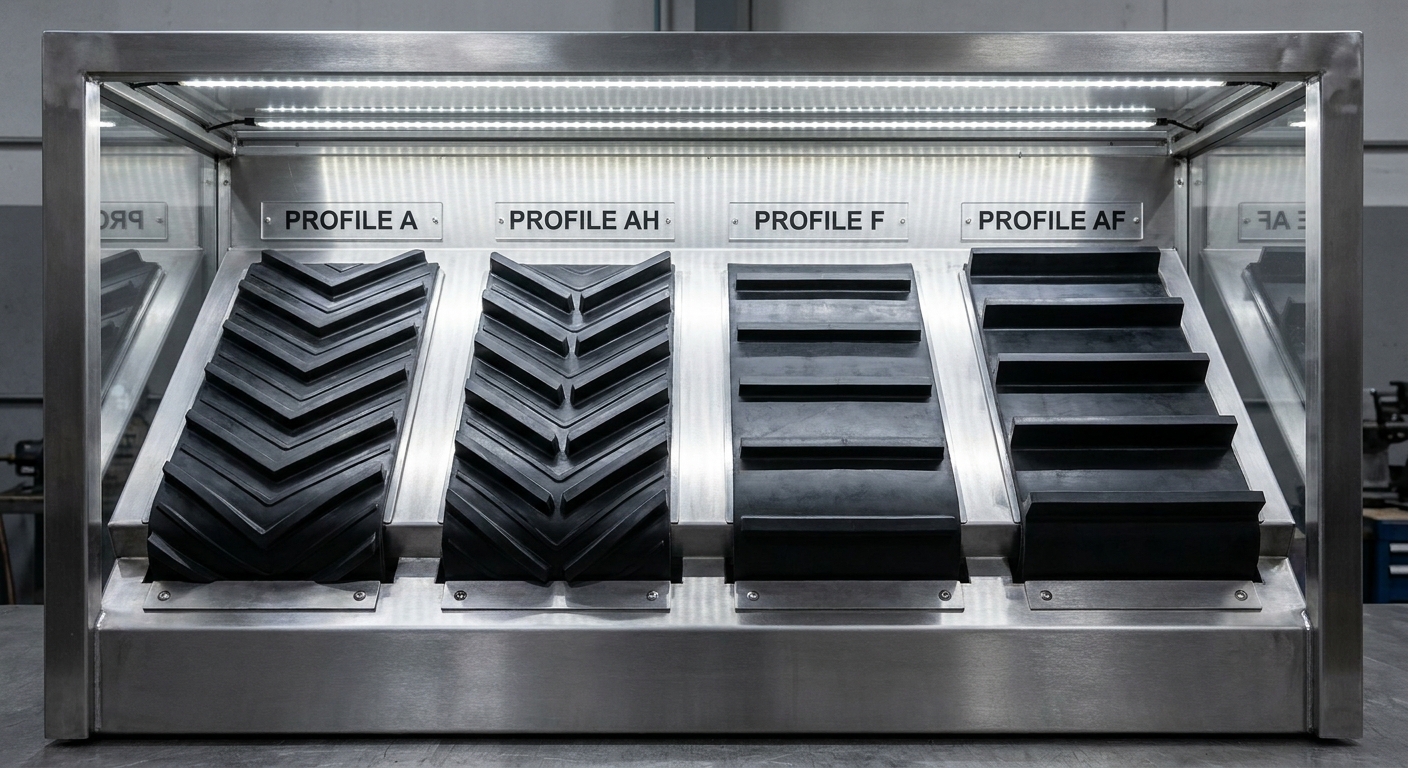
Profile types are generally categorized by their height and shape, such as A, AH, F, and AF patterns. When you select a chevron pattern rubber conveyor belt , the profile height must correspond to the size and density of your material.
Exploring A and AH type profile characteristics
You will use A-type profiles for smaller materials, as they feature a 16mm height that is perfect for grains and sand. AH-type profiles increase this height to 25mm, providing extra security for larger aggregates.
The best part?
- A-type is highly flexible for smaller pulleys.
- AH-type balances grip and equipment wear.
- Both feature the classic V-shape for centered flow.
When to choose F and AF type 32mm profiles?
If you are dealing with very steep inclines or very large materials, the 32mm height of the F and AF types is your best bet. These aggressive profiles ensure that even rolling materials like large stones stay put.
Think about it:
- AF profiles offer improved “troughing” on the conveyor.
- F-type is the most robust for maximum incline angles.
- Shorter pitches prevent material from gathering speed.
Key Takeaway: Matching the profile type to your material size is the most important step in belt selection.
| Profile Type | Height (mm) | Typical Application | |
|---|---|---|---|
| Type A | 16mm | Sand, Grains, Fine Coal | |
| Type AH | 25mm | Gravel, Small Rock, Potatoes | |
| Type F/AF | 32mm | Large Stones, Heavy Aggregate |
Using the AF type can also lead to a smoother run on the return side of your conveyor system.
Is a chevron pattern rubber conveyor belt customizable?
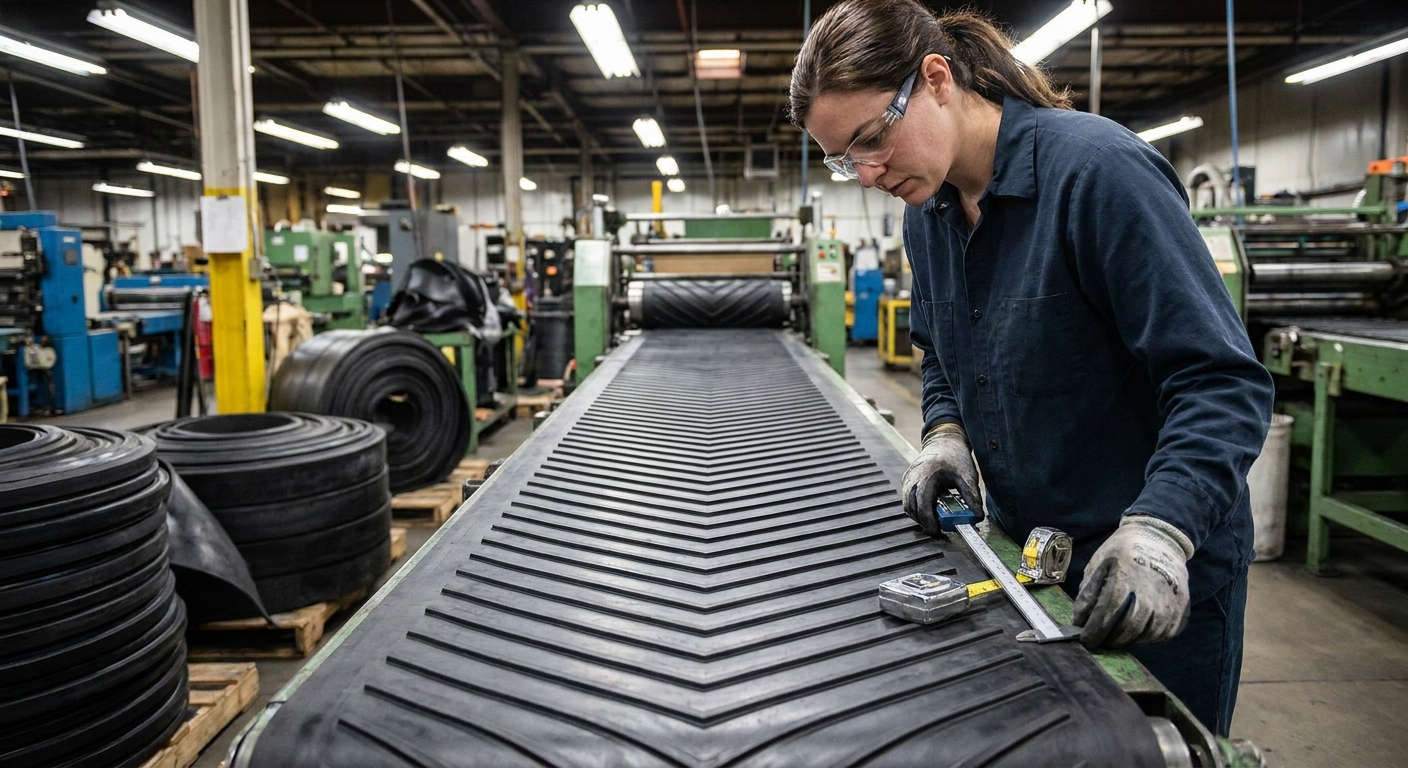
Yes, these belts can be customized in terms of width, cleat pitch, and carcass strength to meet specific machinery needs. A chevron pattern rubber conveyor belt is not a “one size fits all” product; it must be engineered for your specific conveyor.
Standard and custom width specifications
You can order belts in standard widths from 400mm to 1200mm, or request custom widths for specialized mobile equipment. Whether you need molded edges for better protection or cut edges for specific fitment, the choice is yours.
The best part?
- Widths up to 2000mm are possible for high-capacity runs.
- Edge types can be adapted to your sealing system.
- Custom lengths reduce the number of required splices.
Selecting the right pitch for your machinery
When you customize the pitch—the distance between the cleats—you are directly influencing how much material the belt can hold. A shorter pitch prevents material from building up momentum if it does happen to slip.
Think about it:
- Proper pitch ensures smooth pulley transition.
- It affects the overall weight of the belt.
- Customized patterns can include “closed” centers.
Key Takeaway: Customization allows the belt to integrate perfectly with existing hardware while maximizing load capacity.
| Specification | Customization Option | Benefit | |
|---|---|---|---|
| Width | 400mm to 2000mm | Fits any conveyor frame | |
| Edge | Molded or Cut | Protects against moisture | |
| Pitch | Variable | Optimizes material trapping |
A well-customized belt reduces maintenance by ensuring all components of the conveyor work in harmony.
How to pick a chevron pattern rubber conveyor belt profile?
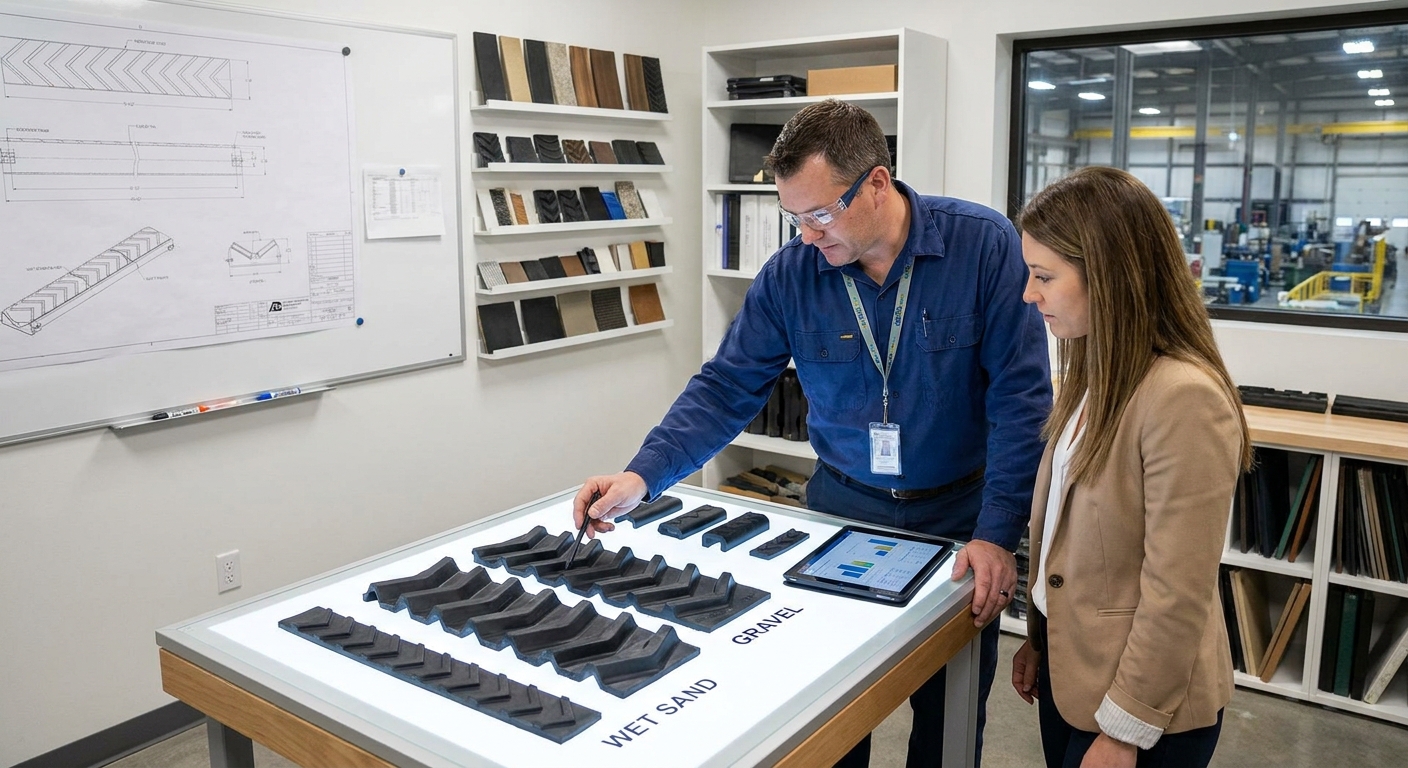
Picking the right profile involves calculating your material’s “angle of repose” and the conveyor’s operating incline. By consulting a Zhenxing expert , you can ensure your chevron pattern rubber conveyor belt selection is scientifically backed.
Matching profile height to material density
You must consider that heavier, denser materials require more support from the cleats to prevent sliding. If your material is fine and light, a low cleat is sufficient; however, heavy rocks demand the 32mm AF profile.
The best part?
- Prevents overloading the motor with friction.
- Ensures material doesn’t “jump” over cleats.
- Optimizes the life of the rubber cover.
How do rolling materials affect profile choice?
If you are moving gravel or round stones, you will notice they have a high tendency to roll. For these materials, you need an aggressive V-pattern with high cleats to physically block the path of the rolling stone.
Think about it:
- Round materials need deeper “pockets.”
- Higher cleats allow for a slightly steeper angle.
- Pattern shape affects how material discharges at the head.
Key Takeaway: Profile selection is a balance between material size, rollability, and the steepness of your incline.
| Material Type | Rollability | Profile Height Needed | |
|---|---|---|---|
| Wet Sand | Low | 15mm | |
| Crushed Aggregate | Medium | 25mm | |
| River Gravel | High | 32mm |
An incorrect profile choice will lead to either material loss or unnecessary vibration in your system.
Are chevron pattern rubber conveyor belt models reinforced?
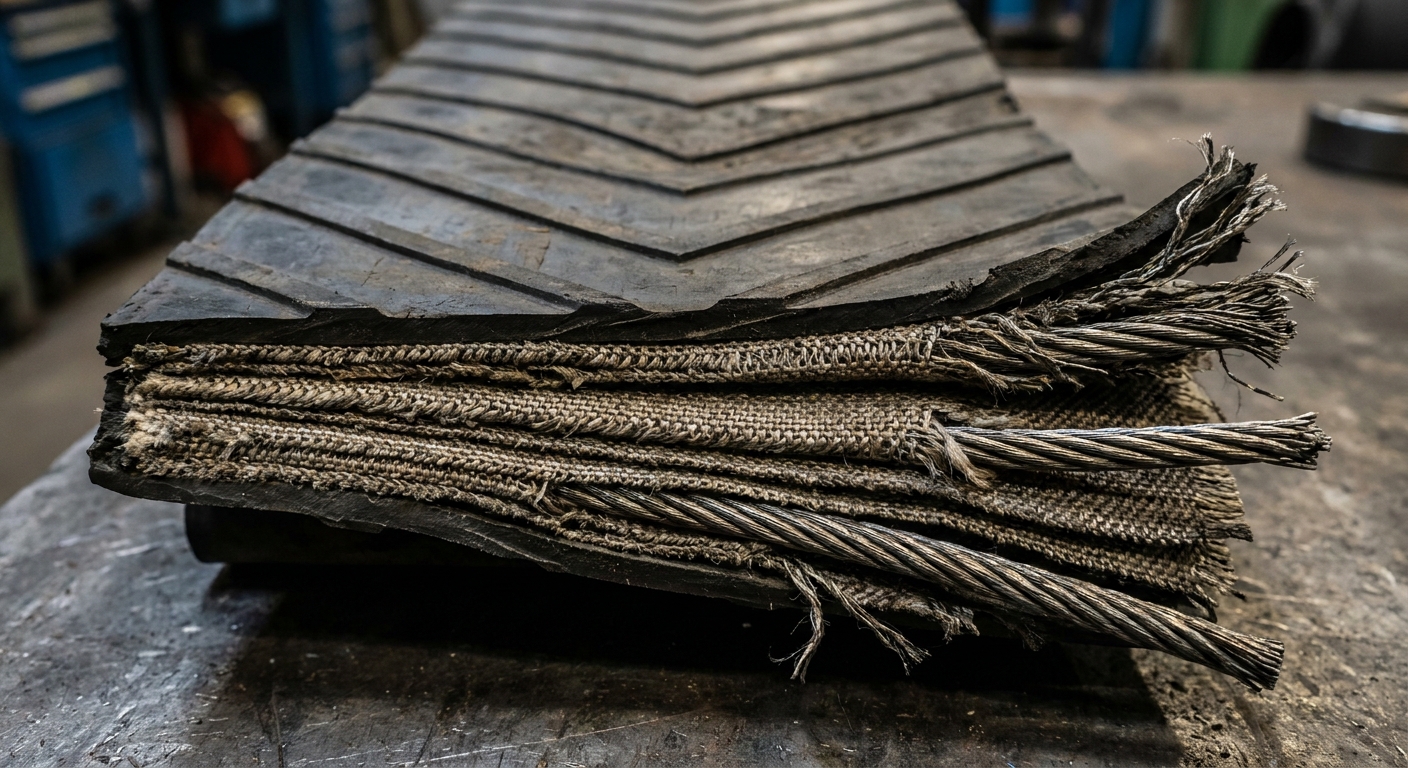
Reinforcement is a standard feature for heavy-duty models, often involving textile breakers or steel mesh “rip check” layers. A chevron pattern rubber conveyor belt must be strong enough to handle the concentrated stresses at the base of each cleat.
Benefits of textile breakers and rip check cords
You will find that adding a textile breaker layer between the cleats and the carcass greatly improves impact resistance. Rip check cords are also vital if you are concerned about sharp objects puncturing the belt and causing a longitudinal tear.
Think about it:
- Breakers absorb energy from falling material.
- Rip checks stop tears before they destroy the belt.
- Reinforcement extends the time between replacements.
Protecting the belt from sharp industrial impact
When you are loading heavy ore from a height, the impact can bruise the carcass of a standard belt. Reinforced chevron belts use specialized rubber compounds and extra fabric plies to cushion these blows.
The best part?
- Reduces the risk of delamination.
- Maintains the integrity of the cleat bond.
- Handles larger lump sizes safely.
Key Takeaway: Reinforcement is the primary defense against the physical abuse common in mining and heavy industrial sites.
| Reinforcement Type | Main Material | Primary Function | |
|---|---|---|---|
| Textile Breaker | Extra Fabric Ply | Impact Absorption | |
| Rip Check | Steel/High Strength Cord | Prevents Long Tears | |
| Reinforced Cover | High-Duro Rubber | Resists Gouging |
Without these reinforcements, a cleated belt would quickly succumb to the high-stress environment of an inclined conveyor.
What helps a chevron pattern rubber conveyor belt last longer?
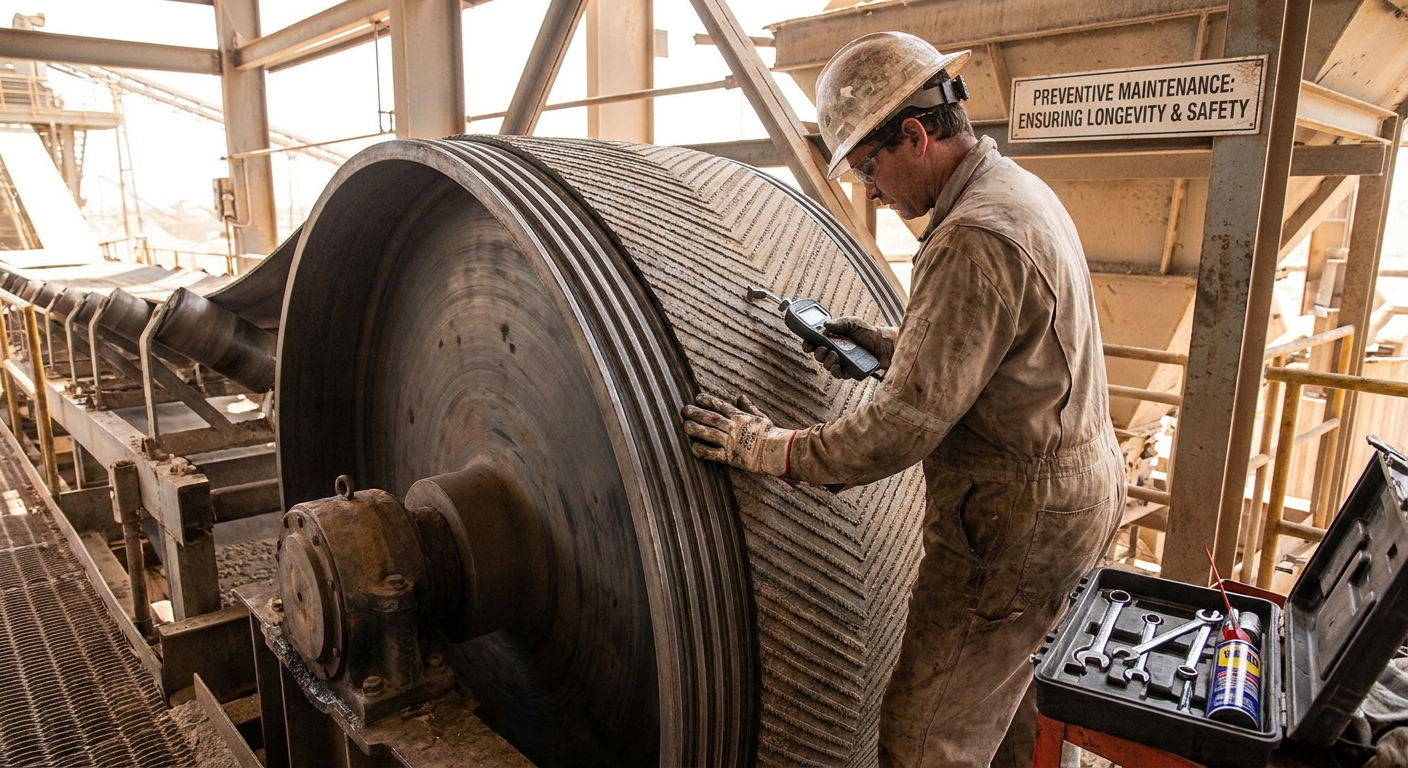
Longevity is achieved through proper belt tensioning, pulley maintenance, and regular cleaning of the cleated surface. Selecting a high-quality bucket elevator belt or chevron belt from a reputable manufacturer ensures you start with a durable foundation.
Optimizing tension distribution across the drum
You need to ensure that your take-up system is properly adjusted so the belt doesn’t slip on the drive pulley. Uneven tension can cause the chevron profiles to wear unevenly or, worse, cause the belt to mistrack and damage the edges.
The best part?
- Reduces stress on the splice.
- Prevents the belt from “flapping.”
- Extends the life of the drive motor.
Routine maintenance for cleated rubber surfaces
You should regularly inspect the cleats for signs of wear or tearing, especially if you handle very abrasive materials. Keeping the return side of the belt clean is also crucial, as trapped debris between the belt and rollers can damage the profiles.
Think about it:
- Use specialized scrapers designed for chevrons.
- Check for material buildup in the “V” pockets.
- Ensure rollers are spinning freely.
Key Takeaway: Regular maintenance and proper tensioning can double the service life of an inclined conveyor belt.
| Maintenance Task | Frequency | Impact | |
|---|---|---|---|
| Tension Check | Weekly | Prevents pulley slip | |
| Profile Inspection | Monthly | Identifies early wear | |
| Pulley Cleaning | Bi-Weekly | Prevents mistracking |
Proper care ensures that your investment continues to deliver peak performance year after year.
Conclusion
Selecting the right chevron pattern rubber conveyor belt is the most effective way to solve the challenges of high-incline material transport. By choosing the correct profile height, carcass reinforcement, and cover grade, you eliminate material rollback and maximize your system’s productivity. At Zhenxing Rubber, we are dedicated to providing engineered solutions that enhance safety and longevity in the world’s most demanding industrial environments. Our vision is to be your one-stop factory for reliable, high-performance belts that keep your operations moving upward. To find the perfect belt for your specific application or to get a custom quote within 24 hours, please contact us today.
FAQ
Can I use this belt for wet or sticky materials?
Yes, you can use chevron belts for wet sand or clay, as the cleats provide the necessary grip that smooth surfaces lack. However, you should ensure your scrapers are specifically designed for cleated profiles to prevent material buildup.
What’s the best profile height for loose grains?
The best choice is usually a 15mm or 16mm “Type A” profile, which provides enough grip for small seeds without adding unnecessary weight to the system. This height also allows for smaller pulley diameters.
How do I know if I need a reinforced carcass?
You need reinforcement if your loading point involves high-impact drops of heavy material or if there is a risk of sharp metal debris entering the flow. Rip check cords are a vital insurance policy for these environments.
What’s the maximum angle for a 32mm profile?
Generally, a 32mm profile can handle angles up to 40 or even 45 degrees for sticky materials. For loose rolling gravel, the effective limit is typically closer to 30 degrees.
Can I order custom widths for existing conveyors?
Absolutely, you can order custom widths to fit any frame, from narrow mobile crushers to extra-wide port loading systems. We provide both molded and cut edge options to suit your needs.