
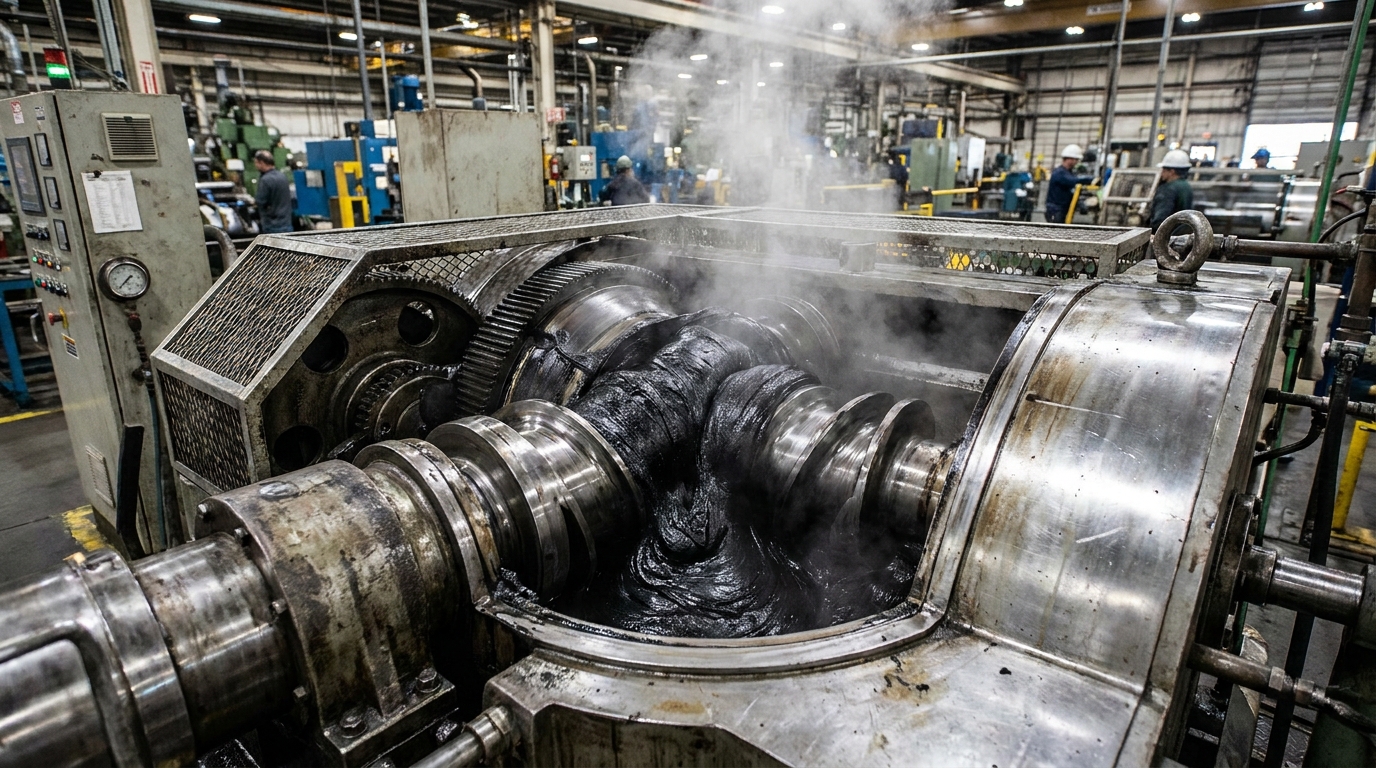
A professional rubber conveyor belt manufacturing process is essential for producing high-performance conveyor belts capable of withstanding extreme industrial conditions, heavy loads, and continuous material handling operations. Through advanced production methods such as precision molding, reinforced carcass construction, calendaring, vulcanization, and quality-controlled finishing, manufacturers create conveyor belts with superior durability, flexibility, and wear resistance. An optimized rubber conveyor belt manufacturing process helps prevent belt cracking, stretching, and material spillage, reducing costly downtime and improving operational efficiency. These high-quality conveyor systems are widely used in mining, cement, ports, power plants, and industrial manufacturing environments where reliability and long service life are critical.
How did the conveyor belt process evolve over time?
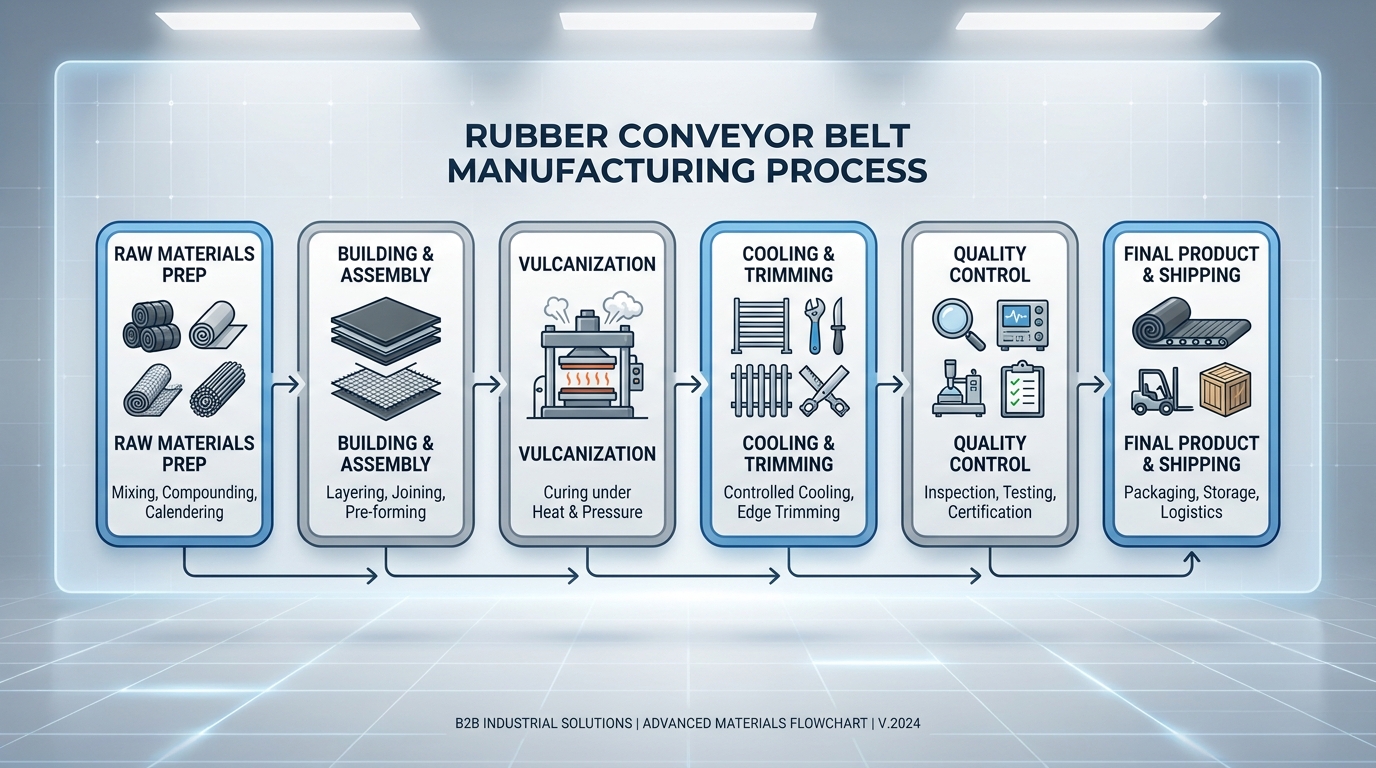
The historical evolution of transport systems transitioned from weak, natural hides to modern, automated lines that maximize mechanical output. By optimizing the rubber conveyor belt manufacturing process , modern factories have completely eliminated the structural limits of early biological materials. This shift to engineered synthetic elastomers ensures that your system can handle massive raw material volumes without stretching or splitting.
What were the early organic materials used?
Look: early conveyor systems relied entirely on untreated cowhide leather and stitched layers of cotton canvas to transport heavy ores. These organic raw materials suffered from extreme sensitivity to environmental moisture and continuous pulley slippage.
Here is the deal:
- Cowhide leather: Quickly rotted when exposed to high ambient humidity or rainfall.
- Woven canvas: Stretched excessively under tension, necessitating constant manual adjustments.
- Animal oils: Degraded rapidly under moderate heat, losing friction performance.
How did vulcanized rubber revolutionize the industry?
Think about it: the discovery of vulcanization changed everything by turning sticky raw polymers into highly resilient, cross-linked structures. This chemical process allows the belt to maintain its structural memory while absorbing continuous impacts at discharge chutes.
The reality is:
- Sulfur cross-links: Build a rigid molecular mesh that prevents thermal melting.
- High elasticity: Allows the rubber to stretch under impact and snap back.
- Abrasion resistance: Protects the core carcass from sharp limestone and copper ores.
What does modern automated manufacturing look like?
Believe it or not: today’s state-of-the-art production floors combine advanced robotics and real-time thickness sensors to execute flawless runs. This fully automated control removes human error and ensures absolute consistency across every single meter produced.
Here is what modern automation delivers:
- Computerized raw material dosing: Prevents chemical imbalance in every batch.
- Continuous curing lines: Eliminate cold spots to guarantee uniform vulcanization.
- Laser thickness control: Scans the cover to keep tolerances within decimals.
Key Takeaway: Understanding the evolution from primitive animal hides to automated elastomeric systems helps you choose a highly engineered belt designed for predictable throughput and zero unscheduled downtime.
| Historical Era | Key Material | Primary Operational Limit | |
|---|---|---|---|
| Pre-Vulcanization | Cowhide & Canvas | Severe rot, extreme stretch, and frequent slippage | |
| Early Vulcanization | Natural SBR Blend | Manual press inconsistencies and limited heat resistance | |
| Modern Automation | Smart Synthetic Polymers | Highly uniform profiles with full digital traceability |
This evolutionary transition highlights how modern, automated lines guarantee consistent mechanical properties that keep your industrial operations moving forward without interruption.
Which materials drive conveyor belt performance?
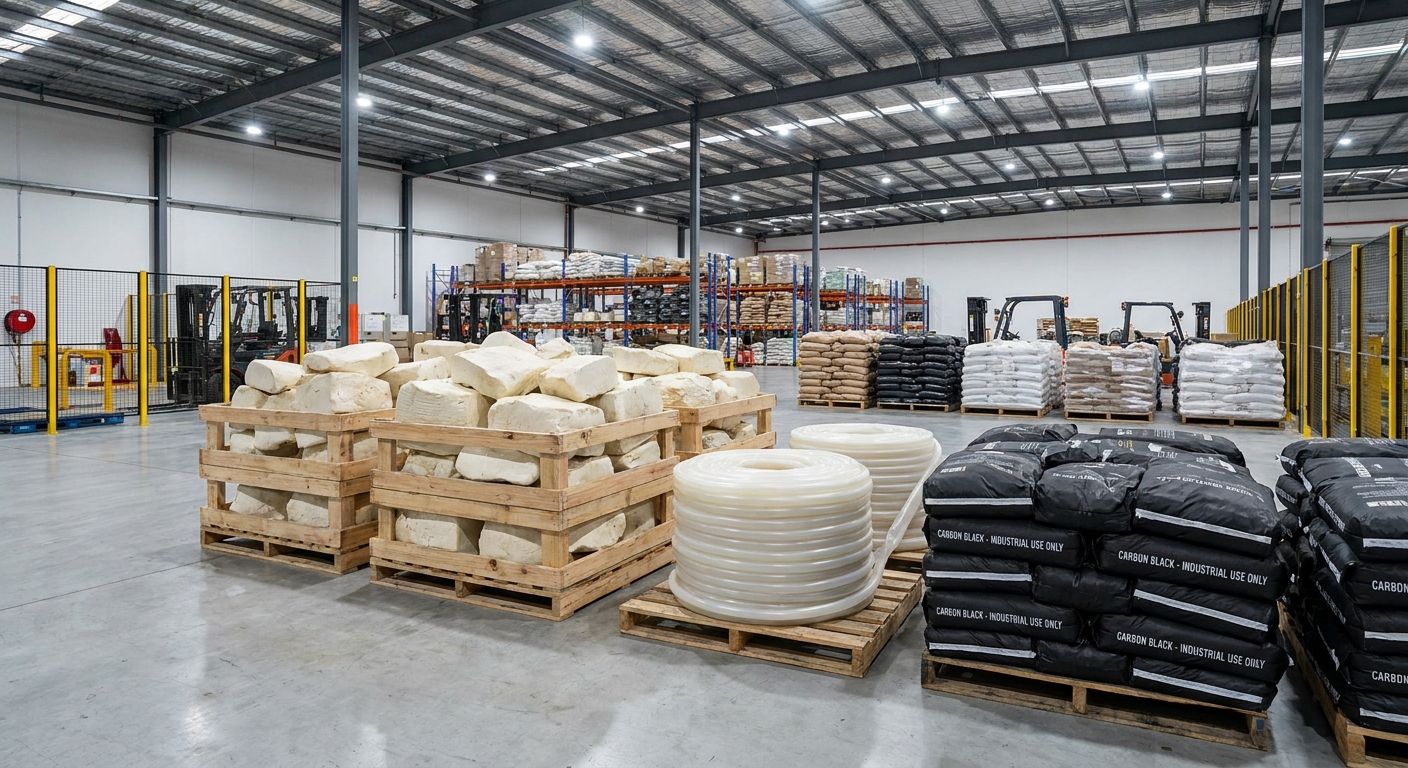
High-grade polymers, durable reinforcing fabrics, and active chemical additives are the essential components that drive long-term industrial belt performance. Within the rubber conveyor belt manufacturing process, selecting premium raw materials prevents early cover cracking and delamination under severe stress. By matching these material properties to your operational challenges, we ensure your system handles the most abrasive bulk materials easily.
Why is compounding the performance foundation?
Look: cover rubber formulation is a precise science that balances base elastomeric flexibility with target wear resistance. Formulating the perfect polymer ratio determines whether your belt will withstand sharp copper ore impacts or oily waste degradation.
Think about it:
- Natural rubber: Delivers unmatched tear and gouge resistance under heavy dump zones.
- Styrene-Butadiene (SBR): Offers superior resistance to dry abrasive sand wear.
- Nitrile blends (NBR): Prevent structural softening when transporting oily scrap or wood.
How do textile and steel reinforcements add strength?
Here is the deal: the internal carcass serves as the structural backbone, absorbing continuous system tension and carrying the bulk weight. Depending on your installation length, we customize either flexible fabric conveyor belt plies or heavy steel cables.
The reality is:
- Polyester-nylon EP fabric: Offers low operational stretch and excellent impact resistance.
- High-tensile steel cords: Deliver maximum longitudinal strength with zero elongation.
- Aramid fiber reinforcement: Provides lightweight strength for long-distance, low-power applications.
Which chemical additives prevent premature aging?
Believe it or not: a complex array of microscopic chemicals works continuously to protect the rubber compound from weathering and friction heat. Without these protective agents, even the toughest polymers would turn brittle and decay in outdoor yards.
Here is what these additives manage:
- Anti-ozonants: Shield the rubber surface from ozone cracking and sun damage.
- Specialized plasticizers: Maintain cover elasticity in freezing sub-zero winter temperatures.
- High-grade bonding agents: Lock the rubber covers to the inner carcass permanently.
Key Takeaway: Selecting the correct material DNA—combining custom-tailored polymers, robust reinforcements, and anti-aging additives—ensures your conveyor belt survives aggressive industrial environments without premature structural failure.
| Component Layer | Core Raw Material | Operational Performance Advantage | |
|---|---|---|---|
| Outer Shield Cover | Natural/SBR Rubber Blend | Superior resistance to abrasive wear, cuts, and gouges | |
| Tensile Core Carcass | EP Fabric / Steel Cord | Absorbs high system tension while keeping stretch minimal | |
| Chemical Protection | Antioxidants & Plasticizers | Prevents atmospheric aging and preserves winter flexibility |
This advanced material configuration forms a single, highly durable structure designed to withstand intense cyclic loads.
How does compounding start the production cycle?
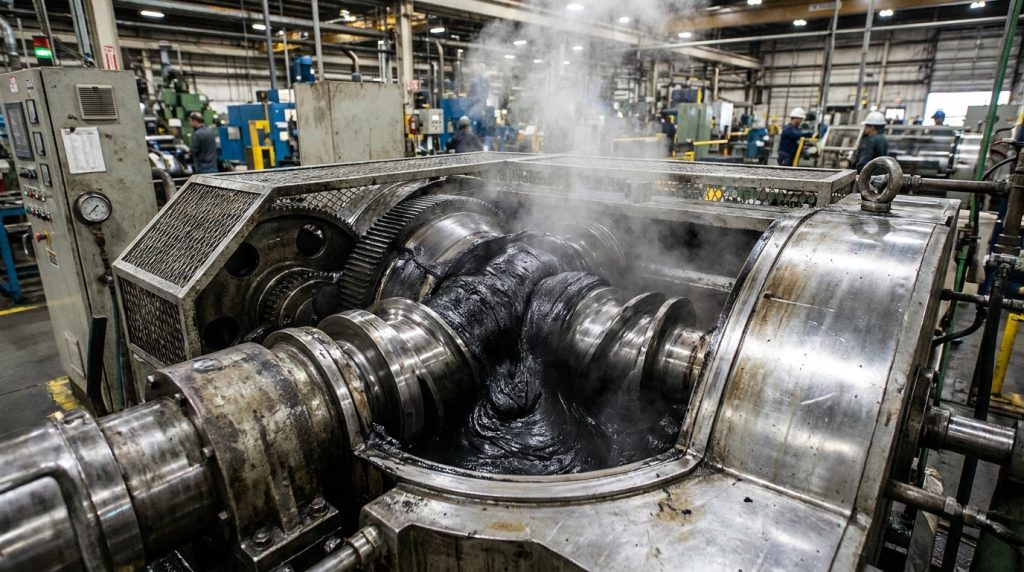
Precision in-house compounding starts the production cycle by turning raw polymers into a highly homogeneous elastomeric compound. Executing this step with computerized accuracy in our rubber conveyor belt manufacturing process ensures uniform physical properties throughout the entire belt. This rigid control eliminates weak spots, ensuring your finished belt handles extreme structural loads without tearing.
Why must powdered fillers be introduced first?
Look: the mixing sequence begins with heavy, dry powders like carbon black and calcium carbonate to establish the internal physical structure. These reinforcing fillers do not just add weight; they physically bind with polymer chains to multiply cover toughness.
Here is the kicker:
- Carbon black: Dramatically increases tensile strength and provides essential UV protection.
- Calcium carbonate: Stabilizes compound flow and refines general cover rigidity.
- Precision scales: Weigh each powder down to decimals to avoid batch variations.
How do liquid plasticizers control flexibility?
Think about it: once the dry reinforcing powders are fully integrated, liquid process oils and plasticizers are injected under high pressure. These liquids lower the compound’s viscosity, preparing the rubber for smooth calendering and perfect shaping.
The reality is:
- Process oils: Prevent dry crumbling and enable smooth machine flow.
- Specialized plasticizers: Guard against cold-weather cracking on exposed site lines.
- Automated injectors: Deliver liquids directly into the mixing core for fast absorption.
Why do we mix compounds under extreme pressure?
Believe it or not: the final compounding phase uses heavy, high-torque rotors inside a sealed mixer to apply intense physical shear. This massive compression breaks down polymer clumps, forcing all active sulfur vulcanizing agents into a uniform distribution.
Here is how we control high-pressure mixing:
- Physical shear force: Kneads the rubber until all ingredients are perfectly dispersed.
- Thermal cooling systems: Prevent premature curing by dissipating friction-generated heat.
- Integrated sensors: Monitor batch temperatures continuously to protect polymer properties.
Key Takeaway: Computerized compounding transforms raw powders and polymers into a stable, uniform blend, locking in your cover’s wear resistance before any shaping takes place.
| Mixing Stage | Primary Ingredients | Main Chemical & Physical Goal | |
|---|---|---|---|
| Stage 1: Fillers | Carbon Black & Carbonates | Establish the internal wear-resistant molecular network | |
| Stage 2: Liquids | Process Oils & Plasticizers | Lower raw viscosity and secure low-temperature flexibility | |
| Stage 3: Activators | Sulfur & Curing Accelerators | Form a uniform mixture prepared for vulcanization |
Managing these mixing steps with digital precision is the only way to eliminate raw batch variations and secure absolute consistency in the finished rubber.
How does calendering shape the rubber sheets?
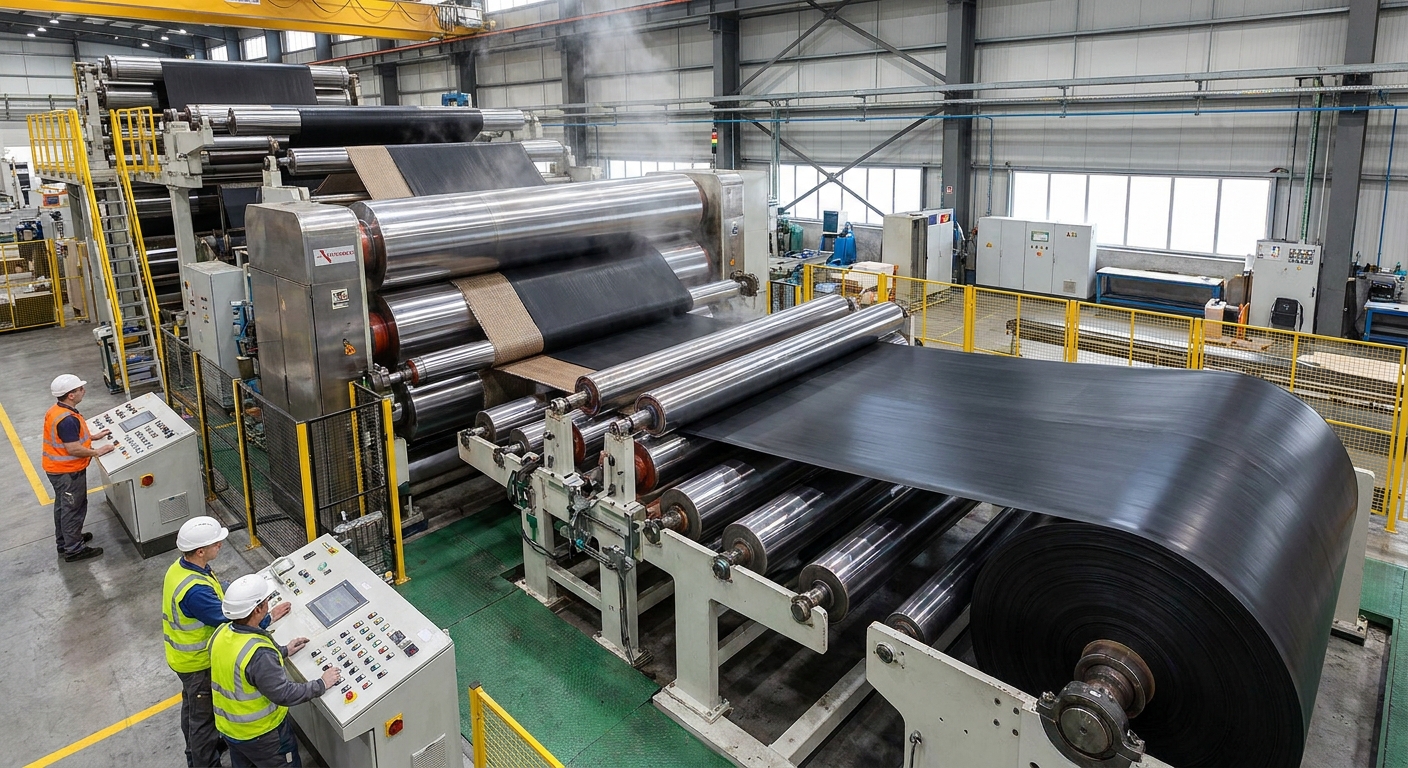
Precision calendering shapes warm rubber compounds into perfectly flat sheets of highly consistent thickness and density. Within the rubber conveyor belt manufacturing process, this step is vital for applying uniform rubber layers onto the reinforcing fabric or steel cords. By eliminating thickness variations, we prevent tracking issues and guarantee a smooth run on your conveyor rollers.
What is the role of screw extrusion first?
Look: raw rubber from cold storage is too irregular and stiff to feed directly into high-precision calendering rollers. A specialized screw extruder reheats and compresses the compound, converting it into a warm, uniform rubber strip.
Here is the deal:
- Uniform reheating: Warms the compound safely without triggering early vulcanization.
- Air removal: Compresses the warm rubber to eliminate trapped air bubbles.
- Continuous feed: Delivers a perfectly sized rubber strip to the calendering system.
How do heated rollers ensure uniform thickness?
Think about it: the warm extruded strip passes through a multi-roll steel calender where massive, heated rollers compress it. These heavy rollers maintain strict internal heat controls to keep the rubber flowing smoothly across the entire width.
The reality is:
- Hydraulic roll bending: Counters roller deflection to maintain a perfectly flat profile.
- Laser thickness gauges: Scan the moving sheet and adjust roller gaps instantly.
- Precision tension sensors: Prevent the thin rubber sheets from stretching or warping.
How is calendered rubber staged safely?
Believe it or not: warm, calendered sheets are exceptionally tacky and will fuse together if they touch in storage. To prevent this, we wind a specialized protective liner between the sheets as they are rolled.
Here is how we protect calendered stock:
- Textile release liners: Prevent face-to-face rubber fusion while allowing cooling.
- Climate-controlled storage: Keeps raw rolls cool to prevent premature compound decay.
- Traceability tags: Track batch numbers, sheet thicknesses, and production times.
Key Takeaway: Precision calendering guarantees uniform cover sheets, providing the flat, bubble-free foundation required for flawless layer bonding and long belt life.
| Calendering Parameter | Target Operating Tolerance | Main Quality Safeguard | |
|---|---|---|---|
| Sheet Thickness | Strictly within ±0.1 mm | Continuous laser scanning with automatic roll adjustments | |
| Roller Temperature | Stable between 80°C and 95°C | Internal thermal oil loops and automated cooling water | |
| Winding Tension | Minimal stretching force | Variable-speed winding motors matched to calender speed |
Maintaining these narrow tolerances during calendering prevents physical cover wave deformities that cause belts to wander off-track.
Why is lamination critical for multi-ply belts?
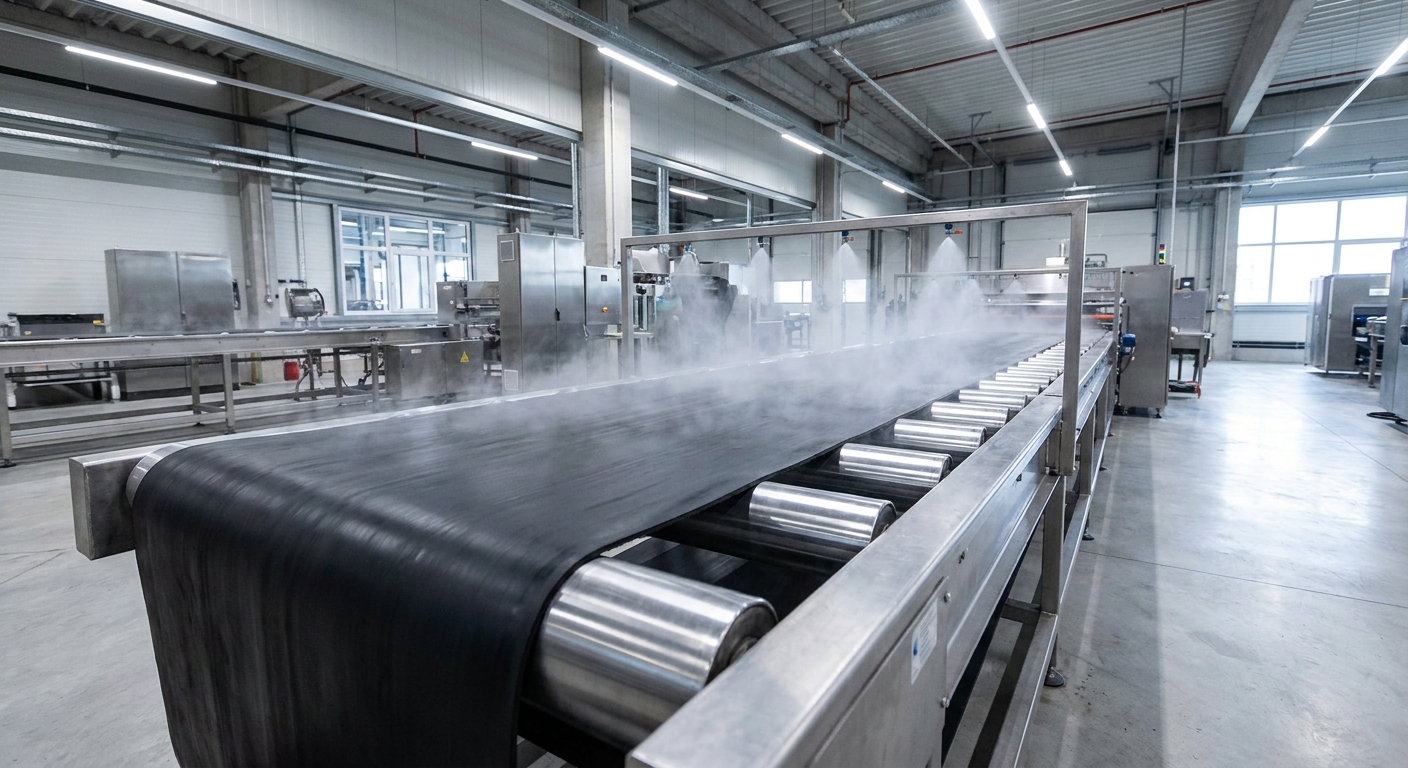
Structural lamination is critical because it builds the complete, multi-layered belt body by fusing the protective cover sheets with reinforcing core plies under controlled tension. Skipping this precise alignment phase in the rubber conveyor belt manufacturing process will cause the belt to curve or suffer from early delamination. Our automated laminating lines align all layers perfectly, ensuring your belt operates in a straight line under maximum tension.
How are specific plies stacked for heavy loads?
Look: the internal layering must be carefully engineered to support the unique mechanical loads of your specific conveyor structure. For long-distance transport, we integrate high-strength steel cord conveyor belt designs to prevent elongation.
Think about it:
- Bottom cover layer: Optimized to grip drive pulleys and resist roller friction.
- Fabric EP plies: Layered to provide high longitudinal tension and excellent flexibility.
- Top cover layer: Thickly formulated to absorb raw rock impacts and weathering.
Why is a one-pass assembly system superior?
Here is the deal: our advanced manufacturing line utilizes a one-pass assembly system that combines all layers in a single, continuous run. This specialized method prevents dust contamination between the tacky layers and ensures matching tension.
The reality is:
- Zero contamination: Keeps the sticky, raw rubber surfaces completely free of dust.
- Perfect tension balance: Prevents internal shear stresses by stretching all plies identically.
- Enhanced production speed: Streamlines the build process while preserving elite quality standards.
How do we prepare laminated belts for curing?
Believe it or not: before entering the massive vulcanizing press, the raw laminated belt must be trimmed and prepared with absolute precision. Any dust or moisture trapped on the surfaces during this final preparation step will ruin the curing process.
Our preparation guidelines include:
- Precision edge trimming: Cuts the raw belt to its exact width with perfectly square edges.
- Joint preparation: Pre-cuts step or finger splices to simplify ultimate system installation.
- Protective wrapping: Seals the raw roll in protective film to block moisture absorption.
Key Takeaway: One-pass lamination merges all structural components under perfectly balanced tension, forming a cohesive, straight-running belt body ready for permanent chemical curing.
| Belt Layer Component | Structural Material Type | Core Mechanical Purpose | |
|---|---|---|---|
| Top Protective Cover | Calendered wear rubber | Shields the internal carcass from impact and severe gouging | |
| Reinforcing Core | EP Fabric / Steel Cord | Carries the continuous system tension and supports cargo | |
| Bottom Friction Cover | High-grip backing rubber | Transmits driving force and protects against roller wear |
This balanced layering ensures that the completed belt body absorbs high impact energy without separating or losing its straight tracking path.
How does vulcanization cure the raw rubber?
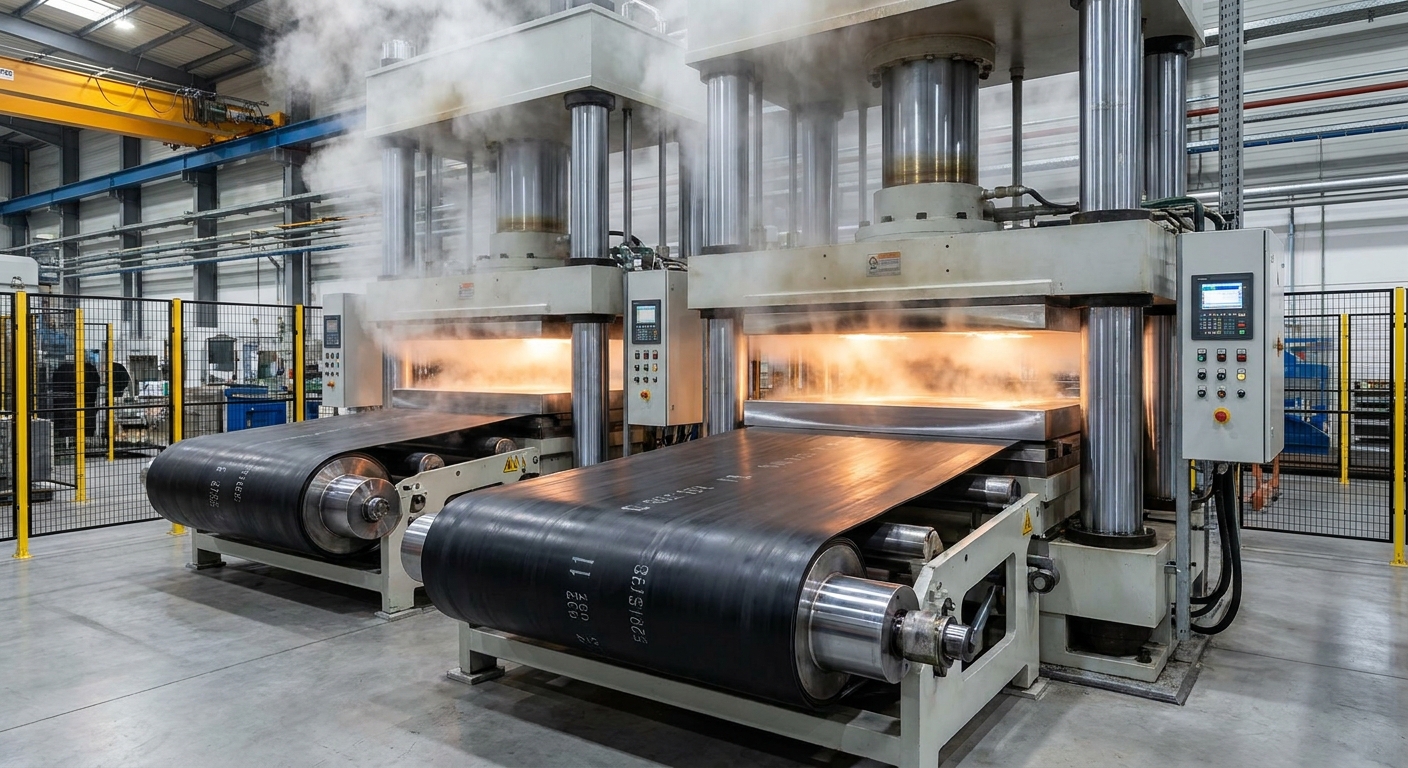
High-pressure vulcanization cures raw rubber by initiating a chemical reaction that forms permanent sulfur cross-links between polymer chains. This defining stage of the rubber conveyor belt manufacturing process transforms soft, tacky raw laminates into tough, highly elastic, and stable conveyor belts. By applying precise heat and hydraulic pressure, we ensure that the rubber flows deeply into the reinforcing fabric to create an inseparable bond.
What is the chemical science of cross-linking?
Look: vulcanization is a complex molecular reaction that converts raw plastic polymers into a highly resilient, heat-resistant elastomer. By adding sulfur and curing accelerators under high heat, we create a stable, cross-linked molecular network.
Think about it:
- Sulfur cross-links: Build a flexible chemical mesh that prevents melting under thermal loads.
- Elastic memory: Enables the rubber cover to deform under impact and snap back.
- Mechanical toughness: Minimizes wear and prevents tear propagation across the belt surface.
How do batch and continuous presses compare?
Here is the deal: our factory utilizes both long-platen hydraulic batch presses and continuous rotary vulcanizers to match different belt specifications. Choosing the correct press ensures that the rubber compounds develop their optimal physical properties.
The reality is:
- Long-platen batch presses: Perfect for heavy steel cord belts and chevron profiles.
- Continuous rotary vulcanizers: Deliver exceptional speed and highly uniform cures for fabric belts.
- Hydraulic pressure units: Compress the layers with immense force to eliminate micro-voids.
Which variables prevent curing defects?
Believe it or not: minor temperature drops or pressure fluctuations during the curing cycle will create under-cured soft zones. Our automated control systems continuously monitor and log every physical variable to guarantee a complete cure.
We strictly regulate:
- Platen temperature: Maintained within a narrow ±1°C tolerance across the plates.
- Curing dwell time: Calculated down to the second based on total belt thickness.
- Hydraulic pressure levels: Kept high to force out any trapped ambient air or moisture.
Key Takeaway: High-pressure curing permanentizes your belt’s physical properties, turning raw rubber and fabrics into a highly durable, wear-resistant, and structural belt.
| Curing Variable | Target Operating Range | Operational Risk of Deviation | |
|---|---|---|---|
| Vulcanization Temp | 140°C to 160°C | Soft under-cured zones or brittle, over-cured surface rubber | |
| Platen Pressure | 1.5 to 2.5 MPa | Microscopic air bubbles and weak adhesion between plies | |
| Curing Dwell Time | 20 to 50 minutes | Incomplete chemical reaction or thermal polymer breakdown |
Automating these three critical curing variables ensures that every belt leaving our press possesses identical structural properties and maximum wear life.
How do you audit the conveyor belt quality?
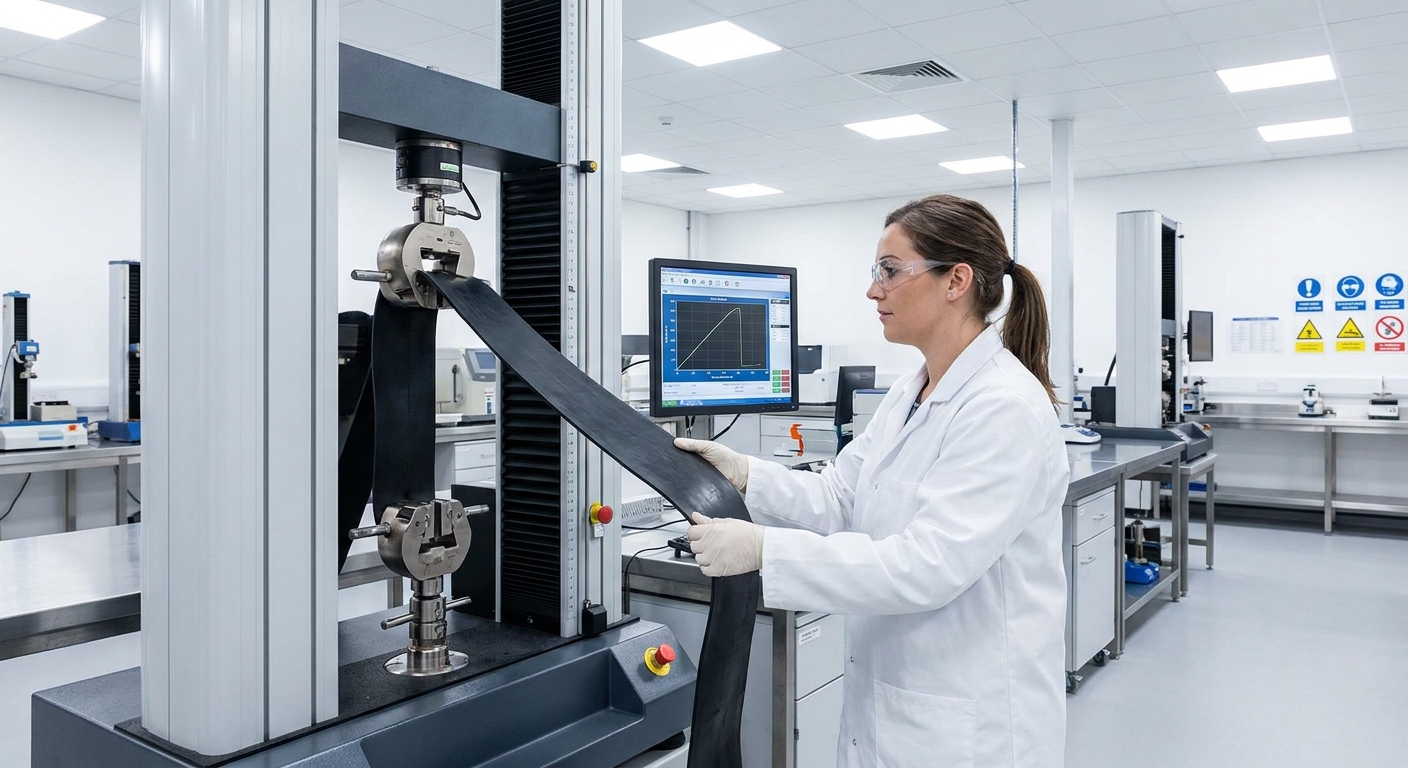
We audit conveyor belt quality through a rigorous combination of raw material verification, in-process checking, and final destructive stress testing. Integrating this strict multi-stage auditing system into our rubber conveyor belt manufacturing process guarantees that every shipped roll meets international DIN and ISO standards. This scientific quality control gives you total peace of mind, knowing your conveyor system will run smoothly without early belt failure.
How do we audit raw material chemistry?
Look: our quality assurance begins before any raw materials are allowed onto the production floor. Our laboratory tests every batch of raw polymer, carbon black, and fabric to verify physical purity and processing behavior.
Think about it:
- Rheometer testing: Scans every mixed batch to verify curing speeds and scorch safety.
- Mooney viscosity tests: Confirm raw rubber flow properties for consistent calendering.
- Moisture analysis: Checks reinforcing fabrics to prevent steam bubble defects during vulcanization.
What stress tests must finished belts pass?
Here is the kicker: every finished belt roll must pass rigorous destructive testing in our fully equipped laboratory. These tests mimic the extreme physical forces the belt will endure during years of heavy industrial operations.
Our lab tests:
- Tensile strength: Pulls rubber and fabric samples to their physical breaking point.
- Ply adhesion: Measures the force required to peel the layers apart to ensure zero delamination.
- DIN abrasion loss: Rotates rubber samples against abrasive drums to confirm wear resistance.
Why is manual visual inspection essential?
The reality is: laboratory instruments provide highly precise data, but they cannot replace the expert eye of a seasoned quality inspector. Every meter of cured belt undergoes a comprehensive manual examination by our quality specialists.
Our manual checks cover:
- Surface quality: Scanning the cover for microscopic pores or uneven textures.
- Edge straightness: Verifying that the belt is perfectly straight without edge waves.
- Dimensional checks: Measuring overall width and thickness at multiple points using micrometers.
Key Takeaway: A strict quality auditing system combines advanced lab testing with manual inspection, ensuring your conveyor belt meets global standards and operates without early defects.
| Quality Audit Step | Testing Method | Target Operational Quality Goal | |
|---|---|---|---|
| Raw Compound Prep | Rheometer & Viscometer | Verify curing characteristics and rubber flow before shaping | |
| Finished Product | Tensile & Adhesion Testers | Confirm absolute tensile capacity and zero delamination risk | |
| Final Inspection | Manual Visual & Caliper Scan | Guarantee flat, flawless surface and exact dimensions |
This complete testing program ensures that only flawless, high-performance belts leave our plant and arrive at your mining or cement facility.
How does precision finishing prepare the belt?
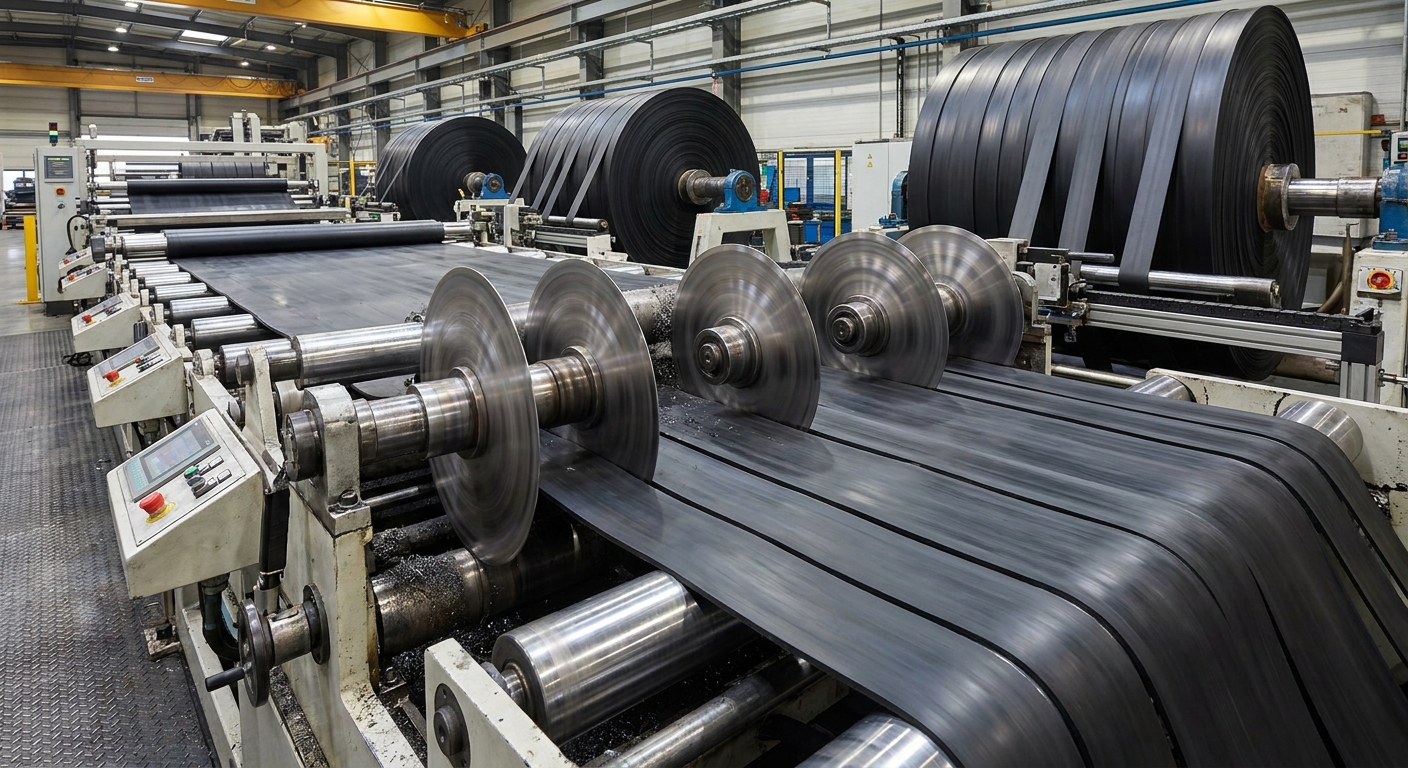
Precision finishing prepares the belt by slitting the master roll to your exact operational width and wrapping it in heavy-duty export packaging. Within the rubber conveyor belt manufacturing process, this final stage ensures that the belt edges are clean, straight, and sealed against environmental damage. By executing this step with high-capacity slitting blades, we guarantee a perfectly straight belt that resists edge fraying from day one.
How do rotary slitting blades ensure precision?
Look: slitting a heavy-duty rubber belt requires immense force and highly specialized machinery to cut cleanly through rubber and fabric. We utilize high-speed rotary slitting lines to split master rolls into multiple narrower belts.
Think about it:
- Parallel slitting blades: Produce perfectly straight, parallel edges to prevent tracking issues.
- Guillotine shear cutters: Trim belts to exact operational lengths with clean, square ends.
- Laser alignment guides: Help the operator keep the cutting blades centered on reference lines.
What dimensional verifications are performed?
Here is the deal: even with automated slitting systems, our quality team performs a complete secondary physical measurement. This manual verification acts as a final double-check against your order specifications before packing.
We measure:
- Belt width: Checked at multiple points using calibrated steel rules for consistency.
- Roll length: Verified using certified distance wheels to guarantee zero shortage.
- Edge squareness: Audited with precise L-squares to ensure straight splicing on-site.
How does export packaging protect your order?
Believe it or not: premium conveyor belts represent a massive investment, and they must be protected from environmental degradation during long sea voyages. Our standard export packaging is engineered to withstand rough sea transport and salt air.
Our protection methods include:
- Steel-frame pallets: Support the heavy roll weight and ease forklift handling.
- UV-resistant plastic wrap: Blocks sunlight and prevents atmospheric rubber cracking.
- Waterproof PP bags: Create a tough, puncture-resistant barrier against moisture.
Key Takeaway: High-precision slitting and heavy-duty packaging are the final steps that guarantee your customized belt arrives at your facility in pristine, install-ready condition.
| Finishing Stage | Core Machinery | Crucial Quality Target | |
|---|---|---|---|
| Cutting & Slitting | Rotary Slitting Lines | Perfectly parallel, smooth edges and square ends for splicing | |
| Dimensional Check | Calibrated Steel Measures | Full compliance with your exact width and length requirements | |
| Export Packaging | Steel Pallets & PP Wrapping | Complete protection from water, UV rays, and transport damage |
This rigorous attention to finishing details guarantees that your conveyor belts survive long transit to remote industrial sites without structural damage.
How does custom tailoring solve site issues?
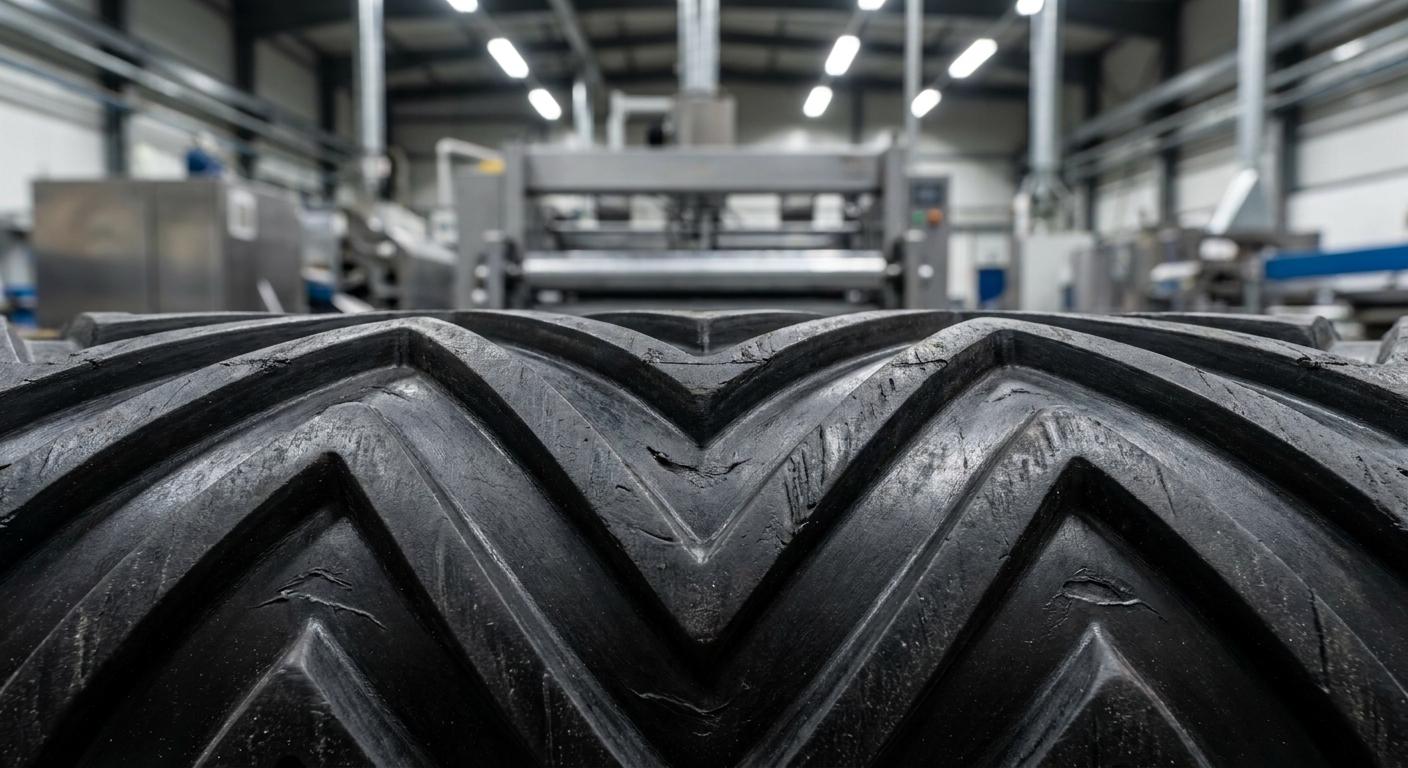
Custom tailoring solves site issues by adjusting polymer formulas, carcass constructions, and surface profiles to match your unique material handling challenges. Within our specialized rubber conveyor belt manufacturing process , we avoid off-the-shelf limits by designing belts specifically for extreme heat, high incline, or heavy impact zones. This collaborative engineering approach directly eliminates chronic maintenance problems, maximizing your uptime and lowering your operational cost per ton.
How do we engineer for extreme heat and oil?
Look: generic conveyor rubber will quickly harden, crack, and crumble when exposed to hot clinkers or corrosive acidic chemicals. To prevent this rapid degradation, our laboratory custom-compounds covers using elite synthetic polymers.
Think about it:
- EPR and EPDM polymers: Deliver exceptional resistance to thermal oxidation up to 220°C.
- Chloroprene blends: Provide dual resistance to oil swells and ozone weathering.
- Acid-resistant rubber: Prevents chemical swelling in corrosive fertilizer facilities.
What carcass reinforcements handle heavy tension?
Here is the deal: the internal reinforcing carcass must match your system length, incline angles, and driving power. We offer a full range of high-strength materials to keep operational stretch to a minimum.
The reality is:
- SW / IW Steel Mesh: Provides extreme impact and tear resistance in dump zones.
- Heavy-duty EP fabric: Delivers excellent longitudinal strength and optimal belt troughing.
- Solid Woven PVC/PVG: Offers flame retardancy and high tensile strength for mining networks.
How does direct factory design maximize uptime?
Believe it or not: working directly with our engineering team allows you to customize the top-to-bottom rubber ratios and surface profiles of your belt. Custom profiles can be molded, such as chevron conveyor belt profiles for steep materials, or sidewall conveyor belt options to prevent side leakage.
Our direct services provide:
- Tailored cover thickness: Optimizes rubber layers to match your material abrasion rates.
- Custom profile molding: Produces high-performance chevron cleats or corrugated sidewalls.
- Direct expert support: Offers immediate access to our engineers for fast design adjustments.
Key Takeaway: Factory-direct customization lets you choose the perfect chemical covers and physical reinforcements, resolving chronic system failures and maximizing your material throughput.
| Customization Option | Specialized Material | Primary Application Scenario | |
|---|---|---|---|
| Super Heat Resistant | EPDM Polymer Compounding | Moving hot cement clinker and sintered steel ores | |
| Steep Incline Profile | Molded Chevron Cleats (V-pattern) | Transporting bulk materials up steep angles up to 40 degrees | |
| Extreme Tear Resistant | Steel Mesh Carcass Insertion | Heavy quarry dump points with high rock-impact risks |
This high level of engineering customization ensures your belt outperforms generic options, delivering measurable savings on every ton of material handled.
What is the future of sustainable belt systems?
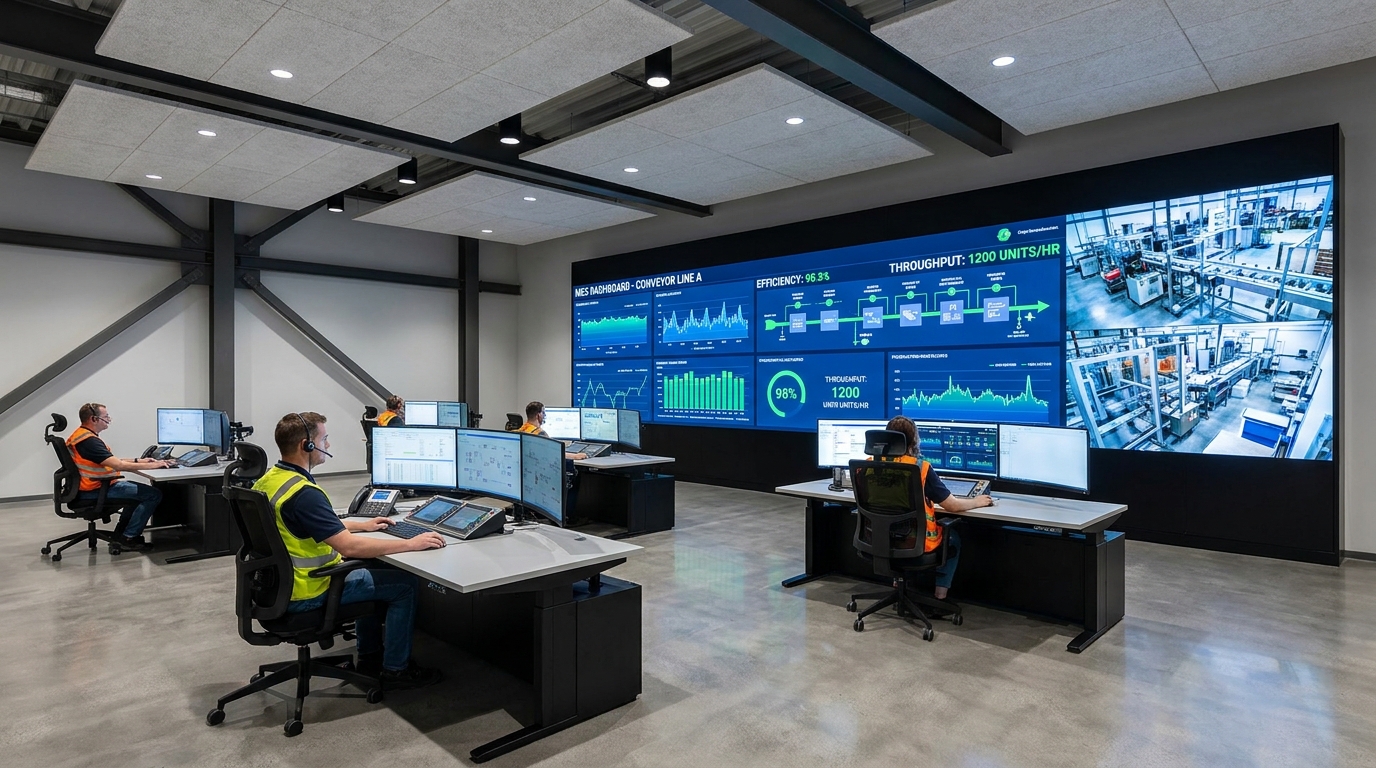
The future of sustainable belt systems lies in integrating eco-friendly materials, low-emission processing, and smart digital factory monitoring to reduce environmental impacts. Within our modern rubber conveyor belt manufacturing process, we lead this transition by utilizing low-VOC process oils, circular recycling programs, and advanced factory software. This commitment to sustainable engineering guarantees that you receive the longest-lasting, highest-quality belts while significantly cutting your carbon footprint.
What are our clean circular material initiatives?
Look: sustainable manufacturing demands a responsible, scientific approach to raw material selection and waste management. This is crucial for underground coal mine environments where strict safety codes prevent fire hazards.
Think about it:
- Internal recycling loops: Reprocess trimmed edge rubber under strict laboratory control.
- Low-VOC process oils: Eliminate harmful chemical emissions during raw rubber mixing.
- Halogen-free retardants: Provide safety in underground coal mines without releasing toxic gases.
How does active air purification maintain safety?
Here is the deal: vulcanizing rubber is a complex chemical reaction that produces sulfur-based exhaust gases if left unmanaged. To ensure clean air, we have installed advanced air purification hoods directly over our curing presses.
The reality is:
- Active carbon filtration: Neutralizes sulfur dioxide and trioxide gases during vulcanization.
- High-volume extractors: Maintain exceptionally clean and safe working air for our staff.
- Zero-emission exhausts: Ensure our manufacturing facility complies with the strictest environmental codes.
How does smart MES software guarantee precision?
Believe it or not: our modern factory uses a centralized manufacturing execution system (MES) to monitor and control every physical variable of the production line. This smart digital integration tracks mixing torque, calendering thickness, and vulcanizing temperature in real time, ensuring that every batch is identical.
Our smart software delivers:
- Digital batch tracking: Connects every finished roll back to its original raw material lot.
- Automated quality alerts: Pause production instantly if any variable deviates by even one percent.
- Complete data logs: Provide full traceability for third-party audits and client inspections.
Key Takeaway: Combining sustainable polymer chemistry with smart MES factory monitoring represents the next generation of conveyor belt engineering, ensuring absolute production consistency and green environmental safety.
| Sustainable Technology | Environmental Target | Real-World Operational Impact | |
|---|---|---|---|
| Low-VOC Process Oils | Eliminate raw volatile organic fumes | Maintains peak rubber elasticity and wear resistance | |
| Activated Carbon Domes | Neutralize sulfur vulcanization gas | Ensures clean factory air and clean machine surfaces | |
| Centralized MES Software | Remove manual operational errors | Guarantees identical curing and tensile properties in every batch |
This advanced digital framework is why our sustainable, high-performance belts are chosen by progressive mining and port operators globally.
For heavy industrial operators facing premature belt failures, extreme abrasion, or costly unscheduled shutdowns, Weifang Zhenxing Rubber Co., Ltd. provides the ultimate custom-engineered solutions to maximize your uptime and lower your cost per ton handled. From advanced compounding to final precision slitting, our factory-direct engineering team is ready to design a highly durable conveyor belt tailored exactly to your site’s physical parameters. To schedule an in-person facility audit, receive a detailed tensile calculation, or get a direct drawing-based quote within 24 hours, please contact us today and let us build a stronger, more reliable future for your business.
FAQ: High-Performance Conveyor Belt Engineering
Can I customize the top and bottom cover thicknesses of my rubber conveyor belt?
Absolutely, yes. Our direct-factory manufacturing capabilities allow us to customize both the top and bottom cover thicknesses to match your specific material abrasion profiles. In highly abrasive applications, such as conveying sharp aggregates or quarried stone, we typically recommend a thicker top cover to absorb direct physical impacts and resist surface gouging. Conversely, the bottom cover can be kept thinner to optimize pulley wrap and minimize overall drive energy consumption.
What’s the best rubber grade for high-temperature clinker transport?
Our laboratory recommends EPDM polymer blends as the absolute best choice for handling hot clinker and sintered ores. Standard SBR compounds will quickly turn brittle and crack when exposed to continuous temperatures exceeding 120°C. Our specialized EPDM compounds utilize advanced polymer chemistry to maintain their physical elasticity and tensile strength at continuous operating temperatures up to 220°C.
How do I know if my industrial application needs a steel cord reinforced belt?
Your engineering team should select a steel cord reinforced belt whenever your system layout involves exceptionally long conveyor distances, high tension loads, or vertical incline requirements. Multi-ply fabric belts are highly versatile but will stretch excessively under high tension, leading to slippage and take-up stroke limitations. Steel cord reinforced carcasses deliver maximum longitudinal strength with virtually zero operational stretch, making them the industry standard for high-capacity mining and port systems.
Can I use standard fabric belts in explosive coal mining environments?
No, you absolutely cannot. Using a standard-grade fabric belt in underground coal mines represents a severe safety hazard and violates international mining regulations. Underground operations demand specialized Solid Woven PVC/PVG or flame-retardant rubber compounds that are certified to prevent static electricity build-up and resist direct fire ignition. Our mining-grade belts are certified to MT 668 and EN 14973 standards to ensure maximum safety in high-risk environments.
What’s the best way to prevent belt self-adhesion during shipping?
The single most effective way to prevent warm, soft rubber layers from sticking together is to insert a high-quality release liner during the coiling phase. Uncured or semi-cured rubber possesses inherent surface tackiness that will cause the windings to fuse together under high shipping temperatures. Our packaging department utilizes high-strength textile release liners and protective woven coverings to shield every roll from direct heat, high humidity, and physical damage.