
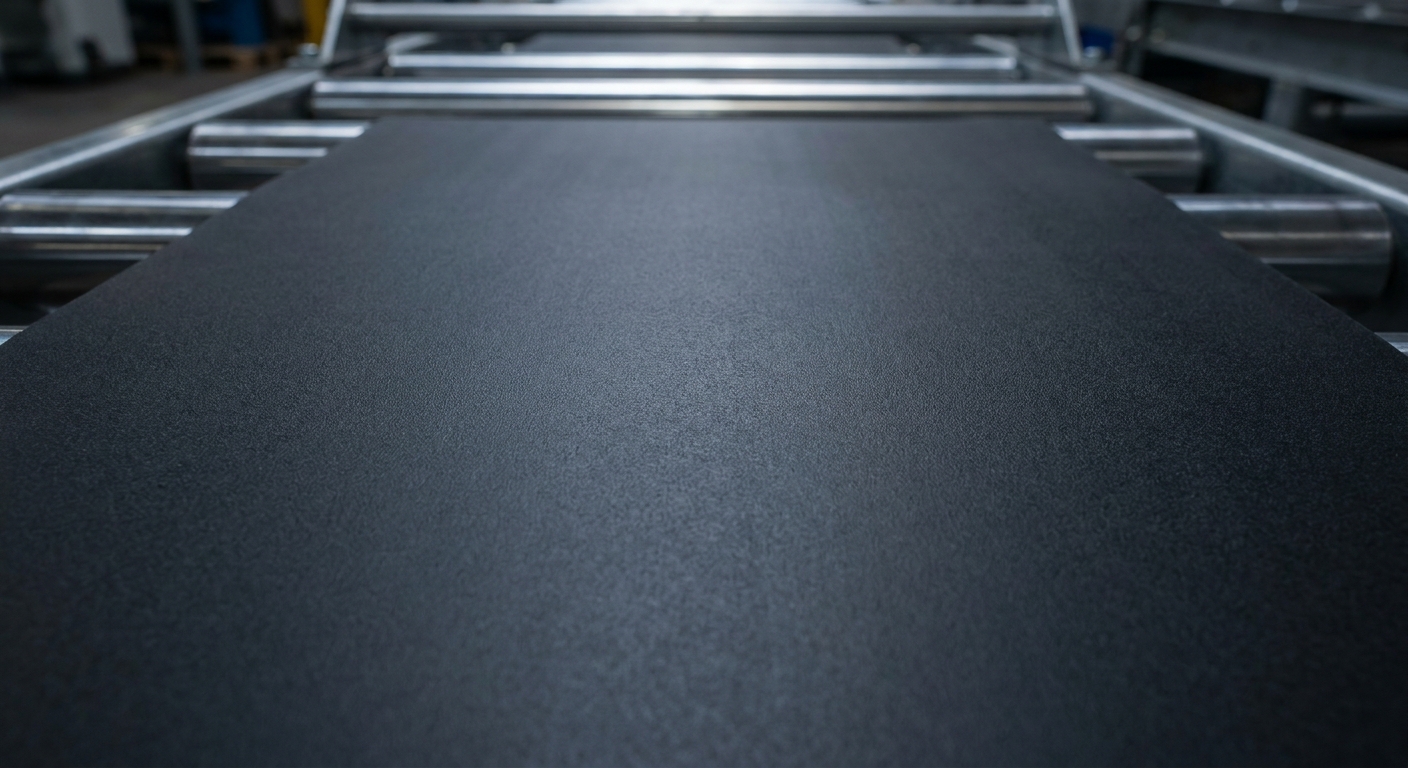
A smooth rubber conveyor belt is a reliable and efficient material handling solution designed for stable transport, easy cleaning, and long-term industrial performance. Engineered with a seamless flat surface and durable rubber compounds, these conveyor belts provide excellent traction, reduce material spillage, and minimize premature wear during operation. In demanding industrial environments, a smooth rubber conveyor belt helps improve conveying efficiency, lower maintenance costs, and prevent unexpected downtime caused by uneven surfaces or damaged belt plies. Its durable construction and smooth conveying performance make it ideal for manufacturing, packaging, logistics, food processing, and bulk material handling applications.
Why Choose a Smooth Rubber Conveyor Belt for Mining?
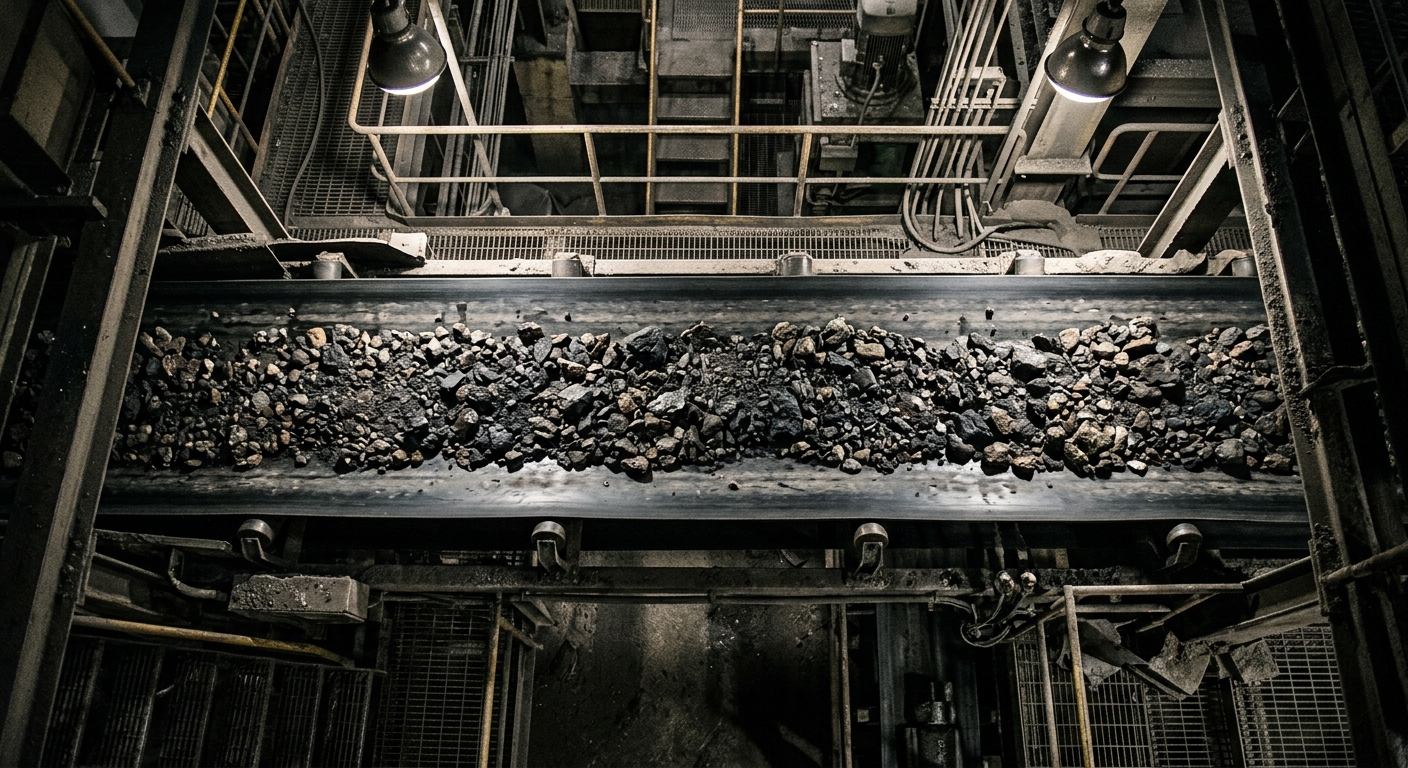
You choose this setup for heavy bulk mining because a smooth rubber conveyor belt distributes load weight evenly while resisting impact. The flat, seamless surface allows scrapers and plows to clear sticky ores or heavy rocks with maximum efficiency.
Optimizing Bulk Material Processing
Managing heavy raw minerals requires extremely resilient transport surfaces that can withstand continuous impact. Think about it. When rocks fall from drop chutes, they can easily pierce inferior materials.
- Superior impact absorption to protect system rollers.
- Easier blade-cleaning to prevent ore carryback.
- High tensile strength for steep tension demands.
The following data compares how smooth surfaces perform under typical mining loads compared to textured alternatives.
| Metric | Smooth Rubber Belt | Textured/Cleated Belt | |
|---|---|---|---|
| Cleaning Efficiency | Exceptional (99%) | Poor (Sticky residue stays) | |
| Impact Resistance | Excellent | Moderate | |
| Wear Uniformity | Even | Concentrated on cleats |
Key Takeaway: In heavy-duty mining, a flat, non-textured belt surface optimizes material discharge and extends the lifespan of your mechanical scrapers.
How Is a Smooth Rubber Conveyor Belt Constructed?
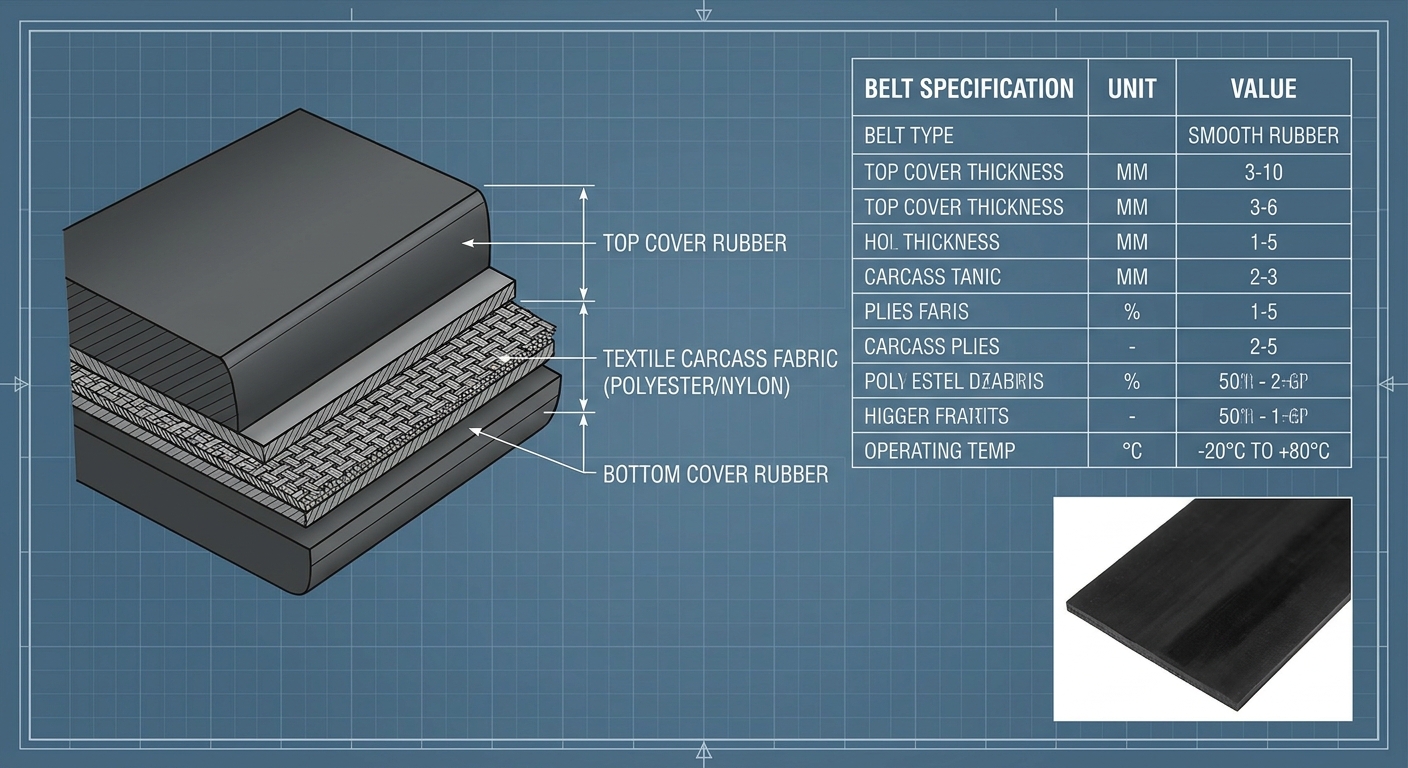
A premium belt is constructed using high-grade multi-ply textile carcasses sandwiched between protective top and bottom elastomer covers. Our engineered smooth rubber conveyor belt utilizes polyester-nylon (EP) fabrics to deliver low elongation and supreme flexibility.
Understanding the Internal Layering
Every layer within your belt carcass serves a critical structural purpose to ensure seamless operation under load. Let’s face it. Without proper reinforcement plies, your system will sag and fail prematurely.
- Top Cover: Protects the core against abrasion, gouging, and chemical exposure.
- EP Carcass: Provides the vital tensile strength and longitudinal flexibility.
- Bottom Cover: Maximizes pulley grip and prevents power loss from friction.
We have broken down the core structural specifications of standard multi-ply belts below.
| Component Layer | Standard Thickness | Primary Function | |
|---|---|---|---|
| Top Rubber Cover | 3.0 mm to 10.0 mm | Wear protection & Impact resistance | |
| Textile Carcass | 2 to 5 EP Plies | Tension loading & Structural support | |
| Bottom Rubber Cover | 1.5 mm to 4.5 mm | Pulley friction & Drive efficiency |
Key Takeaway: Selecting the correct top cover thickness based on your material’s lump size ensures the structural integrity of your internal EP plies.
Where Does a Smooth Rubber Conveyor Belt Aid Logistics?
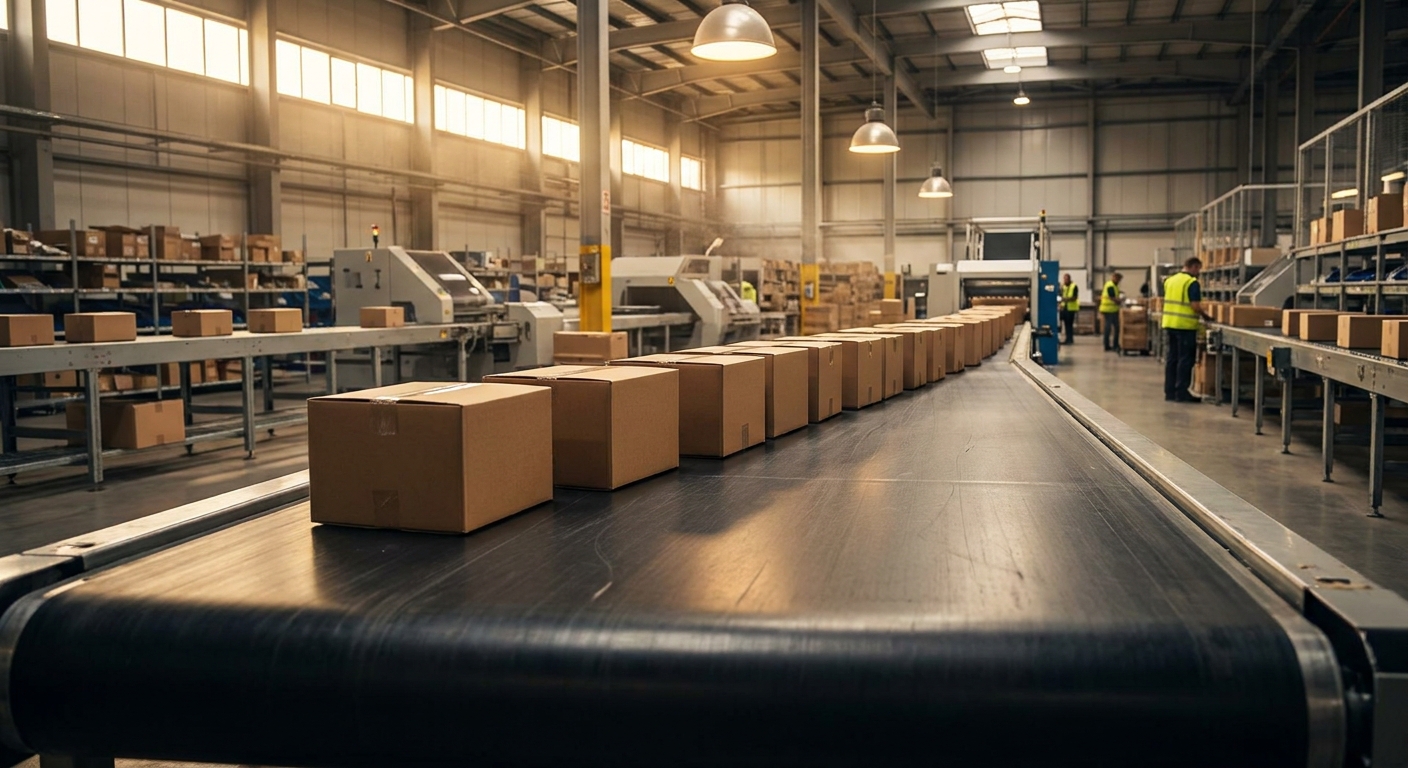
In high-volume logistics, these belts facilitate swift parcel sorting, merging, and transition maneuvers without causing damage to fragile boxes. A smooth rubber conveyor belt guarantees a flat, high-grip surface so packages remain steady during acceleration.
Improving Distribution Center Throughput
Rapid fulfillment environments demand continuous belt tracking and minimal package sliding on high-speed sorting lines. Here is why. Slippage leads to barcode scan errors and costly operational delays.
- Consistent coefficient of friction for reliable package stopping.
- Low-noise operation to improve warehouse working conditions.
- Excellent tracking properties on long-distance sorting runs.
Let’s examine the productivity benefits of high-friction smooth rubber in sorting systems.
| Operational Factor | Smooth Rubber Solution | PVC/Plastic Modular | |
|---|---|---|---|
| Package Slippage | Very Low | Moderate to High | |
| Noise Level | Low (< 70 dB) | High (Clicking links) | |
| Maintenance Needs | Minimal tracking adjustments | Frequent joint cleaning |
Key Takeaway: Utilizing high-grip elastomer covers on your warehouse lines prevents box slippage, ensuring your automated scanners read labels correctly.
Can a Smooth Rubber Conveyor Belt Improve Packaging?
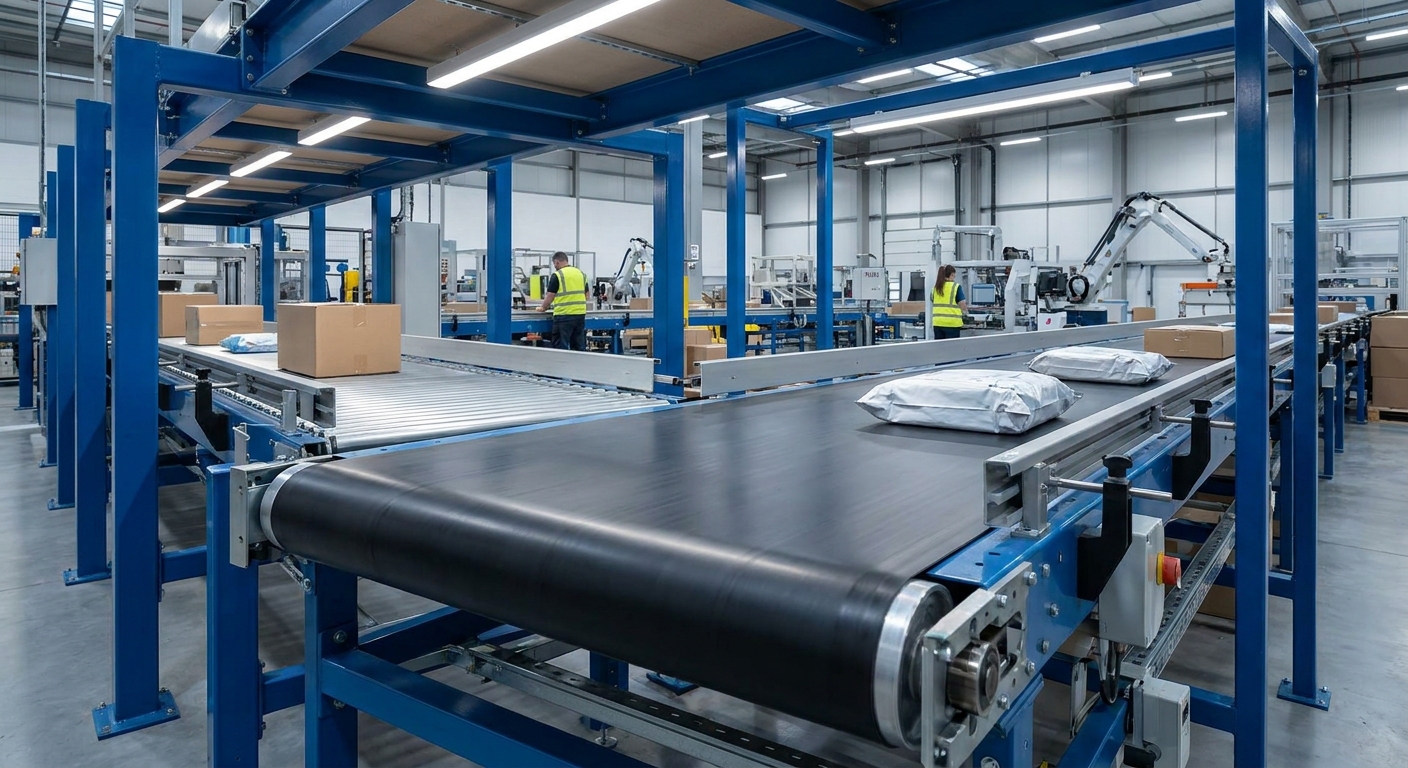
Yes, these systems significantly improve packaging efficiency by offering precise product spacing and stable transfer points. Integrating a smooth rubber conveyor belt into your assembly line prevents packages from tipping or bottlenecking during rapid transitions.
Securing Box Transitions
Your automated packaging equipment relies on perfect synchronization to tape, label, and box items reliably. But that’s not all. Sudden jerks or belt vibrations can misalign your delicate sensors instantly.
- Vibration-damping properties for delicate product alignment.
- Seamless integration with secondary robotic arm systems.
- Smooth surface preventing glue or adhesive residues from sticking.
The matrix below highlights key performance differences during continuous packaging runs.
| Feature | Smooth Rubber Belting | Plastic Chain Systems | |
|---|---|---|---|
| Surface Stability | Seamless & flat | Segmented & uneven | |
| Adhesive Resistance | High (Easy to wipe) | Poor (Glue binds in seams) | |
| Sensor Accuracy | Consistently high | Intermittent due to vibration |
Key Takeaway: Eliminating surface vibrations with a smooth elastomer belt secures exact product alignment for your automated labeling systems.
Is a Smooth Rubber Conveyor Belt Best for Bulk Grain?
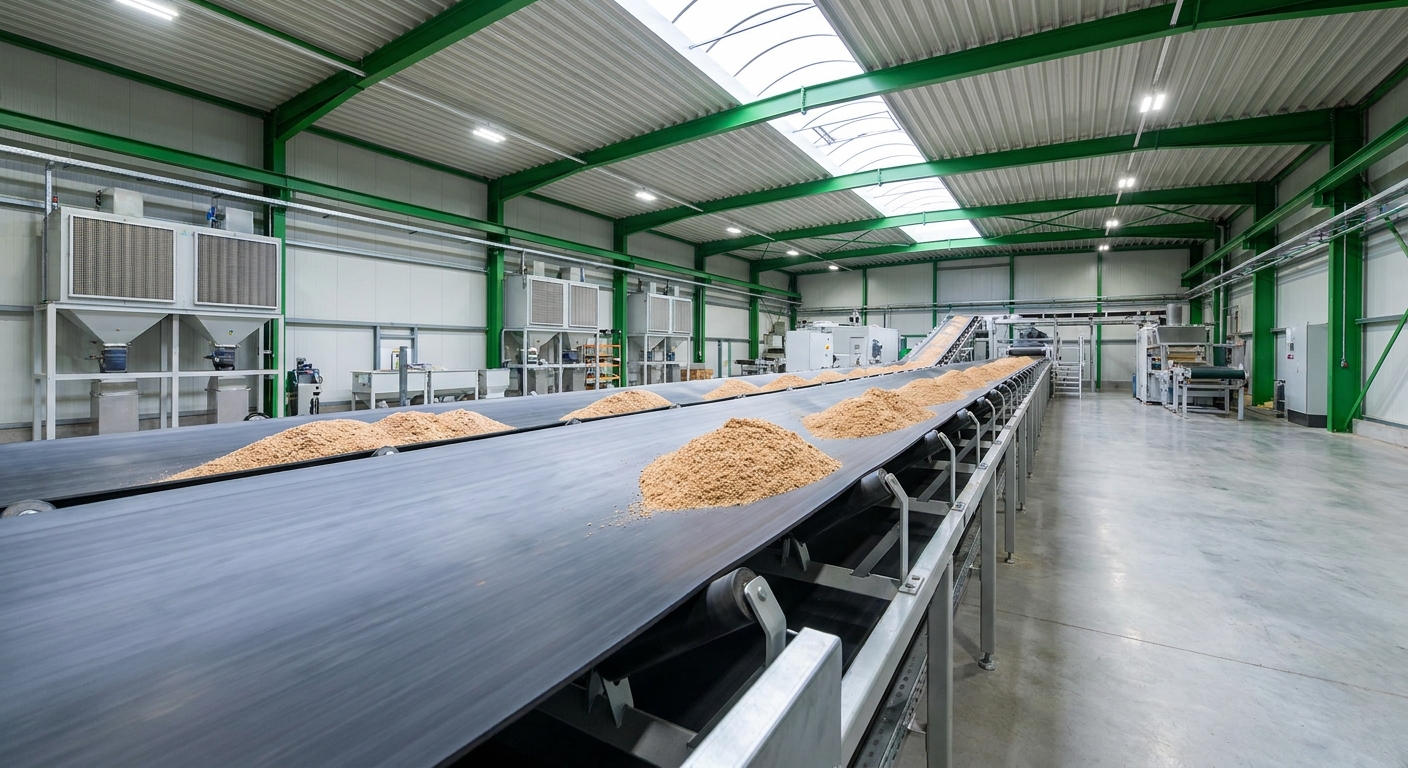
It is highly effective for flat, bulk grain transport and seed processing where minimizing seed damage is crucial. A smooth rubber conveyor belt carries grains gently without pockets or cleats that could crush the product or harbor pests.
Maximizing Agricultural Safety
Handling agricultural products requires strict cleanliness standards and gentle handling to protect germinating seeds from damage. You must consider how mold and bacteria breed in hidden belt seams.
- No crevices or pockets where dust and organic matter accumulate.
- Gentle discharge action preventing kernel cracking.
- Food-grade cover options that resist plant lipids and seed oils.
Let’s look at the comparative health and safety aspects of bulk grain conveying.
| Metric | Smooth Rubber Belt | Cleated/Pocket Belt | |
|---|---|---|---|
| Pest/Mold Risk | Extremely low | High (Debris traps) | |
| Seed Damage Rate | < 0.1% | Up to 1.5% | |
| Clean-down Time | Fast (Wipe or blow-off) | Tedious manual scraping |
Key Takeaway: To maintain strict agricultural sanitation standards, use a smooth belt that leaves zero crevices for grain debris or moisture accumulation.
Why Use a Smooth Rubber Conveyor Belt for Castings?
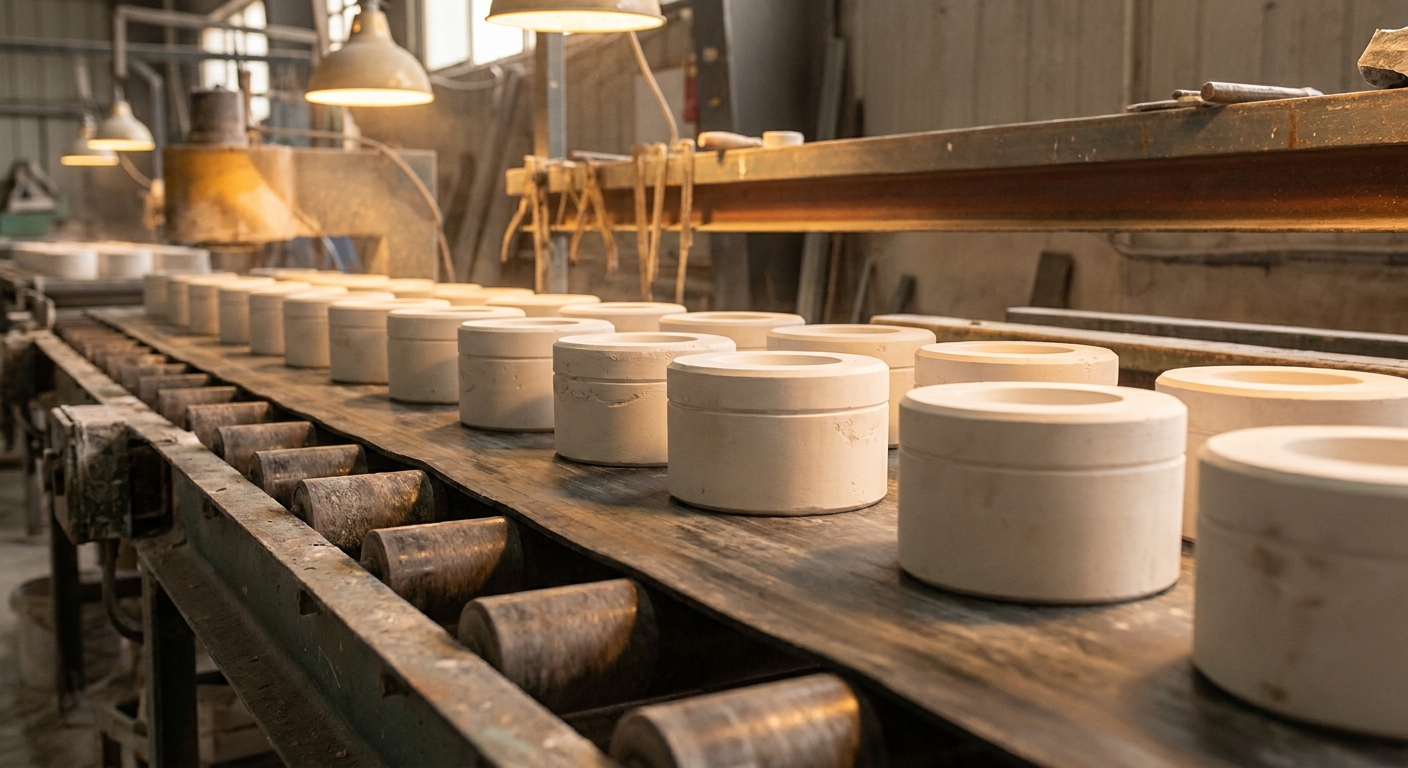
Manufacturing plants use these belts for hot castings and abrasive molds because special heat-resistant rubber compounds protect the core carcass. Utilizing a specialized smooth rubber conveyor belt prevents thermal cracking while stabilizing heavy plaster molds during cooling.
Managing High-Heat Castings
Placing fresh, hot ceramic molds or metal parts directly onto a belt can cause normal rubber compounds to harden and crack. Think about your current replacement costs if you choose the wrong cover.
- Heat-resistant EPDM compounds that withstand up to 200°C.
- Flat surface prevents plaster molds from tipping over.
- Excellent oil and chemical resistance for release agents.
The properties below demonstrate how heat-resistant smooth rubber compares to general-purpose compounds.
| Performance Class | Heat-Resistant EPDM Cover | General-Purpose SBR Cover | |
|---|---|---|---|
| Max Continuous Temp | 200°C | 80°C | |
| Resistance to Cracking | Superior | Poor (Hardens quickly) | |
| Load Stability | Flat, vibration-free | Prone to surface distortion |
Key Takeaway: Selecting heat-resistant EPDM smooth belts prevents thermal degradation when transporting hot molds or castings through your curing ovens.
How Clean Is a Smooth Rubber Conveyor Belt System?
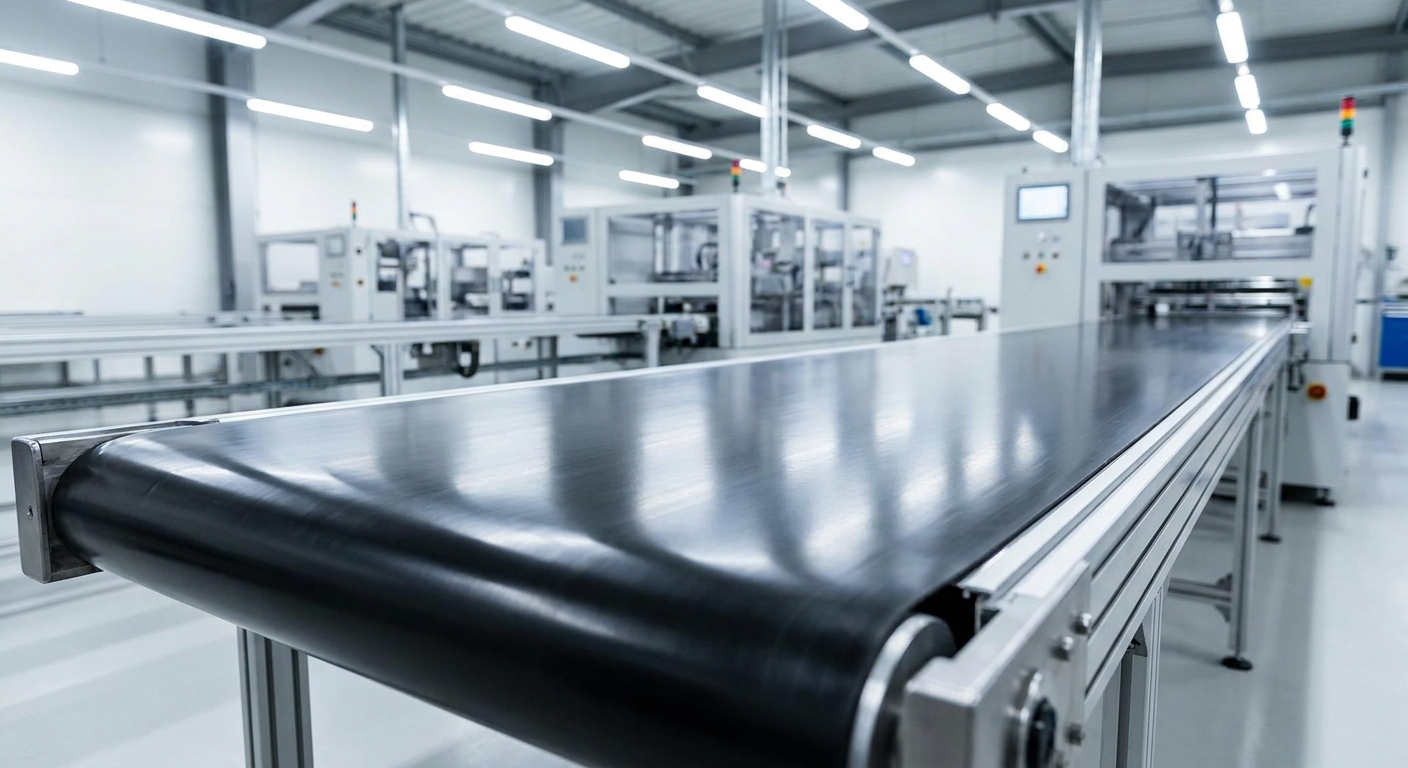
These conveyor systems are exceptionally hygienic because they feature zero seams, pockets, or joints where dust and debris can hide. A smooth rubber conveyor belt is designed for simple, automated cleaning cycles that keep your production line spotless.
Keeping Your Production Floor Spotless
Maintaining high sanitary standards in modern processing plants requires conveyors that can be cleaned rapidly without disassembly. Let’s make one thing clear. Time spent scrubbing hinges is wasted money.
- Seamless surface is fully compatible with spray bars and wiper blades.
- Anti-microbial and non-porous elastomer cover designs.
- Zero particulate shed compared to deteriorating modular links.
Below is an analysis of maintenance and sanitization times across different belt profiles.
| Sanitation Parameter | Smooth Elastomer Belt | Modular Plastic Link Belt | |
|---|---|---|---|
| Cleaning Method | Automated scraper/spray | Pressurized deep-wash | |
| Average Wash Time | 15 Minutes | 60+ Minutes | |
| Microbe Harboring | Minimal (Non-porous) | High (In hinges/joints) |
Key Takeaway: Integrating a seamless smooth elastomer belt significantly reduces wash-down times and eliminates microscopic contaminant harboring sites.
What Makes a Smooth Rubber Conveyor Belt Durable?
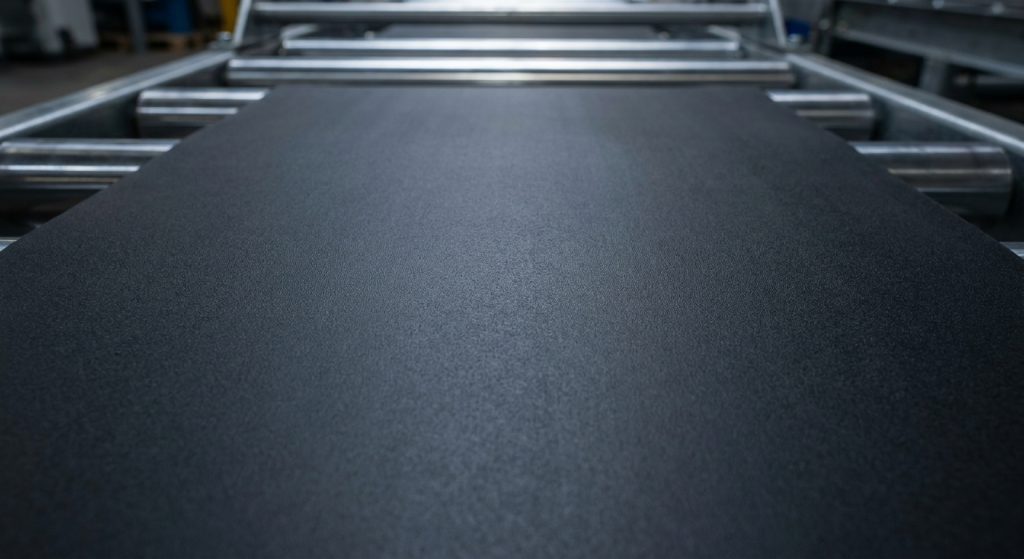
Extreme durability comes from high-density vulcanized rubber covers combined with reinforced synthetic fabric carcasses. Our heavy-duty smooth rubber conveyor belt products feature proprietary SBR or EPDM compounds designed to resist tearing, ozone weathering, and mechanical abrasion.
Analyzing Wear and Tear Factors
To get the longest life out of your systems, you must select cover compounds matching your specific operational abrasive forces. Look at your material’s physical edges.
- High tensile strength plies that resist heavy pulling tension.
- Excellent elastic recovery to prevent permanent elongation.
- Superior tear propagation resistance against sharp metal scrap.
The table below lists standard vulcanized rubber classifications and their wear resistance grades.
| Rubber Grade (DIN) | Tensile Strength | Abrasion Loss (Max) | |
|---|---|---|---|
| Grade W | 18 MPa | 90 mm³ (Super wear-resistant) | |
| Grade X | 25 MPa | 120 mm³ (Heavy duty impact) | |
| Grade Y | 20 MPa | 150 mm³ (General abrasive) |
Key Takeaway: Matching your belt cover’s DIN abrasion grade to your raw materials maximizes service life and prevents early cover gouging.
How to Inspect a Smooth Rubber Conveyor Belt Splice?
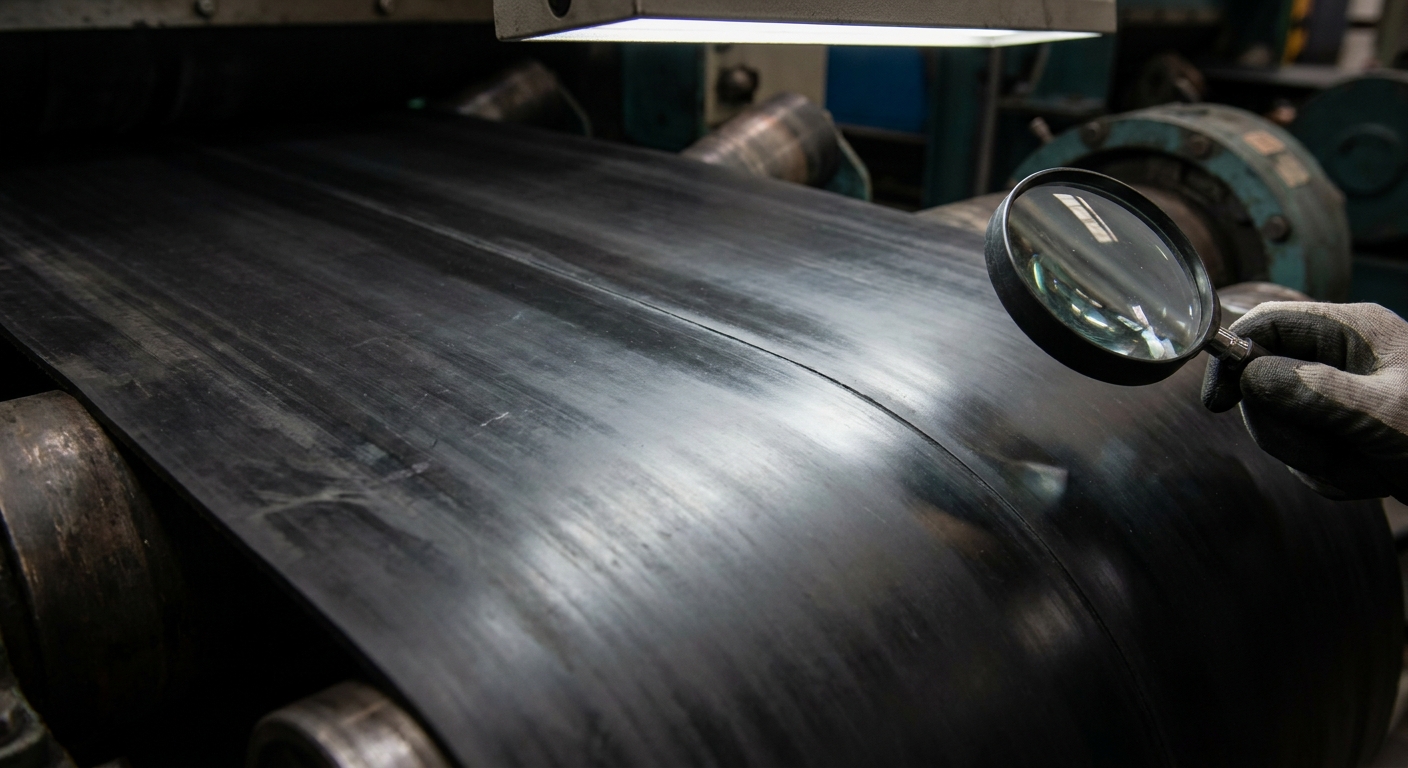
You inspect a belt splice by looking for surface splits, cover lift, or edge wear along the vulcanized joint. Maintaining a smooth rubber conveyor belt involves early detection of splice fatigue to prevent catastrophic failure under load.
Spotting Early Splice Fatigue
Regular maintenance checks allow you to catch splice wear before a full joint separation shuts down your facility. Think about the consequences. A sudden belt snap can damage your structural pulleys instantly.
- Examine the trailing edge of the splice for lifting or peeling.
- Look for fine rubber dust indicating alignment rubbing.
- Check the splice width compared to standard belt width.
We have detailed the key warning signs of splice failure and their urgent actions below.
| Visual Observation | Root Cause | Required Action | |
|---|---|---|---|
| Lifting splice edge | Poor vulcanization adhesion | Buff and re-bond edge | |
| Cracking along splice line | Excessive system tension | Re-evaluate splice length | |
| Edge fraying near splice | Conveyor mistracking | Realign structural pulleys |
Key Takeaway: Conducting weekly visual inspections of your vulcanized joints prevents unscheduled production stops and expensive belt replacements.
Why Automate with a Smooth Rubber Conveyor Belt?
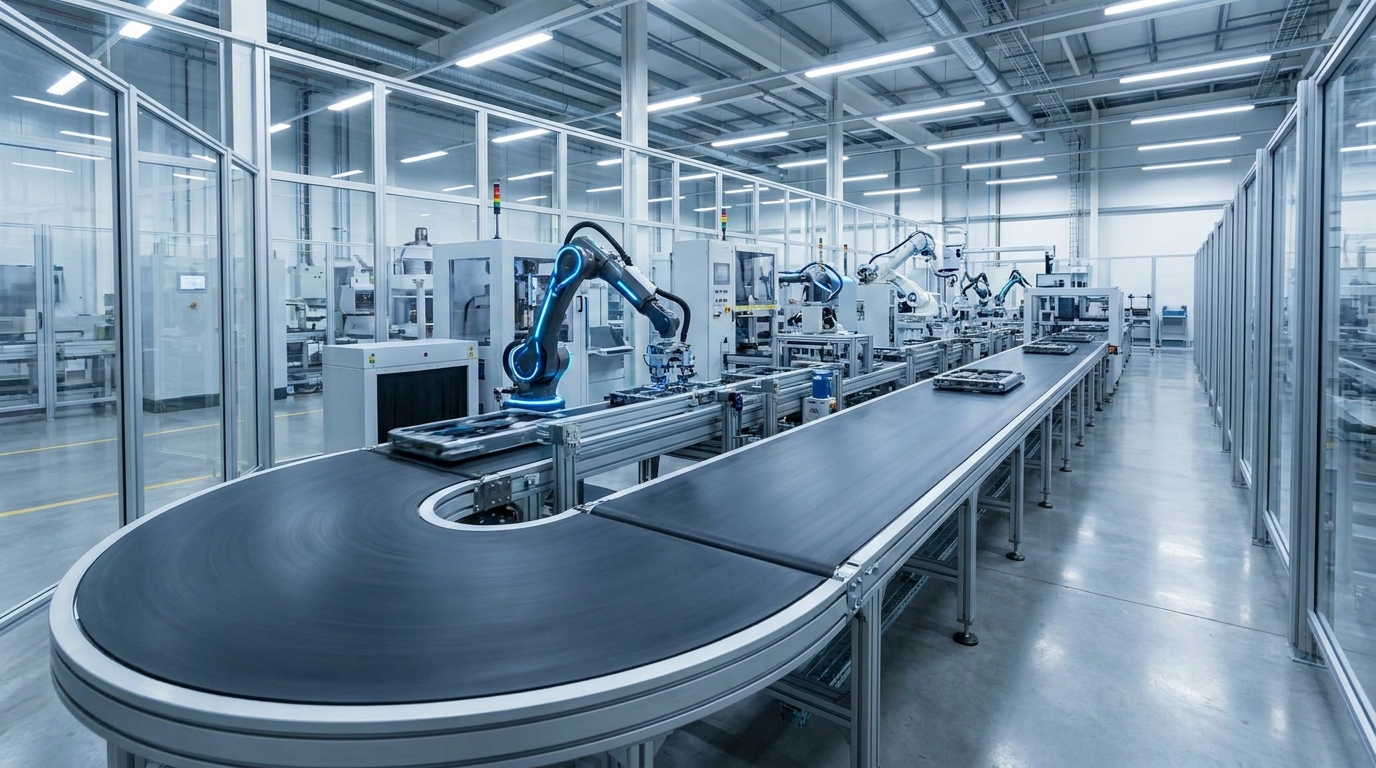
You should automate with these belts because their flat, consistent surfaces provide the predictable speeds and positions that robotic sensors require. Operating a premium smooth rubber conveyor belt ensures seamless communication between high-speed robotic sorters and moving cargo.
Integrating Smart Robotic Lines
Modern automated systems require smooth, vibration-free tracking to guarantee robotic arms can pick and place items flawlessly. Do you want to increase your packaging rate?
- Constant velocity surface with zero lurching or jerking.
- Matte finish that prevents glare on optical scanning sensors.
- Highly predictable tracking path through curved conveyor beds.
Below is a comparison of performance factors for robotic integration between belt styles.
| Automation Variable | Smooth Rubber Surface | Segmented Plastic Belt | |
|---|---|---|---|
| Optical Sensor Interference | None (Consistent matte surface) | High (Gaps cause sensor glare) | |
| Positional Accuracy | Extremely High (Stable grip) | Moderate (Slight hinge play) | |
| Robot Cycle Speed | Optimized for rapid cycles | Restricted due to vibration |
Key Takeaway: Selecting a matte-finish smooth rubber belt prevents optical sensor errors and maximizes the speed of your robotic arms.
Frequently Asked Questions
Can I run a smooth rubber conveyor belt on an incline?
Yes, you can operate a smooth belt on inclines up to 15 to 18 degrees depending on the material’s internal friction angle. For steeper inclines, you should transition to a cleated or chevron belt to prevent material rollback.
What’s the best way to clean sticky materials off a flat belt?
The best cleaning method is installing a spring-tensioned primary polyurethane scraper blade directly against the discharge pulley. This easily removes surface-bound sticky residue without causing cover wear.
How do I determine the right top cover thickness?
You determine cover thickness by matching the size, weight, and sharp-edged nature of your transported material to standard rubber grades. Heavy, sharp ore requires a thicker, high-density top cover (6mm to 10mm), while light parcels require only 2mm to 3mm.
Can I splice a smooth rubber conveyor belt myself?
Yes, you can use mechanical fasteners for quick emergency repairs, but hot vulcanization is highly recommended for permanent, seamless strength. Vulcanized splices maintain the belt’s uniform thickness and maximize longevity.
Conclusion
Investing in high-quality conveyor belts is the ultimate solution to optimize your plant’s efficiency, protect your cargo, and eliminate unexpected downtime. Ready to elevate your facility’s material handling capabilities with durable, high-performance belts? To get a custom quote or speak with our application engineers about your specific production needs, contact us today for expert support.