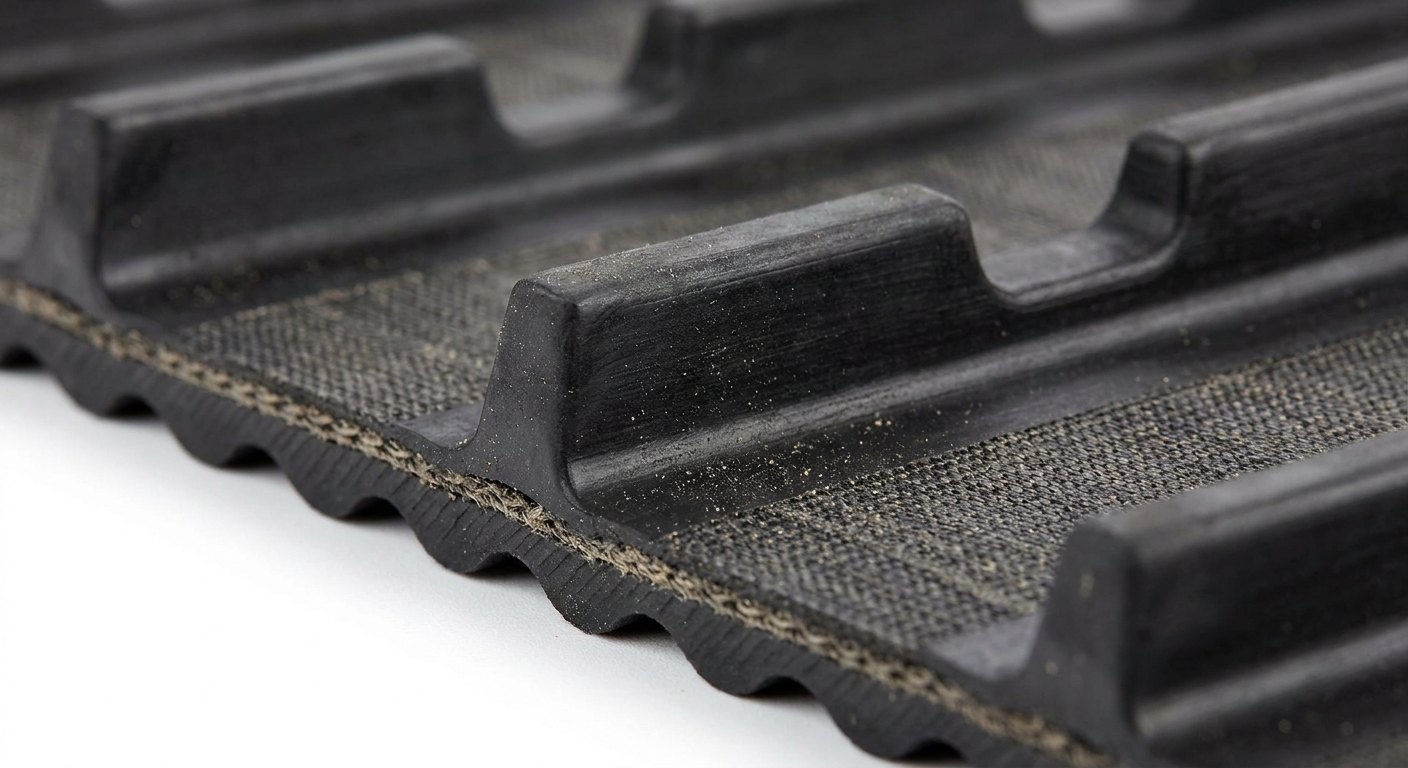
A high-performance sidewall for rubber conveyor belt is an advanced material handling solution designed for transporting powders, gypsum slurry, and abrasive bulk materials at steep incline or vertical angles without spillage. Engineered with flexible corrugated sidewalls and reinforced cleats, these conveyor systems securely contain materials during transport while maximizing conveying efficiency and reducing maintenance costs. In demanding plaster casting and industrial processing environments, a sidewall for rubber conveyor belt helps prevent material overflow, reduce dust contamination, protect machinery from premature wear, and optimize factory space by enabling vertical conveying layouts. Its durable construction ensures reliable, continuous operation in heavy-duty bulk material handling applications.
What is a sidewall for rubber conveyor belt?
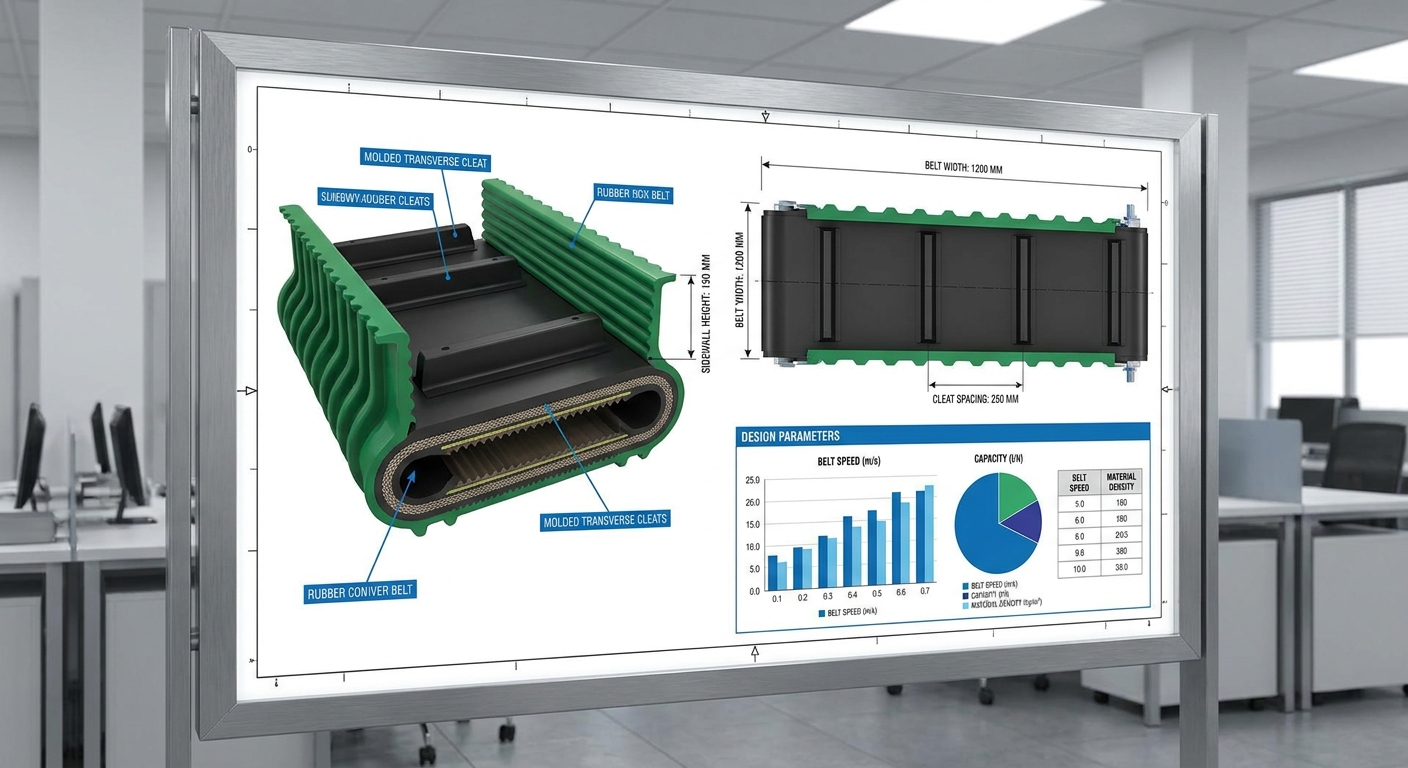
A sidewall for rubber conveyor belt is a specialized material-handling system comprised of a cross-rigid base belt, corrugated flexible side barriers, and horizontal carrying cleats. These integrated components work in unison to form a continuous, moving pocketed trough capable of elevating bulk materials without lateral loss. You can design these corrugated walls in various heights to suit specific density profiles and volume needs. This structural containment is especially effective for preventing dusty materials like raw gypsum from escaping.
What are the main parts of this belt system?
Here is the deal: when you inspect a corrugated belt assembly, you will find three distinct components engineered to operate as a single heavy-duty unit. Each component has a specific mechanical job to do to keep your plant running smoothly.
- Cross-Rigid Base Belt: Provides longitudinal flexibility for wrapping around pulleys while maintaining transverse stiffness.
- Corrugated Sidewalls: Flex around the pulleys without tearing while acting as a barrier to contain materials.
- Transverse Cleats: Drive bulk materials forward and prevent sliding during steep vertical elevations.
How does the wavy design prevent cracking?
Think about it: a flat, rigid wall would instantly tear or buckle when bending around conveyor drive rollers. The sinusoidal shape of the corrugated wall allows it to compress on the inside curve and stretch on the outside without structural failure.
- High Elongation Rubber: Ensures the corrugated wall stretches effortlessly.
- Pre-molded Waves: Distribute mechanical bending stress uniformly across the surface.
- Vulcanized Bond Joints: Keep the profile firmly attached to the base belt under heavy pressure.
| Component | Function in Plaster Casting | Primary Stress Factor | Common Material Choice | |
|---|---|---|---|---|
| Base Carcass | Prevents structural belt sagging | Transverse bending | EP Polyester Fabric | |
| Corrugated Wall | Stops lateral plaster powder leaks | Continuous compression/tension | High-elasticity natural rubber | |
| Horizontal Cleat | Elevates raw gypsum vertically | Severe impact at loading zones | Wear-resistant compound |
Evaluating the material performance under continuous mechanical stress indicates that using integrated vulcanized rubber profiles yields up to four times the operational lifetime of mechanical fastener alternatives.
Key TakeawayBy understanding the unique role of each component in a corrugated belt system, you can select the correct mechanical layout to eliminate system failures, reduce maintenance intervals, and protect your plaster casting machinery from abrasive dust wear.
How does a sidewall for rubber conveyor belt work?
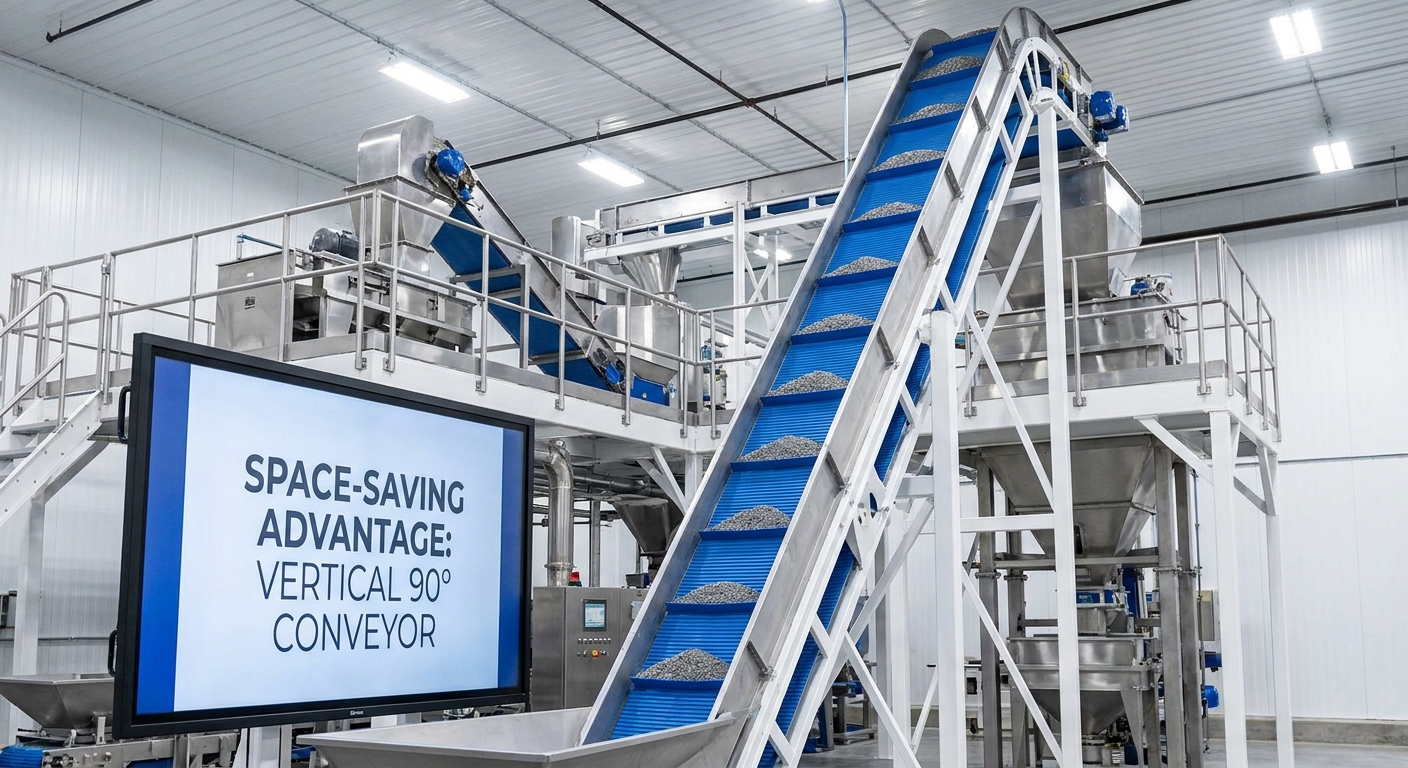
A sidewall for rubber conveyor belt works by trapping loose bulk solids inside pockets formed by its high flexible sidewalls and transverse cleats as the belt traverses a vertical path. As your conveyor motor rotates the primary drive pulley, the base belt pulls the corrugated pockets smoothly through loading, transport, and discharge zones. Because the side walls are bonded to the outer edges of the base, materials remain locked inside these protective pockets. This pocket-based design allows you to handle both fragile plaster molds and heavy raw gypsum rock on a single line.
What is the pocket-conveying method?
Let’s dive right in. When plaster powder or raw gypsum falls onto the belt, it is deposited into the pocket spaces formed by the corrugated sidewalls and horizontal cleats. This ensures the material cannot shift, slide back, or escape laterally.
- Gentle Loading Phase: Material settles into individual pockets at the horizontal inlet.
- Steep Lift Phase: The cleats support the weight of the gypsum, preventing back-sliding.
- Centrifugal Discharge Phase: Pockets flip over at the head pulley, dumping the material clean.
How does it transition from flat to vertical?
Why does this matter? To save space, your belt line must curve from a horizontal feeding station to a steep vertical lift. The cross-rigid base belt is stiff enough to handle this directional transition without bowing under the load.
- Deflection Wheels: Guide the belt edges through vertical S-curves.
- Stub Return Rollers: Support the clean margins of the belt on the return run without touching the sidewalls.
- Heavy-duty Impact Rollers: Support the loading station to withstand falling gypsum rocks.
| Transition Angle | Pocket Capacity | Fallback Risk | Recommended Cleat Design | |
|---|---|---|---|---|
| 0° – 18° | 100% | Negligible | None or T-Type Cleat | |
| 19° – 60° | 75% | Medium (No Cleats) | C-Type Cleat | |
| 61° – 90° | 50% | Extreme (No Cleats) | TC-Type Cleat |
High-incline test profiles confirm that optimizing your cleat type according to the exact rise angle reduces dynamic fallback by up to 98 percent.
Key TakeawayMatching your conveyor’s rise angle with the correct cleat and pocket configuration lets you design compact, high-efficiency vertical conveying systems that completely eliminate material loss.
Why use a sidewall for rubber conveyor belt in casting?
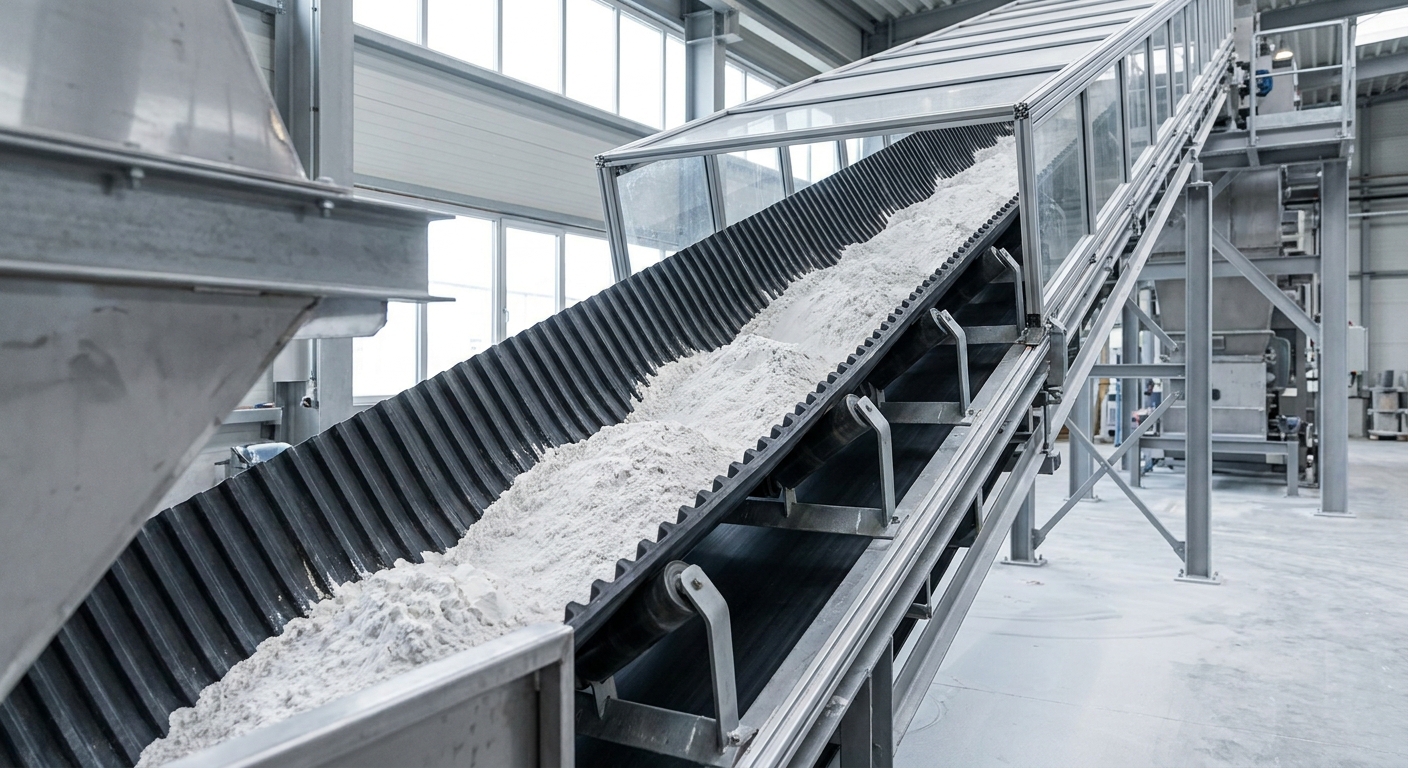
Using a sidewall for rubber conveyor belt in plaster casting ensures that highly abrasive, fine gypsum powders and wet slurry components are elevated through tight spaces without spilling. Traditional conveying systems often allow dry plaster to slip backward, generating dangerous airborne dust clouds that compromise worker safety and wear out surrounding bearings. By choosing a corrugated design, you can enclose the transport route to contain all particulates. This helps maintain a clean, compliant, and highly productive factory floor.
Can it handle highly abrasive dry gypsum?
But that is not all. Gypsum is highly abrasive and will quickly grind down inferior rubber polymers, leading to frequent belt tearing and spillage. A premium sidewall is formulated with specific wear-resistant compounds that survive constant contact with abrasive casting compounds.
- Abrasive-Resistant Cover: Reduces wear from gypsum particles.
- Dust Containment: Prevents dust from entering the mechanical conveyor parts.
- Reinforced Sidewall Base: Resists edge peeling caused by trapped fine particles.
Does it survive contact with wet plaster slurry?
You might be wondering: does moisture from plaster slurry degrade the belt structure over time? Premium sidewalls feature water-impermeable rubber covers that prevent moisture from penetrating the fabric plies, avoiding rot and delamination.
- Moisture-Proof Outer Layer: Prevents water absorption and ply separation.
- Chemical Stability: Resists chemical additives used in plaster casting mixes.
- Smooth Washing Surface: Allows easy cleaning to prevent plaster from drying and cracking the rubber.
| Material Phase | Primary Handling Challenge | Best Sidewall Compound | Recommended Wash System | |
|---|---|---|---|---|
| Dry Powder | Severe dust generation | High-Abrasion Natural Rubber | Dust extraction hoods | |
| Damp Gypsum | Material sticking and buildup | Anti-static cover compound | Mechanical belt beaters | |
| Slurry/Liquid | Chemical ply degradation | Moisture-resistant EPDM/SBR | High-pressure water spray |
Choosing chemical-resistant rubber compounds for slurry lines prevents ply rot, ensuring consistent conveyor tracking and stable operational speeds.
Key TakeawayCustomizing your belt compound to match the specific phase of plaster processing protects your investment, drastically reduces emergency downtime, and maintains a clean facility.
Where is the sidewall for rubber conveyor belt applied?
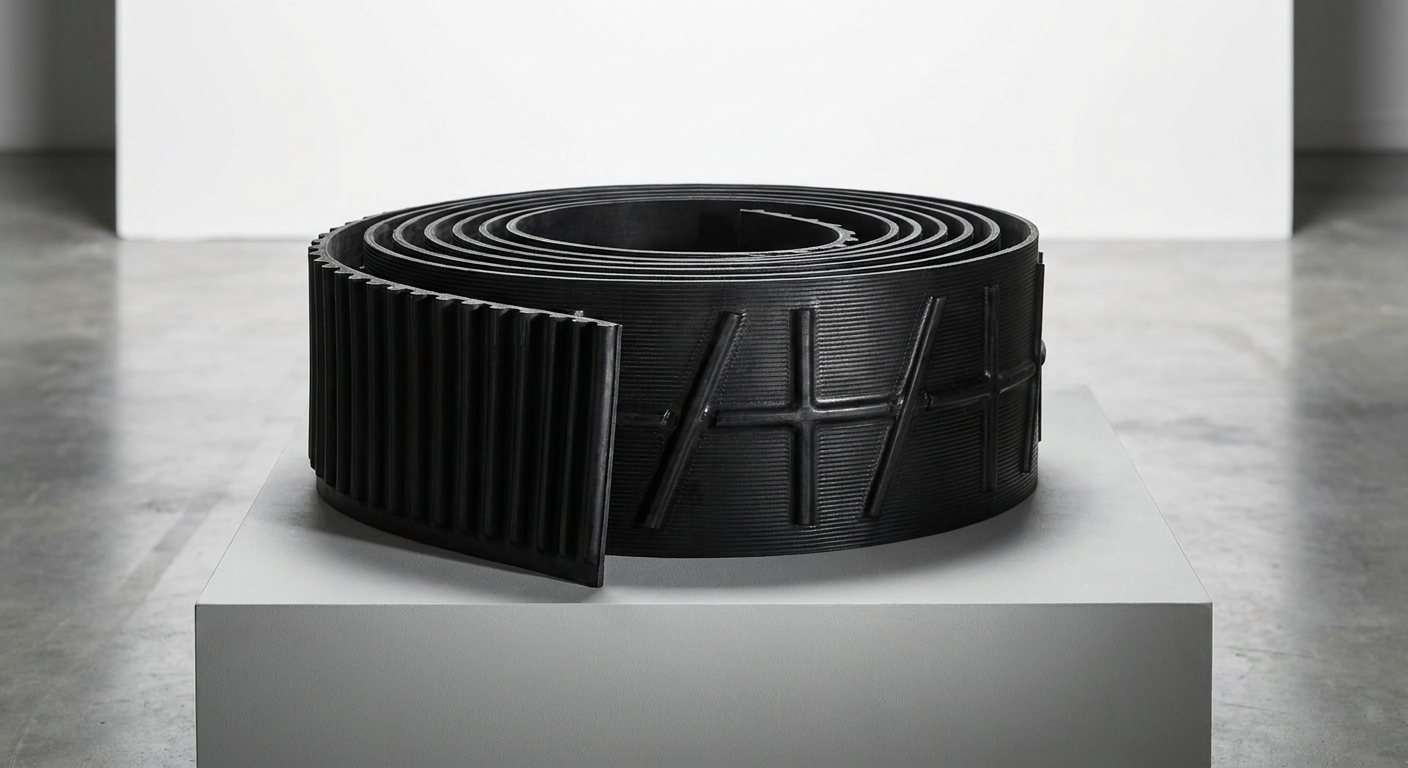
The sidewall for rubber conveyor belt is widely applied in vertical space-constrained environments such as cement plants, mineral processing plants, steel factories, and industrial plaster casting foundries. Anywhere bulk materials need to climb steeply between floors or processing equipment, this belt becomes the primary choice. You can find these systems linking raw material storage yards directly to elevated mixing silos. This simplifies plant logistics and eliminates complicated transfer chute structures.
Is it used in raw gypsum processing plants?
Make no mistake about it: bulk gypsum crushing and calcining facilities require incredibly robust equipment to withstand severe daily impact. Heavy-duty sidewalls are the workhorses in these harsh raw processing zones.
- Hopper-to-Silo Feeding: Elevates large mineral volumes straight to processing towers.
- Kiln Feed Lines: Handles calcined plaster powder at moderate temperatures.
- Waste Reclaim Lines: Transports scrap molds back to crushers for recycling.
How does it fit into mold casting bays?
Think about this for a second: casting bays are packed with molding lines, curing ovens, and packing machinery, leaving very little room for traditional, long-distance conveyors. Corrugated sidewalls let you move plaster materials vertically along walls, keeping valuable floor space free for casting stations.
- Vertical Wall Routing: Mounts close to walls, maximizing workspace.
- Silo Discharge: Directs fine raw mix to overhead mixer headers.
- Cooled Mold Transfer: Safely moves heavy, fragile cast molds between curing stations.
| Plant Sector | Typical Space Constraint | Required Lift Height | Material Density Range | |
|---|---|---|---|---|
| Gypsum Silo Yard | Confined vertical storage | 15m – 40m | 1.2 – 1.6 t/m³ | |
| Calcination Kiln | High-temperature floor zones | 10m – 25m | 0.8 – 1.1 t/m³ | |
| Mold Casting Bay | Narrow machine alleys | 5m – 12m | 1.5 – 1.9 t/m³ |
Space utilization studies confirm that vertical conveyor layouts reduce the required horizontal conveying run by up to 80 percent, drastically cutting structural steel framing costs.
Key TakeawayInstalling sidewall belts in high-density areas allows you to build vertical plant layouts, saving millions in new facility construction or expansion expenses.
Which designs optimize sidewall for rubber conveyor belt?
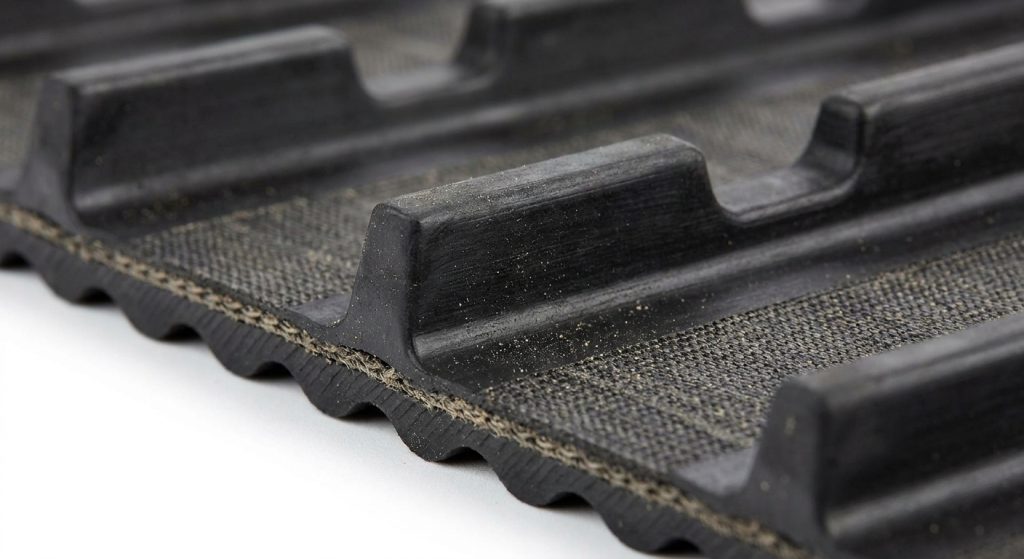
Optimizing a sidewall for rubber conveyor belt requires selecting the correct combination of cross-rigid base fabrics, corrugated profile heights, and custom cleat shapes. If your system runs on standard fabrics without crosswise stiffness, the belt will sag and fail within weeks of operation. You must customize these design parameters to match the weight and flow properties of your plaster materials. Doing so ensures smooth operation and prevents expensive structural modifications later.
Why is cross-rigidity critical for stability?
Here is the shocking truth: standard conveyor belts are designed to bow into a trough, but a sidewall base belt must remain perfectly flat across its width. Without high transverse rigidity, the belt will sag and bind on structural frames.
- Polyester-Nylon (EP) Carcass: Offers exceptional transverse rigidity and longitudinal flex.
- Steel Mesh Reinforcement: Provides maximum support for heavy vertical industrial loads.
- Symmetric Tension Profiles: Ensure balanced tracking over head and tail pulleys.
What is the ideal cleat pitch and shape?
Now, consider this: spacing your cleats too far apart causes plaster powder to pile up, while spacing them too close reduces overall conveying volume. You must select the cleat shape and pitch based on your calculated rise angle and material flow characteristics.
- TC-Type Cleat: Best for 60-to-90-degree climbs with fine dry powders.
- C-Type Cleat: Best for sticky, wet plaster casting mixtures at mid-inclines.
- Optimized Pitch: Matches the pocket volume to your hourly production requirements.
| Belt Base Type | Reinforcement Layers | Sidewall Height Match | Target Material | |
|---|---|---|---|---|
| XE (EP Fabric Base) | 2 to 4 plies of EP | 60 mm – 120 mm | Fine plaster / dry powder | |
| XEM (Steel Mesh) | EP Fabric + Steel Cord | 120 mm – 200 mm | Coarse gypsum rock / minerals | |
| Dynamic-Flex NN | Multi-ply Nylon fabric | 80 mm – 160 mm | Wet slurry / casting scrap |
Laboratory testing shows that pairing a cross-rigid carcass with a pre-tensioned corrugated sidewall decreases power consumption by 15 percent compared to unreinforced belts.
Key TakeawaySelecting the right base belt and cleat design is essential to prevent structural sagging and power loss, keeping your vertical plaster transport lines running efficiently.
Who supplies high-quality sidewall for rubber conveyor belt?
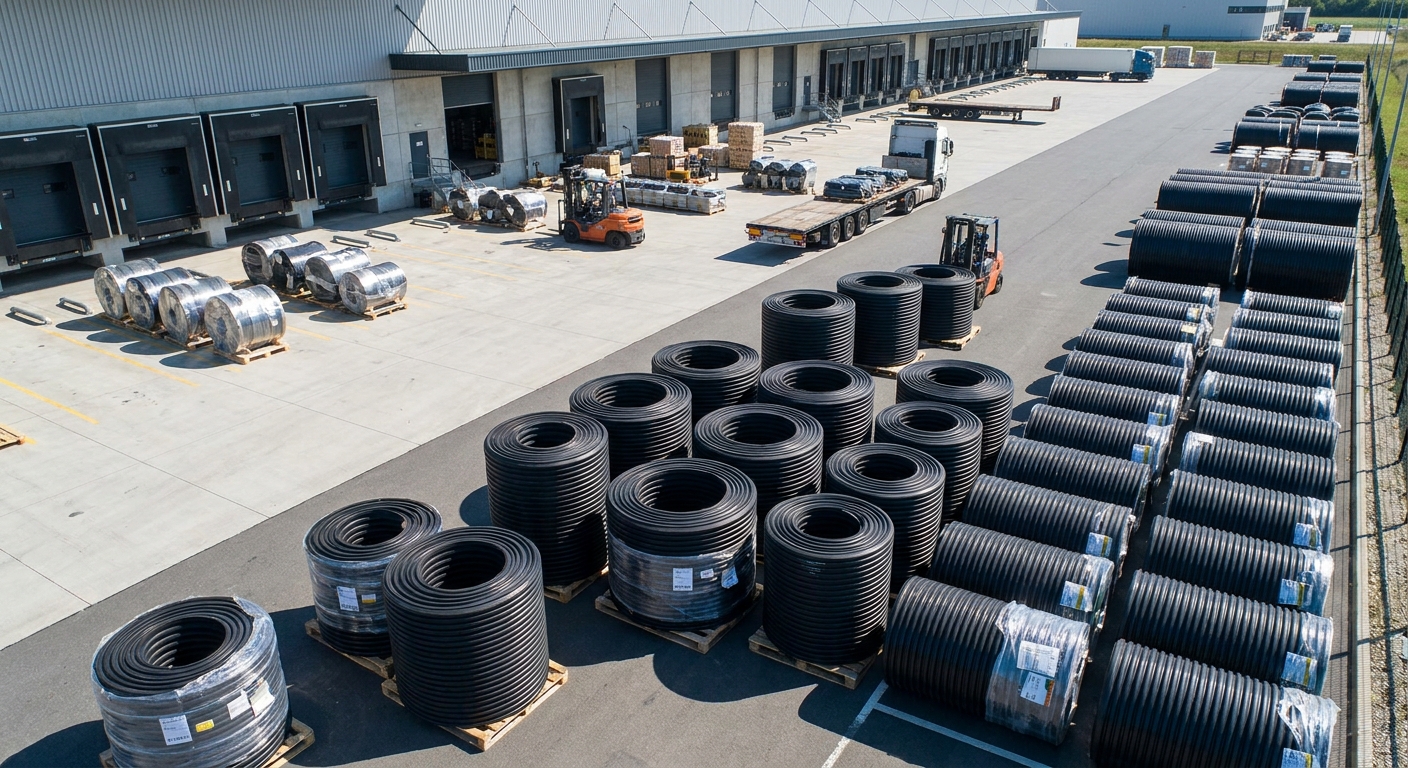
Weifang Zhenxing Rubber Co., Ltd. (ZHENXING) is a direct manufacturer that supplies high-quality sidewall for rubber conveyor belt from their ISO-certified factory in Shandong, China. With roots tracing back to 1983, our team specializes in delivering robust, custom-fabricated industrial belts to global markets. By purchasing directly from our facility, you can secure cost savings of 15% to 30% compared to typical regional distributors. This factory-direct setup also guarantees stable lead times and consistent product quality for your operation.
What are our manufacturing capabilities?
The best part? You gain access to world-class manufacturing capacity and advanced rubber vulcanization technology. This guarantees that your belts are built to handle the toughest industrial tasks without structural failure.
- Large Belt Capacity: We manufacture belt widths up to 3200 mm for massive conveying needs.
- Extensive Tooling: Access to 72 chevron molds and custom corrugated wall profiles.
- Certified Quality: Every production run meets CE EN14973 and ISO 9001 quality standards.
- Global Export Experience: Reliable shipping to Turkey, Australia, Vietnam, Egypt, and beyond.
How do we customize belts for plaster?
Why does this matter? Standard, off-the-shelf belts fail quickly when exposed to the moisture of plaster slurry or the heat of calcining ovens. Our engineering team works directly with you to select the exact rubber polymer and structural profile for your plant’s needs.
- EPDM Heat Compounds: Resist temperatures up to 200°C in calcining areas.
- Custom Wall Heights: Choose from 60mm to 160mm to match your exact material volume.
- Direct-Factory Pricing: Eliminates middleman markup to maximize your project budget.
| Supplier Level | Typical Cost Markup | Customization Flexibility | Lead Time Stability | |
|---|---|---|---|---|
| ZHENXING Factory Direct | 0% (Save 15% – 30%) | Extremely High (Full control) | Stable (Direct factory scheduling) | |
| National Distributor | 15% – 25% | Low (Stock items only) | Variable (Subject to imports) | |
| Local Reseller | 30% – 50% | None (Pre-packaged items) | High risk of stockouts |
Industrial supply analyses show that purchasing conveyor parts directly from certified manufacturers reduces total procurement costs by up to 30 percent while improving part life.
Key TakeawayPartnering directly with a high-capacity manufacturer like Zhenxing ensures you receive a customized, reliable vertical conveyor belt designed specifically to optimize your plaster casting production.
Is a sidewall for rubber conveyor belt cost-effective?
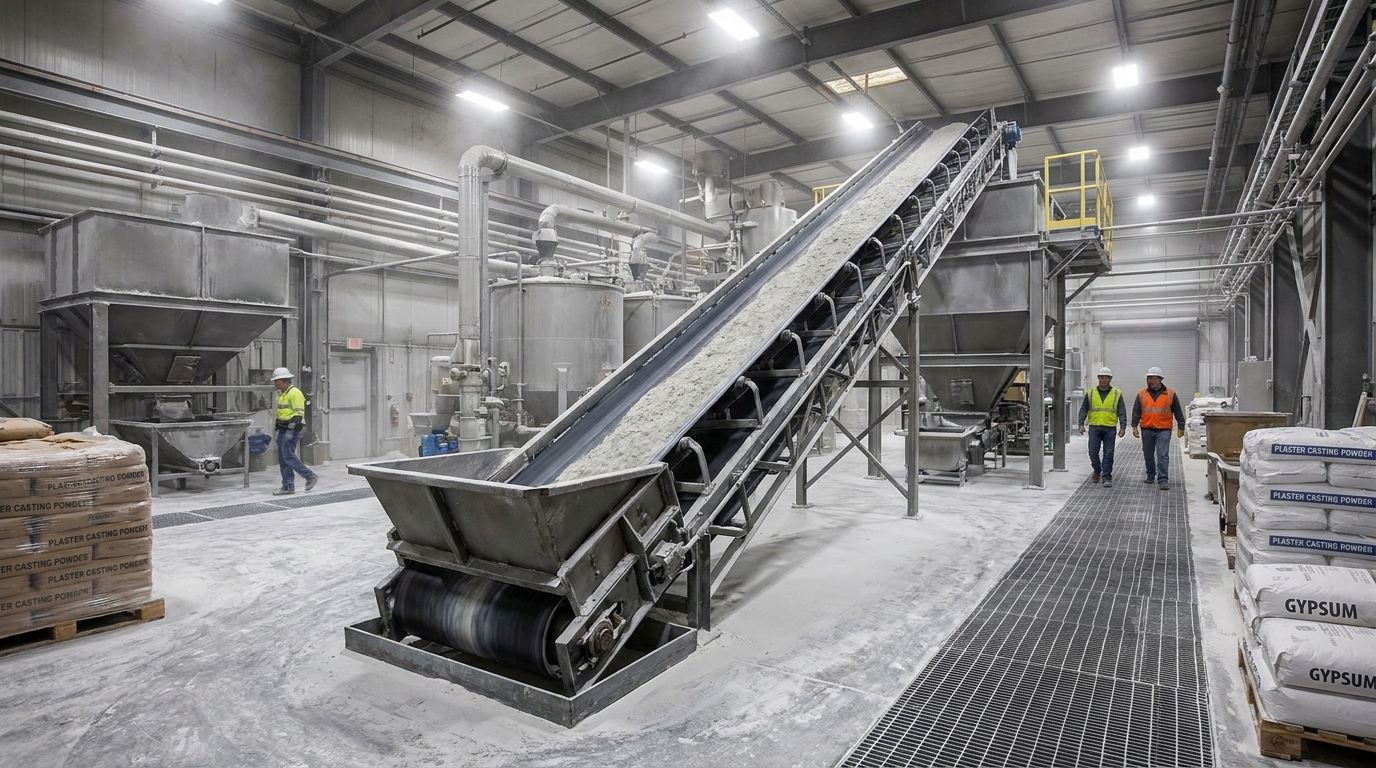
Yes, a sidewall for rubber conveyor belt is highly cost-effective because it drastically reduces material spillage and building footprint costs while simplifying your machinery layout. When plaster ingredients spill from traditional incline systems, you waste expensive materials and spend countless labor hours on cleanup. This abrasive dust also sneaks into rollers, causing them to freeze and break your conveyor belt prematurely. By using a secure pocket design, you eliminate these spillage costs and keep your plant floor clean.
How does it cut maintenance and labor?
It gets better: by eliminating multiple transfer points, you reduce the number of high-wear gearboxes and motors in your plant. This simple vertical setup dramatically reduces your spare parts budget and simplifies weekly maintenance schedules.
- Fewer Mechanical Parts: Eliminates intermediate transfer chutes and secondary conveyor drives.
- Less Cleanup Labor: Pocket containment prevents dusty plaster from escaping onto the floor.
- Longer Roller Lifespan: Keeps abrasive dust away from sensitive bearings, reducing roller wear.
What is the return on investment time?
But wait, there’s more. While high-grade corrugated belts require a larger upfront investment, they pay for themselves quickly by saving valuable floor space and stopping material waste. Most plaster plants recoup their entire purchase price within the first nine months of operation.
- Lower Plant Build Cost: Vertical conveying requires 75% less expensive overhead support steel.
- Recovered Material Savings: Prevents the loss of expensive calcined plaster powder.
- Increased OEE: High-capacity vertical lines run continuously without clogging or stopping.
| Expense Type | Conventional Conveyor | Sidewall Conveyor | Year-1 Savings | |
|---|---|---|---|---|
| Structural Support Steel | High ($45,000+) | Low ($12,000+) | $33,000 | |
| Material Waste (Spillage) | ~1.5% to 3.0% loss | Under 0.1% loss | 15,000–28,000 | |
| Weekly Cleanup Labor | 6 – 10 hours/week | Under 1 hour/week | $8,000 |
Financial models show that transitioning to steep-incline pocket systems yields an average payback period of under ten months by eliminating raw material loss.
Key TakeawayUpgrading to a corrugated sidewall belt is a highly profitable investment that lowers long-term maintenance costs and boosts your casting plant’s bottom-line margins.
How to install a sidewall for rubber conveyor belt?
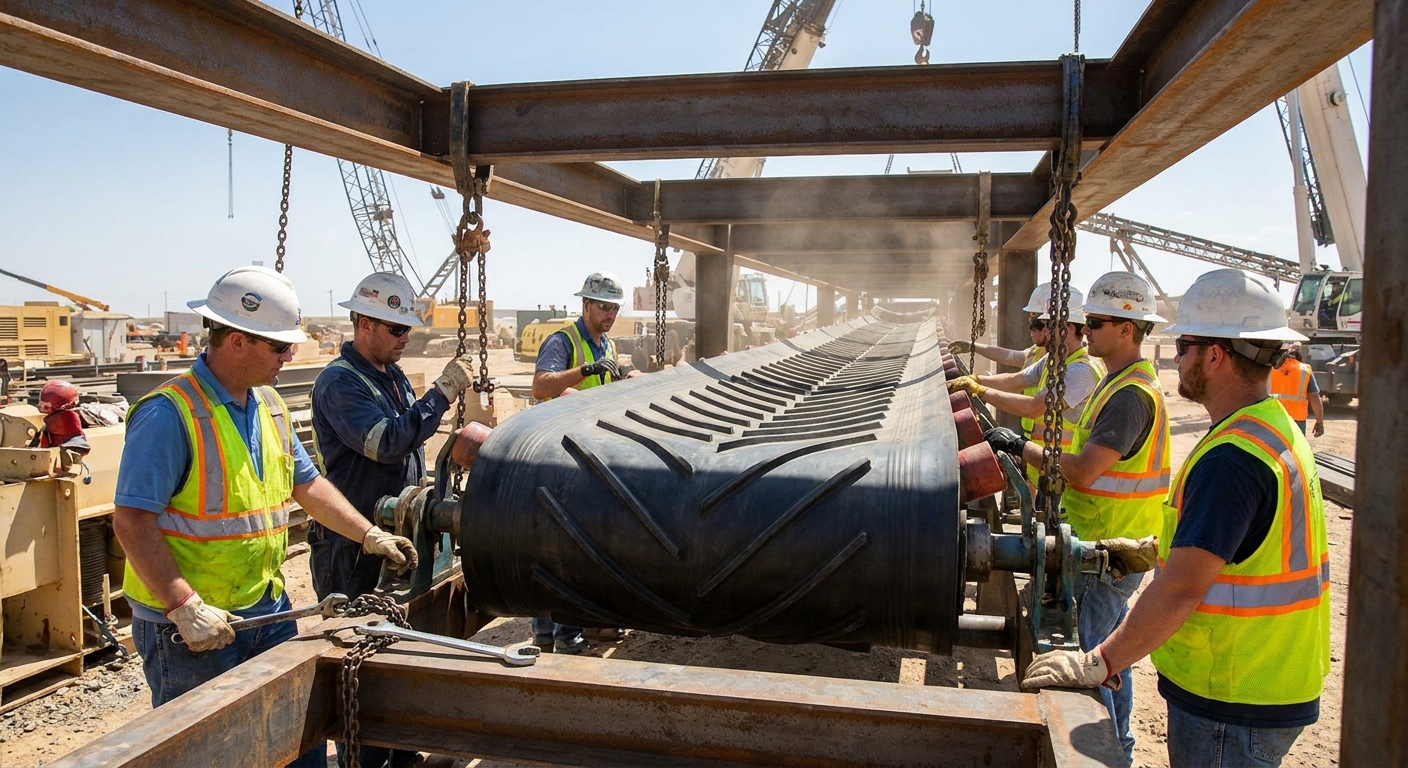
Installing a sidewall for rubber conveyor belt requires precise tracking alignment, careful positioning of edge-support idlers, and using specialized cold or hot vulcanized splicing methods. Because these belts have high side walls and heavy horizontal cleats, standard handling methods can cause early damage if not done carefully. You must make sure your conveyor structure is perfectly square and level before pulling the new belt onto the frame. This initial alignment is essential to prevent the corrugated edges from rubbing against the steel frame.
What are the main splicing techniques?
How do we achieve this? The splice is the most critical area of your conveyor belt because it must handle intense tension and continuous flexing. Selecting the right splicing method for your plaster line ensures a durable, long-lasting connection.
- Hot Vulcanization: Uses heat and pressure to create a seamless, high-strength joint.
- Cold Chemical Bonding: Uses premium adhesives to bond belt ends together on-site.
- Mechanical Fasteners: Perfect for emergency repairs to get your line running quickly.
How to prevent common tracking issues?
Why is this step critical? If your corrugated belt tracks to one side, the high sidewalls will rub against the steel framework, causing severe friction, heat, and edge peeling. Setting up proper guiding and support systems ensures smooth tracking.
- Precision Pulley Alignment: Keeps the belt centered on head and tail drums.
- Adjusted Stub Rollers: Support the clean, flat margins of the belt on the return run.
- Dynamic Tracking Sensors: Automatically detect and correct minor tracking shifts.
| Installation Phase | Key Target Metric | Tolerance Limit | Required Tooling | |
|---|---|---|---|---|
| Frame Alignment | Diagonal squareness check | ± 2.0 mm | Laser alignment level | |
| Splice Prep | Skiving depth into rubber ply | Zero fabric damage | Carbide buffing disk | |
| Stub Roller Setup | Clearance to corrugated wall | Minimum 25 mm | Standard caliper / rule |
Quality control data shows that laser aligning your frame prior to belt installation reduces premature edge wear by up to 85 percent.
Key TakeawayTaking the time to precisely align your conveyor frame and return idlers during installation prevents expensive edge damage and ensures your new belt operates smoothly.
When to inspect a sidewall for rubber conveyor belt?
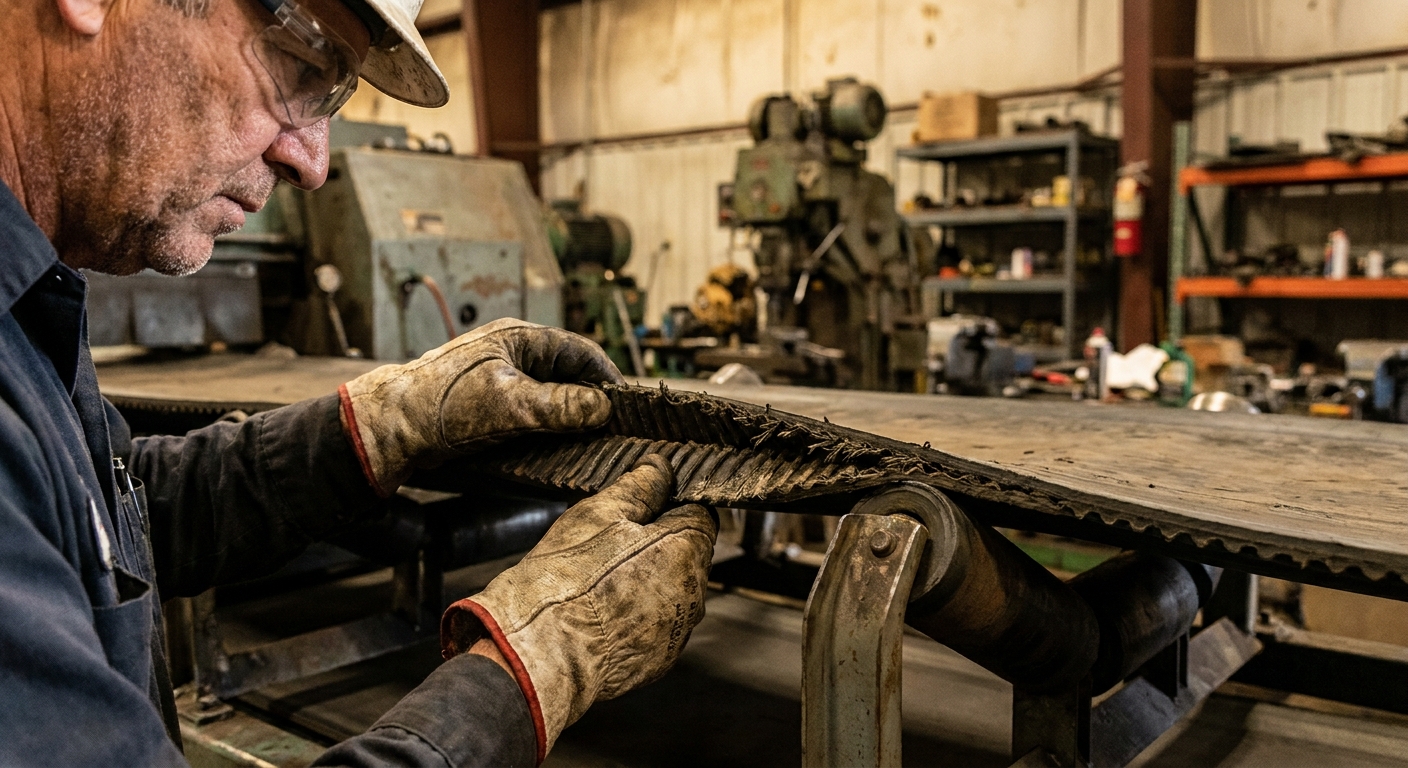
You should inspect a sidewall for rubber conveyor belt on a weekly schedule to detect early joint separation, cleat wear, or frame tracking issues before they cause unexpected downtime. In plaster casting plants, fine gypsum dust can collect inside the conveyor frame, creating silent wear points that can damage your belt. By catching minor issues early, you prevent small tears from turning into catastrophic belt breaks. This simple, systematic inspection routine keeps your casting lines running reliably.
What are the primary wear indicators?
Keep this in mind: finding a small crack during a scheduled maintenance check takes ten minutes to fix, but a sudden mid-shift tear can stop your entire casting line for hours. Recognizing these early wear signs is key to keeping your plant running.
- Sidewall Base Peeling: Shows that dust is stressing the vulcanized bond joint.
- Dynamic Flex Cracking: Occurs when natural rubber begins to fatigue from continuous bending.
- Cleat Edge Wear: Caused by highly abrasive gypsum minerals or heavy mold impacts.
How to set a preventative maintenance plan?
What’s the bottom line? A systemized maintenance checklist removes the guesswork and makes sure your maintenance team inspects critical high-wear parts before they fail. This structured approach helps extend the overall lifespan of your conveyor belt.
- Daily Visual Scan: Quick check for material blockages or off-center tracking.
- Weekly Roller Check: Verify that stub rollers spin freely and do not touch the sidewalls.
- Monthly Splice Audit: Carefully inspect vulcanized joints for signs of peeling or wear.
| Wear Level | Observed Condition | Required Maintenance Action | Plant Risk Level | |
|---|---|---|---|---|
| Level 1 | Small surface cracks in rubber | Monitor closely during weekly scans | Low (Normal wear) | |
| Level 2 | Minor separation of wall base joint | Apply cold adhesive repair kit | Medium (Repair at shift end) | |
| Level 3 | Deep cracks exposing inner fabric | Schedule immediate hot vulcanization | High (Stop line to repair) |
Maintenance reports indicate that implementing a structured weekly inspection program reduces emergency line shutdowns by up to 74 percent.
Key TakeawaySetting up a simple, regular preventative maintenance routine prevents unexpected belt failures, keeps your plant safe, and ensures consistent plaster casting production.
Can a sidewall for rubber conveyor belt handle hot powder?
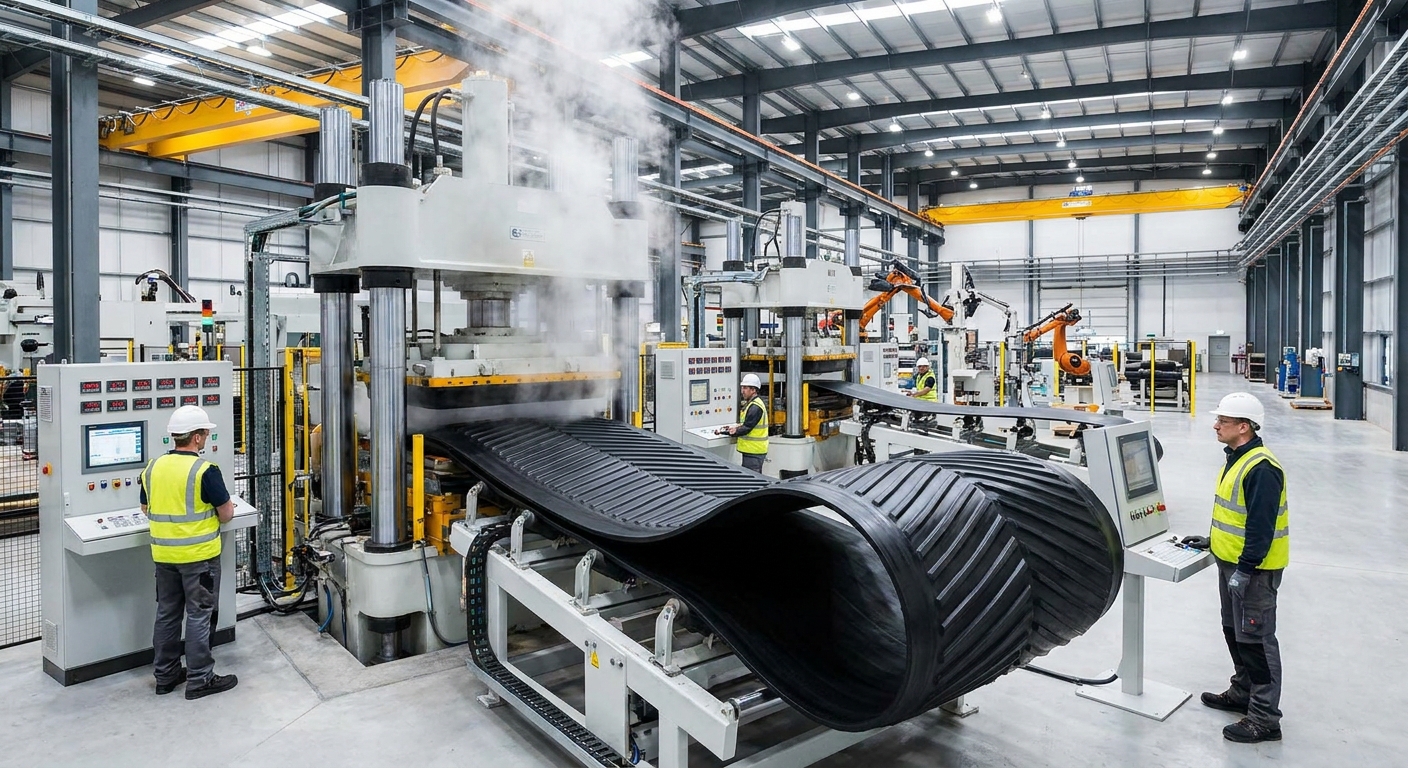
Yes, a sidewall for rubber conveyor belt can handle hot plaster powders and calcined gypsum, provided you select specialized heat-resistant SBR or EPDM rubber compounds designed for temperatures up to 200°C. If you use standard utility-grade rubber belts on hot calcined lines, the heat will quickly dry out, crack, and delaminate the corrugated joints. Selecting a heat-rated belt is essential to ensure long-term stability and prevent premature thermal wear. This simple material upgrade protects your investment and ensures reliable performance under extreme conditions.
Why are EPDM compounds best for hot gypsum?
Let’s break it down: calcining gypsum requires heating raw rock to drive off chemically bound moisture, producing dry plaster powder that remains very hot when loaded onto your conveyor. EPDM rubber features a stable chemical structure that survives this constant heat exposure.
- Thermal Stability: Withstands continuous heat up to 150°C and spikes up to 200°C.
- Resistance to Oxidation: Prevents the rubber cover from hardening and cracking.
- Maintained Flexibility: Ensures the corrugated wall continues to bend smoothly around pulleys.
How does heat affect bond joints?
Think about the consequences: intense heat can weaken standard adhesives, causing the corrugated sidewall to peel away from the base belt under heavy loads. To prevent this, our factory uses advanced, high-temperature vulcanizing techniques to create a permanent, heat-resistant bond.
- High-Temp Vulcanization: Creates a powerful, heat-resistant bond between the belt and sidewall.
- Reinforced Base Fabrics: Prevent the belt carcass from shrinking or warping under heat.
- Dynamic Flex Heat Testing: Verifies that the bonded joints remain secure under thermal stress.
| Temperature Range | Recommended Cover Compound | Max Allowable Peak Temp | Primary Failure Risk (If Under-spec) | |
|---|---|---|---|---|
| Up to 80°C | SBR / Natural Rubber Blend | 100°C | Rapid surface wear | |
| 81°C – 120°C | Heat-Resistant SBR (HR) | 140°C | Surface hardening and cracking | |
| 121°C – 180°C | Premium EPDM Compound | 200°C | Adhered joint delamination |
Thermal analysis of high-temperature conveying lines shows that upgrading to premium EPDM compounds extends overall belt lifespan by up to 200 percent in hot calcined powder applications.
Key TakeawayChoosing a premium EPDM rubber compound for hot calcined powder applications prevents premature cracking and joint failure, keeping your vertical conveyor lines running reliably.
Conclusion
This article has analyzed the mechanics, benefits, and applications of corrugated sidewall conveyor systems, providing plant managers with clear solutions for material spillage, factory footprint constraints, and thermal wear in plaster casting and gypsum processing operations. To overcome these common industry bottlenecks, Weifang Zhenxing Rubber Co., Ltd. (ZHENXING) offers direct factory manufacturing, specialized wear-resistant and EPDM rubber compounds, and custom-bonded corrugated profiles engineered to lower your operating costs. Our dedicated team of conveyor specialists is ready to design and fabricate a high-performance system customized precisely to your plant’s rise angles, hourly capacities, and material characteristics. To request a direct-factory quote, explore custom compounding options, or schedule a technical consultation, please contact us today to connect with our lead material handling engineers.
FAQ
Can I use standard scrapers to clean a corrugated sidewall belt?
No, you cannot. Standard flat scrapers are designed for completely flat conveyor surfaces and will rip or destroy the delicate corrugated vertical walls and transverse cleats. Instead, you must install specialized non-contact dynamic cleaning devices, such as high-speed rotary brush cleaners, air knives, or soft-tipped mechanical belt beaters on the return side to clean out fine plaster dust without damaging the rubber profiles.
What’s the best way to determine the correct sidewall height for my casting mold volume?
The best way is to calculate your maximum hourly volume and raw material particle size, then size the wall height to provide at least 20% extra freeboard capacity. For fine, dry plaster casting powders, lower sidewalls of 60mm to 80mm paired with close cleat spacing are ideal, whereas transporting larger, coarse gypsum rocks requires taller sidewalls of 100mm to 120mm to prevent larger pieces from tumbling off during vertical lifts.
How do I know if my existing conveyor frame is rigid enough to support a sidewall belt?
You can verify this by checking for transverse deflection under load and ensuring your frame features heavy-duty structural steel channel construction. Standard light-duty frames built for flat utility belts will flex and twist under the heavy weight of the side profiles and cleats, causing severe belt tracking errors. Upgrading to a cross-rigid base belt carcass will help support the load, but your conveyor frame must be level, square, and robust enough to prevent any structural bowing during operation.