
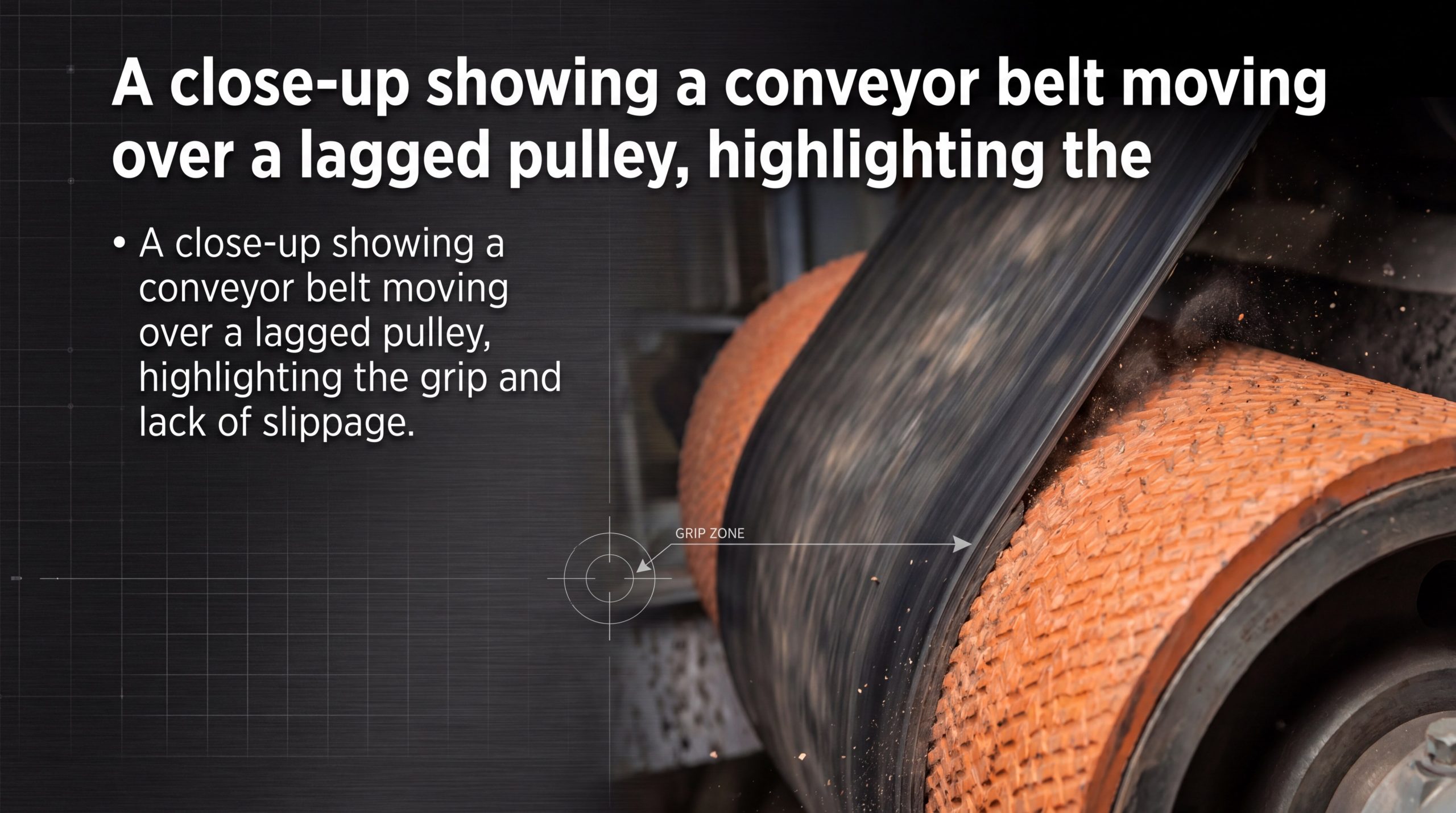
Prevent belt slippage and costly downtime with high-performance belt conveyor pulley lagging rubber designed to enhance traction and protect pulley surfaces. This durable elastomer coating improves grip, reduces wear, and ensures stable operation even in harsh industrial environments, helping you maintain efficiency and extend equipment lifespan.
What is belt conveyor pulley lagging rubber?
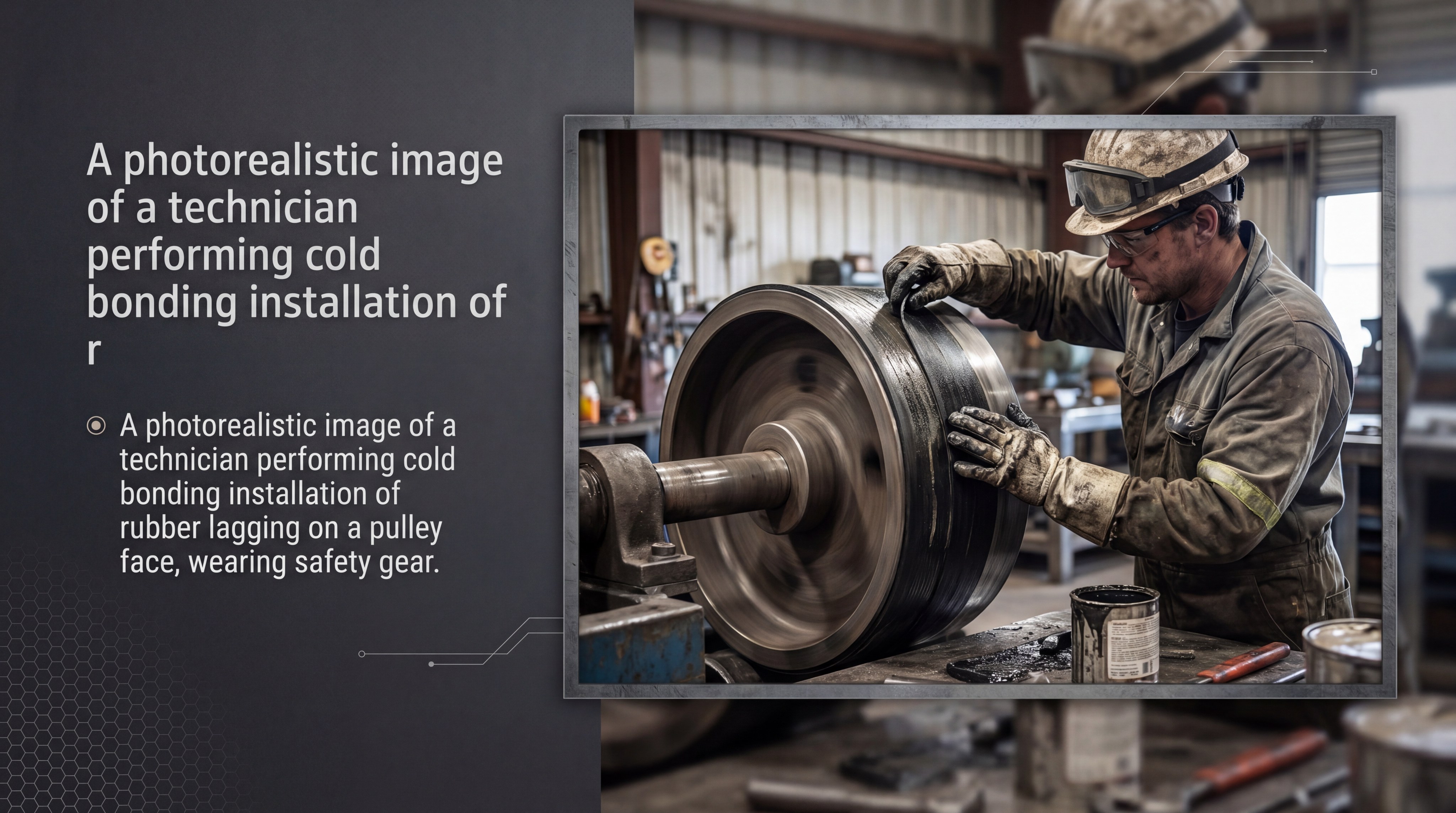
Belt conveyor pulley lagging rubber is an elastomer sheet, typically made of natural or synthetic rubber, bonded to the face of a conveyor pulley. This belt conveyor pulley lagging rubber acts as a sacrificial wear layer that protects the steel pulley shell from abrasive materials. It is the primary interface between the drive system and the belt itself.
Is thickness a critical factor for performance?
The thickness of the rubber determines the amount of impact energy the pulley can absorb during high-load operations. Most industrial systems utilize sheets ranging from 1/2″ to 1″ depending on the tension requirements.
- 1/2″ thickness for standard light-duty conveyors.
- 3/4″ thickness for high-tension mining drives.
- 1″ thickness for extreme impact zones and large diameter pulleys.
Look at it this way: choosing a thickness that is too thin leads to premature shell wear and frequent replacements.
| Property | Value | Benefit | |
|---|---|---|---|
| Hardness | 60 Shore A | Balanced grip and wear resistance | |
| Elongation | >400% | High flexibility under tension | |
| Tensile Strength | 15-20 MPa | Resists tearing under heavy loads |
Selecting the right material specifications ensures your pulley shell remains intact for years.
Key TakeawayProperly specified rubber lagging prevents metal-to-metal contact, extending the lifespan of both the pulley and the conveyor belt.
How does belt conveyor pulley lagging rubber work?
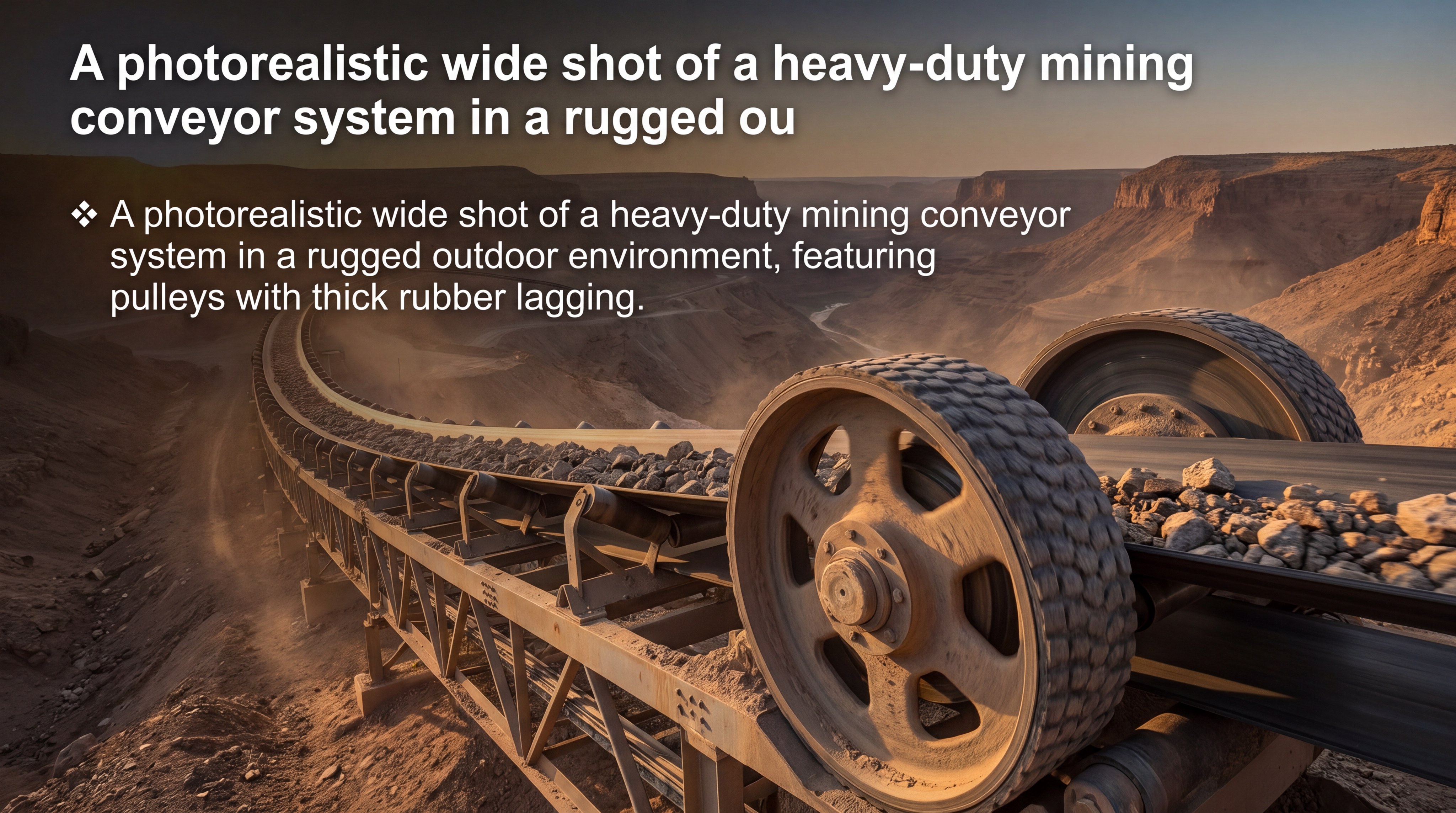
Belt conveyor pulley lagging rubber works by increasing the coefficient of friction between the pulley face and the bottom cover of the belt. Utilizing belt conveyor pulley lagging rubber allows the system to transfer more torque without the belt slipping during start-up. This mechanical grip is essential for maintaining constant belt speed under fluctuating loads.
What is the physics behind the traction?
The rubber compound deforms slightly under belt pressure, creating a larger contact surface area than bare steel. This deformation allows the lagging to “bite” into the belt cover, providing a stable drive force.
- Increases friction coefficient from 0.35 (steel) to 0.85 (lagged).
- Reduces the need for excessive take-up tension.
- Maintains drive stability in wet or muddy conditions.
Think about this: without this increased friction, your motors would waste energy spinning against a stationary belt.
| Surface Type | Friction (Dry) | Friction (Wet) | |
|---|---|---|---|
| Bare Steel | 0.35 – 0.40 | 0.10 – 0.15 | |
| Rubber Lagging | 0.75 – 0.85 | 0.30 – 0.35 |
The friction jump provided by rubber is the single most effective way to optimize conveyor drive efficiency.
Key TakeawayLagging transforms the pulley from a passive cylinder into an active traction component capable of handling high-torque loads.
What patterns are in belt conveyor pulley lagging rubber?
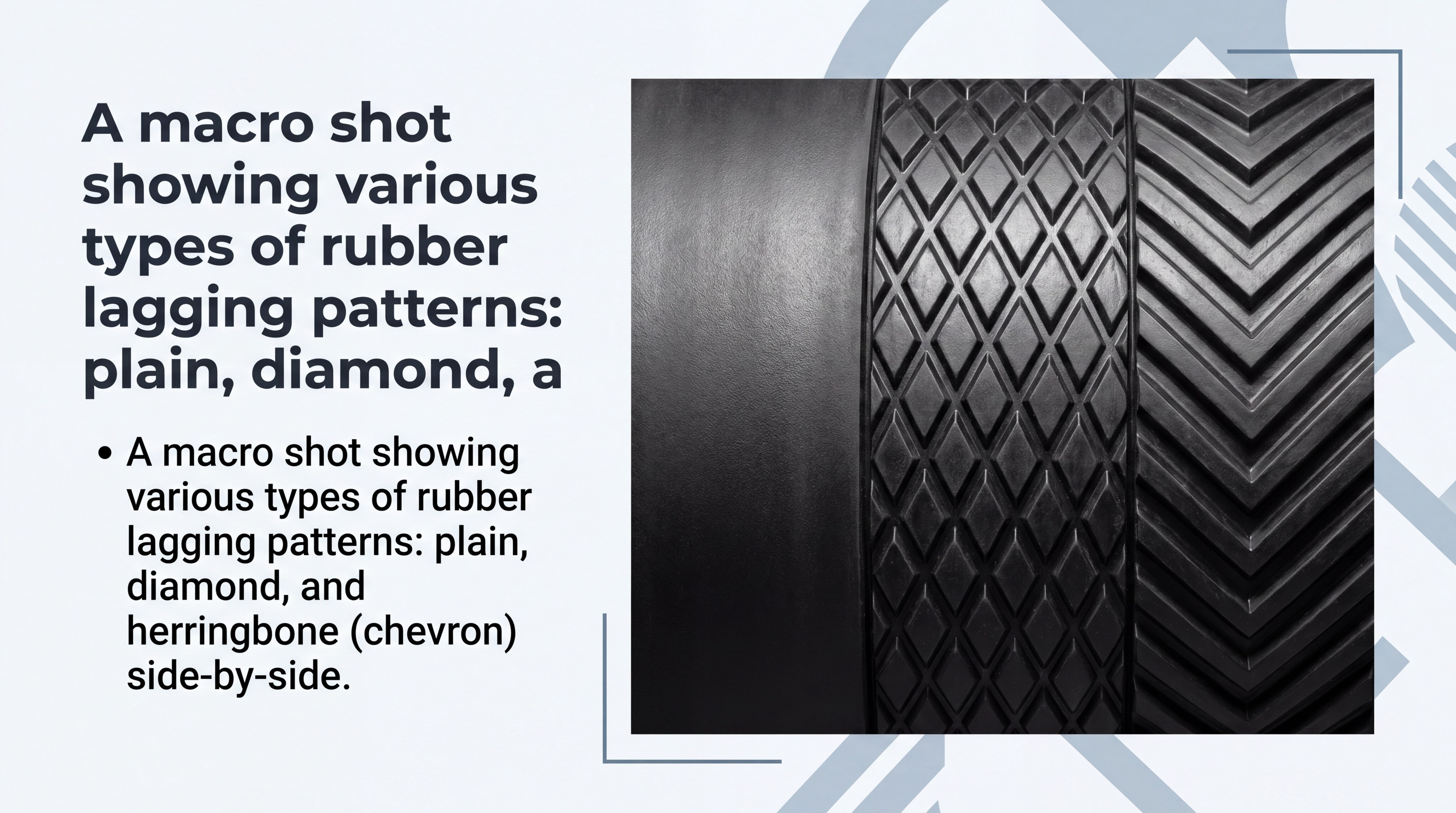
Belt conveyor pulley lagging rubber comes in various surface profiles including plain, diamond, and herringbone patterns to suit different environments. Each pattern in belt conveyor pulley lagging rubber serves a specific mechanical purpose, such as water drainage or bi-directional grip. Selecting the wrong pattern can lead to tracking issues and material buildup.
Which pattern fits your specific environment?
Plain lagging is best for non-drive pulleys, while grooved patterns are mandatory for drive pulleys exposed to moisture or dirt. Grooves provide a path for contaminants to escape the contact zone.
- Diamond pattern for bi-directional drives and general use.
- Herringbone (Chevron) for high-tension, uni-directional drives.
- Plain (Smooth) for tail and take-up pulleys to reduce belt wear.
Here is the kicker: grooved lagging can improve tracking by up to 20% compared to smooth surfaces.
| Pattern | Best Application | Primary Advantage | |
|---|---|---|---|
| Plain | Non-Drive Pulleys | Low cost, protects belt | |
| Diamond | General Purpose | Bi-directional traction | |
| Herringbone | High Tension | Superior water shedding |
The geometric design of the rubber surface is your first line of defense against environmental interference.
Key TakeawayMatching the surface pattern to your pulley’s role is critical for water drainage and maintaining constant belt traction.
Can belt conveyor pulley lagging rubber self-clean?
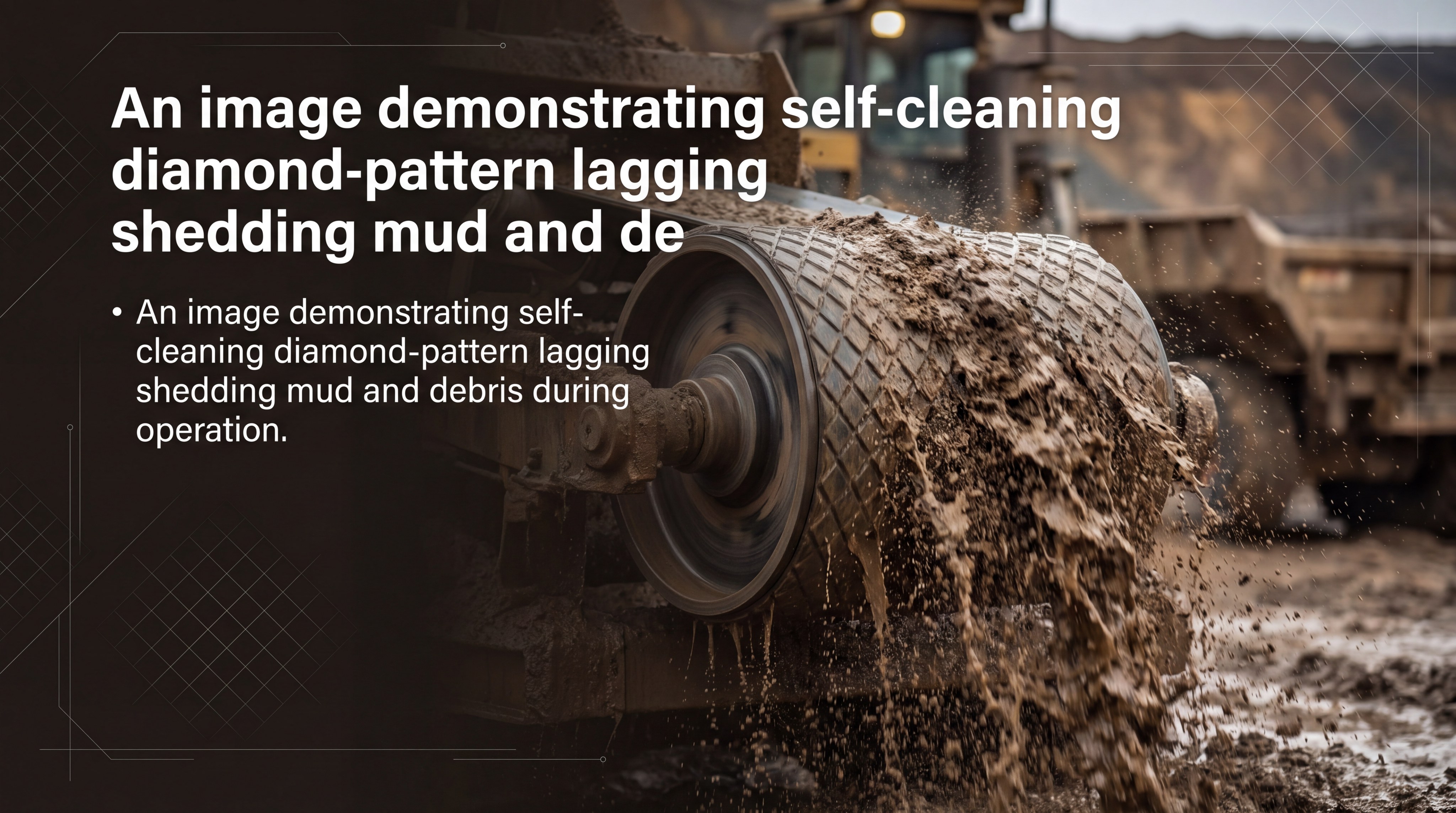
Yes, belt conveyor pulley lagging rubber with grooved profiles features a self-cleaning action that expels mud, water, and debris. High-quality belt conveyor pulley lagging rubber prevents material carry-back from building up on the pulley face. This prevents the “crowning” effect that often leads to severe belt misalignment.
How do grooves eject heavy debris?
As the belt wraps around the pulley, the rubber grooves compress and then expand as the belt leaves the pulley. This rapid movement effectively “flicks” away any trapped material or slurry.
- Diamond grooves provide multiple exit points for water.
- Herringbone channels lead mud toward the pulley edges.
- Flexing rubber prevents material from hardening in the grooves.
Let’s be honest: a dirty pulley is the fastest way to ruin a thousand-dollar conveyor belt.
| Debris Type | Self-Cleaning Efficiency | Recommended Pattern | |
|---|---|---|---|
| Fine Dust | High | Plain or Fine Diamond | |
| Wet Mud | Medium-High | Deep Diamond | |
| Slurry/Water | Extreme | Herringbone |
Self-cleaning lagging reduces the need for manual cleaning and prevents downtime caused by debris-related tracking errors.
Key TakeawaySelf-cleaning patterns eliminate material buildup, which is the primary cause of belt wander and edge damage.
Why choose belt conveyor pulley lagging rubber for grip?
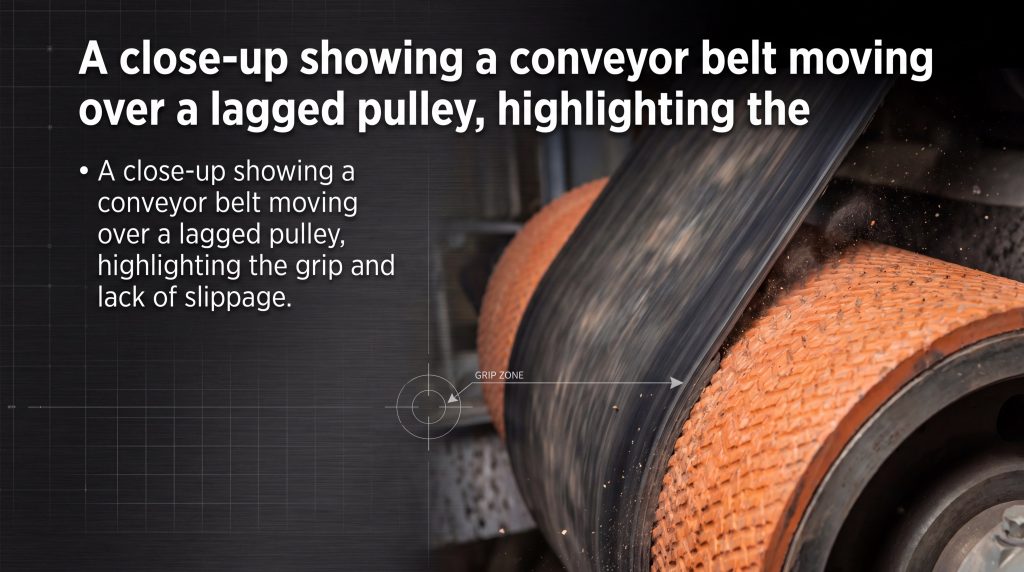
Belt conveyor pulley lagging rubber provides the most cost-effective and reliable grip for standard industrial bulk material handling. Choosing belt conveyor pulley lagging rubber ensures a soft interface that grips the belt without causing the abrasive wear associated with ceramic alternatives. It is the gold standard for versatility across mining, cement, and power industries.
Does rubber lagging protect the belt cover?
Rubber is much softer than the steel pulley shell, meaning it absorbs the wear that would otherwise affect the belt’s bottom cover. This “sacrificial” nature saves you money by extending the interval between belt replacements.
- Absorbs impact from large material lumps.
- Distributes pressure evenly across the pulley face.
- Reduces noise levels by dampening metal-on-metal vibrations.
It gets better: rubber lagging can double the life of your conveyor belt’s bottom cover.
| Component | Wear Rate (Lagged) | Wear Rate (Unlagged) | |
|---|---|---|---|
| Pulley Shell | Near Zero | High | |
| Belt Cover | Minimal | Accelerated | |
| Bearings | Normal | High (due to tension) |
Rubber offers a unique combination of high traction and component protection that harder materials cannot match.
Key TakeawayRubber lagging provides high friction while simultaneously acting as a buffer that preserves the integrity of the belt cover.
Is belt conveyor pulley lagging rubber easy to install?
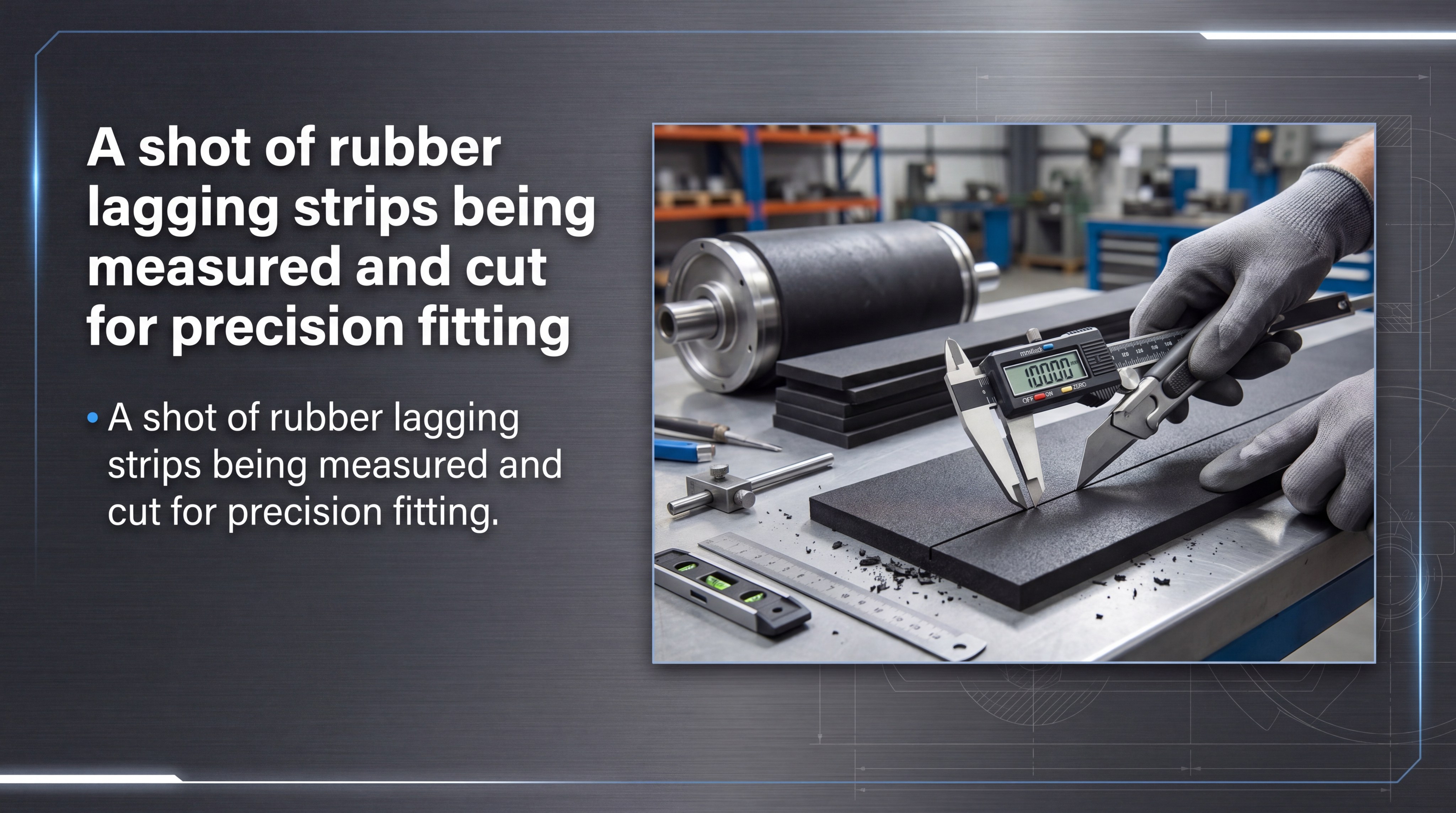
Belt conveyor pulley lagging rubber is designed for rapid installation using cold-bonding adhesives, often without removing the pulley from the conveyor. Professional belt conveyor pulley lagging rubber installation requires precise measurement and surface preparation to ensure a permanent bond. This on-site capability is a major advantage for minimizing industrial downtime.
What is the cold-bonding process?
Cold-bonding utilizes a two-part cement that creates a chemical weld between the rubber strip and the sandblasted steel pulley surface. This process eliminates the need for large vulcanizing ovens.
- Buffing the rubber backing increases the bonding surface area.
- Applying metal primer prevents oxidation before the glue sets.
- Using hand rollers ensures 100% contact and removes air bubbles.
Think about this: a two-man crew can relag a standard drive pulley in less than four hours.
| Installation Step | Critical Tool | Goal | |
|---|---|---|---|
| Stripping | Scrapers/Torches | Remove old residue | |
| Grinding | Angle Grinder | Create metal profile | |
| Priming | Paint Brush | Prevent rust/Enhance bond | |
| Bonding | Hand Roller | Eliminate air pockets |
On-site installation is the most efficient way to maintain your pulleys without the logistical nightmare of heavy equipment removal.
Key TakeawayCold-bonding makes rubber lagging the most accessible maintenance solution for urgent pulley repair and traction upgrades.
Is belt conveyor pulley lagging rubber durable?
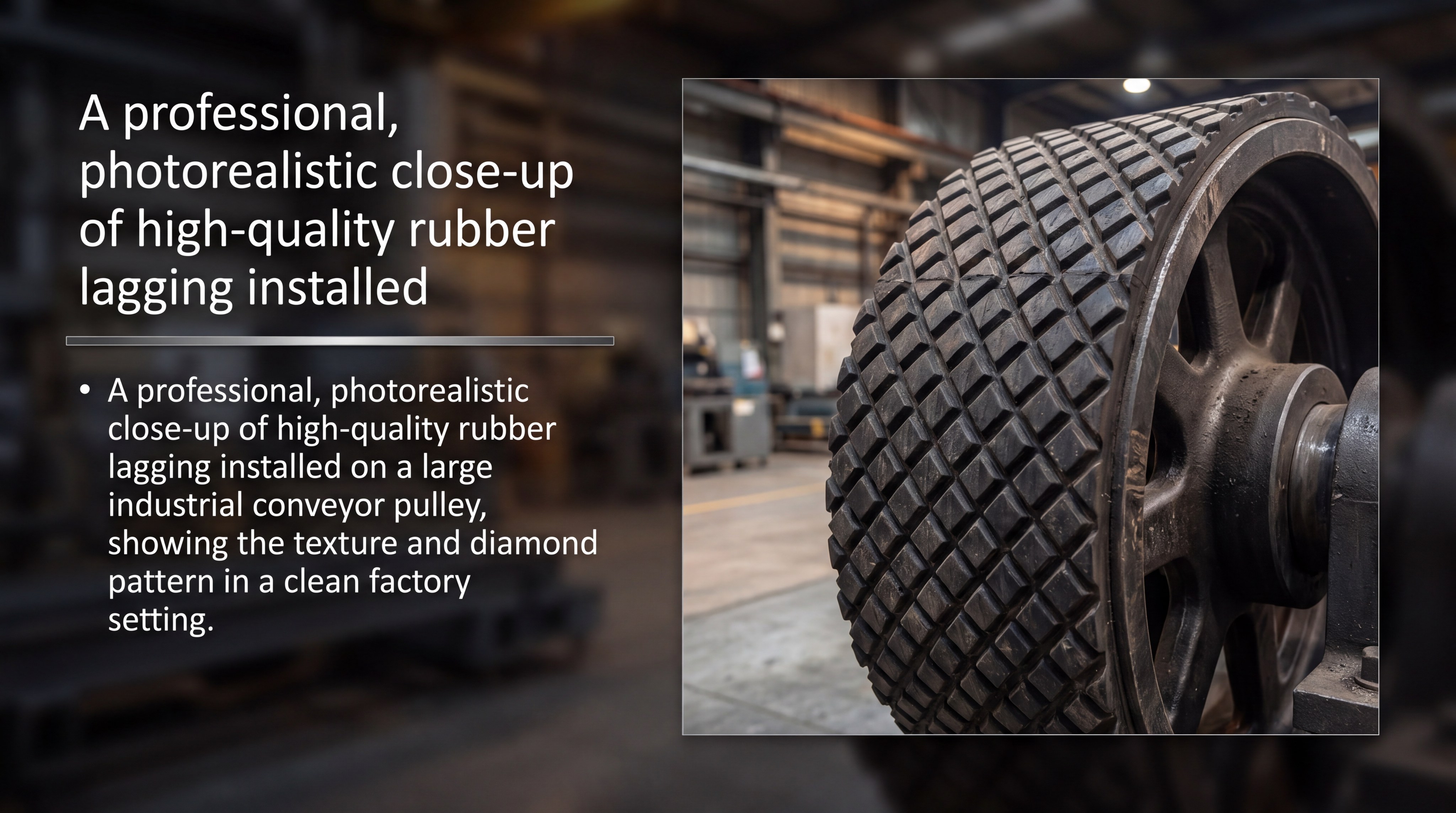
Belt conveyor pulley lagging rubber is highly durable, with high-grade compounds lasting three to five years in standard operating conditions. The longevity of belt conveyor pulley lagging rubber depends on the durometer of the rubber and the environmental temperature. Investing in premium rubber reduces the total cost of ownership by decreasing the frequency of maintenance cycles.
How does it handle abrasive materials?
The elastomer’s resilience allows it to deflect sharp particles that would gouge or pit a steel pulley face. This “bounce-back” property is what makes rubber so effective in aggregate and mining sectors.
- Resists abrasion from sand, gravel, and crushed stone.
- Remains flexible in freezing temperatures without cracking.
- Flame-retardant grades are available for underground mining safety.
Let’s be honest: cheaper rubber often peels or cracks within months, costing you more in the long run.
| Material Grade | Hardness (Shore A) | Expected Life | |
|---|---|---|---|
| Standard SBR | 60 | 2 – 3 Years | |
| Natural Rubber | 55 | 4 – 5 Years | |
| Neoprene (Oil Res) | 65 | 3 – 4 Years |
Durability is a direct result of chemical purity and proper vulcanization during the rubber’s manufacturing phase.
Key TakeawayPremium rubber lagging provides a consistent wear surface that withstands years of punishing material throughput.
Does belt conveyor pulley lagging rubber handle high loads?
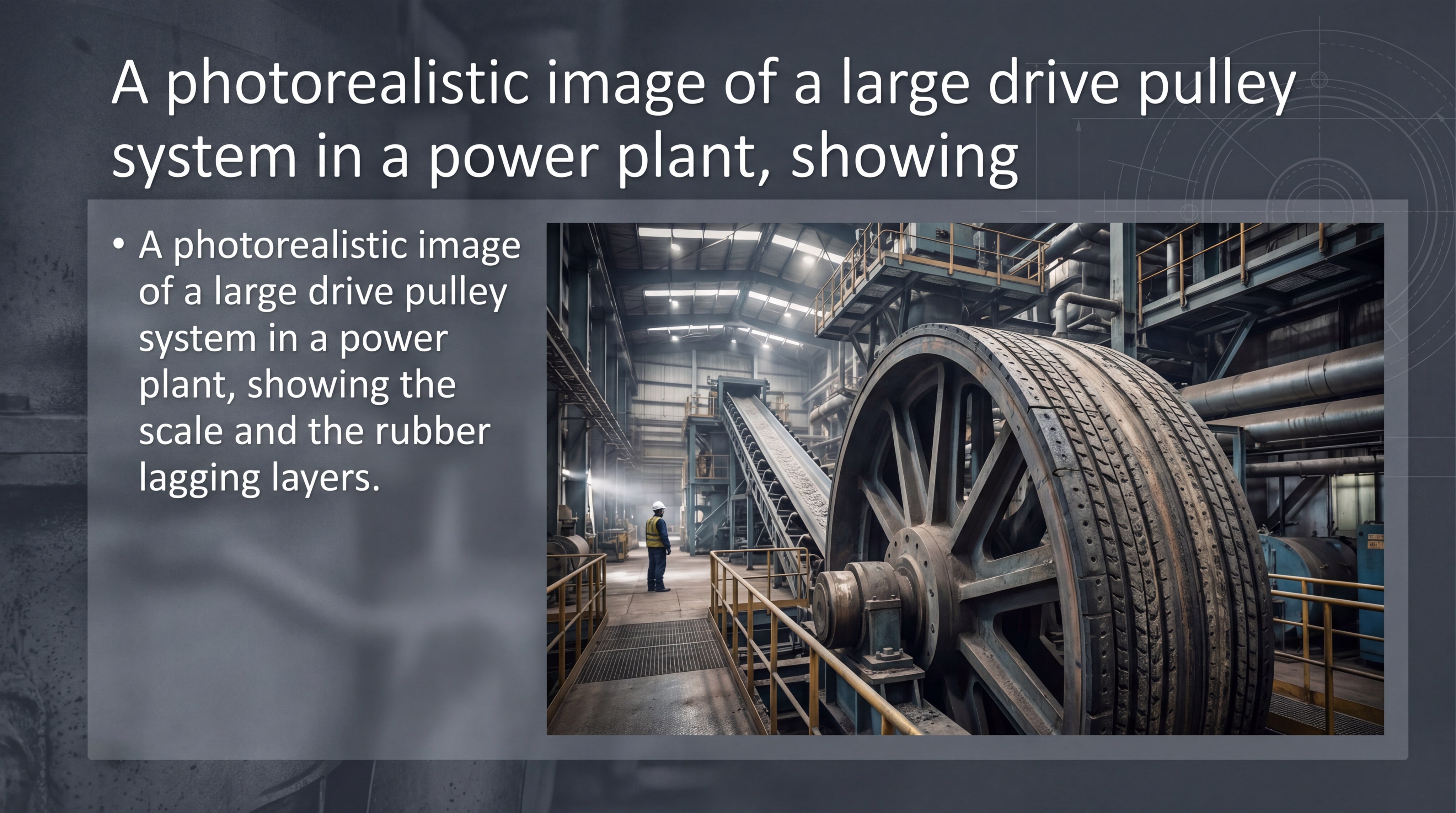
Belt conveyor pulley lagging rubber is engineered to handle massive torque loads in power plants and large-scale mining operations. Using belt conveyor pulley lagging rubber allows drive motors to operate at peak efficiency without the parasitic losses associated with slippage. It is the primary power transmission medium for belts carrying thousands of tons per hour.
Can rubber manage high belt tension?
High-tension systems require thicker lagging to distribute the radial pressure across the pulley shell. This prevents the rubber from “creeping” or shearing off the steel face under extreme stress.
- Thicker sheets (20mm+) prevent shell deformation.
- High-tensile rubber resists the “plowing” effect of the belt.
- Vulcanized bonding layers provide up to 12kg/cm of peel strength.
Look at it this way: the lagging is the only thing keeping your multi-million dollar drive system connected to the belt.
| Load Level | Min Thickness | Recommended Pattern | |
|---|---|---|---|
| <500 PIW | 12mm | Diamond | |
| 500 – 1000 PIW | 15mm | Herringbone | |
| >1000 PIW | 20mm | Ceramic-embedded Rubber |
Engineered rubber lagging is the silent partner in high-capacity material handling systems worldwide.
Key TakeawayRubber lagging is capable of transmitting extreme torque, provided the thickness and bonding strength are matched to the system tension.
What is the friction of belt conveyor pulley lagging rubber?
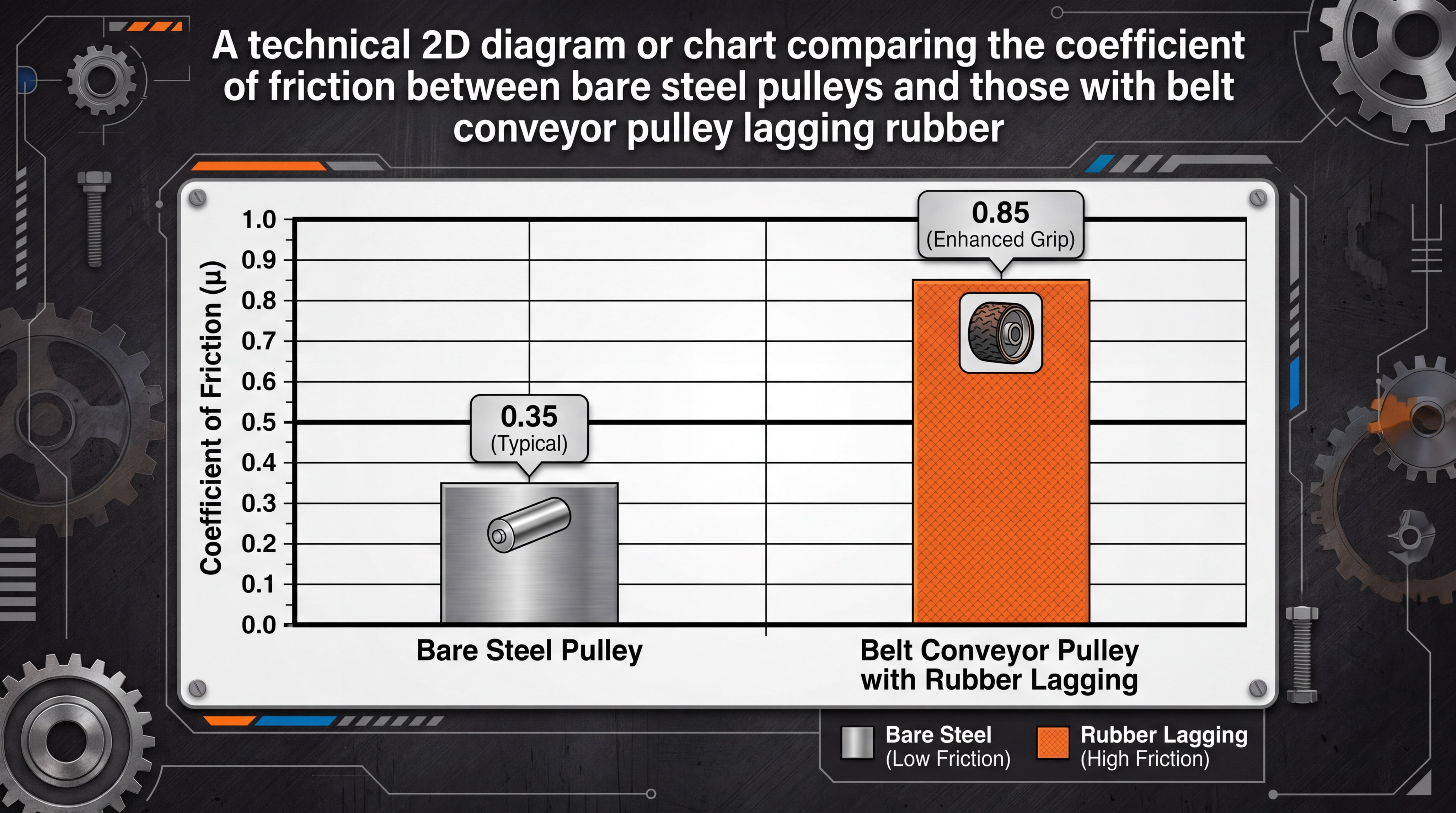
Belt conveyor pulley lagging rubber increases the coefficient of friction from a typical 0.35 on steel to over 0.85 on a dry surface. This dramatic jump in belt conveyor pulley lagging rubber friction means your system can operate with much lower take-up tension. Lower tension reduces the mechanical strain on your bearings, shafts, and belt splices.
How does moisture affect the friction?
While bare steel friction drops to near zero when wet, rubber lagging maintains a functional coefficient of 0.30 to 0.35. The grooves in the rubber ensure that the belt never truly “hydroplanes” across the pulley face.
- Maintains drive power during heavy rain or washdowns.
- Prevents the belt from sliding backward on inclined conveyors.
- Allows for reliable operation in humid underground mines.
Think about this: a 50% increase in friction can reduce your bearing wear by nearly 30% due to lower required tension.
| Condition | Steel Friction | Rubber Friction | Improvement | |
|---|---|---|---|---|
| Dry | 0.35 | 0.85 | +142% | |
| Wet | 0.10 | 0.35 | +250% | |
| Muddy | 0.05 | 0.25 | +400% |
The data proves that lagging is not an optional accessory but a fundamental requirement for system efficiency.
Key TakeawayRubber lagging provides a massive friction advantage that remains stable even when the conveyor is exposed to water and mud.
Where to store belt conveyor pulley lagging rubber?
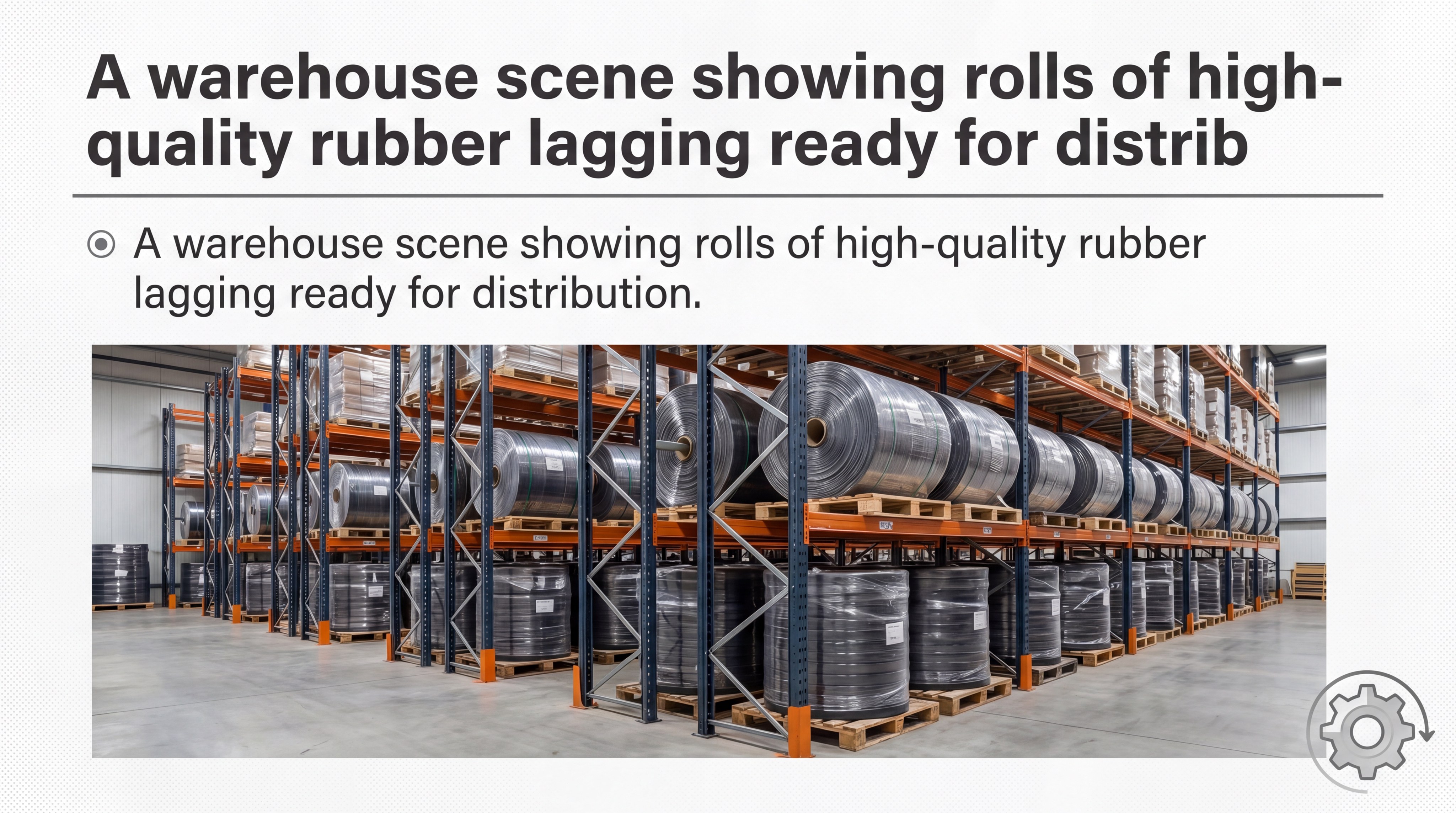
Belt conveyor pulley lagging rubber should be stored in a cool, dry warehouse away from direct sunlight and ozone-generating equipment. Protecting your belt conveyor pulley lagging rubber from UV exposure prevents the material from becoming brittle or losing its bonding properties. Proper storage ensures that the rubber remains in peak condition until it is ready for installation.
What are the ideal storage conditions?
Rubber is a polymer that reacts to heat and light, so maintaining a stable temperature between 15°C and 25°C is best. Avoid storing near electric motors, which produce ozone that can cause surface cracking.
- Keep rolls vertical or on pallets to prevent flat spots.
- Use opaque covers to block all UV light.
- Ensure the storage area is free from oils and chemicals.
Here is the kicker: poorly stored rubber can lose 50% of its bonding strength before it ever touches a pulley.
| Factor | Ideal Condition | Danger | |
|---|---|---|---|
| Temperature | 15°C – 25°C | Hardening/Softening | |
| UV Light | Zero Exposure | Brittle Cracking | |
| Humidity | <65% | Mold/Bonding issues |
Correct storage practices guarantee that the investment you make in your maintenance inventory stays protected.
Key TakeawayStable environment storage prevents the chemical degradation that leads to premature lagging failure and bonding issues.
Conclusion
Rubber lagging is the most vital upgrade you can provide for your conveyor system, offering unparalleled traction and protection. By eliminating slippage and shielding the pulley shell, you significantly reduce operational costs and unplanned downtime. To secure your system’s efficiency, contact us today for a tailored lagging solution. We are committed to manufacturing the most reliable rubber products that power global industry through innovation and quality.
FAQ
Can I install rubber lagging on a wet pulley?No. The pulley shell must be completely dry and free of moisture for the cold-bonding adhesive to create a permanent bond.
What’s the best way to clean my lagging?Use high-pressure water or a stiff brush to remove mud from the grooves, but avoid harsh chemicals that can degrade the rubber compound.
Can I replace just one strip of lagging?Yes. Cold-bonding allows you to strip and replace individual worn or damaged sections without needing to relag the entire pulley.
What’s the best pattern for a bi-directional conveyor?Diamond pattern lagging is the ideal choice as it provides equal friction and self-cleaning capabilities regardless of the rotation direction.
Can I use standard rubber in a coal mine?No. Underground coal mines require MSHA-certified flame-retardant and anti-static (FRAS) rubber to meet strict safety regulations.