
A 4 ply rubber conveyor belt is a heavy-duty material handling solution engineered for demanding industrial applications such as mining, coal transport, cement production, and plaster casting. Constructed with multiple high-strength polyester and nylon fabric layers, these conveyor belts provide exceptional tensile strength, impact resistance, and long-term durability under abrasive and high-load operating conditions. Unlike standard conveyor systems that suffer from frequent breakdowns and premature wear, a 4 ply rubber conveyor belt delivers stable conveying performance, reduced maintenance costs, and improved operational efficiency. Its reinforced structure and vulcanized rubber covers help extend service life while ensuring reliable material transport in harsh industrial environments.
What is a 4 ply rubber conveyor belt?
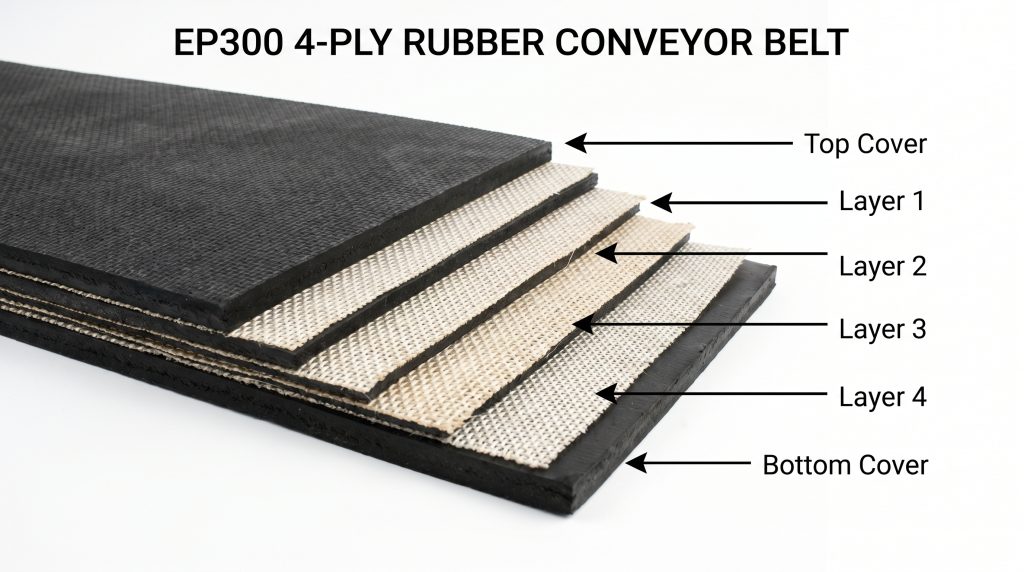
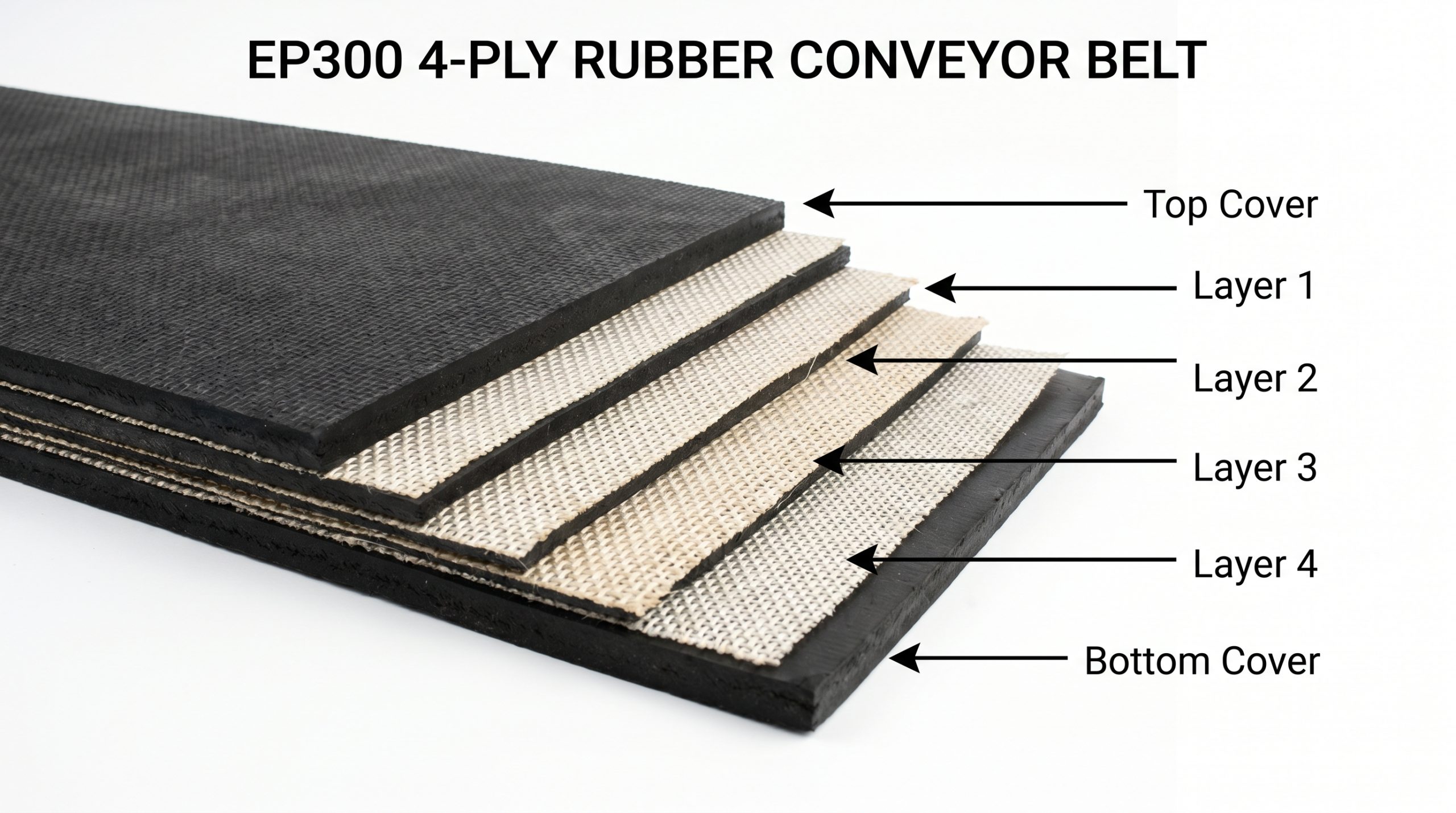
A 4 ply rubber conveyor belt is an industrial-grade material handling belt constructed with four layered fabric plies vulcanized between two protective rubber covers. This design provides the perfect balance of tensile strength and flexible performance under continuous heavy loads. Weifang Zhenxing Rubber Co., Ltd. manufactures these belts using high-adhesion skim coats to prevent premature layer separation.
What makes EP300 carcass unique?
When you load heavy materials, you need a carcass that will not stretch out of shape. The EP300 designation means each fabric layer can handle a tensile load of 300 N/mm.
Here is why this matters:
- Polyester warp yarns limit stretch to less than 1.5%.
- Nylon weft yarns allow the belt to trough smoothly.
- High initial modulus reduces take-up travel.
How does plaster casting relate to vulcanization?
Plaster casting acts as a critical prototyping process to shape customized rubber parts before full vulcanization. You can use these plaster molds to create highly detailed, heat-resistant casting forms.
Think about it:
- Gypsum molds withstand high curing temperatures easily.
- They allow you to test custom rubber shapes affordably.
- The casting mirrors the high-pressure vulcanizing process.
What are the specific layer configurations?
The internal layout of this belt features four fabric plies separated by high-adhesion rubber skim coats. This multi-layered assembly acts as an integrated cushion against extreme point-impacts.
Key Takeaway: A 4-ply carcass combines multiple fabric layers and elastomeric covers to offer excellent load-bearing strength and impact resilience for tough industrial lines.
| Layer Component | Material Type | Functional Role | Thickness (mm) | |
|---|---|---|---|---|
| Top Cover | Premium Rubber | Wear and abrasion protection | 3.0 to 6.0 | |
| 4 Ply Carcass | Polyester/Nylon | Core tensile load distribution | 4.0 to 5.5 | |
| Skim Coats | High-bond Rubber | Prevents layer separation | 0.8 to 1.2 | |
| Bottom Cover | Friction Rubber | Pulley grip and low resistance | 1.5 to 3.0 |
This balanced layout provides a stable structural foundation that you can trust under heavy loads.
How does a 4 ply rubber conveyor belt work?
A 4 ply rubber conveyor belt works by converting mechanical energy from drive pulleys into stable linear movement to haul bulk materials safely. The belt carcass handles high longitudinal tension while the top rubber cover absorbs the direct impact of dropping raw materials. This system allows you to transport high tonnages across steep, long distances.
How do the four fabric plies distribute tension?
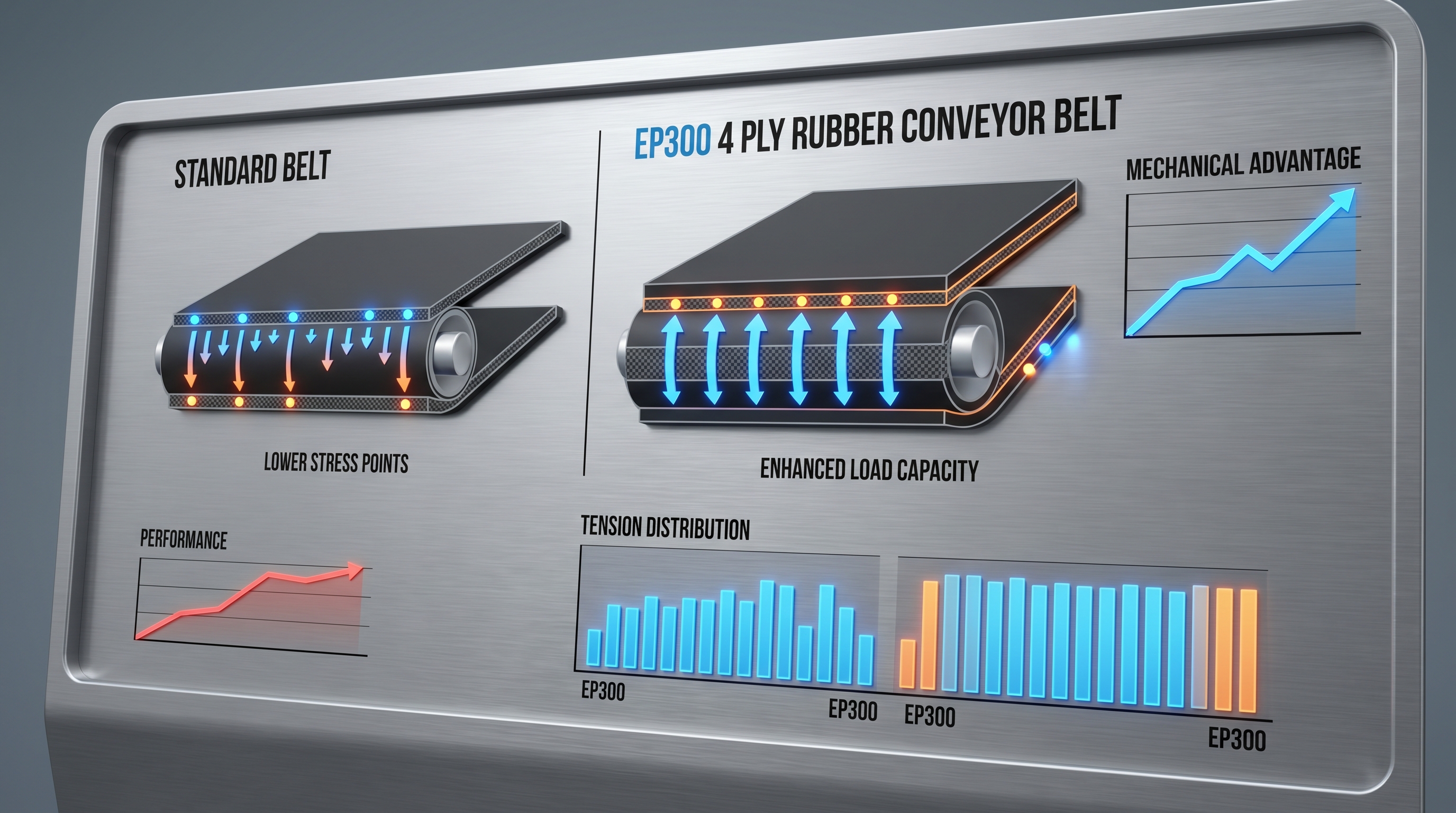
The four individual plies divide the driving tension equally to reduce the strain on individual fibers. This multi-ply design ensures that local stresses do not cause a full belt break.
Let’s face it:
- Tension is shared evenly across all four layers.
- Stress points are minimized during pulley wraps.
- The belt retains its flexibility without cracking.
What is the role of the rubber cover?
The outer covers act as a strong shield to protect the load-bearing textile layers from external damage. Without these covers, sharp stones and coal would quickly slice through the inner fabric layers.
The best part?
- The top cover resists deep gouges and cuts.
- The bottom cover ensures a solid grip on pulleys.
- Moisture is blocked from rotting the inner fibers.
How do transition zones manage heavy material loads?
As the belt moves from flat pulleys into troughing idlers, it bends into deep pockets to hold more material. The high transverse elasticity of the carcass allows it to trough up to 45 degrees without buckling.
Key Takeaway: Distributing tension across four plies ensures excellent troughability and flexibility, allowing you to transport bulk materials without spillage.
| Performance Metric | EP300 4-Ply Value | Operational Advantage | |
|---|---|---|---|
| Total Strength | 1200 N/mm | Handles high tension over long spans | |
| Elongation | ≤ 1.5% | Minimizes frequent take-up adjustments | |
| Troughing Angle | Up to 45° | Prevents spillage on deep runs | |
| Ply Adhesion | ≥ 4.5 N/mm | Prevents internal layer delamination |
Understanding these key specs helps you choose the right configuration for your specific system setup.
Why select a 4 ply rubber conveyor belt?
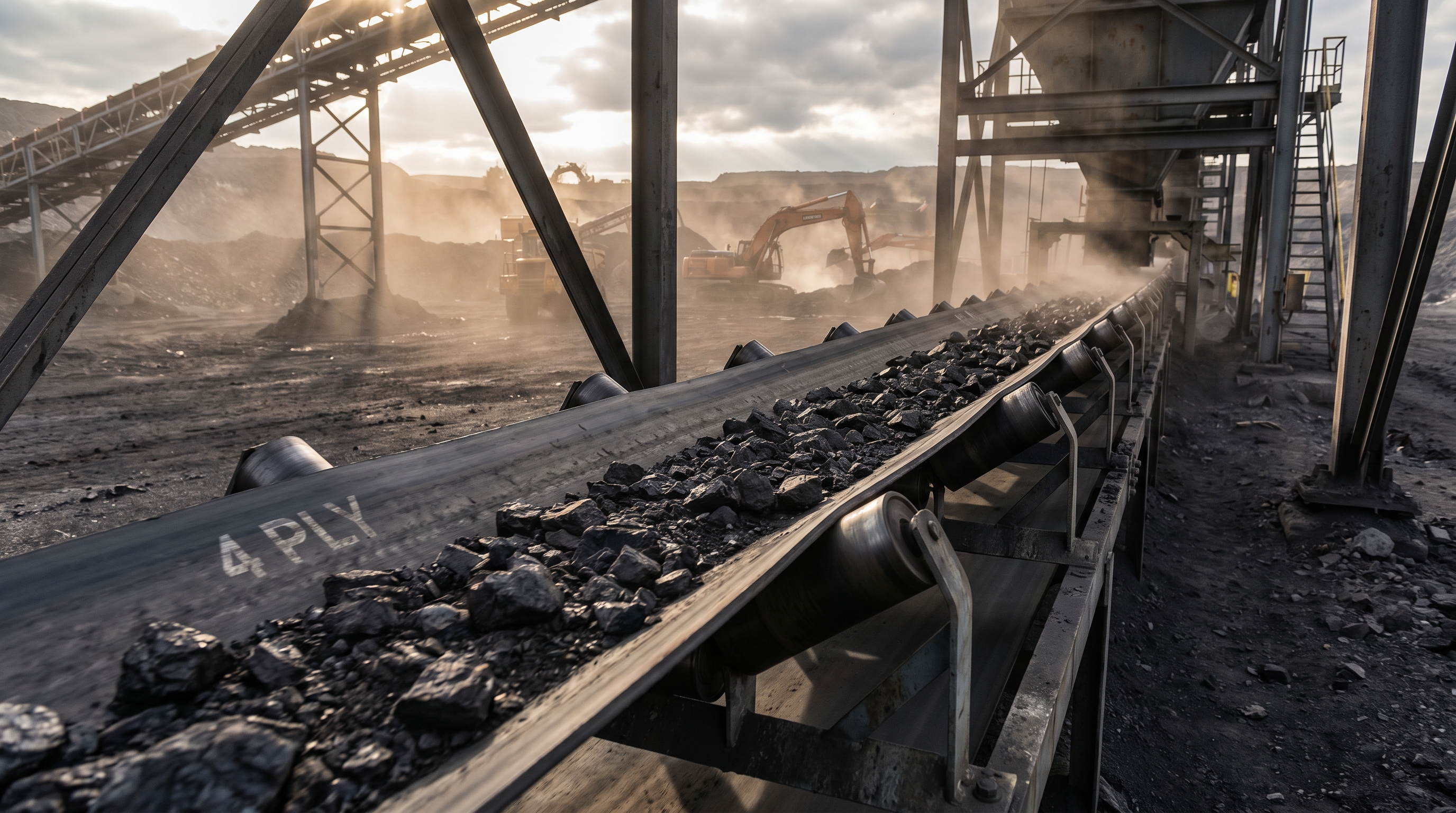
You should select a 4 ply rubber conveyor belt because it offers superior impact absorption, high tear resistance, and minimal stretching under heavy B2B operating conditions. This configuration prevents deep punctures and limits tracking errors over long distances. It is the best choice for mines focusing on safety and efficiency.
Why is high impact resistance crucial for coal mining?
In coal mining, heavy, sharp rocks fall from high chutes directly onto your transfer zones. Using multiple fabric layers acts as a thick cushion that absorbs these punishing impact forces.
It is simple:
- Four plies distribute high falling energy safely.
- The carcass resists punctures from sharp slate.
- You avoid costly tear-outs and belt failures.
Is there a benefit to using plaster-casting molds?
Using plaster-cast molds to make custom rubber shapes gives you a fast, cost-effective way to design special profiles. You do not have to buy expensive metal tooling for small or custom orders.
Unbelievable, right?
- Plaster molds are cheap and fast to make.
- You can test different cleat designs easily.
- This process speeds up customized product delivery.
How does it prevent belt elongation over time?
Standard belts stretch over time, requiring your teams to stop operations to adjust the take-up pulleys. The high-modulus polyester yarns in this carcass keep the belt at a stable, reliable length.
Key Takeaway: Selecting a 4-ply EP300 belt ensures minimal stretch and excellent impact protection, lowering your overall operational costs.
| Feature | Standard 2-Ply Belt | EP300 4-Ply Belt | |
|---|---|---|---|
| Impact Cushion | Low to Moderate | Extreme (4 fabric layers) | |
| Stretch Under Load | High (needs adjustments) | Very Low (under 1.5%) | |
| Puncture Resistance | Standard | Exceptional | |
| Fire Safety Options | Limited | Certified flame retardant |
These high ratings ensure your mining lines run continuously and safely every single day.
Where is a 4 ply rubber conveyor belt used?
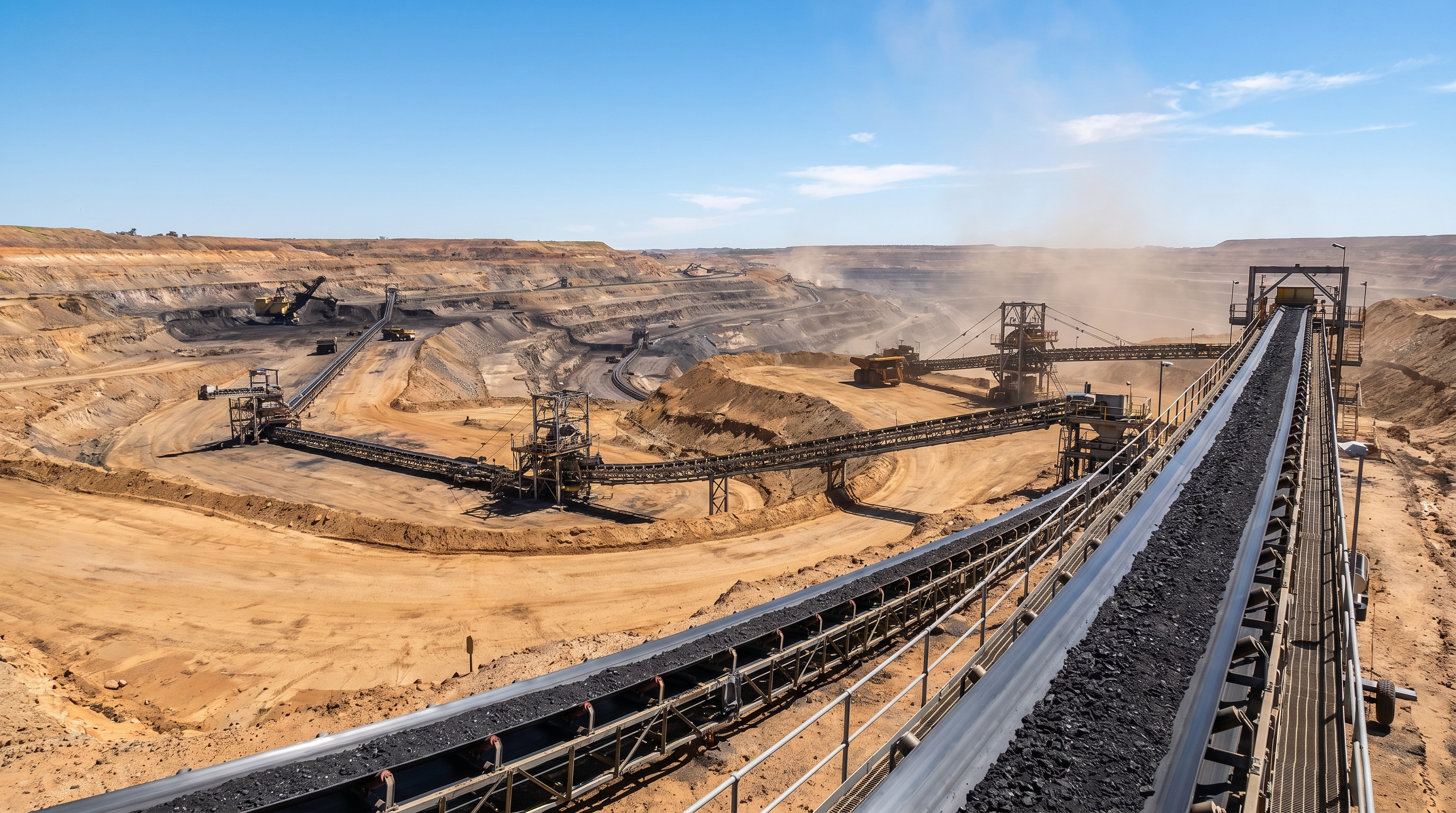
A 4 ply rubber conveyor belt is widely used in underground coal mines, gypsum processing facilities, plaster casting plants, and heavy aggregate quarries. These environments subject equipment to constant abrasion, high humidity, and severe mechanical strain. This belt stands up to these daily stresses without losing performance.
Why is it preferred in heavy underground coal mining?
Underground mining requires flame-retardant and anti-static materials to protect your crew from underground hazards. These belts are designed to handle damp conditions and oily residues without rotting or slipping.
Here is why:
- Certified covers prevent underground friction fires.
- Moisture cannot penetrate the sealed carcass.
- They carry high loads through tight mine shafts.
How is it used in industrial plaster casting plants?
Plaster processing lines deal with highly abrasive dry gypsum and wet, chemical-heavy slurries. You need a durable belt to haul these heavy, wet materials without experiencing structural rot.
Think about it:
- Thick covers resist chemical wear from wet plaster.
- The belt holds its shape under wet materials.
- Sealed edges prevent plaster dust from entering.
What other aggregate mining operations benefit?
From granite and limestone quarries to sand and gravel washes, these belts handle a wide variety of bulk loads. Their high strength allows you to run longer single lines, which eliminates extra transfer chutes.
Key Takeaway: Whether in wet plaster plants or dusty underground coal mines, these belts handle chemicals, moisture, and high impacts easily.
| Industry | Main Challenge | Critical Belt Feature | Cover Choice | |
|---|---|---|---|---|
| Underground Coal | Fire risks, dampness | Flame retardant, anti-static | MSHA Class 1 Fire Resistant | |
| Plaster Casting | Wet plaster, chemicals | Moisture and rot resistant | Weather-Resistant SBR | |
| Rock Quarry | Sharp rock impacts | High cut and gouge resistance | DIN X/Y Ultra-Wear | |
| Port Terminals | Continuous high speed | Low rolling resistance, flex | Low Energy Rubber (LRR) |
This versatility makes this belt the standard choice for bulk handling plants worldwide.
How to make a 4 ply rubber conveyor belt?
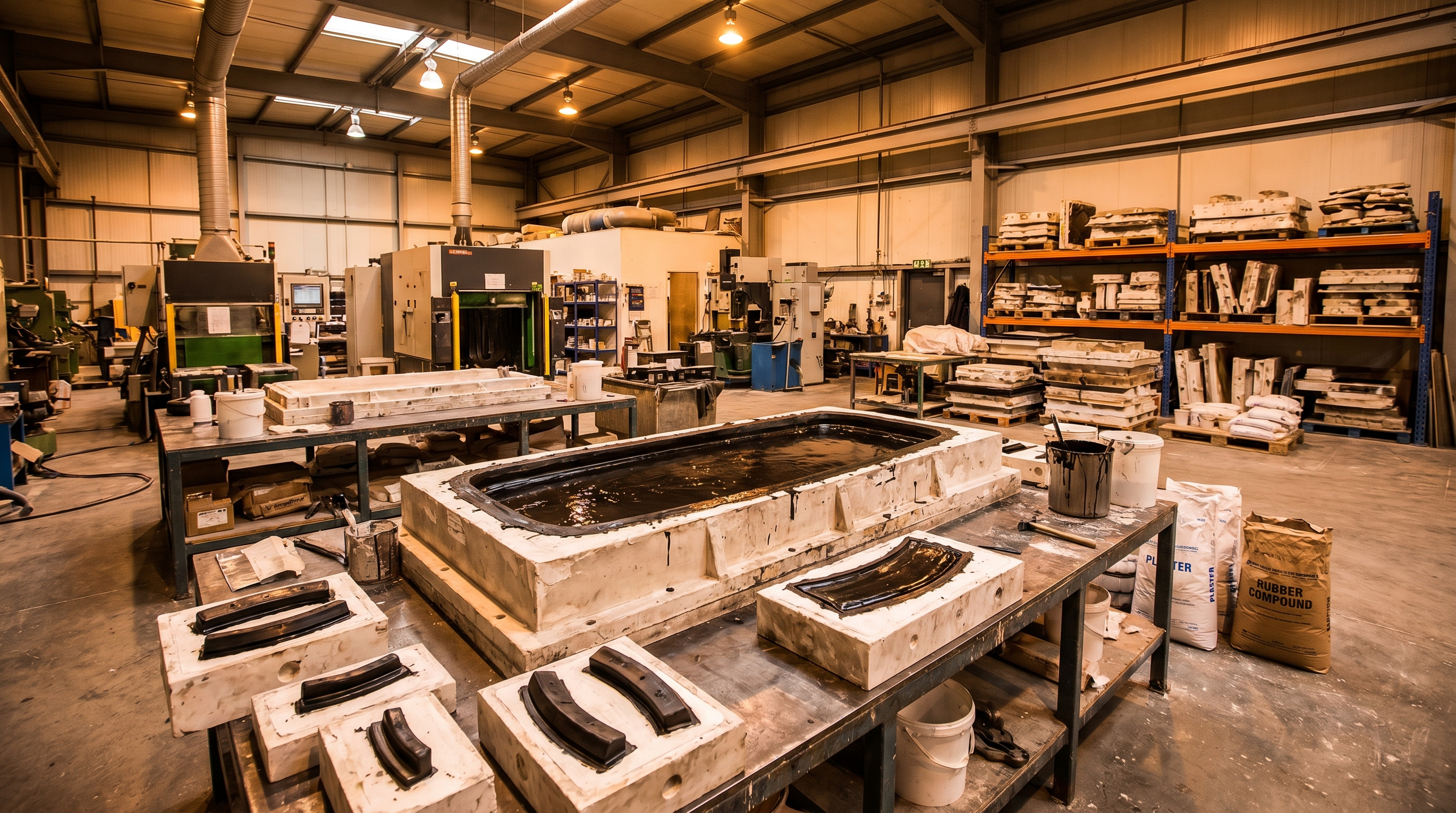
To make a high-quality 4 ply rubber conveyor belt , manufacturers weave high-modulus synthetic fabrics, coat them with skim rubber, and bond them to durable outer covers using a hot vulcanizing press. This precise process transforms raw polymers and textiles into a tough, single piece of equipment. The resulting belt resists layer separation even under extreme stress.
What are the main steps in the manufacturing process?
The manufacturing line begins by weaving strong polyester warp and nylon weft yarns into dense fabric plies. Next, these plies pass through high-pressure rollers to receive a uniform skim rubber coat.
The process works like this:
- Fabric plies are woven tightly for high strength.
- Skim coats are applied to ensure a strong bond.
- Heavy protective covers are layered on the top and bottom.
How is plaster casting used to mold customized textures?
For belts that need special surface shapes, you can use plaster-cast patterns to mold chevrons and ribs. The plaster mold captures fine details that are pressed onto the hot rubber during manufacturing.
The best part?
- Plaster molds deliver clean, highly detailed shapes.
- You can quickly modify custom profile patterns.
- It saves money compared to costly steel tooling.
What vulcanization techniques guarantee ply bonding?
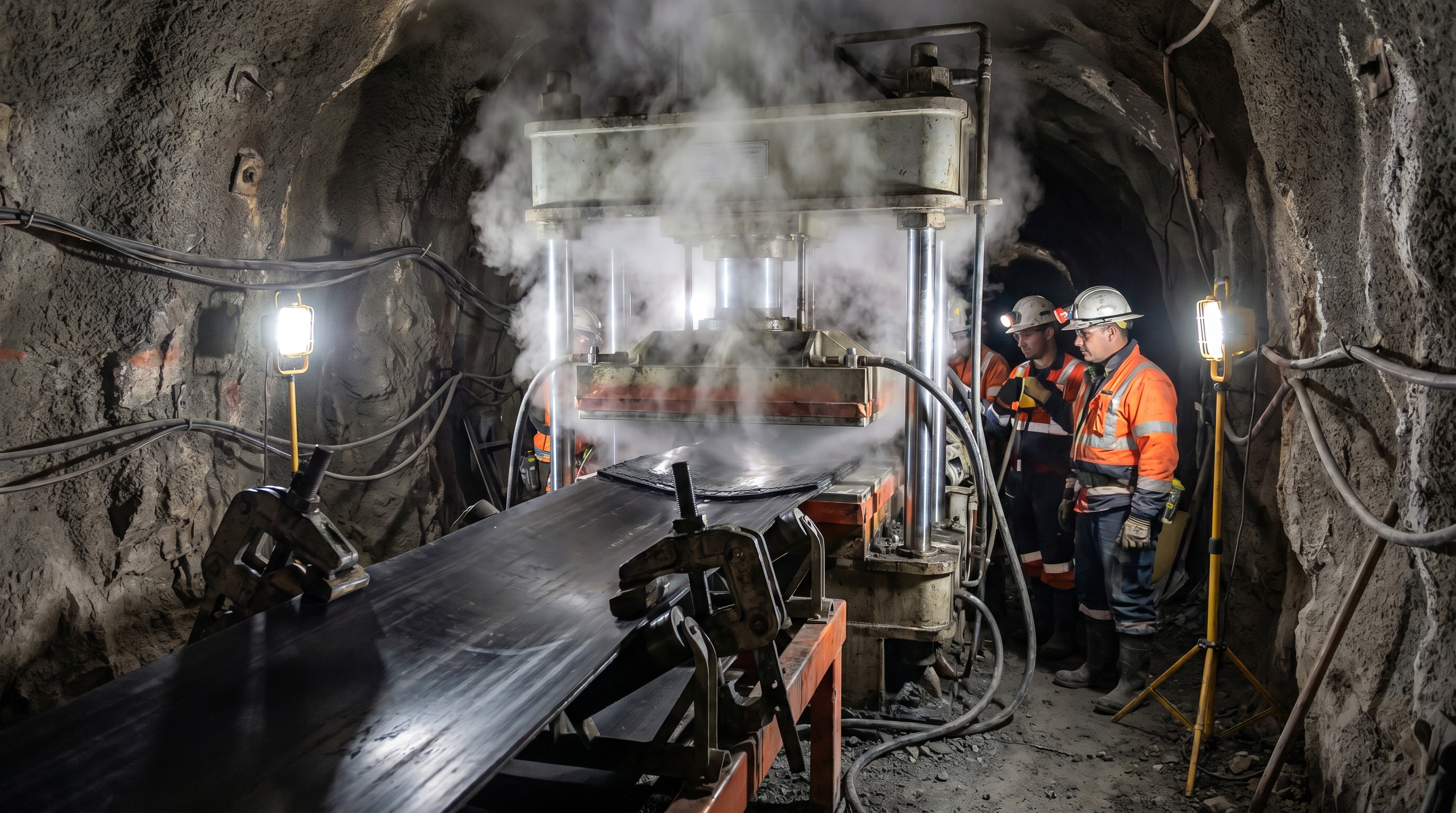
The assembled layers enter a massive hydraulic vulcanizing press that applies extreme heat and pressure. This curing process causes the rubber molecules to cross-link, fusing the fabric and rubber into a single, high-strength belt.
Key Takeaway: High-pressure vulcanization and precise calendering create a rugged belt that will not delaminate or fail under heavy stress.
| Process Step | Core Parameter | QC Check | Machinery Used | |
|---|---|---|---|---|
| Weaving | Fabric tension | Thread density | Industrial loom | |
| Calendering | Skim coat thickness | Uniformity check | 4-Roll Calender | |
| Surface Molding | Mold alignment | Pattern depth | Plaster casting / roll | |
| Vulcanizing | 150°C to 170°C | Cure rate and adhesion | Hydraulic curing press |
This careful manufacturing process ensures each belt meets strict industrial standards before it leaves the plant.
Is a 4 ply rubber conveyor belt cost-effective?
Yes, a premium 4 ply rubber conveyor belt is highly cost-effective because its long-lasting design dramatically reduces your replacement costs and maintenance labor. While the initial price may be higher than single-ply alternatives, its high durability ensures you pay less over time. This long wear life makes it a smart investment for high-capacity mines and plants.
What is the long-term ROI in underground operations?
Underground mining operations lose thousands of dollars every hour a conveyor line stops. By investing in a 4-ply EP300 belt, you avoid sudden, expensive breaks and keep your material moving.
Let’s look at the numbers:
- Fewer belt breaks mean more uptime.
- You reach your daily production targets easily.
- Your total cost per ton drops significantly.
How does mold-casting reduce upfront fabrication costs?
Using plaster-cast molds to make custom profiles keeps your design and prototyping costs very low. You do not have to pay for expensive metal CNC molds when designing special cleats.
Think about it:
- Plaster molding cuts your prototyping costs.
- You can easily test custom profiles in your system.
- It makes custom, short runs highly affordable.
What is the maintenance cost comparison?
Because these belts resist stretching, your maintenance crews spend far less time adjust-tensioning the system. This stability saves hours of labor and reduces wear on your gearboxes and bearings.
Key Takeaway: A 4-ply EP300 belt saves money by reducing replacement costs, maintenance hours, and unscheduled production stops.
| Cost Category | Light Duty Belt | EP300 4-Ply Belt | 5-Year Cost Benefit | |
|---|---|---|---|---|
| Initial Cost | Low | Moderate | Standard upfront investment | |
| Lifespan | 1 to 2 years | 5+ years | Saves 50% on replacement hardware | |
| Labor Hours | High (tensioning) | Low (stable carcass) | Saves up to 65% on labor | |
| Downtime Risk | High | Very Low | Prevents costly emergency shut-offs |
These savings show that buying a high-quality belt is the most economical decision for your long-term operations.
How to maintain a 4 ply rubber conveyor belt?
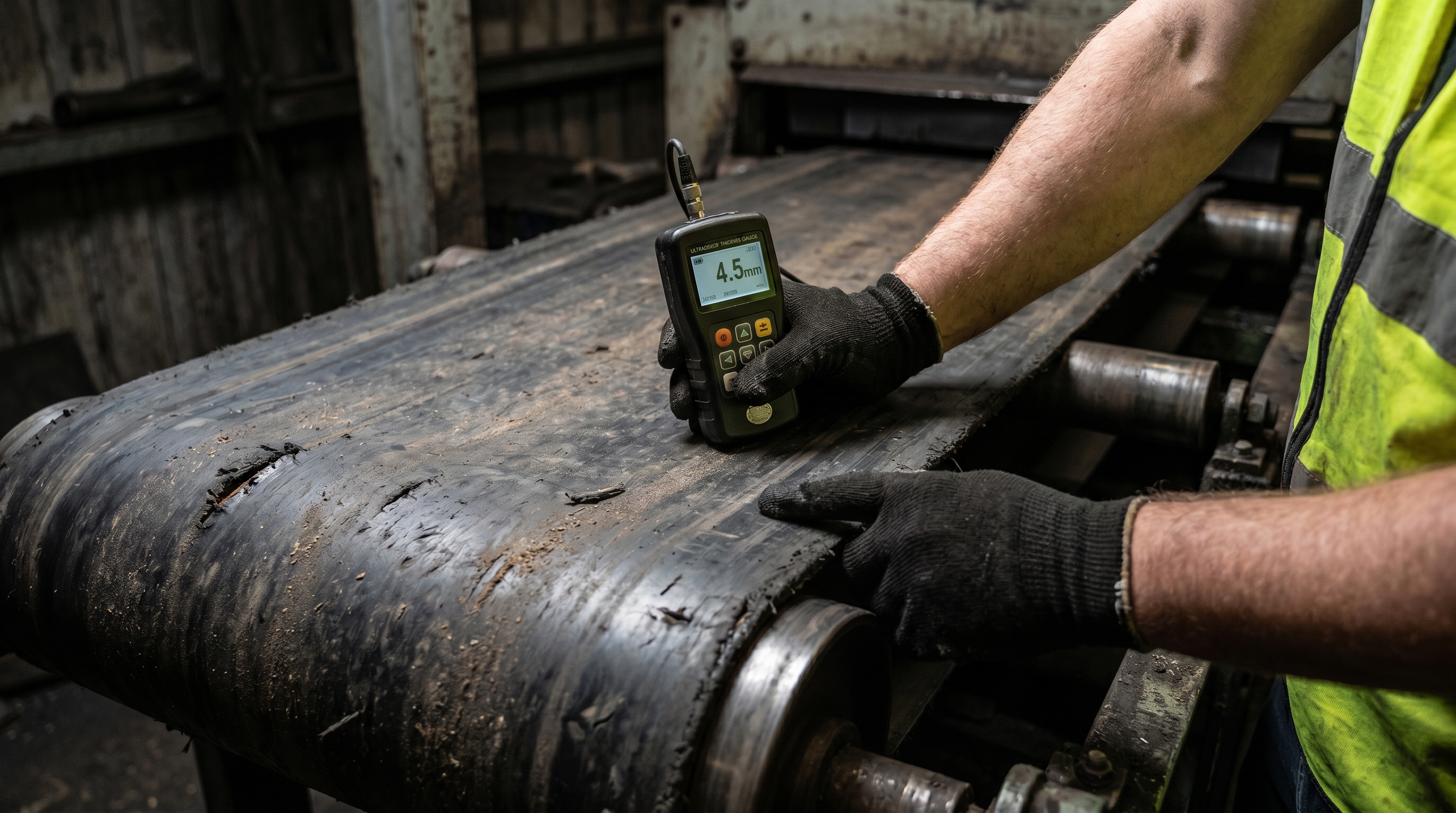
To maintain a 4 ply rubber conveyor belt , you should perform daily visual checks, keep pulleys clean, and repair small cuts immediately using cold-cast rubber compounds. Catching minor wear early prevents moisture and grit from reaching the inner fabric plies. This simple, preventative care is key to maximizing your belt’s working life.
What are the best practices for daily inspections?
Your daily check should focus on looking for belt drift, uneven cover wear, and any signs of splice separation. You must also check that your idlers rotate freely to prevent high, wear-inducing friction.
Here is why:
- Early detection prevents major edge fraying.
- Free-rolling idlers lower your energy costs.
- You protect the belt from rubbing against frames.
How to execute seamless hot vulcanized splicing?
Hot vulcanization is the best way to splice a 4-ply belt because it matches the strength of the original carcass. This process steps down each of the four fabric layers and bonds them under high heat and pressure.
The best part?
- The splice retains up to 90% of original strength.
- It runs smoothly over your scraper blades.
- The joint resists peeling under high working tension.
Can damaged rubber covers be repaired with cast compounds?
You can quickly repair small cuts and gouges using fast-curing, cold-cast liquid rubber. This quick repair seals the gouge, keeping water and dirt from rotting the fabric plies underneath.
Key Takeaway: Regular, quick inspections and hot-vulcanized splices prevent minor cover damage from turning into major ply separation.
| Maintenance Issue | Best Inspection Method | Corrective Action | Preventative Tool | |
|---|---|---|---|---|
| Belt Drift | Edge tracking check | Adjust tracking idlers | Auto-aligning idlers | |
| Cover Gouges | Visual inspection | Fill with cold-cast rubber | Adjust feed chute angle | |
| Splice Crack | High-stress check | Recut and hot-vulcanize | High-grade splice kits | |
| Dirt Buildup | Pulley inspection | Clean and install scrapers | Self-cleaning plow |
This active maintenance approach ensures your system runs reliably and lasts for years to come.
Who sells the best 4 ply rubber conveyor belt?
You can buy the best 4 ply rubber conveyor belt from factory-direct manufacturers like Weifang Zhenxing Rubber Co., Ltd., who offer certified quality, custom patterns, and expert engineering support. Buying directly from the factory ensures you get consistent materials and direct communication. It is the best way to get heavy-duty belts tailored to your exact system needs.
Why choose Weifang Zhenxing Rubber?
Weifang Zhenxing Rubber has decades of experience manufacturing heavy-duty fabric and multi-ply belts. Their modern production lines ensure excellent layer bonding and precise, uniform rubber covers.
Think about it:
- You buy directly from the manufacturer to save money.
- You get access to a team of experienced engineers.
- Their belts are built for long life in tough climates.
What international quality certifications should you look for?
When you buy industrial belts, you must verify that the supplier holds major quality certifications. High-quality belts should meet ISO9001 and European CE safety standards to ensure reliable performance.
Let’s face it:
- Certifications guarantee the belt meets safety laws.
- They ensure the rubber is flame-resistant.
- You get a product tested for heavy industrial use.
How to customize your orders with direct factory experts?
Working with direct factory experts allows you to order custom rubber thicknesses, special profiles, and custom widths up to 3200 mm. This direct design process ensures your belts are built exactly to your system’s specifications.
Key Takeaway: Buying directly from certified factories like Weifang Zhenxing Rubber gives you custom designs, certified safety, and lower procurement costs.
| Business Factor | Standard Trading Middleman | Weifang Zhenxing Rubber (Factory Direct) | |
|---|---|---|---|
| Pricing | Marked up with extra fees | Direct-to-client factory pricing | |
| Custom Options | Limited catalog choices | Fully custom plies, covers, and profiles | |
| Quality Check | Secondary inspection | ISO9001 and CE certified factory checks | |
| Support | Basic customer service | Direct assistance from experienced engineers |
Sourcing directly from a trusted factory gives you the performance and support your operations require.
How to test a 4 ply rubber conveyor belt?
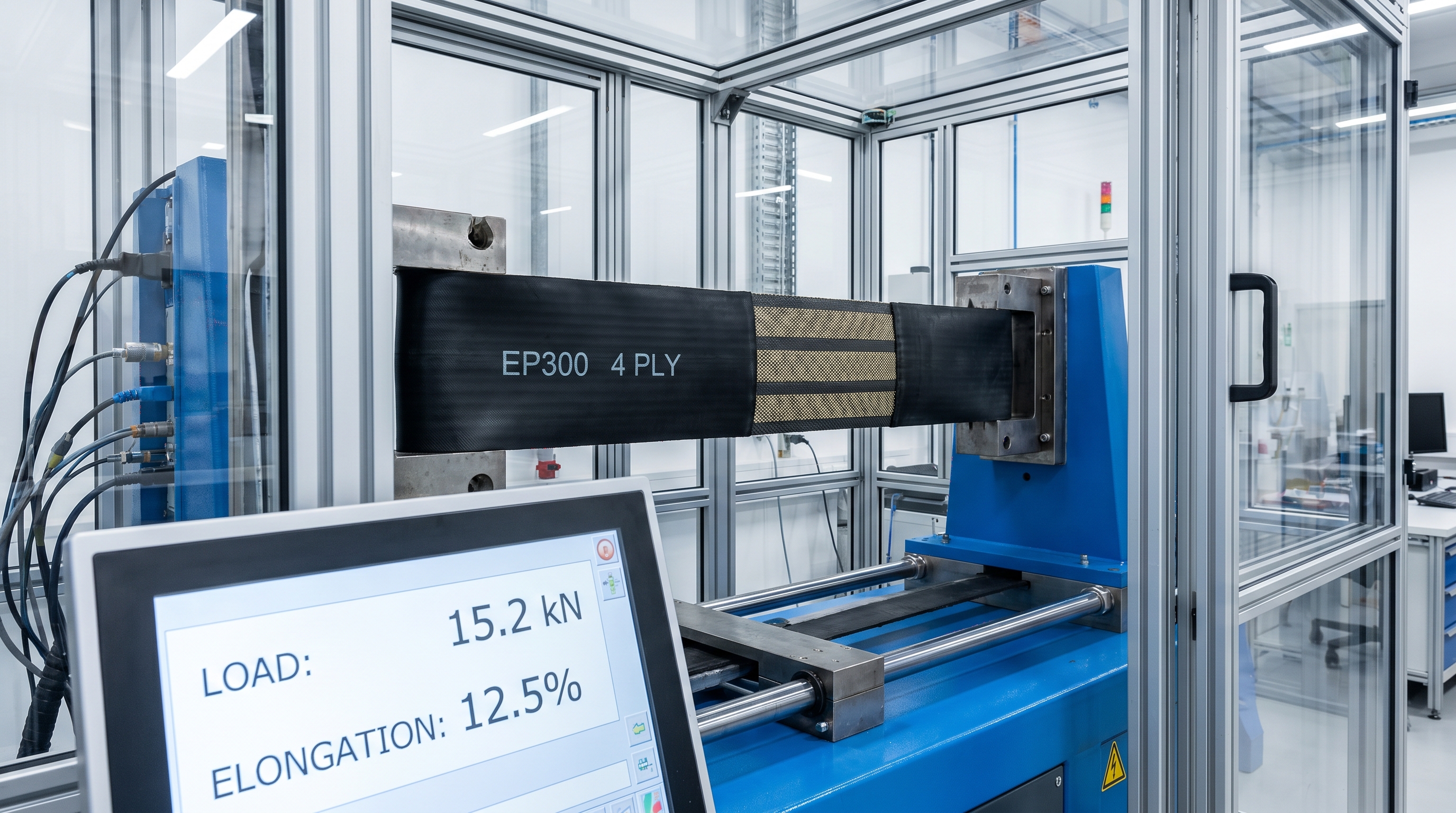
You test a 4 ply rubber conveyor belt by running laboratory checks for tensile strength, ply adhesion, and flame retardancy to ensure it meets strict safety standards. These tests confirm the belt’s physical specs, safety ratings, and expected working life before it is shipped to your site. This rigorous testing ensures your belt will perform safely in tough mining environments.
What is the tensile strength testing process?
Tensile strength testing pulls a belt sample in a specialized machine until it breaks to measure its maximum load limit. This confirms that the carcass can easily handle high operating tensions without tearing.
Here is why this matters:
- It proves the EP300 carcass can handle high tension.
- It ensures the belt will not stretch too much.
- You can trust the belt under heavy material loads.
How is adhesion testing performed between plies?
Adhesion testing measures the physical force required to peel the fabric plies and rubber covers apart. High adhesion is critical to prevent the layers from separating when the belt bends around pulleys.
The best part?
- It guarantees the layers stay bonded together.
- It prevents blistering and layer separation.
- Your belt can handle continuous bending safely.
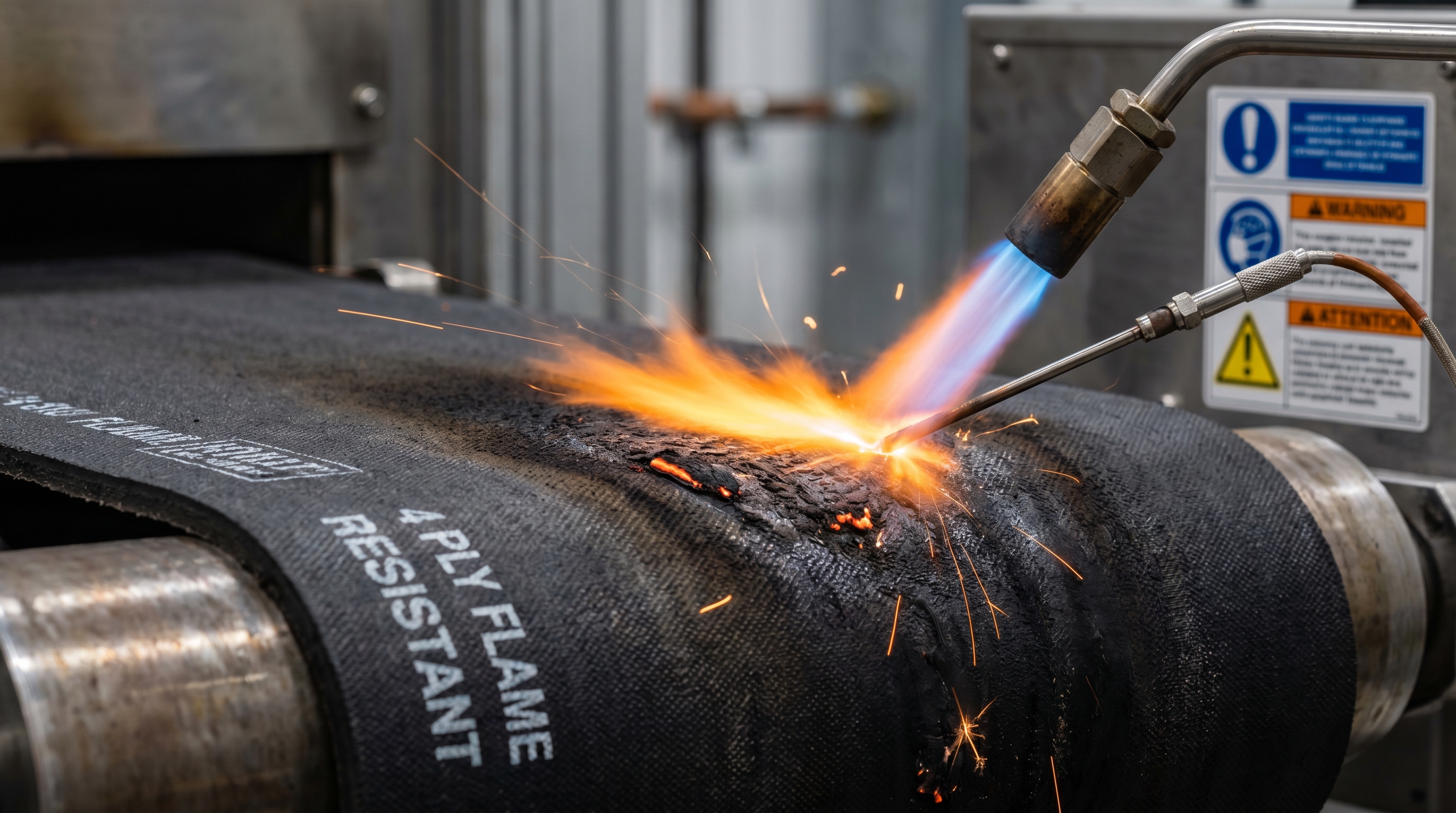
Why test flame retardancy for coal mining safety?
In underground coal mines, safety is the number one priority to protect your crew. Flame retardancy testing ensures the rubber is self-extinguishing, preventing friction heat from starting a dangerous underground fire.
Key Takeaway: Rigorous testing for tensile strength, adhesion, and flame resistance guarantees that every belt runs safely and reliably in harsh mine conditions.
| Test Standard | Code Used | Target Specification | Critical System Benefit | |
|---|---|---|---|---|
| Tensile Strength | ISO 283 | ≥ 1200 N/mm carcass total | Prevents structural breaks under heavy loads | |
| Ply Adhesion | ISO 252 | ≥ 4.5 N/mm (ply-to-ply) | Eliminates blistering and layer separation | |
| Elongation | ISO 283 | ≤ 4.0% maximum break stretch | Keeps your take-up travel distance short | |
| Flame Safety | EN 12882 | Extinguishes in under 3 seconds | Vital for underground fire prevention |
These testing steps ensure every belt is safe and reliable before it is installed on your conveyor.
What is the future of 4 ply rubber conveyor belt?
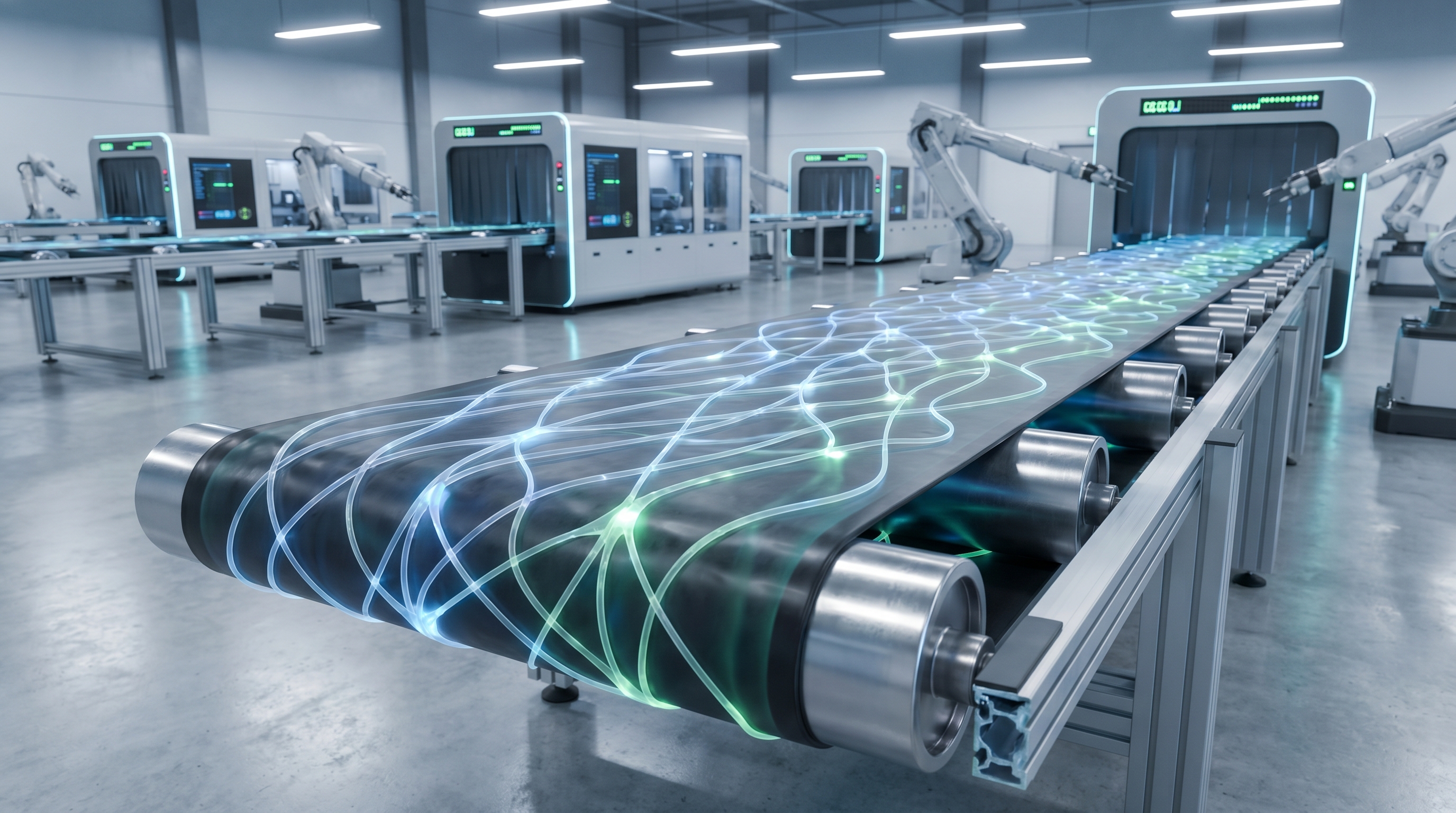
The future of the 4 ply rubber conveyor belt lies in integrated smart sensors, eco-friendly vulcanizing methods, and lighter, stronger hybrid fibers. These innovations are designed to make your B2B material handling systems safer, more efficient, and easier to monitor. This technology helps you prevent unexpected breakdowns and lower your energy costs.
How will smart sensors improve belt wear tracking?
Embedded RFID chips and fiber-optic sensors are changing how you track conveyor health. These smart sensors monitor real-time temperature, tracking, and cover wear, sending warnings to your phone before failures occur.
Think about it:
- You can monitor your belt’s health in real-time.
- It shifts maintenance from scheduled checks to smart care.
- You avoid expensive, unexpected system shutdowns.
What green vulcanization molds are emerging?
New eco-friendly vulcanizing methods use plant-based curing agents and bio-degradable plaster-casting molds. These green materials match the long-term durability of traditional compounds while lowering emissions.
The best part?
- It reduces your plant’s carbon footprint.
- You get the same heavy-duty performance.
- It helps you meet your environmental goals.
Will composite fibers replace standard polyester plies?
Engineers are testing new aramid and carbon-hybrid fibers to replace standard polyester plies in the carcass. These advanced fibers provide extreme strength with much less weight and thickness, which reduces energy consumption.
Key Takeaway: The future of conveyor systems lies in smart sensors, green curing, and light hybrid plies to deliver higher efficiency.
| Innovation | Operational Method | Main Business Benefit | Expected Adoption | |
|---|---|---|---|---|
| Smart Sensors | Embedded RFID & Fiber-optics | Eliminates unexpected downtime | 1 to 3 Years | |
| Green Curing | Plant-based rubber compounds | Lowers plant emissions | 2 to 5 Years | |
| Hybrid Plies | Carbon-aramid fiber weave | Lowers motor energy use | 3 to 5 Years | |
| Self-Healing | Micro-capsules repair minor cuts | Extends overall cover life | 5+ Years |
These exciting advancements will make your future material handling operations much cleaner and more profitable.
Conclusion
Operating a high-capacity coal mine or a busy plaster processing plant requires heavy-duty equipment you can rely on every single day. A premium EP300 4 ply rubber conveyor belt delivers the perfect blend of impact strength, stretch resistance, and flexibility needed to survive in these harsh, punishing environments. By partnering directly with a certified manufacturer like Weifang Zhenxing Rubber Co., Ltd., you can customize your belts with specialized cover compounds, custom-cast profiles, and specific edge options to eliminate your cost and maintenance headaches. Reach out to our B2B engineering team and contact us today to build a stronger, safer, and more profitable material handling system for your business.
FAQ
How do I know if my mine needs an EP300 4 ply rubber conveyor belt?
You know you need an EP300 4-ply belt if your system faces heavy impact loads, long hauling distances, or high-tension runs that cause standard belts to stretch and slip. This multi-ply design is specifically engineered to handle the extreme physical stress of bulk raw material handling.
Can I use cold-splicing fast joints on a 4 ply rubber conveyor belt?
Yes, you can use cold-splicing for fast, temporary repairs, but hot vulcanization is highly recommended for permanent joints. Hot vulcanized splicing steps down each of the four fabric plies to restore up to 90% of the belt’s original strength.
What’s the best cover thickness for a coal mining 4 ply rubber conveyor belt?
The best cover thickness is a 6.0 mm top cover and a 3.0 mm bottom cover to maximize protection against sharp, falling coal chunks. This thickness provides the ideal wear cushion while keeping the belt light and flexible enough to wrap around drive pulleys.
How do I know if plaster casting is suitable for my custom conveyor profiles?
You will find plaster casting is suitable if you need highly detailed, custom-cleated profiles or chevrons for short production runs without paying for expensive metal CNC tooling. This casting method provides a fast, cost-effective way to manufacture and test specialized rubber textures.
What’s the best way to prevent ply separation on a 4 ply rubber conveyor belt?
The best way to prevent ply separation is to purchase belts made with high-adhesion skim rubber layers and maintain proper tension on your pulleys. Proper maintenance and high-quality manufacturing from trusted factories like Weifang Zhenxing Rubber completely eliminate the risk of delamination.