
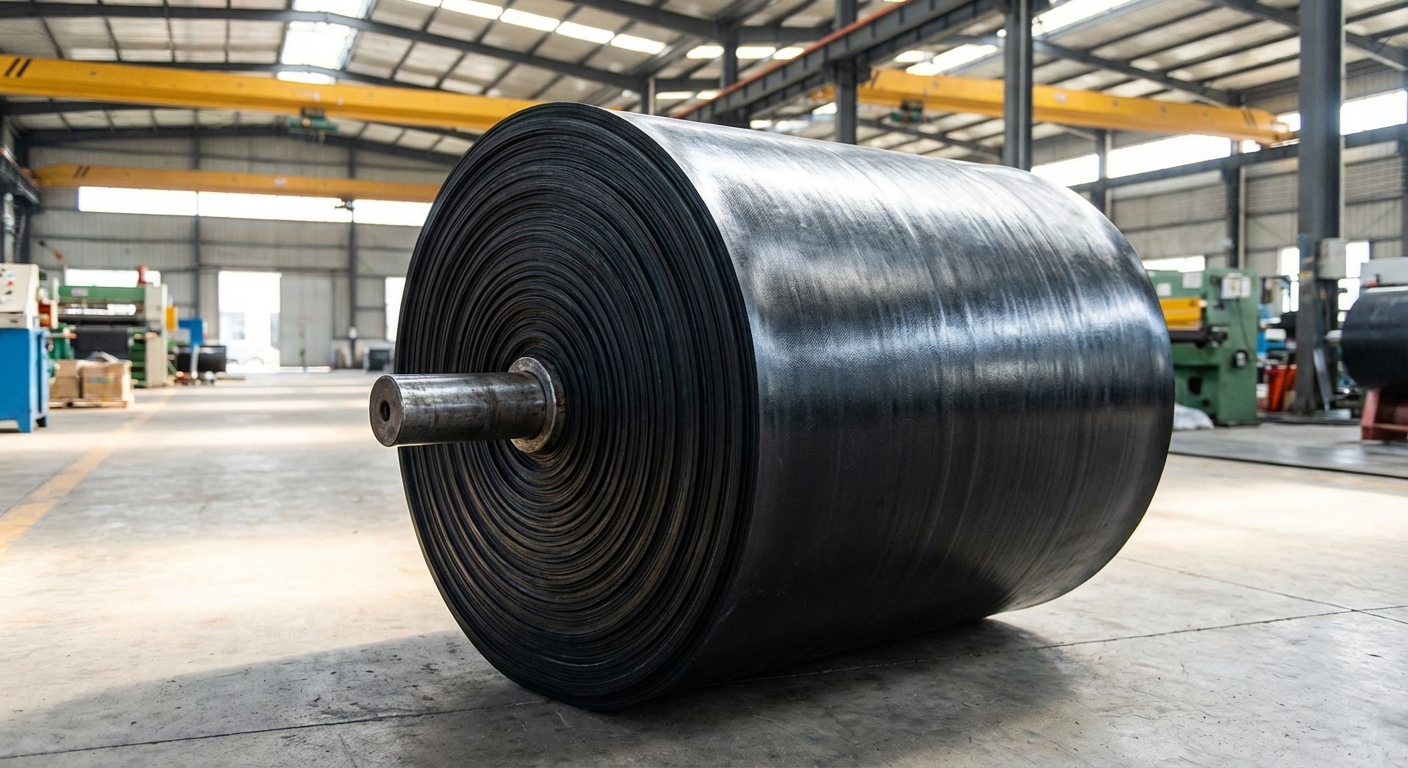
A black rubber conveyor belt is a heavy-duty industrial conveying solution designed to withstand extreme impact, abrasion, and continuous heavy-load operation in demanding environments such as quarries, mining sites, and aggregate processing plants. Engineered with high-strength carcass construction and wear-resistant rubber covers, these conveyor belts provide reliable material transport for stone, gravel, sand, and other abrasive bulk materials. Unlike low-grade conveyor systems that suffer from tearing, cracking, and frequent downtime, a black rubber conveyor belt delivers long service life, improved operational efficiency, and reduced maintenance costs. Its durable performance helps industrial facilities maintain continuous production flow while minimizing costly equipment failures and unexpected shutdowns.
How to select a black rubber conveyor belt?
You select a black rubber conveyor belt by analyzing your specific material density, lump sizes, and drop heights to determine the required tensile strength and carcass thickness. Selecting the correct black rubber conveyor belt prevents structural stretching and premature failure under high-volume aggregate loads. This selection process ensures that your plant maintains maximum throughput without unexpected belt stretch.
If you overlook the material abrasiveness and operational tensions, your system will suffer from continuous tracking problems and edge wear. Choosing the proper thickness and ply rating is the first step toward a highly reliable material handling setup.

Critical factors in your selection process
Here is the deal: if you do not match your conveyor specifications to your daily aggregate load, you will experience catastrophic structural failures. Think about it: a belt designed for sand will quickly tear apart when loaded with sharp granite blocks. You must evaluate the following parameters to ensure system longevity:
- Material Density: Determines the load-carrying capacity and volumetric weight your system must support.
- Maximum Lump Size: Dictates the cover thickness needed to prevent deep punctures from falling rocks.
- Operating Tension: Ensures your conveyor carcass can handle high starting and running torque forces.
Key Takeaway: You must evaluate your material’s physical traits and system tension limits to choose a durable belt that guarantees uninterrupted daily plant operations.
| Parameter | Low-Duty Needs | High-Duty Needs | Operational Benefit | |
|---|---|---|---|---|
| Material Density | Up to 90 lbs/ft³ | Over 100 lbs/ft³ | Prevents structural belt sag | |
| Puncture Resistance | 1-Ply / 2-Ply Carcass | 3-Ply / 4-Ply Carcass | Stops sharp rocks from tearing the core | |
| Cover Thickness | Less than 1/8 inch | 1/4 inch or greater | Protects internal carcass plies |
Comparing these physical traits allows you to identify the perfect balance between flexibility and raw tensile strength.
Where does a black rubber conveyor belt excel?
A black rubber conveyor belt excels in harsh aggregate processing environments where it must transport highly abrasive crushed stones, sharp gravel, and wet sand over steep inclines. Using a heavy-duty black rubber conveyor belt ensures that your system absorbs severe impacts at transfer points without tearing. The specialized rubber covers offer superior resilience against continuous friction and outdoor weather exposure.
Whether you run a mobile crushing plant or a massive regional quarry, these belts are built to keep your lines moving. They provide the necessary elasticity and tensile recovery to withstand the most challenging outdoor environments.

Key applications in aggregate mining
But that’s not all. You can deploy these robust systems across multiple processing stages to completely eliminate material handling bottlenecks. By choosing a belt optimized for your exact machinery, you ensure maximum productivity.
- Jaw Crusher Discharge: Handles the massive impact forces of primary crushed rock dropping from feed hoppers.
- Sand Washing Circuits: Resists continuous moisture and prevents carcass rot in wet processing environments.
- Radial Stacking Systems: Supports high-incline material transport without rollback or spillage.
Key Takeaway: You can dramatically lower your operating cost per ton by deploying targeted rubber belting across your quarry’s high-wear transfer points.
| Aggregate Sector | Operating Environment | Primary Belt Damage Risk | Optimal Rubber Solution | |
|---|---|---|---|---|
| Sand & Gravel | Wet, high-moisture washing | Moisture rot & fabric decay | Mold-resistant EP carcass belting | |
| Crushed Stone | High-drop impact discharge | Deep cover punctures & tears | Grade I impact-absorbing rubber | |
| Asphalt Plants | High-temperature mixing | Cover cracking & dry rot | Grade HR heat-resistant rubber |
Reviewing these specific application zones helps you deploy the most cost-effective rubber compounds where they are needed most.
What is a black rubber conveyor belt made of?
A black rubber conveyor belt is made of vulcanized rubber covers that encapsulate a strong structural core called the fabric or steel carcass. This composite design of the black rubber conveyor belt provides both external wear protection and internal tensile support. The covers are typically SBR blends, while the carcass uses polyester and nylon plies.
This internal structure is crucial because it determines how much load the belt can carry without stretching. The strong bond between the layers prevents premature delamination during heavy-duty quarry operations.

The anatomy of high-tensile carcasses
What does this mean? It means you get a highly flexible belt that maintains its shape even under the most punishing tension. You should look for these three key layers to verify high-quality engineering:
- Top Rubber Cover: Acts as a durable shield to absorb continuous impact and friction from jagged stones.
- EP Fabric Plies: Combine polyester and nylon to provide maximum load capacity with minimal stretch.
- Bottom Rubber Cover: Provides a consistent, high-friction grip against drive pulleys to prevent belt slip.
Key Takeaway: You should always inspect the carcass material and cover thickness to ensure your belt can handle high tension without stretching.
| Layer Component | Materials Used | Key Performance Metric | Critical Benefit | |
|---|---|---|---|---|
| Top Shield | Vulcanized SBR & Polybutadiene | DIN Abrasion Rating (Class X/W) | Long-term wear resistance | |
| Internal Carcass | EP (Polyester/Nylon) Fabric | Tensile Strength (PIW Rating) | Zero belt sag under load | |
| Bottom Layer | Flexible Natural Rubber Blend | Friction Coefficient | Smooth tracking over pulleys |
Understanding these structural layers allows you to select a belt that offers long-term mechanical reliability under extreme loads.
How to grade your black rubber conveyor belt?
You grade your black rubber conveyor belt by evaluating its rubber cover’s tensile strength, elongation limits, and volume loss under standardized abrasion tests. Choosing a properly graded black rubber conveyor belt ensures that your belt’s surface matches the abrasiveness of the stones you process. Standard aggregate grades like Grade I and Grade II offer different levels of puncture and wear resistance.
By matching the rubber grade to your specific raw materials, you can prevent premature cover wear. This technical alignment keeps the internal carcass protected from moisture and rot.

Comparing Grade I versus Grade II covers
It gets better: choosing the right rubber grade can easily double your conveyor’s operational lifespan. You will optimize your system’s budget and performance by recognizing these fundamental differences:
- Grade I Premium: Best for severe-impact zones handling giant, sharp granite boulders over 10 inches.
- Grade II Standard: Ideal for sand, gravel, and crushed limestone under moderate-drop conditions.
- DIN Class W: Offers extreme wear resistance for processing highly abrasive quartzite and slag.
Key Takeaway: You must specify the correct cover grade to prevent rapid wear and ensure your belt survives sharp rock impacts.
| Cover Grade | Tensile Strength (MPa) | Elongation at Break (%) | Max Volume Abrasion Loss | Primary Aggregate Use | |
|---|---|---|---|---|---|
| Grade I | 24 MPa | 450% | 120 mm3 | Heavy primary ore & granite | |
| Grade II | 18 MPa | 400% | 150 mm3 | Gravel, sand, limestone | |
| Class W | 18 MPa | 400% | 90 mm3 | Extremely abrasive minerals |
Selecting the right grade based on these performance metrics prevents premature surface cracking and maximizes your equipment investment.
What are black rubber conveyor belt specifications?
Black rubber conveyor belt specifications are technical metrics detailing the belt’s overall width, carcass ply count, working tension in PIW, and DIN cover ratings. Specifying these metrics for your black rubber conveyor belt ensures that your entire conveyor assembly operates within safe mechanical limits. These numbers dictate how well your belt can trough and how much weight it can safely carry.
If these engineering specs are miscalculated, your system will experience severe belt slip and structural damage. Knowing your system’s pulley sizes is critical to avoiding ply separation.

Understanding key engineering metrics
Think about it: running a thick 4-ply belt on a small 12-inch pulley will destroy the carcass in weeks. You can protect your structural investment by verifying these critical design standards:
- Belt Width: Must perfectly match your conveyor frame to prevent severe material spillage and edge rub.
- Tension Rating (PIW): Defines the safe working load limit to handle peak starting torque without breaking.
- Troughing Capability: Ensures the belt flexes easily into angled idler rollers to maximize volumetric carrying capacity.
Key Takeaway: You must align your belt’s physical specifications with your system’s pulley sizes to prevent premature carcass fatigue.
| Conveyor Width | Recommended Carcass | Tension Rating (PIW) | Minimum Pulley Diameter | |
|---|---|---|---|---|
| 18″ – 24″ | 2-Ply EP Fabric | 220 PIW | 12″ – 14″ | |
| 30″ – 42″ | 3-Ply EP Fabric | 330 PIW | 16″ – 18″ | |
| 48″ – 60″ | 4-Ply EP Fabric | 440+ PIW | 20″ – 24″ |
Analyzing these technical variables ensures your conveyor setup achieves maximum volumetric capacity without mechanical strain.
How to install a black rubber conveyor belt?
You install a black rubber conveyor belt by pulling the rubber roll onto the conveyor frame using high-strength pulling clamps, aligning it perfectly along the center, and tensioning it. Proper alignment of your black rubber conveyor belt ensures that the belt travels smoothly over all idlers and pulleys without drifting. Proper alignment during this setup phase is essential to prevent edge damage from structural contact.
Taking your time during the tracking adjustment process will pay off in the long run. It prevents the belt from running off-center and spilling material.

Steps for a successful belt installation
Here is why: a misaligned belt will immediately rub against the steel frame, chewing up the edges. You must execute these core procedures carefully to protect your new investment:
- Sturdy Reel Mounting: Support the heavy rubber roll on a solid shaft to ensure smooth, controlled unwinding.
- Balanced Pulling Force: Use uniform clamps to distribute the pull evenly and prevent carcass distortion.
- Low-Speed Tracking: Run the empty system slowly to adjust tracking before loading aggregate materials.
Key Takeaway: You should always perform low-speed tracking tests during installation to guarantee a straight path under full material loads.
| Installation Step | Critical Checkpoint | Common Mistake | Preventative Solution | |
|---|---|---|---|---|
| 1. Unwinding | Direct spool alignment | Pulling from a twisting roll | Use a heavy-duty rotary axle | |
| 2. Clamping | Uniform tension across width | Tightening only on one side | Apply torque-calibrated clamps | |
| 3. Training | Centering on tail pulley | Over-adjusting idlers too fast | Make minor idler adjustments |
Adhering to these strict installation guidelines eliminates initial tracking bias and secures a balanced conveyor path.
How do you splice a black rubber conveyor belt?
You splice a black rubber conveyor belt by using hot vulcanization to chemically fuse the stepped fabric plies together under high heat and pressure. Using hot vulcanization on your black rubber conveyor belt provides a flat, seamless joint that retains up to 95 percent of the belt’s original strength. This method is far superior to mechanical fasteners for heavy-duty aggregate handling.
While mechanical fasteners are fast to install, they can damage belt scrapers and leak fine materials. Vulcanization creates a strong, durable joint that resists severe wear.

The vulcanized splicing procedure
Here is the deal: a poorly executed splice is a ticking time bomb that will shut down your entire quarry. You must follow a precise step-by-step process to achieve a reliable joint:
- Precision Step Cutting: Strip back each fabric layer in matching steps to create a flat, balanced overlap.
- Chemical Preparation: Clean the joint thoroughly and apply premium-grade vulcanizing rubber cements.
- Controlled Heat Curing: Clamp the joint inside a heating press and cure at 300°F (149°C) under pressure.
Key Takeaway: You must choose vulcanized splicing for high-tension systems to avoid sudden mechanical failure and ensure maximum scraper compatibility.
| Splicing Method | Tensile Strength | Process Time | Typical Tooling Cost | Joint Scraper Profile | |
|---|---|---|---|---|---|
| Mechanical Plate | 50% – 60% | 1 – 2 Hours | Low (Hand Tools) | Bumpy (Wears scrapers) | |
| Cold Chemical | 70% – 80% | 6 – 12 Hours | Medium (Chemicals) | Flat (Smooth pass) | |
| Hot Vulcanized | 85% – 95% | 8 – 14 Hours | High (Heating Press) | Completely Seamless |
Selecting the right splicing methodology prevents sudden joint failures and keeps your aggregate throughput high.
How to maintain your black rubber conveyor belt?
You maintain your black rubber conveyor belt by conducting daily visual inspections for mistracking, measuring cover wear regularly, and replacing frozen idlers immediately. Proper maintenance of your black rubber conveyor belt is key to preventing catastrophic failures and avoiding costly emergency shutdowns. Keeping the return run clear of spilled aggregates prevents holes from being crushed into the carcass.
Developing a routine inspection schedule allows you to spot minor wear patterns before they escalate. This proactive approach saves thousands in emergency replacement costs.

Proactive troubleshooting techniques
Think about it: a single frozen roller can grind a hole through your belt cover in a matter of days. You must establish these daily checks to keep your conveying lines healthy:
- Clean the Return Run: Remove trapped rocks between the return belt and tail pulley to prevent punctures.
- Inspect Blade Pressure: Verify your primary scrapers are applying even tension without scraping the rubber too hard.
- Monitor Bearing Heat: Check for hot, failing idler bearings that can stall rollers and damage the bottom cover.
Key Takeaway: You can extend your belt’s operational life by performing routine thickness checks and keeping return rollers clean.
| Warning Sign | Probable Root Cause | Secondary Impact | Remedial Maintenance Action | |
|---|---|---|---|---|
| Edge Fraying | Frame mistracking | Fabric core moisture decay | Re-align frame and training idlers | |
| Cover Gouges | High-drop impact zones | Internal ply delamination | Install specialized impact beds | |
| Slippage on Drive | Worn pulley lagging | Friction heat & belt melting | Re-lag drive pulley with rubber |
Following a strict preventative maintenance plan reduces mechanical wear and ensures stable, long-term conveyor tracking.
You buy a premium black rubber conveyor belt because it offers much better wear resistance, lower structural stretch, and a significantly lower total cost per ton over its lifespan. Investing in a high-grade black rubber conveyor belt reduces your long-term maintenance costs and minimizes unplanned downtime. A premium belt is designed to survive the continuous grinding action of highly abrasive aggregates.
While cheap belts have a lower upfront cost, they require frequent adjustments, splicing, and early replacements. Buying quality ensures your system runs smoothly and reliably year after year.

Maximizing your return on investment
But that’s not all. When you choose our high-tensile, wear-resistant solutions, you get a partner dedicated to optimizing your entire material handling performance. We verify every roll using strict testing standards:
- Zero Delamination: Our rubber covers utilize high-adhesion bonds to resist splitting under impact.
- Minimal Elongation: High-tensile EP fabrics guarantee minimal stretch, reducing your tension adjustments.
- Ozone & UV Protection: Specialized anti-ozonants protect your belt covers from sun-cracking and dry rot.
Key Takeaway: You should partner with aggregate material handling experts to design a system that maximizes operational uptime. If you are tired of dealing with expensive belt tears, rapid cover wear, and lost productivity, contact us today to find the perfect heavy-duty solution for your plant. We manufacture premium-grade belts and offer expert splicing and maintenance support to keep your operations running at peak efficiency. Our strong commitment to quarry reliability ensures your business remains highly profitable for the long haul.
| Purchase Evaluation | Low-Cost Economy Belting | Premium High-Grade Belting | Long-Term Plant Impact | |
|---|---|---|---|---|
| Abrasion Loss | Over 180 mm3 loss | Under 90 mm3 loss | Premium belts last twice as long | |
| Fabric Carcass Stretch | High stretch (>4% elongation) | Low stretch (<1.5% elongation) | Minimal tension adjustment downtime | |
| Adhesion Strength | Under 8 N/mm bond | Over 12 N/mm bond | Prevents sudden cover delamination |
Evaluating the total cost of ownership clearly shows that premium conveyor belting delivers the best long-term return on your investment.
FAQ: Your black rubber conveyor belt questions?
This FAQ section answers your questions about selecting, maintaining, and getting the best performance from your black rubber conveyor belt. Keeping your black rubber conveyor belt running efficiently requires understanding how operating temperatures and material grades impact its service life. Below are answers to the most common questions quarry operators ask.

Frequently asked aggregate belt questions
Here is why: answering these practical questions helps you make informed choices that prevent catastrophic failures on your production line.
- Can I use a standard black rubber conveyor belt for handling hot asphalt? No, you cannot. Standard SBR rubber will quickly dry out and crack under high asphalt temperatures, demanding specialized heat-resistant EPDM formulations that can safely handle hot aggregate materials.
- What’s the best way to prevent severe belt mistracking? Clean your return rollers regularly. Accumulating dirt on the rollers is the primary cause of alignment drift, which can be resolved by securing a clean system and using self-aligning training idlers.
- How do I know if my conveyor belt needs urgent replacement? Inspect the top cover. If you see exposed fabric carcass plies, suffer from repeated splice separations, or have stretched past your take-up limits, you must replace the belt immediately to avoid catastrophic field failure.
- Can I use mechanical fasteners near jaw crushers? No, you should avoid this. Large, sharp rocks dropped from primary crushers will rip metal rivets right out of the carcass, whereas hot vulcanization provides the necessary strength to absorb these impact forces.