
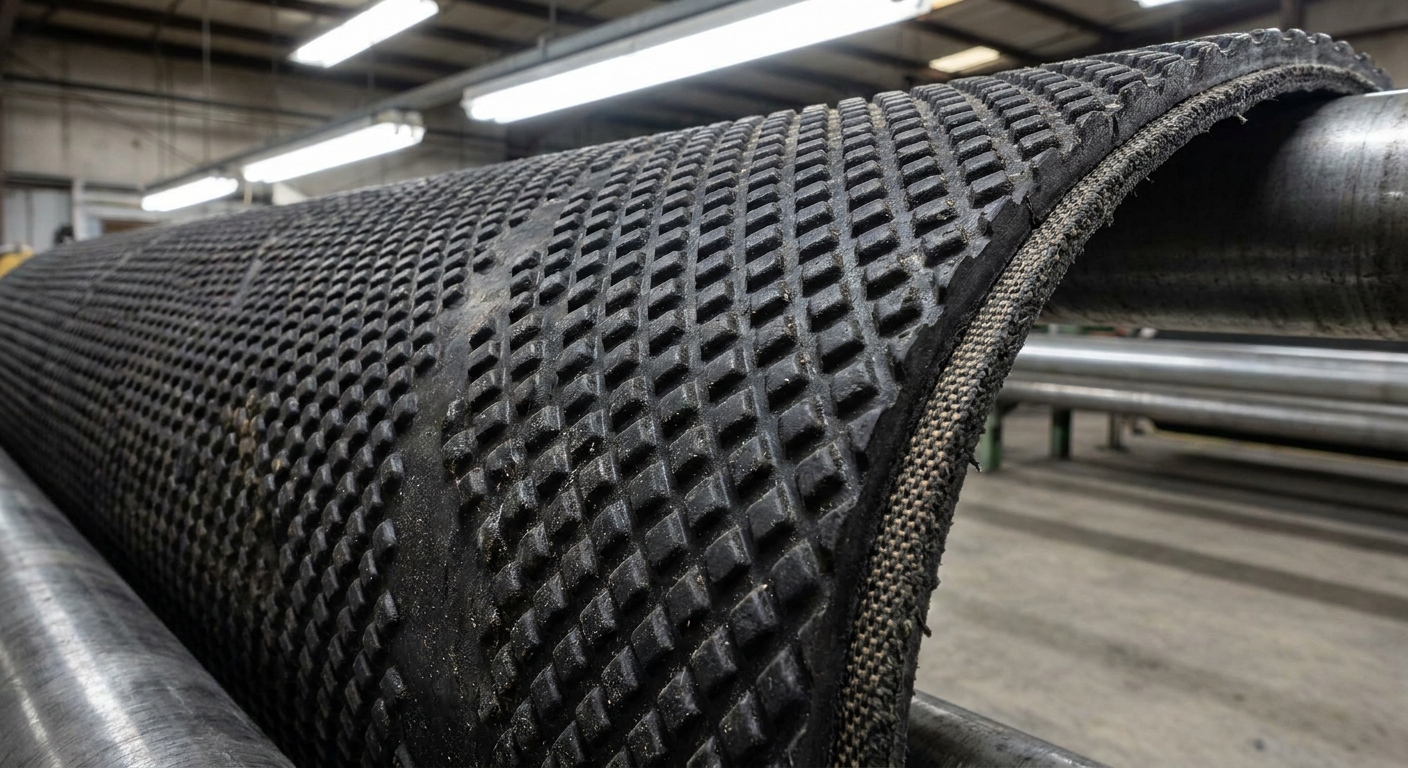
A rough top rubber conveyor belt is a high-traction conveying solution specially designed for transporting delicate, fragile, or lightweight materials without slipping or shifting during operation. Featuring a textured surface pattern that increases friction and grip, these conveyor belts help stabilize wet plaster molds, packaged goods, and sensitive products during inclined or horizontal conveying. In industrial plaster casting and precision manufacturing environments, a rough top rubber conveyor belt reduces material damage, prevents costly production interruptions, and improves overall handling efficiency. Its durable rubber construction and anti-slip surface design ensure smooth, reliable, and damage-free transport in demanding production systems.
Why Does Belt Slippage Ruin Plaster Casting Efficiency?
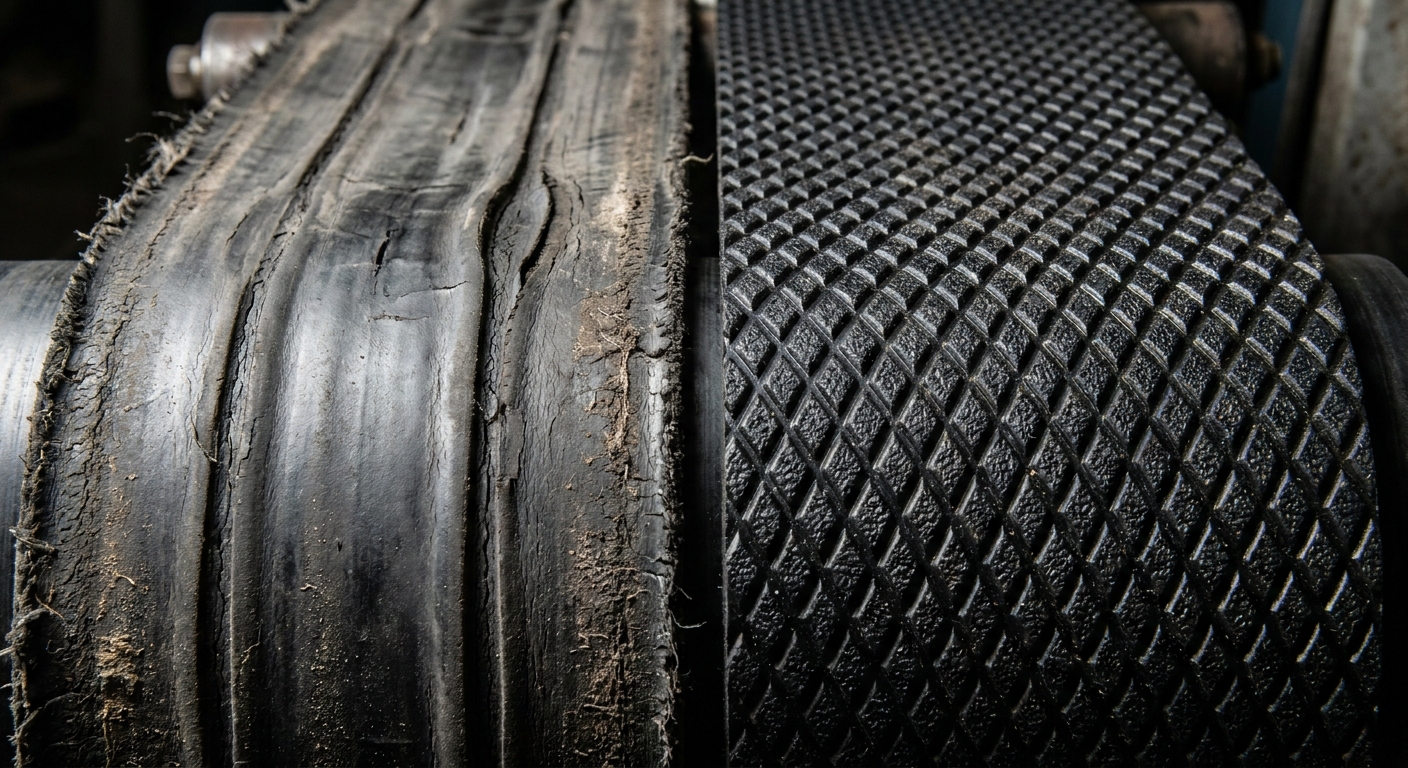
Belt slippage ruins plaster casting efficiency by causing wet molds to shift, which distorts their shape and disrupts continuous automated production flows. When molds slide backward, it creates severe mechanical blockages that require immediate process shutdowns to clear. Upgrading your system with a high-friction rough top rubber conveyor belt provides the necessary surface grip to eliminate transit errors.
Without consistent surface traction, structural micro-cracks form within the settling plaster compound due to sudden jerking movements. This structural weakness often goes unnoticed until the final product breaks during de-molding operations.
Are Slips Costing You Precious Production Time?
Think about it: every single time a mold slips, your automated line grinds to a sudden halt. Cleaning spilled plaster slurry requires manual labor and delays downstream curing processes.
These micro-delays accumulate rapidly, leading to major throughput losses by the end of each shift. Securing your molds ensures consistent cycle times.
- Unplanned downtime spikes up to 30% from manual mold cleanups.
- Increased product rejection rates due to transit impact damage.
- Higher energy consumption from frequent conveyor stopping and starting.
How Does Surface Grip Maintain Material Alignment?
A steady grip keeps molds perfectly aligned on the conveyor center, preventing edge collisions and uneven wear. Proper alignment ensures that automated sensors can accurately detect molds for precise plaster pouring.
Here is the thing: a consistent physical path is the foundation of flawless factory automation.
Key Takeaway: Establishing a slip-free boundary ensures your molds maintain precise positioning, which directly reduces scrap rates and maximizes system uptime.
| Transit Parameter | Standard Flat Belt | Rough Top Rubber Belt | |
|---|---|---|---|
| Mold Slip Rate (%) | 12% – 15% | < 0.5% | |
| Sensor Alignment Accuracy | Poor / Inconsistent | Highly Precise |
Analytical Guide: Transitioning to rough top traction minimizes mold deviations, ensuring error-free sensor tracking throughout your casting automation.
What Makes Rough Top Belts the Ultimate Grip Solution?
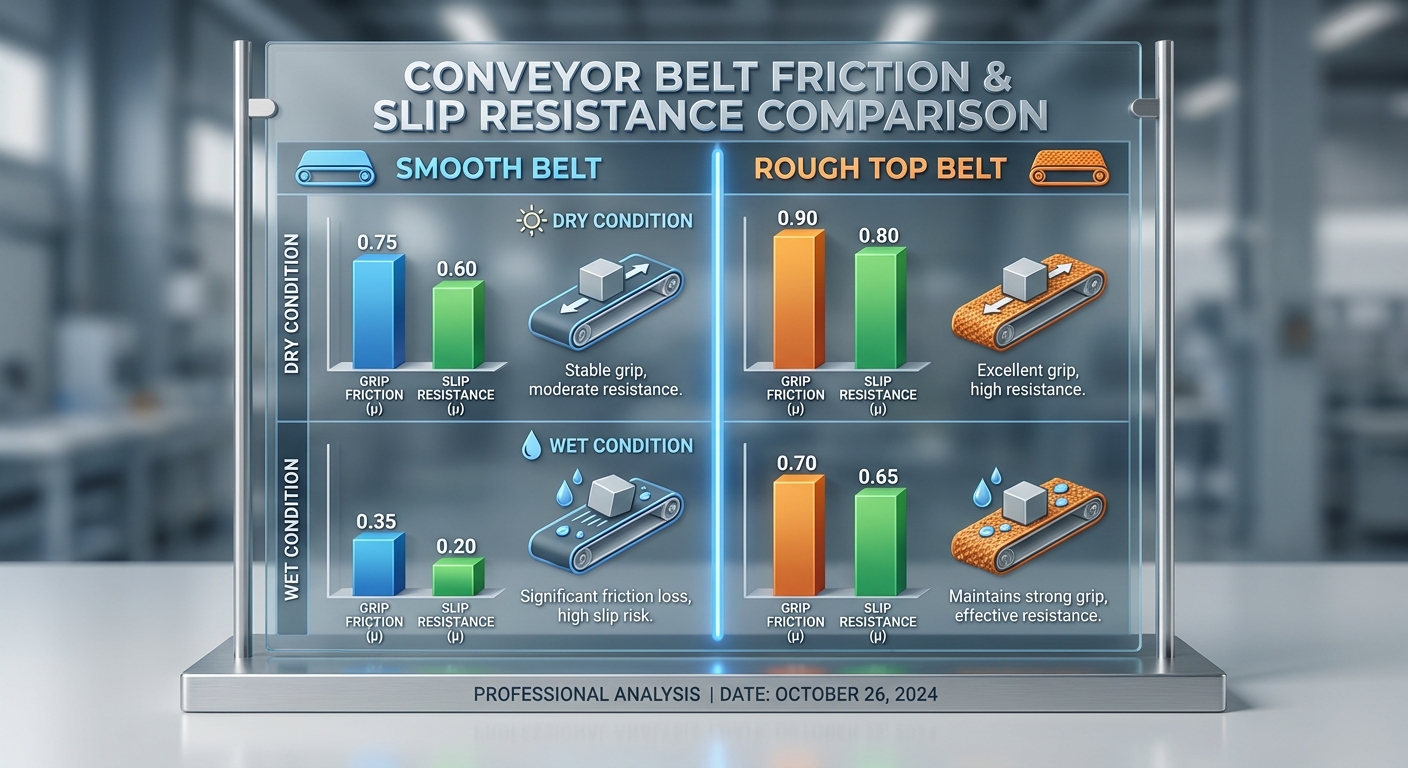
Rough top belts serve as the ultimate grip solution because their uniquely textured surface maximizes surface contact area and channels away moisture to maintain high friction. A premium rough top rubber conveyor belt cushions fragile products while locking them securely in place during inclined transit. This ensures that even damp molds remain stable throughout their movement.
These specialized profiles are molded directly into the rubber, offering superior structural longevity compared to glued textures. They are specifically engineered to withstand harsh industrial environments.
Why Does the Mesh Texture Prevent Material Slide?
Look: the mesh texture features thousands of flexible rubber cushions that conform to the base of your cargo. This interlocking mechanical grip prevents heavy items from shifting even under steep operating angles.
Even if moisture or plaster dust settles on the belt, the deep valleys of the mesh channel it away. This self-cleaning action keeps the contact points dry.
- Thousands of flexible contact points disperse load pressure.
- Deep channels divert water, slip-inducing dust, and casting residues.
- Textured mesh prevents vacuum lock on smooth mold bases.
How Do High Coefficients of Friction Protect Cargo?
A high coefficient of friction ensures that items accelerate and decelerate smoothly without sliding backward. This dampens transit shocks that can ruin the delicate internal structure of wet plaster molds.
But that’s not all; it also reduces the tension required to drive the conveyor system efficiently.
Key Takeaway: High friction coefficients cushion delicate cargo during speed changes, eliminating structural damage to casting molds.
| Friction Properties | Smooth Cover Belts | Textured Mesh Covers | |
|---|---|---|---|
| Dry Coefficient of Friction (μ) | 0.50 – 0.60 | 0.85 – 0.95 | |
| Wet Coefficient of Friction (μ) | 0.20 – 0.30 | 0.65 – 0.75 |
Analytical Guide: Utilizing a high-friction mesh texture guarantees strong traction even under wet conditions, preventing catastrophic cargo slips.
How Does the Vulcanization Process Ensure Belt Durability?
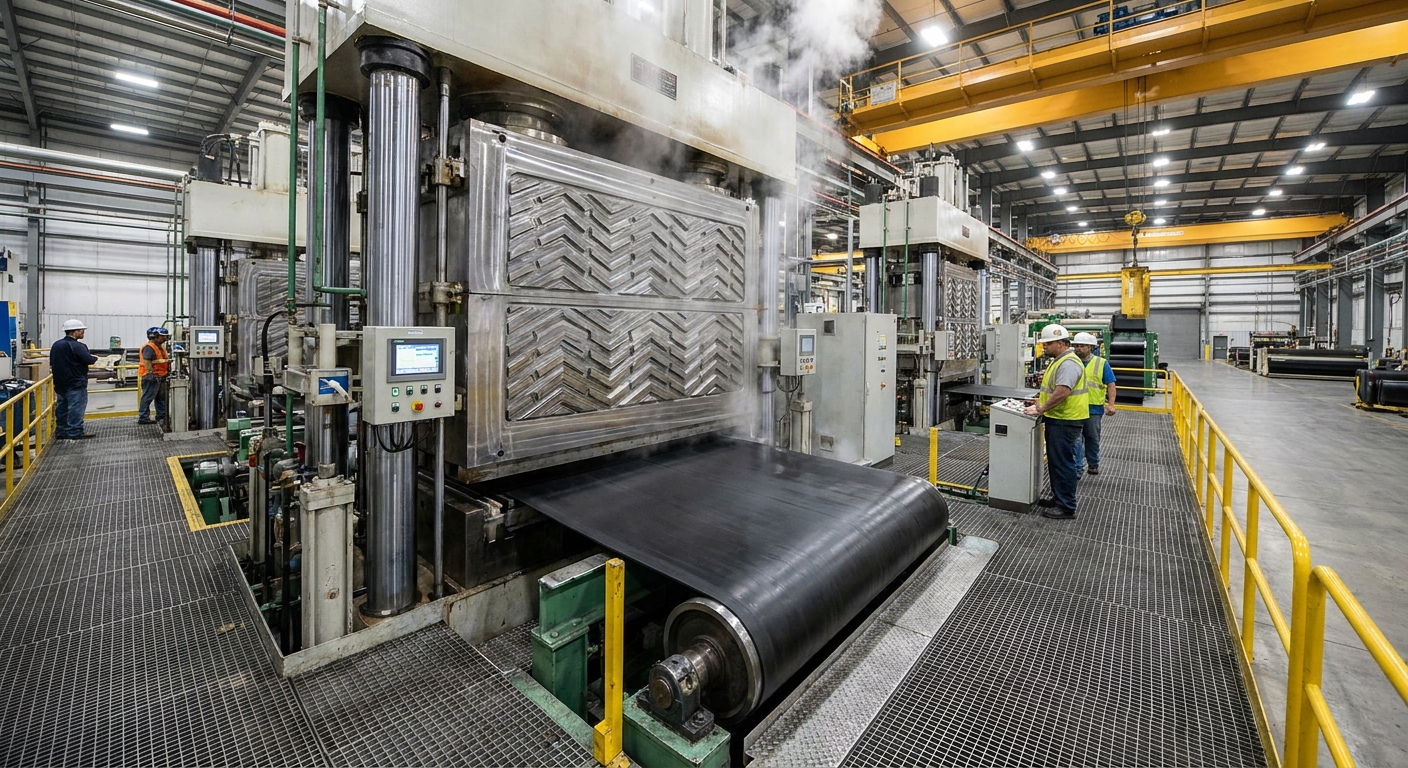
The vulcanization process ensures belt durability by molecularly bonding the rubber compound to the inner fabric plies under intense heat and pressure. This thermal bonding prevents the textured profile of your rough top rubber conveyor belt from delaminating or wearing down prematurely under heavy loads. It transforms the raw rubber into a tough, elastic polymer structure.
By using high-quality curing presses, manufacturers eliminate weak spots that could lead to peeling. This chemical transformation increases both tensile strength and overall wear resistance.
Why Choose Deep Molded Texture Over Glued Profiles?
Here is the thing: glued-on textures easily peel away under continuous physical stress and moisture exposure. Molded profiles are part of the belt itself, offering seamless durability.
When transporting heavy plaster casting molds, glued profiles quickly fail due to shear forces. Molded belts handle intense loads without losing their grip.
- Zero risk of profile delamination under heavy structural loads.
- Seamless integration prevents plaster slurry from seeping under the texture.
- Uniform wear characteristics extend active operational lifespans.
Can Premium Rubber Compound Prevent Premature Wear?
Premium SBR rubber compounds resist physical abrasion from sharp materials and chemical wear from mold release agents. This specialized formulation maintains profile height over millions of cycles.
The best part? It maintains optimal flexibility, preventing surface cracking in dry environments.
Key Takeaway: Opting for vulcanized, molded-pattern rubber ensures the structural integrity of your high-friction surface, avoiding premature wear in abrasive casting lines.
| Cover Characteristic | Glued-On Traction Profiles | Vulcanized Molded Profiles | |
|---|---|---|---|
| Delamination Risk | Extremely High | Zero (Fully Integrated) | |
| Abrasion Resistance | Low to Moderate | Highly Excellent (SBR) |
Analytical Guide: Investing in vulcanized, molded profiles eliminates structural peeling risks, providing long-term reliability for demanding B2B systems.
Can Rough Top Belts Master High Incline Transportation?
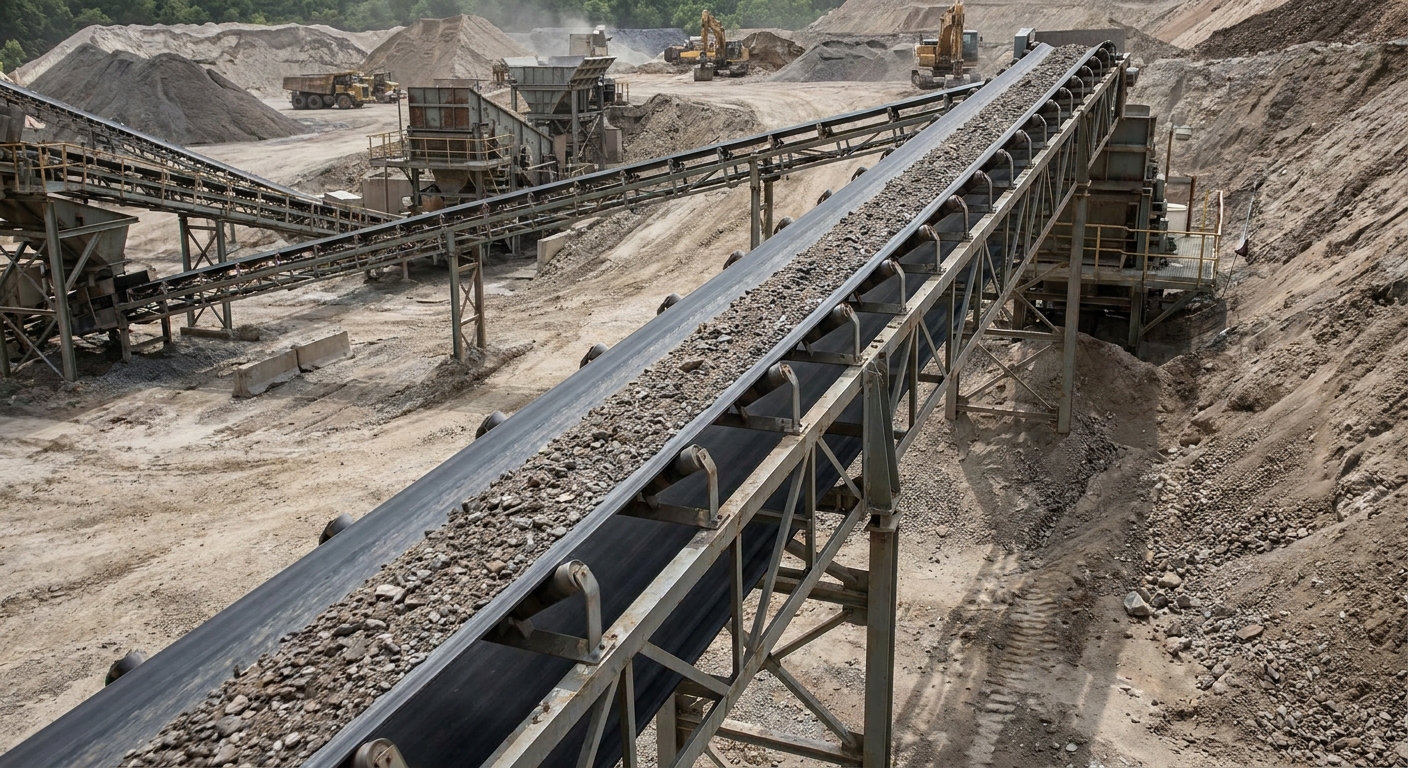
Rough top belts master high incline transportation by utilizing deep surface impressions that counter gravity and prevent product back-sliding at steep angles. Installing a premium rough top rubber conveyor belt allows your facility to maximize vertical lift within a compact footprint. This saves valuable floor space and optimizes material flow.
These belts are engineered to handle angles where flat surfaces fail completely. They maintain constant control over items without requiring complex mechanical cleats.
How Do Steep Incline Angles Challenge Your Logistics?
Think about it: conveying heavy casting molds up steep slopes triggers gravity-induced back-slip. Without deep traction, items slide backward, causing massive pile-ups at the bottom.
Standard belts force you to build incredibly long conveyor paths to keep incline angles low. Textured covers allow for steeper lifts, saving floor space.
- Steep slopes cause smooth belt transport lines to fail.
- Back-sliding cargo damages downstream equipment and workers.
- Compact facility designs require steep incline angles to save space.
What Is the Maximum Safe Angle for Textured Rubber?
The maximum safe incline angle for high-grip textured rubber belts generally ranges between 30 and 35 degrees. Beyond this angle, specialized molded profiles or cleated sidewalls are required.
Choosing the correct angle keeps your production running smoothly without safety concerns.
Key Takeaway: Utilizing textured rubber allows for safe, continuous material transport up to 35 degrees, optimizing facility layout efficiency.
| Conveyor Incline Angle | Smooth Cover Belts | Rough Top Mesh Rubber | |
|---|---|---|---|
| Up to 15 Degrees | Safe Operations | Safe / High Stability | |
| 15 to 35 Degrees | Inoperable (High Slip) | Optimal Performance |
Analytical Guide: Selecting rough top rubber for steep inclines of 15-35 degrees allows you to design compact layouts without sacrificing material security.
Which Industrial Applications Benefit Most From High Grip?
Industrial applications handling bulk packages, fragile molded goods, and bagged materials benefit most from high-grip conveyor systems due to their superior slip prevention. Integrating our customized rough top rubber conveyor belt into packaging lines, distribution centers, and casting operations optimizes material flow. This high-traction cover handles dry, wet, or dusty cargo with equal efficiency.
It dampens machine vibrations to protect delicate materials during rapid transfers. This makes it an invaluable asset across heavy-duty assembly and packaging plants.
Is Packaging Logistics the Perfect Match for Rough Belts?
But that’s not all: packaging centers handle diverse materials, from cardboard boxes to slippery plastic polybags. This variability requires a reliable traction surface to prevent bottlenecks.
The high-grip surface adapts to all packaging materials without requiring constant machine recalibration. This versatile performance maintains high sorting throughput.
- Handles cardboard, plastic, paper, and woven materials.
- Maintains consistent package spacing on rapid sorting lines.
- Dampens transport noise in busy logistics sorting hubs.
How Does Plaster Casting Automation Leverage Textured Grip?
Automated plaster casting lines require wet molds to remain perfectly flat and steady while the plaster cures. Any sudden slips or vibrations create deformities in the finished casting.
The textured surface cushions the heavy molds, absorbing mechanical shocks from automated transfers.
Key Takeaway: High-grip rough top surfaces protect wet plaster molds from structural vibrations, ensuring flawless surface details and high casting precision.
| Industry Sector | Primary Packaging Style | Key Grip Requirement | |
|---|---|---|---|
| Logistics Hubs | Cardboard & Polybags | High-Speed Slip Resistance | |
| Plaster Casting | Wet Molds & Trays | Vibration Dampening & Grip |
Analytical Guide: Deploying textured belts across casting and logistics lines secures highly diverse cargo surfaces, protecting both mold detail and box integrity.
How Do You Select the Perfect Belt Thickness and Ply?
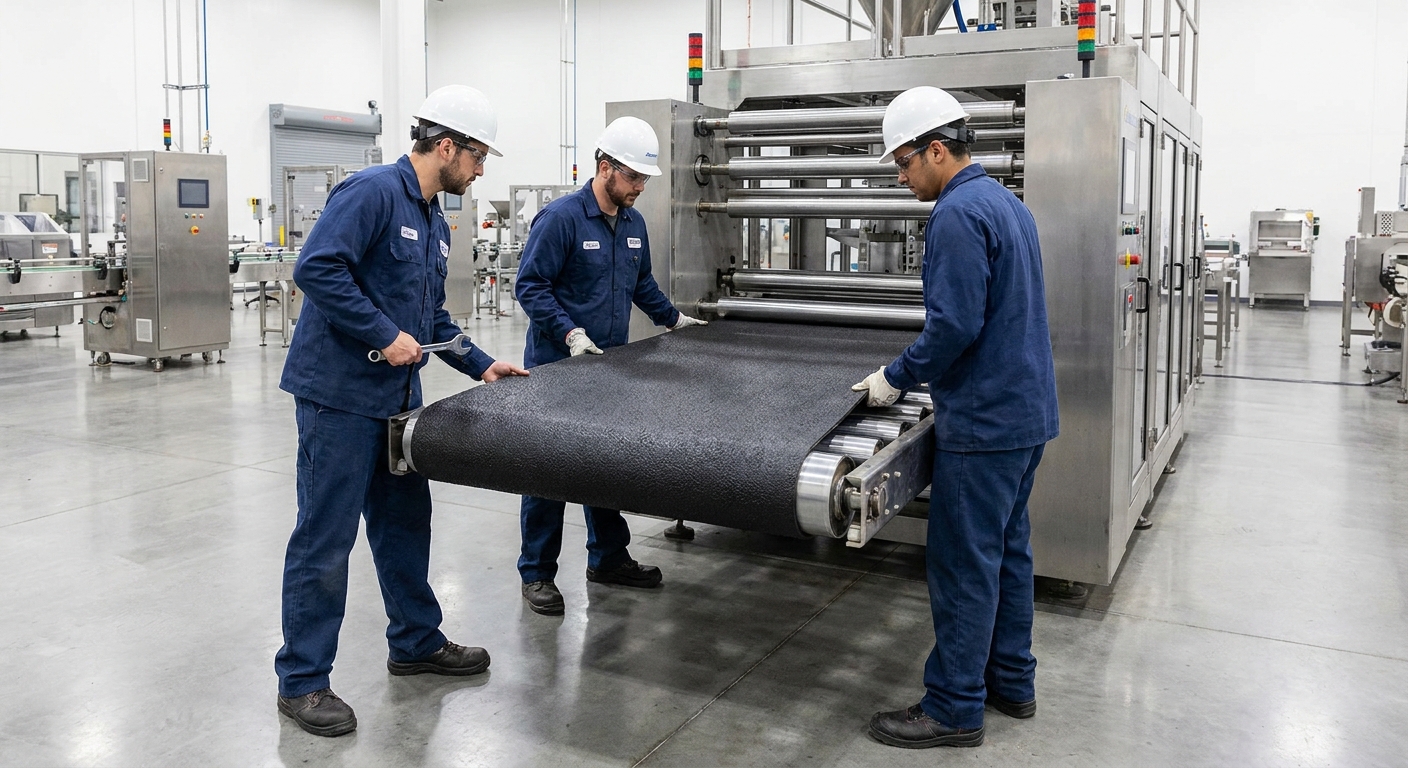
You select the perfect belt thickness and ply by evaluating your system’s maximum load weight, pulley diameters, and tension requirements. Choosing the correct specification for your rough top rubber conveyor belt prevents premature structural stretching and edge wear. This technical alignment ensures long-lasting operation under continuous daily loads.
A heavy-duty multi-ply fabric core provides excellent structural support for heavy plaster castings. Matching cover thickness to material abrasiveness extends the belt’s active life.
Why Does Carcass Strength Matter for Heavy Castings?
Look: heavy molds exert immense vertical pressure on the conveyor carcass. If the carcass is too weak, the belt will sag between rollers, causing operational failures.
High-strength polyester-nylon (EP) fabric plies provide high load capacity with minimal structural stretch. This stabilizes your automated production line.
- EP fabric core offers exceptional impact resistance.
- Low-stretch properties minimize the need for manual tension adjustments.
- Superior lateral flexibility allows for perfect troughing on support rollers.
What Is the Optimal Top Cover Thickness for Daily Use?
For standard packaging and plaster mold conveying, a total thickness of 0.22 inches to 0.26 inches is highly recommended. This provides the perfect balance between impact cushioning and belt flexibility.
Thicker covers cushion heavy molds but require larger drive pulleys to run smoothly.
Key Takeaway: Selecting the correct ply and thickness prevents belt sag under heavy mold weights, extending system lifespan and operational tracking.
| Load Classification | Recommended Ply Count | Optimal Cover Thickness | |
|---|---|---|---|
| Light (Parcels) | 2 Ply (Polyester EP) | 0.22″ – 0.24″ | |
| Heavy (Plaster Molds) | 3 Ply (Polyester EP) | 0.25″ – 0.27″ |
Analytical Guide: Aligning carcass strength and cover thickness with your maximum operational loads eliminates belt sag and premature mechanical wear.
What Maintenance Steps Double Textured Rubber Belt Life?
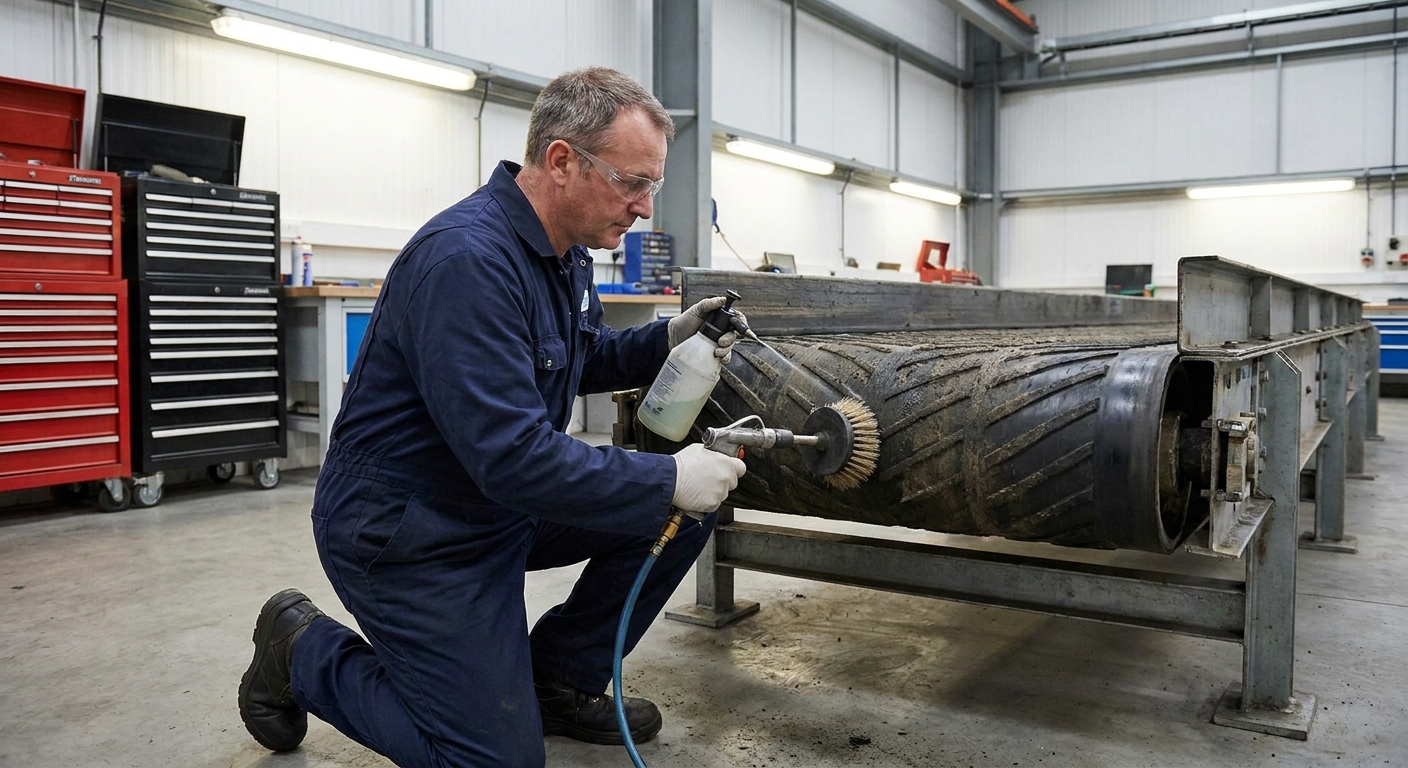
The maintenance steps that double textured rubber belt life include regular non-solvent cleaning of the mesh pockets and routine alignment checks of your rough top rubber conveyor belt system. Removing abrasive plaster dust and debris prevents the profile from wearing down prematurely. It also preserves the rubber’s high-friction coefficient over time.
Correct tracking prevents the belt from scraping against the metal conveyor frame. These proactive inspections save on costly replacement parts and emergency labor.
How Do You Safely Clean Deep Mesh Groove Patterns?
Here is the thing: dry plaster dust and slurry build up inside the textured mesh over time. Using harsh chemical solvents will dry out the SBR rubber, causing it to crack.
Instead, use warm water and soft nylon brushes to safely remove debris. This gentle cleaning method keeps the traction pockets fully functional.
- Use low-pressure water sprays to wash out deep crevices.
- Avoid wire brushes that can gouge the rubber surface.
- Dry the belt surface before starting production.
Can Routine Alignment Checks Prevent Edge Wear?
Poor conveyor alignment causes the belt to wander, leading to severe edge wear and fabric fraying. Checking pulley squareness weekly ensures the belt tracks dead center.
Proper tracking prevents uneven load distribution, keeping your system balanced.
Key Takeaway: Keeping the mesh pattern clean and the belt aligned preserves cover traction and prevents structural edge failures.
| Maintenance Task | Recommended Frequency | Primary Operational Goal | |
|---|---|---|---|
| Mesh Crevice Cleaning | Weekly | Maintain Maximum Friction Grip | |
| Tracking & Squareness Check | Bi-Weekly | Prevent Edge Fraying & Wear |
Analytical Guide: Implementing a strict weekly cleaning and tracking protocol doubles cover life and avoids unexpected shipping delays.
How Do High Quality Belts Prevent Costly Sorting Errors?
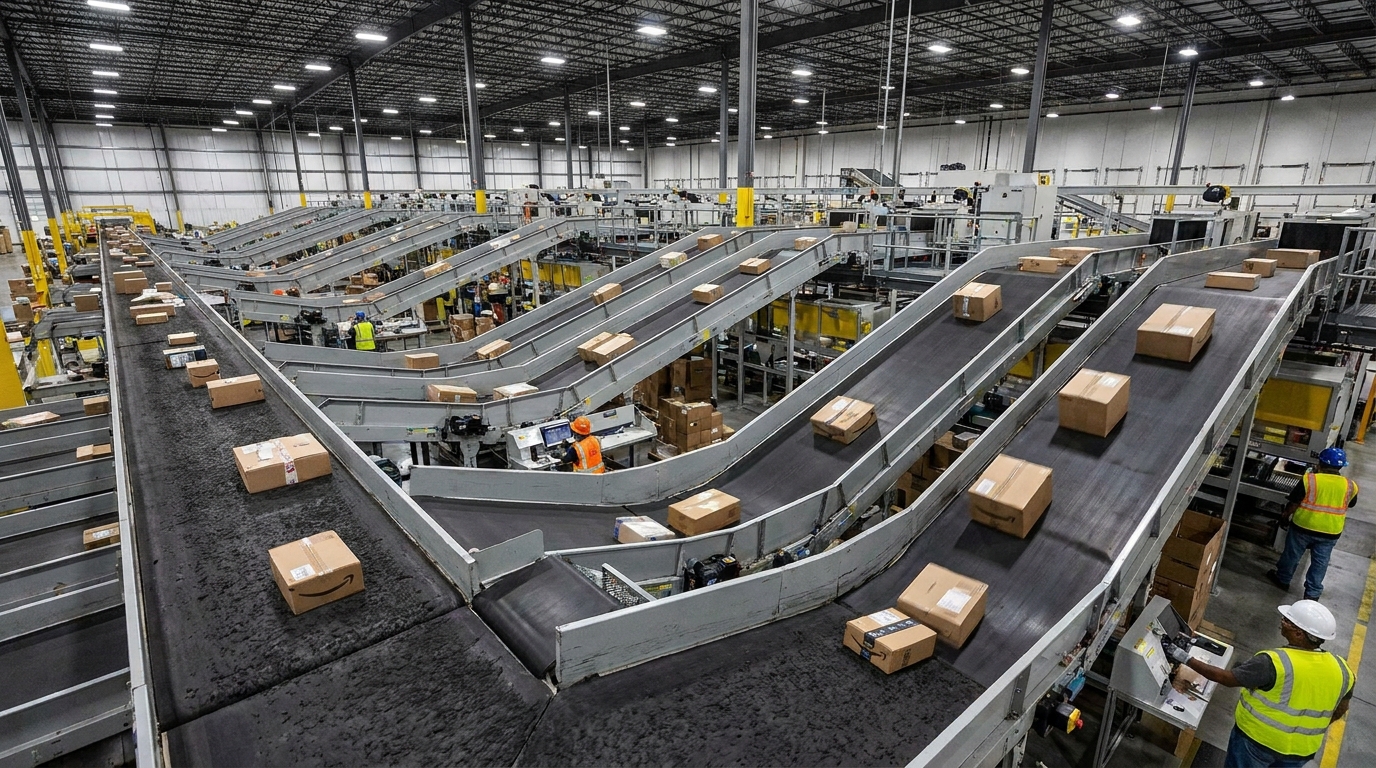
High quality belts prevent costly sorting errors by maintaining consistent package positioning and absorbing mechanical vibrations during high-speed transfers. A premium rough top rubber conveyor belt eliminates the sudden sliding and bumping that causes packages to lose their alignment. This stability allows automated sensors and barcode scanners to work with maximum accuracy.
It prevents delicate packages from bouncing or tumbling on high-speed incline lines. This consistent flow maximizes hourly sorting capacity in logistics sorting hubs.
Are Package Bounces Destroying Warehouse Throughput?
Think about it: when packages bounce or slide out of position, they trigger sensor errors. This misalignment forces the system to reject packages, requiring manual intervention.
A textured rubber cover acts as a natural shock absorber, keeping cargo steady. This reliable traction maintains a constant sorting flow.
- Prevents packages from sliding out of automated sorting channels.
- Dampens transfer impacts to prevent package tumbling.
- Reduces manual sorting intervention rates by over 40%.
Can Steady Acceleration Improve Barcode Scan Rates?
When a conveyor accelerates smoothly without belt slippage, packages remain in their exact scanned sequences. This steady movement allows barcode readers to capture labels with higher accuracy.
Maintaining consistent spacing is crucial for high-speed automated sorting.
Key Takeaway: High-traction rough top surfaces stabilize cargo spacing, which directly increases barcode scan rates and eliminates manual sorting errors.
| Sorting Metric | Smooth Conveyor Covers | High-Grip Rough Top Covers | |
|---|---|---|---|
| First-Pass Scan Rate (%) | 88% – 92% | 98.5% – 99.8% | |
| Package Mis-sort Rate | High (Due to Slide) | Minimal / Negligible |
Analytical Guide: Eliminating package slippage on sorting inclines increases first-pass scan rates, maximizing sorting hub efficiency.
Why Is Proper Tensioning Critical for Rough Top Rubber?
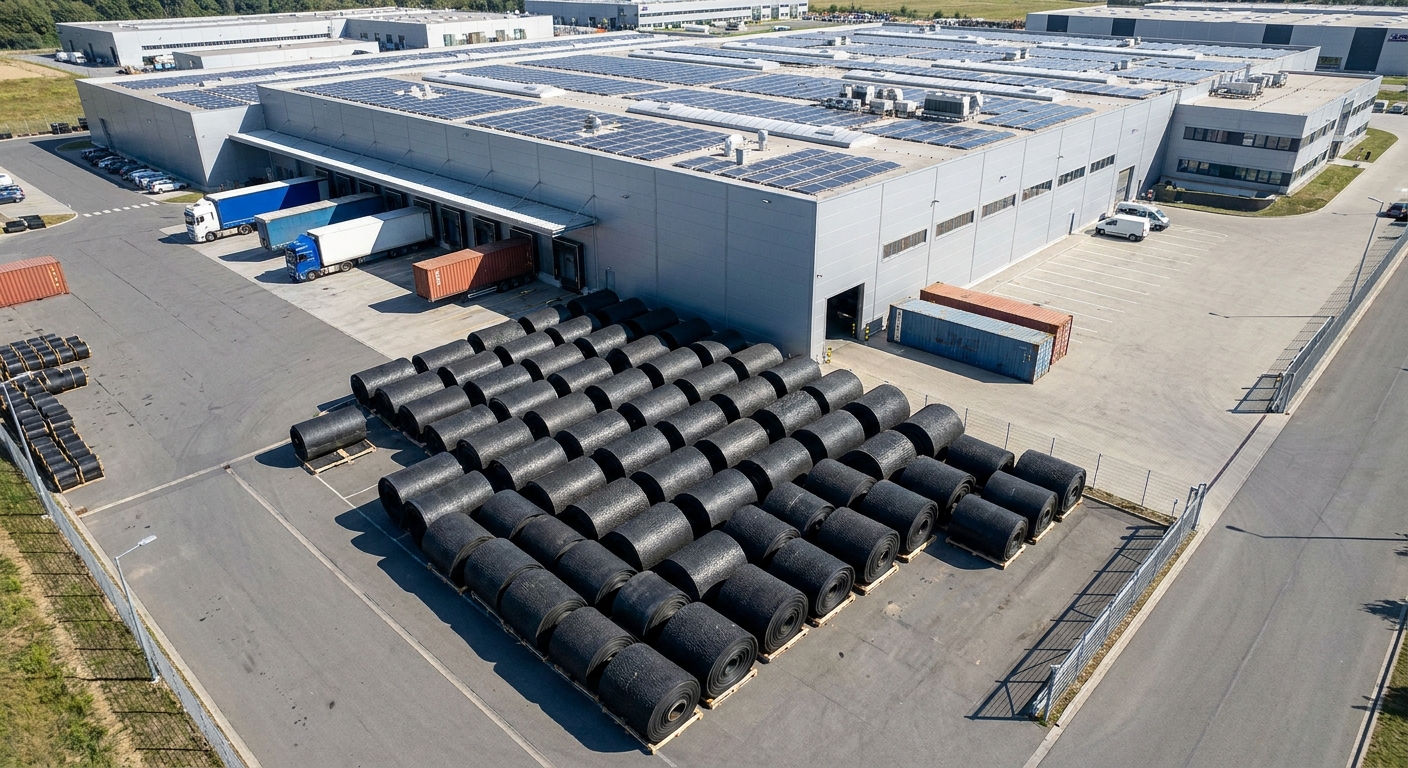
Proper tensioning is critical for rough top rubber because it prevents belt slippage on the drive pulley while protecting the inner fabric plies from over-stretching. Maintaining correct tension on your rough top rubber conveyor belt ensures consistent torque transfer from the motor to the belt surface. This balance is key to preventing premature drive motor failure.
Excessive tension stretches the rubber matrix, flattening the textured mesh profile. Insufficient tension causes the belt to sag and slip, disrupting material flow.
What Are the Dangers of Over-Tensioning Mesh Belts?
Look: over-tensioning puts immense strain on the belt carcass and conveyor bearings. This mechanical stress can cause the high-friction rubber cover to crack.
It also flattens the textured surface pattern, significantly reducing the belt’s grip. Proper tensioning preserves both the structure and the traction.
- Accelerates fabric carcass fatigue and ply separation.
- Flattens the raised traction mesh, decreasing incline grip.
- Increases mechanical wear on pulleys and system bearings.
How Do You Spot Tension Sag Before Catastrophic Failure?
Tension sag is easily spotted when the belt droops between support rollers under load. Sudden belt jerking or squealing sounds during startup also indicate low tension.
Addressing sag early prevents complete structural failure.
Key Takeaway: Maintaining precise tension levels protects the inner fabric core while preserving the high-grip mesh texture for optimal performance.
| Tensioning Status | Drive Pulley Slip | Raised Profile Cushioning | |
|---|---|---|---|
| Under-Tensioned | Severe Slippage | Excess Sag / Wear | |
| Optimal Tension | Zero Slip | Fully Restored Cushioning | |
| Over-Tensioned | Zero Slip | Flattened Profile / Wear |
Analytical Guide: Correct tensioning ensures maximum torque transfer while maintaining the raised mesh shape for long-term slip resistance.
How Does Plaster Mold Setup Benefit From Stable Belts?
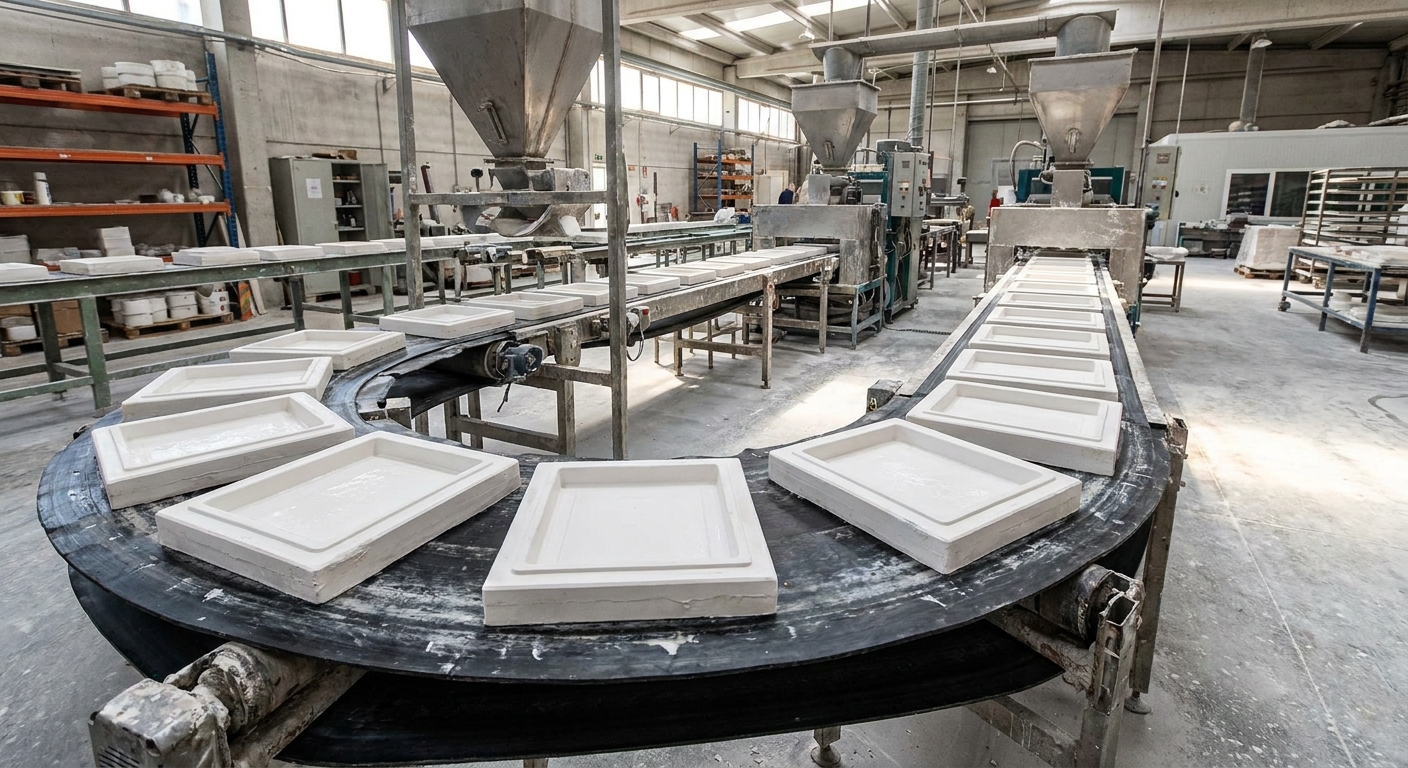
Plaster mold setup benefits from stable belts because a vibration-dampening surface prevents wet plaster from shifting and causing structural defects during the critical initial curing phase. A high-quality rough top rubber conveyor belt absorbs conveyor vibration and mechanical shocks from the automated casting line. This stability ensures that the liquid plaster cures with flawless precision.
Any vibration or sudden movement during setup can introduce air bubbles and micro-cracks into the mold. Securing the molds ensures consistent density and details in your casts.
Can Vibration Cause Defects in Wet Plaster Molds?
Think about it: wet plaster is highly sensitive to external movement before it sets. Minor vibrations cause the liquid mixture to shift, creating uneven mold walls.
The textured rubber cover acts as a dampening cushion, absorbing mechanical vibrations. This protection ensures a smooth, bubble-free mold finish.
- Vibration triggers structural micro-cracks in settling plaster.
- Air pockets rise to the surface, creating visible casting defects.
- Textured covers absorb vibrations from rollers and structural frames.
What Alignment Tolerances Do Automated Setups Require?
Automated plaster pouring systems require precise tolerances to ensure the liquid plaster fills the mold evenly. Even a tiny shift in mold position can cause automated nozzles to miss their targets.
Consistent tracking keeps molds perfectly aligned for automatic pouring.
Key Takeaway: Stable, textured conveyor surfaces absorb transit vibrations to protect wet plaster structures, guaranteeing perfect mold alignment.
| Casting Parameter | Unstable Flat Belts | High-Stability Rough Top | |
|---|---|---|---|
| Surface Bubbles / Defects | Common (Due to Vibration) | Rare / Minimal | |
| Pouring Target Alignment | Inconsistent | Extremely Precise |
Analytical Guide: Utilizing a vibration-dampening rough top surface prevents mold defects and ensures precise automated pouring alignment.
Frequently Asked Questions
Can I run a rough top conveyor belt in outdoor environments?
Yes, outdoor operation is highly practical when utilizing SBR rubber covers. Our heavy-duty SBR rough top belts are engineered with specialized UV-resistant and anti-aging agents, allowing them to withstand harsh weather, rain, and extreme temperatures from -20°C to 60°C without cracking or losing traction.
What’s the best way to clean plaster buildup from the belt texture?
Gentle water spraying paired with soft nylon brushing is the safest cleaning method. You must avoid high-pressure steam, metal scrapers, or acidic chemical solvents, as these will permanently wear down the raised rubber nodules, degrade the SBR elastomer compounds, and severely compromise overall surface grip.
How do I know if my rough top belt needs immediate replacement?
Your belt requires immediate replacement when the raised traction nodules are worn completely flat or the inner fabric carcass is visible. When these conditions are met, coefficient of friction drop-off leads to continuous cargo back-sliding, alignment failures, and highly unsafe material handling situations.
Can I run a rough top rubber belt on standard flat slider beds?
Yes, roughtop belts are fully compatible with smooth slider beds and flat idler rollers. The bottom cover is fabricated from smooth rubber or low-friction bare fabric backings to ensure it glides seamlessly across steel beds, while the top mesh texture remains dedicated to gripping your mold cargo.
Complete Your Conveyor System Optimization Today
Transit slippage, structural mold defects, and unexpected sorting downtime are the silent killers of your production line efficiency. Our custom-engineered conveyor solutions provide the precise traction, stability, and vibration-dampening qualities required to keep your automated lines moving forward without incident. We are deeply committed to engineering top-tier, long-lasting rubber systems that optimize your factory throughput and safeguard your delicate materials. Elevate your material handling standards and experience the direct-factory difference; contact us today to receive a tailored engineering solution and quote within 24 hours.