
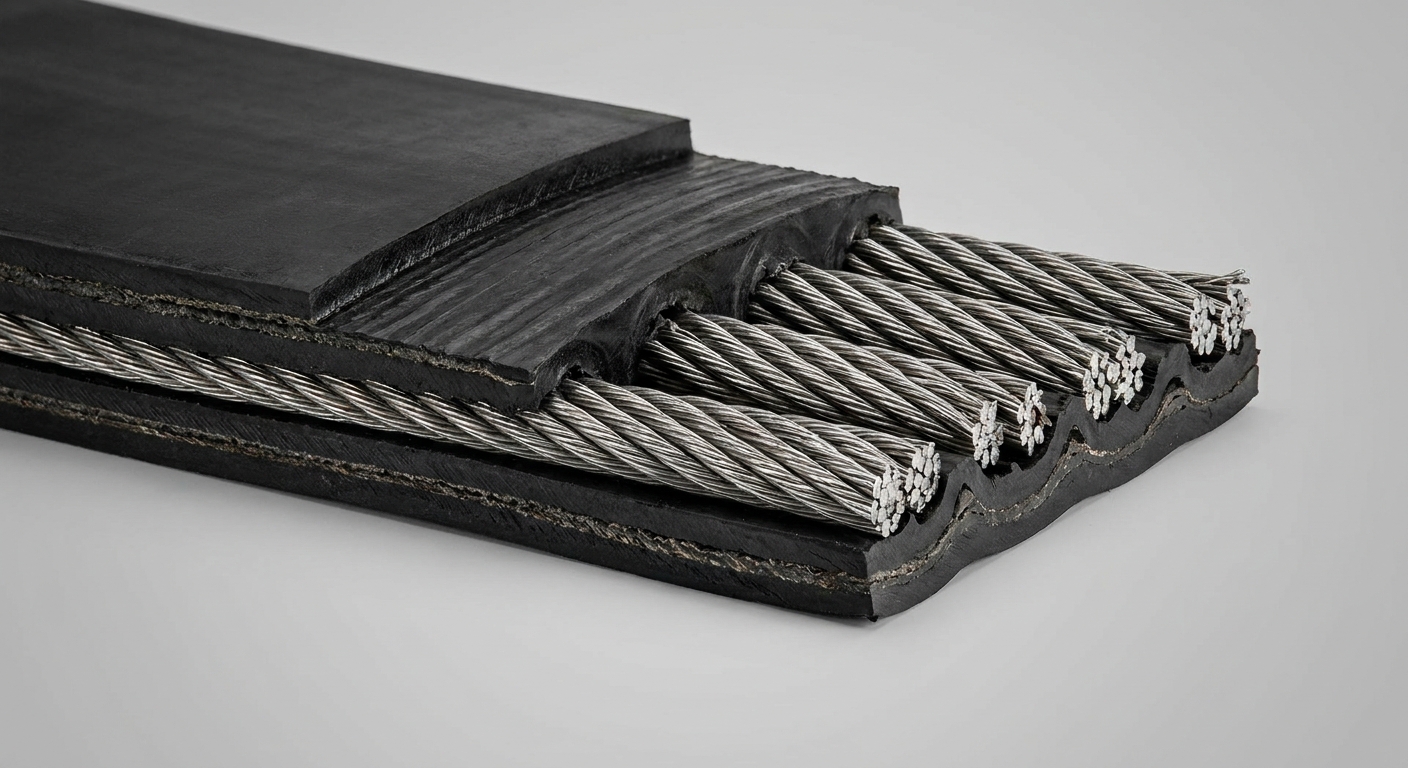
A steel cord rubber conveyor belt is a high-strength industrial conveying solution engineered for long-distance, heavy-load material transport in demanding environments such as casting plants, mining operations, cement production, and bulk material handling facilities. Reinforced with durable steel cords, these conveyor belts provide exceptional tensile strength, low elongation, and superior resistance to impact and abrasion. Unlike standard fabric belts, a steel cord rubber conveyor belt maintains stable performance under continuous heavy loads, helping reduce maintenance downtime, improve conveying efficiency, and ensure uninterrupted production flow in high-capacity industrial systems.
Why Use a Steel Cord Rubber Conveyor Belt?
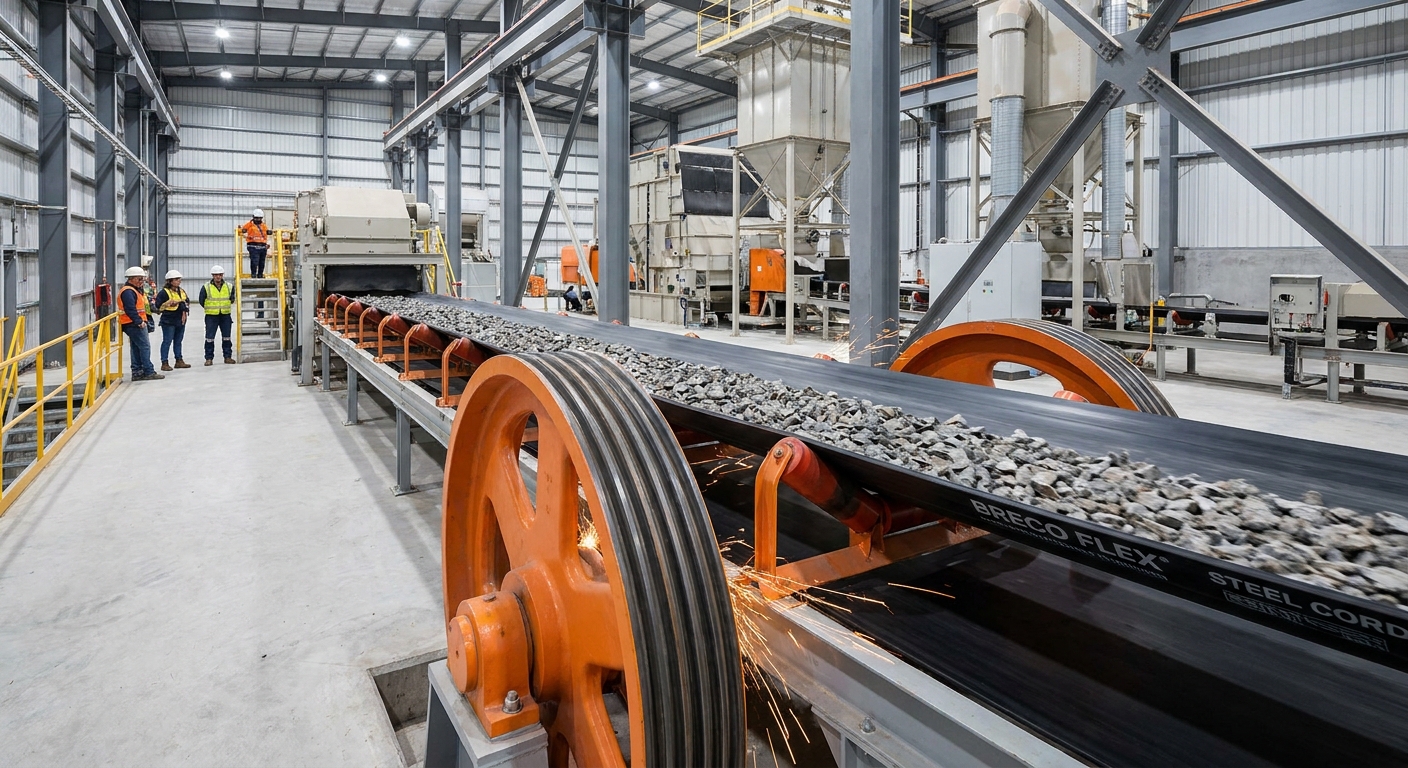
You should use this technology because it provides unmatched tensile strength and extremely low elongation, making it the ideal foundation for transporting heavy bulk loads over long distances. Implementing a premium steel cord rubber conveyor belt solves the core vulnerability of stretching under load, a common issue that causes standard fabric alternatives to slip and fail.
By utilizing high-tensile steel wire reinforcement, these systems maintain dimensional stability even under thousands of tons of continuous pressure. This means your plant can run continuously without the constant need for re-tensioning shutdowns.
Extreme Tensile Strength for Heavy Industrial Demands
Here is the deal: when you are moving heavy raw materials like gypsum or plaster rock, structural resilience is non-negotiable. Standard textile belts simply cannot match the pull resistance required for high-capacity material lines.
- High Breaking Strength: These belts are designed to withstand extreme forces up to ST10000 ratings.
- Low Stretch Ratio: Elongation at working load is typically under 0.2%, ensuring precise tracking.
- Deep Troughability: The longitudinal wire layout allows excellent deep-trough configuration to maximize load capacity.
By choosing steel reinforcement, you guarantee that your high-tonnage materials travel smoothly without risking a catastrophic snap.
Drastic Reductions in Downtime and Maintenance Costs
The best part? Because these belts resist impacts and stretch so effectively, your periodic maintenance requirements will drop significantly. You will no longer waste labor hours fixing minor edge tears or adjusting hydraulic tensioners.
Key Takeaway
Transitioning from multi-ply fabric belts to steel cord systems can reduce your long-distance conveyor maintenance costs by up to 35% while virtually eliminating material slippage.
| Performance Metric | Multi-Ply Fabric Belts | Steel Cord Rubber Belts | |
|---|---|---|---|
| Working Elongation | 1.5% to 2.5% | Less than 0.2% | |
| Max Tension Rating | Up to EP500 | ST500 to ST10000+ | |
| Impact Resistance | Moderate | Superior (core wire protection) |
This comparison highlights why high-capacity transport lines require heavy-duty steel wire construction to maintain stable operations.
How Does a Steel Cord Rubber Conveyor Belt Work?
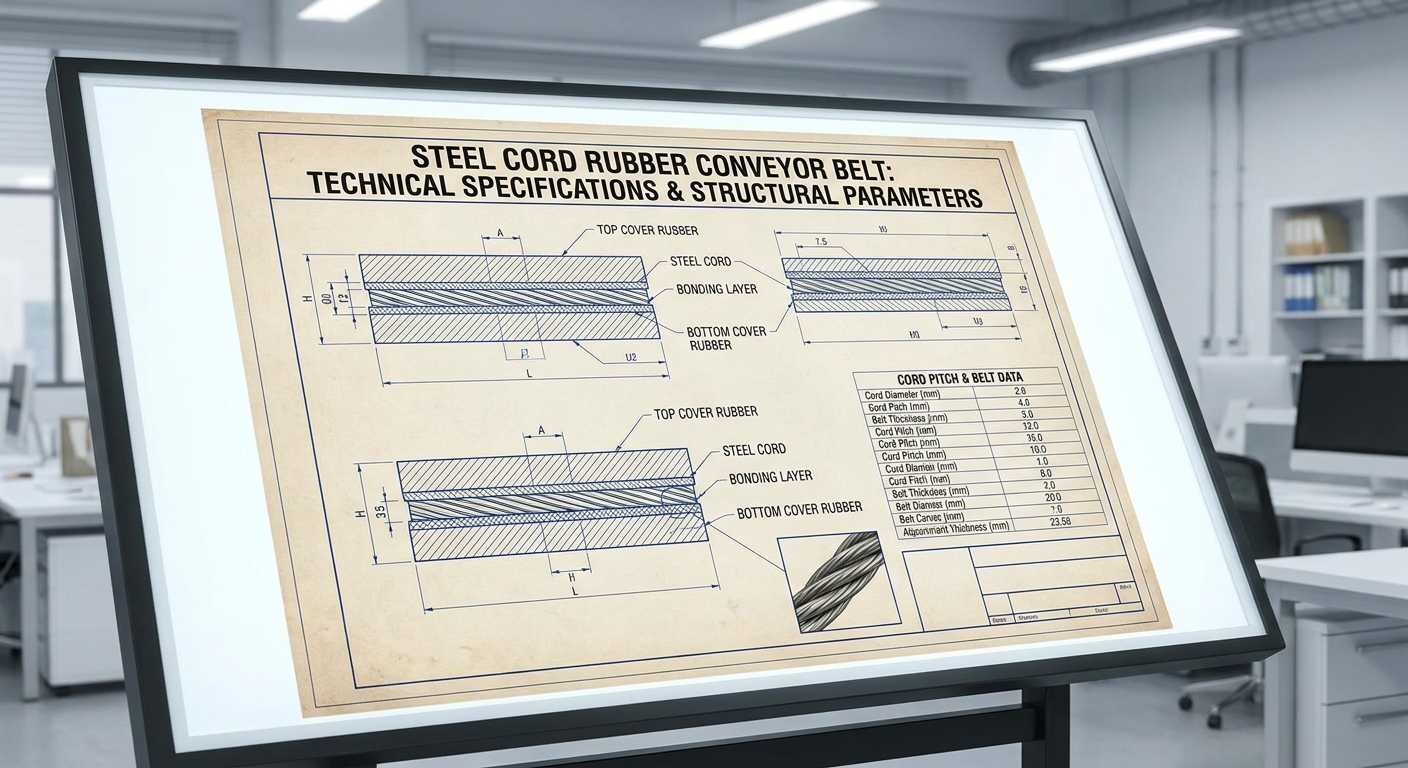
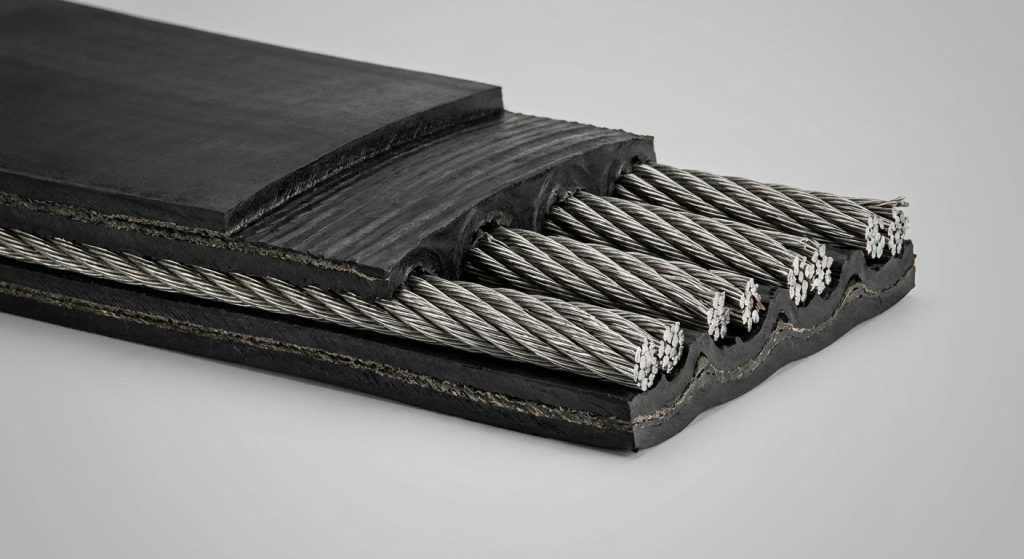
This high-tensile system works by transmitting massive driving forces through a single layer of longitudinally aligned steel cables encapsulated within a vulcanized rubber matrix. The steel cord rubber conveyor belt acts as a rigid, low-stretch structural spine that transfers energy directly from your drive pulleys to move heavy bulk materials efficiently.
By eliminating the multi-layered fabric plies found in textile systems, the belt minimizes internal friction and heat buildup during long-distance runs. This clean, single-layer reinforcement allows the belt to flex easily over drive drums while maintaining strict lateral tracking.
Uniform Tension Transfer Across the System
Let’s dive right in: the core operational principle relies on perfect spacing and tension alignment of the internal steel cords. If the internal cables are not perfectly parallel, the belt will pull to one side and suffer severe edge damage.
- Precision Pitch Spacing: The distance between each wire is mathematically optimized during manufacturing.
- Zinc-Galvanized Adhesion: The wire cords are chemically bonded to the core rubber to prevent internal sliding.
- High Flexibility: The longitudinal layout allows the belt to bend easily around smaller drive pulleys.
This uniform structure ensures that when your motor turns the main drive pulley, the entire length of the system reacts with zero lag or energy loss.
Advanced Real-Time Tear Detection Mechanisms
But wait, there is more: modern steel cord systems can be integrated with electromagnetic sensor loops embedded in the cover rubber. If a piece of sharp tramp iron pierces the belt, these loops are severed and instantly trigger an automatic shutdown.
Key Takeaway
Integrating electromagnetic sensor loops into your steel cord system stops longitudinal tears within meters, saving you from a full-length belt split.
| Sensor Component | Material Construction | Core Function | |
|---|---|---|---|
| Transverse Loops | Flexible brass-coated steel | Conducts signal across the belt width | |
| Receiver Antennas | Non-contact magnetic coils | Detects circuit continuity in real time | |
| System Controller | Microprocessor unit | Triggers immediate emergency drive shutdown |
Utilizing real-time diagnostics prevents localized impact damage from escalating into a catastrophic operational failure.
What Elements Power a Steel Cord Rubber Conveyor Belt?
High-carbon galvanized steel wires, specialized core insulation gum, and heavy-duty outer rubber covers are the core elements that power this high-performance system. Utilizing a premium steel cord rubber conveyor belt gives you access to an engineered combination of metallurgical strength and elastomer flexibility.
Each component is formulated to work in harmony, protecting the internal load-bearing cables from moisture penetration while providing a highly durable carrying surface. This specialized architecture ensures the belt stands up to both environmental and physical abuse.
High-Carbon Zinc Galvanized Steel Cords
Here is why: the internal wire ropes must handle immense tension without rusting or losing their bond with the surrounding rubber cover. If moisture penetrates the outer covers, raw steel would corrode rapidly and cause internal delamination.
- Open-Twist Wire Design: Allows raw insulation gum rubber to penetrate deep inside the cord strands.
- Zinc Galvanized Coating: Provides chemical protection against oxidation and enhances rubber adhesion.
- High Elastic Limit: Absorbs continuous stress cycles without suffering from wire fatigue.
This robust cord construction acts as the ultimate defense against internal decay and joint degradation.
Core Insulation Gum and Outer Rubber Covers
The best part? The insulation gum acts as an elastic cushion that encapsulates each individual wire cord, absorbing impact energy and preventing the cords from rubbing against each other.
- Top Cover Compound: Custom-formulated to resist extreme abrasion, gouging, and heat.
- Bottom Cover Compound: Engineered for optimized pulley traction and low rolling resistance.
Key Takeaway
Sourcing belts with high-grade zinc-galvanized cords and high-adhesion core rubber prevents cord pull-out and extends belt life by over 150%.
| Carcass Component | Primary Material | Engineering Purpose | |
|---|---|---|---|
| Carcass Reinforcement | High-carbon galvanized steel wires | Primary tensile load-bearing element | |
| Insulation Gum | High-adhesion core rubber | Encapsulates wires and absorbs dynamic impacts | |
| Protective Covers | Optimized synthetic elastomer | Shields core from wear, chemicals, and cuts |
A highly engineered material structure ensures that every component contributes to maximizing the operational lifespan of your conveyor.
When to Choose a Steel Cord Rubber Conveyor Belt?
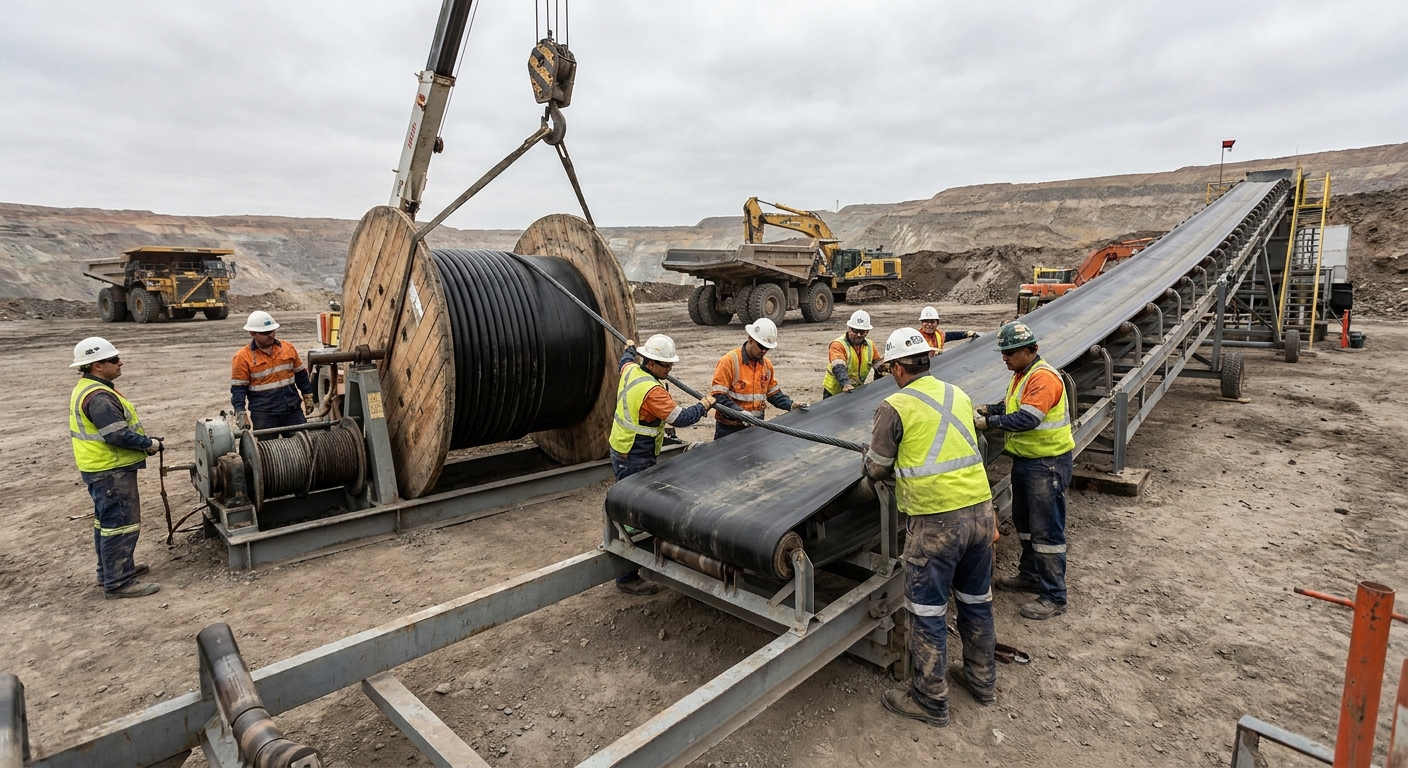
You should choose this high-performance system when your material handling operation exceeds 500 meters in length or requires carrying massive, high-impact volumes of abrasive materials with minimal take-up stroke. Deploying a heavy-duty steel cord rubber conveyor belt is critical when you need to transport heavy materials over rugged terrain or steep vertical inclines.
When standard fabric belts stretch too much and require massive gravity take-up towers, steel-reinforced systems provide a compact, stable alternative. This choice is vital for streamlining operations in high-capacity bulk facilities.
Long-Distance Overland and High-Capacity Transport
Think about it: moving raw gypsum, minerals, or aggregate over miles of uneven ground requires immense tension that would snap standard belts. Fabric belts will sag excessively between idlers, dramatically increasing your power consumption.
- Massive Span Capability: Easily handles single-flight conveyors stretching several kilometers.
- High Volumetric Flow: Supports wider, deeper trough angles to carry larger material volumes.
- Compact Tensioners: Requires minimal gravity take-up travel distance due to low belt stretch.
Opting for steel reinforcement allows you to build a highly streamlined and energy-efficient long-distance transport corridor.
High-Impact Loading Zones and Harsh Environments
Here is the deal: if your system involves dropping heavy, sharp-edged rock from high transfer chutes, fabric carcasses will suffer immediate puncture damage. You need a system that resists tearing and limits rip propagation.
- Puncture Resistance: Thick rubber covers and high-tensile cords deflect heavy falling impact forces.
- Chemical and Heat Stability: Resistant to swelling when exposed to industrial oils or high processing temperatures.
Key Takeaway
When your system length exceeds 500 meters or experiences impact drops above two meters, steel cord construction is the only financially viable solution.
| Operational Indicator | Fabric Belt Suitability | Steel Cord Belt Suitability | |
|---|---|---|---|
| Conveyor Length | Ideal for under 300 meters | Essential for over 500 meters | |
| Gravity Take-Up Space | Requires extensive travel space | Requires very compact take-up limits | |
| Impact Loading Risk | High risk of puncture/slitting | Superior resistance to sharp object tears |
Analyzing these operational indicators helps plant managers select the correct reinforcement technology to maximize uptime.
How Is a Steel Cord Rubber Conveyor Belt Spliced?
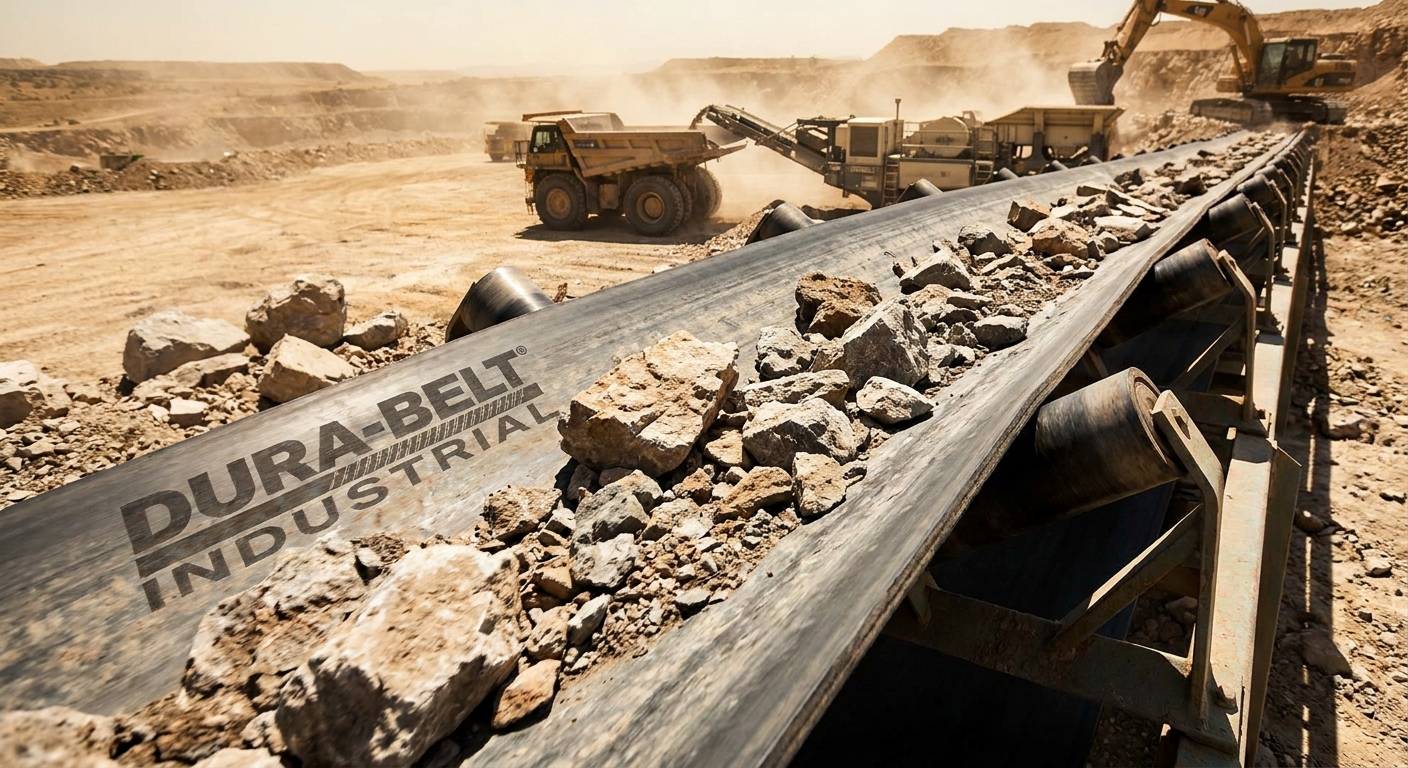
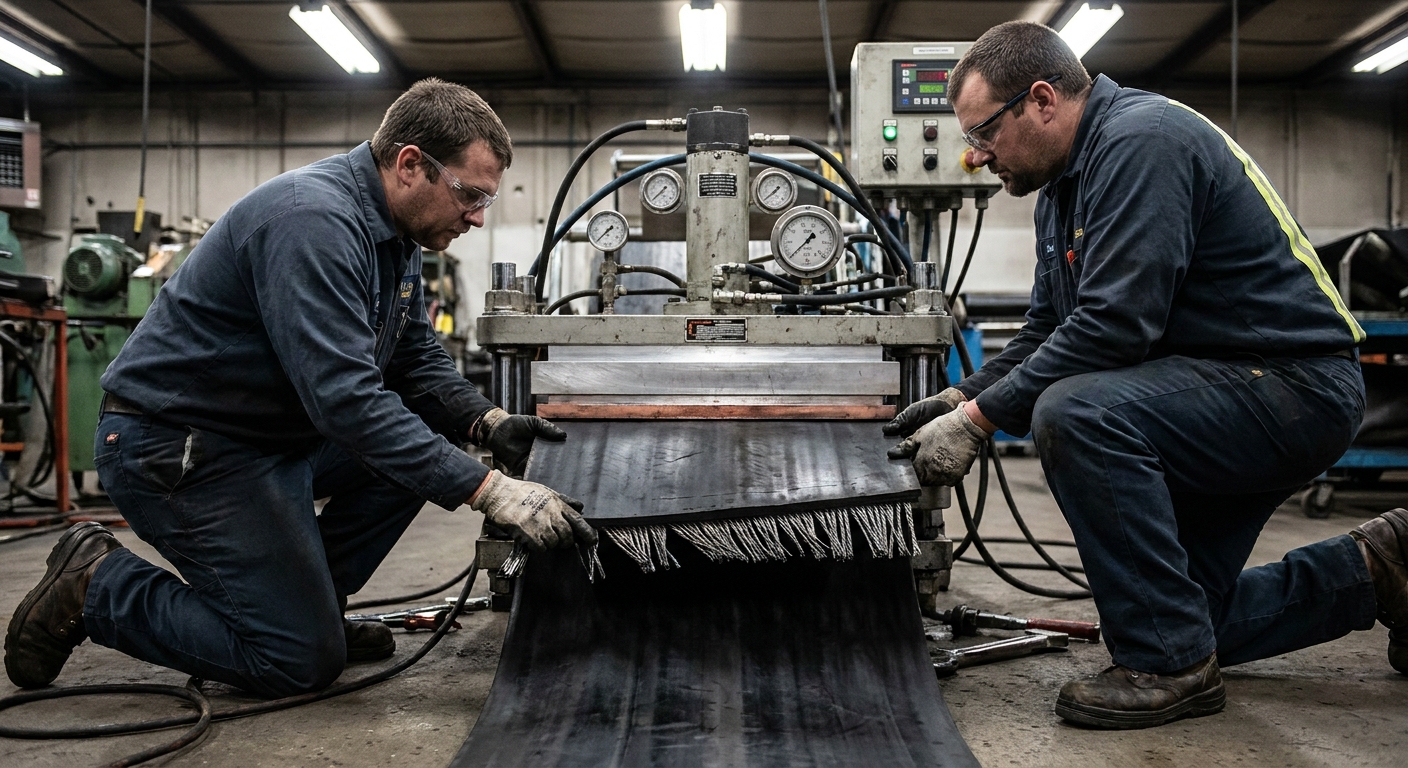
Splicing is executed using a high-precision hot vulcanization method where the rubber cover is stripped, the steel cables are laid in a multi-stage finger overlap pattern, and the joint is cooked under intense heat and pressure. Splicing a steel cord rubber conveyor belt requires removing the rubber at the belt ends to expose the individual steel cords.
These exposed cords are then arranged in a highly precise, interlocking finger configuration. Because there are no mechanical fasteners involved, a vulcanized joint can achieve up to 100% of the parent belt’s strength.
The Multi-Stage Finger Splicing Process
Let’s dive right in: achieving a perfect splice requires meticulous preparation and absolute cleanliness to prevent core contamination. Any dust or moisture trapped in the splice zone will cause the joint to blow apart under tension.
- Belt End Stripping: Specialized tools strip away the top and bottom rubber covers to expose the steel wire cords.
- Cord Sandblasting and Priming: Cords are cleaned and coated with specialized adhesion promoters.
- Interlocking Alignment: Cords from both ends are laid parallel in a pre-designed overlapping pattern.
- Interlay Packing: Unvulcanized rubber strips are packed between the cords to fill all voids.
This highly precise physical arrangement ensures that when the rubber vulcanizes, tension is transferred smoothly across the joint.
Applying Controlled Heat and Pressure
But wait, there is more: the assembled splice area is clamped inside a heavy-duty portable field vulcanizing press. The press applies immense pressure and precise heat to melt and cure the rubber.
[Belt End A Cords] ==== ==== ==== ==== || || || || <-- Unvulcanized Rubber Interlay[Belt End B Cords] ==== ==== ==== ====Plain TextCopy
This structural configuration ensures that tension forces are transferred evenly from cord to cord via high-shear rubber adhesion.
Key Takeaway
A hot-vulcanized finger splice, executed under clean conditions, matches the operational strength of the original belt and prevents premature joint failure.
| Splice Stage | Core Action | Required Control Parameters | |
|---|---|---|---|
| Stripping & Prep | Expose and clean steel cords | Absolute exclusion of dust and moisture | |
| Cord Interlocking | Lay cords in a precise finger pattern | Perfect spacing to prevent cord-on-cord friction | |
| Hot Vulcanization | Cook joint in a specialized clamping press | Maintain 145°C under 200 N/cm² pressure |
Following these precise steps during the splicing process ensures maximum dynamic joint efficiency and long-term durability.
Where Is a Steel Cord Rubber Conveyor Belt Installed?
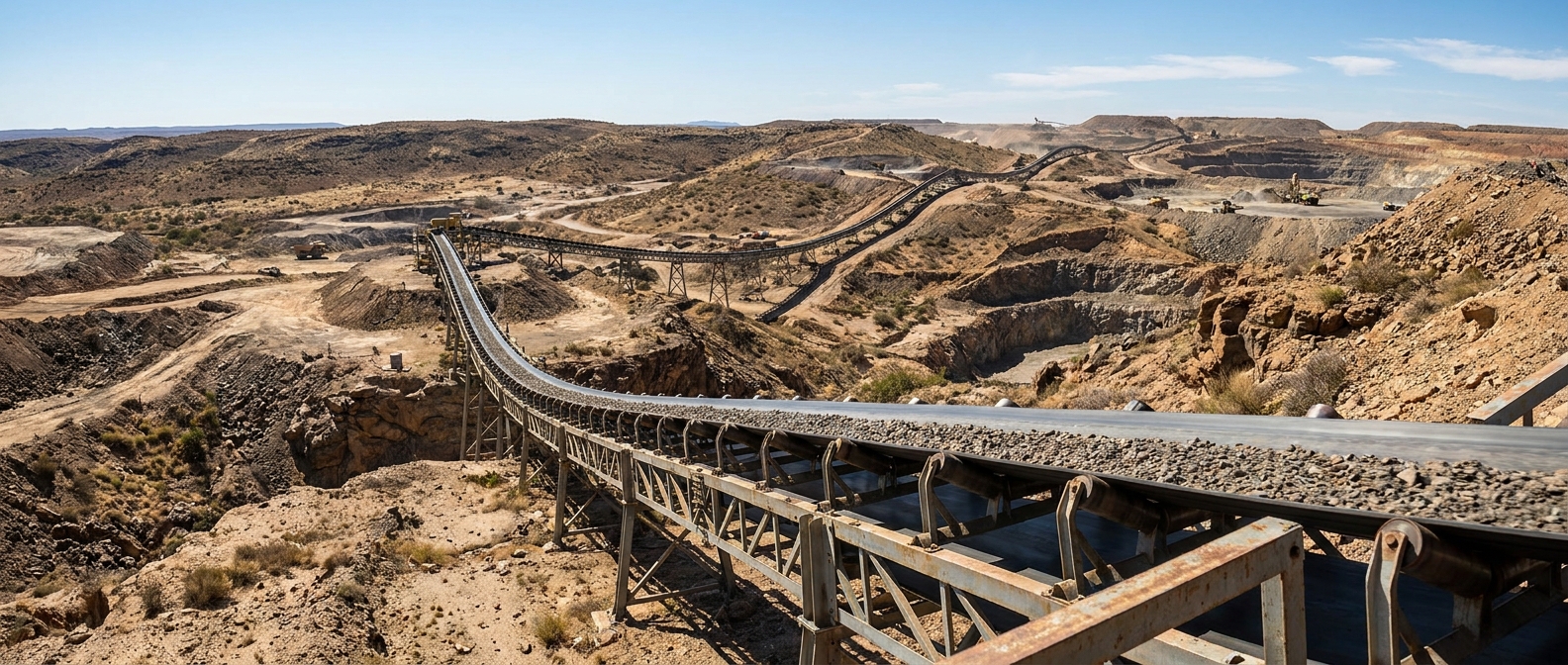
These systems are installed primarily in demanding high-volume environments such as open-pit mining pits, long overland transport corridors, and industrial processing hubs. Installing a heavy-duty steel cord rubber conveyor belt is the ideal choice for heavy B2B logistics networks that cannot tolerate transport bottlenecks.
From moving raw ores out of deep pits to feeding plaster casting production lines, these belts serve as the main logistical spine. Their structural reliability makes them indispensable in sectors where continuous downtime is extremely costly.
Heavy Mining Operations and Aggregate Quarries
Here is why: raw mined materials are incredibly heavy and highly abrasive. Moving thousands of tons of copper ore or rock out of deep quarry pits requires high-tension systems that can handle steep climbs.
- Deep-Pit Incline Systems: High-tensile cords allow single-flight conveyors to haul materials up steep walls.
- Overland Corridors: Connects remote mining areas directly to railheads or processing mills.
- Run-of-Mine (ROM) Conveyors: Handles high-impact drops directly from heavy primary crushers.
Using steel-reinforced systems in these environments eliminates the need for expensive haul truck fleets and slashes operational costs.
Industrial Casting and Plaster Production Facilities
The best part? In plaster casting and gypsum processing plants, raw materials must be moved continuously through hot, humid, or chemically active zones.
- Gypsum Board Production Lines: Maintains precise belt tracking and speed to ensure consistent plaster casting.
- High-Heat Zones: Custom heat-resistant rubber covers protect the steel cords from thermal degradation.
Key Takeaway
Installing steel cord belts in gypsum processing lines ensures consistent raw material feed rates and prevents stretching-related board alignment issues.
| Installation Site | Primary Material Handled | Key Environmental Stressor | |
|---|---|---|---|
| Open-Pit Mine Pit | Sharp, heavy metallic ores | Massive rock impact and extreme outdoor weather | |
| Gypsum Plaster Plant | Calcined gypsum and plaster rock | High ambient dust, moisture, and elevated heat | |
| Marine Export Terminals | High-volume dry bulk commodities | Salt spray, coastal humidity, and continuous UV exposure |
Identifying your specific environmental stressors helps you select the correct cover compounds to protect your steel cord investment.
How Durable Is a Steel Cord Rubber Conveyor Belt?
The system offers industry-leading durability, frequently providing an operational service life that is three to four times longer than traditional multi-ply fabric belts under identical heavy loads. Utilizing a premium steel cord rubber conveyor belt provides your operation with an incredibly robust transport medium that resists tearing, abrasion, and tension fatigue.
By shielding the internal load-bearing wire cords with highly resilient rubber compounds, the belt resists deep gouging from sharp rocks. This outstanding durability translates directly into long-term savings and lower operating costs.
Resistance to Internal Wire Tension Fatigue
Here is the deal: when a conveyor belt runs over drive and tail pulleys thousands of times per day, internal materials suffer from extreme flexing stress. Fabric plies can delaminate and lose strength over time.
- High Flex Fatigue Resistance: Steel wire ropes are designed to bend millions of times without breaking.
- Zero Internal Delamination: The single-layer steel core eliminates the risk of ply separation.
- High Adhesion Retention: Advanced core rubber formulas maintain an unbreakable bond with the wire cords.
This resistance to flexing fatigue ensures that your belt remains strong and reliable, even after years of continuous operation.
Wear-Resistant Covers That Prevent Deep Gouges
Think about it: the outer rubber covers are your first line of defense against the sharp, abrasive rocks moving along your production line. Sourcing belts with optimized cover grades prevents sharp materials from reaching the steel core.
- DIN-X and DIN-Y Cover Grades: Offer superior protection against severe gouges, cuts, and scrapes.
- Anti-Rust Wire Design: Zinc-galvanized cords resist corrosion even if a sharp rock manages to cut the outer rubber cover.
Key Takeaway
Thanks to their advanced metallurgy and high-grade rubber covers, premium steel cord belts can reliably operate for over ten years in demanding quarry environments.
| Durability Factor | Standard Textile Belts | High-Performance Steel Cord Belts | |
|---|---|---|---|
| Service Life Expectancy | Typically 2 to 4 years | 8 to 15+ years (with proper maintenance) | |
| Resistance to Flex Fatigue | Moderate (ply separation risks) | Outstanding (high-flex carbon steel wire) | |
| Extreme Tension Capacity | Poor (stretches under high tension) | Exceptional (retains strength under high load) |
This comparison highlights why steel cord reinforcement is the most cost-effective solution for heavy-duty bulk handling.
How is a Steel Cord Rubber Conveyor Belt Manufactured?
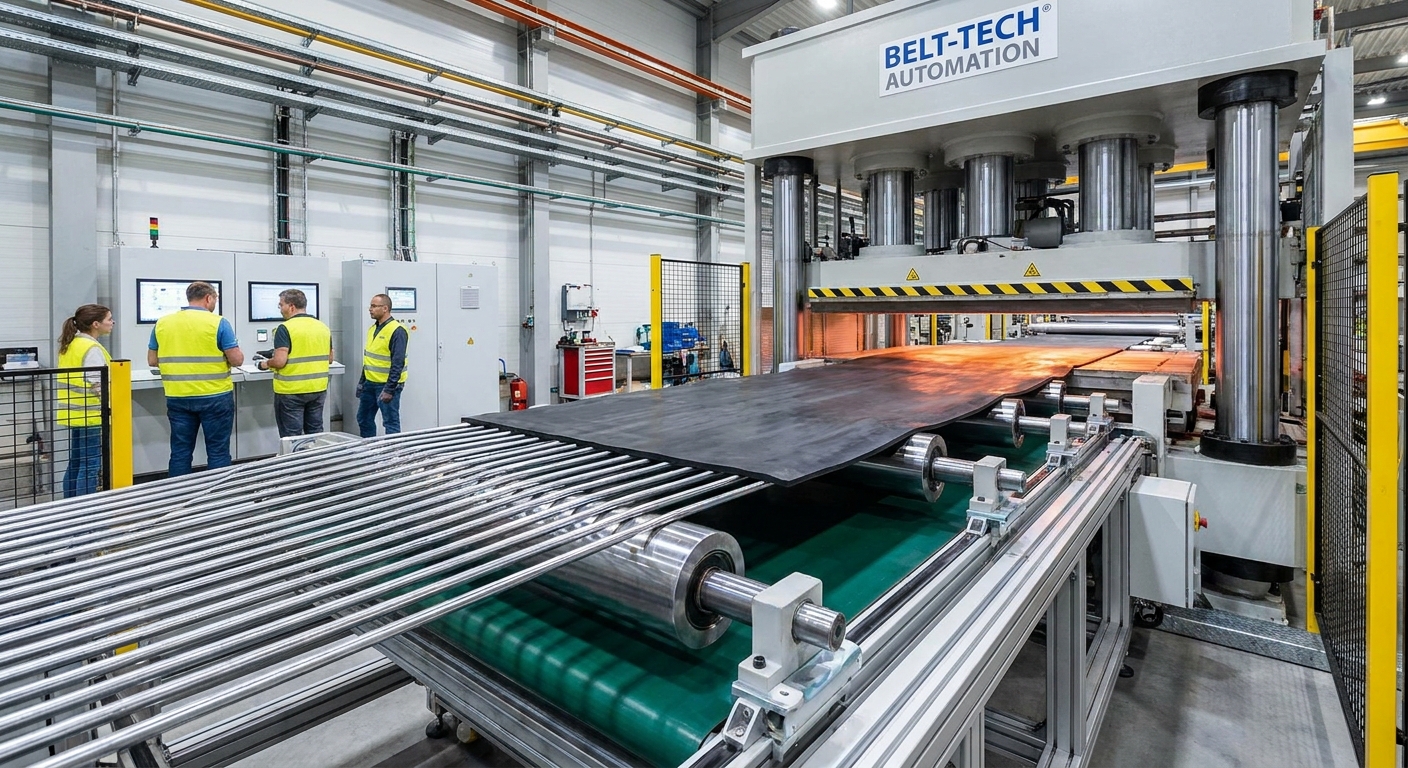
Manufacturing is carried out in a highly controlled, computerized production line where high-tensile steel wire spools are unreeled under uniform tension, aligned, and merged with raw rubber compounds before entering a massive vulcanization press. Producing a reliable steel cord rubber conveyor belt requires specialized machinery that maintains tight tolerances on wire spacing and tension.
If even a single wire is misaligned or tensioned incorrectly during the assembly process, the finished belt will mistrack and wear out prematurely. Advanced manufacturing plants utilize real-time laser monitoring to guarantee perfect structural alignment.
Automated Creel Tensioning and Wire Alignment
Let’s dive right in: the manufacturing process begins in the creel room, where dozens of high-tensile steel wire spools are mounted on computerized tensioning racks.
- Constant Tension Creel Stands: Ensure that every single wire is pulled with the exact same force.
- Precision Comb Guides: Align the wires perfectly parallel, establishing the belt’s uniform width and spacing.
- Real-Time Laser Tracking: Continuous optical scans detect any structural misalignments instantly.
This meticulous mechanical setup prevents internal stress imbalances that could cause the belt to warp or twist under operating loads.
High-Pressure Vulcanization and Cover Merging
But wait, there is more: once the steel wires are aligned, they are sandwiched between high-adhesion core rubber and the top and bottom cover sheets. The entire assembly then enters a massive vulcanizing press.
- Double-Platen Thermal Presses: Apply extreme pressure (exceeding 200 N/cm²) and precise heat (around 145°C).
- Chemical Vulcanization: The raw rubber compound flows around each individual wire strand, creating an unbreakable bond.
This controlled chemical process creates a unified, incredibly durable structure that cannot delaminate or tear apart.
Key Takeaway
Computerized wire tensioning and high-pressure vulcanization prevent internal stress imbalances and ensure your belt tracks perfectly straight.
| Manufacturing Step | Core Machinery | Crucial Quality Control Metric | |
|---|---|---|---|
| Creel Tensioning | Automated tensioning creels | Maintain perfectly uniform tension across all wires | |
| Carcass Assembly | Merging rollers and comb guides | Ensure precise lateral spacing and wire depth | |
| Vulcanization | Double-platen hydraulic press | Complete cure of rubber covers at exact temperatures |
Implementing rigorous quality control at every stage of production ensures the belt will deliver reliable performance under heavy field use.
How to Ship a Steel Cord Rubber Conveyor Belt Safely?
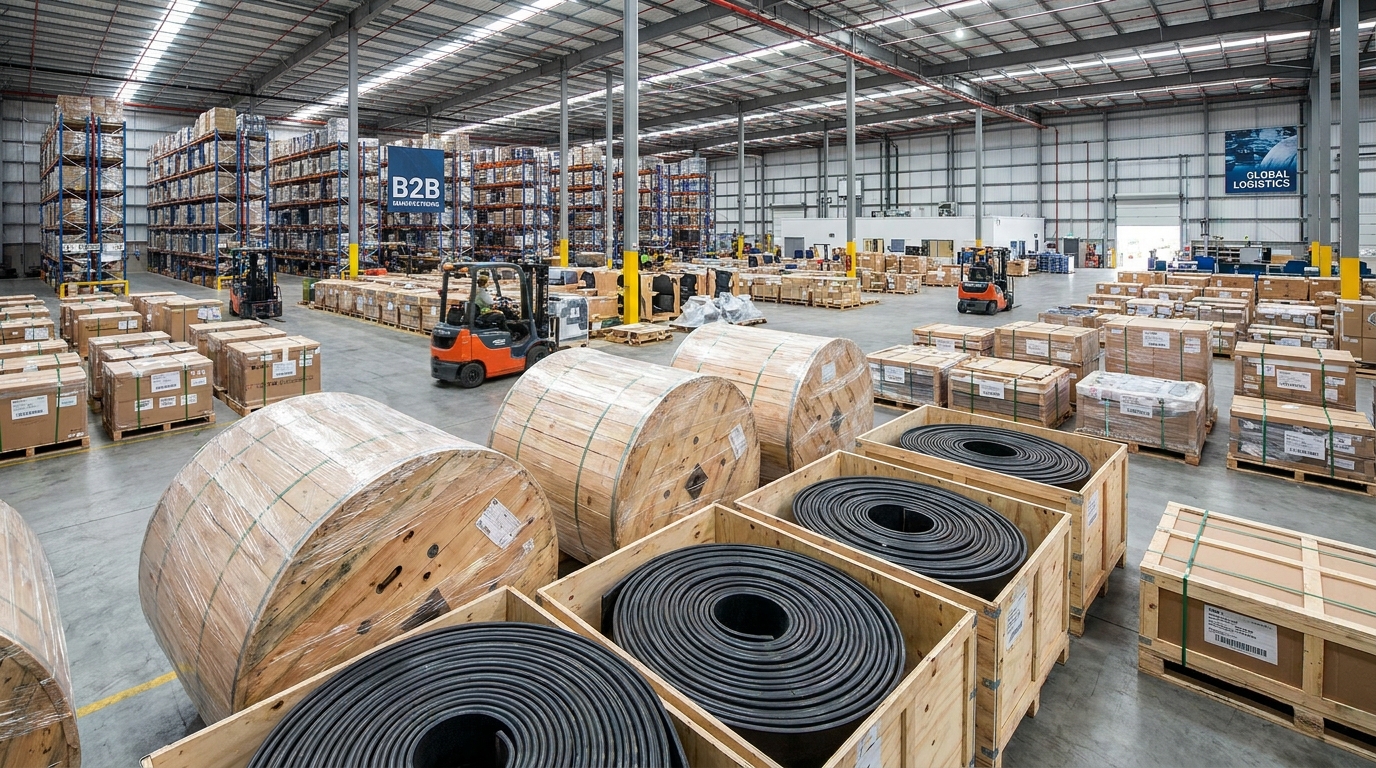
Shipping these heavy products safely requires winding them tightly onto reinforced steel or heavy-duty wooden cores, wrapping them in moisture-resistant protective covers, and securing them with robust steel bands. Transporting a premium steel cord rubber conveyor belt is a major logistical challenge because a single roll can weigh up to 30 or 40 tons.
To prevent the heavy rolls from shifting or getting damaged during transit, they must be loaded and secured using specialized cradles. Proper packaging and shipping protect your investment during its journey to your facility.
Reinforced Packaging and Protective Shells
Here is why: if a heavy roll is dropped or exposed to continuous moisture during ocean transit, the steel cords can get damaged, and water can seep into the belt ends. This would cause rust to form before the belt is even installed.
- Heavy-Duty Packaging: Rolls are wrapped in multiple layers of thick, water-resistant UV-protective film.
- Steel Core Supports: Heavy-duty steel reels prevent the roll from collapsing under its own weight.
- End Sealing: The exposed edges of the belt are sealed with protective coatings to keep moisture out.
This comprehensive packaging ensures the belt arrives at your job site in pristine, ready-to-install condition.
Securing Heavy Loads for Multi-Modal Transit
The best part? When shipping these massive rolls via truck or cargo ship, they must be secured in heavy-duty steel transport frames. These frames prevent any rolling or shifting during transit.
- Reinforced Steel Transport Frames: Prevent the heavy rolls from shifting during sharp turns or rough seas.
- Heavy Tie-Down Chains: Anchor the steel frames securely to the deck of the truck or cargo ship.
Key Takeaway
Using heavy-duty steel frames and moisture-tight packaging prevents transport damage and ensures the belt is ready for immediate installation.
| Shipping Component | Material Selection | Primary Logistical Purpose | |
|---|---|---|---|
| Central Reel Core | Heavy-walled structural steel | Prevents the roll from collapsing under its own weight | |
| Protective Wrapping | Multi-layer waterproof polymer sheeting | Shields the belt covers from rain, saltwater, and UV rays | |
| Securing Frames | Custom heavy-duty steel cradles | Anchors the massive rolls securely to prevent shifting during transit |
Using high-quality packaging and securing equipment ensures your high-value cargo arrives safely, avoiding shipping delays.
How to Inspect a Steel Cord Rubber Conveyor Belt?
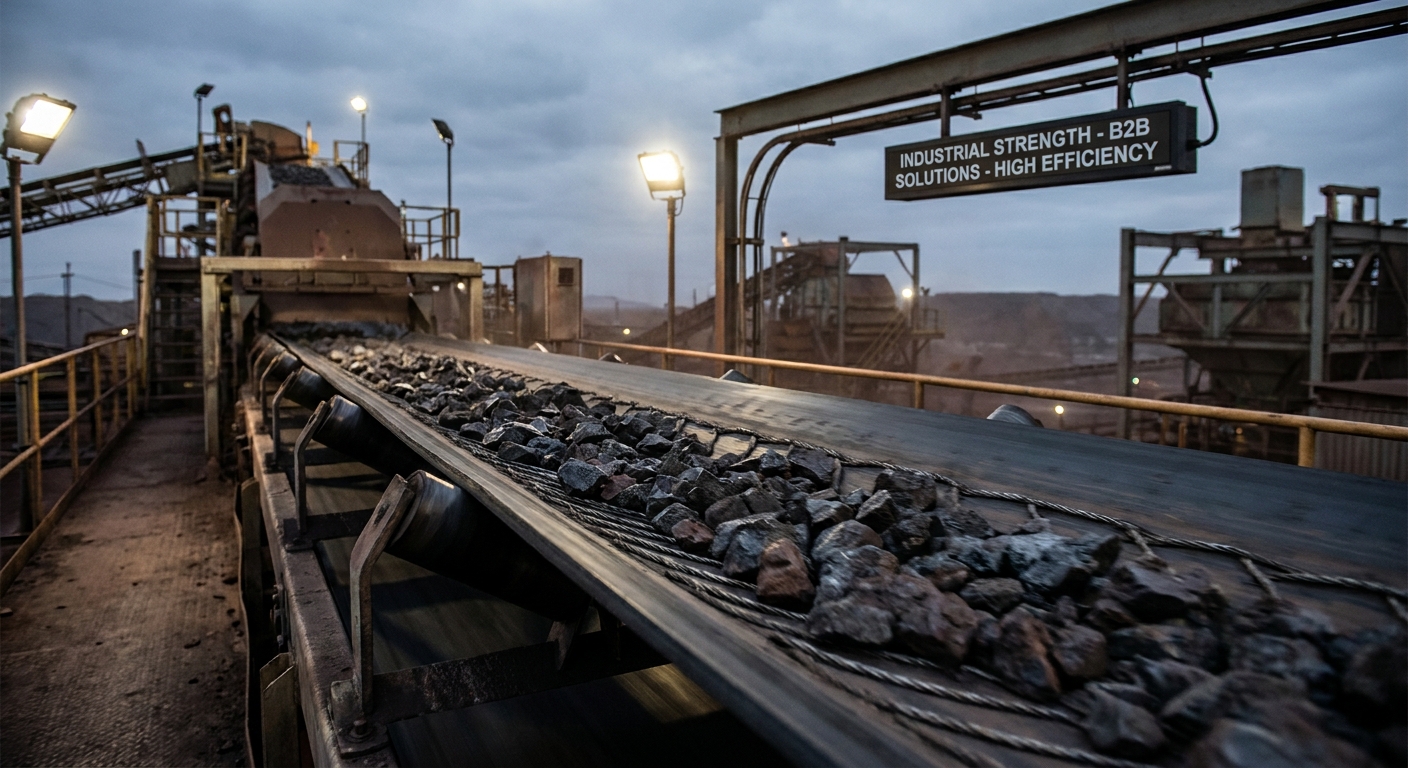
You can inspect this type of system using a combination of daily visual checks for cover damage and automated non-destructive electromagnetic scanning to monitor internal wire integrity. Regularly inspecting your steel cord rubber conveyor belt is essential for detecting minor issues before they lead to unexpected breakdowns or catastrophic failures.
By monitoring both the outer rubber covers and the internal load-bearing wire cords, you can plan maintenance during scheduled downtime. This proactive approach helps extend the lifespan of your conveyor system.
Daily Visual Inspections and Cover Assessments
Here is the deal: daily visual inspections help identify surface damage, like deep cuts or gouges, caused by trapped rocks or misaligned scrapers.
- Assess Rubber Cover Wear: Check for signs of thinning rubber covers or localized impact damage.
- Inspect Belt Joints: Examine splice areas for signs of separation, cracking, or lifting edges.
- Monitor Belt Tracking: Ensure the belt runs straight on idlers to prevent edge wear.
Catching these surface issues early prevents moisture from reaching the steel core and causing internal corrosion.
Non-Destructive Electromagnetic Internal Scanning
But wait, there is more: because you cannot see the internal steel cords, you need specialized non-destructive testing (NDT) systems to scan the belt while it is running.
- Continuous Internal Scans: Detects broken wires, rusted areas, and splice movement without stopping operations.
- Accurate Wear Maps: Generates a high-resolution map of the internal steel core to help you plan repairs.
Key Takeaway
Combining daily visual checks with annual electromagnetic scans allows you to detect internal cord damage early, preventing unexpected belt failures.
| Inspection Type | Equipment Used | Primary Detection Focus | |
|---|---|---|---|
| Daily Visual Patrol | Inspection flashlight and camera | Surface gouges, edge wear, tracking issues, and splice cracks | |
| Electromagnetic Scan | Portable NDT electromagnetic scanner | Broken internal wires, corrosion zones, and splice movement | |
| Thickness Measurement | Ultrasonic thickness gauge | Rate of rubber cover wear to estimate remaining service life |
Using a structured inspection plan allows you to address issues early, keeping your high-capacity transport lines running smoothly.
Achieving Long-Term Operational Excellence
In high-capacity material handling, unscheduled downtime is the single greatest threat to your operational profitability. This comprehensive guide has detailed how transitioning to a high-tensile, low-elongation transport system resolves continuous carcass stretch, frequent splice failures, and severe impact damage in heavy-duty plaster casting and quarrying operations. By understanding the inner workings, precise hot-vulcanized splicing techniques, and advanced non-destructive inspection methods of these systems, you can secure complete control over your bulk material logistics spine.
Our mission is to equip your business with heavy-duty conveyor solutions engineered to withstand the most demanding industrial environments. Whether you need custom belt widths, specialized abrasion-resistant rubber covers, or high-tensile steel cord designs, our technical team is ready to assist. Let us help you eliminate transport bottlenecks and slash your long-term maintenance costs— contact us today to request a detailed technical consultation and custom quotation.
Frequently Asked Questions
Can I repair a torn steel cord rubber conveyor belt on-site?
Yes, you can perform effective on-site repairs for minor surface cuts and gouges using specialized cold-bonding compounds or rapid-curing liquid elastomers. However, if the internal load-bearing steel cords are severed, you must cut out the damaged section and perform a full, multi-stage hot vulcanized finger splice using a portable field press to restore 100% of the belt’s rated tensile strength.
What’s the best way to monitor internal wire rope degradation?
The best way to monitor internal wear without stopping your operation is using an automated, continuous Electromagnetic Belt Scanning System (NDT). These systems permanently mount to your conveyor structure and scan the belt carcass as it passes, generating a high-resolution map of all internal wire splices, rusted sections, or snapped cords, allowing you to plan maintenance before a failure occurs.
How do I know if my system requires a steel cord belt instead of fabric?
You should upgrade to a steel cord system if your conveyor setup meets any of the following criteria:
- Your center-to-center conveyor distance exceeds 500 meters.
- Your operating tension requirements are higher than EP800 (or ST500 equivalent).
- Your vertical gravity take-up space is limited (and you cannot accommodate high fabric stretch).
- Your system handles high-tonnage, high-impact materials where fabric carcasses suffer frequent puncture damage.
Can I run a steel cord belt on standard fabric belt pulleys?
Usually, no. Steel cord belts have higher structural stiffness and require larger minimum pulley diameters than fabric belts with equivalent thickness to prevent steel cord fatigue failure over drive and tail drums. You must verify that your current pulley diameters meet or exceed the minimum bend radius specifications specified by the manufacturer for your chosen ST-rating.
How do I prevent moisture from rusting the internal steel cords?
You can prevent internal rust by choosing steel cord belts manufactured with high-quality zinc-galvanized wire ropes and high-adhesion core insulation gum. The galvanized zinc coating acts as a chemical barrier, while the core rubber flows around the individual strands to prevent moisture from traveling along the belt core if the cover is cut.