
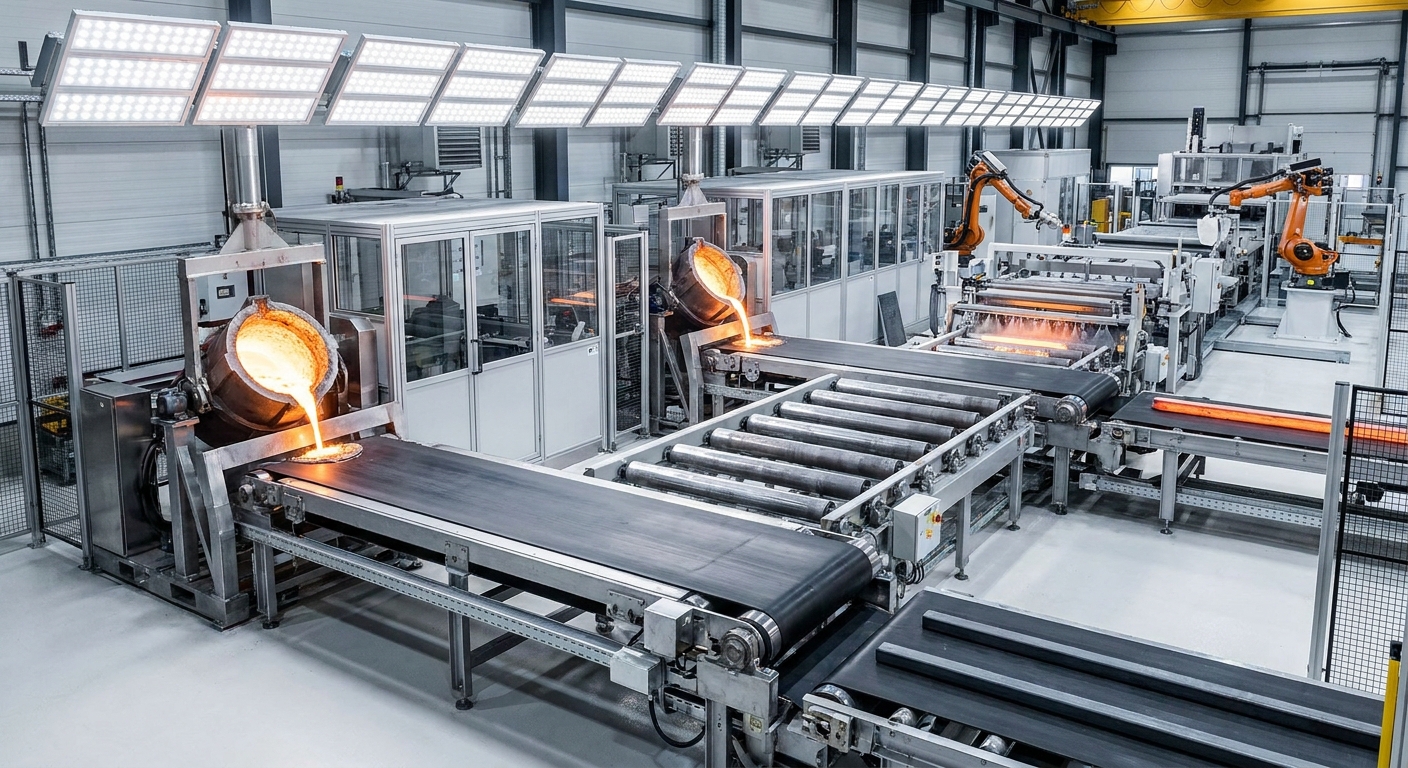
A heat resistant rubber conveyor belt is specifically engineered for high-temperature industrial environments where ordinary conveyor belts cannot withstand continuous thermal stress. Designed to transport hot molds, cast components, and heated materials safely and efficiently, these conveyor belts feature advanced heat-resistant rubber compounds that prevent cracking, melting, and premature wear. In plaster casting, foundries, cement plants, and heavy manufacturing facilities, a heat resistant rubber conveyor belt helps maintain stable production flow, reduce unexpected downtime, improve workplace safety, and extend conveyor system lifespan under demanding operating conditions.
What is a heat resistant rubber conveyor belt?
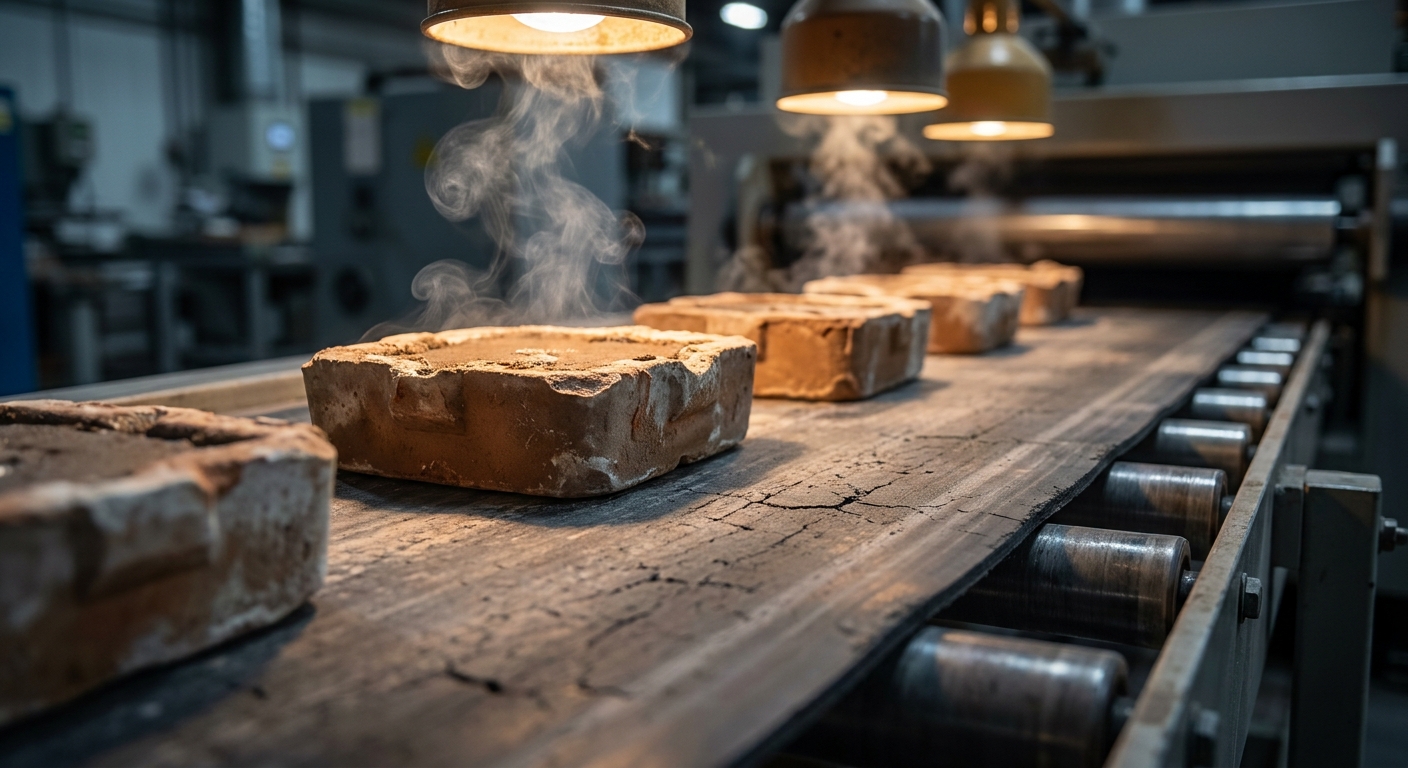
A heat resistant rubber conveyor belt is a specialized industrial material handling belt constructed with heat-tolerant compound covers and reinforced inner plies that prevent thermal damage during transport. This product is engineered to maintain its structural integrity and flexibility even when carrying extremely hot loads over long distances. Unlike regular conveyor belts, it utilizes specific synthetic elastomers like EPDM to resist cracking and hardening under extreme heat.
What is the primary role of plaster mold casting?
Plaster mold casting, or precision plaster mold casting, uses a plaster slurry poured over a pattern to form highly accurate molds. You can utilize this method to cast non-ferrous metals with smooth surface finishes and tight dimensional tolerances.
- Slurry preparation and mold pouring
- Oven drying and dehydration of molds
- Molten metal pouring and solidification
- Mold shaking and part extraction
Why do hot molds demand thermal protection?
Think about it: plaster molds exit drying ovens at temperatures exceeding 150°C and must be moved directly to casting stations. Standard conveying materials will quickly break down when exposed to this intense, localized heat.
How does extreme heat affect standard rubber covers?
When standard rubber covers are exposed to continuous high temperatures, the chemical bonds within the polymer chain begin to rupture rapidly. This leads to hardening, cracking, and eventual peeling of the top cover from the carcass.
Here is the deal: neglecting to upgrade your belt will result in catastrophic belt failure.
Key Takeaway: Selecting the proper elastomer compound is critical to preventing thermal failure and ensuring your conveyor remains operational. Without heat-tolerant materials, you face frequent maintenance costs and premature belt replacement.
| Metric | Standard Rubber Belt | Heat Resistant Belt | |
|---|---|---|---|
| Continuous Temp Limit | 60°C – 80°C | 150°C – 200°C | |
| Cover Material | SBR / Natural Rubber | EPDM / SBR-EPDM Blends | |
| Structural Flex Life | Low under heat | High under heat |
Evaluating your maximum continuous temperature is the first step toward choosing the right belt cover.
Why does plaster casting need a heat resistant rubber conveyor belt?
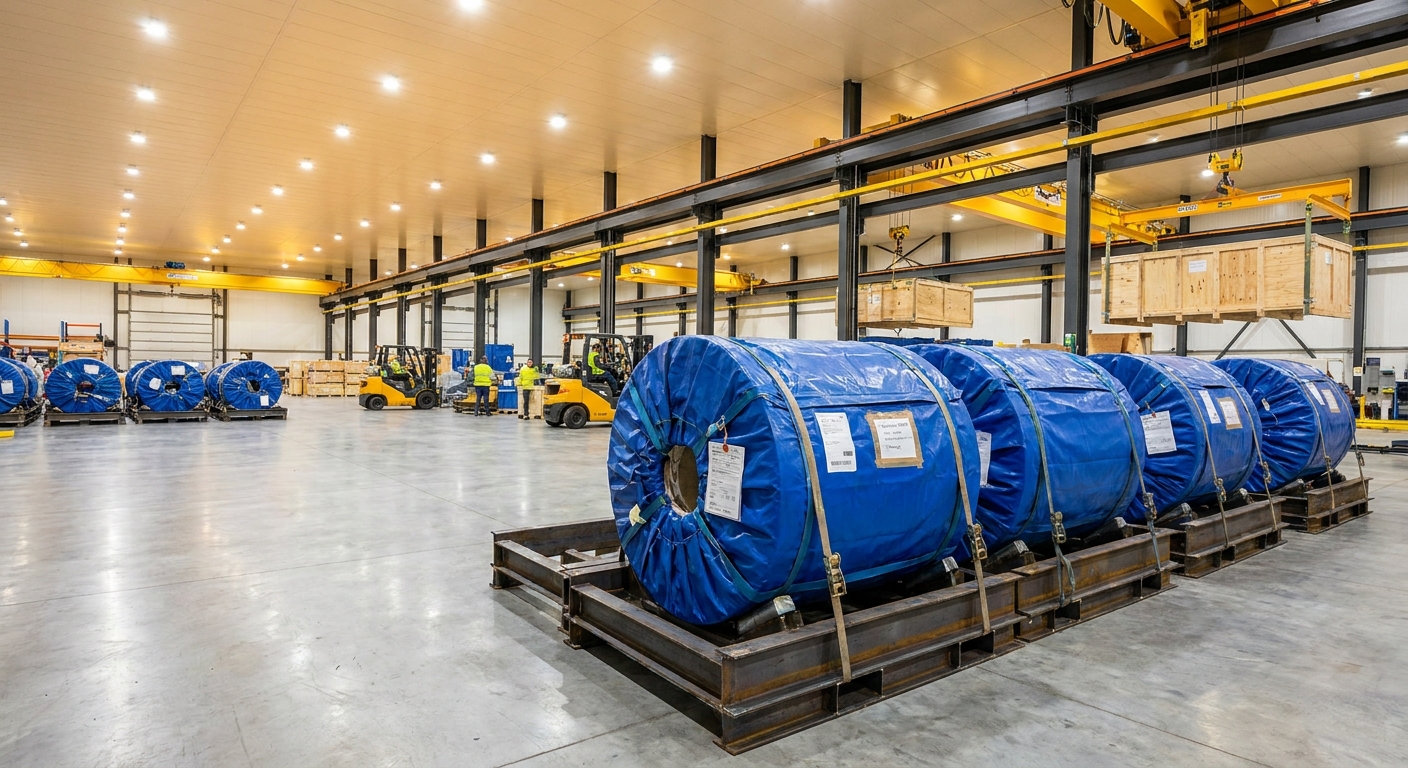
Plaster casting requires a heat resistant rubber conveyor belt because the process involves handling baked molds and newly poured cast components that release intense heat. This specialized belt acts as a protective shield, preventing heat from penetrating down to the critical reinforcement layers. It ensures that your automated line maintains continuous uptime without thermal deformation or unexpected tracking issues.
How does thermal stress affect production schedules?
When conveyor lines fail due to thermal damage, your entire plaster casting operation grinds to a sudden halt. This delay causes molten metals to cool in holding furnaces, increasing energy costs and ruining production cycles.
- Increased energy consumption in holding furnaces
- Delayed delivery times for precision cast parts
- Wasted raw materials and ruined plaster patterns
- High labor costs during emergency maintenance
What are the risks of thermal expansion?
But wait, there is more: constant exposure to temperature swings causes standard belts to stretch and warp. This leads to severe mistracking and material spillage along the conveyor line.
How do specialized compounds maintain line stability?
By using advanced synthetic elastomers, specialized belts can absorb and dissipate thermal energy without shifting or losing their tension. This structural stability keeps your automated plaster mold transport line perfectly aligned and highly efficient.
Key Takeaway: Investing in heat-resistant conveying systems stabilizes your production flow and protects your bottom line from unexpected downtime. It ensures consistent output even during peak operational temperatures.
| Operational Aspect | Standard Conveyor Belts | Heat Resistant Conveyor Belts | |
|---|---|---|---|
| Line Tracking Stability | Poor under heat | High under heat | |
| Risk of Melting | High | Extremely Low | |
| Maintenance Interval | Frequent | Extended |
Preventative protection is always more cost-effective than dealing with sudden, heat-induced line stoppages.
How does temperature affect a heat resistant rubber conveyor belt?
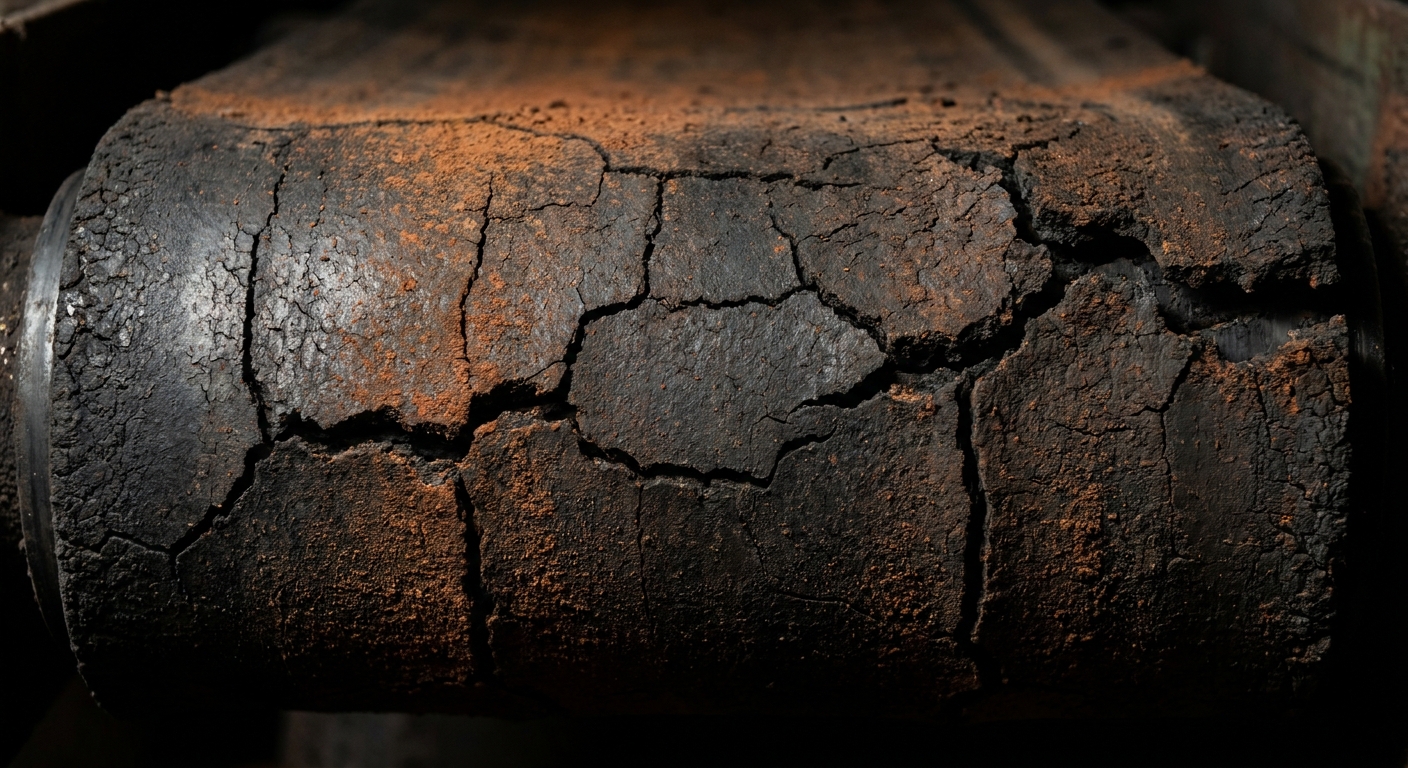
Temperature directly affects a heat resistant rubber conveyor belt by initiating gradual chemical oxidation and thermal aging over its operating life. While high temperatures cause standard rubber to harden instantly, a premium belt is engineered to slow down this thermal degradation process. It manages heat by distributing thermal energy across its surface and allowing the belt to cool down during its return run.
What happens during continuous thermal exposure?
Continuous exposure to temperatures above 150°C slowly dries out the plasticizers in the rubber compound. You will notice the surface becoming less elastic over time, which is why choosing the correct compound grade is vital.
- Loss of surface elasticity and flexibility
- Micro-cracking along the outer cover
- Slight reduction in overall tensile strength
- Increased vulnerability to sharp impact damage
How does the return run aid in heat dissipation?
Think about this: the return run of the conveyor provides a critical opportunity for the belt to cool down. Designing adequate ventilation or adding water sprays to this section will significantly extend the service life of your equipment.
What are the consequences of localized temperature spikes?
Here is the solution: utilizing a belt with a thicker top cover provides a sacrificial barrier that absorbs these extreme thermal peaks safely. Localized temperature spikes from direct contact with molten metal can cause localized blistering on the belt surface if the cover is too thin.
Key Takeaway: Proper temperature management and adequate return run cooling are essential to maximize the lifespan of your conveying equipment. These practices prevent premature surface hardening and cracking.
| Thermal Condition | Impact on Standard Belt | Impact on Heat Resistant Belt | |
|---|---|---|---|
| Continuous 150°C | Melting and structural tear | Normal operation with minor aging | |
| Peak 180°C Spike | Instant cover charring | Temporary expansion, no failure | |
| Return Run Cooling | Negligible recovery | Rapid thermal restoration |
Monitoring real-time material temperatures helps you select the exact heat resistance grade for your system.
Where is a heat resistant rubber conveyor belt used in foundries?
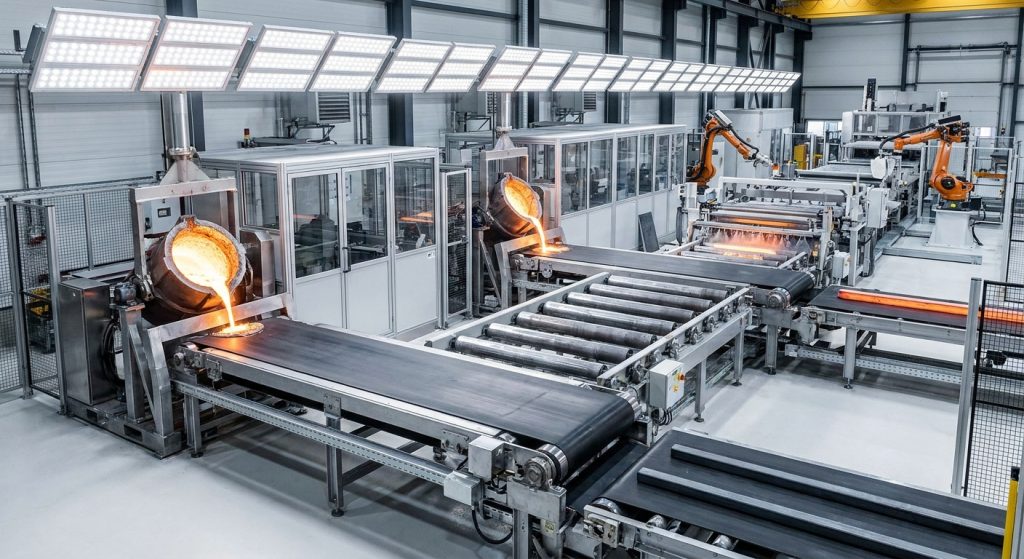
A heat resistant rubber conveyor belt is used in metal foundries at key thermal interfaces such as mold baking ovens, molten metal pouring areas, and cooling zones. These locations present continuous high-temperature challenges that regular belts simply cannot withstand. By deploying specialized belts in these spots, operators ensure that materials flow seamlessly between heating, pouring, and shakeout phases.
How is it used in mold baking and cooling lines?
In plaster casting, molds must be thoroughly dehydrated in high-temperature baking ovens before receiving molten metal. You will find these specialized belts transporting hot, dry plaster molds directly out of these ovens toward the pouring line.
- Conveying molds through drying tunnels
- Moving hot molds to casting stations
- Transporting cast pieces to cooling bays
- Returning reusable flasks and structural molds
What is its role in foundry shakeout areas?
But there is a catch: during shakeout, the mold is broken apart to reveal the finished cast, releasing extremely hot plaster dust and metal fragments. The conveyor system must handle these abrasive, high-temperature residues without suffering surface damage.
Why is continuous casting transport so demanding?
Continuous casting lines require stable, uninterrupted material movement to prevent liquid metal from backing up. Using robust, heat-tolerant conveying materials ensures that cast metals transition smoothly through active cooling segments without causing mechanical bottlenecks.
Key Takeaway: Deploying heavy-duty, heat-tolerant belts in high-exposure zones ensures continuous workflow and protects your material handling system. It prevents mechanical failures at the most critical points of the casting cycle.
| Foundry Section | Typical Temperature | Key Belt Requirement | |
|---|---|---|---|
| Mold Baking Outlet | 150°C – 180°C | Consistent thermal resistance | |
| Pouring Line Area | 180°C – 220°C | Burn resistance + high cover thickness | |
| Shakeout System | 120°C – 160°C | High abrasion resistance + heat tolerance |
Mapping the specific heat profiles of each foundry zone allows for precise belt specification and cost optimization.
Which material makes a heat resistant rubber conveyor belt durable?
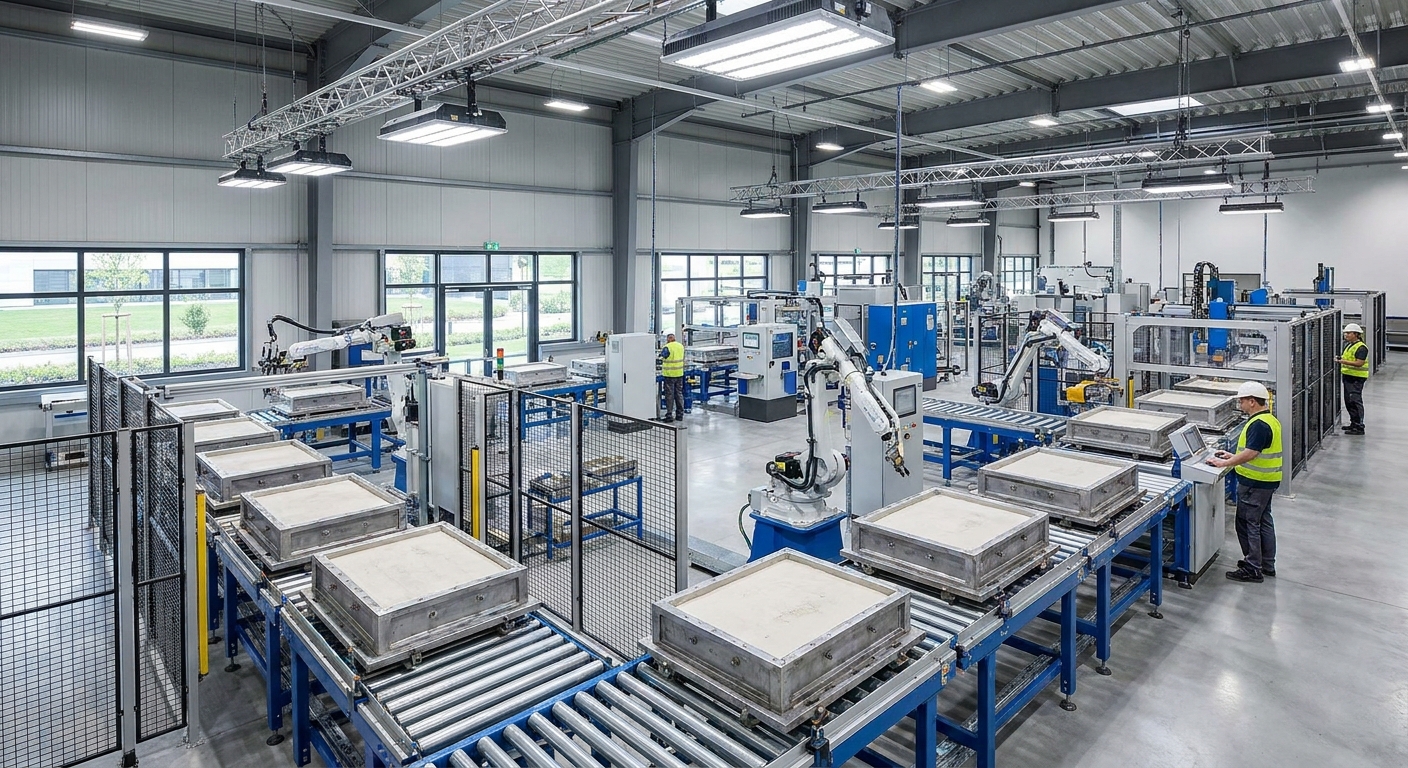
The material that makes a heat resistant rubber conveyor belt highly durable is EPDM (Ethylene Propylene Diene Monomer) synthetic rubber, which is highly resistant to heat, ozone, and oxidation. This polymer’s saturated backbone allows it to withstand prolonged thermal exposure without cracking or losing its physical strength. For heavy-duty industrial applications, the EPDM compound is reinforced with high-strength fabric plies or steel cords to handle high mechanical loads.
Why is EPDM preferred over SBR or natural rubber?
Standard natural rubber or SBR contains double bonds in their chemical structures that make them highly susceptible to oxygen and heat. You will experience rapid degradation with SBR, whereas EPDM’s chemical structure provides superior resistance to thermal aging.
- Saturated polymer backbone for heat stability
- Excellent resistance to atmospheric ozone and UV
- High structural flexibility over a wide temperature range
- Low rate of chemical swelling and hardening
What role does reinforcing fabric play in durability?
But wait, there is more: the inner carcass fabric must also withstand heat. Polyester-nylon (EP) fabrics are specially treated to prevent shrinkage and structural warping when exposed to hot plaster molds.
How do compounding additives enhance belt lifetime?
Think about it: engineers add specialized anti-oxidants and thermal stabilizers during the rubber mixing process. These active chemical agents neutralize free radicals before they can attack and break the polymer chains.
Key Takeaway: EPDM rubber covers and heat-stabilized inner plies are the gold standard for high-temperature material handling applications. They ensure that your system remains flexible and strong under constant thermal load.
| Material / Feature | SBR Rubber | EPDM Synthetic Rubber | |
|---|---|---|---|
| Thermal Resistance | Moderate (up to 120°C) | Premium (up to 200°C+) | |
| Ozone Resistance | Low | Excellent | |
| Cost Comparison | Cost-effective initially | Higher initial, lower lifetime cost |
Choosing EPDM covers reduces long-term maintenance costs by extending the replacement cycle of your conveyor system.
How to prevent a heat resistant rubber conveyor belt from cracking?
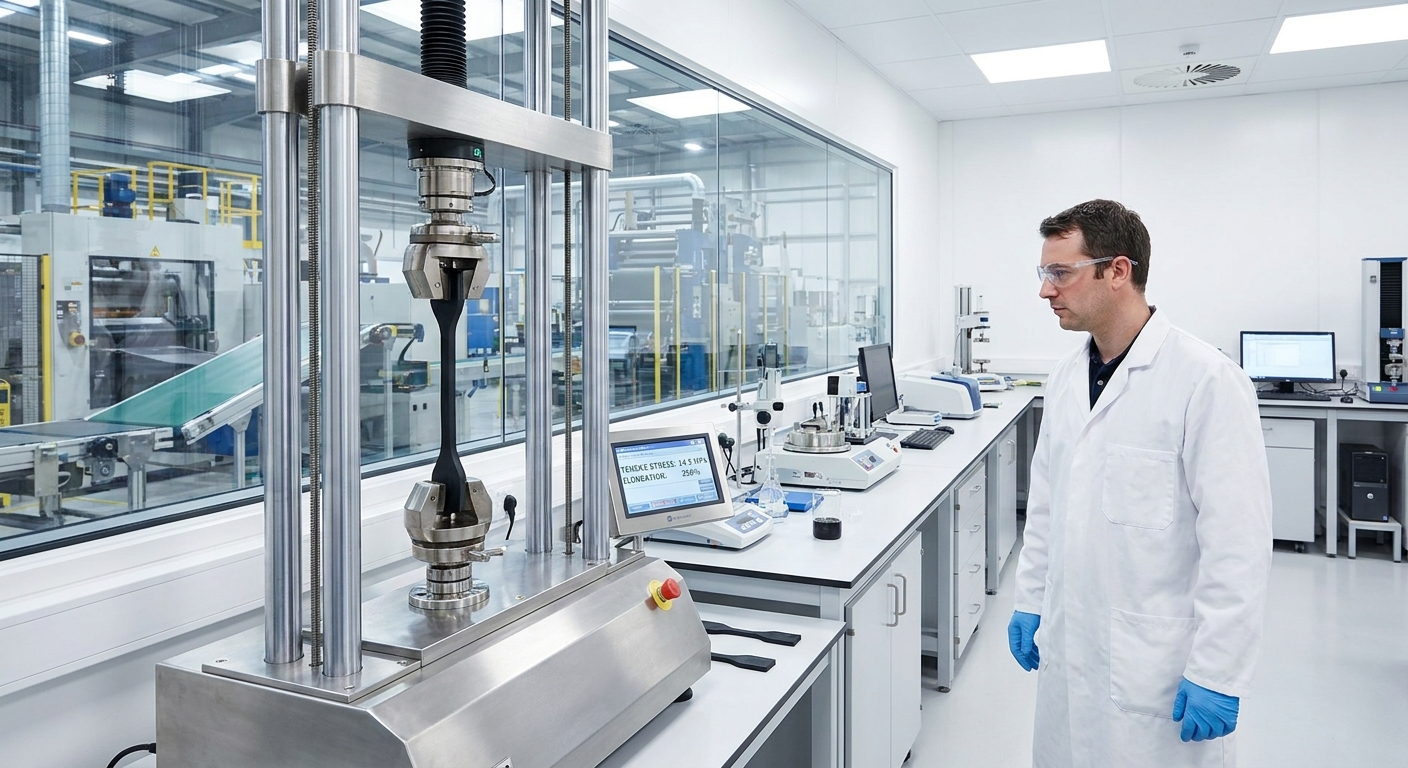
To prevent a heat resistant rubber conveyor belt from cracking, you must optimize the operating environment through adequate ventilation, return run cooling, and appropriate pulley diameter selection. This preventative approach minimizes localized heat accumulation and reduces mechanical flexing stress on the outer rubber cover. By maintaining proper tension and alignment, you can prevent severe stress concentration areas that lead to early surface cracks.
How does pulley diameter influence cracking?
When a hot, hardened rubber belt bends around a pulley that is too small, the tensile stress on the top cover increases dramatically. You should use larger pulley diameters to reduce bending strain and prevent stress cracks from developing.
- Reduces outer rubber fiber extension
- Minimizes mechanical heat buildup from flexing
- Extends splice life by reducing bending fatigue
- Prevents ply delamination at high speeds
Why is active return run cooling essential?
Here is the solution: installing industrial water sprays or cooling fans along the return path helps lower the belt temperature before it receives hot material again. This simple addition prevents heat from accumulating over multiple continuous cycles.
How does proper tensioning protect the belt structure?
What does this mean for your bottom line? Over-tensioning causes the hot rubber to stretch beyond its limits, accelerating thermal micro-cracking and weakening the carcass fabric.
Key Takeaway: Combining proper pulley sizing with active cooling and accurate tension settings is key to preventing premature cracking. These measures ensure your conveyor operates reliably under high-temperature loads.
| Parameter | Standard Design | Optimized Anti-Cracking Design | |
|---|---|---|---|
| Pulley Diameter | Minimum recommended | 20% larger than minimum | |
| Return Path Cooling | Ambient air | Water sprays or cooling fans | |
| Belt Tensioning | Manual adjustment | Automated gravity take-up system |
Slightly increasing your pulley diameter is one of the most effective mechanical upgrades you can make to prolong belt life.
When to replace your heat resistant rubber conveyor belt?
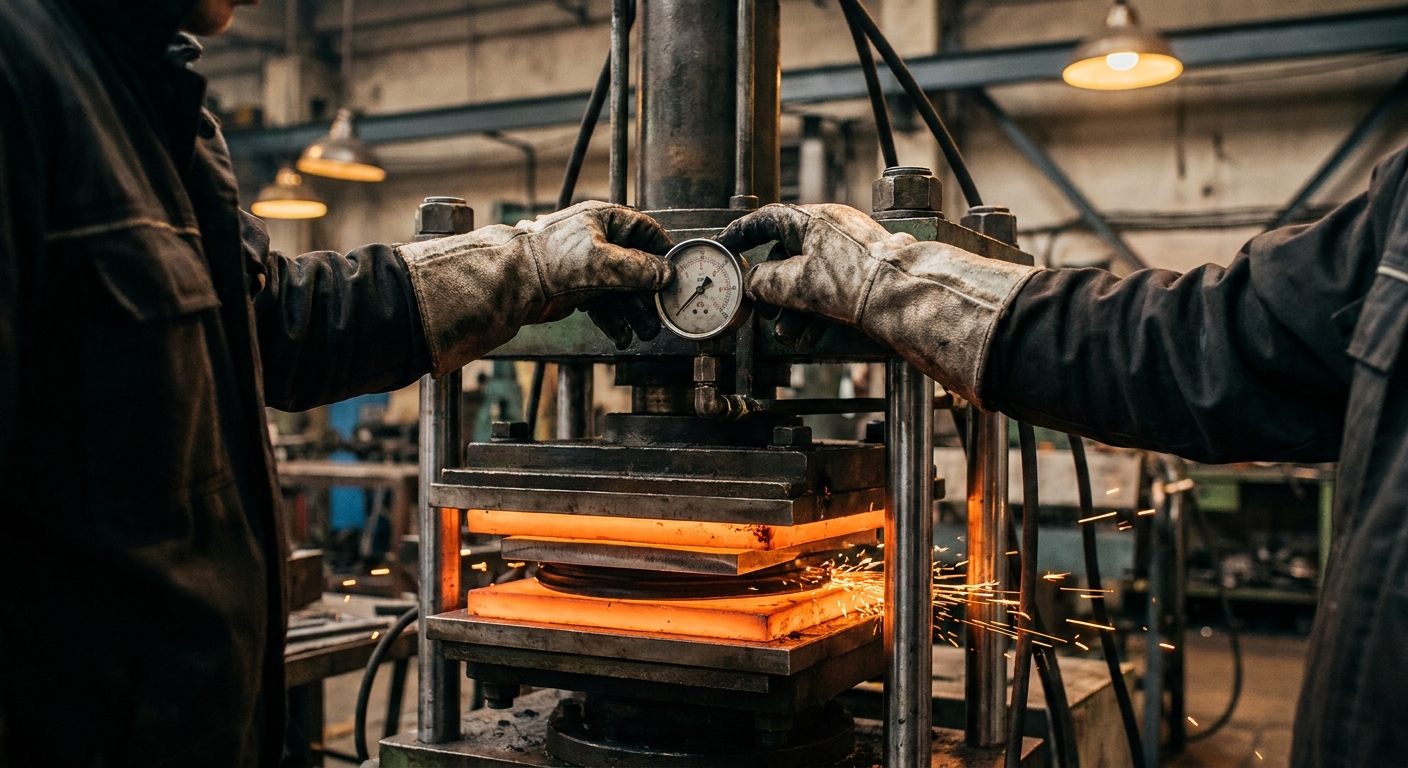
You should replace your heat resistant rubber conveyor belt when you observe deep structural cracks reaching the reinforcing carcass, severe ply separation, or advanced rubber hardening that prevents proper tracking. These visual and physical indicators suggest that the elastomer has lost its flexible properties and can no longer support high-temperature loads safely. Continual operation beyond this point risks sudden cataclysmic belt rupture during casting operations.
What are the warning signs of carcass damage?
When heat penetrates the outer rubber cover, the underlying fabric plies can dry out, shrink, or separate from each other. You should watch for localized swelling, edge peeling, or belt thickness variation as key indicators of carcass deterioration.
- Swelling or bubbling on the top cover
- Fraying or melting of the exposed belt edges
- Splicing separation or mechanical fastener pull-out
- Significant loss of structural longitudinal tension
How does rubber hardness indicate replacement time?
Think about this: as rubber ages under high temperatures, its Shore A hardness rating increases significantly. When the cover becomes glass-hard, it can no longer flex around pulleys, making replacement inevitable.
Why should you avoid emergency replacements?
Here is the deal: waiting for a belt to snap completely causes immediate, unplanned plant shutdowns. Planning your belt replacements during scheduled maintenance windows is the best way to safeguard operational efficiency.
Key Takeaway: Proactive inspections and hardness monitoring are critical to identifying the correct replacement window. Replacing the belt before complete mechanical failure protects your equipment and prevents expensive emergency downtime.
| Indicator | Normal / Acceptable | Critical (Requires Immediate Replacement) | |
|---|---|---|---|
| Rubber Hardness | 60 – 70 Shore A | Above 85 Shore A (hard/brittle) | |
| Cover Crack Depth | Surface micro-cracks (<1mm) | Deep cracks exposing the carcass fabric | |
| Tracking Performance | High stability | Severe, continuous mistracking |
Consistently tracking belt hardness allows you to predict exact replacement timelines and optimize procurement budgets.
How does reinforcing a heat resistant rubber conveyor belt work?
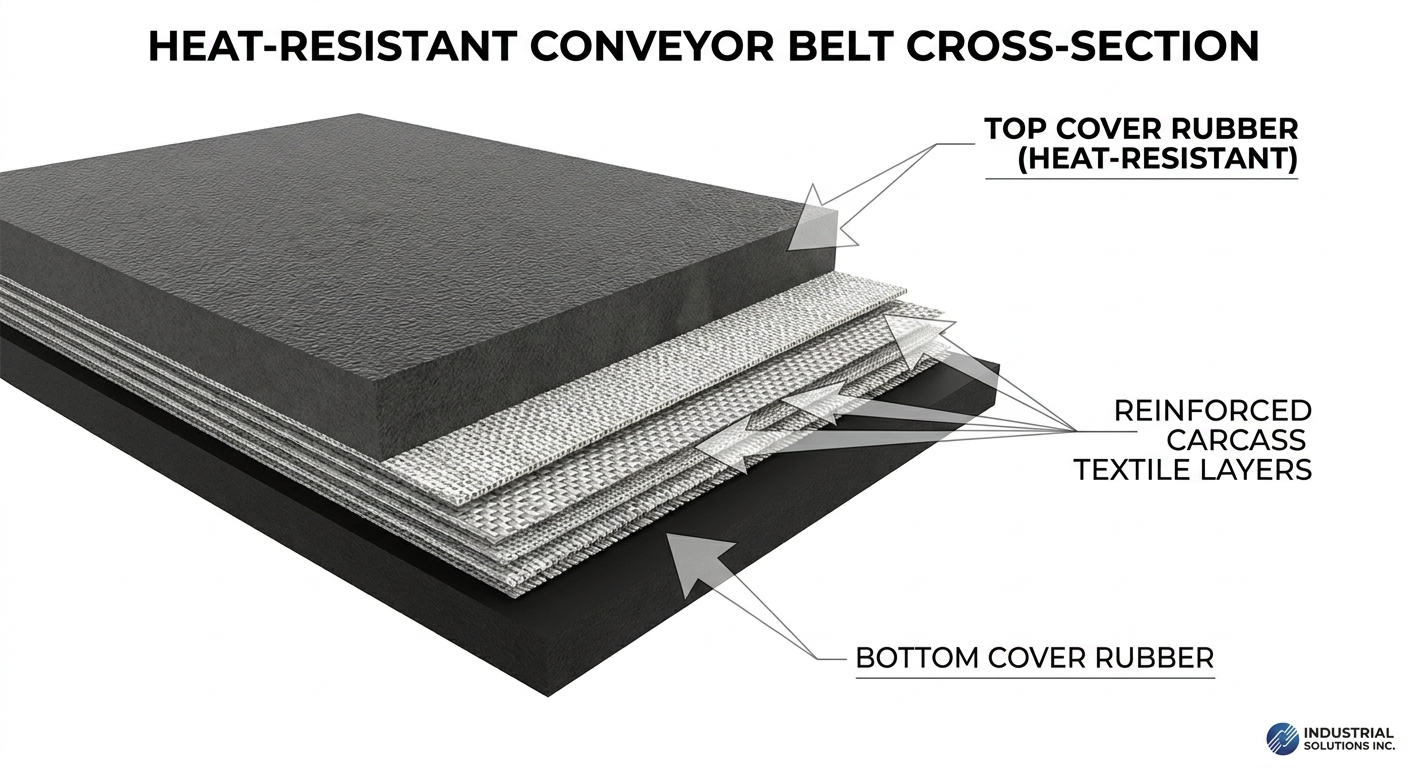
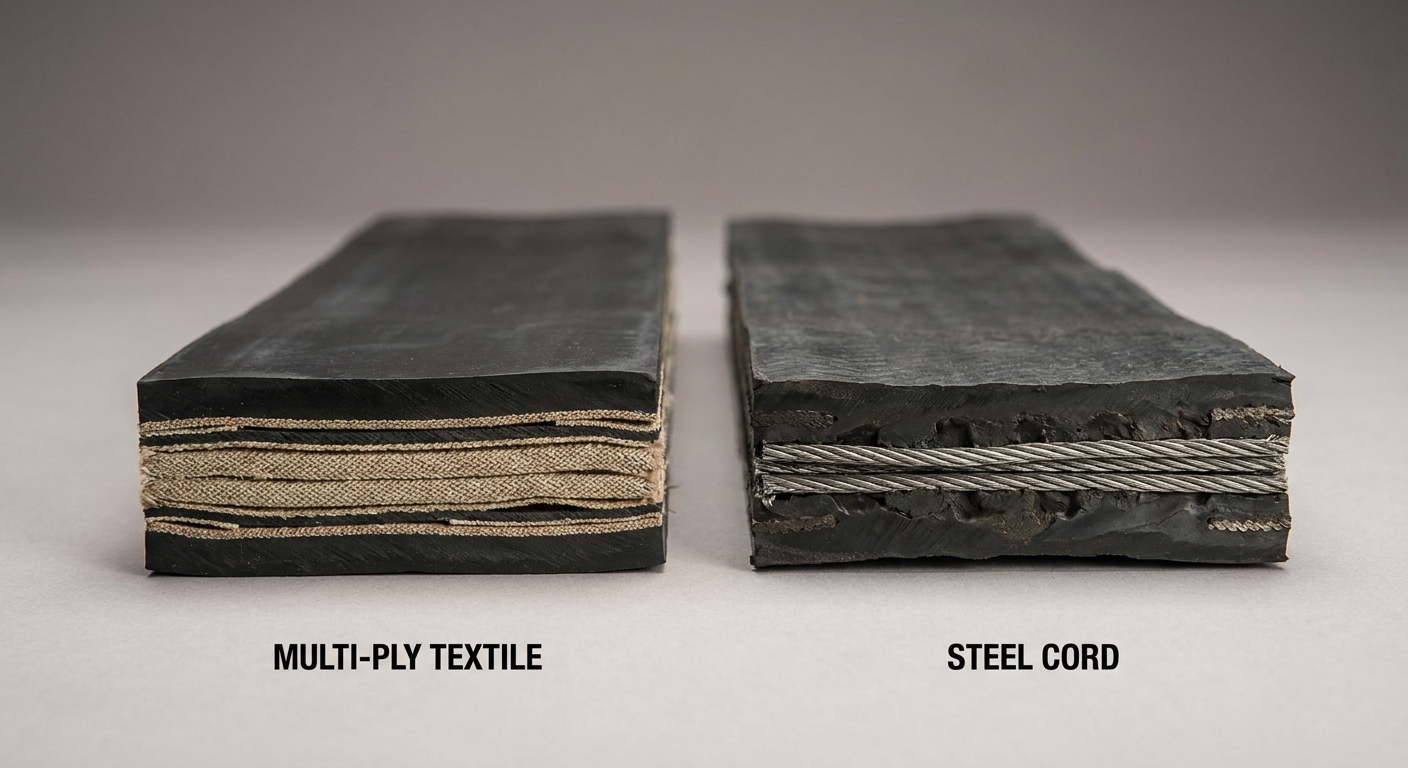
Reinforcing a heat resistant rubber conveyor belt works by embedding high-tensile fabric plies or steel wire cords inside the rubber structure to absorb mechanical tension and prevent heat shrinkage. This inner reinforcement carcass acts as the load-bearing spine of the belt, keeping it flat, stable, and strong under tension. By isolating these structural layers beneath thick, heat-dissipating top covers, the core remains fully protected from high-temperature deterioration.
What are the differences between fabric and steel reinforcement?
Polyester-nylon (EP) fabrics offer outstanding flexibility and impact resistance, making them ideal for standard casting applications. On the other hand, steel cords provide exceptional tensile strength and near-zero elongation, which is perfect for very long, high-load conveyor systems.
- EP Fabric: Low cost, excellent elastic flex life, easy to splice
- Steel Cord: Extremely low stretch, high strength, superior load capacity
- Glass Fiber: High heat resistance, limits thermal heat conduction
- Aramid Carcass: Excellent strength-to-weight ratio, exceptional heat limits
How does the skim coat rubber protect reinforcing plies?
But wait, there is more: the skim coat is a specialized thin rubber layer between carcass plies that provides excellent adhesion. It prevents the plies from shearing apart when the belt bends under high temperature.
Why is high adhesion essential at high temperatures?
What does this mean for your bottom line? If the adhesive bond between the rubber cover and the reinforcement fails, the entire cover will strip away, exposing the fabric to immediate destruction.
Key Takeaway: Selecting the right combination of carcass reinforcement and heat-resistant covers ensures long-term structural integrity. It prevents belt elongation and tracking issues in extreme industrial environments.
| Carcass Type | Tensile Strength | Elongation Under Load | Max Recommended Temperature | |
|---|---|---|---|---|
| EP Fabric (Polyester-Nylon) | High | Moderate (1.5% – 2.0%) | Up to 180°C | |
| Steel Cord Carcass | Extremely High | Near Zero (<0.2%) | Up to 220°C+ | |
| Aramid Fiber Core | Very High | Low (<0.5%) | Up to 200°C |
Matching your conveyor’s length and tension requirements to the appropriate carcass type prevents mechanical stretching.
Why is maintenance of a heat resistant rubber conveyor belt vital?
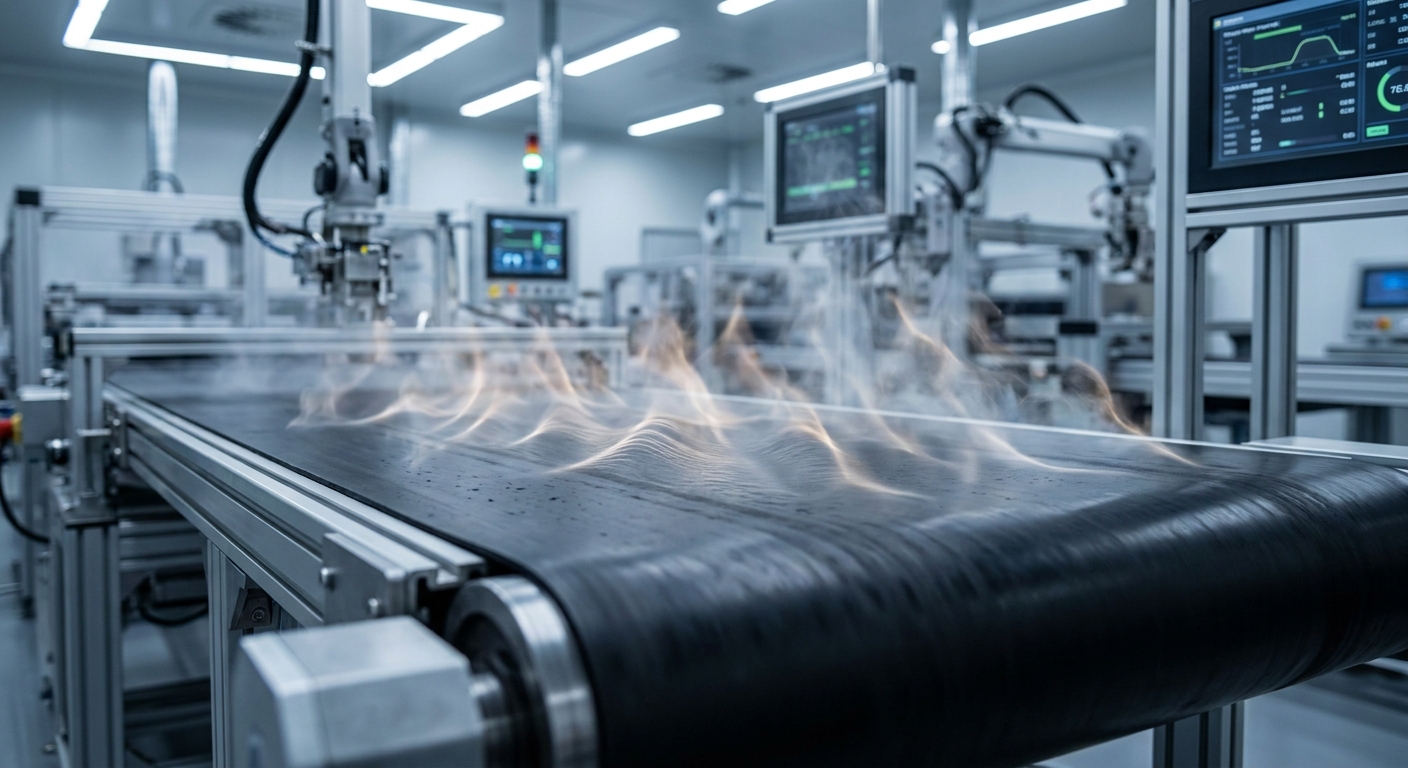
Maintenance of a heat resistant rubber conveyor belt is vital because high-temperature environments accelerate physical wear and can cause rapid compound degradation if left unchecked. Consistent upkeep ensures that minor surface damage is repaired before it compromises the inner reinforcing plies. By keeping pulleys clean, maintaining proper alignment, and monitoring temperatures, you can easily double the service life of your conveying investment.
How do you perform a thorough thermal inspection?
You can use infrared cameras or laser thermometers to scan the belt surface for localized heat hotspots during operation. This allows you to find areas where hot materials are pooling and causing severe localized thermal stress.
- Scan belt top cover for thermal hotspots
- Inspect roller bearings for heat-induced friction
- Verify active water spray system nozzle performance
- Check return run ventilation clearance and airflow
What is the benefit of localized vulcanized repairs?
Here is why: minor surface cracks can be filled and vulcanized using hot repair presses before they expand. This preventative measure seals the carcass against moisture and dust, preventing internal rot and delamination.
Why is scraping and pulley cleaning essential?
Think about this: hot, abrasive casting sand can build up on return rollers, causing the belt to run off-center and rub against the steel framework. Implementing self-cleaning rollers and high-temperature scrapers keeps the line running smoothly.
Key Takeaway: A robust preventative maintenance program prevents unexpected thermal failures and extends operational life. It turns maintenance from an emergency cost into a predictable, manageable operating expense.
| Maintenance Task | Recommended Frequency | Primary Operational Benefit | |
|---|---|---|---|
| Infrared Temp Scanning | Weekly | Detects localized overheating | |
| Pulley & Scraper Cleaning | Daily | Prevents material buildup and mistracking | |
| Joint & Splice Inspection | Monthly | Identifies early separation issues |
Regular inspection is the single most effective way to eliminate unplanned conveying downtime in high-heat casting environments.
How does heat resistant rubber conveyor belt design boost safety?
Heat resistant rubber conveyor belt design boosts safety by preventing catastrophic belt failures and containing hot materials securely on the transport line. When a belt melts or snaps unexpectedly, it can spill scalding plaster fragments and hot casting sand onto the factory floor, posing severe risks to personnel. A properly engineered system reduces these workplace hazards by maintaining physical stability and structure under high thermal stress.
How does fire-retardant compounding protect the plant?
Under extreme conditions, molten metal overflows can ignite standard conveyor belts, creating severe fire hazards within the foundry. You can specify flame-retardant, heat-resistant compounds that self-extinguish when the direct flame source is removed.
- Self-extinguishes within seconds of fire exposure
- Limits flame propagation along the conveyor length
- Reduces toxic smoke emissions during extreme heat events
- Complies with international safety standards like ISO 340
What is the benefit of custom molded edges?
But there is a catch: cut edges are vulnerable to heat penetration and fraying, which can lead to rapid structural failure. Molded edges seal the carcass plies completely, keeping the internal structure protected and preventing material spillage.
How does mechanical stability prevent operator injury?
What does this mean for your bottom line? A belt that maintains its tracking and tension prevents physical blockages and the need for manual, dangerous interventions by your operators while the line is running.
Key Takeaway: Prioritizing safety-enhanced belt designs protects your staff, assets, and operational continuity. It creates a cleaner, safer, and more compliant industrial manufacturing environment.
| Design Feature | Main Safety Hazard Addressed | Operational Safety Benefit | |
|---|---|---|---|
| Flame-Retardant Cover | Plant fires from molten spill | Instant flame self-extinguishment | |
| Molded Rubber Edges | Belt fraying and snapping | Prevents high-heat material spillage | |
| High-Tension Carcass | Sudden mechanical breakage | Eliminates dangerous manual belt adjustments |
Designing for safety is an essential component of creating a reliable and highly productive casting facility.
Conclusion
Managing heavy-duty conveyor systems in high-temperature environments like plaster casting plants requires a careful balance of premium material selection, proper maintenance, and robust belt design. Standard belts simply cannot withstand the harsh thermal stresses of continuous baking ovens and hot metal mold transport lines. By integrating engineered heat-resistant conveying systems into your production flow, you prevent sudden component failures and eliminate expensive, unplanned line shutdowns.
To maximize your system’s efficiency and secure your facility’s productivity, speak with our application specialists for a comprehensive design review when you contact us today for detailed technical guidance. We are dedicated to providing the ultra-reliable conveying infrastructure that keeps global manufacturing moving forward safely.
FAQ
Can I use a standard conveyor belt on a plaster casting cooling line?
No, you should not. Standard conveyor belts are only rated to handle material temperatures up to 80°C and will rapidly harden, crack, and fail when exposed to the 150°C temperatures typical of plaster casting lines.
What is the best cover rubber material for handling materials over 200°C?
Premium EPDM is the best choice. This synthetic rubber offers exceptional resistance to heat oxidation and ozone degradation, allowing it to maintain flexibility even during high-temperature spikes.
How do I know if my heat resistant belt is beginning to fail?
Look for hardening and deep surface cracks. When the rubber cover loses its flexibility and starts to expose the underlying reinforcement fabric, it is a clear sign that replacement is urgently needed.