
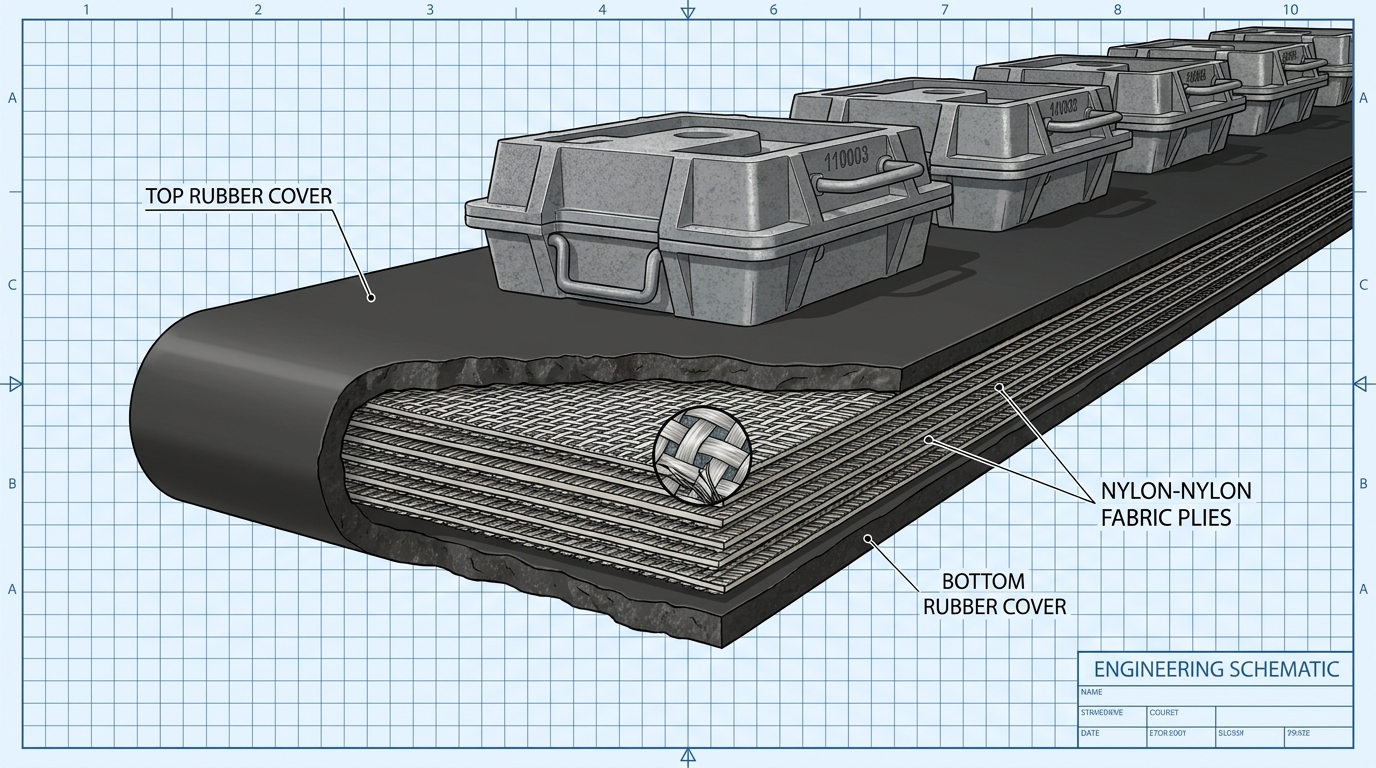
High-quality conveyor belt rubber material plays a critical role in plaster casting and industrial material handling applications where durability, flexibility, and resistance to moisture are essential. Standard synthetic belts often fail under the stress of abrasive gypsum, wet slurries, and continuous heavy loads, causing production delays, damaged molds, and increased maintenance costs. Engineered with advanced elastomer compounds, premium conveyor belt rubber material provides excellent shock absorption, chemical resistance, and long-term wear performance. This reliable material handling solution helps improve conveyor efficiency, protect fragile plaster molds, and maintain stable production operations in demanding manufacturing environments.
What is conveyor belt rubber material in casting?
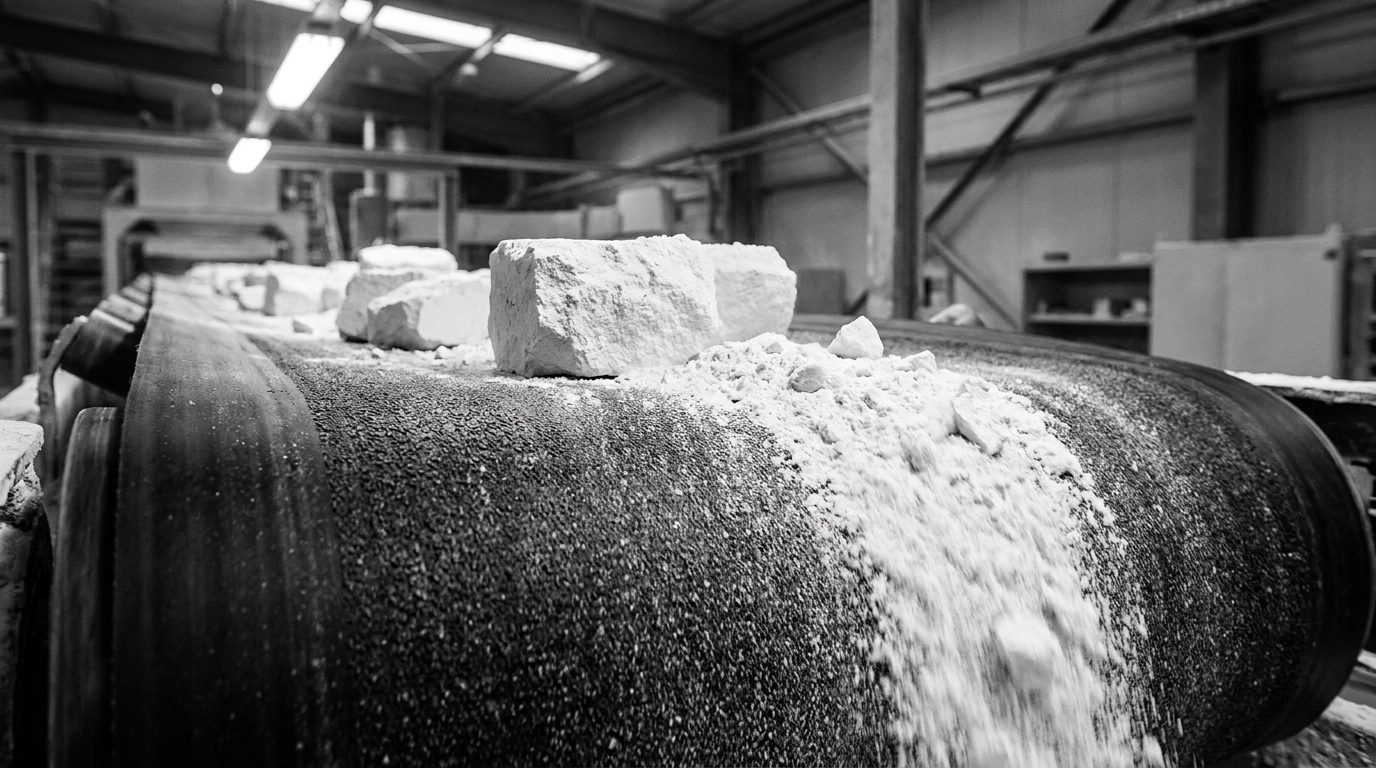
Conveyor belt rubber material in casting is a custom-engineered elastomer compound designed to transport raw gypsum powders and heavy wet mold assemblies without degrading. By utilizing highly resilient conveyor belt rubber material , plants can continuously move fine plaster particulates and damp slurries across different production stages.
Understanding Gypsum Handling and Slurry Transport
Industrial plaster casting requires a transport medium that can handle fine particulates and highly abrasive materials. Think about it: without the right elastomeric backing, fine gypsum powder can slip into critical mechanical components, leading to catastrophic system lockups and extensive downtime.
- Powder Mitigation: Prevents gypsum dust from clinging to the belt surface.
- Slurry Containment: Resists chemical hydration processes occurring on the belt surface.
- Impact Absorption: Protects delicate plaster molds from cracking during high-velocity transfers.
A specialized rubber compound protects the conveyor’s underlying fabric core from the abrasive grit of fine plaster powders and damp casting slurries. This specialized barrier prolongs the life of the entire system.
Comparing Raw Materials and Conveyor Needs
Different stages of plaster casting demand varying material handling characteristics to prevent mechanical fatigue. Let’s look closer: selecting a single, generic belt for every stage of your production line is a recipe for premature wear and high maintenance costs.
- Feed Stage: Highly abrasive dry gypsum requires heavy-duty wear covers.
- Mix Stage: Wet slurries require moisture-resistant, non-slip rubber surfaces.
- Curing Stage: Hot curing ovens require specialized thermal elastomers.
By matching the rubber compound to the specific physical state of your casting materials, you can eliminate conveyor slippage. This selective approach maximizes your facility’s daily operational efficiency.
The following table illustrates how different casting stages correlate with specific belt requirements and elastomer choices.
| Casting Stage | Material State | Essential Belt Property | Recommended Compound | |
|---|---|---|---|---|
| Feeding | Dry Gypsum Powder / Aggregates | Dust Suppression & High Abrasion Resistance | Premium SBR / Natural Rubber | |
| Mixing | Wet Plaster Slurry | Moisture Impermeability & Anti-Slip | Nitrile (NBR) / Synthetic Elastomer | |
| Curing | Solidifying Hot Molds | High-Thermal Stability | Heat-Resistant EPDM |
Key Takeaway: Customizing your conveyor compounds to match raw material states ensures long-term wear resistance and prevents expensive material contamination.
Why choose conveyor belt rubber material for plaster?
Choosing conveyor belt rubber material for plaster handling provides superior mechanical flexibility, impact absorption, and resistance to chemical moisture during mold hydration. Standard synthetic belts lack the elastic memory required to cushion heavy casting assemblies, whereas customized conveyor belt rubber material prevents mechanical vibrations from transferring directly to the fragile plaster molds.
Advantages of High-Tensile Rubber Over Synthetics
Plaster mold casting demands materials that can absorb high-frequency vibrations from compaction tables and shaker screens. Here is why: synthetic belts like PVC lack the natural elasticity of rubber, causing them to stiffen and crack when subjected to heavy, localized impact loads.
- High-Impact Damping: Dampens vibrational energy during the mold-pouring phase.
- Structural Integrity: Maintains thickness and tension over thousands of running hours.
- Excellent Grip: Prevents mold slippage on inclined transfer ramps.
Natural rubber compounds dynamically adapt to changing physical stresses, protecting delicate mold corners. This structural resilience minimizes casting defects and scrap rates.
Mechanical Performance of Elastomer Covers
High-tensile rubber covers are formulated to withstand both mechanical impact and surface abrasion without tearing. But that’s not all: the overall cost of ownership drops dramatically when you switch from rigid polymers to flexible rubber.
- Flex Crack Resistance: Retains pliability even under continuous tension cycles.
- Excellent Resiliency: Bounces back from indentation caused by heavy steel mold boxes.
- Broad Temperature Range: Performs reliably without hardening in cold or melting in heat.
Opting for reinforced elastomer covers ensures that your conveyor system withstands the physical stress of heavy, recurring mold loads. This keeps your production line running without interruption.
The table below compares the performance characteristics of premium natural rubber against standard synthetic materials.
| Performance Metric | Premium Natural Rubber | Standard PVC | Polyurethane (TPU) | |
|---|---|---|---|---|
| Vibration Damping | Excellent | Poor | Moderate | |
| Abrasion Resistance | Outstanding | Moderate | High | |
| Elasticity Range | Wide (-40°C to +80°C) | Narrow (Stiffens in cold) | Moderate | |
| Cost Efficiency | High (Longer lifetime) | Low (Frequent replacement) | Moderate (Higher initial cost) |
Key Takeaway: Heavy-duty rubber compounds act as a physical shock absorber, protecting fragile plaster molds from cracks caused by conveyor vibration.
How does conveyor belt rubber material handle heat?
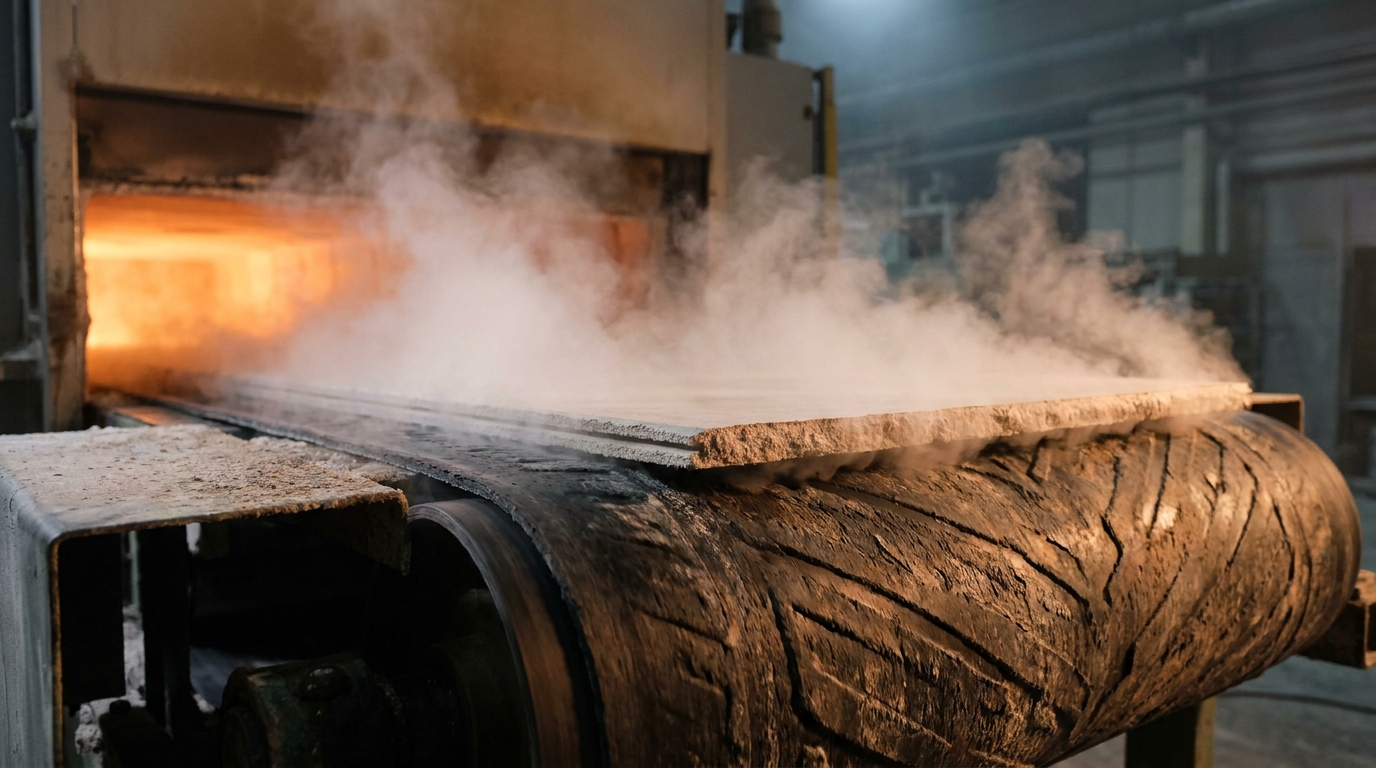
Conveyor belt rubber material handles heat by utilizing specialized elastomer blends, such as EPDM or SBR, which withstand drying oven temperatures without hardening or cracking. Integrating heat-stabilized conveyor belt rubber material ensures that the transport system operates reliably through the intense baking and curing phases of plaster casting.
Thermal Stability During Plaster Dehydration
The dehydration phase in plaster mold casting requires long exposure to high-temperature drying ovens to drive off free moisture. Look at the facts: if the belt compound is not engineered for high temperatures, the intense dry heat will extract plasticizers from the rubber, leading to premature brittleness.
- Cracking Resistance: Formulated to resist surface checking under hot, dry air.
- Tensile Preservation: Retains structural strength at elevated temperatures up to 200°C.
- Low Thermal Expansion: Prevents belt tracking issues inside heated kilns.
Using EPDM-based covers protects the underlying textile carcass from thermal degradation. This shielding ensures a stable, long-lasting belt carcass.
Selecting the Correct Heat-Resistant Elastomer
Different casting processes operate at varying temperature ranges, making proper material selection vital. What does this mean: matching your average curing temperatures with the correct rubber compound prevents premature structural failure.
- SBR Belts: Perfect for low-temperature aggregate raw feeds and early prep.
- EPDM Belts: Highly recommended for continuous hot oven exposure.
- Chloroprene Belts: Excellent when heat is combined with oil-based release agents.
Investing in high-temperature rubber compounds prevents carcass shrinkage and ply separation inside heavy drying kilns. This extra thermal buffer guarantees uninterrupted production flow.
The following table details the temperature limits and primary applications for casting rubber grades.
| Rubber Compound | Max Continuous Temperature | Short Peak Exposure | Primary Application in Casting | |
|---|---|---|---|---|
| Standard SBR | 80°C | 100°C | Raw gypsum feeding lines | |
| Premium EPDM | 150°C | 200°C | Oven-curing and dehydration | |
| Chloroprene (CR) | 120°C | 150°C | Combined heat and oil exposure |
Key Takeaway: Deploying EPDM-based rubber is essential for preventing structural warping and heat aging in heated plaster dehydration zones.
Which conveyor belt rubber material is best for molds?
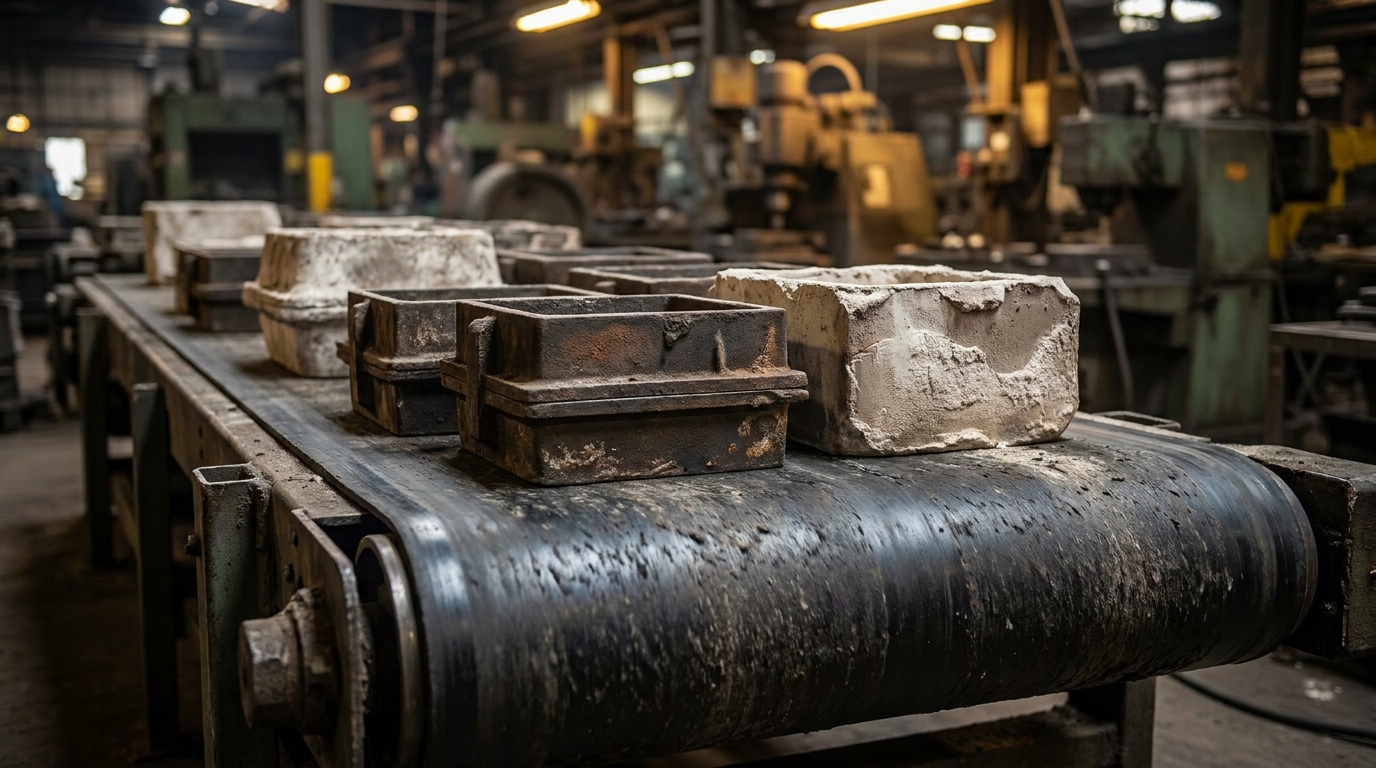
The best conveyor belt rubber material for handling plaster molds is high-abrasion SBR or nitrile-blend rubber, offering excellent puncture resistance and dimensional stability under load. This specific conveyor belt rubber material is engineered to absorb the sharp, heavy impacts of metal molding boxes and plaster flasks without sustaining cover gouges.
Puncture and Impact Resistance for Plaster Molds
Transporting plaster molds requires a balance between surface softness to prevent mold damage and core stiffness to handle heavy weights. Let’s face it: when heavy mold assemblies are transferred between conveyor sections, they drop with high force, requiring a belt that can deform momentarily to distribute the load.
- Gouge Resistance: Resists tears from sharp metal edges of casting flasks.
- Carcass Integrity: Prevents internal textile plies from breaking under impact.
- Surface Texture: Keeps molds centered and stable during transitions.
Elastomers with high tensile strength prevent deep punctures from developing into extensive splits. This prevents complete belt split-offs on the production floor.
Selecting Cover Thickness and Hardness Grades
The thickness and hardness of the top rubber cover determine how well it resists physical indentation. The best part: optimizing these parameters can extend your belt’s operational lifetime by up to fifty percent.
- 60 Durometer (Shore A): Ideal for general plaster blocks and smooth mold boxes.
- 65 Durometer (Shore A): Recommended for heavier, sharp metal casting flasks.
- 70 Durometer (Shore A): Best for high-volume abrasive mixing and loading points.
Choosing the right cover grade protects both the conveyor mechanics and the molds from damage. This proactive choice keeps your daily maintenance costs exceptionally low.
The table below lists the cover grade specifications recommended for high-impact mold transport.
| Rubber Grade | Durometer (Shore A) | Abrasion Loss (DIN 53516) | Best Suited For | |
|---|---|---|---|---|
| DIN-X (Premium) | 65 ± 5 | < 120 mm³ | Heavy metal flasks & sharp molds | |
| DIN-Y (Standard) | 60 ± 5 | < 150 mm³ | General plaster block transport | |
| DIN-W (Super Wear) | 70 ± 5 | < 90 mm³ | High-volume abrasive sand mixing |
Key Takeaway: High Shore-A hardness rubber provides the ideal balance of wear resistance and mold cushioning to prevent damage during flask transfers.
Is conveyor belt rubber material chemical resistant?
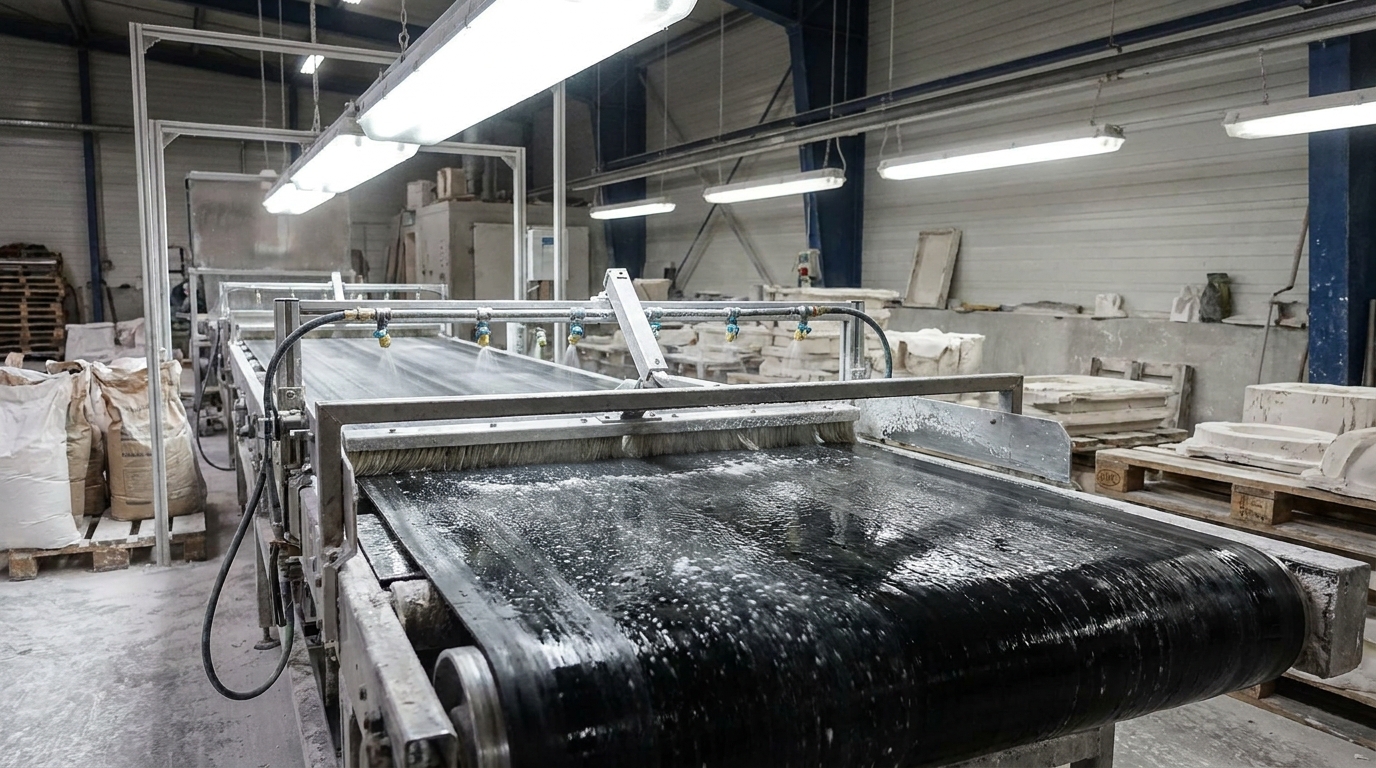
Conveyor belt rubber material can be engineered for exceptional chemical resistance by adding specialized polymers like nitrile or neoprene to combat casting additives and demolding agents. Implementing a chemically inert conveyor belt rubber material prevents cover swelling, delamination, and premature failure caused by contact with acidic plaster slurries and oil-based release agents.
Resisting Mold Release Agents and Additives
Modern plaster formulations contain chemical retardants, accelerators, and organic release solvents that can aggressively attack standard rubber. Here is the bottom line: exposure to petroleum-based demolding oils causes standard natural rubber to swell, lose tensile strength, and slip on drive pulleys.
- Oil Swelling Resistance: Nitrile rubber (NBR) maintains its physical dimensions when exposed to release agents.
- Acid/Alkali Protection: Neoprene (CR) resists pH shifts in wet plaster mixes.
- Adhesion Prevention: Prevents chemical scaling and crust build-up on the belt surface.
Formulating the top cover with chemical-resistant polymers prevents soft spots from developing. This ensures your belt maintains its structural integrity over years of contact.
Selecting Chemically Inert Rubber Compounds
Every additive used in plaster preparation possesses a unique chemical profile that interacts with elastomer covers. Think about it: a belt that is highly resistant to wear might be highly vulnerable to chemical additives and oil swelling.
- NBR Belts: Superior for systems exposed to high levels of release oils.
- Neoprene Belts: Excellent for high pH levels and variable chemical mixtures.
- Natural Rubber: Great for pure gypsum water slurries without chemical additives.
Investing in NBR or CR-formulated belts ensures that chemical additives do not degrade the cover rubber or weaken the vulcanized splices. This chemical shielding keeps your production floor clean and functional.
The table below shows the chemical compatibility of various rubber compounds against common casting fluids.
| Chemical Exposure | Natural Rubber (NR) | Nitrile Rubber (NBR) | Neoprene (CR) | |
|---|---|---|---|---|
| Gypsum Water Slurry | Good | Excellent | Excellent | |
| Petroleum Release Oils | Poor | Excellent | Good | |
| Acidic Accelerators | Moderate | Good | Excellent | |
| Alkaline Retardants | Good | Excellent | Excellent |
Key Takeaway: Utilizing nitrile or neoprene-infused compounds prevents chemical swelling and premature cover degradation from oil-based release agents.
How does conveyor belt rubber material resist wear?
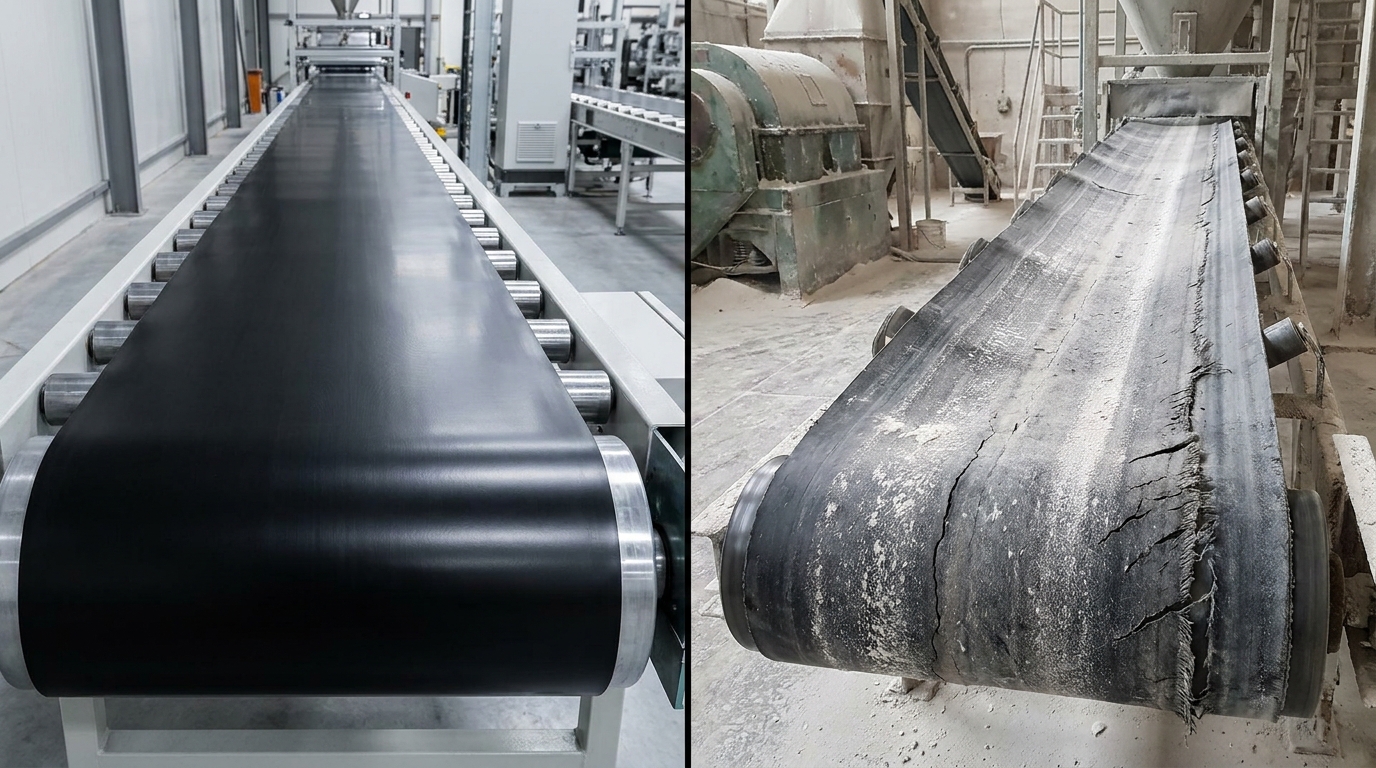
Conveyor belt rubber material resists wear through high-density cross-linking of polymers, which provides an elastic yet tough surface against abrasive gypsum crystals. Heavy-duty conveyor belt rubber material utilizes premium reinforcing agents, such as carbon black, to prevent abrasive wear from fine, hard plaster dust.
Combatting Gypsum Dust and Particulate Abrasion
Gypsum particles act as fine sandpapers, continuously grinding down the top cover of the conveyor belt during operations. Here is why: if a conveyor cover has low abrasion resistance, the fine dust will quickly wear down the top layer, exposing the inner fabric plies to moisture and rot.
- Carbon Black Reinforcement: Enhances structural toughness at the molecular level.
- Low Friction Coefficient: Reduces drag over slider beds and wear plates.
- Self-Cleaning Properties: Helps scrapers easily remove fine plaster dust.
A reinforced elastomer cover limits microscopic tearing caused by sliding aggregate particles. This wear protection keeps the main carcass safe from moisture damage.
Evaluating Long-Term Material Abrasion Loss
Measuring wear rate through standardized tests allows buyers to predict the service life of their conveyor belts. But that’s not all: choosing a lower abrasion loss value reduces the frequency of unexpected downtime and replacement labor.
- Standard Utility: Suitable for light dust and slow-moving feeder lines.
- Reinforced SBR: Designed for high-volume aggregate handling and sand mixing.
- Premium Carbon-Black SBR: Maximum protection against fine, highly abrasive gypsum.
Minimizing rubber abrasion protects the belt’s structure and prevents worn-off rubber dust from contaminating the white plaster. This preserves the visual purity of your final cast product.
The table below tracks the wear rates and projected lifespans of different rubber compound types.
| Rubber Compound Type | Material Density | Volume Loss (mm³) | Projected Lifespan (Months) | |
|---|---|---|---|---|
| Standard Utility Rubber | 1.15 g/cm³ | 200 mm³ | 12 – 18 Months | |
| Reinforced SBR | 1.18 g/cm³ | 120 mm³ | 24 – 36 Months | |
| Premium Carbon-Black SBR | 1.20 g/cm³ | 80 mm³ | 48+ Months |
Key Takeaway: High-performance, cross-linked SBR rubber prevents abrasive micro-gouges, preserving the belt cover under constant gypsum dust exposure.
Can conveyor belt rubber material transport aggregates?
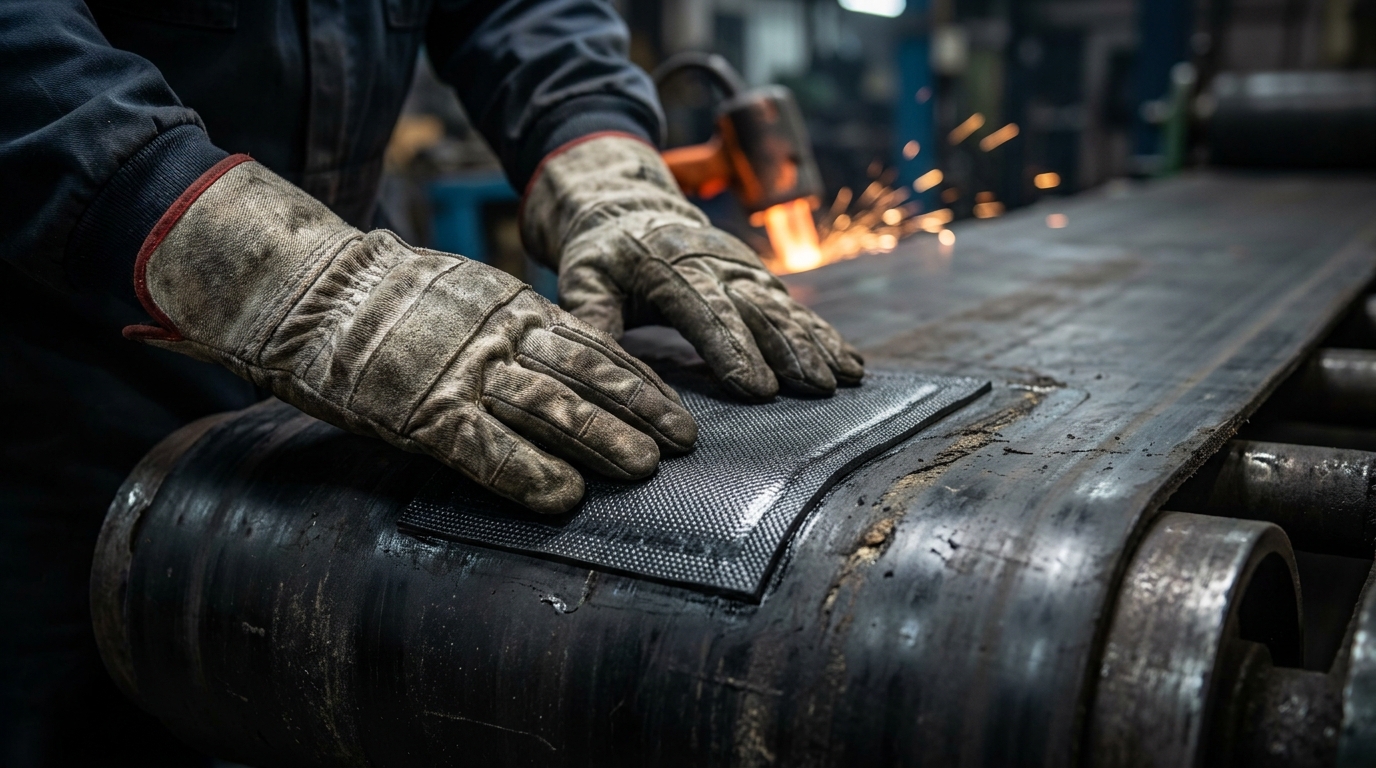
Yes, conveyor belt rubber material can transport heavy, sharp plaster aggregates and silica sands when engineered with deep carcass reinforcement and ultra-wear-resistant covers. Utilizing aggregate-grade conveyor belt rubber material prevents sharp stones and heavy mineral sand from puncturing the belt during high-impact loading.
Handling Heavy Mineral Feedstocks in Casting
Plaster formulations often contain quartz, silica sands, and various mineral aggregates to increase the strength of the final casting mold. Let’s look closer: these raw minerals are highly abrasive and dense, requiring a belt with high tensile strength that won’t sag under load.
- Sag Resistance: High-tensile fabric layers prevent sagging between idler rollers.
- Cut Resistance: Prevents cuts from jagged quartz and limestone aggregates.
- High Bulk Density Support: Engineered to handle load weights exceeding 1.5 tons/m³.
Using a robust multi-ply belt prevents the system from stretching excessively over time. This keeps the conveyor tracking straight and true during continuous transport.
Choosing the Best Belt Structure for Aggregates
Selecting the correct structural plies prevents aggregate loads from crushing the belt carcass during drop cycles. What does this mean: matching the carcass type to your bulk density protects your capital investment from premature failure.
- Silica / Quartz Sand: Smooth, high-wear covers with 3-ply EP200 reinforcement.
- Crushed Gypsum Rock: Chevron or patterned covers with 3-ply EP150 reinforcement.
- Finished Plaster Mix: Smooth, medium-wear covers with 2-ply EP100 reinforcement.
Matching the conveyor belt structure to your feedstock profile ensures a smooth flow of materials. This optimization prevents costly feed jams and aggregate blockages on the shop floor.
The table below outlines recommended belt profiles and fabric reinforcement configurations for mineral feedstocks.
| Aggregate Material | Density (kg/m³) | Ideal Belt Profile | Recommended Fabric Ply | |
|---|---|---|---|---|
| Silica / Quartz Sand | 1,600 | Smooth, High-Wear Cover | 3-Ply EP200 | |
| Crushed Gypsum Rock | 1,400 | Chevron / Patterned Cover | 3-Ply EP150 | |
| Finished Plaster Mix | 1,100 | Smooth, Medium-Wear Cover | 2-Ply EP100 |
Key Takeaway: Multi-ply textile reinforcements combined with high-wear covers prevent tearing and structural sagging when transporting dense mineral aggregates.
What conveyor belt rubber material works in wet casting?
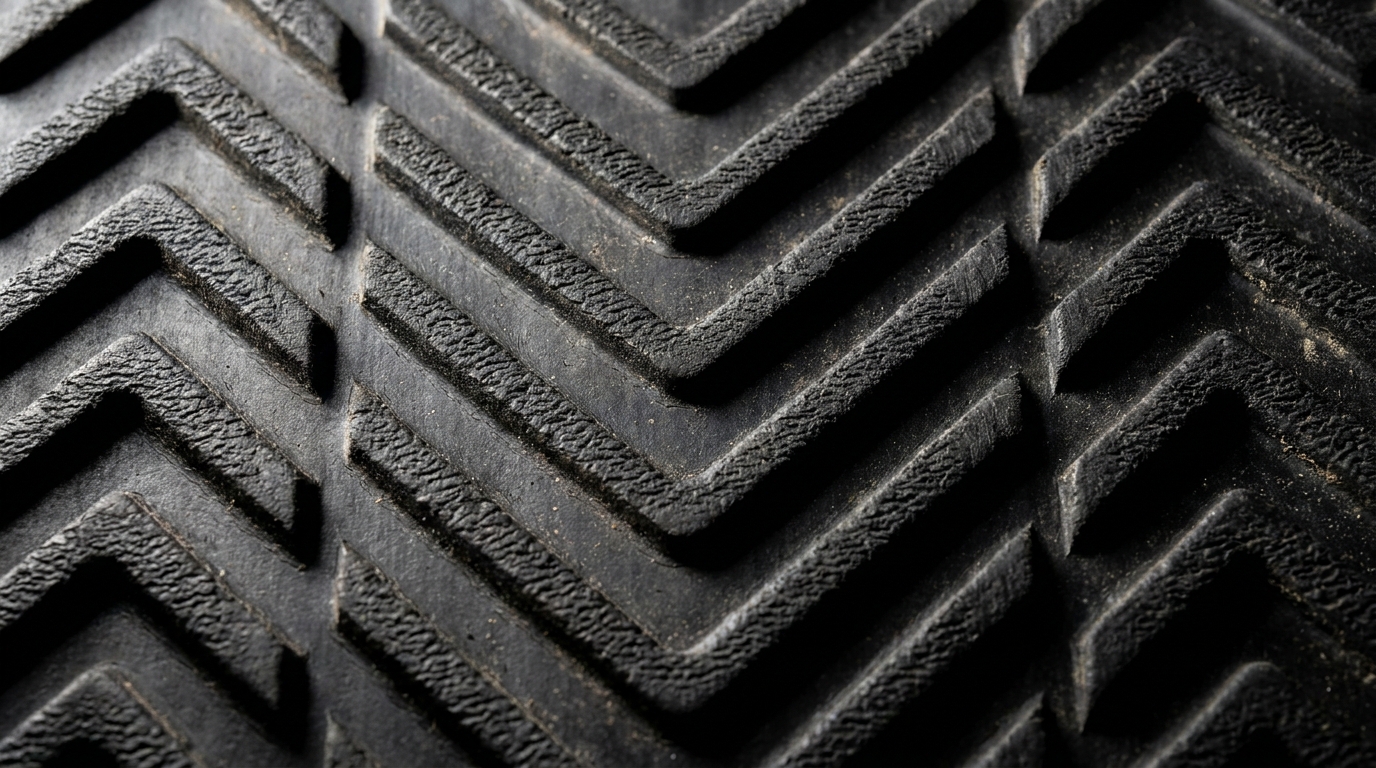
The best conveyor belt rubber material for wet casting is a moisture-impermeable, slip-resistant compound such as textured nitrile or custom-patterned rubber that maintains traction when saturated. Using waterproof conveyor belt rubber material prevents the reinforcing fabric layers from absorbing moisture, which leads to mold rot and belt delamination.
Managing Water Runoff and Slip Factors
Wet casting lines require water-based plaster mixtures to be moved smoothly before they begin to set. Look at the facts: standard flat belts can cause wet plaster mixtures to run back down inclined paths, creating a messy work environment and wasting material.
- Moisture Barrier Covers: Impermeable rubber stops water from reaching the core fabric.
- Chevron Patterns: Retains wet plaster and prevents material run-back on inclines.
- Vulcanized Splices: Waterproof joints prevent water entry and splice rot.
Using a belt with integrated water channels allows excess fluid to drain off cleanly. This prevents water from pooling and altering the plaster’s setting characteristics.
Evaluating Chevron and Patterned Rubber Profiles
Customized surface profiles are essential for maintaining material flow on steep conveyor inclines. Let’s face it: trying to move wet plaster slurry upward on a smooth belt leads to continuous backward slipping and material loss.
- Flat Smooth: Best for horizontal transport of dry or solid components.
- Low-Profile Chevron: Excellent for moderate inclines handling damp aggregates.
- High-Profile Chevron: Superior for steep inclines transporting wet plaster slurry.
Using a chevron-patterned belt stops wet material from sliding backwards, keeping the work environment clean. This keeps your output high and your scrap rates exceptionally low.
The following table details the maximum incline angles and slurry retention properties for different rubber profiles.
| Belt Profile | Max Incline Angle | Slurry Retention | Water Drainage Efficiency | |
|---|---|---|---|---|
| Flat Smooth Rubber | 12° | Poor | Moderate | |
| Low-Profile Chevron | 22° | Good | High | |
| High-Profile Chevron | 30° | Excellent | Moderate |
Key Takeaway: Textured top covers and sealed vulcanized edges prevent water from weakening the conveyor’s inner reinforcement layers.
Is nylon conveyor belt rubber material for heavy duty?
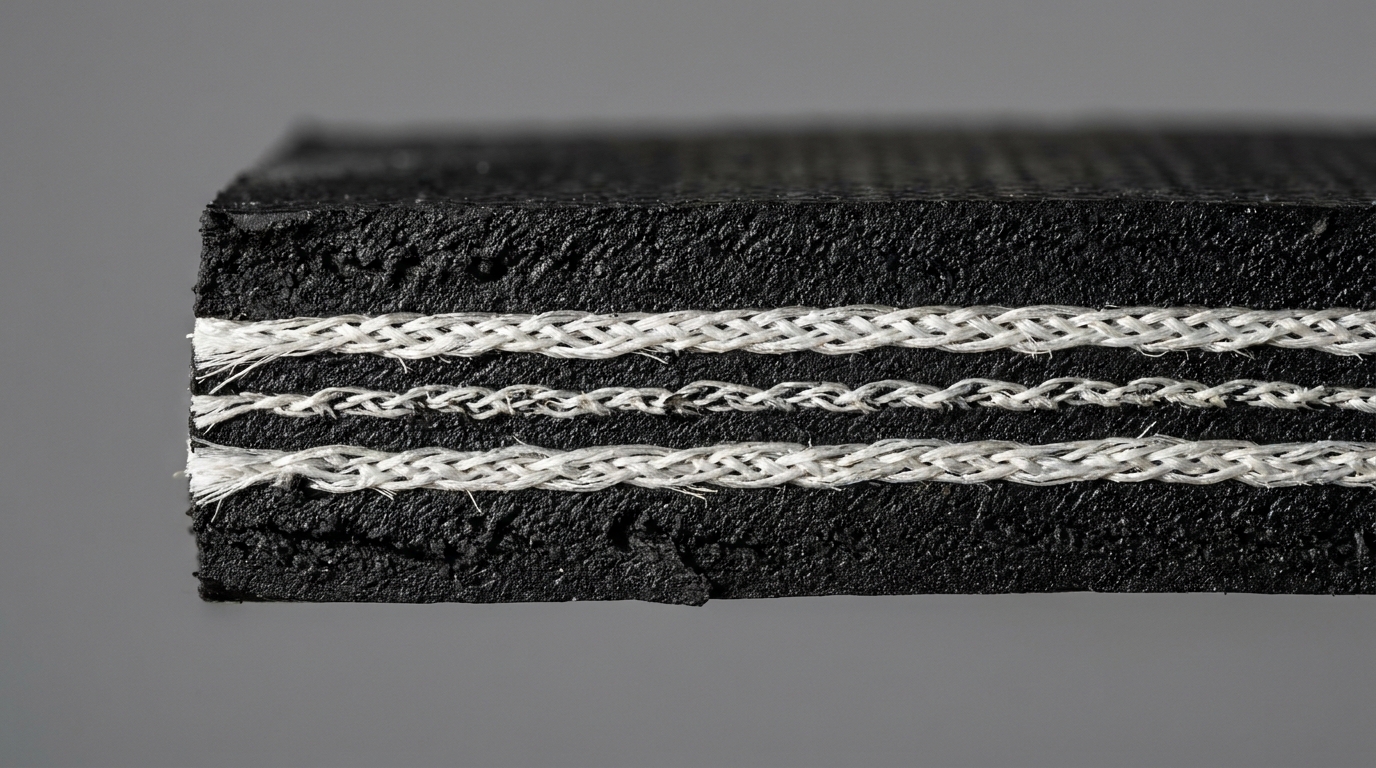
Yes, nylon conveyor belt rubber material is designed specifically for heavy-duty applications, utilizing strong nylon-nylon (NN) fabrics to deliver superior impact resistance and high elasticity. This heavy-duty conveyor belt rubber material is ideal for plaster casting operations that use large molds and heavy processing equipment.
Heavy-Duty NN Fabric Reinforcement Perks
Nylon-reinforced belts are designed for heavy-duty industrial systems where high tensile strength is critical. Think about it: nylon-nylon (NN) fabric plies offer excellent elastic recovery, allowing the belt to absorb heavy shocks and return to its original shape without permanent stretching.
- Superior Elasticity: Absorbs high-energy impacts from heavy plaster flasks.
- Outstanding Flex Life: Runs smoothly over small pulleys without cracking.
- High Tear Resistance: Prevents small cuts from growing into catastrophic tears.
This elastic performance prevents mechanical shock from being transferred back into your expensive pulley systems. This saves thousands of dollars in mechanical drive repairs.
Comparing EP and NN Carcass Technologies
Understanding the differences between polyester and nylon reinforcement fabric helps you choose the perfect belt carcass. Here is the bottom line: while polyester excels in long overland spans, nylon is the undisputed king of impact-heavy processing lines.
- Polyester (EP): Low stretching properties, best suited for extremely long transport spans.
- Nylon-Nylon (NN): Superior transverse flexibility and excellent impact absorption capability.
- Sealed Edges: Crucial for nylon carcasses to prevent water absorption and rot.
Specifying a nylon-reinforced belt carcass ensures maximum operational reliability under heavy loading conditions. This structural strength keeps your plant running 24/7.
The table below compares the structural features of Polyester (EP) and Nylon (NN) belt carcasses.
| Structural Feature | Polyester (EP) Carcass | Nylon (Nylon-Nylon NN) Carcass | |
|---|---|---|---|
| Longitudinal Stretch | Low (Best for long distances) | Moderate (Best shock absorption) | |
| Transverse Flexibility | Good troughability | Outstanding troughability | |
| Moisture Resistance | Immune to rot | Requires sealed rubber edges | |
| Impact Absorption | Moderate | Superior (High energy dissipation) |
Key Takeaway: Nylon-nylon (NN) fabric reinforcements provide the superior elasticity and impact resistance needed to handle heavy, falling plaster flasks.
How to install conveyor belt rubber material safely?
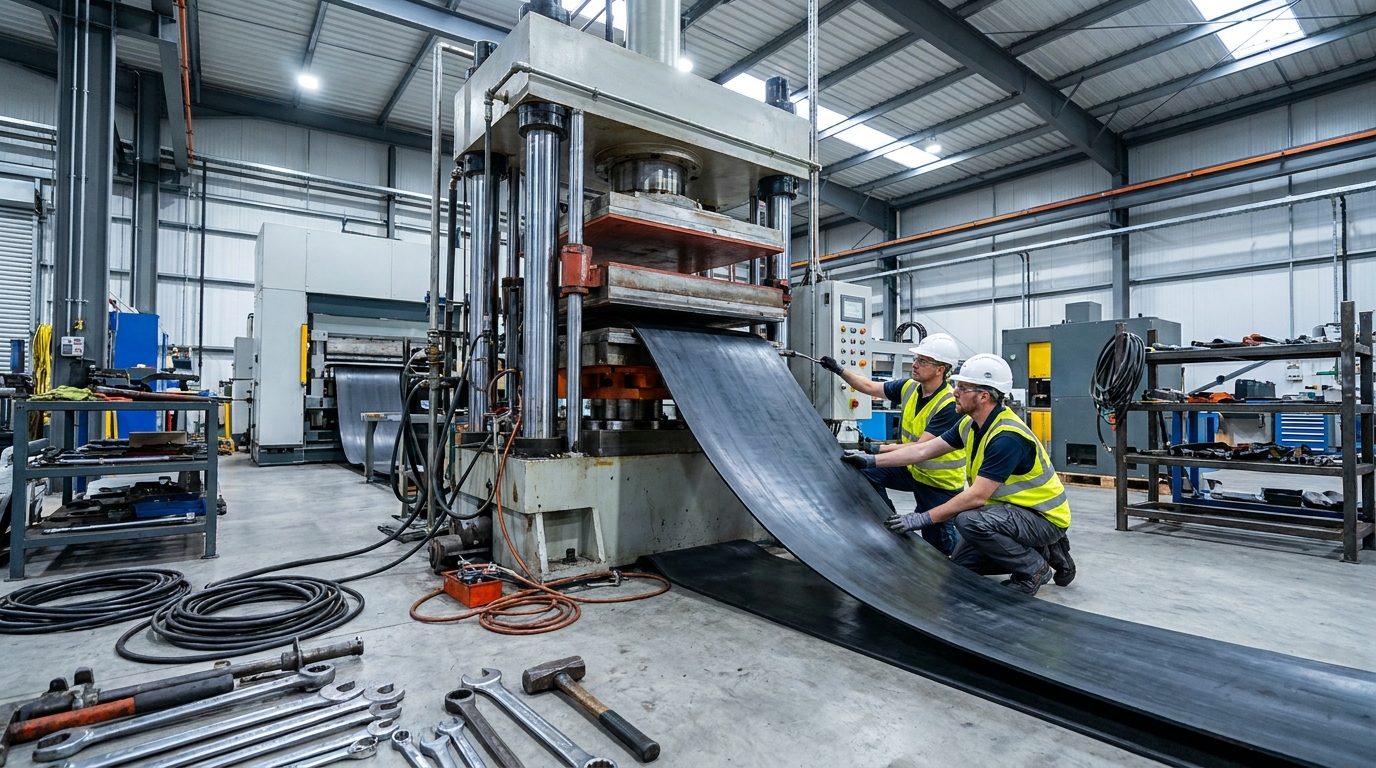
Installing conveyor belt rubber material safely requires proper tensioning, precise pulley alignment, and high-quality hot vulcanized splicing to prevent joint failures. Following these installation best practices ensures that the conveyor belt rubber material runs smoothly, tracks correctly, and achieves its maximum operational life.
Splicing and Tracking Best Practices
Proper installation is critical to prevent belt mistracking, edge damage, and splice failures on the casting line. Here is why: an improperly tracking belt will rub against the conveyor frame, wearing away the protective rubber edges and exposing the fabric core to moisture.
- Hot Vulcanization: Creates a seamless, high-strength joint that is water-resistant.
- Precise Tensioning: Prevents belt slippage on the drive pulley without overloading the bearings.
- Idler Alignment: Ensures the belt runs centered along the entire conveyor length.
Centering the belt protects its vulcanized edges from wearing out prematurely. This proper tracking is essential for keeping plaster dust from getting into the pulleys.
Comparing Mechanical and Vulcanized Splicing
Selecting the correct joining method prevents structural weak points from failing under daily tension loads. Look at the facts: while mechanical fasteners can be installed quickly, they leave open gaps that allow wet plaster to leak onto the rollers.
- Mechanical Fasteners: Fast to install but suffer from lower tensile strength and potential leaks.
- Cold Splicing: Moderately strong but susceptible to chemical damage from release oils.
- Hot Vulcanization: Superior strength, completely waterproof, and compatible with continuous scraper systems.
Choosing a hot vulcanized joint eliminates mechanical wear points on scraper systems. This seamless finish is the best option for maintaining clean, leak-free wet casting lines.
The table below compares the performance of hot vulcanization against mechanical metal fasteners.
| Selection Parameter | Hot Vulcanization Splicing | Mechanical Metal Fasteners | |
|---|---|---|---|
| Tensile Strength | 90% – 95% of parent belt | 50% – 60% of parent belt | |
| Slurry Penetration | Completely sealed (Waterproof) | Open gaps (Plaster leaks through) | |
| Scraper Compatibility | Excellent (Perfectly smooth surface) | Poor (Can catch and damage scraper) | |
| Installation Time | 4 – 6 Hours | 1 Hour |
Key Takeaway: Hot vulcanized splicing is the gold standard for creating strong, waterproof joints in wet plaster casting environments.
Conclusion
Optimizing your plaster casting facility requires material handling systems that can stand up to heavy moisture, abrasive gypsum particles, and high thermal oven curing temperatures. Investing in cheap synthetic alternatives leads to continuous mechanical wear and expensive mold failures. By upgrading to premium, custom-formulated elastomer belts, you safeguard your machinery, protect your mold details, and secure your long-term profit margins.
At Zhenxing Rubber, we manufacture top-tier, custom-engineered rubber belt solutions tailored to the strict requirements of industrial casting lines. We stand behind our work, helping facilities eliminate downtime with our advanced heat-resistant, oil-resistant, and high-impact nylon-reinforced belt systems. If you are ready to secure a highly resilient, wear-resistant, and long-lasting conveyor setup that boosts your daily output, contact us today to schedule an engineering consultation with our industrial team.
Frequently Asked Questions
Can I use standard PVC belts for plaster slurry handling?
No. Standard PVC lacks the chemical resistance to withstand mold release agents and wet plaster slurries, leading to rapid cracking and belt deformation.
What’s the best rubber compound for high-temperature drying kilns?
EPDM. Ethylene Propylene Diene Monomer (EPDM) offers exceptional heat-aging resistance, enabling it to withstand dry temperatures up to 200°C without hardening.
How do I know if my conveyor belt has aggregate wear?
Look for pitting, micro-tearing, and cover thinning. If you notice visible fraying on the cover or a loss of material thickness under loading chutes, abrasive gypsum and silica aggregates are wearing down your belt.
Can I install mechanical fasteners on a wet casting belt?
No, this is highly discouraged. Mechanical fasteners leave gaps that allow water and wet plaster to seep into the inner fabric carcass, causing moisture rot and eventual joint failure.
What’s the best way to prevent plaster dust from building up on the belt?
Use a polyurethane scraper system combined with self-cleaning rubber. This setup ensures that fine gypsum dust is cleanly wiped off the belt surface, preventing roller buildup and mistracking.