
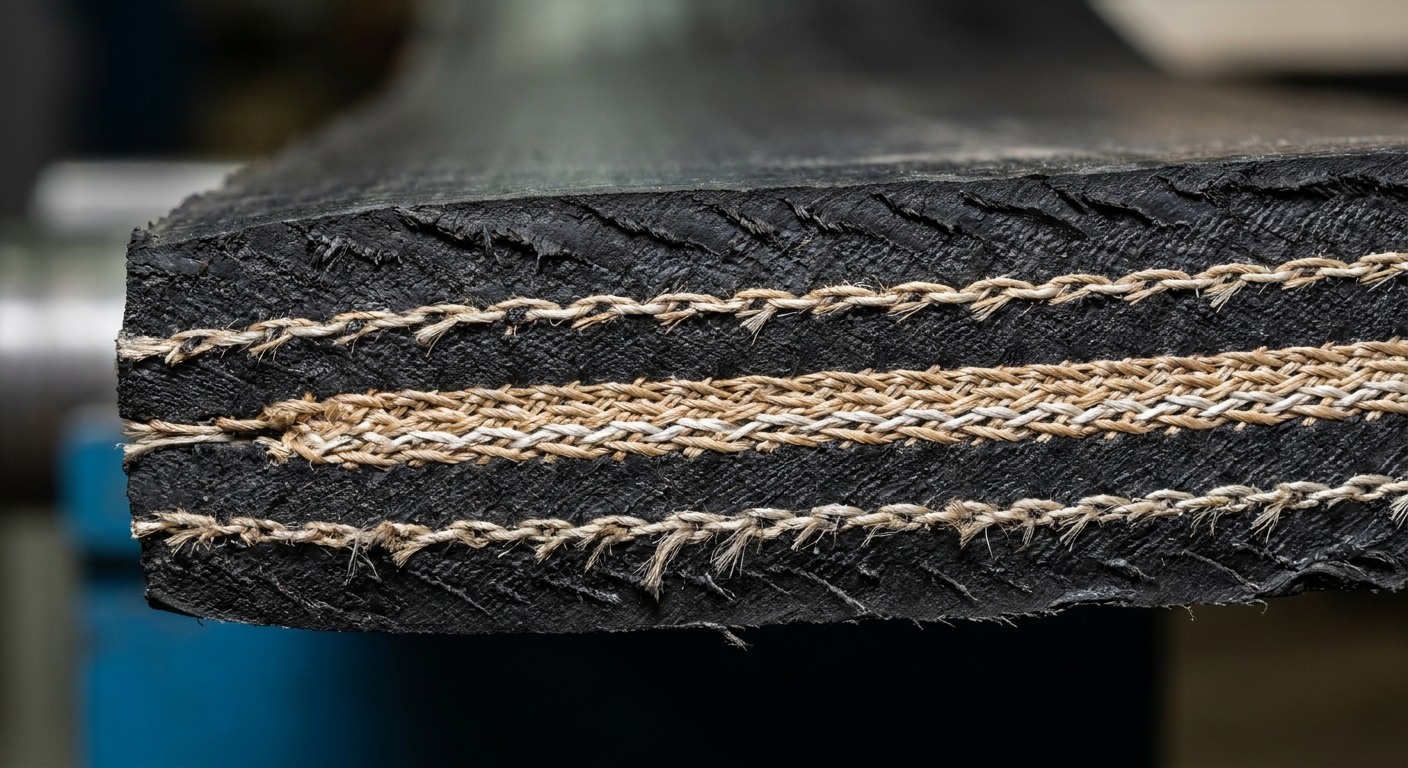
What is plaster casting with conveyor belt rubber?
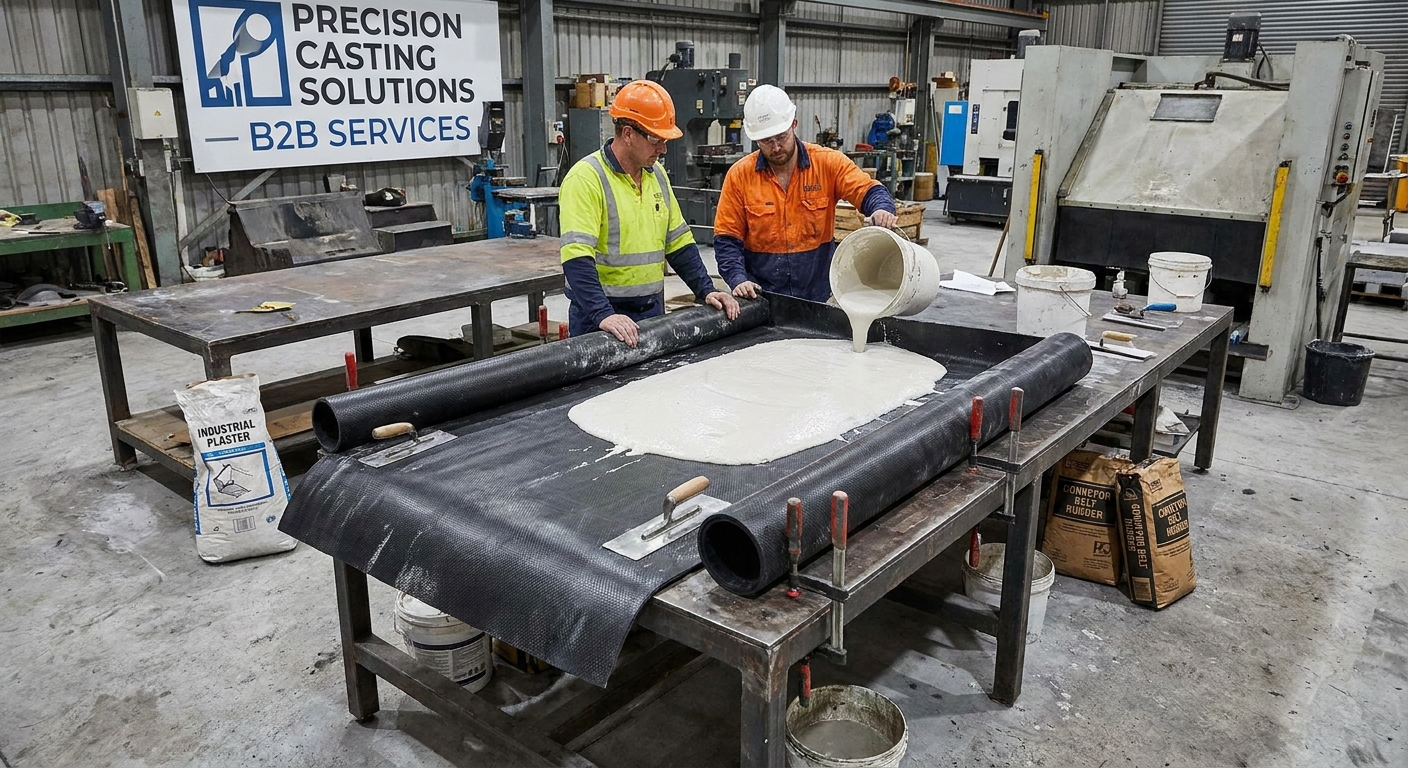
Using conveyor belt rubber in plaster casting applications provides a durable, flexible, and reusable solution for creating precise molds and containment structures. Unlike rigid wooden frames or weak plastic barriers that can crack, leak, or permanently bond with wet plaster, industrial-grade conveyor belt rubber offers superior elasticity, tensile strength, and resistance to deformation under hydrostatic pressure. Its vulcanized surface allows smooth mold release while maintaining accurate casting dimensions and reducing material waste. Widely used in industrial casting workshops and custom mold fabrication, conveyor belt rubber helps improve production efficiency, enhance mold quality, and minimize costly finishing work in demanding plaster molding operations.
What makes plaster casting unique?
Plaster casting relies on the absorption capabilities of gypsum to draw out water and create crisp, detailed surfaces. Unlike concrete, plaster exhibits minimal shrinkage, allowing it to capture micro-textures perfectly. Here is the deal: without high-quality containment, the liquid mixture bulges and distorts. This is why rigid-backed elastomer strips are critical to maintaining perfect edge geometries.
The physical behavior of curing plaster generates moderate exothermic heat. Containment materials must withstand these temperature spikes without buckling or releasing harmful VOCs. Below are the key characteristics that define high-quality casting processes:
- Exothermic stability: Handling curing temperatures up to 130°F (54°C).
- Hydro-static containment: Preventing structural bowing under wet weight.
- Controlled capillary action: Managing plaster hydration levels for optimal curing.
These properties ensure that your finished cast possesses exceptional structural integrity.
How do industrial belts improve the process?
Industrial belts introduce unparalleled durability to plaster fabrication setups. Traditional mold walls suffer from rapid decay and physical warping after consecutive pours. By incorporating multi-ply reinforced fabrics, industrial-grade belts maintain flat planes under immense loads. This mechanical stability guarantees repeatable results across hundreds of production cycles.
Elastomer backing plates act as natural shock absorbers during casting vibration. Vibration is essential to release trapped micro-bubbles from the plaster mix. The dampening effects of rubber prevent aggregate segregation while forcing air to the surface. This creates a pinhole-free face on your final cast product.
Key Takeaway: Combining heavy industrial-grade rubber with gypsum casting optimizes mold precision, eliminates wall warping, and ensures an exceptionally smooth, professional-grade finish.
How does conveyor belt rubber support the mold?
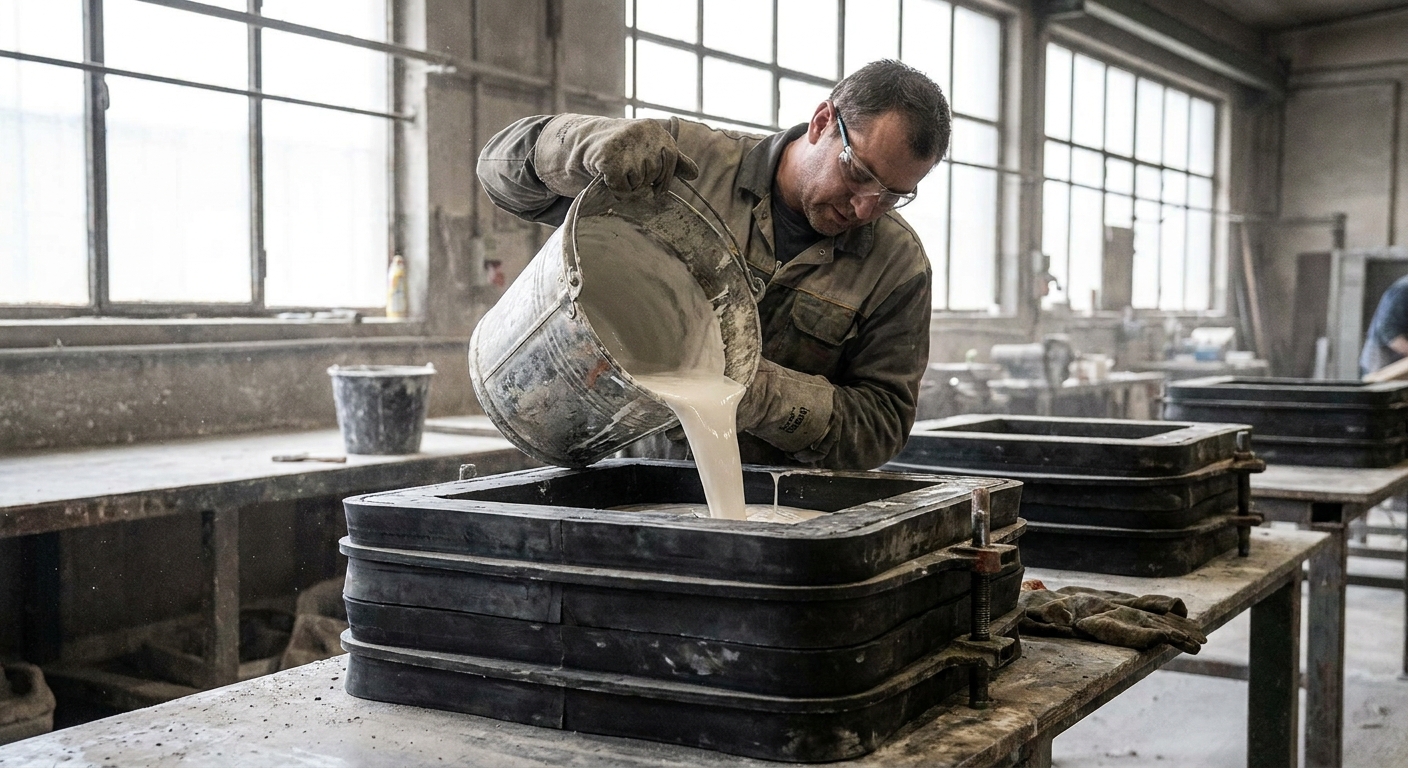
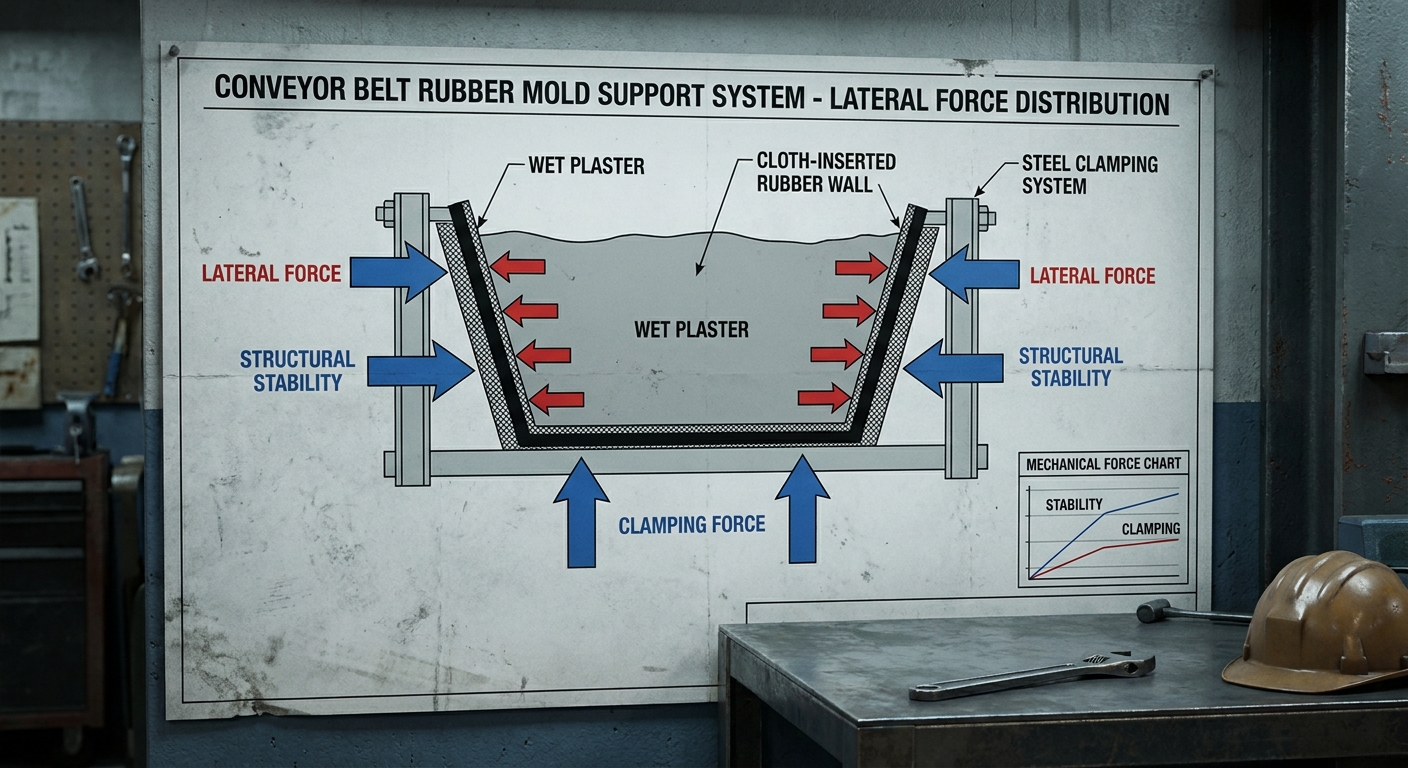
Understanding how conveyor belt rubber stabilizes the casting perimeter is key to eliminating parting-line distortions. The rubber sheet acts as a high-density barrier that distributes wet material loads evenly. Its high durometer rating prevents localized bulging along the perimeter of the mold. This provides a stable, predictable casting environment even for heavy, high-volume plaster pours.
The natural friction of vulcanized rubber prevents the containment walls from shifting during assembly. Unlike smooth plastic, rubber grips clamping fixtures securely without slipping. This frictional lock allows casting operators to use minimal external bracing. The result is a streamlined mold setup that saves precious floor space in busy production facilities.
What is the mechanical role of the rubber?
The physical mass of curing plaster exerts strong outward forces. Think about it: a standard casting mold can easily fail if the retaining walls flex even slightly. The high-density compound absorbs these lateral forces and channels them downwards. This ensures your plaster cast maintains strict dimensional tolerances throughout the curing phase.
High-tensile backing plates are highly effective at resisting bending moments. This mechanical rigidity is critical for casting large-scale architectural trim panels. The core properties involved in this mechanical support include:
- Lateral deflection resistance: Ensuring zero bowing over long casting spans.
- High durometer rating: Using 60A to 70A rubber to resist deformation.
- High surface coefficient of friction: Keeping joint clamps locked in place.
This structural stiffness guarantees that every panel cast matches the architect’s blueprints perfectly.
Does cloth reinforcement prevent stretching?
Pure elastomers can stretch under heavy load, but cloth-inserted versions do not. The synthetic fabric plies inside the belt act as structural tension members. This multi-ply design ensures the belt maintains its original length under high hydro-static pressure. Consequently, your molds stay perfectly true without sagging over time.
Over stretching ruins the dimensional accuracy of cast-gypsum components. Cloth-reinforced structures distribute tensile stresses uniformly throughout the elastomer matrix. This uniform distribution prevents localized material tearing or thinning. Your containment walls will therefore perform consistently over thousands of production hours.
Key Takeaway: Cloth reinforcement within the elastomer matrix provides the high-tensile resistance needed to prevent physical bowing, ensuring long-term dimensional accuracy.
| Support Parameter | Cloth-Reinforced Conveyor Rubber | Standard Non-Reinforced Rubber | Rigid Wooden Boards | |
|---|---|---|---|---|
| Tensile Strength | High (Multi-ply nylon/EP) | Low to Moderate | High (But brittle) | |
| Lateral Flexing | Minimal (Under 1.5%) | High (Bows under weight) | Zero (Saves edges, can split) | |
| Reusability Cycles | 1,500+ casting pours | Under 200 pours | Under 50 pours (Rot risk) | |
| Surface Release | Excellent (Self-peeling) | Good | Poor (Requires heavy release agents) |
When engineering high-volume plaster casting systems, choosing a cloth-inserted conveyor belt ensures maximum structural reliability. The multi-ply internal structure minimizes lateral flexing to under 1.5%, which is critical for casting modular architectural wall tiles where even a millimeter of deviation can ruin the installation grid.
Why use durable conveyor belt rubber in casting?
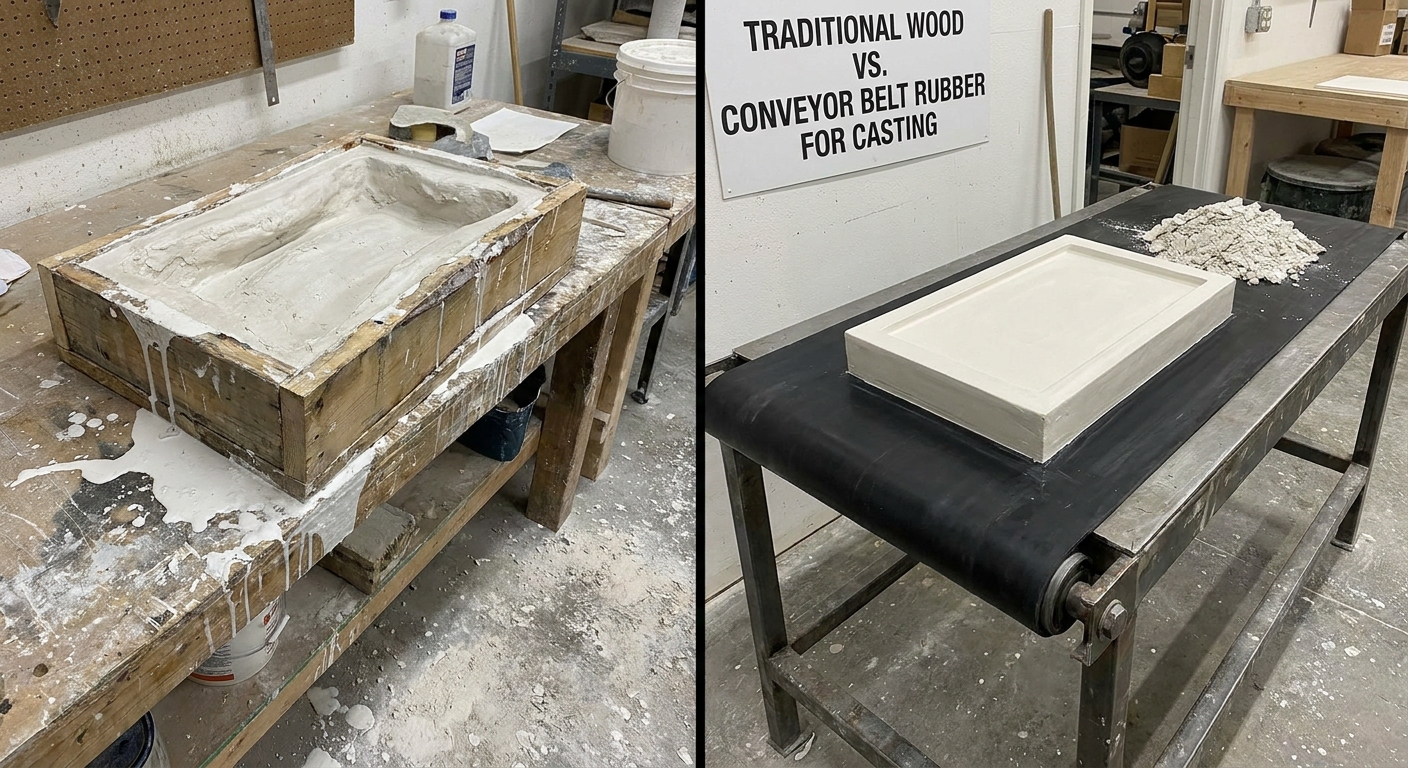
The main advantage of choosing a premium conveyor belt rubber for casting setups lies in its extreme wear resistance. Plaster casting involves constant scraping, cleaning, and chemical interactions. Standard plastics scratch easily, creating surface defects that transfer onto subsequent plaster casts. Tough industrial elastomers resist physical abrasion, ensuring your mold walls stay glass-smooth over long-term use.
Heavy impact from steel scrapers during clean-up can easily destroy soft mold materials. Industrial conveyor belts are designed to handle falling rocks and abrasive mining ores. This heavy-duty composition easily resists the scrapes and impacts of daily foundry work. Investing in quality industrial rubber translates directly into minimized downtime and lowered tooling costs.
How does wear resistance protect plaster?
Micro-scratches on mold surfaces act as mechanical locks, causing plaster to tear during demolding. Best of all: the highly abrasion-resistant surface of industrial belts prevents these scratches from forming. This scratch-resistance ensures your plaster casts detach cleanly without chipped corners or surface pitting. Your finishing department will spend significantly less time patching and hand-tooling cast pieces.
Rough, worn mold surfaces yield dull, low-value plaster reproductions. Vulcanized rubber maintains its original surface texture even after constant contact with abrasive gypsum crystals. Key benefits of high wear-resistant mold walls include:
- Gloss retention: Preserving the original sheen of your master model.
- Edge preservation: Keeping sharp detail lines clean and defined.
- Minimized pitting: Eliminating cavities where water can pool and weaken plaster.
This superior protection results in premium-grade plaster products that fetch higher prices.
Why is chemical tolerance crucial for molds?
Plaster mixes often contain chemical accelerators, retarders, and highly alkaline compounds. Cheap plastics degrade quickly when exposed to these chemical additives. Industrial rubber compounds, including Neoprene and Nitrile, are formulated to resist chemical attack. This chemical tolerance prevents the mold wall from swelling, softening, or cracking during use.
Most release agents contain petroleum solvents or silicone oils that can degrade basic polymers. Heavy-duty belts contain synthetic elastomers that shrug off these aggressive chemical carriers. This chemical barrier prevents the release agent from breaking down during the exothermic curing cycle. Your demolding process remains reliable, pour after pour.
Key Takeaway: The high wear resistance and chemical stability of industrial-grade rubber protect your mold surfaces from damage, significantly improving cast quality and mold longevity.
| Material Type | Abrasion Resistance (Loss mm³) | Chemical Swell Rate (72h) | Exothermic Temperature Limit | |
|---|---|---|---|---|
| Zhenxing Premium Rubber | < 120 mm³ (Highly Resistant) | < 2% (Superior) | Up to 250°F (121°C) | |
| Standard SBR Belt | 180 mm³ (Good) | 8% (Moderate) | Up to 200°F (93°C) | |
| Polyurethane Sheet | 150 mm³ (Moderate) | 12% (Poor) | Up to 180°F (82°C) | |
| Plywood Formwork | N/A (Highly Vulnerable) | Wood rot risk | N/A (Insulates too much) |
For high-density plaster casting that uses chemical retarders or acid-etch cleanup methods, select an elastomer with an abrasion resistance loss under 120 mm³. This minimizes chemical swell to under 2%, preventing the mold walls from warping or losing tight dimensional tolerances during high-volume production runs.
Where does conveyor belt rubber casting succeed?
Industrial conveyor belt rubber is used across a wide range of casting environments, from heavy industrial foundries to custom architectural studios. Its versatility makes it the preferred material for casting large-scale, heavy plaster elements. Facilities that handle constant, high-volume plaster processing rely on its durability to keep lines moving. By replacing rigid mold panels with flexible rubber, these facilities achieve faster turnaround times and lower labor costs.
Large plaster columns, intricate crown moldings, and precast wall panels all benefit from this flexible backing. It allows fabricators to create custom curved molds that are difficult to construct out of wood or metal. The flexible nature of rubber makes demolding large, complex shapes simple and damage-free. This versatility has made rubber the standard material for advanced plaster fabrication work.
Is it used in architectural plaster work?
Modern architecture relies on precast plaster panels for intricate, lightweight interior design features. What does this mean? It means manufacturers need mold walls that can flex around organic shapes without breaking. Industrial rubber sheets can be bent into tight curves and clamped into place in seconds. This allows shops to quickly cast custom curved architectural elements with minimal setup time.
Casting round plaster column covers requires a perfectly smooth, circular outer mold. Heavy rubber sheets can be wrapped around circular forms to create a seamless, leak-proof casting jacket. Key applications of rubber jackets in architectural work include:
- Circular column wraps: Creating smooth, continuous vertical columns.
- Fluted plaster pilasters: Capturing deep, elegant structural details.
- Decorative ceiling medallions: Ensuring highly detailed molding patterns release cleanly.
These capabilities allow builders to create beautiful, classical plaster details at a fraction of the traditional cost.
Can artists benefit from industrial rubber?
Fine art sculptors require mold materials that capture every detail of their master models. Rigid plaster-on-plaster molds require complex multi-piece designs to avoid undercut lockups. Flexible rubber backing sheets simplify this by allowing the artist to bend and peel the mold wall away from undercuts. This flexibility drastically reduces the number of mold pieces needed, saving time and labor.
Textured rubber belts can transfer unique surface patterns directly onto curing plaster. Artists can use rough-top or chevron belts to create textured plaster panels for modern art installations. The plaster flows into the belt’s textures, curing into a highly detailed, embossed replica of the rubber’s pattern. This opens up exciting new creative possibilities for modern sculptural design.
Key Takeaway: From complex architectural columns to detailed sculptural fine art, flexible industrial rubber mold walls simplify production, handle complex curves, and dramatically reduce demolding damage.
| Application Area | Material Choice | Key Performance Metric | Mold Setup Time | |
|---|---|---|---|---|
| Architectural Columns | 3ply Rubber Wrap | Ovality Control < 0.5% | 15 Minutes | |
| Modular Wall Panels | Flat 2ply Rubber | Edge Straightness | 10 Minutes | |
| Chevron Relief Art | Textured Chevron Belt | Detail Reproduction | 5 Minutes | |
| Classical Cornices | Flexible Rubber Strip | Undercut Demolding | 20 Minutes |
Using a structured workflow with flexible rubber containment walls drastically reduces setup times across all casting styles. For architectural projects where edge straightness is critical, a flat 2ply rubber sheet keeps setup times under 10 minutes while maintaining perfectly crisp, straight joints.
How to prepare conveyor belt rubber for casting?
Preparing your conveyor belt rubber properly before pouring is essential for achieving flat, clean plaster casts. The rubber surface must be free of grease, dust, and old plaster residue. Any surface debris will transfer directly onto your fresh plaster, ruining the finish. A thorough cleaning and prep routine guarantees consistent, high-quality results.
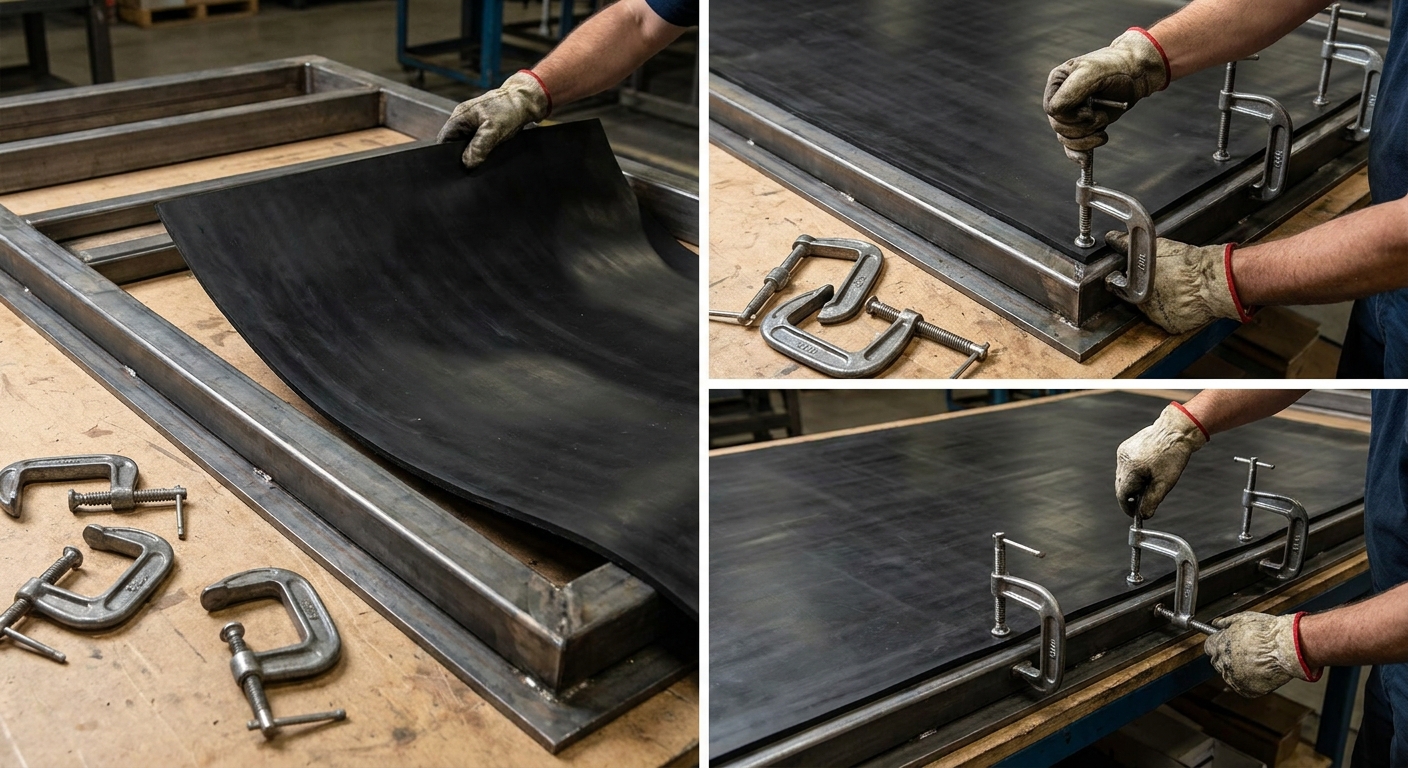
Coiled rubber sheets must be flattened before assembly to prevent warped mold walls. Laying the sheets on a flat steel table in a warm room helps remove any curl from storage. Once flat, the sheets can be cut to size and prepared for your mold setup. This flat-lay prep ensures your mold walls remain perfectly straight.
What are the primary preparation steps?
Industrial belts often carry oils and release agents from the manufacturing process. It gets better: a simple wash with warm water and mild soap removes these oils easily. Avoid using harsh solvents like acetone, as they can dry out and crack natural rubber compounds over time. Once washed, rinse the rubber thoroughly and let it air dry completely.
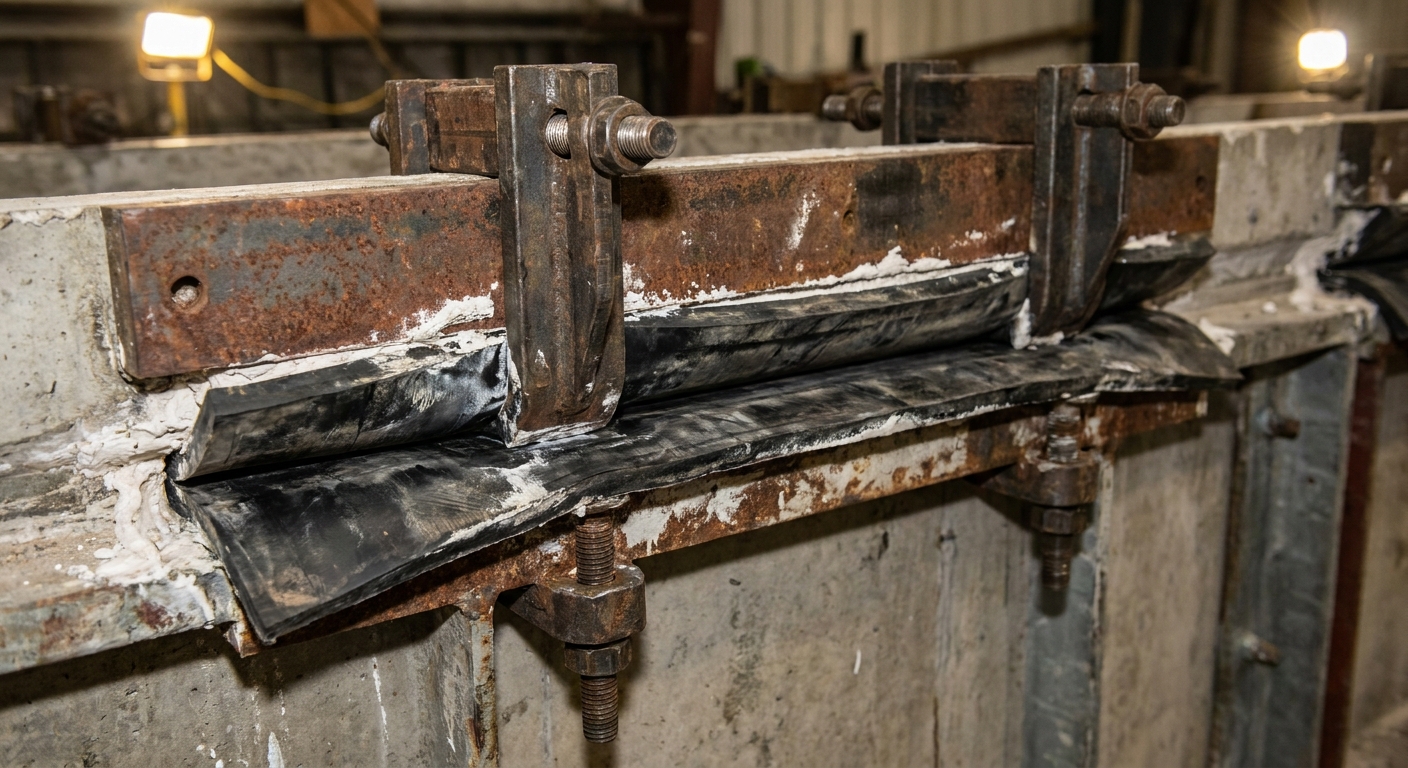
When building your mold wall, clamp the rubber sheets securely to your casting table. Use rigid backing bars behind the rubber to prevent any flexing under the weight of the plaster. Key steps for a secure, leak-proof mold setup include:
- Apply sealing foam: Use adhesive foam tape along the bottom edge of the rubber.
- Rigid backing bars: Use steel or wood bars to support the rubber wall.
- Heavy-duty C-clamps: Clamp the assembly tightly to your casting table.
This secure setup prevents plaster leaks, keeping your workshop clean and efficient.
How do you apply release agents correctly?
Although vulcanized rubber naturally releases plaster well, a high-quality release agent ensures zero sticking. Use a dedicated plaster release agent, such as a watered-down potash soap solution. Avoid heavy oils or greases, which can stain the plaster surface and ruin paint adhesion. Potash soap creates a thin, microscopic film that helps the rubber peel away effortlessly.
Apply the release agent using a soft brush or HVLP spray gun for an even coat. Wipe away any pools or drips with a dry microfiber cloth to prevent surface spotting on the plaster. Allow the release agent to dry to a matte finish before pouring the plaster mix. This careful prep guarantees a pristine, defect-free surface finish.
Key Takeaway: Cleaning the rubber surface, flattening the sheets, and applying a thin coat of potash soap release agent prevents sticking, ensuring smooth, trouble-free demolding.
| Preparation Step | Standard Operating Procedure | Time Required | Tool/Material Needed | |
|---|---|---|---|---|
| Surface Degreasing | Wash with warm, soapy water; rinse and air dry | 15 Minutes | Mild detergent, sponge | |
| Flattening | Lay flat under weights in a warm room (75°F/24°C) | 2 Hours | Steel weights, flat table | |
| Sealing Joint | Apply closed-cell neoprene foam tape to bottom edge | 5 Minutes | Neoprene adhesive foam | |
| Release Application | Spray thin coat of potash soap; buff out any pools | 10 Minutes | Potash soap, microfiber cloth |
To optimize casting efficiency, schedule your rubber flattening step the night before production. This ensures the elastomer sheets are perfectly flat and ready to clamp in the morning, reducing mold setup times to under 30 minutes.
Is conveyor belt rubber ideal for plaster molds?
When comparing mold materials, industrial conveyor belt rubber offers an ideal balance of flexibility, strength, and economy. Rigid materials like wood or fiberglass are prone to chipping plaster edges during demolding. Soft silicone molds release beautifully but lack the stiffness needed to cast straight edges without expensive outer shells. Durable, cloth-inserted industrial rubber provides the perfect middle ground, offering clean releases and straight lines.
Custom silicone and polyurethane molds are expensive to buy and maintain. Salvaged or direct-factory industrial rubber sheets offer a highly cost-effective alternative. Their long lifespan means you spend less money on replacement tooling over time. This cost-efficiency makes rubber the smart choice for competitive B2B casting operations.
Why choose rubber over wooden frames?
Wood frames warp, rot, and splinter quickly when exposed to wet plaster. The bottom line is this: wooden mold walls must be replaced constantly, driving up material costs. Rubber does not absorb water, meaning it will never warp, rot, or split. This water resistance ensures consistent, repeatable molds, pour after pour.
Demolding plaster from rigid wood frames often requires a hammer and chisel, which can easily damage the fresh cast. Flexible rubber peels away smoothly, eliminating the need for brute force during demolding. Key reasons why rubber outperforms wood include:
- No water absorption: Prevents swelling and warping.
- Flexible demolding: Eliminates the need for hammers and wedges.
- Zero woodgrain transfer: Delivers a smooth finish without wood textures.
These advantages speed up production and virtually eliminate broken plaster casts.
How does flexibility prevent edge damage?
Demolding creates intense shear stresses along the edges of curing plaster. Rigid mold walls apply these forces all at once, which can chip or crack delicate plaster details. Flexible rubber walls allow operators to peel the mold away gradually, distributing the stripping forces. This gradual peel-away prevents edge damage, saving your details.
Capturing sharp 90-degree corners in plaster is difficult with rigid tooling. A flexible rubber wall deforms slightly during demolding, pulling straight out of tight corners without catching. This flexibility ensures your plaster corners remain razor-sharp and clean. Your finished casts will require zero hand-sanding or touch-ups, saving labor.
Key Takeaway: Unlike rigid wood or soft silicone, cloth-inserted rubber provides the ideal combination of flexibility and structural strength, ensuring clean releases and perfectly sharp edges.
| Metric | Cloth-Inserted Rubber | Hardwood Formwork | Cast Polyurethane | Flexible PVC | |
|---|---|---|---|---|---|
| Material Cost | Low to Moderate | Low | Very High | Moderate | |
| Edge Precision | High (Zero bow) | High (Zero bow) | Low (Needs support shell) | Moderate | |
| Demold Safety | Excellent (Peels away) | Poor (Pry-bar needed) | Excellent (Peels away) | Good | |
| Moisture Rot | Absolute Zero | Severe (Warps in 5 days) | Absolute Zero | Absolute Zero |
For casting shops producing high-end modular wall tiles, replacing wooden forms with cloth-inserted rubber completely eliminates water absorption issues. This keeps your edge precision under 0.5 mm and saves hours of finishing labor.
What makes conveyor belt rubber highly resilient?
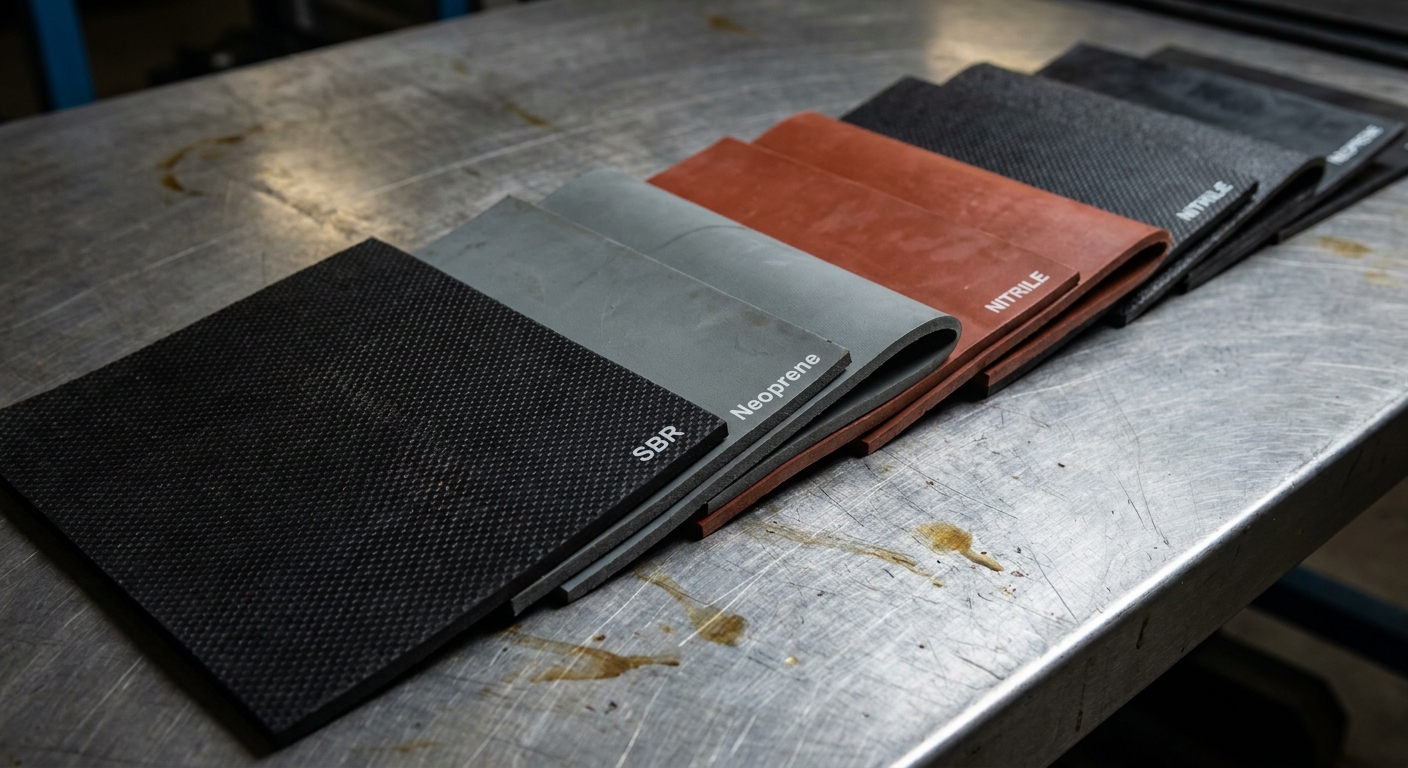
The incredible resilience of premium conveyor belt rubber comes from its advanced blend of synthetic elastomers. Manufacturers mix Styrene-Butadiene Rubber (SBR), Neoprene, and Nitrile to achieve the perfect balance of properties. SBR provides the physical toughness and abrasion resistance needed to survive daily use on the shop floor. Neoprene and Nitrile add chemical resistance, protecting the rubber from oils and aggressive release agents.
This unique blend allows the rubber to stretch and flex without losing its shape. It absorbs heavy impacts and rebounds instantly, keeping its flat surface profile. This resilience ensures your mold walls won’t sag, stretch, or deform under heavy plaster loads. Your mold setups remain highly accurate, pour after pour.
What polymers contribute to its strength?
Each polymer in the rubber blend plays a key role in its overall performance. Here is the secret: blending SBR with neoprene combines physical durability with chemical resistance. SBR acts as the tough structural backbone, while neoprene acts as a shield against chemical wear. This synergetic blend makes the rubber highly durable in harsh casting environments.
Nitrile rubber is highly resistant to oils, fuels, and petroleum-based solvents. This oil resistance prevents the rubber from swelling when exposed to oily release agents. Key features of this polymer blend include:
- SBR toughness: High abrasion resistance and mechanical durability.
- Neoprene chemical resistance: Resists acids, bases, and curing heat.
- Nitrile oil barrier: Prevents swelling from petroleum-based release agents.
This balanced formula ensures your mold walls stay dimensionally stable and flat.
Can it survive temperature fluctuations?
As plaster cures, it generates moderate exothermic heat, raising mold temperatures up to 130°F. Cheap plastics can soften and sag at these temperatures, causing the mold wall to bow. Industrial rubber compounds easily withstand temperatures up to 200°F without losing their physical properties. This heat resistance ensures your mold walls stay flat and rigid during the entire cure cycle.
Cold winter workshops can cause some plastics to become brittle and crack under stress. Vulcanized rubber stays flexible down to -20°F, preventing cold cracks and splits. This wide temperature range makes it ideal for use in unheated workshops year-round. Your casting operations can run smoothly in any weather.
Key Takeaway: The advanced blend of SBR, Neoprene, and Nitrile polymers allows industrial rubber to handle heavy impacts, resist chemicals, and withstand wide temperature swings without warping.
| Polymer Component | Performance Benefit in Casting | Thermal Working Range | Swell Index (Oil Exposure) | |
|---|---|---|---|---|
| Styrene-Butadiene (SBR) | High physical durability, abrasion protection | -40°F to 180°F (-40°C to 82°C) | Moderate to High | |
| Neoprene (CR) | Chemical tolerance, resists curing heat | -30°F to 220°F (-34°C to 104°C) | Low to Moderate | |
| Nitrile (NBR) | Zero swelling when exposed to oily release agents | -20°F to 250°F (-29°C to 121°C) | Absolute Minimum (< 1.5%) |
For casting setups that use petroleum-based release sprays, select a rubber compound with high Nitrile (NBR) content. This keeps the swell index under 1.5%, preventing the mold walls from warping or losing tight dimensional tolerances.
Which conveyor belt rubber thickness works best?
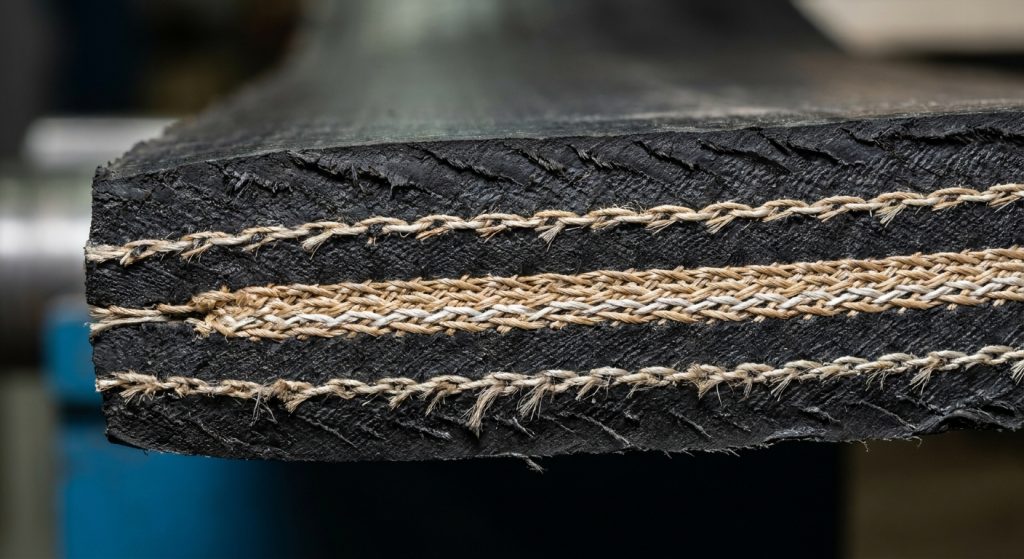
Selecting the correct conveyor belt rubber thickness is critical for matching your mold’s structural needs. Industrial belts are typically available in 2ply (0.30″ thick) and 3ply (0.41″ thick) versions. Thin 2ply sheets are highly flexible, making them ideal for casting curved surfaces. Thick 3ply belts offer superior lateral rigidity, making them perfect for long, straight mold runs.
Matching belt thickness to your mold’s dimensions prevents structural failures. Large plaster pours create high hydro-static pressure, requiring a thicker, stiffer belt. Small decorative molds can use thinner sheets, which are lighter and easier to handle. This balance ensures optimal performance and ease of use.
When should you select the 2ply 0.30″ rubber?
The 2ply 0.30″ rubber sheet offers excellent flexibility and is easy to cut and handle. Simply put: 2ply sheets are the best choice for molds with curved walls or tight radius details. They bend easily without needing heavy clamping force, making mold assembly quick and simple. This flexibility makes 2ply sheets ideal for custom architectural work.
2ply sheets work best for casting spans under 24 inches where flexing is minimal. For longer spans, simply add a few extra support clamps to keep the wall straight. Key applications for 2ply 0.30″ rubber include:
- Curved baseboards: Casting smooth, elegant curved trim pieces.
- Small decorative tiles: Creating highly detailed decorative castings.
- Lightweight plaster plaques: Casting custom artistic wall plaques.
This thickness provides the perfect balance of flexibility and strength for light-duty casting.
Does large-scale casting require 3ply 0.41″ belts?
Casting large plaster panels requires mold walls that can handle immense pressure. The 3ply 0.41″ belt contains three heavy fabric plies, providing incredible lateral stiffness. This thickness resists bowing even over long casting spans up to 48 inches without extra backing. Your large architectural panels will stay perfectly flat and true.
Large plaster volumes generate high exothermic heat during curing. The thick 3ply rubber acts as a thermal barrier, helping control the plaster’s cure rate. This controlled cure prevents thermal cracking and ensures a strong, uniform cast. For large-scale casting, 3ply 0.41″ rubber is the reliable, professional choice.
Key Takeaway: Use 2ply 0.30″ rubber for tight curves and short spans, and step up to 3ply 0.41″ belts for long, straight mold walls and heavy plaster pours.
| Thickness Spec | Ply Configuration | Best Casting Application | Max Unsupported Span | Flex Limit (Weight of Plaster) | |
|---|---|---|---|---|---|
| 0.30″ (7.6 mm) | 2ply Polyester-Nylon | Curved trim, modular tiles, short runs | 24 Inches (60 cm) | Flexes slightly under heavy loads | |
| 0.41″ (10.4 mm) | 3ply Polyester-Nylon | Large panels, column covers, long runs | 48 Inches (120 cm) | Zero measurable flex |
To prevent mold bowing on large-scale architectural projects, use 3ply 0.41″ rubber for any unsupported span over 24 inches. For curved work, use 2ply 0.30″ rubber to ensure smooth curves without needing excessive clamping force.
How to clean your conveyor belt rubber mold setup?
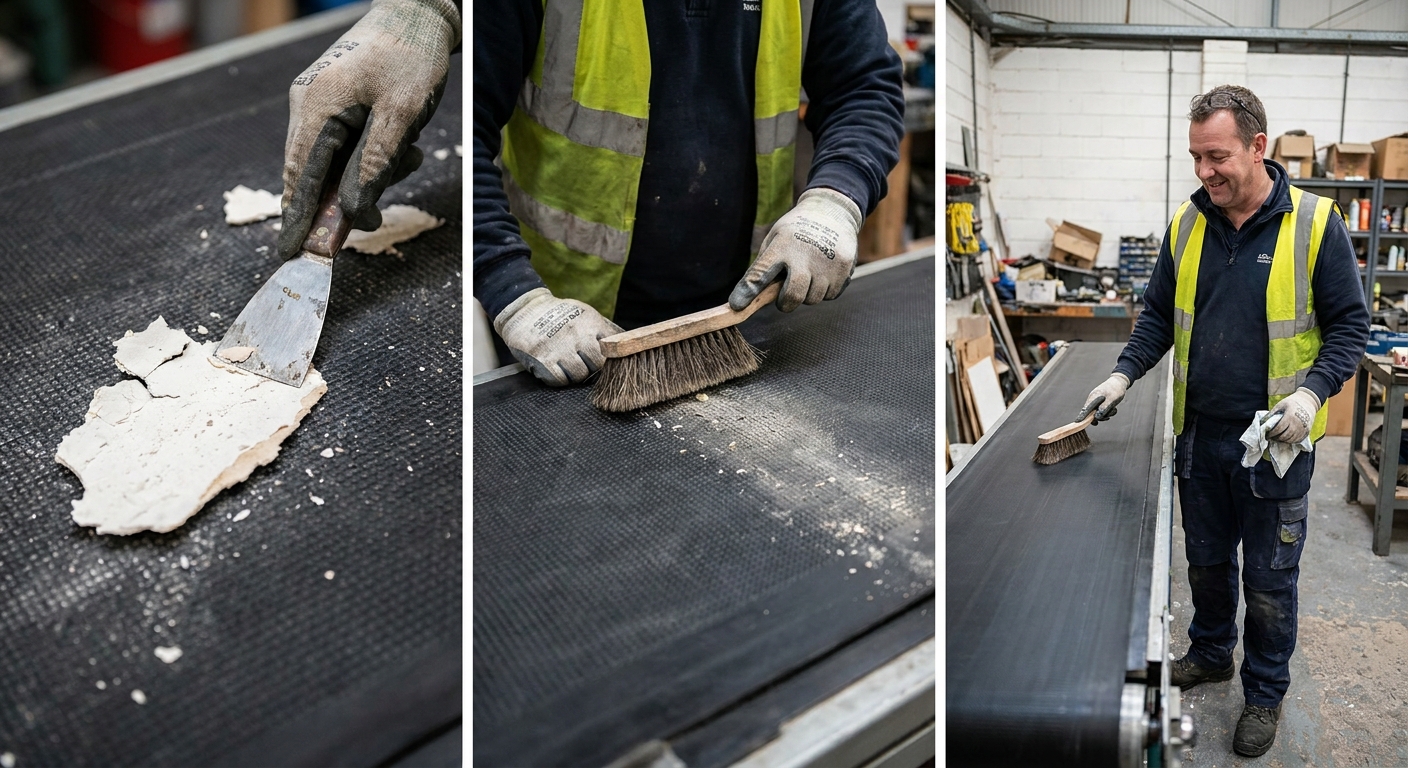
Cleaning your conveyor belt rubber mold walls after each use is essential for maintaining a smooth casting surface. Leftover plaster residue can build up, creating rough spots that ruin the finish of your next cast. Cleaning the rubber immediately after demolding is quick and easy. A simple cleaning routine keeps your mold setup in top condition for years.
Wet rubber sheets should be dried completely before storage to prevent mold and mildew. Wipe down the sheets with a clean towel and let them air-dry in a well-ventilated area. Once dry, store the sheets flat to prevent them from taking a permanent set. This simple care routine ensures your rubber sheets stay flat and ready for use.
What cleans plaster residue effectively?
Wet plaster is easy to wash away, but cured plaster requires a little more effort. The best part? Cured plaster doesn’t stick well to rubber and can be easily scraped off. Use a stiff plastic scraper or a nylon scrub brush to remove large plaster chunks without scratching the rubber. Avoid using wire brushes or metal scrapers, which can damage the rubber surface over time.
For stubborn plaster haze, use a mild, diluted organic acid cleaner like citric acid. Citric acid dissolves plaster crystals without damaging the rubber compound. Key cleaning tools and materials include:
- Stiff nylon scrub brush: Easily removes dried plaster from textures.
- Flexible plastic scraper: Scrapes off large plaster runs without scratching.
- Diluted citric acid solution: Dissolves stubborn plaster haze.
Rinse the rubber thoroughly with clean water after cleaning to remove any acid residue.
Where should you store the rubber sheets?
Storing your rubber sheets correctly prevents them from warping or curling. Always store the sheets flat on a level shelf or pallet. Avoid rolling them tightly or draping them over sharp edges, which can cause permanent creases. Flat storage ensures your mold walls stay perfectly straight for your next project.
Store your rubber sheets in a cool, dry area away from direct sunlight and heat sources. UV rays can break down rubber over time, causing it to become brittle and crack. Keeping them in a dark, dry storage room maximizes their service life. This simple step ensures your rubber sheets perform reliably for years.
Key Takeaway: Clean your rubber sheets with a plastic scraper and mild soapy water immediately after demolding, rinse thoroughly, and store flat in a cool, dark room to prevent warping.
| Maintenance Action | Tool / Agent Required | Frequency | Target Metric | |
|---|---|---|---|---|
| Plaster Descaling | Stiff nylon brush, warm water | After every pour | Remove all white plaster dust | |
| Deep Chemical Scrub | Diluted citric acid (5% concentration) | Weekly | Dissolve micro-crystals in pores | |
| Drying Phase | Microfiber towel, air-circulation fan | After wash | Zero surface moisture | |
| Flat-Shelf Storage | Level pallet, dark room (< 80°F/27°C) | Continuous | Keep sheets flat and uncreased |
To keep production running smoothly, set up a dedicated wash station next to your demolding area. Cleaning the rubber sheets immediately after demolding takes less than 3 minutes, compared to 15 minutes once the plaster has fully cured.
Who supplies quality conveyor belt rubber products?
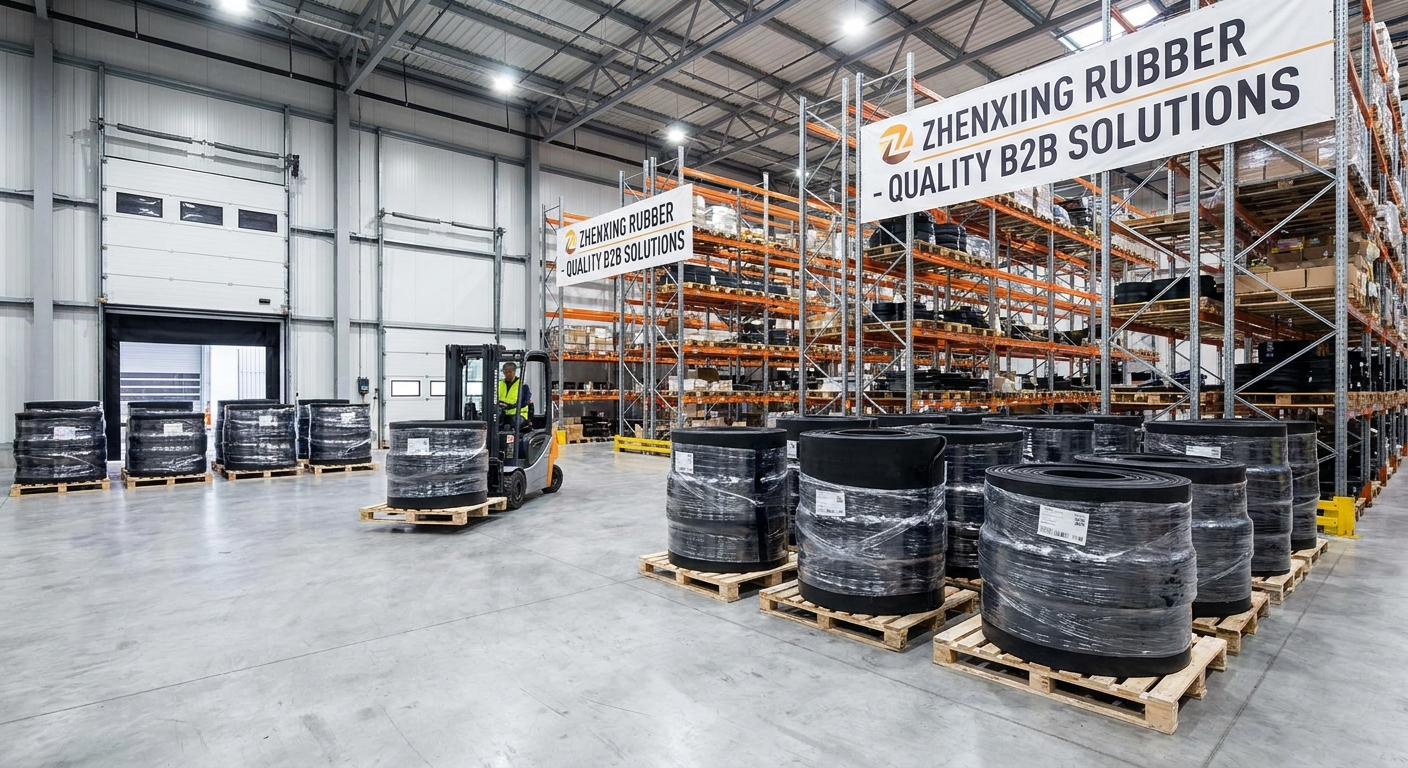
Finding a reliable supplier is essential for sourcing high-quality conveyor belt rubber for your casting operations. Direct factory manufacturers like Zhenxing Rubber offer premium, industrial-grade belts designed for heavy-duty use. Sourcing directly from the factory ensures you get consistent quality, fast lead times, and competitive pricing. This reliable supply chain helps you keep your production lines moving and your costs under control.
Zhenxing Rubber offers a wide range of custom belt configurations to match your specific needs. They can cut sheets to your exact width and length, reducing waste and saving you prep time on the shop floor. Their ISO-certified manufacturing process guarantees that every roll meets strict dimensional and physical standards. This commitment to quality makes them the trusted choice for B2B casting operations worldwide.
Why choose a direct factory manufacturer?
Buying directly from the factory eliminates middleman markups, saving you 15% to 30% on tooling costs. Make no mistake: direct factory sourcing is the smartest way to keep your tooling costs low. You also get direct access to factory engineers who can help you choose the right rubber compound for your project. This expert support ensures you get the best performance from your mold setup.
Traders often source from multiple small workshops, leading to inconsistent material quality. Zhenxing Rubber manufactures all products in-house, ensuring consistent material properties in every batch. Key benefits of sourcing directly from Zhenxing include:
- Direct factory pricing: 15% to 30% savings compared to distributors.
- Custom belt widths: Available in widths up to 3200 mm.
- ISO 9001 certification: Guarantees strict manufacturing quality control.
This consistent quality ensures your mold walls perform reliably, pour after pour.
Strategic Vision and Next Steps
Integrating heavy-duty industrial rubber into modern plaster casting lines is a major step forward for the industry. This smart combination of materials speeds up production, reduces labor costs, and improves finished cast quality. As B2B casting operations face rising material and labor costs, choosing durable, reusable tooling is key to staying competitive. Zhenxing Rubber is committed to supporting this progress with advanced, high-performance elastomer solutions.
Upgrade your plaster casting setup today with premium, direct-factory industrial rubber from a trusted manufacturer. Our experienced engineering team is ready to help you select the perfect belt thickness, width, and polymer blend for your project. To request a custom quote, get free samples, or discuss your project needs, please contact us today . Let’s work together to make your casting operations more efficient, productive, and profitable.
Key Takeaway: Sourcing directly from a quality manufacturer like Zhenxing Rubber ensures competitive direct-factory pricing, custom sizing, and consistent material quality for your casting setup.
Frequently Asked Questions
Can I use standard conveyor belt rubber for highly detailed plaster casting?
Yes, absolutely. Premium, cloth-inserted conveyor belt rubber is highly effective for detailed plaster casting. The smooth, vulcanized surface of SBR-neoprene-nitrile blends captures sharp details and releases plaster cleanly. For casting fine textures, you can also use textured chevron or rough-top belts to transfer patterns directly onto the plaster.
What’s the best release agent for plaster molds with conveyor belt rubber?
The best release agent is a diluted potash soap solution. Potash soap creates a thin, microscopic film that prevents plaster from sticking to the rubber without leaving oily residue. Avoid using heavy oils or greases, which can stain the plaster surface and ruin paint adhesion.
How do I prevent conveyor belt rubber from bowing under wet plaster?
To prevent bowing, use a cloth-inserted conveyor belt and rigid backing bars. The internal fabric plies prevent the rubber from stretching, while steel or wood backing bars clamped behind the rubber wall provide the lateral stiffness needed to keep the wall straight under pressure.
Can I clean dried plaster off conveyor belt rubber using chemical acids?
Yes, you can use a diluted citric acid solution. Citric acid is highly effective at dissolving stubborn plaster haze and micro-crystals without damaging the rubber compound. Avoid using harsh solvents like acetone, which can dry out and crack natural rubber over time.
How many casting cycles can I expect from a high-quality conveyor belt?
A premium, direct-factory conveyor belt can easily last over 1,500 casting cycles. Its high abrasion resistance, chemical tolerance, and tear strength allow it to withstand constant scraping, washing, and chemical exposure without losing its shape or surface quality.