
In high-demand mining and industrial operations, unexpected belt failures can lead to severe downtime, production losses, and costly delays. A high-quality steel cord conveyor belt is engineered to withstand extreme tension, heavy loads, and harsh working environments while maintaining long-term operational stability. Manufactured with advanced precision processes and reinforced steel cord construction, these conveyor belts provide superior strength, reduced elongation, and exceptional durability. Choosing a reliable steel cord belt manufacturer helps minimize maintenance costs, improve conveying efficiency, and ensure continuous performance in critical material handling applications.
What defines a high-tech steel cord rubber conveyor belt factory?
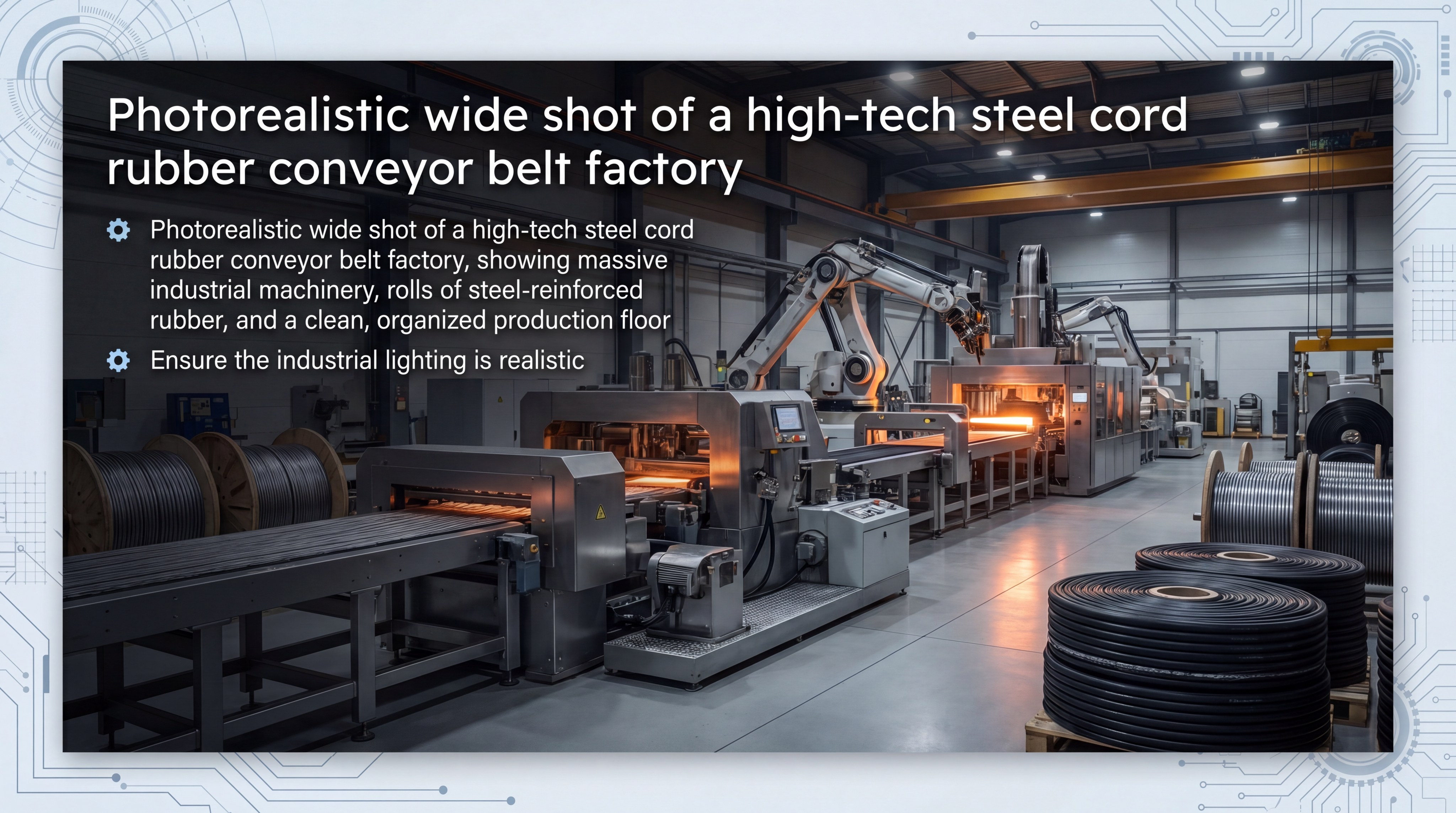
A steel cord rubber conveyor belt factory is a specialized production center that integrates heavy-duty steel cables into durable rubber matrices to create the world’s strongest industrial belts. These facilities focus on maintaining perfect cord alignment and zero-void rubber bonding to handle the most abusive material handling environments.
What is the core structure?
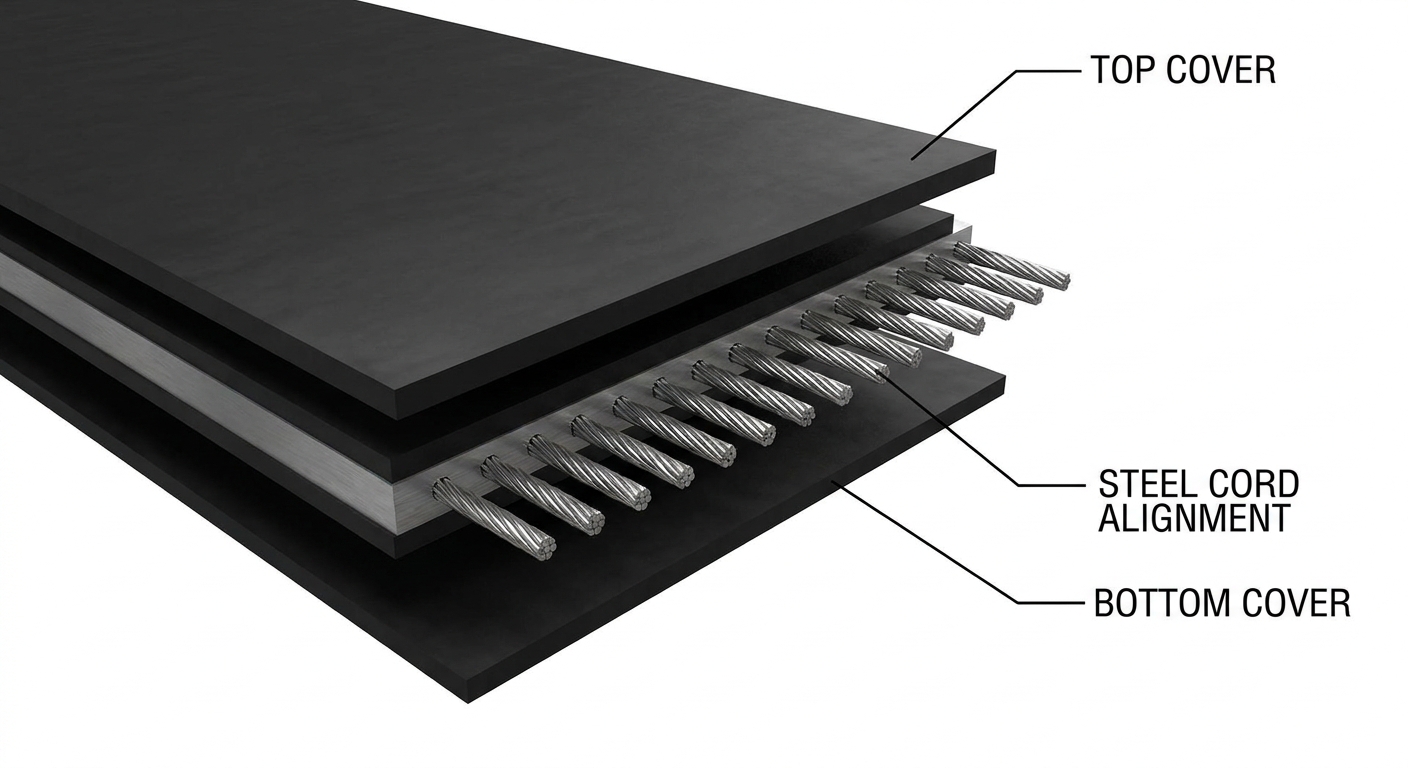
The core structure consists of high-tensile steel cords embedded in a specialized insulation gum that prevents internal friction. This multi-layered approach ensures that the belt does not stretch or warp under heavy loads.
Look:
- Zinc-galvanized steel cables for corrosion resistance.
- High-adhesion insulation gum for cord protection.
- Wear-resistant top and bottom rubber covers.
The best part? This construction allows the belt to travel miles without the need for frequent tensioning adjustments.
How is durability achieved?
Durability is achieved through a combination of raw material quality and advanced curing temperatures that bond the rubber to the metal on a molecular level. By using a fabric textile conveyor belt as a secondary component in some hybrid designs, factories can also improve transverse tear resistance.
Here is the deal:
- Cables are treated with zinc to stop moisture damage.
- Vulcanization occurs under massive hydraulic pressure.
- Covers are customized for heat or oil resistance.
Key Takeaway: Using a professional factory ensures your belts have the internal integrity to last decades rather than months in heavy-duty applications.
| Feature | Standard Factory | Professional Factory | |
|---|---|---|---|
| Cord Alignment | Manual / Visual | Automated Precision | |
| Gum Quality | Standard Grade | High-Adhesion Insulation | |
| Tension Control | Fixed | Dynamic Sensors |
High-tech factories prioritize automated sensors to ensure that every millimeter of the belt maintains uniform strength and thickness.
How does a steel cord rubber conveyor belt factory cast belts?
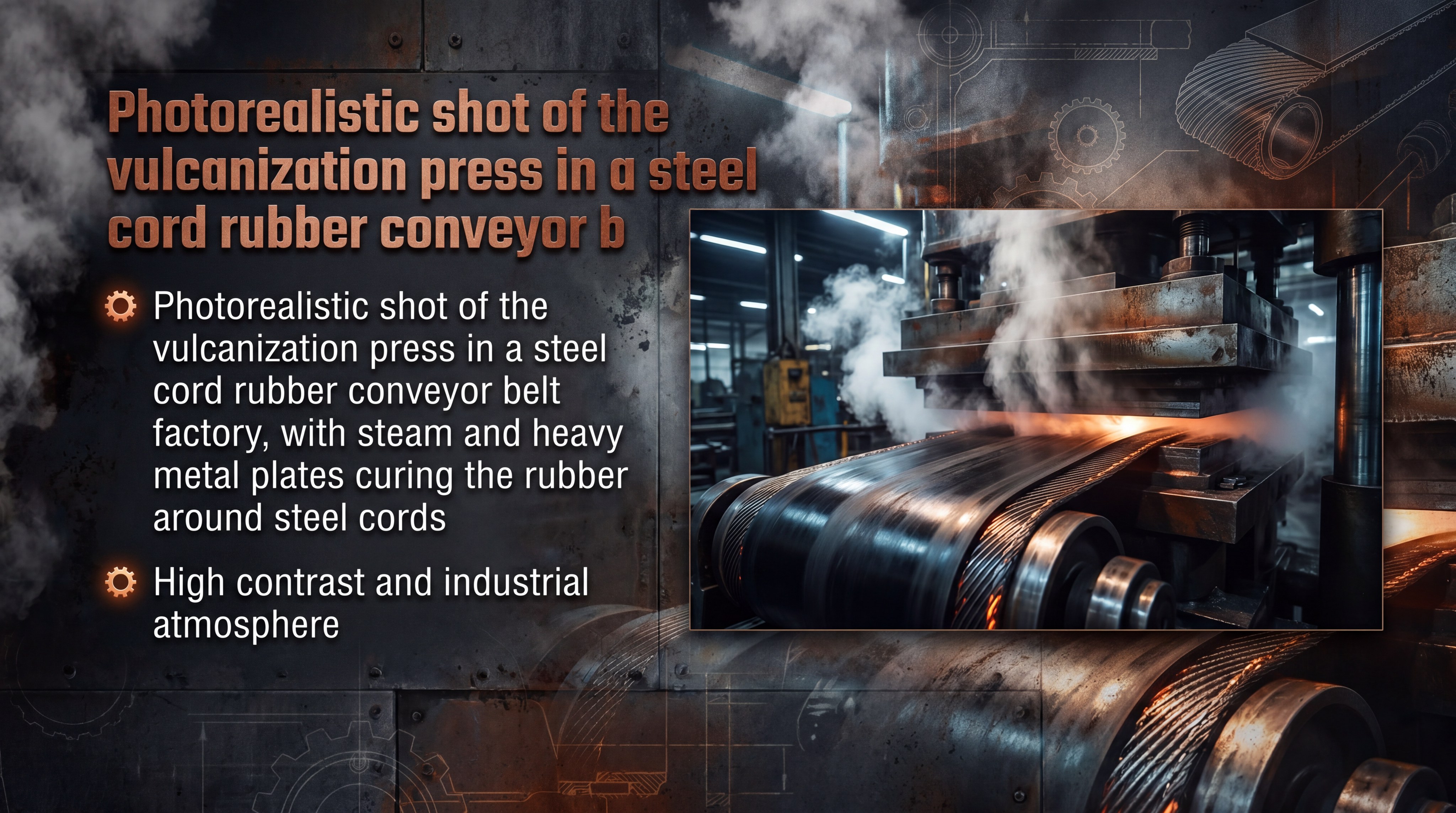
Working with a steel cord rubber conveyor belt factory allows you to access advanced “casting” methods where liquid-like insulation gum is pressed into the steel cords during vulcanization. This ensures that the rubber fills every single air gap within the twisted steel filaments, preventing internal oxidation.
What is plaster casting?
Plaster casting in this context refers to the precision molding process where the core rubber flows around the cables like a cast. This creates a seamless bond that prevents the cords from pulling out under extreme stress.
Believe it or not:
- It eliminates air pockets that cause delamination.
- It provides a 360-degree protective seal for each wire.
- It increases the dynamic life of the splice joints.
The best part? This casting method ensures that the belt stays flexible while remaining incredibly rigid in the direction of travel.
How does vulcanization help?
Vulcanization is the chemical process that uses heat and pressure to transform raw rubber into a stable, durable material. During this stage, the factory applies thousands of tons of pressure to ensure the casting is permanent.
Look:
- Steam-heated plates provide uniform temperature.
- Pressure forces rubber into the cord’s “valley” areas.
- The chemical bond becomes stronger than the rubber itself.
Key Takeaway: Precision casting during vulcanization is the secret to preventing internal corrosion, which is the leading cause of belt snaps.
| Process Stage | Action | Benefit | |
|---|---|---|---|
| Pre-Tensioning | Stretching cables | Prevents belt bowing | |
| Casting | Flowing insulation gum | Total cord encapsulation | |
| Curing | Heat application | Permanent structural bond |
Successful casting requires a perfect balance of temperature and pressure to ensure the rubber reaches the very center of every cord.
Why choose a steel cord rubber conveyor belt factory for mining?
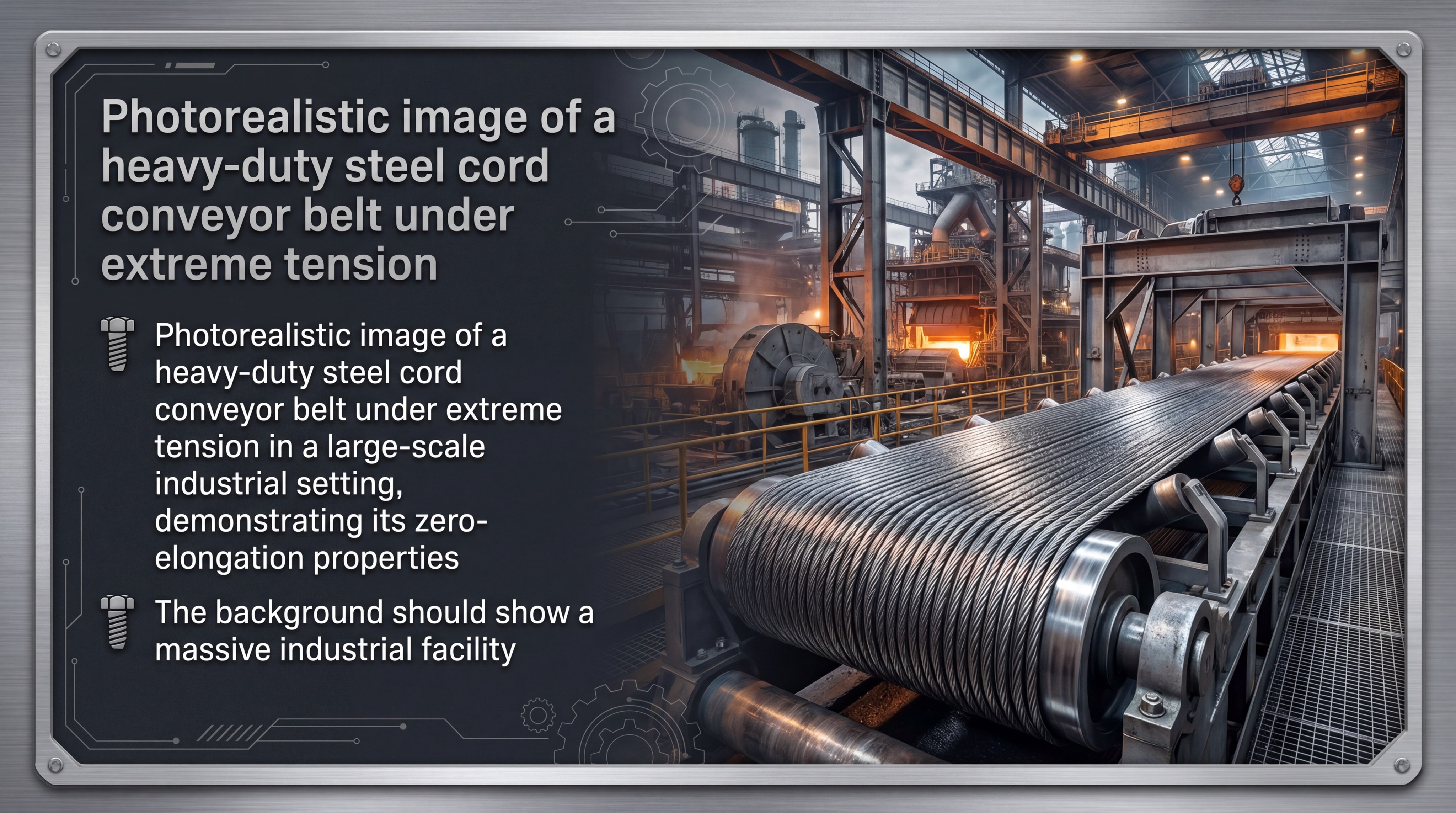
Choosing a steel cord rubber conveyor belt factory for your mining needs is essential because mining requires a combination of ultra-high tension and zero elongation. Standard fabric belts would simply stretch until they fell off the pulleys in a deep-shaft or long-overland mining setup.
Is zero-elongation important?
Zero-elongation is absolutely critical for long-distance conveyors because it minimizes the size of the take-up system required. This saves massive amounts of space and reduces the complexity of your conveyor engineering.
Here is the deal:
- Steel does not “creep” like synthetic fibers.
- Start-up times are faster with less belt sag.
- Tracking remains consistent over thousands of meters.
The best part? You spend less time on maintenance because the belt doesn’t need to be cut and re-spliced due to stretching.
What about tension levels?
Tension levels in modern mines can reach up to ST 10000, which is only possible through steel reinforcement. This high strength allows for larger payloads and steeper inclines without the risk of the belt snapping.
Look:
- It supports vertical lifts in deep mines.
- It handles high-impact loading points.
- It resists the “snapping” effect of heavy rock falls.
Key Takeaway: For any operation exceeding 500 meters in length, the strength-to-weight ratio of a steel cord belt provides the highest ROI.
| Requirement | Fabric Belt | Steel Cord Belt | |
|---|---|---|---|
| Long Distance | Poor (High Stretch) | Excellent (Low Stretch) | |
| Vertical Lift | Not Recommended | Industry Standard | |
| Payload Capacity | Medium | Ultra-High |
Mining environments demand materials that do not fail under pressure, making steel the only viable long-term investment for high-capacity sites.
What stats drive a steel cord rubber conveyor belt factory’s output?
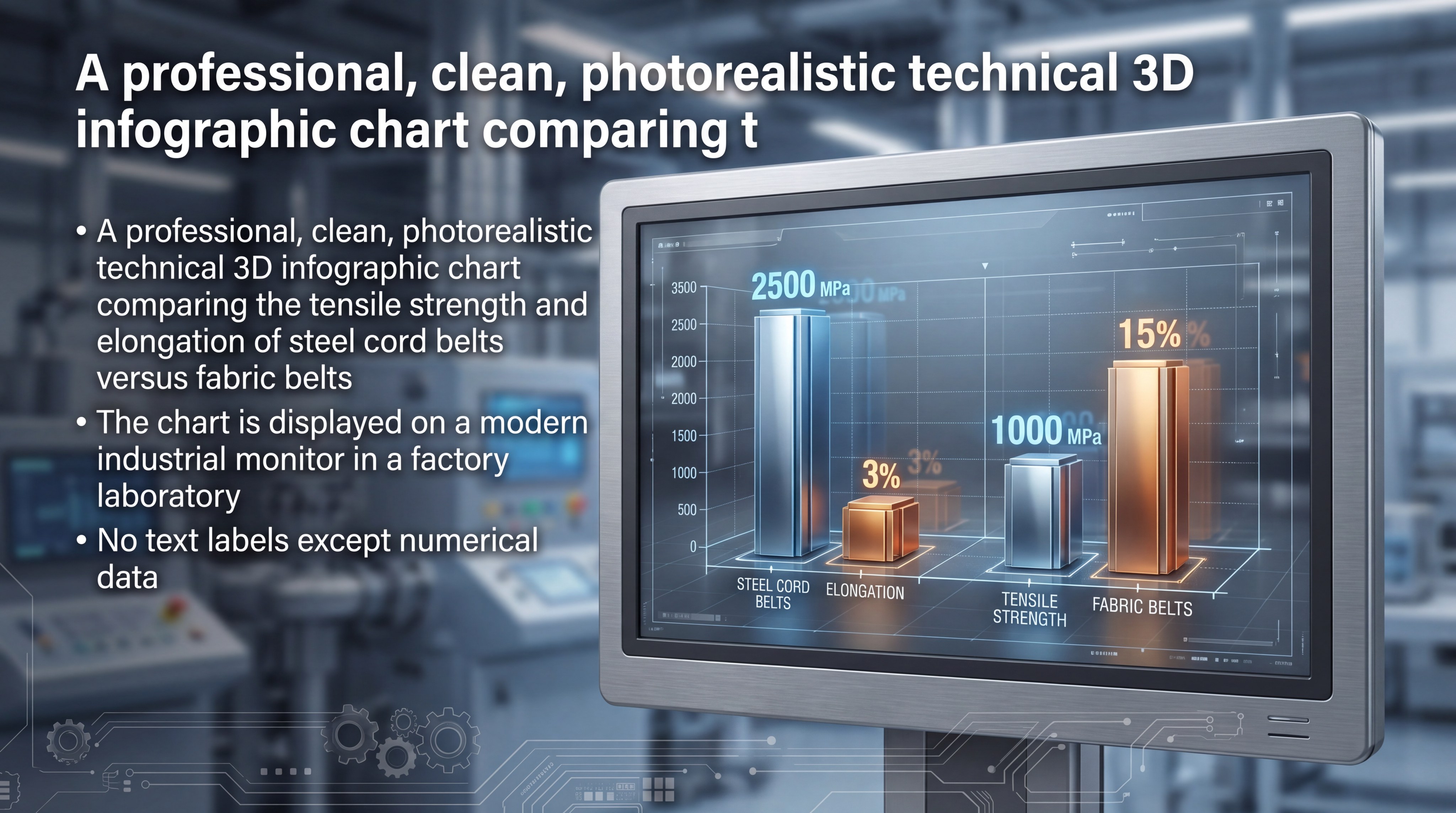
Data from a steel cord rubber conveyor belt factory proves that steel-reinforced systems outlast and outperform textile alternatives by a factor of three to one. Numerical analysis of tensile strength versus elongation shows why global mining leaders have shifted away from polyester-based systems.
How does steel compare to fabric?
Steel provides nearly ten times the tensile strength of fabric with only a fraction of the elongation. This allows for thinner belts that can carry significantly more weight without losing their structural shape.
Believe it or not:
- Steel elongation is typically less than 0.25%.
- Fabric elongation can exceed 3.0%.
- Tensile strength can reach 10,000 N/mm.
The best part? Lower elongation means you can use smaller pulleys and more compact drive units, saving energy.
What is the tensile limit?
The tensile limit of these belts is determined by the number and diameter of the steel cables used. A factory can customize the “ST” rating to match the exact horsepower of your conveyor motors.
Look:
- ST 2000 is common for medium mines.
- ST 5400 handles massive overland routes.
- ST 10000 is for the deepest shafts on earth.
Key Takeaway: Analyzing the technical data allows you to select a belt that is “right-sized” for your equipment, preventing overspending on unnecessary strength.
| Metric | Steel Cord | Fabric (EP) | |
|---|---|---|---|
| Breaking Strength | Up to 10,000 N/mm | Up to 3,150 N/mm | |
| Elongation at Load | Very Low (<0.3%) | Moderate (1.5%+) | |
| Impact Resistance | Extremely High | Moderate |
The data clearly shows that steel cord belts are the superior choice for any application where power and distance are the primary concerns.
How does a steel cord rubber conveyor belt factory ensure quality?

Every steel cord rubber conveyor belt factory implements rigorous testing protocols to ensure that the internal cables are perfectly spaced and bonded. If even a single cord is out of alignment, the belt will “snake” or drift, causing damage to the conveyor structure.
Are precision tools used?
Precision calipers and digital micrometers are used to measure cord pitch—the distance between the centers of adjacent cables. This measurement must be accurate to within a fraction of a millimeter.
Here is the deal:
- It ensures equal load distribution.
- It prevents the belt from curving during operation.
- It guarantees that the splice points will be perfectly aligned.
The best part? Highly accurate pitch measurements mean the belt runs straighter and requires less tracking correction.
Why is spacing critical?
Spacing is critical because it dictates the flexibility and the “troughability” of the belt. If cords are too close, the belt becomes too stiff; if they are too far apart, the rubber can crack between them.
Look:
- Uniform spacing allows for deep trough angles.
- It ensures the belt can wrap around smaller head pulleys.
- It prevents “edge curling” at high tensions.
Key Takeaway: Quality control isn’t just about strength; it’s about the geometric perfection required for the belt to run straight at high speeds.
| Test Type | Method | Goal | |
|---|---|---|---|
| Cord Pitch | Digital Calipers | Uniform Load Sharing | |
| Adhesion | Pull-out Test | Bond Integrity | |
| Diameter | Micrometer | Strength Consistency |
By checking every cord before and after the casting process, the factory can guarantee a product that tracks perfectly from day one.
What machines run a steel cord rubber conveyor belt factory?
The machinery at a steel cord rubber conveyor belt factory includes massive creel stands, tensioning towers, and multi-stage vulcanization presses. These machines are designed to handle thousands of pounds of steel and rubber simultaneously while maintaining high levels of precision.
Is automation necessary?
Automation is necessary to coordinate the speed of the rubber calendars with the tension of the steel cord bobbins. Without computer-controlled speed matching, the belt would develop internal waves or “ripples.”
Believe it or not:
- Robotic arms often handle the massive belt rolls.
- Laser sensors monitor the belt thickness in real-time.
- Automated tensioners keep cords perfectly straight.
The best part? Automation reduces human error, leading to a much more consistent product across thousands of meters.
How are rolls handled?
Handling 40-ton rolls of rubber requires specialized heavy-lifting equipment and steel frames. These rolls are the final product that gets shipped to mining sites across the globe.
Look:
- Hydraulic winders create tight, uniform rolls.
- Steel cores prevent the belt from crushing itself.
- Protective wrapping stops UV and moisture damage.
Key Takeaway: The sheer scale of the machinery required to build these belts is why only a dedicated, large-scale factory can produce high-ST rated products.
| Machine | Function | Critical Success Factor | |
|---|---|---|---|
| Creel Stand | Holds cord bobbins | Uniform back-tension | |
| Calendar | Applies rubber | Temperature control | |
| Press | Vulcanizes layers | Pressure uniformity |
Modern production lines are fully integrated, ensuring that the raw materials enter one end and a finished, high-strength belt exits the other.
Where are steel cord rubber conveyor belt factory products used?
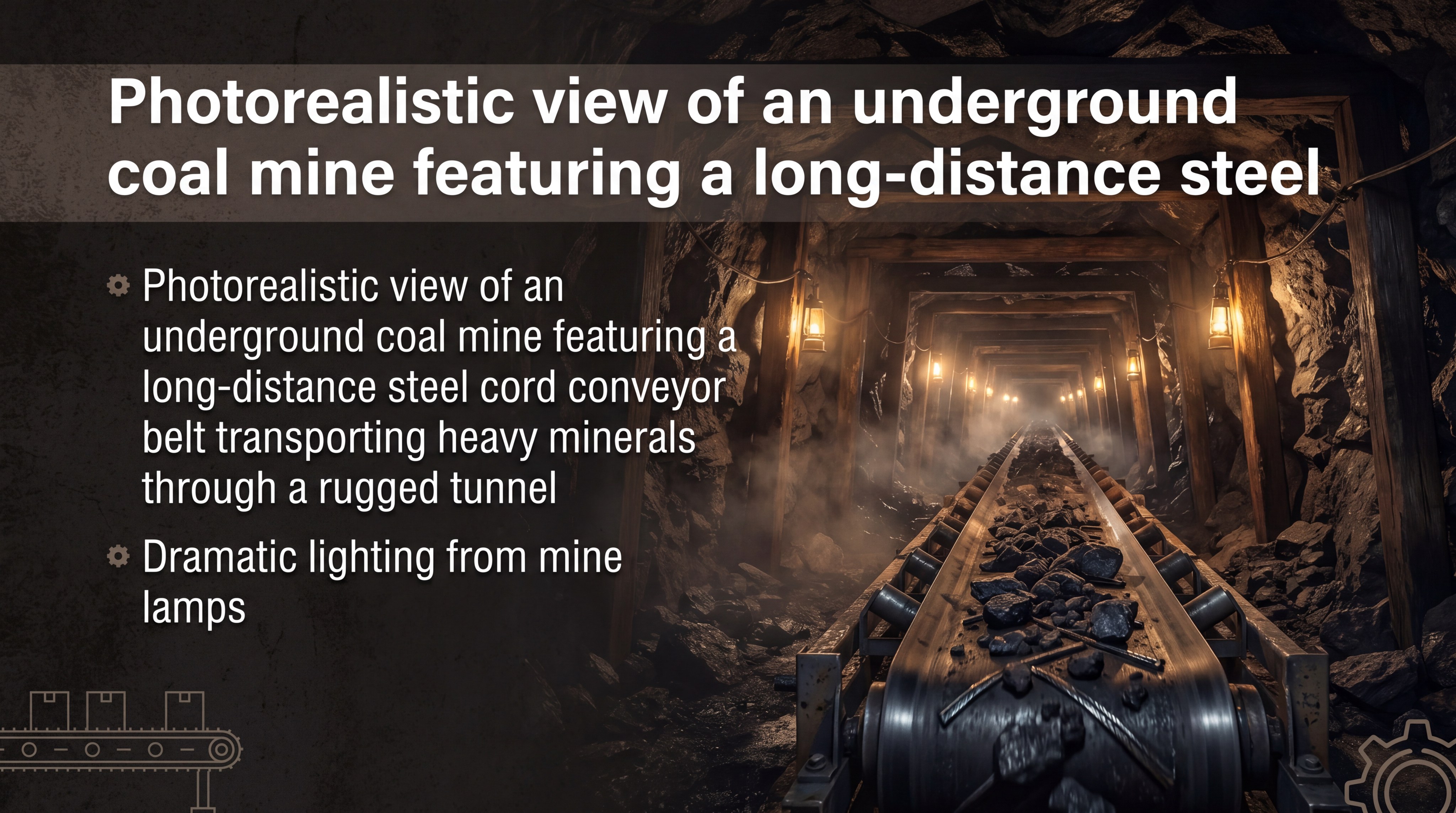
Products from a steel cord rubber conveyor belt factory are built for the most extreme environments on the planet, such as underground coal mines and high-capacity port terminals. These belts are the lifeblood of the global energy and construction sectors, moving millions of tons of material every day.
Can they handle coal mines?
In an industry coal mine underground , these belts are used for main slope haulage where the incline is steep and the load is continuous. They must be flame-retardant to meet strict underground safety regulations.
Here is the deal:
- They move coal from the face to the surface.
- They resist the humid, corrosive environment of a mine.
- They are designed to be self-extinguishing in case of fire.
The best part? Steel cord belts can travel through tight tunnels with minimal support structures due to their high strength.
Are they for long tunnels?
Yes, they are the preferred choice for long tunnels and overland systems because they can span several kilometers without a transfer point. Reducing transfer points lowers material breakage and dust emissions.
Look:
- Overland systems often exceed 10 kilometers.
- They cross rivers and mountains with ease.
- They require fewer motors than multi-belt systems.
Key Takeaway: If your project involves moving bulk material over long distances or up steep inclines, a steel cord belt is the only engineering solution that works.
| Industry | Specific Use Case | Primary Benefit | |
|---|---|---|---|
| Mining | Main Haulage | High Vertical Lift | |
| Ports | Ship Loading | Fast Throughput | |
| Power Plants | Coal Feeding | 24/7 Reliability |
Whether it is copper, coal, or iron ore, these belts provide the constant uptime that global industries rely on for their daily operations.
How does a steel cord rubber conveyor belt factory apply gum?
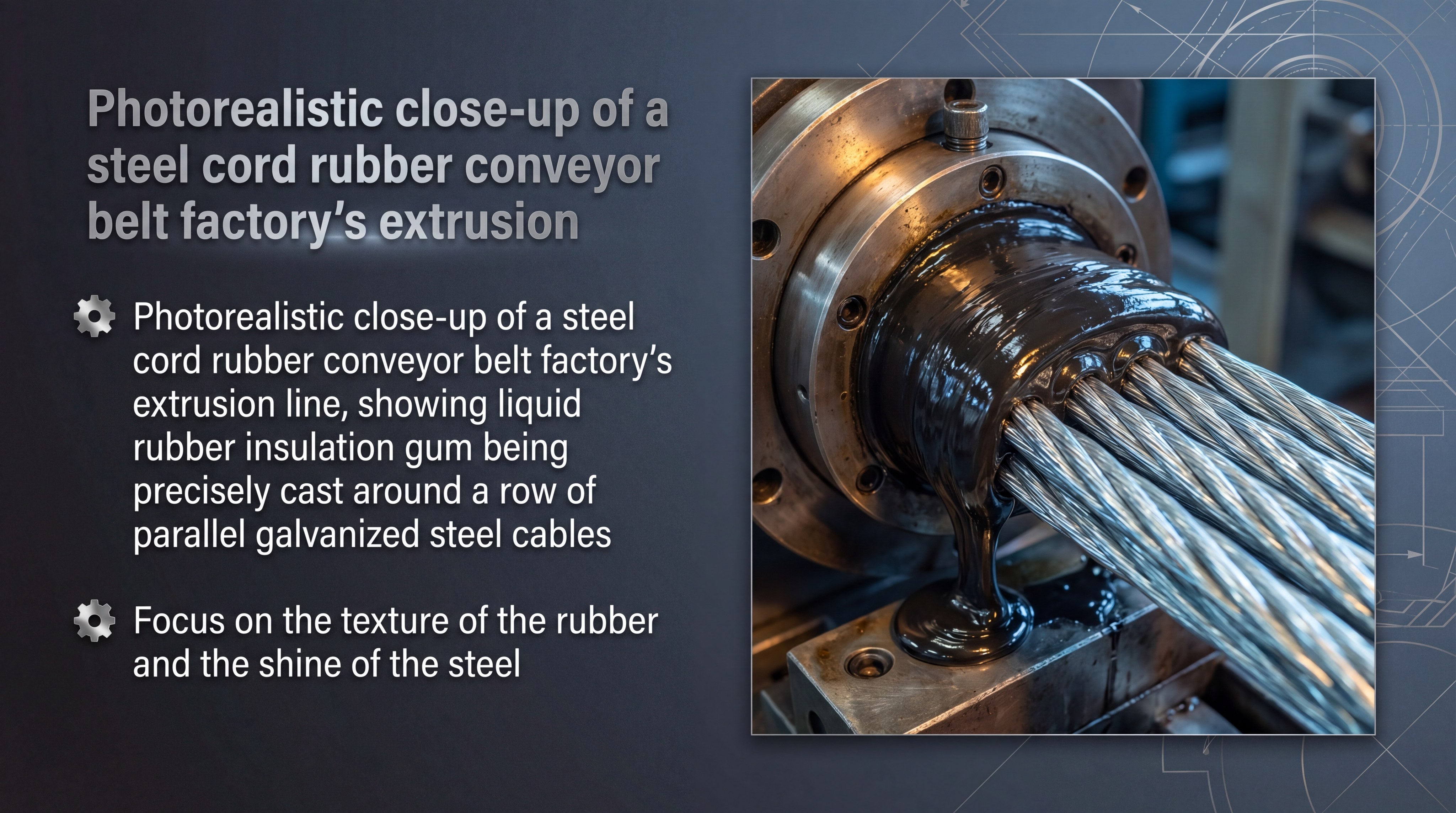
At a steel cord rubber conveyor belt factory , the application of insulation gum is a high-precision extrusion process. This “core rubber” is formulated to have extreme adhesion properties, ensuring it sticks to the zinc-coated steel cords permanently.
What is insulation gum?
Insulation gum is a specialized rubber compound that sits between the steel cables and the outer covers. It acts as the primary bonding agent and a shock absorber for the internal structure.
Believe it or not:
- It has a higher sulfur content for better metal bonding.
- It is designed to be more flexible than the outer covers.
- It prevents cords from “fretting” or rubbing against each other.
The best part? High-quality gum prevents the steel from ever being exposed to the atmosphere, even if the outer cover is gouged.
Does the rubber shine?
During the extrusion phase, the hot rubber has a characteristic shine that indicates it is at the perfect temperature for bonding. If the rubber looks dull, it may be too cold to properly penetrate the cable filaments.
Look:
- Shiny rubber indicates high oil and polymer content.
- It flows better around the twisted steel wires.
- It creates a smooth surface for the next layer of rubber.
Key Takeaway: The “plaster cast” effect is only possible if the insulation gum is applied at the exact temperature required for deep penetration.
| Material Property | Insulation Gum | Outer Cover | |
|---|---|---|---|
| Adhesion Strength | Extremely High | Moderate | |
| Flexibility | High | Medium | |
| Abrasion Resistance | Low | Extremely High |
The internal gum’s job is to protect and bond, while the outer cover’s job is to resist the environment and the cargo.
Does a steel cord rubber conveyor belt factory use X-rays?
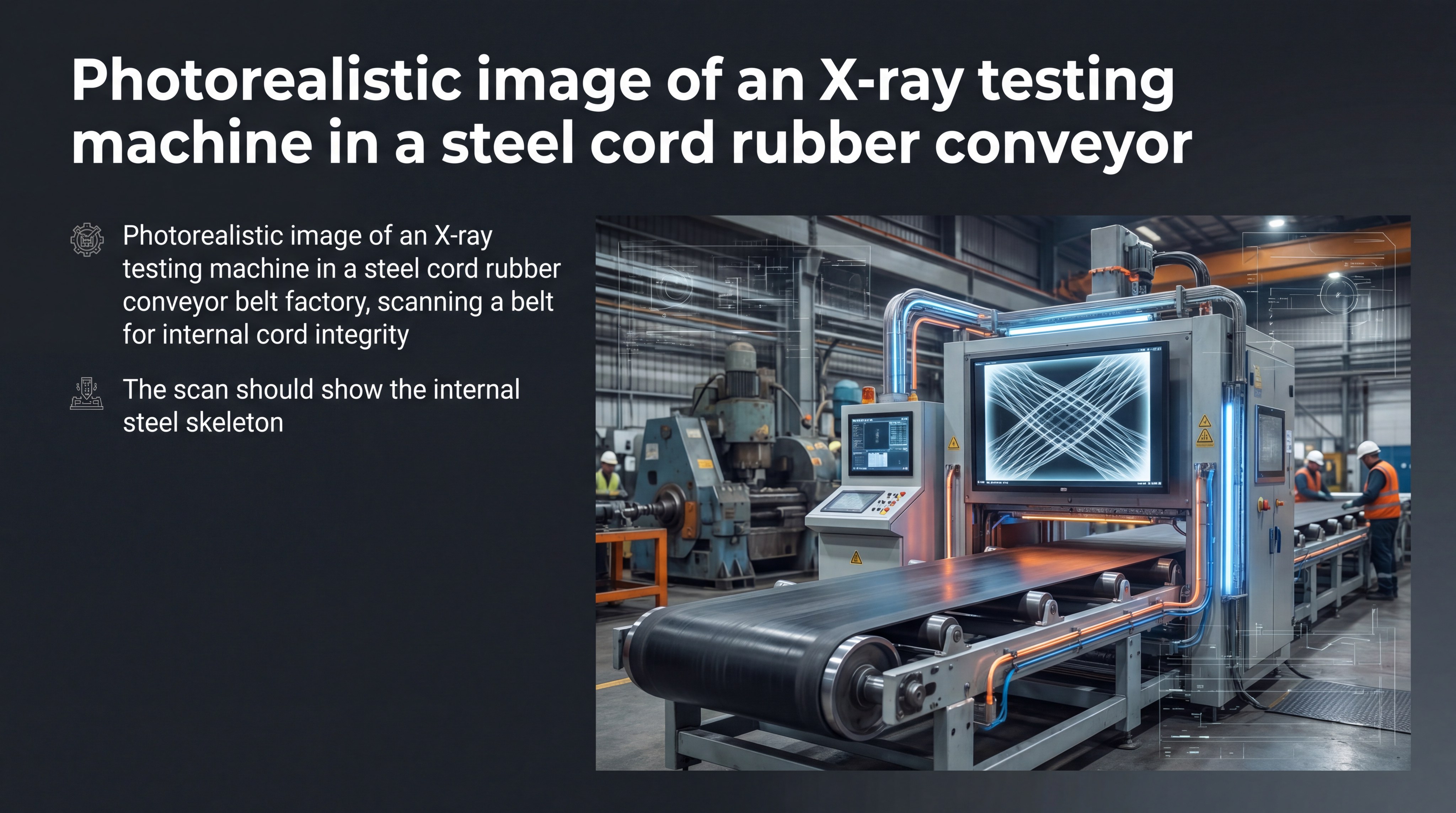
A modern steel cord rubber conveyor belt factory uses X-ray technology to inspect the finished product for internal defects that the human eye cannot see. This non-destructive testing ensures that the “steel skeleton” inside the rubber is flawless before it is shipped to the customer.
Can it find cord breaks?
X-rays can identify individual wire breaks, cord corrosion, and even minor spacing errors that occurred during the casting process. This allows the factory to reject or repair any section that does not meet the safety standard.
Here is the deal:
- It detects “kinks” in the steel cables.
- It finds foreign objects trapped in the rubber.
- It verifies the integrity of the splice zones.
The best part? X-ray reports provide you with a “birth certificate” for your belt, proving its internal quality.
Is scanning continuous?
In many top factories, the scanning is done continuously as the belt moves through the final inspection stage. This ensures that 100% of the belt length is verified, not just random samples.
Look:
- Real-time monitors show the internal cord layout.
- Automated alarms flag any deviations from the spec.
- Digital records are kept for future maintenance comparisons.
Key Takeaway: X-ray inspection is the ultimate safeguard against “hidden” failures that could lead to catastrophic belt snaps in the field.
| Detection Feature | X-ray Capability | Visual Inspection | |
|---|---|---|---|
| Surface Cuts | Yes | Yes | |
| Internal Cord Rust | Yes | No | |
| Cord Spacing Error | Yes | No |
Using X-ray technology means you never have to guess about the condition of the reinforcement hidden inside the rubber covers.
What materials does a steel cord rubber conveyor belt factory use?
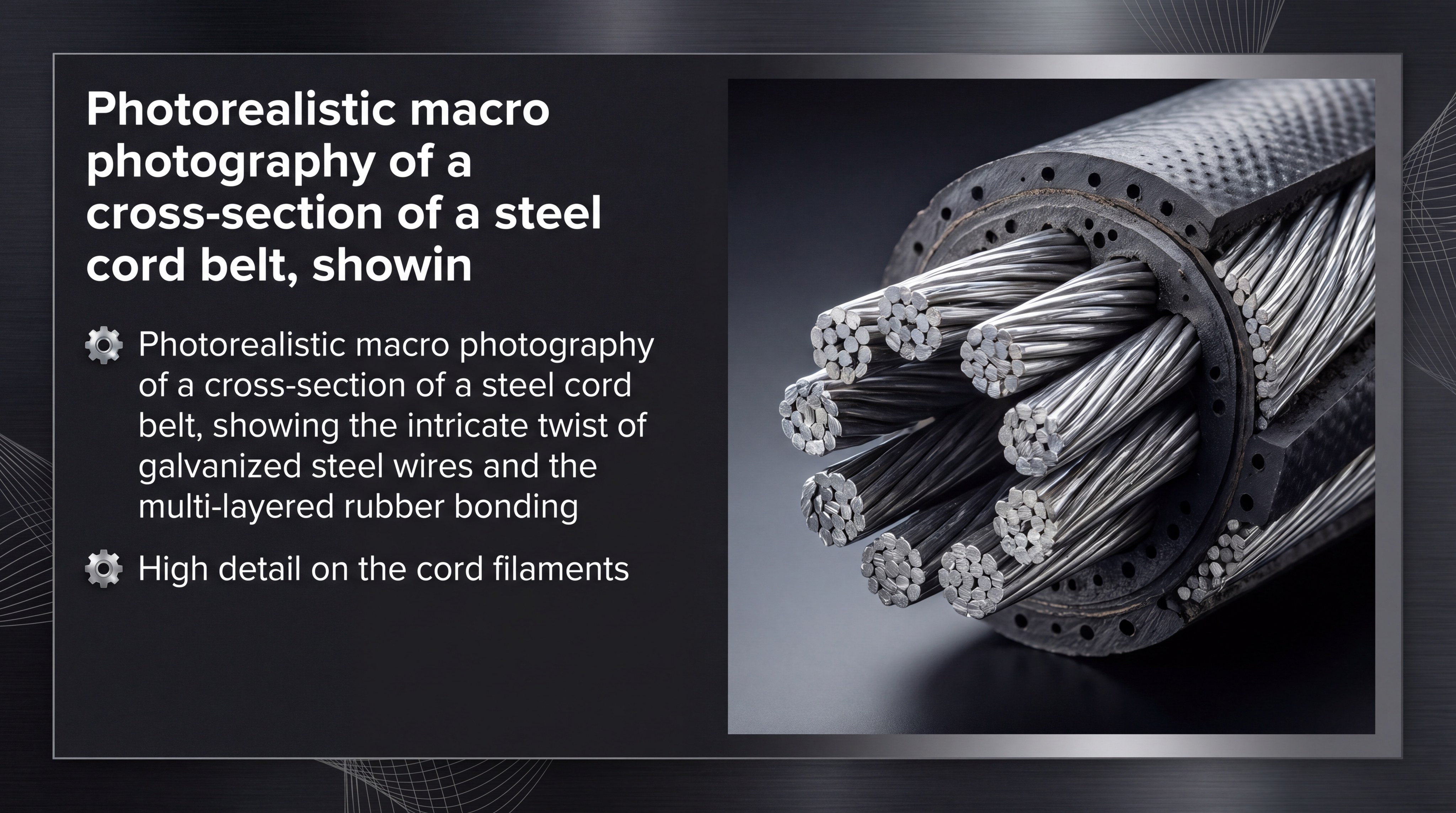
The materials used by a steel cord rubber conveyor belt factory consist of high-carbon steel, zinc galvanization, and customized rubber polymers. A macro view of the belt cross-section reveals the complexity of these materials working together to create a single, high-performance unit.
Are wires galvanized?
Every single wire within the cable is galvanized with zinc to provide a secondary layer of protection against rust. This is especially important if the belt operates in wet or coastal environments where salt air can penetrate the rubber.
Believe it or not:
- Galvanization improves the chemical bond with the rubber.
- It prevents “wicking,” where moisture travels down the cord.
- It extends the life of the belt in acidic mine water.
The best part? Even if the belt cover is damaged, the zinc coating stops the steel core from rotting away.
What are cover compounds?
The outer covers are made from different synthetic rubbers depending on the application. For example, EPDM is used for heat resistance, while Nitrile (NBR) is used for oil resistance.
Look:
- SBR is the standard for general mining.
- Fire-resistant (FR) compounds are for underground use.
- Extra-thick covers protect against sharp ores.
Key Takeaway: Customizing the rubber compound to your specific environment can double the lifespan of the belt.
| Component | Material | Purpose | |
|---|---|---|---|
| Core Cords | High-Carbon Steel | Tensile Strength | |
| Coating | Zinc Galvanizing | Corrosion Resistance | |
| Cover | SBR / EPDM / NBR | Environmental Shield |
The combination of metal and polymer creates a composite material that is stronger and more durable than either material could ever be on its own.
Frequently Asked Questions
Can I get a custom width for my steel cord belt?Yes, a professional factory can manufacture belts in any width, typically ranging from 600mm to 3200mm, to fit your existing conveyor structure perfectly.
What’s the best way to determine the ST rating I need?You should consult with the factory’s engineering team, who will calculate the required tension based on your conveyor’s length, incline, and maximum hourly tonnage.
Can I use these belts for chemicals?Yes, by selecting a chemical-resistant cover compound like Nitrile, you can safely transport fertilizers, oiled grains, or other corrosive industrial materials.
What’s the best way to splice a steel cord belt?The industry standard is the “Hot Vulcanized Splice,” where the factory provides a specific splice kit of matching rubber to bond the overlapping steel cords.
Can I get a sample before a full order?Most reputable factories will provide cross-section samples and full laboratory test reports to prove their material quality before you commit to a large purchase.
Conclusion
Choosing the right steel cord rubber conveyor belt factory is a strategic decision that directly impacts the uptime and profitability of your industrial operation. By utilizing precision plaster-style casting and advanced vulcanization, these factories solve the core problem of belt stretching and internal corrosion. Our brand stance is simple: we provide direct-factory engineering that eliminates the middleman and guarantees a superior cost-per-ton. If you are ready to secure your production line with the world’s most reliable conveyor solutions, contact us today for a comprehensive technical consultation.